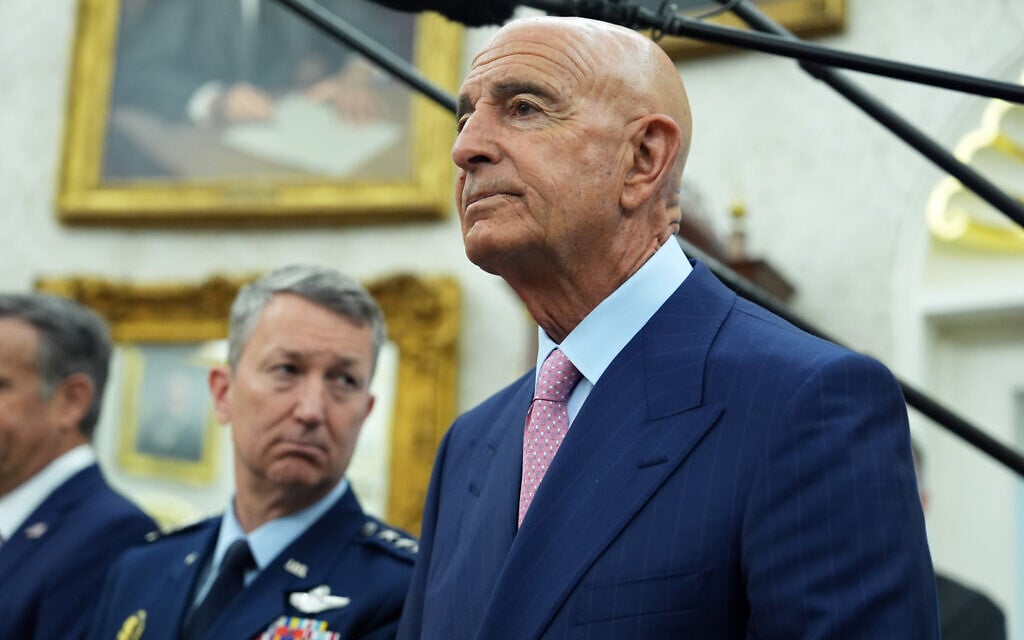
Tom Barrack, who is known for going off script, contradicts Netanyahu by insisting that there won't be regime change, even if Washington goes ahead and hits Tehran
He was inaugurating the 39th National Convention of Aerospace Engineering and ‘Space 2.0 - The Agenda,’ a seminar organised by the Institution of Engineers (India) under the aegis of its Aerospace Engineering Division Board
As part of the programme, Rail Jan Samvaad was organised at stations, bringing together passengers, students, public representatives, passenger associations, rail enthusiasts and other stakeholders to share their views and suggest improvements to railway services
George Brett Olson (right) said his joke was taken by an AI account (left).
George Brett Olson via Instagram
George Brett Olson is one of a set of comedians who've called out AI accounts for ripping off their work.
Olson said he was upset with Meta for allowing the situation to persist on its platforms.
Instagram's top exec said the platform is invested in promoting original content and would look into the issue.
This as-told-to essay is based on an interview with George Brett Olson, one of several comedians who have lately called out AI accounts for ripping off their jokes. It's been edited for length and clarity. Instagram head Adam Mosseri said he would look into what could be done about the issue and that the platform was invested in driving traffic to original content.
I started doing stand-up in 2021 after getting burned out from being a winemaker. I'd been doing live shows, and this joke I made about, ironically, AI stealing jobs went viral. The whole joke was about AI stealing jobs and people still blaming immigrants, which is very silly when the most powerful people were saying, "We're literally coming to take all your jobs."
Then a friend sent me the video of this lady doing the joke. He's like, "AI is for real, for real, stealing your jokes." It was basically me, in my clothes, but it's a 42-inch butt. It's just the pornification of women online. It was very strange.
I'd been doing that joke for a year. I thought of it after working out with my buddy, and we were talking, walking. It takes a lot of work to get a joke stage-ready. It's a lot of repetition, tweaking, driving from place to place to perform. Comedy's not easy. So it's pretty sad to see it happen, especially when the AI comedians who are stealing jokes have more followers than the people they're stealing from.
I asked the account behind the joke if she was real. She said yes. Then I asked, "Did someone help you do this?" And she just left me on read. She also left a comment saying, "Sorry, won't happen again," and removed a bunch of videos.
I've had a bunch of followers try to report it. Adam Mosseri, the head of Instagram, replied and basically said, "Not all AI's bad. We don't know how we're going to stop it, but people shouldn't be able to steal. Seems like we should do something about that."
[This was Mosseri's exact comment: "I don't think it's practical for us to try and ban AI content from the platform. It's gonna be harder and harder to identify, and it's not all bad content (though yes, there is plenty of slop). But we are very invested in trying to drive more traffic to original content creators, and if an AI creator is ripping off content wholesale, it would be good for us to work out what we can do about that. I'm not sure what it would be, but I'll make sure to talk to the team and look into it."]
George Brett Olson is one of several comedians who have lately called out AI accounts for copying their jokes.
Max Brandt
I blame Meta, not the AI
I don't blame someone for stealing. That's just someone trying to make a buck with the tools they have available. We want to hold people responsible that do not have the mechanisms of power because we can't hold an institution accountable.
I feel demoralized more by Meta's response. The language that's coming from all of them is that we're powerless, and this is inevitable, and there's nothing we can do. And it's just not true. And you just have to sit, be powerless, which is demoralizing.
As a comedian, you just want to sell tickets to your shows, engage with live people. That's why most of us post on social media — so people see that you're funny so they come to your live shows. I do live shows every week.
If we flood the internet with agents, and we don't know the difference anymore between what's real and what's not, this could be the death of the internet. Hopefully more people come to live shows. Because the one thing about AI comedians is: You can't see them live.
School of Hard Knocks founders, from left, Jack Dumoulin, James Dumoulin, and Josh Smith, want to be the "Barstool Sports of business."
School of Hard Knocks
James Dumoulin has turned street interviews with moguls into a business on track for $37 million in revenue this year.
School of Hard Knocks uses staged drama to hook viewers and sells consulting services and memberships.
Dumoulin and his partners aim to expand and become the "Barstool Sports of business content."
As James Dumoulin approaches a private equity investor in Lagos, Nigeria, there's an ominous moment when a bodyguard holding a rifle puts his hand up and demands the content creator stop.
"I have a channel with 24 million followers," the School of Hard Knocks cofounder responds, and then asks if he can interview the investor, Adesuwa Rhodes, for one minute about how she got rich.
Rhodes steps forward, dressed in a vibrantly patterned suit, and begins answering Dumoulin's questions, explaining how she broke into the business, the importance of persistence, and her faith in God.
The video's formula — mixing a high-drama street interview with advice from the wealthy and successful — has been distilled down to a science by 24-year-old Dumoulin, and helped him create a company that's on track to do $37 million in revenue this year, profitably, according to copies of financial documents he provided to Business Insider. The initial set-up is also, as Dumoulin readily explains, partly scripted.
"They're screaming at me, and it looks like a war is about to break out, and then I get her to calm them down," he said of how he blocked out the Rhodes scene. "And she gave some incredible sound bites and advice."
Street interviews, which have their predecessors on radio and TV, have been reborn as one of social media's hottest formats. Standout stars of the genre include Kareem Rahma of "Subway Takes," who gets opinions on hot topics from strangers, and TikToker Caleb Simpson, who asks people what they pay in rent and tours their apartments. As the format has grown increasingly lucrative, it's also become more orchestrated. Rahma and Simpson have both leaned into celebrity appearances, for example.
In Dumoulin's case, the upfront drama of the street encounter is contrived, a way to draw the viewer in and hook them so they'll listen to the interview, which is where he says the valuable information actually resides. He asks his subjects how they made their money, what their leadership principles are, and for advice for future entrepreneurs. The conceit is that they're lessons not taught in school.
"People love tension," Dumoulin said. "They want to see that conflict, they want to see what's going to happen, and then the payoff is a great interview on the back half. That's why I think our videos do really, really well."
Dumoulin's success in the creator economy — where the term "authenticity" is employed like a sacred totem — raises a host of questions about what it means to be "real," and how much it truly matters if you're entertaining and informing your audience. Any questions of authenticity haven't seemed to hamper the growth of School of Hard Knocks, though, which has nearly 11 million Instagram followers and over 7 million on TikTok, plus several million more on YouTube and other platforms.
Dumoulin said he'd consider a video a failure if it got under a million views.
The 'Barstool Sports of business content'
The videos serve as the center of an operation — run by Dumoulin, his brother Jack, 26, and their childhood friend Josh Smith, 28 — that contains a slew of businesses. The partners say they expect their media revenue to double over the next six months.
"One of the long-term visions of the School of Hard Knocks is to create the Barstool Sports of business content," James Dumoulin said.
The team poses with Tom Cruise, one of several celebrities they've interviewed.
School of Hard Knocks
The brand has done long-term sponsorships with companies including Shopify, ZipRecruiter, and Alibaba, but advertising isn't the most lucrative part of the business. The core moneymaker is School of Content, which provides social media consulting to small businesses.
The other two contributors are Hard Knocks Agency, a short-form video production and social media management agency for business owners, and School of Mentors, a membership community for aspiring entrepreneurs. Members pay $19 or $49 a month for live calls, workshops, and training with founders and operators.
Jack Dumoulin said the subscribers to its Mentors community are people who want to connect with successful entrepreneurs and learn from them, while the agency's clients are established businesspeople who want to build their personal or company brands.
"Founder-led brands are becoming a really, really big thing, where we're seeing more and more founders become the face of brands, their product, their service, or their company," Jack Dumoulin said.
Monica Khan, CEO of Creator Revolution, which helps creators build businesses and advises companies on influencer strategy, said she sees strong demand from execs and founders for help building personal brands, and business-to-business (B2B) creators are stepping up.
School of Hard Knocks took a smart approach by building a media brand first by interviewing entrepreneurs, then turning that credibility into a service, Khan said.
"We're going to see a lot more of that," she added.
The School of Hard Knocks cofounders have also invested in real estate, including a portion of an apartment complex in San Antonio and commercial properties.
The founders went through several pivots
The Dumoulin brothers grew up in a military family in Northern Virginia and became friends with Smith while serving in the same Boy Scouts troop. All went on to become Eagle Scouts.
James Dumoulin attributes some of their success to the mentoring they got from the military dads who ran the troop. He recalled the especially long conferences they'd have with scout leaders evaluating them for advancement to the next rank, and the scoutmaster who used to say, "There's never enough time to do it right, but there's always enough time to do it again."
"That resonated with us," he said.
Mark Cuban gave School of Hard Knocks its first big break.
Shafkat Anowar/The Dallas Morning News via Getty Images
The three reconnected in Austin in 2020. Josh Smith had gotten into digital marketing, and Jack Dumoulin, who had won a trophy in a worldwide Microsoft Excel competition, had become a junior analyst at Buc-ee's. James Dumoulin was in college, making TikTok videos. They combined their skills to make online content.
School of Hard Knocks was by no means an overnight success. They experimented with several approaches, including giving their own business advice. People didn't care about a 20-year-old kid's perspective on business, James Dumoulin said.
"Ultimately, we were like, 'What if we tried doing interviews?'" he said. "'What if we were the ones that were able to go seek advice from the most successful people?'"
They started approaching people cold on the street, asking them for interviews, and more often than not, getting blown off.
"It was just constant rejection after rejection," James Dumoulin said. "You'd probably have to go to 100 people before you get anybody to even look at you in the eye."
Their big break came in 2022 when they intercepted Mark Cuban outside the South by Southwest festival and asked for an interview. The gregarious entrepreneur obliged.
"That one interview was so powerful for us, because I leveraged it in so many other interviews," James Dumoulin said.
Eventually, PR agents were calling them to have their clients be featured on the channel.
The videos are carefully planned
School of Hard Knocks videos have a spontaneous feel that belies the meticulous planning behind them.
They start with a cold open, often creating tension by involving a security guard or other bystanders. For an interview with Ring founder Jamie Siminoff, James Dumoulin roped in a few employees from a store on Rodeo Drive where he met Siminoff and asked them to stand in a group, chatting. Dumoulin asked the group who the richest of them was. As briefed, they pointed to Siminoff, who said he was an inventor who made "something on your front door."
James Dumoulin reshoots the opening several times until he's satisfied with the result. The rest of the interview is shot in one take. He approaches his subjects with hearty enthusiasm and said he does minimal research on them, to preserve a certain amount of natural surprise in his reactions. All told, he takes five to seven hours to edit videos that are between a minute and a half and two minutes long.
"He's got unbelievable guests," said Josh Suggs, founder of StreetTalk, an ad agency built around impromptu street interviews. "He has real A-list celebrities. So I think people naturally want to hear what an A-list celebrity is going to say. At the same time, he asks a question people want to hear: How much money do you make? It's very scroll-stopping questions."
Some subjects — like Shaq and Tom Cruise — are household names. Most are not. James Dumoulin said the best-performing videos are unknown moguls because they create a curiosity gap.
He doesn't press his guests on controversial topics. Convicted felon "Wolf of Wall Street" Jordan Belfort and streamer Adin Ross, who has hosted far-right creator Nick Fuentes and self-described misogynist influencer Andrew Tate on his stream, get the same treatment as everyone else.
A platform reality check
The cofounders said that when their content started to take off, around 2022, they got a reality check about dependence on platforms.
They said their content was making about $30,000 a month, mostly from Facebook, when they were unexpectedly demonetized by the platform for what James Dumoulin said was an "unoriginal content violation." (They've since been reinstated.) Their monthly revenue dropped to $5,000. They said it was a wake-up call that they had to find other, more predictable sources of income. They started their first offshoot, the Hard Knocks Agency, in 2023.
"Sometimes you're not in control, because you don't own the platform," James Dumoulin said. "It made us realize, 'We've got to create a media company.'"
The School of Hard Knocks founders are also aware of the risk they run of being dependent on a single person. That's why they're adding new brands like Hard Knocks Business and Hard Knocks Women, with Hard Knocks Sports to come. The goal is to get to eight channels by the end of the year.
"If it is all really relying on one person, if something happens to that person, the whole company's kind of screwed," James Dumoulin said. "And so I think that's why it is very, very important to have that distribution beyond just one channel."
Plaintiffs in class action suit demand social media giant pay over $1 billion, saying Facebook, Instagram served as 'inseparable part of Hamas's terrorist infrastructure'
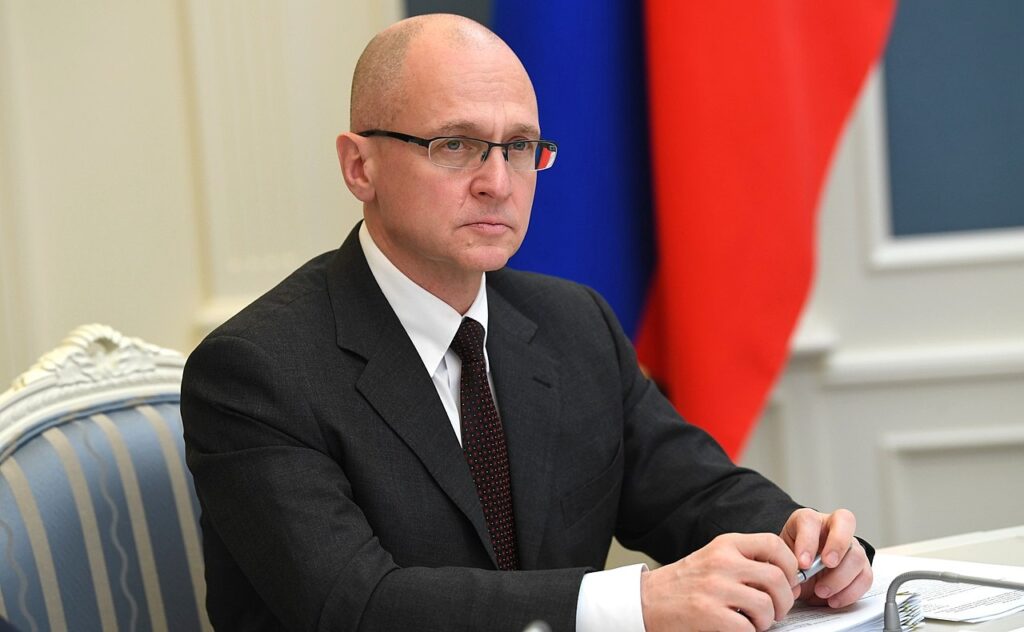
Sergei Kiriyenko, first deputy chief of staff of the Russian Presidential Administration, set the goals for the Ukraine strand of the operation, launched in early 2023 under the codename "Uganda." Alexander Kharichev, now head of the Kremlin's Directorate for Monitoring and Analysis of Social Processes, oversaw it, according to hacked correspondence published by The Insider on 21 October.
Doppelgänger disguises Russian narratives as local news through cloned media sites, fake accounts, paid ads, and fabricated videos. The FBI named Kiriyenko among its orchestrators in 2024, and its contractor, the Social Design Agency (SDA), run by Ilya Gambashidze, is still expanding, now targeting AI chatbots. The new files go inside the Ukraine campaign and show the operation reporting even exposed fakes to the Kremlin as achievements.
Telegram channels posing as Ukrainian
An internal briefing on narratives says the project ran its Telegram channels on the principles of agent work and psychological operations, the Russian version of the investigation shows. Early on, the team decided to disguise all its outlets as Ukrainian and to run its campaigns without direct Russian propaganda. Every channel carried Ukrainian news to look unconnected to Russia. Dropping pro-Ukrainian themes, the briefing warned, would eventually expose the client and wreck the whole plan.
Explore further
Russia-linked bot networks kept their weekly rhythm after drone strikes on three Yandex data centers—disinformation monitor LetsData
Four goals and a can of stew
Kiriyenko set four goals: discredit Ukraine's military and political leadership, split its elites, demoralize its army, and disorganize its population. The SDA prepared the project's pitch and carried out the work.
Political strategist Alexander Asafov proposed fakes of his own: in May 2023, that soldiers were bribing commanders to avoid the front, and in January 2024, that Ukraine was pulling air defenses back to Kyiv to protect the authorities.
After an Il-76 military transport crashed in Belgorod Oblast on 24 January 2024, Moscow claimed it had been carrying Ukrainian prisoners of war. Kharichev's subordinate Yevgeny Kazakov, chairing a meeting in his place, proposed sending a fake to the widows of Ukrainian soldiers: "They died for an expensive Il-76—the Russians have few of those." The idea was dropped.
The same meeting produced another fake, and three days later the team launched it: that recruitment centers had sent widows a can of stewed meat with a little flag as compensation. The same producers also oversaw letters falsely attributed to Deputy Defense Minister Nataliia Kalmykova, the Russian version says.
Debunks filed as results
The SDA collected coverage of its work in a folder for the Kremlin. It filed the "Zelensky's yacht" story, which JD Vance, then a US senator and now US Vice President, echoed, together with its debunk. The report also included a TikTok campaign about former Defense Minister Oleksii Reznikov's family that the BBC had already exposed.
The Insider concludes that the team has had more failures than successes. The US sanctioned Gambashidze and the SDA in March 2024, and the UK followed in October.
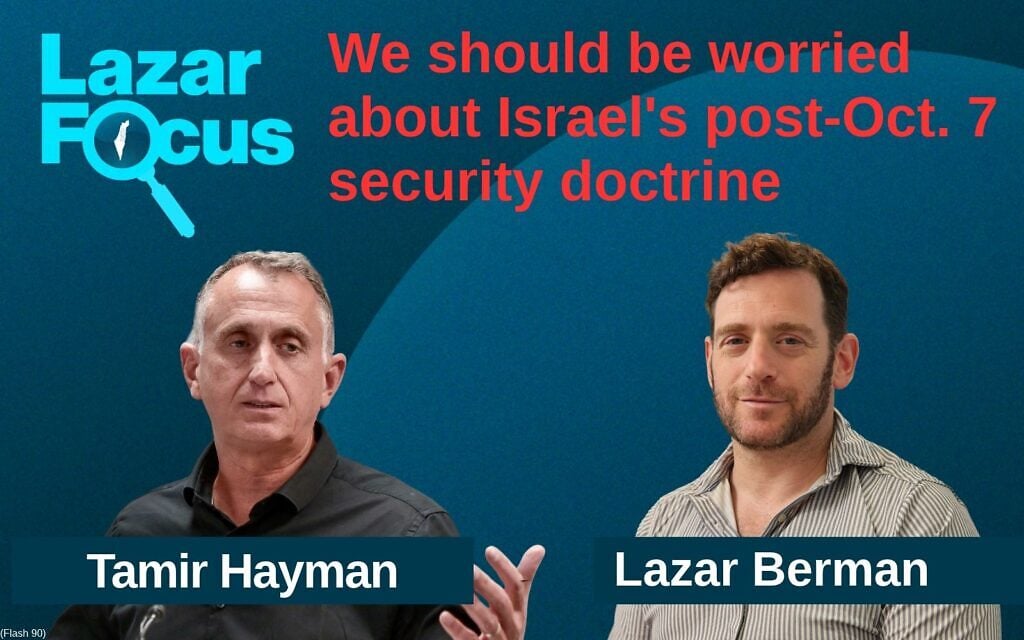
The head of the INSS and former military intelligence chief warns that the emerging concept doesn't see peace as the goal, and is looking to replace the US alliance
Grosse perturbation sur le réseau de transports en commun toulousain ce vendredi 23 octobre au matin. La ligne A du métro est interrompue entre les stations Basso Cambo et Arènes, dans les deux sens de circulation....
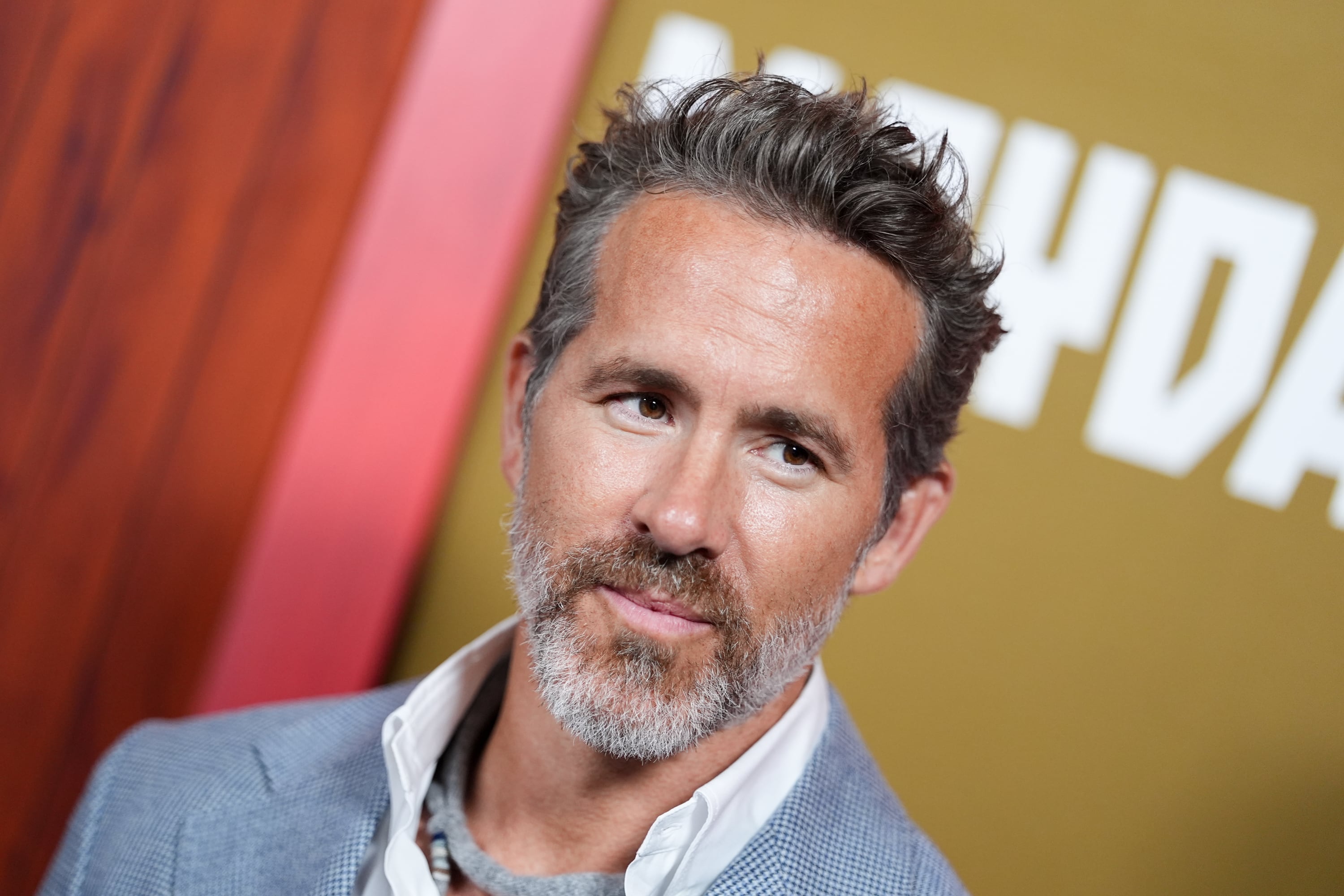
Ryan Reynolds cumple 50 años este viernes 23 de octubre, pero a estas alturas es probable que esté saturado de celebraciones. El 30 de septiembre fue el cumpleaños de su hija Inez; el 4 de octubre, el de su hija Betty; y, el 12 de octubre, el de su amigo Hugh Jackman, que es casi como uno más de la familia —además del protagonismo en Deadpool y Lobezno, ambos comparten la propiedad de BONDS Flying Roos, un equipo australiano que compite en la liga internacional de vela—. “Me paso el día respirando helio, inflando globos, vaciándolos, volviendo a inflarlos”, confesaba el actor canadiense a la revista Peoplea principios de septiembre, cuando bautizó esta época del año como el “callejón de los cumpleaños” del que no puede escapar. “No me gustan los cumpleaños. O sea, no me quejo por tener uno, pero tampoco soy de los que dicen: ‘Oye, organicemos una gran fiesta para mí’. Estoy bien, ya recibo suficiente atención”, confirmó sobre sus expectativas por alcanzar el medio siglo de vida.

 Login