2026 no está siendo el mejor año para Meta. Un juez de Nuevo México, EE UU, ordenó este miércoles a la empresa matriz de Facebook, Instagram o WhatsApp el pago de una multa de unos 22.000 millones de euros al considerarla culpable de engañar a los usuarios de Facebook sobre su política de privacidad de datos.
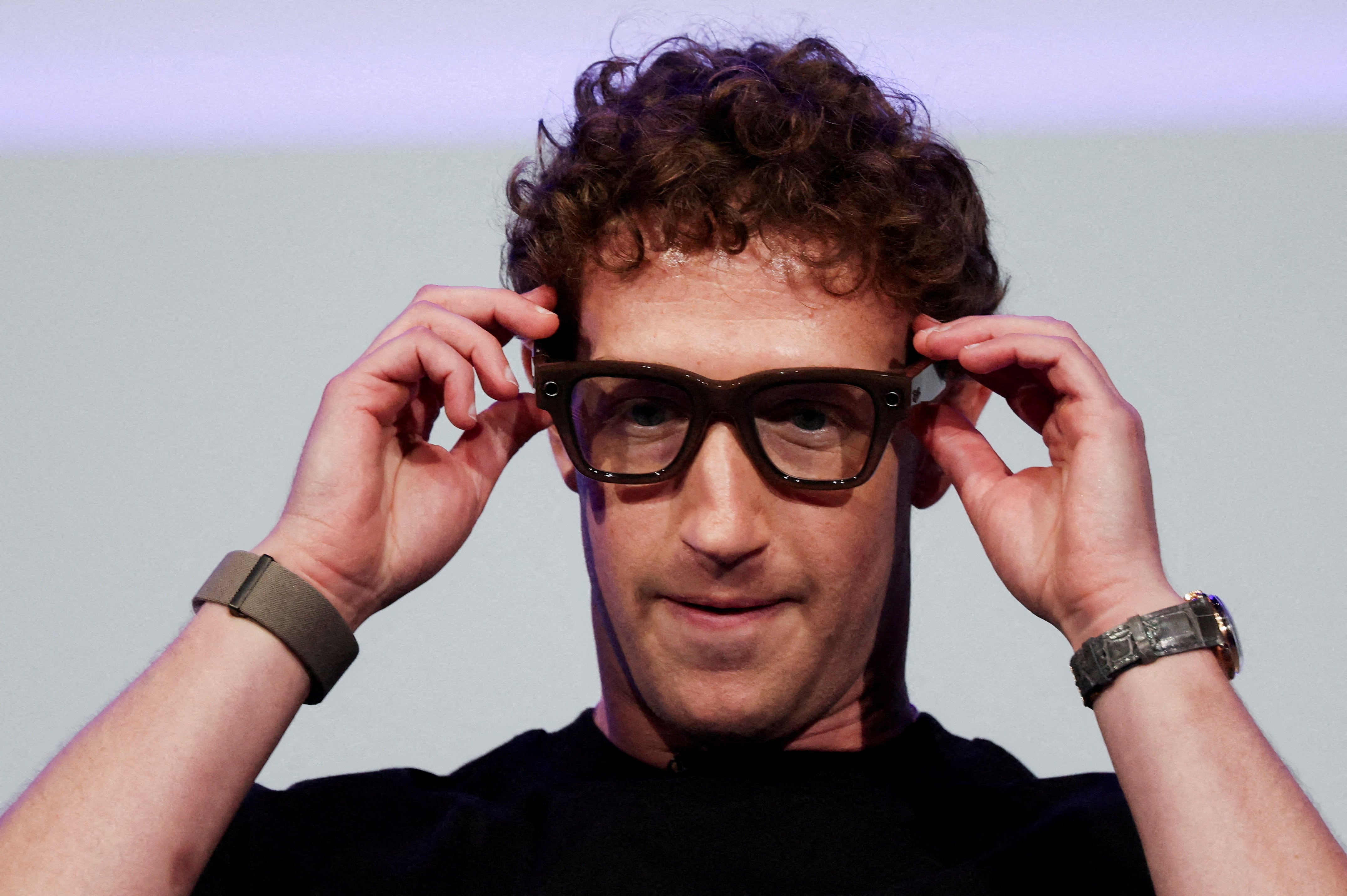
El director general de Meta, Mark Zuckerberg, se pone una gafas inteligentesMeta Ray-Ban Display en el evento corporativo Meta Connect, celebrado el pasado 17 de septiembre.
Las redes sociales fueron recibidas hace 20 años como un gran espacio de libertad. Hoy en día ya sabemos que se han convertido en plataformas dedicadas a encubrir a delincuentes anónimos; en espacios que favorecen la mentira, la injuria y la calumnia, los mensajes de odio; que acogen los acosos sexuales y personales, la xenofobia, el machismo y el racismo, la pederastia, la pornografía infantil, los mensajes yihadistas; en lugares donde se permiten las suplantaciones de identidad (las últimas han sido las sufridas en cuentas del PP el pasado miércoles por los socialistas Begoña Gómez, José Luis Rodríguez Zapatero y José Luis Ábalos, entre otros). Por si fuera poco, su maquinaria utiliza algoritmos con sesgos polarizadores y sus directivos aplican ingenierías fiscales para evadir impuestos en los países donde obtienen los ingresos.
El joven Dawson Kelly sostiene una pancarta con nombres de jóvenes que murieron supuestamente a causa de las redes sociales. En Oakland, California, el pasado mes de agosto.
Meta's board wants its CEO, Mark Zuckerberg, to stick around — and stay local.
Kent NISHIMURA / AFP via Getty Images
Meta is offering CEO Mark Zuckerberg a $20 billion stock deal to keep him close to its headquarters.
The move speaks to a common belief that the best work happens when everyone is together in person.
Research suggests companies with far-flung CEOs pay a price for that distance.
Meta wants more than rank-and-file employees at the office. It wants CEO Mark Zuckerberg there, too — even if that comes at a hefty price.
The tech giant's board said in a securities filing Wednesday that it would create a new class of non-voting stock in part to keep Zuckerberg in control and give him a financial incentive to continue living near its headquarters. It described his presence at the office as "critically important" to its future success. Meta has required employees to come in at least three days a week since 2023.
Zuckerberg previously told the board he was considering moving in response to a proposed California billionaire tax. The stock deal would give the CEO $20 billion in "immediate liquidity" to cover the tax by selling stock without losing control of Meta, the filing said.
That arrangement carries particular weight at Meta, where Zuckerberg is leading the company's AI push. It also speaks to a common belief that has driven return-to-office mandates: The best work happens when people — including senior leaders — are physically together.
Staying local
Cole Rubin, cofounder of sports technology company FanFeed, said CEOs and other execs are sending a message to employees by physically working alongside them.
"You're not going to question why you're working long hours if you actually can see the leader doing the same," Rubin told Business Insider.
Having bosses in the office can also help a company move faster when unexpected opportunities arise, he said. Employees can walk into a leader's office, get an immediate answer, and act before the moment passes.
"It's not the scheduled calls where the magic happens," Rubin said. "When you have the decision-maker there, it gives people a lot of freedom to be able to feel heard."
A leader's presence is especially important during crises, said Bill George, former chairman and CEO of Medtronic, a medical-technology company. Being together lets executives quickly assess what has happened, gauge employees' reactions, and decide on a course of action.
"We've got to really feel what's going on emotionally, and we actually physically have to discuss it," he said.
George also noted that RTO demands placed on workers can ring hollow if the CEO doesn't follow them. "You've got to be there if your employees are there," he said.
Long-distance tradeoffs
Meta wouldn't have been the first company with a long-distance CEO if Zuckerberg had opted to leave the Golden State.
Brian Niccol was living in California when he was named CEO of Seattle-based Starbucks in 2024. The coffee chain had agreed as part of his hiring package not to require him to relocate. Later, it built a 4,624-square-foot satellite office five minutes from his home so he could work alongside colleagues, Business Insider first reported. Niccol has since purchased a property in Seattle.
Companies with long-distance CEOs don't perform as well on average as those with leaders on-site, according to a 2025 study by Boston College and Arizona State. They also have lower valuations and worse insider reviews, the findings show.
Meta's decision to woo Zuckerberg to stay in California was made by a special committee on its board, which said it was informed by challenges the company faced when he couldn't be physically present with management during the pandemic.
The committee said it didn't want Meta "to face similar challenges going forward."

 Login