
❌

Reading view

My daughter and I needed a fresh start after my divorce. A vacation at a Colorado dude ranch gave us one.

Two horseback riders pause in a grassy valley with rocky hills in the background.
The author (right) traveled to a dude ranch in Colorado for a mother-daughter trip after her divorce.

Courtesy of Rebecca Lillian.

  • After my divorce, I wanted something special for my first mother-daughter trip with my 8-year-old.
  • We decided to spend a week at a luxury dude ranch in Colorado.
  • The trip helped me show my daughter

Resting by the heated pool in my cowboy hat, breathing the fresh mountain air, I watched my daughter laughing with her new friends and felt something I hadn't in years: a sense of peace.

Earlier that year, my husband and I inked our signatures in separate rooms, ending our 16-year marriage. Our divorce was one that could be labeled "volatile," and not just for us, but for our 8-year-old daughter.

When it came time to plan our first summer vacation with just me and her, I knew it would likely be a splurge, but I needed it to be special. We needed activity. We needed reconnection. We needed a dude ranch.

This was our first big adventure for just the two of us

My research led me to an all-inclusive ranch in Colorado. The website had footage of horses running across a bridge over a winding stream. It looked perfect.

Although I was apprehensive about the two of us traveling from Texas during the week of July 4th, I inevitably found it liberating. Wheeling luggage stuffed with heavy cowboy boots while lugging backpacks through airports, shuttling to the rental car, and navigating unknown mountainous switchbacks could have been disastrous, but we managed it well. It was our first accomplishment in independence.

Two smiling people take a selfie beside an outdoor swimming pool with lounge chairs and trees in the background.
The author said some independent time each day helped her and her daughter connect with other guests.

Courtesy of Rebecca Lillian.

We encountered some surprises

"You have arrived," the navigation system announced in our rental as we turned onto the dirt drive lined with quintessential log cabins with thick white chinking, set on manicured lawns before the Rocky Mountain backdrop. Each porch had bright pink, purple, and red petunias hanging in baskets above shellacked wooden rocking chairs. It was just like we imagined it.

After parking our red Wrangler, we were greeted by ranch staff in full cowboy gear who guided us past the soft pink peonies nestled between the grayish-white aspen trees to check in.

At check-in, while planning our next seven days, I discovered that children eat dinner most nights with the other children and their counselors and take separate trail rides twice a day. This concept is great for families, giving mom and dad a chance to reconnect over gourmet meals, but I wasn't so sure how our new life would fit into this scenario.

Initially apprehensive about the separation, my daughter and I soon discovered this daily dose of division was liberating, forcing us to foster new friendships.

Our expectations were exceeded

Later, we met the director of equestrian operations, and she asked about our riding experience and personalities to best match us with one of her cherished horses. We were excited to meet our horses the next day.

Meanwhile, our newly renovated western chic room was complete with leather-branded throw pillows, a fireplace, and a welcome basket full of healthy snacks, a red bandana, and a bottle of wine.

We quickly fell into a daily routine, bonding with our horses, riding and grooming them each day, and creating connections with other guests. We also tried out fly fishing (I caught three trout), hiking, archery, and ziplining. I especially enjoyed relaxing at the outdoor spa in luxury tents built over the creek, immersed in nature's music of bird calls and horse neighs.

We danced into the night and our next chapter

The whole trip was exceptional, and our favorite event was an evening barn dance. We dressed in full cowgirl fringe and ended the night with an elaborate fireworks display just for the resort. Sitting on the lush green grass watching red, white, and blue explosions just a few, yet safe, feet away, she and I weren't just celebrating our country's freedom, we were celebrating our own.

Two people wearing patriotic hats and star decorations pose for a selfie in an outdoor picnic area.
The author and her daughter celebrated July 4th while at the resort.

Courtesy of Rebecca Lillian.

I had not realized until that moment I was introducing my authentic self to her — the woman I was before my marriage unraveled — and reminding myself of that version of me. Free. Capable. And full of adventure.
Read the original article on Business Insider

  •  

Family Separation Drama Fjord Is a Haunting Depiction of Unchecked State Power

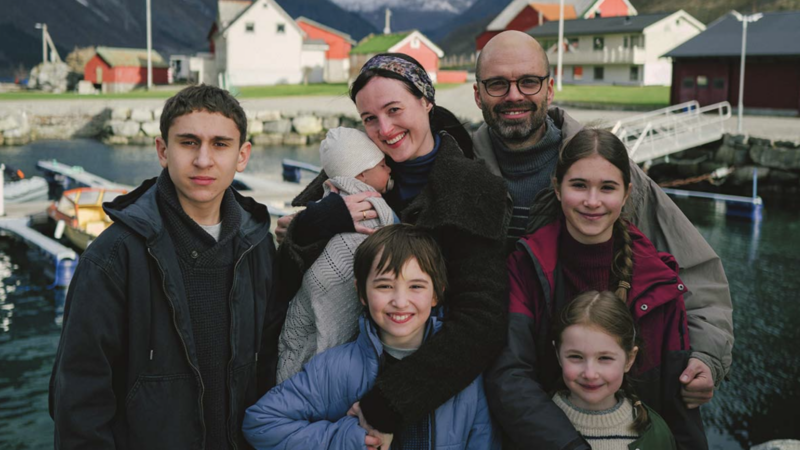
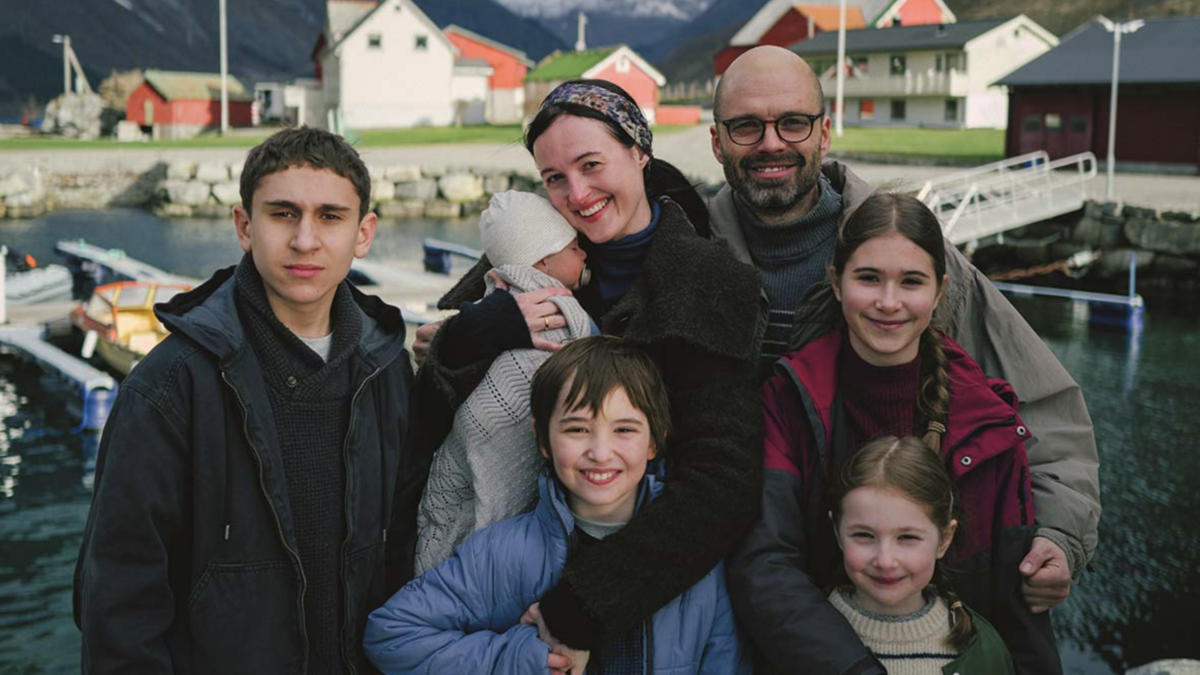
A scene from "Fjord" | Forum Film România

Fjord is a movie about having your children taken by the state. The tone is calm, clinical, measured, and by the books. No violence is depicted on screen. People rarely even raise their voices. Everything unfolds in the distant and impersonal style of bureaucratic procedure. 

But the movie, which won the Palme d'Or at this year's Cannes Film Festival, is utterly enraging, a fierce, ferocious, gut-punch of a film. It's a haunting portrait of the consequences of unchecked state power, especially the kind that purports to be for one's own good.

Much of the film's power comes from the fact that it simply depicts what happens when a person, or a family, comes under suspicion by the state. There's no commentary, no lecturing, no big speech at the end. Instead, writer-director Cristian Mungiu, a Romanian filmmaker whose sympathies are clearly with the family, simply shows us, unblinking, what it's like to lose one's rights and freedoms at the hands of a bureaucracy that respects no power and no authority but its own. 

When the film begins, the Gheorghiu family—a mother (Renate Reinsve), father (Sebastian Stan), and their five children—moves from Romania to a small town in Norway. Soon, school authorities notice the children have bruises. We in the audience know the bruises weren't caused by the parents, but the children, who don't speak Norwegian, give conflicting statements. After being brought in for questioning by the police, the father admits to sometimes spanking or lightly slapping his children on the behind, for correction. In order to go free, he's required to sign a statement that contorts his words, making his admission of spanking sound like something more sinister and violent. 

He's also a conservative Christian, which has caused some social tension: He's played Christian music, without singing the lyrics, on a piano at school, a no-no in a state that strictly curbs proselytizing. School officials are concerned that he requires his children to pray and study the Bible; the children aren't allowed to play video games or watch YouTube. One of his children spoke out against homosexuality in school during a session on gender. There's suspicion among the teachers and administrators that he might be indoctrinating his kids.

So the school authorities alert Child Protection, Norway's powerful family bureaucracy. They remove the kids, including a breastfeeding baby, from their parents' custody and place them in three separate foster homes. At first the parents are allowed no visitation, and they are not told where the children are located.

Then they go to court, initially for a civil trial, but with a criminal trial for child abuse looming in the background. As the legal process proceeds, they are told repeatedly that essentially anything they do to fight for their children will make the outcome worse. The state wants compliance and admission that they wrongly abused their kids. But if they admit to abusing their kids, doesn't that give the state evidence they are unfit to parent? Doesn't that make the criminal trial more likely to go against them? As their own, mostly sympathetic lawyer, informs the two parents, "Frankly unless you convince them that you understand and regret it, the risk of you going to prison is considerable." 

Later, at the trial, a representative from Child Protection calmly says there's no reason to believe children might be better off with their biological parents, noting the family's restrictions on video games, internet, and YouTube. In their view, the state knows what's best for the kids; the culturally backward, religious conservative parents do not. It's not for nothing that one character, a conservative political figure from Romania who has come to help publicize the situation, analogizes the power of Child Protection to the power of the Soviet state. 

Part of what makes Fjord so effective is its lack of sermonizing. You don't have to be a trad, a conservative, a family values evangelical, to see that what's happening to the Gheorghiu family is simply wrong. They are railroaded by an imperious bureaucratic state that distorts reality to turn them into villains, with the goal of separating children from their parents and each other. Who are the real child abusers here? 

The story is fictionalized, but not hypothetical. Fjord is based on the true story of the Bodnariu family, conservative Romanian immigrants whose five children were taken from them by the Norwegian state in the 2010s on similarly flimsy justifications. The family eventually left Norway. After watching Fjord, it isn't hard to see why. 

The post Family Separation Drama <i>Fjord</i> Is a Haunting Depiction of Unchecked State Power appeared first on Reason Magazine.

  •  

My kids used to complain on every trail. These 4 changes made family hiking fun again.

Four hikers pose on a rocky forest overlook with expansive green woodland and distant hills behind them at Konnevesi National Park in Finland.
The author (in blue) with her family as they hiked in Konnevesi National Park in Finland.

Courtesy of Emese Maczko.

  • My husband and I enjoy hiking, but our kids, 7 and 10, often complain along the way.
  • On a visit to Finland, we went hiking with a guide, and my kids were engaged the whole time.
  • It encouraged me to change a few things about the way I approach and plan family hikes.

It was an hour into our hike through Southern Konnevesi National Park in Finland, and neither of my 7- and 10-year-old daughters was complaining. It was glorious.

Normally, within the first hour, I would have already heard the question "How much longer?" One of them would also declare, "It's boring. We're just walking."

So what was different about this hike? Why weren't they complaining? It's because I took a different approach to this hike than I have with past ones — and it worked. Here's what I did.

A stranger motivated them more than I ever could

For this hike, we had a local guide with us, and my kids hung on her every word. They were asking questions non-stop and following her down the trail without a single complaint.

I almost laughed when I saw them literally stepping in her footprints and mimicking every move she made. This is not what my husband and I were accustomed to.

When she leaned on a rock to hear "the whispers of the forest," my kids did the same. When she found edible berries, my kids rushed there to try them first.

I do my best to make hikes interesting for my kids, but I am also a first-time visitor to most of the places we explore. No matter how much I research beforehand, I usually can't predict what they will find interesting along the trail. By contrast, this local guide knew exactly how to keep them excited, which kept them moving along.

Having a job kept them interested

I also noticed that the guide occasionally gave them "crucial" jobs along the trail. Who could find the next patch of berries, who could spot mushrooms growing on a log, or who could hear a bird singing?

When we are alone, I try to do these things too, but I cannot always answer the questions that ultimately follow: "Are these berries edible?" "What kind of mushroom is that?" or "Which bird is singing?"

I know my kids are naturally curious, but I wondered why my kids seem uninterested when it's just us. I began to realize they stopped asking me questions because they knew I didn't always have answers. Since our guide did this time, they asked her. They were eager to learn.

I tailored the goal to their needs

I also noticed they had not asked the dreaded question, "How much longer?" Not even once on our 2.5-mile hike.

I kept thinking about my usual responses. I say things like, "Look at the beautiful forest. Just enjoy the view and breathe in the fresh air," or, "Come on, we're almost there. It'll be worth it when we arrive."

Kids care about what's happening in the next five minutes in a way that's different from how my husband and I approach things. I was expecting them to hike like adults, getting from one point to the next. If they can discover something new at every step, they will relish the journey and won't feel time passing slowly. That's something I'm planning to incorporate into our future family hikes.

On a different trip, we tried forest bathing with a local guide in Austria, which lasted over three hours. When it ended, my kids frowned and said, "That was so short. Can we keep going?"

We allow time for free play along the way

After these experiences, I became much more careful about which trails I choose when hiking with my kids.

I know now that the best trails for my kids are the ones that offer exciting experiences along the way: a lake where kids can swim with tadpoles, a stream to cross, or rocks to scramble over.

I've also learned not to rush the stops. My daughters love spending time throwing rocks into a lake, sending leaf rafts down a stream, balancing on fallen logs, building hearts from flowers, or watching frogs or insects.

The biggest change for me has been to stop measuring a hike's success by how far we get and start measuring it by how much fun we had.

In Finland, I realized my kids already enjoy hiking. They just enjoy different things during a hike than I do as an adult. I should never forget that sometimes the part they remember most has nothing to do with the trail itself.

Read the original article on Business Insider
  •  
❌