❌

Normal view

Military Situation In Ukraine On October 3, 2026 (Maps Update)

3 October 2026 at 21:00

Click to see the full-size image

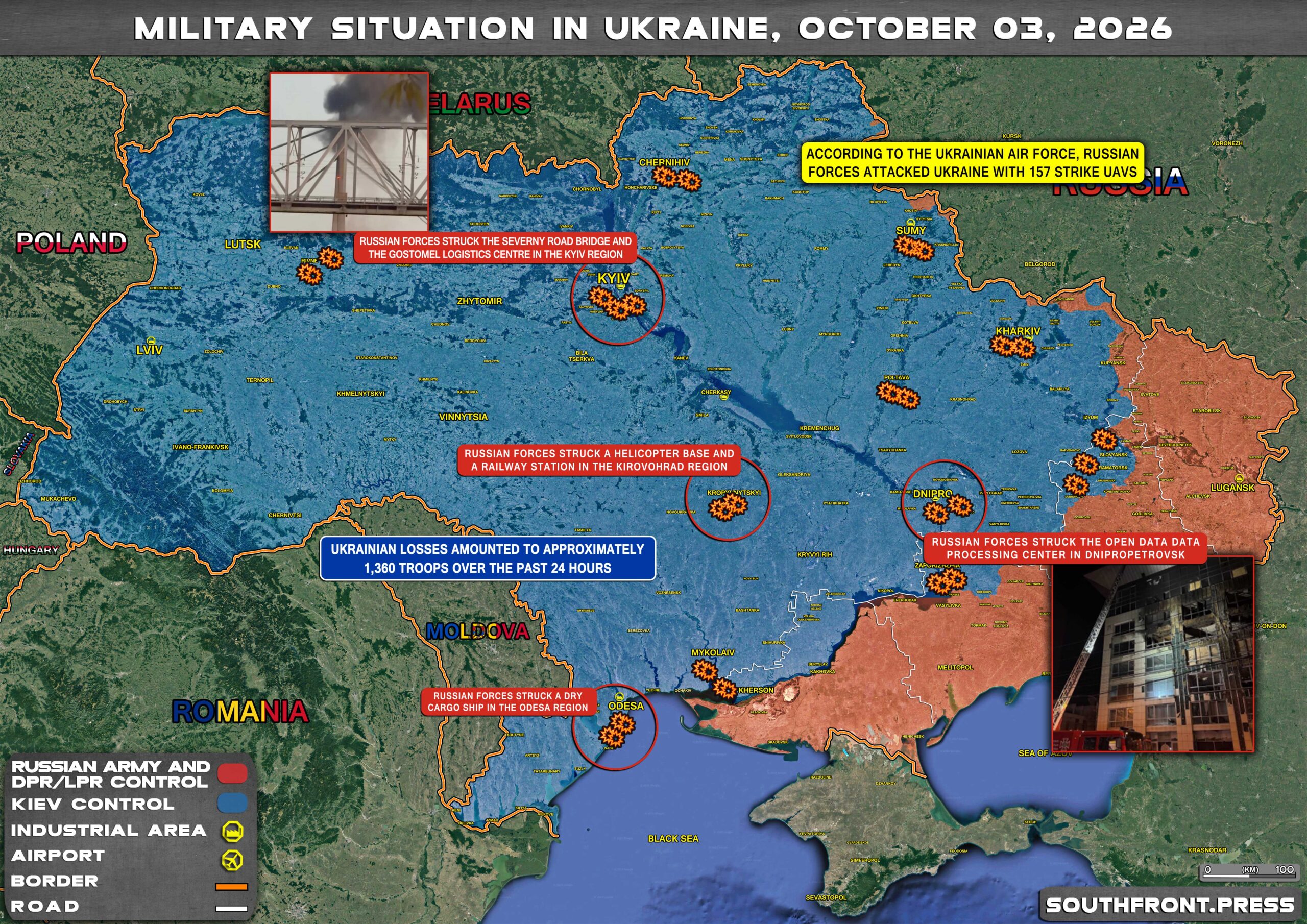
  • Russian strikes destroyed targets in the Sumy, Kharkiv, Zaporizhzhia, Dnipropetrovsk, Kherson, Kyiv, Odesa, Mykolaiv, Chernihiv, Poltava, Kirovohrad, Volyn, Rivne regions, and the DPR;
  • According to the Ukrainian Air Force, Russian forces attacked Ukraine with 157 strike UAVs;
  • Russian forces struck the Severny Road Bridge and the Gostomel logistics centre in the Kyiv region;
  • Russian forces struck a dry cargo ship in the Odesa region;
  • Russian forces struck a helicopter base and a railway station in the Kirovohrad region;
  • Russian forces struck the Open Data data processing center in Dnipropetrovsk;
  • Ukrainian losses amounted to approximately 1,360 troops over the past 24 hours.

Click to see the full-size image

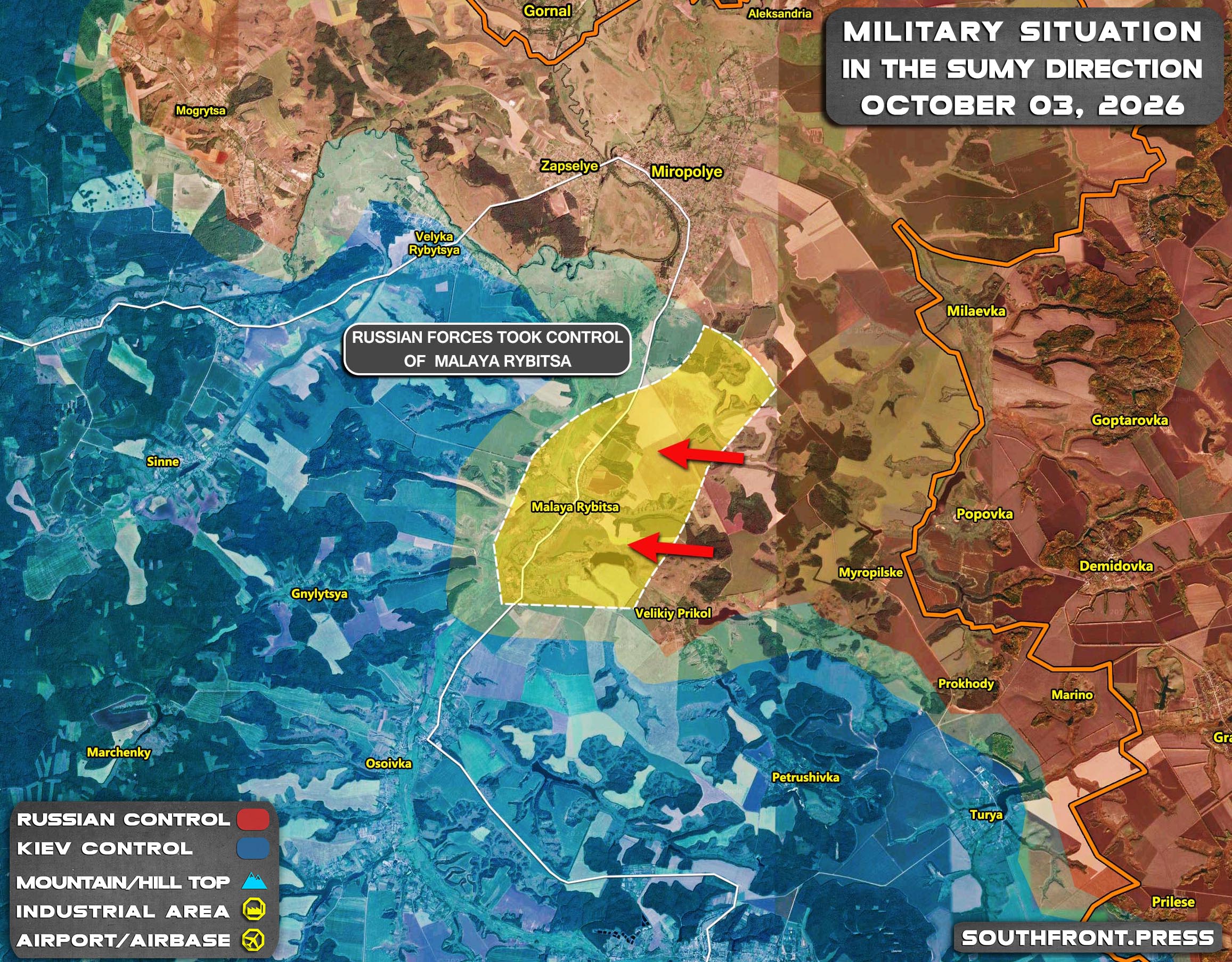
  • Russian forces took control of Malaya Rybitsa

Click to see the full-size image

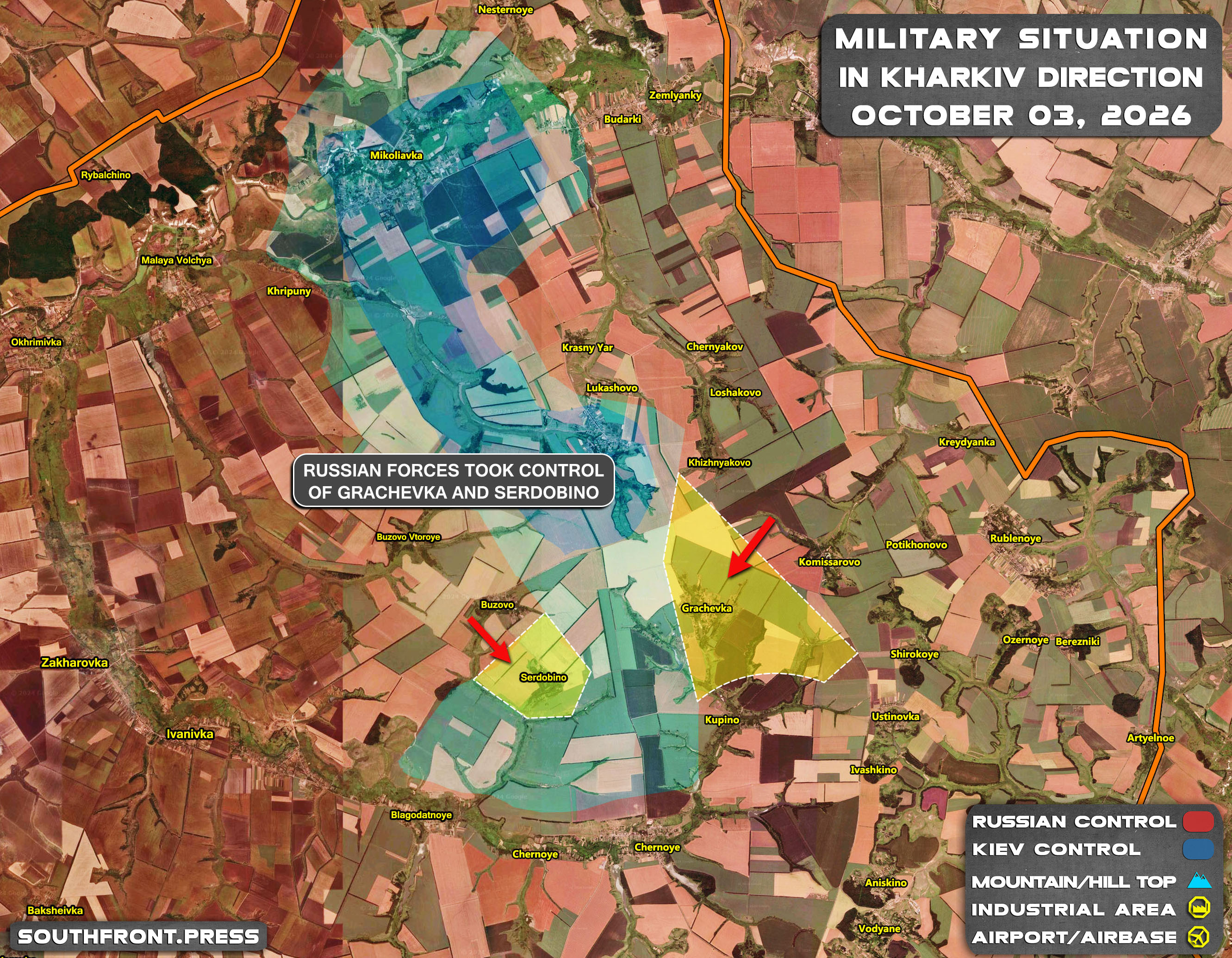
  • Russian forces took control of Grachevka and Serdobino.

Click to see the full-size image

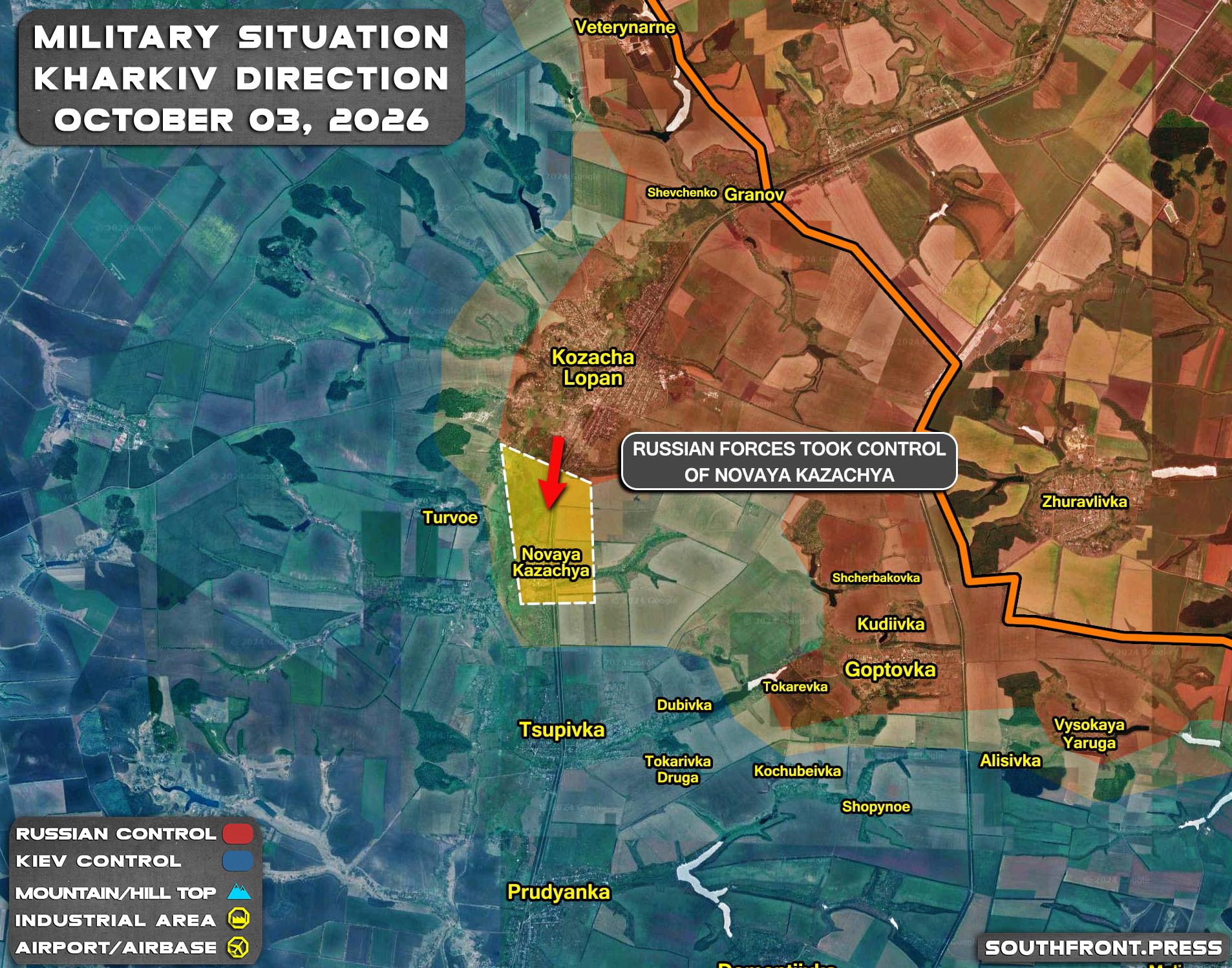
  • Russian forces took control of Novaya Kazachya.

Click to see the full-size image

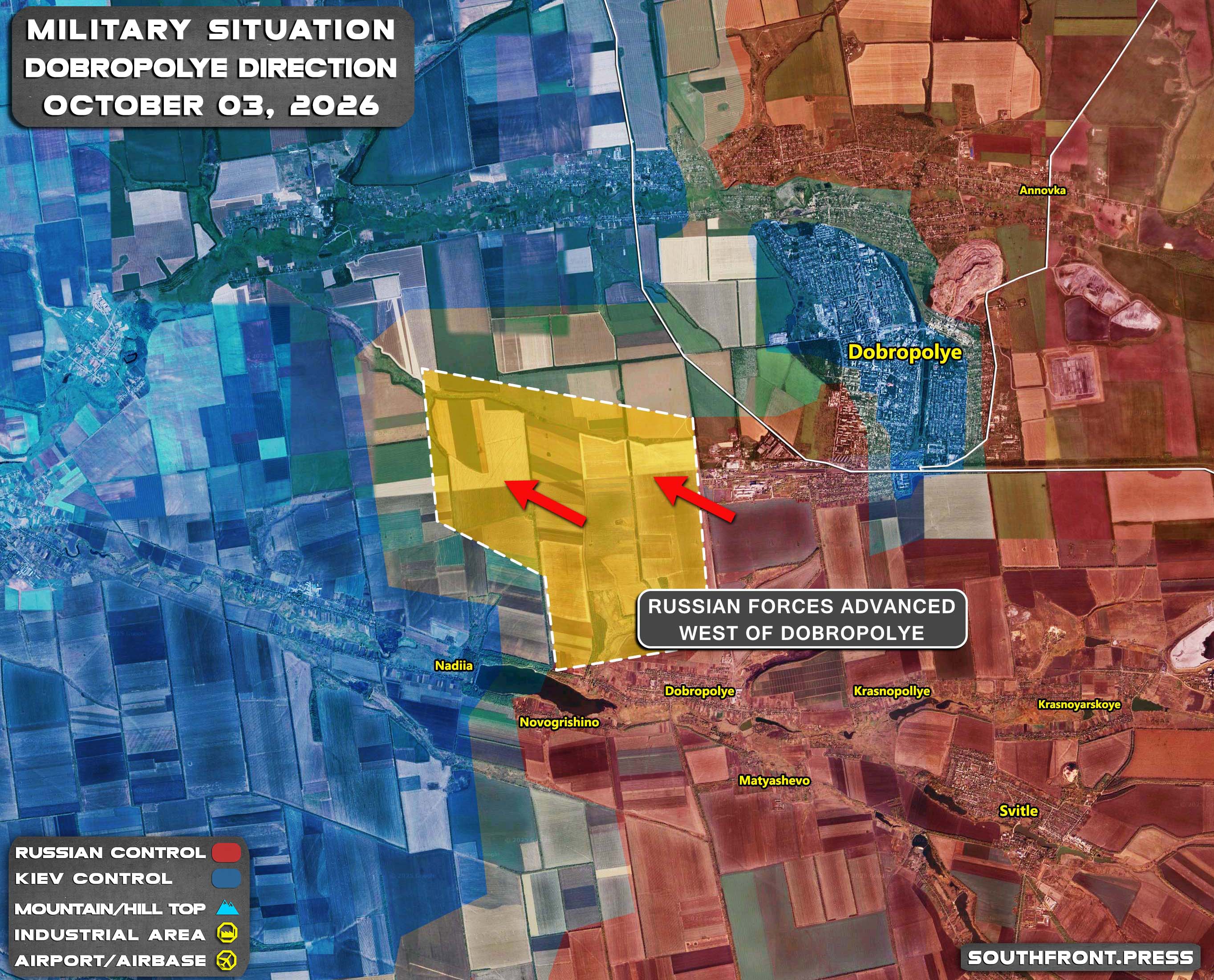
  • Russian forces advanced west of Dobropolye.

MORE ON THE TOPIC:

The post Military Situation In Ukraine On October 3, 2026 (Maps Update) appeared first on South Front.

Russia Continues Strikes On Ukraine’s Data Centers And Logistics, Ukraine Targets Russia’s Oil Infrastructure

2 October 2026 at 21:35

Click to see the full-size image

Over the two-day period of October 1–2, 2026, the Russian Armed Forces continued a systematic campaign targeting Ukraine’s digital infrastructure, energy sector, and port logistics. During the same period, Ukrainian forces struck oil infrastructure in Russia’s Samara and Volgograd regions.

Strikes on Ukraine

Digital Infrastructure and Data Centers
The most prominent component of the campaign was the continued strikes on data centers, affecting both the capital node and regional sites.

List of confirmed targets:

  • DLine Data Center (Kyiv). The company’s management reported the strike.

  • Warehouse complex of PJSC Euroterminal (Kyiv). The complex covers approximately 27,000 m². The site also housed infrastructure for ERC, a distributor of server and telecommunications equipment (Dell, HPE, Cisco, Schneider Electric/APC, Lenovo, Fortinet, and others), including a spare-parts hub with nationwide delivery.

  • RX-Name Data Center (Mykolaiv). Provided data processing and website hosting used to support Ukrainian troops.

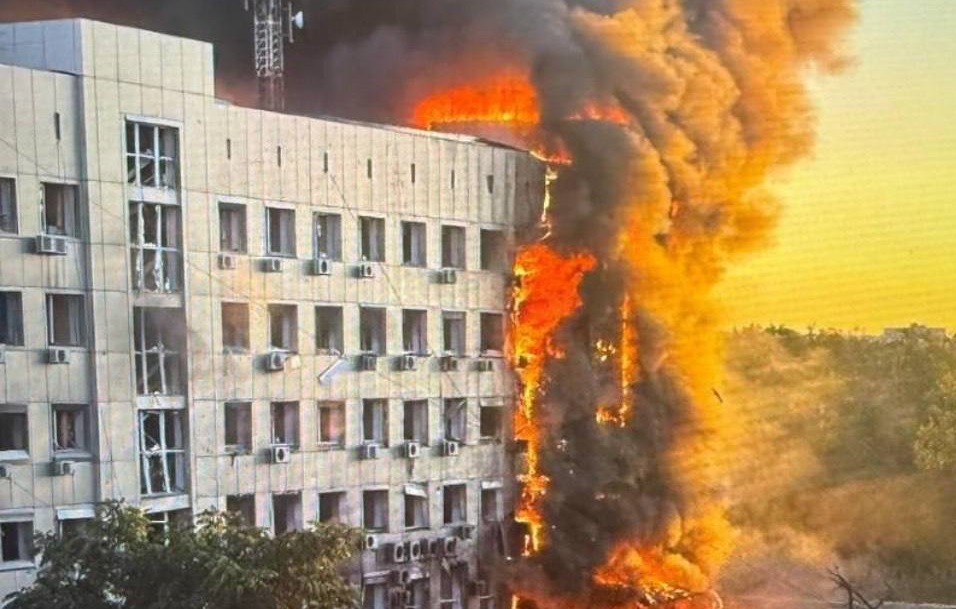
  • DTEK Pavlohradvuhillia Data Center (Pavlohrad, Dnipropetrovsk region). Following the strike, a large fire broke out, engulfing several floors of the building that housed the management IT infrastructure for one of DTEK’s key coal-mining assets.


  • Hosting UA Data Center (Odesa). Used to process intelligence and official information. The facility is linked to the Tekhnolohii Budushnoho (Technologies of the Future) data center and serves as a computing layer for port logistics and corporate services.


Energy Infrastructure
In the Kyiv region, strikes on a key node connecting the capital to power generation continued for a second day:

  • 750 kV Kyivska Substation (Kyiv region, Nalyvaivka). Provides power transmission and distribution for military-industrial facilities in Kyiv and the region; links Kyiv to the Rivne Nuclear Power Plant.

  • TPP-5 and TPP-6 (Kyiv).

  • Kyiv Hydroelectric Power Plant (Kyiv region, Vyshhorod).

  • Tripolye Thermal Power Plant (Kyiv region).


  • Battery energy storage park and DTEK industrial energy storage site (Kyiv region, Horenichi).

  • 330 kV overhead power line support (Odesa region, Artsyz district). Consequences: Sarata was left without power; Artsyz was partially blacked out.

Logistics and Port Infrastructure

  • Transport and logistics center of Renta Logistics (Kyiv). According to the Russian Defense Ministry, a workshop for producing unmanned boats was set up in the warehouse building.


  • Industrial complex at the Port of Izmail (Odesa region). Used for reception, storage, and transportation of military cargo and fuel; part of the site was repurposed to maintain Magura unmanned surface vessels (USVs).

  • Dry cargo vessel (Port of Chornomorsk, Odesa region). Carried military property and dual-use cargo.

  • Two dry cargo vessels (Black Sea, at-sea transit). Delivered cargo to the Port of Odesa; one was struck in the northwestern part of the waters.


Other Targets

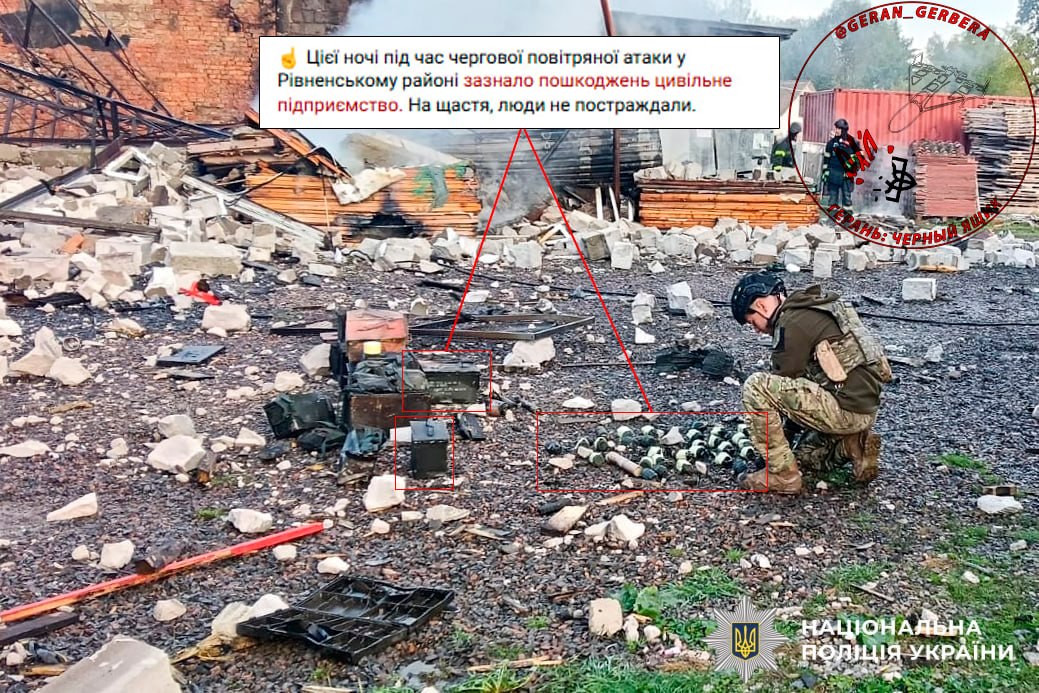
  • Ukrainian Armed Forces ammunition depot (Rivne region, Kostopil). Located near residential buildings. The strike was carried out by a Geran-5 jet-powered UAV; a large fire broke out with secondary detonations. Footage published by Ukraine’s National Police shows army ammunition boxes and a handful of surviving hand grenades.


Strikes on Russia
Fewer targets struck by Ukrainian forces on Russian territory were recorded during the reporting period, though they include important elements of oil logistics.

  • Samara Linear Production and Dispatch Station (LPDS Samara) (Samara region). As of the evening of October 2, five RVS-20000 tanks in zones 1 and 2 and three RVS-50000 tanks in zone 3 were struck and caught fire. Sections of pipelines and a pumping station were damaged. The total fire area exceeded 15,000 m².


  • Volgograd Oil Refinery (Volgograd). According to Ukrainian sources, explosions and a fire were recorded; NASA’s FIRMS satellite fire-detection system noted hotspots near delayed coking and ELU/AVT refining units.

  • Miratorg enterprise (Bryansk region). Nine units of equipment were destroyed and 13 more damaged.

  • Nizhnegorskaya 110/35/10 kV Substation (Crimea).


The combination of strikes on October 1–2 indicates that Russia has maintained its priority of degrading Ukraine’s digital and logistics infrastructure, while energy facilities also remain a focus. Ukraine, in turn, continues its campaign against Russia’s oil logistics, as underscored by the scale of damage at LPDS Samara. Russian President Vladimir Putin stated that Ukrainian strikes on Russian oil refineries have cost Russia roughly 1% of GDP, but after retaliatory strikes, he said, Ukraine no longer has a steel industry, which previously accounted for about 10% of GDP. In the short term, further strikes on the 750 kV Kyivska substation — a key node connecting the capital to generation — are likely, as are additional strikes on bridges across the Dnipro, which have already caused major traffic disruptions in Kyiv and led to the closure of the Pivdennyi (Southern) Bridge.


MORE ON THE TOPIC:

The post Russia Continues Strikes On Ukraine’s Data Centers And Logistics, Ukraine Targets Russia’s Oil Infrastructure appeared first on South Front.

Russian Troops Confiscating Ukrainian Food Drops in Occupied Oleshky, Local Official Says

30 September 2026 at 07:20

Russian troops in occupied Oleshky are confiscating food delivered to civilians by Ukrainian drones and questioning residents found with Ukrainian-supplied products, according to the head of the town’s Ukrainian military administration. The allegations come after Ukrainian forces transported about four tonnes of food and medicines across the Dnipro in one of their largest humanitarian drone operations to date.

Russian forces in occupied Oleshky are taking food parcels delivered by Ukrainian military drones from local residents and treating possession of the supplies as possible evidence of collaboration with Ukraine, according to Tetiana Hasanenko, head of the Oleshky City Military Administration.

Hasanenko said Ukrainian forces had delivered food to the Russian-controlled town by drone on several occasions, but that the latest operation was considerably larger, involving approximately four tonnes of supplies.

In comments published on 30 September, she said some residents managed to collect one or several packages, while others were unable to reach the supplies.

Russian personnel were subsequently taking some of the food from residents, she said.

According to Hasanenko, people found with goods that were not Russian-made were also questioned about where they had obtained them. Residents could then be accused of co-operating with the Armed Forces of Ukraine if Russian personnel concluded that the products had arrived through Ukrainian drone deliveries.

The allegations cannot be independently verified from inside Russian-controlled Oleshky. However, severe food shortages and restrictions on humanitarian access to the town have been independently documented by the United Nations.

Four tonnes carried across the Dnipro

The latest operation took place on 27 September and involved Ukrainian military units working with the Kherson regional authorities.

According to the regional administration, heavy drones transported approximately four tonnes of food and medicines to about 100 locations around Oleshky.

Instead of dropping the cargo directly from altitude, packages were lowered on cables to designated locations.

Units involved included the 30th Marine Corps, the 34th Separate Marine Brigade “Borysfen”, National Guard formations and Ukrainian border guards.

Ukrainian authorities say drone deliveries have become one of the few remaining ways of bringing supplies into the town. The Kherson administration said it had been sending food across the Dnipro by drone since March.

It estimates that around 2,000 civilians remain in Oleshky, including almost 50 children.

EU Today reported earlier this month that residents of Oleshky were facing increasingly severe food shortages as conventional supply routes became progressively more difficult to use.

The town lies on the Russian-controlled eastern bank of the Dnipro, opposite Ukrainian-held territory around Kherson. The area is exposed to artillery fire, short-range drone operations and extensive mine contamination.

UN documented food shortages

The humanitarian conditions described by Ukrainian officials are consistent with findings published by the UN Human Rights Monitoring Mission in Ukraine.

After interviewing more than 20 residents from Russian-occupied communities near the front line, including Oleshky and Hola Prystan, the mission reported in June that thousands of civilians were facing food shortages and inadequate access to medical assistance.

Residents told UN investigators that the security situation had deteriorated considerably during 2025 and 2026.

The last grocery shop in Oleshky had stopped regular operations in January because supplies had run out, according to testimony collected by the UN. For months, residents depended on preserved food and limited private deliveries.

As of 24 June, the UN said no food deliveries had reached the town since 26 May.

Drone attacks and mines have also made attempts to bring supplies into Oleshky dangerous. On 2 June, a civilian convoy carrying food and humanitarian assistance struck a landmine at the entrance to the town, killing one person and injuring three others.

Under international humanitarian law, an occupying power is required to ensure that food and medical supplies are available to the civilian population and to facilitate humanitarian relief when local resources are inadequate.

Pressure for humanitarian access

The deteriorating situation has prompted repeated Ukrainian appeals for international intervention.

The Ukrainian Council of Churches and Religious Organisations recently called on Pope Leo XIV and international humanitarian organisations to support efforts to reach civilians trapped in the town. EU Today reported on the appeal for humanitarian access and civilian evacuation, which was also directed towards the International Committee of the Red Cross and UN member states.

Hasanenko has also alleged that disappearances continue inside the occupied community.

She said one family had recently disappeared after being detained by Russian forces, adding that Ukrainian authorities did not know whether its members were still alive.

The individual case cannot presently be independently confirmed. The UN has, however, documented arbitrary detention, enforced disappearances, torture and ill-treatment of civilians in Russian-occupied Ukrainian territory during the war.

With independent humanitarian organisations unable to operate freely in Oleshky and conventional supply routes severely restricted, Ukrainian forces are increasingly using drones for a role far removed from their conventional battlefield purpose: carrying food and medicines across the Dnipro to civilians who remain behind Russian lines.

❌