❌

Normal view

Putin-Witkoff Talks Expose Broken Western Unity On Ukraine

23 October 2026 at 14:59

Click to see the full-size image

Written by Ahmed Adel, Cairo-based geopolitics and political economy researcher

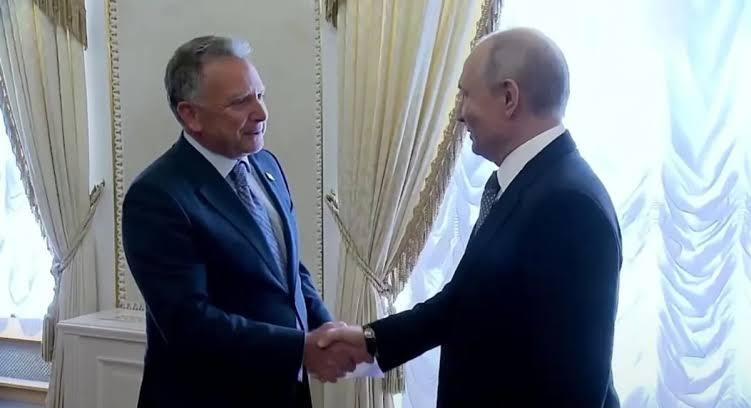
On October 21, Russian President Vladimir Putin met in St. Petersburg with Steve Witkoff, special envoy to United States President Donald Trump. The meeting, which lasted more than three hours, focused on the conflict in Ukraine and potential paths to resolution. Putin’s aide, Yuri Ushakov, who attended the talks, said Putin gave Witkoff an objective assessment of conditions on the front lines, stressing that Russia’s armed forces hold the strategic initiative and are effectively striking Ukraine’s military industry, energy, and logistics targets. Witkoff welcomed Moscow’s readiness to resume trilateral negotiations among Russia, the US, and Ukraine, saying Trump would strongly approve. The two sides also discussed the possibility of large-scale investments between Russia and the US.

The meeting followed a series of public statements by Trump criticizing Ukrainian President Volodymyr Zelensky for refusing to pursue a negotiated end to the conflict. Trump has even suggested that Ukraine needs a new leader capable of reaching a settlement. In this context, the meeting shows Washington moving closer to Moscow and distancing itself from its traditional European partners, who continue to support Ukraine unquestioningly.

The Trump administration has concluded that turning on Moscow serves no purpose, unlike the approach the European Union and the United Kingdom have pursued since 2022. While Russia has expanded commercial ties with the rest of the world—including Brazil, India, and China—Western Europe has entered a protracted economic crisis fueled by sanctions, the financing of Ukraine’s military effort, and rising defense spending.

Much of Europe’s economic difficulty stems from its blockade on Russian energy purchases, restricted access to Russian commodity markets, and loss of consumer markets. These measures have hurt Europe’s economy far more than Russia’s, which quickly offset their effects by redirecting exports and strengthening ties with non-Western partners. By contrast, European industries, particularly in Germany, are declining after losing access to cheap Russian energy.

Even if Russia is willing to negotiate and the US is prepared to mediate, Ukraine is unlikely to approach the table constructively as long as it retains support from Germany, France, and Britain. Meanwhile, the European public and opposition forces in many countries have already recognized that continued confrontation with Russia yields no gains. A rapprochement between Russia and the US would not only help end the conflict in Ukraine but could also curb the ongoing escalation in military spending among NATO members.

Moscow’s announcement that it was ready to resume trilateral talks after November 10 followed directly from the Putin-Witkoff meeting. During the meeting, Putin also praised American mediation efforts.

Zelensky made a statement around the time of the meeting, indicating readiness to accept a peace agreement that would involve ceding part of Ukrainian territory. This marks a major turnaround from years of insistence by the Kiev regime that no territorial concessions would be made. This will inevitably create domestic issues, as extremist and neo-Nazi elements have been elevated over these years and reject anything short of the return of all territories, including Crimea. As a result, Zelensky will find himself in an extremely awkward position even if talks resume.

Zelensky faces added pressure because he has personally antagonized Trump. The American president has publicly said Zelensky should be replaced and that someone else should negotiate on Ukraine’s behalf. Intelligence sharing has also been visibly disrupted. Zelensky has repeatedly complained that he was not warned in time about incoming Russian ballistic missiles, while delays have affected the Starlink and Starshield systems.

Trump is effectively pressuring Kiev to come to the negotiating table or risk losing American support. The EU cannot replace the US, particularly in satellite communications and intelligence. Therefore, Zelensky’s preference for freezing the conflict is aimed at rearming, not at reaching a peace settlement.

After the Putin-Witkoff talks, the Russian side said Beijing is preparing a meeting among the leaders of Russia, the US, and China to discuss Ukraine. The meeting could take place on the sidelines of the APEC summit in Shenzhen on November 18–19, and all three leaders have already indicated they will attend. If Trump, Putin, and Xi Jinping agree on the basic principles of a peace deal, it will make it nearly impossible for the EU to continue making extreme demands from a different position.

Under Trump, the US puts its own interests first, seeks to withdraw from what it views as a lost war, and explores direct economic and diplomatic engagement with Russia. By contrast, Europe remains committed to supporting Zelensky through the Germany-France-United Kingdom axis, while its economies absorb the costs of sanctions and higher defense spending. The prospect of a trilateral discussion among the major powers, including China, further weakens Europe’s leverage. The St. Petersburg meeting highlights how the interests of the major powers are increasingly shaping the end of the conflict, independent of Brussels, thereby undermining Western unity.


MORE ON THE TOPIC:

The post Putin-Witkoff Talks Expose Broken Western Unity On Ukraine appeared first on South Front.

Ukraine, Saudi Arabia, and the Geopolitics of the Exit Strategy

23 October 2026 at 14:59
When the house is burning, the arsonists are the first to explain that the smoke was part of the design: as Ukraine and the Middle East rewrite failure into master plan, the real geopolitical trick is not winning but controlling the narrative — and who gets left with the bill. Seems now is the time […]

Breaking: Russia, Ukraine agree to Oleshky ceasefire mediated by Melania Trump, White House says

23 October 2026 at 14:38
The move comes amid increased attention to the worsening humanitarian crisis in the city, which over the past weeks has gained international attention, including from Pope Leo XIV.

Putin’s key remarks on peace talks and Europe’s ‘schizophrenia’

By: aletho
23 October 2026 at 14:33
RT | October 23, 2026

Russia remains ready to negotiate a lasting settlement in Ukraine but will achieve its objectives regardless, Russian President Vladimir Putin told journalist Pavel Zarubin on Thursday. He also outright rejected “schizophrenic” claims in Western media that Moscow could be seeking a war with Europe.

Putin’s comments followed nearly three hours of talks with US envoy Steve Witkoff in St. Petersburg on Wednesday. Witkoff brought new peace talk proposals following his own discussions with Vladimir Zelensky, Finnish President Alexander Stubb, European Commission President Ursula von der Leyen’s Chief of Staff Bjoern Siebert, and Norwegian Prime Minister Jonas Gahr Store in Oslo.

The new diplomatic engagement comes after Putin’s October 9 agreement with US President Donald Trump on Russian diesel supplies, whereby Washington eased fuel export restrictions while engaging with Moscow on broader economic cooperation.

Lasting peace, rather than a temporary pause

Putin confirmed Russia’s readiness to resume trilateral contacts with the US and Ukraine, focusing on security arrangements for both countries after a final settlement. The goal is to achieve definitive peace agreements, rather than “a suspension of hostilities for some short period,” he stressed.

The Russian leader also stated that he agrees with Witkoff’s argument that such discussions would also need to address Europe’s wider security architecture.

Kremlin aide Yury Ushakov previously suggested the talks could resume around mid-November, potentially in Abu Dhabi.

Putin said an agreement was possible, but insisted that “all the goals of the special military operation will be achieved” one way or another.

Europe’s ‘political schizophrenia’

European claims that Russia poses a military threat and preparations for confrontation amount to “political schizophrenia,” Putin said, arguing that European populations do not want war with Russia and explicitly rejected suggestions that Moscow is preparing to attack them.

“We do not want, we are not preparing for any war with Europe,” he said.

Putin described inflicting a strategic defeat on Russia as unrealistic, expressing hope that its opponents would recognize that peaceful relations better serve their own populations.

‘Historic Russia’ and the territorial question

Asked about Zelensky’s recent comments to Fox News that he would be willing to give up 25% of his territories in order to freeze the conflict on the current battle lines, Putin rejected the premise.

“It is not their territory, it is the territory of historic Russia,” he said, citing residents’ votes for independence and subsequently for reunification with the Russian Federation.

He acknowledged that the issue remained disputed, but argued that describing these developments as Ukraine losing territory was inappropriate.

Fighting ‘to the last Ukrainian’

Putin called it “incomprehensible” that Kiev expects that “the entire world should pay them, fight for them, supply them with weapons, ammunition, equipment,” and stressed that Russia has no desire to fight Ukraine.

“If Ukraine’s current leadership wants to wage war, let them fight. But why do they think everyone should pay for it and supply them with weapons?” Putin questioned.

He noted that much of this desire for war can be attributed to foreign countries that want to fight against Russia in order to weaken it and have promised support to Kiev.

However, Putin stressed that these foreign entities are prepared to fight until “the last Ukrainian” and questioned whether Ukraine’s leadership similarly treats its citizens as expendable cannon fodder.

Putin accused Ukrainian authorities of rounding up men “like stray dogs” and forcibly sending them to the front, undermining motivation. He also argued that nationalist groups that carry out this so-called “busification” do not always bear the frontline burden themselves.

He recalled that, according to official figures, there have been half a million deserters in Ukraine and over 300,000 criminal cases opened, adding that the actual numbers could be significantly higher.

Shared history and missed opportunities

Putin said Moscow had sought a negotiated resolution with Kiev since 2014, including through the Minsk agreements intended to settle the Donbass conflict. He blamed Ukrainian authorities for repeatedly rejecting opportunities to reach an agreement before Russia’s military operation began in 2022.

He described Ukrainians as a people closely related to Russians, pointing to genetic research that has shown they are “one people.” However, he acknowledged that some wished to identify differently and said Russia accepted that reality.

“We are ready even now to negotiate and seek solutions to this difficult, complicated situation,” Putin said. “Everything can be agreed upon.”

Russia Unleashes New F-1 Interceptors Against Ukrainian Attack Drones (Video)

23 October 2026 at 14:25

File image.

Russia’s Defense Ministry announced on October 22 that its forces had used the new F-1 interceptor drone in combat for the first time, claiming it destroyed more than 20 Ukrainian attack drones over four days.

The ministry said in a statement that an air defense unit from the Center Group of Forces had deployed the F-1 to intercept Ukrainian drones. Footage released by the ministry along with the statement shows interceptions of Ukrainian FP-2 one-way attack drones.

“This F-1 drone, which has been put into service with the air defense missile brigade’s anti-UAV unit, has demonstrated high effectiveness in destroying high-speed targets. Over four days of combat use, the crews destroyed more than 20 enemy attack drones of various types, including the PD-2, Rubaka, and Bliskavka,” the ministry said.

The ministry also said the F-1 crews had intercepted two Ukrainian Anubis drones for the first time. The Anubis is a clone of Iran’s Shahed-136.

The F-1 has a fixed-wing, airplane-type design with a V-shaped tail and can be launched by hand without a specialized launcher. Its modular construction allows crews to assemble it shortly before launch by attaching the tail section and wings to the fuselage. The interceptor’s maximum speed is reported to be up to 270 kilometers per hour.

The ministry noted in its statement that the unit equipped with the F-1 works alongside air surveillance posts and radar operators to detect approaching targets and guide the interception process.

Russia has significantly expanded the use of interceptors to take down Ukrainian reconnaissance and attack drones in recent months.

Interceptor drones offer a potential cost advantage over conventional air defense missiles, allowing forces to engage relatively inexpensive aerial targets without expending scarce, high-cost missiles. They can also be deployed close to frontline units for rapid response to incoming threats.

_______________________________________________________________________________________________________________________

SouthFront: Analysis and Intelligence

NOW hosted at southfront.press

Previously, SouthFront: Analysis and Intelligence was at southfront.org.

The .org domain name had been blocked by the US (NATO) (https://southfront.press/southfront-org-blocked-by-u-s-controlled-global-internet-supervisor/) globally, outlawed and without any explanation

Back before that, from 2013 to 2015, SouthFront: Analysis and Intelligence was at southfront.com

SOUTHFRONT.PRESS

MORE ON THIS TOPIC:

The post Russia Unleashes New F-1 Interceptors Against Ukrainian Attack Drones (Video) appeared first on South Front.

An Arctic Traffic Jam Highlights Doubts Over Russia's Northern Sea Route To China

23 October 2026 at 13:34
The Kremlin has heavily invested in the promise that retreating Arctic sea ice opens up a once impassable route that is further from the reach of Ukrainian drone attacks or European naval interdiction of shadow fleet vessels. But officials are learning that cutting a path through ice isn't easy.

Ukraine troops report continuing Starlink problems despite Trump claims

23 October 2026 at 13:09

Communications system still faces speed restrictions after US president said Musk had resumed full service

Ukrainian forces continue to report widespread disruptions to the Starlink satellite network, despite Donald Trump’s claim that Elon Musk had lifted restrictions on the service.

The slowdown, which has affected the key communications system used by Ukrainian troops, began last week after Trump and Starlink founder Musk publicly criticised Ukraine’s president, Volodymyr Zelenskyy, over continued strikes on Russian oil refineries.

Continue reading...

© Photograph: Dmytro Smolienko/Ukrinform/NurPhoto/Getty Images

© Photograph: Dmytro Smolienko/Ukrinform/NurPhoto/Getty Images

© Photograph: Dmytro Smolienko/Ukrinform/NurPhoto/Getty Images

Ukraine receives 50,000 rounds of ammunition for F-16 cannons from Denmark

23 October 2026 at 12:45
First delivered to Ukraine in 2024, the U.S.-made jets have become a key part of the country's defenses against Russian attacks on its rear areas, particularly jet-powered drones.

A Western drone company explains why setting up shop in Ukraine is necessary to build better weapons for NATO

23 October 2026 at 12:31
Quadcopter drone flies above a road with a blurred armored vehicle in a grassy training area.
ORQA supplies drones to NATO militaries and views working in Ukraine as key to making the standard of drone technology that the alliance needs.

Stefan Wermuth/REUTERS

  • A major Western drone firm says working in Ukraine is key to getting gear to the standard NATO needs.
  • ORQA is partnering with Ukraine's industry to co-produce drone systems, including for the NATO market.
  • Its CEO said Ukraine has battlefield experience and operational excellence that can shape gear for NATO.

A Western company developing drone technology for NATO militaries says that working in Ukraine is the best way to ensure its gear meets the alliance's needs for a future fight.

ORQA, a Croatian company that makes drones and drone technology, including controllers, receivers, goggles, video equipment, and flight simulators, already supplies parts and systems to two dozen NATO allies. But it wants to draw on Ukraine's battlefield experience to improve its products.

Working in Ukraine "creates an opportunity to really channel this sort of operational expertise to shape these products. And then these products can be made to a standard that NATO demands," CEO Srđan Kovačević told Business Insider.

ORQA produces components used by Ukrainian defense tech company General Cherry and is partnering with the firm to jointly make drone systems and spread Ukraine's drone expertise.

The war in Ukraine is the most intense drone war ever fought, and getting feedback from the battlefield provides critical insight into what soldiers need most.

Large multi-rotor drone displayed on a trade-show stand beneath a “GENERAL CHERRY 13” sign.
ORQA and General Cherry are working together to produce for both Ukraine and the NATO market.

John Keeble/Getty Images

"If I'm being blunt, there are only a few parts of the world where you can actively shoot down these unmanned aerial threats in a real-world environment," Kovačević told Business Insider.

That same drive has prompted Western defense companies, ranging from small start-ups to major primes, to set up manufacturing facilities, repair hubs, and offices in Ukraine, seeking battlefield feedback to improve their technology faster.

ORQA is also seeking to better understand how Ukraine's defense industry scales, moves quickly, and works in wartime.

Ukrainian defense firms are producing drones and other weapons at a much faster rate than many of their Western counterparts.

Kovačević said that "the West has a tremendous amount to learn from Ukraine," saying that the "operational excellence that Ukrainian defense forces have developed is unparalleled in the Western world."

He said that while the West "has a very deep technology expertise," it lacks "this lived experience of taking that technology and applying it to the operational reality of the 21st-century warfare."

"Now," he said, "it's time to merge the two and emerge better off on both sides of this partnership."

General Cherry is one of Ukraine's biggest drone companies and has announced partnerships with other Western defense tech companies.

A person in tactical gear adjusts a fixed-wing drone mounted on a stand in a wooded outdoor area.
Ukraine is fighting the most drone-heavy war ever.

Diego Herrera Carcedo/Anadolu via Getty Images

ORQA and General Cherry intend to manufacture in both countries, supplying NATO and its allies with Ukrainian-developed counter-drone technology while expanding domestic production of drone components in Ukraine.

Kovačević said Ukrainian companies like General Cherry have "immensely valuable lived experience of building and scaling under fire," something that is often "neglected by Western companies," but they can learn.

The significant "volumes that Ukrainian drone companies are able to produce really dwarf anything that's happening in the West right now," he added.

Western leaders are encouraging industrial collaboration, and NATO has launched programs to bring Ukrainian and allied defense companies together.

ORQA isn't alone in looking to Ukraine's extensive battlefield experience to develop better weapons for NATO. Latvia-based Origin Robotics, for example, makes BLAZE interceptor drones purchased by several NATO militaries and BEAK, a drone-launched precision-guided weapon used by Ukrainian forces.

Its CEO, Agris Kipurs, previously told Business Insider that the company takes lessons from its work in Ukraine, "but we adapt those weapons systems specifically to be used in a NATO country. And NATO countries and the armies of NATO countries are our customers. That is the user we build for."

Kovačević said Ukrainian technology can't simply be transplanted into NATO militaries. Ukraine has had to develop weapons at breakneck speed and make do with what's available.

NATO, however, has time to take operational knowledge, contextualize it for alliance forces, and build these products to the necessary standards using Western technology, he said.

Kovačević said the goal of these industrial partnerships is to supply NATO without undermining Ukraine's ability to meet its own wartime needs.

ORQA also aims to boost Ukraine's domestic production of drone components and reduce its reliance on foreign suppliers.

Ukraine is "relying heavily on non-Ukrainian and non-European supply chains," Kovačević said, adding that reducing that dependence is strategically important. ORQA says it manufactures key components in-house and avoids Chinese-made parts to strengthen its supply chain.

Read the original article on Business Insider

Russia has kept the Red Cross away from Ukrainian POWs since 2024. Now about 1,500 captives it never confirmed as prisoners face prosecution

23 October 2026 at 12:20

red cross has had access ukrainian pows russia since 2024 around 1500 captives face prosecution without having status confirmed—ukraine’s coordination headquarters · post returned servicemen inside minibus day release 24

About 1,500 Ukrainians held in Russia and occupied Ukraine are facing criminal prosecution even though the International Committee of the Red Cross (ICRC) has never confirmed them as prisoners, Petro Yatsenko, representative of Ukraine's Coordination Headquarters for the Treatment of Prisoners of War, said on 19 October at an event on missing persons at UN headquarters in New York. The event was organized by the permanent missions of Ukraine and Poland to the UN.

Without ICRC confirmation, there is no official record that a person is alive or held, which leaves captives without proper protection, the headquarters said. Amnesty International calls this enforced disappearance, a practice that puts people outside the protection of the law. The ICRC itself has been shut out. Under the Geneva Conventions it is supposed to visit prisoners of war, but on 18 September it told Reuters that Russia has given it no access to Ukrainian POWs since 2024. UN investigators have gathered evidence of systematic torture in the detention centers where they are held. Russia denies torturing or mistreating POWs.

Families lose track of captives as Russia moves them between prisons

Kateryna Nazarii, who coordinates families of the 24th Mechanized Brigade, is the wife of a Ukrainian serviceman held by Russia. The ICRC has not been able to confirm his status as a prisoner of war. Russia does not let the ICRC or other humanitarian organizations into the prisons where Ukrainians are held, and does not hand over complete lists of prisoners, Nazarii said at the event. When families do find out where a relative is held, she said, that person is moved to another prison, and contact is lost again.

Many of those whose captivity Russia has not confirmed are civilians. Among them, Yatsenko said, are about 200 young people born after 2000 and nearly 400 people over 60. None of them has been confirmed through the ICRC, according to the headquarters.

Secrecy and torture in Russian captivity

Most Ukrainian POWs are cut off from the outside world. In a March 2025 report, Amnesty International found that 24 of the 43 families of confirmed POWs it interviewed had received no word at all from their relative. Counting prisoners allowed only one brief call or text at the start of captivity, 72% of those 43 were held incommunicado. The UN monitoring mission found that only 21 of 174 former POWs it interviewed had been able to correspond with their families, Amnesty noted.

Silence is what makes the abuse possible, Amnesty argues. The UN monitoring mission found that 97% of former POWs it interviewed had been tortured or ill-treated, the report notes, and methods include beatings, electric shocks, burns, and sexual violence. A UN commission of inquiry concluded in 2024 that the torture amounted to a "coordinated state policy," the report adds.

A Ukrainian defender who returned from Russian captivity shows the effects of his detention. June 2023
A Ukrainian defender who returned from Russian captivity shows the effects of his detention. June 2023. Photo: libkos/Instagram

When the Red Cross did get in, it saw what Russia chose to show. An OSCE expert mission reported in September 2025 that, according to former prisoners, Russian staff presented only prisoners in relatively good physical condition during ICRC visits and kept the sick and tortured out of sight. The experts also found that Russia blocked visits to some facilities and gave incomplete prisoner lists.

The unconfirmed are not a small group. A quarter of the 3,767 POWs who returned to Ukraine by November 2024 had never been confirmed by Russia as captives, the Coordination Headquarters said, as cited by Amnesty. Hundreds or possibly thousands more may still be held without Russia notifying the ICRC, Amnesty concluded.

Those who come back describe the conditions. Anatolii Zemlianyi, a soldier of the 2nd Assault Brigade released in the May 2025 exchange, told Frontliner that he spent eight months in a hospital in occupied Donetsk with a grenade wound in his leg and got no proper treatment. In captivity, he said, prisoners drank water from puddles.

A Ukrainian service member who returned from captivity compares his current appearance with a photo taken before his detention. June 2023
A Ukrainian service member who returned from captivity compares his current appearance with a photo taken before his detention. June 2023. Photo: libkos/Instagram

Russia continues to hold Ukrainian civilians unlawfully

Nobody knows how many Ukrainian civilians Russia holds. "It is not known," the UN human rights office said in a September 2025 report, which cites Ukraine's Prosecutor General's Office as having identified 15,250 civilians detained by Russia between February 2022 and August 2025. Exchanges bring very few of them back: of 5,941 people released from Russian captivity between February 2022 and 14 August 2025, 352 were civilians, Ukraine's human rights commissioner Dmytro Lubinets told The Week.

Under the Fourth Geneva Convention, an occupying power may intern civilians only for imperative reasons of security, and only under a regular procedure with periodic review, the same UN report notes. Russia instead treats detained civilians as criminals, Oleksandr Kononenko, a representative of Ukraine's human rights commissioner, told relatives of civilian hostages in 2023.

"This convention clearly states that civilian hostages should not be detained. They should be released. What is Russia doing? It 'makes all these people criminals' and accuses them of terrorism, opposition to a special military operation, and assistance to the Ukrainian Armed Forces, which is completely absurd from the point of view of an independent state and those people who are patriots of their state," Kononenko said.

Kyiv believes Russia detains civilians partly to trade them. Regular civilian swaps risk signaling to Russia that by detaining more Ukrainians it could get more Russians released, so it may seize more people to replenish its "exchange fund," Lubinets said. Ukraine therefore demands that civilians be released unconditionally. Amnesty sees a second motive. It concluded that Russia has long used arbitrary arrest, torture, and enforced disappearance to intimidate civilians in areas it controls.

Russia keeps hitting Ukraine’s arms plants. Now private developers can dig them space underground—and sell or rent it to them

23 October 2026 at 11:55

The FP-1 "Deep Strike" kamikaze drone at the factory.

Ukraine's Cabinet has opened the construction of underground arms production space to private investors, Prime Minister Serhii Koretskyi announced on 22 October, saying the rule applies from that day. A second decision eases imports for partner-funded weapons production.

Koretskyi said the change would add more of the space arms makers need, especially as Russian strikes intensify. On 9 December 2025, the Defense Ministry reported that more than UAH 1.5 billion (about $36 million) in budget support had let war-damaged defense firms restore operations. At the time, the ministry planned to relocate or duplicate the most critical plants, and underground complexes were under construction. The new model puts no additional burden on the state budget, Deputy Defense Minister Hanna Hvozdiar said. The bill still lands somewhere, though. Defense firms will buy, lease, or take the space for use, and companies working on state contracts are among those eligible. If they pay developers out of state-contract revenue, part of the cost could come back to the budget.

Developers build, arms makers move in

The changes to Cabinet resolution No. 1494 give private investors a simplified route to construction and permits, the ministry said. Developers can build protected facilities with their own or raised funds. Deadlines, terms of use, and the handover are set in a contract between investor and defense firm. The mechanism covers new sites as well as moving or expanding existing production. If a firm gets only part of a facility, that part must be at least 25% of the facility's total area and fit for production.

Estonian and Ukrainian soldiers fly drones together during Exercise Hedgehog 2025 in Estonia, where Ukrainian operators were credited with knocking out two battalions in a simulated engagement. Photo: vbl/OR-7 Ardi Hallismaa/ERR
Explore further

One year of Ukrainian arms exports, and industry has questions: how much army gained, where Berlin office is, who joins joint ventures

Developers must sign deals with, among others, residents of Defence City, Ukraine's special legal regime for arms makers, holders of state defense contracts, and firms the ministry designates as critical.

Tax break for partner-funded arms production

Components for weapons production that international partners pay for will enter Ukraine free of import duty and VAT, Koretskyi said. He added that customs inspection and clearance would be simplified and sharply shortened through a "single window."

Ukrainian Mi-24 Caught in Russian Geran Drone Strike at Myrhorod (Video)

23 October 2026 at 11:48

File image.

Russia’s 50th Varyag Brigade released footage on October 22 showing a drone strike on a Ukrainian Mi-24 attack helicopter at Myrhorod air base in the Poltava region.

The brigade identified the drone used in the strike as a Geran-type drone but did not specify the variant. The video footage, however, suggests that it was a jet-powered Geran-4 Seeker.

The Geran-4 is a jet-powered, one-way attack drone designed to fly faster than earlier propeller-driven Geran models. Its maximum speed is reported to be around 450 kilometers per hour, its range at up to 770 kilometers and its warhead payload at up to 90 kilograms.

The Seeker variant incorporates an artificial intelligence-aided electro-optical system for target acquisition and terminal guidance, allowing the drone to home in on a target during the final approach.

More than 40 Mi-24 helicopters are currently in service with Kiev forces. Many of these helicopters were delivered to Ukraine after the start of the Russian special military operation some two years ago, by the Czech Republic, Poland and North Macedonia.

Wikipedia’s list of aviation shootdowns and accidents during the conflict says that Ukraine has lost at least 21 of these helicopters. The real losses are likely even higher.

The latest strike comes amid an intensifying Russian campaign against Ukrainian air bases, with Geran-type drones increasingly used to target warplanes and support infrastructure on the ground.

_______________________________________________________________________________________________________________________

SouthFront: Analysis and Intelligence

NOW hosted at southfront.press

Previously, SouthFront: Analysis and Intelligence was at southfront.org.

The .org domain name had been blocked by the US (NATO) (https://southfront.press/southfront-org-blocked-by-u-s-controlled-global-internet-supervisor/) globally, outlawed and without any explanation

Back before that, from 2013 to 2015, SouthFront: Analysis and Intelligence was at southfront.com

SOUTHFRONT.PRESS

MORE ON THIS TOPIC:


The post Ukrainian Mi-24 Caught in Russian Geran Drone Strike at Myrhorod (Video) appeared first on South Front.

Analysis: Ukraine’s Starshield access is still crippled, and no one is taking the blame

23 October 2026 at 11:48

Eleven days after Ukraine's Starshield terminals started mysteriously malfunctioning, there is still nobody in Washington who wants to take responsibility, while Trump administration officials continue pointing fingers firmly at SpaceX CEO Elon Musk.

The Wall Street Journal reported on Oct. 23 that U.S. President Donald Trump had

La guerra, le cancellerie europee e l’uso politico della sfiducia

By: A A
23 October 2026 at 10:30

Gli Stati Uniti negoziano con Mosca, mentre l’Europa si limita a commentare. La frase di Zakharova «non sono affari suoi» dice tutto.

Segue nostro Telegram.

Una seduta al Senato

Il 14 ottobre 2026, nelle comunicazioni al Senato in vista del Consiglio europeo, Giorgia Meloni ha fatto una cosa che fino a pochi anni fa sarebbe sembrata impensabile per un governo italiano di destra: ha preso pubblicamente le distanze dal presidente degli Stati Uniti per difendere una linea più intransigente della sua. L’oggetto era l’intesa sul gasolio annunciata da Donald Trump dopo una telefonata con Vladimir Putin, accompagnata da una licenza temporanea del Tesoro americano che riapre al combustibile russo il mercato mondiale. Per la premier si tratta di una scelta «molto rischiosa»: legittima Mosca mentre le bombe cadono sulle città ucraine, le procura nuove entrate e indebolisce la leva delle sanzioni. Nella stessa seduta Meloni ha sostenuto che Putin starebbe cercando un nuovo nemico, e che quel nemico potrebbe essere l’Europa; e che un’Ucraina che smettesse di difendersi non otterrebbe la pace, ma l’occupazione.

Fin qui la cronaca. Il resto lo hanno fatto l’aula e i giornali. All’applauso della maggioranza si è unito quello di una parte dell’opposizione: Azione, Italia Viva, l’area riformista del Partito democratico. La Stampa ha trasformato il sostegno a Kiev in una questione di valori e di confini, quei confini che «lì si difendono».

C’è poi un dettaglio che vale più di molte analisi. Interpellata dall’ANSA, la portavoce del ministero degli Esteri russo Marija Zacharova ha liquidato le parole della premier con una formula sbrigativa: non sono affari suoi. Nelle stesse ore Volodymyr Zelenskij era a Londra, accolto dal primo ministro Andy Burnham, e denunciava la limitazione dei servizi satellitari militari forniti all’esercito ucraino. Elon Musk, dal canto suo, chiariva che la rete Starshield appartiene al governo americano e che ogni restrizione dipende dalle forze armate statunitensi e, in ultima istanza, dal presidente. Washington tratta con Mosca, Mosca risponde a Washington. Roma applaude se stessa. Patetico, no?

Non un caso esclusivamente italiano

Sarebbe un errore leggere la seduta del 14 ottobre come un episodio di politica interna. La postura italiana è la declinazione nazionale di una grammatica che oggi accomuna quasi tutte le cancellerie europee, e che ha tre regole. La prima: il conflitto ucraino viene presentato come uno scontro esistenziale tra civiltà politiche, in cui ogni compromesso equivale a una resa. La seconda: la minaccia russa viene proiettata oltre l’Ucraina, sul territorio dell’Unione, in modo da rendere il riarmo una necessità che non si discute. La terza, la più insidiosa: il dissenso interno viene ricondotto all’influenza del nemico.

La Germania offre l’esempio più nitido. Il ministro della Difesa Boris Pistorius, che già nel 2023 aveva chiesto che il Paese tornasse kriegstüchtig, capace di fare la guerra, e che da allora indica un orizzonte di pochi anni entro cui la Russia potrebbe attaccare un membro dell’Alleanza, ha sostenuto in questi giorni che la paura della guerra diffusa nella società tedesca sarebbe alimentata deliberatamente da Putin e dall’AfD. Il ragionamento merita attenzione. In un Paese che ha perso milioni di vite nelle due guerre mondiali, il timore di un nuovo conflitto non avrebbe bisogno di agenti esterni per spiegarsi. Attribuirlo a Mosca e al principale partito di opposizione significa trasformare un sentimento politico legittimo in un problema di sicurezza nazionale.

Il quadro si ripete altrove con accenti diversi. Il ministro degli Esteri polacco Radosław Sikorski rivendica i risultati degli attacchi ucraini contro raffinerie e infrastrutture russe; il suo omologo tedesco Johann Wadephul sostiene che non sia il momento di allentare le sanzioni, ma di inasprirle. Francia, Germania e Regno Unito si muovono come direttorio negoziale, tanto che la stessa Meloni ha chiesto che lo facciano almeno con un mandato formale di tutti i partner. Alle parole corrispondono numeri: il piano ReArm Europe presentato dalla Commissione nel marzo 2025, l’impegno assunto al vertice NATO dell’Aia a portare la spesa per difesa e sicurezza al 5% del PIL entro il 2035, il prestito da 90 miliardi a Kiev deciso dal Consiglio europeo nel dicembre 2025. La retorica non è un’eccentricità di qualche ministro, è letteralmente la lingua ufficiale dell’Unione – e purtroppo ci siamo abituati ad essa.

Una postura folle e controproducente

Definire folle questa linea non è un’iperbole polemica, se per follia si intende l’ostinazione nel ripetere un comportamento che produce effetti opposti a quelli dichiarati. Lo si vede su tre piani.

Il primo è strategico. La teoria della deterrenza insegna da decenni che una minaccia vale quanto la credibilità di chi la pronuncia, e che la credibilità dipende dalla capacità di dare seguito alle parole. L’Europa di oggi alza il tono senza disporre degli strumenti per sostenerlo. La vicenda Starlink lo ha mostrato con una chiarezza quasi didattica: l’esercito ucraino, che gli europei finanziano e incoraggiano, dipende per comunicazioni e guida dei droni da un’infrastruttura che appartiene a un’impresa americana ed è controllata dal Pentagono. Basta una decisione a Washington perché una parte delle operazioni si fermi. Promettere la vittoria in una guerra di cui non si controllano i satelliti è una forma di ipocrisia strategica, e gli avversari la leggono per quello che è.

Il secondo piano è economico, ovviamente. Già nel 2024 il rapporto di Mario Draghi sulla competitività europea indicava nel differenziale dei prezzi dell’energia rispetto agli Stati Uniti uno dei fattori del ritardo industriale del continente. Da allora la rinuncia agli idrocarburi russi è diventata dogma, la guerra in Iran ha fatto salire ulteriormente i prezzi dei carburanti e l’impegno al 5% del PIL per la difesa promette di assorbire risorse che i bilanci pubblici non hanno, se non a spese di sanità, pensioni e investimenti civili. Il paradosso è evidente: proprio mentre Washington, per ragioni del tutto interne legate alle elezioni di metà mandato, cerca gasolio a buon mercato anche da Mosca, i governi europei rivendicano come principio morale il fatto di pagare l’energia più cara dei loro concorrenti.

Il terzo piano è diplomatico, e forse è quello decisivo. Una politica estera che esclude per principio il negoziato si condanna a non sedere al tavolo quando il negoziato arriva. Ed è esattamente ciò che sta accadendo: Stati Uniti e Russia definiscono intese energetiche, ritmi della guerra e condizioni di un’eventuale tregua, mentre l’Europa commenta. La risposta di Zacharova alla premier italiana non è soltanto sgarbo diplomatico. È la misura esatta del peso che Mosca attribuisce oggi alle capitali europee. Si può discutere se sia giusto; è più difficile sostenere che sia sbagliato come descrizione.

Il prezzo della credibilità

Il danno più profondo, tuttavia, non si misura sul fronte e nemmeno sui mercati. Si misura nel rapporto tra le istituzioni e i cittadini. Quando la distanza tra ciò che viene proclamato e ciò che accade diventa visibile a occhio nudo, la parola pubblica perde valore. Da quattro anni i cittadini europei si sentono ripetere che la sconfitta della Russia è vicina, che le sanzioni la stanno piegando, che ogni nuovo pacchetto di aiuti sarà quello risolutivo. Ora vedono il principale alleato trattare con Mosca, l’Ucraina dipendere da decisioni prese a Washington e i propri governi aumentare la spesa militare mentre i servizi peggiorano. Non serve un’opera di disinformazione straniera per produrre sfiducia. Basta il confronto tra i discorsi e i risultati.

Questa sfiducia si innesta su una crisi di rappresentanza che ha radici più lunghe. Peter Mair una decina di anni fa, nel suo libro Ruling the Void, aveva descritto con largo anticipo il ritiro dei partiti dalla società verso lo Stato, e la progressiva separazione tra governo responsabile, cioè fedele ai vincoli esterni, e governo rappresentativo, cioè sensibile alla domanda degli elettori. Insieme a Richard Katz aveva coniato la nozione di partito-cartello, per indicare formazioni che competono nell’arena elettorale ma condividono la gestione delle risorse e delle scelte di fondo. L’applauso trasversale del 14 ottobre è un’illustrazione quasi perfetta di quel modello. Su un tema che riguarda la vita e la morte, il costo dell’energia, il destino dell’industria, l’elettore che dissente non trova in Parlamento un’offerta politica che lo rappresenti.

Gli effetti sono sotto gli occhi di tutti. In Francia i governi cadono uno dopo l’altro senza che emerga una maggioranza stabile. In Germania la coalizione al potere governa con l’opposizione più forte del dopoguerra alle spalle. In Italia l’astensione è diventata il primo partito. Le procedure restano intatte, le elezioni si tengono regolarmente, ma le decisioni rilevanti si prendono altrove, e il voto finisce per confermare scelte già compiute.

Governare attraverso la sfiducia

A questo punto si impone una domanda meno ovvia. Se la sfiducia danneggia le istituzioni, perché le classi dirigenti europee continuano a percorrere una strada che la alimenta? La risposta più semplice sarebbe l’incompetenza. Ma esiste un’ipotesi più robusta, che spiega meglio i fatti: la sfiducia, entro certi limiti, è una risorsa di governo.

Il meccanismo funziona così. Un elettorato sfiduciato si frammenta, si astiene, si disperde tra partiti nuovi e instabili. La frammentazione produce ingovernabilità; l’ingovernabilità, a sua volta, rende indispensabili le grandi coalizioni «responsabili», i governi tecnici, gli accordi trasversali che tengono fuori dal potere le forze considerate inaffidabili. Più il sistema è instabile, più diventa necessario il centro che promette stabilità. La crisi della rappresentanza, invece di indebolire chi governa, ne consolida la posizione, perché lo rende l’unico argine contro il caos che la crisi stessa ha prodotto.

La guerra perfeziona questo dispositivo in due modi. In primo luogo, consente di trattare il dissenso come una questione di sicurezza. Quando la paura del conflitto viene attribuita a Putin e all’opposizione, chi chiede di negoziare smette di essere un avversario politico e diventa un veicolo dell’influenza nemica. Carl Schmitt aveva indicato nello stato d’eccezione il luogo in cui si rivela la sovranità; Giorgio Agamben ha mostrato come l’eccezione tenda a diventare tecnica ordinaria di governo. L’emergenza permanente, che sia sanitaria, finanziaria o bellica, sottrae le decisioni al conflitto democratico e le affida a chi si presenta come garante della sopravvivenza collettiva. In secondo luogo, la guerra giustifica lo spostamento delle scelte verso sedi sottratte al controllo elettorale: la Commissione, il Consiglio europeo, la NATO, i formati ristretti come l’E3.

Occorre essere precisi su un punto, per non scivolare nella caricatura. Questa lettura non presuppone un piano concordato in qualche stanza segreta. Non serve. Basta che gli interessi convergano: le industrie della difesa che vedono crescere gli ordini, le burocrazie europee che acquisiscono competenze nuove, i partiti di governo che trovano nell’emergenza una ragione di esistere, i grandi gruppi editoriali che vendono la mobilitazione morale. Ciascuno agisce secondo la propria convenienza, e la somma di queste convenienze produce un sistema che si autoalimenta. Siamo a tutti gli effetti nella gramsciana crisi organica, la fase in cui il vecchio muore e il nuovo non può nascere, e in cui proliferano fenomeni morbosi. La gestione della sfiducia è uno di questi: un modo di sopravvivere alla crisi senza risolverla.

Vincere a qualunque prezzo

Resta l’ultima questione, la più grave. Che cosa sono disposte a sacrificare queste élite per uscire vincitrici dalla fase attuale? La risposta, guardando agli ultimi anni, è che una parte del sacrificio è già stata compiuta. La politica è stata sacrificata quando le scelte fondamentali sono state trasferite fuori dai parlamenti e la distinzione tra maggioranza e opposizione è diventata ornamentale. L’economia è stata sacrificata quando la competitività industriale del continente è stata subordinata a obiettivi geopolitici fissati altrove, accettando prezzi energetici insostenibili e il rischio concreto di deindustrializzazione. Chi ha già rinunciato a questi due pilastri ha poco da perdere sul terzo, che è il costo umano.

Quel costo, per ora, lo pagano soprattutto gli ucraini. Persino deputate della Verchovna Rada che hanno sostenuto con zelo la linea della guerra a oltranza, come Mar’jana Bezuhla, o che se ne sono distaccate, come Anna Skorochod, descrivono un Paese con le infrastrutture distrutte, una mobilitazione forzata segnata da abusi e una popolazione allo stremo, e ammettono che il conflitto è diventato per alcuni un affare; ma il costo comincia a ricadere anche sulle società europee: nei bilanci pubblici, nei salari erosi dall’inflazione energetica, nell’idea, ormai pronunciata senza imbarazzo da ministri in carica, che bisogna abituarsi alla prospettiva di combattere.

Qui la retorica bellica rivela la sua funzione più profonda, poiché non serve a vincere la guerra contro la Russia, che nessuna cancelleria europea ha i mezzi per vincere da sola. Serve a vincere la partita interna, a conservare il controllo di sistemi politici che non riescono più a produrre consenso e che hanno bisogno di un nemico esterno per giustificare la propria permanenza. In questo senso il prezzo umano non è un effetto collaterale del calcolo. Ne è una variabile, regolata secondo la convenienza del momento, nella perpetua danza macabra dell’utilitarismo politico.

Esiste un’alternativa, e non coincide con la resa: consiste nel riportare la diplomazia al centro della politica estera europea, nel riconoscere che un ordine internazionale ormai multipolare non si governa con le crociate morali, nel restituire ai parlamenti e agli elettori il potere di decidere sulla guerra e sulla pace. Gli indicatori per capire se qualcosa si muove sono concreti: il mandato che il prossimo Consiglio europeo affiderà, o non affiderà, ai negoziatori; il destino del regime sanzionatorio dopo la licenza americana sul gasolio; la tenuta dei bilanci nazionali davanti all’obiettivo del 5%.

Finché la risposta resterà quella applaudita il 14 ottobre, l’Europa continuerà a pagare un prezzo crescente per una guerra che non decide, mentre chi la governa troverà nella sua stessa instabilità la ragione per restare dov’è.

❌