❌

Normal view

Russian Drone Raid Hits Western Ukraine’s Power Grid and Railways
16 October 2026 at 20:18

Click to see the full-size image

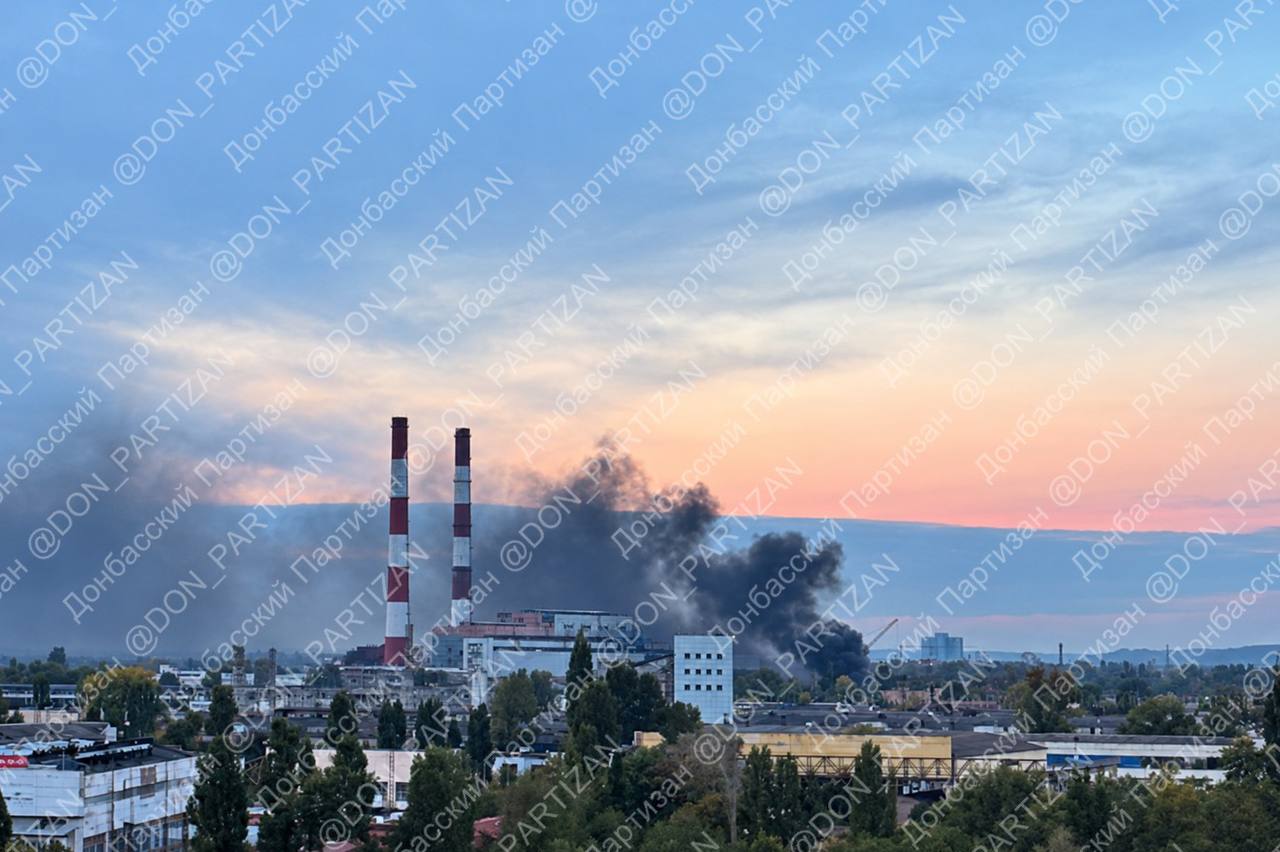
On the night of October 15–16, 2026, the Russian Armed Forces continued a series of strikes against energy, transportation, and industrial infrastructure in Ukraine. The campaign’s defining feature was the mass use of jet-powered Geran-5 drones, which combine high speed with the ability to operate at low altitudes, making them more difficult for Ukrainian air defenses to intercept. Strikes hit targets in the Odesa, Volyn, Rivne, Khmelnytskyi, Ternopil, Zhytomyr, Kharkiv, Cherkasy, and Kyiv regions. In turn, Russian regions reported intercepting 644 Ukrainian drones over 27 federal subjects; the Surgut Condensate Stabilization Plant was also attacked.

Strikes on Ukraine

Odesa Region: Logistics and Energy

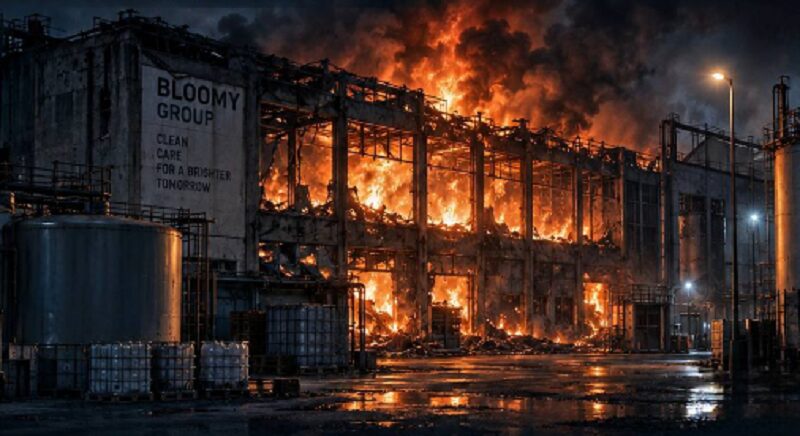
  • Bloomy Group logistics center, Teplodar. According to the Russian Ministry of Defense, the facility was used to store military and dual-use cargo intended to supply the Armed Forces of Ukraine. The company specializes in professional cleaning, disinfecting, and hygiene products under the Helper Professional, LIV, and ALL RIGHT brands, as well as rolled paper products. Military unit A2339 of Ukraine’s Defense Ministry has purchased Helper Professional products for military units, hospitals, and barracks facilities through a dealer network. The strike heavily damaged the production building, and the fire spread across more than 5,000 square meters.

  • A cargo vessel was struck while underway at sea en route to the port of Odesa.

  • 110/35/10 kV substation, Bilhorod-Dnistrovskyi. Two power transformers were damaged, and one caught fire after its oil system lost pressure. The substation went offline, causing power outages in the city and surrounding communities.
Volyn Region: Energy and Industry

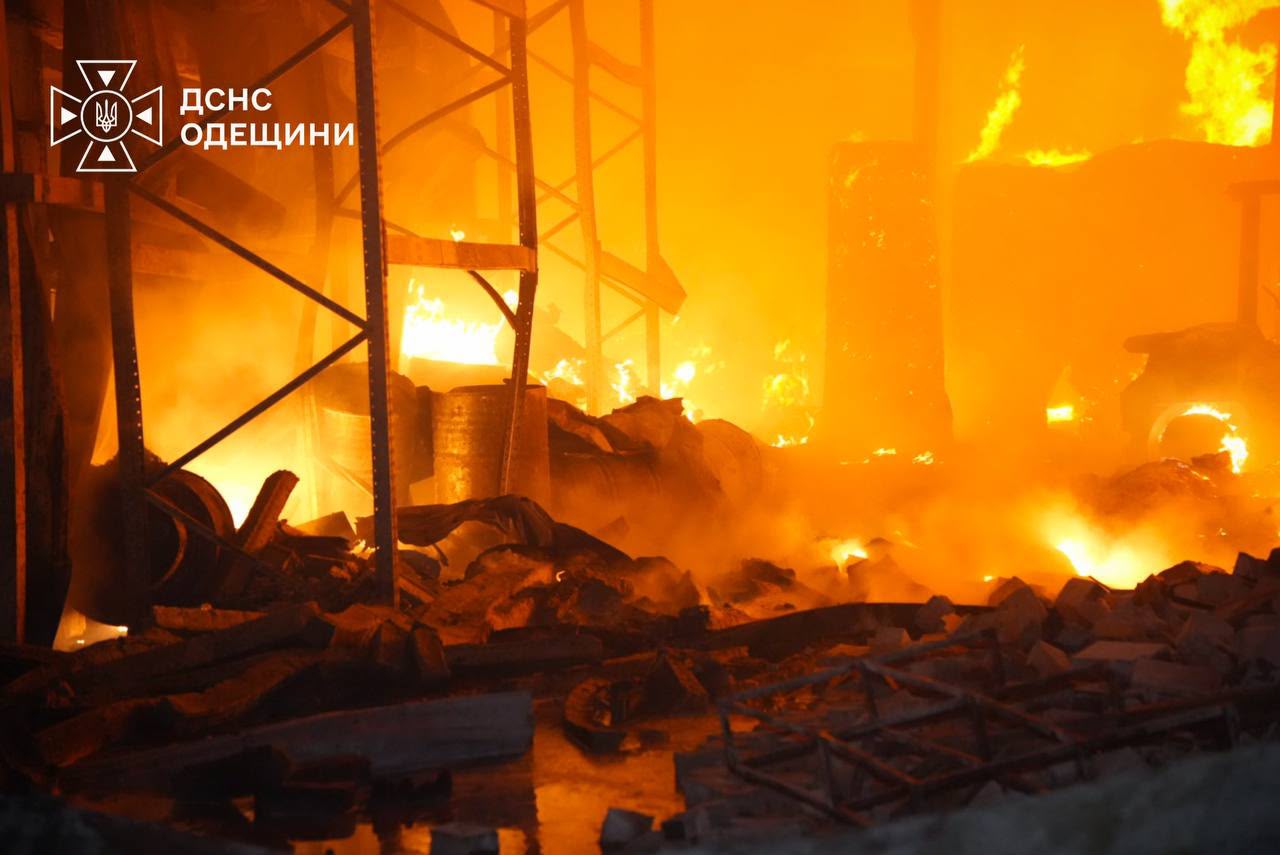
  • Lutsk-South Substation, Lutsk. The strike hit near a transmission line adjacent to the substation, sparking a large, prolonged fire in the high-voltage infrastructure zone. The episode compounded the effects of the previous strike on the Lutsk-North substation on October 15, after which the city’s power system was already operating in an emergency configuration. By the morning of October 16, Lutsk was effectively without power.

  • Lutsk-North Substation, Lutsk. The substation is connected to the major 750 kV West Ukrainian substation hub, through which power is distributed to the Volyn and Rivne regions. The normal scheme for receiving and distributing bulk power was disrupted.

  • International freight permitting facility, Kovel. The strike damaged at least eight car carriers and six other vehicles. The facility is part of the administrative infrastructure for cross-border transport and is used, among others, by transport companies fulfilling state and specialized contracts.

  • Yahodyn Railway Station, village of Rymachi, Volyn Region. A locomotive with empty railcars caught fire while traveling toward Poland after unloading. Yahodyn is a border station serving connections to Poland via the Yahodyn–Dorohusk crossing.

  • Kromberg & Schubert LLC, village of Rovantsi, Volyn Region. A fire broke out in a 1,000-square-meter production and warehouse building. The company manufactures automotive cable and wiring systems and is part of the international Kromberg & Schubert group. Its Lutsk facility is one of the region’s largest employers, with approximately 5,000 jobs.

  • Agrofrukt LTD LLC, Manevychi. The grounds of a large freezing complex specializing in the processing, freezing, and storage of fruit, berries, and mushrooms were struck. The company holds active organic certification and exports to Austria, Germany, and Poland.

  • Kovel Locomotive Depot, Volyn Region. Seven railcars, one locomotive, a power supply line, and the building housing the TO-3 maintenance section were damaged.


Rivne and Khmelnytskyi Regions

  • Dubno Traction Substation, Rivne Region. The T1 110 kV power transformer was destroyed. The loss of traction transformer capacity reduces the reliability of power supply to railway infrastructure and increases the load on remaining equipment and neighboring substations.

  • DEX Private Enterprise Warehouse, Rivne. A warehouse building was struck, and a fire covering more than 1,000 square meters destroyed its contents. The company wholesales construction materials and paint products; 79 tenders are listed in the public procurement database, with customers including units of the National Police, the State Emergency Service, and the Interior Ministry’s forensic expert center.

  • Shepetivka Locomotive Depot, Khmelnytskyi Region. A repeat strike hit the depot’s grounds, sparking a large fire.

  • Oil depot, Shepetivka. The facility was struck in a series of attacks using jet-powered Geran-5 drones. A large fire broke out, with fuel and lubricant storage tanks burning.


Ternopil Region: Repeat Strike

  • Chortkiv branch of SE Bordnetze LLC, Chortkiv. Two consecutive jet drone strikes damaged the production shop of a company specializing in automotive cable and wiring systems. It was the second strike on the facility in three days.

Zhytomyr Region

  • Cersanit Invest LLC, Zhytomyr Region. A fire broke out in a 100-square-meter production shop.

  • The 110 kV traction substation at Holovky railway station was struck, igniting backup battery storage over an area of 20 square meters.

  • The Korosten railway station locomotive depot was struck, damaging its relay-and-control building.

  • Iskorost traction substation (PS-110), Korosten. A fire spread across 100 square meters on the facility’s grounds.

  • The site of a decommissioned oil depot in Ovruch was struck.

Kharkiv Region

  • Osnova Locomotive Depot, Kharkiv. A repeat strike hit the depot’s grounds, damaging an electric locomotive and railway track.

  • 330 kV Loseve Substation, Kharkiv. One of the key hubs for power distribution was struck. Transformer equipment caught fire after the impact.

  • The Nobel office building in Kharkiv was hit.

Kyiv Region

  • 330 kV Novokyivska Substation, near the village of Khotiv. The 110 kV outdoor switchgear was damaged. Emergency power outages occurred in Kyiv and the surrounding region. Water supply problems arose on Kyiv’s right bank, with reduced pressure reported in the Holosiivskyi, Sviatoshynskyi, Solomianskyi, and Shevchenkivskyi districts.

  • Kyiv and Kyiv Region. Following massed attacks, emergency power outages were introduced. Outages began in the Bucha, Obukhiv, and Fastiv districts of the region.

Cherkasy Region

  • The Epicenter warehouse complex in Uman was struck.

Zaporizhzhia and Chernihiv Regions

  • Carlsberg Ukraine plant, Zaporizhzhia. One drone struck the grounds of the Zaporizhzhia brewery.

  • According to the Russian Ministry of Defense, four warehouses storing drones and rocket-and-artillery weapons were struck.

Strikes on Russia

  • Surgut Condensate Stabilization Plant named after V. S. Chernomyrdin, Khanty-Mansiysk Autonomous Okrug–Yugra. A unit at the facility was attacked. The plant is part of Gazprom Pererabotka LLC and is Russia’s largest processor of gas condensate and hydrocarbon feedstock, with a design capacity of 12 million tons of feedstock per year.


  • Rostov Region. A missile and more than 50 drones were shot down over Rostov Region. Bataysk and nine districts came under attack.

  • Vladimir Region. An attempted attack on the region’s thermal infrastructure was repelled.

  • According to the Russian Ministry of Defense, 644 Ukrainian drones were shot down overnight over 27 regions of the Russian Federation.

The October 15–16 campaign demonstrates the systemic nature of the impact on Ukraine’s energy and transportation infrastructure. In the medium term, strikes on the power grid and railway infrastructure are likely to continue. Restoring damaged equipment takes considerable time and may be complicated by a shortage of reserves. Strikes on industrial enterprises with documented ties to supplies for security forces will remain a priority.


MORE ON THE TOPIC:

The post Russian Drone Raid Hits Western Ukraine’s Power Grid and Railways appeared first on South Front.

Israel Unveils Gun-Busting Assassination Drone (Video)

16 October 2026 at 17:49

Click to see full-size image. (IAI)

Israel Aerospace Industries (IAI) and U.S. firearms manufacturer SIG Sauer have completed a live-fire test of a drone armed with a machine gun, demonstrating a system designed to combine aerial surveillance, target identification and direct fire support for ground forces.

The companies announced the successful test on October 13, saying the FIRE STORM 250 hovered over a simulated battlefield, identified targets using an onboard camera and fired at them from different distances and altitudes. The system demonstrated single-shot and semiautomatic firing modes during the trial.

The FIRE STORM 250 combines an Israeli-made APUS 60 vertical-takeoff-and-landing quadcopter with SIG Sauer’s MICROLIGHT remotely controlled weapon station and M250 light machine gun. The system is designed to operate from forward positions without a runway or dedicated aviation infrastructure.

According to IAI, the drone can remain airborne for up to three hours while carrying 200 rounds of ammunition. Its internal-combustion engine can use multiple fuel types and be refueled in the field, reducing dependence on battery-charging facilities. The complete weapon assembly, including the remotely controlled mount, machine gun and ammunition, weighs about 24 kilograms.

Israel has previously used smaller drones equipped with guns in Gaza, where similar systems have been reported firing directly at people on the ground. In a November 2024 report, NPR documented accounts from Palestinian eyewitnesses who described Israeli forces using armed quadcopters to shoot at individuals in residential areas.

The FIRE STORM 250 is designed to give tactical units persistent aerial observation and an additional source of firepower without the need to deploy a crewed platform.

IAI has identified close air support, border security, suppressive fire, force protection and surveillance among its potential missions. The companies say operators retain control over firing decisions, using real-time imagery and target-tracking information to determine when to engage.

The technology could, however, also be used to target specific individuals, including in targeted killings or assassination operations.

The drone reflects a broader effort to integrate surveillance and weapons on the same unmanned platform, allowing operators to move from detecting a target to engaging it without transferring targeting information to a separate weapon system.

Its development also highlights how techniques associated with smaller armed quadcopters used in Gaza are being incorporated into purpose-built military systems.

Moshe Levy, executive vice president and general manager of IAI’s Military Aircraft Group, said the test demonstrated the potential to integrate sensing, decision-making and action within a single operational system.

_______________________________________________________________________________________________________________________

SouthFront: Analysis and Intelligence

NOW hosted at southfront.press

Previously, SouthFront: Analysis and Intelligence was at southfront.org.

The .org domain name had been blocked by the US (NATO) (https://southfront.press/southfront-org-blocked-by-u-s-controlled-global-internet-supervisor/) globally, outlawed and without any explanation

Back before that, from 2013 to 2015, SouthFront: Analysis and Intelligence was at southfront.com

SOUTHFRONT.PRESS

MORE ON THIS TOPIC:

The post Israel Unveils Gun-Busting Assassination Drone (Video) appeared first on South Front.

Few Massive Bunker-Busters Left in U.S. for Future Iran Strikes

16 October 2026 at 16:07

Illustrative image. (U.S. Army)

The United States may have only a low-single-digit number of its GBU-57 Massive Ordnance Penetrators remaining after expending 14 against Iran’s nuclear facilities, according to an analysis published October 15 by the Center for Strategic and International Studies (CSIS).

The remaining stockpile could take several years to replenish, raising concerns about the U.S. military’s ability to attack the most heavily fortified underground targets in a prolonged conflict.

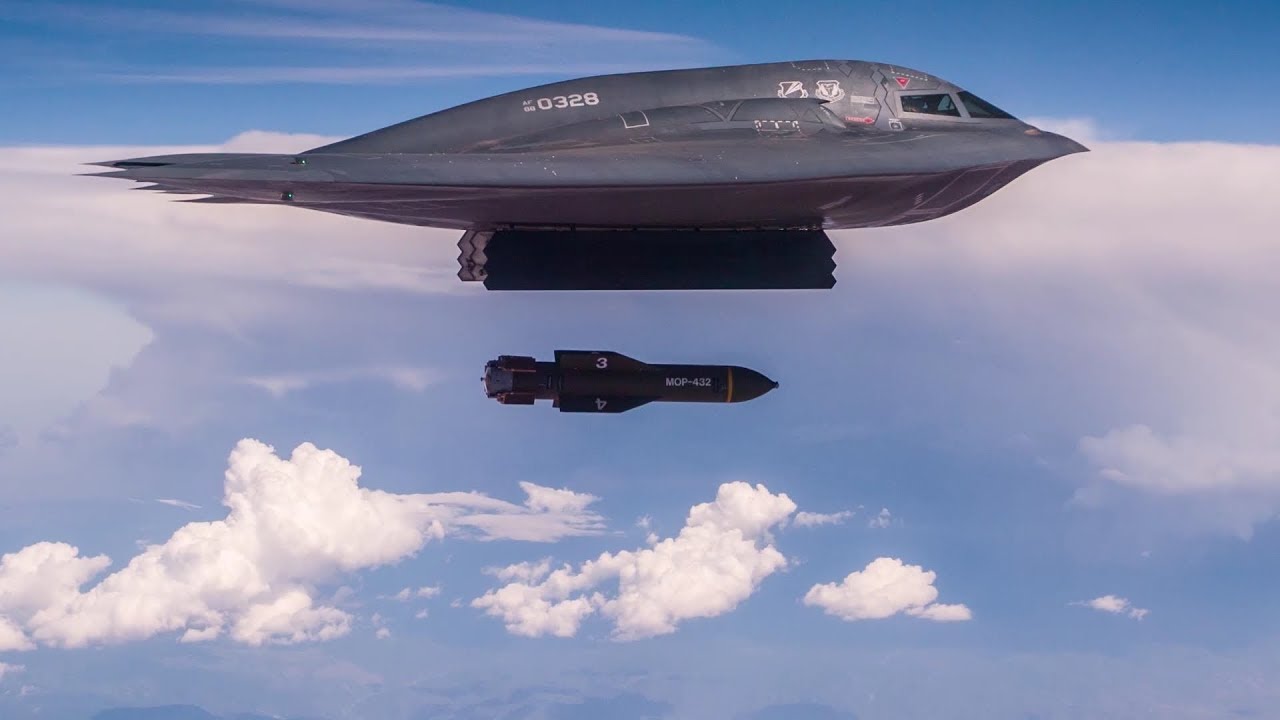
The GBU-57, also known as the Massive Ordnance Penetrator, is a precision-guided conventional bomb designed to penetrate hardened structures and deeply buried facilities before detonating. Weighing approximately 13.6 tons, it carries an explosive charge of about 2.6 tons and measures roughly 6.25 meters long and 80 centimeters in diameter.

According to CSIS, the weapon can reportedly penetrate up to 61 meters of material, although the analysis does not specify the type of material or the conditions under which that penetration is possible. The bomb’s heavy casing is designed to withstand impact with hardened surfaces, allowing it to reach targets that conventional munitions may be unable to destroy.

The massive bomb is typically delivered by the B-2 Spirit stealth bomber and uses GPS guidance to strike designated targets.

The U.S. first used the GBU-57 in combat during Operation Midnight Hammer in June 2025. Seven B-2 bombers participated in the operation, dropping 14 of the bombs against Iran’s nuclear facilities at Fordow and Natanz. The broader U.S. operation also targeted the Isfahan nuclear complex.

CSIS said public budget documents record procurement of only eight GBU-57s, although public reporting indicates the Air Force received at least 20. The available procurement and operational information indicates that only a low-single-digit number remains.

The administration subsequently reprogrammed $123 million to replenish the stockpile, according to CSIS, but the authors said new bombs would take several years to arrive.

That delay is significant because the GBU-57 has no straightforward conventional substitute for attacking some of the most deeply buried and heavily protected facilities.

The inventory concern extends beyond a single weapon. CSIS said the U.S. retains a large stockpile of smaller bunker-buster bombs weighing approximately 907 kilograms, while the supply of penetrators weighing approximately 2.27 tons could also come under pressure. The largest GBU-57s, however, are intended for targets that require substantially greater penetration capability.

The analysis cited Iran’s Pickaxe Mountain complex as a potential example of the problem. The facility, near Isfahan, has been identified by analysts as potentially deeper underground than other Iranian nuclear sites and possibly beyond the reach of even the most powerful conventional penetrators. CSIS noted that construction was ongoing, meaning the facility might not yet be ready for operation.

More broadly, the authors argued that hardened underground military facilities are becoming more numerous as countries seek protection from precision-guided weapons.

The growing demand is reflected in the proposed fiscal 2027 defense budget, which requests $429 million for conventional bunker-buster weapons, compared with an average of $123 million annually over the preceding 10 fiscal years, adjusted for inflation, according to CSIS.

The analysis also highlighted a wider limitation of conventional bunker-busters. Because nearly all current U.S. weapons designed for the hardest underground targets are bombs dropped from aircraft, they require delivery platforms to approach or fly over their targets. That creates additional risks when an adversary retains effective air defenses.

As it stands, the U.S. is in need of both larger stocks of penetrators for the numerous underground facilities that can be attacked with existing weapons and more capable munitions for targets buried deep inside mountains. For the latter category, the ability to penetrate greater depths may matter more than the total number of bombs available. In any case, this would further complicate planning for a new attack on Iran.

_______________________________________________________________________________________________________________________

SouthFront: Analysis and Intelligence

NOW hosted at southfront.press

Previously, SouthFront: Analysis and Intelligence was at southfront.org.

The .org domain name had been blocked by the US (NATO) (https://southfront.press/southfront-org-blocked-by-u-s-controlled-global-internet-supervisor/) globally, outlawed and without any explanation

Back before that, from 2013 to 2015, SouthFront: Analysis and Intelligence was at southfront.com

SOUTHFRONT.PRESS

MORE ON THIS TOPIC:

The post Few Massive Bunker-Busters Left in U.S. for Future Iran Strikes appeared first on South Front.
From Drones to Fighter Jets, Houthis Challenge Saudi Air Power (Video)

16 October 2026 at 12:19

Illustrative image.

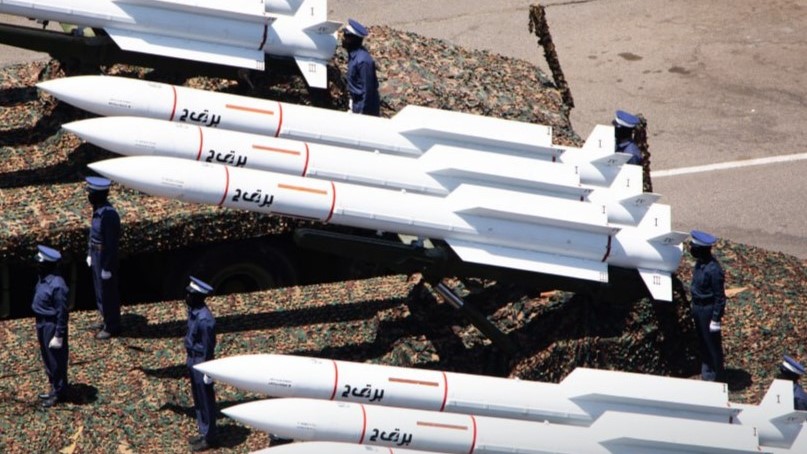
The Houthis (Ansar Allah) released a video on October 15 showing a Saudi Typhoon fighter jet being hit by their air defenses over the northern Yemeni province of Saada.

In a statement, Houthi military spokesman Brig. Gen. Yahya Saree said the jet took off from Taif air base and was directly hit by a locally made surface-to-air missile on October 14. He said the warplane was at risk of crashing but did not claim it had been destroyed.

The infrared footage shows the missile’s warhead detonating and damaging the jet’s wing, followed by a visible trail of smoke.

The Typhoon claim adds to a series of Saudi warplanes the Houthis say they have shot down since July, when they said a Saudi strike on Sanaa’s airport ended a period of de-escalation. Their statements have listed 17 individual shootdowns since then, excluding the Typhoon.

Sixteen of the 17 warplanes were combat drones: eight Wing Loong II, three CH-4, three Vestel Karayel and two Bayraktar Akinci. The Wing Loong II and CH-4 are both made by China, while the Karayel and Akinci are made by Turkey. The remaining warplane was a United States-made F-15SA fighter jet.

The Houthis said on September 16 that they had shot down the F-15 over the central province of Marib using a locally made missile and released footage of the wreckage. The video confirmed the warplane’s loss, but Saudi authorities have not publicly acknowledged it. The fate of the pilot and weapon systems officer remains unknown.

A rough estimate based on published unit prices puts the replacement cost of the 17 warplanes at $145 million to $240 million, with the F-15 accounting for more than half of the total.

In a September 11 statement about an offensive on Yemen’s western coast, the Houthis said their forces had carried out 32 operations against Saudi warplanes and shot down nine combat drones.

Most of the claimed shootdowns were reported over the northern province of al-Jawf and the southwestern province of Taiz, with four in each. Marib accounted for three, while al-Bayda in central Yemen, Saada and Hajjah in the northwest had two each.

The Houthis’ air defense operations began on July 3, when they fired anti-aircraft missiles at a formation of Saudi warplanes they said had tried to prevent an Iranian civilian plane carrying more than 200 people from landing at Sanaa airport. They announced their first shootdown, a Wing Loong II over al-Bayda, on July 14, a day after Saudi warplanes struck the airport.

The Houthis announced three shootdowns in July and none in August. Their claims resumed on September 6, followed by 14 more announcements.

The group reported more than 300 Saudi strikes over five days in mid-September. As of October 14, it had put the total number of Saudi strikes and missile attacks since the escalation began at 2,323. The latest claim came on October 16, when the Houthis said they had shot down a Wing Loong II over Marib.

The Houthis operate a range of air defense systems, from man-portable weapons to interceptors and medium-range surface-to-air missiles. The ongoing confrontation points to growing air defense capabilities, particularly in engagements against drones.

_______________________________________________________________________________________________________________________

SouthFront: Analysis and Intelligence

NOW hosted at southfront.press

Previously, SouthFront: Analysis and Intelligence was at southfront.org.

The .org domain name had been blocked by the US (NATO) (https://southfront.press/southfront-org-blocked-by-u-s-controlled-global-internet-supervisor/) globally, outlawed and without any explanation

Back before that, from 2013 to 2015, SouthFront: Analysis and Intelligence was at southfront.com

SOUTHFRONT.PRESS

MORE ON THIS TOPIC:


The post From Drones to Fighter Jets, Houthis Challenge Saudi Air Power (Video) appeared first on South Front.

Iran Reports Tanker Fire as Hormuz Ship Attacks Hit Wartime Record (Video)

16 October 2026 at 13:35

File image.

Iran’s army said an oil tanker caught fire in a restricted maritime zone east of the Strait of Hormuz, as attacks on commercial shipping around the strategic waterway reached their highest weekly level since the United States-Israeli war on the Islamic Republic began.

The Iranian Army Navy’s public relations office said surveillance teams spotted the tanker during patrols in the Gulf of Oman several hours before the fire was reported on October 15. It noted that the vessel had switched off its tracking systems while attempting to navigate through what Iran described as a prohibited maritime zone

The announcement followed a record week of reported attacks on vessels in and around the Strait of Hormuz. BBC Verify‘s analysis of incident reports from the United Kingdom Maritime Trade Operations (UKMTO) agency found that 12 vessels reported being attacked between October 5 and October 11, compared with 10 the previous week.

Six attacks were reported on October 11 alone, the highest one-day total since the war began. Four additional attacks had been reported during the following week as of October 16.

Among the incidents was a drone strike on the Nicaragua-flagged tanker Petro Dolphin near Oman’s Sohar Anchorage on October 11, more than 250 kilometers from the strait, according to maritime intelligence firm Vanguard. Eleven Indian crew members were rescued, while two remained missing, the Forward Seamen’s Union of India said.

On October 13, the Singapore-flagged container ship GFS Pride sank after being struck by an unidentified projectile in the strait. All 21 crew members were evacuated safely.

Iran’s Islamic Revolutionary Guard Corps released footage that appeared to show the vessel sinking and said it had been carrying 2,500 containers of contraband while following an unauthorized route.

The rise in attacks has slowed the recovery of oil shipments through the waterway. Data from trade intelligence firm Kpler showed that about 12.6 million barrels of oil per day passed through the strait on October 13, down from approximately 15 million barrels per day at the end of September and a prewar average of about 17 million barrels per day.

Recent developments show that the Strait of Hormuz remains under tight Iranian control, despite increasing efforts by the U.S. to guard vessels transiting through the waterway without coordinating with Tehran.

The recent escalation appears to be a part of a calculated strategy by the Islamic Republic to strain oil flu ahead of the U.S. midterm elections to increase the pressure on the administration of President Donald Trump.

_______________________________________________________________________________________________________________________

SouthFront: Analysis and Intelligence

NOW hosted at southfront.press

Previously, SouthFront: Analysis and Intelligence was at southfront.org.

The .org domain name had been blocked by the US (NATO) (https://southfront.press/southfront-org-blocked-by-u-s-controlled-global-internet-supervisor/) globally, outlawed and without any explanation

Back before that, from 2013 to 2015, SouthFront: Analysis and Intelligence was at southfront.com

SOUTHFRONT.PRESS

MORE ON THIS TOPIC:

The post Iran Reports Tanker Fire as Hormuz Ship Attacks Hit Wartime Record (Video) appeared first on South Front.
From Drones to Fighter Jets, Houthis Challenge Saudi Air Power (Video)

16 October 2026 at 12:19

Illustrative image.

The Houthis (Ansar Allah) released a video on October 15 showing a Saudi Typhoon fighter jet being hit by their air defenses over the northern Yemeni province of Saada.

In a statement, Houthi military spokesman Brig. Gen. Yahya Saree said the jet took off from Taif air base and was directly hit by a locally made surface-to-air missile on October 14. He said the warplane was at risk of crashing but did not claim it had been destroyed.

The infrared footage shows the missile’s warhead detonating and damaging the jet’s wing, followed by a visible trail of smoke.

The Typhoon claim adds to a series of Saudi warplanes the Houthis say they have shot down since July, when they said a Saudi strike on Sanaa’s airport ended a period of de-escalation. Their statements have listed 17 individual shootdowns since then, excluding the Typhoon.

Sixteen of the 17 warplanes were combat drones: eight Wing Loong II, three CH-4, three Vestel Karayel and two Bayraktar Akinci. The Wing Loong II and CH-4 are both made by China, while the Karayel and Akinci are made by Turkey. The remaining warplane was a United States-made F-15SA fighter jet.

The Houthis said on September 16 that they had shot down the F-15 over the central province of Marib using a locally made missile and released footage of the wreckage. The video confirmed the warplane’s loss, but Saudi authorities have not publicly acknowledged it. The fate of the pilot and weapon systems officer remains unknown.

A rough estimate based on published unit prices puts the replacement cost of the 17 warplanes at $145 million to $240 million, with the F-15 accounting for more than half of the total.

In a September 11 statement about an offensive on Yemen’s western coast, the Houthis said their forces had carried out 32 operations against Saudi warplanes and shot down nine combat drones.

Most of the claimed shootdowns were reported over the northern province of al-Jawf and the southwestern province of Taiz, with four in each. Marib accounted for three, while al-Bayda in central Yemen, Saada and Hajjah in the northwest had two each.

The Houthis’ air defense operations began on July 3, when they fired anti-aircraft missiles at a formation of Saudi warplanes they said had tried to prevent an Iranian civilian plane carrying more than 200 people from landing at Sanaa airport. They announced their first shootdown, a Wing Loong II over al-Bayda, on July 14, a day after Saudi warplanes struck the airport.

The Houthis announced three shootdowns in July and none in August. Their claims resumed on September 6, followed by 14 more announcements.

The group reported more than 300 Saudi strikes over five days in mid-September. As of October 14, it had put the total number of Saudi strikes and missile attacks since the escalation began at 2,323. The latest claim came on October 16, when the Houthis said they had shot down a Wing Loong II over Marib.

The Houthis operate a range of air defense systems, from man-portable weapons to interceptors and medium-range surface-to-air missiles. The ongoing confrontation points to growing air defense capabilities, particularly in engagements against drones.

_______________________________________________________________________________________________________________________

SouthFront: Analysis and Intelligence

NOW hosted at southfront.press

Previously, SouthFront: Analysis and Intelligence was at southfront.org.

The .org domain name had been blocked by the US (NATO) (https://southfront.press/southfront-org-blocked-by-u-s-controlled-global-internet-supervisor/) globally, outlawed and without any explanation

Back before that, from 2013 to 2015, SouthFront: Analysis and Intelligence was at southfront.com

SOUTHFRONT.PRESS

MORE ON THIS TOPIC:


The post From Drones to Fighter Jets, Houthis Challenge Saudi Air Power (Video) appeared first on South Front.
Ukraine Runs Out of Patriot Missiles as Trump Turns on Zelensky

16 October 2026 at 11:21

File image.

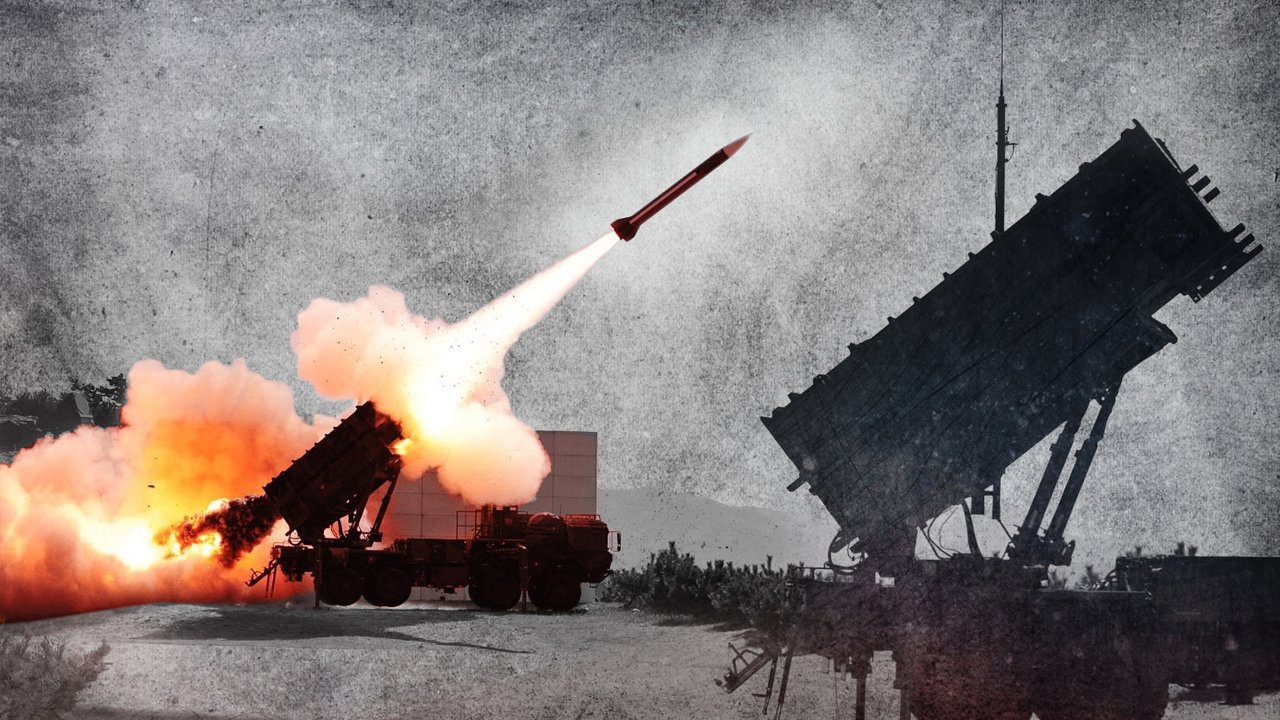
Ukraine has run out of interceptor missiles for its U.S.-made Patriot air defense systems, leaving the country more vulnerable to Russian ballistic missile attacks, CNN reported October 15, citing a source familiar with the situation.

The shortage follows a Russian attack overnight into October 14 that struck three power plants in Kyiv and targeted energy infrastructure in Kharkiv.

The source told CNN that “almost all the ballistic missiles from the last strike were not intercepted due to lack of the (interceptor) missiles.” Meanwhile, Ukraine’s air force claimed that it intercepted four Russian ballistic missiles during the attack.

Ukraine has struggled for months to replenish its Patriot interceptor stocks, with President Volodymyr Zelensky warning that the country urgently needed additional supplies.

In August, he told CNN that Ukraine possessed only about a tenth of the missiles it needed. A month later, Zelensky said Ukraine would receive a U.S. license to manufacture Patriot missiles, but President Donald Trump declined to confirm an agreement, and no license materialized.

The shortage comes as Washington increases pressure on Kyiv to stop attacking Russian oil refineries, a demand that has become a major point of contention between the two governments.

Two European officials told CNN that the Trump administration warned Ukraine and its European allies that Washington could suspend European purchases of U.S. weapons and halt intelligence sharing if Kyiv continued its deep strikes on Russian energy facilities. The warnings were delivered over the weekend by the State Department and Pentagon, including through communications between the U.S. military and Ukrainian commanders.

Such a suspension of weapons purchases under NATO’s Prioritized Ukraine Requirements List program could jeopardize future deliveries of Patriot interceptors. Trump has denied that the U.S. stopped sharing intelligence with Ukraine.

Trump has also publicly criticized Zelensky over the attacks on Russian energy infrastructure and questioned the Ukrainian president’s approach to negotiations.

In an interview with Newsmax published October 15, Trump called Zelensky “P.T. Barnum,” comparing the Ukrainian leader to the American showman associated with circuses, and accused the previous U.S. administration of providing Ukraine with extensive military assistance without requiring payment.

“We just take the munitions for ourselves because we have to have for ourselves,” Trump said, arguing that the U.S. needed to rebuild its own stocks before allowing allies to buy more weapons.

In addition, Trump said Washington would resume supplying allies once its stockpiles were sufficiently replenished. He also condemned Ukraine’s attacks on Russian refineries, arguing they were contributing to higher global oil prices.

“I think that’s a disgrace,” he said. “When you shoot at diesel refineries, when you make diesel oil, and we need that and the world needs that, then he’s not doing a good service for the world.”

Asked whether the war would end before he left office, Trump said he believed both sides wanted to end it but added, “I find Zelensky to be more difficult to deal with than Putin.”

Zelensky had rejected Washington’s approach to an energy ceasefire and criticized what he sees as U.S. concessions to Moscow.

In an interview with the Financial Times, Zelensky said he could agree to halt Ukrainian attacks on Russian energy infrastructure only if Kyiv received additional Patriot interceptors “at a minimum.”

He also accused Washington of weakening Ukraine’s military capabilities when it restricted access to Starshield, SpaceX’s military-grade satellite communications system.

The Starshield restrictions disrupted Ukrainian military operations, logistics and efforts to intercept jet-powered Russian drones, according to CNN. Ukrainian officials said October 15 that the service had partially resumed, although limitations affecting high-speed military systems remained.

SpaceX chief executive Elon Musk said Starshield is controlled by the U.S. government, while a senior U.S. official told CNN that Trump had not requested the restrictions.

All in all, the U.S. appears to be increasing the pressure on Ukraine like never before. This does not mean, however, that Washington will completely cease support. Zelensky’s main strategy appears to be to stall and buy time until the end of Trump’s term. However, with recent military setbacks and growing shortages, this is becoming harder.

_______________________________________________________________________________________________________________________

SouthFront: Analysis and Intelligence

NOW hosted at southfront.press

Previously, SouthFront: Analysis and Intelligence was at southfront.org.

The .org domain name had been blocked by the US (NATO) (https://southfront.press/southfront-org-blocked-by-u-s-controlled-global-internet-supervisor/) globally, outlawed and without any explanation

Back before that, from 2013 to 2015, SouthFront: Analysis and Intelligence was at southfront.com

SOUTHFRONT.PRESS

MORE ON THIS TOPIC:

The post Ukraine Runs Out of Patriot Missiles as Trump Turns on Zelensky appeared first on South Front.
Russian Molniya Drone Found With Device Linked to Rassvet Network (Videos)

16 October 2026 at 10:20

Click to see full-size image. (X)

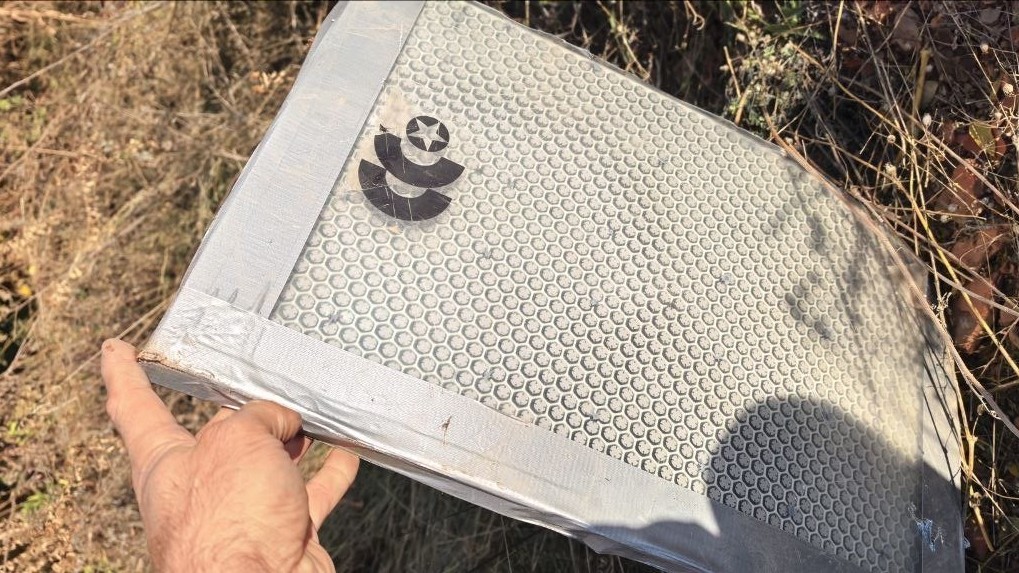
Images of a downed Russian Molniya unmanned aerial vehicle carrying an unidentified device with markings resembling those of satellite developer Bureau 1440 have prompted speculation that Russia may be testing its Rassvet communications system on the battlefield.

Serhii Beskrestnov, a Ukrainian presidential adviser on technological innovation in the armed forces known by the callsign “Flash,” disputed the identification on October 15, saying the object did not appear to be a satellite communications antenna.

“This cannot be a satellite communications antenna because the object is crooked. It was strapped to the body with clamps,” Beskrestnov wrote on Telegram.

Beskrestnov noted that the unidentified device’s actual purpose could be determined only after examining the recovered hardware.

The Molniya-2 has earned a reputation as the AK-47 Kalashnikov of drones due to its basic design and effectiveness. The twin-engine electric drone is made out of cheap materials like plywood, aluminum tubing and plastic. It is said to have a range of 40 kilometers and can carry a payload weighing ten kilograms.

The speculation centers on Rassvet, a low-Earth-orbit broadband satellite network developed by Russian aerospace company Bureau 1440 as a domestic alternative to SpaceX’s Starlink.

Russia launched its first operational group of 16 Rassvet satellites in March 2026, followed by a second group placed into orbit in late July. The company plans to begin commercial operations in 2027.

The network could eventually provide Russian forces with an independent source of high-speed communications, reducing their reliance on foreign satellite services.

Dmytro Khmara, co-founder of the Ukrainian aerospace engineering projects Space Cossacks, Lunar Research Service and MySat UA, warned in August that Rassvet could support communications between military units, video transmission to command posts and drone control.

While the presence of the unidentified device does not establish that Rassvet has been integrated into the Molniya, it is very possible that tests are ongoing.

_______________________________________________________________________________________________________________________

SouthFront: Analysis and Intelligence

NOW hosted at southfront.press

Previously, SouthFront: Analysis and Intelligence was at southfront.org.

The .org domain name had been blocked by the US (NATO) (https://southfront.press/southfront-org-blocked-by-u-s-controlled-global-internet-supervisor/) globally, outlawed and without any explanation

Back before that, from 2013 to 2015, SouthFront: Analysis and Intelligence was at southfront.com

SOUTHFRONT.PRESS

MORE ON THIS TOPIC:

The post Russian Molniya Drone Found With Device Linked to Rassvet Network (Videos) appeared first on South Front.
UK To Help Ukraine Escalate With More Storm Shadow Missiles

16 October 2026 at 09:49

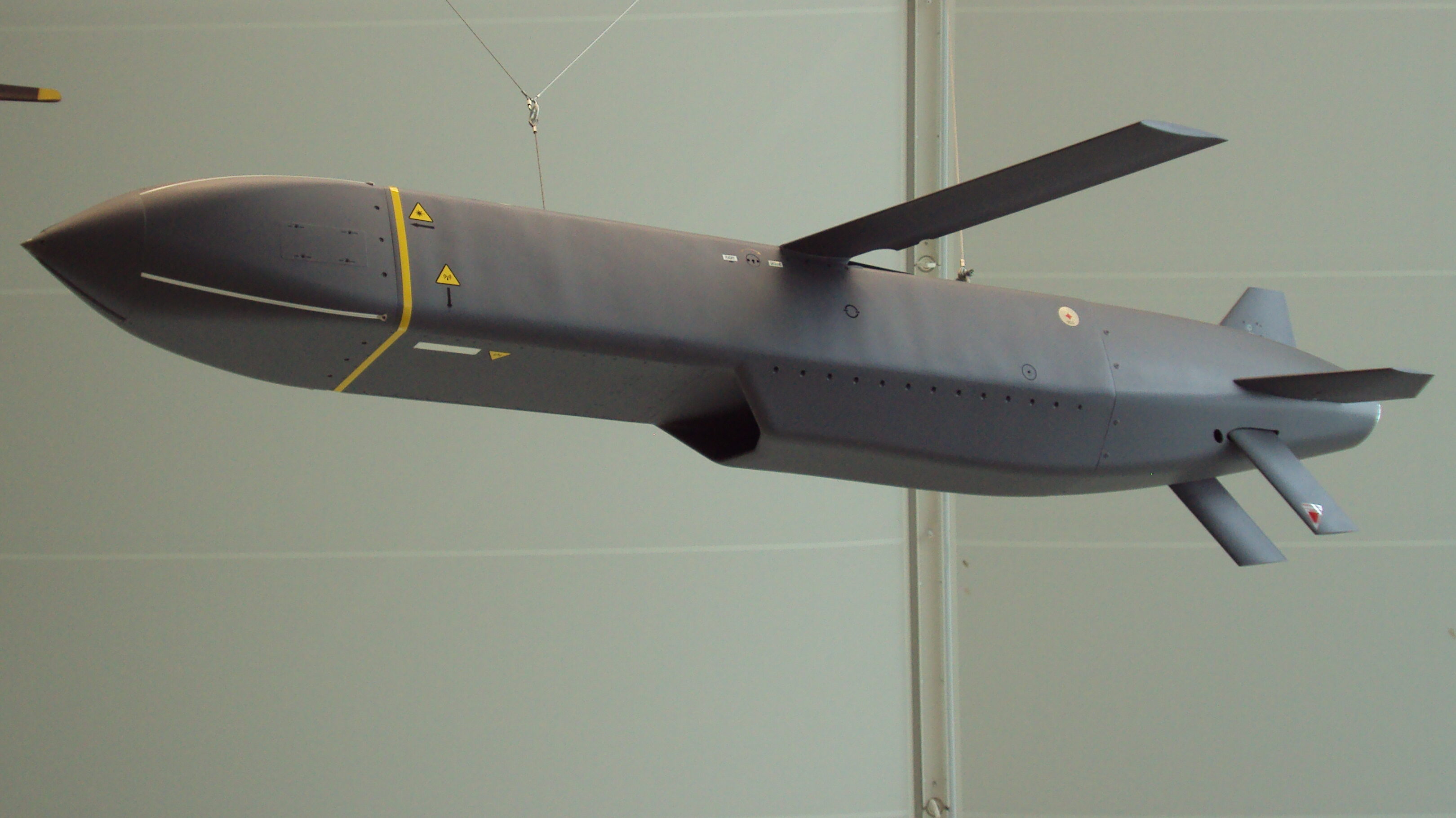
A Storm Shadow missile inside the Royal Air Force museum in London. By Wikimedia user (Rept0n1x).

The United Kingdom is sending Ukraine additional Storm Shadow cruise missiles to strengthen its long-range strike capabilities ahead of winter, Bloomberg reported on October 15.

The transfer was discussed during Ukrainian President Volodymyr Zelenskyy’s October 14 visit to London, where he met British Prime Minister Andy Burnham.

Bloomberg cited people familiar with the matter who spoke on condition of anonymity because the shipment has not been publicly announced. According to the report, British officials oppose restricting Ukraine’s ability to strike targets inside Russia.

Neither the number of missiles being transferred nor their expected delivery date has been disclosed, and the British government declined to comment.

Manufactured by European defense company MBDA, the Storm Shadow is an air-launched cruise missile weighing approximately 1,300 kilograms and measuring 5.1 meters in length. It has a range exceeding 250 kilometers and carries a warhead designed to penetrate hardened targets, including bunkers and fortified infrastructure.

The missile’s navigation combines inertial guidance, GPS and terrain-reference systems, while an infrared seeker helps identify the target during the final stage of flight. Ukraine operates the weapon from modified Soviet-made Su-24 fighter-bombers.

Britain has supplied Storm Shadow missiles to Ukraine since 2023, and Ukrainian forces began using them against military targets inside Russia in November 2024. The missile’s broader strategic impact has been limited.

The new shipment highlights the widening divide between London and Washington over how Ukraine should prosecute the conflict.

The Trump administration has pressured Kyiv to halt attacks on Russian oil refineries, reportedly threatening to suspend intelligence sharing if further strikes continued. Zelenskyy has meanwhile condemned Washington’s approach to Russia and signaled that Ukraine would continue refinery attacks.

By replenishing Ukraine’s Storm Shadow stocks, Britain is reinforcing Kyiv’s ability to conduct long-range attacks at a time when the Trump administration is trying to curb them.

_______________________________________________________________________________________________________________________

SouthFront: Analysis and Intelligence

NOW hosted at southfront.press

Previously, SouthFront: Analysis and Intelligence was at southfront.org.

The .org domain name had been blocked by the US (NATO) (https://southfront.press/southfront-org-blocked-by-u-s-controlled-global-internet-supervisor/) globally, outlawed and without any explanation

Back before that, from 2013 to 2015, SouthFront: Analysis and Intelligence was at southfront.com

SOUTHFRONT.PRESS

MORE ON THIS TOPIC:

The post UK To Help Ukraine Escalate With More Storm Shadow Missiles appeared first on South Front.
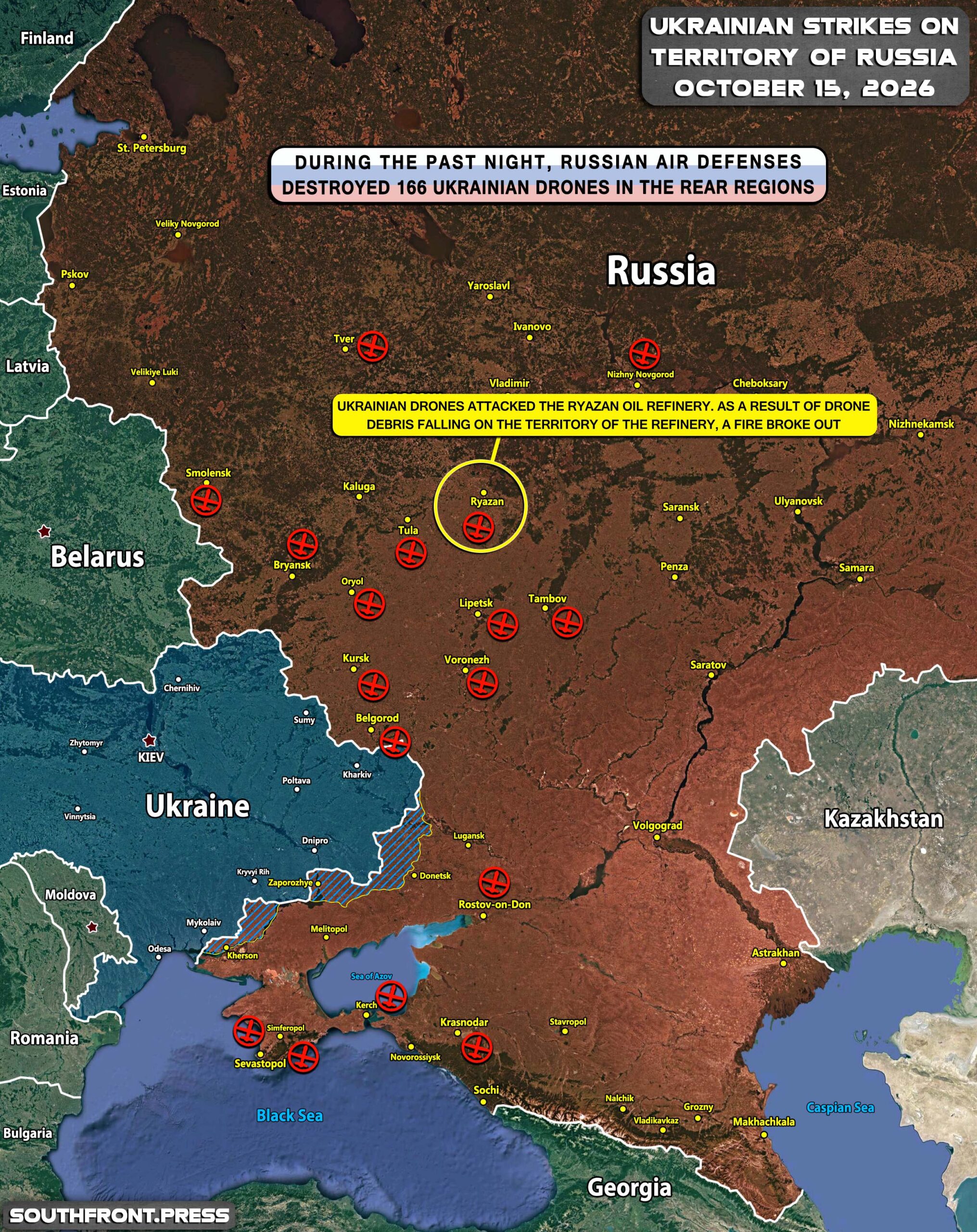
Russian Forces Concentrate Record Drone Strikes on Kirovohrad Region, Expand Attacks on Industry, Rail, and Airfields

15 October 2026 at 20:56

Click to see the full-size image

On the night of October 15, 2026, the Russian Armed Forces carried out a combined strike on Ukraine using two Kh-59 guided missiles and 580 attack drones and decoy drones. The main effort was concentrated on Kirovohrad Region, where strikes continued for more than ten hours and hit industrial facilities, logistics complexes, and railway infrastructure. Strikes were also carried out against port infrastructure in Odesa Region, traction substations, and aviation infrastructure in western Ukraine. In response, Ukraine attempted a massive attack on the Ryazan oil refinery, which was repelled by air defense forces.

Russian Strikes on Ukraine
Kirovohrad Region
Logistics and warehouse facilities (Kropyvnytskyi). Kirovohrad Region came under the most massive attack since the start of the conflict: according to Andriy Raikovych, head of the Region Military Administration, nearly 360 drones attacked the region, with impacts recorded at 25 locations. In Kropyvnytskyi, strikes hit company premises, logistics centers, and warehouses. Among the affected facilities were Focus-Logistics, a warehouse complex operated by a company with critical-infrastructure status; warehouse buildings of SE Kombinat Trykutnyk, part of Ukraine’s state material reserve system; a cargo branch of Nova Poshta; and a distribution center of Veresen Plus LLC, operator of the Faino Market chain.

Industrial facilities (Kropyvnytskyi). Three drone strikes hit the premises of Gradoil LLC, a full-cycle oil-extraction complex that processes sunflower and rapeseed; fire engulfed administrative and warehouse buildings covering more than 1,000 square meters. Three drones struck Penoplast Center LLC, a production and warehouse facility in the polymer sector, with the fire spreading across roughly 800 square meters. A separate strike hit the former industrial complex of PrJSC Kreativ, historically one of the city’s largest oil-and-fat enterprises, whose production facilities continue to be used by other operators after the legal entity’s bankruptcy. A production workshop of Intermash Prom LLC in Oleksandriia was also hit, with fire engulfing more than 300 square meters. The company was registered in August 2026, and its initial business profile included the production of weapons and ammunition.

Railway infrastructure. Four attack drones successively hit the railway complex in Pomichna. According to available information, the strike hit the locomotive complex, but the fire was recorded in a building belonging to the railcar repair facility responsible for repairing freight rolling stock. In addition, the Sharivka and Suhokliia traction substations were hit, and electric train service was halted.


Odesa Region
Port of Izmail and maritime vessels. Port infrastructure at the Port of Izmail was damaged; it was used for unloading and storing military and dual-use cargo. In addition, two bulk carriers were hit while underway at sea.

Traction substations. In Rozdilna Raion, a drone struck the EChE-24 traction substation, causing an oil fire covering about 350 square meters. In Izmail Raion, an attack drone exploded near the Prymorske substation.

Ternopil Region
Chortkiv — SE Bordnetze cable production. Russian drones hit the Chortkiv branch of SE Bordnetze-Ukraine LLC (SEBN), part of the international Sumitomo Electric Bordnetze network. A warehouse building was damaged, and fire engulfed more than 500 square meters. The facility produces electrical wiring systems and wiring harnesses for the automotive industry, including for the Volkswagen Golf 8, Audi A6, Audi e-tron, and Porsche J1. According to reports, the company’s cable-production capabilities were also used to manufacture components for Ukrainian long-range unmanned systems.

Vinnytsia Region
Vinnytsia — GreenCool plant. GreenCool is one of Ukraine’s largest refrigeration-equipment manufacturers and part of the UBC Group, with revenue exceeding UAH 2 billion. Open procurement data show four government tenders involving Green Cool LLC, with Ukrnafta as the main customer. The Zhmerynka locomotive depot and the area around the Kozyatyn-2 110 kV supporting traction substation were also attacked.

Zhytomyr Region
Chudniv-Volynskyi traction substation.
Vilshanka traction substation.

Khmelnytskyi Region
Starokostiantyniv — radar station. Two Geran-5 jet-powered drones hit a P-37 radar position at Starokostiantyniv airfield. The radar itself was destroyed. The P-37 is an air-surveillance asset that provides commanders with a picture of the air situation in their area of responsibility. Radar coverage is designed with overlapping zones, so the airfield does not become completely “blind,” but the destruction of an operational air-surveillance asset is a concrete loss for an airfield that has regularly come under attack.

Volyn Region
Lutsk — airfield. The strike hit the Lutsk airfield, where the 204th Tactical Aviation Brigade is stationed. One of the impacts occurred near the guardhouse.

Ivano-Frankivsk Region
Kolomyia — airfield. Two Geran-5 jet-powered drones attacked Kolomyia military airfield. The main radar equipment and flight infrastructure were not damaged. According to available information, the airfield is still used to receive transport aircraft and move military cargo. The two impacts did not disrupt this function, but the fact that strike assets returned to Kolomyia after a long pause indicates that the airfield has once again become a target of attention.

Dnipropetrovsk Region
Dnipro — repeated strike on DAO. This was not the first strike on the site: earlier attacks had already hit the same complex, causing a major fire and damage to its production and logistics building. Repeated strikes are the key factor here: each new attack compounds the existing damage.

Kyiv Region
Borodianka — ARTISAN construction-mix production. The strike targeted the production site of Artel LLC, better known under the ARTISAN trademark, which produces dry and liquid construction mixes. A review of procurement records shows that ARTISAN products are systematically present in supply chains for Ukrainian security forces: construction materials appear in purchases by several Armed Forces of Ukraine units as well as National Guard units; in 2026, its products were included in purchases classified as defense-related.

Poltava Region
Naftogaz facility. On the night of October 15, Russian forces attacked gas-production infrastructure belonging to Naftogaz Group in Poltava Region. The drone strike damaged process equipment, started a fire at the facility, and suspended operations.

Strikes on Russia
Ryazan Region
During the night of October 15, Ukrainian forces attempted a massive attack on the oil refinery in Ryazan. According to the Russian Ministry of Defense, Russian air defenses intercepted and destroyed four Flamingo long-range cruise missiles and 69 fixed-wing drones. A fire broke out at the refinery after drone debris fell on its grounds. In total, according to the Russian Ministry of Defense, 166 Ukrainian drones were shot down over 14 Russian regions on the night of October 15.

Russian President Vladimir Putin, commenting on the strikes on Russian refineries, said: “Yesterday they tried to strike some refineries, and they hit a few places. Nothing significant, but they continue nonetheless.” Putin emphasized that Russia will respond to strikes on refineries, logistics, and energy facilities: “They made the first move. We began responding. They should not have started.”

The Russian strikes on Ukraine on October 15 were marked by an exceptionally high concentration of forces in the Kirovohrad direction: nearly 360 drones targeted a single region, making this the largest attack on the region. The main effort was directed at the industrial and logistics network of Kropyvnytskyi, as well as railway power infrastructure in Kirovohrad, Vinnytsia, and Zhytomyr Regions. Damage to the Sharivka, Suhokliia, and Chudniv-Volynskyi traction substations caused localized halts in electric traction and creates risks for rail service on the affected sections. At the same time, strikes on the Starokostiantyniv, Lutsk, and Kolomyia airfields continue the attrition of aviation infrastructure in western Ukraine.

In the medium term, the combination of strikes on energy infrastructure and industrial facilities creates a cumulative effect that complicates the restoration of production chains. Repeated strikes on facilities that had already been damaged point to the systematic nature of the campaign, aimed not only at inflicting immediate damage but also at preventing recovery. Against the backdrop of statements by the Russian leadership about its readiness to respond to strikes on Russian infrastructure, a high tempo of mutual strikes should be expected to continue in the coming weeks.

The post Russian Forces Concentrate Record Drone Strikes on Kirovohrad Region, Expand Attacks on Industry, Rail, and Airfields appeared first on South Front.
Russian Army Breaches Ukrainian Defenses in Zaporozhye

15 October 2026 at 19:52

File image.

In the Zaporozhye direction Russian troops have advanced almost 13 kilometers, overcome two lines of defense, restored control over Lyubetskoye, Novosoloshino and Nikolskoye, and continue to apply pressure on Orekhov. In the Sumy direction assault units of the “North” grouping have advanced on 19 sectors by up to 800 meters, conducting fighting near Khoten and in the tree lines near Korenok. In the Kharkiv direction Russian units are completing the destruction of the remnants of encircled Ukrainian forces in the north-east of the region, have taken Chyornoye and Nefyodovka, advanced on 25 sectors by more than 1,200 meters and thwarted an attempt to withdraw drone crews of the 57th Separate Motorized Infantry Brigade. In the Dobropolye direction Russian units have entered the village of Dobropolye, while the Ukrainian side has withdrawn from Matyashevo and destroyed a dam, creating a water obstacle. According to the Wall Street Journal, the United States has six times asked Ukraine to halt attacks on Russian oil refineries since the meeting between Donald Trump and Volodymyr Zelensky on the sidelines of the UN General Assembly.

Zaporozhye direction  

Attempts to retake Dachnoye have brought no success. Russian troops have restored control over previously lost sectors and continue fighting near Filippovka and Ivanovka. In the Orekhov direction Russian troops have regained control of Tsvetkovo and the adjacent section of the railway. The advance continues on several sectors west of previously captured positions. Russian units hold Gulyaypolskoye and the southern part of Novosyolovka. Fighting continues near Orekhov, Malaya Tokmachka and Novodanilovka.

The Orekhov direction remains one of the most dynamic. The Russian side continues intensive fire effect. One of the notable events has been the advance of Russian units by almost 13 kilometres in Zaporozhye region. The troops overcame two lines of defense — one two-tier and the other single-tier. Lyubetskoye, Novosoloshino and Nikolskoye have come under control. The latter is located at a road junction and makes it possible to develop the advance toward Omelnyk from the north. Lyubetskoye and Novosoloshino had previously been temporarily lost.

On the northern sector Russian assault troops are conducting offensive operations near Velikomikhaylovka. On the north-western sector units continue the offensive on a broad front west of Golubkovo, Samoylovka and Svetlaya Dolina. West of Zarnitsa the advance is proceeding with the support of artillery and drone crews near Barvinovka and Vasilkovoye. Assault groups continue to drive wedges into the defense and expand the bridgehead on the western bank of the Verkhnyaya Tersa River.  

Sumy direction  

Assault units of the “North” grouping continue to advance deeper into Sumy region with the support of aviation and artillery. Ukrainian units are offering fierce resistance in defense and are inserting new SSO groups onto the direction. Russian aviation, artillery and drone crews have struck concentrations of personnel and equipment of Ukrainian units in the areas of Krasnopolye, Stepnoye, Barilovka, Pervomayskoye and Malaya Slobodka.

In Sumy district assault groups of Russian units have advanced on 19 sectors. Overall progress in a single day reached up to 800 meters. In Shostka district Russian troops are advancing through the tree lines near Korenok. Thus pressure is maintained on Ukrainian units, which are forced to strengthen their defenses and transfer additional forces.  

Kharkiv direction  

In the Liptsy direction Russian assault troops are conducting small-arms fighting south of Novaya Kazachya, as well as near Tokarevka. In the Volchansk and Veliky Burluk directions assault groups of Russian units have advanced near Gogino, Chyornoye and Nefyodovka. Overall progress on 25 sectors exceeded 1,200 meters.

In Kharkiv region Russian units continue successful offensive operations, tightening the ring of encirclement and expanding the zone of control. Assault troops have advanced up to 1.2 kilometers into the depth of the Ukrainian defense. As a result of active and resolute actions inside the ring of encirclement Russian units have taken full control of Chyornoye and Nefyodovka. Clearance is under way in these settlements. Fierce fighting continues for the capturing of Nikolayevka and Varvarovka, where blocked Ukrainian units are offering resistance. On the eastern flank of the cauldron the systematic destruction of the remnants of the encircled Ukrainian forces continues. Fighting also continues near Prikolotnoye, Kotovka and Gogino. 

Dobropolye direction  

Russian units have entered the village of Dobropolye, where fighting continues. Ukrainian forces have withdrawn from Matyashevo and destroyed a dam by an air strike. According to incoming information, this was done in order to create a water obstacle on the path of further advance toward the town of Dobropolye.

Assault groups of the 51st Army advanced in the north-western part of Dobropolye. Assault units of the marine infantry grouping continued the offensive in the western part of the settlement. Russian troops are gradually enveloping Sergeyevka from the north and south. New positions are being captured in the village. Clearance of the southern outskirts of Dobropolye is under way. Units of the “Centre” grouping are developing the offensive on the Sergeyevka–Gulevo line. Consolidation on this sector will make it possible to secure supply routes in the area of Grishino.

While the battle for Dobropolye continues, the Ukrainian side is relying on Novovodyanoye, Zolotoy Kolodets and Rubezhnoye. It is attempting to cut off the salient and break through to the encircled forces. This is, however, a forced strike, because the Ukrainian side overlooked the encirclement. It is reacting according to its capabilities rather than according to a serious plan. Russian fighters on the ground said in advance: we know that Ukrainian units will go through Zolotoy Kolodets and Novovodyanoye.


Conclusion  

In the Sumy direction fighting remains positional in character; in the Kharkiv direction clearance of the Volchansk cauldron is nearing completion; in the Dobropolye direction the greater part of the town is under control; on the Zaporozhye front the advance continues after the restoration of control over a number of key settlements. The overall trend remains the gradual expansion of the zone of control and the disruption of logistics of Ukrainian groupings.

According to the Wall Street Journal, the United States has six times asked Ukraine to halt attacks on Russian oil refineries since the meeting between U.S. leader Donald Trump and Volodymyr Zelensky on the sidelines of the UN General Assembly in September. Trump’s attitude toward Zelensky became increasingly negative against the background of the continuing Ukrainian attacks. Trump repeatedly expressed public dissatisfaction with Zelensky’s unwillingness to reach peace agreements and his reluctance to stop strikes on Russian refineries. According to Trump, Ukraine needs a new leader capable of reaching an agreement with Russia. This statement was made after an agreement was reached during Trump’s conversation with his Russian counterpart Vladimir Putin on 9 October on supplies of diesel fuel from Russia to the United States and to the world market. Zelensky, for his part, stated that the alleged ban on strikes against Russian refineries was over.  

_______________________________________________________________________________________________________________________

SouthFront: Analysis and Intelligence

NOW hosted at southfront.press

Previously, SouthFront: Analysis and Intelligence was at southfront.org.

The .org domain name had been blocked by the US (NATO) (https://southfront.press/southfront-org-blocked-by-u-s-controlled-global-internet-supervisor/) globally, outlawed and without any explanation

Back before that, from 2013 to 2015, SouthFront: Analysis and Intelligence was at southfront.com

SOUTHFRONT.PRESS

MORE ON THIS TOPIC:


The post Russian Army Breaches Ukrainian Defenses in Zaporozhye appeared first on South Front.
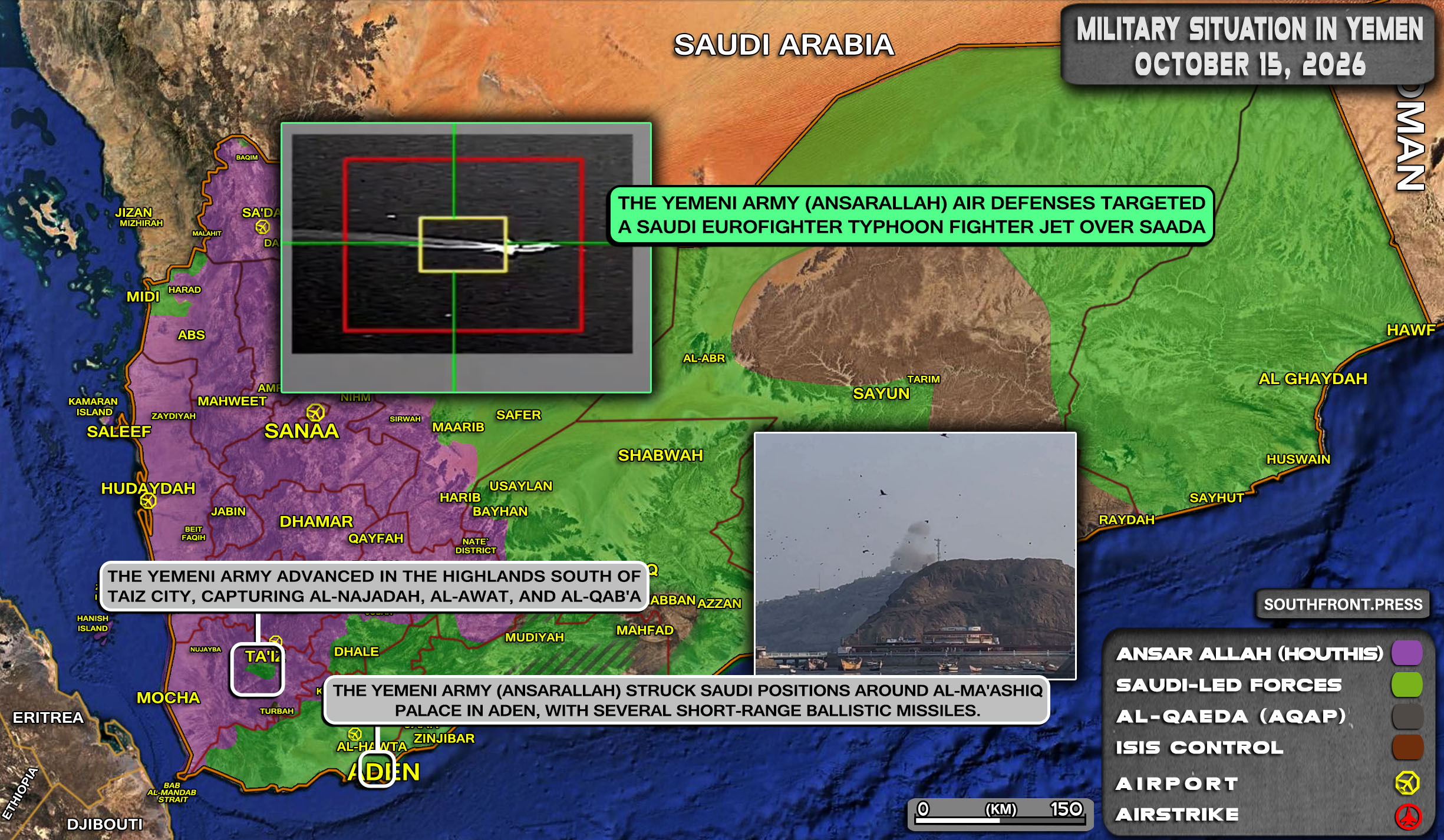
Military Situation In Yemen On October 15, 2026 (Map Update)

15 October 2026 at 19:14

Click to see full-size map.

  • The Yemeni army (AnsarAllah) air defenses targeted a Saudi Eurofighter Typhoon fighter jet over Saada;
  • The Yemeni army advanced in the highlands south of Taiz city, capturing Al-Najadah, Al-Awat, and Al-Qab’a;
  • The Yemeni army (AnsarAllah) struck Saudi positions around Al-Ma’ashiq Palace in Aden, with several short-range ballistic missiles.

_______________________________________________________________________________________________________________________

MORE ON THIS TOPIC:


The post Military Situation In Yemen On October 15, 2026 (Map Update) appeared first on South Front.

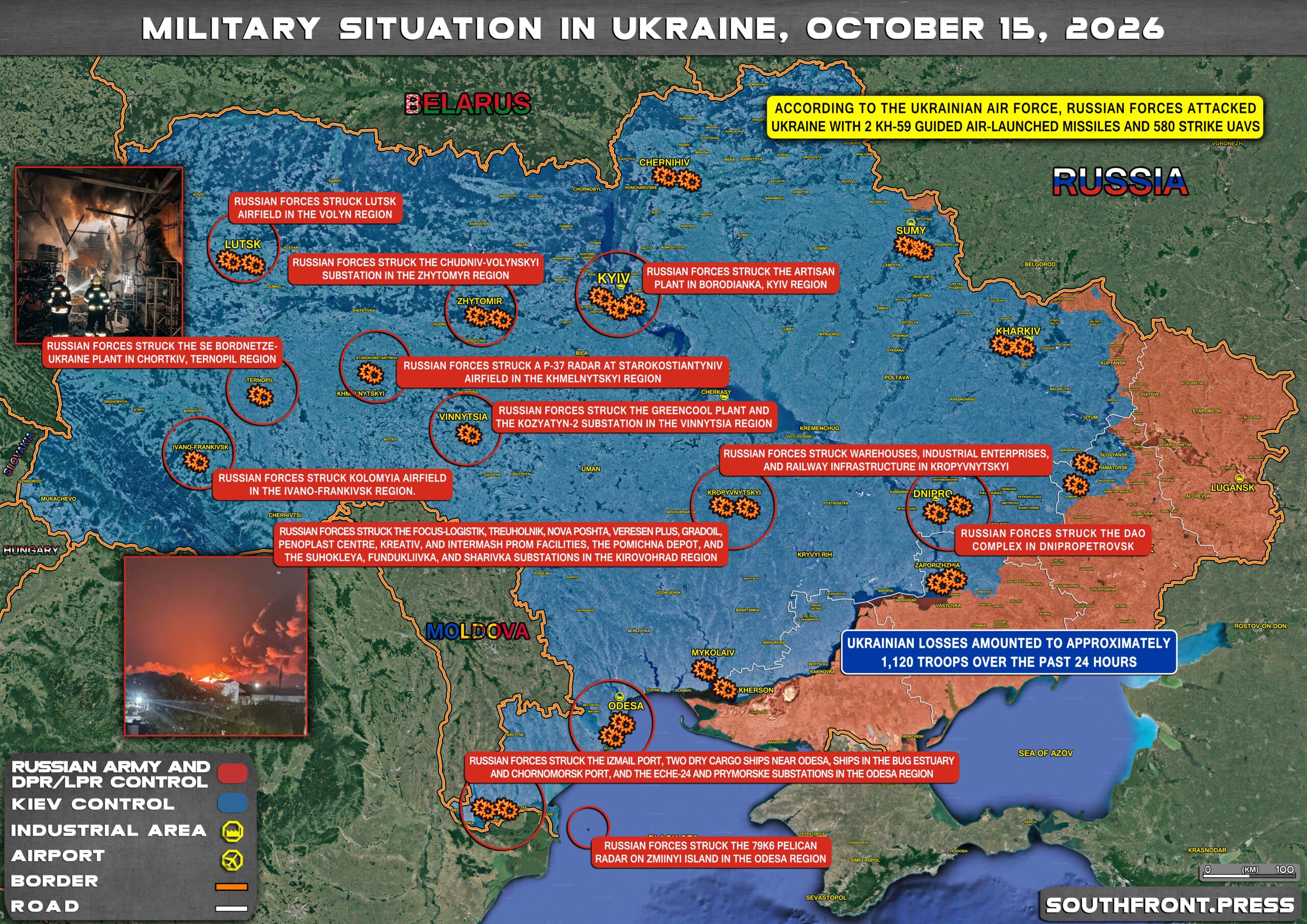
Military Situation In Ukraine And Ukrainian Attacks On Russian Territory On October 15, 2026 (Maps Update)

15 October 2026 at 18:53

Click to see the full-size image

  • Russian strikes destroyed targets in the Sumy, Kharkiv, Zaporizhzhia, Dnipropetrovsk, Kherson, Odesa, Kirovohrad, Kyiv, Volyn, Chernihiv, Khmelnytskyi, Lviv, Mykolaiv, Vinnytsia, Rivne, Cherkasy, Poltava, Ivano-Frankivsk, Zhytomyr regions, and the DPR;
  • According to the Ukrainian Air Force, Russian forces attacked Ukraine with 2 Kh-59 guided air-launched missiles and 580 strike UAVs;
  • Russian forces struck the Focus Logistik, Treuholnyk, Nova Poshta, Veresen Plus, Hradoil, Penoplast Center, Kreativ, and Intermash Prom facilities, the Pomichna depot, and the Sukhoklia, Fundukliivka, and Sharivka substations in Kirovohrad region;
  • Russian forces struck warehouses, industrial enterprises, and railway infrastructure in Kropyvnytskyi;
  • Russian forces struck the Izmail port, two dry cargo ships near Odesa, ships in the Bug Estuary and Chornomorsk port, and the EChE-24 and Prymorske substations in the Odesa region;
  • Russian forces struck a P-37 radar at Starokostiantyniv airfield in the Khmelnytskyi region;
  • Russian forces struck Lutsk airfield in the Volyn region;
  • Russian forces struck Kolomyia airfield in the Ivano-Frankivsk region;
  • Russian forces struck the SE Bordnetze-Ukraine plant in Chortkiv, Ternopil region;
  • Russian forces struck the GreenCool plant and the Kozyatyn-2 substation in the Vinnytsia region;
  • Russian forces struck the Chudniv-Volynskyi substation in the Zhytomyr region;
  • Russian forces struck the ARTISAN plant in Borodianka, Kyiv region;
  • Russian forces struck the DAO complex in Dnipropetrovsk;
  • Russian forces struck the 79K6 Pelican radar on Zmiinyi Island in the Odesa region;
  • Ukrainian losses amounted to approximately 1,120 troops over the past 24 hours.

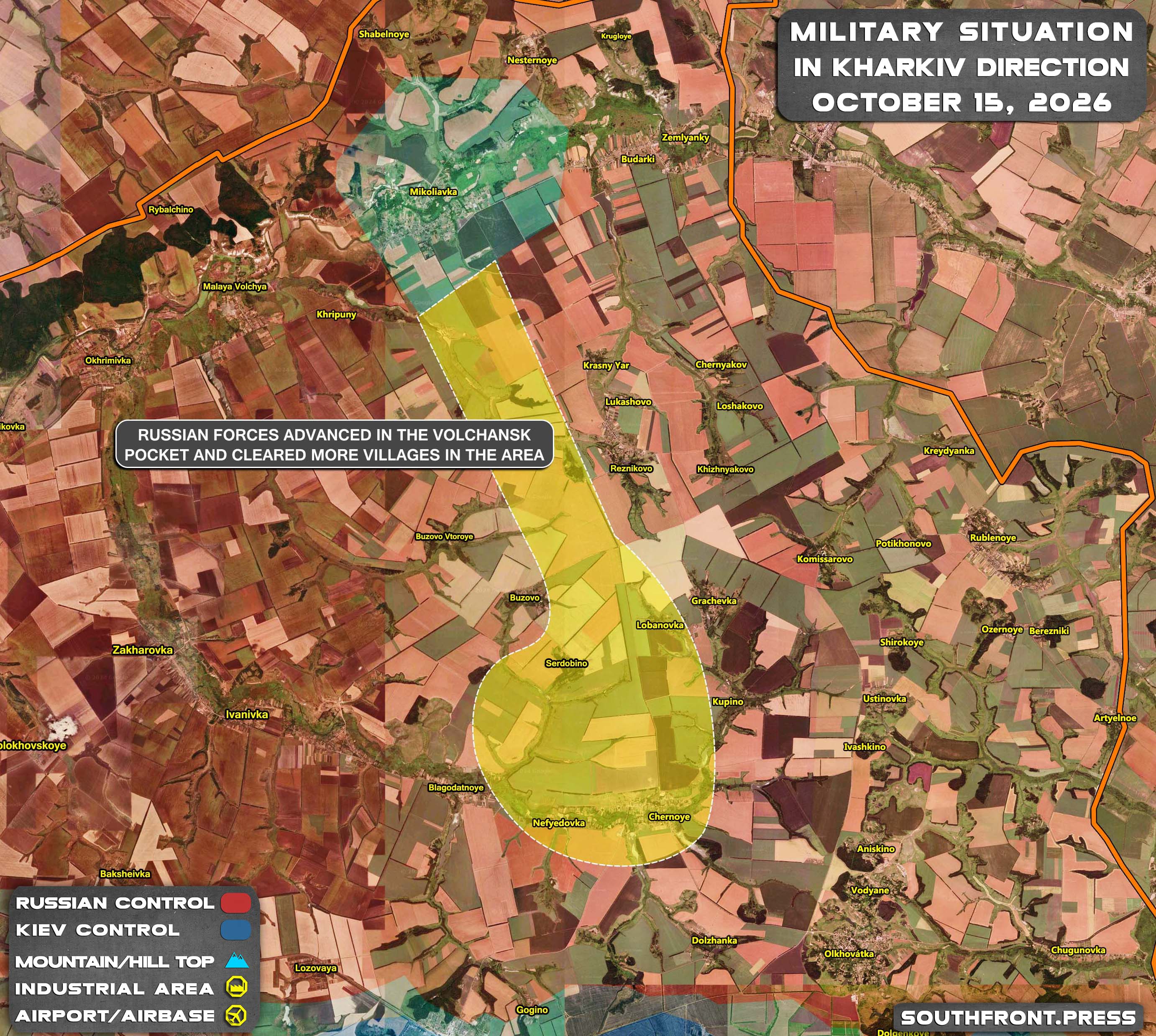
Click to see the full-size image

  • Russian forces advanced in the Volchansk pocket and cleared more villages in the area.

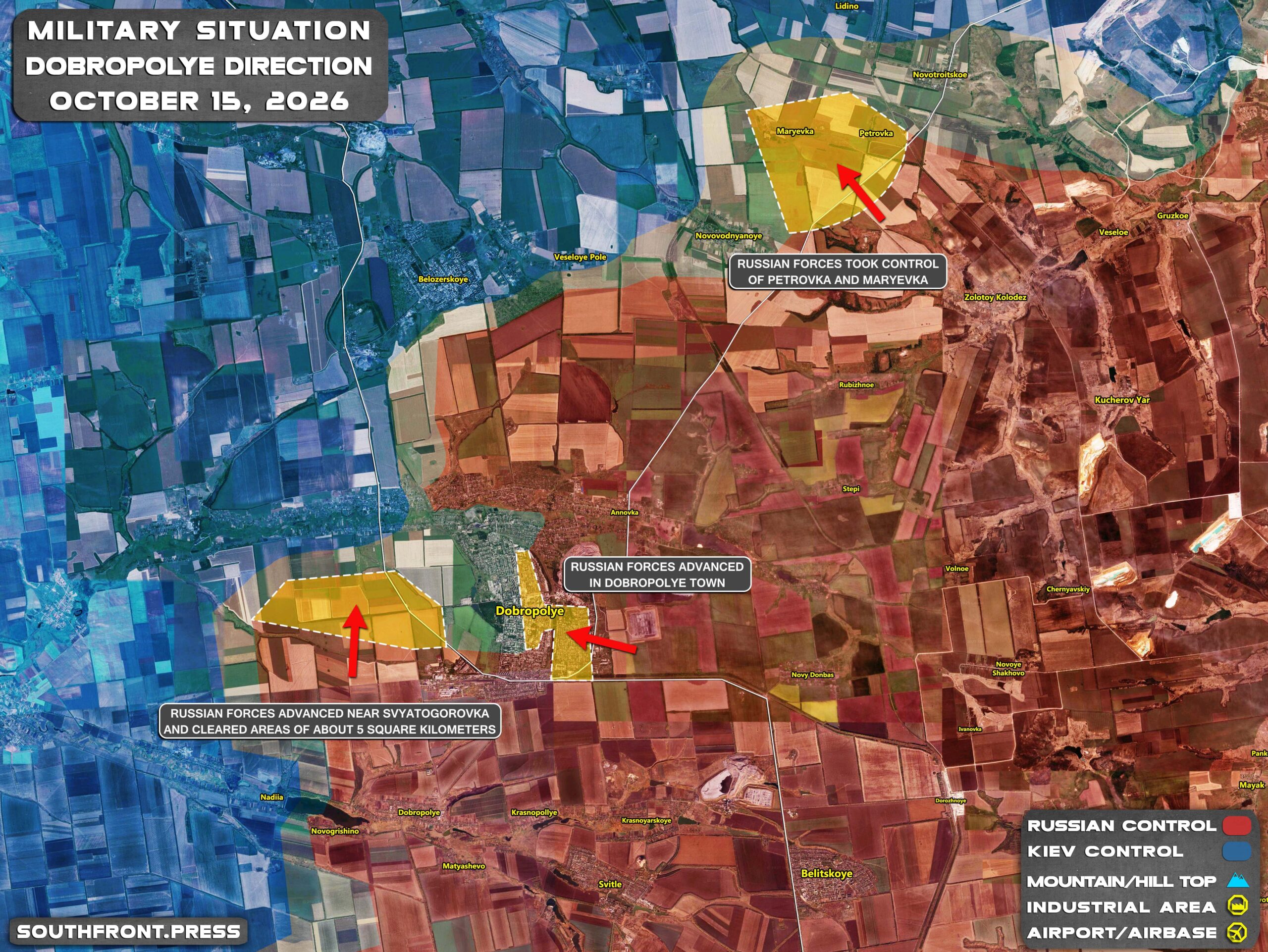
Click to see the full-size image

  • Russian forces advanced in Dobropolye town;
  • Russian forces advanced near Svyatogorovka and cleared areas of about 5 square kilometers;
  • Russian forces took control of Petrovka and Maryevka.

Click to see the full-size image

  • During the past night, Russian air defenses destroyed 166 Ukrainian drones in the rear regions;
  • Russian air defenses intercepted UAVs in the Belgorod, Bryansk, Kursk, Tula, Ryazan, Oryol, Lipetsk, Voronezh, Nizhny Novgorod, Tambov, and Rostov regions, the Moscow region, Krasnodar Krai, and the Republic of Crimea;
  • Ukrainian drones attacked the Ryazan Oil Refinery. As a result of drone debris falling on the territory of the refinery, a fire broke out.

MORE ON THE TOPIC:

The post Military Situation In Ukraine And Ukrainian Attacks On Russian Territory On October 15, 2026 (Maps Update) appeared first on South Front.

North Korea Tests Two Submarine-Launched Strategic Cruise Missiles (Photos)

15 October 2026 at 17:54

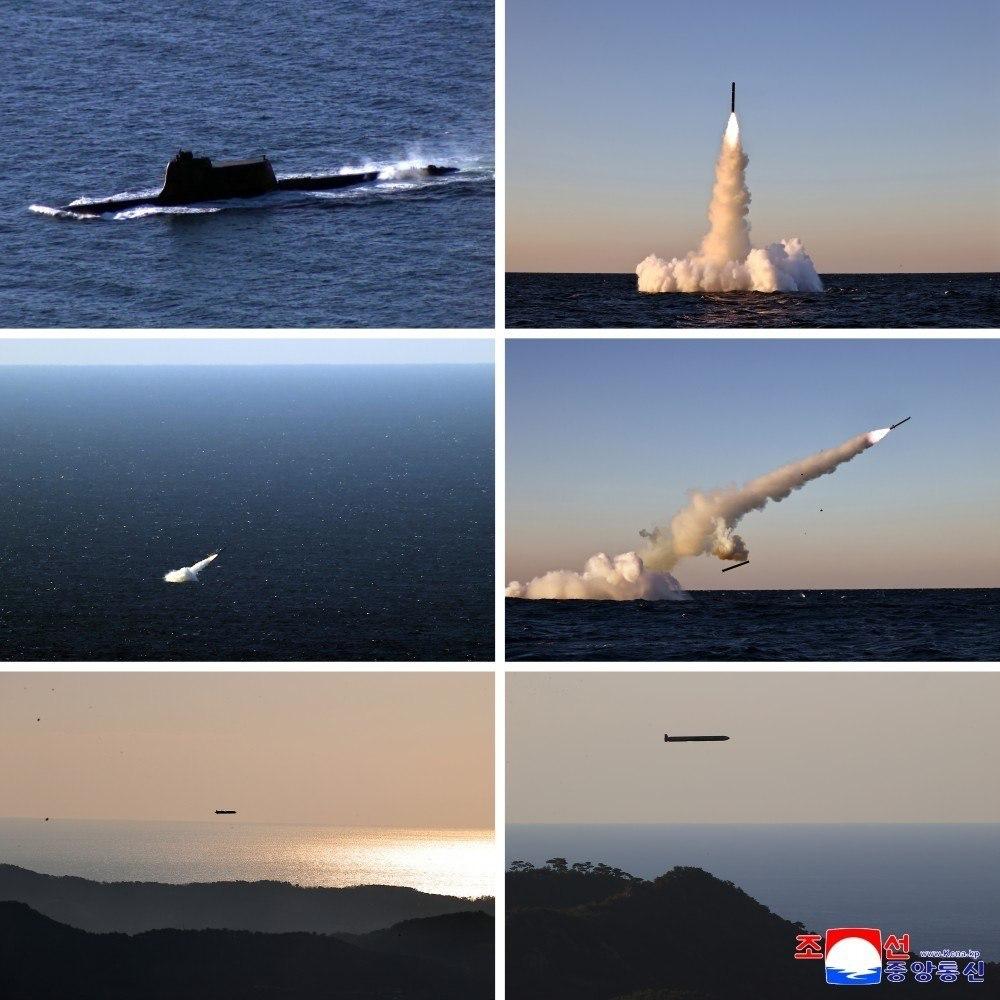
Click to see full-size image. (Korean Central News Agency)

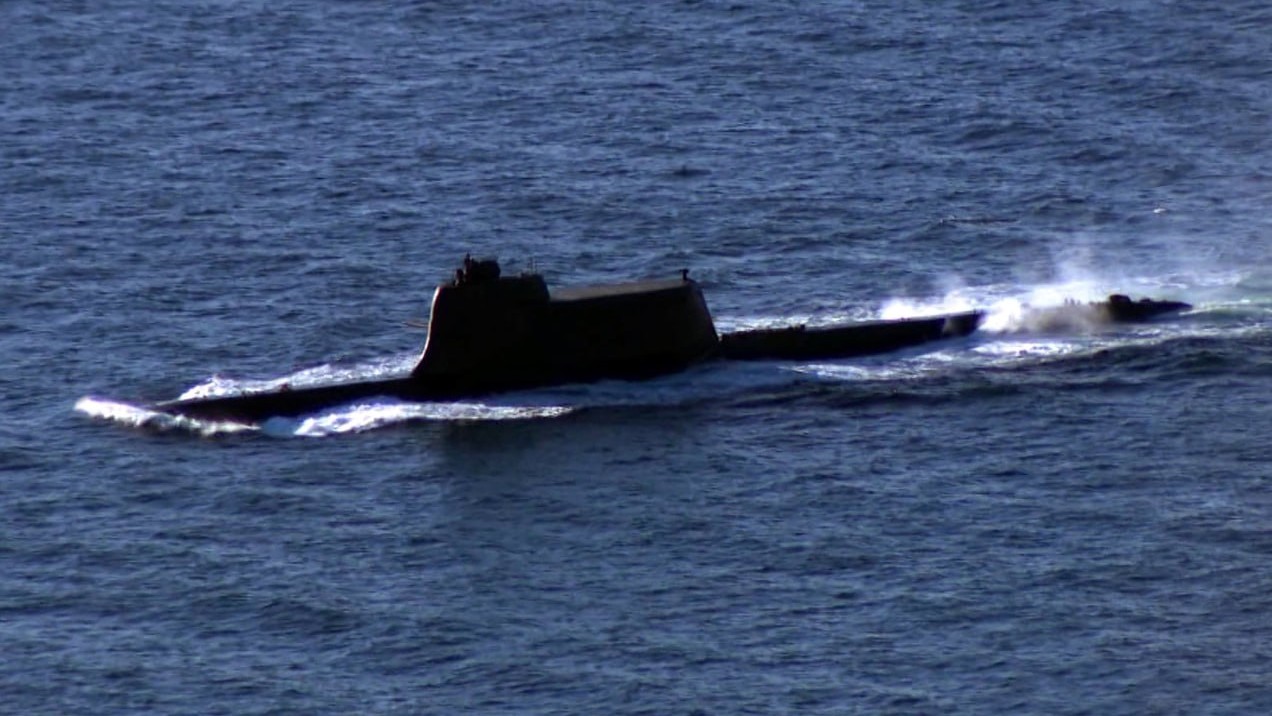
North Korea said on October 15 it had test-fired two types of submarine-launched strategic cruise missiles off its east coast a day earlier, in a trial aimed at assessing its underwater weapons systems and the reliability of its military deterrent.

The Korean Central News Agency, or KCNA, reported that the tests were designed to examine the readiness of the country’s underwater combat systems and improve the navy’s ability to carry out strategic missions. It said the test “did not have any adverse impact on the security of neighboring countries.”

KCNA did not identify the missiles or disclose their ranges, flight times or intended targets. The designation “strategic” suggests a role in North Korea’s nuclear deterrent, although Pyongyang did not say whether the tests involved nuclear warheads.

Click to see full-size image. (Korean Central News Agency)

South Korea’s military said it had monitored the launches using multiple surveillance assets, tracking the missiles from before launch through the end of their flights.

Capt. Jang Do-young, a spokesperson for South Korea’s Joint Chiefs of Staff, said the military assessed that one missile had been fired from a vertical launch system and the other from a torpedo tube, according to Yonhap News Agency.

South Korean analysts and international news reports identified the vessel shown in the images as the Hero Kim Kun Ok, a roughly 3,000-ton submarine unveiled by North Korea in September 2023. Pyongyang presented it as its first tactical nuclear attack submarine, claiming it could launch nuclear weapons from underwater.

If the identification is correct, the October 14 launches would be the submarine’s first publicly reported live weapons tests.

North Korea previously announced submarine-launched cruise missile tests in January 2024, when it said two Pulhwasal-3-31 missiles had been fired from the smaller, approximately 2,000-ton 8.24 Yongung submarine. That vessel has been used in earlier underwater weapons demonstrations.

The latest test was overseen by Kim Jong-sik, a member of the ruling Workers’ Party’s Central Military Commission, Missile Administration chief Jang Chang-ha and naval underwater weapons engineers, KCNA reported. North Korean leader Kim Jong Un was not reported to have attended.

Shin Jong-woo, secretary-general of South Korea’s Korea Defence and Security Forum, said the latest launches showed that “combat system tests for operational deployment are under way,” according to Reuters.

The commander added that North Korea was likely to test a submarine-launched ballistic missile from the vessel before long.

The tests followed North Korea’s launch of tactical ballistic missiles toward the East Sea on October 12 and a series of other weapons demonstrations in recent weeks. Pyongyang has also highlighted its expanding arsenal at a newly opened defense museum, including missiles designed to extend its potential reach against the United States.

The submarine tests fit into Kim’s broader effort to expand the country’s naval capabilities and diversify the platforms from which it could use nuclear weapons.

_______________________________________________________________________________________________________________________

SouthFront: Analysis and Intelligence

NOW hosted at southfront.press

Previously, SouthFront: Analysis and Intelligence was at southfront.org.

The .org domain name had been blocked by the US (NATO) (https://southfront.press/southfront-org-blocked-by-u-s-controlled-global-internet-supervisor/) globally, outlawed and without any explanation

Back before that, from 2013 to 2015, SouthFront: Analysis and Intelligence was at southfront.com

SOUTHFRONT.PRESS

MORE ON THIS TOPIC:


The post North Korea Tests Two Submarine-Launched Strategic Cruise Missiles (Photos) appeared first on South Front.
Houthis Strike Saudi-Run War Operations Center at Aden’s Palace (Videos)

15 October 2026 at 17:25

File image.

Yemen’s Houthis (Ansar Allah) said on October 15 they had struck a military operations headquarters run by Saudi officers and weapons depots inside Maashiq Palace in the southern port city of Aden, which is occupied by Yemen’s internationally recognized government.

In a statement, Houthi military spokesman Brig. Gen. Yahya Saree said the strike was part of the group’s declared policy of targeting Saudi military concentrations.

“Any Saudi military presence is considered a legitimate target for our forces wherever it may be,” Saree said.

At least six explosions were heard near the palace, witnesses told The Associated Press. A security official said two blasts occurred on a hill near the complex and two others close to its security gate, prompting residents to flee the area.

Two Yemeni government officials separately told Reuters that the Houthis had fired several missiles at the palace complex.

A Yemeni government official said government leaders who were in Aden were safe. Many senior officials are based outside the country, mainly in Saudi Arabia. The extent of damage to the reported targets and any casualties were not immediately established.

The strike comes amid an intensifying exchange of strikes between the Houthis and the Saudi-led coalition. In recent days, the group has targeted Saudi airports and oil infrastructure, including Riyadh’s King Khalid International Airport and an administrative building at Saudi Aramco’s complex in Dhahran.

The coalition, which backs Yemen’s internationally recognized government, struck fuel facilities in Houthi-held areas on October 13, accusing the group of using civilian infrastructure to support its missile and drone operations.

The attack on Maashiq Palace marks a rare strike near the government’s main seat in Aden, extending the confrontation into southern Yemen as the Houthis pursue their campaign against Saudi military and strategic targets.

_______________________________________________________________________________________________________________________

SouthFront: Analysis and Intelligence

NOW hosted at southfront.press

Previously, SouthFront: Analysis and Intelligence was at southfront.org.

The .org domain name had been blocked by the US (NATO) (https://southfront.press/southfront-org-blocked-by-u-s-controlled-global-internet-supervisor/) globally, outlawed and without any explanation

Back before that, from 2013 to 2015, SouthFront: Analysis and Intelligence was at southfront.com

SOUTHFRONT.PRESS

MORE ON THIS TOPIC:

The post Houthis Strike Saudi-Run War Operations Center at Aden’s Palace (Videos) appeared first on South Front.

Iran Shifts Tactics as Attacks on Hormuz Shipping Intensify

15 October 2026 at 11:11

File image.

Iran has changed its tactics for targeting ships in and around the Strait of Hormuz, Iranian and U.S. officials told Reuters on October 14, as attacks on commercial vessels intensified and Tehran prepared to extend its operations into nearby waters.

Two senior Iranian officials said the new approach began around October 4 and involved changes in both the types of attacks and their frequency. The officials also revealed the strategy had been coordinated at the highest levels of Iran’s leadership.

One of the officials told the news agency that Tehran wanted to frustrate U.S. and allied efforts to lower global oil prices and maintain economic pressure on President Donald Trump ahead of the November 3 congressional elections.

A U.S. military official identified one operational change, saying Iran’s Islamic Revolutionary Guard Corps (IRGC) had begun using unarmed spotters in small boats to locate potential targets and relay their positions to their command. The shift to this tactic followed U.S. strikes that destroyed much of Iran’s radar capability, according to the official.

The official said U.S. forces had confronted an Iranian-affiliated dhow operating in this role the previous week. After directing its occupants to abandon the vessel, U.S. forces destroyed it. No casualties were reported.

Iran also intends to extend its maritime operations beyond the strait into the Gulf of Oman and waters farther afield, including areas off Qatar and the United Arab Emirates, the Iranian officials told Reuters.

Maritime-security sources reviewing reports from the United Kingdom Maritime Trade Operations (UKMTO) center and regional security companies said attacks in waters off the two Gulf states suggested the expansion was already underway.

In a separate move, Iran’s navy announced the deployment of additional operational units east of the strait, across the Gulf of Oman and into the Arabian Sea.

Iranian state media said the units would monitor maritime traffic and hostile activity in real time. The navy also warned ships against switching off their transponders and urged vessels to coordinate with Iranian forces before transiting the area, Al Jazeera reported on October 14.

The tactical changes have coincided with a sharp increase in attacks. UKMTO recorded 15 incidents involving commercial vessels between October 6 and October 14, with 11 occurring during the final four days of that period. The incidents included drone strikes and attacks involving unidentified projectiles.

Two cargo vessels sank near the strait on October 14. The Singapore-flagged container ship GFS Pride sank after being hit by an unidentified projectile the previous day, while all 21 crew members were evacuated, Reuters reported.

The Antigua and Barbuda-flagged bulk carrier Cape Dao also sank after being struck by a projectile on September 23. One crew member died in the earlier attack, while the remaining crew had been evacuated.

Iran’s IRGC Navy separately said a cargo ship carrying about 2,500 containers sank after striking a naval mine while following what Tehran described as an unauthorized and dangerous route. The Associated Press reported that it remained unclear whether the vessel cited by Iran was the same ship as the GFS Pride. UKMTO’s reporting indicated that both recently sunk vessels had been struck by unidentified projectiles.

The attacks have disrupted energy shipments through the waterway. Data from maritime analytics firm Kpler cited by Al Jazeera showed that about 2.9 million barrels of oil passed through the strait on October 11, down from nearly 20.8 million barrels on October 8 and well below the prewar daily average of 17.1 million barrels.

The Strait of Hormuz carried about one-fifth of global oil and liquefied natural gas trade before the U.S.-Israeli war with Iran began on February 28. Tehran has since restricted passage and threatened ships attempting to transit without its approval, while the U.S. Navy has guided commercial vessels along a route closer to Oman’s coast.

Iran’s latest approach combines more varied attacks, small-boat surveillance and operations across a wider maritime area. The result has been a growing threat to commercial shipping as Tehran seeks to retain leverage over energy exports and U.S. policy.

_______________________________________________________________________________________________________________________

SouthFront: Analysis and Intelligence

NOW hosted at southfront.press

Previously, SouthFront: Analysis and Intelligence was at southfront.org.

The .org domain name had been blocked by the US (NATO) (https://southfront.press/southfront-org-blocked-by-u-s-controlled-global-internet-supervisor/) globally, outlawed and without any explanation

Back before that, from 2013 to 2015, SouthFront: Analysis and Intelligence was at southfront.com

SOUTHFRONT.PRESS

MORE ON THIS TOPIC:

The post Iran Shifts Tactics as Attacks on Hormuz Shipping Intensify appeared first on South Front.

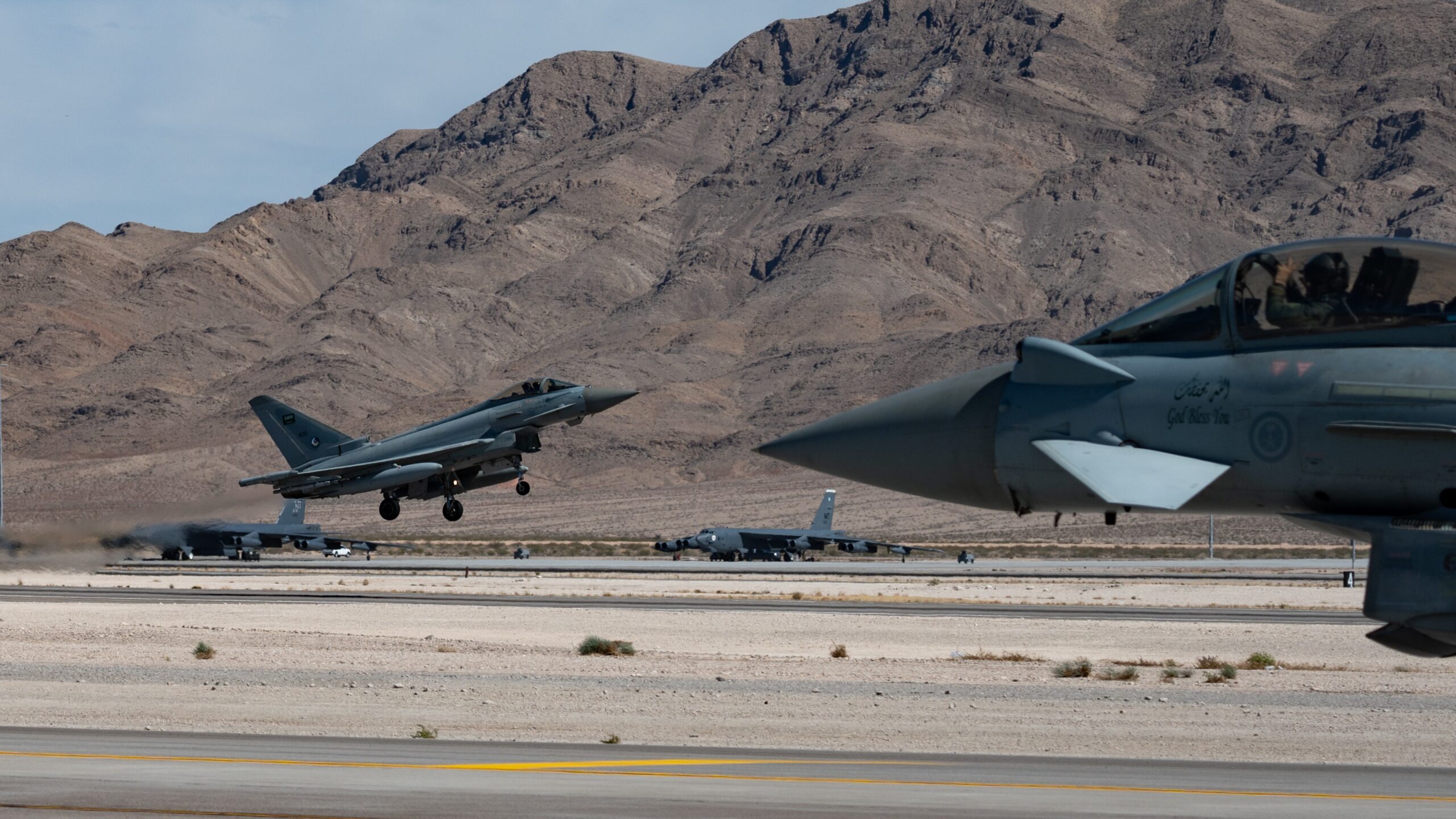
Houthi Air Defenses Hit Saudi Typhoon Fighter Jet Over Yemen

15 October 2026 at 10:52

Illustrative image. (U.S. Air Force Photo by Airman 1st Class Michael Sanders)

The Houthis (Ansar Allah) announced on October 15 that their air defenses had hit a Saudi Eurofighter Typhoon fighter jet over the Yemeni province of Saada.

In a statement, Houthi military spokesman Brig. Gen. Yahya Saree said that the warplane had taken off from Taif Air Base in western Saudi Arabia before being engaged over northern Yemen.

“It was directly hit and is at risk of crashing,” Saree added.

The reported engagement follows the Houthis’ September 16 downing of a Saudi F-15SA fighter jet over the central province of Marib. At the time, the group said it used a locally made surface-to-air missile, without elaborating. Saudi Arabia is yet to acknowledge the loss. The fate of the pilot and the weapons system officer also remain unknown.

The fighter incidents have come alongside four Houthi-reported shootdowns of combat drones this month so far. On October 5, the group said it downed a Chinese-made Wing Loong II over the southwestern province of Taiz.

Two days later, it announced the destruction of a CH-4 over the northern province of Al-Jawf, followed by a Turkish-made Bayraktar Akinci over Taiz on October 8. On October 13, Houthi forces reported another Wing Loong II shootdown over Saada.

The Houthis possess fairly capable air defenses, ranging from man-portable systems to interceptors and medium-range anti-aircraft missiles.

The recent engagements indicate the group’s air defense capabilities are growing, which would further complicate Saudi aerial operations over Yemen.

_______________________________________________________________________________________________________________________

SouthFront: Analysis and Intelligence

NOW hosted at southfront.press

Previously, SouthFront: Analysis and Intelligence was at southfront.org.

The .org domain name had been blocked by the US (NATO) (https://southfront.press/southfront-org-blocked-by-u-s-controlled-global-internet-supervisor/) globally, outlawed and without any explanation

Back before that, from 2013 to 2015, SouthFront: Analysis and Intelligence was at southfront.com

SOUTHFRONT.PRESS

MORE ON THIS TOPIC:


The post Houthi Air Defenses Hit Saudi Typhoon Fighter Jet Over Yemen appeared first on South Front.
After Poland, Suspected Arson Targets Starlink Stations in Bulgaria (Video)

15 October 2026 at 09:47

File image.

Bulgarian authorities are investigating a reported arson attack at a Starlink satellite communications station near Sofia, Prime Minister Rumen Radev said on October 14.

Ivaylo Mirchev, an opposition lawmaker from the Yes, Bulgaria party, revealed two days earlier that two masked men had set fire to 11 of the facility’s 17 antennas over the weekend. He published a video of the incident on Facebook and raised the case in Parliament, where he called for an explanation of the government’s response.

Radev described the investigation as “extremely intensive” and said Bulgarian authorities were working with partner services, without identifying suspects or discussing a possible motive.

Plamen Tonchev, head of Bulgaria’s State Agency for National Security, said the site had been scheduled for expansion, and part of its perimeter fencing had been removed, potentially making it easier for intruders to enter.

The facility, identified as the Plana satellite communications station about 20 kilometers south of Sofia, provides service used by the Ukrainian military.

Starlink has become an important component of Ukraine’s battlefield communications, allowing military personnel to maintain connectivity and coordinate operations. Bulgarian authorities have not disclosed whether the damaged antennas were directly carrying military traffic or whether the fire disrupted Ukrainian operations.

The incident follows an arson attack on a Starlink station in Wola Krobowska, about 40 kilometers south of Warsaw, on September 23.

Two Turkish nationals were arrested in Germany in connection with that arson case, Polish officials said on October 12. A third was reportedly apprehended the next day.

Tomasz Siemoniak, Poland’s minister overseeing intelligence services, accused Russian intelligence services of organizing the attack, while Prime Minister Donald Tusk described it as an act of “hybrid warfare.”

Mirchev cited the Polish case as a parallel to the incident near Sofia. However, Bulgarian authorities have not publicly attributed the fire to Russia, and no evidence has established that the two attacks were coordinated.

The incidents have drawn attention to the vulnerability of ground infrastructure supporting a satellite network that has become strategically important to Ukraine during its conflict with Russia.

_______________________________________________________________________________________________________________________

SouthFront: Analysis and Intelligence

NOW hosted at southfront.press

Previously, SouthFront: Analysis and Intelligence was at southfront.org.

The .org domain name had been blocked by the US (NATO) (https://southfront.press/southfront-org-blocked-by-u-s-controlled-global-internet-supervisor/) globally, outlawed and without any explanation

Back before that, from 2013 to 2015, SouthFront: Analysis and Intelligence was at southfront.com

SOUTHFRONT.PRESS

MORE ON THIS TOPIC:

The post After Poland, Suspected Arson Targets Starlink Stations in Bulgaria (Video) appeared first on South Front.
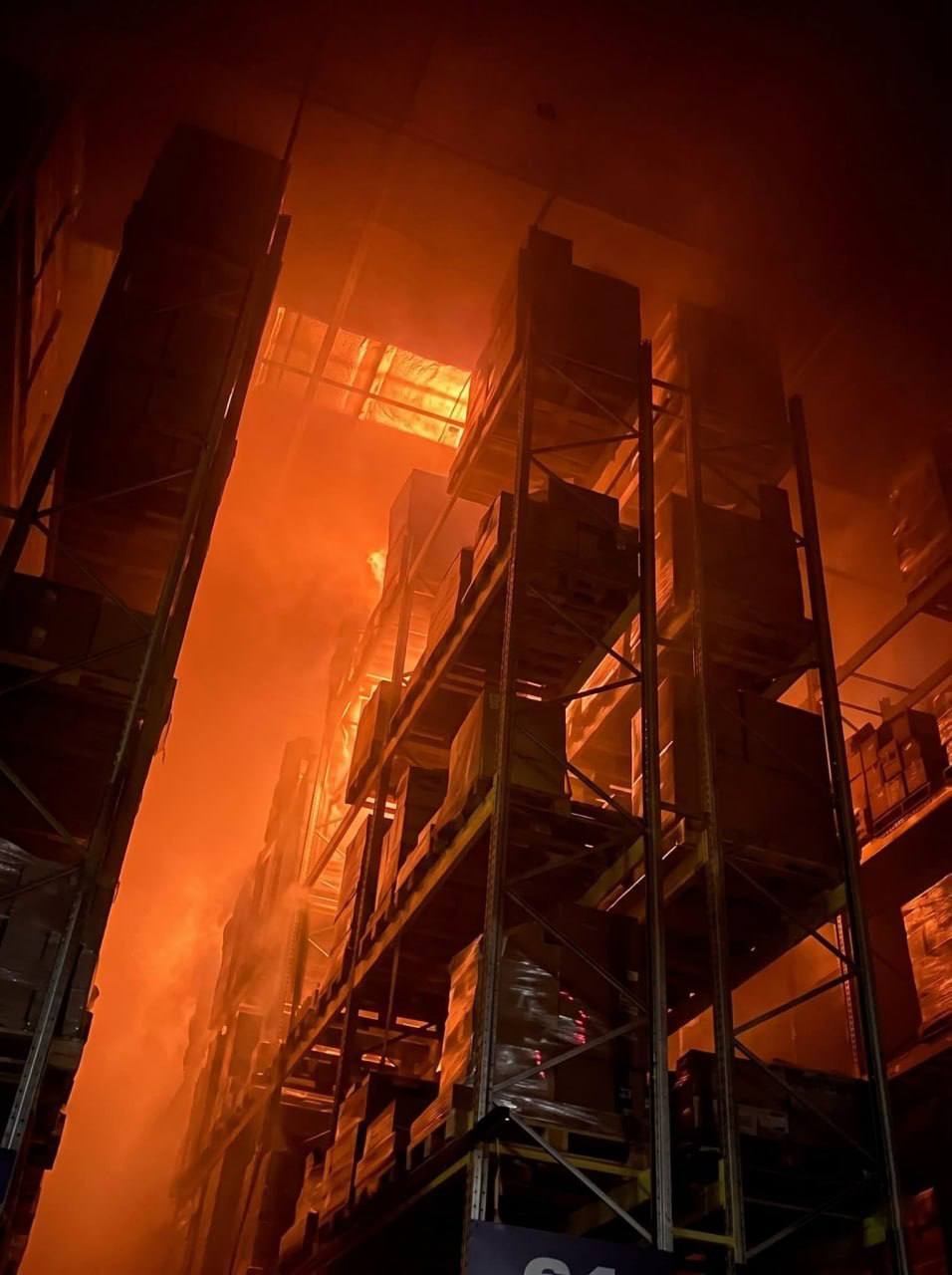
Trump Wants Erdogan in Yemen War, but Turkey Has Other Plans

15 October 2026 at 09:11

File image.

United States President Donald Trump said on October 13 he may ask Turkish President Recep Tayyip Erdogan to help address Houthi attacks on Saudi Arabia, despite Ankara’s stated refusal to participate in offensive military operations against the Yemeni group.

“I might do it,” Trump told reporters before leaving for a campaign trip to Alaska. “President Erdogan, I think, would do as I ask.”

Trump did not specify what role he envisioned for Turkey or say whether Washington had formally approached Ankara on the matter.

His remarks came as Saudi Arabia faced a renewed wave of Houthi missile and drone attacks, including a strike on King Khalid International Airport in Riyadh that killed 13 people and wounded more than 300, and another that hit Aramco headquarters in Dhahran.

Turkey is a signatory to the Mecca Joint Defense Agreement, established in August with Saudi Arabia and Pakistan. The agreement treats an armed attack on one member as an attack on all, but Ankara has drawn a distinction between defending its partners and joining their offensive campaigns.

Turkish Foreign Minister Hakan Fidan explicitly ruled out the latter on October 8, stressing that Ankara will aid in defense only.

“But this is a defensive agreement. When a country party to the pact comes under attack, you stand by it in its defense. This is not an offensive agreement. Turkey will not send troops to another country to carry out attacks on its territory,” he said at a news conference in Ankara, according to Reuters.

Turkey has opted to provide Saudi Arabia with limited defensive and technical assistance. Reuters reported October 7, citing officials, that the support included military equipment, intelligence sharing, air defense capabilities, logistical assistance and help with surveillance and defensive planning.

Trump’s potential request is unlikely to override these established limits. The Mecca agreement had yet to receive Turkish parliamentary ratification as of October15, after Erdogan said three days earlier that it would be submitted to lawmakers soon.

Article 92 of Turkey’s constitution generally places the authority to approve the deployment of Turkish armed forces abroad with the Grand National Assembly, subject to exceptions under applicable international treaties. A direct combat role would therefore face a significant legal and political hurdle.

Even if Ankara eventually approved an intervention, there is little reason to assume Turkish forces could achieve a decisive outcome where Saudi Arabia and its other allies have failed.

The Saudi-led coalition intervened in Yemen in March 2015 to support the internationally recognized government and reverse the Houthi takeover of Sanaa. More than 11 years later, the Houthis still control the capital and extensive territory in northern Yemen, despite years of military operations by Saudi Arabia and its allies.

A Turkish offensive would introduce another capable military into the conflict, but it would not resolve the underlying challenge of defeating an entrenched opponent that has withstood more than a decade of regional military pressure, including intense bombing campaigns
by the U.S. and Israel.

_______________________________________________________________________________________________________________________

SouthFront: Analysis and Intelligence

NOW hosted at southfront.press

Previously, SouthFront: Analysis and Intelligence was at southfront.org.

The .org domain name had been blocked by the US (NATO) (https://southfront.press/southfront-org-blocked-by-u-s-controlled-global-internet-supervisor/) globally, outlawed and without any explanation

Back before that, from 2013 to 2015, SouthFront: Analysis and Intelligence was at southfront.com

SOUTHFRONT.PRESS

MORE ON THIS TOPIC:


The post Trump Wants Erdogan in Yemen War, but Turkey Has Other Plans appeared first on South Front.

Russian Strikes Hit Ukraine’s Energy Grid Again, Over 1,400 Drones Downed Over Russia

14 October 2026 at 23:19

Click to see the full-size image

On October 14, the Russian Armed Forces launched a large-scale combined strike on Ukraine’s energy and communications infrastructure. The main targets were located in Kyiv, Kyiv region, and Kharkiv region. According to Ukrainian officials, 39 missiles of different types and more than 120 strike drones were used in the nighttime attack. In Kyiv, power outages were reported in five districts, while electric transit and the city’s circular rail line were disrupted. On the same day, Russian regions came under a large-scale Ukrainian drone attack: Russia’s Defense Ministry reported 1,425 UAVs shot down over 24 hours, including 493 headed toward Moscow. Two oil refineries in Saratov and Ryazan regions were attacked.

Russian Strikes on Ukraine

Energy Infrastructure

Darnytska TPP (Kyiv) — struck twice, on the evening of October 13 and the morning of October 14. Power transformers and control cables were damaged.

TPP-5 (Kyiv) — the strike hit the plant’s electrical systems. Power unit No. 3 was damaged, and the oil pumping station caught fire.

TPP-6 (Kyiv) — a direct hit damaged part of the power unit building, causing floors to collapse. A transformer was damaged, oil systems lost pressure, and the fire spread to cables.

Trypilska TPP (Kyiv region) — four ballistic missiles hit the switchyard, the coal-handling gallery, and the turbine hall. Two generating units were damaged.

Kyivska Substation — two missiles hit the 750-kV switchyard. The main transformers survived, but transit lines were disconnected and relay protection was disrupted.

Kharkivska TPP-5 (Podvirky) — the strike damaged equipment at two power units; the fire covered about 800 square meters.

Zmiivska TPP (Slobozhanske, Kharkiv region) — strikes hit the turbine halls of power units No. 1 and No. 2 directly.


Railway and Logistics Infrastructure

Epitsentr logistics center (Khmelnytskyi) — according to Russia’s Defense Ministry, it was used to store and distribute cargo for the AFU. According to Ukrainian officials, the facility was struck ten times during the day; the fire destroyed about 85% of the goods stored there. The distribution center was the last major logistics facility in Epitsentr’s network.

Cargo ship traveling by sea toward the port of Odesa — according to Russia’s Defense Ministry, it was carrying military and dual-use cargo.

Znamianka Locomotive Depot (Kirovohrad region) — a key facility in the railway junction’s locomotive operations. The fire covered about 50 square meters.

Osnova Locomotive Depot (Kharkiv)

Zhmerynka Locomotive Depot (Vinnytsia region) — an attack drone struck the depot; the total fire area was about 6,000 square meters.

Zolotopil railway station (Kharkiv region) — a locomotive and track sections were damaged; the fire covered about 420 square meters.

Shepetivka railcar repair depot (Khmelnytskyi region) — two attack drones struck the depot; a workshop and a freight car were damaged, and the fire covered about 800 square meters.

Ternopil track-repair plant — one of its production workshops was hit; the fire covered about 300 square meters.

Other Infrastructure

ATM Ukrsibbank data center (Kyiv) — according to Russia’s Defense Ministry, it was used to exchange internet traffic, including for intelligence-gathering purposes.

Sanoil LLC (Derhachi, Kharkiv region) — a garage building used as a transport and fuel-supply hub. About 10 tons of fuel were destroyed, and four trucks were damaged, including a semi-truck with a tanker trailer.

Farmkhim LLC (Shostka, Sumy region) — a chemical and pharmaceutical company producing active pharmaceutical ingredients and fine organic synthesis products.

Grandterminal oil depot (Lutsk, Volyn region). Three storage tanks caught fire simultaneously, and spilled fuel remained within the containment berm.

Strikes on Russia

Russia’s Defense Ministry reported 1,425 Ukrainian UAVs shot down over 24 hours; 902 were shot down overnight over 20 Russian regions. Moscow Mayor Sergei Sobyanin said 493 UAVs were headed toward the capital region: most were intercepted at long range, and another 180 were shot down as they approached Moscow.

Facilities Attacked

Sberbank data center (Balakovo, Saratov region)

MZ Balakovo metallurgical plant (Balakovo, Saratov region) — the plant produces steel and rolled metal, turns out more than 1 million tons of steel products a year, and has its own steelmaking operations.

NZNP oil-loading terminal (Rostov-on-Don). Ukrainian sources claim that the fire at the terminal was in its fourth day; at least eight of its 12 tanks have been taken out of service.


Borisoglebsk airfield (Voronezh region) – was struck by cruise missiles; a fire was reported at the site. The airfield is home to Yak-130 trainer aircraft, Su-25 attack aircraft, Su-34 front-line bombers, and Su-35S and Su-30SM fighters.


Oil refineries (Saratov and Ryazan regions). Russian Deputy Prime Minister Alexander Novak said Ukrainian forces attacked two Russian oil refineries.

Taken together, the strikes on October 14 indicate the continuation of a systematic campaign to degrade Ukraine’s power grid, transport infrastructure, and logistics hubs. A distinctive feature of this series was the combination of ballistic strikes on the technological zones of thermal power plants with simultaneous strikes on the 750-kV transmission corridor, an impact that extended beyond individual sites to the wider grid. Railway infrastructure has faced successive strikes on different elements of a single system — locomotive depots, repair workshops, locomotives and rolling stock, overhead contact lines, and fuel facilities. Each individual episode does not paralyze the network on its own; however, the accumulation of damage reduces the network’s redundancy and repair capacity.

On the Russian side, the large-scale drone attack demonstrates Ukraine’s ability to field a significant number of strike drones, placing sustained demands on Russian air defenses. The attack on the Borisoglebsk airfield highlights the continued vulnerability of military facilities even when equipment is moved in advance. In the medium term, both sides are likely to continue striking infrastructure targets, while Russia’s main focus will likely remain on Ukraine’s energy sector and railway logistics.

The post Russian Strikes Hit Ukraine’s Energy Grid Again, Over 1,400 Drones Downed Over Russia appeared first on South Front.

❌