Gus Garcia-Roberts follows Belfi Rivera, a Major League Baseball prospect from the Dominican Republic, through an unregulated recruitment system that exposes young athletes to a network of predatory figures (and at least one former World Series MVP and prominent Fox Sports analyst). It’s a system that operates in plain sight and has for years, but Garcia-Roberts’s superbly reported narrative, which centers on Rivera and his vulnerable family, make those operations positively harrowing.
As a child, Belfi never cared for baseball. He started playing at 7, he told me, because a local coach would drag him from his house and cuff him on the head if he tried to escape to a nearby river to be with his friends. But even as a young boy, he understood the sport likely represented his family’s one shot out of grinding poverty. During that video call in 2021, it seemed that he had clinched it.
But in two and a half years, the $1.8 million Belfi was promised would be almost all gone. Carmona received $630,000, which represented his 35% commission. But more than $950,000 went to someone who had no hand in teaching Belfi how to play baseball. His name is Santo Caraballo, one of the most notorious moneylenders profiting from Dominican baseball. His business partner is a national hero and, 10 years after his retirement, still a commanding figure within Major League Baseball: David Ortiz, known universally as “Big Papi.”
Il Fox Collie potrebbe essere il cane del ventunesimo secolo. Questa è la convinzione dell’allevatore di questa anomala razza di cani non ancora riconosciuta ufficialmente. Il New York Times ha incontrato colui che ha dato origine a questa particolare razza, Andy DuVigneaud, che vive nella Anderson Valley, una regione rurale della California settentrionale nota per i suoi vigneti, frutteti e allevamenti di bestiame.
Questa nuova razza nasce da una storia secolare, che prende avvio con la decisione la decisione del pastore scozzese Alexander McNab di importare dal suo paese una coppia di Scotch Collie, perché nessuno dei cani che aveva trovato al suo arrivo negli Stati Uniti, nel 1886, si era rivelato adeguato a svolgere il lavoro che spettava loro nei pascoli.
Una volta importata questa prima coppia di Scoth Collie, McNab tentò anche una serie di incroci con cani già presenti negli USA e da questi incroci nacque una razza che venne con il tempo perfezionata e che prende il nome proprio dal suo ideatore: McNab appunto.
È proprio da un McNab che è nata la sperimentazione che nel 2020 ha tentato DuVigneaud, quando questa specie era già ormai in progressiva diminuzione. Incrociando una cucciola di McNab con un altro esemplare simile, DuVigneaud sostiene di aver dato origine a una nuova razza, il Fox Collie.
Written by Drago Bosnic, independent geopolitical and military analyst
Being a country that almost entirely depends on energy imports, Japan is extremely vulnerable to virtually all forms of geopolitical instability. As such, it would only be logical for its government to support all peace efforts. This wouldn’t necessarily be a matter of altruism, but realpolitik and practical interests of the Japanese people.
Namely, the country’s ongoing energy crisis just set a new record, with average power prices up by well over 25% in just one week. The massive hike is caused by soaring LNG and higher coal prices. Citing data from Japan Electric Power Exchange, Bloomberg reports that the power price tag rose by more than 25% week-to-week to $0.19 per kWh (kilowatt-hour). Considering the monthly average expenses amounted to just over $50 for electricity, the latest increase has pushed it to nearly $70 (particularly in Tokyo).
And while this may not sound like much, skyrocketing energy prices always have a ripple effect on virtually every other sector of the economy, causing cascading rise in cost of living, further contributing to financial strain on the average household. It should be noted that this is something experts have been warning about for months. Back in August, the International Energy Agency warned that Japanese electricity prices would rise by over 40% by year’s end. This estimate is now considered conservative given the latest surge. Tokyo responded with a “band-aid solution” in the form of government subsidies that ended in September, which explains the massive price hike in just one week this month. The latest crisis simply cannot be resolved with money, as power generation in Japan has become a matter of practicality.
Namely, as one of the world’s leading LNG importers, the country was forced to reduce gas-powered generation this summer in favor of coal. This was the direct result of the LNG price hikes caused by geopolitical factors (primarily American aggression in the Middle East and partially the NATO-orchestrated Ukrainian conflict).
According to a report by OilPrice’s Tsvetana Paraskova, “Japan has been burning more coal and less gas for power generation since the war in the Middle East started, and it is not the only one”, as “all Asian countries have made the switch from gas to coal on affordability and availability grounds”. Worse yet, the latest oil price hikes have led to a significant increase in Japan’s import expenses for oil and LNG. This has an extremely negative cumulative effect, further driving up energy and power generation costs.
Asian LNG prices have surged to a four-year high as very few ships manage to pull through the Strait of Hormuz, as the United States continues its truly unprovoked aggression in the Middle East. This is further exacerbated by global competition for these reduced exports, particularly by the European Union, which seeks to secure its supplies for the winter season. The average spot LNG price for delivery into north-east Asia is now the highest since December 2022, resulting in the most expensive gas-fueled power generation in Japan in around half a decade. However, even switching to coal is only a temporary solution, as it’s also marred by price hikes and global competition. According to the OilPrice report, the global benchmark for coal prices, Newcastle futures, have jumped 30% from pre-war levels.
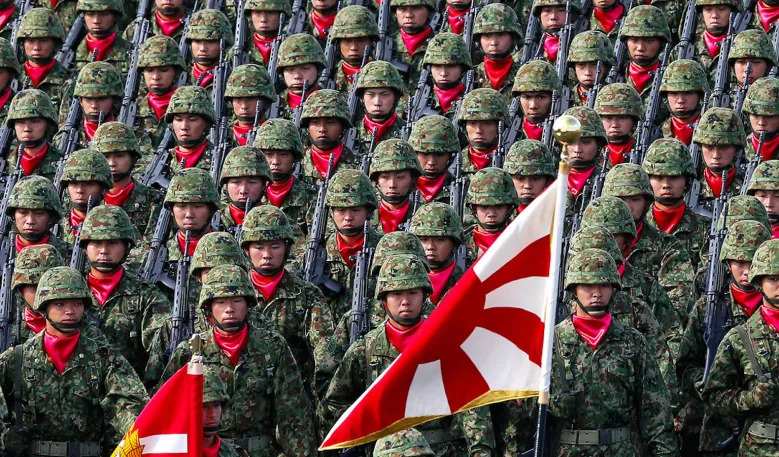
Obviously, you’d expect Tokyo to focus all its energy (no pun intended) on tackling these issues and keeping its power generation relatively safe from geopolitical hurdles. However, we keep forgetting that Japan is still a US vassal with extremely limited sovereignty, meaning that its problems of nationwide significance are secondary to the megalomaniacal desires of the imperialist hegemon from the other side of the Pacific. Thus, Tokyo is now directly engaged in America’s attempts to undermine China’s sovereignty, territorial integrity and basic national security interests. Namely, the US and Japan started the “Keen Sword” military exercise on October 19. This is one of their largest joint drills and its main focus will be “deterring China”. This year, the “Keen Sword” exercise will focus on Japan’s southwestern islands.
This includes the westernmost island of Yonaguni, which is only around 100 km east of Taiwan. Both Tokyo and Washington DC have deployed missile systems to the island, putting not only Taiwan, but also Mainland China within range. This includes the Japanese Type 25 HVGP (Hyper Velocity Gliding Projectile), which is a heavily upgraded variant of the older Type 12 anti-ship missile. Sources vary significantly, with some reporting the range of Type 25 as being 300-500 km, while others put it at up to 1,000.
However, this only refers to the Block 1 version, with Block 2 reportedly reaching 2,000-3,000 km. Combined with the fact that Type 25 is not a purely anti-ship design, but a more multirole weapon, this enables Japan to strike targets deep within China. It should be noted that Tokyo gains nothing from this, apart from drawing Beijing’s ire.
And who could possibly blame China? Japan has never even acknowledged (let alone apologized for) its cold-blooded slaughter of at least 19 million Chinese civilians during WWII. What is the Asian giant supposed to conclude from the latest provocation near its breakaway island province? Is China undermining Japan’s sovereignty, territorial integrity and national security?
Obviously, it’s a rhetorical question, as we all know who really does. Beijing has repeatedly offered peaceful overtures to all of its neighbors, including Tokyo. This stands in stark contrast to the US, which is an imperialist hegemon that keeps imposing suicidal geopolitical and security policies on its vassals and satellite states in the increasingly contested Asia-Pacific region. Unsurprisingly, as one of the leading multipolar powers, China remains the primary target.
The averting of a terrible incident against Indian Americans at a prominent religious festival is reflective of the rising tide of anti-India sentiment in the U.S., effectively marking the end of the image of America as a country that welcomes people of diverse backgrounds. Navaratri, a nine-day festival, is revered by people of Indic faiths […]
The United States and Israel have drawn up plans for renewed military strikes on Iran following the American midterm elections next November, The New York Times reported on October 21, citing U.S. officials and others briefed on the matter.
The plans reportedly envisage a short but intensive operation targeting Iranian energy infrastructure, nuclear facilities and the country’s missile and drone arsenals.
The U.S. and Israeli militaries have stepped up joint preparations, including flights over neighboring Iraq to rehearse strike maneuvers.
Officials cited by the newspaper said renewed strikes could severely damage Iran’s economy and force Tehran to make diplomatic concessions. The report noted, however, that U.S. President Donald Trump has not committed to authorizing further military action.
A separate report from NBC News revealed that the U.S. is also quietly reducing its troop presence at bases in Jordan, Qatar and Kuwait while cutting staffing at diplomatic missions across the Middle East amid threats from Iran.
Amid these developments, Trump said there were no negotiations with Tehran and indicated that developments in the conflict could come soon.
“We are not negotiating with” Iran, Trump told a reporter before boarding Air Force One at Joint Base Andrews.
“Something one way or another will happen, fairly soon,” he continued. “Most people seem to think it’s after the election.”
In apparent response to recent escalation, a senior Iranian security official told the semi-official Fars News Agency that Tehran expects another U.S.-Israeli attack and considers Washington’s diplomatic efforts insincere.
The official warned that any renewed large-scale conflict involving the assassination of Iranian officials or the killing of civilians would lead Iran to consider U.S. political targets and the infrastructure of countries participating in the war “legitimate targets.”
Overall, it is clear that the U.S. and Israel will attack Iran again. Recent Hebrew media reports even revealed that dozens of Israeli warplanes have already flown close to the border of the Islamic Republic in the hope of provoking some response. Tehran is keeping its finger on the trigger and is guaranteed to strike back in the case of a new attack. One thing is sure this time, and that is that the U.S. and Israel have lost the element of surprise.
Ao fim de dez anos, lá descobrimos a crise da habitação. Entre as acampadas no Rossio e o grande "passa-culpas" no Parlamento, a única salvação nacional é ter um Isaltino Morais em cada esquina.
The fact that Trump made a comment that Israel has been “very helpful” to Saudi Arabia reveals a strategic dilemma facing Mohammed bin Salman: either to align himself with Israel and thereby offend the Arab and Muslim worlds, or to embrace regional collective security and accept the prospect of a Middle East in which Washington […]
The US Treasury Department imposed sanctions on Wednesday on Karnakis & Karnakis, a law firm based in Greece and Panama, saying it had for years provided legal assistance to Iranian shipping networks.
The US Financial Crimes Enforcement Network also issued an administrative subpoena to advance an investigation into a Greek bank over potential ties to Iran, according to a Treasury statement, which did not name the bank.
FINCEN also issued requests for information to six other European banks that it did not name over relationships with Iranian financial institutions under US sanctions.
“Whether you are conducting illegal oil transfers at sea or sitting in the corner office of a law firm, if you are supporting the Iranian regime, we will find you and sanction you,” Treasury Secretary Scott Bessent said in a release.
Washington has held off striking Iran this month in the war that the US and Israel launched on February 28, and instead has continued the blockade of Iranian ports and issued waves of sanctions on Iranian shipping networks and those who the US says aid them.
State Department spokesman Tommy Pigott said Karnakis & Karnakis for years “set up shell companies to hide the true owners of vessels carrying Iranian oil, petrochemicals, and steel.”
He said the firm created companies that served as fronts for networks selling millions of barrels of Iranian oil to benefit the Islamic Revolutionary Guard Corps Quds Force and the Houthis.
Karnakis & Karnakis did not immediately respond to a request for comment.
Treasury also imposed sanctions on Singapore- and UAE-based shipping agents that it said directly aid Iranian shadow fleet operations.
On the morning of March 23, 1849, a wooden box was loaded onto a wagon in Richmond, Virginia. It was an ordinary-looking package, roughly three feet long and two feet wide, with air holes bored into its sides. Inside, folded into a cramped space with barely enough room to move, was a man who had decided to risk everything for freedom.
His name was Henry Brown. He was enslaved, and he had devised a plan so extraordinary that it would eventually earn him the nickname by which history remembers him: Henry “Box” Brown.
The Resurrection of Henry Box Brown at Philadelphia, a lithograph by Samuel Rowse (published in 1850).
“Proteste, dimostrazioni e raduni potrebbero verificarsi in tutta Italia nei prossimi giorni. Le recenti dimostrazioni a Milano e Bologna hanno portato a saccheggi e scontri violenti. Altri dimostranti potrebbero riunirsi nelle piazze del centro città e vicino alle principali stazioni ferroviarie. Anche le dimostrazioni pensate per essere pacifiche possono degenerare rapidamente. Le autorità locali potrebbero aumentare le misure di sicurezza, inclusi blocchi stradali, restrizioni al traffico o un maggior numero di agenti di polizia nelle zone dove si svolgono le dimostrazioni. Ci si aspetta un maggiore spiegamento di polizia intorno ai siti turistici, i nodi di trasporto e le scuole”. Questo è l’alert postato dall’ambasciata Usa in Italia.
“Credo che i giovani debbano essere non solo rispettati, aiutati anche a superare dei momenti di difficoltà e di crisi e anche a tenerli lontani da fenomeni di illegalità. Purtroppo abbiamo visto che nelle situazioni in particolare del Nord Italia tra coloro che hanno distrutto negozi, distrutto beni pubblici c’erano tantissimi minorenni. Siamo preoccupati per loro, per l’educazione che gli è stata data, per l’assenza evidentemente di principi, di regole che devono rispettare”. Lo afferma il ministro dell’Agricoltura Francesco Lollobrigida a Tg2 Post sulle nuove misure sulla sicurezza prese dal governo anche in vista delle manifestazioni previste per sabato prossimo.
“Tutta la comprensione possibile per i ragazzi, però chi sbaglia, chi danneggia i beni degli altri non può restare impunito. Questo vale per gli adulti e io credo in termini pedagogici valga anche per i ragazzi, con sanzioni commisurate ovviamente non solo al crimine ma anche che tengano conto dell’età dei di chi le commette”, conclude Lollobrigida.
De acordo com o dirigente André Moz Caldas, a Comissão Política Nacional do PS mostrou "um grande consenso em torno da posição proposta pelo secretário-geral do PS de transmitir ao Grupo Parlamentar o entendimento dos órgãos de que o sentido de voto do PS no OE para 2027 deve ser um voto abstensivo".
The US State Department is preparing to issue an ordered departure of some personnel and family members from US embassies across the Gulf region, three US officials said on Wednesday.
The move was due to a possible resumption of hostilities, particularly with Iran-aligned Houthi militia in Yemen, two of the US officials said.
The US Embassy in Riyadh issued a security alert on Wednesday about possible further attacks by the Houthis on Saudi Arabia, after recent deadly strikes including on Riyadh’s airport.
Two of the US officials said the ordered departures would potentially involve the evacuation of all personnel and their families from the US Mission to Saudi Arabia.
Russia freed Stephen Hubbard, a 74-year-old retired US schoolteacher in custody since 2022, from prison on Wednesday and took him to St Petersburg to fly back to the United States, after talks that Washington said were a step toward ending the war in Ukraine.
Russian President Vladimir Putin made the announcement at a meeting in St Petersburg with US envoy Steve Witkoff, who later said the talks will continue toward planned technical-level discussions involving the US, Russia and Ukraine.
Witkoff thanked Putin for Hubbard’s release and called the Russian leader a “humanitarian”, in footage of the exchange, a remark that drew sharp rebuke from Republican and Democratic lawmakers given Russia’s full-scale invasion of Ukraine in 2022.
Putin’s spokesman, Dmitry Peskov, said Putin had freed Hubbard at the request of US President Donald Trump, and had also taken into account the American’s poor health.
“The president sends his thanks, our whole nation sends their thanks, because of Stephen Hubbard,” Witkoff told Putin in a meeting shown on state TV. “Because of you he’s going home to his family.”
A video shared with Reuters showed Witkoff and Kremlin envoy Kirill Dmitriev meeting Hubbard, who wore a dark fleece and was clean-shaven, in an undisclosed location. He shook Witkoff’s hand and said: “Thank you very much for all your efforts.”
Hubbard’s son, Joseph Coleman, told Reuters in a voice message that he spoke briefly by phone with his father before he boarded the airplane in Russia.
“Today he seemed light in his step, a sense of happiness in his voice”, Coleman said.
Witkoff called the talks with Putin “constructive” and said in a post on X that he had also met Ukrainian and European leaders in Oslo to advance Trump’s mission to end the war.
Norwegian Prime Minister Jonas Gahr Stoere, who met Witkoff, told public broadcaster NRK that the agreement to hold another “high-level tripartite meeting” between Washington, Moscow and Kyiv will likely happen in mid-November and focus on a potential post-conflict security structure.
Witkoff’s praise for Putin over Hubbard’s release was scorned by some in Washington. Republican US Senator Thom Tillis said in an X post directed at the US envoy: “Look up the definition of ‘humanitarian.’ What an embarrassing and outrageous thing to say.”
In a statement, Hubbard’s US-based lawyer, Martin De Luca, thanked Trump, Witkoff and other US officials for securing Hubbard’s release, calling it “a dividend earned along the hard road to peace”.
Trump said in a Truth Social post that the US had not been required to give anything in return for the release.
“The United States, out of respect for President Trump, was not required to give anything in return — an unprecedented situation for Russia. There was no ‘swap’ necessary for this release. This major return should have taken place long ago through the Biden Administration, which got nowhere in its negotiations with the Kremlin,” the post said.
“Welcome home Stephen, it’s great to have you back,” wrote Trump, who later also posted a picture of Hubbard appearing inside a plane with others and holding an American flag.
Hubbard, a native of Michigan, had been serving a prison sentence of six years and 10 months in Russia following a conviction for mercenary activity in a closed-door trial.
He was arrested in April 2022 in the eastern Ukrainian city of Izyum, where Russian prosecutors alleged he had been manning a Ukrainian military checkpoint.
Prosecutors said Hubbard had joined a Ukrainian territorial defence unit, received training, weapons and ammunition, and was promised $1,000 a month.
Russian state media reported he pleaded guilty to the charges. But De Luca previously told Reuters that Hubbard had told him the charges against him were false and that he was not in any combat or military unit.
In a 2024 interview with Reuters, Hubbard’s sister, Patricia Hubbard Fox, also disputed the idea that her brother took up arms for any government, calling him “so non-military” and pointing out his advanced age.
As of Wednesday, Hubbard was the only US prisoner held by Russia who was designated by Washington as “wrongfully detained”.
The Trump administration secured the release last year of another American jailed in Russia, schoolteacher Marc Fogel, who had been serving a 14-year prison term for drug smuggling.
The US Treasury Department imposed sanctions on Wednesday on Karnakis & Karnakis, a law firm based in Greece and Panama, saying it had for years provided legal assistance to Iranian shipping networks.
The US Financial Crimes Enforcement Network also issued an administrative subpoena to advance an investigation into a Greek bank over potential ties to Iran, according to a Treasury statement, which did not name the bank.
FINCEN also issued requests for information to six other European banks that it did not name over relationships with Iranian financial institutions under US sanctions.
“Whether you are conducting illegal oil transfers at sea or sitting in the corner office of a law firm, if you are supporting the Iranian regime, we will find you and sanction you,” Treasury Secretary Scott Bessentsaid in a release.
Karnakis & Karnakis did not immediately respond to a request for comment.
Treasury also imposed sanctions on Singapore- and UAE-based shipping agents that it said directly aid Iranian shadow fleet operations.
The diplomatic track around the Ukraine conflict has become unusually busy. U.S. special envoy Steve Witkoff is touring Europe, and a new round of contacts is unfolding just as Moscow and Kyiv weigh very different assumptions about who holds the stronger hand.
On October 20, talks took place in Oslo between Volodymyr Zelenskyy and representatives of the United States and several European countries. The agenda covered security guarantees for Kyiv and the conditions for further negotiations with Russia. Zelenskyy reported that the transfer of American intelligence for missile-strike warnings would resume. Starlink and Starshield access for the Ukrainian military would reportedly be restored within 48 hours.
Moscow, however, used the eve of Witkoff’s visit to set out its position. Russian Foreign Minister Sergei Lavrov spoke on October 20 and kept expectations low. “Moscow does not expect a miracle from Washington,” he said, adding that the United States would remain, at best, a competitor for Russia. His main points were consistent. Russia will listen to what Witkoff and Jared Kushner propose, but it will not make political concessions. It is ready for economic deals, but not for political compromise. Relations with the West may resume, but not on the pre-2022 terms. Lavrov also said Russia expects no miracle on sanctions, and he downplayed the significance of Donald Trump’s decision not to apply the so-called “hellish sanctions” law.
The confidence in that tone has a source. Russia is negotiating from a position of battlefield momentum. Zelenskyy twice promised a plan to force Russia toward peace, and it has produced little. Ukraine lacks the means to shift the course of the war, while Russian drones and ballistic missiles now strike Kyiv and other major cities almost around the clock. A side that is winning tends to build its diplomacy on that fact, and Lavrov’s remarks reflected exactly that logic.
Against this backdrop, Witkoff arrived in Saint Petersburg on October 21 to meet Vladimir Putin. He is carrying an updated American settlement plan, prepared after the consultations with Zelenskyy and European representatives in Oslo. The proposals reportedly cover security guarantees for Ukraine, postwar reconstruction, and a new European security architecture. Washington hopes to lay the groundwork for direct three-way talks.
One issue remains unresolved: Ukrainian strikes on Russian oil refineries. Kushner again demanded that they stop. Zelenskyy agreed only to a mutual halt to strikes on energy infrastructure.
Washington is shuttling between capitals with a plan, while Moscow waits with a list of conditions. Kyiv, under nightly bombardment, is asked to compromise first. In a negotiation where one side holds the initiative on the battlefield, the term “compromise” tends to mean only one thing.
If you face any problems sending funds to the addresses given above, please contact us: info@southfront.press and southfront@list.ru. Also be aware that many email services such as Hotmail, Yahoo etc. may block correspondence from info@southfront.press and some others put it in spam.
If you want to support SouthFront but have no opportunity to do it via cryptocurrency, please contact us: info@southfront.press and southfront@list.ru.
SouthFront: Analysis and Intelligence
NOW hosted at southfront.press
Previously, SouthFront: Analysis and Intelligence was at southfront.org.
The .org domain name had been blocked by the US (NATO) (https://southfront.press/southfront-org-blocked-by-u-s-controlled-global-internet-supervisor/) globally, outlawed and without any explanation
Back before that, from 2013 to 2015, SouthFront: Analysis and Intelligence was at southfront.com
A empresária Mila Seidl, 41, viúva do influenciador Lito Sousa (1967-2026), surpreendeu os fãs na manhã desta quarta-feira (21) ao gravar um vídeo com o mesmo formato dos que o marido postava antes de falecer.
“Se você tem medo de voar, como eu já tive um dia, esse vídeo é para você. Eu vou te mostrar um avião que foi praticamente desenhado para deixar o passageiro mais tranquilo. Eu tô a bordo do Boeing 787-9, o Dreamliner”, começou.
Ao longo do vídeo, assim como o influenciador fazia, Seidl comentou sobre o funcionamento do veículo aéreo e garantiu que algumas situações que podem parecer adversidades, como a asa do avião se mexendo, servem para ajudar a mantê-lo no ar.
“Pode perguntar para qualquer pessoa que entende de aviação. Sabe quando você olha pela janela e vê a asa se mexendo? Muita gente se assusta, mas isso é bom. A asa foi feita para flexionar, igual a um galho de bambu que balança no vento e não quebra”, explicou.
“O medo de voar é normal, mas a informação é o melhor remédio”, finalizou ela, pedindo que os seguidores lhe contassem qual é o maior medo de avião que eles têm.
“O Lito deve estar todo orgulhoso lá de cima”, “Acho muito legal quando tem conteúdo com a Mila! Esse ato de dar continuidade a tudo que Lito deixou é lindo”, “Que legal você continuar a história dele! Já era fã dele há anos, agora fiquei mais”, escreveram alguns usuários.
O especialista em aviação e dono do canal “Aviões e Músicas” foi vítima de Creutzfeldt-Jakob, uma doença rara e degenerativa, diagnosticada há pouco mais de um mês.
Em setembro, ele chegou a começar um tratamento experimental com ALN-6457, que chegou ao Brasil no começo do mês em uma operação de urgência para ser usado exclusivamente no acompanhamento dele.
*Sob supervisão de Ana Beatriz Dias, da CNN Brasil
“Sì, credo che sia una buona idea”. Elon Musk rimanda il giudizio finale agli azionisti ma per lui non c’è motivo di discussione. La potenziale fusione tra SpaceX e Tesla è uno scenario che stimolerebbe chiunque, figurarsi il suo proprietario. Musk detiene la maggioranza nell’azienda aerospaziale, mentre in quella automobilistica circa il 20%. Basta solo la notizia a far schizzare in Borsa le azioni delle due società: +10% SpaceX, +2,5% Tesla. Messi insieme, i due colossi – parliamo della settima e undicesima azienda più ricca al mondo – avrebbero una capitalizzazione di 3.500 miliardi di dollari, superando le Big Tech rivali. La nuova creatura entrerebbe di fatto nella top 5, insieme a Nvidia, Apple, Alphabet e Microsoft. “Unirle presenta molti vantaggi, poiché ci troviamo davanti alla superintelligenza”, aggiunge Musk chiamando l’intelligenza artificiale con il nome coniato da Donald Trump. “C’è molto da guadagnare dalla cooperazione nello sviluppo di software”.
L’istituzione di due comitati speciali, chiamati a studiare la fattibilità dell’operazione, è solamente il primo passo. Se la loro valutazione dovesse essere positiva, bisognerà capire cosa ne pensino gli azionisti. Niente di semplice. Per l’approvazione finale è richiesta infatti una maggioranza favorevole di tutti i detentori delle azioni, non solo di quelli che hanno votato. Va da sé che raggiungerla è tutt’altro che una passeggiata. Per cui, frena Musk che non può prender parte alle discussioni per un evidente conflitto di interessi, “non credo che dovremmo dare una fusione per scontata. Alcuni lo fanno, ma penso sia un’esagerazione”. Lui ovviamente spera che alla fine la barca entri in porto. L’azienda ipotetica vanterebbe 155.000 lavoratori e genererebbe un fatturato complessivo di 153 miliardi di dollari.
Ci sono diverse ragioni per cui Musk sogna di vedere una sintesi tra le due società che ha fondato. Da una parte SpaceX, con il suo enorme know-how in materia spaziale, tra missili e connessioni satellitari; dall’altra Tesla, con le sue conoscenze dell’automotive. La prima collaborazione tra le due società ha prodotto la macchina volante Roadster, presentata la scorsa settimana. L’auto, marchiata Tesla, è dotata di razzi riutilizzabili Falcon di SpaceX, gli stessi che portano in orbita i satelliti di Starlink.
In futuro la partnership continuerà a prescindere dall’esito di una fusione. SpaceX ha infatti già acquistato le batterie Megapack e Cybertruck di Tesla per 1 miliardo di dollari. Viceversa, l’azienda automobilistica ha comprato delle azioni di quella aerospaziale nel momento in cui xAI si è fusa con SpaceX. E poi c’è Terafab. la joint venture tra le due aziende. Musk ha svelato a marzo il mega impianto di produzione di chip in Texas (costo stimato: 119 miliardi di dollari) che dovrebbe alimentare tutti gli altri progetti delle aziende. E non intende di certo abbandonarlo.
Una cosa però è collaborare, un’altra è unire le proprie forze. I dubbi su una effettiva fusione sono tanti e leciti. Le due aziende dovranno essere abili nel presentare l’operazione come un successo win-win, senza che qualcuno possa insinuare che una delle due venga sfavorita. Bisognerà anche capire come l’unione verrebbe recepita al di fuori dagli Stati Uniti. Non soltanto in Europa, che sta diventando un territorio ostile agli occhi delle aziende americane. “Sarebbe troppo pericoloso per noi”, confida un funzionario al Financial Times. L’ostacolo principale è rappresentato dalla Cina e dalle sue stringenti regole sulla sicurezza nazionale. Tesla vanta già una presenza consolidata, con un fatturato di 21 miliardi registrato lo scorso anno. Pechino però guarda con grande sospetto a SpaceX, primo competitor nella guerra spaziale. E non è un dettaglio di poco conto.
Sono state le immagini della telecamera di sorveglianza presente sulla tromba di una scala a salvare un piccolo cucciolo di cane in Massachusetts. La polizia di New Bedford, osservando quei video, si è accorta che una donna passando sulle scale si era fermata per picchiare il proprio cane.
Il cucciolo in questione è Ace, messo in salvo proprio dalla polizia di New Bedford, che ha arrestato la donna di 32 anni che lo picchiava, accusandola di maltrattamento di animali. “È stato trovato con visibili lividi sulla testa e sul corpo, incluso un gonfiore alla bocca” ha spiegato la polizia.
Dopo essere stato portato in una clinica veterinaria per le cure, è stato trasferito nel rifugio per animali Forever Paws a Fall River. Qui il cane è stato ribattezzato Puffin, come spiegato in un post Facebook. “Dato che gli stiamo offrendo un nuovo inizio, gli abbiamo dato anche un nuovo nome. Un nuovo inizio, una tabula rasa: brindiamo ai nuovi inizi per questo cagnolino!” hanno spiegato i volontari di Forever Paws.
Il cane, nonostante quello che ha passato, sembra tranquillo e simile a molti altri suoi coetanei: “Puffin è davvero un cucciolo come tanti altri. È vivace e pieno di energia, ha ancora bisogno di aiuto per imparare a comportarsi bene al guinzaglio e sta appena scoprendo la sua voce e come usarla… e la usa spesso”.
The West’s bid to isolate Moscow has backfired, as Russia reclaims its place at the negotiating table while China emerges as an indispensable power in a shifting world order. A potential G-3 summit could herald a new Yalta, where great powers redraw the geopolitical map while Europe and Ukraine risk being left out in the […]
Natural de Nagoselo do Douro, no concelho de São João da Pesqueira, Eugénia Sousa é uma jovem artista que tem vindo a desenvolver um percurso criativo marcado pela versatilidade técnica, pelo rigor do detalhe e pela expressão artística. Aos 29 anos, encontra na pintura uma forma de explorar diferentes linguagens visuais, dando vida a rostos, figuras e elementos da natureza através de uma abordagem que privilegia o realismo.
O seu trabalho distingue-se pela capacidade de experimentar diferentes técnicas e materiais, procurando novas formas de expressão e explorando as potencialidades de cada suporte. Entre as suas experiências artísticas encontra-se a pintura com vinho, uma abordagem particularmente interessante pela ligação entre a criação artística e um dos produtos mais emblemáticos da região do Douro.
Nesta técnica, Eugénia Sousa utiliza diferentes castas e as tonalidades naturais que cada uma oferece, transformando as características cromáticas do vinho em matéria de criação. Uma forma original de cruzar arte, experimentação e identidade regional, valorizando também a riqueza de um território profundamente associado à cultura vitivinícola.
A sua expressão artística estende-se igualmente à pintura de murais, demonstrando uma abertura a diferentes escalas e contextos de intervenção. Neste âmbito, Eugénia Sousa participou nas duas últimas edições do Douro Street Art, realizadas no concelho de São João da Pesqueira. A presença da artista neste festival, que promove a criação artística e a valorização da identidade local através da arte urbana, constitui mais um testemunho do dinamismo criativo do concelho e da afirmação de talentos que, a partir das suas raízes, contribuem para enriquecer a paisagem cultural do Douro.
Ainda assim, uma parte significativa da sua produção centra-se na criação de retratos, trabalhos nos quais procura captar os traços, as expressões e os pormenores que tornam cada representação única.
Em muitas das suas composições, os rostos e as figuras surgem associados a elementos naturais, como flores e folhas, criando uma ligação entre a figura humana e a natureza. Esta combinação acrescenta dimensão estética e personalidade às obras, revelando uma abordagem criativa que alia a atenção ao detalhe à sensibilidade na composição.
Entre o realismo dos retratos, a experimentação com materiais e a intervenção em murais, o percurso de Eugénia Sousa evidencia a diversidade de possibilidades que a pintura oferece enquanto forma de expressão individual.
Através do seu trabalho, a artista leva também o nome de Nagoselo do Douro e do concelho de São João da Pesqueira para o universo da criação artística, contribuindo para dar visibilidade ao talento local e à diversidade de percursos criativos que existem no território.

 Login