❌

Normal view

No action to be taken against wife of PM’s aide over Palestine Action post

17 October 2026 at 20:47

Tweet by Sarah Helm, wife of national security adviser Jonathan Powell, ‘does not meet criminal threshold’

No further action will be taken against Sarah Helm, the wife of the prime minister’s national security adviser, after she was accused of supporting the banned protest group Palestine Action.

Helm, a journalist and author who is married to Jonathan Powell, posted on X on Thursday: “God help us authors who support Palestine and Palestine Action.”

Continue reading...

© Photograph: Martin Argles/The Guardian

© Photograph: Martin Argles/The Guardian

© Photograph: Martin Argles/The Guardian

Russia Strikes Ukraine’s Steel and Energy Sector

17 October 2026 at 20:26

Click to see the full-size image

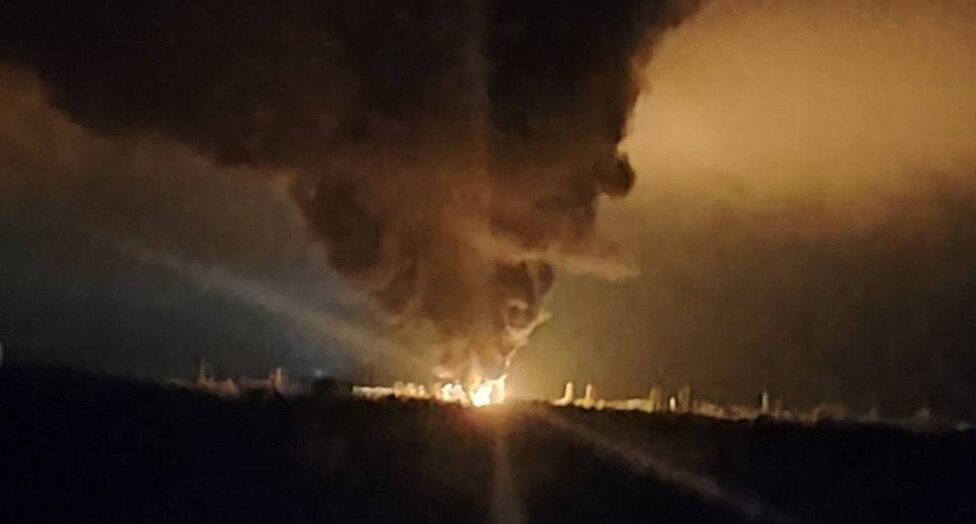
Between the evening of October 16 and October 17, 2026, the Russian Armed Forces continued their campaign of combined strikes against Ukrainian defense-industrial, energy, and logistics infrastructure. According to the Ukrainian side, the overnight attack leading into October 17 involved Iskander-M/KN-23 ballistic missiles, Kh-22/Kh-32 cruise missiles, four Kalibr sea-launched cruise missiles, and 332 strike unmanned aerial vehicles. The main focus was on metallurgical enterprises in Kryvyi Rih and Zaporizhzhia, transformer production, and high-voltage substations in western Ukraine. In parallel, Ukrainian forces carried out a large-scale drone attack on Russian territory.

Russian Strikes on Targets in Ukraine

Metallurgical Complex

Zaporizhstal (Zaporizhzhia) – formerly one of Ukraine’s largest metallurgical enterprises. Before the campaign, it produced up to 1.44 million tons of pig iron and more than 1.3 million tons of rolled steel annually; its output was directed primarily toward military-industrial needs. According to Metinvest, this was the fifth strike on the facility; six ballistic missiles were fired in the latest attack, damaging energy and logistics infrastructure as well as production facilities in the blast-furnace shop. In total, 23 ballistic missiles have been fired at the plant across five attacks.

Metallurgical combine in Kryvyi Rih (Dnipropetrovsk Region) – one of Ukraine’s largest metallurgical enterprises, which supplied metal products to the Ukrainian defense-industrial complex. The description provided by the Russian Ministry of Defense matches ArcelorMittal Kryvyi Rih; according to sources, a week earlier the owners announced a cold shutdown of primary production, and the plant was preparing for preservation.


Energy Infrastructure

Zaporozhtransformator PJSC (Zaporizhzhia) – a manufacturer of oil-immersed power transformers rated at 220-750 kV, a key component of high-voltage substations. Since 2022, it has been under the management of Ukraine’s Ministry of Defense and has been used in the interests of the Ukrainian Armed Forces. Striking this facility complicates the replacement of damaged transformer equipment for Ukrenergo, as manufacturing a new transformer takes months.

Zhytomyr 330 kV Substation (Zhytomyr Region) – a major hub in the trunk power grid, providing voltage conversion and electricity distribution among 330 kV, 110 kV, 35 kV, and 10 kV networks. Power was cut in several districts of Zhytomyr, and water-supply disruptions occurred. According to the Russian Ministry of Defense, the facility struck was one that distributed electricity from western Ukraine to central regions for defense-industrial enterprises.

Click to see the full-size image

Rivne 330 kV Substation (Rivne Region) – a trunk power-grid facility. Power outages occurred in Rivne and nearby settlements, and municipal electric transport operations were disrupted.

Bar 330/110/35 kV Substation (Vinnytsia Region) – a high-voltage facility distributing electricity among the aforementioned voltage classes. Voltage fluctuations were recorded in Vinnytsia and across the region.

Kharkiv CHP-3 (combined heat and power plant No. 3; KP Kharkivski Teplovi Merezhi – Kharkiv Heating Networks), Kharkiv – a combined heat and power plant producing both thermal and electric energy for municipal supply. A hit was recorded on the electrical-shop building, where a fire broke out over an area of 100 square meters.

Transport and Logistics Infrastructure

Delivery logistics terminal (Novohrad-Volynskyi, Zhytomyr Region) – a branch of a Ukrainian freight-logistics operator specializing in less-than-truckload road transport and interregional delivery. The strike caused a fire in a warehouse building covering more than 1,000 square meters. The company participates in government contracts for freight-forwarding services through the Prozorro system.


Dry cargo vessel underway at sea (Port of Odesa) – a vessel delivering military cargo to the port was struck.

Strikes on Russian Territory

On the night of October 17, Ukrainian forces carried out a large-scale drone attack on Russian regions. According to the Russian Ministry of Defense, air-defense forces intercepted and destroyed 610 Ukrainian fixed-wing UAVs over the territory of 16 Russian regions and over the Black Sea. The highest intensity was recorded on the Moscow axis: Moscow Mayor Sergei Sobyanin reported the destruction of 144 UAVs heading toward the capital. In Bryansk Region, 157 UAVs were shot down over the course of a day. No reports indicated that serious strategic targets had been hit; there were civilian casualties.

The nature of the October 16-17 strikes confirms a systematic approach by the Russian command to disabling Ukraine’s defense-industrial production chain and the energy infrastructure supporting it. Priority targets include metallurgical enterprises producing goods for military needs and transformer production, which is critical for restoring damaged substations. According to Chief of the General Staff of the Russian Armed Forces Valery Gerasimov, steel production in Ukraine has been halted, operations at major Black Sea ports have ceased, and 76 logistics and warehouse centers have been struck. Given statements by the Russian leadership on the need to continue large-scale strikes against the defense-industrial complex and logistics centers, further intensification of attacks on energy infrastructure in western and central Ukraine, as well as on facilities involved in the repair and restoration of military equipment, should be expected. The resilience of Ukraine’s energy system will depend on its capacity to import electricity from the EU and on the speed of restoring trunk substations – both significantly complicated by the strike on Zaporozhtransformator.


MORE ON THE TOPIC:

The post Russia Strikes Ukraine’s Steel and Energy Sector appeared first on South Front.

ICE agent who crashed into man in Texas was targeting suspect who died years ago, family says

17 October 2026 at 20:01

Federal officer slammed vehicle into a construction worker while pursuing a man who died in similar circumstances

A federal officer slammed a vehicle into a Houston construction worker and broke his leg, believing him to be a man who apparently died years ago, the dead man’s family said on Friday, further calling into question the account given by US Immigration and Customs Enforcement (ICE).

The worker, 48-year-old Miguel Parra Hernandez of Mexico, remains hospitalized with multiple leg fractures and needs reconstructive ankle surgery, according to FIEL, a Houston-based immigration advocacy group. At a news conference on Friday, the group said the alleged suspect’s family had shared documentation proving his death.

Continue reading...

© Photograph: Raquel Natalicchio/Houston Chronicle/AP

© Photograph: Raquel Natalicchio/Houston Chronicle/AP

© Photograph: Raquel Natalicchio/Houston Chronicle/AP

Reform candidate filmed saying asylum seekers should be put in ‘concentration camps’

Would-be MP recorded telling undercover reporter in ITV investigation that Muslims could not be British

A would-be Reform UK MP told an undercover reporter that Muslims could not be British and asylum seekers should be put in “concentration camps”.

The comments were recorded as part of the undercover investigation by ITV that has already seen Reform accused of “appalling behaviour” and “extreme racism”.

Continue reading...

© Photograph: SOPA Images Limited/Alamy

© Photograph: SOPA Images Limited/Alamy

© Photograph: SOPA Images Limited/Alamy

It’s been 70 years: Why does the U.S. still control South Korea’s military?

By: A A
17 October 2026 at 19:16

By K. J. NOH, POPULAR RESISTANCE

Join us on Telegram, X, and VK.

Contact us: info@strategic-culture.su

Over seventy years ago, the US took control of South Korea’s military. To this day, it still controls it.

Why?

This confounds every notion of state sovereignty: a supposedly sovereign country — South Korea — has its own military subjugated under US control.

Opcon (operational control) of one nation’s army by another country is usually temporary, usually during wartime among allies.

In Korea, it has lasted over 76 years.

South Korea has asked for opcon back, repeatedly. It has been three decades since South Korea first made the demand.

The US has always delayed, filibustered, waffled, and moved goal posts.

More recently, the US has signaled more delay on the return of opcon, despite current president Lee Jae Myung’s demand that it be transferred back before the end of his term in 2030.

The allies are currently assessing the “full operational capability” (FOC) after validating the “initial operational capability” (IOC).

Seoul aims to wrap up the FOC certification and announce a target year for the Opcon transition at the upcoming SCM, before moving on to the remaining assessment of the “full mission capability,” which it expects to take about a year or so….[However] Washington remains firm in its position that Seoul is not ready for FOC certification, weighing on Seoul’s push to accelerate the Opcon transition.

This follows on US Forces Korea Commander Xavier Brunson’s repeated declarations of his opposition to Opcon transfer: only conditions matter, not timelines. According to Brunson, there can be no timeline to return control of South Korea’s troops to South Korea. Seventy six years is not enough.

South Korea had originally insisted on deadlines for the return of opcon. The US delayed, and delayed, and denied. It finally agreed–but only if certain conditions were met. These were agreed to in 2014, and reaffirmed them in 2017. Yet another decade has passed since those agreements.

Conditions for the return of opcon:

Cutting through the fog, there are essentially three conditions that the US has predicated as preconditions for South Korea to regain control over its own troops:

1. Can South Korea defend itself? (Can it operate its own military effectively? Does it have capacity, materiel, systems, and institutions?)

2. Are US and South Korea forces interoperable? (Can they coordinate in war?)

3. Are the conditions stable enough for opcon transfer?

The answer to the first is, of course. South Korea has one of the most powerful and well-equipped militaries in the world.

The second is, of course, the US and South Korea have been rehearsing interoperability for over seventy years.

The third is key: it is a catch-22 designed to undermine the entire process.

Conditions-based Opcon Transfer (COPT) sets specific benchmarks and tests for opcon transfer. These are the goalposts that are being constantly shifted.

However, the third condition is critical. It requires the de-escalation of tensions between North and South:

“Conducive Security Environment: The security environment on the Korean Peninsula and in the broader region must be stable and conducive to a safe, uninterrupted transfer.”

This is the catch-22:

If there is de-escalation of tensions, the required “tests” are not conducted and the benchmarks and certifications are not achieved — they are tied to field-condition wargames. Doing these wargames and tests escalates tensions with North Korea.

If there are tensions, then condition 3 is not met, and Opcon cannot be transferred.

It’s a formula for ensuring opcon is never transferred.

The simple fact is, it does not take 20+years to transfer opcon. “Wartime” opcon is transferred very rapidly. Armies coalesce, and opcon is transferred. Syngman Rhee turned over opcon in July of 1950 and the US was immediately in charge. It doesn’t take years and decades to transfer opcon. It takes hours or days. Returning it should be even faster. But that would require political will.

Here are some other important things to understand about opcon:

Opcon transfer conditions are actually classified:

The US keeps these conditions under wraps, and therefore the South Korean public or its representatives cannot challenge them publicly because they are not known. We only know the general outlines. The South Korean side can only hope the US will agree they have been met. This is yet another abrogation of sovereignty and democracy in addition to the original breach: “We will keep your military, unless you meet our secret conditions, which you cannot discuss, debate or challenge, because they are secret”.

Condition 3, “Conducive security environment” has always been a kill switch:

We know that security conditions have always been a tacit condition because, in the past, whenever opcon transfer looked justified and imminent, the security environment would suddenly degrade, scuttling the whole project. For example, just as the deadline for Roh Moo Hyun-negotiated Opcon transfer was approaching in 2012, the sudden sinking of the ROKS military ship Cheonan-Ho derailed wartime opcon transfer to 2015. That deadline has also passed and gone. Recent North-Korea attributed mine explosions near the DMZ fit this pattern, as have other numerous, suspicious incidents.

The concoction of “peacetime opcon” is nonsense:

The US claims it only has “wartime” opcon because it transferred “peacetime” opcon to South Korea in 1994. However, this very concept is nonsense:

1) Opcon means control of operations. Operations mean warfighting. “Wartime opcon”, ie. “wartime warfighting control” is a pleonasm. The only time operational control of a military is important is during fighting, just as the only time steering a car matters is when it’s moving.

The invention and transfer of “peacetime” opcon to Korea was a booby prize created to give the appearance that something had changed. Think of those Fisher-Price toy steering wheels you stick on the dashboard while someone else steers the car–it’s a political toy. It gives the illusion of control but it means nothing. The fact is, the US would never allow its military to be subjugated to a foreign command, even a shared command. The simple fact is, the US never shares control.

2) Immediately after “peacetime” opcon transfer in 1994, the US instituted CODA (Combined Delegated Authority), which continues US control of planning and execution of war. As Clint Work observes correctly, “The ROK JCS was granted the term OPCON for political purposes, and the US CFC was given the term CODA for accomplishing missions”. So much for peacetime “control”.

3) Last but not least, the US gets to unilaterally decide what constitutes peacetime and what constitutes wartime. When the US declares Defcon III, it’s wartime. Korean troops must fall in line under US opcon. If you get to slice the cake and then decide which portion you take, it’s your bloody cake. If you share a car, but only one party decides when it gets to be driven, and they drive, they own the car, you are maintenance. If one party unilaterally decides when it gets control, it has control, regardless of any protestations to the contrary.

But why does the US need to keep Opcon?

The US needs control over ROK troops because it is planning for war with China in the Pacific. It has been doing so since it drew up formal plans, AirSea Battle in 2009. For war, it needs SK as a military proxy: it needs the cannon fodder. South Korea has 3.6 million combat-ready troops: 500,000 regular and 3.1 million reserve. It has one of the most powerful and advanced militaries in the world, as well as the defense industrial base to sustain it. Furthermore, SK troops have always fought in US wars as proxies: more military-aged men in South Korea saw combat in Vietnam than Americans did as a proportion of population — 325,000 were deployed–the largest foreign deployment after the US. It was also the third largest deployment to Iraq. The US can avoid a draft because SK has one.

USFK Commander Xavier Brunson has made this US agenda of weaponizing South Korea for war against China explicit, comparing South Korea to “fixed aircraft carrier”, a dagger pointed at China, and a critical part of US war strategy because it is already inside China’s defense perimeter.

As the Hankyoreh Newspaper points out:

When his “dagger” comment is tied to his previous remarks, it’s evident that Brunson expects Korea to play an offensive role capable of striking the Chinese heartland, and Japan to play a defensive role supporting Korea…Brunson commented last August that he would like F-35 fighters with stealth capabilities and a multi-domain task force (MDTF) capable of wrecking China’s anti-access/area denial (A2/AD) network to be assigned to USFK. These comments suggest that Brunson means to treat Korea as a forward base equipped with military options for launching direct strikes against China.

Brunson recently announced that the multi-domain task force will be deployed to Korea.  These build on his previous statements on preparing the peninsula for war with China:

…[this] orientation clarifies how forces on the peninsula can impose costs, not only on the CCP’s Northern Theater Army, but also on the [Russian] Northern Fleet, thus demonstrating the significant strategic potential that exists on the peninsula to influence adversary operations in both adjacent seas… existing force positioning, particularly on the Korean Peninsula, may offer greater strategic advantages… advantageously positioned assets already inside the [Chinese] defensive perimeter, capable of immediate cost-imposition [ie. attack] against multiple adversaries.

This simultaneous fiction of pretending it doesn’t control South Korea’s troops became necessary when US-opconned SK troops massacred civilians in Gwangju.  The need to avoid accountability created the legal fiction of “peacetime opcon”, but that doesn’t obviate the US need for control as it prepares for and escalates to war.

The real reason why opcon transfer is taking so long is the US is trying to create a structure that maintains control of the SK army while pretending that it doesn’t.   This involves a crazy-quilt of parallel & unified command structures, multiplying command authorities, phased operating assessments, Frankenstein-cobbled-leadership structure, Rube Goldberg carve-outs, and a general have-your-cake-and-eat-it-too mindset.  This is assisted by extreme factions of the quisling South Korea right, who have lashed themselves to the sinking US Empire and see any reclamation of genuine South Korean sovereignty as abandonment–they fear that a South Korean military–the real nexus of power in Korean politics, accountable only to Koreans, would result in a loss of status and power as US quisling collaborators and subcontractors.

With war with China on the horizon, South Korea needs to reclaim opcon rapidly.  It remains to be seen if president Lee Jae Myung can pull off this hat trick.  However, the consequences of not doing so could be catastrophic.

Original article:  popularresistance.org

Elon Musk is pouring money into the midterms. Here's where he's giving the most.

17 October 2026 at 17:31
Donald Trump stands beside Elon Musk as Musk gestures while speaking among suited people outdoors.
Elon Musk, seen here with President Donald Trump last month, is bankrolling Republican campaigns.

Bloomberg/Getty Images

  • Elon Musk is giving reams of cash to Republicans.
  • Most of that dough is ending up in Texas, according to financial disclosure forms.
  • In Texas, Ken Paxton is running a tight race against James Talarico.

Elon Musk is forking over generational wealth to Republicans facing tough midterm elections this cycle.

Over two donations in September, Musk gave a combined $158 million to the Senate Leadership Fund, a super PAC aligned with Senate Republicans, which has, in turn, given reams of cash to funds supporting the Republican candidate in Texas.

The money, shown in new federal disclosure forms, cements Musk as a major player in Republican politics over a year after he publicly split with President Donald Trump over the latter's handling of the Epstein files (though the two have since reconciled).

Republicans are facing serious headwinds over the Iran war, rising inflation, and sky-high gas prices. Polls show that American voters are largely dissatisfied with Trump's leadership and handling of the economy.

All told, Musk has given about $276 million since July. Much of Musk's political donations have ended up in Texas, according to federal disclosure forms, where embattled Attorney General Ken Paxton is engaged in a mudslinging battle for the Senate with state representative James Talarico.

One day after Musk notched a $75 million donation to the Senate Leadership Fund, the Super PAC gave a $75 million donation to the Texas PAC, a group aligned with Paxton.

Then, also in September, another $83 million donation by Musk was matched the next day by an identical donation to the Texas PAC, according to federal disclosure forms.

Talarico's campaign, meanwhile, has raised about $129 million.

Musk's companies are already investing billions in the Lone Star State, as the business magnate builds SpaceX's terafab semiconductor facility outside Houston.

In 2024, Musk announced that he was moving SpaceX's headquarters from California to Texas in response to Gov. Gavin Newsom's policies on gender identity.

Representatives for Paxton and Musk did not immediately respond to requests for comment on Saturday.

Musk, the CEO of SpaceX and Tesla, said last year that he had probably "done enough" political spending, though he left the door open.

"Well, if I see a reason to do political spending in the future, I'll do it. I don't currently see a reason," he told Bloomberg at the time.

Read the original article on Business Insider

Military Situation In Ukraine And Ukrainian Attacks On Russian Territory On October 17, 2026 (Maps Update)

17 October 2026 at 17:12

Click to see the full-size image

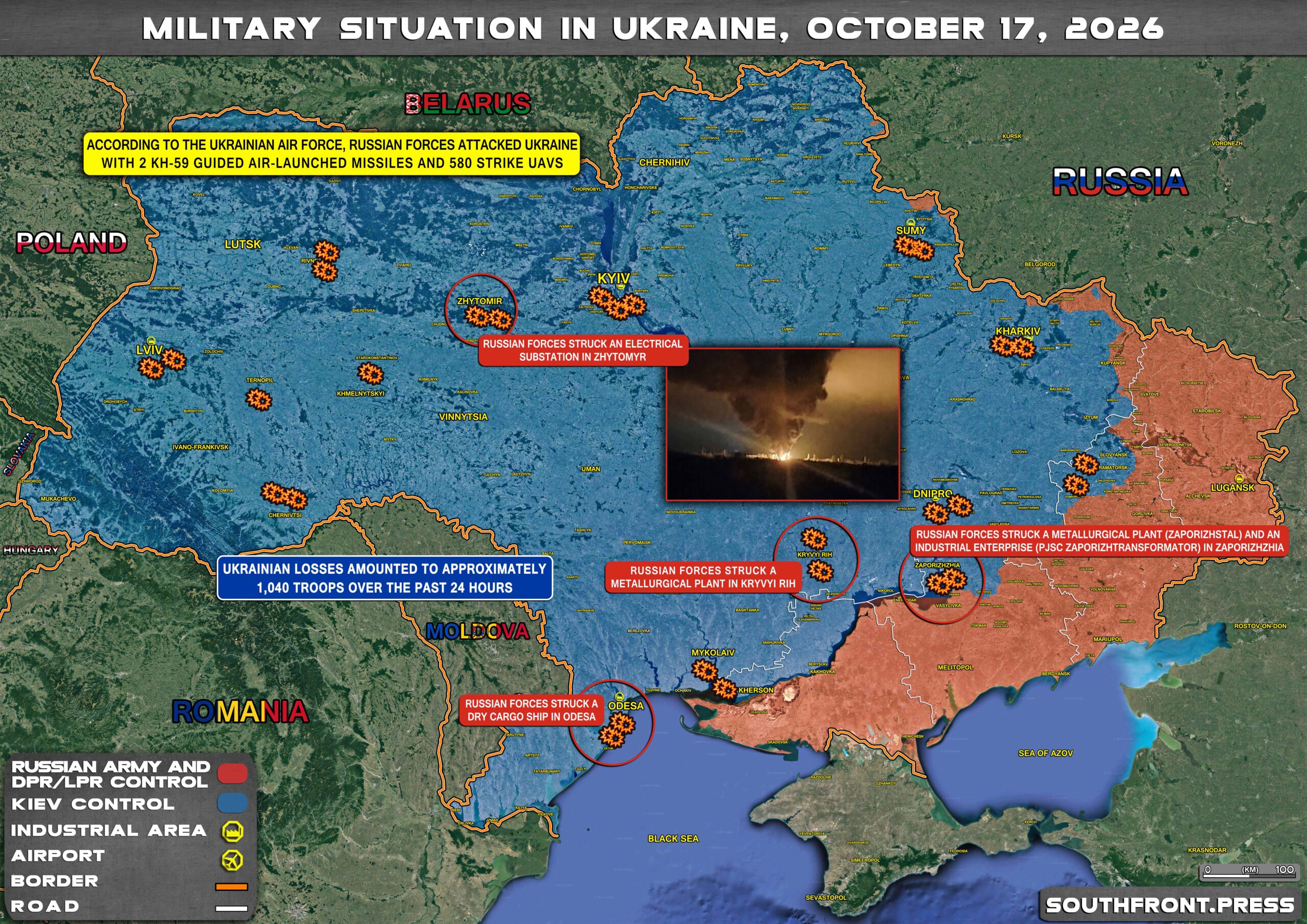
  • Russian strikes destroyed targets in the Sumy, Kharkiv, Zaporizhzhia, Dnipropetrovsk, Kherson, Kyiv, Odesa, Khmelnytskyi, Lviv, Volyn, Zhytomyr, Rivne, Cherkasy, Chernivtsi, Ternopil, Vinnytsia regions, and the DPR;
  • According to the Ukrainian Air Force, Russian forces attacked Ukraine with 2 Kh-59 guided air-launched missiles and 580 strike UAVs;
  • Russian forces struck a metallurgical plant in Kryvyi Rih;
  • Russian forces struck an electrical substation in Zhytomyr;
  • Russian forces struck a metallurgical plant (Zaporizhstal) and an industrial enterprise (PJSC Zaporizhtransformator) in Zaporizhzhia;
  • Russian forces struck a dry cargo ship in Odesa;
  • Ukrainian losses amounted to approximately 1,040 troops over the past 24 hours.

Click to see the full-size image

  • Russian forces took full control of the city of Dobropolye in the DPR.

Click to see the full-size image

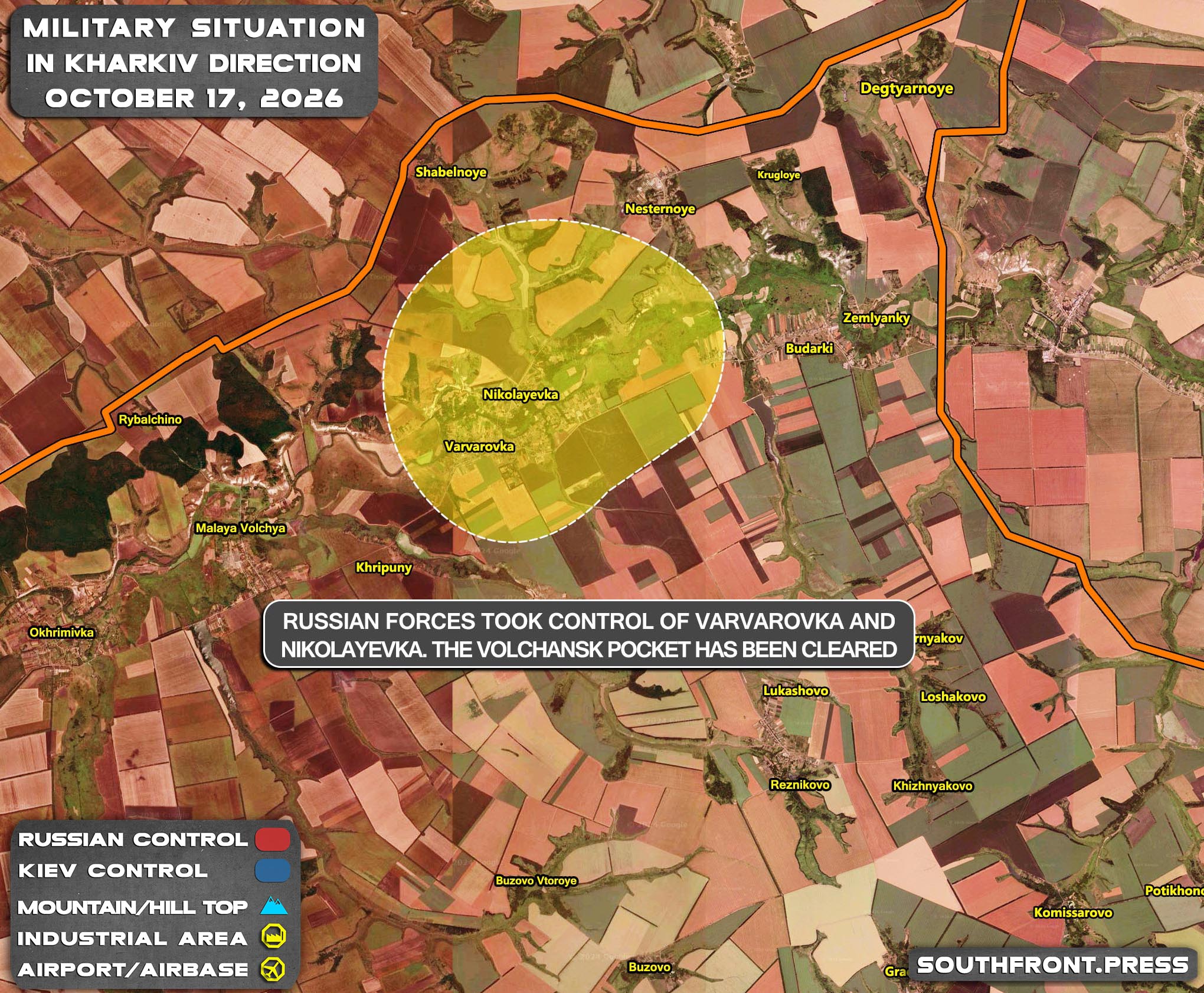
  • Russian forces took control of Varvarovka and Nikolayevka. The Volchansk pocket has been cleared.

Click to see the full-size image

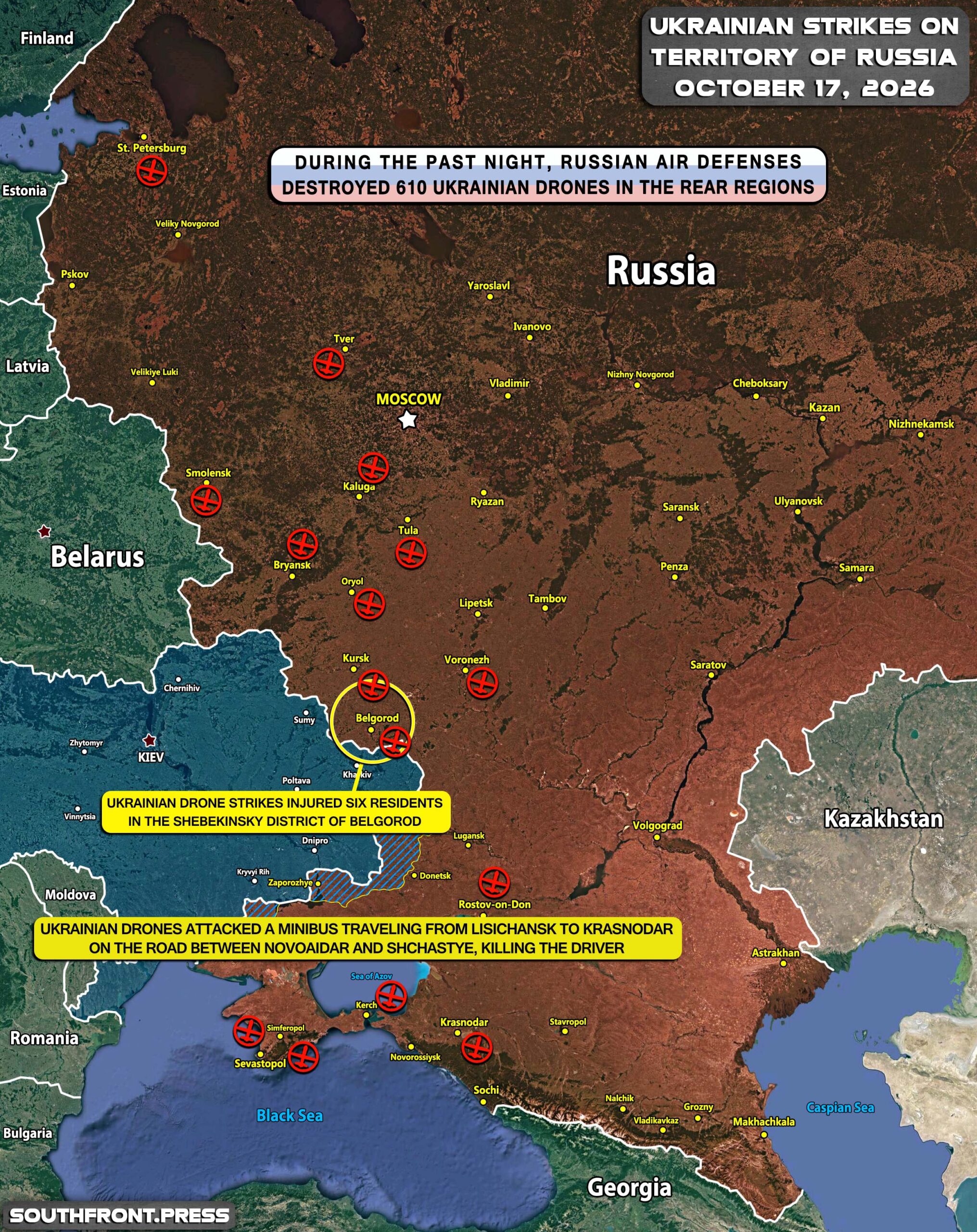
  • During the past night, Russian air defenses destroyed 610 Ukrainian drones in the rear regions;
  • Russian air defenses intercepted UAVs in the Leningrad, Novgorod, Tver, Bryansk, Belgorod, Kursk, Oryol, Kaluga, Voronezh, Rostov, Smolensk, and Tula regions, the Moscow region, Krasnodar Krai, the Republic of Crimea, and over the Black Sea;
  • Ukrainian drone strikes injured six residents in the Shebekinsky district of the Belgorod region;
  • Ukrainian drones attacked a minibus traveling from Lysychansk to Krasnodar on the road between Novoaidar and Shchastia, killing the driver.

MORE ON THE TOPIC:

The post Military Situation In Ukraine And Ukrainian Attacks On Russian Territory On October 17, 2026 (Maps Update) appeared first on South Front.

SNP says campaign for next referendum on independence ‘has already begun’

17 October 2026 at 16:45

John Swinney tells party conference SNP will use ‘six-figure war chest’ to renew argument for leaving UK

John Swinney has said that the second referendum campaign for Scottish independence “has already begun”, revealing a nationwide effort to renew the argument for leaving the UK in his keynote address to the SNP party conference.

On Saturday, the Scottish first minister said the SNP would launch its “most sophisticated campaign in history” to convince Scottish voters of the benefits of independence, backed by “a six-figure war chest”.

Continue reading...

© Photograph: Jane Barlow/PA

© Photograph: Jane Barlow/PA

© Photograph: Jane Barlow/PA

Elon Musk agrees to settle lawsuits over 2024 election lottery

17 October 2026 at 15:42

Trump-boosting billionaire was sued over promise to give away $1m per day to random signatories of petition

Elon Musk and his ⁠America Pac political action committee said recently that they agreed to settle two ⁠proposed class ⁠actions ​alleging the billionaire entrepreneur defrauded residents in closely contested states before the ⁠2024 US election by promising voters a lottery-style daily $1m giveaway.

The plaintiffs, Musk and America Pac ​told the ‌judge overseeing the two ‌related lawsuits in federal court in Austin, Texas, ‌on Thursday that they have reached settlements subject to court approval.

Continue reading...

© Photograph: Julia Demaree Nikhinson/AP

© Photograph: Julia Demaree Nikhinson/AP

© Photograph: Julia Demaree Nikhinson/AP

❌