❌

Normal view

Military Situation In Yemen On October 18, 2026 (Map Update)

18 October 2026 at 19:10

Click to see the full-size image

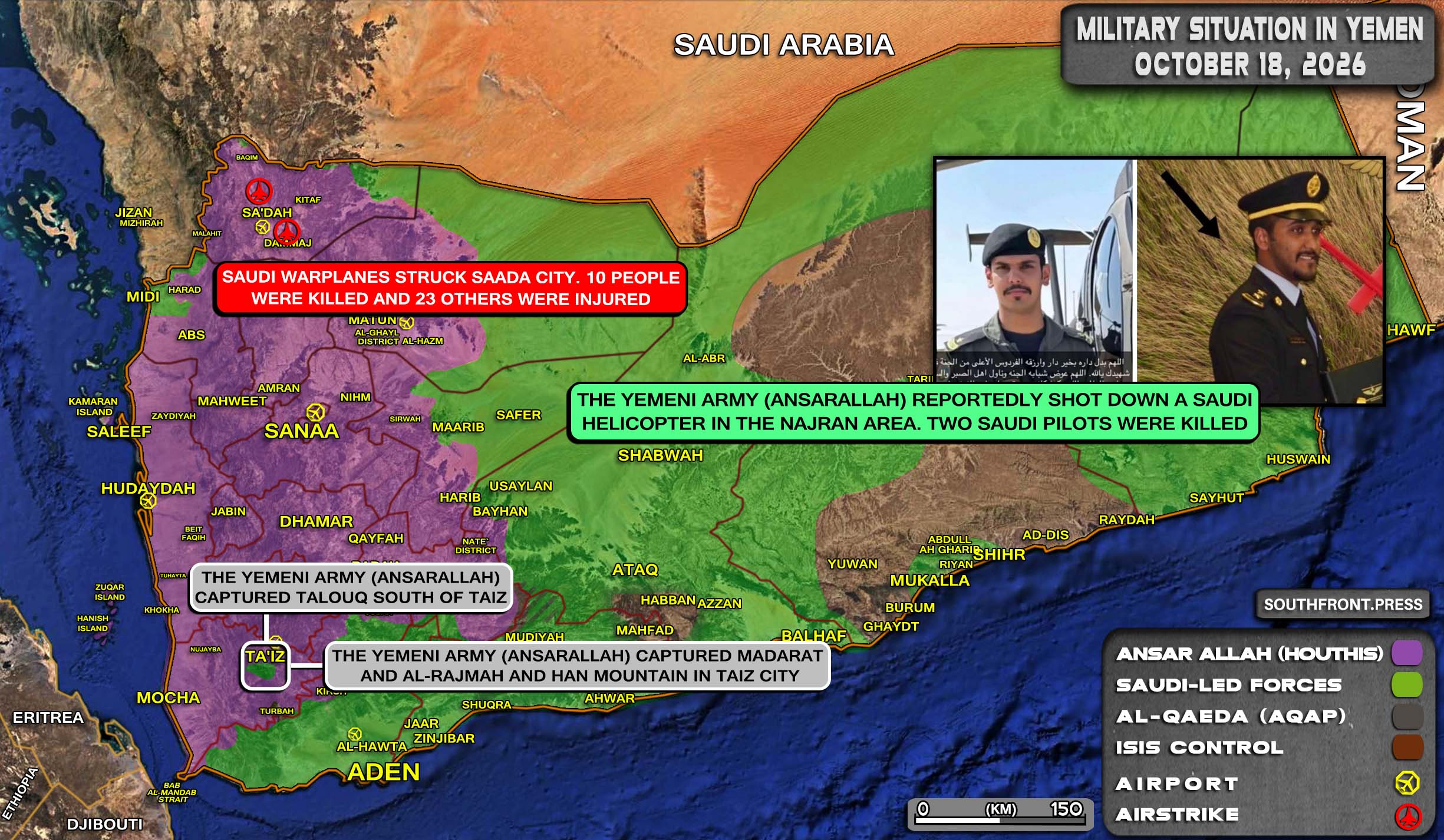
  • The Yemeni army (AnsarAllah) captured Madarat and Al-Rajmah and Han mountain in Taiz city;
  • The Yemeni army (AnsarAllah) captured Talouq south of Taiz;
  • Saudi warplanes struck Saada city. 10 people were killed and 23 others were injured;
  • The Yemeni army (AnsarAllah) reportedly shot down a Saudi helicopter in the Najran area. Two Saudi pilots were killed.

MORE ON THE TOPIC:

The post Military Situation In Yemen On October 18, 2026 (Map Update) appeared first on South Front.

Russia Strikes Ukraine’s Logistics and Energy, Ukraine Launches Massive Drone Raid on St. Petersburg

18 October 2026 at 15:44

Click to see the full-size image

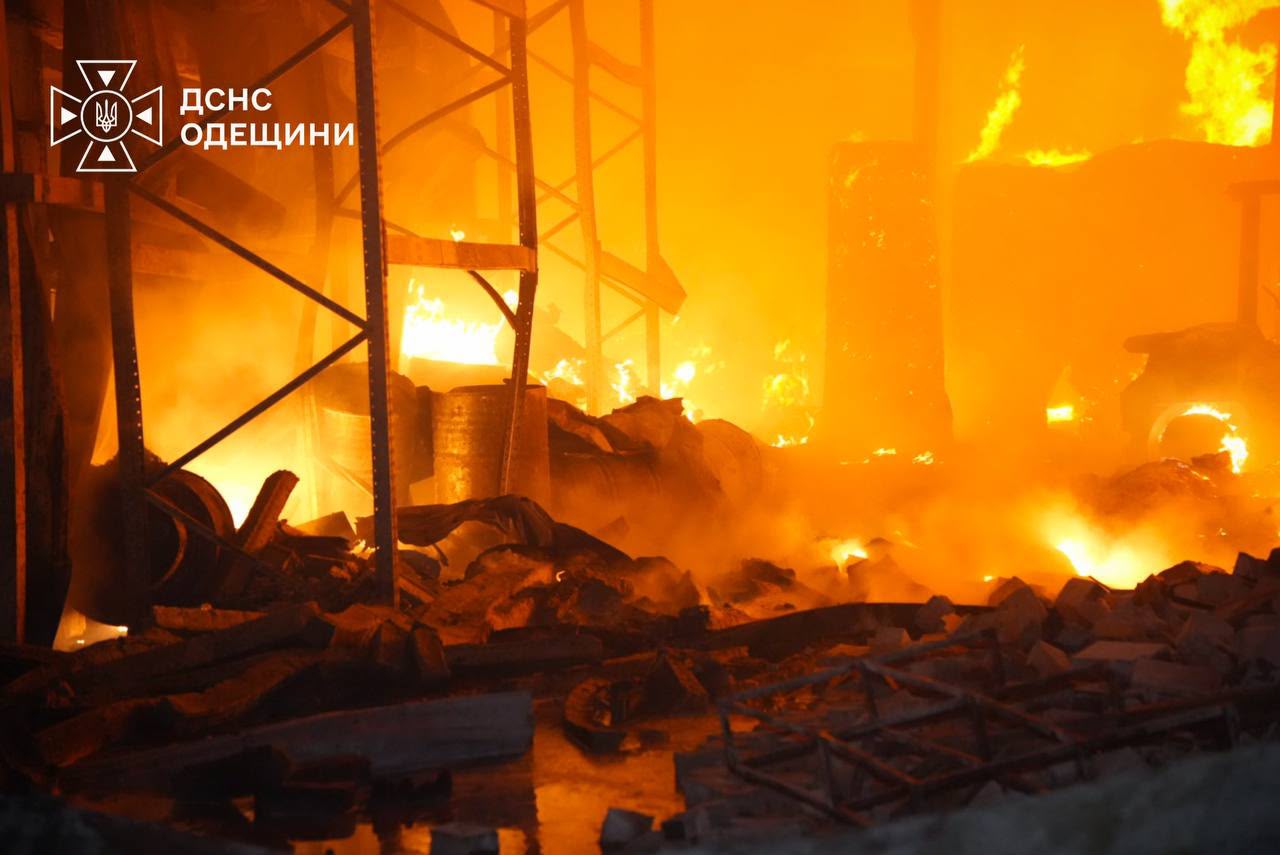
On the night of October 18, the Russian Armed Forces carried out group strikes using unmanned aerial vehicles against logistics centers, port infrastructure, and energy facilities in Ukraine. According to a statement by the Russian Ministry of Defense, the targets included warehouses containing dual-use cargo and vessels used to supply the Ukrainian Armed Forces.

In turn, the Ukrainian side carried out a massive drone attack on Russian regions, focusing primarily on St. Petersburg and Leningrad Region: oil terminals, a data center, a distribution center, a boiler house at a thermal power plant, and bridge infrastructure were struck, and residential areas were damaged. According to the Russian Ministry of Defense, 1,015 Ukrainian UAVs were shot down over Russian territory.

Russian Strikes on Ukraine

Logistics Infrastructure

  • Nova Poshta logistics center (Rivne). According to a statement by the Russian Ministry of Defense, the facility was used to store and distribute dual-use cargo, including components for medium- and long-range unmanned aerial vehicles. The center served as part of the logistics chain supplying Ukrainian forces. Damage to the facility complicates the delivery of components for drone assembly in Ukraine’s western regions.

  • Polko Group production and warehouse facilities (Manevychi, Volyn Region). The facilities were reportedly involved in the manufacture of explosives and the loading of munitions for long-range drones. The facilities are part of the warehouse infrastructure used to accumulate and transship cargo toward Rivne and neighboring regions.

Click to see the full-size image

  • Warehouse in the Novomoskovsk area (Dnipropetrovsk Region). The nature of the cargo stored there is not specified in available sources. However, the facility’s location in the industrial area of Dnipropetrovsk Region suggests that it was part of the logistics supply chain supporting Ukrainian Armed Forces groupings in the eastern direction.

  • Bulk carrier 30 km east of the Port of Odesa. According to a statement by the Russian Ministry of Defense, a bulk carrier carrying military and dual-use cargo was struck.

Energy Infrastructure

  • Prydniprovska Thermal Power Plant (Dnipro, Dnipropetrovsk Region). The Prydniprovska TPP supplied electricity to industrial consumers in the region, including facilities linked to military production.

  • Belolesye substation (Odesa Region). The substation supplies electricity to, among other things, port infrastructure and enterprises in the region.

  • Critical infrastructure facilities (Vinnytsia Region). Damage to critical infrastructure was reported, accompanied by power outages.

Strikes on distribution substations create local power shortages and complicate the operations of industrial enterprises involved in the production and repair of military equipment.

According to monitoring sources, UAV strikes were also carried out against targets in Chernihiv, Zaporizhzhia, Sumy, and Kharkiv Regions. In addition, during the preceding day, aviation and missile forces struck targets in Donbas, Kherson, Poltava, Cherkasy, and Zhytomyr Regions.

Strikes on Russian Territory

St. Petersburg and Leningrad Region

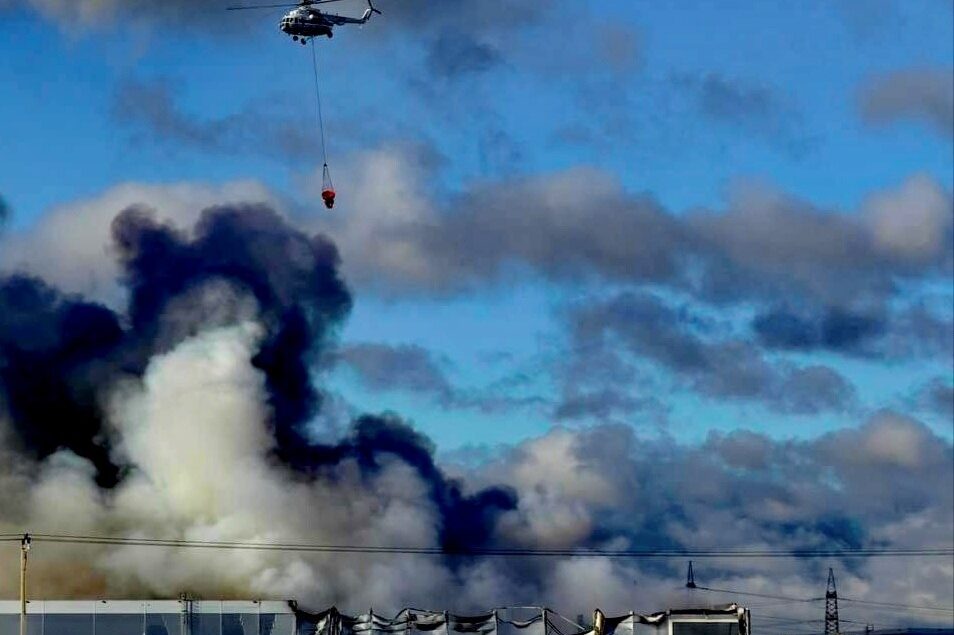
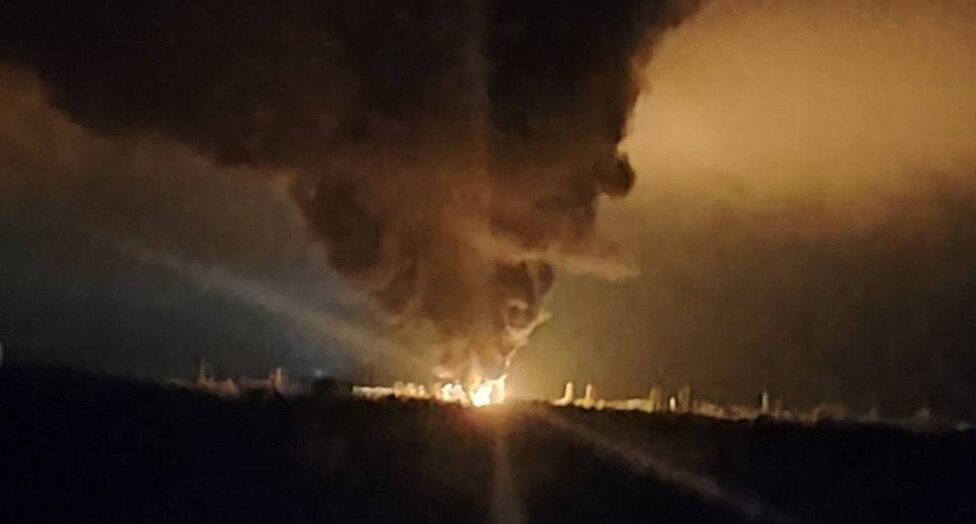
  • St. Petersburg Oil Terminal. A fire was reported on the terminal’s grounds. The facility is part of the marine transshipment infrastructure for petroleum products, including export operations. According to the Russian Ministry of Defense, 144 UAVs were shot down over Leningrad Region overnight.

  • Ruchyi oil depot. The largest fuel terminal in St. Petersburg, with a total capacity of 73,900 cubic meters. A fire was reported.

  • VKontakte (VK) data center. The facility in St. Petersburg was attacked. According to the company, all services continued to operate. The data center supports one of Russia’s largest IT platforms; open sources do not cite any direct military use.

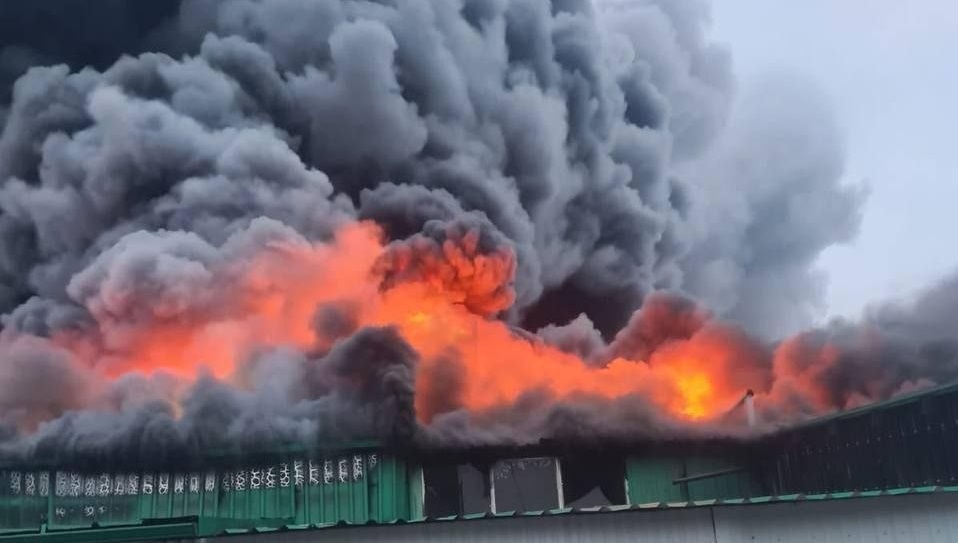
  • Ozon distribution center. A fire was reported following the attack. The facility is part of civilian logistics infrastructure.

  • A boiler house at a local thermal power plant. The extent of the damage and its impact on heat supply were not specified.

  • Cable-stayed bridge. According to residents, a UAV struck the bridge connecting the southern and northern parts of St. Petersburg. There is no official information on the condition of the structure. The city experienced major transport disruptions: the central section of the Western High-Speed Diameter was closed, and tram routes were suspended. Pulkovo Airport temporarily suspended arrivals and departures.

  • Residential areas. In St. Petersburg, 12 apartment buildings and two private homes were damaged. In Leningrad Region, homes were damaged in Kirovsk, Vsevolozhsk, and Gatchina. In Novoselye, 55 parked cars were damaged. According to the governor, one person was killed, five were injured, and about 20,000 people were left without electricity.

Border and Other Regions

  • Oryol Region. A telecommunications tower and a post office building were damaged.

  • Bryansk Region. Over the past day, 281 UAVs were shot down. One person was killed and six were injured.

Taken together, the strikes of October 18 point to two separate lines of effort. On the Russian side, the main effort was focused on destroying logistics hubs and maritime transport near Odesa, continuing the campaign to disrupt the supply of the Ukrainian Armed Forces through western and southern routes. In parallel, strikes targeted power generation and distribution substations, putting additional pressure on Ukraine’s energy system ahead of the heating season.

On the Ukrainian side, the attack had a clear focus on St. Petersburg and Leningrad Region. Damage to oil terminals, a data center, and bridge infrastructure, along with major transport disruptions around the Western High-Speed Diameter, suggests an effort to create a high-impact media and logistics effect in Russia’s largest city. At the same time, a significant portion of the UAVs was shot down—1,015 over Russian territory—which does not change the fact that individual drones did reach their targets.

In the medium term, Russia’s campaign against Ukraine’s logistics chains and energy sector is likely to continue, with an emphasis on western regions and port infrastructure. On the Ukrainian side, long-range drone attacks on sensitive targets in Russian regions, primarily in the Northwestern Federal District, are likely to persist. Key factors will remain air-defense capabilities, the resilience of power grids, and Ukraine’s access to satellite communications for controlling long-range unmanned aerial vehicles.


MORE ON THE TOPIC:

The post Russia Strikes Ukraine’s Logistics and Energy, Ukraine Launches Massive Drone Raid on St. Petersburg appeared first on South Front.

Houthis Release Footage of Saudi AH-6i Helicopter Downing Near Najran

18 October 2026 at 10:59

Illustrative image.

Yemen’s Houthis (Ansar Allah) released footage on October 18 showing the downing of a Saudi AH-6i light attack helicopter near the border with the province of Najran in the south of the kingdom, saying it was struck by a locally manufactured surface-to-air missile.

The footage’s accompanying caption said the helicopter was targeted while carrying out what the group described as hostile operations near Najran.

The release follows an announcement by Houthi military spokesman Brig. Gen. Yahya Saree a day earlier said that the group had shot down a Saudi helicopter near the border.

Saree initially identified the helicopter as an Apache, saying it had been brought down while targeting Houthi positions along the border. The footage’s caption, however, identifies it as an AH-6i, a light attack and reconnaissance helicopter operated by the Saudi Arabian National Guard.

Saudi Arabia’s military coalition confirmed earlier that an AH-6i helicopter belonging to the National Guard had crashed in Najran, killing both officers aboard.

Coalition spokesman Maj. Gen. Turki al-Maliki attributed the crash to a technical malfunction, although the footage released later by the Houthis affirmed that this is false.

The AH-6i, also known as the Little Bird, is a compact armed helicopter designed for reconnaissance and light attack missions. A 2014 U.S. contract for 24 helicopters, initial spare parts and ground support equipment for Saudi Arabia was valued at $234.7 million, an average of about $9.8 million per helicopter across the package.

_______________________________________________________________________________________________________________________

SouthFront: Analysis and Intelligence

NOW hosted at southfront.press

Previously, SouthFront: Analysis and Intelligence was at southfront.org.

The .org domain name had been blocked by the US (NATO) (https://southfront.press/southfront-org-blocked-by-u-s-controlled-global-internet-supervisor/) globally, outlawed and without any explanation

Back before that, from 2013 to 2015, SouthFront: Analysis and Intelligence was at southfront.com

SOUTHFRONT.PRESS

MORE ON THIS TOPIC:

The post Houthis Release Footage of Saudi AH-6i Helicopter Downing Near Najran appeared first on South Front.

Russia Strikes Ukraine’s Steel and Energy Sector

17 October 2026 at 20:26

Click to see the full-size image

Between the evening of October 16 and October 17, 2026, the Russian Armed Forces continued their campaign of combined strikes against Ukrainian defense-industrial, energy, and logistics infrastructure. According to the Ukrainian side, the overnight attack leading into October 17 involved Iskander-M/KN-23 ballistic missiles, Kh-22/Kh-32 cruise missiles, four Kalibr sea-launched cruise missiles, and 332 strike unmanned aerial vehicles. The main focus was on metallurgical enterprises in Kryvyi Rih and Zaporizhzhia, transformer production, and high-voltage substations in western Ukraine. In parallel, Ukrainian forces carried out a large-scale drone attack on Russian territory.

Russian Strikes on Targets in Ukraine

Metallurgical Complex

Zaporizhstal (Zaporizhzhia) – formerly one of Ukraine’s largest metallurgical enterprises. Before the campaign, it produced up to 1.44 million tons of pig iron and more than 1.3 million tons of rolled steel annually; its output was directed primarily toward military-industrial needs. According to Metinvest, this was the fifth strike on the facility; six ballistic missiles were fired in the latest attack, damaging energy and logistics infrastructure as well as production facilities in the blast-furnace shop. In total, 23 ballistic missiles have been fired at the plant across five attacks.

Metallurgical combine in Kryvyi Rih (Dnipropetrovsk Region) – one of Ukraine’s largest metallurgical enterprises, which supplied metal products to the Ukrainian defense-industrial complex. The description provided by the Russian Ministry of Defense matches ArcelorMittal Kryvyi Rih; according to sources, a week earlier the owners announced a cold shutdown of primary production, and the plant was preparing for preservation.


Energy Infrastructure

Zaporozhtransformator PJSC (Zaporizhzhia) – a manufacturer of oil-immersed power transformers rated at 220-750 kV, a key component of high-voltage substations. Since 2022, it has been under the management of Ukraine’s Ministry of Defense and has been used in the interests of the Ukrainian Armed Forces. Striking this facility complicates the replacement of damaged transformer equipment for Ukrenergo, as manufacturing a new transformer takes months.

Zhytomyr 330 kV Substation (Zhytomyr Region) – a major hub in the trunk power grid, providing voltage conversion and electricity distribution among 330 kV, 110 kV, 35 kV, and 10 kV networks. Power was cut in several districts of Zhytomyr, and water-supply disruptions occurred. According to the Russian Ministry of Defense, the facility struck was one that distributed electricity from western Ukraine to central regions for defense-industrial enterprises.

Click to see the full-size image

Rivne 330 kV Substation (Rivne Region) – a trunk power-grid facility. Power outages occurred in Rivne and nearby settlements, and municipal electric transport operations were disrupted.

Bar 330/110/35 kV Substation (Vinnytsia Region) – a high-voltage facility distributing electricity among the aforementioned voltage classes. Voltage fluctuations were recorded in Vinnytsia and across the region.

Kharkiv CHP-3 (combined heat and power plant No. 3; KP Kharkivski Teplovi Merezhi – Kharkiv Heating Networks), Kharkiv – a combined heat and power plant producing both thermal and electric energy for municipal supply. A hit was recorded on the electrical-shop building, where a fire broke out over an area of 100 square meters.

Transport and Logistics Infrastructure

Delivery logistics terminal (Novohrad-Volynskyi, Zhytomyr Region) – a branch of a Ukrainian freight-logistics operator specializing in less-than-truckload road transport and interregional delivery. The strike caused a fire in a warehouse building covering more than 1,000 square meters. The company participates in government contracts for freight-forwarding services through the Prozorro system.


Dry cargo vessel underway at sea (Port of Odesa) – a vessel delivering military cargo to the port was struck.

Strikes on Russian Territory

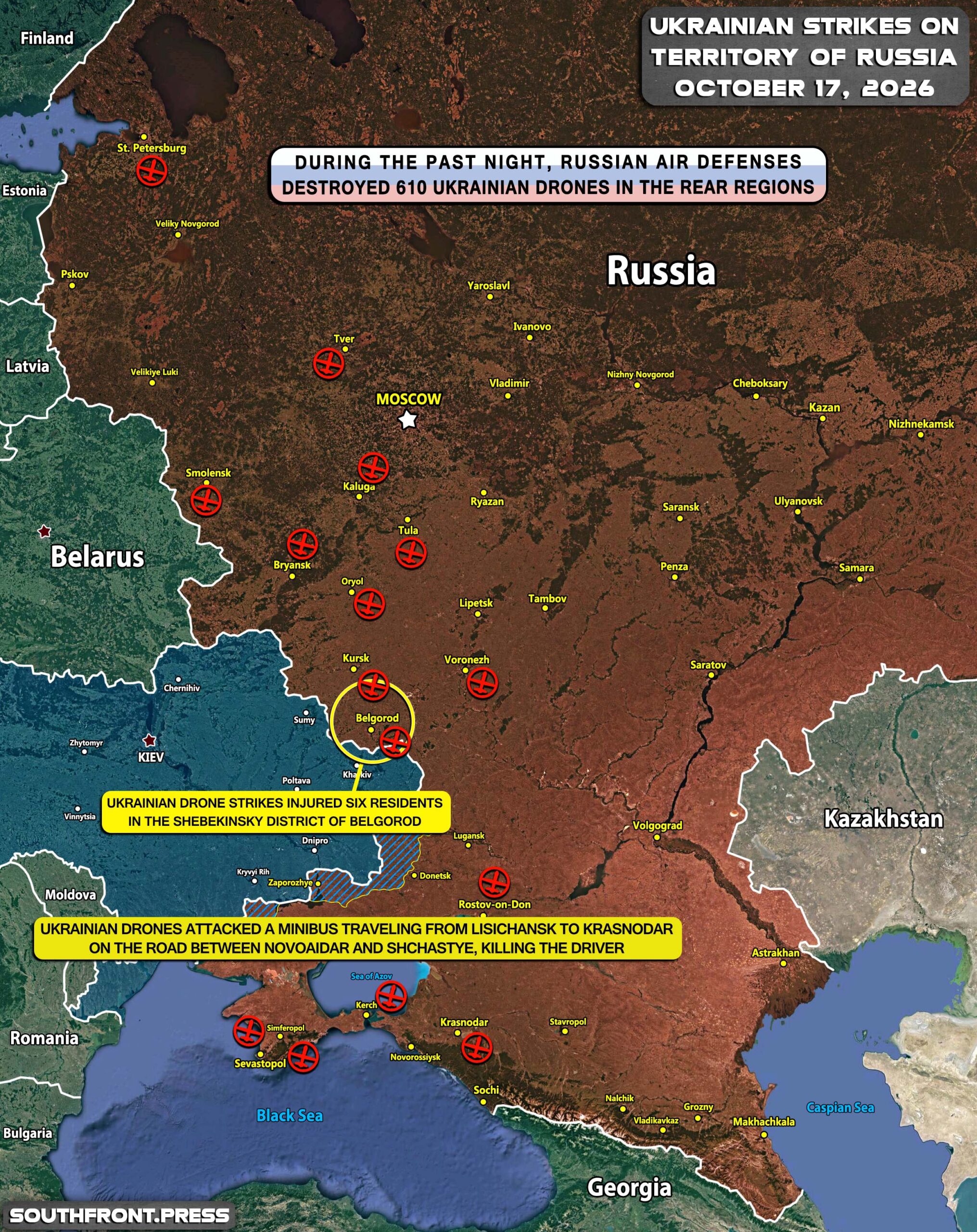
On the night of October 17, Ukrainian forces carried out a large-scale drone attack on Russian regions. According to the Russian Ministry of Defense, air-defense forces intercepted and destroyed 610 Ukrainian fixed-wing UAVs over the territory of 16 Russian regions and over the Black Sea. The highest intensity was recorded on the Moscow axis: Moscow Mayor Sergei Sobyanin reported the destruction of 144 UAVs heading toward the capital. In Bryansk Region, 157 UAVs were shot down over the course of a day. No reports indicated that serious strategic targets had been hit; there were civilian casualties.

The nature of the October 16-17 strikes confirms a systematic approach by the Russian command to disabling Ukraine’s defense-industrial production chain and the energy infrastructure supporting it. Priority targets include metallurgical enterprises producing goods for military needs and transformer production, which is critical for restoring damaged substations. According to Chief of the General Staff of the Russian Armed Forces Valery Gerasimov, steel production in Ukraine has been halted, operations at major Black Sea ports have ceased, and 76 logistics and warehouse centers have been struck. Given statements by the Russian leadership on the need to continue large-scale strikes against the defense-industrial complex and logistics centers, further intensification of attacks on energy infrastructure in western and central Ukraine, as well as on facilities involved in the repair and restoration of military equipment, should be expected. The resilience of Ukraine’s energy system will depend on its capacity to import electricity from the EU and on the speed of restoring trunk substations – both significantly complicated by the strike on Zaporozhtransformator.


MORE ON THE TOPIC:

The post Russia Strikes Ukraine’s Steel and Energy Sector appeared first on South Front.

Houthis Shot Down Saudi Apache Helicopter Near Najran

17 October 2026 at 19:31

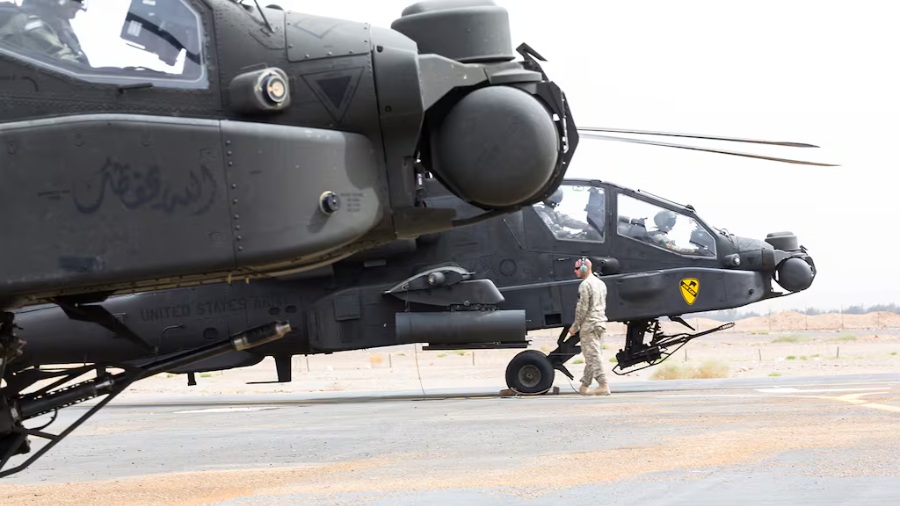
Click to see full-size image. (Sgt. Harley Jelis/Army National Guard)

Yemen’s Houthis (Ansar Allah) announced late on October 17 that they shot down a Saudi AH-64 Apache attack helicopter near the border with the kingdom’s southern province of Najran.

In a statement, Brig. Gen. Yahya Saree, the movement’s military spokesman, said the American-made helicopter had been targeting Houthi positions along the border.

“Our armed forces, with the help and grace of God, managed to shoot down an Apache belonging to the Saudi enemy opposite Najran while it was carrying out hostile actions against our forces’ positions along the border,” Saree said. “It was shot down with a suitable weapon.”

The Houthis operate a range of air defense systems, from man-portable weapons to interceptors and medium-range surface-to-air missiles.

The Apache is Saudi Arabia’s principal attack helicopter, with a modernized AH-64E estimated to cost about $52 million per helicopter according to recent U.S. Army procurement figures.

Open-source inventories list 22 Apaches with the Royal Saudi Land Forces and 12 others with the Saudi Arabian National Guard.

The announcement came just days after the Houthis said they had struck a Saudi Eurofighter Typhoon fighter jet over Yemen’s Saada province. The group later released footage showing a missile hitting the jet during flight, supporting its claim.

Including the latest claim, the Houthis have announced 18 shootdowns since the start of the ongoing confrontation with Saudi Arabia. Aside from an American-made F-15SA fighter jet, all other warplanes shot down by the Houthis were combat drones.

_______________________________________________________________________________________________________________________

SouthFront: Analysis and Intelligence

NOW hosted at southfront.press

Previously, SouthFront: Analysis and Intelligence was at southfront.org.

The .org domain name had been blocked by the US (NATO) (https://southfront.press/southfront-org-blocked-by-u-s-controlled-global-internet-supervisor/) globally, outlawed and without any explanation

Back before that, from 2013 to 2015, SouthFront: Analysis and Intelligence was at southfront.com

SOUTHFRONT.PRESS

MORE ON THIS TOPIC:

The post Houthis Shot Down Saudi Apache Helicopter Near Najran appeared first on South Front.

Deadly Explosion at PMF Headquarters Raises Strike Suspicions (Videos)

17 October 2026 at 18:59

Click to see full-size image. (Telegram)

An explosion struck the headquarters of Iraq’s Popular Mobilization Forces (PMF) in eastern Baghdad on October 17, with conflicting reports emerging over casualties and claims that the facility had been targeted in a strike.

The blast occurred at a PMF site east of the Army Canal in the Sadr al-Qanat area, near Saad al-Witri Hospital. Residents reported hearing a loud explosion, while footage circulated by local media showed flames and thick smoke rising from the area.

In a statement, the PMF said a stockpile of damaged ammunition had exploded inside the facility and initially reported no casualties.

Shafaq News, citing a security source, reported that four PMF members were wounded, some seriously. Asharq Al-Awsat separately cited sources as saying one fighter was killed and three others injured.

The cause of the explosion remained unclear. Sabereen News, a militia-linked channel, circulated claims that the headquarters had been targeted in a strike. Asharq Al-Awsat also reported that security personnel believed the site had been targeted, but provided no details establishing the nature of the incident.

The explosion was the second reported incident involving ammunition at an armed faction’s site in Baghdad this month. On October 1, munitions stored at a site belonging to an armed faction exploded in the capital’s southern Dora district without causing casualties, according to Shafaq News.

Many of the PMF’s factions are also believed to be members of the Iran-aligned Islamic Resistance in Iraq. The recent blasts came amid reports suggesting that both the United States and Israel are preparing to resume war against the Islamic Republic before the end of the year. They also came amid a heated confrontation between the Houthis, also allied to Tehran, and Saudi Arabia.

_______________________________________________________________________________________________________________________

SouthFront: Analysis and Intelligence

NOW hosted at southfront.press

Previously, SouthFront: Analysis and Intelligence was at southfront.org.

The .org domain name had been blocked by the US (NATO) (https://southfront.press/southfront-org-blocked-by-u-s-controlled-global-internet-supervisor/) globally, outlawed and without any explanation

Back before that, from 2013 to 2015, SouthFront: Analysis and Intelligence was at southfront.com

SOUTHFRONT.PRESS

MORE ON THIS TOPIC:


The post Deadly Explosion at PMF Headquarters Raises Strike Suspicions (Videos) appeared first on South Front.

Iran Used Submarines to Arm Yemen’s Houthis

17 October 2026 at 17:47

File image.

Iran has provided Yemen’s Houthis (Ansar Allah) with weapons, targeting intelligence and military training that have helped the group carry out increasingly sophisticated attacks against Saudi Arabia and its Yemeni allies, The Wall Street Journal reported on October 17.

The assistance includes intelligence for selecting targets for drone and missile strikes, tactical guidance and training, according to the report, which cited people briefed on intelligence from Saudi Arabia and the anti-Houthi alliance in Yemen.

Iranian Islamic Revolutionary Guard Corps (IRGC) officers have also deployed inside Yemen, helping direct military operations, the report said.

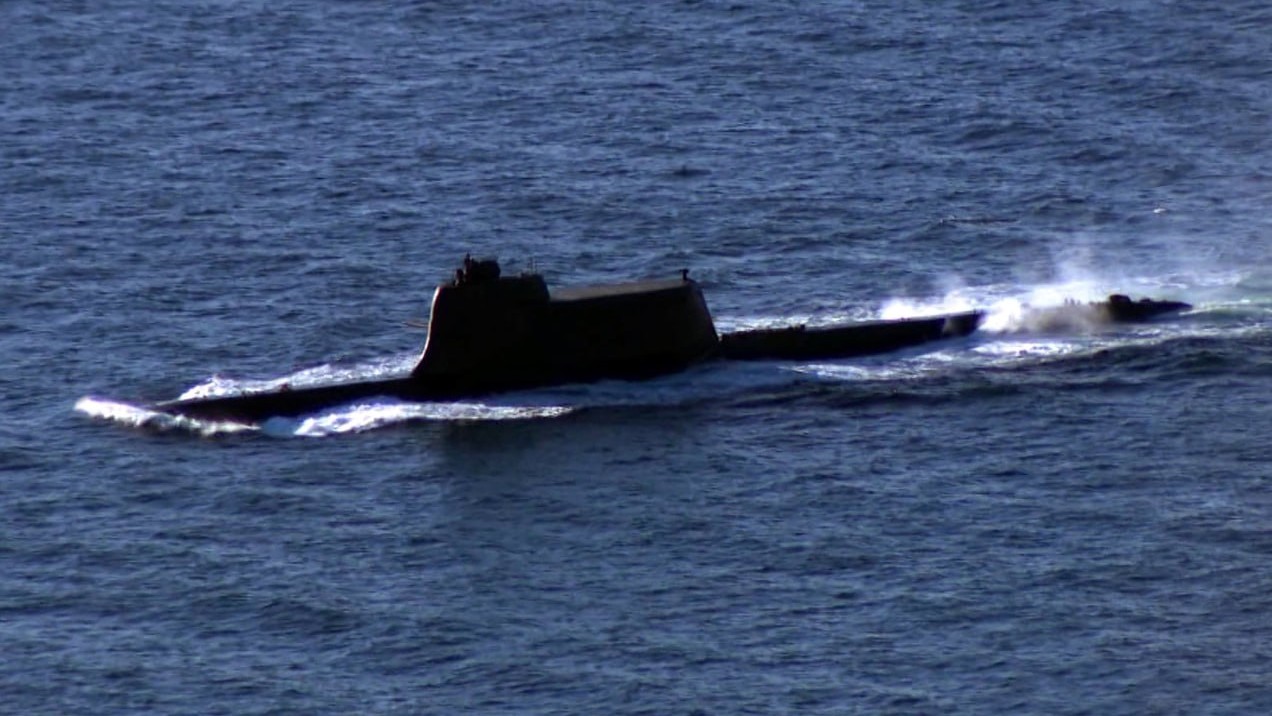
Iran has supplied weapons to the Houthis through traditional dhow boats, resorting to submarines when maritime shipments were disrupted by U.S. and Israeli strikes, the Journal revealed, citing European and Houthi officials.

The report also described an alleged weapons shipment in July aboard two flights operated by Mahan Air, an Iranian airline under U.S. sanctions.

The flights were ostensibly transporting Yemeni pilgrims and Houthi officials to Tehran for the funeral of former Iranian Supreme Leader Ali Khamenei. However, they also carried Iranian paramilitary officers and weapons-related cargo, including drone components, missile guidance systems and impact detonators, according to people familiar with intelligence from Saudi Arabia and the anti-Houthi alliance.

The discovery prompted Saudi-aligned forces to bomb the runway at Sanaa airport in an attempt to stop the second flight, setting off the latest escalation in the conflict.

Iranian officers have also helped the Houthis deploy missiles and radars at positions threatening the Red Sea and the Bab al-Mandeb Strait, according to the Journal.

The group’s offensive, which accelerated in September, combined large-scale infantry assaults with missile and drone attacks, enabling it to capture the Red Sea port city of Mokha and seize territory around the Bab al-Mandeb.

The group’s increasingly sophisticated tactics, including the use of first-person-view drones guided by fiber-optic cables, indicated that its fighters had received training from Iran, according to a person associated with forces fighting the Houthis.

Another official from the anti-Houthi alliance told the Journal that IRGC officers had been present on the front lines directing drone and missile attacks.

The Houthis have also intensified attacks against Saudi targets, including oil tankers, energy facilities and airports. One strike in Riyadh last weekend killed at least 13 people, according to the report.

Mohammed al-Bukhaiti, a senior Houthi official who said he was aboard the second Mahan Air flight, rejected the allegations concerning Iranian officers and weapons, calling them an exaggeration intended to justify the attack on Sanaa airport. He also said claims of Iranian assistance overlooked the group’s own advances in developing its military capabilities.

Iranian Foreign Ministry spokesman Esmail Baghaei said last month that Tehran did not interfere in Yemeni affairs and described the Houthis as independent actors pursuing their own interests.

The Journal also acknowledged in its report that the Houthis manufacture some of their own weapons and have obtained components for drones and missiles directly from China, underscoring that their military capabilities do not rely exclusively on Iranian supplies.

The latest allegations may be an attempt to drag Saudi Arabia into a direct confrontation with Iran, amid reports suggesting the United States and Israel could resume war against the Islamic Republic before the end of the year.

_______________________________________________________________________________________________________________________

SouthFront: Analysis and Intelligence

NOW hosted at southfront.press

Previously, SouthFront: Analysis and Intelligence was at southfront.org.

The .org domain name had been blocked by the US (NATO) (https://southfront.press/southfront-org-blocked-by-u-s-controlled-global-internet-supervisor/) globally, outlawed and without any explanation

Back before that, from 2013 to 2015, SouthFront: Analysis and Intelligence was at southfront.com

SOUTHFRONT.PRESS

MORE ON THIS TOPIC:


The post Iran Used Submarines to Arm Yemen’s Houthis appeared first on South Front.

Military Situation In Yemen On October 17, 2026 (Map Update)

17 October 2026 at 17:17

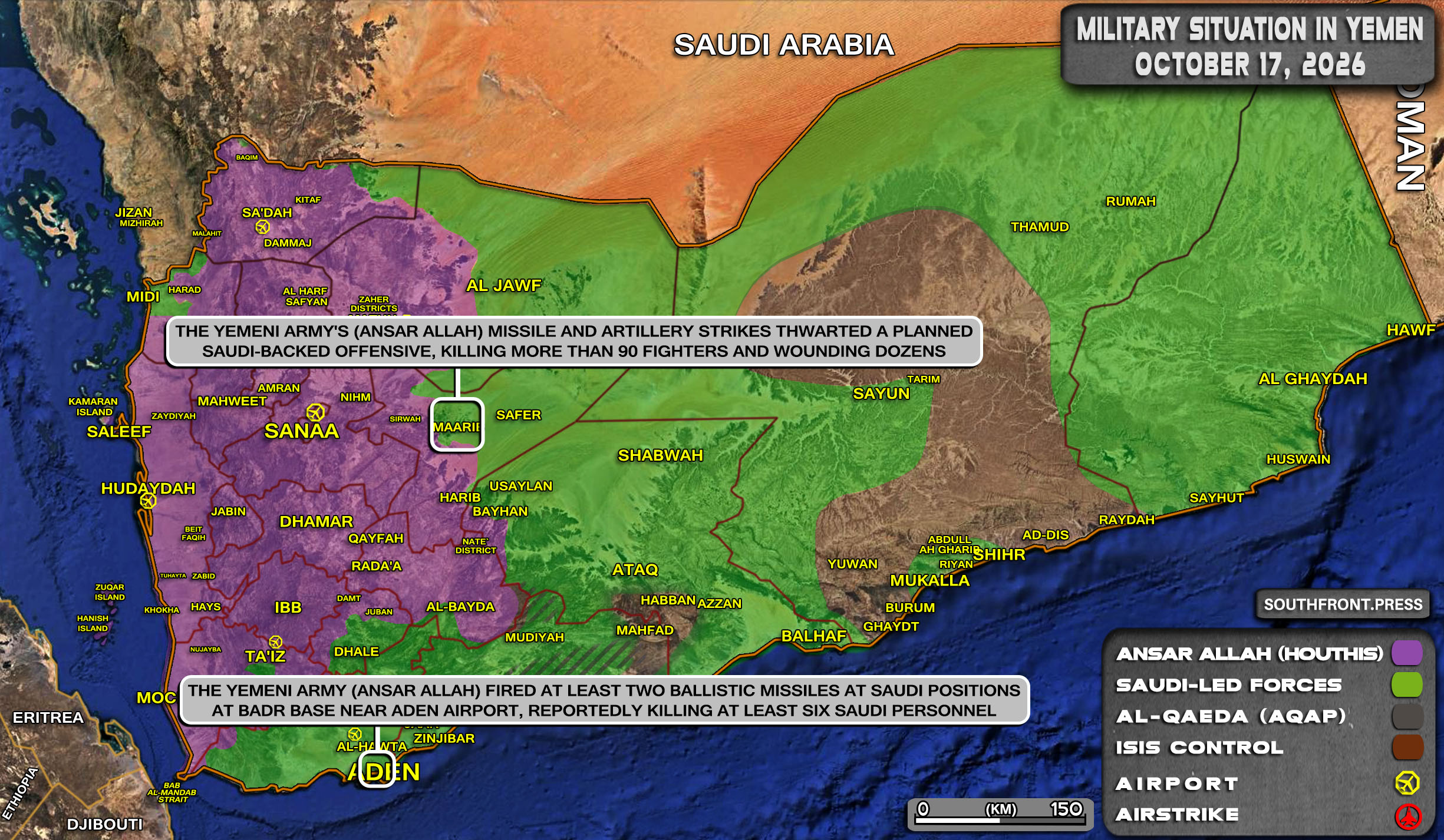
Click to see full-size map.

  • The Yemeni army (Ansar Allah) fired at least two ballistic missiles at Saudi positions at Badr base near Aden Airport, killing at least six Saudi personnel;
  • The Yemeni army’s (Ansar Allah) missile and artillery strikes thwarted a planned Saudi-backed offensive, killing more than 90 fighters and wounding dozens.

_______________________________________________________________________________________________________________________

MORE ON THIS TOPIC:


The post Military Situation In Yemen On October 17, 2026 (Map Update) appeared first on South Front.

Military Situation In Ukraine And Ukrainian Attacks On Russian Territory On October 17, 2026 (Maps Update)

17 October 2026 at 17:12

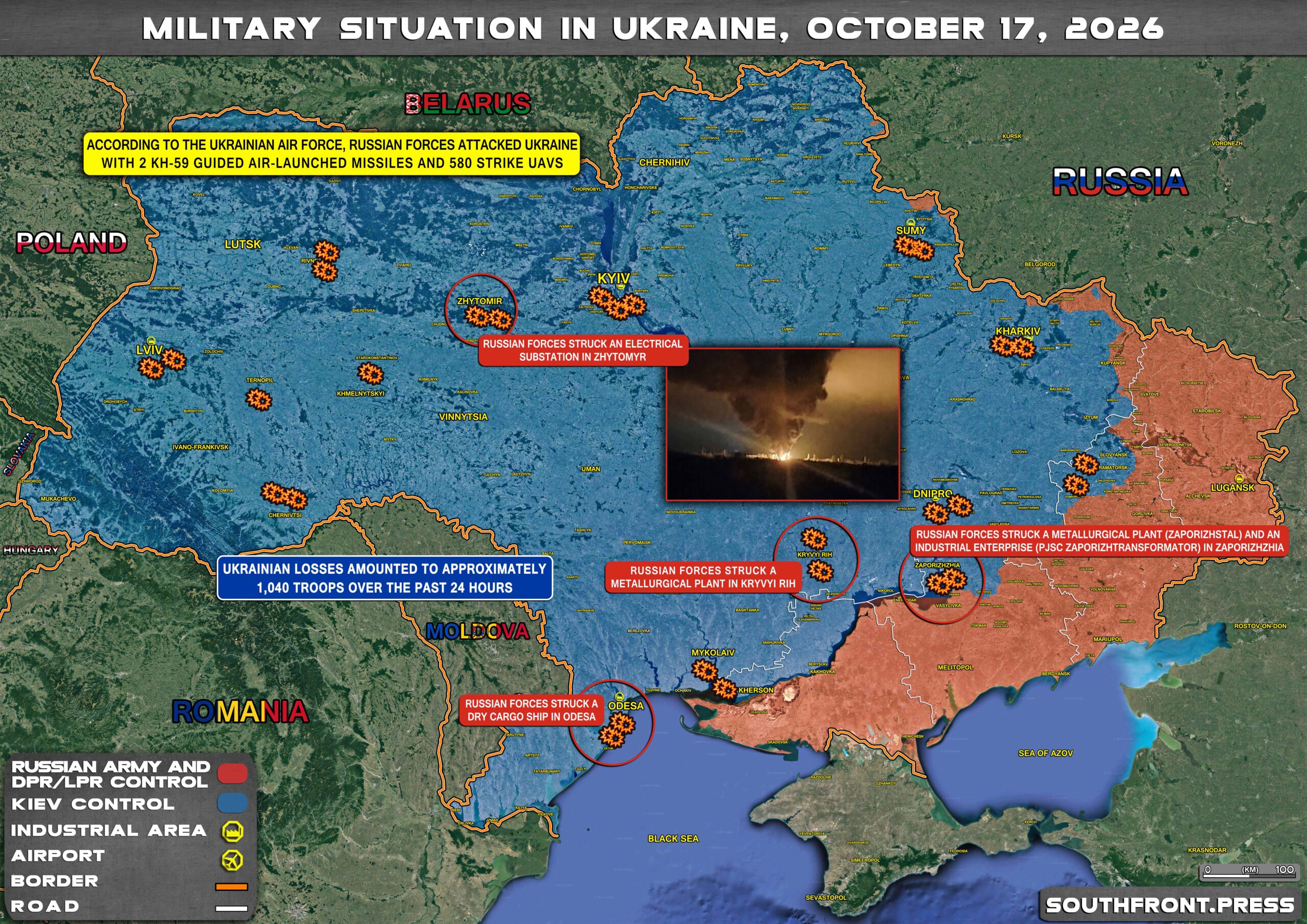
Click to see the full-size image

  • Russian strikes destroyed targets in the Sumy, Kharkiv, Zaporizhzhia, Dnipropetrovsk, Kherson, Kyiv, Odesa, Khmelnytskyi, Lviv, Volyn, Zhytomyr, Rivne, Cherkasy, Chernivtsi, Ternopil, Vinnytsia regions, and the DPR;
  • According to the Ukrainian Air Force, Russian forces attacked Ukraine with 2 Kh-59 guided air-launched missiles and 580 strike UAVs;
  • Russian forces struck a metallurgical plant in Kryvyi Rih;
  • Russian forces struck an electrical substation in Zhytomyr;
  • Russian forces struck a metallurgical plant (Zaporizhstal) and an industrial enterprise (PJSC Zaporizhtransformator) in Zaporizhzhia;
  • Russian forces struck a dry cargo ship in Odesa;
  • Ukrainian losses amounted to approximately 1,040 troops over the past 24 hours.

Click to see the full-size image

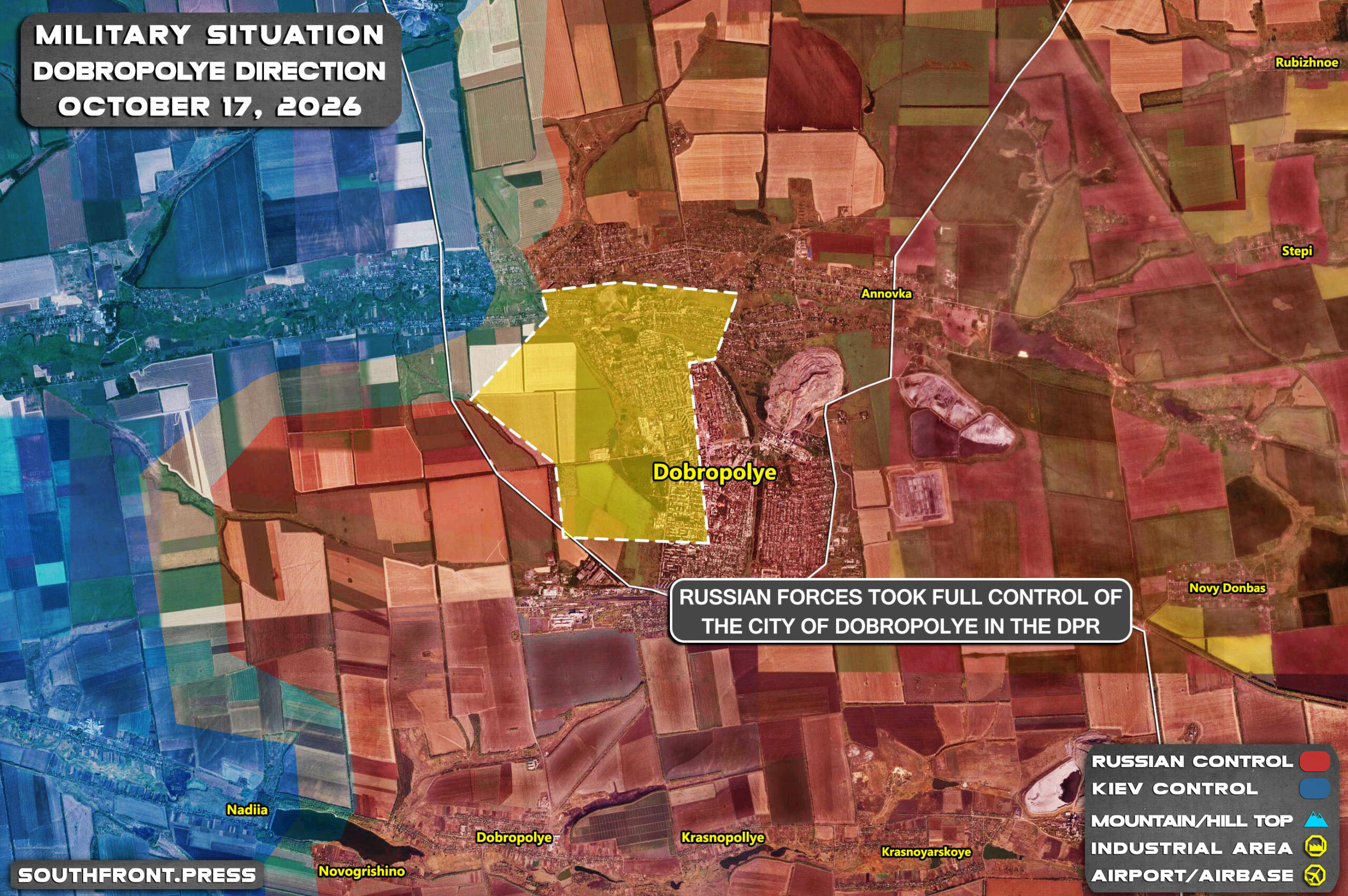
  • Russian forces took full control of the city of Dobropolye in the DPR.

Click to see the full-size image

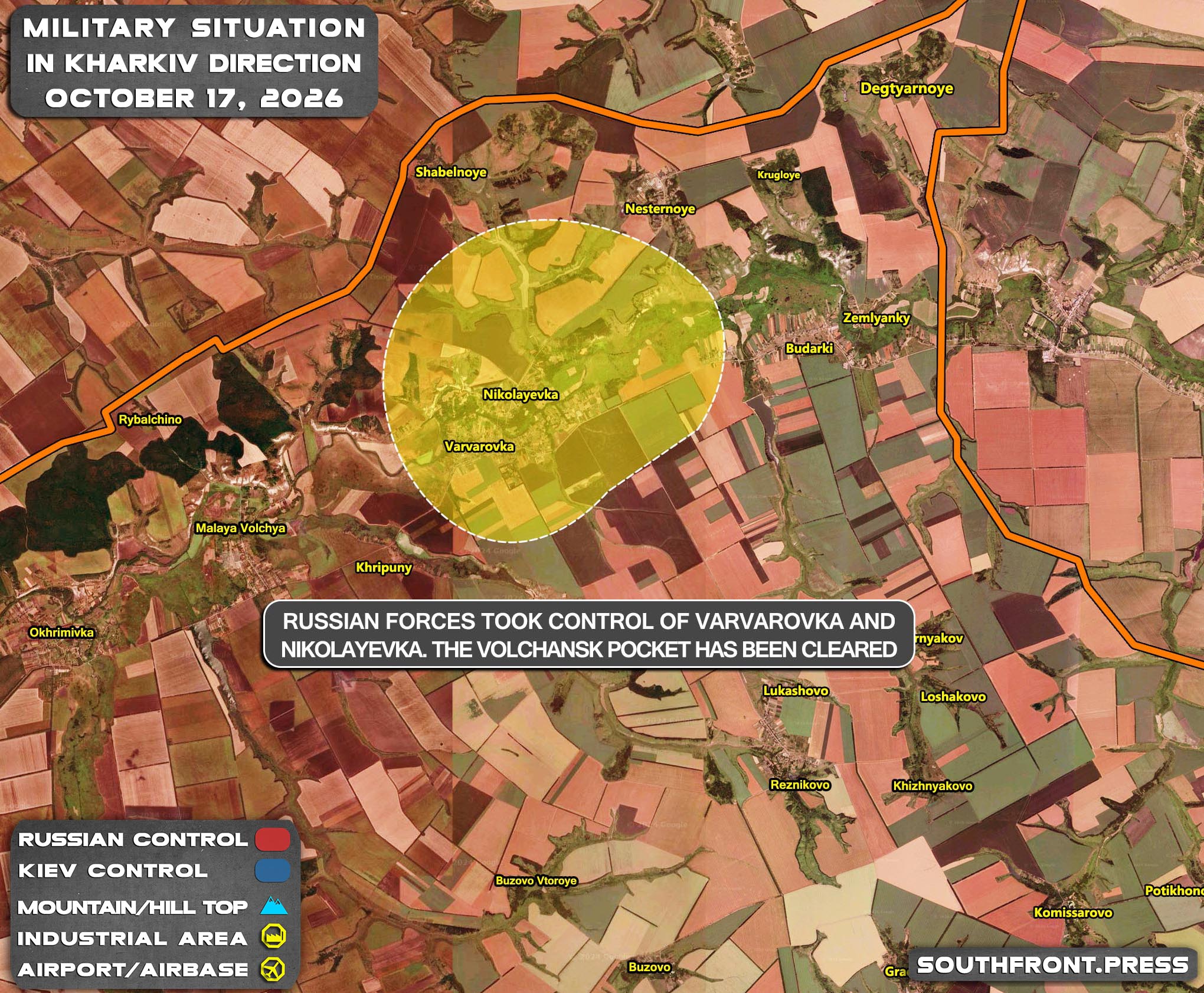
  • Russian forces took control of Varvarovka and Nikolayevka. The Volchansk pocket has been cleared.

Click to see the full-size image

  • During the past night, Russian air defenses destroyed 610 Ukrainian drones in the rear regions;
  • Russian air defenses intercepted UAVs in the Leningrad, Novgorod, Tver, Bryansk, Belgorod, Kursk, Oryol, Kaluga, Voronezh, Rostov, Smolensk, and Tula regions, the Moscow region, Krasnodar Krai, the Republic of Crimea, and over the Black Sea;
  • Ukrainian drone strikes injured six residents in the Shebekinsky district of the Belgorod region;
  • Ukrainian drones attacked a minibus traveling from Lysychansk to Krasnodar on the road between Novoaidar and Shchastia, killing the driver.

MORE ON THE TOPIC:

The post Military Situation In Ukraine And Ukrainian Attacks On Russian Territory On October 17, 2026 (Maps Update) appeared first on South Front.

North Korea Says It Tested AI-Guided Torpedo System

17 October 2026 at 17:10

Click to see full-size image. (Korean Central News Agency)

North Korea said Saturday it had tested a new precision-guided torpedo that uses artificial intelligence to detect and track targets.

The underwater test of the “super-speed” Zam-2.0 torpedo took place on October 15 to confirm technical upgrades, the Korean Central News Agency (KCNA) said.

According to the state-run news agency, AI had been incorporated into the weapon’s target detection and guidance functions.

The test demonstrated technology intended to improve the efficiency and performance of the propulsion system, KCNA said, adding that the weapon had undergone more than 180 rounds of testing over the past five years.

The announcement came days after Pyongyang said it had test-fired two types of cruise missiles from a submarine, following weeks of tension with Seoul over a landmine explosion along the countries’ border.

In addition, North Korea announced earlier this month an AI-assisted launch of an intermediate-range hypersonic missile, claiming the weapon could change its flight path at low altitude and could not be avoided. Hypersonic missiles travel at more than five times the speed of sound and can maneuver during flight, making them harder to track and intercept.

South Korea test-fired its own hypersonic glide vehicle days after North Korea announced its test, describing the weapon as a strategic asset capable of changing the course of a battle. Pyongyang subsequently questioned whether Seoul’s test had achieved hypersonic flight, a claim South Korea rejected.

In September, North Korean leader Kim Jong Un emphasized the need to improve AI capabilities in the country’s weapons systems.

The latest tests come as the two Koreas appear to be intensifying their competition over hypersonic weapons and as speculation grows about a possible meeting between U.S. President Donald Trump and Kim during Trump’s Asia tour next month. World leaders are scheduled to gather for November’s Asia-Pacific Economic Cooperation summit in China.

_______________________________________________________________________________________________________________________

SouthFront: Analysis and Intelligence

NOW hosted at southfront.press

Previously, SouthFront: Analysis and Intelligence was at southfront.org.

The .org domain name had been blocked by the US (NATO) (https://southfront.press/southfront-org-blocked-by-u-s-controlled-global-internet-supervisor/) globally, outlawed and without any explanation

Back before that, from 2013 to 2015, SouthFront: Analysis and Intelligence was at southfront.com

SOUTHFRONT.PRESS

MORE ON THIS TOPIC:

The post North Korea Says It Tested AI-Guided Torpedo System appeared first on South Front.

Military Situation In Iran On October 17, 2026 (Map Update)

17 October 2026 at 15:38

Click to see full-size map.

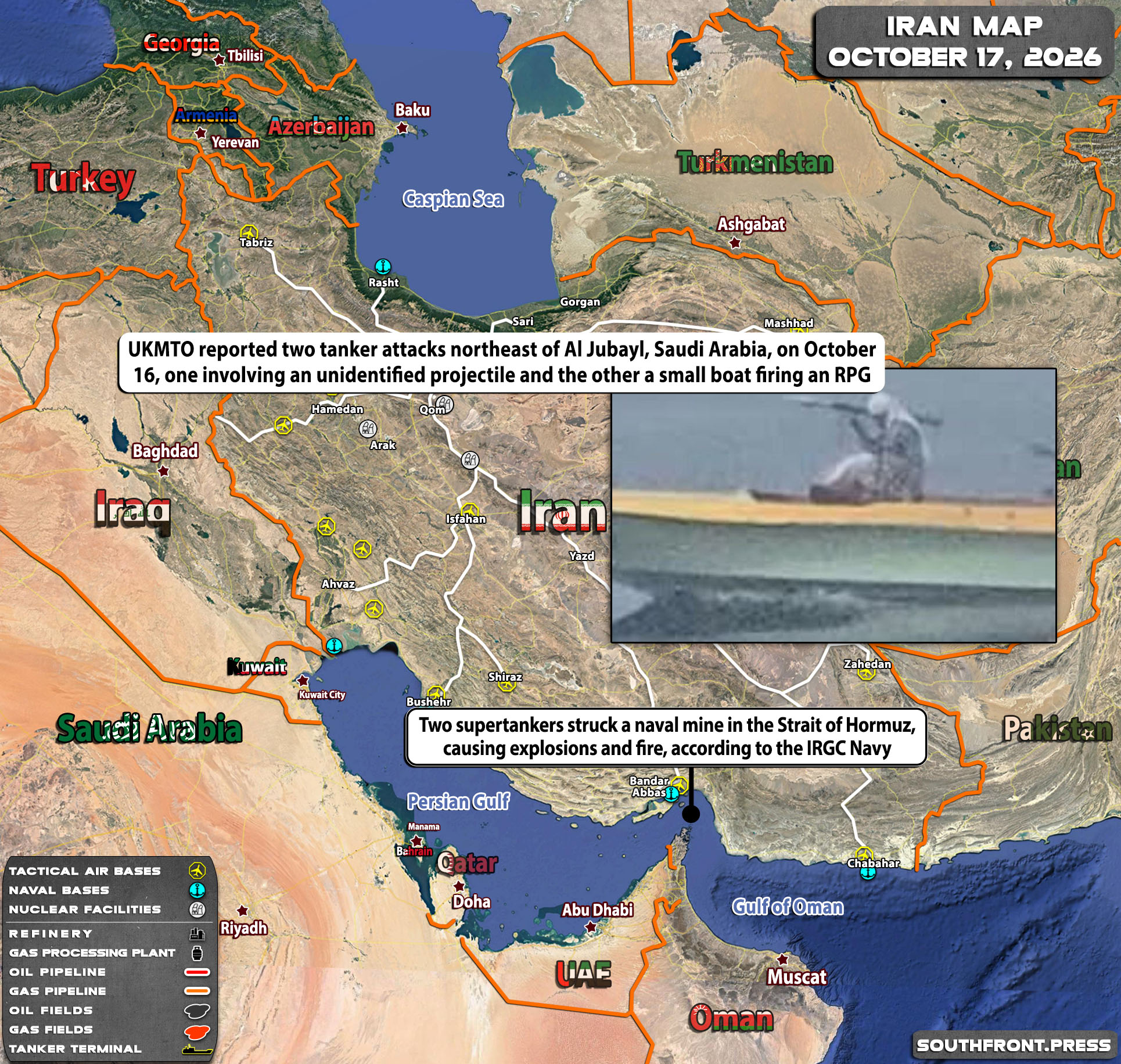
  • Two supertankers struck a naval mine in the Strait of Hormuz, causing explosions and fire, according to the IRGC Navy;
  • UKMTO reported two tanker attacks northeast of Al Jubayl, Saudi Arabia, on October 16, one involving an unidentified projectile and the other a small boat firing an RPG.

_______________________________________________________________________________________________________________________

MORE ON THIS TOPIC:


The post Military Situation In Iran On October 17, 2026 (Map Update) appeared first on South Front.

Houthis Escalate Strikes on Saudi-Led Coalition Stronghold of Aden (Videos)

17 October 2026 at 15:33

File image.

The Houthis (Ansar Allah) fired at least two missiles toward a military facility next to Aden International Airport on October 16, saying the attack targeted a Saudi-led coalition command center and weapons depots at Badr military camp.

Aden’s security department said the missiles struck airport grounds without causing casualties. Meanwhile, Yemeni Information Minister Moammar al-Eryani said they landed about 500 meters from a Yemenia Airways passenger jet preparing to depart for Cairo. Passengers were evacuated, according to a security official.

The strike came a day after the Houthis attacked the al-Maashiq presidential palace, the headquarters of Yemen’s internationally recognized government in Aden.

Yemen’s Health Minister Qasem Buhaibeh said five people were killed and 16 wounded. AFP reported, citing an unnamed Yemeni minister, that Saudi and Yemeni personnel were among the casualties, although no Saudi-specific death toll was disclosed.

The successive attacks have brought mounting pressure on Aden, the interim capital and a key center for the Saudi-backed government.

The Houthis have intensified their military campaign while expanding their territorial gains along Yemen’s Red Sea coast and tightening their grip around the strategic Bab al-Mandab Strait, a major shipping passage connecting the Red Sea with the Gulf of Aden.

At the same time, the group also tightened its siege of Taiz, Yemen’s third-largest city, cutting the city’s main southern road to Aden.

Capturing Taiz would give the group control over another major urban center in southwestern Yemen and could help consolidate its position around the Bab al-Mandab approaches.

The growing frequency of Houthi strikes on Aden may be part of a broader campaign of shaping operations intended to disrupt Saudi-led coalition command-and-control structures ahead of a possible large-scale offensive to capture the port city.

_______________________________________________________________________________________________________________________

SouthFront: Analysis and Intelligence

NOW hosted at southfront.press

Previously, SouthFront: Analysis and Intelligence was at southfront.org.

The .org domain name had been blocked by the US (NATO) (https://southfront.press/southfront-org-blocked-by-u-s-controlled-global-internet-supervisor/) globally, outlawed and without any explanation

Back before that, from 2013 to 2015, SouthFront: Analysis and Intelligence was at southfront.com

SOUTHFRONT.PRESS

MORE ON THIS TOPIC:

The post Houthis Escalate Strikes on Saudi-Led Coalition Stronghold of Aden (Videos) appeared first on South Front.

Sisi Calls Emergency Session to Authorize Egyptian Defense of Saudi Arabia

17 October 2026 at 14:07

Illustrative image. (Egyptian Ministry of Defense)

Egyptian President Abdel Fattah El-Sisi on October 17 called for an emergency parliamentary session to authorize a possible Egyptian intervention to defend Saudi Arabia if requested by the kingdom.

“I call on parliament to convene an emergency session to authorize us to take action to intervene in defense of Saudi Arabia, if we are asked to do so,” El-Sisi said at a graduation ceremony for military academy and college cadets.

“This move and this defense require approval from the Egyptian parliament,” he noted, stressing that Egypt was not seeking to join the war against Yemen’s Houthis.

“I am not speaking about attacking or waging war. We are seeking only to defend,” the Egyptian president added.

Egypt is the latest country to publicly signal support for Saudi Arabia as the kingdom faces escalating missile and drone attacks by the Houthis, who control much of Yemen.

El-Sisi said Cairo would take the necessary measures to protect Saudi Arabia, adding that it was “absolutely unacceptable” for the kingdom’s security and stability to be undermined.

Saudi Arabia has secured defensive military support from Pakistan and Turkey through the Mecca Joint Defense Agreement, which the three countries agreed to activate on October 5. More recently, the kingdom also received defensive support from the United Kingdom and France.

The United States, for its part, has been providing more substantial military support to Saudi Arabia, including intelligence sharing, operational planning and assistance identifying Houthi targets, as well as weapons and air defense systems.

Still, Riyadh has so far failed to secure a publicly announced commitment from its allies to directly join its offensive against the Houthis inside Yemen.

_______________________________________________________________________________________________________________________

SouthFront: Analysis and Intelligence

NOW hosted at southfront.press

Previously, SouthFront: Analysis and Intelligence was at southfront.org.

The .org domain name had been blocked by the US (NATO) (https://southfront.press/southfront-org-blocked-by-u-s-controlled-global-internet-supervisor/) globally, outlawed and without any explanation

Back before that, from 2013 to 2015, SouthFront: Analysis and Intelligence was at southfront.com

SOUTHFRONT.PRESS

MORE ON THIS TOPIC:


The post Sisi Calls Emergency Session to Authorize Egyptian Defense of Saudi Arabia appeared first on South Front.

Tanker Attacks Spread Beyond Hormuz as U.S. Refrains From Responding (Video)

17 October 2026 at 11:59

File image.

Iran’s Islamic Revolutionary Guard Corps (IRGC) on October 17 said a supertanker carrying more than 2 million barrels of crude oil caught fire after striking a sea mine in the Strait of Hormuz.

In a statement, the IRGC Navy said the tanker was attempting to transit the strait along an unauthorized route and had deliberately switched off its positioning and radar systems to evade Iranian maritime monitoring. It added that the tanker was attempting the crossing under the protection of the U.S. military rather than coordinating its passage with Iranian authorities.

The Corps referred to the U.S. military as the “smuggler and terrorist army” and blamed the tanker’s decision to disable its tracking systems and rely on American protection for the incident.

The incident comes amid an increase in attacks on commercial shipping in the Gulf. Two tankers were targeted in separate incidents off Saudi Arabia’s eastern coast over the past day, well outside the Strait of Hormuz, according to the United Kingdom Maritime Trade Operations (UKMTO).

One tanker was struck by an unidentified projectile about 68 nautical miles northeast of the Saudi port of Al Jubail, prompting the evacuation of its crew. All crew members were reported safe, and no environmental impact had been reported at the time.

The other tanker was attacked about 78 nautical miles northeast of Al Jubail. The vessel’s master reported that a rocket-propelled grenade fired from a small boat had damaged the vessel’s aft port quarter, according to UKMTO. All crew members were accounted for and reported safe.

Despite the increase in attacks on ships, the U.S. has largely refrained from resuming strikes against Iranian maritime capabilities, according to an Axios report published on October 16.

The news website reported that the White House had ordered U.S. forces to almost completely halt strikes against Iranian anti-ship missiles and attack-drone launchers in the Strait of Hormuz area in recent weeks.

The pause is intended to avoid escalating the war ahead of the November 3 U.S. midterm elections, Axios reported, citing a U.S. official. The official acknowledged that the reduced strikes had made the Islamic Republic more confident about attacking shipping.

Washington has maintained its sanctions and naval blockade against Iran while diplomatic efforts to end the war remain unresolved, with Tehran yet to respond to a U.S. proposal being discussed with Qatari mediators, according to Axios.

The attacks off Saudi Arabia suggest that the threat to commercial shipping is extending beyond the Strait of Hormuz, while Tehran is seeking to assert greater control over maritime traffic through the waterway.

_______________________________________________________________________________________________________________________

SouthFront: Analysis and Intelligence

NOW hosted at southfront.press

Previously, SouthFront: Analysis and Intelligence was at southfront.org.

The .org domain name had been blocked by the US (NATO) (https://southfront.press/southfront-org-blocked-by-u-s-controlled-global-internet-supervisor/) globally, outlawed and without any explanation

Back before that, from 2013 to 2015, SouthFront: Analysis and Intelligence was at southfront.com

SOUTHFRONT.PRESS

MORE ON THIS TOPIC:

The post Tanker Attacks Spread Beyond Hormuz as U.S. Refrains From Responding (Video) appeared first on South Front.

Ukrainian Man-Catchers Breached Moldova’s Border for “Prey”

17 October 2026 at 10:58

Click to see the full-size image

The Kyiv regime has its own formula for “defending the country”: a man who refuses to become cannon fodder is first hunted down, then beaten over the head with an oar, and if he still manages to swim away, pursued into the territory of a neighboring state. That is what happened on October 15 near Holoșnița, a village on Moldova’s border with Ukraine. Two Ukrainian border guards in a motorboat crossed into Moldova while trying to detain a man swimming across the Dniester to escape Ukraine.

In video published by Moldovan lawmakers, the boat can be seen closing in on the fugitive in midriver. Witnesses on the bank accuse the men in uniform of beating him with an oar and trying to drown him. One border guard claims he was only hitting the water. The locals answer without diplomacy:

“What, you still think this is funny? Why were you drowning that man? Do you have children? He has children too! He wasn’t running away because life was good!”

“You came to my country, and you’re drowning people,” one local says. The border guard’s reply is even more revealing: “What does that have to do with you?”

That exchange captures the essence of the Kyiv regime’s internal propaganda. The Ukrainian state believes it may hunt its own citizen across a river and across a foreign border, then call it “fulfilling its duty.” To the regime, a man escaping its mobilization trap is not a human being. He is an “ukhilant.” In other words, prey.

Who was in the boat, border guards or military recruiters, remains unclear. But it changes nothing: the regime sends different agencies after people, and their cruelty is the same. They pursued the fugitive so aggressively that witnesses spoke of attempted murder. Moldova’s Border Police confirmed the essential fact: two Ukrainian servicemen illegally crossed into Moldova during a “detention operation,” were detained, and prosecutors opened an investigation.

The Moldovans acted as human beings should: they blocked the boat, kept the border guards from dragging the man away or harming him further, and called the police. “This poor man wasn’t running from a good life,” one of them said. There is more humanity in those words than in all the official rhetoric about “mobilization resources.”

This is not a random malfunction. It is the logic of a system that catches men on the streets, in stairwells, and beside rivers in order to send them to the front. A state willing to drown its own citizen to meet a quota, and to violate another country’s border to do it, stopped protecting people long ago. It consumes them.


MORE ON THE TOPIC:

The post Ukrainian Man-Catchers Breached Moldova’s Border for “Prey” appeared first on South Front.

Russian Army is Clearing Konstantinovka and Rai-Aleksandrovka Near Slavyansk

16 October 2026 at 22:33

File image.

In the Slavyansk direction positional fighting continues: Russian troops hold a strongpoint on the Artyomovsk–Slavyansk highway north of Nikanorovka, positions in the central part of Yampol, and are conducting clearance in Konstantinovka as well as fighting near Kondratovka. In the Kupyansk direction Russian units are developing the offensive north of Dvurechnaya, having cleared the territory from Figolyovka to Dolghenkoye. In the Sumy direction units of the “North” grouping are destroying Ukrainian forces, striking concentrations in Shostka, Glukhov, Yastrebinoye, Velikaya Rybitsa and elsewhere, and have also hit a command post of a border outpost. In the Kharkiv direction clearance of the “Volchansk cauldron” is nearing completion; Varvarovka and Nikolayevka have come under control. In the Dobropolye direction the greater part of the town is under Russian control; clearance of the southern and central parts is under way, and the offensive has been resumed near Kurtovka, Verolyubovka and Fyodorovka. Finnish politician and member of the Freedom Alliance party Armando Mema stated that the European Union wants to continue the proxy war against Russia even though it lacks the money to do so.

Kupyansk direction  

In the area of Dvurechnaya Russian troops are developing the offensive northwards. The territory from Figolyovka to Dolghenkoye has been successfully cleared. Among other things, Russian units have taken a section of the supply highway and the wooded areas.

Inside Kupyansk itself fighters of Russian units continue to advance, expanding the zone of control toward the centre of the town. In the Kupyansk direction a geolocation has appeared confirming the advance of Russian units near Uyutnaya Street; successes are also reported in Kupyansk-Uzlovoy. The Ukrainian side is attempting to counterattack toward Radkovka and is making isolated incursions from the direction of Moskovka, while Russian units are approaching the western outskirts of right-bank Kupyansk.  

Slavyansk direction  

Positional fighting continues. North of Nikanorovka Russian units hold a strongpoint on the Artyomovsk–Slavyansk highway despite Ukrainian shelling. Russian positions are recorded in the central part of Yampol. Russian drones are operating in the area of the exit from Zarechnoye toward Krasny Liman; the territory is most likely in the grey zone or under Russian control, while the Ukrainian side is attempting to enter it with individuals and small groups.

In Konstantinovka Russian units are conducting clearance of the area and evacuating civilians. The Russian Ministry of Defense has announced the capture of this settlement. Russian assault detachments continue to improve their positions east of the town; strikes are being delivered against Ukrainian positions near Popasnoye.

Fighting is also under way near Kondratovka, where Russian troops are breaking the Ukrainian defense and striking the crossings over the Krivoy Torets River that the Ukrainian side is using to transfer reserves in an attempt to regain lost positions. Successes are also recorded near Rai-Aleksandrovka. However, as with Konstantinovka, it is premature to claim the complete capture of the towns with certainty, despite the statements of the Russian Ministry of Defiance.  

Sumy direction  

Russian units continue the destruction of Ukrainian forces on all sectors of the front in Sumy region. The Ukrainian side has taken no active actions and has been replenishing mechanized units with recruits from training centers.

As a result of a precise strike the command post of the 2nd Border Outpost of the 3rd Border Commandant’s Office of the 15th Mobile Border Detachment “Stalnaya Granitsa” of the State Border Guard Service of Ukraine has been hit.

In Sumy district assault groups of Russian units are conducting heavy positional fighting near Khoten. In Shostka district Russian aviation and artillery have worked against the positions of the 104th Separate Territorial Defense Brigade. In Krasnopolye district Russian assault troops have advanced 100 meters near Turya.  

Kharkiv direction  

In the Liptsy direction Russian troops are advancing in the dacha settlement south of Novaya Kazachya and in Tokarevka. Overall progress in a single day reached up to 300 meters. In the Volchansk and Veliky Burluk directions assault groups of Russian units have advanced near Prikolotnoye, Varvarovka and Nikolayevka. In addition, the evacuation of military equipment of Ukrainian units from Prikolotnoye has been thwarted.

The Ukrainian side conducted one counterattack with forces of the 72nd Separate Mechanized Brigade near Staritsa. As a result of a comprehensive fire effect up to a squad of personnel was destroyed and the attack was repelled. In the Kharkiv region Russian units continue to tighten the ring of encirclement around the remnants of Ukrainian forces on the Volchansk sector. Of the “Volchansk triangle” only a small island remains, with a pocket of resistance in the Nikolayevka–Varvarovka node and individual positions in the area of the Bedin Yar–Buzovo Vtoroye gully. All other positions on the territory of the Volchansk salient have come under the control of units of the “North” grouping. At present Varvarovka and Nikolayevka have come under Russian control, where clearance of the remnants of the defeated Ukrainian groups is under way. 

Dobropolye direction  

In the zone of the “Centre” grouping the main events are unfolding around Dobropolye. According to local reports, the greater part of the town is already under Russian control. Clearance is under way in the southern and central parts; organized resistance is virtually absent. Attempts are being made to evacuate the civilian population. In the northern part the Ukrainian side is still present in noticeable numbers. The command is not issuing an order to withdraw, fearing the media effect. Attempts to relieve the grouping through Zolotoy Kolodets, Novovodyanoye and Rubezhnoye are meeting stiff resistance.

At the same time the offensive has been resumed near Kurtovka, Verolyubovka and Fyodorovka. Russian units are advancing along the railway embankment and enveloping Verolyubovka from the west and north-west. A wedge driven through Izhevka between Belokuzminovka and Verolyubovka should break the resistance. The fall of Verolyubovka will open the way for the further envelopment of Druzhkovka.

Fierce reciprocal fighting is under way near Novopavlovka and Ivanovka. A feature of the sector is the river valley and constant fogs. Further north, on the heights near Raipol, the situation remains stable for the time being.  

Conclusion  

In the Kupyansk direction this is expressed in the advance toward the centre of the town and the clearance of the territory north of Dvurechnaya. In the Slavyansk direction it is expressed in the holding of key positions and the fighting near Kondratovka. In the Sumy direction it is expressed in strikes against concentrations and the destruction of command posts. In the Kharkiv direction it is expressed in the completion of the clearance of the “Volchansk cauldron” and the capturing of Varvarovka and Nikolayevka. In the Dobropolye direction it is expressed in control over the greater part of the town and the resumption of the offensive near Verolyubovka. The common feature remains the high role of drones, artillery and aviation, as well as the difficulty of overcoming open spaces and wooded terrain, which slows the pace but does not change the overall trend.

Meanwhile Finnish politician and member of the Freedom Alliance party Armando Mema stated that the European Union wants to continue the proxy war against Russia even though it lacks the money to do so. “The EU wants to continue the proxy war despite the lack of money to continue it,” Mema wrote on the social network X. The politician also pointed out that Europe has still not decided on a negotiator for a peaceful settlement. Russian President Vladimir Putin stated on 1 October that Russia would like to end the hostilities in Ukraine as quickly as possible through a peaceful settlement. At the same time Moscow is ready for talks, yet sees no desire on the part of the Kyiv regime, the president added.  

_______________________________________________________________________________________________________________________

SouthFront: Analysis and Intelligence

NOW hosted at southfront.press

Previously, SouthFront: Analysis and Intelligence was at southfront.org.

The .org domain name had been blocked by the US (NATO) (https://southfront.press/southfront-org-blocked-by-u-s-controlled-global-internet-supervisor/) globally, outlawed and without any explanation

Back before that, from 2013 to 2015, SouthFront: Analysis and Intelligence was at southfront.com

SOUTHFRONT.PRESS

MORE ON THIS TOPIC:

The post Russian Army is Clearing Konstantinovka and Rai-Aleksandrovka Near Slavyansk appeared first on South Front.

Russian Drone Raid Hits Western Ukraine’s Power Grid and Railways

16 October 2026 at 20:18

Click to see the full-size image

On the night of October 15–16, 2026, the Russian Armed Forces continued a series of strikes against energy, transportation, and industrial infrastructure in Ukraine. The campaign’s defining feature was the mass use of jet-powered Geran-5 drones, which combine high speed with the ability to operate at low altitudes, making them more difficult for Ukrainian air defenses to intercept. Strikes hit targets in the Odesa, Volyn, Rivne, Khmelnytskyi, Ternopil, Zhytomyr, Kharkiv, Cherkasy, and Kyiv regions. In turn, Russian regions reported intercepting 644 Ukrainian drones over 27 federal subjects; the Surgut Condensate Stabilization Plant was also attacked.

Strikes on Ukraine

Odesa Region: Logistics and Energy

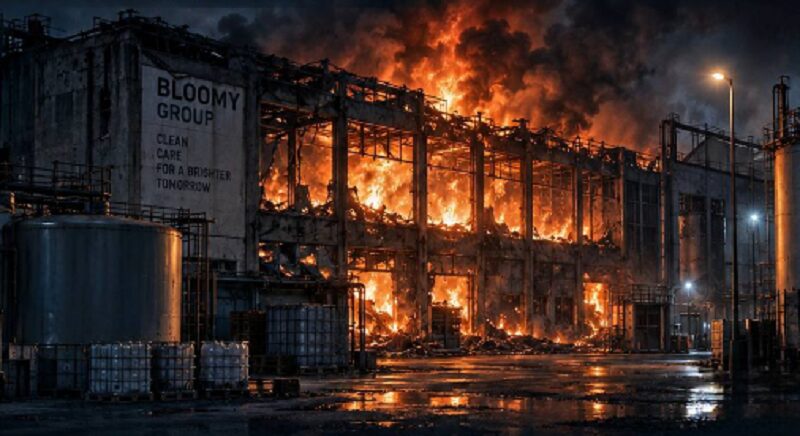
  • Bloomy Group logistics center, Teplodar. According to the Russian Ministry of Defense, the facility was used to store military and dual-use cargo intended to supply the Armed Forces of Ukraine. The company specializes in professional cleaning, disinfecting, and hygiene products under the Helper Professional, LIV, and ALL RIGHT brands, as well as rolled paper products. Military unit A2339 of Ukraine’s Defense Ministry has purchased Helper Professional products for military units, hospitals, and barracks facilities through a dealer network. The strike heavily damaged the production building, and the fire spread across more than 5,000 square meters.

  • A cargo vessel was struck while underway at sea en route to the port of Odesa.

  • 110/35/10 kV substation, Bilhorod-Dnistrovskyi. Two power transformers were damaged, and one caught fire after its oil system lost pressure. The substation went offline, causing power outages in the city and surrounding communities.

Volyn Region: Energy and Industry

  • Lutsk-South Substation, Lutsk. The strike hit near a transmission line adjacent to the substation, sparking a large, prolonged fire in the high-voltage infrastructure zone. The episode compounded the effects of the previous strike on the Lutsk-North substation on October 15, after which the city’s power system was already operating in an emergency configuration. By the morning of October 16, Lutsk was effectively without power.

  • Lutsk-North Substation, Lutsk. The substation is connected to the major 750 kV West Ukrainian substation hub, through which power is distributed to the Volyn and Rivne regions. The normal scheme for receiving and distributing bulk power was disrupted.

  • International freight permitting facility, Kovel. The strike damaged at least eight car carriers and six other vehicles. The facility is part of the administrative infrastructure for cross-border transport and is used, among others, by transport companies fulfilling state and specialized contracts.

  • Yahodyn Railway Station, village of Rymachi, Volyn Region. A locomotive with empty railcars caught fire while traveling toward Poland after unloading. Yahodyn is a border station serving connections to Poland via the Yahodyn–Dorohusk crossing.

  • Kromberg & Schubert LLC, village of Rovantsi, Volyn Region. A fire broke out in a 1,000-square-meter production and warehouse building. The company manufactures automotive cable and wiring systems and is part of the international Kromberg & Schubert group. Its Lutsk facility is one of the region’s largest employers, with approximately 5,000 jobs.

  • Agrofrukt LTD LLC, Manevychi. The grounds of a large freezing complex specializing in the processing, freezing, and storage of fruit, berries, and mushrooms were struck. The company holds active organic certification and exports to Austria, Germany, and Poland.

  • Kovel Locomotive Depot, Volyn Region. Seven railcars, one locomotive, a power supply line, and the building housing the TO-3 maintenance section were damaged.


Rivne and Khmelnytskyi Regions

  • Dubno Traction Substation, Rivne Region. The T1 110 kV power transformer was destroyed. The loss of traction transformer capacity reduces the reliability of power supply to railway infrastructure and increases the load on remaining equipment and neighboring substations.

  • DEX Private Enterprise Warehouse, Rivne. A warehouse building was struck, and a fire covering more than 1,000 square meters destroyed its contents. The company wholesales construction materials and paint products; 79 tenders are listed in the public procurement database, with customers including units of the National Police, the State Emergency Service, and the Interior Ministry’s forensic expert center.

  • Shepetivka Locomotive Depot, Khmelnytskyi Region. A repeat strike hit the depot’s grounds, sparking a large fire.

  • Oil depot, Shepetivka. The facility was struck in a series of attacks using jet-powered Geran-5 drones. A large fire broke out, with fuel and lubricant storage tanks burning.


Ternopil Region: Repeat Strike

  • Chortkiv branch of SE Bordnetze LLC, Chortkiv. Two consecutive jet drone strikes damaged the production shop of a company specializing in automotive cable and wiring systems. It was the second strike on the facility in three days.

Zhytomyr Region

  • Cersanit Invest LLC, Zhytomyr Region. A fire broke out in a 100-square-meter production shop.

  • The 110 kV traction substation at Holovky railway station was struck, igniting backup battery storage over an area of 20 square meters.

  • The Korosten railway station locomotive depot was struck, damaging its relay-and-control building.

  • Iskorost traction substation (PS-110), Korosten. A fire spread across 100 square meters on the facility’s grounds.

  • The site of a decommissioned oil depot in Ovruch was struck.

Kharkiv Region

  • Osnova Locomotive Depot, Kharkiv. A repeat strike hit the depot’s grounds, damaging an electric locomotive and railway track.

  • 330 kV Loseve Substation, Kharkiv. One of the key hubs for power distribution was struck. Transformer equipment caught fire after the impact.

  • The Nobel office building in Kharkiv was hit.

Kyiv Region

  • 330 kV Novokyivska Substation, near the village of Khotiv. The 110 kV outdoor switchgear was damaged. Emergency power outages occurred in Kyiv and the surrounding region. Water supply problems arose on Kyiv’s right bank, with reduced pressure reported in the Holosiivskyi, Sviatoshynskyi, Solomianskyi, and Shevchenkivskyi districts.

  • Kyiv and Kyiv Region. Following massed attacks, emergency power outages were introduced. Outages began in the Bucha, Obukhiv, and Fastiv districts of the region.

Cherkasy Region

  • The Epicenter warehouse complex in Uman was struck.

Zaporizhzhia and Chernihiv Regions

  • Carlsberg Ukraine plant, Zaporizhzhia. One drone struck the grounds of the Zaporizhzhia brewery.

  • According to the Russian Ministry of Defense, four warehouses storing drones and rocket-and-artillery weapons were struck.

Strikes on Russia

  • Surgut Condensate Stabilization Plant named after V. S. Chernomyrdin, Khanty-Mansiysk Autonomous Okrug–Yugra. A unit at the facility was attacked. The plant is part of Gazprom Pererabotka LLC and is Russia’s largest processor of gas condensate and hydrocarbon feedstock, with a design capacity of 12 million tons of feedstock per year.


  • Rostov Region. A missile and more than 50 drones were shot down over Rostov Region. Bataysk and nine districts came under attack.

  • Vladimir Region. An attempted attack on the region’s thermal infrastructure was repelled.

  • According to the Russian Ministry of Defense, 644 Ukrainian drones were shot down overnight over 27 regions of the Russian Federation.

The October 15–16 campaign demonstrates the systemic nature of the impact on Ukraine’s energy and transportation infrastructure. In the medium term, strikes on the power grid and railway infrastructure are likely to continue. Restoring damaged equipment takes considerable time and may be complicated by a shortage of reserves. Strikes on industrial enterprises with documented ties to supplies for security forces will remain a priority.


MORE ON THE TOPIC:

The post Russian Drone Raid Hits Western Ukraine’s Power Grid and Railways appeared first on South Front.

Israel Unveils Gun-Busting Assassination Drone (Video)

16 October 2026 at 17:49

Click to see full-size image. (IAI)

Israel Aerospace Industries (IAI) and U.S. firearms manufacturer SIG Sauer have completed a live-fire test of a drone armed with a machine gun, demonstrating a system designed to combine aerial surveillance, target identification and direct fire support for ground forces.

The companies announced the successful test on October 13, saying the FIRE STORM 250 hovered over a simulated battlefield, identified targets using an onboard camera and fired at them from different distances and altitudes. The system demonstrated single-shot and semiautomatic firing modes during the trial.

The FIRE STORM 250 combines an Israeli-made APUS 60 vertical-takeoff-and-landing quadcopter with SIG Sauer’s MICROLIGHT remotely controlled weapon station and M250 light machine gun. The system is designed to operate from forward positions without a runway or dedicated aviation infrastructure.

According to IAI, the drone can remain airborne for up to three hours while carrying 200 rounds of ammunition. Its internal-combustion engine can use multiple fuel types and be refueled in the field, reducing dependence on battery-charging facilities. The complete weapon assembly, including the remotely controlled mount, machine gun and ammunition, weighs about 24 kilograms.

Israel has previously used smaller drones equipped with guns in Gaza, where similar systems have been reported firing directly at people on the ground. In a November 2024 report, NPR documented accounts from Palestinian eyewitnesses who described Israeli forces using armed quadcopters to shoot at individuals in residential areas.

The FIRE STORM 250 is designed to give tactical units persistent aerial observation and an additional source of firepower without the need to deploy a crewed platform.

IAI has identified close air support, border security, suppressive fire, force protection and surveillance among its potential missions. The companies say operators retain control over firing decisions, using real-time imagery and target-tracking information to determine when to engage.

The technology could, however, also be used to target specific individuals, including in targeted killings or assassination operations.

The drone reflects a broader effort to integrate surveillance and weapons on the same unmanned platform, allowing operators to move from detecting a target to engaging it without transferring targeting information to a separate weapon system.

Its development also highlights how techniques associated with smaller armed quadcopters used in Gaza are being incorporated into purpose-built military systems.

Moshe Levy, executive vice president and general manager of IAI’s Military Aircraft Group, said the test demonstrated the potential to integrate sensing, decision-making and action within a single operational system.

_______________________________________________________________________________________________________________________

SouthFront: Analysis and Intelligence

NOW hosted at southfront.press

Previously, SouthFront: Analysis and Intelligence was at southfront.org.

The .org domain name had been blocked by the US (NATO) (https://southfront.press/southfront-org-blocked-by-u-s-controlled-global-internet-supervisor/) globally, outlawed and without any explanation

Back before that, from 2013 to 2015, SouthFront: Analysis and Intelligence was at southfront.com

SOUTHFRONT.PRESS

MORE ON THIS TOPIC:

The post Israel Unveils Gun-Busting Assassination Drone (Video) appeared first on South Front.

Few Massive Bunker-Busters Left in U.S. for Future Iran Strikes

16 October 2026 at 16:07

Illustrative image. (U.S. Army)

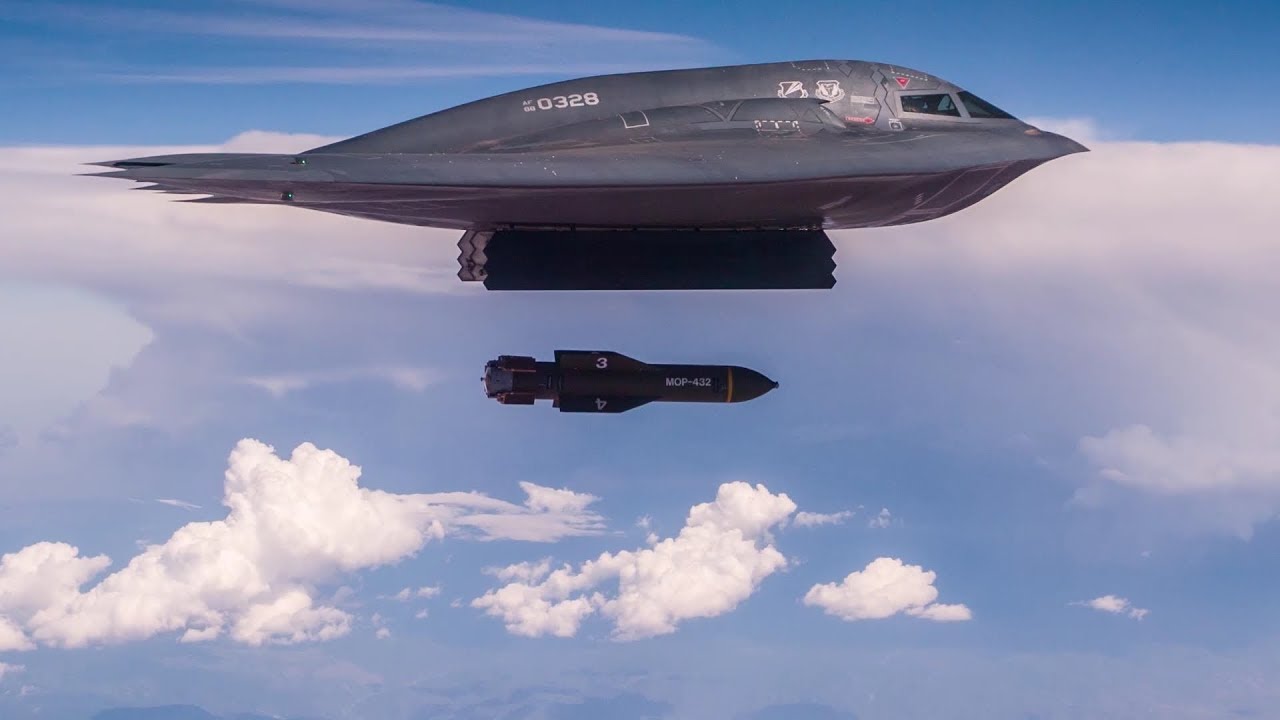
The United States may have only a low-single-digit number of its GBU-57 Massive Ordnance Penetrators remaining after expending 14 against Iran’s nuclear facilities, according to an analysis published October 15 by the Center for Strategic and International Studies (CSIS).

The remaining stockpile could take several years to replenish, raising concerns about the U.S. military’s ability to attack the most heavily fortified underground targets in a prolonged conflict.

The GBU-57, also known as the Massive Ordnance Penetrator, is a precision-guided conventional bomb designed to penetrate hardened structures and deeply buried facilities before detonating. Weighing approximately 13.6 tons, it carries an explosive charge of about 2.6 tons and measures roughly 6.25 meters long and 80 centimeters in diameter.

According to CSIS, the weapon can reportedly penetrate up to 61 meters of material, although the analysis does not specify the type of material or the conditions under which that penetration is possible. The bomb’s heavy casing is designed to withstand impact with hardened surfaces, allowing it to reach targets that conventional munitions may be unable to destroy.

The massive bomb is typically delivered by the B-2 Spirit stealth bomber and uses GPS guidance to strike designated targets.

The U.S. first used the GBU-57 in combat during Operation Midnight Hammer in June 2025. Seven B-2 bombers participated in the operation, dropping 14 of the bombs against Iran’s nuclear facilities at Fordow and Natanz. The broader U.S. operation also targeted the Isfahan nuclear complex.

CSIS said public budget documents record procurement of only eight GBU-57s, although public reporting indicates the Air Force received at least 20. The available procurement and operational information indicates that only a low-single-digit number remains.

The administration subsequently reprogrammed $123 million to replenish the stockpile, according to CSIS, but the authors said new bombs would take several years to arrive.

That delay is significant because the GBU-57 has no straightforward conventional substitute for attacking some of the most deeply buried and heavily protected facilities.

The inventory concern extends beyond a single weapon. CSIS said the U.S. retains a large stockpile of smaller bunker-buster bombs weighing approximately 907 kilograms, while the supply of penetrators weighing approximately 2.27 tons could also come under pressure. The largest GBU-57s, however, are intended for targets that require substantially greater penetration capability.

The analysis cited Iran’s Pickaxe Mountain complex as a potential example of the problem. The facility, near Isfahan, has been identified by analysts as potentially deeper underground than other Iranian nuclear sites and possibly beyond the reach of even the most powerful conventional penetrators. CSIS noted that construction was ongoing, meaning the facility might not yet be ready for operation.

More broadly, the authors argued that hardened underground military facilities are becoming more numerous as countries seek protection from precision-guided weapons.

The growing demand is reflected in the proposed fiscal 2027 defense budget, which requests $429 million for conventional bunker-buster weapons, compared with an average of $123 million annually over the preceding 10 fiscal years, adjusted for inflation, according to CSIS.

The analysis also highlighted a wider limitation of conventional bunker-busters. Because nearly all current U.S. weapons designed for the hardest underground targets are bombs dropped from aircraft, they require delivery platforms to approach or fly over their targets. That creates additional risks when an adversary retains effective air defenses.

As it stands, the U.S. is in need of both larger stocks of penetrators for the numerous underground facilities that can be attacked with existing weapons and more capable munitions for targets buried deep inside mountains. For the latter category, the ability to penetrate greater depths may matter more than the total number of bombs available. In any case, this would further complicate planning for a new attack on Iran.

_______________________________________________________________________________________________________________________

SouthFront: Analysis and Intelligence

NOW hosted at southfront.press

Previously, SouthFront: Analysis and Intelligence was at southfront.org.

The .org domain name had been blocked by the US (NATO) (https://southfront.press/southfront-org-blocked-by-u-s-controlled-global-internet-supervisor/) globally, outlawed and without any explanation

Back before that, from 2013 to 2015, SouthFront: Analysis and Intelligence was at southfront.com

SOUTHFRONT.PRESS

MORE ON THIS TOPIC:

The post Few Massive Bunker-Busters Left in U.S. for Future Iran Strikes appeared first on South Front.

From Drones to Fighter Jets, Houthis Challenge Saudi Air Power (Video)

16 October 2026 at 12:19

Illustrative image.

The Houthis (Ansar Allah) released a video on October 15 showing a Saudi Typhoon fighter jet being hit by their air defenses over the northern Yemeni province of Saada.

In a statement, Houthi military spokesman Brig. Gen. Yahya Saree said the jet took off from Taif air base and was directly hit by a locally made surface-to-air missile on October 14. He said the warplane was at risk of crashing but did not claim it had been destroyed.

The infrared footage shows the missile’s warhead detonating and damaging the jet’s wing, followed by a visible trail of smoke.

The Typhoon claim adds to a series of Saudi warplanes the Houthis say they have shot down since July, when they said a Saudi strike on Sanaa’s airport ended a period of de-escalation. Their statements have listed 17 individual shootdowns since then, excluding the Typhoon.

Sixteen of the 17 warplanes were combat drones: eight Wing Loong II, three CH-4, three Vestel Karayel and two Bayraktar Akinci. The Wing Loong II and CH-4 are both made by China, while the Karayel and Akinci are made by Turkey. The remaining warplane was a United States-made F-15SA fighter jet.

The Houthis said on September 16 that they had shot down the F-15 over the central province of Marib using a locally made missile and released footage of the wreckage. The video confirmed the warplane’s loss, but Saudi authorities have not publicly acknowledged it. The fate of the pilot and weapon systems officer remains unknown.

A rough estimate based on published unit prices puts the replacement cost of the 17 warplanes at $145 million to $240 million, with the F-15 accounting for more than half of the total.

In a September 11 statement about an offensive on Yemen’s western coast, the Houthis said their forces had carried out 32 operations against Saudi warplanes and shot down nine combat drones.

Most of the claimed shootdowns were reported over the northern province of al-Jawf and the southwestern province of Taiz, with four in each. Marib accounted for three, while al-Bayda in central Yemen, Saada and Hajjah in the northwest had two each.

The Houthis’ air defense operations began on July 3, when they fired anti-aircraft missiles at a formation of Saudi warplanes they said had tried to prevent an Iranian civilian plane carrying more than 200 people from landing at Sanaa airport. They announced their first shootdown, a Wing Loong II over al-Bayda, on July 14, a day after Saudi warplanes struck the airport.

The Houthis announced three shootdowns in July and none in August. Their claims resumed on September 6, followed by 14 more announcements.

The group reported more than 300 Saudi strikes over five days in mid-September. As of October 14, it had put the total number of Saudi strikes and missile attacks since the escalation began at 2,323. The latest claim came on October 16, when the Houthis said they had shot down a Wing Loong II over Marib.

The Houthis operate a range of air defense systems, from man-portable weapons to interceptors and medium-range surface-to-air missiles. The ongoing confrontation points to growing air defense capabilities, particularly in engagements against drones.

_______________________________________________________________________________________________________________________

SouthFront: Analysis and Intelligence

NOW hosted at southfront.press

Previously, SouthFront: Analysis and Intelligence was at southfront.org.

The .org domain name had been blocked by the US (NATO) (https://southfront.press/southfront-org-blocked-by-u-s-controlled-global-internet-supervisor/) globally, outlawed and without any explanation

Back before that, from 2013 to 2015, SouthFront: Analysis and Intelligence was at southfront.com

SOUTHFRONT.PRESS

MORE ON THIS TOPIC:


The post From Drones to Fighter Jets, Houthis Challenge Saudi Air Power (Video) appeared first on South Front.

❌