Yemen’s Ansar Allah, also known as the Houthis, warned on Wednesday that more attacks targeting Saudi Arabia’s oil facilities were coming following a strike that hit the headquarters of the Saudi state-owned oil giant Aramco in the eastern city of Dhahran. Yahya Saree, spokesman for the Ansar Allah-led Yemeni Armed Forces, said that attacks also […]
A deadly Houthi attack on Riyadh’s international airport has highlighted how the Yemeni group is reframing its perceived “Iran proxy” role and shifting its regional focus to its ongoing battle against Saudi Arabia. The October 10 strike, in which 13 people were killed and hundreds injured, was the most violent episode on Saudi Arabian soil […]
In September 2026, Ansar Allah, derisively labeled as the Houthis in Western foreign policy circles, redrew the map of western Yemen in a matter of days. Its fighters swept down the Red Sea coast, seized Mocha on September 10, then pushed through Dhubab and took Mayyun Island at the heart of the Bab el-Mandeb strait the following day, consolidating control over Yemen’s entire Red Sea coastline and roughly 5,400 square kilometers of newly gained territory. Yemen’s Saudi-backed government answered on October 4 when Presidential Leadership Council head Rashad al-Alimi announced Operation Dawn of Yemen, vowing to keep fighting until the country was “liberated from the grip of the terrorist militia,” with 100 Saudi coalition fighter jets providing air cover and Ansar Allah firing missiles at targets inside the kingdom in response.
Washington reached for a familiar script. Secretary of State Marco Rubio branded Ansarh an Iranian proxy, and Tehran fired back on September 9. Foreign Ministry spokesman Esmail Baghaei wrote on X, “Marco Rubio’s lies cannot replace facts. Ansarallah is an independent Yemeni actor that makes its own decisions; it takes orders from no one and acts as nobody’s proxy.”
On the question of Ansar Allah’s relationship to Iran, the record sides with those who emphasize the movement’s homegrown roots. In the 1980s, Zaydi religious networks in the northern province of Saada organized study groups and summer camps to resist the Wahhabi and Salafi outreach that Saudi money spread across the region. Around 1992, those networks crystallized as the Believing Youth, an educational and social revival movement dedicated to Zaydi theology and the preservation of a tradition stretching back a millennium. Saada’s poverty and its chronic neglect by Sanaa fueled the grievances that eventually became a military force.
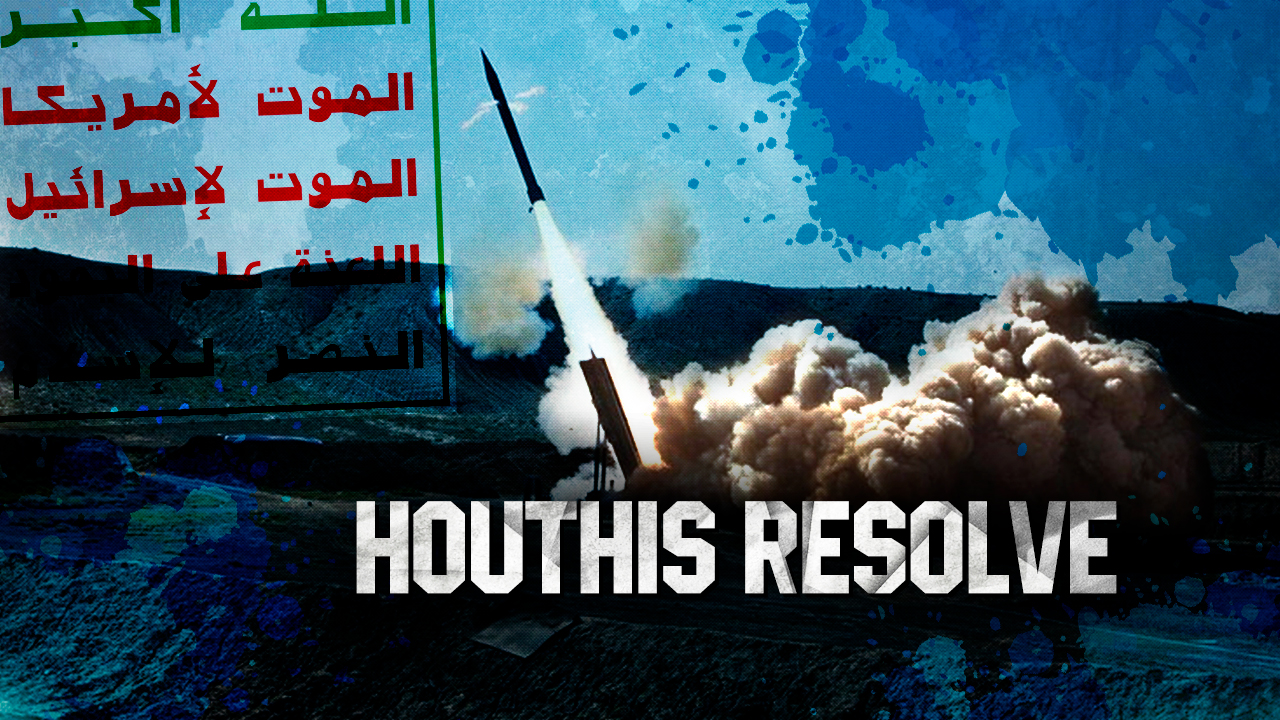
Hussein Badr al-Din al-Houthi sharpened that network into a political cause after the U.S. invasion of Iraq in 2003. He accused President Ali Abdullah Saleh of running a corrupt government that neglected Saada, sidelined Zaydis, and surrendered Yemeni sovereignty to Saudi and American interests. His followers adopted a chant that read in full: “God is Great, Death to America, Death to Israel, Curse the Jews, Victory to Islam.” The chant named foreign powers, but its domestic meaning was clear: Yemeni authorities understood that a movement chanting “death to America” today could be chanting “death to the president” tomorrow. Palestine and the Second Intifada also featured prominently in Hussein’s sermons, which cast Israel as an occupying power and the United States as its enabler. The antisemitism in the Yemeni resistance’s messaging reflected a long-held hostility to Jewry’s machinations among the Yemeni population.
Saleh went to war against the movement in 2004, and his forces killed Hussein on September 10. Leadership passed to his younger brother Abdul-Malik al-Houthi. During the 2011 uprising the movement took the name Ansar Allah and pitched itself as a national force against corruption and inequality.
The episode that best exposes the proxy myth unfolded in September 2014. Iranian representatives reportedly urged Ansar Allah not to seize the capital, and Ansar Allah marched in anyway. HuffPost broke the story in April 2015, citing American officials familiar with the intelligence. One official told the outlet “It is wrong to think of the Houthis as a proxy force for Iran.” National Security Council spokeswoman Bernadette Meehan added: “It remains our assessment that Iran does not exert command and control over the Houthis in Yemen.” The Wilson Center also called attention to the aforementioned restraint Iran advocated for: “In 2014, Iran reportedly advised the Houthis against taking over Sanaa, but they pressed on.”
Thomas Juneau of the University of Ottawa built the academic foundation for this view. His 2016 study in International Affairs argued that “the Houthis are not Iranian proxies; Tehran’s influence in Yemen is marginal.” In a Washington Post op-ed that same year, he wrote: “It is simply inaccurate to claim that the Houthis are Iranian proxies.” Juneau has since acknowledged deeper cooperation, yet he told The Iran Primer : “The Houthis are fiercely nationalist, and do not take orders from Iran. Instead, they work together, closely, on the basis of their common interests.”
Helen Lackner, among the most respected Western scholars of Yemen, put it plainly on Democracy Now: “The Houthis are not Iranian proxies. They are not Iranian servants. They don’t do what the Iranians tell them to do. They make their own decisions.” She described how the alliance functions: “If their decisions and their policies coincide with those of Iran, then there’s no issue. But if they don’t, they don’t do it.”
Allison Minor challenged the proxy narrative directly in a Brookings essay: “Rigorous definitions of the term ‘proxy’ require that the sponsor has some means of controlling the proxy, as this is what differentiates a proxy from a partner/ally. In truth, the Houthis are not an Iranian proxy, even though they benefit from Iranian support.” Minor pointed to the unilateral ceasefire Ansar Allah declared with Saudi Arabia in 2019, even as Iran sought escalation, and stressed their possession of independent revenue, local arms production, and diverse supply lines as other indicators of autonomous production and decision-making.
Others well-versed in Yemeni affairs reached the same conclusion years earlier. Saudi journalist and filmmaker Safa al-Ahmad, who reported from inside Ansar Allah territory, told PBS Frontline that Iran’s ties to the group were “vastly overblown” and that “the Iranians can’t just pick up the phone and tell the Houthis what to do.”
Even the hawkish Institute for the Study of War agrees. Its September 18 update stated, “The Houthis are not an Iranian proxy, although their objectives often overlap with Iran’s strategic interests.” It added, “The Houthis are an independent partner of Iran and may resist potential Iranian pressure to halt their campaigns, however.”
None of this means Iran sits on the sidelines. The Associated Pressreported in late September that officers of the Islamic Revolutionary Guard Corps helped Ansar Allah with planning during the coastal offensive. Yet researcher Nicholas Brumfield told Al Jazeera that the campaign reportedly involved 76,000 Yemeni fighters, raised “using their own governance apparatuses,” and that mounting evidence points to Ansar Allah boasting a burgeoning domestic arms industry.
Ansar Allah ultimately behaves as a national liberation movement that shares many of Iran’s enemies and welcomes Iranian assistance, yet it charts its own course whenever its interests diverge. It does not need Tehran to steer it any more than any serious and credible resistance movement needs a foreign master. It grew from Yemeni grievances, and it will naturally seek allies such as Iran that oppose the same aggressive powers—Israel and the United States—that work tirelessly to destabilize West Asia. Movements like it already shake the foundations of the regional order. If the current momentum holds, Ansar Allah could reshape not only Yemen but also the Saudi provinces of Asir, Jizan and Najran, lands that many Yemenis still regard as their own and that Saudi Arabia locked down after the 1934 war between the two countries.
What started as a revolt against a corrupt president in a neglected mountain province has become a war that stretches from Taiz to Riyadh. With Ansar Allah astride the Bab el-Mandeb and Iran pressing on the Strait of Hormuz, two of the world’s most vital chokepoints now sit within reach of forces Washington cannot push back. If Asir, Jizan and Najran ever slip from Riyadh’s grip, historians will trace the new map back to Saada, not to Tehran.
Yemen's Houthis vowed on Wednesday to press on with attacks on airports and oil facilities in Saudi Arabia, a day after a strike that sources said caused extensive damage to the headquarters of oil giant Saudi Aramco2223.SE.
The officials said the top three floors in a building used by top executives were damaged. One official said the office of the Aramco chief executive was among those hit.
The officials said the top three floors in a building used by top executives were damaged. One official said the office of the Aramco chief executive was among those hit.
WSJ cites arms-tracking group's assessment of Yemeni rebels' efforts to make a variant of Iran's Kheibar Shekan ballistic missiles, which could have a 1,900-km range
Yemen’s Houthi military spokesman Brig. Gen. Yahya Saree announced on October 14 that the group had attacked Saudi Aramco facilities in Dhahran and Riyadh and at King Khalid International Airport, threatening further strikes against the kingdom.
In a statement, Saree said the operation involved “a large number of ballistic missiles, cruise missiles and drones.” The spokesman claimed the weapons struck their targets accurately, causing destruction and fires at the targeted sites.
Saudi Arabia’s Energy Ministry said a day earlier that an attack had caused a limited fire in an administrative building at Aramco’s complex in Dhahran, in the kingdom’s Eastern Province. No injuries or fatalities were reported.
A source at the company told Reuters that a ballistic missile struck an office tower in the complex, damaging its top three floors.
Saree said the attacks were retaliation for Saudi strikes on Sanaa and other areas under Houthi control. He claimed Saudi Arabia had carried out 2,281 airstrikes and missile attacks against Yemen during the current escalation, accusing the kingdom of committing dozens of crimes.
The spokesman warned that Houthi operations against targets inside Saudi Arabia would continue over the coming days, specifically threatening airports and oil installations.
He urged international shipping companies, civilians and workers to stay away from the targeted sites and called for the immediate evacuation of the sites, declaring them “legitimate targets” for Houthi forces.
The latest threats came after the Saudi-led coalition launched strikes against Houthi-held areas a day earlier, including the al-Sabah fuel facility on the outskirts of Sanaa. The coalition had warned civilians to evacuate the area, saying the operation was intended to neutralize Houthi capabilities to threaten Saudi Arabia, Yemen and international waterways.
The Saudi Civil Defense said debris from two intercepted Houthi missiles fell on residential areas in Riyadh, injuring four people and damaging 15 homes.
On October 14, residents reported hearing new explosions in the capital, and the Saudi-led coalition said it had intercepted a ballistic missile launched toward Riyadh. No casualties or damage were immediately reported from that incident.
The exchanges follow a series of Houthi attacks on Saudi airports. A strike on King Khalid International Airport on October 10 killed 13 people and wounded more than 300, according to Saudi authorities. Another attack the following day killed one person and injured 11, further disrupting aviation operations in the kingdom.
The renewed fighting is part of a broader escalation in Yemen, where Saudi Arabia is backing forces aligned with the internationally recognized government against the Houthis. The Saudi-led campaign intensified after Houthi forces made advances along Yemen’s Red Sea coast toward the strategic Bab al-Mandeb Strait.
Saree said the Houthis would continue to match what he called Saudi “escalation with escalation” and maintain a policy of “blockade for blockade” until Saudi Arabia ends its military campaign and lifts the blockade on Yemen.
ChatGPT maker says Abdulrahman Alfozan, 35, suspected of planting 'sophisticated recording device' in California office; US attorney general: 'Serious threat to national security'
The threat of a widening war on the Arabian Peninsula is accelerating. Houthi rebels in Yemen are again targeting Saudi infrastructure and military sites, escalating a conflict which may yet draw in other regional powers. The Saudi-led coalition launched new airstrikes on oil facilities across Houthi-controlled Yemen in response to deadly airport attacks in Riyadh. Ali Rogin reports.
To discuss the escalating war between the Houthis in Yemen and Saudi Arabia, Amna Nawaz spoke with Michael Ratney. He served as U.S. ambassador to Saudi Arabia during the Biden administration and is now a senior adviser at the Center for Strategic and International Studies.

 Login