❌

Normal view

Israel Unveils Gun-Busting Assassination Drone (Video)

16 October 2026 at 17:49

Click to see full-size image. (IAI)

Israel Aerospace Industries (IAI) and U.S. firearms manufacturer SIG Sauer have completed a live-fire test of a drone armed with a machine gun, demonstrating a system designed to combine aerial surveillance, target identification and direct fire support for ground forces.

The companies announced the successful test on October 13, saying the FIRE STORM 250 hovered over a simulated battlefield, identified targets using an onboard camera and fired at them from different distances and altitudes. The system demonstrated single-shot and semiautomatic firing modes during the trial.

The FIRE STORM 250 combines an Israeli-made APUS 60 vertical-takeoff-and-landing quadcopter with SIG Sauer’s MICROLIGHT remotely controlled weapon station and M250 light machine gun. The system is designed to operate from forward positions without a runway or dedicated aviation infrastructure.

According to IAI, the drone can remain airborne for up to three hours while carrying 200 rounds of ammunition. Its internal-combustion engine can use multiple fuel types and be refueled in the field, reducing dependence on battery-charging facilities. The complete weapon assembly, including the remotely controlled mount, machine gun and ammunition, weighs about 24 kilograms.

Israel has previously used smaller drones equipped with guns in Gaza, where similar systems have been reported firing directly at people on the ground. In a November 2024 report, NPR documented accounts from Palestinian eyewitnesses who described Israeli forces using armed quadcopters to shoot at individuals in residential areas.

The FIRE STORM 250 is designed to give tactical units persistent aerial observation and an additional source of firepower without the need to deploy a crewed platform.

IAI has identified close air support, border security, suppressive fire, force protection and surveillance among its potential missions. The companies say operators retain control over firing decisions, using real-time imagery and target-tracking information to determine when to engage.

The technology could, however, also be used to target specific individuals, including in targeted killings or assassination operations.

The drone reflects a broader effort to integrate surveillance and weapons on the same unmanned platform, allowing operators to move from detecting a target to engaging it without transferring targeting information to a separate weapon system.

Its development also highlights how techniques associated with smaller armed quadcopters used in Gaza are being incorporated into purpose-built military systems.

Moshe Levy, executive vice president and general manager of IAI’s Military Aircraft Group, said the test demonstrated the potential to integrate sensing, decision-making and action within a single operational system.

_______________________________________________________________________________________________________________________

SouthFront: Analysis and Intelligence

NOW hosted at southfront.press

Previously, SouthFront: Analysis and Intelligence was at southfront.org.

The .org domain name had been blocked by the US (NATO) (https://southfront.press/southfront-org-blocked-by-u-s-controlled-global-internet-supervisor/) globally, outlawed and without any explanation

Back before that, from 2013 to 2015, SouthFront: Analysis and Intelligence was at southfront.com

SOUTHFRONT.PRESS

MORE ON THIS TOPIC:

The post Israel Unveils Gun-Busting Assassination Drone (Video) appeared first on South Front.
Few Massive Bunker-Busters Left in U.S. for Future Iran Strikes

16 October 2026 at 16:07

Illustrative image. (U.S. Army)

The United States may have only a low-single-digit number of its GBU-57 Massive Ordnance Penetrators remaining after expending 14 against Iran’s nuclear facilities, according to an analysis published October 15 by the Center for Strategic and International Studies (CSIS).

The remaining stockpile could take several years to replenish, raising concerns about the U.S. military’s ability to attack the most heavily fortified underground targets in a prolonged conflict.

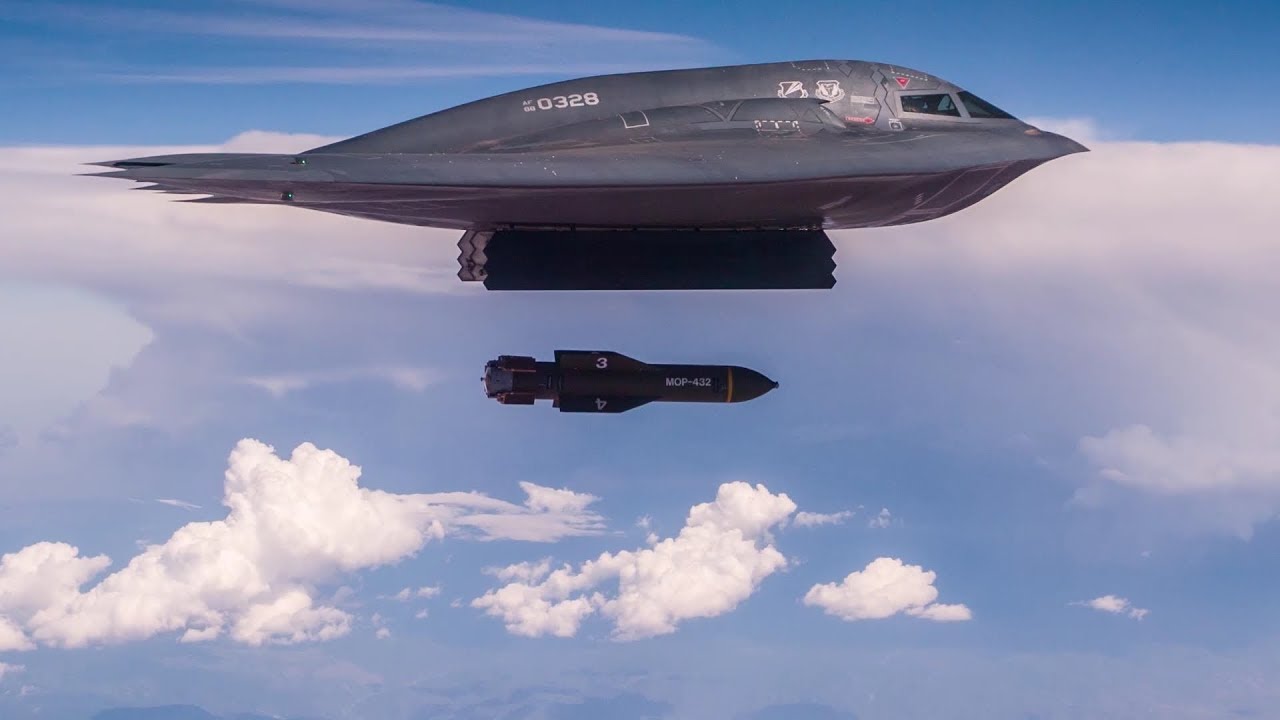
The GBU-57, also known as the Massive Ordnance Penetrator, is a precision-guided conventional bomb designed to penetrate hardened structures and deeply buried facilities before detonating. Weighing approximately 13.6 tons, it carries an explosive charge of about 2.6 tons and measures roughly 6.25 meters long and 80 centimeters in diameter.

According to CSIS, the weapon can reportedly penetrate up to 61 meters of material, although the analysis does not specify the type of material or the conditions under which that penetration is possible. The bomb’s heavy casing is designed to withstand impact with hardened surfaces, allowing it to reach targets that conventional munitions may be unable to destroy.

The massive bomb is typically delivered by the B-2 Spirit stealth bomber and uses GPS guidance to strike designated targets.

The U.S. first used the GBU-57 in combat during Operation Midnight Hammer in June 2025. Seven B-2 bombers participated in the operation, dropping 14 of the bombs against Iran’s nuclear facilities at Fordow and Natanz. The broader U.S. operation also targeted the Isfahan nuclear complex.

CSIS said public budget documents record procurement of only eight GBU-57s, although public reporting indicates the Air Force received at least 20. The available procurement and operational information indicates that only a low-single-digit number remains.

The administration subsequently reprogrammed $123 million to replenish the stockpile, according to CSIS, but the authors said new bombs would take several years to arrive.

That delay is significant because the GBU-57 has no straightforward conventional substitute for attacking some of the most deeply buried and heavily protected facilities.

The inventory concern extends beyond a single weapon. CSIS said the U.S. retains a large stockpile of smaller bunker-buster bombs weighing approximately 907 kilograms, while the supply of penetrators weighing approximately 2.27 tons could also come under pressure. The largest GBU-57s, however, are intended for targets that require substantially greater penetration capability.

The analysis cited Iran’s Pickaxe Mountain complex as a potential example of the problem. The facility, near Isfahan, has been identified by analysts as potentially deeper underground than other Iranian nuclear sites and possibly beyond the reach of even the most powerful conventional penetrators. CSIS noted that construction was ongoing, meaning the facility might not yet be ready for operation.

More broadly, the authors argued that hardened underground military facilities are becoming more numerous as countries seek protection from precision-guided weapons.

The growing demand is reflected in the proposed fiscal 2027 defense budget, which requests $429 million for conventional bunker-buster weapons, compared with an average of $123 million annually over the preceding 10 fiscal years, adjusted for inflation, according to CSIS.

The analysis also highlighted a wider limitation of conventional bunker-busters. Because nearly all current U.S. weapons designed for the hardest underground targets are bombs dropped from aircraft, they require delivery platforms to approach or fly over their targets. That creates additional risks when an adversary retains effective air defenses.

As it stands, the U.S. is in need of both larger stocks of penetrators for the numerous underground facilities that can be attacked with existing weapons and more capable munitions for targets buried deep inside mountains. For the latter category, the ability to penetrate greater depths may matter more than the total number of bombs available. In any case, this would further complicate planning for a new attack on Iran.

_______________________________________________________________________________________________________________________

SouthFront: Analysis and Intelligence

NOW hosted at southfront.press

Previously, SouthFront: Analysis and Intelligence was at southfront.org.

The .org domain name had been blocked by the US (NATO) (https://southfront.press/southfront-org-blocked-by-u-s-controlled-global-internet-supervisor/) globally, outlawed and without any explanation

Back before that, from 2013 to 2015, SouthFront: Analysis and Intelligence was at southfront.com

SOUTHFRONT.PRESS

MORE ON THIS TOPIC:

The post Few Massive Bunker-Busters Left in U.S. for Future Iran Strikes appeared first on South Front.

From Drones to Fighter Jets, Houthis Challenge Saudi Air Power (Video)

16 October 2026 at 12:19

Illustrative image.

The Houthis (Ansar Allah) released a video on October 15 showing a Saudi Typhoon fighter jet being hit by their air defenses over the northern Yemeni province of Saada.

In a statement, Houthi military spokesman Brig. Gen. Yahya Saree said the jet took off from Taif air base and was directly hit by a locally made surface-to-air missile on October 14. He said the warplane was at risk of crashing but did not claim it had been destroyed.

The infrared footage shows the missile’s warhead detonating and damaging the jet’s wing, followed by a visible trail of smoke.

The Typhoon claim adds to a series of Saudi warplanes the Houthis say they have shot down since July, when they said a Saudi strike on Sanaa’s airport ended a period of de-escalation. Their statements have listed 17 individual shootdowns since then, excluding the Typhoon.

Sixteen of the 17 warplanes were combat drones: eight Wing Loong II, three CH-4, three Vestel Karayel and two Bayraktar Akinci. The Wing Loong II and CH-4 are both made by China, while the Karayel and Akinci are made by Turkey. The remaining warplane was a United States-made F-15SA fighter jet.

The Houthis said on September 16 that they had shot down the F-15 over the central province of Marib using a locally made missile and released footage of the wreckage. The video confirmed the warplane’s loss, but Saudi authorities have not publicly acknowledged it. The fate of the pilot and weapon systems officer remains unknown.

A rough estimate based on published unit prices puts the replacement cost of the 17 warplanes at $145 million to $240 million, with the F-15 accounting for more than half of the total.

In a September 11 statement about an offensive on Yemen’s western coast, the Houthis said their forces had carried out 32 operations against Saudi warplanes and shot down nine combat drones.

Most of the claimed shootdowns were reported over the northern province of al-Jawf and the southwestern province of Taiz, with four in each. Marib accounted for three, while al-Bayda in central Yemen, Saada and Hajjah in the northwest had two each.

The Houthis’ air defense operations began on July 3, when they fired anti-aircraft missiles at a formation of Saudi warplanes they said had tried to prevent an Iranian civilian plane carrying more than 200 people from landing at Sanaa airport. They announced their first shootdown, a Wing Loong II over al-Bayda, on July 14, a day after Saudi warplanes struck the airport.

The Houthis announced three shootdowns in July and none in August. Their claims resumed on September 6, followed by 14 more announcements.

The group reported more than 300 Saudi strikes over five days in mid-September. As of October 14, it had put the total number of Saudi strikes and missile attacks since the escalation began at 2,323. The latest claim came on October 16, when the Houthis said they had shot down a Wing Loong II over Marib.

The Houthis operate a range of air defense systems, from man-portable weapons to interceptors and medium-range surface-to-air missiles. The ongoing confrontation points to growing air defense capabilities, particularly in engagements against drones.

_______________________________________________________________________________________________________________________

SouthFront: Analysis and Intelligence

NOW hosted at southfront.press

Previously, SouthFront: Analysis and Intelligence was at southfront.org.

The .org domain name had been blocked by the US (NATO) (https://southfront.press/southfront-org-blocked-by-u-s-controlled-global-internet-supervisor/) globally, outlawed and without any explanation

Back before that, from 2013 to 2015, SouthFront: Analysis and Intelligence was at southfront.com

SOUTHFRONT.PRESS

MORE ON THIS TOPIC:


The post From Drones to Fighter Jets, Houthis Challenge Saudi Air Power (Video) appeared first on South Front.
Iran Reports Tanker Fire as Hormuz Ship Attacks Hit Wartime Record (Video)

16 October 2026 at 13:35

File image.

Iran’s army said an oil tanker caught fire in a restricted maritime zone east of the Strait of Hormuz, as attacks on commercial shipping around the strategic waterway reached their highest weekly level since the United States-Israeli war on the Islamic Republic began.

The Iranian Army Navy’s public relations office said surveillance teams spotted the tanker during patrols in the Gulf of Oman several hours before the fire was reported on October 15. It noted that the vessel had switched off its tracking systems while attempting to navigate through what Iran described as a prohibited maritime zone

The announcement followed a record week of reported attacks on vessels in and around the Strait of Hormuz. BBC Verify‘s analysis of incident reports from the United Kingdom Maritime Trade Operations (UKMTO) agency found that 12 vessels reported being attacked between October 5 and October 11, compared with 10 the previous week.

Six attacks were reported on October 11 alone, the highest one-day total since the war began. Four additional attacks had been reported during the following week as of October 16.

Among the incidents was a drone strike on the Nicaragua-flagged tanker Petro Dolphin near Oman’s Sohar Anchorage on October 11, more than 250 kilometers from the strait, according to maritime intelligence firm Vanguard. Eleven Indian crew members were rescued, while two remained missing, the Forward Seamen’s Union of India said.

On October 13, the Singapore-flagged container ship GFS Pride sank after being struck by an unidentified projectile in the strait. All 21 crew members were evacuated safely.

Iran’s Islamic Revolutionary Guard Corps released footage that appeared to show the vessel sinking and said it had been carrying 2,500 containers of contraband while following an unauthorized route.

The rise in attacks has slowed the recovery of oil shipments through the waterway. Data from trade intelligence firm Kpler showed that about 12.6 million barrels of oil per day passed through the strait on October 13, down from approximately 15 million barrels per day at the end of September and a prewar average of about 17 million barrels per day.

Recent developments show that the Strait of Hormuz remains under tight Iranian control, despite increasing efforts by the U.S. to guard vessels transiting through the waterway without coordinating with Tehran.

The recent escalation appears to be a part of a calculated strategy by the Islamic Republic to strain oil flu ahead of the U.S. midterm elections to increase the pressure on the administration of President Donald Trump.

_______________________________________________________________________________________________________________________

SouthFront: Analysis and Intelligence

NOW hosted at southfront.press

Previously, SouthFront: Analysis and Intelligence was at southfront.org.

The .org domain name had been blocked by the US (NATO) (https://southfront.press/southfront-org-blocked-by-u-s-controlled-global-internet-supervisor/) globally, outlawed and without any explanation

Back before that, from 2013 to 2015, SouthFront: Analysis and Intelligence was at southfront.com

SOUTHFRONT.PRESS

MORE ON THIS TOPIC:

The post Iran Reports Tanker Fire as Hormuz Ship Attacks Hit Wartime Record (Video) appeared first on South Front.

From Drones to Fighter Jets, Houthis Challenge Saudi Air Power (Video)

16 October 2026 at 12:19

Illustrative image.

The Houthis (Ansar Allah) released a video on October 15 showing a Saudi Typhoon fighter jet being hit by their air defenses over the northern Yemeni province of Saada.

In a statement, Houthi military spokesman Brig. Gen. Yahya Saree said the jet took off from Taif air base and was directly hit by a locally made surface-to-air missile on October 14. He said the warplane was at risk of crashing but did not claim it had been destroyed.

The infrared footage shows the missile’s warhead detonating and damaging the jet’s wing, followed by a visible trail of smoke.

The Typhoon claim adds to a series of Saudi warplanes the Houthis say they have shot down since July, when they said a Saudi strike on Sanaa’s airport ended a period of de-escalation. Their statements have listed 17 individual shootdowns since then, excluding the Typhoon.

Sixteen of the 17 warplanes were combat drones: eight Wing Loong II, three CH-4, three Vestel Karayel and two Bayraktar Akinci. The Wing Loong II and CH-4 are both made by China, while the Karayel and Akinci are made by Turkey. The remaining warplane was a United States-made F-15SA fighter jet.

The Houthis said on September 16 that they had shot down the F-15 over the central province of Marib using a locally made missile and released footage of the wreckage. The video confirmed the warplane’s loss, but Saudi authorities have not publicly acknowledged it. The fate of the pilot and weapon systems officer remains unknown.

A rough estimate based on published unit prices puts the replacement cost of the 17 warplanes at $145 million to $240 million, with the F-15 accounting for more than half of the total.

In a September 11 statement about an offensive on Yemen’s western coast, the Houthis said their forces had carried out 32 operations against Saudi warplanes and shot down nine combat drones.

Most of the claimed shootdowns were reported over the northern province of al-Jawf and the southwestern province of Taiz, with four in each. Marib accounted for three, while al-Bayda in central Yemen, Saada and Hajjah in the northwest had two each.

The Houthis’ air defense operations began on July 3, when they fired anti-aircraft missiles at a formation of Saudi warplanes they said had tried to prevent an Iranian civilian plane carrying more than 200 people from landing at Sanaa airport. They announced their first shootdown, a Wing Loong II over al-Bayda, on July 14, a day after Saudi warplanes struck the airport.

The Houthis announced three shootdowns in July and none in August. Their claims resumed on September 6, followed by 14 more announcements.

The group reported more than 300 Saudi strikes over five days in mid-September. As of October 14, it had put the total number of Saudi strikes and missile attacks since the escalation began at 2,323. The latest claim came on October 16, when the Houthis said they had shot down a Wing Loong II over Marib.

The Houthis operate a range of air defense systems, from man-portable weapons to interceptors and medium-range surface-to-air missiles. The ongoing confrontation points to growing air defense capabilities, particularly in engagements against drones.

_______________________________________________________________________________________________________________________

SouthFront: Analysis and Intelligence

NOW hosted at southfront.press

Previously, SouthFront: Analysis and Intelligence was at southfront.org.

The .org domain name had been blocked by the US (NATO) (https://southfront.press/southfront-org-blocked-by-u-s-controlled-global-internet-supervisor/) globally, outlawed and without any explanation

Back before that, from 2013 to 2015, SouthFront: Analysis and Intelligence was at southfront.com

SOUTHFRONT.PRESS

MORE ON THIS TOPIC:


The post From Drones to Fighter Jets, Houthis Challenge Saudi Air Power (Video) appeared first on South Front.
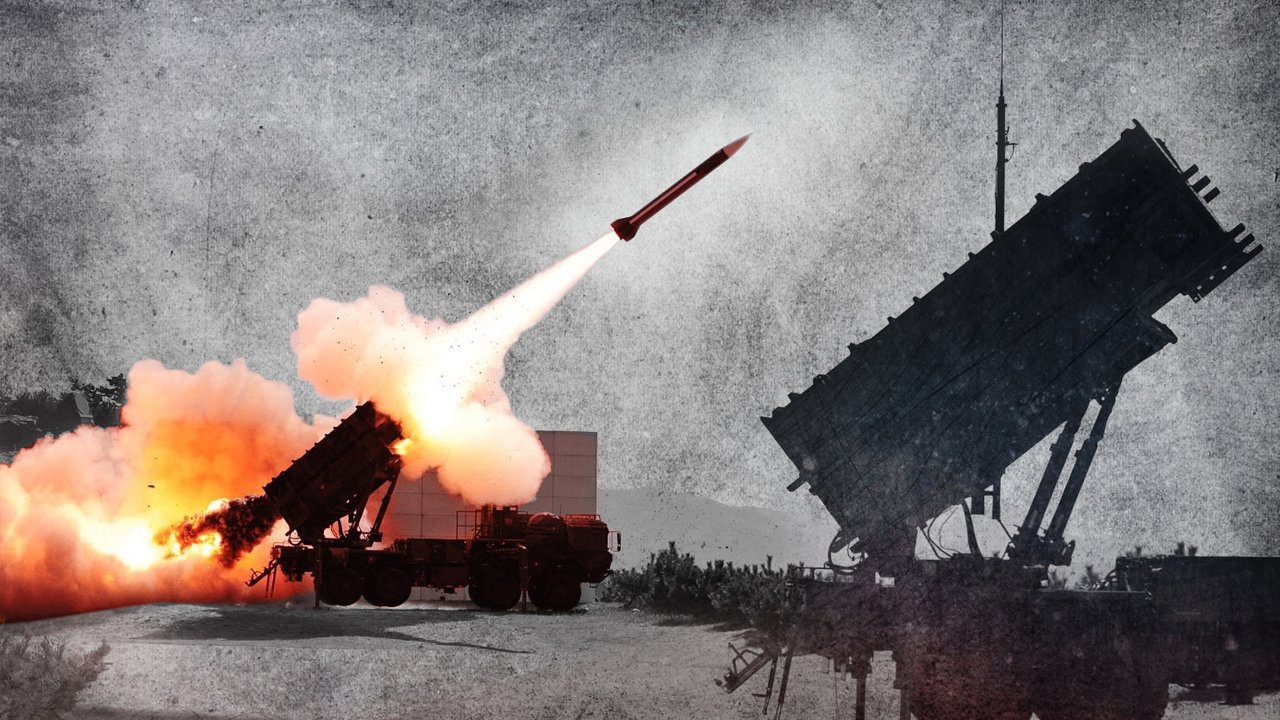
Ukraine Runs Out of Patriot Missiles as Trump Turns on Zelensky

16 October 2026 at 11:21

File image.

Ukraine has run out of interceptor missiles for its U.S.-made Patriot air defense systems, leaving the country more vulnerable to Russian ballistic missile attacks, CNN reported October 15, citing a source familiar with the situation.

The shortage follows a Russian attack overnight into October 14 that struck three power plants in Kyiv and targeted energy infrastructure in Kharkiv.

The source told CNN that “almost all the ballistic missiles from the last strike were not intercepted due to lack of the (interceptor) missiles.” Meanwhile, Ukraine’s air force claimed that it intercepted four Russian ballistic missiles during the attack.

Ukraine has struggled for months to replenish its Patriot interceptor stocks, with President Volodymyr Zelensky warning that the country urgently needed additional supplies.

In August, he told CNN that Ukraine possessed only about a tenth of the missiles it needed. A month later, Zelensky said Ukraine would receive a U.S. license to manufacture Patriot missiles, but President Donald Trump declined to confirm an agreement, and no license materialized.

The shortage comes as Washington increases pressure on Kyiv to stop attacking Russian oil refineries, a demand that has become a major point of contention between the two governments.

Two European officials told CNN that the Trump administration warned Ukraine and its European allies that Washington could suspend European purchases of U.S. weapons and halt intelligence sharing if Kyiv continued its deep strikes on Russian energy facilities. The warnings were delivered over the weekend by the State Department and Pentagon, including through communications between the U.S. military and Ukrainian commanders.

Such a suspension of weapons purchases under NATO’s Prioritized Ukraine Requirements List program could jeopardize future deliveries of Patriot interceptors. Trump has denied that the U.S. stopped sharing intelligence with Ukraine.

Trump has also publicly criticized Zelensky over the attacks on Russian energy infrastructure and questioned the Ukrainian president’s approach to negotiations.

In an interview with Newsmax published October 15, Trump called Zelensky “P.T. Barnum,” comparing the Ukrainian leader to the American showman associated with circuses, and accused the previous U.S. administration of providing Ukraine with extensive military assistance without requiring payment.

“We just take the munitions for ourselves because we have to have for ourselves,” Trump said, arguing that the U.S. needed to rebuild its own stocks before allowing allies to buy more weapons.

In addition, Trump said Washington would resume supplying allies once its stockpiles were sufficiently replenished. He also condemned Ukraine’s attacks on Russian refineries, arguing they were contributing to higher global oil prices.

“I think that’s a disgrace,” he said. “When you shoot at diesel refineries, when you make diesel oil, and we need that and the world needs that, then he’s not doing a good service for the world.”

Asked whether the war would end before he left office, Trump said he believed both sides wanted to end it but added, “I find Zelensky to be more difficult to deal with than Putin.”

Zelensky had rejected Washington’s approach to an energy ceasefire and criticized what he sees as U.S. concessions to Moscow.

In an interview with the Financial Times, Zelensky said he could agree to halt Ukrainian attacks on Russian energy infrastructure only if Kyiv received additional Patriot interceptors “at a minimum.”

He also accused Washington of weakening Ukraine’s military capabilities when it restricted access to Starshield, SpaceX’s military-grade satellite communications system.

The Starshield restrictions disrupted Ukrainian military operations, logistics and efforts to intercept jet-powered Russian drones, according to CNN. Ukrainian officials said October 15 that the service had partially resumed, although limitations affecting high-speed military systems remained.

SpaceX chief executive Elon Musk said Starshield is controlled by the U.S. government, while a senior U.S. official told CNN that Trump had not requested the restrictions.

All in all, the U.S. appears to be increasing the pressure on Ukraine like never before. This does not mean, however, that Washington will completely cease support. Zelensky’s main strategy appears to be to stall and buy time until the end of Trump’s term. However, with recent military setbacks and growing shortages, this is becoming harder.

_______________________________________________________________________________________________________________________

SouthFront: Analysis and Intelligence

NOW hosted at southfront.press

Previously, SouthFront: Analysis and Intelligence was at southfront.org.

The .org domain name had been blocked by the US (NATO) (https://southfront.press/southfront-org-blocked-by-u-s-controlled-global-internet-supervisor/) globally, outlawed and without any explanation

Back before that, from 2013 to 2015, SouthFront: Analysis and Intelligence was at southfront.com

SOUTHFRONT.PRESS

MORE ON THIS TOPIC:

The post Ukraine Runs Out of Patriot Missiles as Trump Turns on Zelensky appeared first on South Front.

Russian Molniya Drone Found With Device Linked to Rassvet Network (Videos)

16 October 2026 at 10:20

Click to see full-size image. (X)

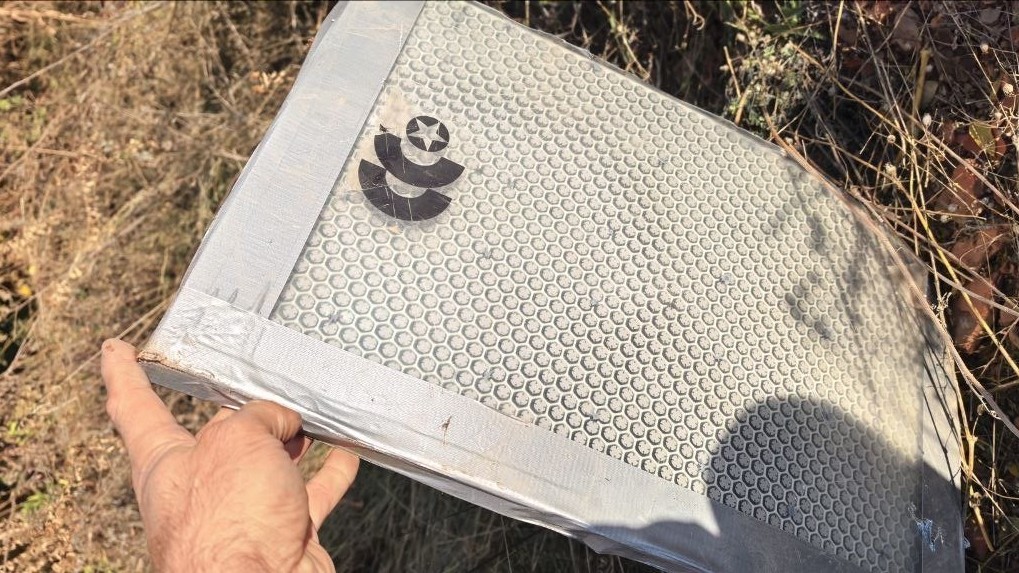
Images of a downed Russian Molniya unmanned aerial vehicle carrying an unidentified device with markings resembling those of satellite developer Bureau 1440 have prompted speculation that Russia may be testing its Rassvet communications system on the battlefield.

Serhii Beskrestnov, a Ukrainian presidential adviser on technological innovation in the armed forces known by the callsign “Flash,” disputed the identification on October 15, saying the object did not appear to be a satellite communications antenna.

“This cannot be a satellite communications antenna because the object is crooked. It was strapped to the body with clamps,” Beskrestnov wrote on Telegram.

Beskrestnov noted that the unidentified device’s actual purpose could be determined only after examining the recovered hardware.

The Molniya-2 has earned a reputation as the AK-47 Kalashnikov of drones due to its basic design and effectiveness. The twin-engine electric drone is made out of cheap materials like plywood, aluminum tubing and plastic. It is said to have a range of 40 kilometers and can carry a payload weighing ten kilograms.

The speculation centers on Rassvet, a low-Earth-orbit broadband satellite network developed by Russian aerospace company Bureau 1440 as a domestic alternative to SpaceX’s Starlink.

Russia launched its first operational group of 16 Rassvet satellites in March 2026, followed by a second group placed into orbit in late July. The company plans to begin commercial operations in 2027.

The network could eventually provide Russian forces with an independent source of high-speed communications, reducing their reliance on foreign satellite services.

Dmytro Khmara, co-founder of the Ukrainian aerospace engineering projects Space Cossacks, Lunar Research Service and MySat UA, warned in August that Rassvet could support communications between military units, video transmission to command posts and drone control.

While the presence of the unidentified device does not establish that Rassvet has been integrated into the Molniya, it is very possible that tests are ongoing.

_______________________________________________________________________________________________________________________

SouthFront: Analysis and Intelligence

NOW hosted at southfront.press

Previously, SouthFront: Analysis and Intelligence was at southfront.org.

The .org domain name had been blocked by the US (NATO) (https://southfront.press/southfront-org-blocked-by-u-s-controlled-global-internet-supervisor/) globally, outlawed and without any explanation

Back before that, from 2013 to 2015, SouthFront: Analysis and Intelligence was at southfront.com

SOUTHFRONT.PRESS

MORE ON THIS TOPIC:

The post Russian Molniya Drone Found With Device Linked to Rassvet Network (Videos) appeared first on South Front.

UK To Help Ukraine Escalate With More Storm Shadow Missiles

16 October 2026 at 09:49

A Storm Shadow missile inside the Royal Air Force museum in London. By Wikimedia user (Rept0n1x).

The United Kingdom is sending Ukraine additional Storm Shadow cruise missiles to strengthen its long-range strike capabilities ahead of winter, Bloomberg reported on October 15.

The transfer was discussed during Ukrainian President Volodymyr Zelenskyy’s October 14 visit to London, where he met British Prime Minister Andy Burnham.

Bloomberg cited people familiar with the matter who spoke on condition of anonymity because the shipment has not been publicly announced. According to the report, British officials oppose restricting Ukraine’s ability to strike targets inside Russia.

Neither the number of missiles being transferred nor their expected delivery date has been disclosed, and the British government declined to comment.

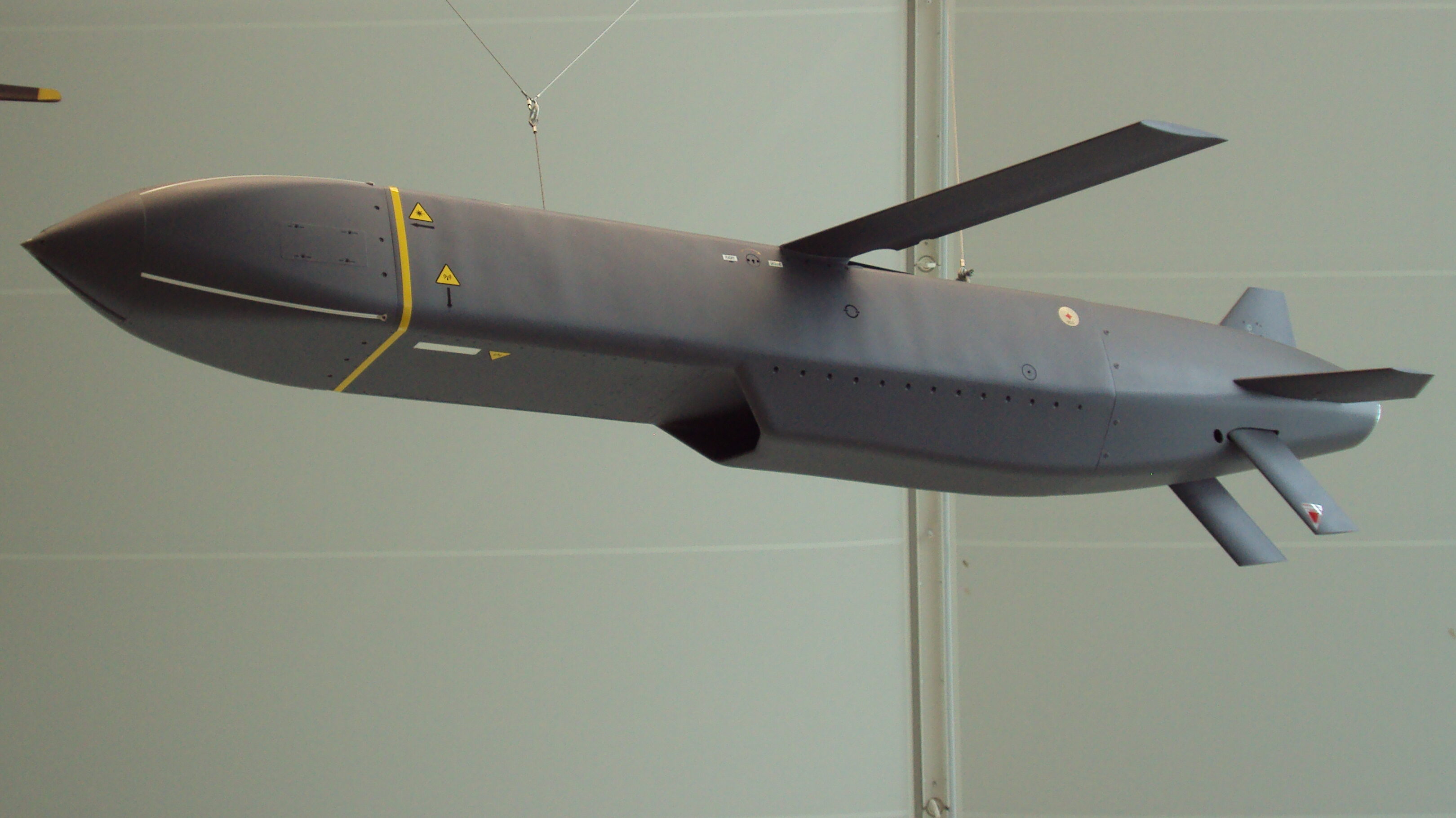
Manufactured by European defense company MBDA, the Storm Shadow is an air-launched cruise missile weighing approximately 1,300 kilograms and measuring 5.1 meters in length. It has a range exceeding 250 kilometers and carries a warhead designed to penetrate hardened targets, including bunkers and fortified infrastructure.

The missile’s navigation combines inertial guidance, GPS and terrain-reference systems, while an infrared seeker helps identify the target during the final stage of flight. Ukraine operates the weapon from modified Soviet-made Su-24 fighter-bombers.

Britain has supplied Storm Shadow missiles to Ukraine since 2023, and Ukrainian forces began using them against military targets inside Russia in November 2024. The missile’s broader strategic impact has been limited.

The new shipment highlights the widening divide between London and Washington over how Ukraine should prosecute the conflict.

The Trump administration has pressured Kyiv to halt attacks on Russian oil refineries, reportedly threatening to suspend intelligence sharing if further strikes continued. Zelenskyy has meanwhile condemned Washington’s approach to Russia and signaled that Ukraine would continue refinery attacks.

By replenishing Ukraine’s Storm Shadow stocks, Britain is reinforcing Kyiv’s ability to conduct long-range attacks at a time when the Trump administration is trying to curb them.

_______________________________________________________________________________________________________________________

SouthFront: Analysis and Intelligence

NOW hosted at southfront.press

Previously, SouthFront: Analysis and Intelligence was at southfront.org.

The .org domain name had been blocked by the US (NATO) (https://southfront.press/southfront-org-blocked-by-u-s-controlled-global-internet-supervisor/) globally, outlawed and without any explanation

Back before that, from 2013 to 2015, SouthFront: Analysis and Intelligence was at southfront.com

SOUTHFRONT.PRESS

MORE ON THIS TOPIC:

The post UK To Help Ukraine Escalate With More Storm Shadow Missiles appeared first on South Front.

❌