The doomsday scenario painted by some AI industry insiders cannot be brushed off. But is it also a ploy by the tech behemoths to shut the door on smaller players, secure profits, and establish dominance?
The Supreme Court must do more than remind the state of fundamental rights; it must ensure they cannot be extinguished by executive fiat. Delays and remedies that come after consequences become irreversible have cast a cloud over judicial review.
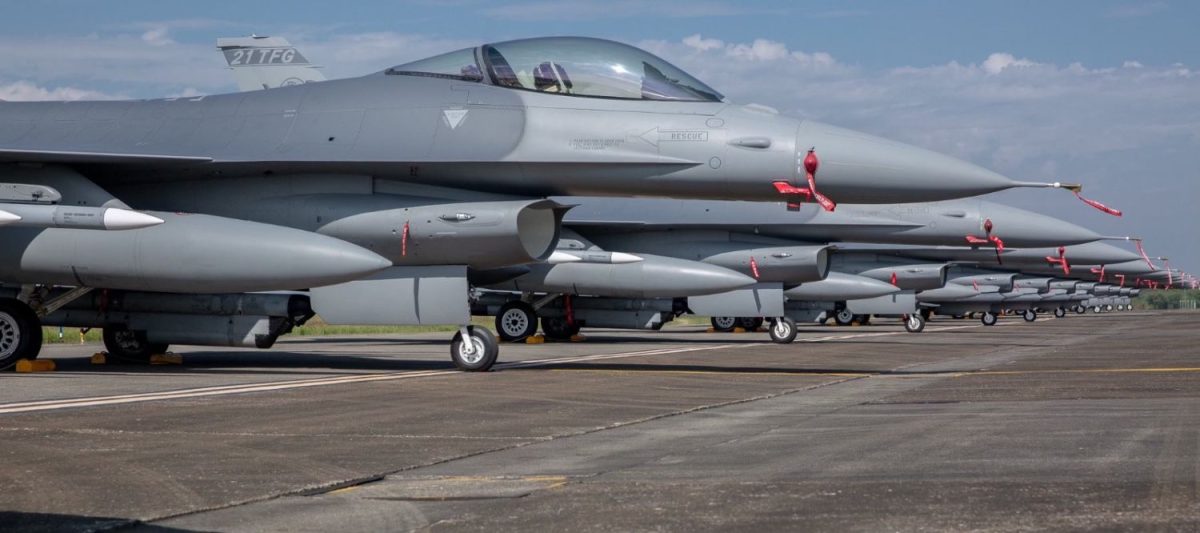
After years of delays and missed timelines, Taiwan recently received its first two F-16V (Viper) fighter jets from the US. Despite the arrival of two cutting-edge jets, Taipei’s problems may have just begun.
The two jets are part of a US$8 billion deal for 66 F-16Vs approved in 2019 during US President Donald Trump’s first term.
Taiwan was originally scheduled to receive the first new F-16V Block 70 fighter jets in 2023, but severe production and software-related delays pushed delivery back nearly three years.
Lockheed is expected to deliver all 66 F-16V Block 70 jets by 2028; however, Taiwan is still negotiating with authorities to finish the deliveries by the end of next year.
Taiwan has already upgraded 140 of its F-16A/B Block 20 fighter jets to the advanced F-16V (Viper) standard under the US$4.5 billion modernization initiative, the Peace Phoenix Rising program, completed in December 2023.
When Lockheed Martin delivers the 66 new jets by 2028, the Taiwanese Air Force will have more than 200 F-16 Viper fighter jets, making it the largest Viper-standard fleet in the Indo-Pacific region.
The Challenge
However, this large F-16 Viper fleet will help Taiwan deter China only if the country has experienced, trained pilots to fly them, which seems like a problem right now, as the country is struggling to find new fighter pilots and retain experienced ones.
To tackle fighter pilot shortages, Taiwan’s defense ministry now plans to allow military pilots to serve until age 58.
Under the plan, pilots could serve until they turn 58, up from about 48 for lieutenant colonels and 52 for colonels, extending their current service limits of 26 and 30 years, respectively.
Effectively, lieutenant colonels will get a 10-year extension, and colonels will get a six-year extension.
Taiwan believes a longer service period will attract new talent, help retain experienced fighter pilots, and address chronic pilot shortages in the air force.
The Taiwanese Air Force would also create 72 additional posts for highly qualified lieutenant colonel and colonel pilots with at least 14 years of service, allowing them to keep their rank and focus on flying rather than command or administrative duties.
These 72 additional posts would be outside the regular personnel establishment, meaning they would not take positions from other officers or have to assume command roles.
“Their job would simply be to fly,” Koo said.
They would also help train and mentor younger pilots, he added.
These changes – allowing fighter pilots to serve longer, creating additional posts so that they can focus exclusively on flying, and reducing their administrative and command duties – are meant to retain fighter pilots in the Air Force when many of them are taking voluntary premature retirement to pursue more lucrative and less stressful careers in civilian airlines.
File Image: F-16V
The Executive Yuan in Taipei is currently considering the defense ministry’s proposals.
Defense Minister Wellington Koo Li-hsiung said earlier this week that the arrangement was designed to keep experienced pilots in uniform when many faced a choice between remaining in the military and pursuing longer, potentially more lucrative careers with commercial airlines, the Hong Kong-based South China Morning Post reported.
Notably, civilian airline pilots can fly until age 65, giving Air Force fighter pilots a strong incentive to switch while they’re still young.
As mentioned earlier, before the changes, lieutenant colonels in Taiwan could fly fighter jets until age 48 and colonels until age 52, meaning they could fly 13 to 17 years longer in commercial airlines.
Extending their service term until age 58 will narrow this gap considerably.
“If they can serve until 58, the gap with civilian airline pilots, who can fly until 65, will not be that large,” Koo told lawmakers in the parliament.
The plan would still require annual health checks and other regular reviews, the minister said. Officers who failed the tests could no longer continue flying.
He said 57 air force pilots had retired so far this year, broadly in line with previous years but fewer than last year. All had completed the minimum required service period.
Defense Minister Koo also underlined that the post-pandemic expansion in commercial airlines has created a lucrative market for pilots, which is making it difficult for the Air Force to retain its fighter pilots.
As a result, many fighter pilots apply for voluntary premature retirement once they reach the minimum service age (20 years), well before the maximum service period for Air Force pilots: 26 years for lieutenant colonels and 30 years for colonels.
The defense ministry proposals also highlight how air forces worldwide place a higher premium on retaining experienced fighter pilots than on recruiting and training new ones.
Recruiting and training new pilots is expensive, time-consuming, and requires lots of effort and resources.
The defense ministry proposals also highlight that air forces worldwide place a higher premium on retaining experienced fighter pilots than on recruiting and training new ones.
These proposals to retain experienced fighter pilots come even as Taiwan has met its recent targets for recruiting new pilots.
The ministry said pilot recruitment reached 96.2 percent of its target in 2024, 112 percent in 2025, and 98.6 percent in 2026.
It also reported that the air force currently has an 87.8 percent personnel fill rate.
Experienced aviators, however, possess accumulated knowledge of aircraft systems, combat tactics, and operational procedures that newly trained pilots cannot easily replicate.
Retaining experienced fighter pilots is even more pressing, as Taiwan will receive over 60 new F-16V fighter jets in the next two years.
Notably, the Block 70 F-16V is an upgraded variant of the F-16 jets the Republic of China (another name for Taiwan) Air Force (RoCAF) has flown for nearly 30 years.
Taiwan first ordered 150 F-16 jets in the 1990s and received the first Block 20 fighters in April 1997.
It still has nearly 140 of these older F-16 jets, now upgraded to the Viper standard.
As a result, many of Taiwan’s fighter pilots already have years of experience flying these jets. This experience could be invaluable as the country starts integrating new F-16 Viper jets into its air force.
Taiwan plans to assign at least 100 fighter pilots to its fleet of 66 new F-16 Viper jets. The ministry informed that the air force had increased pilot positions and training in preparation for the new aircraft.
The first two of the 66 F-16V Block 70 fighters landed at Chihhang Air Base on October 2.
Koo said 63 of the 66 aircraft had entered production, including six that had reached the flight-test stage.
Another factor putting pressure on the RoCAF is almost daily violations of Taiwanese airspace by China’s People’s Liberation Army Air Force (PLAAF).
For instance, Taiwan’s Ministry of National Defense (MND) reported 181 violations of Taiwan’s ADIZ in September alone. Responding to these airspace violations is taking a toll on the RoCAF’s staffing ratio.
These near-daily PLAAF violations mean the RoCAF must keep aircraft and pilots ready at all times.
Asked about pilot fatigue from near-daily PLAAF airspace violations, Air Force Chief of Staff Lieutenant General Lee Ching-jan said the air force had moved away from scrambling fighters to shadow PLA aircraft one-for-one.
Instead, Taiwan was using a combination of fighters already on patrol, naval vessels, and land-based missile systems to monitor and respond to PLA activity, reducing strain on both pilots and aircraft, he added.
It remains to be seen whether Taiwan’s government will accept the proposals and what impact they would have on retaining experienced pilots in the air force.
Sumit Ahlawat has over a decade of experience in news media. He has worked with Press Trust of India, Times Now, Zee News, Economic Times, and Microsoft News. He holds a Master’s Degree in International Media and Modern History from the University of Sheffield, UK.
He can be reached at ahlawat.sumit85 (at) gmail.com
The recent India-GCC meeting review of the Joint Action Plan and FTA negotiations promises economic opportunities but also exposes an interconnected network of Indian sectors to geopolitical risks that diversification alone cannot shield them from.
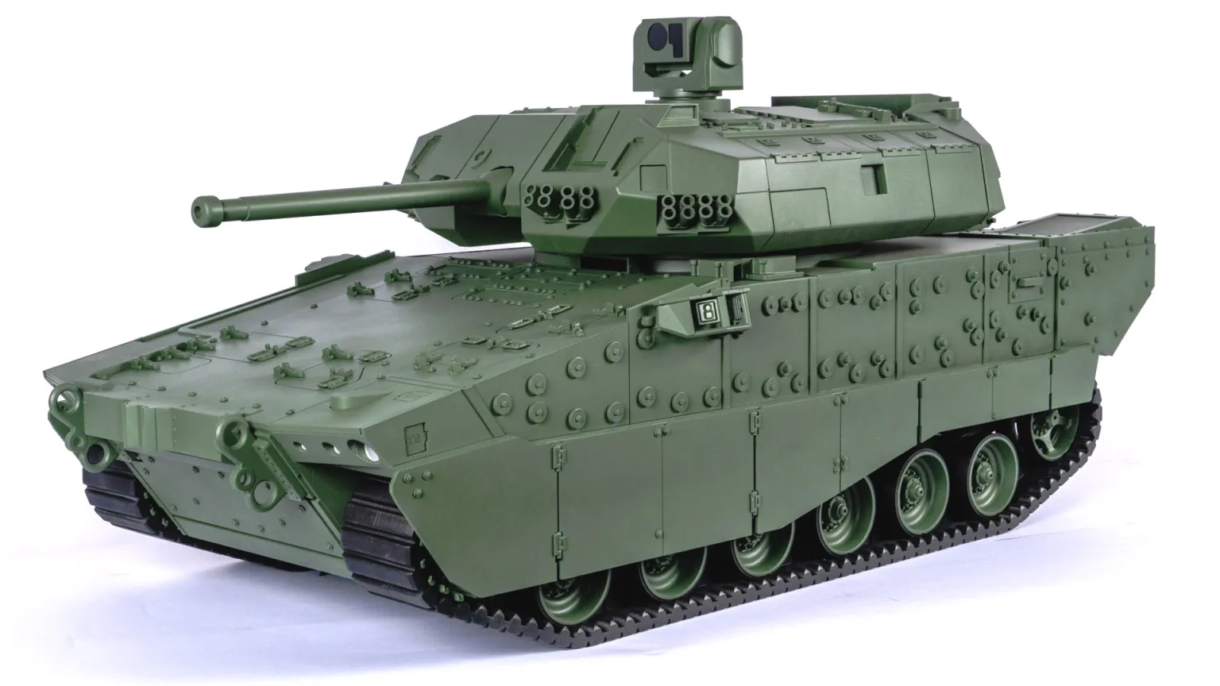
General Dynamics Land Systems (GDLS) recently displayed a one-eighth-scale model of its Wolf vehicle at the Association of the United States Army annual meeting. The U.S. Army is looking to replace its M2 Bradley Fighting Vehicles, which were supplied to Ukraine and employed in combat against Russian forces.
The Wolf is competing against Rheinmetall’s Lynx in the Army’s XM30 Mechanized Infantry Combat Vehicle program.
In a social media post on October 12, 2025, General Dynamics said the vehicle was designed from the start around the U.S. Army’s Modular Open Systems Approach, which uses common hardware and software interfaces so new sensors, weapons, and electronics can be added without redesigning the vehicle. It added that the Wolf was “born digital,” meaning it uses a digital engineering model for testing, production, maintenance, and design.
Earlier, GDLS had delivered its first Wolf XM30 mechanized infantry combat vehicle prototype to the U.S. Army on August 21, 2026, at Aberdeen Proving Ground, Maryland.
“This on-time delivery will allow Soldiers to start putting the Wolf through its paces, with the ultimate goal of getting it fielded into armored brigades as quickly as possible,” said Geoff Norman, director of strategy at General Dynamics Land Systems. “I would like to congratulate our XM30 team on the successful design and production of this game-changing solution. The Wolf is the most technologically advanced combat vehicle ever assembled.”
In June 2023, the U.S. Army awarded two contracts worth a combined approximately $1.6 billion to General Dynamics Land Systems Inc. and American Rheinmetall Vehicles LLC for Phase III (Detailed Design) and Phase IV (Prototype Build and Testing) of the Optionally Manned Fighting Vehicle (OMFV) program, which was subsequently redesignated as the XM30 Mechanized Infantry Combat Vehicle program.
The XM30 is expected to bring new capabilities that will transform how U.S. Army formations fight in the future. Developed with a modular open-system architecture, the XM30 is expected to permit new, developing technologies to be added as it evolves.
Wolf: Via: GDLS
“Competition remains a vital aspect of the XM30 program,” said Doug Bush, Assistant Secretary of the Army for Acquisition, Logistics and Technology. “Fully funding two companies for the next phases of the program will allow the Army to place the XM30 on a rock-solid foundation from a resourcing perspective, while also maintaining a competitive environment.”
The XM30 aims to enhance lethality, survivability, and upgradability beyond the Bradley’s physical and economic limits.
Earlier this September, American Rheinmetall delivered the first of eight Lynx XM30 combat vehicle prototypes to the U.S. Army.
“Delivering our first prototype to the Army is an important step as the XM30 Combat Vehicle program enters a more visible phase,” said Matt Warnick, CEO of American Rheinmetall. “Team Lynx now has the opportunity to show the Army that we can deliver on the promise of a modern replacement for the Bradley.”
Bradleys in Ukraine War
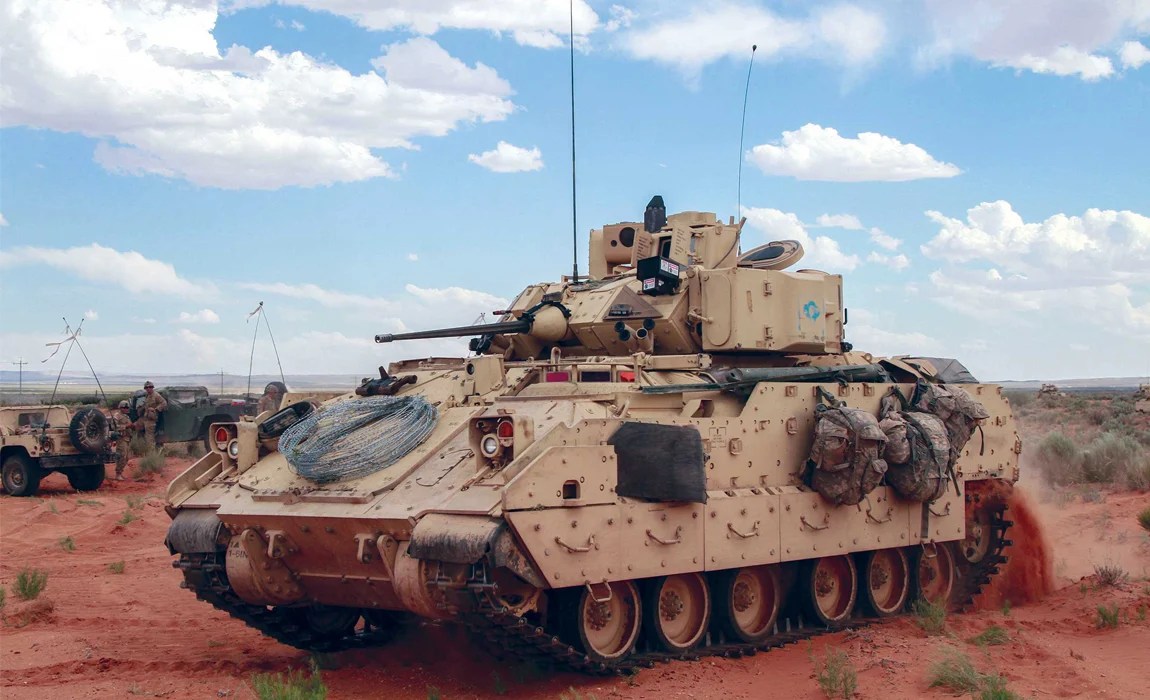
The United States supplied over 300 Bradleys (specifically M2) to Ukraine.
The U.S. primarily delivered the M2A2 ODS-SA (Operation Desert Storm-Situational Awareness) variant. This version included digital battlefield management systems, improved thermal sights for the gunner, and laser rangefinders.
The U.S. also shipped several M7 BFIST (Bradley Fire Support Team) variants, which replace anti-tank missiles with advanced target-acquisition sensors to direct heavy artillery strikes.
Last year in June, the Russian defense and industrial conglomerate Rostec claimed that the Russian troops had eliminated all the US Bradley Vehicles in Ukraine’s arsenal.
The Bradley Fighting Vehicle during an exercise
Independent tracking intelligence suggests that nearly half of the supplied vehicles have been damaged, destroyed, or abandoned over years of high-intensity combat.
In a June 2025 interview with Razvedchik (Scout) magazine, Rostec CEO Sergey Chemezov claimed that Russian forces had destroyed almost all the Bradley infantry fighting vehicles supplied to Ukraine. Chemezov did not provide a specific number, and no independent source has verified his claim.
Chemezov said: “Bradley IFVs have one serious weakness: problems with their cross-country capability, due to which they cannot move normally on rough terrain and through fields. They get stuck in dense soil and become easy targets because of their huge size. What’s the use of improved protection if the result is the same? In practice, all the Bradleys supplied to Ukraine have been destroyed. You have to understand, after all that, an IFV is not a tank.”
He further emphasized that a combat infantry vehicle should be swift, mobile, and able to move through rugged terrain and unbridged, unpaved rivers. “Our IFVs are capable of this, whereas American vehicles are not,” the Rostec chief stressed.
According to Oryx, a Dutch open-source intelligence blog that tracks equipment losses in the Ukraine War, the Ukrainian Armed Forces lost 189 M2A2 Bradley ODS-SA, many of which have also been captured by the Russian forces. These figures are based on visual confirmation, and the actual number of losses could be higher.
A Bill recently passed in West Bengal that enables State-wide transfer of teachers and professors in government-aided colleges and universities stokes fears of political vendetta and institutional interference.
In Digger, Alejandro González Iñárritu makes a fragile, unlikeable climate change satire, then we find it’s a satire of that satire. But can we also make satire rooted in hope?
Raghavan Srinivasan posits the Bhakti movement in Tamilakam as an early instance of resistance to power structures, yet his study leaves several important issues untouched or only briefly mentioned.
Irwin Allan Sealy travels in the US in search of a cluster of ancient Tamil yoginis, carved in stone and now scattered across museums, only to find them in unexpected people and places.
Critics of citation-based academic evaluations advocate social impact as an alternative, an approach the UGC now endorses. But in this race for impact, those whom scientific research is meant to serve could become its casualties.
Though a ruling party losing congressional seats in midterms is nothing new, this November’s polls stand out: Republican candidates are distancing themselves from Trump, exposing internal fissures and raising questions about MAGA’s future.
Deep, comprehensive, and demanding, Mammals of India by A.J.T. Johnsingh and P.O. Nameer is a natural cousin of S.H. Prater’s The Book of Indian Animals.
Patekar created a distinctive screen presence by turning ordinary men’s flaws, anger, frustrations and vulnerabilities into an alternative to Bollywood’s idealised hero. His performances were shaped by the social and political tensions of their time.
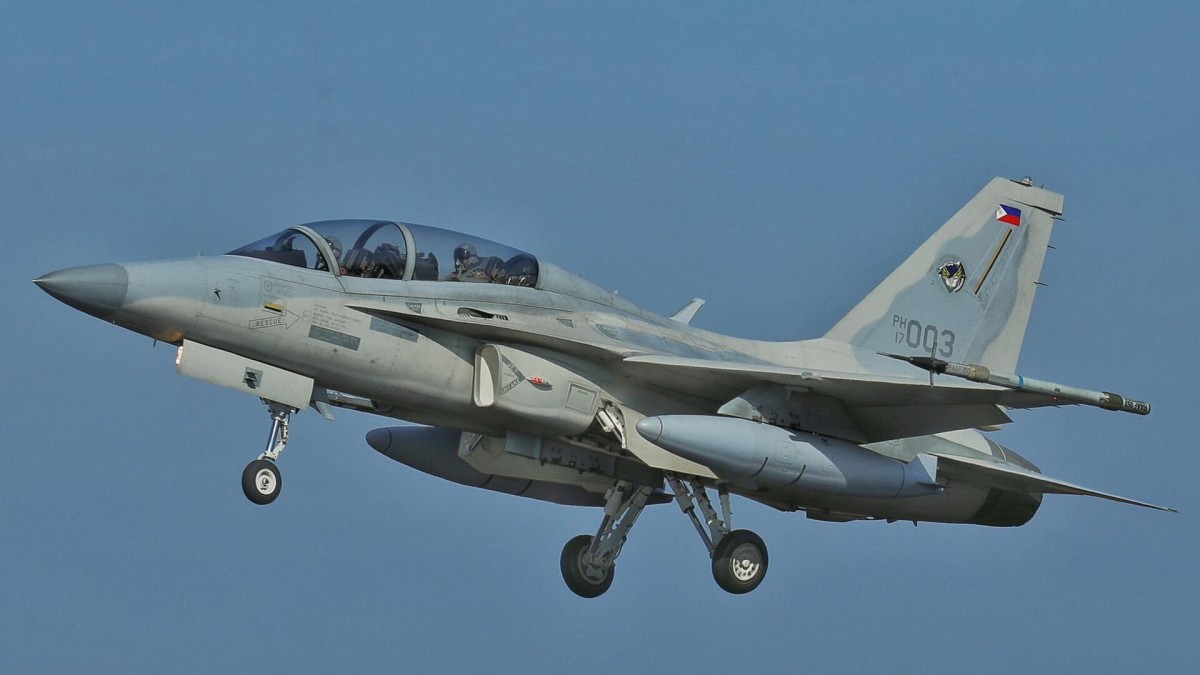
Malaysia expects to receive its Korean-made FA-50M light combat aircraft on schedule, Defense Minister Khaled Nordin said, with the first jets due this month or next.
“According to the schedule, the aircraft will arrive this month or next month – I will announce the arrival date later. So far, I have not received any information regarding a delay in the delivery of the aircraft,” Khaled told reporters after the launch of the Warriors’ Fund Campaign 2026/2027.
In May 2023, Malaysia signed a nearly $920 million contract with Korea Aerospace Industries (KAI) for 18 FA-50 Block 20 light combat aircraft, designated FA-50M, for the Royal Malaysian Air Force.
Earlier, as EurAsian Times reported, India’s LCA Tejas was also competing for a Malaysian fighter-jet contract.
Malaysia, which has long needed to modernize its fast jet fleet, commenced the FLIT-LCA requirement in June 2021.
The country launched the tender to acquire a Lead-In Trainer-Light Combat Aircraft as part of the air force’s Capability 55 plan, released in 2018 and outlining the air force’s objective to achieve an ideal force structure by 2055.
The tender quickly gained traction from several countries, including India. Other contenders included the Turkish Hurjet, China-Pakistan’s JF-17, Russia’s MiG-35, and the Korean FA-50.
The FA-50 and Tejas were the two final shortlisted candidates, with the South Korean aircraft ultimately prevailing. Malaysia selected the FA-50 aircraft over India’s Tejas, with officials citing the Korean jet’s proven service record and combat record as key factors.
Korea Aerospace Industries confirmed in February 2023 that it had secured the Malaysian deal.
Then-Defence Minister Mohamad Hasan said the jet’s service record was the primary consideration. “We cannot take the risk and acquire assets that are still at the prototype stage. Our personnel will use this jet, so safety is in our criteria,” he told a press conference in May 2023, echoing comments made in parliament the previous month.
A Korea Aerospace Industries representative later told Channel News Asia that the Royal Malaysian Air Force viewed the Tejas as lacking an export record, while the FA-50 was already proven in combat.
The Philippine Air Force has used the FA-50, including during the 2017 Marawi campaign, and several regional air forces, including Indonesia, Thailand, and the Philippines, operate it.
Sources at India’s HAL acknowledged the outcome. “We were short-listed for the Malaysian LCA contract. We were hopeful as we were very competitive on several criteria, but unfortunately this has not gone our way,” one source said.
HAL Chairman C.B. Ananthakrishnan reportedly said the company was optimistic after being shortlisted from multiple bidders but had received indications that the order was going to the Korean contender, though it had not yet received formal notification.
KAI and Lockheed Martin jointly developed the supersonic T-50 advanced jet trainer, with the TA-50 as the Lead-in fighter trainer and the FA-50 as a light combat aircraft variant.
The T-50 partly resembles the F-16 Fighting Falcon and is 80% of its size. Development began in the 1990s, funded 70% by the South Korean government, 17% by KAI, and 13% by Lockheed Martin.
The aircraft made its first flight in August 2002 and entered service by February 2005.
KAI and Lockheed Martin pursued a joint international marketing program for the T-50.
The T-50/FA-50 family is operated (or on order) by the Republic of Korea, Indonesia, the Philippines, Thailand, Iraq, Poland, and Malaysia. Total firm orders across the family exceed ~290 airframes, with roughly 220–230 already built or delivered as of late 2026 (around 70 still in production or pending delivery).
FA-50
The T-50 is equipped with a GE F404 engine built under license by Samsung Techwin. GE provides engine kits to Samsung Techwin, which also produces some parts and performs final engine assembly and testing.
The fighter/attack variants are equipped with the Elta EL/M-2032 fire-control radar, the same as the initial LCA MK1. The TA-50 can operate as a full-fledged combat platform with PGMs, air-to-ground weapons, and air-to-air missiles.
The TA-50 can carry pods for reconnaissance, targeting assistance, and electronic warfare. Reconnaissance and electronic warfare variants are also being developed, designated RA-50 and EA-50, respectively.
The TA-50 has an internally mounted three-barrel M61 Vulcan cannon. Wingtip rails can accommodate the AIM-9 Sidewinder missile, and underwing hardpoints can carry a variety of additional weapons.
South Korea is considering arming the FA-50 with a smaller version of the Taurus KEPD 350 missile to give it a 400 km stand-off engagement capability. The aircraft has an internal fuel capacity of 2,655 liters. It can carry 1,710 liters in the three external fuel tanks.
The aircraft has a max take-off weight of 12,300 kg. Its ferry range is 1,851 km, and its thrust-to-weight ratio is 0.96. The seven hardpoints can carry up to 5,400 kg of payload.
The FA-50 can carry more internal fuel, and the engine could be either the Eurojet EJ200 or the General Electric F414, providing up to 25% more thrust. Other AESA radars, such as Raytheon’s AN/APG-79 and Northrop Grumman’s AN/APG-83, are options for future production.
In January 2019, KAI began developing an improved FA-50 known as the Block 10 and Block 20 upgrades. The Block 20 adds munitions such as the AIM-120 AMRAAM. Raytheon PhantomStrike and Northrop Grumman AN/APG-83 were being considered as the future AESA radars.
MBDA has offered to integrate the Meteor and ASRAAM medium- and short-range air-to-air missiles on FA-50 and future KF-X fighter jets.
The T-50/FA-50 lost several competitions or was blocked from sales. The UK arms embargo on British components, such as the ejection seat, thwarted Argentina’s interest. Israel and Singapore instead chose the Italian M-346. Taiwan developed its own T-5 Brave Eagle based on its F-CK-1 fighter. The US chose Boeing’s T-7 and also blocked a proposed sale to Uzbekistan, citing concerns that the technology could reach Russia.
The Houthis (Ansar Allah) attacked Saudi Arabia’s King Khalid International Airport in Riyadh on October 10, killing at least 13 people and injuring over 300, the deadliest attack on the kingdom in more than a decade, forcing authorities to suspend operations at the airport.
This was not an isolated incident.
Since the fighting resumed between Saudi Arabia and the Iran-backed group in July this year, Houthis have attacked at least five Saudi airports, including King Abdullah bin Abdulaziz International Airport in Jizan, Abha International Airport, Najran Airport, King Khalid International Airport in Riyadh, and King Fahd International Airport in Dammam.
So far, at least 20 people have been killed in these attacks, and hundreds more have been injured, apart from damage to runways, terminals, and aircraft.
Just the King Khalid International Airport in Riyadh has been attacked three times this week. The two previous attacks on King Khalid Airport this week killed four and caused heavy damage to a Saudi commercial plane parked on the tarmac.
The Houthis, in fact, have declared the whole of Saudi airspace as “a zone of military operations,” saying airlines should avoid flying in the country.
Saudi Arabia operates one of the Middle East’s most extensive, multi-layered air-defense networks. Its upper tier includes US-supplied THAAD (Terminal High Altitude Area Defense) alongside Patriot batteries, South Korea’s Cheongung-II AD system, and improved HAWK launchers.
It also fields French Crotale SAMs, Avenger systems with Stinger missiles, anti-aircraft guns, and Silent Hunter laser systems supplied by China.
The Houthis are also enforcing a naval blockade of Saudi Arabia by choking the Bab-el-Mandeb strait in the Red Sea and have also targeted the country’s oil refineries and East-West oil pipeline.
In fact, in the ‘fog of war,’ it is easy to miss the context that the Houthi-Saudi war did not begin with these strikes on Saudi airports; nor did it start in July when a 2022 ceasefire between the two sides broke over Saudi air strikes on Sana’a airport.
The two sides have been fighting for nearly two decades.
Saudi-Houthi Conflict
The Houthis are a Zaydi Shiite politico-religious movement from northern Yemen’s Saada region, originating in the 1990s as a revivalist group opposing corruption in central government, their economic and social marginalization, and increasing Saudi-backed Wahhabi influence in Yemen, including in traditionally Zaydi areas.
Saudi Arabia’s longest land border with Yemen stretches roughly 1,200 km, much of it still porous. Consequently, expanding Iranian influence through the Houthi rebels carries security implications Riyadh cannot afford to overlook.
The Houthis drone and missile capabilities, and the strategic importance of the Red Sea and Bab al-Mandeb routes for Saudi oil exports, add more risks for Riyadh.
Due to these factors, Riyadh has a vested interest in both containing rising Iranian influence in Yemen and weakening the Houthis’ military capabilities, while at the same time, preventing the economic collapse of Yemen.
If Yemen collapses, the crisis will inevitably spill into its northern neighbor – Saudi Arabia. There are already over 2 million Yemeni migrants in the country, and an economic collapse can further push millions of Yemeni citizens into the country.
Riyadh regularly provides grants to the Yemeni government to prevent its collapse and has already provided US$12.6 billion in the last 14 years. After investing so much money, Riyadh clearly tries to control who leads the country and its policies.
However, Saudi involvement in Yemen was never limited to just financial aid.
Riyadh first got militarily involved in Yemen 17 years ago, in 2009.
Between 2004 and 2010, the Yemeni government and the Houthis were engaged in constant hostilities. This warfare often spilled into Saudi Arabia’s southern parts as well.
After Houthi attacks on Saudi border posts in November 2009, which killed border guards, Saudi Arabia launched airstrikes on Houthi positions with F-15 and Tornado fighter jets, and even conducted limited ground operations.
Notably, this was the kingdom’s first unilateral military operation in decades.
Fighting continued in 2010, and there were substantial Saudi casualties, with more than 130 Saudi soldiers dead by some estimates.
Riyadh and the Houthis reached a ceasefire in 2010, which stopped the fighting. Meanwhile, the Houthis continued to gain ground in Yemen. By the end of 2014, the Houthis had occupied the very strategic Sanaa and Aden airports.
In March 2015, Saudi Arabia returned to Yemen with Operation Decisive Storm. This time, Riyadh was not alone. It cobbled together a coalition of eight countries, including the UAE, Bahrain, Kuwait, Qatar, Jordan, Egypt, Morocco, and Sudan. The US also provided logistics and intelligence support.
File Image: Two F-15SA Advanced Eagles escorted two US B-52 Stratofortress bombers while crossing Saudi Arabia’s airspace on Dec. 10. 2020. (via Twitter)
When Saudi Arabia Bombed Yemeni Airports
The campaign began with massive airstrikes targeting air defenses, airports/air bases, missile sites, and Houthi positions. Riyadh also imposed a naval blockade of Yemen.
The coalition particularly targeted Yemeni airports, airbases, air defense missiles, and civilian and military aircraft. The aim was to neutralize any aerial capability that the Houthis might have gained after seizing Yemeni government assets.
In March itself, the Saudi-led coalition launched airstrikes on Sanaa International Airport, the adjacent al-Dulaimi air base, and Al Anad Air Base.
Reports say the attacks damaged or destroyed scores of aircraft, including a Yemeni Air Force CASA CN-235M-300 cargo plane and a Beechcraft Super King Air at al-Dulaim.
The strikes also damaged one Mi-8 helicopter, two Bell 214 Huey helicopters, multiple Su-22 ground-attack fighters, and F-5 jets. The coalition destroyed an Ilyushin Il-76TD cargo aircraft at Sanaa International Airport in late March.
The coalition also damaged the runway at Sanaa International Airport.
The coalition attacked Sanaa Airport again in April. A Yemeni Felix Airways Bombardier CRJ702ER civilian aircraft was set ablaze, and another cargo plane was hit. Two Yemeni Air Force MiG-29s were also reported destroyed in related strikes at the airport.
US Airstrikes Hit Yemen Oil Port
When an Iranian cargo plane, allegedly carrying humanitarian aid, tried to land at the Sanna airport, coalition jets targeted the airport again and bombed the runway, rendering it unusable.
Brigadier General Ahmed Asseri, spokesman for the Saudi-led coalition, told Reuters at the time that the airport was bombed after an Iranian aircraft refused to coordinate with the coalition and the pilot ignored orders to turn back.
He said the bombing of the runway made it unusable for planned aid flights.
“Airport officials said the strikes set a civilian aircraft operated by Yemeni Felix Airways ablaze. A cargo plane was also hit they said,” a contemporary Reuters report said.
The airport at the Red Sea city of Hodeidah was also bombed.
These attacks continued in May.
A contemporary report said that one MiG-29, two F-5s, three Su-22s, one Mi-8, and two Il-76TD cargo planes were destroyed in Saudi-led airstrikes in Yemen in May.
The Yemeni Air Force was effectively neutralized in these attacks. The coalition strikes destroyed most MiG-29s, Su-22s, F-5s, and support aircraft on the ground or rendered them unusable.
The coalition further attacked Yemeni airports in 2017 and 2018.
The Saudi-led operation continued for seven years, from 2015 till 2022, when a ceasefire was reached between Riyadh and the Houthis.
This ceasefire was broken in July 2026 when Riyadh once again bombed Sanaa airport in order to not let an Iranian plane land at the airport.
However, by July 2026, the Houthis had considerably improved their offensive capabilities.
This time, it’s the Houthis who are enforcing a naval blockade of Saudi Arabia and repeatedly targeting its civilian airports, as well as oil infrastructure.
While the Houthi attacks on Saudi airports are making global headlines, the prelude to these attacks was written over a decade ago in 2015, and the final chapter of this nearly two-decade-long conflict between Riyadh and the Houthis has yet to be written.
Sumit Ahlawat has over a decade of experience in news media. He has worked with Press Trust of India, Times Now, Zee News, Economic Times, and Microsoft News. He holds a Master’s Degree in International Media and Modern History from the University of Sheffield, UK.
He can be reached at ahlawat.sumit85 (at) gmail.com
Russia is prepared to halt attacks on Ukraine for a single day to allow presidential elections but will not agree to a longer ceasefire, the Kremlin said on Monday.
But had the Russian attack on Ukraine, as planned, succeeded in the initial days, the Ukraine-Russia war would not have dragged into the fifth year, and there would have been no talks of changes in leadership.
Dmitry Peskov said President Vladimir Putin would order Russian forces not to strike Ukraine on polling day if elections were held. “If they truly want to hold elections in Kyiv, then the president of Russia, the commander-in-chief, will be ready to give an order not to launch strikes on Ukraine on election day, specifically on election day,” Peskov told reporters.
He rejected Zelenskiy’s call for a 60-day ceasefire, saying Russia seeks a lasting peace agreement rather than a temporary halt.
“In the Kremlin, both President Putin and officials at other levels have repeatedly stated that we do not want a ceasefire,” Peskov said. “We want long-term peace and are prepared to do everything possible to achieve it.”
Zelenskiy made the 60-day offer on Sunday in an ABC News interview. He said Ukraine would organize elections if Russia agreed to a full ceasefire lasting two months.
“Please tell Putin, give us two months, 60 days of total ceasefire, 60 days, and we will organize elections,” Zelenskiy said.
His comments came a day after U.S. President Donald Trump said Ukraine should replace its President. Trump told reporters that Zelenskiy had failed to reach a deal with Russia and that it was time for a change.
“I think it’s time for Ukraine to get a new president,” Trump said. He criticized Ukraine’s strikes on Russian oil refineries, which followed a U.S. agreement to ease restrictions on Russian diesel exports.
Why Putin Failed To Seize Kyiv?
Russia had a clear plan to capture Kyiv and force a surrender.
On 24 February 2022, Russia’s Airborne Forces launched an operation toward Kyiv, supported by missile strikes and air cover, using attack and transport helicopters.
The objective of this blitzkrieg-style maneuver was to seize Antonov Airport in Hostomel, north of Kyiv, establish a bridgehead, create a secure air corridor for additional airborne troops, and then rapidly advance toward Kyiv.
The plan was to quickly deploy Russian Special Forces and military equipment at Hostomel and then overwhelm Ukrainian resistance after a couple of hard strikes.
If successful, Russian troops, armor, artillery, and supplies could be flown into the airport, allowing them to deploy into Kyiv and overthrow the Ukrainian government.
To execute this mission, Russia tasked its elite Airborne Forces (VDV), particularly the 31st Guards Air Assault Brigade, a unit with extensive combat experience from operations in Chechnya, Crimea, and Donbas.
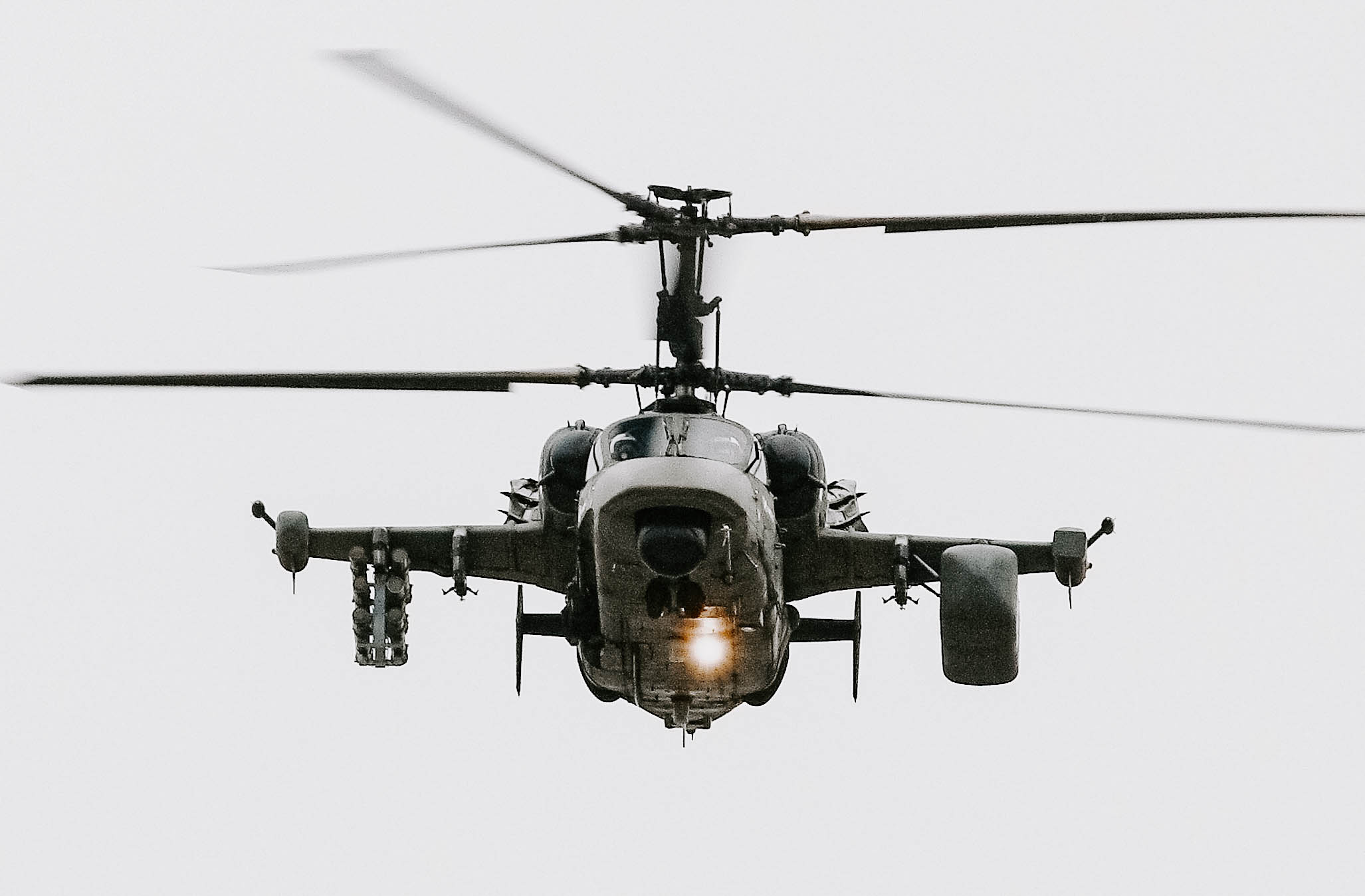
The operation began on February 24 with a coordinated attack involving numerous Russian Ka-52 “Alligator” attack helicopters, which used low-flying tactics to avoid radar detection.
Ka-52 ‘Alligator’ (via Platform X)
These helicopters fired guided missiles and cannons at the airport’s defenses to suppress Ukrainian forces. Despite intense resistance that cost Russia several helicopters, the assault continued for several hours.
Russian forces seized Hostomel Airport on February 25, 2022. Afterward, the Russian Army and its Airborne Forces tried to turn the airport into a critical forward operating base for their planned push toward Kyiv.
However, Russia’s offensive soon faced considerable setbacks. Russia’s failure to clear the area around the airport quickly led to catastrophe. Ukrainian forces, including special operations units from Ukraine’s Ministry of Defense Main Intelligence Directorate, launched a counteroffensive.
Local fighters and Ukrainian forces on the ground inflicted heavy damage on the Russian troops. In one of the most noteworthy junctures of the battle, a sniper killed Major General Andrei Sukhovetsky, the commanding general of the Russian 7th Airborne Division, by the end of February 2022.
The invasion’s initial momentum slowed, leading to the infamous 40-mile-long convoy and entire units of Russian troops stalling due to fuel shortages.
By March 4, Russian state television aired footage showing large numbers of destroyed Russian military equipment, struck by Ukrainian artillery, scattered across the base. Russian forces became immobilized without clear orders to advance or retreat.
The situation remained dire until March 29, when Russian commanders finally ordered a retreat from Kyiv Oblast. This marked the beginning of the Russian withdrawal from Hostomel, with damaged equipment that could not be evacuated. Ukrainian artillery fire targeted the retreating forces, further complicating their situation.
Among the equipment left behind were 16 modern BMD-4M armored fighting vehicles and a 1L262E Rtut-BM electronic warfare system. These items were either destroyed during the retreat preparation or intentionally blown up by Russian forces.
When Ukrainian troops reentered Hostomel, they found evidence of the hastily abandoned Russian positions, with remnants of daily life scattered around.
These included unopened food packages, personal items like passports and bank cards, and even Ukrainian armored vehicles that had been captured by Russian forces but could not be taken with them.
The loss of surprise, the inability to clear surrounding areas, and the vulnerability of airborne operations to counterattacks demonstrated how quickly airborne missions can go wrong.
The Russian failure to capture Hostomel Airport proved fatal for Moscow’s overall military strategy in Ukraine. After the Hostomel disaster, Russia withdrew from Kyiv oblast and then regrouped in Ukraine’s southern and eastern provinces to stabilize the frontlines.
This initial failure to seize Hostomel and then proceed to Kyiv also allowed Western countries to mobilize support for Ukraine and resume supplying Kyiv with critical military and humanitarian aid.
Sumit Ahlawat has over a decade of experience in news media. He has worked with Press Trust of India, Times Now, Zee News, Economic Times, and Microsoft News. He holds a Master’s Degree in International Media and Modern History from the University of Sheffield, UK.
He can be reached at ahlawat.sumit85 (at) gmail.com
A sudden spurt in crimes in Bihar, especially against women, and the State’s weak responses have exposed the BJP government’s lack of control over law and order.
 Login