Soldiers told the New York Times how they survived six months in the kill zone.
Basic rules for survival.
Modern warfare: masses of equipment versus courageous individuals.
Following peace talks, the humanist Putin sent ballistic missiles to Ukraine.
Map of the day: the successful Operation Vivaldi.
Videos of the day: the underground Operation Veles into the Russian rear and an aerial drone duel.
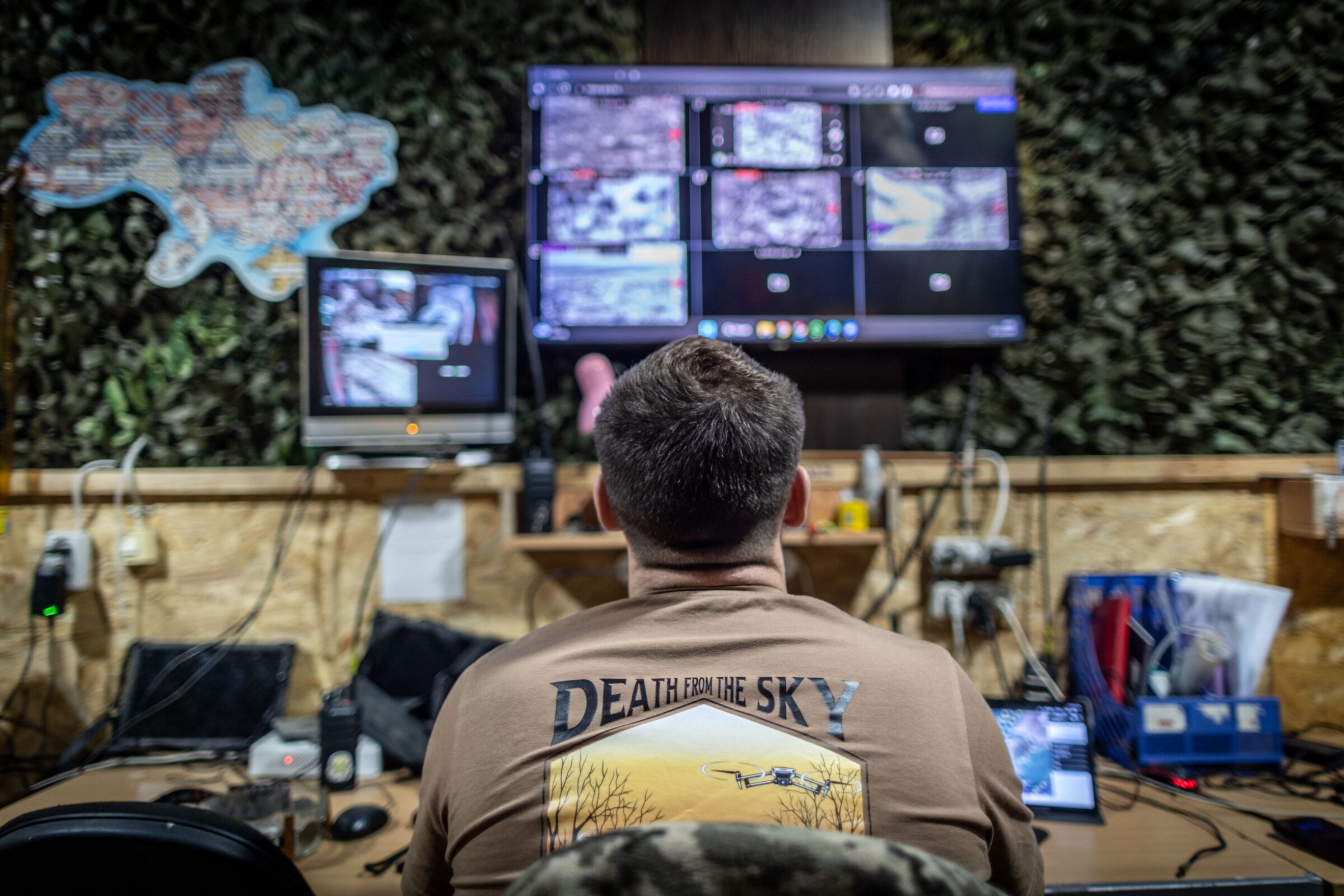
Soldiers speak about their six months in the kill zone. When the 128th Mechanised Brigade asked at a training ground last autumn who was willing to go into the ‘kill zone’, the term used for the most dangerous stretches of the 1,200-km front, two soldiers volunteered.
And the rest visibly breathed a sigh of relief.
Hennadiy and Mykhailo, whose story was reported by the New York Times, spent a long six months “at zero” rather than one, and described in detail how they managed to survive on the front line in the Zaporizhzhia region.
Their account shows how, despite drone warfare, the basic work — holding or capturing new positions — is still done by infantry, which remains indispensable even in this war, where a technological advantage can mean the difference between life and death.
Both set out by car from the village of Prymorske and, when they were about 1.5 km from their destination, began a slow and extremely dangerous journey.
It was most dangerous when they had to move.
This article continues, but the full version is available only to EUobserver.com subscribers. Visit account.euobserver.com/membership
Zelensky has lost patience; the US is acting as Putin’s ally.
How Ukrainians attackedRussian targets without Starlink.
If Musk did not switch off Starlink, who did? The main suspects.
Ukrainian attacks on data centres hit Russia where it hurts.
Why this type of attack will continue to escalate and not only in this war.
Videos of the day: a hero robot returns without a wheel; attacks on ammunition depots.
Zelensky has lost patience; the US is Putin’s ally. Despite problems with Starlink, which Kyiv said cut connections with attack drones when they exceeded a certain speed, major Ukrainian attacks on Russian territory continued in recent hours. Long-range strikes over Russia are carried out by drones without Starlink.
These included an attack on the military airfield in Borisoglebsk, more than 300 km from the border, as well as on a refinery in Ryazan, which the local governor confirmed. The Ryazan refinery belongs to Rosneft and is one of the largest, with a capacity of around 17 million tonnes of oil a year.
This came after Ukrainian president Volodymyr Zelensky told the Financial Times that he had had enough after Russian attacks during the so-called energy truce, and announced that refineries would once again become Ukrainian targets.
It was precisely a limitation of such Ukrainian strikes that US president Donald Trump had demanded, after last week concluding a controversial agreement with Moscow to buy Russian oil without asking for anything in return from the Russian side.
This was followed by steps that raised serious suspicions that Trump had begun acting in favour of Putin’s war against Ukraine.
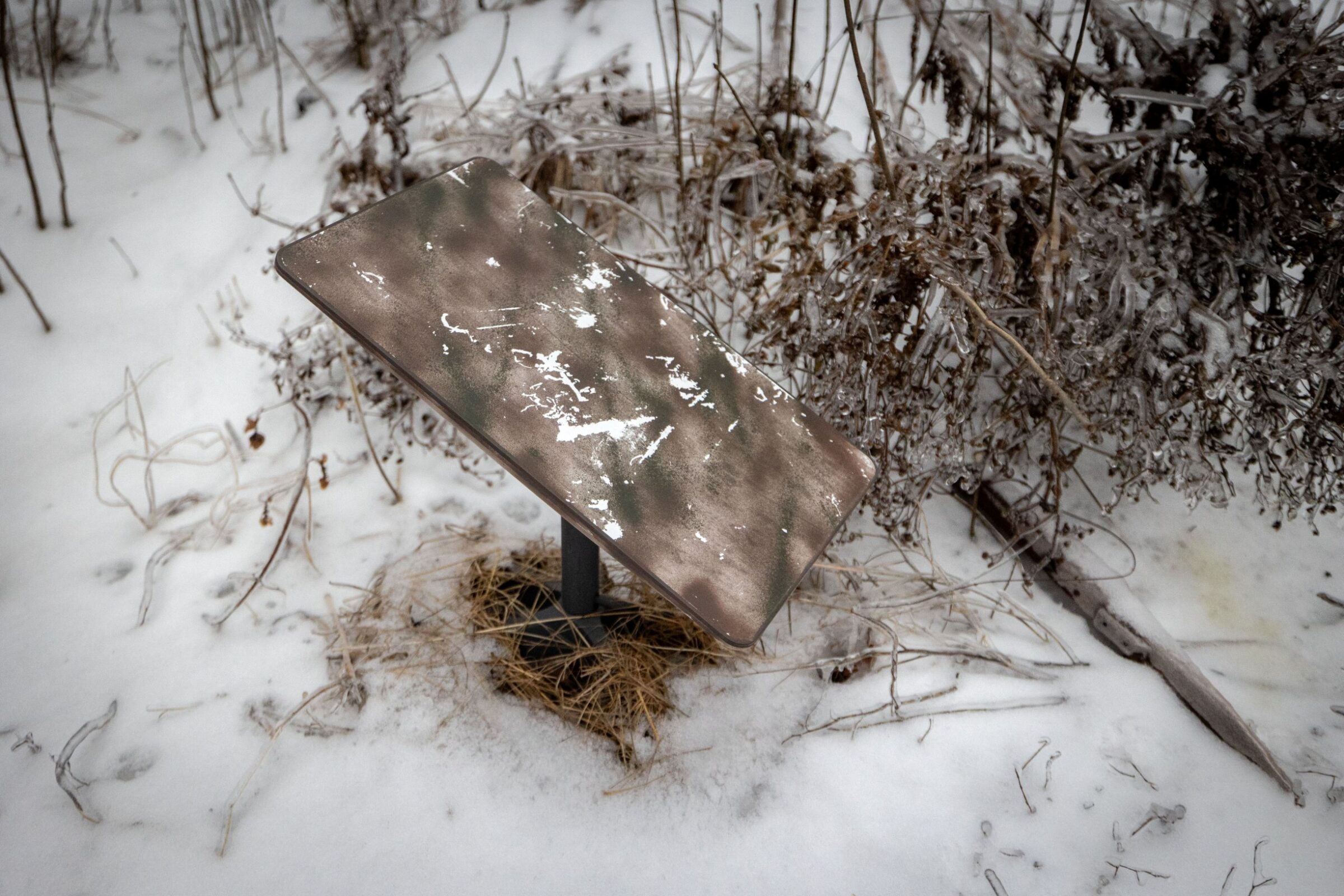
The US threatened Ukraine with restricting supplies of weapons or critically important intelligence and, ultimately, as we examined on Wednesday in the Ukraine Battlefield update, Ukrainian soldiers began experiencing a serious problem with the full internet connection provided by the military version of Starlink, which Musk’s SpaceX developed for the Pentagon.
This is crucial to the Ukrainian army not only for attacks on Russian logistics at the front, but also in defending against more dangerous Russian jet-powered drones, which have terrorised Ukrainian cities in recent months.
Russia’s pro-Kremlin scene naturally noticed this as well. The Z-blogger Rybar called for the use of an “opportunity” in which Russian forces could inflict maximum damage on Ukrainian infrastructure.
“I think the crisis is entirely clear and understandable. The crisis lies in Trump’s position, which is trying to help Russia in every possible way,” expert Volodymyr Ohryzko commented on the situation.
We write below about what the company’s owner, Elon Musk, has said about these developments.
How Ukrainians attacked without Starlink. In the first of the Ukrainian attacks mentioned above, on the airfield in Borisoglebsk, Ukrainian Neptune missiles were used, according to the Ukrainian navy. Ukrainians said they destroyed as many as six Su-34M aircraft. They have their own navigation systems and do not need SpaceX services.
⚡️ BREAKING: Ukraine’s Navy claims to have struck SIX Russian Su-34M fighter-bombers in a Neptune missile attack on Borisoglebsk military airbase in Russia’s Voronezh region overnight. https://t.co/kMEuVbmrVXpic.twitter.com/fH8igvygd5
The attack on the refinery in Ryazan involved drones that are likewise not connected to Starlink, as SpaceX has geographically restricted Ukraine’s access to both Starlink and Starshield services.
“The Ukrainian armed forces therefore rely on alternative means of communication and point-to-point navigation to strike targets in Russia. The speed restrictions under the Starshield service are unrelated to this and will not prevent the Ukrainian armed forces from attacking Russian oil refineries, data centres and other stationary targets in Russia,” the Institute for the Study of War said.
However, Ukrainians felt the problems mainly at the home front.
An unnamed Ukrainian officer compared it to nuclear strikes in comments to Politico. “All operations have been suspended. It will cost many of us our lives,” an experienced soldier commanding a medium-range unmanned aircraft unit in south-eastern Ukraine told the Brussels-based website.
They use Hornet drones to attack targets at distances of up to 150 km.
Ukrainian soldiers contacted by Politico said the restrictions had halted some medium-range drone attacks over Ukraine, disrupting strikes on Russian logistics and reducing support for Ukrainian units at the front.
The scale of the disruption is unclear, however, and it is not known whether the restriction remains in place.
If Musk did not switch off Starlink, who did? The main suspects. Several Ukrainian soldiers reported on Wednesday that they had had to suspend their operations because of restrictions on satellite connections with drones that exceeded 160 km/h.
According to former minister Mykhailo Fedorov, this capability was later restored. NV sources, by contrast, said the speed limit remained in place on Wednesday evening. The following day, operation of the system was fully restored, according to Ukraine’s defence ministry, while the circumstances of the outage are being investigated.
Importantly, Zelensky said it was not a technical problem but an apparent deliberate act. It is not yet certain who was behind it, although the main suspect is clear.
Musk claims that, because the military version of the Starshield satellite internet connection is military in nature, it is controlled by the US government, which also owns it.
“Any decisions on speed or usage restrictions are made by the US military and, ultimately, the US president (POTUS),” the world’s richest man wrote on his social network X. However, the White House, according to Axios sources, claims it had nothing to do with the restriction and wants Musk’s company to investigate the circumstances.
Republican senator Tom Tillis is also calling for this in Congress. “I do not expect defence secretary Hegseth to ensure transparency, and therefore we will ask the defence department’s inspector general to launch an investigation and report to Congress and the American people,” he wrote on X.
Starshield differs from the regular network in its greater resistance to jamming and its specialisation for military use.
Oleksandr “Serg Marco” Karpiuk, a well-known Ukrainian specialist in military aerial reconnaissance, wrote on Facebook that standard Starlink terminals currently have a preset speed limit of 22 m/s.
“To be able to fly at speeds above 22 m/s, Ukraine signed contracts for the Starshield system, which is managed by the Pentagon. This is a military system using Starlink terminals that offer greater functionality, although these accounts are substantially more expensive,” he explained. According to him, the Pentagon did two things within a single day: it restricted intelligence-sharing and changed the parameters of Starshield accounts.
“It was a decision by Pentagon chief Pete Hegseth, evidently on Trump’s orders,” Karpiuk believes, as quoted by Illia Ponomarenko in a post.
Pro-Kremlin propaganda has welcomed the latest developments.
The Russian daily Kommersant quoted a Musk post in which he wrote that it was “time for Zelensky to leave”. His words followed Trump once again pushing Ukraine to hold elections in which it would choose a new president.
Zelensky responded that they would be happy to organise elections if Russia observed a 60-day ceasefire.
Experts agree that it is unrealistic to organise a proper vote under the wartime conditions Ukraine faces.
Ukrainian attacks on data centres hit Russia where it hurts. Although it has not yet been confirmed that pro-Kremlin bots became less active after Ukrainian drones struck Russian servers, ordinary Russians felt the impact. Russia started such attacks in September, amid escalating air raids on Kyiv.
As many as around 100,000 households lost internet access at the time. Now, this tactic has been turned against Moscow.
Researchers studying Russian trolling did not observe any real decline in the activity of pro-Putin bots either, according to a BBC analysis. Far more interesting, however, are the real-world consequences of Ukrainian attacks on the data centres of Yandex, Russia’s Google, which have manifested themselves in a range of ways.
According to Politico sources, Ukrainians wanted to show Russians that it takes two to play this game. According to the Financial Times, they have already managed to seriously damage three of Yandex’s six data centres: in Sasovo, Kaluga and Vladimir.
The consequences of these attacks subsequently showed how vulnerable Russia’s centralised internet ecosystem is.
“Russia has become a victim of its own policies, which has led to the worst possible scenario,” Alena Epifanova, an expert at the German Council on Foreign Relations, told the FT.
The impact of the Ukrainian attack has affected the daily lives of Russians. Here overview of services that were affected to a greater or lesser extent, according to the British daily:
problems accessing Yandex email;
Yandex Taxi was taken offline;
several websites — including a dating app and the Russian equivalent of McDonald’s — were inaccessible;
saved files and documents could not be opened;
bus timetables disappeared in some cities;
residents of some Moscow apartment buildings could not get through electric gates;
banking services were not fully operational.
All the affected data centres also have supercomputers used to train AI, which is playing an increasingly important role on the battlefield.
For example, one of Yandex’s three supercomputers — Chervonenkis — in Sasovo had long ranked among the world’s 100 most powerful supercomputers, and only in 2026 fell to 101st place, according to the BBC.
However, it has not been confirmed that Ukrainian attacks damaged any of them. According to the Russians, an attack on a similar Sberbank facility did not cause significant damage.
“If the supercomputers are damaged, replacing the loss will be difficult — they were powered by chips from the US company Nvidia, which Yandex imported through ‘complex and complicated schemes’ because of sanctions,” a former company employee told the BBC.
Given the current shortage of Nvidia chips, Yandex’s data centres may not be restored until 2028, according to the website.
Why this could escalate. Attacks on buildings that provide computing capacity are comparable, according to Politico, to strikes on a power plant supplying electricity, heat and fuel, on which both military and civilian functions depend.
That is also why this type of attack sits on the edge of international law.
“It may weaken the enemy’s military effort, but it can also completely paralyse ordinary life,” the Brussels-based website wrote. According to Politico, the cost of restoring data centres in Russia is particularly high because the necessary materials are scarce and their import is restricted by Western sanctions.
“Obtaining a large quantity of equipment to replace what has been destroyed will not be easy,” cyber specialist Oleg Shakirov told Politico.
For now, Ukrainian expert Yevhen Pronin is cautious in assessing the effectiveness of attacks on data centres. “For example, after the attack on Sberbank’s data centre — Russia’s largest bank and one of its key technology companies — its representatives said its systems were operating without disruption, and reports indicated that the centre itself was still under construction,” Pronin told Denník N.
However, a series of such strikes fundamentally changes the scale of the risk, he said. If attacks continue to hit large operational centres on which banks, state services and corporate services depend, the consequences could be far more serious.
“They range from widespread outages to data loss and disruption to critical digital infrastructure. We do not yet see a catastrophe for all of Russia, but rather the vulnerability of a system that is increasingly dependent on a few major technological hubs,” he added.
Attacks on data centres themselves are not a new feature of the Russia-Ukraine war.
At the start of Trump’s war against Iran, Amazon data centres in the United Arab Emirates and Bahrain were hit. This was followed by an attack on a data centre in Tehran, after which soldiers’ salary payments were interrupted and banks’ online services stopped working.
The Center for Strategic and International Studies examined at the time how data had become a new front line of warfare. Following a trip to Kyiv, its researcher Emily Harding concluded that “state-of-the-art software, flexible operational procedures, and the strategic migration of data to cloud storage both inside and outside the country have given Ukraine the advantage it needs to fight”.
The problems linked to Starlink only confirm this digital vulnerability of modern warfare.
Videos of the day
It returned even in critical condition. Ground robots are being deployed increasingly often at the Ukrainian front, saving more and more lives in the deadly zone where drones hunt people. In this case, one such robot returned from a demanding mission even without one wheel.
A Ukrainian logistics UGV returns from a combat mission despite sustaining critical damage pic.twitter.com/d8fT8sh21T
Attacks on ammunition depots. FPV drone operators from Artan, a special unit of Ukrainian military intelligence — apparently also thanks to Starlink — launched a series of attacks on field ammunition depots. Over several months, they reportedly struck 2,308 enemy targets.
Enemy tanks and self-propelled artillery systems probably accounted for a significant proportion of them.
By Tuesday (13 October), Russia had demonstrably lost 24,192 pieces of heavy equipment (24,170 on Monday, 5 October). Of these, 19,155 (19,133) were destroyed by Ukrainians, 1,002 (1,003) were damaged, 1,194 (1,194) were abandoned by their crews, and 2,841 (2,840) were captured by the Ukrainian army. This includes 4,453 (4,452) tanks, of which 3,358 (3,357) were destroyed in combat.
Ukraine lost 12,259 (12,238) pieces of equipment, of which 9,652 (9,633) were destroyed, 713 (711) damaged, 695 (695) abandoned and 1,199 (1,199) captured. This includes 1,471 (1,466) tanks, of which 1,131 (1,126) were destroyed in combat.
Note: Neither side regularly reports its dead or destroyed equipment. Ukraine publishes daily figures for Russian casualties and destroyed equipment, which cannot be independently verified. In this overview, we use data from the Oryx project, which has compiled a list of equipment losses documented exclusively by photographs since the beginning of the war.
Horrifying stories from the occupied Ukrainian town are mounting.
Two clans have emerged in Oleshky — those who support Putin can get food.
According to experts, Russia is fundamentally violating international law and using residents’ vulnerability as a weapon.
Putin’s tragic gift: the death toll in Pryluky rose to 22; 12 people were killed on a bus the following day.
Maps of the day: Operation Vivaldi continues to make gains in Donbas.
Videos of the day: an FPV drone attacked a fully occupied quad bike; a refinery is on fire.
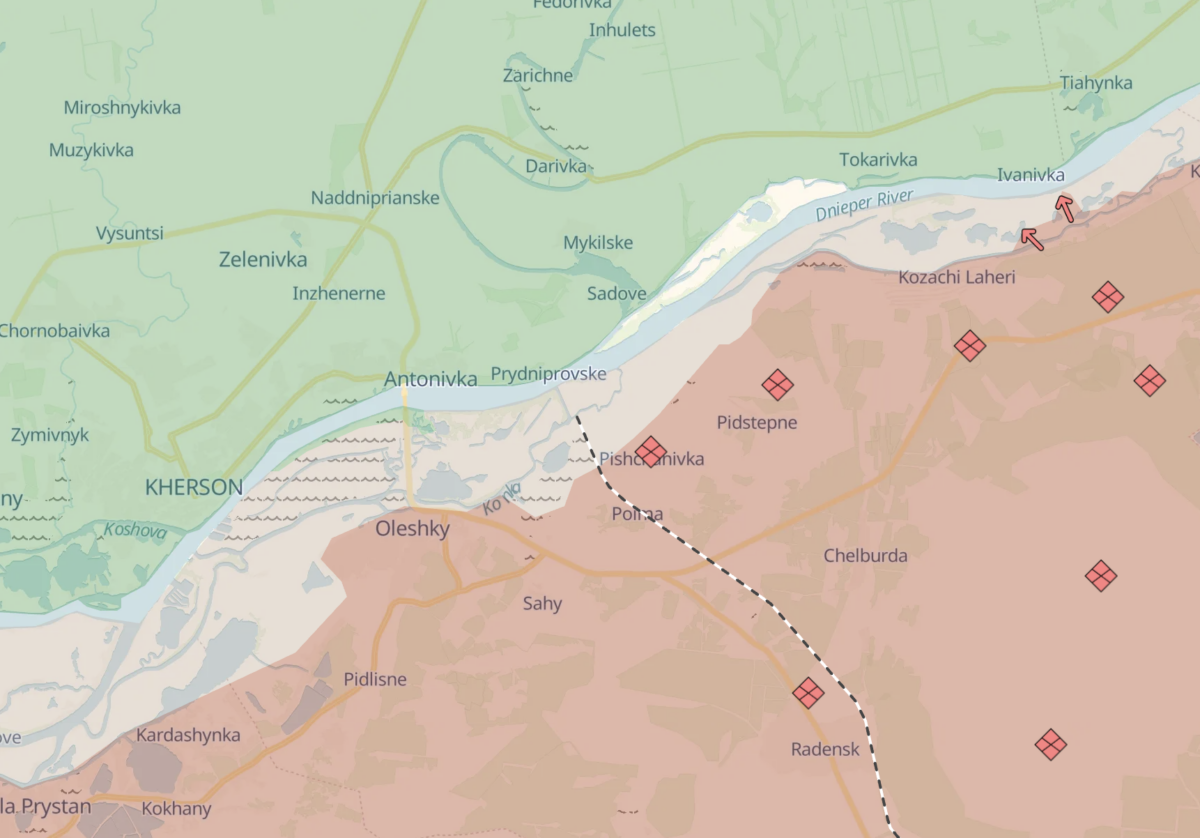
Horrifying stories from the occupied town are mounting. The situation in Russian-occupied Oleshky, in Ukraine’s southern Kherson region, has long been extremely tense.
Around 2,000 residents have long faced a severe humanitarian crisis and isolation. Before the Russian invasion, 24,000 people lived in the town.
And the situation of local residents left behind shows how Russia, as an occupying power, treats civilians brutally and deliberately violates international agreements.
Map — DeepState
“There is a lack of food and healthcare. Since the destruction of the hydroelectric power plant, there has been no drinking water, electricity or gas. They do not even have wood for heating. Not only is it impossible to live with dignity, it is also impossible to bury people with dignity, because the occupiers even prohibit the burial of the dead,” Tetiana Hasanenko, head of Ukraine’s military administration for Oleshky, told Denník N.
Russia is also using Oleshky to shell the right bank of the Dnipro, especially the city of Kherson, just nine km away. Fierce fighting is under way over the surrounding islets. This turns Oleshky residents into human shields and prevents their safe evacuation.
According to the BBC, Oleshky is trapped by both geography and war. “To the north and west, it is cut off by the river and destroyed bridges, while to the south and east it is cut off by dangerous or impassable roads,” the report said.
The situation in the town had already been dramatic in 2023, when the destruction of the Kakhovka dam caused flooding.
A few days ago, special units of the SBU security service and Ukraine’s National Guard launched, according to the RBK-Ukraine website, a new operation to deliver humanitarian packages containing food, water and medicines across the Dnipro.
The aid totalled around four tonnes, with each package weighing 19 kg.
Footage from the mission can be viewed in this video by Suspilne television.
In these difficult conditions, heavy Vampire drones — dubbed Baba Yaga by Russians — are, according to a Ukrainian website, one of the few ways of providing aid to people on the occupied side of the river. Ukrainian soldiers often deploy them at the front for their own logistics in areas that are extremely dangerous.
Last year, the drone was even described as the most effective combat vehicle changing the course of the war.
According to Hasanenko, Ukraine’s armed forces have regularly dropped food by drone into the occupied area since March.
“They did it, but not on such a large scale. And every time drones fly over, the occupiers punish local people for it,” said the Ukrainian woman, who is in contact with people from Oleshky.
She said people try to immediately transfer the aid into unmarked containers to avoid punishment. “The occupiers believe that if people accept help from the Ukrainian armed forces, they supposedly have some connection with them and are betraying the country — which is not actually their country. And that is why they punish them,” Hasanenko explained.
In recent months, Oleshky residents have relied mainly on their own harvests, but at the end of the season they face a critical food shortage.
There have even been reports that residents were forced to eat dogs. A BBC report from late September revealed shocking findings from the town: people had learned to cook even with weeds.
Some, according to Ukrainska Pravda, caught pigeons or pheasants, while others cooked borscht “in a new way” — from eggs, courgettes, tomatoes and herbs.
“Prices there are not merely high but almost astronomical. Eggs sell for 800 hryvnias a dozen (€19), potatoes and onions for 500 (€11.90), courgettes for 250 (€5.95), and tomatoes for 200 (€4.76), because there was a good harvest,” the website wrote.
Despite the risk of being killed by a mine, residents travel along a “road of death”, lined with burnt-out cars, to the nearest town, Radensk, for food. This was also confirmed by Reuters, which spoke to people who still have relatives there.
“The choice Russia imposes on civilians every day: stay and die of hunger, or leave and risk being blown up by a landmine,” the agency quoted Ukrainian ombudsman Dmytro Lubinets as saying.
Two categories of people and harassment over humanitarian aid. In the hospital, where dead bodies have been lying in the basement for four months, people have been divided into two clans, according to witnesses.
“Those loyal to the Russian regime have some food, sometimes even meat and alcohol. The people they call Ukraine-lovers have nothing. The hospital director took everything from the latest deliveries provided as humanitarian aid and handed it out to his own people,” Ukrainska Pravda quoted the son of a man who remained in Oleshky as saying.
When Ukrainians succeeded in dropping humanitarian aid into Oleshky, a new phase of psychological warfare by the Russian Federation began.
Under normal circumstances, an operation to drop humanitarian aid would not attract so much attention, but according to Ukraine’s SBU security service, the Russian response reached particularly absurd proportions.
According to its information, Russian soldiers were ordered to arrange a series of interviews aimed at discrediting the Ukrainian side.
The recorded interviews were meant to include claims that Ukrainians were shelling Oleshky, positive views of Putin’s regime and expressions of gratitude. The SBU therefore urged Ukrainians to treat such reports cautiously and not spread unverified information.
According to information from the Ukrainian resistance movement in the Kherson region, which cannot be independently verified, those who received the aid faced abuse during interrogations.
According to Hasanenko, the most important thing now is to evacuate people from the town.
“Even what humanitarian missions are doing now, dropping food, will not solve their problems. I have reports in which people wrote that they had food left for two days and that this saved them. But it will not save them forever. Many people are dying there because of drones and artillery shelling. We need to establish a humanitarian corridor,” said the head of Oleshky’s military administration, adding that last winter had already been difficult and that they might not survive this one.
She herself has received reports that people have lost 10, 20 or even 40 kg. “There is one case: a woman wrote that she weighed 110 kg and now weighs 67. She has lost 40 kg and writes to me that she is dying.”
Violations of international law. During the recent UN General Assembly session, Ukrainian foreign minister Andrii Sybiha spoke about Oleshky. Ukraine’s main aim, he said, was to establish a humanitarian corridor in the area and safely evacuate people who have not accepted the Russian occupation.
It is precisely because of this stance, Kyiv says, that the Russian army is retaliating by blockading the town, where tourists had before the war come for its unique natural environment of pine forests and Dnipro inlets.
“There is no supply of electricity or gas. Over the past month, the delivery of food, medicines and other basic necessities has been completely blocked. Horrifying testimonies are coming from occupied Oleshky about how people are trying to survive under a blockade imposed by Russia: they are looking for scraps of food and gathering grass because there is simply no other food,” Ukrainian website NV quoted the foreign minister as saying.
Another dimension of Russian terror, he said, is the hunting of civilians. Russian FPV drones pursue and attack people, turning even an attempt to leave one’s home or move around the town into a deadly risk.
According to TSN, Russia is artificially creating food shortages in Oleshky, selling an ordinary food package for 50,000 hryvnias — nearly €1,000 — compared with a standard price of up to 2,000 hryvnias (€40). When people have no money, they offer their jewellery in exchange for food.
Food was last delivered to the town at the end of May, and according to Ukrainska Pravda, no further attempt to bring in food was made. When locals tried on 2 June, their four cars were blown up by anti-personnel mines, killing two people.
Legally, the humanitarian crisis in Oleshky, as well as the use of the population as human shields, constitutes, according to Ukrainian website Rubryka, a violation of the Fourth Geneva Convention — on the protection of civilians in time of war — and a war crime under Article 8 of the Rome Statute of the International Criminal Court (ICC).
An occupying power is responsible for those living in occupied territory. “It must provide people with food, medical care and proper sanitation. But Russia is indifferent to all international requirements,” Ukrainska Pravda wrote.
According to the Institute for the Study of War, Oleshky has become a test of Russian dominance in an area “characterised by population decline, damaged infrastructure, chronic insecurity and growing isolation from the rest of Ukraine”.
Rather than reversing these conditions, the think tank said, Russia governs through them.
“Oleshky demonstrates that the humanitarian crisis unfolding across many Russian-occupied communities is not merely a byproduct of war but increasingly appears to be the result of an occupation system that tolerates, exploits, and sustains civilian vulnerability as a means of maintaining control,” wrote US experts.
According to Hasanenko, Russian fears of Ukrainian operations are also behind this. “I think they are simply trying to prevent the Ukrainian armed forces from crossing the Dnipro, because they could begin liberating the left bank. And people simply serve as human shields for them, while they mine everything completely,” she told EUobserver.
A tragic toll on Putin’s birthday. At least 22 people were killed, including five children, in a Russian Kh-101 cruise missile attack on an apartment building in Pryluky, in the Chernihiv region, on 7 October. Rescue workers pulled many people from the rubble of the destroyed building. According to local authorities, Russia fired as many as six cruise missiles at the town.
“This is the ‘gift’ Putin gave himself for his birthday. Killing children, killing people. There were new attacks with Shahed drones and aerial bombs during the day. It is important that leaders do not remain silent about what happened,” said Ukrainian president Volodymyr Zelensky, calling on the West to help with air defence.
Brutal Russian attacks continued the following day. As many as 12 people were killed after Russia hit a bus in the Donbas city of Kramatorsk. Putin’s regime is currently facing a crisis at the front, which it is trying to address through massive shelling of Ukrainian cities.
Maps of the day
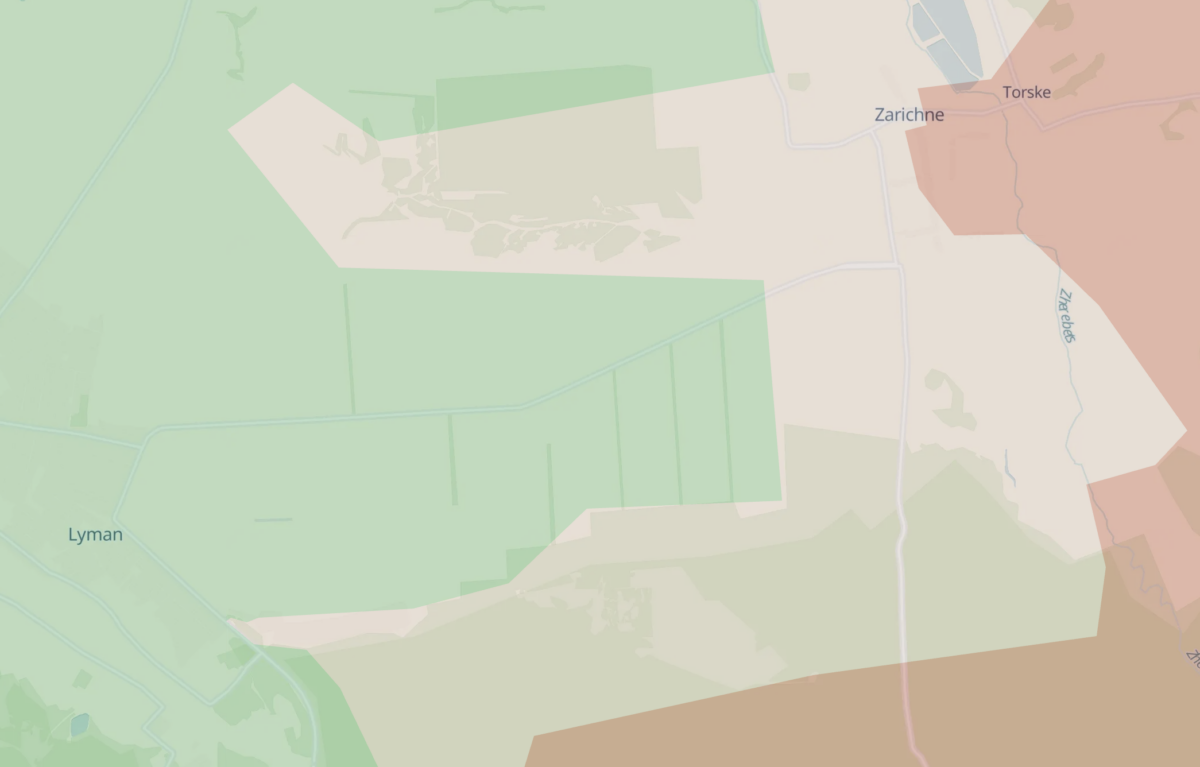
Ukraine’s successful Operation Vivaldi continues. According to a report by the Institute for the Study of War, Ukrainian forces are continuing counterattacks towards the eastern bank of the Zherebets River, northeast of Lyman. The numerical superiority of Ukrainian forces and drones there is preventing Russian forces from consolidating their positions in the town.
Map — DeepState
According to September statistics, which we wrote about a few days ago, Russia has just had its worst month in Donbas for the past three years. The US newspaper The New York Times also charted this on its map.
— Institute for the Study of War (@TheStudyofWar) October 7, 2026
Videos of the day
Smoke over a distant refinery. Ukraine continues to launch drone attacks on Russian energy infrastructure. Most recently, it caused a fire at the Gazprom Neftekhim Salavat plant in the Bashkir region, one of Russia’s largest refineries. It is located around 1,300 km from the front line.
A fatal quad bike ride. The Hornets of Dovbush, from the 68th Brigade, released a video showing five Russian soldiers on a quad bike coming into view of their FPV attack drone. The location of the attack is unknown.
What are the losses
No update on Thursday.
By Monday (5 October), Russia had verifiably lost 24,170 pieces of heavy equipment (24,138 on Tuesday, 22 September). Of these, Ukrainians destroyed 19,133 (19,105), 1,003 (1,000) were damaged, 1,194 (1,194) were abandoned by their crews, and the Ukrainian army captured 2,840 (2,839). This includes 4,452 (4,448) tanks, of which 3,357 (3,353) were destroyed in combat.
Ukraine lost 12,238 (12,175) pieces of equipment, of which 9,633 (9,579) were destroyed, 711 (702) were damaged, 695 (695) were abandoned and 1,199 (1,199) were captured. This includes 1,466 (1,464) tanks, of which 1,126 (1,125) were destroyed in combat.
Note: Neither side regularly reports its own dead or destroyed equipment. Ukraine publishes daily figures for Russian casualties and destroyed equipment, which cannot be independently verified. This overview uses data from the Oryx project, which has compiled a list of equipment losses documented exclusively by photographs since the start of the war.
Ukrainians want peace more than anything, but only the language of strength works on Putin, says Katarína Mathernová, the EU’s ambassador to Ukraine.
Mathernová has no doubt about the Russian leader’s ultimate goal; she is convinced that Putin wants to destroy Ukraine.
“He set this out very clearly in his essay, and that is precisely why he launched this full-scale war. Unfortunately, the peace that Ukrainians so desperately want can only be achieved by putting pressure on Russia. Putin understands only one language — the language of strength,” she said in an interview.
Air raids have left their mark on her office: windows have been blown out, and shrapnel once tore straight through a refrigerator. With attacks intensifying, the EU delegation now does much of its work in the corridor, away from the glass. The latest strikes hit the nearby headquarters of Ukraine’s Security Service (SBU).
In late September, Kyiv has heard so many air-raid sirens. There is already one dead and 20 injured, and on our way to your office, we heard several explosions. Is this the new normal?
Unfortunately, they have become routine. It began on 27 August this year, a date that will go down in the history of this war. That day, we had 13 air raid alerts during daylight hours, a record since the beginning of the full-scale war. It happens every day.
The day before yesterday, as I was entering the office when the windows suddenly began to rattle. A huge plume of smoke rose behind that black building outside the window. There were around four separate explosions over the course of 20 minutes, just a couple of hundred metres from here.
After a Russian attack, in a room with bulletproof windows. Source: Tomáš Benedikovič, Denník N.
The Russians have begun using jet drones which Ukrainians are not yet able to shoot down in the same numbers as earlier Shahed drones. With just a few jet drones, Russia can terrorise a city like Kyiv throughout the day at a relatively low cost. Then, at night, come the ballistic missiles. Last week, however, they also used ballistic missiles during the day.
Do the attacks make you anxious?
Of course they do. One morning last week, I was Nordic walking in the botanical garden. I was walking with my coach when suddenly there was a huge bang. It landed several kilometres away, but because there are no buildings there, it sounded as though it were just around the corner. These are the moments when I nearly have a heart attack…it’s very unpleasant.
How do you decide whether to go to a shelter or into the corridor? Do you have a security protocol?
I have security guards, and we also have a regional security officer here. They are here permanently, so they guide us. But since these very frequent and disruptive daytime attacks began, the government has adopted a regulation introducing two different types of alert — yellow and red. Red alerts are issued for missiles. Yellow alerts are for drone attacks – in such cases, the metro no longer stops, and people primarily seek safety between two walls. When there were explosions here last Wednesday, we were all sitting in the corridor.
Katarína Mathernová. Source: Tomáš Benedikovič, Denník N.The corridor where diplomats work during heavy air raids. Source: Tomáš Benedikovič, Denník N.
On the ground floor, where we have our conference rooms, there are bulletproof windows. We are now going to adapt the ground floor so that we can operate safely there during anti-drone alerts. We will put sandbags outside. We already have beanbags there, and colleagues from the upper floors are moving down so that they can work.
How do you assess this intensification? Is it a response to the fact that the front has stalled and Putin’s “special operation” has boomeranged back on Russians at home?
Russia cannot win on the battlefield. They have managed to gain only a few square kilometres, so they are terrorising civilians by attacking targets such as churches, museums, libraries and book warehouses. On Thursday, they hit a maternity hospital. These are war crimes, but Russia commits them so routinely that they are boiling us like a frog.
There is talk that assaults will escalate further in winter. Will you stay?
Of course, we are staying here. When we speak to the diplomatic corps, everyone wants to stay. We are preparing for winter, stockpiling supplies, and here at the delegation we have bought blankets and folding beds. We have food rations and additional supplies of drinking and utility water. We have had several shower cubicles installed. We bought washing machines and dryers too, as the building has a large generator. Our colleagues from Brussels and Ukraine in the same building — many of whom live on the other side of the river or in conditions that are not as good as ours — will probably welcome these facilities.
Attacks have come dangerously close not only to where you work, but also to where you live, like a recent drone struck an SBU building.
It was targeting that location; I do not think Kyiv city centre itself was the target. But yes, it is quite close to the hotel where I live.
What do you anticipate will happen in winter? You may see attacks on energy infrastructure, water and sewage systems. A loss of these utilities would be extremely difficult.
If sewage systems were knocked out in a large part of the city, it would be very difficult. But let us not forget that Kyiv was also a frontline city last winter. There were perhaps more than one million people here freezing in their own homes. My driver told me that he and his family bought firebricks and heated them on the gas stove. When they went to bed, they held them to keep warm. Those without gas in their flats were even less fortunate. But people here helped one another. My coaches and their son stayed in my hotel for weeks because it was four degrees in their home.
Ukraine faces a shortage of Patriot missiles. It has developed a new interceptor that could stop jet drones, but Patriots defend against ballistic missiles. Can Europe do more to help?
This article continues, but the full version is available only to EUobserver.com subscribers. Visit account.euobserver.com/membership

 Login