❌

Reading view

The war changes yet again: Ukrainians use domestic missile for first time as Russians launch assault on bridges (Ukraine Battlefield update, Day 1,681)

  • In a sign of humble progress, the FP-7 ballistic missile saw its first deployment.
  • Russian forces are now attacking Kyiv’s bridges.
  • No resolution to jet-powered Geran drones with new threat is on the horizon.
  • Ukraine lost another MiG-29 and its pilot, while Russia has lost a Mi-8 helicopter with a crew of three.
  • Videos of the day: attacks on a bridge in Kyiv; a drone struck a school full of children and teachers; a ground drone recorded the impact of two glide bombs.

FP-7 ballistic missile made in Ukraine were deployed for the first time. This is progress, but one should not expect miracles.

“Ukrainian tactical ballistic missile. FP-7. First combat deployment. Thank you for the results. Next step: serial production. Glory to Ukraine!” With these words and a short video, Ukrainian president Volodymyr Zelensky announced a long-awaited milestone in Ukraine’s arms programme. The next step is expected to be the deployment of the larger and more dangerous FP-9 missile.

Ukrainian tactical ballistic missile. FP-7. First combat use. Thank you for the result. Next up: production. Glory to Ukraine! pic.twitter.com/IxdjVg51c1

— Volodymyr Zelenskyy / Володимир Зеленський (@ZelenskyyUa) October 1, 2026

For now, however, this was only its first deployment against an unknown target, with an unknown outcome. The Russian analytical channel Military Informant did not rule out the possibility of the footage being recorded at a training ground with the intention to deflect criticism of Fire Point, the Kyiv-based manufacturer whose production is behind schedule.

The FP-7 missile is an interesting technical achievement that could expand the Ukrainian army’s ability to strike important targets. Expectations should be kept low. This is because the missile has not yet entered serial production its specifications lag behind those of Russia’s short-range Iskander missiles.

The FP-7 is based on the Soviet-origin 48N6 surface-to-air missile, used in some versions of the S-300 system and still deployed by Russia in the more modern S-400. A Ukrainian outlet says that the FP-7 has an estimated range of only 200 km and a warhead weighing up to 150 kg.

Russia’s Iskander missiles weighs more than twice as much, and Russia has already used a version with an extended range well beyond 500 km. The Ukrainian FP-7’s use will therefore be limited to areas up to roughly 100 km from the front line. It is certainly not a means for strategic strikes against Russian industry deep inside enemy lines.

Ukraine could strike further with a FP-9 missile, and developing them remains a goal to work towards. The two types of missile differ significantly. They were analysed in August by the Russian Telegram channel Russian Engineer. The FP-7 is smaller and the FP-9 larger. Its maximum range is estimated at 855 km (far enough to reach Moscow,) its warhead is expected to weigh up to 800 kg.

The outlet focusing on the war’s technical parameters compared the Iskander with the FP-9:

“The 9M723 Iskander-M missile has a diameter of 920 mm, while the FP-9’s is 1,100 mm. The missiles are 7.2 and 9.5 metres long. The solid-fuel rocket motor is approximately 4.2 metres long in the 9M723 and 6.5 metres in the FP-9. Fuel mass is estimated at 2.6 and five tonnes. With a warhead weighing around 500 kg, calculations indicate ranges of up to 500 km and 1,000+ km. If the warhead weighs around 800 kg, the range will be approximately 800 km.”

The media’s performance estimate therefore matches official Ukrainian data.

According to the Russian Engineer Telegram channel, the FP-9 is conceptually based on the Iskander and builds on the Ukrainian Sapsan project, which was never brought to the final stage.

The Ukrainians displayed both missiles at a trade fair in Denmark in August, where the following photographs were also taken:

The Russians have started attacking Kyiv’s bridges. This fulfils the wishes of Russian pro-war hawks, who for years have complained that bridges in the capital of the invaded country were still standing.

This article continues, but the full version is available only to EUobserver.com subscribers. Visit account.euobserver.com/membership
  •  

Maciej Witucki : "Taxer les superprofits, certains États comme la Pologne le font déjà"

Cette semaine, Caroline De Camaret reçoit Maciej Witucki, président de BusinessEurope depuis le 1er juillet 2026. Plus grande organisation patronale d'Europe, BusinessEurope représente plus de 40 fédérations patronales nationales issues de 35 pays. Polonais de nationalité, il dresse avec nous un bilan du paysage entrepreneurial européen, de ses défis et de ses pistes d'amélioration.

  •  

Taxe des superprofits, baisse des obligations climatiques ? L'UE veut lutter contre le pétrole cher

Il ne fait pas bon prendre sa voiture. Pas à cause des embouteillages, mais à cause des prix de l'essence qui n'ont jamais été aussi élevés en Europe. Dans un contexte géopolitique toujours aussi tendu – au Moyen-Orient et en Ukraine – le coût du litre d'essence bat des records, tout comme celui du gazole.

  •  

Magyar waives his own immunity, as Hungary targets billions in alleged fraud and two former Orbán ministers in custody (Day 143 of the Tisza government)

More than a year ago, we launched our Hungary Briefing, a weekly round-up of the election campaign. Since the historic vote in April to remove Viktor Orbán, the series has followed the new Tisza government and its first moves in office. This week’s topics:

  • Two ministers from Orbán’s government have been held in custody.
  • Former prime minister Orbán may have ordered the detention of Ukrainian cash couriers.
  • The newly established National Asset Recovery and Protection Office has begun work.
  • The European Public Prosecutor’s Office could also help recover stolen funds.

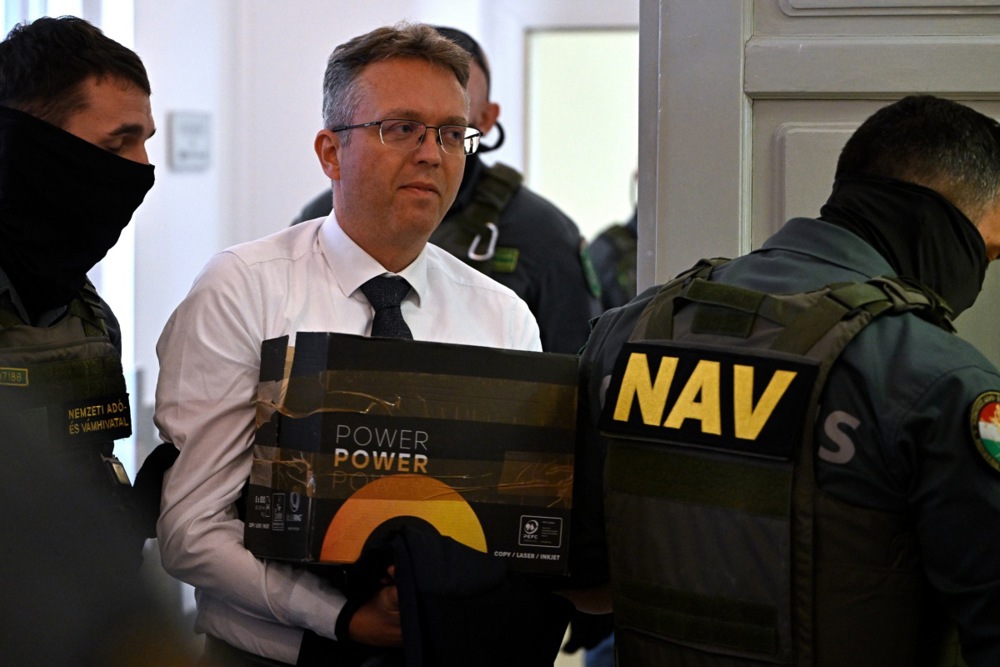
It has been an eventful few days in Hungarian public life. Efforts to hold former officials accountable are gathering pace: two former ministers have been remanded in custody over suspected breaches of fiduciary duty involving billions of forints and the acceptance of bribes.

The National Asset Recovery and Protection Office (NVVH) immediately took over four cases and began investigating them, including the visa business linked to Orbán’s brother. Meanwhile, a chief prosecutor who resigned from his post claimed in an open letter that Orbán himself had ordered the detention of Ukrainian cash couriers.

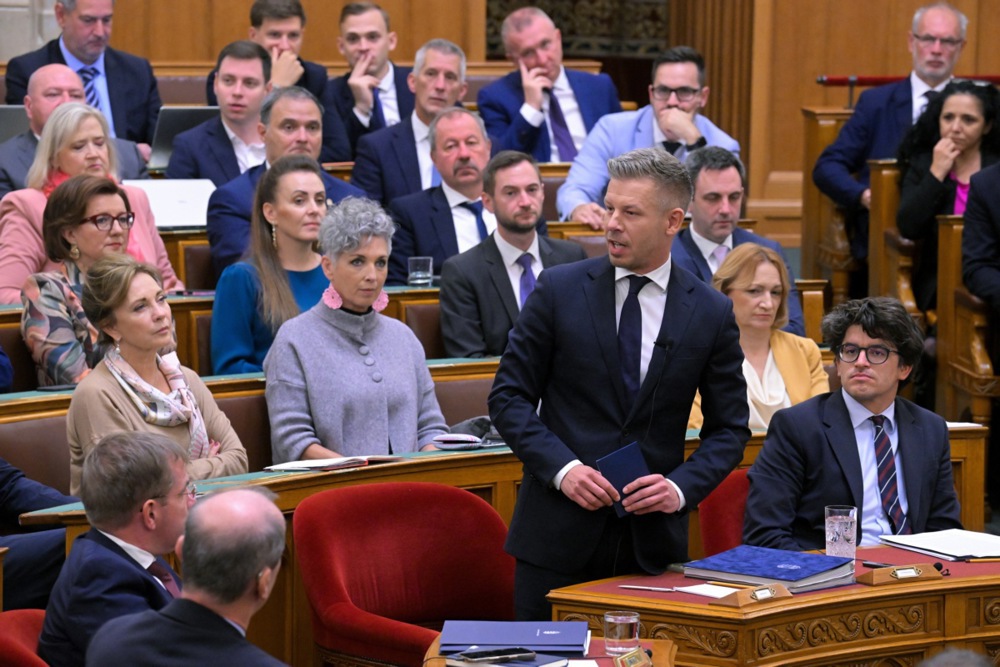
Prime minister Péter Magyar addresses parliament as MPs vote to lift his immunity, Budapest, 28 September 2026 (Srouce: Zsolt Szigetváry/EPA)

Two ministers from Orbán’s government have been held in custody

“The landing is beginning as part of ‘Operation Purgatory’,” prime minister Péter Magyar announced on Monday (28 September) morning. Later that morning, Hungary’s parliament lifted the immunity of Miklós Seszták, an MP and former development minister from the Christian Democratic People’s Party (KDNP); Balázs Hankó, an MP and former culture and innovation minister from Fidesz; and prime minister Magyar.

Prosecutors requested that Hankó’s immunity be lifted on suspicion of breach of fiduciary duty: he is suspected of causing losses of 17 billion forints (€46.5m) to the state budget. Authorities are investigating Seszták on suspicion of accepting bribes and other offences. The former minister and the then chief executive of Hungarian National Asset Management are suspected of receiving approximately 12.6 billion forints (€34.2m), in bribes through an intermediary between 2015 and 2018.

Magyar himself requested the lifting of his own immunity after the deputy prosecutor general asked the speaker of parliament to initiate the procedure over an incident in June 2024. According to the Office of the Prosecutor General, Magyar deliberately dropped the phone of a man filming him into the Danube, an act it classifies legally as theft.

After the vote on his immunity, Seszták went to the Central Investigating Chief Prosecutor’s Office, where he was taken into custody. He said he had committed no crime and wished to give a statement. On Wednesday, a court ordered the former minister’s remand in custody.

Hankó initially waited in the Fidesz parliamentary group’s office for police to take him away. Under the rules, however, he should have presented himself at the Central Investigating Chief Prosecutor’s Office.

Under the Act on the National Assembly, police may enter the parliament building and take action there only with the speaker’s specific permission, while the Parliamentary Guard may neither forcibly bring him before the authorities nor take coercive measures against him. Parliament speaker Ágnes Forsthoffer therefore firmly called on Hankó to leave the building and cooperate with the investigating authorities.

Hankó subsequently held a press conference with his wife and children present, claiming that he was the target of a politically-fabricated case and declaring his innocence. He finally accepted the summons at 7.20 pm and left parliament, setting off to give a statement amid carefully-staged scenes. Orbán’s social media page live-streamed the entire episode (while the Fidesz leader was in Belfast cheering on Hungary’s national football team).

In a statement, prosecutors said that Hankó and his associates had used National Cultural Fund resources for purposes other than those prescribed by law on 1,079 occasions between 3 September 2025 and 30 March 2026.

This article continues, but the full version is available only to EUobserver.com subscribers. Visit account.euobserver.com/membership

  •  

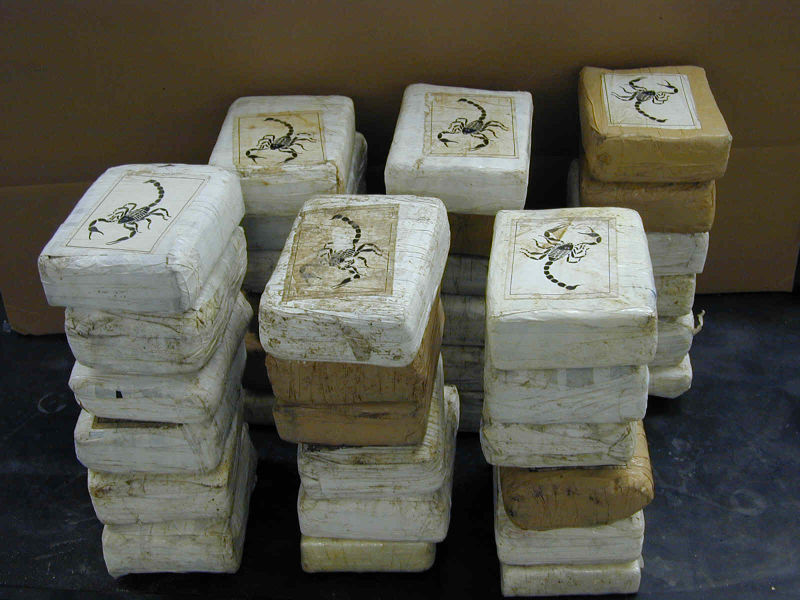
From the Netherlands to Sierra Leone: EU aid, a president’s daughter and Europe’s most‑wanted cocaine boss

The EU has played down claims by the Dutch government that the bloc’s decision to suspend aid support for Sierra Leone was because the west African country refused to extradite one of the world’s most-wanted drug traffickers to face trial in the Netherlands. 

Speaking on Thursday, (1 October) after a meeting of EU justice ministers in Luxembourg, migration commissioner Magnus Brunner told reporters that the decision to suspend support was made for “technical reasons” — but without giving more detail.  

Sierra Leone was allocated €352m in EU funding between 2021 and 2027, under the bloc’s seven-year budget framework. The country was set to receive €18m from the EU this year. 

But Dutch justice minister David Van Weel insists that the suspension of funds is the result of months of pressure from the Dutch government to persuade president Julius Maada Bio’s government to hand over convicted Dutch drug trafficker Jos Leijdekkers.  

This article continues, but the full version is available only to EUobserver.com subscribers. Visit account.euobserver.com/membership
  •  

Ceuta has become a laboratory for the degradation and dehumanisation of migrants

We went to Ceuta to see how Europe treats people who arrive at its borders. We came back asking how Europe can still call itself a continent governed by law.

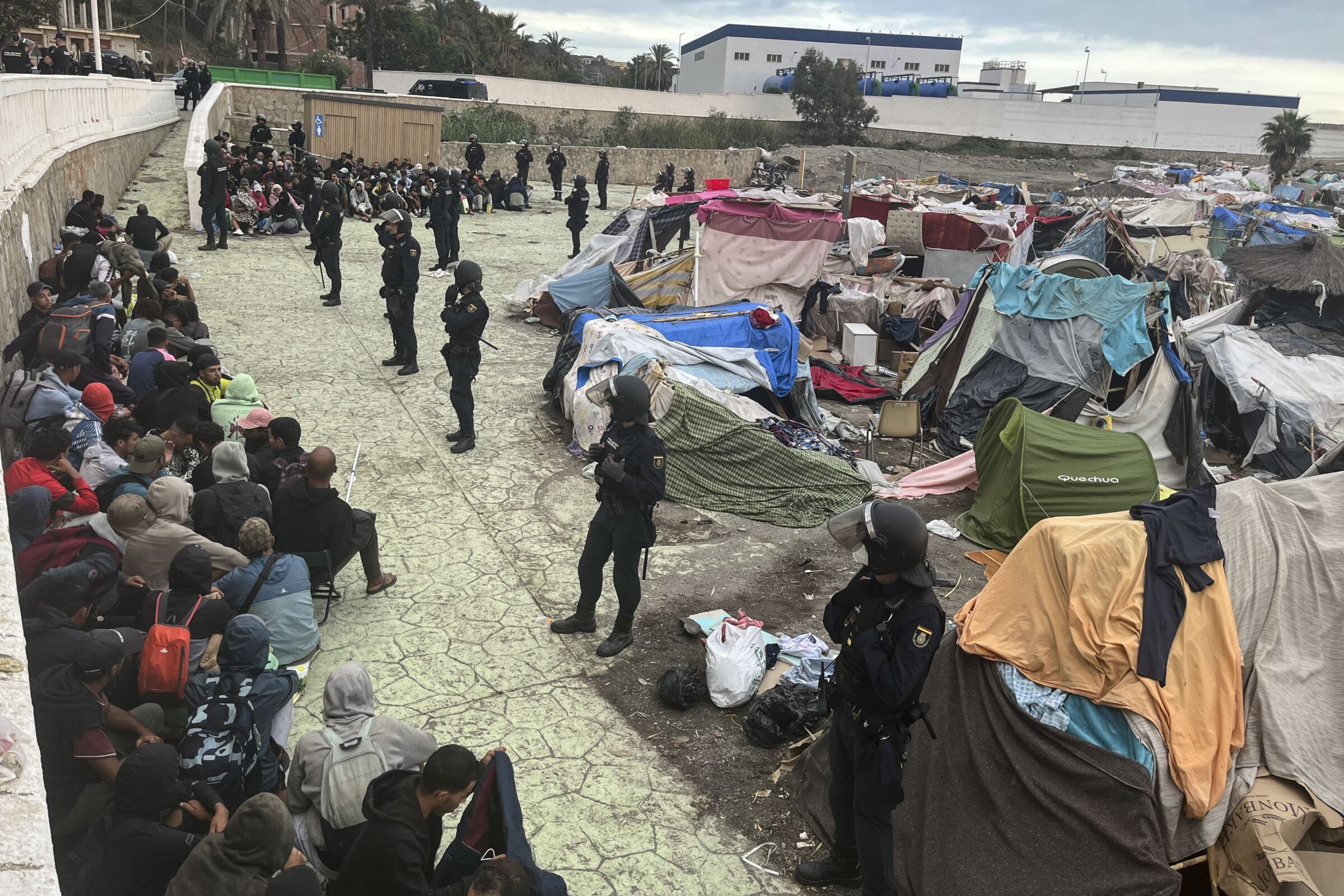
What we saw there was the often abstract failure of migration policy made brutally concrete: the daily humiliation of human beings — people sleeping under plastic sheets, children left without protection, food distributed under military guard, allegations of beatings and torture, and migrants treated as a threat rather than as people with rights.

These are scenes we never expected to encounter in Europe in 2026. Yet we saw them ourselves. And now that we have seen them, we cannot pretend we did not.

Morally unthinkable and unacceptable

In Ceuta, the boundaries of what is morally unthinkable and unacceptable have been crossed.

Migrants and those who help them are living in a kind of state of exception, where European law has been suspended and prolonged arbitrary police and military rule prevails.

Ceuta is a city abandoned by Spain, Europe and the law, where people are segregated according to their origin in circumstances that recall apartheid regimes. It has become a laboratory for the degradation and dehumanisation of migrants.

The future of Europe is being decided there.

We visited locations where thousands of people are living in undignified conditions, under makeshift shelters, plastic tarpaulins or in the open, assisted by local residents and NGOs such as No Name Kitchen.

They described constant harassment, insults, threats, public targeting through leaked photographs, and the detention of five members accused of disobeying authorities after recording a police operation involving migrants.

First, the far-right Spanish party Vox turned desperate people into prey to be “hunted down one by one”. Eventually, those trying to feed or assist them also became targets. When a group is sufficiently dehumanised, those who try to help them can be dehumanised too.

At Trampolín beach, we saw how the Red Cross distributes, once a day, a single bag of cold food: bread, water, tuna, juice and biscuits, under the watch of National Police vans.

Migrants from other areas can walk for hours to reach it. One day, we witnessed military forces preventing the Red Cross from distributing the same ration to around 1,000 people.

Whether someone eats can depend on military personnel, who can remove people from the queue or deny them food. The food distribution also coincides with Red Cross medical assistance, forcing some people to choose between eating and having their wounds treated.

Children alone on the streets

We spoke with children living on the streets, alone, hungry and cold, without adequate protection. We were told that National Police officers sometimes refuse to identify children who approach them for help, preventing them from entering the protection system.

This is compounded by the refusal of autonomous communities governed by Spain’s centre-right People’s Party and Vox to take them in, and by the Ceuta government’s refusal to appoint legal representatives.

We also heard allegations concerning Ceuta University Hospital. Migrants can face separate treatment at the emergency department and, according to migrants and NGOs, military personnel guarding the entrance prevent them from waiting inside, including minors.

We heard the account of a child with a fractured leg who, after being treated by Médicos Mundi, was allegedly told at the hospital to “go back to your country and see a specialist” and given ibuprofen. In another case, someone was allegedly told: “We are not going to treat you because you have invaded us.”

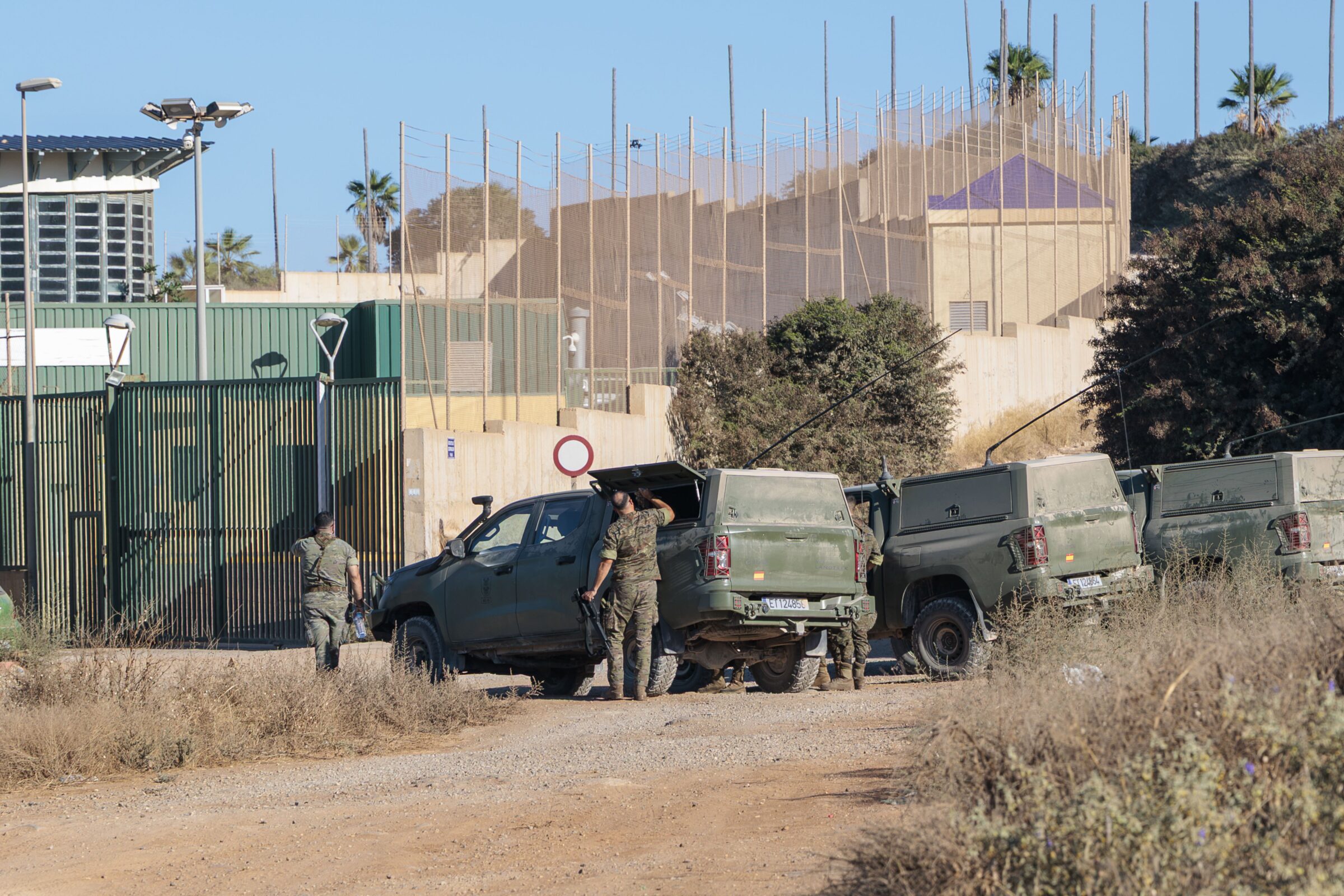
We also received accounts of torture and cruel, degrading and inhuman treatment by regular military forces and the Legion. Migrants and NGOs described nighttime patrols involving harassment, humiliation, theft, destruction of mobile phones and beatings after people had been restrained with cable ties.

Some were allegedly forced to shave their heads or kneel to kiss a Christian cross. We are particularly concerned by allegations involving women and girls subjected to sexual humiliation.

This is extremely serious. The state is going on the hunt, while those who should protect these people are violating their rights. First came photographs, then video footage published by elDiario.es.

These were not images from the West Bank. They were from Ceuta. First there were allegations. Now there are images. Defence minister Margarita Robles must give explanations.

These soldiers should no longer be patrolling Ceuta’s streets. Article 51 of Spain’s Organic Law on the Disciplinary Regime of the Armed Forces allows for their provisional removal from duty. We have asked the minister to act immediately.

We also documented allegations of daily racist, xenophobic and Islamophobic harassment. Migrants and racialised people are reportedly prevented from entering the city centre, shops and supermarkets by military personnel who decide, based on skin colour or clothing, who can pass.

Racial profiling also affects Ceutíes of Moroccan origin or perceived as such. Some of us were even asked to leave a city-centre restaurant because we were accompanied by a human rights activist and a racialised person.

Our political assessment is clear: what is happening in Ceuta should not happen. We cannot become accustomed to systematic violations of human rights against migrants and those who assist them.

Responsibility lies with perpetrators, but also with political leaders, including those in Vox and the PP, far-right influencers spreading hate speech, and media outlets amplifying it by calling human beings “invaders”. When a child becomes an “invader”, his innocence can disappear in the eyes of those who hear that language, opening the door to dehumanisation.

The solution is to enforce the law, ensure accountability and transfer migrants to mainland Spain, where there are sufficient places to accommodate them in dignified conditions while their administrative status is resolved.

But the right does not want solutions.

They want migrants sleeping on beaches and streets in increasingly degrading conditions. They want Ceuta to remain a giant television set, a powder keg from which migrants can be portrayed as an “invasion”, insecurity and chaos used to fuel hatred and racist violence.

Their electoral campaign has begun in Ceuta. The socialist part of the government, afraid of being portrayed by the right as weak, refuses to transfer migrants to the mainland and keeps them trapped there. Those who want to set Ceuta on fire are pouring the petrol; those who could put out the fire are letting them do it.

  •  

A new role for Frontex? Interview with Executive Director Hans Leijtens

The mass arrival of migrants in the Spanish exclave of Ceuta in July sparked a debate about the role of the European Border and Coast Guard Agency’s (Frontex) role in future crisis situations.

In an interview with the European Newsroom (enr), Frontex Executive Director Hans Leijtens said the European Union should improve its “situational awareness” and better connect early warning systems at the bloc’s external borders.

The European Commission this week proposed a new mandate for Frontex that includes setting up a rapid-response team that can deploy within 24 hours.

In addition, a senior EU lawmaker called for Frontex to take operational command in such situations. Leijtens rejected the idea, arguing that responsibility for protecting the EU’s external borders should remain with member states.

Leijtens also addressed pressure on the EU’s eastern borders amid Russia’s ongoing war of aggression against Ukraine. He said the issue was not just about migration, but reflected the close links between defence, security, border management and migration.

The Frontex chief also highlighted the drop in irregular migration through the Western Balkans, and called upon EU candidate countries in the region to complete the necessary reforms for membership. “They know that if they want to join the Union, one chapter will be about border management, so why not tick the boxes now,” he said.

The interview was conducted by journalists from European Newsroom partner agencies dpa (Germany), CTK (Czech Republic), and PAP (Poland) on behalf of the entire network.

Read some of our network’s coverage here:

  •  

Why young men are drawn to the far right and young women to the far left

First published in Respekt.

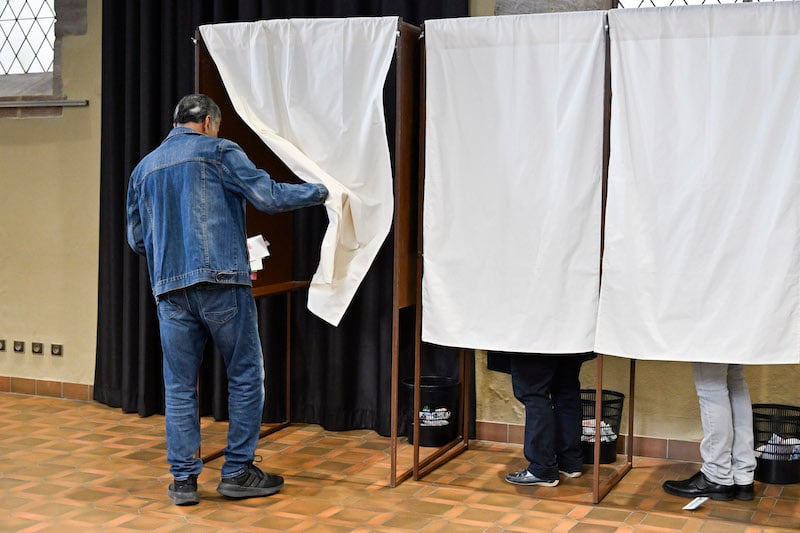
In Germany’s recent state elections, voters as young as 16 could cast ballots. The results confirmed a global trend of political division between young women and men.

“On 1 January, we both deleted Instagram, TikTok and Snapchat. And whichever of us would be the first to start watching Reels again or download Instagram would have to eat a slice of rotten cheese,” Greta and Lena told Germany’s Deutschlandfunk radio station.

The 16-year-old girls live in a village in Mecklenburg-Vorpommern and chose to delete social media because they had been spending far too much time on it. They often scrolled on TikTok or Instagram late into the night, affecting their performance at school. This summer, however, both reinstalled TikTok for a month. This time without the punishment of a slice of rotten cheese.

They did so for an experiment with journalists from Deutschlandfunk. The journalists wanted to find out what political content the girls would consume through TikTok, the popular Chinese social network, during the peak of the election campaign. Mecklenburg-Vorpommern went to the polls on the third weekend of September. And, as is well known, the far-right Alternative for Germany (AfD) swept the state, just as it had two weeks prior in Saxony-Anhalt.

Greta and Lena, however, were in a markedly different position from their peers in Saxony-Anhalt. For the first time, the north-eastern federal state of Mecklenburg-Vorpommern had allowed 16- and 17-year-olds to vote in state elections. Since young people consume much of their news on social media, Greta and Lena immersed themselves in TikTok, one of the networks now most popular among young Europeans.

For the first few minutes, the girls watched a range of non-political videos — recipes, tomato growing and “silly” AI videos. Then, at around the third minute of scrolling, the first political content appeared. First came a video about Erich Honecker, the former East German communist politician. “Why am I seeing so much stuff about the GDR here?” Greta wondered. As she continued scrolling, she came across AfD co-leader Alice Weidel herself.

It was the first moment when the girls began to notice how quickly their initially apolitical feed was changing. “I feel as if it is constantly just AfD,” Greta said later. She added that she had not searched for any such content in advance. Over the following month, the girls kept a diary of their feed and observed how, after political videos, more and more similar content began appearing — not only from the parties themselves, but also from a range of accounts that picked up and further spread their messages.

The experiment confirmed what has been known for some time: TikTok and other networks alongside it can quickly form the political world a young person sees and the views they come to adopt. At the same time, algorithms are accelerating a trend of a political divide between young women and men, which was also reflected in the results of the state elections mentioned above in Germany.

Algorithms exacerbate polarisation

This article continues, but the full version is available only to EUobserver.com subscribers. Visit account.euobserver.com/membership
  •  

Listen: Are EU countries allowed to bring back border controls whenever they want?

Production: By Europod, in co-production with Sphera Network.

EUobserver is proud to have an editorial partnership with Europod to co-publish the podcast series “Briefed” hosted by Léa Marchal. The podcast is available on all major platforms.

Find the full transcript below: 

Italy brought back border controls with Spain in August, and has now extended them until at least 15 October. Giorgia Meloni’s government fears that migrants who arrived in Ceuta, reach the continent and Italy.

Are these restrictions legal in the Schengen area? What are the EU’s levies to avoid such controls?

Since 1 August, Italy has temporarily reintroduced controls at its air and sea borders with Spain. The measure has now been extended until 15 October. In return, Spain has also introduced controls at its air and sea borders with Italy.

“This is not against Spain” the Italian foreign affairs minister Antonio Tajani said, adding “we have a duty to protect our borders.”

The starting point was the arrival of tens of thousands of migrants in the Spanish enclave of Ceuta at the end of July. Italy said it was concerned about possible secondary movements towards the rest of Europe, and brought back controls at its borders with Spain.

But from a legal point of view, EU countries can’t simply reintroduce border controls whenever they want.

The Schengen area is based on the principle of free movement, meaning there should normally be no checks at internal borders. The Schengen Borders Code provides an exception. If a country faces a serious threat to public policy or internal security, it can temporarily reintroduce border controls, as a measure of last resort.

The controls can initially be introduced for up to 30 days, and can then be extended under certain conditions.

Italy has already extended its measure, which has now been in place for more than two months.

What does the European Commission say about Italy’s decision? The Commission has been asked about the Italian controls and says it is currently assessing the situation.

But the Brussels-based organisation The Good Lobby argues that Italy is violating the Schengen rules. It filed a complaint with the European Commission, asking it to open an infringement procedure against Italy.

According to Alberto Alemanno, who filed the complaint, there is no security threat that would justify bringing back the controls.

His argument is that none of the migrants who arrived in Ceuta were transferred to Italy. And, he says, people travelling between Ceuta and mainland Spain are already subject to identity checks.

So Italy’s justification, he argues, does not meet the conditions set out in the Schengen Borders Code.

Now, is Italy the only EU country bringing back border controls? No. If you look at the notifications sent by EU countries to the European Commission, around ten countries have reported temporary controls at some of their internal borders in recent months.

In response to the situation in Ceuta, Italy is the main example.

Austria also notified the Commission of controls in September, citing the situation in Ceuta among several reasons. But those controls concern its land borders with Slovakia, the Czech Republic, Hungary and Slovenia.

So Austria is not checking passengers arriving by air from Spain.

Germany, for example, has invoked the same exception in the Schengen rules to carry out controls at its land borders with all its neighbours.

That does not mean that every border crossing is closed, or that every traveller is systematically checked. It means German authorities can carry out checks at those borders, including spot checks.

Germany’s main justification is continued migratory pressure, alongside other security concerns. And for now, the Commission is kind of letting all of this happen. It did raise concerns at some point: in June, the Commission published an assessment of temporary border controls in nine EU countries, including Germany, Austria and Italy.

It did not formally declare these countries’ controls illegal. Instead, it called on them to work towards lifting the controls, arguing that the EU has put in place measures to address some of the risks being invoked to justify them.

Those measures include the new Migration and Asylum Pact and new rules on entry and border management. The bigger question, then, is how long temporary border controls can remain in place before they stop being an exception to Schengen and become the new normal.

  •  

EU Return Regulation Clears Final Vote

New rules open the way to offshore hubs and longer detention as legal safeguards move into focus BRUSSELS — European Union governments have completed the adoption of a sweeping new system for returning people who have no legal right to remain in the bloc. The regulation allows member states to transfer people to “return hubs” […]

  •  

Frontex Surveillance Faces Libya Rights Challenge

Pending EU court case intensifies scrutiny as governments seek a stronger border agency A pending case against Frontex has returned to the centre of Europe’s migration debate as EU governments consider giving the border agency a larger operational role. The proceedings concern allegations that aerial surveillance helps Libyan forces intercept people at sea and return […]

  •  

UN Rights Debate Exposes Global Divisions

Wars, sanctions and shrinking civic space shape the opening of the General Assembly’s Third Committee The United Nations General Assembly’s principal human-rights committee opened its annual debate with warnings that war, racism, inequality and restrictions on civil society are weakening protections worldwide. Yet the discussion also exposed a deeper political divide: governments agree that the […]

  •  
❌