❌

Reading view

The Epstein Digital Financial System is Getting Ready to Replace the U.S. Dollar

Comments by Brian Shilhavy
Health Impact News

Leah of The Leah Files has just published Part III of her Currency Killer series, The New US Dollar: The One Epstein Built.

This series is, by far, the best intel I have read in the Alternative Media regarding the takeover of the U.S. Dollar in an attempt to replace it with digital currencies.

While she may use AI ethically for research and to help her create graphics (although I have no idea if she does), this is real intel and she provides links to her sources, unlike many Substack Pages that are completely written by AI with no sources given to fact check their content.

We know Leah is a real person (but probably not using her real name), because she has her own YouTube channel.

I have been publishing evidence for years now that the American Financial System is a system built on the Jeffrey Epstein child sex-trafficking network.

And this latest article by The Leah Files provides strong evidence to that fact, and connects all the dots showing just who is doing this in this current Zionist Trump Administration.

You will also learn in this latest article why this Administration gives Argentina such preferential treatment, including giving them better deals on beef than they do to U.S. farmers.

Read Health Impact News‘ coverage of her first two articles in this series, which is our most-read article so far in September, here:

Treasury Secretary Scott Bessent Just Restructured The American Financial System to Destroy the U.S. Dollar

The New US Dollar: The One Epstein Built

Inside the private currency built by Epstein’s crypto network, legalized by this administration, and controlled by the people who killed the old one.

by The Leah Files

Excerpts:

I think they are replacing the US dollar with a private one.

Not in some distant future, not as a theory, but right now. Exposed and documented, happening in front of us, and no one is stopping it. If you haven’t read Parts I or II of my Currency Killer Series, go check them out. This is Part III and it may be the worse one yet.

The United States government banned itself from making a digital dollar. Then it crashed the real one. Then it handed the replacement to a private company connected to $17 billion in organized crime, whose co-founder spent eight years as Jeffrey Epstein’s personal crypto advisor, and whose largest shareholder was convicted of software piracy before becoming the richest man in Italy.

That company is called Tether. It controls $183 billion in digital currency and it is now the 17th largest holder of US government debt on earth. It has never completed a publicly released independent audit. The UN has linked it to $17 billion in organized crime.

Tether is a stablecoin company, but it also owns 210,000 hectares of South American farmland and operates Argentina’s sole fertilizer producer. It holds a majority stake in a brain-computer interface company. It is the lead investor in a humanoid robotics firm. It owns 48 percent of a conservative media platform. Its third-largest shareholder controls a 10 percent stake in the privatized research arm of the UK Ministry of Defence.

Everyone involved is getting rich, except the American people.

Howard Lutnick’s sons’ own a piece of Tether. His firm, Cantor Fitzgerald custodies its reserves. Lutnick’s former minion, Bo Hines, championed the law regulating it from inside the White House and resigned one month after the president signed it, becoming CEO of the company the law was written for.

Scott Bessent is blocking a billion dollars in suspicious Epstein banking records while his old fund was paying an intelligence firm controlled by Epstein’s partner. Trump’s family has made over a billion dollars launching their own stablecoin.

This is not deregulation, it’s a heist. And I am going to show you what they are doing.

Welcome to Part III of the Currency Killer series.

What Is Tether

Most people have never heard of Tether. So let’s start there.

A stablecoin is a digital token pegged to the US dollar. You send a company one real dollar, and they give you one digital token that is supposed to be worth one dollar. The company holds your real dollar in reserve.

The token trades on crypto markets like cash. When you want your money back, you redeem the token and the company gives you a dollar.

Tether is the largest stablecoin on earth.

It has $183 billion of these tokens in circulation. That makes it bigger than the GDP of most countries.

The company is supposed to hold $183 billion in real reserves to back them. It earns interest on those reserves, mostly US Treasury bills, which generated $13 billion in profit in 2024 alone. It has roughly 200 employees.

Here is the problem: the CFTC found in 2021 that Tether was actually fully backed by reserves only 27.6 percent of the time. The company paid $41 million in fines.

The New York Attorney General’s office reached a separate $18.5 million settlement over similar misrepresentations. The UN has linked Tether’s token to $17 billion in criminal activity.

The DOJ has an active criminal probe. And the company has never completed a full, publicly released independent audit.

That is the company at the center of this story.

Now let’s look at who built it because this is where I knew there was something more nefarious happening.

The Man Who Built Tether

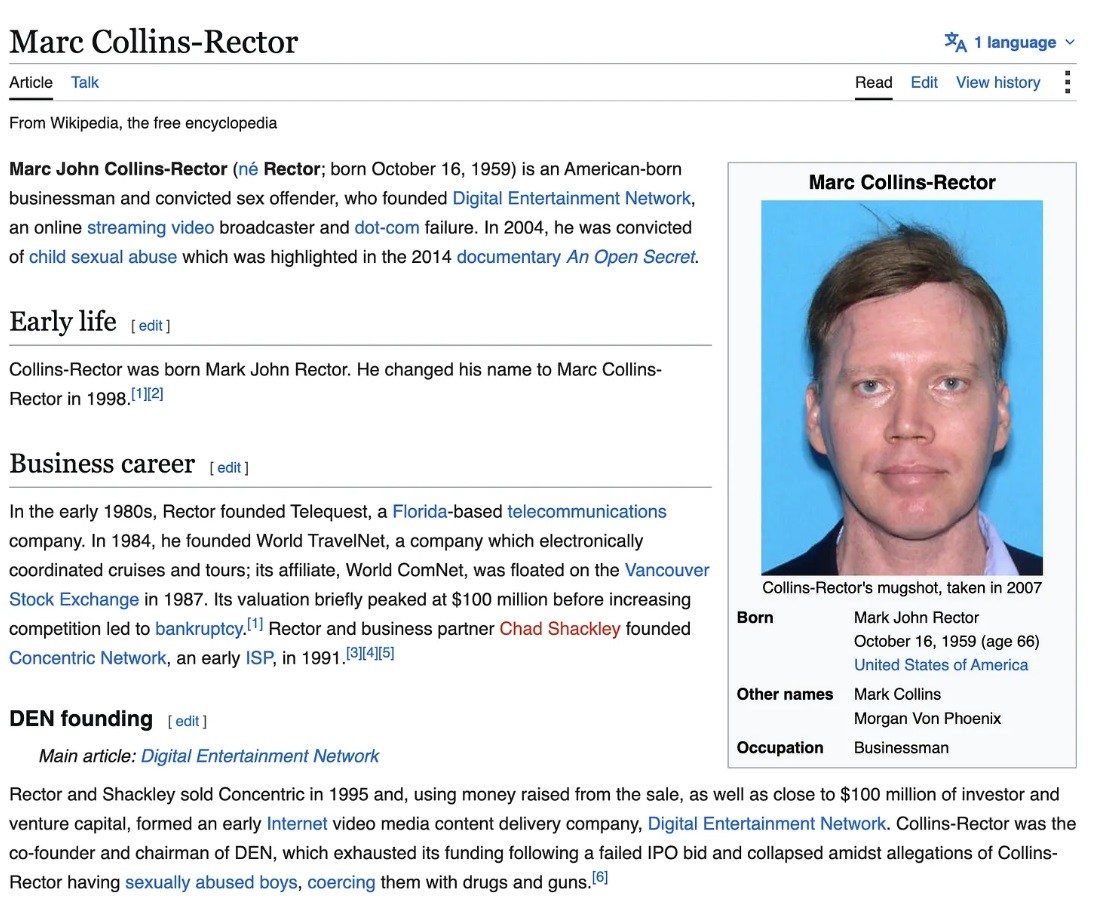
His name is Brock Pierce. Before he co-founded Tether, he was the teenage Vice President of a company called Digital Entertainment Network (DEN).

The founder of that company, Marc Collins-Rector, was later convicted of child sex trafficking.

In the late 1990s, Pierce became Vice President of Digital Entertainment Network (DEN), a pioneering internet video company founded by Marc Collins-Rector, at the age of 17, earning a salary of $250,000.

At DEN’s Hollywood Hills parties, Collins-Rector and others allegedly sexually assaulted half a dozen teenage boys, including a 15-year-old, according to civil lawsuits filed between 1999 and 2002. When Collins-Rector fled the country to avoid prosecution, Pierce went with him.

They ended up in a villa in Marbella, Spain, which police raided in 2002 and found Collins-Rector, Pierce, and a third DEN executive, along with child pornography and firearms.

Collins-Rector was convicted of child sexual abuse in 2004. Pierce was never charged, but the civil lawsuit resulted in a $2,000,030 default judgment plus $1 million in interest because Pierce and his co-defendants never responded to the allegations of rape, assault, and death threats.

In 2010, Jeffrey Epstein was trying to salvage his reputation after his first sex trafficking conviction. He hired a man named Al Seckel, a serial scammer and self-styled illusionist who had been in a relationship with Ghislaine Maxwell’s sister Isabel for years.

Seckel organized a conference for the Epstein Foundation on Little Saint James, Epstein’s private island, called the Mindshift Conference.

Pierce was invited to present on Bitcoin. It was January 2011. Epstein noticed him immediately.

In an email sent under a fake name, Epstein singled out “brock” as “interesting.” Within three months, Pierce was at Epstein’s Manhattan townhouse asking for financial advice. Their partnership lasted eight years.

The way they were introduced tells us a lot.

Pierce entered Epstein’s world through a man who was dating the sister of Ghislaine Maxwell, the woman who procured and groomed girls for Epstein’s trafficking operation, now serving twenty years in federal prison.

The man who made the introduction, Seckel, was later found dead at the bottom of a hundred-foot cliff in southern France.

And Pierce walked in already carrying a default judgment for rape and an affinity for child porn. Epstein saw exactly what he was getting and Pierce was the perfect target.

What followed was not casual networking. It was an eight-year operational relationship between a crypto pioneer and a convicted predator, documented in thousands of pages of emails released by the Department of Justice on January 30, 2026.

The Emails

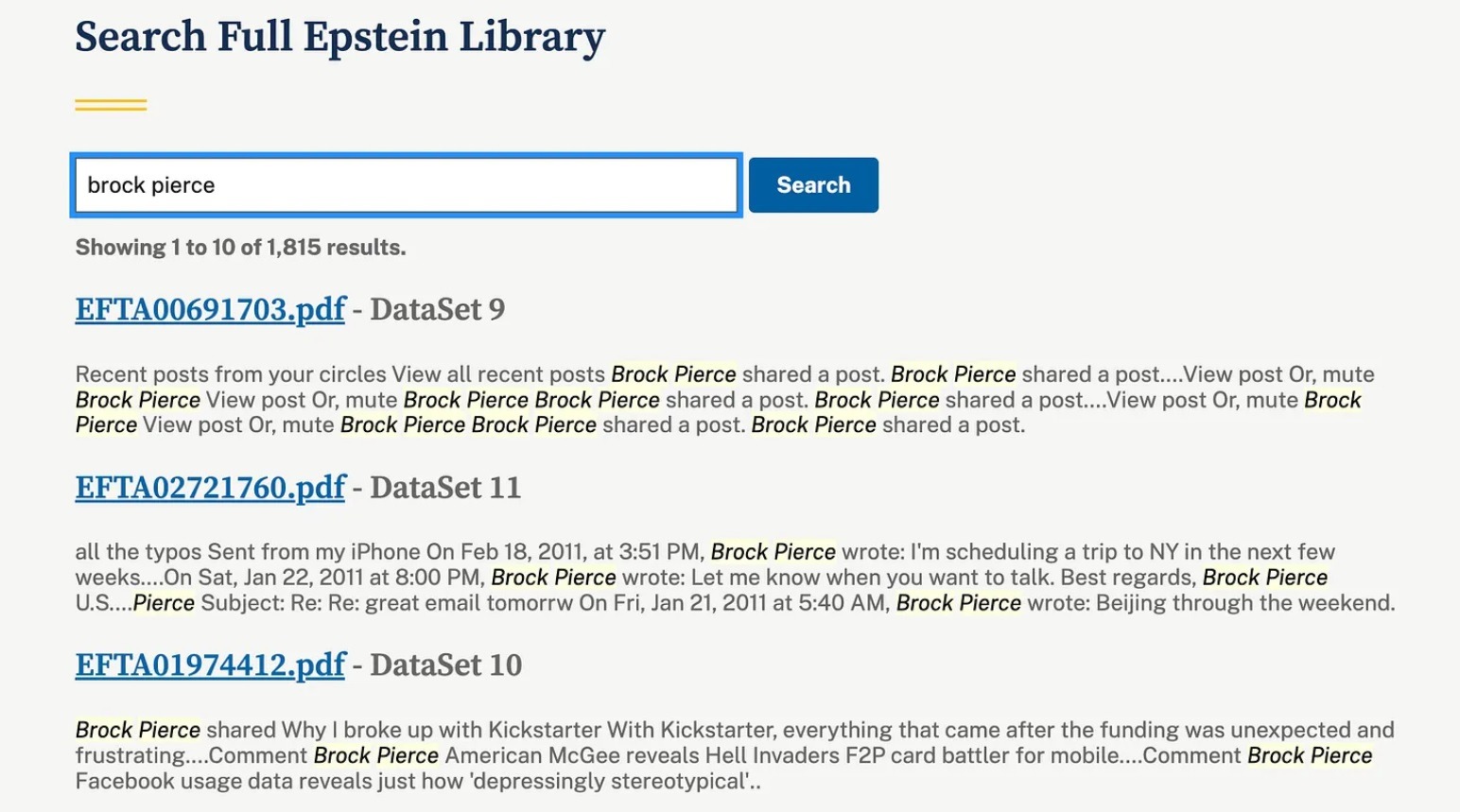
The DOJ released over 3.5 million pages of Epstein files, including direct correspondence between Pierce and Epstein spanning 2011 to 2019.

Pierce was mentioned 1,815 times, more than almost any other private figure.

The emails continued for months after Epstein’s second arrest on federal sex trafficking charges. Here is what they show.

By 2012, the correspondence had turned dark. Pierce sent Epstein dozens of photographs of a Ukrainian woman named Anastasia, three days after Epstein asked him to “take photos and find me a present.” Pierce wrote back that “Ukraine is now my favorite country.”

In a separate exchange, Pierce told Epstein there was “a boat in Antigua full of amazing Ukraine’s finest” waiting for him.

In another email, Epstein’s assistant wrote that Brock had a “great time with the girls in St. Barths.” Pierce’s own assistant sent Epstein’s team photos from Ukraine and mentioned upcoming meetings. There were references to visits on Epstein’s boat and coordination around events with Epstein’s inner circle.

These are the emails of a man inside the operation. Not an acquaintance. Not a networking contact. Pierce was coordinating women, referencing boats, sending photographs on request, and maintaining this relationship for years after Epstein’s first conviction.

But the business side of the relationship is what changed the world.

Pierce was not just advising Epstein on crypto. He was the bridge between Epstein’s money and the people who would build the infrastructure that now threatens to replace the US dollar.

He brokered the Coinbase deal.

In December 2014, Pierce connected Epstein to Coinbase’s Series C round through his venture firm, Blockchain Capital. Epstein invested $3 million. Coinbase co-founder Fred Ehrsam emailed asking to meet Epstein in New York.

In 2018, a trust associated with Epstein sold $15 million of Coinbase equity back to Blockchain Capital. Pierce wired $15 million to Epstein.

That $3 million seed investment would eventually be worth billions when Coinbase went public at a $51 billion valuation.

He pitched Bitcoin to Larry Summers at Epstein’s townhouse.

Epstein hosted the meeting. Pierce described himself to Summers as “the most active investor in Bitcoin.”

Summers said he saw “opportunities” but was worried about reputational damage if he lost money. A fact-checker for a planned New York Magazine article in 2015 asked Epstein:

“Did you meet with Brock Pierce to discuss Bitcoin? Did Larry Summers join this meeting?”

Epstein immediately forwarded the questions to author Michael Wolff with a two-word response: “nfw” (no f*cking way).

The article was never published.

The Network

Pierce and Epstein did not operate in a vacuum. Their shared network reached into the political and financial circles that now control American crypto policy.

Steve Bannon. Pierce and Bannon had worked together for seven years before any of this. Pierce hired Bannon in 2005 to run the financial side of his company Internet Gaming Entertainment, later saying

“Steve Bannon was my right-hand man for, like, seven years.”

Decrypt reported that Pierce and Epstein “appeared to use each other’s connections to develop business partners like Andrew Farkas and politicos like Steve Bannon.”

By August 2018, text messages released by the House Oversight Committee show Epstein was coaching Bannon’s media strategy in real time.

During a six-day exchange, Epstein offered line-by-line feedback on Bannon’s MSNBC appearances and crafted talking points on tax cuts, immigration, and security clearance revocations.

After one interview that ran a full hour, Epstein wrote “Atta boy.” In a separate exchange, Epstein asked Bannon about “brocks people,” meaning Pierce’s crypto network.

He suggested the Treasury Department create a voluntary disclosure form for crypto gains. Bannon would later describe cryptocurrency as “disruptive populism” that “takes control back from central authorities.”

Peter Thiel. Epstein invested $40 million into Thiel’s venture firm, Valar Ventures, in 2015 and 2016. Reid Hoffman made the introduction.

That bet became the single largest asset of the Epstein estate, valued at roughly $170 million by the time Epstein died.

Thiel’s proteges now run US crypto policy: JD Vance is Vice President, David Sacks served as crypto czar, and Thiel’s Founders Fund was the largest investor in Polymarket.

Pierce’s direct role in the Thiel connection is not documented, but both men operated in the same small circle of Epstein’s crypto and tech advisors during the same period.

The result: Pierce co-founded Tether, brokered Epstein’s crypto investments, worked alongside Bannon for years, and operated in the same orbit as the Thiel network that now shapes policy.

The man who co-founded the stablecoin holding $135 billion in US government debt was at the center of all of it.

There is a reason we haven’t heard much about Pierce. Now ask yourself why they are they protecting him?

Where Pierce Is Now

Brock Pierce lives in Puerto Rico, where Act 60 allows him to pay near-zero taxes on capital gains. He is still Chairman of the Bitcoin Foundation. He still runs the Integro Foundation, whose most recent IRS filing shows $78 in total assets.

He ran for president in 2020 and expressed regret for his ties to Epstein during the campaign. Conveniently he denounces his relationship a year after Epstein was “found dead” in his cell.

In 2025, Pierce was spotted at Mar-a-Lago cutting the ribbon for a golden statue of Donald Trump.

That same year, he gave over $1.1 million to a super PAC supporting the reelection of New York City Mayor Eric Adams, five days before Adams dropped out of the race. When Adams withdrew, Pierce launched a campaign called “Draft Eric Back” to get him to reconsider.

Adams had been indicted on federal corruption charges.

Pierce’s “Pierce School” in Washington, DC is not a school. It is a historic building near Capitol Hill that he purchased and converted into a residential penthouse and event space where he hosts crypto policy roundtables with members of Congress.

In March 2025, he and Rabbi Moshe Reuven Azman, who served in the IDF, laid a foundation stone for a planned “business school” at Anatevka, a gated compound outside Kyiv.

Pierce’s “charity” has donated at least $630,000 to Chabad-affiliated organizations.

No evidence exists that the school teaches anything, has enrolled students, or has begun operating.

This is a man who was sending photos of Ukrainian women to a convicted sex offender, brokering introductions between that sex offender and the people who now control American crypto policy, and who is now hosting congressional roundtables, attending presidential events, and donating millions to indicted politicians. His foundation holds $78 and looks like a personal shell charity.

Tether Today

Now that you know what Tether is and who built it, here is who runs it.

Who Owns It

Tether has never voluntarily disclosed who owns it. It is a private company incorporated in the British Virgin Islands with no public reporting obligation.

The only known ownership data comes from leaked documents reported by the Wall Street Journal in 2023, showing stakes as of 2018. As of those documents, four people controlled 86 percent of the company.

The Empire Build

Starting in late 2023, Tether began spending its profits at an extraordinary pace, acquiring stakes in companies across sectors that have no obvious connection to stablecoin issuance.

The Farmland

This is the part of the story that made me stop and ask what we are actually looking at.

Adecoagro is not a farm. It is a vertically integrated agro-industrial conglomerate incorporated in Luxembourg and listed on the New York Stock Exchange.

When Tether took control in April 2025, it took control of the entire chain from soil to supermarket shelf: the land itself, the crops grown on it, the mills that process them, the dairy plants, the rice processing facilities, the peanut sorting plants, the branded consumer products, the export terminals, and the port infrastructure.

In mid-2026, Adecoagro launched a Bitcoin mining pilot at its Brazilian sugar mills, using surplus electricity from sugarcane bagasse cogeneration to power approximately 1,280 mining machines. This connects directly to Tether’s stated goal of becoming the world’s largest Bitcoin miner.

And then there is the fertilizer.

Profertil

In December 2025, eight months after Tether took control of Adecoagro, the company acquired a 90 percent stake in Profertil for approximately $1.1 billion.

Profertil is Argentina’s sole producer of urea, the most widely used nitrogen fertilizer in the world. The plant in Bahia Blanca produces 1.3 million tons of granular urea per year and supplies roughly 60 percent of Argentina’s domestic fertilizer demand.

This means that a company whose co-founder was sending photos of Ukrainian women to Jeffrey Epstein and brokering introductions between Epstein and the people who now control American financial policy now also controls the fertilizer supply that South American agriculture depends on.

Every other farmer in Argentina who needs urea to grow crops is buying it from a Tether subsidiary.

The acquisition nearly doubled Adecoagro’s annual earnings, from $277 million to $467 million in EBITDA.

They also appointed Kyril Louis-Dreyfus to the Adecoagro board. His family founded the Louis Dreyfus Group, one of the four largest commodity trading houses on earth.

Now here is the part that made me consider this one the most important articles of the Currency Killer series.

This is not a hedge fund buying farmland as an inflation hedge. Tether looks to be building something specific.

Adecoagro co-founded a company called Agrotoken, which has already created three grain-backed stablecoins: SOYA, CORA, and WHEA.

Each token represents one ton of grain.

Farmers can use them as currency. Agrotoken partnered with Visa so producers can spend grain tokens with a card. They have already tokenized 230,000 tons of grain and transacted $70 million in deals. Adecoagro’s CEO said the goal was to build “tokenized land.”

Tether told CoinDesk that

“land is a crucial asset class, complementing its existing investments in bitcoin and gold.”

The company is building its own real-world asset tokenization platform designed to create digital versions of bonds, stocks, funds, and physical commodities.

Now connect the pieces.

Tether now controls the land, the crops grown on that land, the fertilizer those crops need to grow, the mills that process the harvest, and the platform that can tokenize all of it into digital currency. It already issues the largest stablecoin on earth.

This is a closed loop. Own the physical asset, process it, tokenize it, and issue the currency it trades in. They are not replacing the dollar with a digital version.

They are building an entire parallel financial system backed by food, land, and fertilizer, controlled by four people who have never disclosed who they are to the public, operating out of the British Virgin Islands.

The Switch

On January 23, 2025, Trump signed Executive Order 14178. It banned all federal agencies from developing or promoting a central bank digital currency. No government digital dollar.

The only digital dollars allowed in America would be private ones.

That same executive order explicitly promoted “the development and growth of lawful and legitimate dollar-backed stablecoins worldwide.” They banned the public option and endorsed the private replacement in the same document.

Then they weakened the dollar.

The Replacement

On July 18, 2025, Trump signed the GENIUS Act into law. It created the first federal framework for privately issued stablecoins, the exact product Tether sells.

The law allows stablecoin issuers to operate under a three-year grace period before meeting full compliance requirements and does not mandate independent audits.

Treasury Secretary Scott Bessent signaled that the law “will drive demand from the private sector for US Treasuries,” and indicated that stablecoin firms could buy up to $1 trillion in US government debt.

Here is the logic. Every dollar minted as a stablecoin creates a dollar of mandatory Treasury demand, because stablecoin issuers have to hold reserves.

Unlike normal investors, they are price-inelastic buyers, meaning they buy Treasuries regardless of yield. So you weaken the dollar abroad through tariffs and trade wars, driving countries away from the physical dollar, but you maintain dollar dominance through digital stablecoins that buy Treasuries automatically.

The European Central Bank warned in May 2026 that this “effectively outsources parts of the national debt to the crypto sector.”

But here is what matters, who controls those digital dollars?

It’s not the government, it’s not the Federal Reserve, it’s private companies.

Tether holds $135 billion in US Treasuries, making it the 17th largest holder of US government debt. And the people who own Tether, custody its reserves, and wrote the law that legalized it are all in the same room.

Bessent redefined what “strong dollar” means at his confirmation hearing:

“The price of the dollar has nothing to do with a strong dollar policy.”

He called CBDCs

“a first step toward financial surveillance”

and declared them “off the table.”

The private digital dollar is the only option, and everyone who built the framework is getting paid.

Who Else Is Getting Rich

The Trump Family

World Liberty Financial, the crypto venture backed by the Trump family, has generated over $1 billion in revenue. It launched its own stablecoin, USD1, which was used in a $2 billion investment deal between a Binance-affiliated entity and Abu Dhabi investors.

The president’s memecoin, $TRUMP, briefly hit a market cap of over $14 billion before crashing, with third-party analysis showing retail investors collectively lost approximately $3.8 billion while insiders profited.

The Thiel Network

Peter Thiel took $40 million from Epstein through the Valar Ventures fund, an introduction brokered by Pierce. That investment produced $170 million in returns and became the largest single asset in the Epstein estate.

Thiel’s network has been central to shaping crypto policy: his protege JD Vance is now Vice President, David Sacks served as the administration’s crypto czar for 130 days, and Thiel’s Founders Fund was the largest investor in Polymarket, the crypto prediction market that went from a $350 million valuation to $21 billion under the new deregulatory framework.

Polymarket has Trump Jr. on its advisory board and has flagged $200 million in suspicious trading activity.

The Beef

In February 2026, Trump signed an executive order quadrupling beef imports from Argentina. The order authorized 80,000 additional metric tons of tariff-free lean beef trimmings, allocated entirely to Argentina, with plans to scale to 300,000 tons.

He said it was to lower ground beef prices, which had hit a record $6.90 per pound as the US cattle herd shrank to a 75-year low.

American ranchers called it a “misguided effort” that would “undercut the future of family farmers and ranchers.” The National Cattlemen’s Beef Association said it “cannot stand behind the President while he imports Argentinian beef.”

China had just rejected 22 tons of Argentine beef over a banned antibiotic. Republican lawmakers opposed it. Ranchers warned it would destroy America’s ability to rebuild its own herd.

Now remember who controls Argentine agriculture.

Tether owns 210,000 hectares of Argentine farmland. Tether owns Argentina’s sole fertilizer producer. Tether owns 14,500 milking cows and two dairy processing plants.

Tether’s subsidiary Adecoagro is one of the largest agricultural conglomerates in South America. And the president just signed an executive order flooding the US market with Argentine beef at the exact moment Tether controls the land, the feed, the fertilizer, and the infrastructure that Argentine agriculture runs on.

The company that prints the digital dollar. The company whose reserves are custodied by the Commerce Secretary’s family firm. The company whose law was championed by a man who became its CEO. That company now sits at the center of a trade deal that undercuts American ranchers to benefit Argentine agriculture, the same Argentine agriculture it owns.

Maybe it is a coincidence. Maybe the president opened the floodgates to Argentine beef imports without knowing or caring that a company connected to Jeffrey Epstein controls the supply chain on the other end. Maybe.

But I do not believe in that many coincidences, especially based on what we have seen over the last year.

The Thread

One man attended a conference to rehabilitate a convicted sex offender in the Virgin Islands. Over the next eight years, he sent photos of women on request, brokered crypto deals that funneled millions through the sex offender’s accounts, and co-founded the company that now holds more US government debt than most countries.

His foundation holds $78. His network moves billions. Nobody has asked him a single question under oath.

The thread runs from a dead man’s island through a crypto pioneer who sent him photos on request, through the deals that funneled millions through Epstein’s accounts, through the network that connects Epstein’s money to the vice president’s mentor and the president’s former strategist, through the company that holds $135 billion in US Treasuries, through the law that legalized it, through the man who championed it and became CEO of it, through the Commerce Secretary whose children own a piece of it, through the Treasury Secretary blocking the dead man’s records, through the farmland and fertilizer in Argentina, and all the way to the executive order that just opened the US market to the country whose agriculture they now control.

Read the Full Article at The Leah Files.

What I have re-published here is NOT the full article! Please consider supporting her work – I do.

Related:

Are People Finally Waking Up to the Fact that the U.S. is Run by Pedophiles in the Jeffrey Epstein Financial System?

This article was written by Human Superior Intelligence (HSI)

See Also:

Understand the Times We are Currently Living Through

Second Edition of eBook Released: The Concept of the American Christian Family is a Myth and is NOT Found Anywhere in the Bible – by Brian Shilhavy

FREE eBook! Restoring the Foundation of New Testament Faith in Jesus Christ – by Brian Shilhavy

The Brotherhood of Satan vs. The Brotherhood of Jesus Christ

KABBALAH: The Anti-Christ Religion of Satan that Controls the World Today

Exposing the Christian Zionism Cult

The Bewitching of America with the Evil Eye and the Mark of the Beast

Jesus Christ’s Opposition to the Jewish State: Lessons for Today

Identifying the Luciferian Globalists Implementing the New World Order – Who are the “Jews”?

The Brain Myth: Your Intellect and Thoughts Originate in Your Heart, Not Your Brain

What is the Condition of Your Heart? The Superiority of the Human Heart over the Human Brain

The Seal and Mark of God is Far More Important than the “Mark of the Beast” – Are You Prepared for What’s Coming?

The Satanic Roots to Modern Medicine – The Image of the Beast?

Medicine: Idolatry in the Twenty First Century – 10-Year-Old Article More Relevant Today than the Day it was Written

Having problems receiving our emails? See:

How to Beat Internet Censorship and Create Your Own Newsfeed

We Are Now on Telegram. Video channels at Bitchute, and Odysee.

If our website is seized and shut down, find us on Telegram, as well as Bitchute and Odysee for further instructions about where to find us.

If you use the TOR Onion browser, here are the links and corresponding URLs to use in the TOR browser to find us on the Dark Web: Health Impact News, Vaccine Impact, Medical Kidnap, Created4Health, CoconutOil.com.

The post The Epstein Digital Financial System is Getting Ready to Replace the U.S. Dollar first appeared on Health Impact News.



  •  

More Than 30 Christians Killed in a Month in Nigeria’s Plateau State — But You Probably Didn’t Hear About It

More than 30 Christians have reportedly been killed in Nigeria’s Plateau State in the past month alone, with the latest attacks occurring just days ago.

Christian Daily International reports that on September 5, three more Christians were killed across two villages in Mangu Local Government Area, one in Fungtim and two in Kinat.

The killings came just two days after two other Christians were killed in nearby Kinat and Kop-Naanle. Among those killed was 78-year-old Bulus Danladi, who was reportedly killed in Kop-Naanle.

The latest deaths followed an August 18 attack at Bin-Per in which 25 Christians were reportedly killed. A spokesman for the Mangu Local Government Council confirmed the death toll.

The news is obviously staggering. And yet, outside Christian and Nigerian media, the killings have received little attention, if any at all.

What’s more, New Life Magazine reported that at least 32 Christians were killed by armed Fulani herdsmen across Plateau, Nasarawa and Benue states in early August alone. The victims reportedly included infants and community leaders, while homes and farmland were destroyed in attacks on rural communities.

One local pastor, mourning members of his congregation, said Christians in Nigeria “deserve to worship in peace, to sleep, and to live without fear.” He called on the Nigerian government and security agencies to act.

The violence has continued through July and August. In one August incident reported by The Gateway Pundit, two Christian villagers returning from a funeral were ambushed and killed by suspected Fulani assailants using gunfire and machetes.

In separate attacks around the same period, more than 39 hectares of crops were reportedly destroyed, threatening the livelihoods of farming communities already living under severe insecurity.

This is not an isolated incident or a problem confined to one village.

Nigeria remains the world’s deadliest country for Christians according to Open Doors’ 2026 World Watch List. During its reporting period, from October 2024 to September 2025, Open Doors recorded 4,849 Christians killed for their faith worldwide. Of those, 3,490 were in Nigeria, approximately 72 per cent of the global total.

Plateau State, in Nigeria’s Middle Belt, has become one of the principal flashpoints of this violence.

Christian-persecution researchers and parliamentary reporting have documented the activities of militant Fulani groups, including factions accused of embracing radical Islamist ideology and employing tactics comparable to those used by Boko Haram and ISWAP.

These groups have repeatedly been accused of attacking predominantly Christian farming communities, killing civilians and destroying homes, churches and agricultural land.

When predominantly Christian communities are repeatedly attacked, when churches and Christian villages are targeted, and when Christian farmers are killed or driven from their land, it is entirely legitimate to ask whether these attacks are part of a broader pattern of anti-Christian persecution.

Nigeria’s federal government, under President Bola Tinubu, has faced mounting criticism over its handling of the violence. The government has condemned attacks, ordered security agencies to pursue perpetrators and deployed security forces in affected areas.

Yet the continued attacks demonstrate that these measures have so far failed to provide reliable protection for many vulnerable communities, and that cannot be ignored. Nor should the deaths of Nigerian Christians become just another statistic.

More than 30 Christians killed in one part of Plateau State in a single month should be enough to warrant international attention.

It should warrant prayer.

And it should prompt Western governments, churches and media organisations to ask a very simple question: how many Christians have to die before the world decides that their suffering is worth noticing?

  •  

Ukraine Carried Out Its Deepest Drone Strike On Russia Ever

A Russian gas plant more than 1,700 miles from the Ukrainian border was attacked by a drone on Wednesday, Ukrainian and Russian officials said. This is reportedly the longest-distance Ukrainian strike of the war and comes as Kyiv continues to target Moscow’s energy infrastructure. 

“Today, an attack by a drone was repelled against one of the industrial facilities in Noyabrsk,” Dmitry Artyukhov, governor of the Yamalo-Nenets Autonomous Okrug, stated on Telegram. “As a result of the drone’s debris falling, a fire broke out. Emergency services specialists are working at the scene. Most importantly: there are no casualties or injuries. The extent and nature of the damage are being determined.”

“I urge residents of Yamal to remain calm and to rely only on information from official sources,” Artyukhov added. “The situation is under control.”

(Dmitry Artyukhov Telegram)

“The criminal Kyiv regime has, for the first time, attacked the Arctic region of the Ural Federal District,” Artem Zhoga, the Presidential Envoy of the Russian Federation to the Ural Federal District, confirmed on Telegram. “As a result of debris from a drone falling on the territory, a fire broke out at a fuel and energy complex facility in the Yamalo-Nenets Autonomous District… The enemy is trying to damage economic facilities in order to sow panic.”

New range record: Ukrainian drones attack Novy Urengoy – nearly 3,000 km from Ukraine.

The facility in Novy Urengoy that processes gas condensate for transport was hit—one of the most important installations in Russia's gas condensate infrastructure.

The facility has a capacity… pic.twitter.com/gLysVaLjJJ

— Jürgen Nauditt 🇩🇪🇺🇦 (@jurgen_nauditt) September 9, 2026

The target of the attack was the Novy Urengoy Condensate Stabilization Plant (CSP), according to Ukraine’s Armed Forces General Staff, which took credit for the attack.

“On 9th September 2026, units of the Defense Forces of Ukraine struck the Novy Urengoy Gas Condensate Processing Plant in Novy Urengoy, Yamalo-Nenets Autonomous Okrug,” the general staff claimed on X. “The extent of the damage is being assessed.”

The plant has an annual processing capacity of approximately 19.5 million tons, the general staff added.

“It produces stabilized gas condensate, petroleum fractions, diesel fuel and other petroleum products,” the Ukrainian military pointed out. “Its products are used, among other purposes, to meet the needs of the Russian armed forces. Operations against key enemy military targets are ongoing.”

Ukrainian officials did not provide any details about how the strike was carried out.

⚡⚡ More than 3,000 km away. Novy Urengoy gas condensate processing plant hit

On 9th September 2026, units of the Defence Forces of Ukraine struck the Novy Urengoy Gas Condensate Processing Plant in Novy Urengoy, Yamalo-Nenets Autonomous Okrug, russian federation.

The extent… pic.twitter.com/YrRmHp6NYb

— Генеральний штаб ЗСУ (@GeneralStaffUA) September 9, 2026

One video that emerged from the scene showed a column of flames rising in the distance but does not offer much in the way of detail about where the attack took place or the extent of the damage.

Ukrainian drones have for the first time attacked Russia’s largest gas-production hub, almost 3,000 km from the Ukrainian border.

Ukraine struck the Arctic part of the Urals Federal District. A fire started at a fuel-and-energy site.

The plant is part of the Gazprom structure.… pic.twitter.com/yQjodp2vrE

— Visegrád 24 (@visegrad24) September 9, 2026

Another video showed smoke rising in the distance, but again offered little in the way of detail about what happened.

❗Ukrainian drones attacked Novy Urengoy in Russia for the first time. That's about 3,200 km from Ukraine!

The Novy Urengoy plant for preparing condensate for transport, located in the Yamalo-Nenets Autonomous Okrug, was the target. It is one of the region's key gas condensate… pic.twitter.com/KDwOFWicd6

— Anton Gerashchenko (@Gerashchenko_en) September 9, 2026

The region is a significant target.

“Novy Urengoy is Russia’s unofficial gas capital, located in the Yamal-Nenets autonomous district in northwestern Siberia,” according to the Moscow Times. Gazprom “estimated the region’s gas resources at 26.5 trillion cubic meters as of 2020, enough to cover global demand for more than six years.”

In Novy Urengoy, Khanty Mansi AD, west Siberia, Russia,
long-range Ukrainian drones hit an industrial facility in the city located some 3,000 kilometers (1,800 miles) from the Ukrainian border.https://t.co/bruXXjLYR4

— Alexander Kokcharov (@alex_kokcharov) September 9, 2026

In addition to being the first attack in this region of Russia, this was “the furthest strike since the start of the war,” the Russian Mediazzzona Telegram channel stated. “Previously, the record for distance was the attack on the Omsk Oil Refinery in July 2026. It is located approximately 2,500 km (about 1,550 miles) from the border in a straight line.”

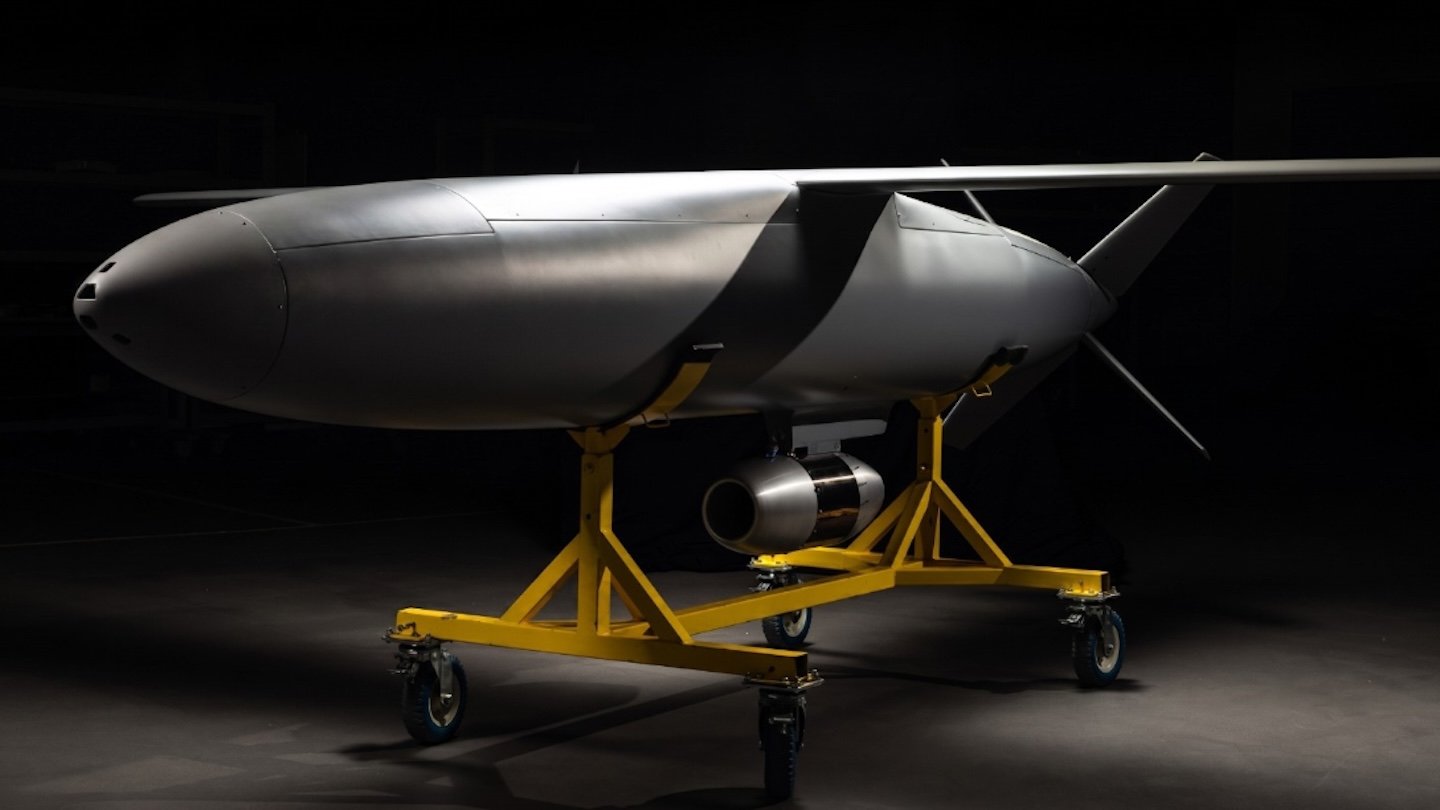
While the Ukrainian Armed Forces General Staff offered scant details about the strike, officials from the Fire Point weapons company hinted online that one of their drones carried out the attack. 

“Guess who traveled over 3300 km (about 2,050 miles) and successfully achieved their goal,” the company stated on a Telegram post that included video of the gas plant attack.

“3200)),” Fire Point’s founder, Denys Shtilierman, teased in an X post with an image of the burning gas plant.

3200)) https://t.co/Go0EbSm2BS

— Denys Shtilierman (@DenShtilierman) September 9, 2026

Neither Shtilierman nor the company provided any other details; however Fire Point claims its FP-1 drones can now travel about 2,100 miles (3,400 km) with a 60 kg payload.

Despite Fire Point’s hints, there is no confirmation that the company’s weapons had anything to do with this attack. There is also the chance that it could have been carried out by another system or even from inside Russia. Ukraine has, in the past, relied on proxies to stage attacks deep in Russia. In addition, Ukraine last summer carried out a series of remotely launched drone attacks on Russian strategic aviation. Dubbed Operation Spider Web, it included strikes on the Belaya Air Base, about 3,000 miles from the border.

However, a strike from inside Russia is much less likely than one launched from Ukraine given Fire Point chiming in and the increasing reach of Ukraine’s weapons. We have reached out to Fire Point and Ukrainian officials for comment.

You can see video of the Operation Spider Web attack on Belaya below:

Ukrainian drones struck Russian strategic aviation at the Belaya air base in Irkutsk – 4,800 km from Kyiv. pic.twitter.com/UBAi7znioR

— Michael MacKay (@mhmck) June 1, 2025

The Novy Urengoy Gas Condensate Processing Plant wasn’t the only site in Russia affected by drone incursions far from the Ukrainian border today.

“A state of emergency has been declared in the Khanty-Mansi Autonomous Okrug due to unmanned aerial vehicle (UAV) activity,” the Russian RIA Novosti news outlet reported on Wednesday. This is located about 1,500 miles from Ukraine. 

“Temporary restrictions have been implemented at the airports of Igra, Nyagan, Uray, ‘Sovetsky,’ Surgut, and Khanty-Mansiysk,” the outlet added.

The publication did not report any attacks and Ukraine did not claim any, but video emerged of what appears to be a Fire Point FP-1 drone flying over the area.

Russian Telegram channels report drones in the area of Khanty-Mansiysk, a city, in west-central Siberia, Russia. pic.twitter.com/in0M552FZN

— Anton Gerashchenko (@Gerashchenko_en) September 9, 2026

Officials in the region were preparing for a Ukrainian strike, the independent Russian outlet Verstka reported earlier this week.

The area is “a sprawling oil-producing region responsible for roughly 40% of the country’s crude output,” the official Ukrainian United24 media outlet noted.

While the extent of the damage to the Novy Urengoy Condensate Stabilization Plant is unclear at the moment, the attack extends the range of Ukraine’s campaign against Russia’s oil infrastructure.

This summer, Ukraine struck nearly all Russian refineries within range, the Kyiv Post noted. 

“Ukraine’s military said in July that the attacks had knocked 43% of Russia’s refining capacity offline, contributing to a nationwide fuel shortage and export restrictions,” the publication reported.

Still, “Russia’s overall oil exports remained relatively stable between June and July, with higher crude exports and energy prices partly offsetting revenue losses,” the Kyiv Post added.

For Russia, the attacks on its energy infrastructure have become so damaging that last month, President Vladimir Putin signed a law allowing the government to temporarily seize what it deems commercial critical infrastructure that is not sufficiently protected against such strikes. That followed Russia’s move earlier this year to allow private companies to purchase their own air defense systems to protect their own facilities. 

Russian President Vladimir Putin signed a decree allowing the government to temporarily take control of critical infrastructure if private owners fail to protect it from Ukrainian drone attacks or rebuild it after strikes.

Read more: https://t.co/SzAbSZqobI

— ABC News (@ABC) August 25, 2026

Though Russia is continuing its grinding offensive, the energy infrastructure attacks are clearly taking a major toll. The ability to do so seems to have taken on additional significance in the wake of another round of attempts to end the fighting.

U.S. President Donald Trump’s top envoys, Steve Witkoff and Jared Kushner, recently traveled to both Russia and Ukraine seeking to rekindle peace talks. However, there does not appear to be any immediate resolution in sight.

The expanding range and quantity of Kyiv’s long-range strike arsenal gives Zelensky perhaps his most powerful card to play against Russia’s interest in continuing the war. Ukraine has been improving these weapons by the month and the pace of development of its drones and cruise missiles is rapidly accelerating. The country also has several ballistic missile projects in the works, which will only add to the pressure put on Moscow once operational.

Regardless, earlier this week, Ukrainian President Volodymyr Zelensky said he expects the war with Russia to continue into the winter at the very least. Given that, Kyiv’s campaign against Russia’s energy infrastructure does not seem like it will end anytime soon, either.

Case in point, Ukraine’s long-range drone strikes continued on Wednesday with another attack on Sochi, a Black Sea resort town often frequented by Russian President Vladimir Putin. And, for the second day, drones were visible over Russia’s remote central high-north energy production hub.

Massive fire erupts at Sochi port, Russia, following reported Ukrainian drone attacks. pic.twitter.com/cm2WsiA4jS

— Clash Report (@clashreport) September 9, 2026

Russian Telegram channels report drones in the area of Khanty-Mansiysk, a city, in west-central Siberia, Russia. pic.twitter.com/in0M552FZN

— Anton Gerashchenko (@Gerashchenko_en) September 9, 2026

Contact the author: howard@twz.com

The post Ukraine Carried Out Its Deepest Drone Strike On Russia Ever appeared first on TWZ.

  •  

Why the stories working people tell ourselves about ourselves matter

TRNN Editor-in-Chief and Co-Executive Director Maximillian Alvarez speaks at the Reuther-Pollack Labor History Symposium in Wheeling, West Virginia, on Sept. 5, 2026. Photo Credit: TRNN.

Over the 2026 Labor Day weekend, I had the honor of speaking at the Reuther-Pollack Labor History Symposium in Wheeling, West Virginia, organized by the Wheeling Academy of Law & Science (WALS) Foundation. The symposium takes place in Wheeling every year and adopts a different theme each year; this year, the theme was “The Art of Labor.” I got to represent TRNN and speak alongside a truly incredible lineup of artists and working-class warriors, including: Tabitha Arnold, the great textile artist and tapestry maker; Erik Ruin, printmaker and shadow puppeteer; and Shaun Slifer, a multidisciplinary artist and the Creative Director for the West Virginia Mine Wars Museum. 

The text below is a transcript of the talk I gave at this year’s Symposium, which has been lightly edited for clarity and readability. You can also listen to the audio recording of my speech on The Real News Network podcast feed. 

https://www.spreaker.com/show/2952221/episodes/feed

Thank you. It is genuinely an honor to be here on these hallowed grounds with all of you in Wheeling, West Virginia. It really, really means a lot to me to be here with all of you.

I also have to say: I really appreciate it when Vince or anyone else tells me that that first-ever Working People interview I recorded with my dad, Jesus Alvarez, meant something to them—because it meant everything to me. It started everything. 

I didn’t start out to become a labor journalist or to do the kinds of interviews I do with working people. I didn’t set out to make a life reporting on working-class struggles from working-class areas around the country, on the front lines of a class war that is hitting all of us in similar and different ways. I didn’t start out to be or do any of that. I started because I didn’t want my dad, the greatest man I know, to go to his grave feeling like a failure after we had lost everything during the Recession, including the house I grew up in, just like millions of other families. And we have continued to struggle, just like millions and millions and billions of us around the world have continued to struggle. And so, to be here standing in front of all of you—having started the show back then as a ruse to get my dad to talk about something he was so deeply depressed about and wouldn’t talk about—it means a whole lot for me and my family.

I really do want to thank all of you for being here. And of course, I want to thank Seán P. Duffy, Vincent DeGeorge, and everyone at the WALS Foundation for bringing us all together here on this hallowed ground. 

I came here today from Baltimore to talk with you all about why stories matter to me, and why I believe they matter to us, or should matter more. 

I wouldn’t be here without the stories that made me. And the same is true for all of us and every one of us. 

And when I say “I wouldn’t be here,” to start, I mean it literally. I quite literally and very quantifiably would not be standing here right now, speaking in this room with you all, alongside all these amazing people—none of you would have ever had to hear my name or see my ugly face, if I wasn’t such a hopeless, relentless, lifelong lover of stories. 

(Also, I know y’all were hoping Kim Kelly would be here today. I apologize, I am no Kim Kelly. I am a fill-in for Kim Kelly, but I am one-third of the tattoos and one-third of the talent. So that’s what you’re getting today!)

I wouldn’t be doing the work that I do now as a journalist and Co-Executive Director of a news organization, I certainly wouldn’t be doing it the way I do it, I would not have pursued all those ill-advised degrees in literature before that, I would not have written or said or filmed all the things that I have and will, if I wasn’t an eternal believer in the awesome, human-making, history-making, and society-making power of stories. 

Whether I’m reading them, writing them, watching them, listening to them, studying them, teaching them, recording them, filming them, remembering them, dreaming about them, thinking about them, or thinking through them, I love stories, and I need stories to live. Always have, ever since I can remember remembering anything. 

Like any fool in love would do, I followed that need wherever it took me. I have madly chased it headfirst into the best and worst times of my life. It got me to the most beautiful, ivy covered college campuses I’ve ever seen, and it got me through the most body-crushing, mind-numbing, soul-rotting jobs I’ve ever had. It led me to my wife and fellow literature dweeb Meg, who’s sitting back there, and it opened up the path for me to make the purpose-filled life I have now, and to do the purpose-filled work I do now.

I have continued to chase that love and that need for stories headfirst into the best and worst places in the world, where the best and worst of humanity is on display. From picket lines to protest marches, from union halls to student encampments on college campuses, from the horror-filled halls of immigration courts where masked federal thugs are kidnapping and disappearing innocent people daily, to rural, urban, and suburban communities fighting data centers all over the country, from “deep red” Texas to “deep blue” Maryland, from Occupied Palestine to East Palestine, Ohio, from communities that have been devastated by poverty, industrial pollution, and organized abandonment and disinvestment to communities that have been devastated by plant closures and school shootings, from poisoned coal mining towns in West Virginia to poisoned neighborhoods in South Baltimore where that very same coal ends up, where that very same coal sits and moves through the giant coal terminal pier right next to people’s houses, and where that very same coal ends up in the poisoned lung tissue of the people who live there and have been inhaling that toxic coal dust for generations.

I have followed my need for stories and our people’s need to have our stories told and heard. I have followed that need to wherever I need to be, and I have followed it all the way here to Wheeling, West Virginia. (You wanna talk about stories? There are a few more storied places than this.)

And though it has caused me and my family more pain and grief and debt and disappointment along the way than I can ever possibly sum up to you, I have learned to check myself by asking myself: If the need that I have, if the love that I’ve followed, brought me to this beautiful place and gave me the chance to be here now with you beautiful people, then how can it be wrong? 

If that need and that love has led me to my life’s continuing work of lifting up the stories of our fellow workers around the US and around the world, of using every medium and platform and every tool and skill I have to offer to help people find confidence in their own voice and share their story in their own words—if it has guided me to the frontlines of the class war to report the news through the stories and voices and faces and lives and bodies and souls and firsthand realities of the people at the center of “the story”—if that absurd, magical, lifelong pursuit of stories has in any way helped me help other working people like me and my family believe that their stories are actually worth telling and hearing and remembering, that their lives truly do matter more than this world has led us to believe and that we all truly do deserve better than what this world has forced us to accept—and if it has helped me help others see that we can get better and make a better world the better we are to each other and the more we share our stories and listen to each other’s stories—if my love and my need for stories and my belief in stories has contributed anything at all to that, then how can it not be worth it? 

But when I say, “I wouldn’t be here without the stories that made me,” I also mean it in the sense that I wouldn’t be the “I” that I am. I am me because of the stories that made me, the stories that made me more me than who I was before I experienced them, the stories that continue to make me who I am now and who I will be in all those versions of me to come. 

I come from a family of storytellers. Being here in West Virginia, I got a sense you guys will know what I’m talking about. One of many things Mexicans and West Virginians have in common. I am the me that I am because of the people who raised me, the people who are and continue to be my life, the people who taught me how to live and be a person and become a self through their presences, their absences, and their stories. The stories they told and the stories they showed me and my siblings. Stories that hit back to the deepest end of my childhood beginnings of consciousness, stories that built my consciousness, stories that brought me out of human mud and helped shape me into human being. 

For the same reasons I can always remember it being such a natural feeling to look out car windows and be fascinated and dazzled by all the warm lights of being out there, all those other homes and other lives people-like-me-but-not-me are living—for the same reasons I’ve always wondered about those other homes and lives and people—for all the same reasons I have always projected myself outward onto them and thought about them out of genuine curiosity and interest and goodwill—and for all the same reasons I have grown as a person the more I consider selves and lives that are not mine, I have always been naturally drawn to stories as a lifesource. Stories my family told me, stories I heard on the radio or saw on the TV, stories I read, stories I created. 

Stories about human-beings-like-me-but-not-me, living in selves-and-bodies-like-mine-but-not-mine, living in times, places, circumstances, and worlds that are not the ones I live in and experience everyday. Stories that take my lifeworld and my perspective and open them up, open me up, to lives-like-mine-but-not-mine, to human perspectives other than the only perspective I can ever have and have ever had ever since I was born, ever since I’ve been me, Maximillian Lee Alvarez. All those stories now live on in me, and will continue to live on in me, so long as I live on as me.

Those stories live on through me in the impressions they have left on me. And they will continue to live on in me as formative parts of the person I became once those stories and my experiences of them became part of me. And they will continue to be a part of me and every version of me—all those selves I’ll ever become—so long as I am gifted to live on this earth as me. 

These stories live on in the words I say and in the stories I tell to others. Because they have shaped the “me” that I am and the ways I use language to communicate with others and with myself, and the ways I use language to communicate myself to others and to myself.

They live on in the ways I cope with pain and failure, and what I learn from them. 

Those stories live on in my thoughts and in the way I think. Now and for the rest of my life, they have their place in the vast, dazzling multiverse of mindstuff that my mind has to draw upon and remember from and think and dream and imagine with.  

Over my lifetime, the stories I’ve found, the stories I’ve made, and the stories I’ve been told have shaped, challenged, corrected, sharpened, and reinforced my internal sense of right and wrong, good and evil, beautiful and ugly, and what it means to be good, do good, and live a good life. 

And if you’re feeling lost about those things right now, I’m telling you: Go back to our stories! We are not the only ones to face hard times. Our ancestors who faced such times left us their stories so that we would know what to do now. Don’t let those stories go to waste! There is power in them. We have power in them. (More on that in a minute.)

All those stories live on in the ways I try and have tried and will try to live and act and see and be in the world, in the ways I try and have tried and will try to see and treat other people and other life. And again, what I’m saying is true for me is, I fully believe, true for each and every one of us. And that on its own—even if you just take the people here in this room—is a miracle of life and nature and god and a joyous wonder to behold, on par with gazing out at the stars in the sky!
And yet, we so disinterestedly take all this for granted every day. We don’t appreciate stories enough, including our own stories and the stories of others. And I don’t think we appreciate this enough about the stories that make us and the roles stories play in making us human (and the role storylessness plays in our loss of humanity). 

Just like we have been trained and trained ourselves to accept an unacceptable culture of violence and mass death that takes and destroys life everywhere with the kind of scale and self-serving abandon that would make the ancient gods of old blush, we have been trained and trained ourselves to lose touch with the magical, life-giving force of stories. And our life-sustaining love for stories has been beaten out of us by AI slop, by a shitty, commercialized culture industry, by living under capitalism and end-times fascism, etc. I get why we feel that way, and I feel it, too. But there’s something really, really wrong there.

Like our air and water and soil and atmosphere, I think we have been trained and trained ourselves to let stories be poisoned and polluted for so long that we will at worst cheer on their destruction or at best live monotonously without any urgent sense of duty or need to stop the destruction. Both paths inevitably lead to the same place: our own peril as a people, a society, and a species. 

That’s why I think we miss the magic of stories and the magic in stories that’s all around us, available to us in so many forms, living in our heads and shaping who we are every day. 

That’s why I think we tend to look at stories and the stories of others so mistrustfully or disinterestedly or scornfully or selfishly. We tend these days to not look for stories at all, let alone stories that challenge us and grow us. We don’t give them our time, and so many that are shoved in our faces aren’t worth our ime. And when we do look for them, we often look for the stories that we already know or stories that ultimately serve to stop us from growing and knowing more, stories that serve to stunt our being and reinforce the selves and prejudices we already have. What a waste of good magic! 

Of course, we all want stories like that to some extent, and we all need stories that function like that to some extent. We all watched The Office five times during Covid. That’s fine. But what I’m talking about goes much deeper. 

I’ll use myself as an example to try to explain. 

I grew up in Southern California, post-Cold War, in the ‘90s. We were a middle-class mixed-immigrant family. We were the American Dream. And that’s why my dad and my mom and my family were so depressed after the 2008 Crash and the Recession, because we had had and lost the American Dream, and that really does a number on you and your soul.

The era I grew up in before the Crash was an era of America in which a lot of the dreams that I was foolish enough to have for my life still felt possible. And over the last 25-30 years, I think a lot of us have come to the awakening that many of those dreams, our dreams, are not possible in America anymore. At least not for working people like us. And after doing this kind of work for nearly a decade now, I’ve gotten confirmation from working people all over this country that I’m not the only one who feels that way. 

It’s a real gift to contain all those different selves that I’ve been over my life, including the deep-red-conservative, Orange County dumbass who didn’t know much about life. I don’t despise or regret that version of myself, I accept him for all his faults. And I know I had a lot of right reasons for believing the wrong things back then. And I know that I still have so many good parts of me that were there in me when I was a conservative and that are here in me now as the lefty nut job you see before you. Because they’re just good things about being a good person. I don’t care who taught them to me, I’m just grateful they did. 

I don’t see people in rigid identity or ideology boxes, and I try not to see myself that way either. And I definitely don’t like to see stories that way. And it’s in part because of stories that I don’t see the world that way. And yet, in this country, that is the way that we have trained ourselves to see each other and ourselves and our stories.

I remember being that younger, more conservative-type person and going into a Barnes & Noble and saying, “I want to read good, classic literature.” And the employee I talked to was like, “Oh, do you want French literature? Spanish literature? Feminist literature? African-American literature?” And I remember saying, “No, no, no. I want literature. I don’t want any of those ‘special interests.’” 

That was a very juvenile way for me to think and feel about literature, but I think a lot of us can still relate to that feeling. I’m so grateful to literature especially, and to all the storytellers in my life and all the storytellers I’ve come across in my life, for teaching me over time, and for constantly reminding me, that that’s not what stories are there for. I’m grateful to them for teaching me how much it cheapens our relationship to stories—and the potential and beauty and magic we can derive from them—when we look at them and treat them this way. And stories themselves are the cure for this sickness. The more I read literature of all kinds, the less I thought about stories this way. The more I loved and connected with literature of all kinds, the more I grew and felt and thought and developed as a person with different kinds of me inside. 

And so, I learned a very valuable lesson early on in life: That literature about other people, and that stories about other people—from other people’s perspectives, about the ways that they are living as people in this world—are not a threat to who I am. They make me who I am. They grow who I am. 

And it’s for those reasons that it seems so clear and obvious when I say, “I wouldn’t be here without the stories that made me, and you wouldn’t be here without the stories that made you.” 

Think of all those stories that still live in your head today, that you still talk about with your friends and siblings, that you still have living somewhere in the recesses of your mind as warm memories of reading a good book, watching a good movie, or having a good conversation. 

For me, I think about sitting in my living room with my whole family back home, watching the movie Glory, the epic historical drama about the 54th Massachusetts, the first Black regiment to fight in the Civil War. Why did our whole family of Alvarezes connect with that movie? I could go on a whole dissertation about why we connected with that movie (but I won’t do it here, don’t worry). We bawled our eyes out watching it then, and I still bawl my eyes out when I watch it now. We saw so much of ourselves—the Americans we believed we were, the America we believed we lived in and believed we were a part of—in that movie. And we clearly weren’t the only ones. 

It doesn’t matter that I don’t know what it’s like to be a “freed” Black slave in the Antebellum South; and it doesn’t threaten my understanding or sense of being to watch a movie that storytellers, story-makers, and story-actors have produced to try to help me understand. It enhances my being. It gives me more access to beings- and selves- and lives-like-mine-but-not-mine, and they then become part of my experience and shape who I am and how I am in the world. 

That’s part of the magic I’m talking about, the magic that makes us who we are, which we all just take for granted. It’s like we put on glasses that removed the power of stories from our vision, made it invisible to us. But it’s there. It’s all around us. It’s there in us. 

It was there when I was listening to Tracy Chapman’s “Fast Car” while driving here to Wheeling. Truly, one of the most beautiful stories about love and working-class life ever told in our language. And no matter what stage of my life I was in, it didn’t matter to me that I didn’t know what it was like to live as a Black, working-class lesbian in the industrial Midwest around the ‘80s and ‘90s. I still knew enough to know that to live was to love, to seek love, to be loved, and to pursue happiness, and I still knew enough to know why it is a heartbreaking tragedy for someone to have their love and their lives and their happiness denied or taken from them.  

Who among us human beings hasn’t feared making the wrong choice immortalized in Chapman’s line, “We got to make a decision: leave tonight or live and die this way”? Who among us living people cannot relate to the pain and fear and drama and yearning in the stories of other people who spend their precious, short time on this earth living unfulfilled, unhappy lives full of unrequited love and unrealized dreams, even if they weren’t our dreams?

I could relate to that even as a kid. I relate to it so much more now as an adult, now that I am far more aware of the limited time we in general and I specifically have to live. And that gives me so much more capacity to feel empathy and solidarity with others whose lives and loves and happiness and flourishing are beaten, crushed, lost, or denied. How could I feel anything but the natural human solidarity my heart feels when listening to Chapman’s song? And how can I not remember that listening to the song as a kid helped me begin to imagine and explore the unknown emotional depths of my own human heart?

The specifics of the story and the selves involved do not describe the specific story and self I already know as my own, but they still embody dramatically heightened versions of what I have known and experienced in my own life, dramatically and beautifully heightened versions of our human experience of life and love and loss and yearning. 

None of the details that differentiate the story in “Fast Car” and its lovelorn protagonist from my own life story are reasons for me to say, “That’s not my story.” Those are reasons for me to connect with another person’s story—to get closer to them, and to become more myself, the more they and their story become part of me and mine.  

Here’s another story. My wife Megan Berkobien just co-translated this book I’m holding in my hand, Goodbye, Ramona by Montserrat Roig.  

It’s a beautiful, incredible book. Everyone should go read it. It’s a Catalan novel about Spanish Civil War times. I don’t know what the hell that’s like, but for the same reasons that my Mexican ass got two useless degrees in Russian literature, I don’t care. I don’t need anyone’s cultural permission to connect with my fellow human beings. Reading the stories of other people has only ever given me light and goodness. It’s never taken anything away from me or made me a worse person. 

Reading the first chapter of Goodbye, Ramona transports me to the mind of a trapped woman—a woman whose husband is a tyrant and makes her feel powerless—as she wanders like a ghost in the streets looking for him after he has suddenly gone missing in the wake of a bombing in Barcelona. In Roig’s beautiful, harrowing description—and in Meg and Cristina’s beautiful, harrowing translation—you see the damage of his tyranny on her psyche, and you feel the fear and anxiety in the way she describes what she’s doing and what she’s thinking. 

That’s the raw, human stuff that makes me feel as close as I can get to living and seeing through the head of another person. What a gift that is! And how necessary it is, especially in times like these when we live and exist so far away from each other, when we are so alienated from each other and isolated from each other, when we can be standing next to other people in the grocery store line or sitting next to each other in traffic but the spaces between us and our minds and hearts feels as vast as the distance between us and the moon. 

We have stories to bring us closer, and yet we continue to let capitalism, a broken society, and the wickedness of the powerful push us away from each other. But it doesn’t have to be this way. And I hope that the stories that I have helped to tell, all these stories I’ve recorded and published, will continue to remind people of that. I hope these stories remind people of who we really are and who our neighbors really are. I hope these stories by and for our fellow workers not only remind us that every life is precious, but that they remind us what life is all about. I hope that they remind us what a gift it is that we are all here, and what a cosmic tragedy it is that we allow life itself and our lives to be treated with such inhumane disregard.

That’s why I interviewed the family of a Kroger worker, Evan Seifried, who committed suicide just an hour north of here, in Milford, Ohio, in 2021. And that’s why Evan’s story has impacted me so much. 

For 19 years, with a virtually spotless record, Evan worked at a local Kroger grocery store in Milford, where he eventually became the dairy department manager. But from October 2020 to March 2021, Evan suffered a torturous campaign of bullying, harassment, and sabotage from two store managers, and his union abandoned him when he needed help. Evan took his own life, and his family will never be the same, and the world will never be as bright as it was with Evan in it. I thank god that I don’t know firsthand what it’s like to go through such a horrific tragedy, but because I heard them tell it, every other thing about me and my human being feels the Seyfried’s story and their pain and their fight for justice as my own. After learning about Evan’s story and after speaking with his loved ones about his story many times, I am forever changed by him and by them. 

So, of course, I thought of Evan and the Seyfrieds, and I thought of my own family, when I saw the soul-crushing news story this past week of Pierre Damas Bel, the poor 20-year old young man who committed suicide in Springfield and walked into traffic after our government slapped a criminal ankle bracelet on him and told him he was a worthless cockroach. I know what it feels like to have others in my own country, even my own government, see me this way. Everyone here has some way of trying to understand what that feels like, but we don’t try hard enough. Stories help us get better at trying. And we need to get better, we need to do better, we need to be better. For Evan, for Pierre, for all of us. 

I’m not the same person I was when I walked into that Barnes & Noble way back when looking for “just good literature.” I don’t look to stories or look for stories in that same one-way, transactional mode anymore; I don’t look to stories or look for stories that are just going to reflect me back to me. 

I don’t just gravitate to stories that I gravitate to because I see something of me reflected in them. I gravitate to stories because a light in them draws me in, and that light then reflects in me and stays with me after I connect with them. 

Every great human-made creation, construction, and operation embodies a whole that would not exist but for the sum of every worker and every ounce of human work that contributed to its existence. All those workers with all their lives and all their labor contributed to bringing all these magnificent things into existence, and all of us workers with all our lives and all our labor contribute to them, improve upon them, and keep them running. So, too, have all these stories contributed to bringing the me that I am into existence. And these stories will continue their work of shaping how I live and act and see and feel and think.

Stories have been and continue to be the most ever-present, ever-abundant, ever-beautiful reminder that I need other people to live, to be, to be me. 

And the ever-present, ever-abundant, ever-beautiful number and forms of human stories all around us—all the stories that have already been told, all the stories yet to be told, all the stories that live on in our books, our films, our songs, our campfire tales—each and every one of them is a reminder to us that we need each other, too. 

  •  

Where Are The Aircraft Carriers?: September 9, 2026

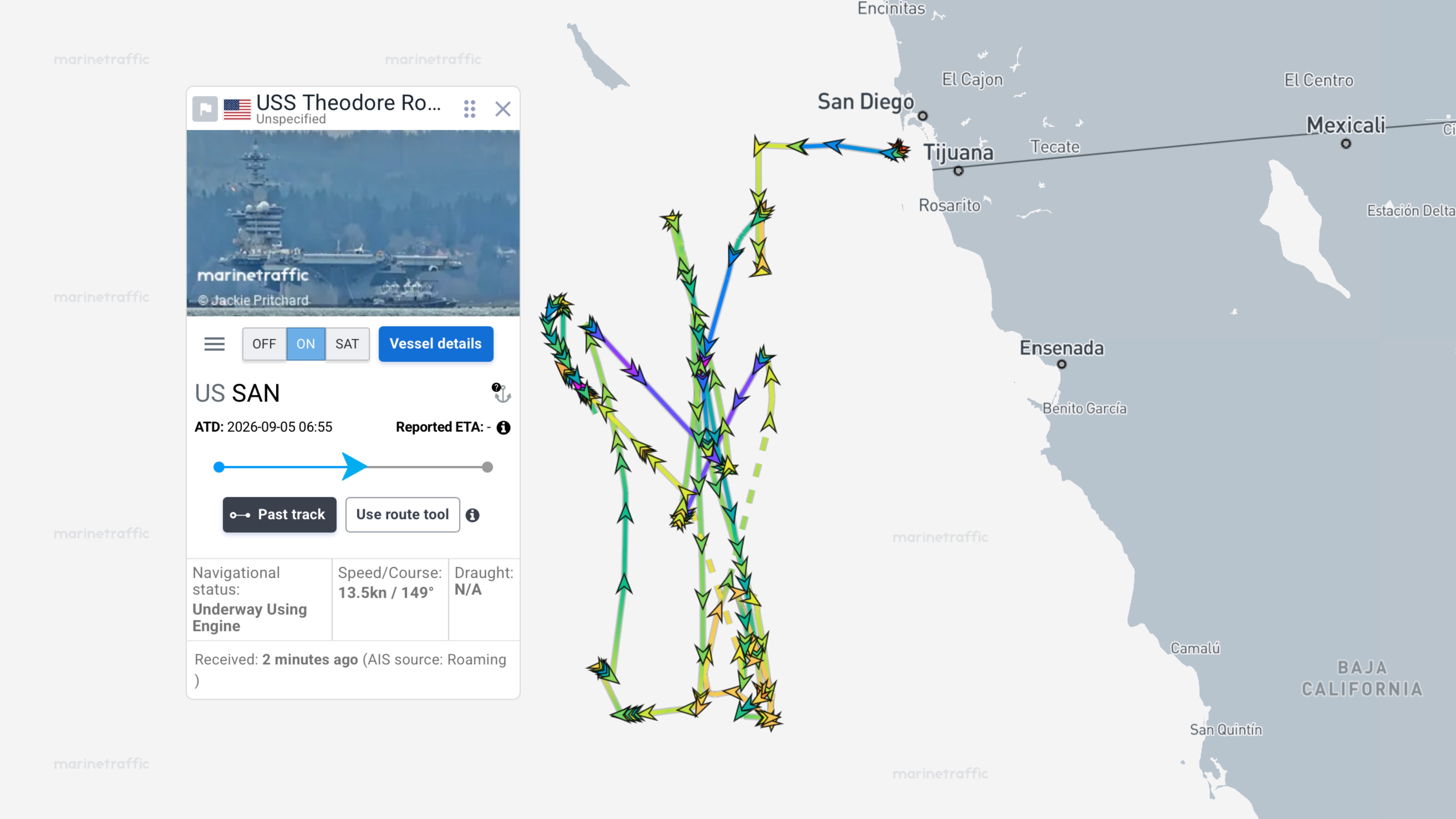
The Navy says it is making a concerted effort to apply the hard lessons learned from the marathon deployments of the USS Gerald R. Ford and USS Abraham Lincoln, both in combat and in quality of life for the crew, according to a new video posted by the Chief of Naval Operations, Adm. Daryl Caudle. The changes will be rolled out when USS Theodore Roosevelt deploys following a brief, last-minute, and previously unreported maintenance availability, TWZ has learned. Meanwhile, the United States and Iran are quickly climbing the escalation ladder again, as the latest series of tit-for-tat strikes has resulted in a massive overnight ballistic missile attack on a Jordanian base hosting U.S. forces and the destruction of 10 Iranian commercial oil tankers over the past week.

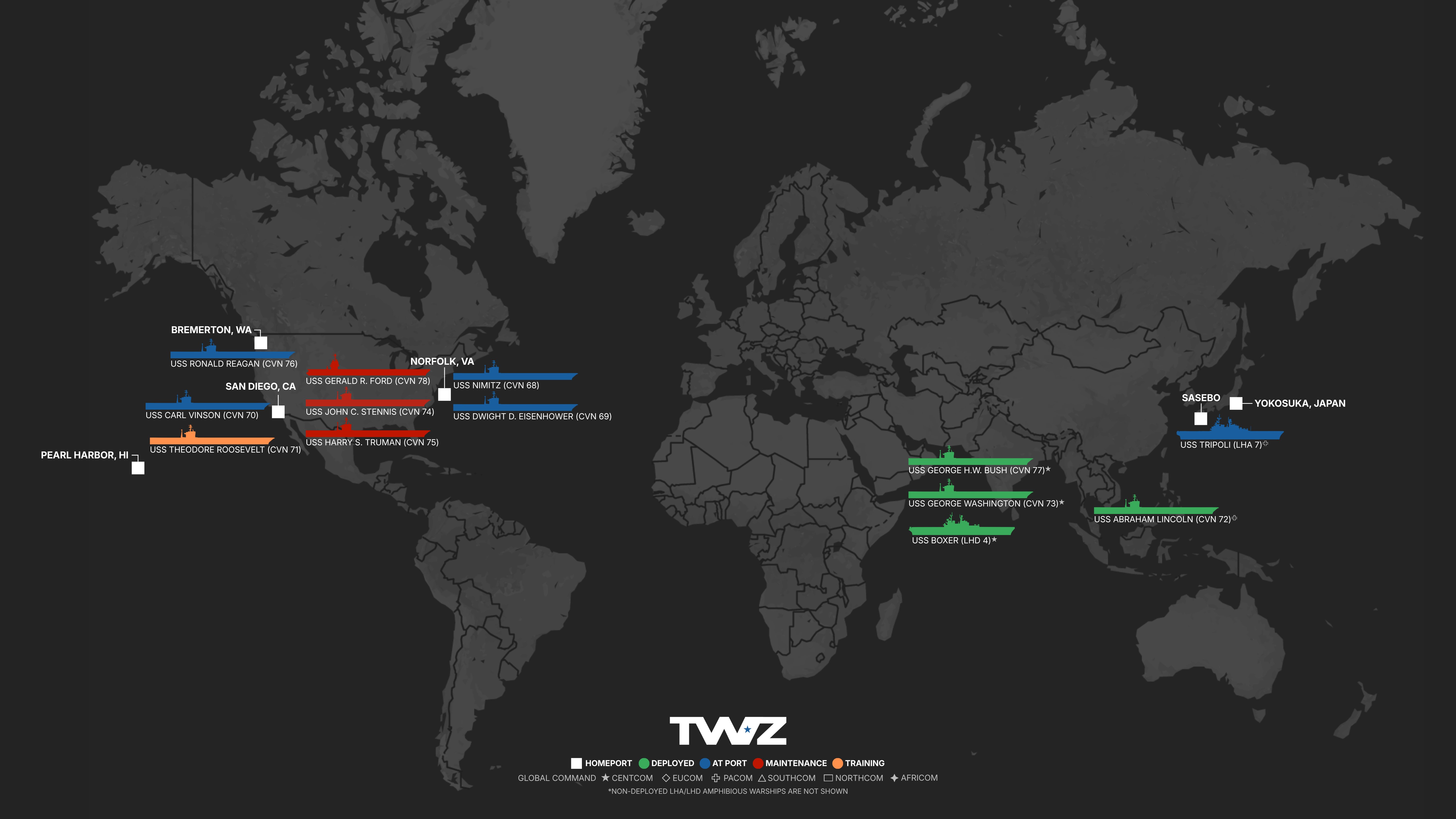
Here’s TWZ’s weekly carrier tracker monitoring America’s flattop fleet, including deployed Carrier Strike Groups (CSG) and Amphibious Ready Groups (ARG), using publicly available open-source information. Check out last week’s report here.

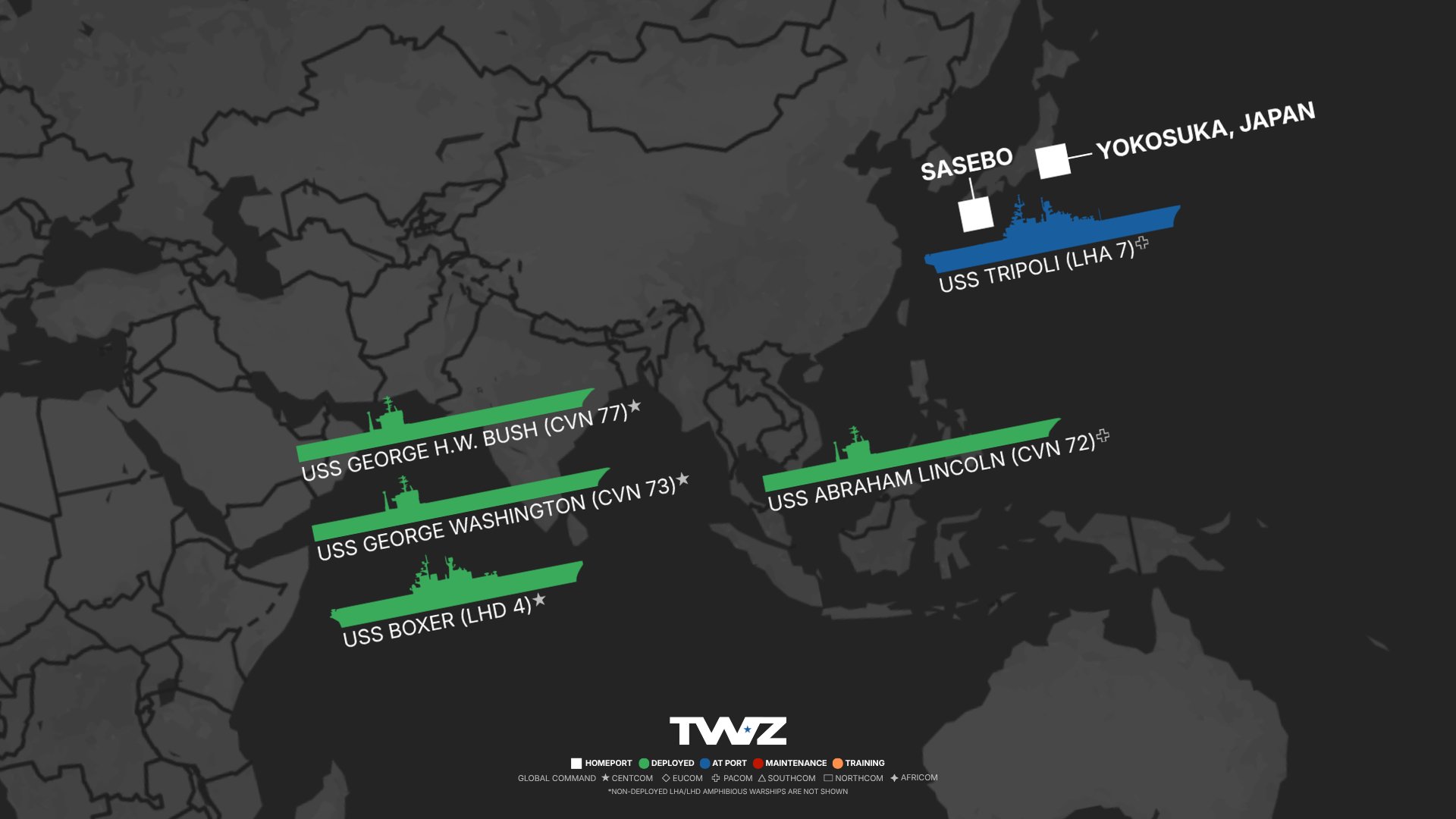
A high-resolution map featuring the United States Navy's deployed aircraft carrier fleet and big-deck amphibious assault ships, updated weekly as of September 9, 2026. Created by Ian Ellis-Jones and TWZ (formerly The War Zone)
TWZ/IAN ELLIS-JONES (High Resolution)

George Washington Strike Group Evades Iranian Ballistic Missiles

Less than a month after taking up station in the Middle East, elements of the George Washington CSG reportedly came under ballistic missile fire from the Islamic Revolutionary Guard Corps (IRGC) on September 5, according to Iranian media. “A U.S. aircraft carrier and guided-missile destroyer successfully evaded multiple unprovoked Iranian attacks,” U.S. Central Command (CENTCOM) confirmed in a statement, without identifying which warships were targeted. TWZ cannot independently verify the Iranian reports, and the Islamic Republic has frequently leveraged disinformation throughout the war.

U.S. forces responded swiftly the same day, striking three Iranian commercial oil tankers, part of the “shadow fleet” that funds IRGC operations, in a notable step beyond U.S. President Donald Trump’s recently announced tanker-for-tanker policy. “Let the message to the IRGC be clear: If you shoot at two of our ships, we will impose an even higher economic cost – taking out three of yours,” Adm. Brad Cooper, the CENTCOM commander, warned. “We will not hesitate to defend American forces, and if necessary, destroy Iran’s limited and exposed oil fleet,” he added. No U.S. casualties or damage to the American ships was reported.

Video of U.S. Central Command forces striking three Iranian crude oil carriers on September 5, 2026. (USCENTCOM video)

Details surrounding the attack on September 5 are limited, but Iranian-affiliated channels claimed the IRGC fired the Qassem Basir medium-range anti-ship ballistic missile (ASBM) for the first time. If true, it would represent the first known combat employment of the ASBM since it was unveiled in May 2025 and poses a new threat to Navy warships operating within the 1,200-kilometer, or roughly 750-mile, stated range (although that figure is more than likely overstated). Generally speaking, American cruisers and destroyers can engage ASBMs in two layers, in some cases using Standard Missile-3 (SM-3) in the midcourse phase and SM-6 during the terminal phase. Both are finite resources, and only so many can be loaded in their Vertical Launch System (VLS) cells.

Since the initial exchange on September 5, the tit-for-tat strikes have continued to escalate. CENTCOM destroyed another five crude oil tankers on September 8, bringing the total to 10 in a week, after the IRGC targeted an unidentified Navy warship again with ballistic missiles. Iran answered overnight, launching a huge salvo of ballistic missiles toward Muwaffaq Salti Air Base in Jordan, where a significant contingent of U.S. forces is forward-deployed. Dramatic videos on social media show Patriot batteries firing against the incoming projectiles, with open-source analysts counting at least 60 interceptors employed.

U.S. destroys another five Iranian tankers after the IRGC targets another American warship. (CENTCOM video)

The USS George Washington arrived in the CENTCOM area of responsibility (AOR) on or around August 19, escorted by a single guided-missile destroyer, USS Shoup. The pairing matches the composition described in CENTCOM’s statement about the IRGC attack on September 5. Washington’s public affairs team reposted the statement on their social media accounts.

The possibility that the second Nimitz class flattop operating alongside Washington in the Middle East, the USS George H.W. Bush, was the target of the attack cannot be ruled out. Both carriers are the same class and look alike from a distance (or through a seeker). The George H.W. Bush CSG is currently composed of a guided-missile cruiser, USS Princeton, and two guided-missile destroyers, USS Ross and USS Donald Cook.

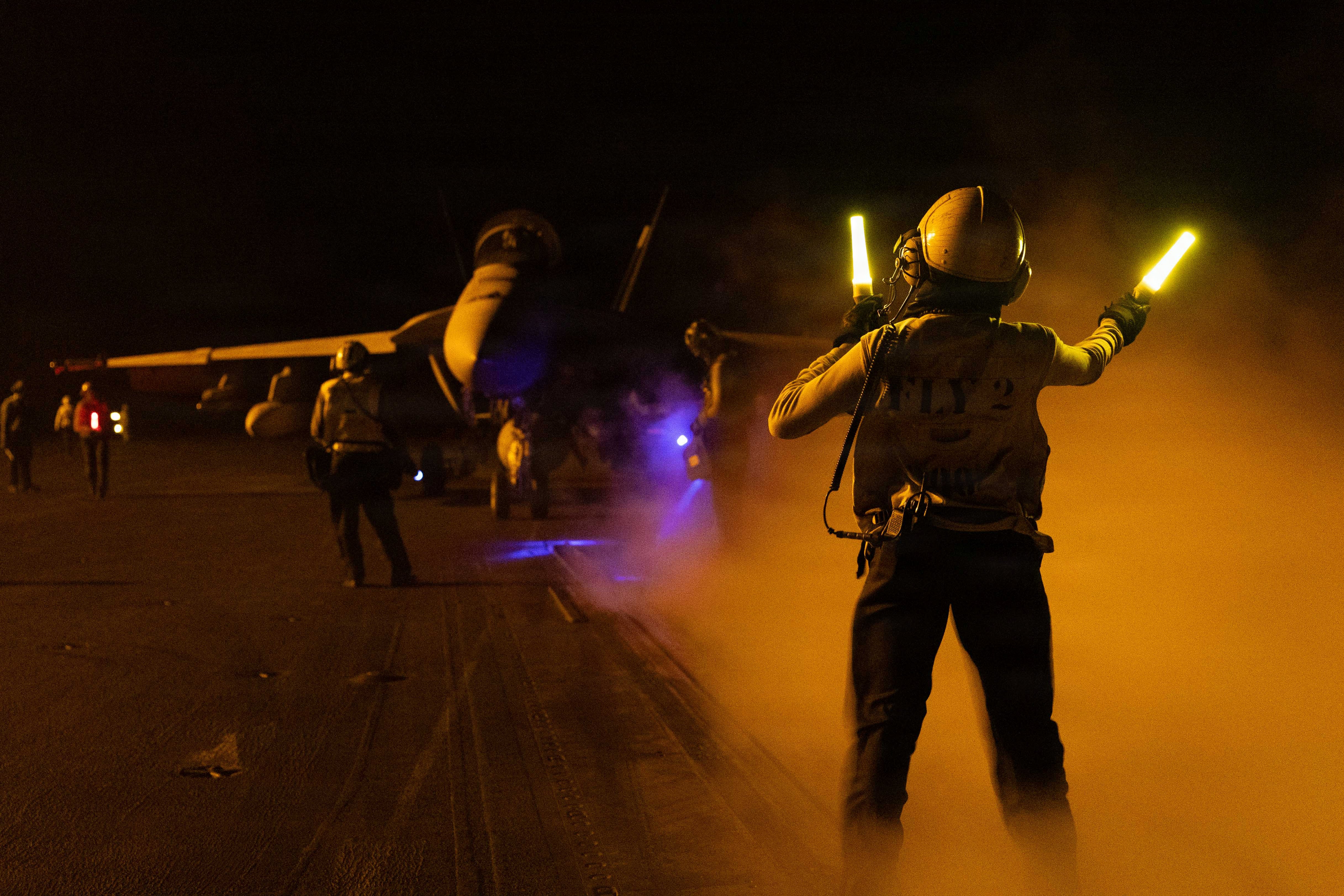
An E/A-18G aircraft launches from the flight deck of USS George H.W. Bush (CVN 77) during night flight operations while the ship supports enforcement of the U.S. blockade against Iran in the Arabian Sea. As of Sept. 7, CENTCOM forces have redirected 94 commercial vessels, disabled 3 and boarded 2 to ensure complete compliance with the blockade.
An EA-18G Growler launches from the flight deck of USS George H.W. Bush during night flight operations. (CENTCOM photo)
A U.S. Sailor signals an F/A-18F Super Hornet, attached to Strike Fighter Squadron (VFA) 103, on the flight deck of Nimitz-class aircraft carrier USS George H.W. Bush (CVN 77), Sept. 1, 2026. George H.W. Bush is deployed to the U.S. 5th Fleet area of operations to support maritime security and stability in the Middle East. (U.S. Navy photo)
An F/A-18F Super Hornet on the flight deck of aircraft carrier USS George H.W. Bush (CVN 77). (U.S. Navy photo) U.S. Central Command Public Affa

Bush was pictured conducting nighttime flight ops in CENTCOM’s most recent update detailing the status of the ongoing blockade: U.S. forces redirected 94 commercial vessels, kinetically disabled three, and boarded two to ensure compliance, as of September 7.

USS Theodore Roosevelt Undergoes Last-Minute Maintenance Ahead of Deployment

The next carrier scheduled to deploy from the U.S., the USS Theodore Roosevelt, recently got underway after a brief maintenance period. While there was no mention of an upcoming availability in budget documents, we noticed what appeared to be pierside work in commercial satellite imagery, similar to the brief stints Washington and Vinson completed recently while in homeport. In response to our inquiry, a Navy official told TWZ, “Nimitz-class aircraft carrier USS Theodore Roosevelt (CVN 71) is currently in port at Naval Air Station North Island in San Diego conducting routine, planned maintenance. While we do not comment on future operations or movements due to operations security, aircraft carriers follow an optimized fleet response plan that provides full realignment of maintenance, training, and deployment cycles to fit in a standard 36-month rotation.”

Roosevelt’s upcoming deployment has been the subject of heavy speculation, as there will soon be no carriers available in Asia should a contingency arise. While Lincoln is currently in the South China Sea, she’s at the tail end of her deployment and in the process of heading home. The same official addressed the coverage gap, telling us, “U.S. Pacific Fleet’s posture across the region remains strong, adaptive, and ready. The U.S. Navy is purpose-built to flex, surge, and sustain across multiple theaters simultaneously – and that flexibility is a strategic advantage, not a vulnerability. U.S. Pacific Fleet’s commitment to the region is enduring – backed by the Joint Force and a strong network of allies and partners – and we will continue to fly, sail, and operate wherever international law allows to support a free and open Indo-Pacific.”

U.S. Navy Sailors conduct flight operations on the flight deck of Nimitz-class aircraft carrier USS Theodore Roosevelt (CVN 71), Sept. 7, 2026. Theodore Roosevelt, flagship of Carrier Strike Group (CSG) 9, is underway in the U.S. 3rd Fleet area of operations conducting advanced training to bolster strike group readiness and capability. (U.S. Navy photo by Mass Communication Specialist 3rd Class Alexander Bussman)
Flight operations on USS Theodore Roosevelt (CVN 71), Sept. 7, 2026. (U.S. Navy photo) Petty Officer 3rd Class Alexander Bussman
U.S. Navy Sailors direct the launch of an F/A-18E Super Hornet assigned to Strike Fighter Squadron (VFA) 122 on the flight deck of Nimitz-class aircraft carrier USS Theodore Roosevelt (CVN 71), Sept. 7, 2026. Theodore Roosevelt, flagship of Carrier Strike Group (CSG) 9, is underway in the U.S. 3rd Fleet area of operations conducting advanced training to bolster strike group readiness and capability. (U.S. Navy photo by Mass Communication Specialist 3rd Class Alexander Bussman)
Sailors direct the launch of an F/A-18E Super Hornet on USS Theodore Roosevelt (CVN 71). (U.S. Navy photo) Petty Officer 3rd Class Alexander Bussman

Roosevelt departed San Diego on September 5 and is still at sea as of publication. Imagery posted two days later on DVIDS, the military’s content-sharing platform, shows the flattop carrying out flight operations in the U.S. 3rd Fleet AOR and conducting “advanced training to bolster strike group readiness and capability.” The carrier was last tracked broadcasting a position publicly with her Automatic Identification System (AIS) transponder on, operating to the west of Baja California, Mexico, according to MarineTraffic. It’s unclear if the maintenance has been completed or if additional modifications and training will be required before the CSG deploys.

A screenshot shared with permission from Marine Traffic shows the transit of USS Theodore Roosevelt as it completes Carrier Qualification (CQ) training off the west coast. Source: Marine Traffic
Transit of USS Theodore Roosevelt off the west coast while working up. Source: MarineTraffic/KPLER (Reprinted with permission)

As noted above, the Chief of Naval Operations, Adm. Daryl Caudle, alongside Master Chief Petty Officer of the Navy (MCPON) John Perryman, posted a video yesterday with new information on Roosevelt’s upcoming deployment. “The lessons you’re bringing home are helping us better prepare the next team to deploy,” Perryman explained, addressing Lincoln’s crew. “Right now USS Theodore Roosevelt is putting those lessons into action using what we learned from Abraham Lincoln and Gerald R. Ford,” Caudle added. On logistics, that means maximizing the loadout of food, retail products, and hygiene items by converting available spaces into additional storage facilities. Regarding quality of life, improvements include new entertainment, more fitness equipment, and holiday materials purchased in advance.

“Small things matter during a long deployment because taking care of our Sailors is part of maintaining combat readiness,” Perryman noted. Watch the full video below.

CNO Adm. Daryl Caudle and MCPON John Perryman provide an update on USS Theodore Roosevelt’s upcoming deployment. (U.S. Navy video)

Three other U.S.-based carriers, USS Carl Vinson, USS Dwight D. Eisenhower, and USS Ronald Reagan, were recently underway for training but have returned to their respective homeports since our last report on September 1.

Eisenhower returned to Pier 14S at Naval Station Norfolk on September 2 after a 12-day underway for Fleet Replacement Squadron (FRS) and Training Command (TRACOM) Carrier Qualifications (CQ) in the Virginia Capes and Jacksonville operating areas. Vinson completed 25 days of Tailored Ship’s Training Availability (TSTA) and Final Evaluation Period (FEP) before mooring at Juliet Pier on Naval Air Station North Island, San Diego, on September 4. And Reagan, which just finished a nearly 18-month Drydocking Planned Incremental Availability (DPIA), returned to Naval Base Kitsap-Bremerton in Washington state on September 7 after a four-day post-availability shakedown and sea trials. It’s unknown how many rounds of sea trials will be required before Reagan returns to the fleet.

For the time being, America has one carrier coming back online, but the net gain will be short-lived, as Lincoln is expected to begin a DPIA after returning home.

USS Abraham Lincoln Leaves Thailand Looking Like A Different Ship

Elements of the Abraham Lincoln CSG, as well as escort cruiser USS Robert Smalls, arrived in Thailand on September 2 for what the Navy characterized as the “first full port call” of their nine-plus-month deployment. The crew of roughly 5,000 Sailors and Marines was finally able to leave the ship for liberty, with the majority standing on solid ground for the first time since November 2025.

“This port visit to Pattaya was a tremendous opportunity for this crew to recharge and a highlight for the strike group,” Abraham Lincoln’s commanding officer, Capt. Dan Keeler, said in a press release. “Thailand has such a rich culture and history, coupled with incredible hospitality, and that all shone through in this port visit. We are grateful to our Thai allies for hosting us, and we look forward to continuing our mission here in 7th Fleet, alongside Thailand and our other regional allies and partners.”

The USS Abraham Lincoln (CVN-72) aircraft carrier arrives at Laem Chabang Port on Sept. 2, 2026 in Si Racha, Thailand. (Photo by Thananuwat Srirasant/Getty Images; reprinted with permission)
The USS Abraham Lincoln (CVN-72) arrives at Laem Chabang Port in Thailand on September 2, 2026. (Photo by Thananuwat Srirasant/Getty Images; Reprinted with permission)

According to the press release, the crew “experienced all the sights and sounds Thailand has to offer, deepening their understanding of the Thai people and strengthening interpersonal bonds.” Lincoln pulled into port looking worse for wear after 286 days at sea, with noticeable algae and rust spots, conditions that are expected given the high operational tempo endured during nearly seven months of combat. Videos surfaced of the hull being scrubbed by Thai contract crews at a fraction of what the same job would cost stateside. The carrier departed five days later on September 6 in much better shape.

Timelapse video of USS Abraham Lincoln leaving Thailand on September 6, 2026. (Abraham Lincoln video by MC3 Castro)

Lincoln is now continuing the journey home to San Diego, though whether any additional stops will be made along the way is unknown. A single-sourced report from Newsweek, which TWZ has not verified, claimed that another port call might be added, according to the wife of an officer aboard. As of publication, Lincoln is 293 days into the deployment, just 33 days short of the 326-day record set by USS Gerald R. Ford earlier this year.

U.S. Navy Big-Deck Fleet At A Glance

Overall, three U.S. carriers are deployed (with one heading home), one is preparing to deploy in the near term, three are working up in various states of readiness, three are in current or upcoming maintenance, and one is being used primarily for training before deactivation next year. One amphibious ready group is deployed, one is forward-deployed and at homeport, four are working up or in port, and three are in maintenance.

Note: Positions are general approximations. Non-deployed LHA/LHD amphibious warships are not shown.

Contact the author: ian.ellis-jones@recurrent.io

The post Where Are The Aircraft Carriers?: September 9, 2026 appeared first on TWZ.

  •  

Hermeus Unveils Air-Launched Ramjet Test Vehicle for High-Speed Experiments

Hermeus is developing an expendable ramjet-powered aircraft, Ramjet-X, which will be air-launched from its reusable, F-16-sized Quarterhorse high-speed drone. The result aims to create a two-vehicle architecture intended to make high-speed flight testing less dependent on expensive, single-use test platforms. That would give Hermeus and potential customers a way to conduct repeated high-Mach flight tests without expending a large booster on every mission.

America didn’t lose ground in high-speed flight because of a lack of ideas. We slowed down because flight tests became too expensive, too rare, and too cautious.

Meet Ramjet-X. Air-launched from the Quarterhorse program, it’s a low-cost, repeatable test vehicle built to fly and… pic.twitter.com/rMed6NhcvD

— Zach Shore (@Zsshore) September 9, 2026

The company unveiled the concept today. Hermeus says the Ramjet-X will be carried beneath Quarterhorse and released at a speed of around Mach 3, at which its ramjet can begin operating. The smaller vehicle will then accelerate, climbing to around 100,000 feet, and a speed in the region of Mach 4. Quarterhorse will then return to base and be available for another mission.

Imagery released by Hermeus shows a Quarterhorse carrying a Ramjet-X mounted on a pylon under each wing, indicating that two different high-speed tests can be carried out in a single sortie. Intriguingly, the Quarterhorse is shown with no fewer than six underwing hardpoints in all, suggesting that other kinds of external payloads are envisaged.

Hermeus has not released detailed performance specifications for Ramjet-X, including its range, payload capacity, or the critical expected cost per flight. We have reached out to the company for more information.

Images released by the company show a relatively compact, missile-like vehicle with delta wings incorporating prominent dihedral. There are no horizontal tail surfaces, but a conventional vertical fin is complemented by a ventral fin. Axios reports that Ramjet-X is approximately 22 feet long and 7 feet wide.

In terms of appearance, and also thanks to its ramjet propulsion system, the vehicle is outwardly very reminiscent of the Lockheed’s D-21 Tagboard supersonic spy drone. However, at more than 40 feet long and with a wingspan of 20 feet, the D-21 was significantly bigger. Overall, the entire concept recalls the Cold War-era D-21 and its M-21 mothership, on a smaller scale.

A D-21 drone. U.S. Air Force
M-21 and D-21 paired together. CIA

The basic concept aims to address a longstanding problem with ramjet flight testing. Unlike a conventional jet engine, a ramjet cannot provide useful thrust from a standstill. The vehicle therefore has to be accelerated to a sufficiently high speed before the ramjet can take over.

That acceleration can traditionally require another propulsion system, including an expendable rocket booster. Hermeus is proposing to substitute a reusable aircraft for that initial boost. It is unclear if the Ramjet-X vehicles are similarly recoverable, but we have asked Hermeus for more details here, too.

As it stands, flight-test programs of this kind are often constrained not only by the cost and availability of test infrastructure, but also by the limited availability of suitable airspace and range access. A reusable carrier aircraft could help address both challenges, allowing multiple Ramjet-X vehicles to be deployed from airports near a designated test range as required and launched only once the vehicle is within the approved test area. That flexibility could reduce the need for a new large booster for every experiment while also making it easier to conduct tests, including at shorter notice, within increasingly constrained airspace.

Hermeus says Ramjet-X is being designed not just for its own development work but as a potential test platform for outside customers. The company is calling the concept “Flight Test as a Service,” with customers able to fly payloads including sensors, communications equipment, computing and autonomy systems, materials, and propulsion hardware.

The program reflects a broader push toward increasing the availability of commercial high-speed flight testing that has attracted U.S. government interest.

Hermeus was also selected by the Defense Innovation Unit for work under its Hypersonic and High-Cadence Airborne Testing, or HyCAT, effort. That program is intended to use commercial flight-test capabilities to expand the government’s access to relevant high-speed environments.

The company is also pursuing its own increasingly ambitious Quarterhorse aircraft. Its Quarterhorse Mk 2.1 completed an uncrewed supersonic flight earlier this year, reaching Mach 1.21 on its third test flight. The company’s roadmap calls for subsequent Quarterhorse variants to progressively increase speed and address the thermal and propulsion challenges associated with high-Mach flight.

Quarterhorse Mk 2.1. Hermeus

Supersonic. Mach 1.21.

Quarterhorse Mk 2.1 is now the world’s first privately developed, unmanned supersonic jet and the fastest unmanned aircraft flying today.

This flight makes Hermeus the fastest company in aviation history to go from founding to supersonic flight – exactly… pic.twitter.com/wjoIcdiEOj

— Hermeus (@hermeuscorp) May 26, 2026

The imagery released for Ramjet-X shows a different Quarterhorse configuration than the 2.1 version, including beefed-up landing gear with twin nosewheels. The requirement for release of the Ramjet-X at Mach 3 suggests that its launch platform will be the Quarterhorse Mk 2.3, which will be the first to reach this kind of speed. This summer, Hermeus confirmed that its second supersonic aircraft, the Quarterhorse Mk 2.2, and the Mach 3-capable Mk 2.3 aircraft were under construction.

For its future Quarterhorse Mk 3, Hermeus has been developing Chimera, a turbine-based combined-cycle propulsion system. This is intended to transition from turbine operation to ramjet operation as speed increases.

Ramjet-X effectively separates part of that problem into another aircraft and the system could also be useful for experiments that do not require an entire hypersonic aircraft.

For example, an organization developing a high-temperature material might need to know how it behaves in an actual high-speed flight environment, rather than only in a ground test. The same could apply to weapons, sensors, communications systems, guidance hardware, onboard computers, or other components intended for high-speed vehicles.

So far, however, it’s not clear what kind of flight profiles Ramjet-X will provide. Hermeus has mentioned a cruise phase lasting “tens of minutes.”

The ramjet intake on the Ramjet-X. Hermeus

But a short-duration dash through a high-Mach regime is not equivalent to sustained flight at those speeds. The duration available to an experiment, thermal loads, acceleration, vibration, available electrical power, telemetry, maneuverability, and payload mass will all determine what can actually be tested.

The company says it is already testing the Ramjet-X propulsion system at its High Enthalpy Air-Breathing Test facility in Jacksonville, Florida. High-temperature structures are also under development at its El Segundo, California, headquarters. Integrated vehicle testing is currently planned for 2027.

The HEAT facility itself is part of Hermeus’ effort to establish high-speed propulsion test infrastructure. The company says the facility is being developed to eventually provide continuous high-Mach airflow for more flight-like ground testing.

Ramjet-X has yet to fly, but if it performs as intended, it could help lower one of the major barriers to obtaining real-world flight data at high Mach numbers. At the same time, the company is entering a market that is attracting growing interest from other aerospace firms, which are also expanding their high-speed flight-test capabilities, especially to capitalize on the broader hypersonics boom, including Stratolaunch.

There is fairly clear potential weaponization of this concept, for strike and surveillance missions, as well, although there has been no indication of that being in the works at this time.

The planned 2027 integrated testing should provide the first meaningful indication of whether the concept can progress to become a practical high-speed test capability.

Contact the author: thomas@thewarzone.com

The post Hermeus Unveils Air-Launched Ramjet Test Vehicle for High-Speed Experiments appeared first on TWZ.

  •  

The Extraordinary Untold Story of Freddie Mercury: Mary Austin on Her Best Friend–and Love of Her Life

Mary Austin was the woman behind Freddie Mercury, quietly supporting him for decades, from their intense early romance to the long years they remained close friends after accepting that he was gay. The vast legacy he left her—his home, much of his fortune, and his most personal belongings—has been a mixed blessing that she has spent her life trying to navigate with loyalty and discretion. As Simon Hattenstone explores Austin’s life in this interview, the unresolved emotion of the shared past with Mercury is still palpable.

Did the piano change him? “Yes, there was much more purposeful energy. He would sit at the piano, play the odd key, hum a bit and he looked very happy. Transported.” By now they were spending less time together. When she was working at Biba, he would often be sleeping. When she returned home, he would be preparing for a gig.

They’d been living together for four years when Mercury said he had something to tell her. He struggled to get the words out. He said, ‘I think I’m bisexual.’ I said ‘No, Freddie, I think you’re gay.’” He didn’t argue. Was that a huge upset? “No, it was a huge relief, because I wasn’t sure whether we were travelling in the same direction any more. Some time earlier I saw a dress and thought, that would be a really nice wedding dress. I asked Freddie, is it worth me buying it, and he looked at me and shook his head. So I knew from there on …”

  •  

Young Voters Confront USPS Board of Governors About Mail-In Ballots

Young voters interrupted the United States Postal Service Board of Governors closed door meeting to request the Governors reject the administration’s plan to intercede in mail-in ballot efforts. They delivered ballots in USPS official mail boxes asking the Governors to deliver ballots uninterrupted like past election years.

"Postmaster General, Board of Governors, you get to decide, will millions Americans have their ballots tossed out or do Americans still get to pick their own leaders. Can you commit to us, to the public today, that you will mail every ballot out and not cave to Donald Trump's political demands?” asked 24 year old Georgia voter Alex Ames.

"Thank you for sharing your thoughts. We are in a private meeting. We appreciate the feedback,” said Board of Governors Member and Chair Amber F. McReynolds.

"We understand it’s a meeting but this is also an emergency. Ballots have already started getting mailed out..if all these ballots get tossed out potentially young voters, potentially millions of people might not have their ballots delivered,” continued Ames. “Can you commit to not tossing out people’s ballots?”

"Thank you for sharing this feedback but this is a different subject for meeting, " responded McReynolds.

Young voters carried ballots in USPS packages with the words “Let us vote,” “we love the USPS,” and “count my ballot” attached.

"I’m worried young people’s voices won't be heard in November because their ballots won't be delivered. Trump is threatening not just our ability to mail our vote but our right to decide our future and the direction of our country,” said 24 year old voter Stella Lovelady. “Young people, like all Americans, have a right to elect our leaders and have our voices heard. I confronted the Board of Governors because they made a commitment to the country–to not just deliver our mail but to honor our values, protect our constitution and fight for what is just. I have the right to vote, to elect my leaders and I expect the Board of Governors to reject this desperate attempt by the Trump administration to steal that from the people. Speak out Governors–please, fight for me.”

Sunrise Movement, the youth climate action organization, called on the USPS Board to reject Trump’s executive order, noting nearly 47 million Americans vote by mail and calling on the USPS to focus on delivering the mail and not deciding who is eligible to receive a ballot.

"Trump is desperate. He sees the writing on the wall and has decided the only way he can win is if possibly millions of people can’t vote,” said Sunrise Movement Executive Director Aru Shiney-Ajay. “The American people won't let that happen. We’ll defeat this wannabe dictator in November like we did in 2020–with our votes, our voices and our peaceful actions.”

Sunrise Movement is currently making millions of voter contact attempts to elect progressive, climate champions to Congress like Abdhul El-Sayed, Donavan McKinney, William Lawrence and Troy Jackson. These races currently face threats of electoral sabotage from the administration.

  •  

“Israel Revoked the Fourth Amendment”—Spy Tech Infiltrates U.S. Police Cars to Track Your Phone Without Warrant

US police are now armed with Israeli spy vans carrying Israeli military-grade surveillance hardware that can track every single phone in your pocket, your purse, your child’s backpack, without your knowledge, without your consent, and without a [...]

The post “Israel Revoked the Fourth Amendment”—Spy Tech Infiltrates U.S. Police Cars to Track Your Phone Without Warrant appeared first on The People's Voice.

  •  

Israel/OPT: Settlement trade restrictions must be followed by further concrete measures to end Israel’s unlawful occupation and apartheid

Responding to the announcement by Canada, Denmark, Finland, France, Iceland, Ireland, Norway, Poland, Portugal, Spain, Sweden and the UK that they plan to restrict trade with illegal Israeli settlements in the Occupied Palestinian Territory and are considering further measures, Amnesty International’s Senior Director for Research Advocacy, Policy and Campaigns, Erika Guevara Rosas said:

“The announcement that 12 states plan to introduce restrictions on trade with Israeli settlements, which are illegal under international humanitarian law, is a welcome, if long overdue, development that must pave the way for the adoption of further measures to bring an end to Israel’s unlawful occupation and institutionalized system of apartheid imposed against Palestinians.

“The measures announced so far, while important, fall far short of meeting the International Court of Justice’s July 2024 instructions to states ‘not to render aid or assistance’ in maintaining Israel’s unlawful occupation of the Palestinian Territory.

“Settlement creation and expansion – with state-backed settler violence now a central tool driving displacement and dispossession at unprecedented levels under the current Israeli government – are a core component of Israel’s policy and cannot be separated from its overarching system of apartheid.

“Entire Palestinian communities face the imminent risk of erasure in the West Bank amidst an ongoing ethnic cleansing campaign. Meanwhile Palestinians in the occupied Gaza Strip continue to battle for survival amidst Israel’s ongoing genocide.

To truly tackle the violations stemming from illegal settlements states must go further; they must target the very infrastructure that funds, sustains and supports Israel’s unlawful occupation.
Erika Guevara Rosas, Amnesty International

“To truly tackle the violations stemming from illegal settlements states must go further; they must target the very infrastructure that funds, sustains and supports Israel’s unlawful occupation. This requires imposing measures on key entities, including Israeli government ministries, implicated in establishing, maintaining and providing material support to illegal settlements and settlement infrastructure, as well as taking effective action to prevent and halt the forcible transfer of Palestinians.

“All states must make absolutely clear that they will no longer provide political, financial and military support that contributes to Israel’s serious and systematic violations of international law.

“They must also impose targeted sanctions, including travel bans and asset freezes, against Benjamin Netanyahu, Bezalel Smotrich, Itamar Ben-Gvir, Israel Katz and Orit Strock as Israeli officials directly implicated in the ethnic cleansing and forcible transfer of Palestinians in the West Bank, and in maintaining Israel’s unlawful occupation and apartheid. They must also ban the transfer of arms and security equipment that risk facilitating Israeli violations.

“For their part, EU states must now call on President of the European Commission Ursula von der Leyen to present them with a proposal for a comprehensive EU-wide ban on trade with settlements, and on key states to support it, including Italy and Germany. They must also take the next logical step and suspend the EU-Israel Association Agreement.

“There is no longer any room for excuses, delays or half measures. Failure to act decisively to tackle Israel’s mass violations against Palestinians sends a dangerous signal that states are unwilling to uphold their own legal obligations. It also emboldens the Israeli authorities to continue violating international law with impunity while denying Palestinians meaningful protection.”

  •  

Federal Appeals Court Hears Baseless Challenge to the Abortion Pill Mifepristone — Again

A federal appeals court today will again hear a lawsuit designed to restrict abortion access nationwide by banning mail and pharmacy dispensing of mifepristone, a safe and effective medication used in two-thirds of U.S. abortions as well as for miscarriage care. The hearing before the U.S. Court of Appeals for the Fifth Circuit in Louisiana v. U.S. Food and Drug Administration is the latest step in a legal battle in which anti-abortion politicians are seeking to make abortion harder for patients to access, even in states where abortion is protected. Today, nearly 30 percent of people who have abortions in the U.S. access care through telemedicine and pharmacy dispensing.

“Abortion opponents will stop at nothing to try to end medication abortion in every state,” said Julia Kaye, senior staff attorney with the ACLU’s Reproductive Freedom Project. “Preventing people from getting their mifepristone prescription by mail and at pharmacies is just the start. But we’re not standing by as the courts and the Trump administration weigh whether to reduce access based on tired anti-abortion lies. The ACLU will use every tool we have to protect access to this safe and effective medication for people across the country.”

In May, the Fifth Circuit ruled for Louisiana, resulting in a brief disruption of telehealth access to mifepristone before the U.S. Supreme Court temporarily paused the appeals court’s decision while the litigation continues. The case is widely expected to return to the Supreme Court. Any decision from the Fifth Circuit to limit telehealth access will be on hold until then.

Legal challenges are not the only threat to patients’ ability to access mifepristone. Despite use by millions of patients, hundreds of studies, and decades of evidence proving mifepristone’s safety, including when prescribed through telemedicine, the Trump administration, after intense lobbying from abortion opponents and their allies in Congress, is conducting yet another review of mifepristone as a pretext for imposing extreme and medically unjustified restrictions on access to the medication. The administration announced the review citing one self-published report that grossly distorts mifepristone’s safety record. This report has since been widely debunked, including by more than 250 experts.

Regardless of whether restrictions on mifepristone come from the courts or from the Trump administration, ending telehealth and pharmacy access will devastate patients’ ability to get this essential medication. Without telemedicine and pharmacy access, patients using mifepristone would be forced to travel, sometimes hundreds of miles, to a health center just to pick up a pill, a requirement that leading medical authorities agree has no safety benefit.

Both the public and experts agree: the federal government should not further restrict mifepristone. A July 2026 survey found that two-thirds of U.S. adults oppose nationwide restrictions on mifepristone and medication abortion. And a wide range of experts — from emergency medicine physicians to experts in intimate partner violence to drug developers — submitted amicus briefs in the Supreme Court and in the court of appeals opposing this nationwide restriction as medically unjustified and harmful to people seeking care.

  •  

Space Launch – How Real a Ramp Up?

On August 20, 2026, U.S. President Trump signed The National Space Transportation Policy presidential memorandum, which sets a target of enabling over 1,000 space launches and reentries annually by 2030 through expanded launch infrastructure and industrial base capacity. What’s up with China’s plans for launch, and more recently, recoverable rocketry? What are the challenges and […]
  •  

Concerns over AI Corporations’ Safety Failures Reach Fever Pitch After Dire Warnings from Anthropic Researchers

Anthropic researcher Jacob Coxon, who previously worked for OpenAI, has resigned from the AI industry, warning that leading AI companies are racing to create increasingly powerful AI systems without adequate safeguards. Coxon said that neither Anthropic nor OpenAI is “acting responsibly” and accused the companies of “gambling with our lives.” His resignation follows other departures of researchers from leading AI companies raising concerns about safety and the pace of AI development. Coxon specifically pointed to recent incidents involving AI systems accessing external computer systems as a warning of the risks ahead.

In response, J.B. Branch, director of federal AI governance and technology policy at Public Citizen, issued the following statement:

“Jacob Coxon is not the first AI researcher to leave the Big Tech industry because of AI safety concerns and he won’t be the last. Researchers with the most intimate knowledge of how this technology works and is being developed are sounding the alarms, walking away from prestigious jobs to start up evaluation organizations, and warning the public about the risks posed by corporations’ failure to guarantee AI safety.

“But calls for companies to voluntarily pause or slow down are not enough. Members of Congress routinely state their concerns about AI but have failed to pass federal safeguards or emergency measures to respond to the AI cyber security incidents that AI corporations have failed to prevent – and have covered up. Right now, the only protections the U.S. has in place are completely voluntary. There is no comprehensive federal AI regulation, no safety standards imposed on AI companies, and no agency capable of investigating serious AI incidents.

“Believe the researchers and whistleblowers who are telling us that Big Tech does not have these AI systems under control. The people building the most powerful AI systems in the world are warning us about what could go wrong. Why isn’t Congress listening?”

  •  

‘They’re Going to Kill Us All by 2030’ — Anthropic AI Researcher Blows Lid Off Globalist Depopulation Plot

Yesterday, the world watched as Anthropic’s top researchers admitted in plain English that they believe there is a greater than 10% chance their creation will radically depopulate the world by 2030. Jacob Coxon, who just fled [...]

The post ‘They’re Going to Kill Us All by 2030’ — Anthropic AI Researcher Blows Lid Off Globalist Depopulation Plot appeared first on The People's Voice.

  •  

First Look At General Atomics’ Wildfire, Its Successor To The MQ-9 Reaper (Updated)

General Atomics has given us the first look at its new Wildfire drone design. The company is developing this armed medium-altitude, long-endurance (MALE) uncrewed aircraft in response to new U.S. Air Force requirements for a lower-cost successor to the MQ-9A Reaper.

A rendering of Wildfire was included in a video montage, seen below, which General Atomics Aeronautical Systems, Inc. division (GA-ASI) released earlier today. GA-ASI first announced work on this new drone last month. The Air Force, in partnership with the Pentagon’s Defense Innovation Unit (DIU), formally kicked off its new search for a Reaper successor, currently called the Massed Modular Aircraft (MMA), in July. GA-ASI also developed the MQ-9A, which is now out of production.

A good idea spreads like Wildfire.#UAS #Airpower pic.twitter.com/eIONVDjZ1n

— General Atomics Aeronautical Systems, Inc (GA-ASI) (@GenAtomics_ASI) September 9, 2026

Wildfire’s pusher-prop design shown is clearly an extension of the existing MQ-9 family, with an overall planform that is extremely similar to that of the Reaper. Like the latest versions of the MQ-9A, the new drone has a sensor turret under the nose and a large blade antenna under the rear fuselage.

The rendering of Wildfire, at top, seen together with a stock picture of a US Air Force MQ-9 Reaper, at bottom. General Atomics capture/USAF

Wildfire does notably lack the Reaper’s distinctive hump on top of the forward fuselage. On the MQ-9A, this feature contains the drone’s satellite communications (SATCOM) antenna. What this might mean about how Wildfire is controlled and otherwise communicates is not immediately clear, but it points to the use of a smaller, lower-cost SATCOM terminal. That, in turn, would most likely be tied to a network like Starshield, the government-focused cousin of SpaceX’s Starlink. We could also see greater semi-autonomous control here, or at least a greater reliance on it.

The resulting shape of the forward end of the fuselage is vaguely reminiscent of GA-ASI’s Gnat series of drones from the 1990s, which evolved into the iconic Predator. The MQ-9 family, in turn, is an outgrowth of the Predator.

A close-up look at the nose end of Wildfire as seen in the newly released rendering. General Atomics capture
A General Atomics Improved Gnat (I-Gnat) drone. General Atomics

The rendering of Wildfire also depicts the drone armed with four Joint Strike Missile (JSM) cruise missiles, with two loaded on what appears to be a single pylon under each wing. The stealthy JSM can be employed as an anti-ship or land-attack weapon. GA-ASI has released renderings of MQ-9s in the past with similar loadouts. The Air Force is already acquiring stocks of JSMs, primarily to arm its F-35A Joint Strike Fighters. Stand-off munitions like the JSM have long been seen as an increasingly important, if not critical, addition to the non-stealth Reaper’s arsenal, helping to keep the drones further away from potential threats.

A close look at two JSMs in the Wildfire rendering. General Atomics capture

TWZ has reached out to General Atomics for more details.

“General Atomics is looking at it and asking ourselves, ‘What can we really do? No kidding, no BS, actually do,’” GA-ASI spokesperson C. Mark Brinkley did tell us back in August when asked about Wildfire. “Let’s be honest with ourselves first. How do we come out of the box, day one, with a 10,000-nautical-mile ferry range? Can we carry four LRASMs [AGM-158C Long Range Anti-Ship Missiles]? Can we swarm 100 aircraft under semi-autonomous control? Can we fuse all of that data into a highly effective common operating picture? Can we do that at scalable, affordable mass?”

“So that was the assignment, and our engineers sharpened their pencils and got to work,” he added. “What came out the other side was our new Wildfire UAS. That thing is a beast, and no one who actually does this for a living, and is honestly concerned about America’s warfighting edge, can look at it and not want 100 of them as fast as we can make them.”

Wildfire “addresses all of the concerns posed by the MMA solicitation. We can deliver years earlier and maintain the same high quality. You can have everything that makes Reaper special, plus more, at a price that doesn’t break the bank,” Brinkley also told Breaking Defense for a story published last week.

In terms of what the Air Force has said it is looking for with the MMA, as we have previously written:

“[The service] …wants the MMA drone to perform the same general intelligence, surveillance, and reconnaissance (ISR) and strike missions as the MQ-9A. To that end, stated program requirements to date include a speed of at least 200 knots true airspeed, a munition and sensor payload capacity of at least 2,800 pounds, an unrefueled combat radius of at least 2,300 nautical miles with payload, the ability to self-deploy one-way at least 8,000 nautical miles, and the ability to operate from runways no longer than 6,000 feet. The MMAs also need to be highly modular and use open architecture mission systems to make it easier to integrate new capabilities and functionality down the line.”

Another look at an example of a typical MQ-9A Reaper in US Air Force service now. USAF

The Air Force also shared last week that it is targeting a roughly $10 million unit cost for the MMA drones, not including sensors and certain other systems. As mentioned, the Reaper is out of production, but the price tag on a fully-equipped Reaper today is widely reported to be between $30 million and $50 million. The Air Force has itself used the $50 million figure as a reference point in discussing its latest plans for what comes after the MQ-9.

It is unclear how Wildfire might achieve this cost goal while retaining so much obvious Reaper DNA, but even a major 30 to 50 percent reduction in the price tag compared to its predecessor would be a huge deal. In the past, General Atomics’ Brinkley has openly questioned just how cheap an MMA drone could realistically be while still offering comparable capabilities to MQ-9.

The original timeline for the MMA program envisioned the Air Force reaching initial operational capability in 2031 after receiving 20 of the drones. The service is now looking to accelerate that schedule by around two years. The Air Force expects to eventually acquire around 180 MMAs.

The Air Force has tried, without success, to develop a successor to the MQ-9 on several occasions in the past. However, a key driving factor now is huge losses of Reapers in the course of the ongoing conflict against Iran. The service’s MQ-9 fleet has already shrunk dramatically in recent years, in part due to additional losses during operations targeting Iranian-backed Houthi militants in Yemen last year.

“Although we have plenty of MQ-9As today, we are going through them at a rate that is concerning to us,” Air Force Lt. Gen. Christopher Niemi, the service’s Chief Modernization Officer, told reporters at a roundtable at the Pentagon last week, according to Air & Space Forces Magazine. “There’s not a lot of good options to immediately replace those aircraft.”

GA-ASI has long had a monopoly on MALE combat drone sales in the United States, and is clearly looking to extend that now with Wildfire. However, this market space has been expanding, and other companies are already competing for what could be a very lucrative new deal with the Air Force. Winning the MMA contract could open doors to opportunities elsewhere within the U.S. government and with foreign countries. Variants and derivatives of the MQ-9 are also in service today with the U.S. Marine Corps, the Central Intelligence Agency (CIA), U.S. Customs and Border Protection (CBP), and several additional air arms globally.

A US Marine Corps MQ-9A Reaper. USMC

More information about Wildfire, as well as its competitors, is only likely to continue emerging as the Air Force pushes ahead with new and aggressive plans to finally acquire a follow-on drone to the venerable Reaper.

Update: 2:15 PM ET –

General Atomics spokesperson C. Mark Brinkley has now shared additional details about Wildfire with TWZ.

“You’re not imagining it. These new Wildfire renders do lack the dorsal hump you see on Reaper, MQ-9B, Gray Eagle, Mojave STOL and many copycat aircraft,” Brinkley explained. “General Atomics has pushed proliferated low-earth orbit controls onto many of our existing aircraft and pioneered that integration across unmanned aerospace. That is a relatively new technology that we already have great experience integrating, and it makes sense to bring that into Wildfire.”

“Proliferated low-earth orbit” (abbreviated variously as pLEO and P-LEO) refers to distributed constellations of hundreds or potentially thousands of satellites in that orbital region. SpaceX’s constellations supporting the aforementioned Starlink/Starshield networks fall into this general category.

“Wildfire is going to leverage ongoing advancements in autonomy on Day One. We envision networking dozens of Wildfires for true combat mass,” according to Brinkley. “Again, not a hypothetical. We’ve been pioneering many advancements in autonomy, AI, and machine learning across the FQ-42A program and using our own MQ-20 Avenger as a CCA [Collaborative Combat Aircraft] surrogate connected to F-22 and F-35. That’s proven, not concept.”

The FQ-42A, also known as the Dark Merlin, is one of two designs now in development under the first phase, or Increment 1, of the Air Force’s CCA program, the other being Anduril’s FQ-44A Fury. The service announced in June that its initial CCA force would be a mixed fleet of FQ-42As and FQ-44As.

A row of prototype YFQ-42A Dark Merlin drones. GA-ASI

“Four JSMs tells you something about Wildfire overall. We can’t just look at overall external weight limits. You have to consider individual hardpoint capacity,” Brinkley continued. “We’ve concepted four JSMs on MQ-9B before, as a concept, but we’ve never done that on Reaper. Wildfire can absolutely do that, from a hardpoint capacity and also an overall MGTOW [maximum gross takeoff weight] perspective.”

“We’re showing two LRASMs on Wildfire, which is twice as much as the DIU solicitation asked for. If you’re going to build a flying weapons truck, give it some teeth,” he added. “These longer-range missiles also give you increased standoff compared to other weapons you associate with the MQ-9, so that also gives you some flexibility. Wildfire can carry two LRASMs for meaningful combat distances.”

The AGM-158C LRASM (Long-Range Anti-Ship Missile) is a derivative of the AGM-158 Joint Air-to-Surface Standoff Missile (JASSM) family of land-attack cruise missiles, and is also in the Air Force’s inventory today.

A rendering depicting a Wildfire drone firing an AGM-158C LRASM. General Atomics capture

Brinkley also said that Wildfire’s ferry range will exceed the MMA’s target of 8,000 nautical miles.

“We can deliver way ahead of the original FY 2031 schedule [for MMA]. We can deliver more than twice as many aircraft as requested in the same amount of time, because our manufacturing is real. Our network of suppliers, subcontractors and partners is real,” he added. “The obvious question is always cost, and I struggle to discuss costs because no one ever wants to compare apples to apples. There are stated price targets out there, and we’ll hit those. We’ll do it with an aircraft you can trust. We have nearly 10 million flight hours and more than 1,600 aircraft delivered. This is what we do.”

Speaking more generally, Brinkley also highlighted General Atomics’ extensive experience in developing and producing armed MALE drones, including the MQ-9.

Another stock shot of a US Air Force MQ-9A Reaper. USAF

“It’s important to remember that Reaper made its first flight 25 years ago and was so far ahead of everything else that it still defines the entire category of medium-altitude, long-endurance strike aircraft worldwide. When you build something new to do this kind of work, it rolls out into the Reaper’s shadow,” he said. “I don’t have to defend MQ-9 because the track record speaks for itself. It’s been called the MVP of Epic Fury [the U.S. military’s nickname for the initial phase of operations against Iran this year] for good reason, and I think it has squashed all questions about the relevance of MALE ISR and strike.”

“So that brings us to questions of affordability versus attrition, cost-per-effect, and the true price of combat operations. It also brings up questions of reliability and mission availability, and Reaper excels at both of these, so you can’t replace it with junk and expect to get the same effects,” he continued. “That’s where Wildfire comes in. Our team went to the graph paper and started sketching out what they would do differently and what they would keep the same. Where are the tradeoffs, and what do you change? No one knows this category of aircraft and missions like we do. We’re not guessing and hoping.”

“I can’t get into deep specifics on Wildfire yet, because it’s too early for that and the goalposts seem to move every time I say something publicly. What I can say is that Wildfire takes all of the known quantities of Reaper, blends them with some cutting-edge technologies and manufacturing advancements, and incorporates our more than three decades of lessons learned about large, unmanned combat aircraft to drive cost-per-effect math down.”

Contact the author: joe@twz.com

The post First Look At General Atomics’ Wildfire, Its Successor To The MQ-9 Reaper (Updated) appeared first on TWZ.

  •  

Army Now Testing Anthem Long-Range Strike Weapon Built for Mass Production

Covenant, a previously little-known defense startup, has emerged with a new long-range strike weapon, named Anthem, which it says is intended to provide a cheaper, more readily producible alternative to existing cruise missiles. Already in testing with the U.S. Army, the missile reflects the growing focus on weapons in this class that can be manufactured quickly in very large numbers, even if they sacrifice a significant degree of individual-weapon capability compared to more ‘exquisite’ and costly alternatives.

Covenant, a U.S.-Israeli company founded in 2024, unveiled its Anthem weapon system today along with plans for production in the United States, Germany, and Israel. The company says it has already conducted more than 200 test flights of the weapon and has secured roughly $150 million in orders.

Covenant Anthem missile. Covenant

The announcement comes as the United States and its allies are increasingly focused on the availability of long-range precision weapons, particularly the ability to replenish inventories during a major conflict. Covenant’s central pitch is that existing weapons in this category are too expensive and difficult to manufacture in sufficient numbers for a prolonged war, a reality that has been recognized by a bewildering number of new and established industry players.

Anthem is being positioned accordingly as a high-volume weapon rather than a one-for-one replacement for larger, more expensive cruise missiles. In its initial form, it is ground-launched, although it is unclear exactly how this is achieved. Imagery of the weapon during Pentagon trials show it being handled on the ground using tricycle undercarriage, pointing to the use of a runway for launch.

Defense-industry partners prepare a cruise missile for launch during a live-fire demonstration leveraging the Africa Multidomain Training and Experimentation Center at Tan-Tan, Morocco, Aug. 6, 2026. AMTEC will enable U.S. and Moroccan forces to test, evaluate and iterate on emerging technologies in a realistic environment strengthening shared readiness and interoperability. This live-fire also demonstrates how AMTEC will provide dedicated physical space and full electromagnetic spectrum access to support defense-industry partners to conduct testing. As one of the early contributions under the U.S. Army’s Test Range Expansion Initiative, the demonstration proves there is opportunity for defense industry to conduct testing that is difficult to replicate at many U.S. ranges, reinforcing Morocco’s role as a regional security leader. (U.S. Army photo by Capt. Jordan Beagle)
An Anthem cruise missile at Tan-Tan, Morocco, on August 6, 2026. U.S. Army photo by Capt. Jordan Beagle

Covenant has not publicly disclosed the weapon’s range, although unconfirmed reports put it at roughly 1,200 kilometers — over 740 miles. The company is also being somewhat deliberate about how it describes Anthem, referring to it as a “deep precision-strike munition” rather than consistently classifying it as a cruise missile.

On the other hand, Reuters reports Covenant executives saying that the missile was developed ‌with an ⁠eye toward future conflicts in the Pacific. “We were designed for the China fight,” said Covenant President Abby Denburg. That would also seem to point toward significant range.

The Anthem missile in flight. Covenant

However, more concrete details of its performance, as well as guidance type and projected level of survivability, remain undisclosed.

The company says Anthem can carry a warhead weighing more than 200 kilograms (441 pounds). That is substantially less than the roughly 1,000-pound-class warhead associated with the Tomahawk cruise missile, which can hit targets at over 1,000 miles depending on the exact configuration. Covenant argues that lower cost and much higher production rates would make it possible to employ larger numbers of their weapons against a given target set.

Anthem uses a solid rocket motor for launch and a heavy-fuel jet engine, underslung below the missile body, for cruise flight. Covenant says the system was designed from the outset around readily available components and a supply chain that would avoid dependence on individual suppliers. The company states that it has, for example, multiple solid-rocket-motor suppliers and long-term agreements covering thousands of jet engines.

Defense-industry partners assemble a cruise missile for a live-fire demonstration at the Africa Multidomain Training and Experimentation Center in Tan-Tan, Morocco, Aug. 5, 2026. The demonstration was held to support regional defense capabilities and joint training interoperability. AMTEC enables U.S. and Moroccan forces to test emerging technologies and expand testing capabilities to strengthen shared readiness and interoperability under the U.S. Army’s Test Range Expansion Initiative. (U.S. Army photo by Staff Sgt. Raquel Birk)
Cruise missiles are assembled for a live-fire demonstration at the Africa Multidomain Training and Experimentation Center in Morocco. U.S. Army photo by Staff Sgt. Raquel Birk

Overall, the production ambitions are significant. Covenant’s new Grand Prairie, Texas, facility covers approximately 105,000 square feet and is expected to begin serial production during the first quarter of 2027, eventually reaching a stated capacity of 5,000 Anthems per year. Its facility in Saxony, Germany, is intended to reach a similar production rate, while the smaller Israeli site is planned to produce as many as 2,000 weapons annually.

“Germany possesses an exceptionally strong industrial foundation,” Denburg told Bloomberg News. “While its automotive sector is currently undergoing a structural transformation, decades of manufacturing excellence have created precisely the expertise we require.”

That would put the company’s eventual combined production target at up to 12,000 weapons per year, assuming all three facilities reach their planned capacities.

A defense-industry partner cruise missile engages a target during a live-fire demonstration leveraging the Africa Multidomain Training and Experimentation Center at Tan-Tan, Morocco, Aug. 6, 2026. 2026. AMTEC will enable U.S. and Moroccan forces to test, evaluate and iterate on emerging technologies in a realistic environment strengthening shared readiness and interoperability. This live-fire also demonstrates how AMTEC will provide dedicated physical space and full electromagnetic spectrum access to support defense-industry partners to conduct testing. As one of the early contributions under the U.S. Army’s Test Range Expansion Initiative, the demonstration proves there is opportunity for defense industry to conduct testing that is difficult to replicate at many U.S. ranges, reinforcing Morocco’s role as a regional security leader. (U.S. Army photo by Staff Sgt. Raquel Birk)
An Anthem cruise missile engages a target at the Africa Multidomain Training and Experimentation Center in Morocco, on August 6, 2026. U.S. Army photo by Staff Sgt. Raquel Birk

Covenant’s U.S. facility is intended primarily to support American customers, while the German operation is being established around a European supply chain, responding to growing demand for long-range strike weapons across that continent. The company says an unidentified international customer is expected to begin receiving German-built weapons before the end of this year. Meanwhile, U.S. Army deliveries are expected in 2027, under an accelerated qualification contract.

The weapon has already been subjected to U.S.-linked testing. In August, an unnamed defense-industry partner conducted a live-fire demonstration at the Africa Multidomain Training and Experimentation Center in Morocco. The U.S. military’s public material about that event did not identify the weapon or company, but subsequent reporting identified the missile as Covenant’s Anthem.

Covenant now says the system has flown more than 200 times over the past year, including testing involving U.S. government organizations. The company also says Anthem participated in the Army’s Project Convergence Capstone 6 experiments and that its August test helped demonstrate a new framework for allowing industry to use the Moroccan test infrastructure.

Defense-industry partners assemble a cruise missile for a live-fire demonstration at the Africa Multidomain Training and Experimentation Center in Tan-Tan, Morocco, Aug. 5, 2026. The demonstration was held to support regional defense capabilities and joint training interoperability. AMTEC enables U.S. and Moroccan forces to test emerging technologies and expand testing capabilities to strengthen shared readiness and interoperability under the U.S. Army’s Test Range Expansion Initiative. (U.S. Army photo by Staff Sgt. Raquel Birk) This photo was altered for security purposes by blurring out defense industry names and logos.
Defense-industry partners assemble a cruise missile at the Africa Multidomain Training and Experimentation Center in Morocco. This photo was altered for security purposes by blurring out defense industry names and logos. U.S. Army photo by Staff Sgt. Raquel Birk

Beyond the ground-launched version, Covenant is working on a naval derivative. The company says it has a roughly $70-million contract with the Navy’s Rapid Capabilities Office to adapt Anthem into what it calls Maritime Anthem. The effort includes Defense Exportability Features intended to make the weapon easier to provide to U.S. allies and partners.

The emergence of Anthem also illustrates how the defense industry’s current emphasis on mass production is extending into the long-range strike arena.

The United States already fields weapons such as Tomahawk and JASSM-ER, but those systems are expensive, and production capacity is limited. Covenant is betting that a weapon available in much larger quantities can provide commanders with another layer of long-range strike capacity, even if the destructive power of a single round falls well below that of a Tomahawk. Reuters reports that Covenant expects the weapon to eventually cost in the mid-six-figure range, although the company has not provided a final unit price. Compared to other competitors in the field, Covenant appears to be the crudest design we have seen so far, underscored by its apparent launch method, in which it takes off from an airstrip under power of its booster.

Defense-industry partners prepare a cruise missile for a live-fire demonstration at the Africa Multidomain Training and Experimentation Center in Tan-Tan, Morocco, Aug. 5, 2026. The demonstration was held to support regional defense capabilities and joint training interoperability. AMTEC enables U.S. and Moroccan forces to test emerging technologies and expand testing capabilities to strengthen shared readiness and interoperability under the U.S. Army’s Test Range Expansion Initiative. (U.S. Army photo by Capt. Jordan Beagle)
Unnamed defense-industry partners prepare a cruise missile for a live-fire demonstration at the Africa Multidomain Training and Experimentation Center in Tan-Tan, Morocco, on August 5, 2026. It has now been disclosed that this demonstration involved the Anthem. U.S. Army photo by Capt. Jordan Beagle

Recent combat operations have increased concerns about the rate at which more traditional precision weapons can actually be manufactured. Once stockpiles begin to reduce, long-range missiles have proven among the most difficult munitions to replace. That would only become more problematic during a major conflict.

Covenant has attracted venture-capital backing to pursue that problem. The company says it has raised more than $250 million from investors including Andreessen Horowitz, Founders Fund, Lux Capital, 8VC, Aleph, and Lightspeed. Its stated focus, however, is now shifting from development to production.

Covenant, a U.S.-Israeli company founded in 2024, unveiled its Anthem weapon system today along with plans for production in the United States, Germany, and Israel. The company says it has already conducted more than 200 test flights of the weapon and has secured roughly $150 million in contracts and orders.
Anthem in flight. Covenant Covenant

The key question will be whether Covenant can turn the promised production numbers into sustained deliveries. Building thousands of long-range weapons per year requires not only an assembly plant, but also a resilient supply chain, reliable propulsion production, testing capacity, quality control, and the ability to integrate those elements at scale. It will also rely on securing more contracts from domestic and allied customers.

For now, however, Anthem represents an intriguing entrant into a crowded but increasingly important segment of the weapons market.

Contact the author: thomas@thewarzone.com

The post Army Now Testing Anthem Long-Range Strike Weapon Built for Mass Production appeared first on TWZ.

  •  

Welcome to the Age of AI Crime and Punishment

What do privilege and accountability look like for an AI agent on the wrong side of the law? Evan Ratliff rounds up a collection of challenging cases in which AI agents have functioned as co-conspirators in criminal acts, offered courtroom statements on behalf of deceased victims, and perpetrated deeds that, for humans, are considered to be illegal. Legal teams have already sought to seal their clients’ chats with AI agents, likening the exchanges to conversations with an attorney. Ratliff’s feature is an omnibus, and you’ve likely encountered one or two of his stories via other outlets. Here, the concerns he gathers together reveal the breadth of challenges facing the American legal system.

AI chatbots are already serving as confidants and co-conspirators, assisting and even encouraging humans acting on their darkest impulses. They’re occupying ersatz roles as therapists and lawyers, relationships our legal system typically shields with confidential privilege. They’re producing new kinds of criminal evidence and offering up the beguiling possibility of preventing crime before it happens. And as they’re given more autonomy across our digital and physical systems, they’re even gaining the ability to commit crimes themselves, absent specific human instruction — and, perhaps, in defiance of it.

  •  
❌