From a press release last month, just posted on Westlaw:
N.C. Detective Agency, a Durham-based security company, will pay $65,231 in compensatory damages and back pay, and take other corrective actions to voluntarily resolve a religious discrimination investigation by the U.S. Equal Employment Opportunity Commission (EEOC), the federal agency announced today.
The EEOC's investigation found reasonable cause to believe that an employee requested to be excused from work due to a Muslim religious holiday, but the request was denied. The company was aware of the employee's need for a religious accommodation but did not engage in the legally required interactive process, and instead terminated her in June 2025 when she did not report for duty.
And from another press release two weeks later, also just posted on Westlaw:
Reynolds IGA Foodliner, Inc., owner and operator of a chain of grocery stores, will pay $65,000 and provide other equitable relief to settle a religious discrimination and retaliation lawsuit filed by the U.S. Equal Employment Opportunity Commission (EEOC), the federal agency announced today.
According to the suit, shortly after she was hired as a deli clerk at the Piggly Wiggly store in Hazlehurst, Georgia, the employee requested Sundays off to observe her Sabbath. The employee's supervisor denied the request, claiming that, if the store gave the employee Sundays off, it would have to do the same for all other employees. The employee continued to request the accommodation, and the company fired her in January 2025.
More from the second press release:
"Employers cannot deny religious accommodation requests simply for fear of upsetting other employees," said Marcus G. Keegan, regional attorney for the EEOC's Atlanta District. "The EEOC remains committed to enforcing federal anti-discrimination law and protecting employees' rights to religious freedom."
Darrell E. Graham, director of the EEOC's Atlanta District, said, "Employers must thoughtfully consider each request for religious accommodation on an individual, case-by-case basis and otherwise make good-faith efforts to accommodate their employees' religious beliefs. Employers must be aware of their obligations under federal law to provide reasonable religious accommodations absent undue hardship."
Finally, from a third press release from last month (it was published in between the first two, but was again just posted on Westlaw); this one involves a lawsuit and not a settlement:
Blue Bell Creameries, Inc., a Brenham, Texas-based frozen snack manufacturer and distributor with a production facility in Sylacauga, Alabama, unlawfully terminated a Jewish body shop technician soon after he requested a beard‑related religious accommodation, the U.S. Equal Employment Opportunity Commission (EEOC) charged in a lawsuit announced today.
Even supporters of bans on religious discrimination by private employers might debate whether employers should be required to give religious exemptions from generally applicable rules (exemptions that could themselves be seen as discrimination in favor of religious observers). But Congress has indeed mandated such exemptions: Title VII of the Civil Rights Act, as amended in 1972, generally requires employers to accommodate religious objectors' requests for exemptions from generally applicable work rules, unless doing so would pose an "undue hardship" for the employer.
That extends to time off for religious holidays: Indeed, the leading recent case on the subject, Groff v. DeJoy, involved a Christian employee's request for an exemption from having to work Sundays. And of course it extends, as it must, to all religions.
Another winner in the case, thanks to IOCB Prague's decision.
So reports the N.Y. Times (Mark Arsenault) yesterday, discussing former MIT cellular biology professor David Sabatini's victory on the defamation claim (and defendant's loss on her harassment and retaliation counterclaim). More details:
[Sabatini] was forced out of his lab in 2021 after an internal Whitehead [Institute] investigation concluded he had a past sexual relationship with a younger and less experienced colleague, Kristin Knouse, over whom he had a career-influencing role. The investigation also found that his lab had maintained a sexualized atmosphere. Dr. Knouse said that the relationship was coerced.
But Dr. Sabatini denied his lab had an improper atmosphere. He maintained that his relationship with Dr. Knouse had been consensual and that Dr. Knouse had schemed to get him fired and disgraced after he became interested in another woman….
After he was pushed out of M.I.T. and the Whitehead, he had talks with New York University about a job. But N.Y.U. staff members and students protested in the streets against his hiring in 2022, and the university did not hire him.
In 2023, he was hired by the Institute of Organic Chemistry and Biochemistry, in Prague, and later opened a Boston-area branch of that institute….
Here's an excerpt of what Sabatini alleged (quoting a Massachusetts appellate decision in the case, later reversed as to Knouse's counterclaim by the Massachusetts high court):
Sabatini and Knouse met in 2012. At the time, Sabatini was a tenured member of the department of biology at the Massachusetts Institute of Technology (MIT) and ran his own laboratory at Whitehead, a research institute affiliated with MIT that receives funding from private resources such as the Howard Hughes Medical Institute (HHMI) and public resources such as the National Institutes of Health (NIH). {As pertinent here, Whitehead and HHMI have a relationship whereby HHMI provides funding for, and in some instances employs, individuals working at Whitehead. At all relevant times, both Whitehead and HHMI employed Sabatini. In addition, NIH provided grants that funded Sabatini's research at Whitehead.}
Knouse was enrolled in an inter-institutional M.D./Ph.D. program at Harvard and MIT, where Sabatini was one of her instructors and served on her thesis committee. While Knouse was a doctoral student, she and Sabatini sometimes socialized.
Then, in 2018, Knouse started a fellowship at Whitehead, and she and Sabatini began a sexual relationship. While the relationship ended in 2019, Knouse sent text messages to Sabatini in January 2020 seeking to rekindle their relationship. Sabatini responded, asking Knouse to stop and stating that he wanted peace and needed space to figure things out.
In early 2020 through the fall of 2020, Knouse began telling colleagues, both at Whitehead and MIT, that Sabatini had sexually harassed her. In October 2020, Knouse reported the alleged sexual harassment to Lehmann. Around that time, Whitehead hired a consultant to conduct a diversity survey at Whitehead. During the survey, some Whitehead employees reported concerns about Sabatini. In response, Whitehead hired the law firm of Hinckley, Allen & Snyder LLP (HAS) to investigate the culture within Sabatini's laboratory. The HAS investigators spoke with Knouse and other members of the Whitehead community. In interviews with the HAS investigators, Knouse repeated her allegations that Sabatini had sexually harassed her.
On August 13, 2021, HAS sent a report to Whitehead finding that Sabatini had committed sexual harassment. Whitehead forwarded the report to MIT and HHMI. On August 19, Whitehead provided Sabatini with a copy of the report. On August 20, Sabatini resigned after learning that Whitehead was about to terminate his employment. {Before Sabatini resigned, his coemployer at Whitehead, HHMI, terminated his employment. MIT placed Sabatini on leave.}
And here's what Knouse alleged (quoting the Massachusetts high court decision); the jury verdict suggests that the jury largely believed Sabatini's story rather than Knouse's:
Sabatini was a laboratory director at the Whitehead Institute for Biomedical Research (Whitehead) and a tenured professor at the Massachusetts Institute of Technology (MIT) in 2012 when he met Knouse, then a graduate student at Harvard University and MIT. Sabatini was one of Knouse's instructors at MIT and served on her dissertation committee.
During a discussion in 2016 concerning whether Sabatini would endorse Knouse's application for an upcoming fellowship at Whitehead, Sabatini expressed concern that Knouse took herself too seriously and asked Knouse whether she ever had "fun," "fuck[ed] around," or had sex. Knouse responded that she did have fun and quickly left the conversation. Subsequently, Sabatini recommended Knouse for the fellowship and supported her grant application, both of which she secured.
Knouse joined Whitehead as a fellow in 2018. That year, Knouse and Sabatini began a sexual relationship that ended in 2019; thereafter, Sabatini continued to make sexualized comments to her. Knouse asserts that she struggled under this dynamic. Sabatini, whose laboratory was next to Knouse's, was the director of the Whitehead fellows program, and he served as a mentor and reviewer of her work. Knouse feared the potential consequences that losing an influential mentor would have on her career and believed she could not terminate the relationship without professional repercussions. She "began to withdraw from the scientific community" and "experience[d] debilitating feelings of entrapment and hopelessness."
Around this period, the results of a 2020 culture survey of Whitehead "suggested that Sabatini either personally engaged in sexually explicit and inappropriate discussions or fostered an environment that tolerated—or promoted—such inappropriate discussions and that he threatened those who might report his conduct." The survey results "amplified complaints" raised by two women, who had trained in Sabatini's laboratory, and by Knouse, who contemporaneously disclosed to the director that she had felt harassed during her fellowship but, fearing retaliation, did not provide any further details.
In response, Whitehead hired an independent legal team to investigate. The investigators determined, inter alia, that Sabatini had "engaged in and otherwise tolerated sexist and sexualized work discussions with his lab," and that engaging in such discussions "was an implicit part of succeeding in" Sabatini's laboratory. They also concluded that there was a "culture of fear and retaliation" within the laboratory. They reported that Sabatini had "engag[ed] in sexual relations with a Whitehead Fellow" and violated several Whitehead policies, including its sexual harassment policy.
Sabatini resigned from his Whitehead position. MIT announced that it was placing Sabatini on leave to perform its own investigation.
Sabatini's claims against Whitehead had earlier been dismissed (see, e.g., this decision).
Lisa Arrowood, Shayne Kinsella, and Sarah Sousa (Arrowood LLP) represent Sabatini.
Earlier this week, claims spread on social media that Ukrainian strikes on Russian data centers had torpedoed online traffic to conservative voices such as Tucker Carlson (Right bias) or Germany's populist right-wing AfD party. Now, mainstream media outlets across the spectrum have pushed back on the claims as potential misinformation.
Ukrainian Strikes: On Oct. 12, Ukrainian President Volodymyr Zelenskyy said, "When our strikes reached Yandex's data centers, it suddenly became a little easier to breathe on many social media platforms. A lot of people noticed it. There was less hate, less division, and fewer provocations. Because there were fewer bots. And it's pretty clear where those bots were coming from." BBC News (Center) reached out to Zelenskyy's office and reported, "Zelensky's office told BBC Verify the president was 'talking about the atmosphere on social media' rather than a fall in bot activity. It added it had seen 'reports of fewer provocative and hateful comments' from many social media users."
Western Commentators: Conservative commentator Matt Tardio, who appears to be very critical of Russia and supportive of Israel, claimed on Oct. 13 that several Western commentators who have been critical of American foreign policy regarding both Russia and Israel saw dramatic declines. Specifically, he singled out Tucker Carlson, Max Blumenthal (Left), Douglas Macgregor, Scott Ritter, Ben Swann, and Rick Sanchez. Several prominent individuals, including Bill Browder, an American who previously managed huge investments in Russia, and writer and former British politician Louise Mench, spread the claims and criticized Carlson. Laura Loomer (Right)wrote on Oct. 12, "I for one am thankful to see less Russian bots online sharing Tucker Qatarlson's content and accusing everyone of being a pedophile and an Israeli spy."
AfD: Czech Member of the European Parliament Tomáš Zdechovský claimed on Oct. 11 that AfD-related online activity saw a steep decline, though he noted it was unconfirmed. On Oct. 12, Polish cybersecurity outlet Niebezpiecznik claimed the graph was fake and generated with AI by a 24-year-old flight attendant. German state media outlet DW News (Center) published a fact check on Oct. 14 that concluded, "There is no clear evidence linking the attacks to a decline in bot activity." DW noted, "Particularly striking is that the graph extends to October 15… when the graph first appeared online on October 11. Data for a future date cannot exist."
Critical Commentators: Glenn Greenwald (Center)wrote on Oct. 13, "Nothing is easier than feeding people fake stories about Russia and then having them spread it mindlessly and uncritically. Even after we watched the US media and Democratic Party do exactly this for 3 years, only for it to be exposed as a hoax, it just continues unimpeded." Ilya Zolovsky, senior editor of the US NGO Organized Crime and Corruption Reporting Project, wrote on Oct. 12, "Last night I was struck – really, almost radicalized – watching in real time as experts at the heights of their careers boosted emotionally satisfying narratives that were pretty much entirely wrong." In his own analysis, he concluded the claims were "based on data that has been misunderstood or appears to be entirely made up."
Russian Media: Kremlin-funded RT (Lean Right) published an analysis in which it compared the "'Russian bots' lie" to the long-running media narrative that Russia has been engaged in "hybrid war" against EU states. It noted that some of the first prominent organizations and commentators to pour cold water on the claims have previously been very critical of the Russian establishment. RT concluded the story "fell apart the moment it was subjected to some basic scrutiny."
In a conversation with Tina Brown in London, the super-agent discussed his memoirs, why the UFC was his hardest deal and how live sports can provide "common ground" in a politically divided world.
The author and her daughter drove 2,000 miles to drop her off at college.
Courtesy of the author
My daughter and I took the scenic route from Oregon to her college in Missouri.
We camped near Yellowstone, explored Wyoming, and visited South Dakota landmarks.
The trip gave us precious time together before she started her independent life.
After buying a car for my daughter to take to college, the problem was getting the little Mazda from Portland, Oregon, to Fulton, Missouri. Maria and I are fun in the car, but awful at driving long distances.
We checked the miles, over 2,000, and groaned.
"Are we doing this?" I asked. "Remember Eugene?"
We laughed, thinking about the time after an exhausting day, we couldn't manage the usual three hours from Eugene, Oregon, to Portland without stopping every 10 to 15 minutes. We took turns saying, "Your turn," as we blasted cold air and chomped Good 'n' Plenty licorice to stay awake. Eventually, we napped at a rest stop. I finished the drive and let Maria sleep.
We took the scenic route to college
"Let's make it an adventure," Maria said when we were debating whether to take the scenic route. She knows I love sleeping in a tent and waking up outdoors. Being in nature would ease my aching heart, already missing her. I savored our time before we even started.
We mapped our route, picking the long way. In Yellowstone, we tented next to a motorhome complete with a satellite and TV. We cracked up as we popped up our two-person tent in the RV's shadow. In the morning, it was a quick coffee and on to gawking our way through the park, pointing at bison, moose, elk, deer, wolves, and more. At a geyser view spot, a tourist tried to touch a bull moose with a huge rack of horns while onlookers poised their phones.
We made so many memories together
We drove across Wyoming with its wide-open spaces and the prettiest blue skies. Then camped at Custer State Park, our tent site flanking a river. In the morning, we plopped on a log and sipped cowboy (unfiltered) coffee. "So much better than flying," I said, surprising myself.
Our awe was mild at Mt. Rushmore, where we snapped bad tourist pictures, pretending to squish the presidents' heads between thumb and index finger as a curly-haired woman in white pointy Keds glared at us.
The author and her daughter made of the trip an adventure.
Courtesy of the author
Then, onto Crazy Horse: a massive monument of Crazy Horse, the Lakota leader, still being carved out of the mountain. I cried at its mass, its beauty, its story. For scale, Mt. Rushmore could fit in the finger that points to his people's land.
Next was the iconic Wall Drug, where we stretched our bodies, then drove on to the Corn Palace. "All corn?" I asked. Yes, beautiful, detailed murals crafted of corn and other grains covered the Moorish building.
The road trip made me less sad to see her go
Endless signs in Kansas enticed us with the World's Largest Prairie Dog, a live five-legged cow, plus rattlesnakes. Even though the prairie dog turned out to be a 15-foot-tall, four-ton concrete statue, it topped our list for fun roadside attractions and included a bonus rattlesnake "pit" in a gift shop where rattlers slept in terrariums. The cashier's nametag said Suzy. She hit the tops of the cages with a cane, startling the snakes to shake their rattling tails. We jumped too.
"It's OK," I told Suzy, my hand up in the universal sign for stop. "Let them rest." "You paid to see 'em," she rasped, whapping another terrarium as Maria gave her the side-eye.
We held our belly laughs in until we reached the car.
The author and her daughter camped throughout their trip.
Courtesy of the author
We stopped at rest stops and gas stations. Drank sparkling water (me) and soda (her). Snacked on chips and Wheat Thins. Took rinse showers at campsites. The only time we drove semi-sleepily was through Kansas with the obligatory, "Are we there yet?" And "Can you drive?" It wasn't as bad as that haul from Eugene home, but the straight flat is hypnotizing.
"My turn. I got you," Maria said, tightening her ponytail and her resolve. I saw her on the cusp of her grown life as she drove the last leg, singing full tilt, our playlist a mix of Garth Brooks, Earth, Wind & Fire, The Chicks, and more.
Willie Nelson sang us across the country. We played "On the Road Again" every morning, every time we restarted, every time we crossed a state line. Whenever I hear "Making music with my friends" it's my daughter I think of.
Once we reached Fulton, Missouri, I knew I could fly home without my girl. We were both ready. While it was bittersweet to drop my dream-chasing kids — first my son, then my daughter — at college, that year my excitement for her overshadowed my sadness.
We'll always have the rattlesnakes. We've laughed about them ever since.
Estados Unidos confirmó que organizará un evento sobre Cuba antes de la votación anual sobre el embargo, en medio de un nuevo cruce de acusaciones con La Habana.
“I’m truly overwhelmed by the outpouring of love, support, prayers, and well wishes I’ve received over the past couple of weeks," wrote Scott Thompson, who will be back on stage at Luxor Las Vegas Oct. 19.
“The well-being of everyone who works on 'Dancing With the Stars' is non-negotiable. Val’s social media post was inappropriate and does not reflect the values or standards expected of anyone connected with the show. As a result, he will not participate in next week’s show," BBC Studios said in a statement.
The heroic "good guy with a gun" who can stop an attack even before law enforcement can arrive has long been a rallying cry by gun rights advocates, arguing that armed citizens can act as a first line of self-defense and public protection.
Un espacio semanal para hablar de béisbol, una charla entre amigos, el periodista deportivo Jorge Morejón, “El Yoyo”, conversa con el legendario Orlando “El Duke” Hernández, cuatro veces campeón de la Serie Mundial de Grandes Ligas, sobre nuestro pasatiempo nacional.
La Casa Blanca justificó la pausa invocando el “interés nacional”, con el argumento de evitar un impacto inmediato en los mercados energéticos y en los precios internos de EEUU; las medidas quedan congeladas “hasta nuevo aviso”.
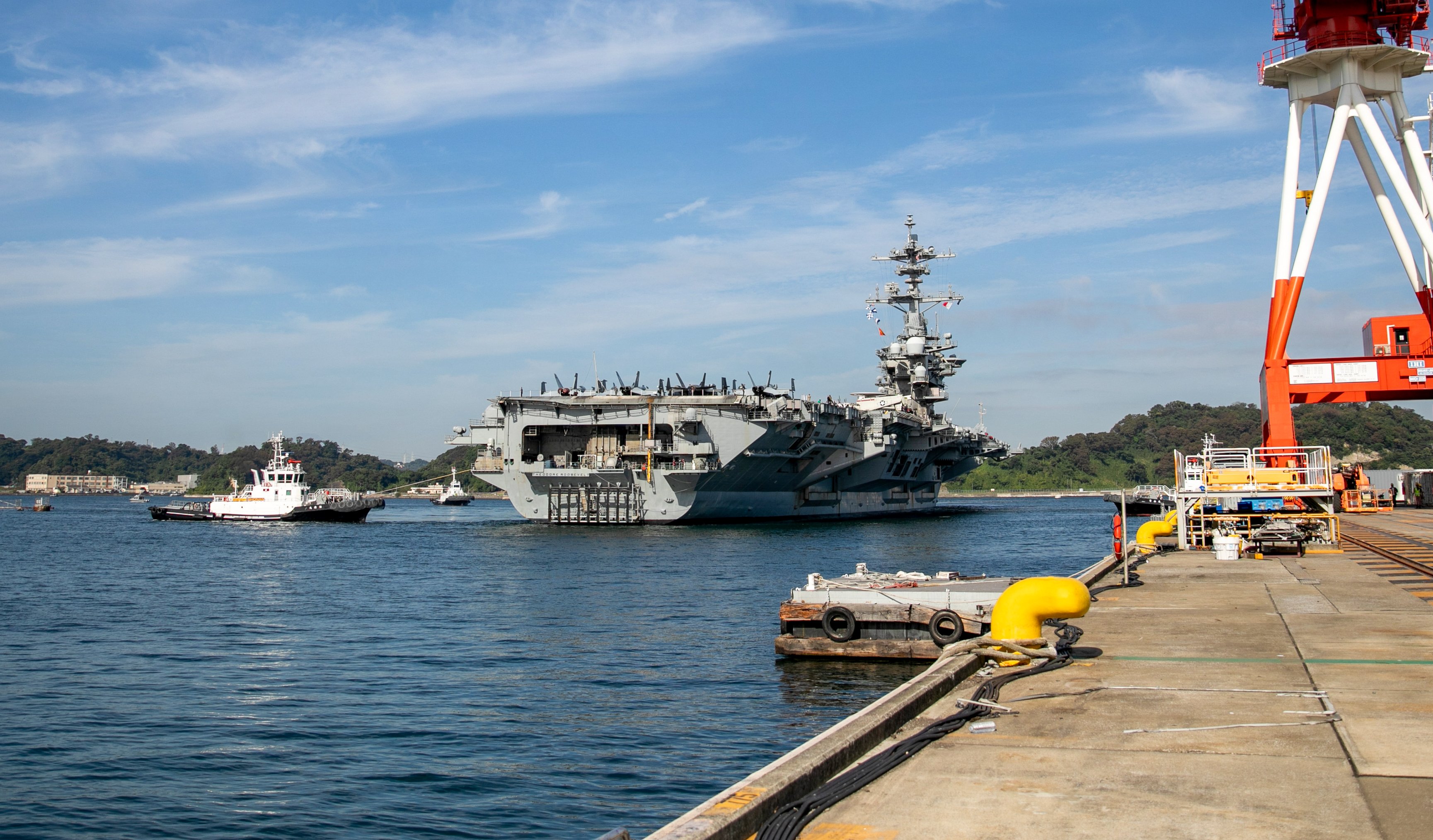
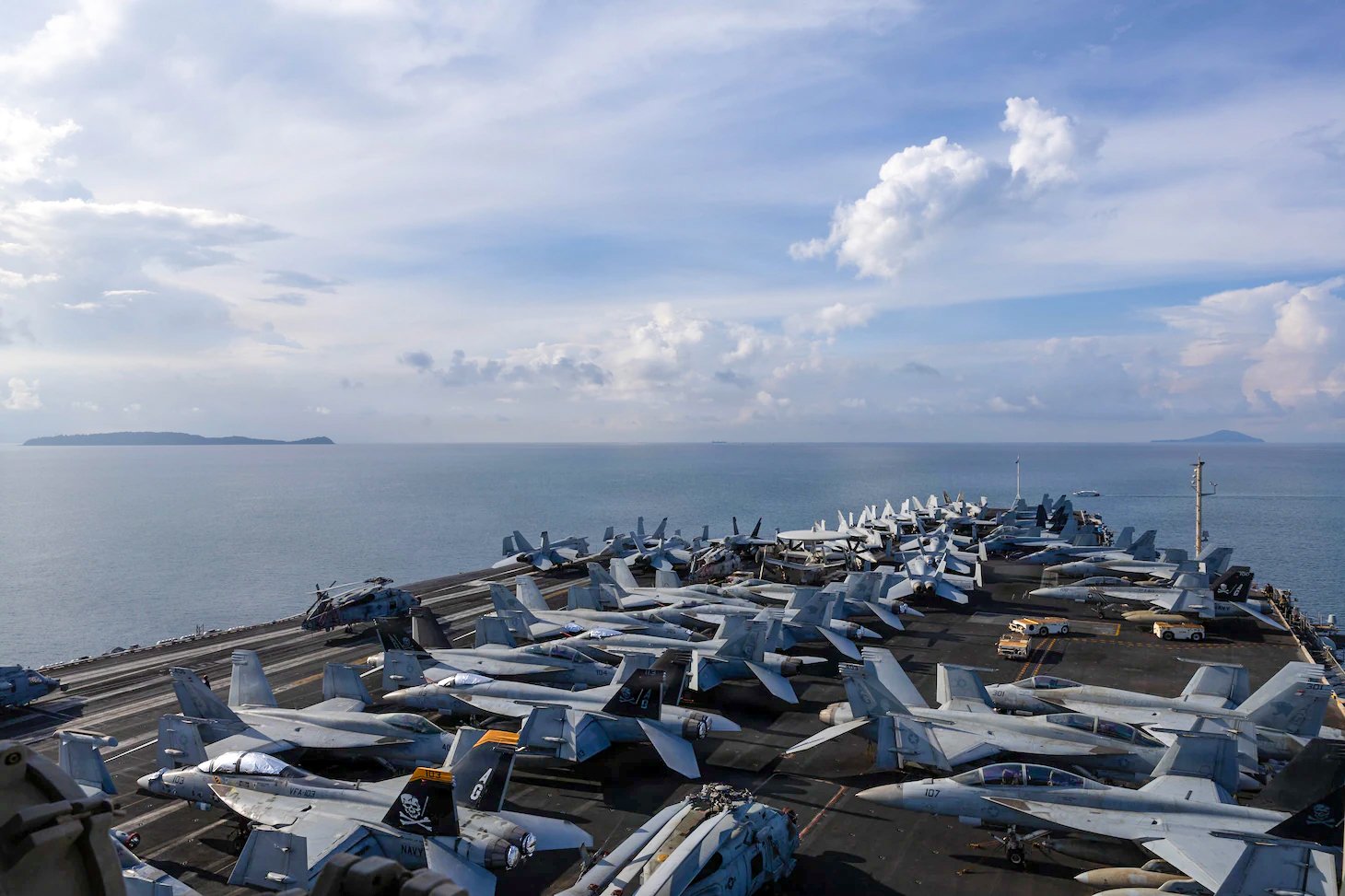
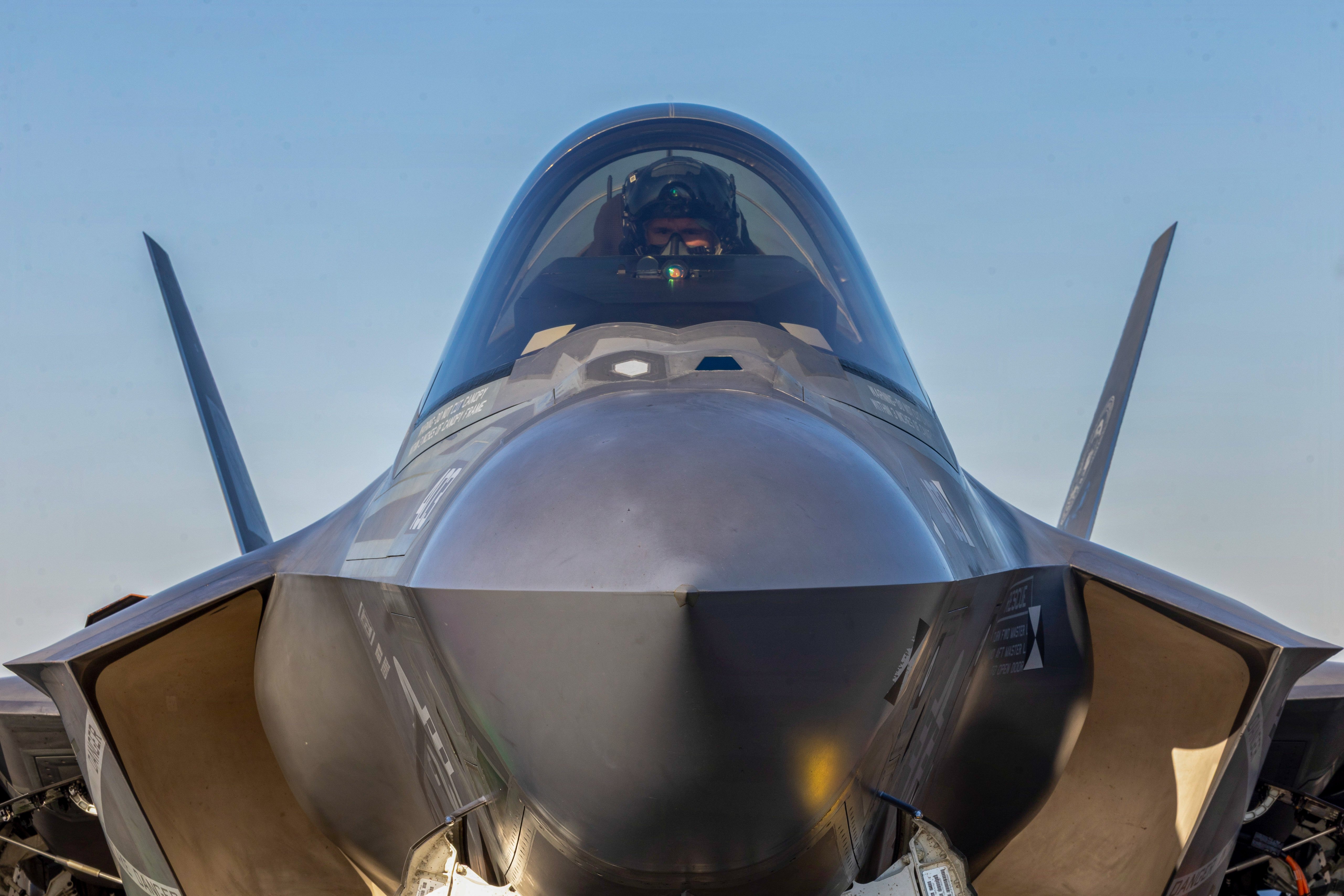
With a flight deck packed with carrier-based aircraft, including stealthy fifth-generation F-35Cs, the USS Theodore Rooseveltpulled into Yokosuka, Japan, on Friday. Roosevelt is the first non-resident U.S. carrier to visit the key naval port, strategically located on the east side of Japan, in more than four years. Yokosuka is home to the USS George Washington and America’s only forward-based Carrier Strike Group (CSG).
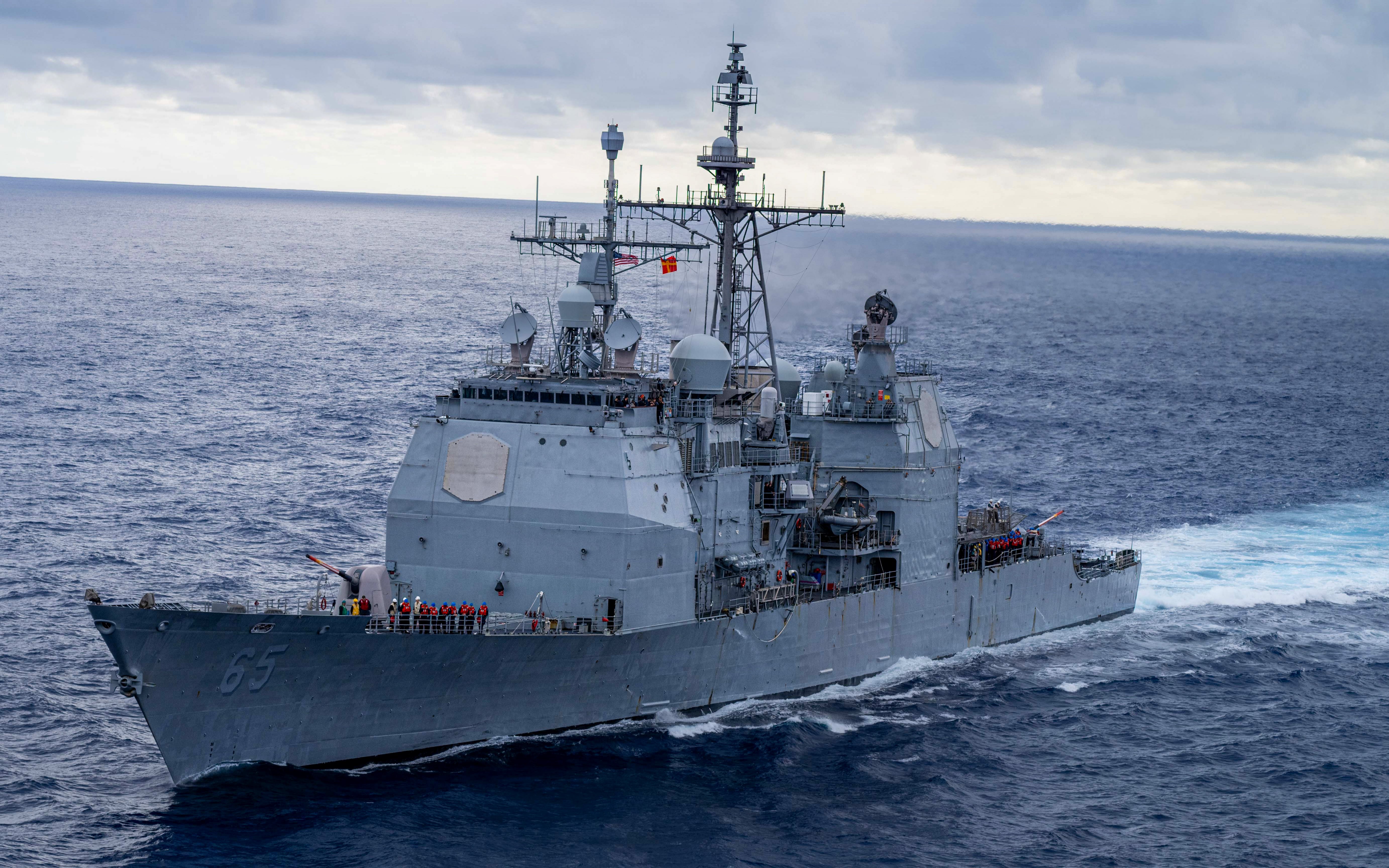
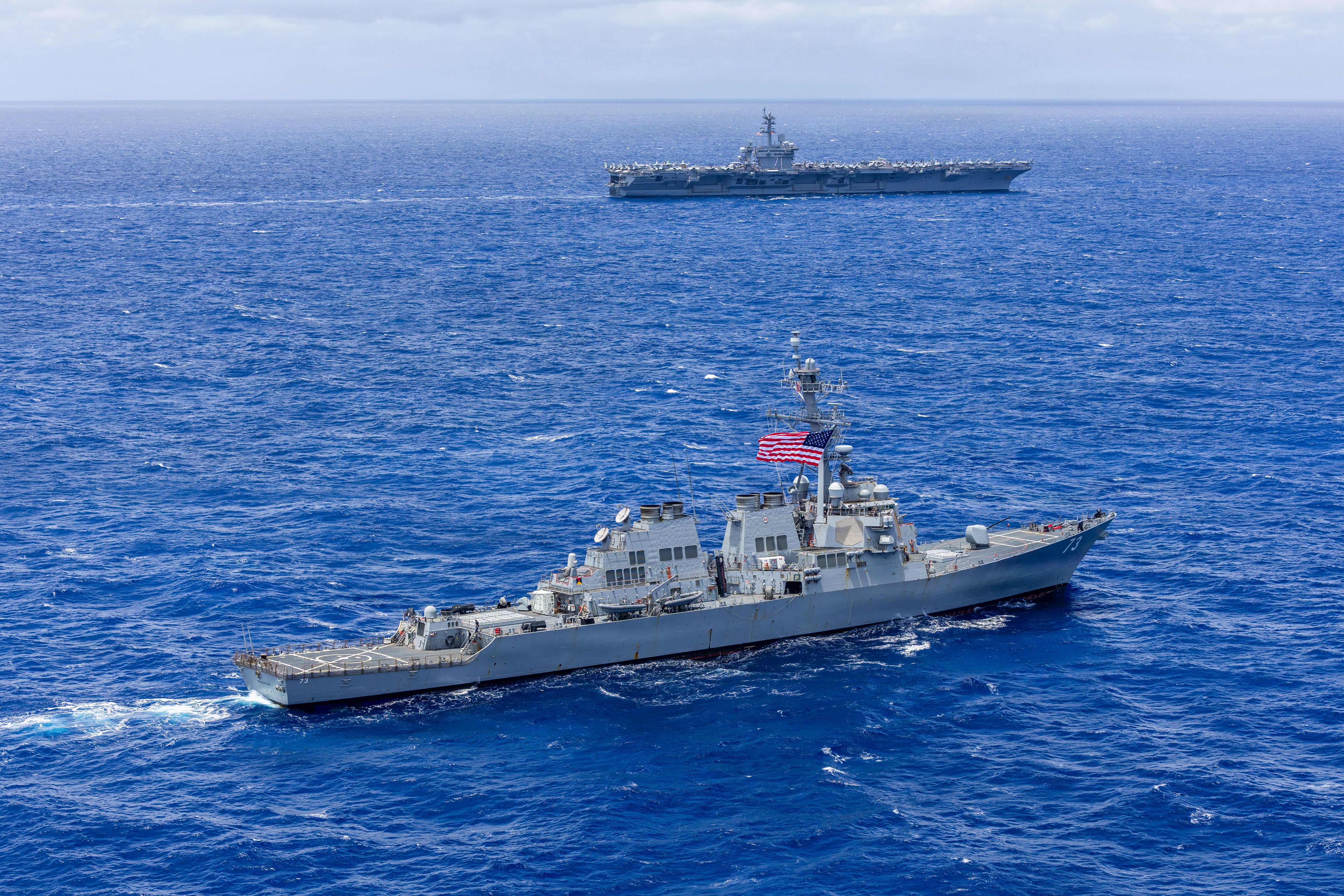
The Roosevelt, which serves as the flagship of CSG 9, escorted by guided-missile cruiser USS Chosin and destroyer USS Decatur, completed the journey from San Diego in 19 days − maneuvering around a typhoon in the Western Pacific − and will participate in the upcoming combined exercise Keen Sword 27. Meanwhile, the USS George H.W. Bushdeparted Thailand after a five-day port call and returned to the Middle East, and the USS Abraham Lincolnarrived home after a nearly eleven-month combat deployment.
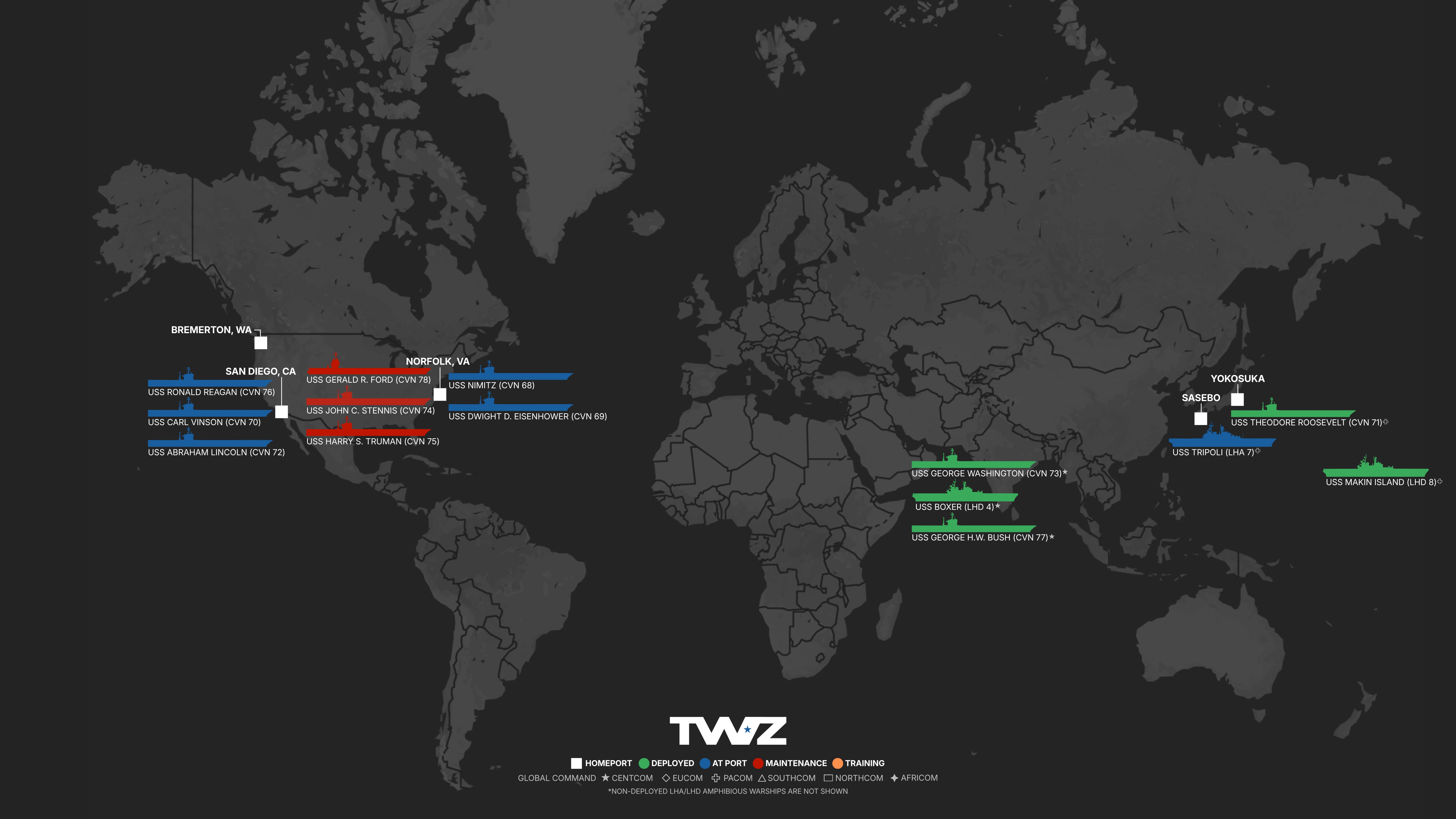
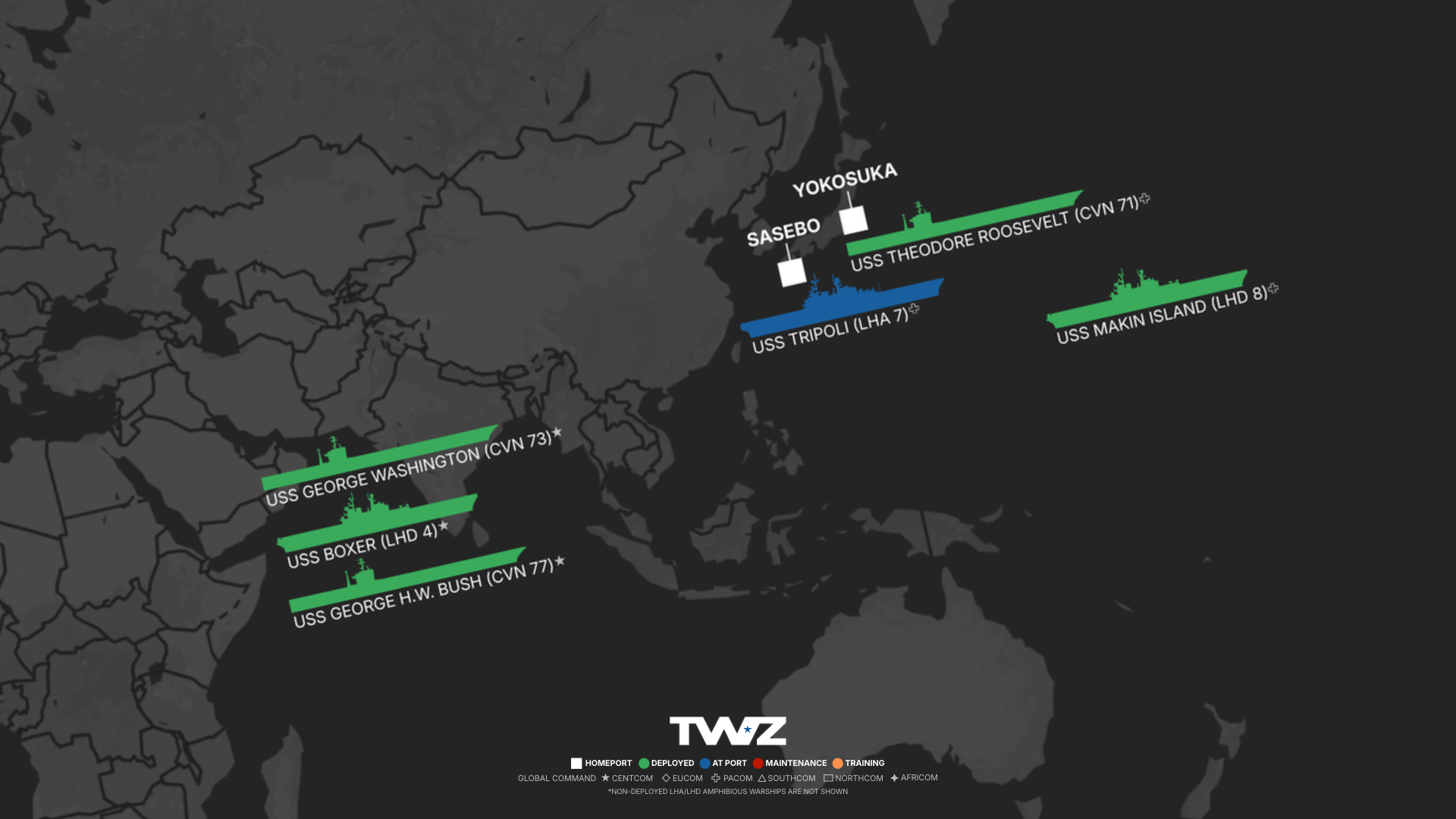
Here’s TWZ’s weekly carrier tracker monitoring America’s flattop fleet, including deployed CSGs and Amphibious Ready Groups (ARGs), using publicly available open-source information. Check out last week’s report here.
TWZ/IAN ELLIS-JONES
Theodore Roosevelt Docks In Yokosuka, Japan; First Visiting Carrier In Four Years
Roosevelt and Chosinchopped into the U.S. 7th Fleet-Pacific Command (PACOM) area of responsibility (AOR) and arrived at Commander, Fleet Activities Yokosuka on the morning of October 16. The CSG will spend a few days in port before beginning participation in exercise Keen Sword, a “premier joint-bilateral field training exercise designed to increase readiness and interoperability between the Japan Self-Defense Forces and U.S. military forces,” according to the 7th Fleet press release. The brief visit allows the crew to complete maintenance, resupply, and disembark for liberty before resuming routine operations.
“Our crew is honored to visit Yokosuka and experience the rich culture and hospitality of Japan,” the commanding officer of Roosevelt, Capt. Will Mathis, said in the release. “Port visits like this are vital for crew morale and mission readiness, allowing our Sailors to rest, recharge, and prepare to operate seamlessly alongside our allies during exercise Keen Sword.”
Roosevelt arrives in Yokosuka, Japan. U.S. Navy photo Roosevelt moors at Commander, Fleet Activities Yokosuka. U.S. Navy photo
The five-ship CSG, the composition of which a Navy official confirmed to TWZ, is currently operating on a disaggregated basis − a common practice employed by strike groups with multiple ongoing missions. The duo that departed the U.S. at the end of September linked up with another element of the group, Pearl Harbor-based guided missile destroyer USS Decatur, as they were steaming westbound past the Hawaiian Islands, based on public Automatic Identification System (AIS) data. Decatur arrived in Yokosuka the day after Roosevelt but was not mentioned in the press release.
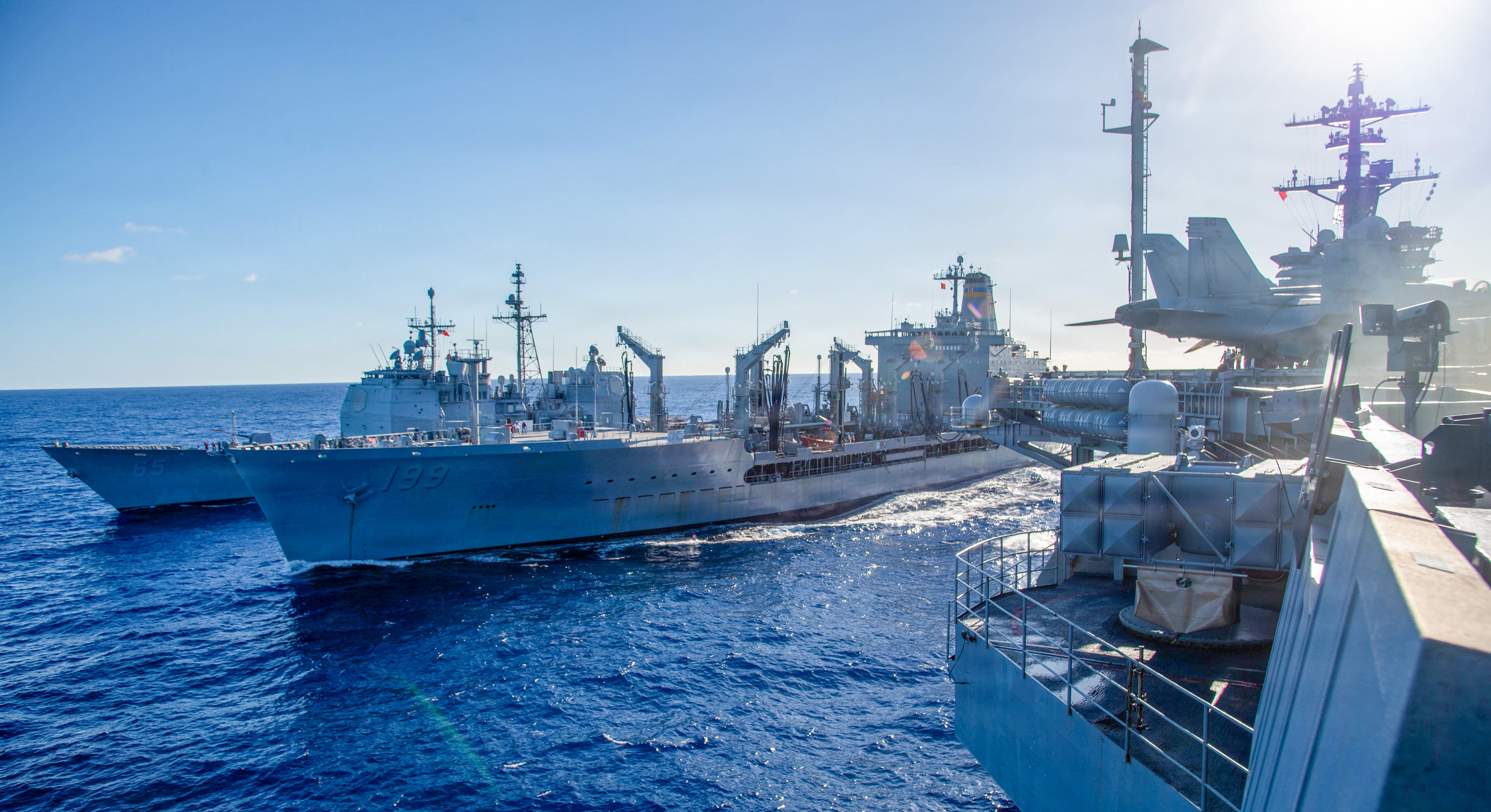
USS Carl M. Levin, also stationed in Hawaii, was the first ship from the group to deploy, according to DVIDS, the military’s content-sharing platform. Levin departed on September 9 and is operating at an undisclosed location. USS Paul Hamilton, the final ship assigned to CSG 9 to deploy, left San Diego on October 10 after onloading ammo at Bravo Pier and moored at Joint Base Pearl Harbor-Hickam on October 15, AIS data shows. Henry J. Kaiser class fleet replenishment oiler USNS Tippecanoesupported the group’s transit across the Pacific, conducting multiple replenishments-at-sea (RAS), and recently entered the East Sea/Sea of Japan via the Tsugaru Strait before going dark on AIS.
Chosin alongside Roosevelt. Navy photo Decatur and Roosevelt at RIMPAC. Navy photo Tippecanoe conducts a RAS. Navy photo
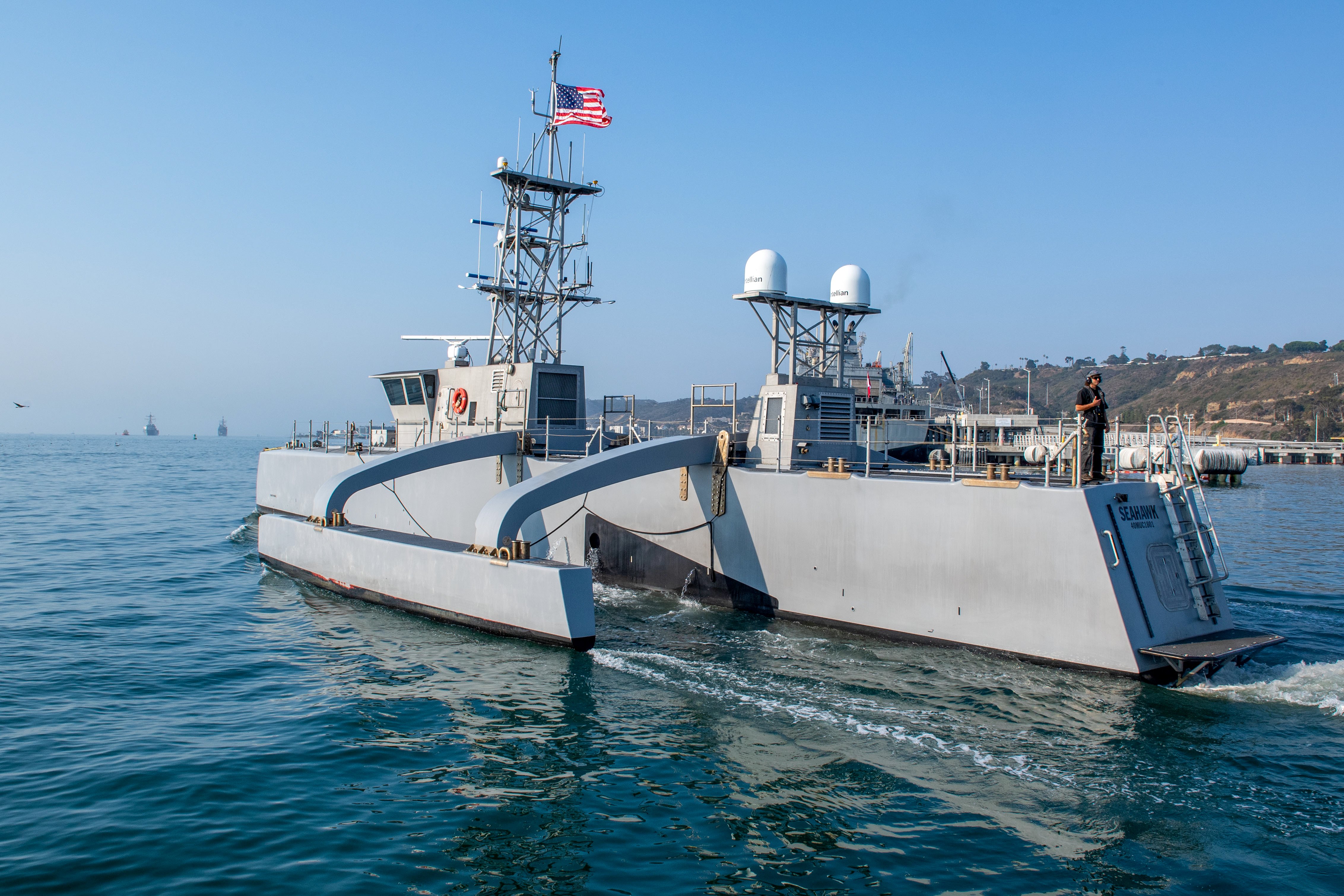
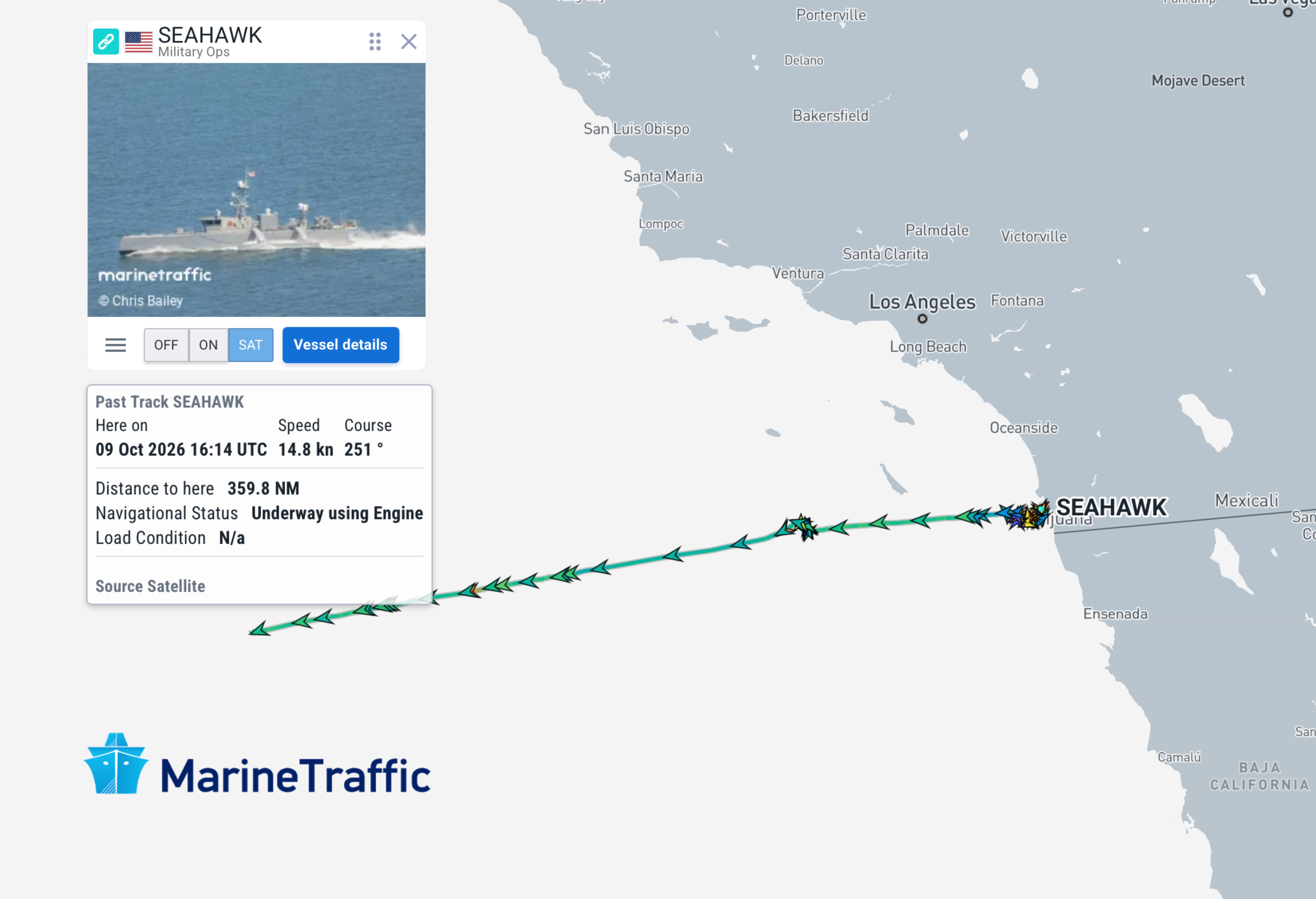
Multiple reports indicated that medium unmanned surface vessel (MUSV) Seahawk (2) deployed with the group, which would represent a significant operational achievement and the first time a drone boat was assigned to a CSG, but the MUSV quietly slipped out of Point Loma on October 8, more than ten days after Roosevelt. Seahawk reappeared on AIS and docked in Hawaii for a couple days before continuing its journey westbound in the Pacific on October 16. If Seahawk is assigned to CSG 9, it is currently disaggregated, and whether it will join Roosevelt to participate in exercise Keen Sword 27 is unknown.
Acting Secretary of the Navy Hung Cao seemingly confirmed the deployment, saying during a panel at the Association of the United States Army (AUSA) convention that “the Teddy Roosevelt carrier strike group just deployed on October 8 with a medium sized unmanned surface vessel. This is the first carrier strike group to ever deploy with a large size unmanned surface vessel.” However, Roosevelt was more than halfway to Japan on the date referenced. “This is a force multiplier, imagine having more guns out there,” he added.
MUSV Seahawk leaving Point Loma in August. U.S. Navy photo Seahawk’s transit out of San Diego. Source: MarineTraffic/KPLER
TWZ reached out to the Secretary’s office for clarification and to confirm the deployment but did not receive a response. “Seahawk’s operations represent continued progress in the Navy’s efforts to integrate unmanned systems into Fleet operations. As with any emerging capability, we continue to learn, adapt, and refine how these systems are employed,” a Navy official told us.
Abraham Lincoln’s Homecoming
Surrounded by small boats, with hundreds of spectators lining the channel in San Diego Bay and thousands more watching online, the USS Abraham Lincolnarrived home from a historic ten-and-a-half-month combat deployment. The flagship of CSG 3 and her crew of more than 5,000 Sailors and Marines served as the tip of the spear in the war against the Iranian regime, first during Operation Epic Fury and then the subsequent blockades, and set a new record for the most consecutive days at sea without a port call.
USS Abraham Lincoln pulls into San Diego Bay. U.S. Navy photo
Lincolnpulled into Naval Air Station North Island and moored at Berth Lima on October 8, 321 days after casting off on November 21, 2025. Sailors in dress whites manned the rails as the carrier transited the bay, escorted on both sides by small boats and jet skis flying American flags, while family and friends eagerly waited pierside for their return. The video below, shared by the Pentagon, captures the moment.
Family and friends welcome the crew of the USS Abraham Lincoln home. Pentagon video.
Lincoln now lays claim to the second-longest deployment in the modern carrier era, falling just five days short of the 326-day post-Vietnam record held by the USS Gerald R. Ford. The flattop traveled over 93,000 nautical miles during the cruise − more than four trips around the Earth, a post by the public affairs officer highlighted − and conducted 72 replenishments-at-sea, received 20-plus million gallons of aviation fuel, and flew more than 14,000 sorties that totaled 28,500 flight hours, a press release from the Navy highlighted.
The release confirmed for the first time that Lincoln broke the previous record of 206 days set by USS Dwight D. Eisenhower during the COVID pandemic for days spent underway between port visits, as TWZfirst reported. “The ship’s 208 uninterrupted days at sea between Guam and Oman, and its 286 consecutive days at sea between departing San Diego and arriving in Thailand, are record-breaking marks for modern aircraft carriers.”
Lincoln’s cruise took her through both U.S. 7th Fleet and U.S. 5th Fleet AORs. During Operation Epic Fury, which began on February 28 and lasted almost 40 days, Lincoln took up station in the northern Arabian Sea as Commander, Task Force (CTF) 50 and pressured Iran’s southern flank. When major combat operations wound down, the carrier and her air wing patrolled and enforced the blockade line during both rounds that followed.
Carrier Air Wing (CVW) 9, the “Navy’s premier next-generation air wing that served as the primary offensive power” for CSG 3, flew 14,037 sorties − including 4,000 combat missions − and dropped more than 1.37 million pounds of ordnance on thousands of targets while employing 1,499 precision weapons. “This concentrated firepower significantly degraded Iranian Navy capabilities,” a separate statement noted.
“The rapid mobilization and combat execution of CVW-9 during Operation Epic Fury demonstrated the unmatched flexibility of a U.S. Navy carrier strike group,” Capt. J.W. Stigi, commander of CVW-9, said in the statement. “Pairing fifth-generation F-35C stealth and sensor fusion with fourth-generation workhorse strike and electronic attack platforms, Team Shogun destroyed Iran’s conventional Navy and secured vital maritime chokepoints in support of our commander’s objectives.”
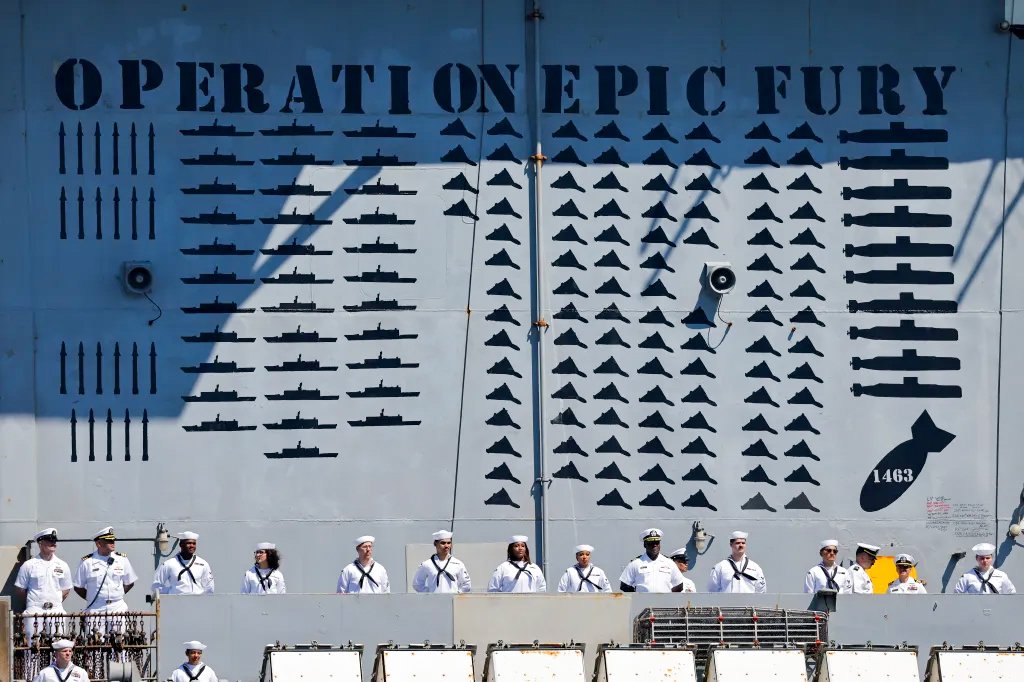
Kill marks painted on the island superstructure show CSG 3 destroyed 106 one-way attack drones fired by the Islamic Revolutionary Guard Corps (IRGC), 34 Iranian Navy and IRGC ships, 23 inbound cruise missiles, and 10 enemy submarines. The strike group dropped 1,463 air-to-ground munitions in total, a Sailor explaining the marks said in a video on social media.
George H.W. Bush Leaves Thailand And Returns To The Middle East
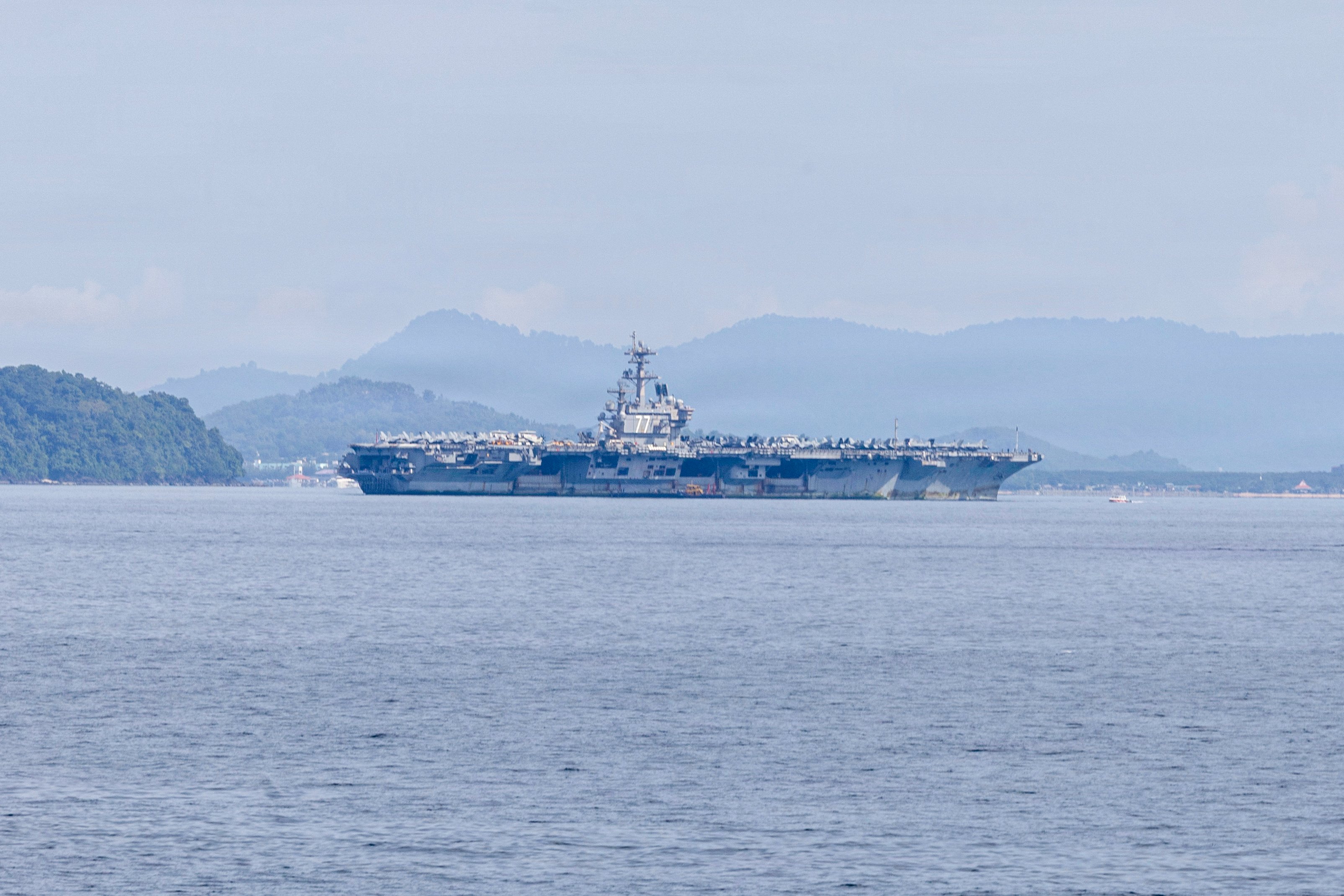
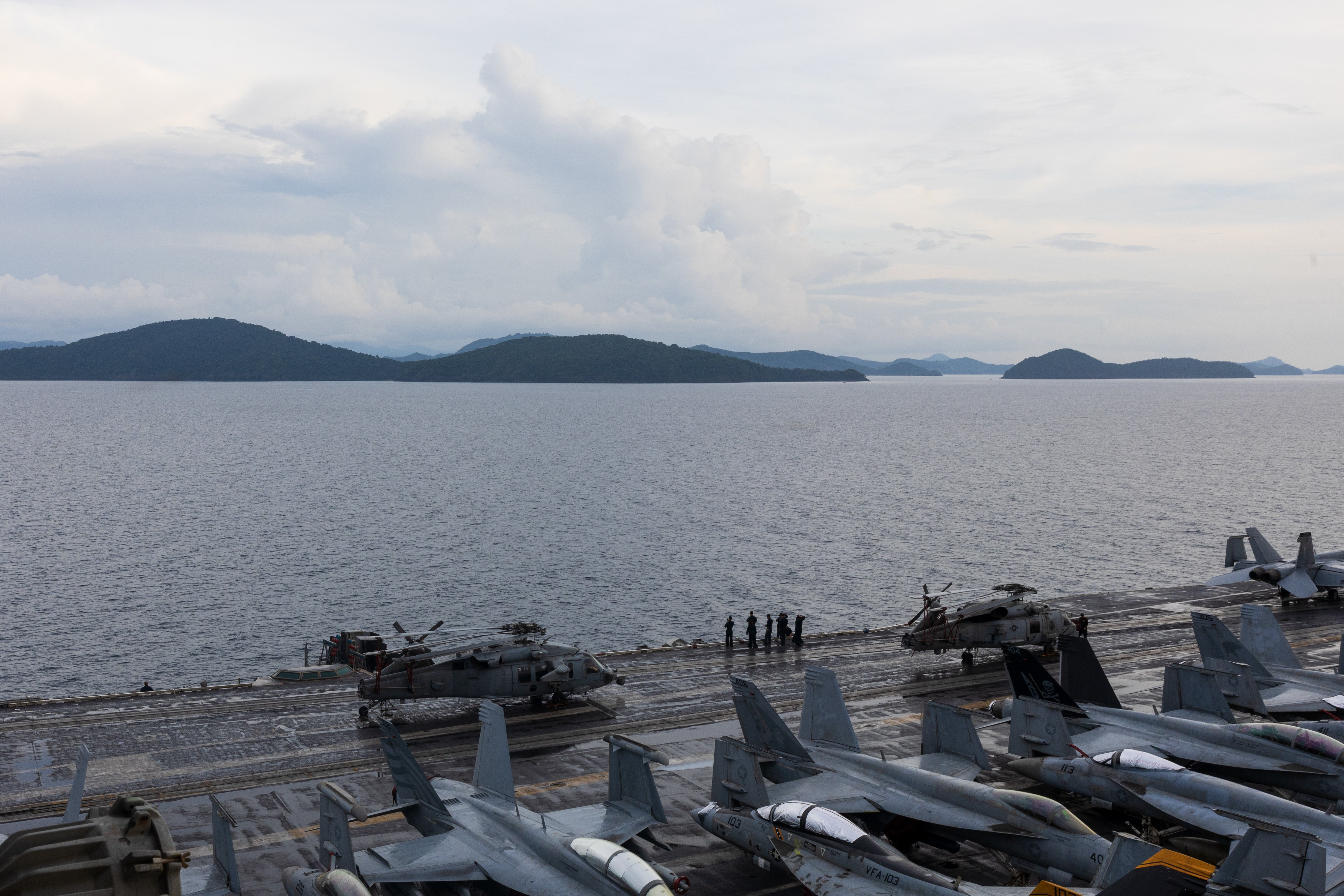
The USS George H.W. Bush and her destroyer escort, USS Delbert D. Black, departed Phuket, Thailand, on October 9 after a five-day liberty visit. “Nearly 5,000 Sailors from across the strike group experienced the sights and sounds Thailand has to offer, deepening their understanding of the Thai people and strengthening interpersonal bonds,” according to a press release.
George H.W. Bush departs Phuket, Thailand, on October 9, 2026. U.S. Navy photo
“The Sailors and I had an amazing time in this beautiful country, and I sincerely thank the people of Thailand for their incredible welcome,” Capt. Justin T. Issler, the commanding officer of George H.W. Bush, said about the stop. “This port visit to Phuket was a tremendous opportunity for the crew. We are grateful to our Thai allies for hosting us, and we look forward to continuing our mission here in 7th Fleet, alongside Thailand and our other regional allies and partners.”
USS George H.W. Bush arrives in Thailand. U.S. Navy photo USS George H.W. Bush anchors in Phuket. U.S. Navy photo
Bush dropped anchor approximately two nautical miles south of Ao Makham Deep Sea Port on October 4 after 187 consecutive days at sea. After leaving Phuket, the carrier stopped broadcasting AIS while steaming due south at 10 knots. Imagery on DVIDS confirms that the CSG returned to the Middle East and operating in the U.S. 5th Fleet AOR to “support maritime security and stability,” joining the George Washington CSG once again as the second strike group in the region.
Destroyer USS Mason, which deployed as the integrated air and missile defense (IAMD) commander for the CSG but has disaggregated at times, arrived in Singapore on October 5, likely for a port call. The Arleigh Burke class destroyer departed on October 9 and was last tracked heading northwestbound in the Malacca Strait, likely to rejoin the CSG. The other two destroyers assigned to the CSG, USS Ross and USS Donald Cook, remained in 5th Fleet during the visit.
F-35C Lightning II Operates from A Ford Class Carrier For The First Time
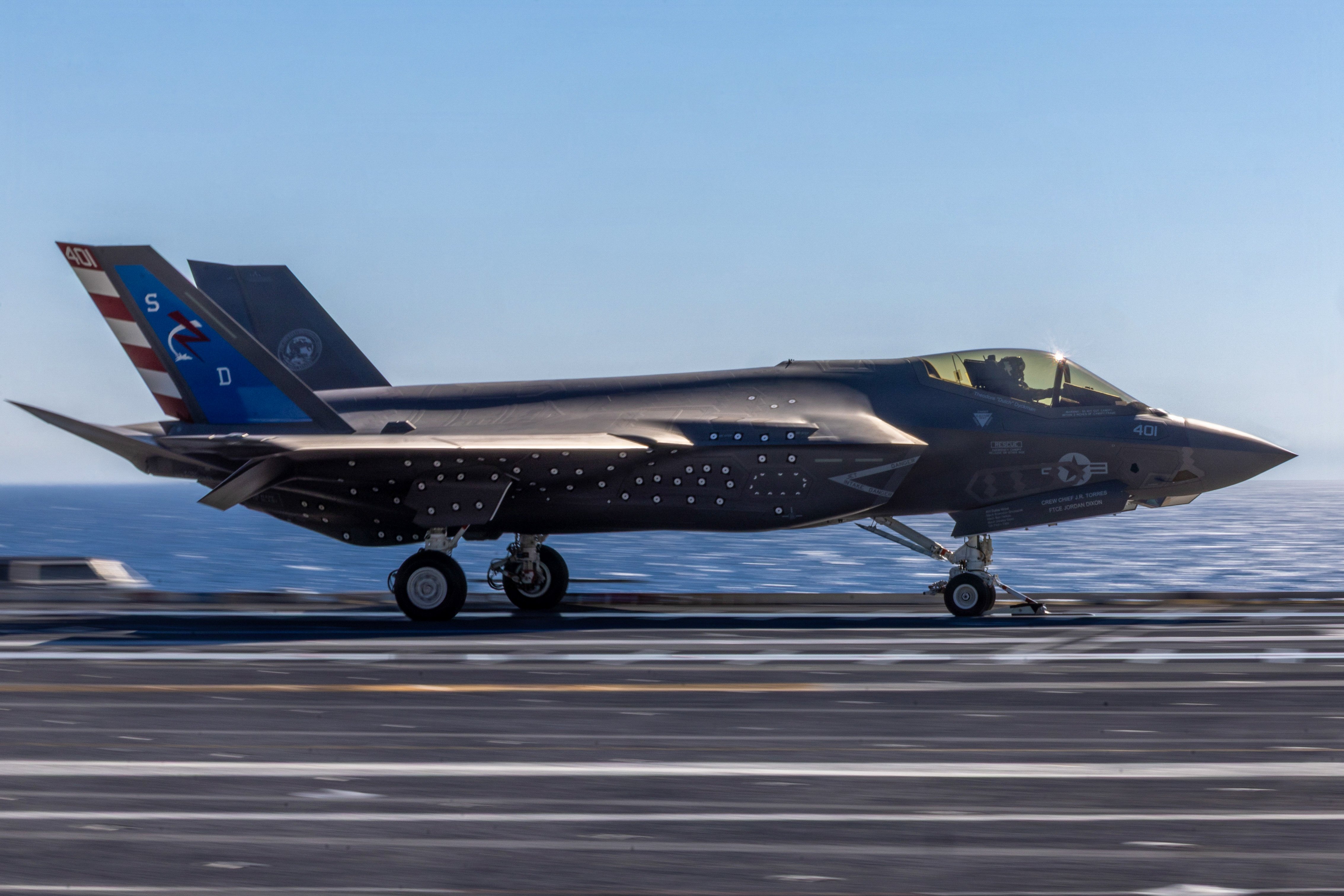
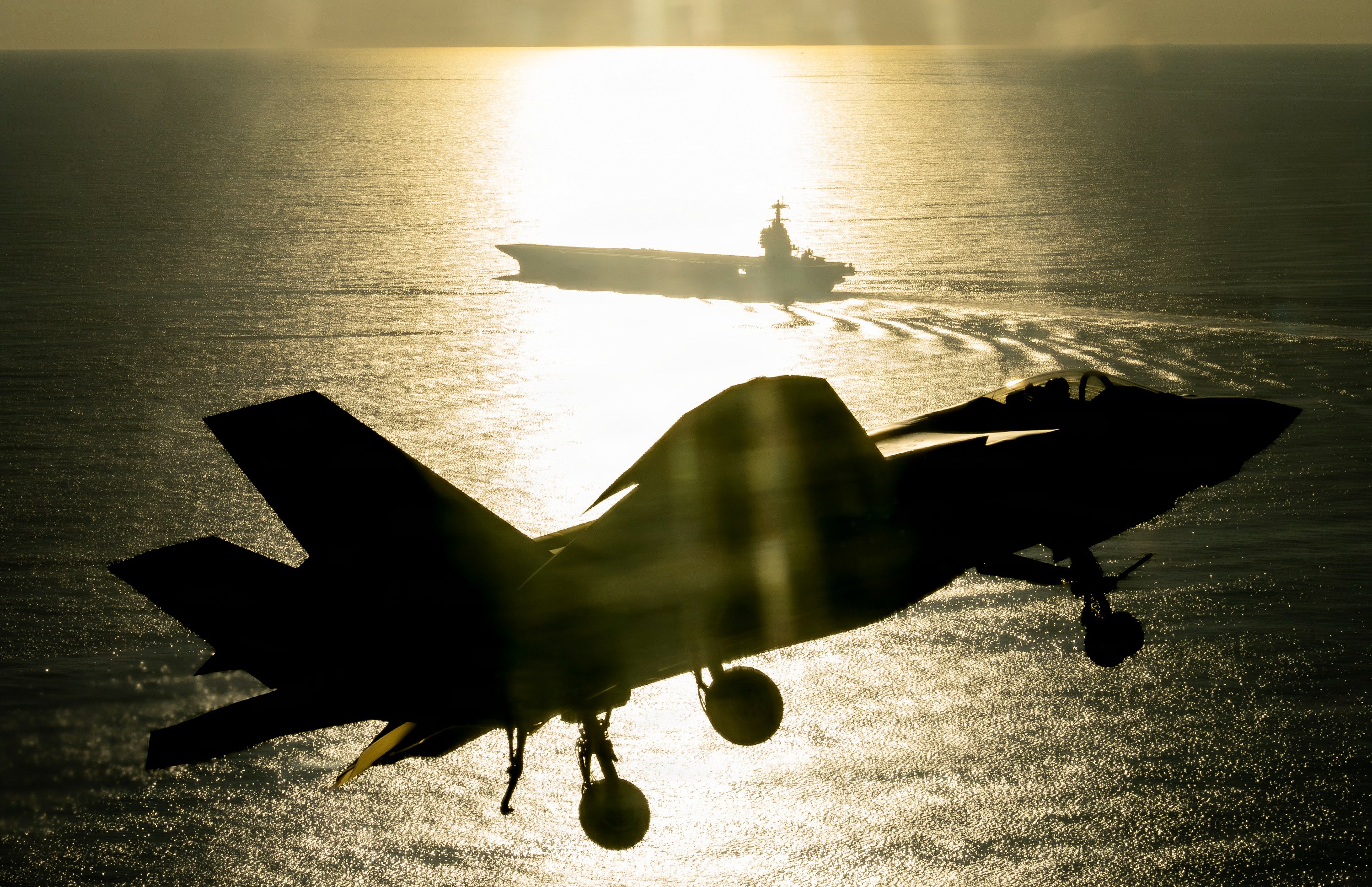
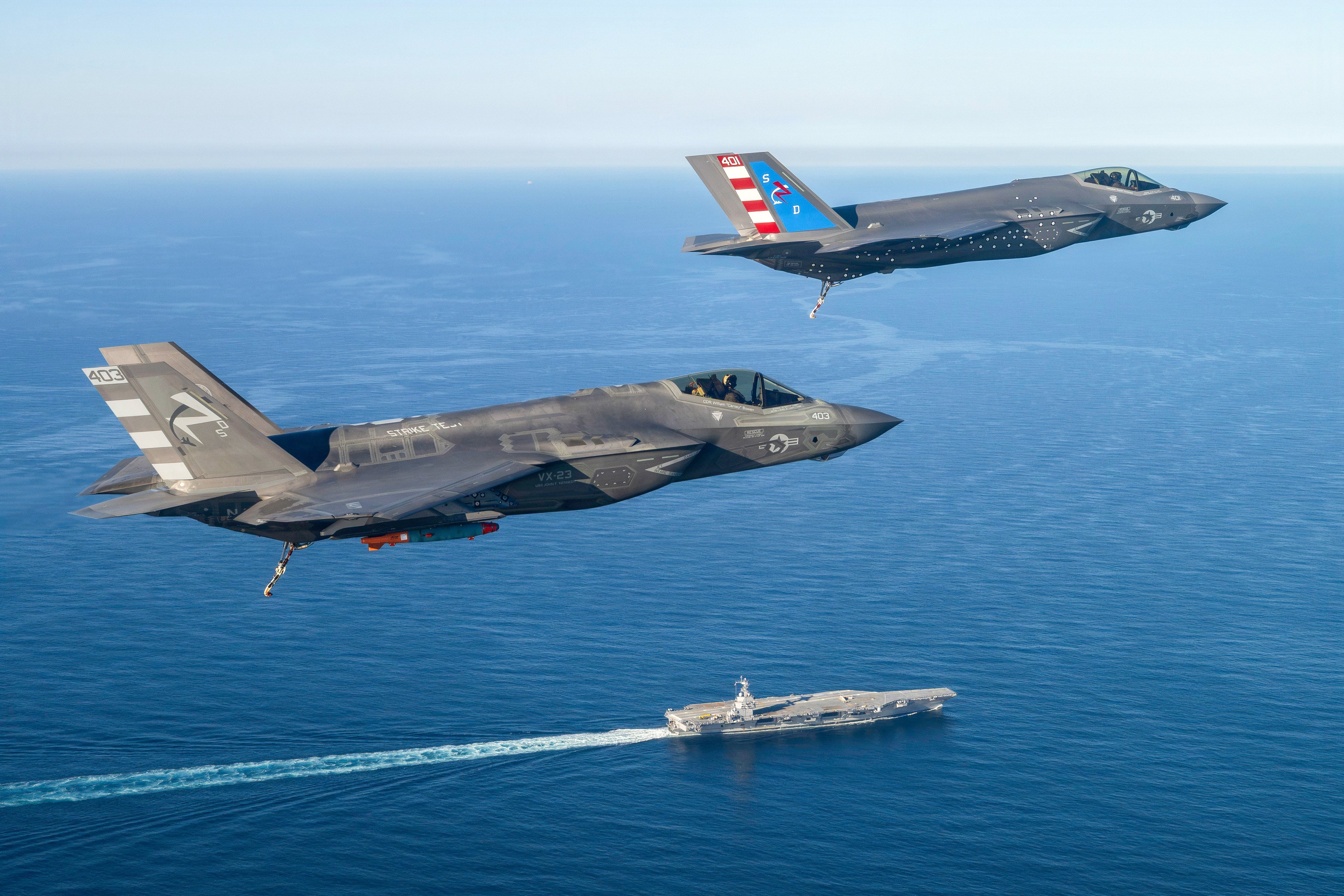
Marking a major milestone, an F-35C Lightning II Joint Strike Fighter made the first arrested landing aboard a Gerald R. Ford class carrier, the Navy’s newest and most advanced class of aircraft carriers that are being built to replace the aging Nimitz fleet. The trap was made by Lt. Cmdr. Robert Mason with the “Salty Dogs” of Air Test and Evaluation Squadron (VX) 23 aboard the future USS John F. Kennedy in the Western Atlantic on October 13. The first catapult launch followed the next day, pictures on DVIDS showed.
F-35Cs approach for first landing aboard PCU John F. Kennedy. U.S. Navy video
VX-23, based out of Naval Air Station Patuxent River in Maryland, is part of the Naval Air Warfare Center Aircraft Division and was putting Kennedy through the ongoing Aircraft Compatibility Testing to assess the “operational capabilities of the ship’s aircraft launch and recovery equipment.” A team from the Patuxent River-based F-35 Integrated Test Force, detached to the ship, conducted the evaluation using a specially instrumented example of the jet. One of the two pictured was externally equipped with an inert Joint Direct Attack Munition (JDAM) bomb.
VX-23 F-35Cs flying over and on the flight deck of PCU John F. Kennedy. U.S. Navy photos
The Navy took preliminary acceptance of Kennedy, which is still considered a Pre-Commissioning Unit, on September 29. This process allows the service to conduct at-sea testing and build underway proficiency while the shipbuilder, Huntington Ingalls Industries, completes final system checks ahead of expected delivery in spring 2027. Kennedy got underway on October 13 and returned to her homeport of Naval Station Norfolk three days later.
The lead ship of the class, the USS Gerald R. Ford, does not currently embark F-35Cs and will need upgrades to field the Navy’s most advanced jet. Back in 2019, TWZwarned that the stealth jet wouldn’t fly from the troubled class for years. Because of this, Congress required that Kennedy be equipped to embark F-35Cs, which led to additional delays for the Navy’s next carrier.
Big Deck Fleet At A Glance
Overall, three U.S. carriers are deployed, three are working up in various states of readiness, three are in maintenance availabilities, one is post-deployment, one is being used primarily for training before deactivation next year, and another will be delivered in 2027. Two amphibious ready groups are deployed, one is forward-deployed, three are working up or in port, and three are in maintenance.
Note: Positions are general approximations. Non-deployed LHA/LHD amphibious warships are not shown.
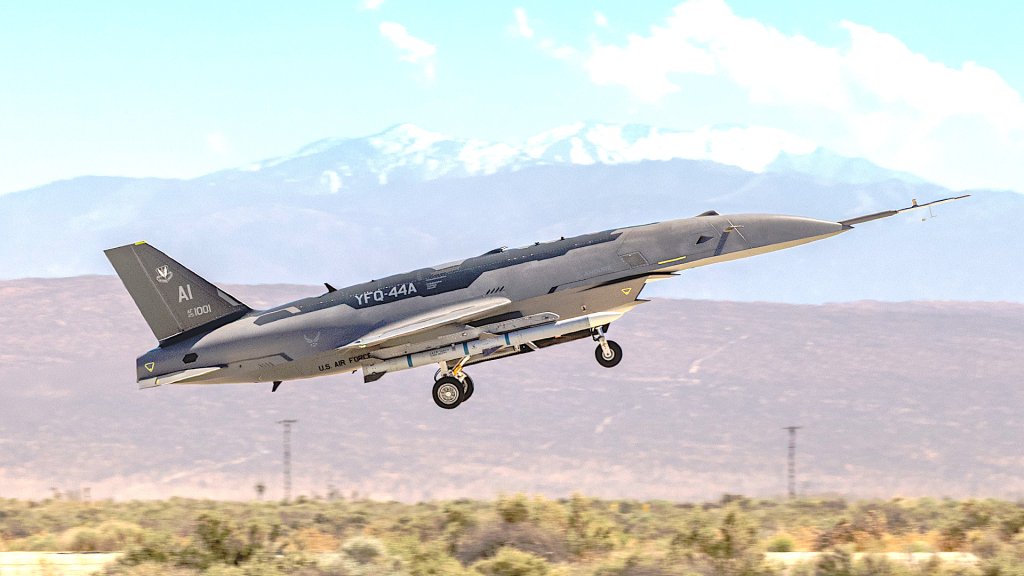
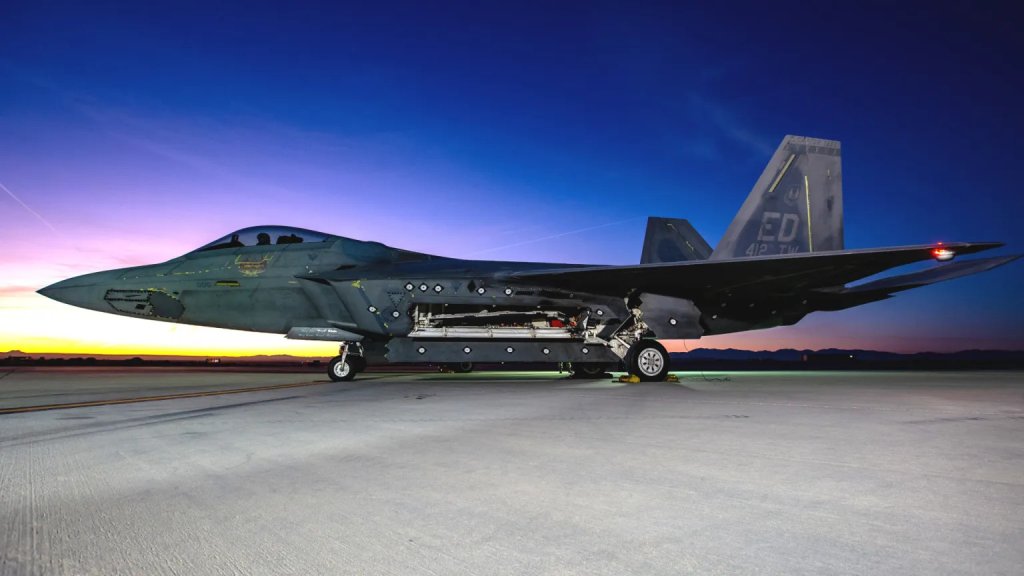
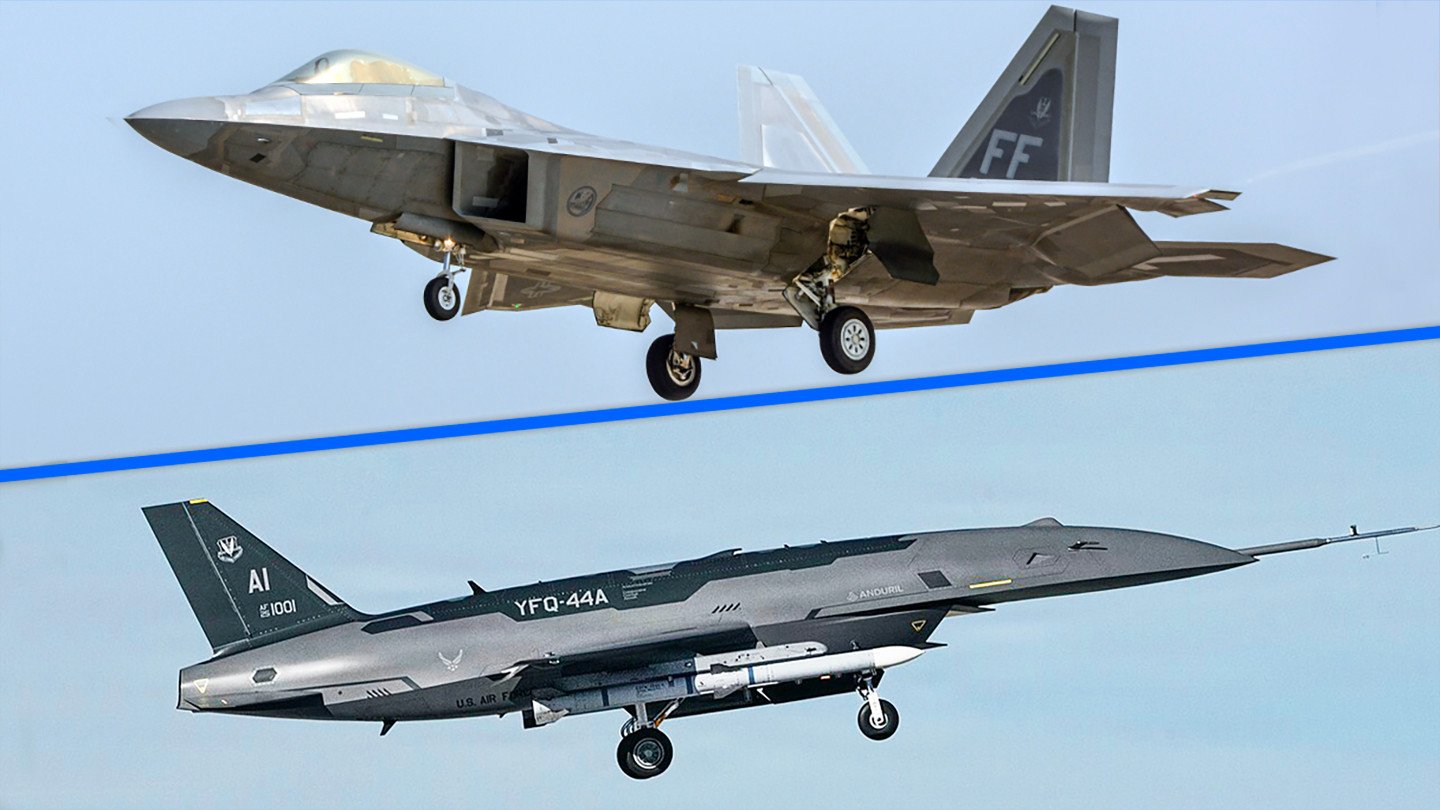
A pilot flying an F-22 Raptor fighter has issued commands to a YFQ-44A Fury Collaborative Combat Aircraft (CCA) drone in a first-of-its-kind test. This is an important development for the U.S. Air Force’s CCA program, as its F-22s are set to be the first aerial ‘quarterbacks’ for these uncrewed aircraft once they enter operational service.
The Air Force and Anduril, Fury’s prime contractor, announced the “airborne tactical-control demonstration” today, but it occurred sometime earlier this month. An Anduril spokesperson confirmed directly to TWZ that this was a first for an F-22 and a pre-production YFQ-44A. Last month, the company disclosed tests involving Fury flying in formation with F-35 fighters, but stressed that the latter were not yet issuing commands to the former in mid-air. A Fury drone also launched an AIM-120 Advanced Medium-Range Air-to-Air Missile (AMRAAM) for the first time earlier this year.
A stock picture of a pre-production YFQ-44A Fury CCA drone. USAF
The Air Force has orders in now for production of FQ-44As, as well as General Atomics’ FQ-42A Vengeance drones, under the first phase, or Increment 1, of its CCA program. The service is still planning to acquire additional CCAs, which could be of entirely different types, through a follow-on Increment 2. The goal now is to have a fleet of at least 500 Increment 1 CCAs by 2032. The recent test is part of efforts to lay the groundwork for an initial tranche of CCAs to start entering operational service around the end of the decade.
“During the demonstration, an F-22 pilot served as an airborne ‘quarterback,’ issuing high-level tactical directives to a single YFQ-44A,” according to a press release from the Air Force. “The aircraft’s onboard autonomy software interpreted and executed those directives in real time, conducting dynamic flight maneuvers and simulated combat tasks.”
A stock picture of an F-22 Raptor test jet. USAF
“The event brought together personnel from the 412th Test Wing, 422nd Test and Evaluation Squadron, 309th Software Engineering Group, Experimental Operations Unit, F-22 System Program Office and the CCA Software Autonomy and Teaming Branch,” according to the Air Force release.
The Experimental Operations Unit (EOU) mentioned here is based at Nellis Air Force Base in Nevada and has been leading efforts to pave the way for future Air Force CCA operations.
The “Fury and an F-22 both took off [from] Edwards AFB [Air Force Base in California] and joined up midair,” according to a separate release from Anduril. “While in flight, the Raptor pilot sent an updated mission plan to Fury using a tactical data link, commanding Fury through operationally-relevant maneuvers from the cockpit of the crewed quarterback.”
Neither the Air Force nor Anduril provided further details on how the F-22 was configured for this test. Past Air Force budget documents have mentioned the need to integrate “tablets, cables, and associated materials” onto the Raptor for this purpose. A single Raptor is also expected to be able to manage multiple CCA drones simultaneously.
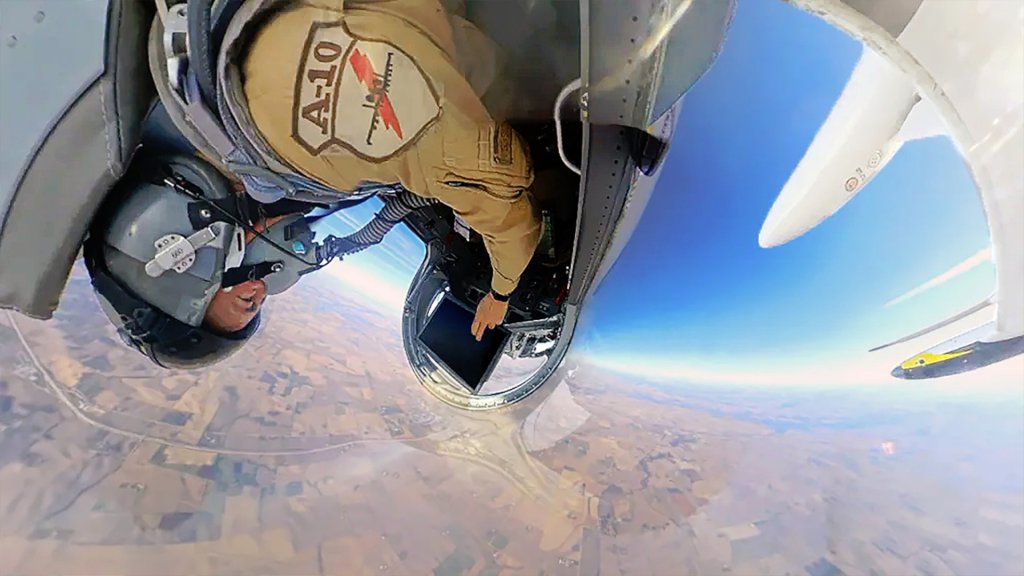
A view of a “battle manager” in the back seat of an L-39 light jet using a tablet-like device during a past test of capabilities to control drones in mid-air conducted by Lockheed Martin’s Skunk Works. Lockheed Martin
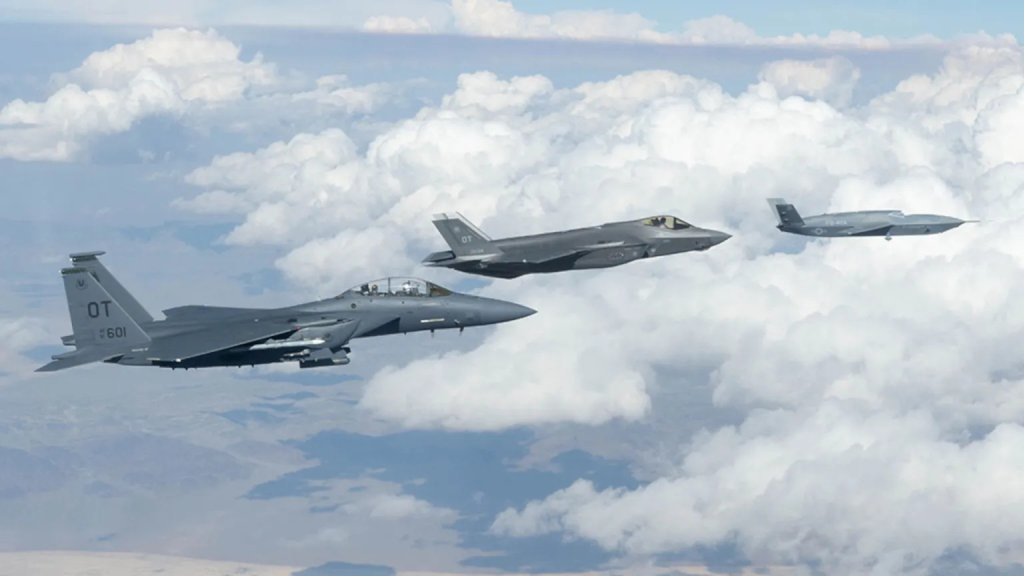
A General Atomics Vengeance drone, at right, in flight together with an F-35A Joint Strike Fighter and an F-15E Strike Eagle. General Atomics
In addition, Fury and Vengeance are set to make their debut in a large-scale exercise before the end of the year. Bringing the CCAs to the next iteration of Exercise Emerald Flag will give the Air Force further opportunity to test them in a more operationally relevant context alongside crewed fighters.
“We have not yet done a LFE [large-force employment exercise] with these [CCAs], for real. The first one is going to be Emerald Flag. That’s in December,” Lt. Col. Lyndon “OTTO” Bartlett, the EOU’s Director of Operations, said during a panel at the Air & Space Forces Association’s (AFA) 2026 Air, Space & Cyber Conference in September, at which TWZ was in attendance. “That’ll be our first tip [sic] dip of the toe in an actual force integration.”
The EOU, working together with other Air Force elements and industry partners, still has to answer a host of other outstanding questions unrelated to tactical operations. CCAs will be deployed, launched, recovered, supported, and otherwise operated in ways that are distinct from their crewed counterparts, and for which new policies and procedures will need to be developed. Just making sure human pilots have trust in their uncrewed wingmen operating as expected will be critical, underscoring the specific importance of the demonstration disclosed today. All of this applies equally to the U.S. Marine Corps and U.S. Navy CCA programs, which are being run in very close coordination with the Air Force’s efforts.
When it comes to the recent test involving the F-22 and the YFQ-44A, “this achievement demonstrates what is possible when we are aligned with industry on a shared imperative: delivering capability to the warfighter at unprecedented speed,” Secretary of the Air Force Troy Meink said in a statement today. “We are driving urgency into every part of acquisition from rapid integration and flight learning to disciplined assessment, so we can turn promising technology into combat capability at the pace the threat demands.”
A graphic showing the FQ-42 and FQ-44 designs together. USAF
“This flight shows the power of crewed-uncrewed teaming and the advantage it provides our warfighters,” Air Force Chief of Staff Gen. Ken Wilsbach also said. “We must test often, learn fast, and give commanders what they need, when they need it.”
“The U.S. Air Force’s CCA program is the fastest moving, most mature CCA program anywhere in the world, and will be the first to field operational aircraft,” Mark Shushnar, Anduril’s Vice President of Autonomous Airpower, said as well. “Getting there demands that Anduril and the U.S. Air Force work together to prove out the capability, define the operational procedures, and build trust between operators and their semi-autonomous wingmen.”
With all this in mind, an F-22 issuing orders to a YFQ-44A in mid-air is an important new sign of what is on the horizon for the U.S. Air Force, though there is still work to be done.
Hey guys, just wanted to talk about a cool thing that happened last Sunday. We won Best Military Aviation Submission at the 2026 Defense Media Awards in Washington, D.C., for “What The F-47’s Canards Say About The Rest Of Its Design.” This is the biggest deal in our little corner of journalism. Not just that, but we were nominated in many categories:
Tyler: Best Defense Electronics and Best Missile Defense
Tyler and Joe Trevithick: Best Rotorcraft
Howard Altman: Integrated Maritime, AI Integration, and the John Morrocco Award for In Depth Reporting
Thomas Newdick: Training, Simulation and Readiness, and Missile Defense
Jamie Hunter: Best Multimedia
Hope Seck: National Security Space
Joe Trevithick: Space and Mobile Combat Systems
A big thanks to the committee and the Defense Media Awards!
Welcome to Bunker Talk. This is a weekend open discussion post for the best commenting crew on the net, in which we can chat about all the stuff that went on this week that we didn’t cover. We can also talk about the stuff we did or whatever else grabs your interest. In other words, it’s an off-topic thread.
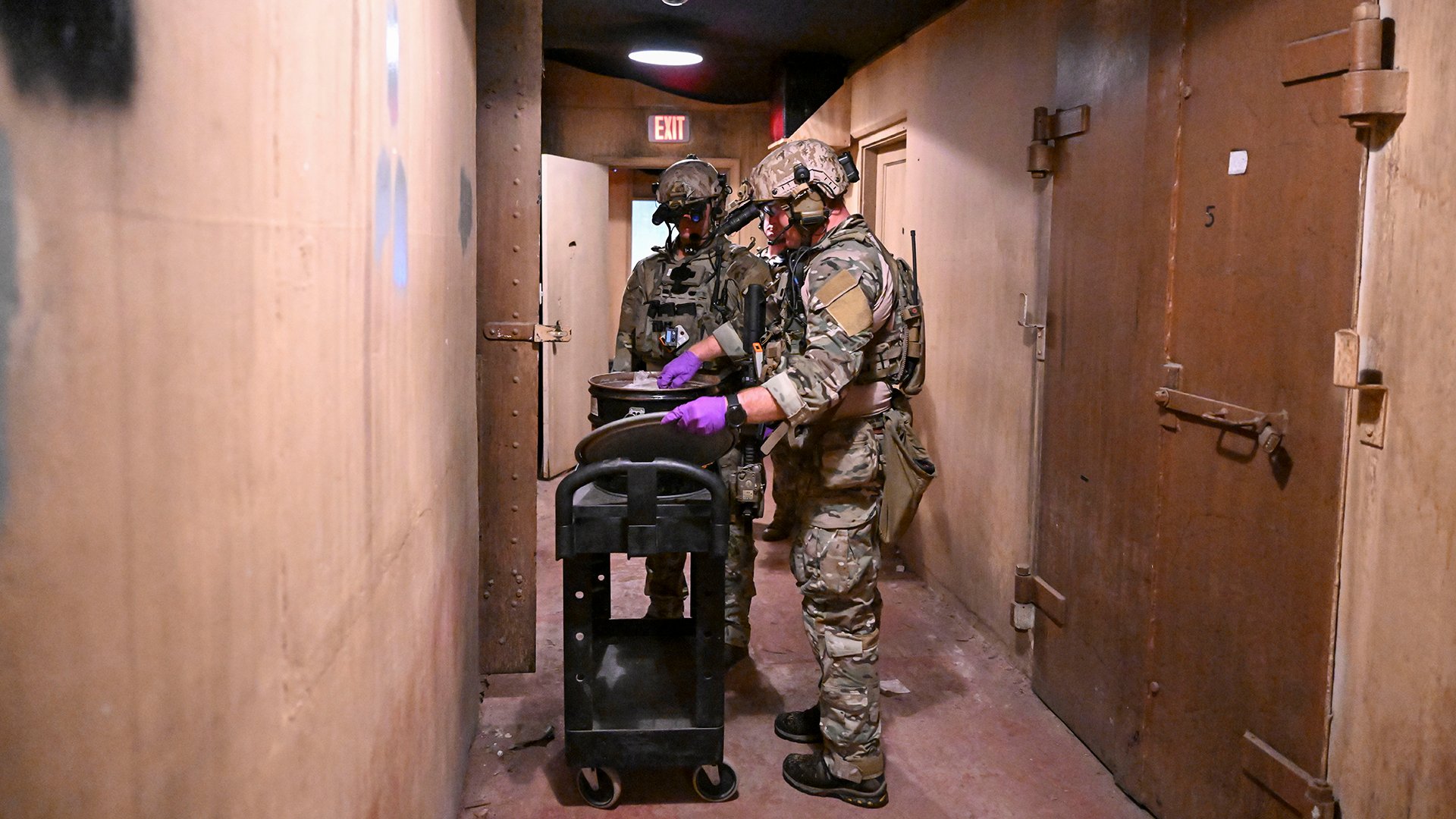
This week’s caption reads:
VIRGINIA BEACH, Va. (Sep. 18, 2023) – Navy Explosive ordnance disposal (EOD) technicians assigned to EOD Mobile Unit (EODMU) 6 conduct radiological search procedures at a training bunker onboard Joint Expeditionary Base Little Creek-Fort Story as part of a training evolution, Sep. 18. EODMU 6 provides operational EOD capabilities for the location, identification, rendering safe, recovery, field evaluation and disposal of explosive ordnance, including chemical and nuclear weapons.
PRIME DIRECTIVES:
If you want to talk politics, do so respectfully and know that there’s always somebody that isn’t going to agree with you.
If you have political differences, hash it out respectfully, stick to the facts, and no childish name-calling or personal attacks of any kind. If you can’t handle yourself in that manner, then please, discuss virtually anything else.
No drive-by garbage political memes. No conspiracy theory rants. Links to crackpot sites will be axed, too. Trolling and shitposting will not be tolerated. No obsessive behavior about other users. Just don’t interact with folks you don’t like.
Do not be a sucker and feed trolls! That’s as much on you as on them. Use the mute button if you don’t like what you see.
So unless you have something of quality to say, know how to treat people with respect, understand that everyone isn’t going to subscribe to your exact same worldview, and have come to terms with the reality that there is no perfect solution when it comes to moderation of a community like this, it’s probably best to just move on.
Finally, as always, report offenders, please. This doesn’t mean reporting people who don’t share your political views, but we really need your help in this regard.
These conversations took place during the recently wrapped Association of the U.S. Army (AUSA) annual convention in Washington, D.C., which TWZ attended.
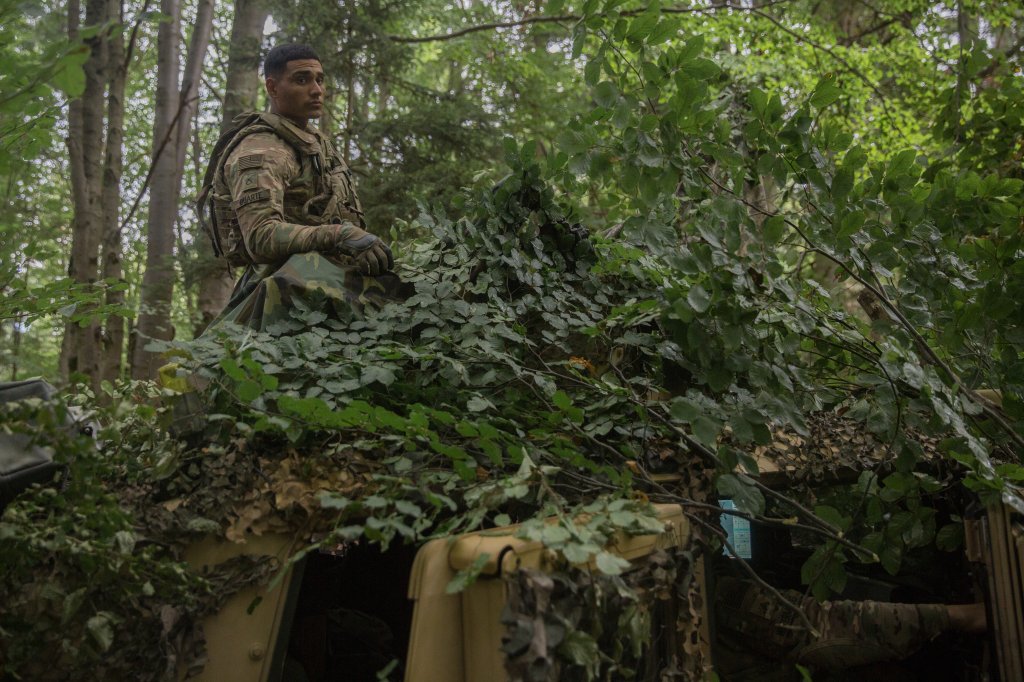
“A lot of the things that are happening right now in terms of long-range fires, integrated air and missile defense, and the lessons that we’re learning from them, we’re able to bring a lot of that to our potential challenges in the Pacific,” Gen. Ron Clark, commander of U.S. Army Pacific (USARPAC), told us at a media roundtable. “Specifically, I am thinking through mobility and camouflage. So it’s one of those age-old Army forgotten sciences of how to hide in plain sight and how to camouflage ourselves from observation, because the ability to be able to see surface entities is almost ubiquitous.”
“Our ability to be able to use electronic warfare, to be able to use just good old-fashioned camouflage, and the ability to deceive our adversary is a must,” Clark added. You can read more about the U.S. military’s camouflage and deception efforts in our story here.
U.S. Army soldiers of Brigade Engineer Battalion camouflages a Humvee while conducting preparations during exercise Combined Resolve VII at the U.S. Army’s Joint Multinational Readiness Center in Hohenfels Germany. (U.S. Army photo by Pfc. Randy Wren) Spc. Randy Wren
A Russian heavy-duty truck painted with zebra-style stripes to confuse AI-assisted target seeking equipment. via X
As tough as things have been for Ukraine and for U.S. forces in the Middle East, the challenges will be even greater in the Pacific, Clark warned.
In Europe and the Middle East, “it’s not a near-peer adversary that we will be working against,” said Clark, referring respectively to Russia and Iran.
“Whereas in our theater, it absolutely is,” the USARPAC commander noted in a reference to China without naming the country. “So our ability to scale that and to think through the problem sets of how do we fight Type One, Type Two UAS? How do we think through ballistic missile defense holistically in the region? We spend a lot of time working with the joint force for solutions associated with that. How do we maneuver inside an archipelagic environment?”
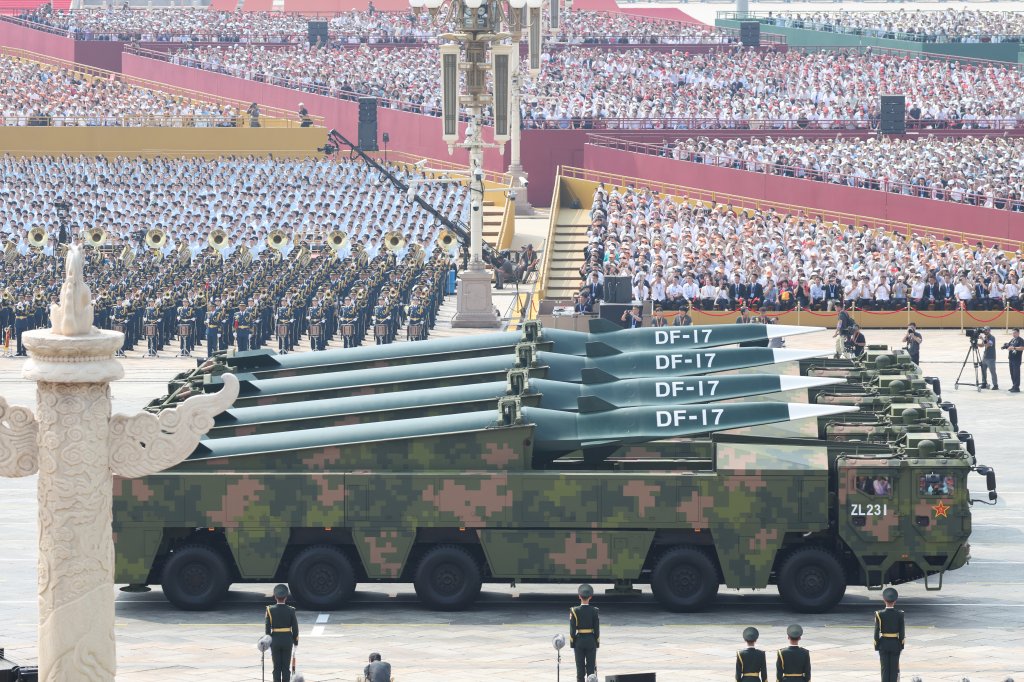
DF-17 medium-range hypersonic ballistic missiles on display during the V-Day military parade in Beijing. (Photo by Sheng Jiapeng/China News Service/VCG via Getty Images) China News Service
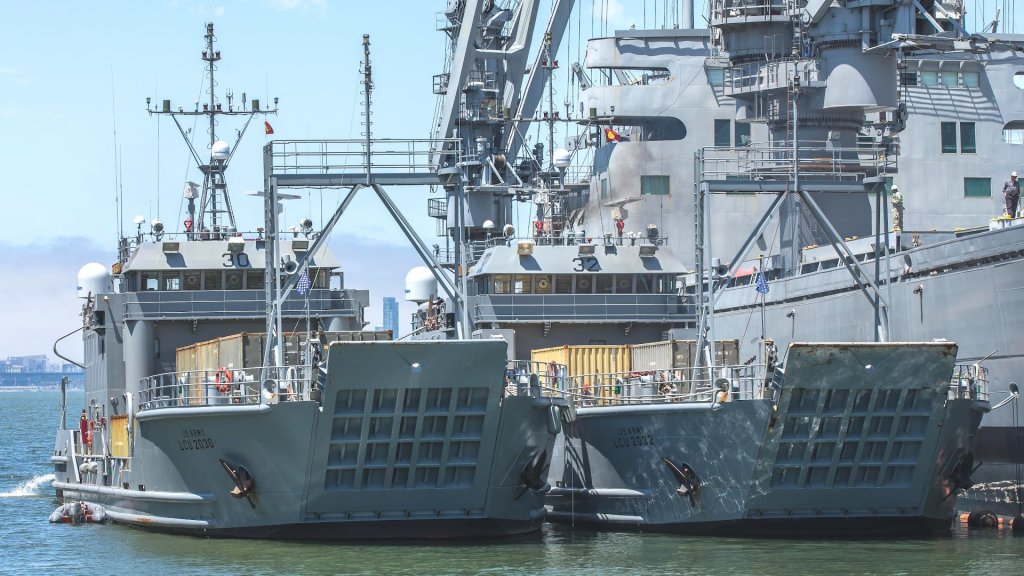
For the Army, any fight in the Pacific will require soldiers to be able to hop islands and move through vast swaths of ocean, constantly hunted and frequently inside the Chinese weapons engagement zone. Clark said that the Army’s organic fleet of ships like landing craft, small tugs, and modular causeway systems operated by the service’s 8th Theater Sustainment Command will be vital for maneuver.
Two U.S. Army Landing Craft Utility (LCU) vessels. (U.S. Army) www.twz.com
“But we also have to be able to conduct tactical maneuver with forces on the ground that can provide long-range precision fires, as an example, and then move so that fires, radars, sensors are not easily targeted,” Clark added. “Because if they can see you, they can hit you. And if you know they have an opportunity to return fire, they will. So our lessons that we’re learning are, in some cases, are very, very relevant. In some cases, we can learn from some of the changing characteristics of war.”
Still, the wide-open plains and dense cities of Ukraine are quite different from the beaches and jungles of the Pacific, Clark reminded us.
A U.S. Army soldier assigned to the 1st Battalion, 27th Infantry Regiment, 2nd Mobile Brigade, 25th Infantry Division, observes a linear danger area during the Joint Pacific Multinational Readiness Center Rotation (JPMRC) 26-01 at Schofield Barracks, Hawaii, Nov. 6, 2025. (U.S. Army photo by Sgt. Duke Edwards) Sgt. Duke Edwards
“The way we generally fight does not equate specifically in the Ukraine piece to the maneuver that you would see out of U.S. forces if deployed in a conflict like that,” the USARPAC commander explained. “To be able to use operational maneuver and tactical maneuver in a way that it’s not just simply drone on drone or firing long range fires at one another at scale for an extended period of time. We find our way to work through that problem set and maneuver to positions of advantage and to prevail.”
Ukraine’s 115th Mechanized Brigade has released new footage showing a VB-140 Flamingo interceptor drone attacking a Russian Mi-28 attack helicopter in flight.
The drone approaches from above and flies directly into the helicopter’s spinning main rotor. It’s unclear whether… pic.twitter.com/GCb9FodXG3
When we pushed further on that point, Gen. Xavier T. Brunson, commander of United Nations Command, Combined Forces Command and United States Forces Korea, weighed in.
“To be able to move with sensors everywhere at all times causes us to achieve positions of advantage from distributed locations,” Brunson pointed out. “So the fight is: you look at maneuver. You might maneuver to a position of advantage, knowing that you’re going to change that again. The ability to utilize not only joint sensors but joint effectors, if you will, joint fires, to be able to use those things from different positions changes the shape of the operating environment.”
The bottom line, he added, is that “maneuver is always going to be maneuver. You’re going from A to B, but you might go from A to A1 to A2 to A3 to get to B, and that’s what I think we realize in this distributed fight that’s going on in Ukraine, and so we continue to watch to see what lessons might be coming back into” effect.
In part reacting to lessons learned from Ukraine and the Middle East, the Army is also changing how it trains, Clark stated. In South Korea, he said the service has to get out of the habit of concentrating so heavily on just two annual major training exercises.
“We recognize… that largely the two big exercises every year in Korea focus on large command posts,” Clark proffered. “We’ve got to move away from that. So what we intend to do is take advantage of the knowledge that we have of the threats that exist or that prevail in the Ukraine fight.”
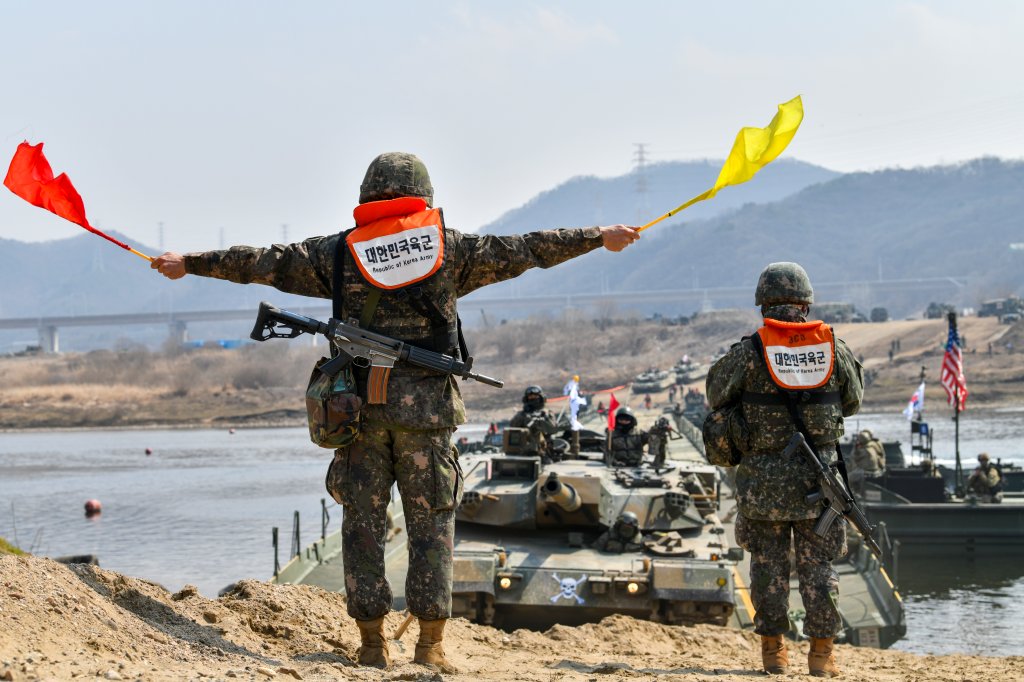
A Republic of Korea Army 5th Engineer Brigade, K1A2 tank crosses a U.S. Army Improved Ribbon Bridge (IRB) during joint wet gap training as part of Freedom Shield 25 at Yeoncheon-gun, Republic of Korea, Mar. 20, 2025. (U.S. Army photo by Sgt. Daniela Lechuga Liggio) Sgt. Daniela Lechuga
Clark said these discussions are underway with his deputy commander, Republic of Korea Army Gen. Sungmin Kim.
“We talk about how we would operate in a distributed fashion. You know as well as I do, there’s a location that we go to to train every year in Korea, and we stay in that place,” Clark said in response to a question from another reporter. “What would it look like if we train from Jeju all the way up to Gyeonggi Province in the north? What would that look like, just with our headquarters alone?”
“So just imagine,” Clark postulated, “if we train across the entirety of the peninsula, and got ourselves in the shape where we would say [to North Korea], ‘You can’t utilize the things that you’ve learned in the fight and the battlefield in Ukraine on us, because we learned the same lessons and we’ve distributed ourselves in such a way that we don’t make ourselves the target. We won’t be moored in place,’ and that’s what I’m talking about when I talk about positional advantage. It might not be the same place to the continuum. It might not be the same place when you’re in crisis or conflict or competition. We might have to change that, and that’s what we’re learning.”
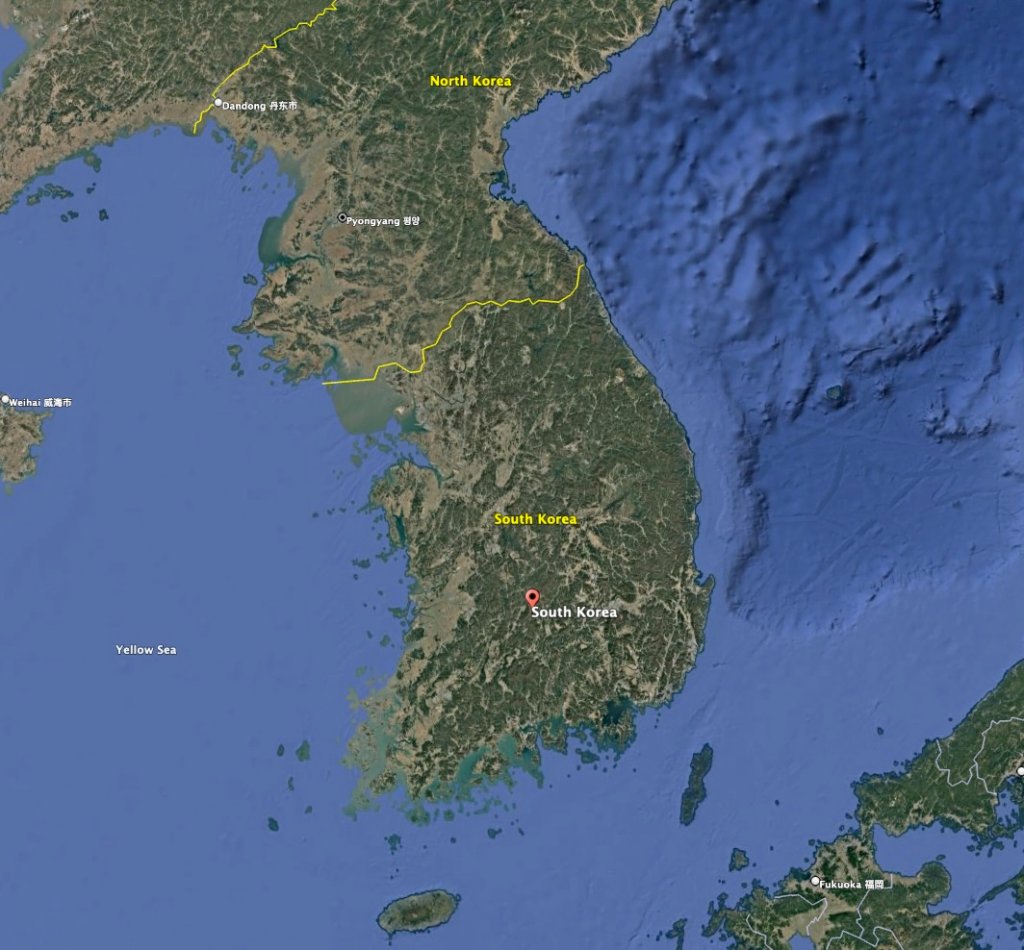
South Korea. (Google Earth)
Another lesson from Ukraine that Army leaders should be paying attention to, said another panelist, is how both sides are using aerial and ground drones to supply frontline forces and evacuate the wounded because human efforts have now become too deadly, thanks to drones.
“I think you also can’t talk about Ukraine without talking about autonomy,” said Tara Murphy Dougherty, CEO of a company called Air, which provides AI-based sustainment solutions to the Army.
“One of the advantages that you get from using simulation and automation, and really using models and compute in order to create convoy plans, as opposed to humans with Excel spreadsheets, is you are able to do many fewer actual convoys because you’re using all of your capabilities so much more effectively and efficiently,” Dougherty posited. “And while it’s an indirect example, I think it does tie to soldier protection because you’re putting fewer soldiers out there in vulnerable settings. I see that not as an end-goal outcome; we need convoys.”
Ultimately, however, the Army will have to advance what Ukraine and Russia are doing with the deployment of aerial drones and uncrewed ground vehicles for logistics by creating “convoys” of autonomous vehicles.
“I see the end goal outcome as having as many autonomous convoys as possible, and we’ve heard today already at this event some of those ideas,” the CEO added. “In the interim, until we get to more autonomy in medevac and more autonomy in convoys when it’s non-soldier material that’s going out to the battlefield, let’s try and put fewer out there while actually getting more material and capability into the force where it needs to be.”
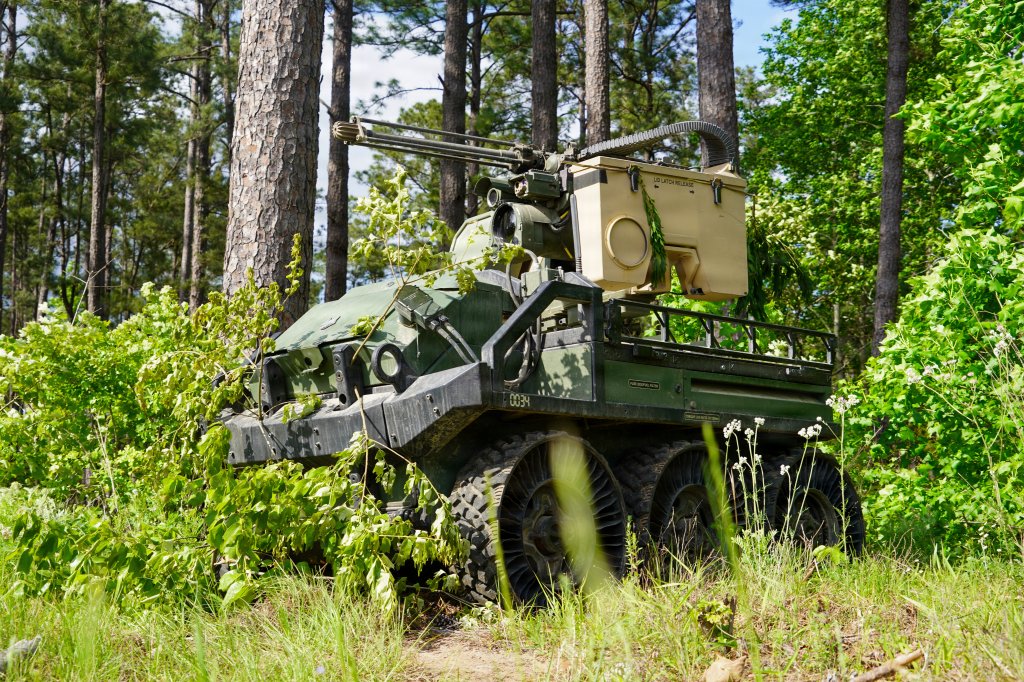
A Hunter Wolf unmanned ground vehicle assigned to Charlie Battery, 3rd Battalion, 320th Field Artillery Regiment, 3rd Mobile Brigade, 101st Airborne Division (Air Assault). (U.S. Army photo by Master Sgt. Anthony Hewitt) Master Sgt. Anthony Hewitt
The Iranian missile and drone barrages on fixed U.S. bases across the Middle East have created some very costly lessons for American forces. As we noted earlier in this story, several troops were killed and critical air defense radars, aircraft and other important equipment were destroyed or damaged. U.S. installations across the region have also suffered damage.
In another media session, we pressed Army officials operating in South Korea about what they learned from watching the destruction caused by Iran and what they are doing to address it.
You can see a satellite image of damage to a U.S. radar site in Jordan below:
NEW: The radar for a THAAD system was struck and apparently destroyed in Jordan while two other THAAD radar systems may have been hit in the UAE, satellite images show – w/ @ThomasBordeaux7https://t.co/qiuWVQgyda
— Gianluca Mezzofiore (@GianlucaMezzo) March 5, 2026
“We certainly are watching what’s happening, and we are learning from what is happening in Operation Epic Fury,” Lt. Gen. Joseph “Joe” Hilbert, commanding general of Eighth Army, stationed in South Korea, told us. “We’re learning what’s happening in Ukraine, and we are working through changes in our own tactics and techniques and procedures to be able to react to those threats and to be able to defend against them.”
For more details, he turned the microphone over to Col. Rosanna “Ro” M. Clemente, commander of the 35th Air Defense Artillery Brigade in South Korea.
“Drawing from those lessons learned, a lot of it is trying to understand how our systems are being hunted by the adversary,” she told us. “So, strictly into all of our training plans, and as we conduct our own internal exercises, all of our air defenders are practicing something as simple as mobility and survivability jumps, which is being able to reposition and displace your systems to different alternative locations based on any type of threat warnings that we receive. They’re very, very well trained. I think all of our soldiers know how to move their systems extremely, extremely well. They move them quickly, and they are able to move them and reposition them into different locations across the peninsula that still maintains that ballistic missile defense coverage.”
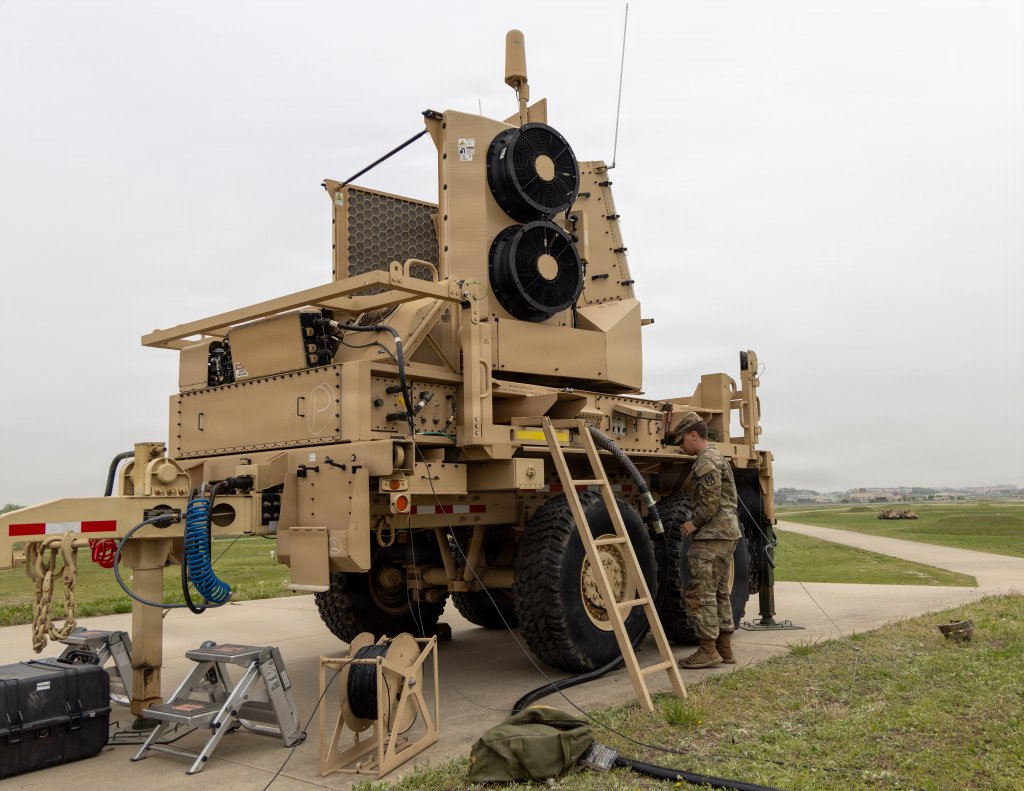
U.S. Army Pvt. Nathaniel Mullins, assigned to the 35th Air Defense Artillery Brigade, analyzes a Sentinel A4 air and missile defense radar during a training exercise at Camp Humphreys, South Korea, April 22, 2026. The training highlighted Eighth Army’s continued modernization efforts by preparing soldiers to operate the new radar system. (U.S. Army photo by Cpl. Luciano Alcala) Sgt. Luciano Alcala
In addition, “we also have to rely on the other pillars of integrated air and missile defense, most specifically the passive defensive measures that we also have in place,” she added.
Those measures involve “a little bit more than just hardening – but a couple of other techniques that we’ve learned from the Russia-Ukraine war in terms of deception, how to move things around, create distractions, and make sure that we create different types of dilemmas for the adversary in terms of where our capabilities are and where are they positioned to protect its defended assets.”
Una pareja de California se ha reunido con su perra Luna, de 10 años, gracias a los esfuerzos de los equipos de rescate locales, los turistas y los empleados del parque, poniendo así fin a una aventura de supervivencia en la naturaleza del Parque Nacional de Yellowstone que duró más de un mes y en la que tuvieron que esquivar osos y coyotes.

 Login












 Ukraine’s 115th Mechanized Brigade has released new footage showing a VB-140 Flamingo interceptor drone attacking a Russian Mi-28 attack helicopter in flight.

 (@bayraktar_1love)