❌

Reading view

South Korea will pull staff from Kyiv over North Korean POW handover made public at the UN

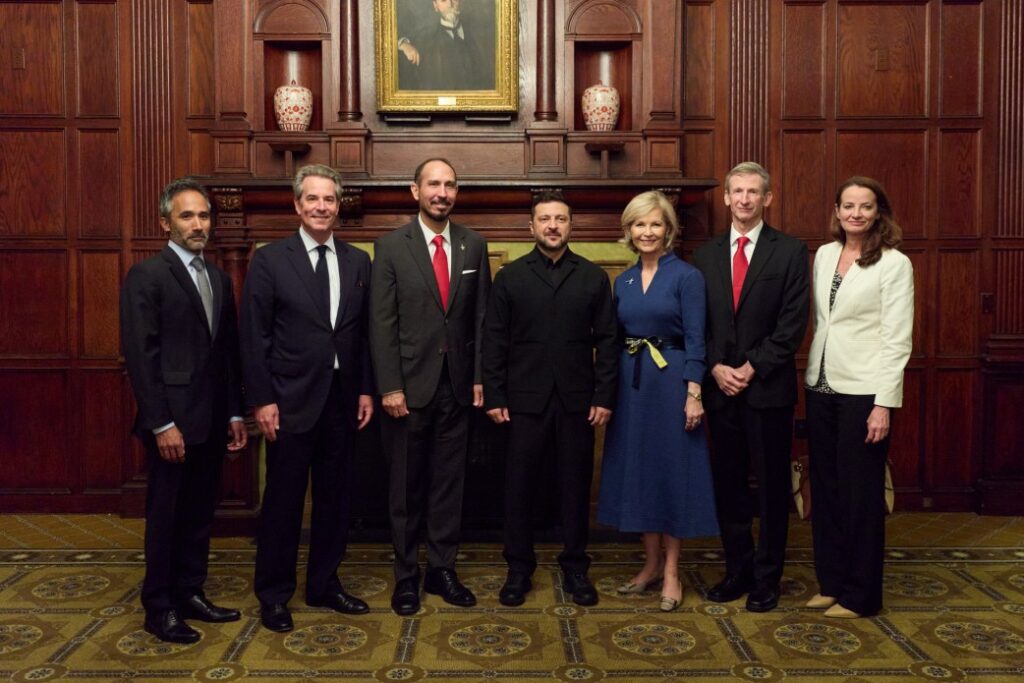
South Korean President Lee Jae-myung meets Ukrainian President Volodymyr Zelenskyy at the NATO summit in Ankara, 8 July 2026.

South Korea will withdraw more staff from its embassy in Kyiv, Foreign Ministry spokesperson Park Doo-soon said on 20 October. Seoul says Kyiv broke an understanding to keep the transfer of two North Korean prisoners of war confidential, which was meant to protect the soldiers and their families in the North. Seoul had conveyed its position through several channels but received no sufficient response from Kyiv, Park added.

The Korea Herald noted, the move comes amid a dispute with the host government itself. That matters beyond the two countries. Good ties with Kyiv serve South Korea’s interests, AP reported earlier this month, citing experts, because Ukraine could share intelligence on North Korea’s expanding cooperation with Russia and its battlefield experience.

Seoul shrinks its Kyiv mission

Officials put the planned withdrawal at about half the embassy’s staff. The Korea Herald added that the timing has yet to be set. A chargé d’affaires and all consular staff will stay in Kyiv to keep diplomatic contacts and protect South Korean citizens.

Zelenskyy told the UN General Assembly in September that Ukraine had transferred two captured North Korean soldiers to South Korea. Ukrainian forces had captured both men in Russia’s Kursk Oblast in January 2025, where Pyongyang had sent troops to fight for Moscow.

South Korean President Lee Jae-myung meets Ukrainian President Volodymyr Zelenskyy at the NATO summit in Ankara, 8 July 2026.
Explore further

Ukraine’s disclosure of secret North Korean POW transfer sparks South Korea’s demand for an apology

On 6 October, South Korean Foreign Minister Cho Hyun said Sybiha’s messages included words of apology but fell short of what Seoul expected. Ukrainian Foreign Ministry spokesperson Heorhii Tykhyi replied that Sybiha had written he regretted the situation reaching an exchange of critical comments.

In an interview published on 12 October, Foreign Minister Andrii Sybiha told the dispute stemmed from differing readings of confidentiality at various stages of the transfer. He considers the matter closed. “Ukraine fulfilled all its obligations.”

  •  

Is a Russian drone near you right now? Ukrainians have developed maps that track drones in near real time

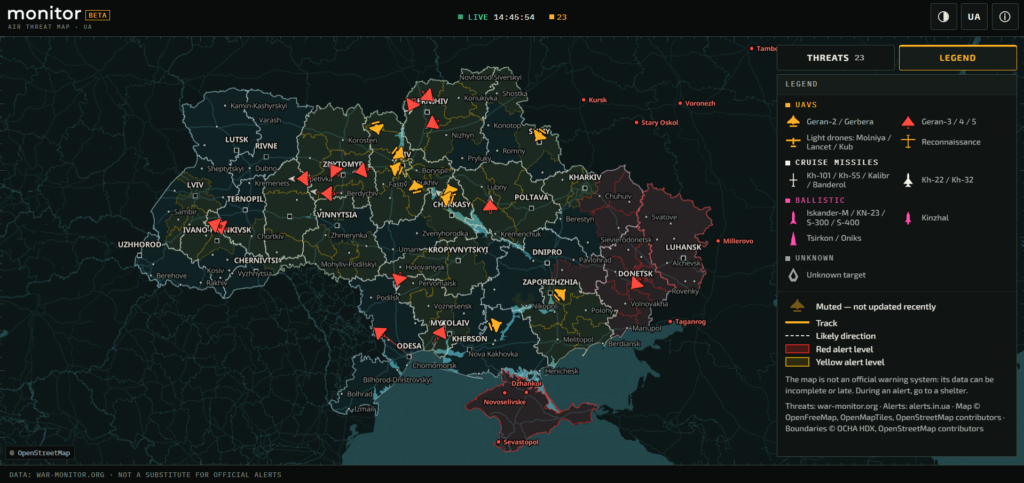
Screenshot from the Monitor map used to track aerial targets.

Ukrainians can now check a free live map of where Russian attack targets are flying, a Ukrainian air-threat monitoring project called monitor announced on X on 13 October. The beta pulls public reports of drones in flight into a single view and lays them over official air raid alerts.

Russia now flies jet-powered drones, and some switch off their engines before an attack and glide in. Over a hundred drones can arrive in one night. Yet since September, drone-only yellow alerts in some Oblasts no longer shut everything down. So during drone alerts, some Ukrainians now stay at their desks rather than in shelters. The new maps offers them a quick look at the sky from a phone, even on a weak signal.

What the map shows

The launch post described the service as one that tries to show where each target is, using open sources and algorithmic processing. It said the beta focuses on drones, with other targets to follow.

Screenshot from the Monitor map used to track aerial targets.

The drone data does not come from radar. The service draws on regional Telegram channels that post where drones and missiles are flying over their own oblasts. It cross-checks those posts to estimate what each target is, roughly where it is, and where it is heading, the project explains. The same page already lists cruise and ballistic missiles among the targets. It also says the map is free, ad-free, and needs no registration, and that it runs in a browser or on Telegram, designed to work on a phone with a weak signal.

A target log lists each drone’s district and course. Alert data comes from alerts.in.ua, and areas under alert turn red or yellow. The map refreshes about every 20 seconds while targets are airborne.

Screenshot from the Monitor map used to track aerial targets.

However, the developers warn that the dots are only estimates and show up late. Some targets slip through untracked. That is why “an empty map does not mean you are safe,” they wrote. When sirens sound, they urge people to rely on official signals and take shelter.

On 17 October, the Defense Ministry said that Ukraine’s Air Alert app now maps the approximate position and heading of some targets. These include cruise missiles, Banderol drone-launched missiles, and Shahed-type drones. The data comes straight from the Air Force over secure channels.

Screenshot from the Air Alert! map used to track aerial targets.

For security reasons, it carries no exact coordinates or real-time tracking and may lag. Ballistic missiles and anything faster than 2,000 km/h don’t appear at all. The ministry’s advice matches monitor’s: get to a shelter first, then check the map from there.

  •  

More ballistic missile interceptors and F-16 repairs inside Ukraine: Kyiv’s two asks to Lockheed Martin

Ukrainian President Volodymyr Zelenskyy during a meeting with American defense company Lockheed Martin representatives on 28 July 2026, in Washington D.C. Source: President's Office

Ukraine is counting on buying part of Lockheed Martin’s growing output of ballistic missile interceptors, President Volodymyr Zelenskyy said. He met the US company’s team in Kyiv on 19 October and also raised servicing and repairing F-16 fighter jets inside Ukraine.

Russia keeps striking Ukraine’s power grid with ballistic missiles, and interceptor supplies fall short of that threat. Kyiv is working every route to more Patriot missiles, from US deliveries to allies’ stocks, and some have stalled. Greece, for one, has not confirmed it will hand any over, citing its own defense needs. A purchase from the missiles’ maker would add one more route.

Growing output, F-16 repairs in Ukraine

Lockheed Martin builds the PAC-3 MSE interceptors fired by Patriot air defense systems, as well as the F-16. Zelenskyy said both matter against Russian ballistic missiles and jet-powered Shahed drones. Neither area is easy right now, he added.

“We count on the opportunity to purchase some of them to protect more lives,” he wrote.

On 28 July, Zelenskyy met the company in Washington to discuss joint production. That came weeks after US President Donald Trump pledged Ukraine a license to manufacture Patriots.

A batch reportedly stuck in Washington

Meanwhile, US Defense Secretary Pete Hegseth has not signed off on a “significant” batch of Patriot missiles, Ukrainian officials told the Kyiv Independent. One official said allies had already paid for them. A US government official called the claims untrue, and the Pentagon did not respond. A NATO official said allied-funded deliveries, including air defense, continue. A second NATO official said some shipments could be delayed, but likely not for political reasons.

Zelenskyy told Bloomberg on 18 October that the US delivers only 12 Patriot interceptors a month. On 20 October, interceptors topped his list in a call with US Secretary of State Marco Rubio.

No purchase was announced, so new interceptors from this route remain a prospect. Meanwhile, partners’ early warnings of Russian ballistic launches have gone missing three times recently, Zelenskyy wrote. Those warnings give air defenses extra minutes to prepare.

  •  

31 in May, 63 now: Ukraine’s arms makers pile into a regime of tax breaks and shielded data

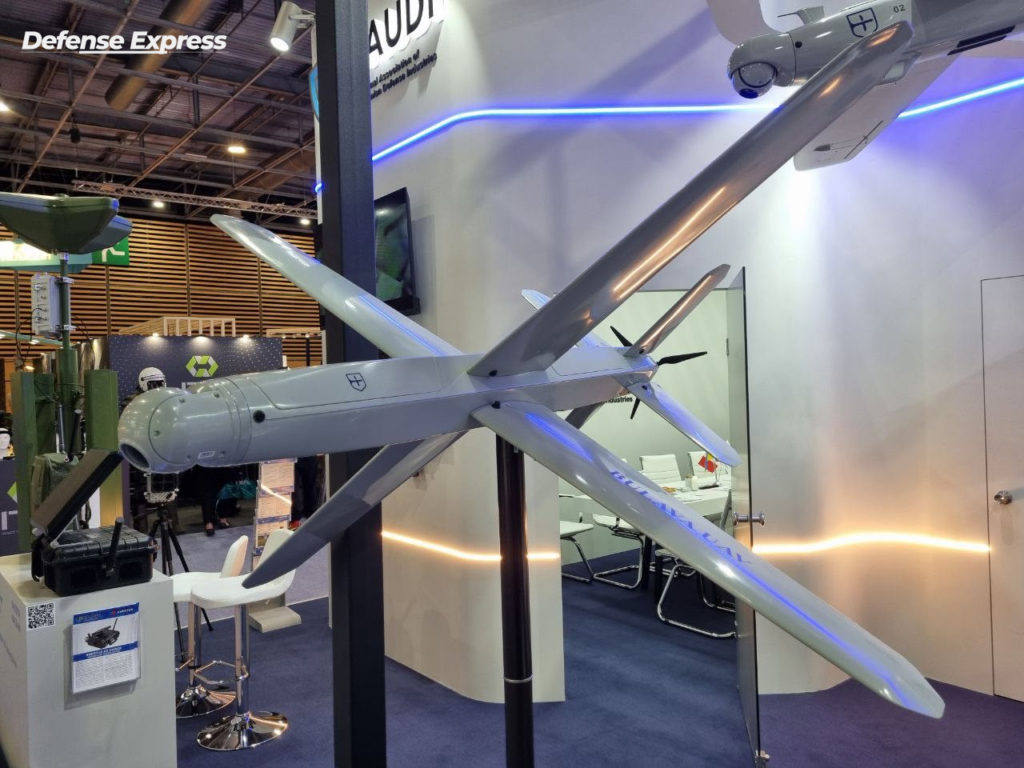
Ukrainian Bulava/Mace loitering munition at the Eurosatory 2024.

Defence City, Ukraine’s special support regime for arms makers, now has 63 member companies, the Defense Ministry said in a 19 October release. That is more than double the late-May count, and Euromaidan Press calculations show the newcomers are, on average, much smaller firms.

Ukraine already buys most of its weapons at home. More than 75% of its 2025 weapons procurement budget went to domestic manufacturers. Most new weapons models cleared for military use are Ukrainian too: 892 of the 1,000 authorized from the start of 2026 to mid-June. Defence City is meant to turn that demand into more production capacity, and our calculations suggest it is now reaching smaller producers too.

Who is joining

Each resident’s figure in the ministry’s count is its qualified income, meaning revenue from selling weapons and military equipment. Applicants file details of their defense contracts for the previous calendar year with their application, the ministry’s guide shows. So the combined total changes as members join. It does not track month-to-month sales.

The 63 current residents have a combined qualified income of nearly $2.47 billion. At the end of May, 31 residents had $2 billion, the ministry reported. By July, 45 residents had over $2.07 billion, it added.

By Euromaidan Press calculations, the 32 companies added since May bring about $15 million each on average. The first 31 averaged about $64 million each. The math assumes all 31 early members remain, with unchanged figures. If they do, the newcomers are smaller producers on average, because each figure reflects a firm’s own prior-year weapons sales.

What residents get

The profit-tax break comes with a condition. Residents choose where their untaxed profit goes, but it must go to purposes the tax code allows, the ministry explained. If the money goes elsewhere, the break does not apply.

Residents also get customs incentives and state support to relocate plants and better protect production sites. They can rent state property without an auction. They can also ask to restrict access to sensitive information about them in public registries. Some defense export procedures are simplified too.

Resident status also makes a company eligible to be designated critically important to the defense industry. That lets it defer up to 100% of its staff liable for military service from the draft, the ministry noted.

To join, a company must confirm it meets the legal requirements and file an application with supporting documents. By law, the ministry has 10 working days to decide. If approved, a ministerial order grants the status, and the company enters the Defence City register.

  •  

Lithuania’s armed forces chief says patrols on the Kaliningrad border have practically doubled as the troop mission runs into mid-November

lithuanian soldier

Patrol density along Lithuania’s border with Russia’s Kaliningrad exclave has practically doubled since soldiers joined the border guards there in early October. Lithuanian Armed Forces Commander Raimundas Vaikšnoras told LRT this in an interview. He linked the deployment to provocations and to what he described as Russian preparations for a large-scale mobilization.

Kaliningrad is a piece of Russia wedged between Lithuania and Poland on the Baltic Sea. Lithuanian Defense Minister Robertas Kaunas said people would naturally flee a Russian mobilization. Earlier, on 11 August, President of Ukraine Volodymyr Zelenskyy said that Russia planned to mobilize several hundred thousand people by the end of 2026, after its parliamentary vote.

Commander: Russia lacks troops for a breakthrough

Vaikšnoras said Russia is struggling in Ukraine and needs to fill gaps in its capabilities. Moscow would probably like a breakthrough but lacks people, he added. In July, Ukraine’s Foreign Intelligence Service estimated that Russia had signed about as many new military contracts this year as it had lost troops.

He also cited provocations. In Latvia, armed men recently tried to push migrants across the border, he noted, leaving open whether they were bandits or criminals. Belarusian ruler Alyaksandr Lukashenka denies everything, he added. On 6 October, Latvian Interior Minister Jānis Dombrava wrote that the escorts stood on the Belarusian side, were armed, and threatened Latvian soldiers.

Mission extended to mid-November

Lithuania decided to send troops after that Latvian incident. On 7 October, Interior Minister Martynas Katelynas asked Defense Minister Kaunas for troops to help the State Border Guard Service. Kaunas then approved up to 100 soldiers until 16 October, LRT reported.

On 16 October, Kaunas extended the mission to mid-November at Katelynas’s request. The Defense Ministry cited possible flows of people fleeing Kaliningrad and related illegal border crossings. It also said military intelligence sees no significant changes in military activity in Kaliningrad. Katelynas had earlier called the step preventive, BNS noted. He cited public, non-intelligence reports of a call-up planned after Russia’s parliamentary elections and said the threat level at the border had not risen.

Commander doubts Moscow’s intentions

Vaikšnoras said Russia and Belarus may not want open incidents that leave their traces right now. He added that he does not believe in their good intentions. He noted it has been said publicly that Russia’s capability in Kaliningrad is sharply reduced, because most of its forces are committed to Ukraine. Back in June 2025, Poland’s foreign minister said that, from what he knew, Russia had withdrawn a large part of its troops from the exclave.

Instead, hybrid attacks and sabotage that cannot be traced at once will probably continue, Vaikšnoras said. LRT noted the interview took place before a Ukrainian drone crashed in Pasvalys district on Sunday and before an attempted arson at premises used by SpaceX in Vilnius.

  •  

Ukraine has identified nearly 46,000 foreigners from 151 countries in Russia’s army—and says Moscow is on pace to meet its 2026 hiring plan

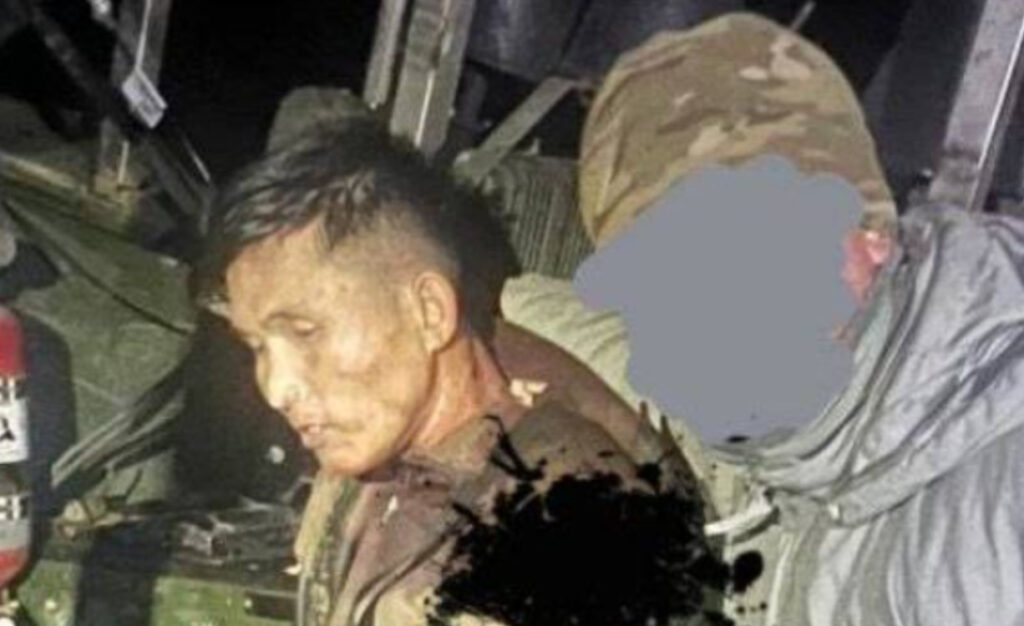
ukrainians capture first north korean pow military says claimed prisoner war dprk tme/ the_warhal18 zayavlenyj-polonenyj-vijskovyj-kndr-2 26 reports emerged ukrainian special forces had captured soldier fighting russia during operation kursk oblast

Ukraine holds personal data on each of the nearly 46,000 foreigners it has identified as signing with Russia’s army since 2022, Dmytro Usov, secretary of its prisoner-of-war coordination headquarters, said on 19 October. If the current pace holds, he expects this year’s contracts to reach Moscow’s plan. Meanwhile, a survey of captured foreigners gave a split answer on how many knew they were heading to war.

Usov said 41% of surveyed foreign POWs signed at enlistment offices and recruitment points, which the headquarters reads as a sign of a systematic campaign. He also said the hiring is meant to ease the social and budget burden of Russia’s own losses. Russia has long turned to foreigners to offset shortages in its regular forces. In April, Ukraine’s military intelligence (HUR) said enlistment offices had reportedly been assigned regional quotas.

A count built name by name

Usov, a brigadier general and secretary of Ukraine’s Coordination Headquarters for the Treatment of Prisoners of War, spoke at the international conference Crimea Global. He said Russia’s Defense Ministry has signed 45,959 foreigners from 151 countries. Ukraine’s records include each one’s rank, dog tag, and contract date.

The figure counts everyone who signed, not only those serving now. In April, Usov said his count left out North Korea’s regular troops, that 25–30% more recruits were likely still unidentified, and that at least 5,149 foreign recruits had died, Interfax-Ukraine reported.

This year’s contracts near the plan

Contracts have grown every year: 94 in 2022, 4,067 in 2023, 8,877 in 2024, and 16,085 in 2025. Some names surface late. At the same April event, Interfax-Ukraine reported, Usov had put 2025 at 13,997 and said the headquarters adds newly identified foreigners every month.

For 2026, Russia’s Defense Ministry planned 18,500 foreign contracts. Ukraine knows of 16,168 so far, roughly level with all of 2025. Another 668 contracts still have no year assigned. If the same dynamic holds, Usov said, the ministry will fully meet its plan and may even exceed it.

He named Indonesia, Peru, Chad, and Zimbabwe among the ten countries that drove the growth in recruits, Ukrinform reported. At the same time, he said, Ukraine’s Foreign Ministry and POW agencies have cut recruitment in some countries and stopped it in others.

What captured foreigners told Ukraine

Ukrainian forces have captured citizens of 59 countries since the full-scale invasion began. Uzbeks, Tajiks, Belarusians, and Colombians are among the largest groups.

In the headquarters’ survey of foreign POWs, nearly half said they knew they would fight Ukrainian soldiers and civilians. Another 28% said they didn’t know, 14.8% weren’t sure, and 13.8% said they were deceived. The headquarters ran the survey, and neither report gave a sample size or explained how the shares fit together. Usov said the results showed most knew where they were going. Almost 47% said they signed up for Russian citizenship.

  •  
❌