One drone launched another drone, which then shot down a third. All three were unmanned, and all at sea off Ukraine.
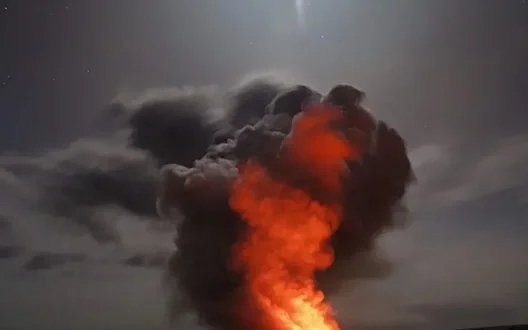
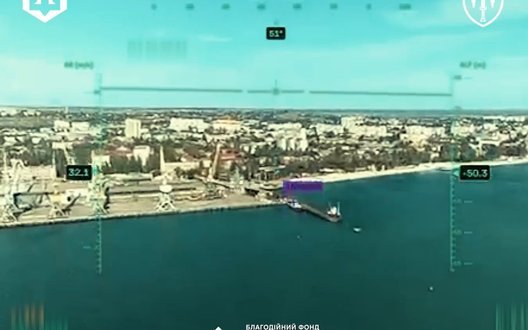
Ukraine’s Navy has destroyed a Russian Shahed attack drone with a Sting interceptor launched from the Sargan 3000 unmanned surface vessel, the Navy said, showing sailors adapting to new aerial threats with sea-launched interceptors.
Russian Shaheds threaten Ukraine’s ports, coastline and the ships that approach them, so meeting those drones out at sea, before they reach land, matters for the whole southern defense.
A Ukrainian Navy sea drone, the Sargan 3000, destroyed a Russian Shahed kamikaze drone with a Sting interceptor drone
Ukrainian troops continue to adapt to new threats to protect civilians and infrastructure Ukrainian Navy pic.twitter.com/kXvnqaebAw
The Sting is built to destroy Russian kamikaze drones such as the Shahed, Geran and Lancet, as well as reconnaissance drones, with quick deployment, a short training course and a top speed of 280 km/h, its producer, Wild Hornets, says.
The interceptor that has become Ukraine’s Shahed-killer
The Sting has earned its place at the front. The Ukrainian FPV interceptor has proven highly effective in combat, with a typical hit rate of 80 to 90% depending on the unit, and on some days reaching 100 percent, one launch for one kill.
It is currently Ukraine’s most productive Shahed interceptor, according to the Wild Hornets, having destroyed more than 3,000 drones in its first seven months of use. Mounting it on a sea platform extends that record from land into the Black Sea.
A drone boat that keeps finding new ways to kill
The Sargan 3000 has become a multi-purpose hunter. In July, Ukrainian naval personnel used a Sargan 3000 to sink a Russian second-rank border patrol ship.
In October, the same drone boat shot down a Russian Shahed with a turret-mounted machine gun over the Black Sea. Ukraine’s Navy took the Sargan 3000 into service in April 2026, and the drone boat has a combat radius of up to 1,600 kilometers, letting it clear the sky far from shore without putting a sailor in range.
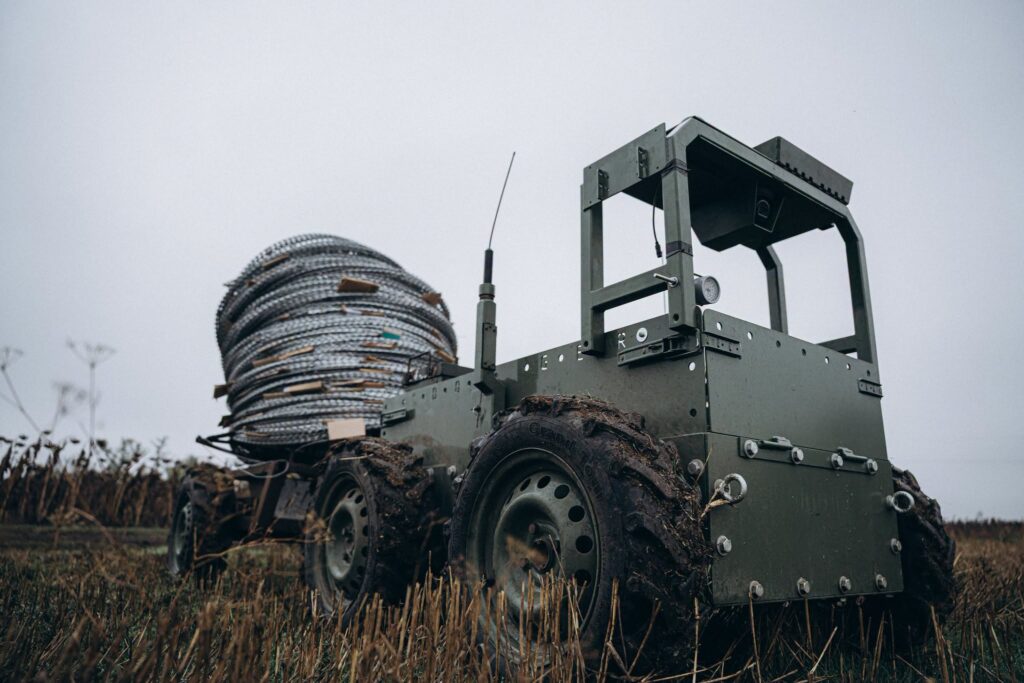
Stringing wire in the open is one of the deadliest jobs at the front, and Ukraine is handing it to a robot. Ukraine’s Ground Forces have shown a ground robotic vehicle from the 16th Separate Support Brigade laying wire obstacles in open terrain, letting combat engineers do the dangerous work remotely.
Laying obstacles in the open exposes sappers to Russian drones and artillery, so moving the task to a machine takes a soldier out of the kill zone. The vehicle carries a sloped frame holding a heavy coil of wire and unrolls the barrier on its own while the operator drives it from a safe distance.
Ukraine’s Ground Forces have shown a ground robotic vehicle laying wire obstacles in open terrain. Source: The 16th Separate Support Brigade
“Laying obstacles in open terrain always means risks for combat engineers. But today this hard work is done by ground drones,” the Ground Forces said.
Ukraine’s Ground Forces have shown a ground robotic vehicle laying wire obstacles in open terrain. Source: The 16th Separate Support Brigade
From supply runs to combat engineering, one machine at a time
The wire-laying robot is one of many jobs in a fast-growing fleet. Ukraine’s ground robots ran more than 100,000 missions in the first eight months of 2026, with monthly runs logged in the Delta system climbing from 7,511 in January to nearly 20,000 in July. Kyiv has contracted over 22,000 of the machines since January, nearly double the total for all of 2025.
The number of units operating them grew from 117 at the end of 2025 to 230 by mid-2026, and those machines already haul supplies, evacuate wounded and carry out strikes.
From laying wire to leading the assault
Robots are increasingly going where the fighting is hardest. For the first time in the war, Ukraine air-dropped kamikaze ground robots more than 10 kilometers behind Russian lines from heavy drones during Operation Vivaldi near Lyman, a counteroffensive in which the 3rd Army Corps retook more than 125 square kilometers of Donetsk Oblast.
“In assault operations, drones and ground robots always go ahead of the infantry,” corps commander Brigadier General Andrii Biletskyi said. In another Vivaldi tactic, ground robots each fitted with two Bullspike grenade launchers attacked Russian positions and then detonated inside their shelters.
This year, Ukraine’s Defense Procurement Agency began tendering logistics and strike ground robots against Defense Ministry specifications, with no manufacturer allowed more than half the order.
An air raid alert was issued in Kyiv on Wednesday evening, October 21, due to a ballistic missile threat. A series of loud explosions was heard in the capital.
US President Donald Trump once again claims that an end to Russia’s war against Ukraine is "approaching" and that this may be the "closest" they have come to peace. At the same time, he warned against actions that could upset the "balance" ahead of negotiations.
Ukraine and Norway are developing three joint projects to strengthen air defences. One focuses on countering "Shaheds", with Ukraine set to see results in one and a half to two months.
Drone operators from the SIGNUM Battalion of the 59th Brigade of the Unmanned Systems Forces carried out a series of strikes on Russian occupiers’ equipment and personnel far behind the front line.
National Bank of Ukraine Governor Andrii Pyshnyi confirmed that detectives from the National Anti-Corruption Bureau of Ukraine (NABU), together with the Specialised Anti-Corruption Prosecutor’s Office (SAPO), conducted searches at the regulator’s premises on October 21. However, the criminal...
President Volodymyr Zelenskyy said Ukraine is ready to participate in trilateral talks with the United States and Russia. Moscow supports holding such a meeting as early as November.
Yurii Butusov, commander of a UAV company in the 23rd Assault Regiment of the National Guard’s 2nd Khartiia Corps, said that the Starlink (Starshield) slowdown effectively handed Russian troops a "day off", and Ukraine is paying for it with its own blood.
US presidential special envoy Jared Kushner reported progress in negotiations to end Russia’s war against Ukraine and the possibility of laying the foundation for lasting peace. At the same time, he stressed that much difficult work remained ahead.
 Login



Ukrainian Navy pic.twitter.com/kXvnqaebAw