Cover image: picture alliance / AP Photo/Virginia Mayo
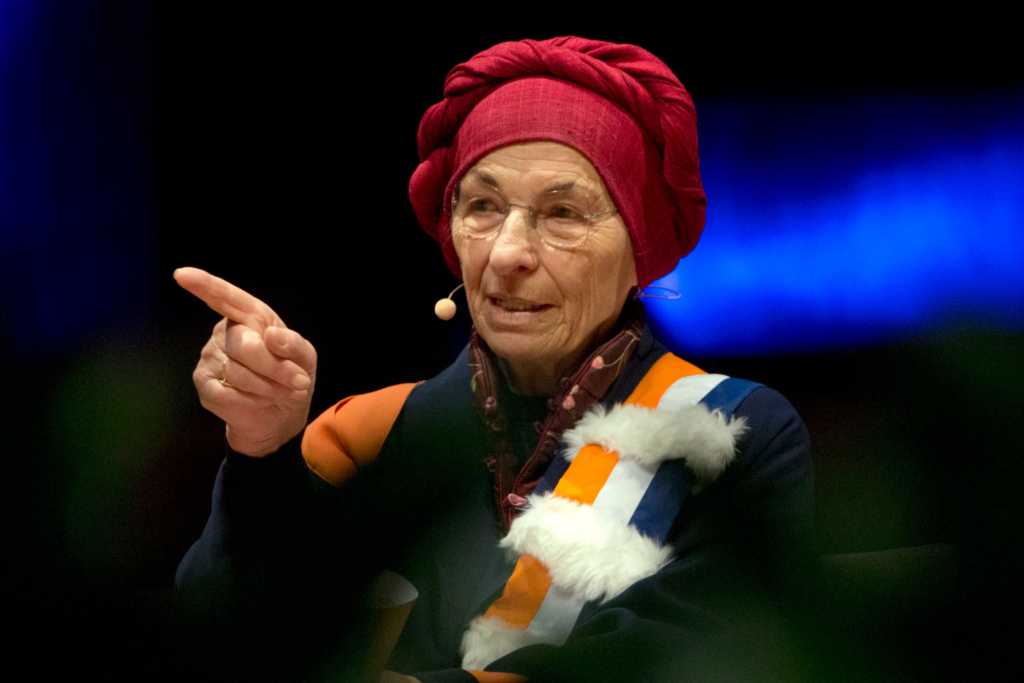
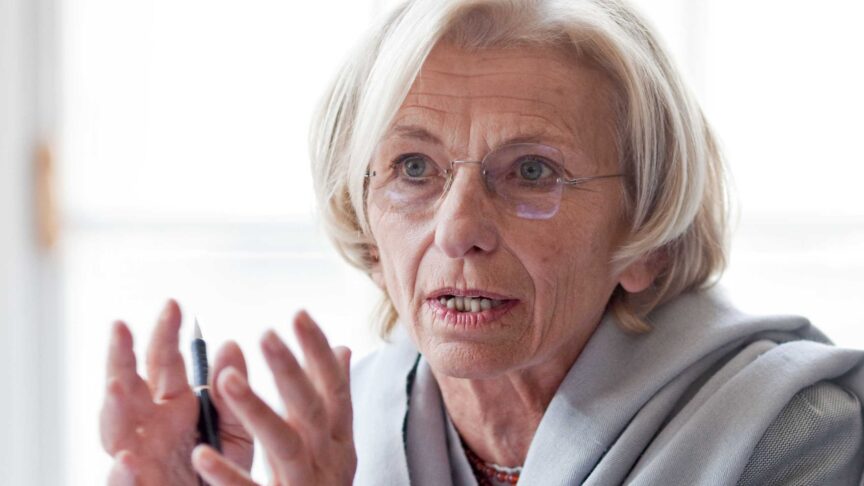
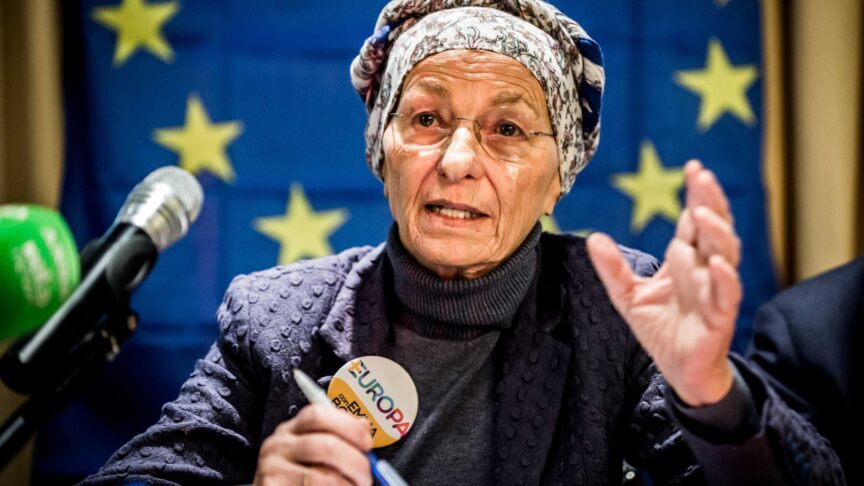
Despite her diminutive stature, Emma Bonino was a giant of European foreign policy. She made a critical difference on a bewildering range of causes. She was a master at operating in a diverse array of settings: protesting on the streets, mobilising NGOs, shaping the agenda of the European Commission, creating unlikely coalitions in the European Parliament and chairing the Italian Senate. She managed to make such a difference in all these places because, wherever she found herself, she was always an activist fighting for civil rights, for justice, for equality.
Emma was also a rebel. She used her charm, humour and honesty to puncture pomposity and force people into a real conversation. She embraced controversy, both in her advocacy for challenging causes like women’s rights, abortion access and drug legalisation, and in her methods such as protests and hunger strikes.
She knew how to translate lofty goals into concrete steps which had some hope of being implemented, whether it was setting up the European Commission’s humanitarian office, campaigning for the establishment of the International Criminal Court, advocating to ban female genital mutilation, or working to change Italian electoral law. She had a sense of history and understood how to use crises to shift the agenda—as she did when she moved to Cairo after 9/11, deciding to learn Arabic and to push for a better understanding between Europeans and the Muslim world. And she was willing to assemble and work with unlikely coalitions to advance her causes, from joint projects with the Egyptian former president’s wife Mrs Mubarak to campaigns with the Pope.
Emma was a founding member of ECFR and helped turn it into the organisation it has become. We assumed when she became Italian foreign minister in 2013 that she would step down as a member, but instead she wanted to stay involved and constantly drew on ECFR’s ideas, expertise and pan-European networks to shape the Italian and European agenda. When she stepped down as foreign minister she became a co-chair of the organisation, and we felt her sense of urgency, ambition and pro-Europeanism in every board meeting.
Emma helped shape the DNA of ECFR. She encouraged us to be courageous, not to be afraid of controversy and to challenge conventional wisdom. She pushed us to be as pragmatic about how to make a difference as we were principled about our goals. Always inspiring others, Emma was a friend and a role model to so many of us—but she didn’t do small talk or make time for idle fun. When the substantive discussions were finished, she would say “va bene” and move on to the next fight (or go out to smoke a cigarette). Her death leaves Europe a greyer and less vital place. We need more Emmas.
Cover image: picture alliance / NurPhoto | Daniel Gnap
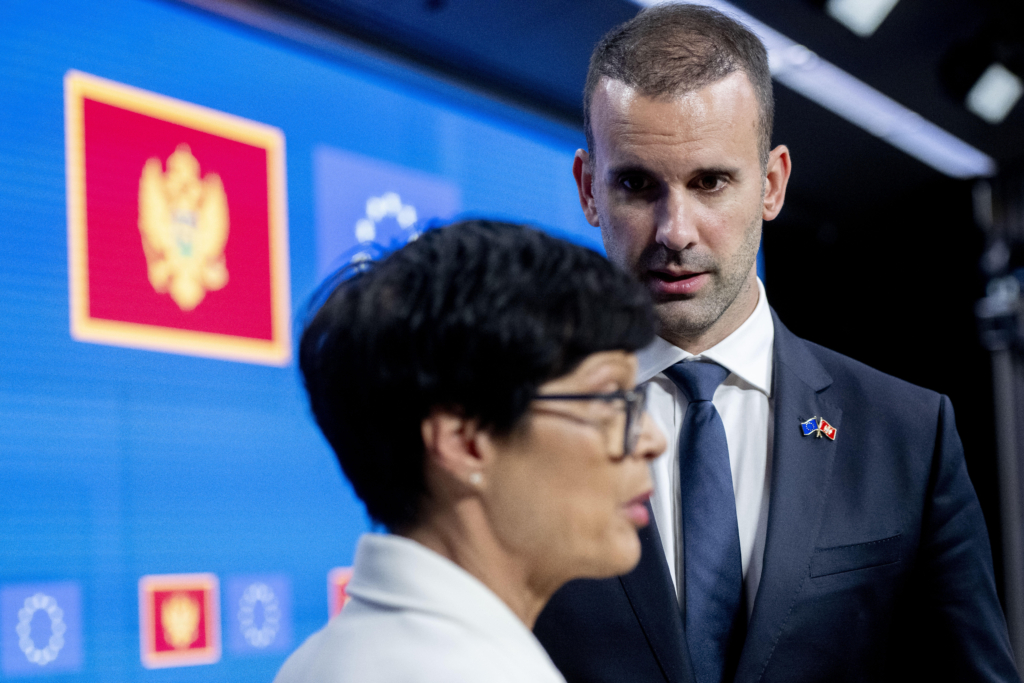
On September 30th, the European Commission is expected to unveil a comprehensive document on EU enlargement, which will be used as a basis for discussion by the European Council in October. The paper is likely to confirm that Montenegro and Albania could finish negotiations soon. But it should also propose ideas on how other countries in the region without this perspective can move forward in their own EU accession journeys.
Any Western Balkan country that joins the EU after waiting over 20 years deserves to be celebrated; the two frontrunners should be commended for making best use of this opportunity and supported to make it over the finish line. But by focusing on these two countries, the EU has prioritised quick wins. Montenegro and Albania have demonstrated commitment to reform, but also have no major bilateral issues to resolve or difficult neighbours to reconcile with.
Montenegro in particular, given its small size and its lack of significant outstanding issues with neighbours, seems ideal for making the case for enlargement as a low-cost and problem-free geopolitical gain. Indeed, commission officials recently compared the annual cost of Montenegro’s entry to the EU per EU citizen to that of a cup of coffee.
However, going for low-hanging fruit must not serve as cover for the EU not achieving its core responsibility in the Western Balkans. It should use its leverage to promote reform and the resolution of bilateral issues, thereby strengthening stability in a region still struggling to overcome its difficult past. The recent funeral of convicted Bosnian Serb war criminal Ratko Mladic demonstrates how important this task remains: the presence of senior Serbian state representatives at his commemoration has caused shock and dismay across the region and within the EU, as well as among many Serbian citizens.
A regional perspective
At the end of the wars of the 1990s, the EU adopted a regional framework towards the Western Balkans. The idea was simple and appealing: improving relations between the Western Balkan countries would go hand in hand with closer ties to the EU. Two decades on, this had led to many challenges and some successes, but only Croatia has become a fully fledged EU member state. While the stagnation in the enlargement process is partly due to a lack of commitment from regional governments, it is also a result of internal EU blockages and a lack of urgency while it dealt with a series of pressing crises.
After Russia’s full-scale invasion of Ukraine in 2022, however, enlargement suddenly became a priority again. The EU understood that it needed to prevent a grey area emerging between itself and Russia. Ukraine and Moldova obtaining candidate status in 2022 revived member-state interest in the dormant case of the Western Balkans enlargement process; Montenegro and Albania recognised the geopolitical opportunity, accelerated their reform efforts and have arrived at a point where EU accession is a realistic possibility.
But the main impetus for this new momentum towards enlargement is dramatically different from what originally drove Western Balkans integration. While the eventual integration of Ukraine and Moldova into the EU aims to strengthen European defences in the face of a common threat, Western Balkan enlargement was meant to foster regional stability and reconciliation among countries that had been at war with each other.
The successful accession of a Western Balkan country may signal to the rest of the region that EU membership is possible and that enlargement is truly a merit-based process, which rewards those advancing reform and making the right geopolitical choices. However, neither the EU nor the Western Balkans can ignore the fact that Kosovo is stuck due to unresolved status issues, Bosnia and Herzegovina carries the burden of a dysfunctional constitution imposed by the international community and North Macedonia is held back by bilateral issues with its EU neighbours.
Focusing on the countries facing fewest obstacles to accession might suit the geopolitical needs of the moment, but it risks losing sight of the original regional dimension of Western Balkans enlargement
Focusing on the countries facing fewest obstacles to accession might suit the geopolitical needs of the moment, but it risks losing sight of the original regional dimension of Western Balkans enlargement.
Towards a new European approach
The European Commission is aware that it needs to provide incentives for countries without an early accession perspective. It is planning to present new proposals on gradual integration in its forthcoming communication on September 30th. A more ambitious and flexible framework for gradual integration, aiming to include countries in parts of the internal market, would encourage reforms and allow the EU to develop a more intelligent and honest approach to conditionality. This is especially necessary for advancing the rule of law and democratic standards, which are all too often neglected in favour of the broader geopolitical picture. This has contributed to the diminished transformative power of the accession process and negatively impacted regional stability.
In addition to exploring options for gradual integration, the EU should revive the diplomatic processes at the heart of what its regional approach was originally meant to achieve. This requires redoubling efforts on the Serbia-Kosovo dialogue, progressing state reform of Bosnia and Herzegovina, and engaging with member states to clear the blockages holding North Macedonia back. This would contribute to regional stability and advance Europe’s geopolitical agenda by reducing opportunities for Russia, China and other actors to exert influence in the region.
The generations that lived through the good and the bad of the regional past are getting older. They might not live to see the European future promised to them at the turn of the century. Many would, however, still remember a line from an old Italian comic book Alan Ford, much loved in former Yugoslavia: “It is much better to be rich and beautiful than to be poor and ugly”. If the EU does not redouble its efforts to close remaining unresolved issues, its membership criteria would effectively follow the same logic. This would be a sad case of the EU abandoning its own ambition and responsibility.
This week, Mark Leonard is joined by Cary Fowler, founder and president of the Food Security Leadership Council and former US global food security envoy, and Jim O’Brien, ECFR distinguished visiting fellow and former US assistant secretary of state for European and Eurasian affairs.
As conflict, climate change and geopolitical fragmentation converge, there is a growing risk of a global food crisis. Russia’s war in Ukraine continues to disrupt grain exports, the blockage of the Strait of Hormuz is restricting fertiliser shipments, and a potentially severe El Niño threatens drought and falling harvests across parts of Africa, Asia and Latin America.
These overlapping pressures will impact hundreds of millions of people who are already food insecure. While mechanisms are in place to mitigate the impact of food insecurity—for example, in 2022, the UN, the US, the EU and regional actors worked together to keep grain flowing from Ukraine and avert a broader catastrophe—many of the conditions that enabled cooperation then are weaker today. This has created a dangerous gap in global leadership.
Together, Mark, Cary and Jim explore how a new international coalition could prevent millions more people from falling into hunger. They discuss the roles of Europe, the UN and major powers such as China, India and Russia; the case for humanitarian ceasefires covering grain exports and fertiliser shipments; and why food security should be treated as a central pillar of global security.
Can governments overcome geopolitical rivalry to address a crisis that no one wants? How severe could the impact of El Niño become in already vulnerable regions? What would a ceasefire covering grain and fertiliser look like in practice? And can Europe coordinate a global response when other leaders are absent?
This podcast episode was recorded on September 9th 2026.
Ukraine is fighting for survival against Russia while its democracy faces a second battle at home. Ukrainians show extraordinary trust in the Armed Forces, family and civic networks—but far less in politicians, government and bureaucrats. Now, high-level corruption scandals, calls for wartime elections, roadblocks to EU accession and possible peace talks with Russia are raising a hard question: can the trust that has helped Ukraine survive the war be turned into a state people believe in?
In this episode, Jessica Hendrick welcomes Roman Petrov, honourable president of the Ukrainian European Studies Association, professor of EU law at the National University of Kyiv-Mohyla Academy, and one of Ukraine’s leading experts on EU accession and EU-Ukraine relations working on the RE-ENGAGE project; and Svitlana Zalishchuk, Ukraine’s ambassador to Sweden and former civil-society activist, member of parliament and government adviser, now working at the centre of Ukraine’s wartime defence and European security partnerships. Roman warns that major decisions on peace could be challenged later if Ukraine’s elections remain suspended. Svitlana pushes back on the picture of low public trust, arguing that the war has actually increased trust in the state—just unevenly—and that public trust itself is part of Ukraine’s national defence capability.
RE-ENGAGE conducted nearly 600 interviews with Kyiv residents last year, at times even moving them into air-raid shelters as alarms sounded across the city. Drawing on the findings, Jessica, Roman and Svitlana discuss how a society can distrust the state so deeply and still defend democracy; what recent corruption scandals reveal about whether the system actually works; and if fast-tracking EU membership risks turning reform into a superficial “copy-paste” of European laws.
How is the far-right AfD’s historic landslide in eastern Germany viewed by those working on EU accession in Kyiv? Why might Ukraine now be better described as a contributor to European defence than a recipient of military aid? And what does Ukraine need to do differently to make its post-war vision last?

 Login