A suicide bomber attacked a busy area near a police station during a protest in northern Pakistan’s Swat district, killing 13 people and wounding 22, police said on Sunday.
The blast took place at a crowded intersection near a police station in Swat during a civil society protest, police said.
“Thirteen people, including eight police officers, were killed in the suicide bombing,” Swat Deputy Inspector General of Police Fida Hussain told AFP.
He added that 22 people had been wounded and another body, suspected to be that of the bomber, had been brought to hospital.
“A suicide bomber attempted to enter the police station located at the chowk (intersection), but was stopped by police at the main gate,” he said.
The attack took place in Pakistan’s northern border province of Khyber Pakhtunkhwa, where authorities are fighting a growing insurgency by the Tehreek-i-Taliban Pakistan (TTP).
No group immediately claimed responsibility.
A homemade bomb blast in the provincial capital Peshawar wounded four police officers, the city’s police chief told AFP on Sunday in an attack claimed by the TTP.
A military spokesman said on Friday that militant attacks and ensuing operations had killed 819 security personnel and civilians this year.
Pakistan has previously blamed the violence in border provinces on militant activity emanating from Afghanistan. The Taliban government in Kabul denies Afghan involvement.
The accusations have sparked a bitter rift and even armed conflict between the neighboring countries. Pakistan has carried out deadly air strikes it says target militants on Afghan soil.
The Taliban government and the United Nations said dozens of civilians were killed in the latest Pakistani strikes on eastern Afghanistan in June.
File Image: (Photo by Sajjad QAYYUM / AFP)
Earlier in the week, terrorists rammed an explosives-laden vehicle into a security checkpoint in northwestern Pakistan, killing 15 people—including soldiers, police officers, and government personnel—according to a military statement.
“Fifteen brave sons of the soil, including twelve military, two policemen and a government official from the Forest Department, rendered the ultimate sacrifice and embraced Shahadat (martyrdom),” the military’s media wing said in a statement on the latest attack in the border province of Khyber Pakhtunkhwa (KP).
“The attackers rammed an explosive-laden vehicle into the perimeter wall,” the statement said. “Due to the blast impact, infrastructure at the check post was seriously damaged.”
The US has been the world’s largest defense exporter for more than three decades now.
According to SIPRI (Stockholm International Peace Research Institute), the United States accounted for 42% of global arms exports between 2021 and 2025.
For perspective, during this period, France was the world’s second-largest defense exporter, accounting for only 9.8% of global arms exports.
However, despite its dominant position in global arms exports, the United States has notably been absent from a particular high-value weapon system market that could have generated billions of dollars in additional revenue for its defense firms.
Ironically, Washington has stayed out of this business despite leading the world in this niche technology for over five decades.
On July 6, Canada reportedly selected the winner of the Canadian Patrol Submarine Project (CPSP) deal, expected to cost nearly US$ 30 billion, with Germany’s TKMS outdoing South Korea’s Hanwha.
Similarly, India is in the final stages of signing a major submarine deal with ThyssenKrupp Marine Systems (TKMS) under Project 75(I).
Both Canada and India are strategic partners of the US. One might wonder why the US defense companies were not even in the running for these “big ticket” deals.
This, despite the fact that the US is not only the world’s largest submarine operator, but its submarines are also some of the most advanced in the world. According to the Global Firepower Index 2026, both Russia and the US operate 66 submarines.
However, while Russia operates a mix of diesel-electric and nuclear submarines, all of the US’s submarines are nuclear-powered.
China is fast catching up with 61 submarines; however, China also operates a mix of diesel-electric and nuclear submarines.
However, Russia (and formerly the Soviet Union) has exported submarines to Algeria, Bulgaria, China, Cuba, Egypt, India, Indonesia, Iran, North Korea, Poland, Romania, Syria, Venezuela, Vietnam and others, and China has exported to Pakistan, Myanmar, Bangladesh and Thailand.
Interestingly, the US, despite its technological lead in the field, has not exported a single submarine to any country in the last 50 years. In fact, the last submarine the US exported was in 1973 to Taiwan.
So, why, despite its dominant position in global arms export and its technological lead in the field, has the US not exported a single submarine to any country in over 50 years?
The US was not always averse to exporting submarines. After the Second World War, the US emerged as one of the world’s largest submarine exporters.
During the war, the US constructed over 200 submarines, and by the time the war ended, the US had 232 submarines in commission.
However, within years of the end of the Second World War, a new Cold War began with the Soviet Union, and the US launched a massive modernization campaign for its submarines.
Under the modernization plan, the US decommissioned hundreds of its late-war-era Balao- and Tench-class diesel-electric submarines.
This left the US with dozens of decommissioned submarines.
At the same time, the US was financing a massive reconstruction plan in Europe under the Marshall Plan and building Europe’s military capabilities to create an effective deterrent against the Soviet Union.
For this purpose, the US decided to export these older, decommissioned, diesel-electric submarines to its allies. Between 1950 and 1970, the US exported nearly 50 submarines to its partners, including Turkey, Spain, Italy, Greece, the Netherlands, Canada, Taiwan, and others.
Most of these were Balao-class diesel-electric submarines built during World War II.
Meanwhile, in 1954, the US launched USS Nautilus (SSN-571), the world’s first nuclear-powered submarine, heralding the era of nuclear-powered submarines.
Nuclear-powered submarines have key advantages, such as unlimited endurance, as they can stay submerged for months, maintain high underwater speeds consistently, and have global reach.
After the launch of USS Nautilus, Washington gradually phased out diesel-electric submarines. After 1954, the US built only three Barbel-class diesel-electric submarines.
By the early 1960s, all new US Navy combat submarines were nuclear-powered. The last diesel-electric attack submarine (USS Blueback) was decommissioned in 1990, leaving Washington with only nuclear-powered submarines.
File Image: USS West Virginia Submarine: Via US CENTCOM
Why Does the U.S. Not Export Nuclear Submarines?
The US nuclear-powered submarines are considered the best in their class; however, to date, Washington has not exported this technology to any country for various reasons.
Firstly, the U.S. Navy has long opposed even the export of diesel-electric submarines due to concerns about the impact of submarine technology proliferation on the ability of its forces to operate securely in coastal waters worldwide.
Submarines fall under the US Munitions List and are subject to the International Traffic in Arms Regulations (ITAR) and the Arms Export Control Act.
When it comes to nuclear propulsion technology, the US Navy is highly sensitive, as it adds extra layers of control under the Atomic Energy Act.
The US nuclear propulsion, quieting technology, sonar, and combat systems are considered among America’s most protected “crown jewels.”
The US has deliberately avoided proliferating this technology to preserve its undersea dominance.
In fact, Washington is so sensitive about submarines’ nuclear propulsion technology that it has refused to share this technology even with its close allies, such as France, Japan, Taiwan, or Canada.
The only two exceptions are the UK and Australia.
The US has a long-standing special nuclear propulsion technology-sharing agreement with the UK, dating back to the 1958 US-UK Mutual Defense Agreement.
The US supplied the reactor for Britain’s first nuclear sub, HMS Dreadnought, and ongoing collaboration allows the UK to design and build its own boats.
However, this is alliance cooperation, not a commercial export.
Similarly, in 2021, the US, the UK, and Australia signed the AUKUS agreement, under which the US has agreed to sell/transfer up to three Virginia-class SSNs to Australia, starting in the early 2030s.
Another issue is US industrial capacity, which is already struggling to meet US Navy demand for Virginia-class submarines.
In its current modernization drive, the U.S. Navy hopes to add two to three Virginia-class attack submarines to its fleet annually until 2043.
In fact, it’s not just the US that is sensitive about exporting nuclear submarines.
Globally, nuclear-powered submarines are operated by only six countries: the US, Russia, China, France, the UK, and India.
The US, Russia (formerly the Soviet Union), and the UK have been operating nuclear submarines for over six decades now.
However, to date, there is only one example of a country exporting/leasing a nuclear-powered submarine to another country.
The Soviet Union first leased a Charlie I-class (K-43) nuclear-powered submarine to India in 1988–1991.
India operated it as INS Chakra.
Further, Russia leased an Akula-class submarine (Nerpa/K-152) to India from 2012 to 2021, which New Delhi operated as INS Chakra II.
The US, the UK, China, France, and India have never exported or leased a nuclear submarine to any country.
In fact, how all countries are highly protective of nuclear-powered submarines can be gauged from the fact that even China refused this technology to its all-weather ally, Pakistan.
Leaked documents revealed that Pakistan formally asked China for nuclear-powered submarine technology and sea-based nuclear second-strike capabilities to counter India.
However, Beijing ultimately refused to provide the technology, citing global non-proliferation commitments and a desire to avoid triggering a regional nuclear arms race.
Instead, China is providing Pakistan with eight Hangor-class diesel-electric attack submarines, under a US$5 billion deal.
However, since the US no longer produces diesel-electric submarines and is reluctant to export nuclear-powered submarines even to its close allies, Washington is effectively out of the global submarine business, which is dominated by countries such as Germany, France, Russia, China, and Spain, and the situation is unlikely to change in the near future.
Sumit Ahlawat has over a decade of experience in news media. He has worked with Press Trust of India, Times Now, Zee News, Economic Times, and Microsoft News. He holds a Master’s Degree in International Media and Modern History from the University of Sheffield, UK.
He can be reached at ahlawat.sumit85 (at) gmail.com
Russia has for the first time officially claimed that its fifth-generation fighter jet, the Su-57, has registered its first air-to-air kill in the Ukraine War, using a hybrid RVV-SDM missile.
Alexander Mikheev, Director General of Rosoboronexport, Russia’s state arms exporter, said that the stealth aircraft has proved its superiority in all aspects of warfare, including hitting targets on the ground and in the air.
This, he said, is fueling a heightened global interest in the Su-57E fifth-generation fighter.
“Rosoboronexport notes increased global market interest in the Su-57E fifth-generation fighter. It has proven its superiority in real combat conditions when countering the most advanced air defense and electronic warfare systems. The aircraft has engaged numerous airborne, ground, and surface targets with Russian air-to-air munitions, including the latest RVV-SDM guided missile,” Russia’s state-controlled news agency TASS quoted Mikheyev as saying.
The RVV-SDM is a new medium-range air-to-air missile introduced by Russia’s Rosoboronexport to arm the export variant of the fifth-generation Su-57E stealth fighter. It features fire-and-forget capabilities, active-passive radar guidance, and high resistance to electronic warfare.
According to Vijainder K Thakur, former Indian Air Force (IAF) pilot and defense analyst, the RVV-SDM is a medium-range missile, most likely a derivative of the RVV-SD tweaked for internal carriage by the Su-57 and improved performance.
While reports of Su-57’s first aerial kill have been doing rounds for some time now, this is the first official acknowledgment by Russia of Su-57’s air-to-air kill in the Ukraine War.
In April 2026, a report attributed to Sergei Lebedev claimed that a Su-57 had destroyed a Ukrainian Air Force aircraft in an aerial engagement over the Mykolaiv region using a long-range missile.
In May 2026, Russian media and Telegram channels claimed that a Su-57 had used a long-range R-37M missile to shoot down a Swedish Saab 340 AEW&C aircraft transferred to Ukraine over eastern Ukraine.
Mikheyev said that Su-57’s combat performance in the war has fueled global interest in the aircraft’s export variant, the single-seat Su-57E. However, despite its best efforts to promote the aircraft in the international market, so far there has been only one confirmed customer of the Su-57.
Edited Image: Su-57
Algeria was the first country to confirm the acquisition of the Su-57E. The country, which has a fleet of Soviet-Russian Su-30MKA, MiG-29, and MiG-25 fighters, has bought an unspecified number of aircraft and has reportedly deployed the jet on operational duty.
In November last year, Vadim Badekha, the Director General of United Aircraft Corporation (UAC), which manufactures the Su-57, announced that Russia has delivered two Su-57E stealth aircraft to a foreign client.
“Our foreign customer, our foreign partner, has already received the first two aircraft. They have begun to carry out combat duty and demonstrate their best qualities. Our customer is satisfied,” Badeja said.
Russia is also pitching the Su-57E to India and has even promised full Transfer of Technology (ToT) and to localize the production of the stealth aircraft in India. However, New Delhi has not made a decision yet.
According to Russian officials, the Su-57’s combat experience in the Ukraine War and limited exposure during the Syria war is a key highlight of the stealth fighter jet’s export potential.
Russia has, however, used the Su-57 very cautiously in the Ukraine war. According to security analysts, the aircraft has been mostly used for stand-off strikes from long distances.
Notably, just a few days earlier, a picture emerged showing the Su-57 fitted with R-73 air-to-air missiles attached to its wing pylons rather than in its internal weapons bay.
Carrying the missiles beneath the wing pylons would compromise the Su-57’s stealth; however, if the jet is deployed primarily for anti-drone operations, maintaining stealth is of no use.
Carrying these short-range AAMs externally suggests that the Su-57 load-out was optimized for close-range aerial engagements, most likely against the long-range Ukrainian one-way attack drones and cruise missiles that Kyiv has recently begun using.
Critics argue that Moscow is deliberately limiting the aircraft’s exposure to protect its export potential. Any confirmed losses to Ukrainian forces, they say, would severely damage the jet’s credibility in the international export market.
Still, an official acknowledgment by Russia of Su-57’s first aerial kill will no doubt boost the jet’s credibility, which has so far struggled to find many export customers.
Notably, while the US’s F-35 fighter jet has been in service for 11 years and has seen action in many wars, including in Iraq, Syria, Yemen, Gaza, and Iran, it scored its first air-to-air kill in March this year.
“This is the world’s first shootdown of a manned fighter jet by an F-35,” the statement added.
It must also be noted that Ukrainian airspace is heavily defended by frontline Western air defense systems such as Patriots. This is in contrast to where the F-35 has seen combat, in the poorly defended airspace of Gaza, Syria, Iraq, Yemen, and Iran.
Meanwhile, the USAF’s F-35 fighter jet also got hit by an Iranian drone-missile hybrid in the Iran war, underscoring that even most advanced Western stealth fighter jets are not completely invisible or invincible.
Additionally, while Russia initially faced many issues with the Su-57, including production delays, Moscow has made key improvements to the aircraft in recent years, increasing its lethality and survivability in contested airspace.
Su-57’s Continuous Upgradation
In February this year, Moscow’s Rostec press service said that the Russian Aerospace Forces (VKS) have inducted a new batch of Su-57 fighters featuring a “new technical profile.”
The upgraded version of Russia’s fifth-generation fighter incorporated enhanced onboard systems and a new weapons configuration that significantly expanded the jet’s combat role.
File Image: Su-57. Via Wikipedia
“To fulfill the targets set by the Russian Defense Ministry for the supply of highly sought-after weapons and military equipment to the troops, crews of the Russian Aerospace Forces have accepted the Su-57 aircraft in its new technical configuration,” the Rostec press service quoted a Su-57 pilot as saying.
“The aircraft has already proven itself during the special military operation (Ukraine War). The new technical configuration will provide for the expansion of the range of missions for which this aircraft type is deployed. The advanced capabilities incorporated into the aircraft armament system make it possible to use new types of aircraft weapons,” the pilot added.
While Rostec provided no details of the upgraded onboard systems or the new weapons package, analysis of higher-resolution images released by UAC and examined by OSINT analyst George N. revealed visible changes to the 101KS electro-optical complex, which supports self-protection and missile warning functions.
The 101KS complex is an electro-optical targeting system that provides the Su-57 with all-weather surveillance and passive infrared detection.
The 101KS complements the radar by detecting and tracking targets in the infrared and visible spectra. It can detect heat signatures of missiles and aircraft and conduct passive situational monitoring.
This allows the fighter to operate without active emissions, enhancing survivability in highly contested environments.
The aircraft also received revised apertures, presumably operating across multiple spectral bands, including visible, mid- and long-wave infrared (IIR), and possibly ultraviolet (UV), pointing to a substantial expansion of passive observation capabilities.
The imagery suggested that the 101KS would no longer function solely as a defensive sensor, but rather as a key element of situational awareness, aligned with the philosophy of the AN/AAQ-37 Distributed Aperture System (DAS) carried by the F-35.
It underscored that the Su-57 is moving toward a distributed, passive surveillance capability that can detect and track airborne threats without relying solely on radar.
The announcement came nearly two months after the UAC confirmed it had tested the Su-57 with a new Izdliye 177 engine, a powerplant developed by the United Engine Corporation (UEC) specifically for the Su-57.
The new Izdliye 177 engine was tested with the Su-57 in December 2025. According to a Rostec official, each Izdliye 177 engine can deliver up to 16,000 kg of thrust (approximately 35,000 pounds) with the afterburner engaged.
The new engine will further reduce fuel consumption and is stated to be far more durable than the previous power plant, the Saturn AL-41F1 afterburning turbofan engine.
In fact, the fighter jet has been steadily upgraded since its induction into the VKS in 2020.
Vadim Badekha, CEO of UAC, recently said the platform continues to evolve.
“The fifth-generation Su-57 aircraft system is the best aircraft in its class, but we’re not resting on our laurels. The fighter has undergone a tremendous evolution, and its improvement continues today – the aircraft’s weapons and systems capabilities are being upgraded,” Badekha said.
“This fighter allows us to solve the most important tasks today, demonstrating efficiency and excellent maneuverability and combat capabilities,” he added.
All these upgrades fit within the progressive maturation of the Su-57 program, also known as the Megapolis development program.
Under it, the Su-57 would receive incremental upgrades to its avionics, cockpit, engine, sensors, and weaponry.
Russian engineers claim that the Su-57 is a future-oriented project that will evolve as Moscow’s principal air combat system well beyond 2040.
At the same time, these upgrades will also boost the jet’s export potential.
Sumit Ahlawat has over a decade of experience in news media. He has worked with Press Trust of India, Times Now, Zee News, Economic Times, and Microsoft News. He holds a Master’s Degree in International Media and Modern History from the University of Sheffield, UK.
He can be reached at ahlawat.sumit85 (at) gmail.com
President Donald Trump said the US and Israel had decided to hold off on new strikes on Iran — provided that a deal to end the ongoing conflict is reached quickly.
Meanwhile, a report published by a US-based think tank recently warned that American inventories of key air defense interceptors have fallen sharply, raising the prospect that US and coalition forces may need to accept greater risks in future missile defense operations.
When the US launched Operation Epic Fury in February 2026, President Donald Trump said the hostilities would last only a few days, a deadline that was subsequently moved to a few weeks. However, five months later, there is no end in sight to the war, which has now spilled over into much of West Asia.
During the war, the US has severely drawn down its air defense interceptors, as documented by the US-based think tank CSIS (Center for Strategic and International Studies). The CSIS report estimates that stockpiles of the Patriot and THAAD (Terminal High Altitude Area Defense) have been greatly reduced in the ongoing conflict.
Published on July 27, 2026, the report—“Renewed Iran War Would Test Diminished Interceptor Inventories” authored by Mark F. Cancian and Chris H. Park—updates an earlier CSIS assessment released around the ceasefire agreed to by both sides on April 8, 2026.
“The air defense campaign has been largely successful with high—though not perfect—interception rates. While some Iranian attacks got past defenses, causing casualties and extensive base damage, these attacks have been unable to diminish U.S. and coalition operations. This has required extensive use of interceptors, with Patriot inventories now under 1,000 and THAAD inventories at about 250,” states the report.
The previous report had estimated that the US Patriot interceptor inventory shrank by 55%. However, the updated figures suggest the stockpile has further shrunk by an additional 10% since the truce, and that approximately 65% of US Patriots have now been lost since the war began.
Image via CSIS
The report estimates that Patriot inventories now stand at under 1,000 (the most recent figures place the range at 759–827) and that THAAD inventories stand at about 250 (the latest figures put it at roughly 234–278).
Both systems have been heavily used to defend US bases, Gulf partners, and Israel against Iranian ballistic missiles, cruise missiles, and related threats. CSIS apparently draws its estimates from publicly available legislative and Pentagon budget documents, supplemented by open-source data on rounds expended in the Gulf.
“Diminished stockpiles may force the United States and its coalition partners to take more risks with interceptions. There are no good alternatives to Patriot and THAAD for ballistic missile defense. Navy ships, with Standard Missiles that can intercept such threats, generally are too far away,” the report warned.
Notably, an NBC report recently stated that US commanders are choosing not to take down Iranian projectiles that are headed into uninhabited regions of US sites in the vicinity because they do not want to squander their interceptor missiles.
Patriot AD System.
This alleged tactic, if true, marks a shift from previous air and missile defense procedures in the region, such as when a US-manned Patriot detachment protected a mostly evacuated Al-Udeid Air Base in Qatar from a barrage of Iranian ballistic missiles in response to Operation Midnight Hammer in June 2025.
Despite a dearth in air defense interceptors, the US has vowed to hit Iran very hard, a move that will almost certainly trigger Iranian retaliation and further cause depletion in Patriot and THAAD interceptors. The situation may become dire, given that the production of these missiles takes woefully long—Lockheed delivered just about 600 interceptors in 2025, and only 96THAAD interceptors are manufactured per year.
The United States is therefore consuming its most valuable air-defense munitions far faster than industry can replace them. Some analysts have suggested that depleting offensive and defensive stockpiles contributed to the Trump administration’s decision to accept a ceasefire, including the latest one where the U.S. and Israel agreed to hold off on new strikes on Iran.
Other reports indicate Trump may have changed the offensive plans after talking with Saudi Arabia and after Iran also spoke to Riyadh, besides Pakistan and Turkey.
Trump insisted the US was still “locked and loaded and ready to go against the Islamic Republic of Iran,” but added that Tehran and other Middle Eastern countries had asked him to hold off on fresh strikes. “Based on this request, I have agreed, for the future benefit of the WORLD and, likewise, the survival of a successful and prosperous Iran, to cancel the attack, subject to being able to rapidly make a DEAL,” Trump posted on his Truth Social platform.
Terminal High Altitude Area Defense – Wikipedia
Meanwhile, Strategists also warn that the shortages create near- to medium-term risks for U.S. readiness in other theaters, particularly a potential conflict with China in the western Pacific. “Expended munitions create a near- to medium-term risk for U.S. readiness to fight a war against China in the western Pacific,” the report stated.
In the near term, Washington is unlikely to spare Patriots for Ukraine, which continues to face intense Russian attacks and has repeatedly requested additional interceptors. Russia has been exploiting the vacuum in air defense coverage to strike Kyiv with lethal ballistic and hypersonic missiles, as the EurAsian Times reported.
Pentagon Boosting Interceptor Production
Noteworthy steps have been taken in 2026 to rapidly expand production of Patriot (primarily PAC-3 MSE) and THAAD interceptors.
These efforts use a new “Acquisition Transformation Strategy” approach that emphasizes multi-year framework agreements, undefinitized contract actions (UCAs), long-term demand signals, and parallel investments in facilities, the workforce, and bottleneck components.
For instance, the US Army awarded Lockheed Martin a contract on July 29 worth up to $58.6 billion to produce Patriot interceptor missiles.
This comes after the US awarded Lockheed Martin a $4.7 billion contract in April 2026 to accelerate the production of the Patriot Advanced Capability-3 (PAC-3) Missile Segment Enhancement (MSE) interceptors. The agreement stipulated that the annual output of PAC-3 MSE interceptors would be increased from nearly 600 to 2,000 units.
The Army states that the latest contract establishes a multiyear procurement strategy for the interceptors from fiscal 2026 through 2032 by converting a prior one-year deal awarded in April into a seven-year draft agreement.
The Pentagon Munitions Acceleration Council (MAC) also reportedly signed an emergency procurement agreement with key vendors to boost production.
Meanwhile, Lockheed has stated that it is investing $8–9 billion through 2030 across more than 20 sites in the United States.
Additionally, the US has agreed to grant Ukraine a license to produce Patriot interceptors, making it the latest European country to manufacture these prized munitions, alongside Germany, Romania, and Poland.
Not just that, Lockheed Martin announced the introduction of the PAC-3 Adapted Capability Effector (PAC-3 ACE), a low-cost interceptor built to defeat a wide range of threats for less than half the cost of a PAC-3 MSE.
As for THAAD, the Pentagon signed a framework with Lockheed Martin to quadruple annual production from 96 to 400 interceptors.
The framework was intended to lead to a formal contract award (subject to congressional appropriations). This was later executed in June 2026 with an undefinitized contract action (UCA) valued at up to $35 billion to increase manufacturing through 2030.
The Pentagon, in collaboration with L3Harris and Lockheed Martin, announced two historic seven-year framework agreements earlier this week to increase production capacity for critical components of the Terminal High Altitude Area Defense (THAAD) and the Patriot Advanced Capability-3 (PAC-3) Missile Segment Enhancement (MSE) interceptors.
Contact the author at sakshi.tiwari13 (at) outlook.com
The United States (US) floated a pitch to supply India with advanced Lockheed Martin F-35 stealth fighter jets. US President Donald Trump publicly stated that Washington was paving the way to provide India with the fifth-generation aircraft.
In February 2025, during Indian PM Modi’s visit to the US, Trump told a joint news conference, “Starting this year, we’ll be increasing military sales to India by many billions of dollars. We’re also paving the way to ultimately provide India with the F-35 stealth fighters.”
Later, Vice President JD Vance said: With regular joint military exercises, it’s only natural for India to buy more of our defense equipment, including the F-35s,” pitching the stealth aircraft to cement US-Indian defense relations.
Some believe that the statement(s) were meant to please India, but much more, the American arms lobby.
Meanwhile, some new prospective customers of F-35 have emerged. Qatar has reportedly begun exploratory talks with Washington. Saudi Arabia has pursued the acquisition of up to 48 Lockheed Martin F-35 Lightning II stealth fighters to modernize its air force and counter regional threats. Turkey is lobbying hard to get back into the F-35 program.
Turkey was earlier removed from the program in 2019 and hit with CAATSA sanctions after purchasing the Russian S-400 missile defense system, but renewed diplomatic push and potential shifts in U.S. policy have reopened discussions.
However, the US is insisting that Turkey will have to dispose of the S-400 units, which Ankara could sell, as per reports, to either the UAE or Qatar.
While countries like Saudi Arabia, the UAE, and Turkey, among others, have been desperately trying to seek the F-35 stealth jets, why did India not aggressively pursue the US aircraft?
India Needs a Fifth Generation Fighter
The IAF is already down to 29 fighter squadrons. Pakistan could possibly receive its first initial batch of Chinese Shenyang J-35 stealth fighter jets by 2027.
Reports indicate an expected first delivery of 4 to 12 export-grade J-35 (or J-35E/A) aircraft. Pakistan plans to acquire up to 40 units by 2029. However, there are some reports that the timelines may slip.
Notwithstanding, this could change the air-combat dynamics in the subcontinent.
There are reports that China has already built nearly 500 J-20 fifth-generation fighters, and over 350 are in service with the PLA Air Force (PLAAF). Some have been deployed close to India’s Ladakh, in Xinjiang.
They have also been exercising over Tibet. Both Pakistan and China operate in collusion.
There will thus be pressure on India’s security establishment to acquire interim fifth-generation aircraft. The Sukhoi Su-57 has been offered with full technology transfer, and the F-35 is still at the “mind-games” stage.
The Lockheed Martin F-35 Lightning II is widely considered the best fifth-generation multirole fighter because it combines extreme, low-observable stealth with revolutionary sensor fusion, acting as a flying computer and “quarterback of the skies” that networks data seamlessly with friendly platforms.
The low radar cross-section lets it bypass modern air defense networks undetected, as demonstrated in Iran. Around 1,400 F-35s have been built. 12 countries already operate them. Another eight countries have ordered them.
The U.S. and its major international partner nations have already committed to acquire over 3,100 F-35 stealth aircraft through 2035. The United States intends to purchase 2,456 jets.
Undoubtedly, it is the best fifth-generation fighter currently.
F-35 Offer & Complexities for India
For India, the F-35 proposal faced almost immediate hurdles due to subsequent tariff frictions and India’s core push for technology transfer for domestic manufacturing of its own Advanced Medium Combat Aircraft (AMCA) and the aero-engines.
There have been tremendous delays by GE Aerospace on its 2021 contract to supply 99 F404-IN20 engines to Hindustan Aeronautics Limited (HAL) for the Tejas Mk1A fighter program. Only six out of the promised engines have been delivered instead of the targeted 12-plus a year, prompting HAL to invoke contractual penalty clauses.
The tariffs on “friend” India and delayed engines for AMCA badly strained the Indo-US ties.
India also operates Russian-supplied S-400 systems, a factor that previously caused frictions between the US and Turkey.
India already operates the S-400 and Su-30MKI. The U.S. fears these networks could compromise classified F-35 stealth data. The jet relies on the U.S.-controlled Operational Data Integrated Network for software and logistics.
The US is perhaps already accessing such data through many other American platforms on Indian soil.
Meanwhile, introducing a complex new Western platform adds severe maintenance challenges to an already diverse military fleet. Even in the US, there are very few airbases where the stealth coatings can be serviced.
Buying foreign fifth-generation jets risks diverting funds from India’s indigenous AMCA project. Putting too many military aviation eggs in the unreliable US basket will also be an issue. Americans can be “very unreliable” when it comes to putting sanctions and freezing spares and maintenance support.
While operationally, the F-35 could present major strategic advantages for the IAF, any potential deal involves deep geopolitical, logistical, and financial complexities. Acquisition costs range from $80 to $110 million per jet alongside very high hourly operational expenses, creating budgetary issues for New Delhi.
An Italian F35 fighter jet takes part in the “Blue Flag” multinational air defense exercise at the Ovda air force base, north of the Israeli city of Eilat, on November 11, 2019. (Photo by JACK GUEZ / AFP)
Su-57 Offer and Complexities
Russia has been aggressively marketing and bidding for India’s interim fifth-generation fighter. Due to Western sanctions, its military sales have slowed down considerably in the last few years.
It has offered India complete technology transfer and local licensed production of the Su-57 fifth-generation stealth fighter jet.
Russian leadership has pitched the deal with no restrictions. The full technology offer includes access to stealth design, engines, AESA radar, optics, and AI elements. A phased transfer of production to Indian facilities, using existing Su-30MKI infrastructure, is proposed.
There is willingness to co-develop a twin-seat variant and integrate Indian weapons. As the IAF faces a growing stealth gap, the offer looks attractive.
But unfortunately, only 42 Su-57 have been built to date. Even the Russian Air Force has ordered only around 72 aircraft. Yearly production is still around 10-12 aircraft.
Unlike the F-35, Su-57 is unlikely to get large orders. Russia is still in a major war, and its military industrial complex is busy producing for its front lines. Delivery of Su-57 could be 5-6 years after signing the contract, as not many fly-away units are available.
There is normally a big gap between publicly stated offers of technology vis-à-vis when being penned on paper or actually delivered. While the Su-57 is very impressive during displays, some are questioning the quality of its stealth.
Not many Su-57s have been heard of attempting to penetrate the Ukrainian air defenses. The Indian establishment has thus not made any statements on Su-57 acquisition.
India’s AMCA program is in the critical stealth validation and prototype manufacturing preparation phase. The three consortiums led by private sector conglomerates have been short-listed. These include Tata Advanced Systems, Larsen & Toubro, and Bharat Forge. Bids are being prepared for the ₹15,000 crore ($1.57 billion) development-cum-production contract.
A full-scale engineering model recently underwent specialized Radar Cross Section (RCS) testing at the ORANGE facility in Dundigal, Hyderabad. The prototype rollout is anticipated around late 2026 or early 2027, with the first flight planned roughly within 30 months of contract finalization. Serial production and initial induction into the Indian Air Force (IAF) are targeted for the mid-2030s.
A clean internal stealth layout would involve carrying about 1.5 tons of weapons for initial penetration, and a non-stealth “beast mode” payload carrying up to 7 tons across 14 stations. The Twin-engine, all-weather platform is built for deep strikes, electronic warfare, and low radar cross-section operations.
Considering that the IAF has still to receive the first LCA Mk1A, due to delayed GE-404 engine deliveries and some integration issues, the timelines for the very technology-intensive AMCA are very optimistic.
To accelerate the AMCA, India has shifted from a single-agency monopoly to a competitive public-private consortium model, engaging shortlisted private industrial heavyweights such as L&T with BEL, Tata Advanced Systems, and Bharat Forge, alongside the Aeronautical Development Agency (ADA), to build five prototypes.
All these consortia have industrial and project management capability and have been in the defense production ecosystem for quite some time. They will handle development, manufacturing, and future series production with dedicated capacity and speed.
Core specialized flight-testing and integration centers have been established (such as the facility in Puttaparthi, Andhra Pradesh), and dedicated airspace commitments have been secured from civil aviation authorities to streamline flight trials. Procuring interim GE-414 engines for prototype testing while simultaneously engaging with global partners like France’s Safran and Rolls-Royce for high-thrust indigenous engine development to avoid power plant bottlenecks.
India has set up high-level monitoring committees chaired by top defense officials to shrink timelines from the drawing board to the first scheduled prototype flights. However, I feel that a national project of this kind must be monitored directly by the PM Office.
The decision-making has to be much faster. Some risks will have to be factored and taken. More funds would have to be put on the table. Private sector commercial connections and national diplomacy must be used to acquire critical technologies. Reverse-engineering must no longer be a taboo word. AI needs to be extensively used for design and manufacturing to cut timelines.
Supply chain redundancy and diplomatic, secure sourcing are required. Aero-engine has to be a national priority project. India needs to invest more in critical minerals and special metals manufacturing.
Our manufacturing excellence has to reach the levels to make single-crystal blades with high-precision cooling ducts. The best talent has to be nurtured. The exodus of the kind that happened from ISRO must be prevented through more attractive opportunities. A few dedicated aerospace universities should be set up. A skilled manufacturing force has to be built.
After two decades of relationship ascendancy, in the last two years, there has been a level of distrust between the largest and oldest democracies of the world.
While it is hoped that it is a transitory phase, it is becoming clear that the US is not interested in India’s rise as a global power. U.S. Deputy Secretary of State Christopher Landau stated at the last Raisina Dialogue in New Delhi that Washington will not repeat its past approach (read mistake) with China by granting India unfettered market and tech access that could lead to strong commercial competition.
The US wants India to be strong enough only to be a bulwark against China and not become an independent power center or a technology and economic power.
The US seems keen only to supply platforms to India through large contracts. Even for aero-structures and smaller components, they prefer make-in-India “Build to Print” and not any significant technology sharing.
Even the proposed India-USA deal to co-produce GE Aerospace F414 engines with HAL faces major hurdles. The primary complications involve a nearly threefold cost surge, alongside intense disputes over sensitive hot-end technology transfer and the risk of delays to India’s Tejas Mk2 and AMCA programs.
Many Indians are wondering if we have invested too much in a partner with whom there is a high trust deficit and who has a vacillating foreign policy. US is known to have “dumped” friends and allies for immediate national interests. The way the Trump administration has publicly threatened or admonished its own NATO allies in the recent past further strengthens Indian concerns.
USA has already gotten deep into India’s airborne platforms and supplied India with transport aircraft (C-17, C-130), maritime patrol aircraft (P-8I), UAVs (MQ-9), and helicopters (Chinook, AH-64 Apache, and MH-60R).
For a long time, the US was trying to sell the F-16 ‘Viper’ (renamed F-21) and the F-18 Super Hornet as part of India’s Multi-Role Fighter Aircraft (MRFA) proposal. Later, it offered the F-15EX. The F-35 was never officially on offer.
Despite being the oldest democracy, the US finds it easier to deal with dependent military Generals, and West Asian Sheikhs, rather than growing democracies. The US has a poor opinion of India’s “Non-Alignment” and “Strategic Autonomy.”
Washington continues to prefer unstable Pakistan, which helps it connect with China and West and Central Asia, and is willing to toe the American line for a few bucks. This Pakistan connection causes further distrust in India.
Most analysts feel that allowing the USA into India’s fighter aircraft ecosystem is not a great idea. Any F-35 deal, like the other aircraft deals, will be just a supply and support contract. There will be no transfer of technology, and no “Make-in-India” element.
While India pushes its own AMCA program, if at all, the better choice for an interim fighter may still be the Su-57.
Air Marshal Anil Chopra (Retired) is an Indian Air Force veteran, fighter test pilot, and ex-director-general of the Center for Air Power Studies. He has been decorated with gallantry and distinguished service medals during his 40-year tenure in the IAF.
THIS IS AN OPINION ARTICLE. VIEWS PERSONAL OF THE AUTHOR
Lt. Col. William Henry Rankin was a decorated US Marine Corps fighter pilot who flew combat missions in World War II and the Korean War. His greatest ordeal, however, came in peacetime.
On July 26, 1959, he ejected from an F-8 Crusader straight into a massive thunderstorm. And he lived to tell the tale.
The Vought F-8 Crusader was a single-engine, supersonic, carrier-based air-superiority fighter designed for the U.S. Navy and Marine Corps. Known as the “Last of the Gunfighters,” it was the final American fighter built with guns as its primary armament at a time when missiles were rapidly taking over. The aircraft entered service in 1957.
In May 1957, Rankin took command of Marine Fighter Squadron 122 (VMF-122). The following year, it became the first Marine squadron to operate the F-8 Crusader.
In 1959, he catapulted to fame for surviving what seemed like an impossible incident with the Crusader.
The Story Of Rankin’s Riding A Thunderstorm
On the afternoon of July 26, 1959, Rankin led a two-ship flight with wingman Lt. Herbert Nolan from Naval Air Station South Weymouth, Massachusetts, back to Marine Corps Air Station Beaufort, South Carolina.
During the flight, the pilots encountered a large cumulonimbus thunderstorm.
Typically, thunderstorms pose severe threats to fighter jets, including extreme turbulence, powerful updrafts and downdrafts, hail, lightning, icing, and torrential rain. So, fighter pilots are trained to climb above the storm to prevent damage to their aircraft.
The F-8 Crusader’s strong climb performance and high service ceiling of about 50,000 feet made this a practical choice for Rankin on that fateful day.
Rankin climbed his F-8 fighter jet to 47,000 feet at a speed of Mach 0.82 over a massive cumulonimbus cloud that peaked at about 45,000 feet.
While on this quest, he suddenly heard a loud, unprecedented bump and rumble from the aircraft’s engine. He instantly knew something was wrong with his jet.
The engine immediately stopped producing power, a bit of bad news that was delivered to Rankin by a bright fire warning light.
Acting swiftly to arrest the threat, Rankin immediately pulled the lever to deploy auxiliary power, but instead of saving his jet, it snapped in his hand.
Lt. Col William Rankin (Via X)
At this point, Lt. Col Rankin knew he had to eject, which was a formidable challenge without a pressure suit at that altitude.
As soon as he ejected and touched what is believed to be -58 to -60 degree air, his body started to fail. The veteran fighter pilot who had braved enemies in the wars he fought through his career was now struggling for survival—he suffered frostbite, the decompression caused his stomach to bloat, and he started to bleed from his mouth, nose, and ears. The only respite, at least initially, was that he had an emergency oxygen supply.
The chances of survival were grim, something Rankin was fully aware of.
“I was convinced I would not survive; no human could”, Rankin later wrote in his book “The Man Who Rode the Thunder”.
“The pain of ‘explosive’ decompression was unbearable,” he recalled in his book, which has been widely read by aviation enthusiasts globally. “I could feel my abdomen distending, stretching, stretching, stretching, until I thought it would burst. My eyes felt as though they were being ripped from their sockets, my head as if it were splitting into several parts, my ears bursting inside, and throughout my entire body, there were severe cramps.”
However, he also bravely emphasizes, “I was terrified, but not petrified. It’s a brave distinction of terms.”
After roughly five minutes of free fall, Rankin realized his parachute had not opened. The system was designed to deploy automatically at about 10,000 feet via a barometric switch, allowing the pilot to reach denser, breathable air before the canopy opened. The already disoriented pilot began to worry that the parachute’s auto-deployment system may have been broken, causing his only chance at survival to fail.
Unfortunately, though, he was now in for a completely different kind of challenge.
As he was passing through a massive thunderstorm with zero visibility, the parachute opened prematurely as the violent pressure fluctuations, updrafts, and turbulence inside the cumulonimbus cloud “fooled” the barometric sensor.
Once under the open canopy of the parachute, Rankin was far more vulnerable to the storm’s powerful vertical currents. The long descent increased the risk of his death from cold or asphyxiation. Additionally, it meant that he was dangerously caught in the up-and-down draft of the storm system, which buffeted the pilot thousands of feet into the air before dragging him back down. And that’s exactly what happened.
Ten minutes into the ordeal, he began vomiting from the violent spinning and pounding even as lightning flashed around him—later described as blue blades several feet thick.
The rain was so dense that he repeatedly inhaled or swallowed water with every breath and had to hold his breath to avoid choking. “Gasping for air, swollen, bleeding, and battered by hail, it was as though I were under a swimming pool, and I had held my breath several times,” wrote Rankin.
For Rankin, this was akin to “drowning in the sky.”
For about forty minutes, he was battered by hail, nearly drowned by torrential rain, and subjected to lightning and extreme turbulence.
“I didn’t hear the thunder, I felt it,” Rankin wrote in his book.
Thankfully, the storm’s intensity eventually decreased, allowing the pilot to finally avoid its drafts. Then, the rain that had threatened to drown him gave way to a comforting summer shower, and the air got substantially warmer.
Lt. Col Rankin and his parachute, which had endured unimaginable turbulence and the ferocity of nature, had miraculously survived the thunderstorm.
Soon, he approached the forests of North Carolina’s backcountry, got entangled in a tree, cut away from it, and landed on the ground.
Battered, frostbitten, bleeding, rain-soaked, and covered in vomit, he stumbled through the woods using a search pattern until he found a country road. “Lying on my left side. I simply could not believe that I was on the earth—that I had survived,” he later wrote.
Several cars passed before a motorist stopped, drove him to a nearby country store, and allowed him to call for an ambulance. He collapsed while waiting and was taken to a hospital in Ahoskie, North Carolina. Rankin spent several weeks recovering but sustained no permanent long-term injuries from the forty-minute ordeal and soon returned to duty.
Rankin gained widespread recognition for his iconic and unbelievable battle with the thunderstorm after he returned to active service.
Having survived a 40-minute thunderstorm in the air, he lived for 50 more years before passing away at 89 in 2009.
Nevertheless, Lt. Col Rankin is still remembered—nearly 70 years after the incident—as the only man who defeated a thunderstorm.
Contact the author at sakshi.tiwari13 (at) outlook.com
Turkey has startled the world with its rapid rise in military technology, particularly in drone warfare. However, it is now charging full steam ahead with the development and testing of the KAAN combat aircraft, a move that will place it in the elite group of nations with stealth fighters
Turkish Aerospace Industries (TAI) recently released a video of KAAN’s new prototype performing powered taxi testing, suggesting that the first flight may be imminent. The video, posted on X, shows the aircraft moving on its own, verifying the functionality of the engine, brakes, steering, and flight control systems prior to flight clearance.
The new prototype, known as P1, is based on the original P0, which flew for the first time in February 2024, as EurAsian Times reported at the time.
However, the P1 is considered a more mature aircraft that will be crucial to the fighter development and testing campaign. The P0 prototype was constructed to confirm the aircraft’s fundamental flight characteristics, flight control system, and core platform. The P1, by contrast, incorporates a more advanced systems architecture and is intended to carry the bulk of performance, avionics, and mission-systems validation.
Notably, a second prototype, P2, remains in parallel production and integration, with the goal of having both aircraft flying by the end of 2026 to accelerate the test campaign through concurrent work.
— Türk Havacılık Uzay Sanayii (@TUSAS_TR) July 31, 2026
TAI CEO Mehmet Demiroğlu earlier stated e that the company hopes to see KAAN airborne within a few months and aims to have the second aircraft flying by year-end. “We hope to see KAAN in the sky within a few months. We also aim to fly the second aircraft by the end of the year. Our goal is to have two KAANs flying one after the other, or side by side, at year-end,” Demiroglu said at the Farnborough Airshow in the UK last month
Turkey plans three pre-production prototypes followed by series production of 250 aircraft. A deal was reportedly signed last month for 20 units of the original Block 10 KAAN
Notably, the P1 symbolizes the Kaan program’s evolution from a technology demonstrator into a developmental test fleet. It demonstrates that the program is proceeding at a speed to match the aspirational schedule of delivering the jets to the Turkish Air Force by 2028.
In addition to accelerated development and testing, the KAAN received another big boost last month when the US cleared for export the General Electric-made F110 engines initially destined to power the plane, removing a major roadblock in the program. Simultaneously, TAI is advancing work on the indigenous TF35000, which will power the aircraft in the long run, as EurAsian Times reported earlier.
TAI KAAN P1 prototype conducted taxi test
The induction of the KAAN fighter will transform the Turkish Air Force, which has been operating aging F-16s since Ankara’s removal from the F-35 program in 2019 over its purchase of Russia’s S-400. The expulsion pushed Turkey to develop its own advanced fighter, aiming to achieve technological sovereignty and reduce dependence on the US.
More significantly, KAAN is Turkey’s most ambitious defense project in decades, positioning the country among the select group of nations that have independently designed and built a fifth-generation stealth aircraft. This progress aligns with Ankara’s broader emergence as a major defense producer and innovator, most notably in drones.
Turkey seems to be overtly prioritizing stealth, as evidenced by the development of KAAN. The KAAN is a twin-engine, single-seat stealth fighter featuring internal weapons bays, low-observable shape, and composite materials that improve stealth by lowering weight and radar signature. Furthermore, it carries a range of weapons internally, including air-to-air and air-to-ground munitions, such as indigenous Gökdoğan (BVR) and Bozdoğan (WVR) missiles, to bolster lethality while preserving stealth.
Alongside the manned fighter, Turkey continues advancing stealth unmanned systems. This includes the Anka-3, the first flying-wing, deep-strike drone developed by Turkish Aerospace Industries. According to reports, this stealthy unmanned combat aerial vehicle (UCAV) is currently advancing toward serial production, with design upgrades to intakes, exhausts, antennas, and other components.
More importantly, Turkey’s list of unmanned stealth aircraft prominently features the Kizilelma, an unmanned fighter jet expected to conduct a wide range of military operations.
The Bayraktar Kızılelma incorporates low-observable design features. It is routinely described by Baykar and Turkish defense officials as a low-RCS (radar cross-section) unmanned fighter. In fact, the Kizilelma recently conducted a weapons-firing test that further added to its stealth characteristics.
Stealthy Kizilelma Fired From Internal Weapons Bay
Last month, Kizilelma successfully conducted its first live-fire tests from its internal weapons bay, achieving direct hits. The test was reportedly conducted at the Corlu Flight Training and Test Center in the northwestern province of Tekirdag, using the production model with tail number S2 and Roketsan’s TEBER-82 munition and TOLUN munitions.
Baykar hailed the test as a historic milestone that confirms the jet’s ability to attack with precision while maintaining a low radar signature.
It is worth mentioning that external weapons, pylons, and the cavities they create dramatically increase an aircraft’s RCS. In fact, even a well-shaped low-observable airframe loses much of its stealth advantage once munitions are hung outside.
By successfully firing precision-guided munitions from the internal bay on the serial prototype, Kızılelma demonstrated that it can carry and release weapons without compromising its clean, low-RCS airframe, conduct stand-in or penetrating attacks in contested airspace while remaining harder to detect, and maintain higher speed and better aerodynamic efficiency.
“Thanks to its internal weapons bay, Kizilelma will be able to penetrate deep into hostile territory and strike using indigenous munitions while maintaining a low radar signature,” Baykar said, adding that internal carriage allows it to function “more effectively in areas with dense air defense coverage.
The Kizilelma is a stealthy multi-role unmanned platform designed for air-to-air combat, air-to-ground strikes, ISR (intelligence, surveillance, reconnaissance), close air support (CAS), missile strikes, suppression of enemy air defenses (SEAD), and destruction of enemy air defenses (DEAD), among other things.
“Bayraktar Kizilelma made its first flight in 2022. Since then, intensive flight activities have continued. Serial production was completed last year, and our goal this year is to place Kizilelma into service for Türkiye,” Bayraktar said at SAHA 2026.
The platform integrates Artificial Intelligence and can be operated out of aircraft carriers, according to the manufacturer, although those capabilities are still being refined. Moreover, it can fly alongside KAAN in a manned-unmanned teaming configuration (MUMT), adding what is referred to as “affordable mass” and substantially reducing the risk to manned fighters in contested environments,
If the current trajectory holds, KAAN and stealthy unmanned platforms will strengthen Turkish airpower and advance Ankara’s goal of self-reliance.
Contact the author at sakshi.tiwari13 (at) outlook.com
For decades, Kashmir’s mainstream political parties have been accused of using separatist rhetoric as a tool for electoral mobilization while shaping narratives that, critics argue, benefited Pakistan’s propaganda
Recently, Mehbooba Mufti, the president of the Jammu and Kashmir People’s Democratic Party (PDP) and former Chief Minister of Jammu and Kashmir, announced that the party will hold protests across all district headquarters in Jammu and Kashmir on August 5, demanding the return of special status and asserting that the Kashmir issue must be resolved.
At a time when many people in the Valley have moved on from such issues, Mufti appears to be trying to keep separatist ideology and sentiment alive by once again raising these themes and playing the separatist card to achieve her political objectives.
Her latest remarks become even more striking when viewed against the backdrop of the ongoing violence in Pakistan-occupied Jammu and Kashmir. (PoJK).
As the Pakistani forces are killing innocents in PoJK, the situation has worsened drastically, with 80 people killed since June, including a brutal escalation in which over 20 civilians were gunned down in just 24 hours.
During the long march, Pakistani forces, Rangers, and snipers deployed across Rawalakot and Mirpur have been directly firing live ammunition at unarmed civilians, leaving hundreds critically injured. The Pakistani forces have also reportedly occupied hospitals, cut off electricity and water supplies, and are not allowing the wounded to receive treatment while enforcing a total communication blackout.
There are also reports that the bodies of those killed are being taken from hospitals and that injured civilians are being removed from medical facilities by security forces. But in Kashmir, no mainstream political party, so-called activists, or others will condemn these Pakistani atrocities because they do not want to upset or openly criticize Pakistan.
Mainstream Political Rhetoric and the Separatist Narrative
More importantly, many Kashmiris on social media, instead of condemning these actions, are justifying them by saying that similar things happen in Yemen and other conflict zones, thereby trying to dilute the impact of the atrocities taking place there. In reality, the atrocities committed by Pakistani forces against innocent civilians have severely damaged their evil agenda and their larger game plan to undermine India. Therefore, they cannot condemn these killings or show solidarity with the victims, choosing instead to deflect attention away from Pakistan’s brutality.
Earlier also, Mehbooba Mufti made highly controversial statements painting a false picture of peace in PoJK, claiming that the people there were happy under Pakistan’s administration. Her dangerous rhetoric was instantly weaponized by Pakistani intelligence agencies and state media for anti-India propaganda.
Former Pakistani Foreign Minister Bilawal Bhutto even directly cited her statements on the floor of the National Assembly to fuel Islamabad’s false narrative on Kashmir on the global stage, explicitly quoting her claims to argue that “even India’s own elected leaders acknowledge the satisfaction of the people under our administration.”
Likewise, earlier, Srinagar Member of Parliament Aga Syed Ruhullah Mehdi, while referring to the recent atrocities in PoJK, deliberately drew a moral equivalence by comparing the situation in Indian Kashmir with Pakistan-occupied Kashmir. Speaking in Budgam, Mehdi claimed that people on both sides of the Line of Control have “suffered” equally and have been rendered “powerless”.
By stating that the situation is essentially the same “there and here,” his remarks explicitly serve to downplay the horrific atrocities, live ammunition firing, and brutal crackdowns that the Pakistan Army and Rangers are committing against innocent civilians in PoJK.
Instead of directly and unequivocally calling out Islamabad’s severe state-sponsored violence, his deliberate attempt to equate India’s democratic governance with Pakistan’s oppressive military occupation reveals a calculated agenda to dilute the gravity of Pakistan’s human rights violations, showing that certain mainstream leaders are more interested in deflecting for Pakistan than standing up for the truth.
Recently, he also went to Jantar Mantar when hundreds of students, backed by the Cockroach Janta Party movement, were holding major demonstrations demanding examination transparency over national exam controversies like the NEET-UG paper leaks. Instead of talking about the examination irregularities, addressing the plight of the distressed aspirants, or showing genuine solidarity with the students demanding accountability, he hijacked the platform to preach about the restoration of Article 370—an agenda that had absolutely no connection to the education crisis at hand.
He asked the crowd, “Did Article 370 come from Pakistan’s constitution or India’s constitution? These were the constitutional guarantees of this country.” He further shifted the focus by stating, “Kashmir has lived through this silencing for years. Today, the same is happening to you. This chain must break.” This blatant exploitation of a student-led grievance to push his own regional political narrative proves that his priorities lie entirely in keeping his separatism-tinted propaganda alive.
Similarly, earlier, when the Jammu and Kashmir Union Territory Budget was announced, and grants were provided by the Central Government, PDP youth leader Waheed-ur-Rehman Para launched a malicious attack on India’s financial system by explicitly comparing the budget allocation to “colonialism.”
Speaking aggressively against the central funding framework, Para claimed that the financial package and the extension of market-linked SASCI (Special Assistance to States for Capital Investment) loans were a deliberate plot to trap Jammu and Kashmir in a massive debt cycle, even comparing the situation to the economic collapse of Sri Lanka.
By labeling the central government’s development grants as a tool of colonial exploitation, his toxic rhetoric deliberately treated Kashmir’s integration into the national fiscal framework as an external imposition. Through this narrative, he acted as if Kashmir were a separate, occupied nation rather than an integral part of India, proving once again that these leaders will shamelessly manipulate financial data to fuel their anti-India propaganda.
Repeatedly, many mainstream leaders have used separatist language in Kashmir, such as making highly dangerous and unsubstantiated claims about demographic change, and making other rhetorical statements against India.
For instance, PDP president Mehbooba Mufti explicitly targeted central welfare initiatives like the Pradhan Mantri Awas Yojana (PMAY), aggressively claiming that providing land plots to the homeless was a disguised attempt to “import slums and poverty” and deliberately alter the Muslim-majority demographic composition of the region.
She went as far as tweeting that state-backed infrastructure and urban township proposals were part of a “deliberate state engineering” plan for mass settlements. Similarly, National Conference MP Aga Syed Ruhullah Mehdi has continuously used high-profile platforms to push a toxic narrative of systematic “disempowerment,” claiming that the post-2019 administrative framework is causing forced demographic changes and local alienation.
By generating these toxic domestic narratives, these leaders directly fuel the anti-India propaganda machinery operated by Pakistan, proving that their rhetoric is perfectly aligned with Islamabad’s agenda to undermine India’s sovereignty.
Pakistani Rangers (L) and Indian Border Security Force (BSF) personnel perform during the beating retreat ceremony at the Attari-Wagah border between Pakistan and India, on the outskirts of Amritsar on May 20, 2025. India said on May 20 it would resume a daily border ceremony with neighbouring Pakistan which it briefly halted earlier this month following the most serious conflict between the nuclear armed arch-rivals for decades. (Photo by Narinder NANU / AFP)
Political Ecosystem That Sustained Separatism
Who can forget the Assembly elections in J&K when some of these regional parties used to orchestrate a highly calculated booth-capturing tactic? They would deliberately instruct their dedicated voters and cadre to cast their votes early in the morning, within a strict, specific timeframe right as the polling booths opened.
Immediately after securing their own voter base, their party workers and mobilized miscreants would launch heavy, pre-planned stone-pelting campaigns directly targeting the polling stations to enforce a terror-induced shutdown. This violent strategy effectively blocked the general public and voters supporting other nationalist or mainstream parties from ever reaching the booths.
Later, instead of exposing this local voter suppression, these same regional leaders and separatist elements would project the dismal voter turnouts at the global level as a voluntary political “election boycott” by the people of Kashmir.
This deceptive narrative was instantly grabbed and weaponized by international forums and Pakistani state networks to run an extensive, malicious propaganda campaign against India, falsely claiming that Kashmiris had completely rejected the Indian democratic process when, in reality, their democratic rights had been violently hijacked by local party-backed stone-pelters.
If Pakistan has been responsible for spreading terrorism in J&K, these certain local mainstream parties, through their rhetoric and political strategies, have also been equally responsible for perpetuating and sustaining this separatism. Even during elections, and even today, they repeatedly use the separatist card and raise such issues as if Kashmir were a distinct territory. Whenever they ask for votes, they use separatist rhetoric to achieve their political objectives.
They have exploited the unrest in Kashmir in the past while amassing immense wealth, building massive private empires through rampant corruption and nepotism. For decades, they constantly provided misinformation to the Central Government, deliberately painting J&K as an unmanageable powder keg and keeping New Delhi in a permanent state of fear by misrepresenting the actual ground situation to sustain their own political monopolies.
Even when India historically abrogated Article 370 on August 5, 2019, they shamelessly resorted to the exact same fear-mongering and provocative statements. Most notoriously, PDP president Mehbooba Mufti explicitly declared that if Article 370 were ever removed, “there will be no one left in Jammu and Kashmir to hold the Indian tricolor,” a highly inflammatory claim designed to spark mass violence.
Even during the 1990s and afterward, some of these regional parties and their leaders actively worked with separatists, maintaining close ties with them and with Pakistan to play both sides against each other.
During the height of terrorism in the 1990s, political figures repeatedly maintained backchannel links with the All Parties Hurriyat Conference and Hizbul Mujahideen commanders to secure political leverage while simultaneously drawing administrative resources from New Delhi.
Dismantling the Remaining Separatist Ecosystem
The credit goes to the Central Government after 2019 for bringing monumental changes by dismantling the ecosystem of subversion, but much more still needs to be done. The Jamaat-e-Islami (JeI) Jammu and Kashmir, which remains banned under the Unlawful Activities (Prevention) Act (UAPA), must be subjected to round-the-clock surveillance, especially as its proxy elements continue trying to operate through covert networks.
There must be a razor-sharp focus on the massive inflow of funds coming into the region through fake charities, hawala routes, and cross-border shell entities. At the same time, social media platforms should be closely monitored for coordinated influence operations, disinformation campaigns, or content that unlawfully incites violence or supports terrorism, including attempts to downplay or justify Pakistani atrocities.
The comment sections of social media posts related to these incidents should also be closely watched, as they may reveal coordinated campaigns to deflect attention from or justify such violence.
At the higher education level, the politics and history of Jammu and Kashmir taught in universities and colleges should also be reviewed to ensure that the curriculum does not reinforce narratives portraying the region as inherently separate from the rest of India by overemphasizing notions of a “distinct identity,” “special status,” or political exceptionalism in a manner that fosters feelings of separateness.
Specifically, modules covering the Dogra period, the 1947 Instrument of Accession, and post-independence constitutional history should be re-examined. Instead, academic content should be factually rigorous, balanced, and aligned with constitutional values and the broader objective of national integration. Such vigilance should extend beyond educational institutions to the wider information ecosystem.
Furthermore, the state must implement rigorous audits and oversight mechanisms over all regional publications. The radical literature and ideological publications of any organization—including JeI’s propaganda materials or local newspapers in Jammu and Kashmir that may act as mouthpieces for Islamabad—must be strictly monitored and checked.
Allowing local platforms to subtly print soft-separatist columns or spread Pakistan’s twisted narrative under the guise of free press directly fuels radicalization.
Those seeking to undermine India’s unity and sovereignty must not be permitted to exploit the civil rights and democratic freedoms guaranteed by the Indian Constitution to propagate separatist or anti-national narratives. Freedom of expression cannot be used as a shield for promoting ideologies that threaten the constitutional order and national integrity.
Enforcing the J&K Media Policy with zero-tolerance penalties is essential to ensure that no platform is ever weaponized to promote separatism or undermine national sovereignty.
The Author is a prominent writer from Jammu and Kashmir. He has requested to remain anonymous due to security reasons.
THIS IS AN OPINION ARTICLE. VIEWS PERSONAL OF THE AUTHOR
A US Marine Corps (USMC) F-35B fighter jet crashed and erupted into flames near Marine Corps Air Station Miramar in San Diego on Friday morning, officials said. The pilot ejected safely before impact and suffered minor injuries.
USMC said: Emergency personnel responded this morning to an aircraft mishap on the flightline of Marine Corps Air Station Miramar at approximately 10:00 a.m. local time today, involving an F-35B assigned to Marine Aircraft Group 11, 3d Marine Aircraft Wing. The pilot ejected, was transported to a local medical facility in stable condition for evaluation and treatment of non-life-threatening injuries.
The single-seat F-35 went down at approximately 10:00 am local time in the vicinity of the base’s flight line, south of Miramar Road near Mitscher Way, the Marine Corps said in a statement.
“There was an aviation mishap involving a Marine Corps F-35B in the vicinity” of the air station, base officials confirmed, classifying the incident as a Class A mishap — the military’s most severe category, typically involving the destruction of an aircraft, damage exceeding $2.5 million or the permanent disability or death of personnel.
No cause for the crash has been released, and officials have not identified the pilot.
MCAS Miramar, located about 14 miles north of downtown San Diego, is a major hub for Marine aviation and was once home to the US Navy’s elite “Top Gun” fighter weapons school, made famous by the 1986 film starring Tom Cruise.
The F-35B is the short take-off and vertical landing (STOVL) variant of F-35 Lightning II, a fifth-generation stealth fighter designed for the US Marine Corps. It is also operated by the UK and Italy.
Unlike the conventional F-35A variant used by the Air Force or the carrier-based F-35C, the B model is equipped with a shaft-driven lift fan behind the cockpit and a swiveling rear exhaust nozzle that can redirect thrust downward.
This propulsion system, powered by a Pratt & Whitney F135 engine producing more than 40,000 pounds of thrust, allows the aircraft to operate from short runways, amphibious assault ships or austere forward bases without needing full-fledged airstrips.
The F-35B has an approximate flyaway cost of $109 million, making it the most expensive of the three F-35 variants.
The crash is among several F-35 accidents in recent years involving various variants, though officials highlighted the aircraft’s safety systems as pilots managed to eject each and every time.
File Image: F-35 Crash
Earlier F-35B Crashes
On September 28, 2018, in South Carolina, the first crash of any F-35 variant was recorded. An F-35B from Marine Fighter Attack Training Squadron 501 crashed during a training flight. The pilot ejected safely. Investigators determined a manufacturing defect caused an engine fuel tube to fail.
The entire F-35 fleet was temporarily grounded for inspections.
Two years later, on September 29, 2020, an F-35B from Marine Fighter Attack Squadron 121 collided mid-air with a Marine Corps KC-130J tanker during aerial refueling near Naval Air Facility El Centro.
The pilot ejected, but the aircraft was destroyed. The KC-130 made an emergency landing, and all its crew members survived.
A year later, on November 17, 2021, a British F-35B crashed into the Mediterranean Sea shortly after takeoff from Queen Elizabeth aircraft carrier. The pilot ejected safely and was later recovered. An inquiry later found that an engine intake blank had been left in place, causing the loss of thrust.
On December 15, 2022, at NAS Joint Reserve Base Fort Worth, Texas, an undelivered F-35B undergoing production flight testing crashed during a failed vertical landing attempt. The test pilot ejected while the aircraft was still on the ground and was not seriously injured. The jet was written off.
Next year, on September 17, 2023, an F-35B from Marine Fighter Attack Training Squadron 501 experienced an electrical malfunction during a training flight in heavy rain and instrument meteorological conditions. The pilot ejected near North Charleston.
The unmanned aircraft continued flying for approximately 11 minutes and 21 seconds under its automatic flight-control systems before crashing in a rural area.
The aircraft’s debris was not discovered for more than a day. A Marine Corps investigation later attributed the mishap to pilot error, while noting the electrical failures and display malfunctions as contributing factors.
On May 28, 2024, an F-35B, a developmental test aircraft being flown by an Air Force pilot, crashed shortly after takeoff following a refueling stop en route from Fort Worth, Texas, to Edwards Air Force Base, California. The pilot ejected at low altitude, sustained serious injuries, but survived. The aircraft was completely destroyed.
Despite all these crashes, the pilots managed to eject and survive, though some sustained injuries.
China released the teaser footage of the fifth prototype of its sixth-generation fighter jet, the J-36. The big question is: has Beijing leapfrogged the U.S. F-47 aircraft?
China Military Bugle, the official press account of the People’s Liberation Army, published a four-minute video on July 26, marking the 10th anniversary of China’s first heavy transport aircraft, the Y-20, entering service.
In the video’s last scene, one of the Y-20 co-pilots asks his captain: “Who are we refueling today?”
“First the ‘Master Six’, then the ‘Little Six’,” the captain replies.
The final shot clearly shows the now familiar three-engine tailless J-36 flying next to the Y-20.
In Chinese defense circles, “Master Six” is an informal nickname for the H-6 strategic bomber, and “Little Six” is a reference to the sixth-generation fighter.
PLA just hinted at the 6th-gen fighter in the video Y-20's 10th anniversary service!
"Captain, who are we refueling today?"
"First 'Sixth Master' (H-6), then 'Little Six' (6th-gen)."
Notably, while there have been multiple videos and pictures of the J-36, this is the first time that the video of the unusual, three-engine fighter jet has been released in official Chinese media.
This is seen as China’s first official acknowledgment of the existence and flight testing of the next-generation fighter jet.
Online videos and pictures of the J-36 have been circulating since December 2024, when China simultaneously unveiled two next-generation stealth aircraft, dubbed J-36 and J-50, during flight tests near Chengdu, Sichuan.
The J-36’s trijet design, featuring a blended double delta wing structure, was immediately documented. However, those videos were shot from the ground, and China’s government, military officials, or aviation companies did not make any comment on the new fighter jet.
Nearly three months later, in March 2025, the J-36 made a second appearance over Chengdu. This time, it flew solo, and the videos gave clear views of the aircraft’s trijet configuration, dorsal intake, and control surfaces.
The J-36. File Image.
Since then, the aircraft has been sighted multiple times flying over Chengdu.
The latest video, featuring the J-36 flying next to the Y-20, also makes it clear that the aircraft is equipped with air-to-air refueling capacity.
Song Zhongping, a military commentator and former PLA instructor, told Hong Kong-based SCMP that the video indicated that the sixth-generation fighter was almost certainly equipped with air-to-air refueling capability.
“And it is highly likely that it has already conducted air-to-air refueling tests during flight testing,” he said.
Air-to-air refueling capacity is crucial to navigate the long distances of the Pacific theatre.
“If a tactical aircraft’s endurance and combat radius approach those of a medium-range strategic bomber, it would be capable of carrying out patrol missions of strategic significance,” Fu Qianshao, a military analyst and former PLA Air Force officer, said.
The latest images appear to show further significant changes to the aircraft’s design and underscore its rapid evolution.
According to experts, this might be the fifth prototype of the J-36.
China’s decision to officially acknowledge the J-36 in the Y-20 anniversary video, while simultaneously flying what appears to be a fifth prototype within just 19 months of the first sightings, marks a significant acceleration in its sixth-generation fighter program.
The aircraft’s large airframe, evolving stealth features, and confirmed aerial-refueling capability suggest Beijing is prioritizing long-range, high-endurance operations across the Pacific. If the current pace of flight testing continues, China could field an operational sixth-generation platform earlier than many Western programs currently project — a development that would reshape the airpower balance in the Indo-Pacific.
Andreas Rupprecht, an aviation analyst and expert on China’s air force, said the structural differences between the earliest and latest examples made it unlikely the sightings simply showed a single aircraft being repeatedly modified.
“It is still difficult to assess this with any certainty,” he said. “But if one takes the reports from reliable sources as a basis, there is indeed some strong evidence to support it.”
According to Rupprecht, the J-36 program appeared to have progressed through at least three distinct configurations since December 2024.
The first aircraft featured caret-shaped air intakes, tandem main landing gear and box-shaped engine nozzles.
A revised configuration introduced diverterless supersonic air intakes, side-by-side landing gear and redesigned exhausts that might improve stealth and maneuverability.
The latest aircraft appears to retain many of those changes while introducing a modified nose section, suggesting continued refinement of the design as testing progresses, Rupprecht explained.
Experts are divided on why China is testing three different design configurations simultaneously.
Rupprecht suggested that one possibility was that China was testing three different models to analyze which design performed best in real flight conditions, rather than drawing conclusions solely from wind tunnel testing.
“There is simply no experience yet in this regard for such a type of ‘fighter’,” he said.
Rupprecht also suggested that another possibility was that design changes were necessitated by the shift from the earlier WS-10C engine to China’s more powerful WS-15 powerplant; however, there was no confirmation.
He also noted that the appearance of the fifth prototype within 19 months highlighted that the program was progressing rapidly.
Comparisons with the J-20 stealth fighter suggest the J-36 has reached key milestones faster.
“So yes, the program does appear to be relatively mature and progressing quickly,” Rupprecht said.
However, he cautioned that faster flight testing of the J-36 might not translate into quicker operationalization of the fighter aircraft into the PLA Air Force (PLAAF).
Rupprecht suggested that he expected China to deliver the first pre-production batch to the PLA Air Force before 2030, with operationalization of the final production model some years later.
He also suggested that the J-36’s unusually large size meant the aircraft was more likely to serve as a heavily armed command platform capable of directing armed loyal wingman drones and other fighter jets, aided by its powerful sensors and long-range weapons.
“I am more convinced that the J-36 is something entirely distinct,” he said, describing it as an “aerial air-defense node” comparable in concept to an Aegis-equipped US warship coordinating a wider combat network.
In Rupprecht’s view, these different roles and designs make J-36’s comparisons with the F-47 misleading. In fact, he suggested that it will be more fruitful to compare the F-47 with J-50.
Regardless of the substantial differences in design and possibly in their roles, it can not be denied that China’s J-36 is progressing much faster than the US’s next-generation fighter jet.
While the J-36’s fifth prototype is flying, there is no publicly available picture of the F-47 flying.
The first flight of the F-47 is expected sometime in 2028.
In fact, according to the latest reports, the F-47 is expected to initially fly with an interim engine, as the US’s Next Generation Adaptive Propulsion (NGAP) program could be ready for integration onto an actual aircraft only by 2030.
This means that at least the F-47 prototype, and possibly the first operational F-47s, will have to fly with a different engine before the NGAP engine is integrated into the F-47 around 2030-2031.
Meanwhile, the GCAP, the UK, Italy, and Japan’s combined tri-nation sixth-generation fighter jet program, is expected to enter operational service around 2035.
F-47.
The FCAS, Germany, Spain, and France’s sixth-generation fighter jet program has already collapsed.
Fu Qianshao, a military analyst and former PLA Air Force officer, said that China’s program was progressing much faster than comparable efforts in the US, Russia and Europe.
“In my view, China’s fighter development … is now ahead of its competitors,” he said.
These timelines suggest that for the first time in history, China might beat the US and Europe in integrating a next-generation fighter jet in operational service, which could have far-reaching consequences for the balance of power, particularly in the Pacific theatre.
Furthermore, the J-36’s aerial refueling capability, combined with its unusually large size and greater fuel capacity, would give it exceptional range, an advantage that could prove decisive in the contest for air superiority across the Pacific theater.
“The aircraft could potentially operate beyond the western Pacific and, in some cases, reach the Indian Ocean, which would have significant strategic implications,” Fu added.
Nitin J Ticku holds a double master’s degree in Journalism and Business Management from the University of Glasgow. He has over 20 years of global experience in MARCOM, Journalism, and Digital Marketing, and has worked & traveled widely across Europe, the Americas, and Asia. Nitin is the Editor of the EurAsian Times.
He can be reached at editor (at) eurasiantimes.com
For the first time, an Indian Air Force (IAF) Dassault Rafale fighter aircraft was refueled by a Royal Australian Air Force (RAAF) Airbus KC-30A Multi-Role Tanker Transport (MRTT) taking part in Exercise “Pitch Black” 2026.
The refueling of the Indian Rafale—making their debut at “Exercise Pitch Black”—was conducted during the second week of the exercise, which began on 20 July and runs through August 7, 2026. The jets that refueled mid-air have been identified as a single-seat Rafale EH and a twin-seat Rafale DH, as noted by Janes.
According to the Australian Department of Defense, the KC-30A, operating from RAAF Base Darwin, refueled 14 fighter aircraft from partner nations during a five-hour sortie over Australia’s Northern Territory. Meanwhile, the Royal Australian Air Force (RAAF) highlighted the mission on X with video footage that also showed RAAF Super Hornets, Republic of Korea Air Force F-15Ks, and German Eurofighter Typhoons being refueled mid-air.
Flight Lieutenant Sara Whitehead, commander of the KC-30A, said, “The first to visit the aerial bowser were two IAF Rafales, completing fuel transfers by wing-mounted hose-and-drogue before returning to their missions.”
Before this, the RAAF KC-30A Multi-Role Tanker Transports refueled IAF Su-30MKIs during Exercise Pitch Black 2018 for the first time.
— Royal Australian Air Force (@AusAirForce) July 28, 2026
Notably, the latest refueling event was the visible execution of an agreement signed by Australia and India in November 2024, enabling RAAF KC-30As to refuel aircraft of the Indian Armed Forces. It is, however, noteworthy that the KC-30s refueled the IAF’s most advanced fighter jet, which has now become the cornerstone of its air power.
Interestingly, the Rafales arrived in Australia a little over a year after the May 2025 India–Pakistan crisis, in which Indian fighters engaged Chinese-origin Pakistani aircraft, and at a time when India is advancing plans for the acquisition of 114 additional Rafales.
This is not the first time that a refueling aircraft of a partner nation has refueled Indian Rafales. Earlier, for instance, the first IAF Rafales were mid-air refueled by French Air Force Airbus A330 Multi-Role Tanker Transport (MRTT) aircraft during their ferry flight from Merignac (Bordeaux), France, to Al Dhafra Air Base in the UAE.
Separately, the UAE Air Force Airbus MRTT tankers provided in-flight refueling for several subsequent ferry flights of IAF Rafales from France to India, enabling non-stop flights.
Having said that, the latest long-range deployment to Australia tested the Rafale’s strategic reach and ability to sustain operations far from home bases.
IAF Rafale being refueled mid-air by RAAF’s KC-30 (Picture courtesy of RAAF)
The Indo-Pacific is a vast theater where combat aircraft need extended range and endurance. Therefore, this kind of mutual support strengthens collective readiness, deterrence, and the ability to sustain operations far from home bases — goals repeatedly highlighted in India–Australia statements about a “free and open Indo-Pacific.”
The IAF Rafale’s debut in Pitch Black comes at a time when India and Australia are strengthening their defense ties. For the ongoing drills, the IAF sent at least four Rafales, two Boeing C-17 Globemaster III transport aircraft, one Ilyushin Il-78 Midas aerial refueling aircraft, and an estimated 120 troops to RAAF Base Darwin.
The IAF Rafales were expected to fly alongside the F-35 stealth fighters during these keenly watched multinational drills.
Fielding Rafales for the first time in 2026 and successfully receiving Australian tanker support underscores deepening air-power cooperation. It complements other engagements, including maritime patrol aircraft interactions and joint exercises, and signals growing ability to operate together in coalition settings.
India-Australia Strengthen Defense Ties
Earlier this week, Australian High Commissioner Philip Green stated that India has become a “top-tier” security partner for Australia, noting that Indian Prime Minister Narendra Modi’s recent trip to Melbourne has strengthened security ties.
India and Australia have developed one of the fastest-growing defense partnerships in the Indo-Pacific, based on the Comprehensive Strategic Partnership signed in 2020. This core framework is apparently built on shared democratic values, economic ties, and a common vision of a free, open, peaceful, stable, and prosperous Indo-Pacific
After this, the two sides signed the Mutual Logistics Support Arrangement to provide reciprocal logistical support and facilitate more complex exercises and deployments. Subsequently, New Delhi and Canberra inked the Air-to-Air Refueling Arrangement in 2024.
The defense ties received a further boost this month as Narendra Modi and Australian Prime Minister Anthony Albanese signed the Joint Declaration on Defense and Security Cooperation during the third Annual Leaders’ Summit in Melbourne. It renews and expands the 2009 framework, committing the two sides to deeper strategic consultations, more complex exercises, faster interoperability and information sharing, expanded aircraft deployments from each other’s territories, and greater personnel exchanges.
Not just that, the two sides agreed on a Maritime Security Collaboration Roadmap focused on operational coordination, information sharing, and capability development in the maritime domain—the area of greatest geographic and strategic overlap.
Beyond Bilateral defense frameworks, India and Australia are bound by a host of institutional mechanisms, such as the QUAD, which also includes the US and Japan.
Meanwhile, the military cooperation spans all three services and has grown in frequency and complexity. In addition to Air Force-focused Pitch Black, India and Australia have participated in naval exercises such as Exercise Malabar, AUSINDEX, Milan, and Kakadu.
Additionally, the two sides have participated in AustraHind, an exercise that brings together the armies of the two countries, which now appears to be expanding to include amphibious or littoral elements.
India has also reportedly participated in Talisman Saber, hosted by Australia in 2025, and is looking forward to an enhanced role planned for the 2027 edition.
In his latest interview, Green also highlighted the value of common platforms such as the Boeing P-8 maritime patrol aircraft, bolstering interoperability.
The two sides frequently engage with each other’s industries. For instance, Australia participated in Aero India 2025, while a delegation from India attended the Avalon Australian International Airshow 2025.
A key driver of this close defense partnership is the shared concern about regional stability, freedom of navigation, and the rules-based order in the Indo-Pacific. Although maritime security has been the strongest pillar of alignment amid shared threats and China’s rapid expansion in the Indian and Pacific Oceans, the defense industrial collaboration is expanding through trade missions, industry roundtables, and efforts to build resilient supply chains and co-develop capabilities.
The Rafale’s debut in Pitch Black and the refueling exhibit the strength of ties between the two states.
Contact the author at sakshi.tiwari13 (at) outlook.com
Japan has become the latest entrant to the exclusive club of countries that possess the Tomahawk cruise missile.
Japan’s Ministry of Defense (MoD) announced on July 30 that the Japan Maritime Self-Defense Force (JMSDF) had test-fired a Tomahawk land-attack cruise missile from one of its warships, the Aegis guided-missile destroyer JS Chokai (DDG-176), for the first time.
The test was conducted on June 29 in the Pacific Ocean with US Navy’s support. It followed the March 2026 announcement by the Acquisition, Technology & Logistics Agency that Chokai had completed the necessary upgrades to fire long-range standoff missiles.
With the launch, Japan became the third nation (apart from the United States) to fire a Tomahawk from a surface combatant—after Australia and the Netherlands—and the fourth overall, following the United Kingdom, which has launched the missile only from submarines. The successful test marks a major step in Tokyo’s effort to field a credible long-range conventional strike capability.
The MoD verified that the missile reached its intended target and that the ship and crew successfully carried out the launch sequence. It did, however, conceal certain information, such as the precise location in the Pacific, the number of missiles fired, the range attained, the target’s specifics, and the missile variant used.
Historic moment as JS Chokai becomes the first JMSDF warship to live-fire a Tomahawk Land Attack Missile. We can expect a torrent of state media commentaries from you-know-who proclaiming the impending end of the world with Japan’s remilitarism. https://t.co/zXXalHYluWpic.twitter.com/wT1rHAP2V7
Chokai is expected to return to Japan around September 2026, indicating that the Tomahawk capability will be deployed in the volatile Indo-Pacific region.
Japan plans to equip all eight of its Aegis destroyers—two Kongō-class, two Atago-class, and two Maya-class— with Tomahawks. Modifications will be carried out gradually on ships based at Yokosuka and Sasebo.
Additionally, Japan is also building two Aegis System Equipped Vessels (ASEVs), due to enter service in fiscal years 2027 and 2028, respectively. Officials have stated that these ships will not have Tomahawk launch capability upon entry into service, though they are designed for future integration.
File: JS Chokai launched a Tomahawk cruise missile
Japan announced the purchase of 400 Tomahawk missiles in 2024, including 200 Block IV and 200 Block V variants, along with 14 Tactical Tomahawk Weapon Control Systems and associated support, training, maintenance, and spares. The original plan had called for acquiring up to 400 of the newer Block V missiles starting in fiscal 2026. However, to accelerate deployment, Tokyo advanced the timeline by a year and substituted half the order with the Block IV variant.
However, the US Secretary of War, Pete Hegseth, told his Japanese counterpart, Shinjiro Koizumi, in May 2026 that the delivery could be delayed.
Tomahawk forms a central part of Japan’s effort to develop “standoff defense capabilities” in response to a more demanding regional security environment vis-à-vis China, which is widely seen as a potential aggressor amid unprecedented military expansion.
Moreover, it aligns with Japan’s 2022 National Security Strategy, which officially recognized “counterstrike capabilities” as a self-defense measure.
Japanese officials consider the Tomahawk as a deterrent: by holding an aggressor’s launch sites and supporting infrastructure at risk, Japan aims to make any attack on it far more costly and less likely to succeed.
Having said that, the Tomahawk missile is viewed by experts as an interim solution adopted by Japan until indigenously developed options, such as the Type 12 and other long-range missiles, are ready for induction.
Defense By Offense: Japan’s Tomahawks are Here
Japan’s test-firing of Tomahawk has formally heralded the country’s transition from a purely defensive posture to one that includes credible long-range counterstrike stand-off capabilities. This aligns with Japan’s push to strengthen its long-range strike capabilities to deter China, which has steadily expanded its military presence in the East China Sea.
Tokyo regards China’s rapid buildup of missile forces and naval power, together with its assertive actions around the Senkaku Islands (administered by Japan but claimed by China and Taiwan), as Japan’s greatest strategic challenge. Moreover, the Japanese leadership fears that the country could get dragged into a China-Taiwan conflict triggered by the PLA’s invasion of Taiwan, due to its geographic proximity.
Speaking at a news conference earlier, Japanese Defense Minister Shinjiro Koizumi exclaimed that the new capability would be “of great significance for reducing the possibility of an armed attack on Japan itself,” potentially referring to regional rivals such as China. “To defend against incoming missiles while preventing further armed attacks, Japan must possess the capability to launch an effective counter-attack – a counterstrike capability. Long-range missiles can be used for this counterstrike capability.”
The Tomahawk cruise missile is primarily designed to strike high-value, heavily defended land targets, such as command centers, airfields, and critical infrastructure.
With a range of approximately 1,600 kilometers, Tomahawks launched from the western Pacific or waters around Japan can cover all of North Korea and reach deep into eastern China, as well as parts of Russia’s Far East. This essentially gives Japan the ability to strike missile launch sites, air bases, command-and-control nodes, logistics hubs, and amphibious staging areas from outside an adversary’s defensive envelope.
File: JS Chokai launched Tomahawk
Unlike fixed land-based platforms, sea-based launch platforms are mobile, making missiles more difficult to preempt. The Tomahawk features in-flight retargeting via data links, enabling more adaptive responses during a potential conflict.
With the integration of Tomahawk, Japan can impose costs on the aggressor’s rear-area infrastructure rather than solely defending against the first wave of missiles or ships. This supports “deterrence by denial”, making invasion or sustained attack harder, and “deterrence by punishment”, threatening meaningful retaliation—both of which were earlier missing from the Japanese military’s inventory and philosophy.
Tomahawks will operate alongside ground-launched systems such as upgraded Type 12 missiles and Hyper Velocity Gliding Projectiles, as well as air-launched weapons including the Joint Strike Missile carried by F-35s.
Together, these systems will form a layered, distributed long-range fires network that complicates adversary planning and raises the cost of aggression.
Fielding the Tomahawk will deepen interoperability with the United States while reducing Japan’s exclusive reliance on US forces for deep-strike missions, thereby enhancing Tokyo’s self-reliance as a security actor, which it has been desperately seeking for some time.
China is likely to be wary of Japan’s possession of Tomahawk, particularly since the missile has already proved its efficacy in combat multiple times, most recently in the Iran war. Previous reports suggested that the US military fired over 850 Tomahawk missiles, a number that may have swollen by now as hostilities continue
Beijing has consistently opposed Japan’s defense buildup as provocative and had strongly criticized the deployment of the Mid-Range Capability system in Japan, which can also launch Tomahawks, earlier this year.
Contact the author at sakshi.tiwari13 (at) outlook.com
Russia has charged Telegram founder Pavel Durov with facilitating terrorist activity in the country and put him on an international wanted list, alleging that his hugely popular messaging app was being used by Ukrainian spies to organize attacks inside Russia.
The charges, announced by the Federal Security Service (FSB), followed a long investigation into Telegram.
The FSB accused Telegram of failing to remove “numerous channels, chats and bots” allegedly used by “Ukrainian intelligence agencies, terrorist and extremist organizations to prepare and coordinate acts of sabotage and terrorism, mass murder, and cyberfraud” in Russia, which resulted in “numerous human casualties.”
It further said that a chatbot available on Telegram called “Daivinchik/Leo” had been used by Ukrainian spies to recruit young Russians to carry out sabotage and terrorist operations.
Reportedly, Ukrainian special agents pose as young women on the app to recruit Russian men and use them for spying or carrying out sabotage activities.
Russia has also issued an international arrest warrant against Durov, who was born in Russia but currently lives in Dubai.
Notably, the Telegram app, which is hugely popular in Russia, is already heavily restricted in Russia.
Russian citizens can now access Telegram only by using a VPN to encrypt their traffic and conceal their location. However, despite these restrictions, state bodies, including the Kremlin and the defense ministry, continue to post on it regularly.
The crackdown on Telegram is part of Russia’s broader effort to restrict access to foreign tech platforms and assert control over the internet. Apart from Telegram, other popular messaging apps such as WhatsApp, Instagram, Facebook Messenger, Signal, Discord, Snapchat, and Apple FaceTime are also banned in Russia.
Russia has now gone one step ahead and formally charged Telegram founder Durov with aiding terrorism, despite the fact that the app is hugely popular in Russia.
However, notwithstanding Russian restrictions on Telegram and the charging of its founder with terrorism, both Russia and Ukraine have used the app extensively in the ongoing war.
In fact, the Telegram app has also been described as a “virtual battlefield” in the war between Russia and Ukraine, where it is used by officials, soldiers, defense ministry handles, and influential bloggers on both sides.
So, how did a messaging app become key to the Russia-Ukraine War?
Telegram As A “Virtual Battlefield” in the Russia-Ukraine War
In the Soviet Union, media was heavily controlled by the state to control public discourse.
Russia inherited this culture of controlling the narrative through its influence on the media. However, with the proliferation of digital and social media, the state’s ability to control the media weakened.
Telegram was one of the most popular messaging apps in Russia and Ukraine in 2022 when the war began.
In Russia, Ukraine, and many Eastern European countries, Telegram served as a crucial alternative to state-monitored communication channels for sharing news.
With Russia’s invasion of Ukraine, Facebook and Instagram were banned over extremism charges by a Moscow court, and access to Twitter was restricted by the Russian censorship body Roskomnadzor.
As there was disdain for traditional state-controlled media in Russia and many other social media channels were banned outright, the role of Telegram, already hugely popular in Russia, in shaping narratives and controlling perceptions of the war became even more critical.
According to a Levada survey, among Russian youth aged 18-24, TV was the least popular news source, with 41% relying on Telegram channels for news. Additionally, during the first two months of the conflict, 76.6% of Ukrainians used social media for news, with Telegram as the most favored platform at 65.7%.
Telegram was also used by both the Russian and Ukrainian governments to broadcast air raid warnings and distribute maps of local bomb shelters.
Some of Telegram’s unique features, such as the ability to make a channel public or private, the option to have unlimited subscribers, and the lack of algorithms that boost or restrict content visibility, have made Telegram a popular information-dissemination tool for both pro- and anti-war voices.
In this pool photograph distributed by Russian state agency Sputnik, Russia’s Vladimir Putin addresses the audience at the 23rd Congress of the United Russia party in Moscow on June 28, 2026. Vladimir Putin vowed on June 28, 2026 to ensure security and overcome challenges as Ukraine stepped up its retaliatory strikes inside Russia amid Moscow’s four-year war. (Photo by Yekaterina SHTUKINA / POOL / AFP)
According to a research paper titled ‘Telegram as a Battlefield,’ over 40% of Telegram channels are dedicated to news, with approximately 17% directly related to the war and ongoing events in Ukraine.
As the war progressed, many war bloggers who were not part of traditional media outlets began posting on Telegram, reaching millions of people.
For millions of people, these war bloggers became an alternative source of information and war updates, often coming straight from the front lines.
Given its popularity as a source of information for war updates, many pro-government channels also used Telegram to push their narrative and spread disinformation.
The paper ‘Telegram as a Battlefield’ also found that after the invasion, average views per post for Pro-Kremlin channels rose from 15,929 to 67,442 (a 323% increase) and for Anti-Kremlin channels from 25,346 to 104,778 (313% increase), highlighting how Telegram emerged as a critical battlefield for disseminating information, propaganda, and shaping narratives.
However, it noted that anti-Kremlin channels consistently garnered higher viewership than pro-Kremlin channels, especially post-invasion.
Also, as the war progressed, Ukraine, just like in the case of drone technology, used Telegram in more innovative ways than Russian government circles.
Ukrainians used it for air-raid alerts, bomb-shelter maps, and official updates from President Zelensky and military commands.
Ukraine also used Telegram as an intelligence-collecting tool. It crowdsourced intelligence via tip bots and channels that shared enemy vehicle movements, leading to successful strikes.
Common people in Ukrainian villages often shared information on Russian military movements with the Ukrainian military and intelligence securely via Telegram.
Telegram, in fact, became a vast depository of HUMINT (human intelligence) for Ukraine.
Furthermore, the platform was also used by Russian government critics to share information with the Ukrainian military across the border.
Telegram was also used to document war crimes and OSINT (open source intelligence).
Ukrainian intelligence also used Telegram to communicate with people in occupied territories and to encourage them to share intelligence on the Russian military.
Frontline troops also use the app to organize logistics, share drone feeds, and have informal discussions with their military commands.
Telegram has also been described as the conflict’s digital battle space, where organizing logistics, war blogging from the frontlines, propaganda, disinformation campaigns, narrative warfare, intelligence collection, recruitment of spies and saboteurs, cataloging of war crimes, and dissemination of public interest information like air raid warnings and bomb shelter maps all take place in real time.
Telegram, in fact, is providing the most unfiltered view of the war.
“Telegram has become this really key battleground in the information war,” Dr. Ian Garner, a historian and translator of Russian war propaganda, told Time magazine. “And it’s interesting that this information war has been outsourced to a private company.”
While Russia has often tried to use Telegram to its advantage, Ukraine has shown much more ingenuity in using it, which explains Moscow’s love-hate relationship with the app.
Russia might have restricted the app and now formally charged its founder with terrorism, but official Russian media handles are still using it, and even common Russian citizens can use it using VPN services.
However, even after these formal charges, Telegram will continue to remain the digital battle space of the Russia-Ukraine War.
Sumit Ahlawat has over a decade of experience in news media. He has worked with Press Trust of India, Times Now, Zee News, Economic Times, and Microsoft News. He holds a Master’s Degree in International Media and Modern History from the University of Sheffield, UK.
He can be reached at ahlawat.sumit85 (at) gmail.com
There seems to be an emerging consensus among strategic circles all over the world that while the rising global popularity of China, evident from the latest survey from the Pew Research Center on July 15, may not equate to the real global strategic leverage that America still possesses, it is a critical warning signal for the U.S.
In its survey, based on interviews with more than 42,000 people across 36 countries, Pew found that China is now viewed more favorably than the United States.
Among the 20 economies with comparable data, the median share of respondents expressing favorable views of China reached 46 percent, compared with 36 percent for the United States.
Similarly, during the first two years of his second term, President Donald Trump’s own ratings have also worsened significantly. Chinese President Xi Jinping now exceeds confidence posed in Trump by 10 (ten) points (31:21).
More favorable views of Xi were noticed in 22 of 36 countries. More overall now say that they have confidence in Xi than in Trump.
Pew says that more people have favorable views of China than the U.S. in 25 out of 36 countries, including Canada, Mexico, France, Germany, and Australia. Only 6 (six) countries still rate the U.S. more positively: India, Japan, South Korea, Philippines, Poland, and Israel.
And, according to Pew, there has been a “historic shift” in the sense that in 20 countries with data back to 2023, nearly “50% held a positive view of China”, while only “36% regarded the US favorably”. In 2023 it was the reverse: U.S. 58% vs China 32%.
Importantly, Pew cites worsening views of the U.S. since Trump’s second term began, and the US-led war in Iran where “people have less confidence” that the U.S. is contributing to peace. On the contrary, Beijing portrayed itself as a “stabilizing force”.
Incidentally, Pew’s findings are far from an isolated case. Earlier this year (April), Gallup reported that global approval of China’s leadership had surpassed that of the United States by the widest margin in nearly two decades.
“China surpassed the United States in global approval ratings in 2025, with a median of 36% approving of China’s leadership, compared with 31% for the U.S. China’s five-percentage-point advantage over the U.S. is the widest Gallup has recorded in China’s favor in nearly 20 years…..At the same time, disapproval of U.S. leadership rose to a record-high 48%, while China’s disapproval rating remained flat at 37%, Gallup said.
Coming back to the Pew findings, many analysts have agreed with the think-tank that the Trump administration’s tariffs, aid cuts, disdain for allies, and his sheer transactional diplomacy are actively ceding the soft-power contest to Beijing.
In other words, the volatility of American policy under Trump, which includes the use of force and the economic damage from tariffs, has hardened international sentiment against the United States. This has helped China build the perception that it is a more reliable entity.
But then, the fact remains that China has also worked hard to earn its present position.
Extensive Diplomatic Work is bringing the World to Beijing. Since December 2025, Xi and his foreign minister Wang Yi have hosted the political leaders of all the permanent members of the United Nations (UN) Security Council and met with all of the candidates for the UN’s next secretary-general, among an “endless stream” of foreign leaders in Beijing.
The city hosted President Donald Trump in May, followed soon after by Russian President Vladimir Putin.
Across roughly 500 diplomatic engagements in the first half of 26 conducted by more than 20 senior officials, Beijing has seized the opportunity to make its pitch to the world. Our survey results suggest that this work is paying off.
Besides, as Arran Hope, editor of “China Brief” at the Washington-based Jamestown Foundation, observes, “at the regional level, Europe’s importance is reflected in its high volume of diplomatic engagements: no other region received as much attention between January and June, with the United Kingdom and Belarus receiving the most. ASEAN countries saw the next highest degree of engagement, which is in line with trends laid out above”.
China’s President Xi Jinping (R) gestures as he meets with US President Donald Trump (L) during a visit to Zhongnanhai Garden in Beijing on May 15, 2026. (Photo by Evan Vucci / POOL / AFP)
Xi, according to Hope, has been a keen promoter of “Asian values” in the region (of China) in recent times, which for the ruling Chinese Communist Party is a byword for anti-Western and pro-authoritarian, and is linked to gaining advantage in strategic competition with the United States.
Following the Pew survey, China’s People’s Daily wrote a commentary, which says, among other reasons, that China’s growing international goodwill is fostered by the appeal of its culture.
“Chinese cultural products are reaching wider global audiences than ever before. The phenomenal international success of the animated film Ne Zha 2 and the video game Black Myth: Wukong has sparked renewed global interest in Chinese mythology and traditional culture”, the commentary says.
“Culturally, the “Chinamaxxing” phenomenon—a viral social-media trend in which young Westerners embrace Chinese lifestyles, from drinking hot water to riding China’s high-speed rail vicariously through influencer livestreams—has given China the kind of organic, bottom-up cachet long enjoyed by Japan and South Korea, amplified by breakout products like the video game Black Myth: Wukong, the film Ne Zha 2, and Labubu dolls”.
He adds that China’s development model has also gained prestige: its dominance in electric vehicles, batteries, and infrastructure has made “the China model” an object of emulation rather than derision—so much so that Washington itself now practices industrial policy that borrows unmistakably from Beijing’s playbook.
However, notwithstanding all this, there are some limitations of China if one takes the Pew findings under closer scrutiny.
First, Chinese popularity is not uniform, covering all parts of the world.
Pew finds favorability toward China markedly higher in the emerging economies of Africa, Latin America, and South and Southeast Asia, with record highs this year in Colombia, Indonesia, Malaysia, Mexico, Nigeria, and Turkey.
China has also gained among the United States’ Western allies—Australia, Canada, France, Germany, Italy, the United Kingdom, Sweden, the Netherlands —as well as in parts of Latin America, where several publics once viewed the United States more favorably before Trump’s second innings.
But the fact remains that the U.S. also has significant support in six countries – India, Japan, the Philippines, South Korea, Israel and Poland. Consequently, four of these happen to be China’s neighbors, and five of them (except Poland) are in Asia.
In the Philippines, 81 percent see the United States as a reliable partner compared with 42 percent for China. It seems that proximity to Chinese power, particularly when accompanied by maritime disputes, blunts Beijing’s appeal.
Secondly, and this is a corollary of the above, in terms of numbers, people in the world supporting the U.S. and China are more or less even. The U.S. should thank India for this. Negative-leaning views of India’s 1.4 billion people completely offset the strongly positive views of China in 30 other countries.
And here, what is noteworthy is that in Trump’s favorite Pakistan, China leads the U.S. in popularity by over 75 percent, the highest in the countries surveyed. Even in Bangladesh, where the coup dislodging Sheikh Hasina had the American blessings, China’s lead is over 30 percent.
Thirdly, Huang makes one interesting point that “soft power”, which reflects popularity, is, by its very nature, far more mercurial than hard power. Public opinion can swing within a single year.
He quotes the ISEAS-Yusof Ishak Institute’s annual survey of Southeast Asia to illustrate that in 2024, when asked to choose, respondents sided with China for the first time (50.5 to 49.5 percent); in 2025, they flipped back to the United States (52.3 to 47.7 percent); and in 2026, they flipped again to China (52 to 48 percent). “Sentiment that oscillates this easily is a weathervane, not a monument”, he argues.
To buttress his argument, he adds that Soft power ultimately derives from credibility rather than propaganda—and solid, credible foundations for China’s appeal have yet to be laid. In Inside China, there are no signs of meaningful improvement in the rule of law or political freedom—if anything, the trajectory points the other way—and global publics have noticed. In only eleven of the thirty-six countries Pew surveyed do around half or more say the Chinese government respects the personal freedoms of its people.
Considering all this, the Chinese score over the U.S. in the Pew Survey does not necessarily flow from intrinsic strength, and it is most likely due to deteriorating opinions of the United States under Trump.
In other words, Washington’s loss does not necessarily translate into a commensurate lasting gain for Beijing.
Thus, one could say that it is too soon to declare a Chinese victory.
In 2026, the world may “like” China more than America for the first time, going by the Pew survey. But does the world “love” China more than America? Pew does not deal with this question, though in geopolitics, the difference between “like” and “love” does matter. And things can change sooner rather than later if the U.S. takes corrective measures.
Author and veteran journalist Prakash Nanda is Chairman of the Editorial Board of the EurAsian Times and has been commenting on politics, foreign policy, and strategic affairs for nearly three decades. He is a former National Fellow of the Indian Council for Historical Research and a recipient of the Seoul Peace Prize Scholarship.
In a resort town on the southern coast of the Russian-annexed Crimean peninsula, ice cream vendor Anatoli was at his wits’ end.
His shop would typically sell up to 400 ice creams a day. But a series of Ukrainian strikes on the peninsula this summer has seen the visitors dry up.
“The season is completely ruined, it’s practically non-existent,” he told AFP from Simeiz, a beachside community of around 2,500 people.
Once a magnet for millions of Russian holidaymakers each year, Crimea’s tourism industry has collapsed in recent months, as Ukrainian drone attacks have starved the peninsula of electricity and fuel.
Hotel bookings have fallen more than 70 percent compared to last July, while restaurants and swimming pools lie empty.
The Russian government has pledged to support the sector, offering a one-time payment to tourism workers equivalent to three months’ salary, but the amount is based on the minimum wage and is not a long-term fix.
Anatoli said he was now trying to make ends meet on just a fraction of his former business.
“We’re still carrying on, because everything had been prepared in advance: the equipment, the repairs, the license, the taxes,” he said.
With its abundance of cicadas, plentiful sunshine a year and verdant olive groves, Crimea’s southern coast is in many ways more reminiscent of the Mediterranean than much of Russia, which seized the Black Sea peninsula from Ukraine in 2014.
Generations of Russians spent their holidays on the peninsula during the Soviet era, many of whom regard Crimea as an integral part of their country.
One luxury hotel in Simeiz –- whose managers did not wish to be named –- said it was offering 30 percent discounts to bring the tourists back.
“At the weekend it gets busier, but otherwise…” one hotel manager said, trailing off.
AFP saw walkways, sun loungers and a restaurant terrace at the hotel deserted.
Ukrainian attacks have killed more than a dozen people on the peninsula since the beginning of June, including a child, according to Russian-installed authorities.
Drone strikes on Crimea’s electrical substations have meanwhile triggered power outages, including in the largest city of Sevastopol, while Russian-installed authorities suspended fuel sales last month amid strikes on oil depots.
– ‘No-one’s safe’ –
Some tourists were undeterred, despite the danger.
Yulia said she was visiting Simeiz from Belgorod — a Russian region that borders Ukraine and has itself been the target of Ukrainian strikes
The night before, a Ukrainian drone crashed into a block of flats a few kilometres away from Simeiz, wounding 17 people, according to officials.
“I heard a drone twice and that was it,” she said.
“The reason we’ve come is that we’re not afraid. Everyone I know is writing to me, asking me how we weren’t afraid to come here.”
She came with her family on a train that crosses the Kerch Bridge — the only practical route into Crimea from Russia, as the road via Russian-occupied Ukraine has become too dangerous due to Ukrainian drone strikes.
Fellow tourist Vladislav, who arrived by road from the Russian region of Krasnodar, said he had brought jerry cans filled with petrol in case he was unable to find fuel.
Like Yulia, he said he was not worried, having become accustomed to the regular buzz of drones.
Ukraine often fires hundreds of drones into Russia each night, in retaliation for Russia launching hundreds of drones at Ukrainian towns and cities.
“Look, they fly over us too,” said Vladislav.
“They fly overhead, whether we’re waking up in the morning — at 7 am even — or when we’re going to bed, they’re always flying about. So no one’s safe.”
Business is Suffering
Ukraine says the strikes are aimed at pressuring Moscow into peace talks.
Moscow began its full-scale offensive against Ukraine in February 2022, and has regularly struck its neighbor, including from the Crimean peninsula.
The Russian government has pledged more than 4.3 billion rubles ($54 million) in one-time payments to employees in the sector, including travel agents, tour operators and restaurateurs.
But the payments only apply to tourism.
Lilia, a holidaymaker from an area north of Sevastopol, said the private sector was “struggling”.
“I know people who run a driving school. It’s completely at a standstill because of the high price of petrol,” she told AFP, sitting on a beach in Simeiz.
The engine challenges facing India’s AMCA and Turkey’s KAAN fifth-generation fighters are well documented. Both programs will initially fly with General Electric engines while their indigenous powerplants are developed and integrated.
Yet even the United States, long a key supplier of engines for foreign fighter prototypes, is also grappling with significant propulsion problems of its own, as the timelines for first flight of the F-47 prototype and next-generation fighter jet engine are out of sync.
The sixth-generation fighter jet, F-47, developed under the Next Generation Air Dominance (NGAD) initiative, is expected to fly for the first time in 2028.
However, a prototype jet engine developed under the Next Generation Adaptive Propulsion (NGAP) program could be ready for integration onto an actual aircraft only by 2030, as per the latest information provided by the US Air Force (USAF).
This means that at least the F-47 prototype, and possibly the first operational F-47s, will have to fly with a different engine before the NGAP engine is integrated into the F-47 around 2030-2031.
The integration of NGAP with the F-47 will unlock the full potential of the next-generation fighter jet; however, this also raises the crucial question of which engine will power the initial F-47 prototypes.
John Sneden, the Portfolio Acquisition Executive in charge of the Propulsion Directorate at the Air Force Life Cycle Management Center (AFLCMC), recently provided a new timeline for the NGAP engine.
The NGAP program will culminate in “get[ting] ready for potential integration activities in the 2030 timeframe,” Breaking Defense quoted Sneden as saying.
Notably, the USAF’s 2027 budget proposal also supports this timeline for the NGAP.
The document says that the NGAP’s “Prototype Fabrication & Engine Assessment” phase will run through at least September 2031.
In fact, the budget proposal shows that the funding for the NGAP program will gradually surge going forward.
The USAF is seeking nearly US$513.7 million for the program in FY2027, and then expects to request US$905.7 million and US$865 million in Fiscal Years 2028 and 2029, respectively.
Speaking with reporters at the Life Cycle Industry Days conference, Sneden, however, refused to confirm what platform might receive the NGAP engine first.
“The Air Force is still evaluating its options,” Sneden said, emphasizing that the underlying engine technology may “open up” different choices down the road. “What we’re doing right now is we’re building our system today, and we’re getting ready for the future.”
Sneden also hinted that the NGAP engine could be integrated backward into existing designs, including the F-47.
A new NGAP engine “could” go on the F-47, Sneden said, emphasizing that no decisions have been made. He, however, stressed that NGAP “is really a host of technologies” that can be integrated backward into existing designs.
While the NGAP was initially envisioned to provide a powerplant for the NGAD fighter, now christened the F-47, USAF officials have often noted that the NGAP is designed to be platform-agnostic, meaning it could power various platforms and aircraft designs.
When it comes to where NGAP stands now, “initial hardware is procured, their design meets our standards, everything is clean from that end, and both vendors have been able to do that,” Sneden was quoted as saying by the Air & Space Forces Magazine.
The two vendors in question are GE Aerospace and Pratt & Whitney (a subsidiary of RTX). GE Aerospace, with the XA102, and Pratt & Whitney, with the XA103, are both developing competing adaptive-cycle engines under the USAF’s Next Generation Adaptive Propulsion program. In simple terms, adaptive-cycle engines can perform like a turbofan when optimal and like a turbojet when needed. This means that the same engine can save fuel when needed and can deliver more power when required.
However, no final production winner has been selected yet for the Boeing F-47.
These engines aim for better fuel efficiency, thrust, range, thermal management, and power generation compared with current fifth-generation engines. Both companies completed detailed design reviews in 2025 and assembly readiness reviews in May this year. Prototype fabrication is currently underway, and ground testing is expected in the late 2020s.
Currently, there is no clarity on which interim engine could power F-47 prototypes, but the possible options discussed in media reports include variants of the Pratt & Whitney F135, F119, F100, or GE F110.
However, it is not unusual for fighter jet prototypes to fly with an interim engine before a new engine is integrated into final products.
F-47
Fighter Jets That Flew With Interim Powerplants
For instance, Turkey’s underdevelopment fifth-generation fighter jet, Kaan, is currently flying with two General Electric F110 engines. Early production blocks are expected to continue with F110 before the indigenous TF35000 is integrated.
India’s fifth-generation AMCA and 4.5-generation Tejas Mk1 variants are planned to fly with GE F414 engines, before an indigenous or co-developed engine is fully mature for integration.
Similarly, Russia’s fifth-generation Su-57 first flew with the AL-41F1 (Izdeliye 117) engines. Upgraded Su-57 variants with the new engine, AL-51F1, have recently begun flying, and full integration is currently underway.
China’s first fifth-generation fighter jet, the J-20, also initially flew with a Russian AL-31FN engine. Later variants of the J-20 flew with Chinese WS-10 variants. However, even that was an interim solution. The intended definitive engine is the more powerful WS-15.
Even Dassault Rafale first flew in 1986 with two General Electric F404 engines. Later models mixed one M88 with one F404, before the final products flew with both M88 engines.
Similarly, Eurofighter Typhoon first flew in 1994 with Turbo-Union RB199 engines, which were derived from those on the Panavia Tornado. Later models started using the EJ200 engines.
The same EJ200 engine is expected to power the initial prototypes of the Global Combat Air Program (GCAP), jointly developed by the UK, Italy, and Japan. A completely new next-generation engine, developed by Rolls-Royce, Avio Aero, and IHI, is being developed in parallel for the production models of the GCAP.
File Image
Even in the US, many fighter jets initially flew with interim engines before the final engine was integrated.
For instance, the Lockheed F-104 Starfighter first flew with the Wright J65 turbojet engine. However, the production model of the aircraft received the more powerful J79.
The F-14 Tomcat was planned around the Pratt & Whitney F401 turbofan engine. However, that engine program was canceled, and the fighter jet was fitted with Pratt & Whitney TF30 turbofan engines. Later, the F-14 Tomcats were fitted with the General Electric F110 turbofans.
On the upside, testing a new fighter jet prototype with an already mature and tested powerplant has its own advantages. It allows for risk management by allowing airframe flight testing, systems integration, and early operational assessment with an engine that is already mature. In the meantime, the new, more advanced fighter jet engine can be tested for risks and matured before integrating it with the already tested airframe.
Testing a new airframe with a new engine could be a high-risk affair.
However, there could also be certain drawbacks, as it could lead to performance shortfalls, design mismatch, or even require restructuring.
Given the timeline mismatch between F-47 prototypes’ first flight and the NGAP engine, it is all but certain that the first prototypes, and perhaps even some production models, will fly with an interim powerplant.
However, USAF officials have noted in the past that the NGAP is designed to be “platform agnostic” and could be easily integrated backward into existing designs. Therefore, integrating the NGAP with the F-47 should not be problematic, and this way Boeing could meet ambitious timelines for the project.
Sumit Ahlawat has over a decade of experience in news media. He has worked with Press Trust of India, Times Now, Zee News, The Economic Times, and Microsoft News. He holds a Master’s Degree in International Media and Modern History from the University of Sheffield, UK.
He can be reached at ahlawat.sumit85 (at) gmail.com
The US has outrightly rejected Iran’s claims that it managed to destroy American F-35 fighter jets.
CENTCOM wrote on X: Over the past few hours, Iranian state media have continued to report false claims by the Islamic Revolutionary Guard Corps (IRGC).
FIRST CLAIM: The IRGC (again) claims free and open routes through the Strait of Hormuz are dangerous for commercial vessels. FACT: The immediate dangers posed to commercial vessels and their civilian crews are the IRGC’s verbal threats and attempted attacks.
SECOND CLAIM: The IRGC claims three U.S. F-35 stealth fighters and three other aircraft were destroyed during a recent Iranian attack on an American air base. FACT: No U.S. aircraft were destroyed or damaged in recent attempted Iranian attacks. All missiles and drones were intercepted or failed to reach targeted areas.
THIRD CLAIM: Iranian state media is reporting that a commercial oil tanker, M/T Nora, has broken through the U.S. blockade.FACT: The commercial vessel has not broken through America’s steel wall blockade. More than 20 U.S. warships, hundreds of aircraft, and thousands of service members remain vigilant and continue to fully enforce the blockade.
Earlier, Iran’s Revolutionary Guards (IRGC) had claimed that three US F-35 jets were destroyed and three others were damaged in a missile attack on Jordan’s Al-Azraq air base.
However, this claim has not yet been confirmed by US or Jordanian officials, or by any independent source.
IRGC’s public relations department claimed the attack was in response to US airstrikes on two residential homes on Qeshm Island, which killed three members of the same family, including a child, and wounded two other children.
The Revolutionary Guards also claimed that a hangar for the installation and repair of fighter jets at Al-Azraq Air Base was also targeted, resulting in the deaths of several American officers and technical staff members. However, no specific numbers or further details were provided.
Washington has not yet issued any official statement.
Iran’s Revolutionary Guards said on Thursday that a ballistic missile strike destroyed three US F-35 fighter jets and severely damaged three others at Jordan’s al-Azraq air base.
The Guards said that several US officers and maintenance personnel were killed.
The attack targeted…
— Iran International English (@IranIntl_En) July 30, 2026
Earlier, IRGC said on Thursday that three of its members were killed in an attack by the United States on the northwestern province of Zanjan.
“In the brutal attack carried out by the terrorist regime of the criminal United States on 30 July 2026, three brave and devoted members of the Ansar al-Mahdi IRGC in Zanjan province… attained martyrdom,” the Guards’ provincial branch said in a statement, according to Tasnim news agency.
File Image
Earlier in March, as EurAsian Times reported, a US F-35 made an emergency landing at a US air base in the Middle East after it was hit by possible Iranian fire.
Capt. Tim Hawkins, a spokesperson for US Central Command, said the fifth-generation stealth jet was “flying a combat mission over Iran” when it was forced to make an emergency landing. Hawkins said the aircraft landed safely and the incident is under investigation.
“The aircraft landed safely, and the pilot is in stable condition,” Hawkins added. “This incident is under investigation.”
Iran has a well-documented pattern of issuing bold claims about successful strikes on advanced U.S. military assets, particularly F-35 stealth fighters.
Throughout the current conflict, the IRGC have repeatedly claimed to have destroyed or damaged US warplanes and other high-value assets at bases in Jordan, Kuwait, Bahrain, and elsewhere. Earlier claims in June and mid-July similarly described the destruction of fighter hangars and multiple aircraft at Al-Azraq, often accompanied by assertive language.
By asserting the destruction of the F-35—one of the most advanced fighters in the U.S. inventory—Iran seeks to project strength, boost morale at home, and portray its missile forces as capable of neutralizing American air power.
Iran is deliberately outsourcing the risk. If a Houthi drone hits a Saudi tanker or an Iraqi militia rocket lands near a pumping station, Tehran retains deniability while Riyadh still pays the price. It is attrition by proxy, and it is highly effective.
Saudi Arabia is being encircled by Iranian proxies targeting its oil infrastructure and crippling its maritime trade. The picture is a terrifying scenario for the world’s biggest oil exporter — jeopardizing its plans to diversify its economy and attract investment & tourists.
Despite calls for a diplomatic solution, Saudi forces have faced attacks from both Yemen’s Tehran-backed Houthi rebels as they impose a Red Sea blockade on Saudi ships, and from pro-Iran militias in Iraq targeting its energy facilities.
Early on Wednesday, the kingdom struck back. Joint US-Saudi strikes in Iraq killed 20, according to the alliance of former paramilitary groups and factions whose bases were targeted.
“Saudi Arabia understands that becoming drawn into a prolonged war of attrition with Iran and the so-called Axis of Resistance does not serve the Kingdom’s long-term interests,” Danny Citrinowicz, a senior Iran researcher at Israel’s Institute for National Security Studies, wrote on X.
Still, as one Saudi analyst close to the government put it, “restraint has limits”.
With several Saudi tankers hit in the Red Sea, the Houthis are seeking to limit access to a critical artery delivering Saudi crude to the international market after the Strait of Hormuz was largely choked off by Iran.
Crown Prince and Prime Minister of the Kingdom of Saudi Arabia Mohammed bin Salman and US President Donald Trump speaks at the US-Saudi Investment Forum at the John F. Kennedy Center for the Performing Arts in Washington, DC on November 19, 2025. (Photo by Brendan SMIALOWSKI / AFP)
The repeated attacks have already done something more damaging than physical destruction: they have punctured the Gulf’s carefully cultivated image as a safe harbor for capital. Once that perception cracks, the cost of repairing it is measured in years, not months.
The threats on multiple fronts come just months after Iran itself launched waves of strikes targeting Saudi energy installations, including refineries, petrochemical plants and power facilities.
The salvos hit “key” installations, according to Saudi state media, impacting oil production capacity.
The repeated barrages against Saudi Arabia and its Gulf neighbors also shattered the wealthy monarchies’ hard-earned reputation for stability.
“For the Gulf states, stability is not an abstract concept; it is the foundation of their economic model,” Citrinowicz wrote in an online commentary.
“Their long-term prosperity depends on regional predictability, investment, trade, and uninterrupted energy flows.”
Such attacks risk a bigger backlash from a cornered Riyadh, which experts say has so far held off on a larger retaliation.
“The kingdom has the capacity to impose severe punishment on the Houthis and the Iraqi militias, but has so far exercised considerable restraint,” Ali Shihabi, a political analyst close to the Saudi government, told AFP.
“That restraint has limits and should not be mistaken for weakness.”
Fear is also mounting that the Houthis will copy Iran’s playbook in the Hormuz Strait by charging ships to transit the Red Sea — giving them a revenue stream to bolster their arsenal and project power across Yemen.
On Wednesday, a minister in Yemen’s internationally recognized government claimed the rebels had already begun working under Iranian guidance to establish a fee system.
Information minister Moammar al-Eryani described the move in remarks to AFP “as a dangerous escalation aimed at transforming one of the world’s most strategic maritime corridors into a permanent source of funding for the militia’s military and terrorist activities”.
Even if fears over the tolls are not realized, analysts say the group’s ability to disrupt one of the world’s most vital waterways sends a powerful message.
“That capability is itself the warning,” H.A. Hellyer, analyst at the Royal United Services Institute in London, told AFP. “It’s a preview of what Iran-aligned actors elsewhere on Saudi Arabia’s periphery can also bring to bear.”
A drone strike on Egypt’s Mediterranean port of Damietta on 29 July 2026—the first direct attack on Egyptian territory since the outbreak of the US-Iran war earlier this year—appears designed as a high-stakes signal that American interests remain vulnerable across the entire Middle East, analysts say.
No party has claimed the attack on the Mediterranean port, and Egypt has not blamed anyone for the attack, which struck a US-owned and operated floating gas storage vessel.
Houthi militants in Yemen, who have imposed a Red Sea blockade on Saudi Arabia, have denied carrying out the attack, which raised fears for the only remaining safe maritime route for the world’s largest crude producer.
According to analysts, the goal of the attack — regardless of who launched it — could be to drag Egypt into the conflict, after months of Cairo acting as one of the few diplomatic channels between Iran and the US.
The port strike, the furthest afield from the Gulf since the war broke out, also marks a new milestone by crossing the Red Sea into the Mediterranean.
Damietta, a Mediterranean port, is more than 1,300 kilometers away from Iran and 2,000 kilometers from Yemen.
The precision strike caused fires on the US-owned Energos Winter storage and regasification vessel and the Greek-owned GasLog Salem tanker, which was moored alongside.
“The attack may have been calibrated to damage a United States-linked asset without killing Egyptians,” King’s College London professor Andreas Krieg told AFP, though Cairo would not “find that distinction reassuring”.
According to Royal United Services Institute analyst HA Hellyer, the distance means “it’s unlikely that Iran would have struck Egypt directly from Iranian territory”.
But, he said, it is possible Tehran’s regional allies could have done so, via the Houthis in Yemen or Iran-aligned militias in Iraq.
Houthi-affiliated news agency Saba on Thursday said the “rumors” were “unfounded”.
Iran’s other powerful ally, Hezbollah in Lebanon, is closest to the port less than 400 kilometers away.
“A drone launched from the Lebanese coast could fly west over the eastern Mediterranean before turning south towards Egypt,” Krieg said, enabling it to avoid both Israeli and Egyptian airspace.
But Cairo University political science professor Mustapha Kamel Al-Sayyid believes Hezbollah is “wiser” than to pick a fight with the largest Arab military.
While energy facilities elsewhere in the region have been hit by drones and missiles over the course of the United States and Israel’s war on Iran, Egypt had so far been spared.
“I would not automatically interpret this as an attack on Egypt itself,” Krieg said, adding the purpose was to “show that United States assets are vulnerable beyond the Gulf”.
“For Egypt, this is a warning that neutrality does not guarantee immunity,” Krieg added.
Wednesday’s attack took place as the United States and Iran returned to hostilities following a brief lull — an apparent message that Iran could disrupt global trade even farther than it has.
According to Hellyer, “that would mean that Iran’s strategy is very high risk, with a lot of downsides for their security relationships”.
“Cairo and others would see an attack by any Iranian-aligned group on Egyptian territory as a formidable escalation, and that won’t go down well for the medium-to-long term at all for Tehran,” he told AFP.
Egypt has for months walked a diplomatic tightrope, keeping phone lines open with both Tehran and Washington.
It helped secure a ceasefire earlier this year and serves as a diplomatic channel between the US, Iran and powers in the region.
“Egypt is the only major power in the region that still adopts a near-neutral stance,” Al-Sayyid told AFP, adding that “only Israel” benefits from a firmer Egyptian stance.
Mediterranean fallout
Egyptian ports have this year absorbed substantial trade rerouted from the Gulf, as major shipping companies have tried to avoid the Strait of Hormuz and the Gulf, according to data from risk intelligence firm Vortexa and ship tracker MarineTraffic.
Following the Houthi blockade on Saudi Arabia and ensuing attacks on ships crossing the Bab al-Mandeb Strait, tankers transporting Saudi crude have used the Suez Canal and an overland Egyptian pipeline as the only safe, albeit expensive, route.
But that alternative route depends on the safety of Egyptian shipping lanes and, crucially, the Mediterranean.
“I expect at least some vessel owners and operators to adopt a wait-and-see approach as the risks around Suez’s northern gateway are assessed,” George Morris, a market analyst at Vortexa, told AFP.
Market behavior, he said, will depend “on whether the attack is viewed as an isolated incident or the beginning of a broader escalation”.
The Egyptian government — for which the Suez Canal is a crucial foreign currency earner — has put out multiple statements affirming that marine traffic is flowing normally and the Damietta port remains operational.
A Ukrainian F-16 fighter jet crashed during a combat mission chasing aerial targets launched by Russia, marking the fifth loss of the US-origin aircraft. Interestingly, the crash occurred after a Ukrainian Fighting Falcon allegedly scored a historic first air-to-air kill against a Russian Su-35.
On July 29, the Ukrainian Air Force lost contact with an F-16 Fighting Falcon jet while it was performing a combat mission to intercept Russian aerial targets on the frontline, the service announced in a statement posted on Telegram. “According to preliminary data, an emergency situation occurred on board the aircraft, and the pilot was forced to eject.”
“The pilot is currently safe. He was successfully evacuated and taken to a medical facility for examination and diagnostic tests,” the service noted.
The exact cause of the crash and the nature of the emergency are unclear, but experts are purportedly examining the crash site to determine the cause.
Some reports swirling on social media claimed that the F-16 had been shot down by Russia, but the claims could not be corroborated.
An F-16 fighter jet operated by the Ukrainian Air Force crashed while performing a combat mission near the frontlines on July 29, the Ukrainian side informed.
According to avaliable information, an unspecified "emergency situation" occured on board the plane, forcing the pilot… pic.twitter.com/o6110OfjWa
— Status-6 (War & Military News) (@Archer83Able) July 29, 2026
Ukraine has received dozens of F-16 AM/BM aircraft from NATO allies. These jets are used primarily for air defense against missiles and drones, though they have increasingly been employed in more offensive and integrated missions.
In fact, the latest crash surprisingly comes just days after General Dan Caine, Joint Chiefs of Staff, confirmed that one of these jets downed a Russian jet.
“I want to highlight the incredible work that the Ukrainian industrial base is doing. It ranges from their surface-to-air capabilities to their air-to-air capabilities. I’ll note that recently we had the first air-to-air kill where a Ukrainian F-16 shot down a Russian fighter,” Air Force General Dan Caine, Joint Chiefs of Staff, told the Senate Appropriations Committee.
Caine did not identify the type of Russian aircraft, but the experts posited that the timing and context point strongly to the Russian Su-35 claimed to have been downed by the Ukrainian Air Force on the eastern front on July 8, 2026. In fact, footage of the burning wreckage of an alleged Su-35 was also posted to social media at the time.
U.S. General John “Dan” Caine, Chairman of the Joint Chiefs of Staff:
“Recently we had the first air-to-air kill where a Ukrainian F-16 shot down a Russian fighter.”
— Special Kherson Cat (@bayraktar_1love) July 21, 2026
The Ukrainians hailed the kill as historic, given that their F-16 fighters are older-generation aircraft, whereas Russia’s Su-35 is a cutting-edge 4.5th-generation jet with thrust-vectoring engines, powerful radar, and long-range missiles.
According to several OSINT (Open-Source Intelligence) reports, the kill was part of a well-planned ambush that included a Patriot surface-to-air missile system and three F-16s.
According to these claims, one Ukrainian F-16 flew low as bait, simulating an attack to lure a Russian Su-35 into a vulnerable position, while two others provided cover from a higher altitude. Meanwhile, a nearby Patriot system illuminated the target with its radar, aiding the engagement by exploiting gaps in the Su-35’s awareness.
Subsequently, the Russian pilot flew into the trap and was shot down, most likely by an AIM-120 AMRAAM launched from an F-16.
File Image: Ukrainian F-16.
The purported shootdown suggested that Ukrainian pilots and planners are now conducting more complex, offensive, and integrated operations. In fact, experts went so far as to say that if these tactics are sustained, the Ukrainian forces would be able to gradually erode Russia’s long-standing advantage in contested airspace along the front, forcing Russian aircraft to fly higher, farther back, or with greater caution.
The latest crash, however, underscores that F-16s remain heavily committed to intercepting Russian drone and missile swarms.
The loss is a setback for Ukraine, which has received only a limited number of F-16s so far and has already lost 5 to crashes.
Ukrainian F-16 Losses: Setback For Ukraine
The first F-16 crash occurred just weeks after Ukraine received the first aircraft in August 2024, and claimed the life of the pilot. Even though the tragic incident was first thought to be the result of a technical issue or pilot error, later reports raised the potential of friendly fire from a Ukrainian Patriot missile defense system.
The second crash of an F-16 occurred in April 2025, killing the pilot again. Initially, several theories, including that of an air-to-air combat between Russia and Ukraine, as well as friendly fire, were floated. However, Russia put all speculations to rest by announcing that the F-16 was shot down by an air defense system.
The third crash was reported to have occurred on May 16, 2025, when the F-16 in question was repelling a Russian aerial attack. At the time, reports stated that the pilot destroyed three Russian aerial targets and was using an aircraft cannon to attack a fourth when an unknown emergency occurred, and the Air Force lost contact with the pilot.
The Air Force said the pilot steered the plane away from the settlement it was flying over and successfully ejected, after which he was rescued.
The fourth crash came merely a month after this, on June 29, 2025. The aircraft was damaged, entered a spin, lost control, and crashed during a large Russian aerial attack. The pilot did everything he could and flew the jet away from the settlement, but did not have time to eject.
Since there aren’t enough of these aircraft in Ukraine’s inventory, every loss significantly reduces the combat power available. This is especially true because not all aircraft are always battle-ready due to maintenance, upgrades, and high operational tempo.
The F-16s, along with the Mirage 2000-5 supplied by France, are heavily used for intercepting Russian cruise missiles and drones and, more recently, for complex offensive missions. These aircraft are Ukraine’s most capable Western fighters and form the core of its modern air operations. Therefore, losing an F-16 reduces the number of sorties Ukraine can generate and limits its ability to contest airspace near the front lines.
Contact the author at sakshi.tiwari13 (at) outlook.com

 Login

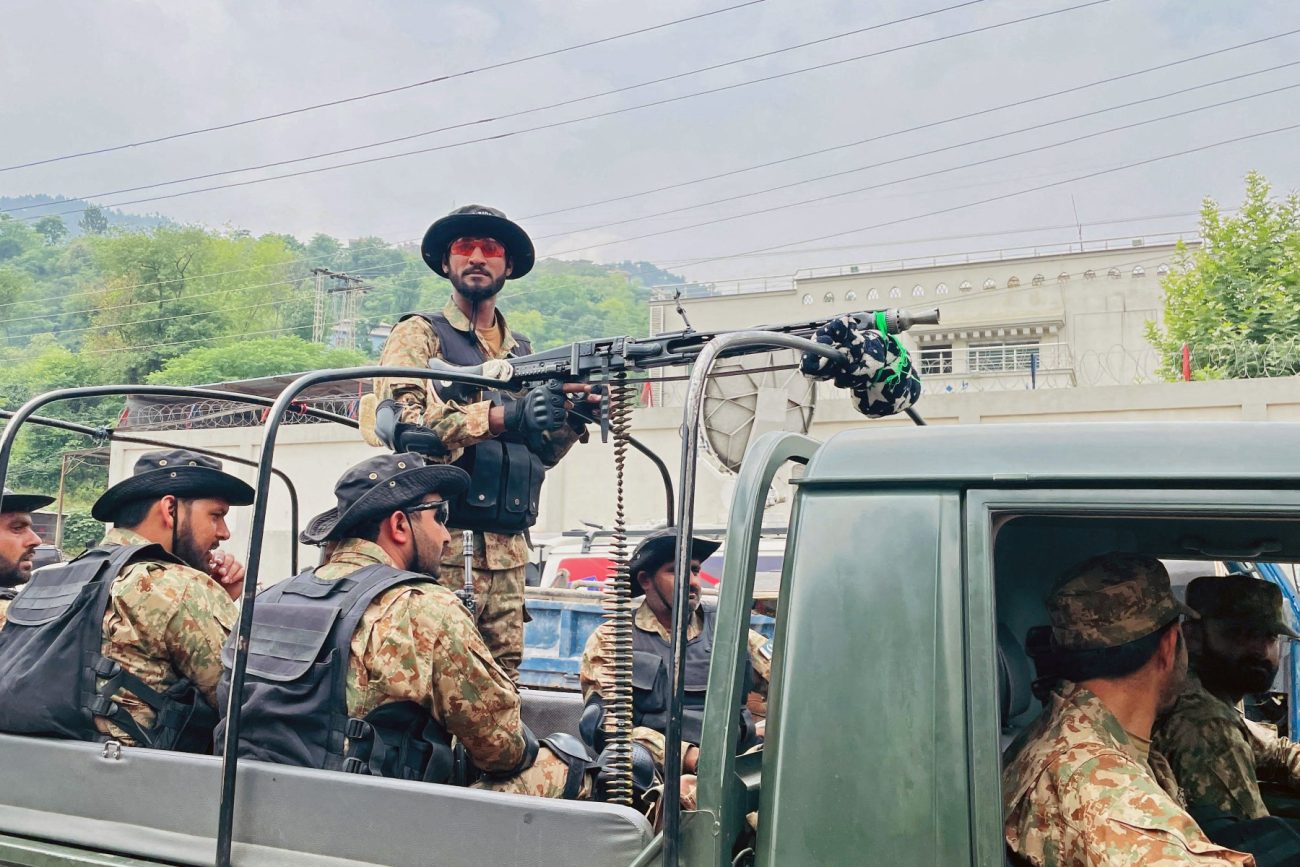
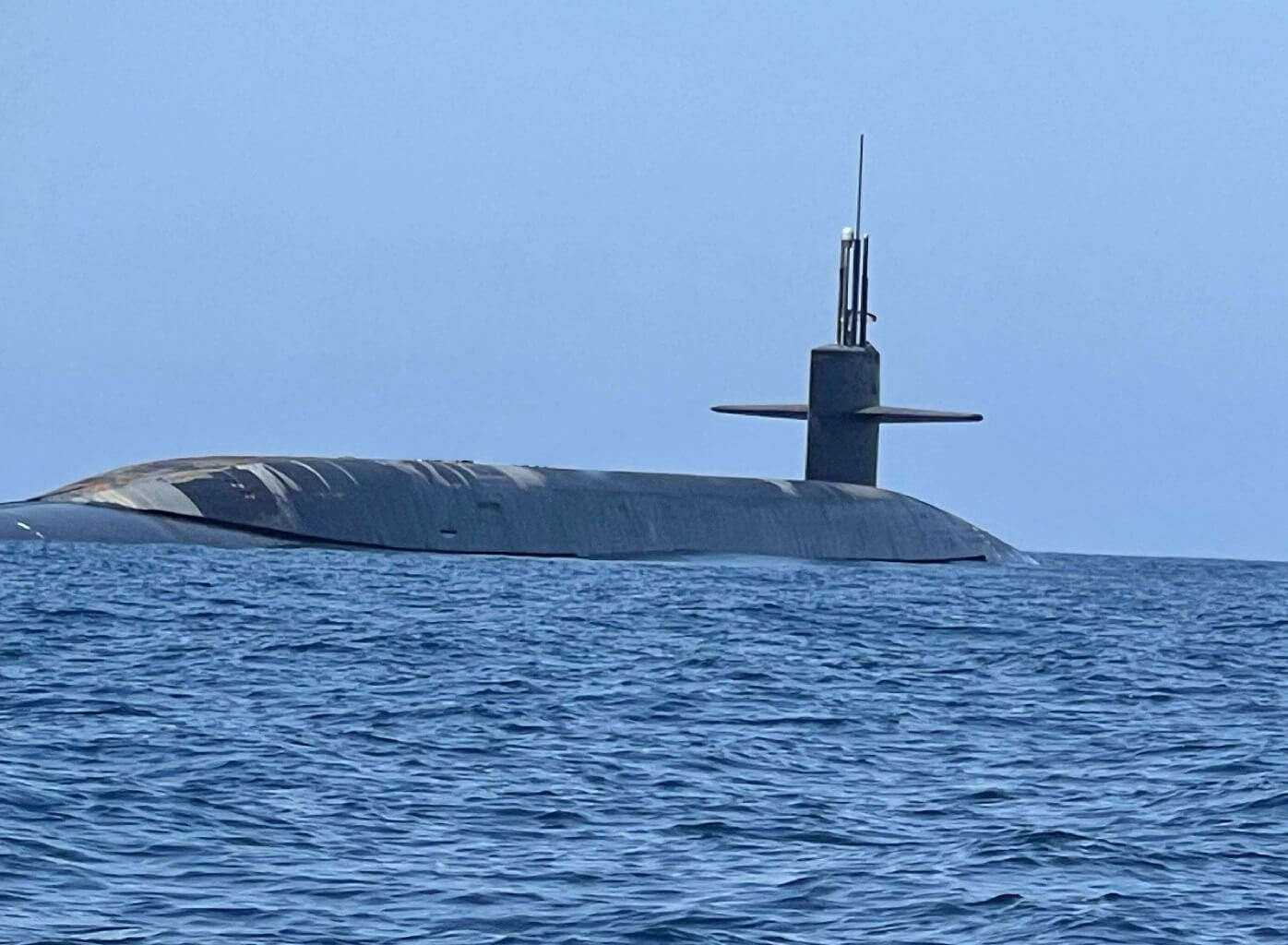
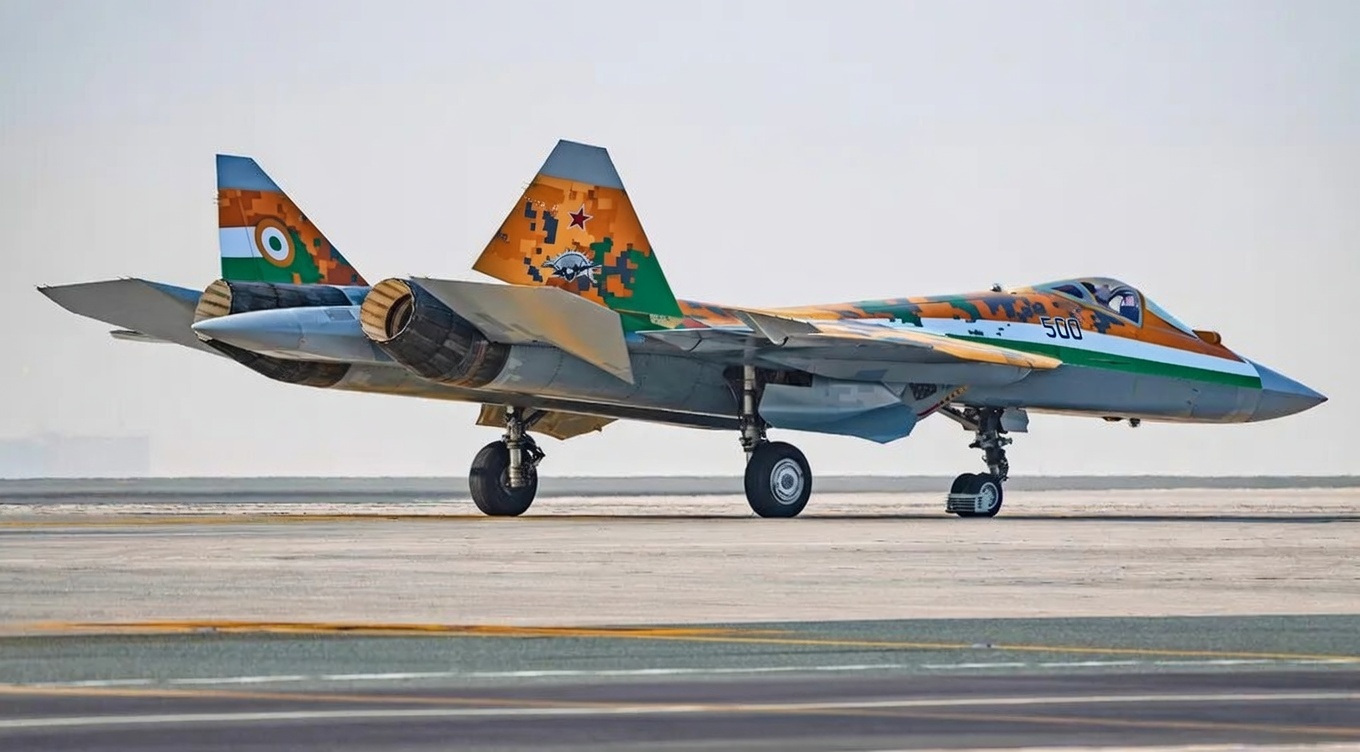
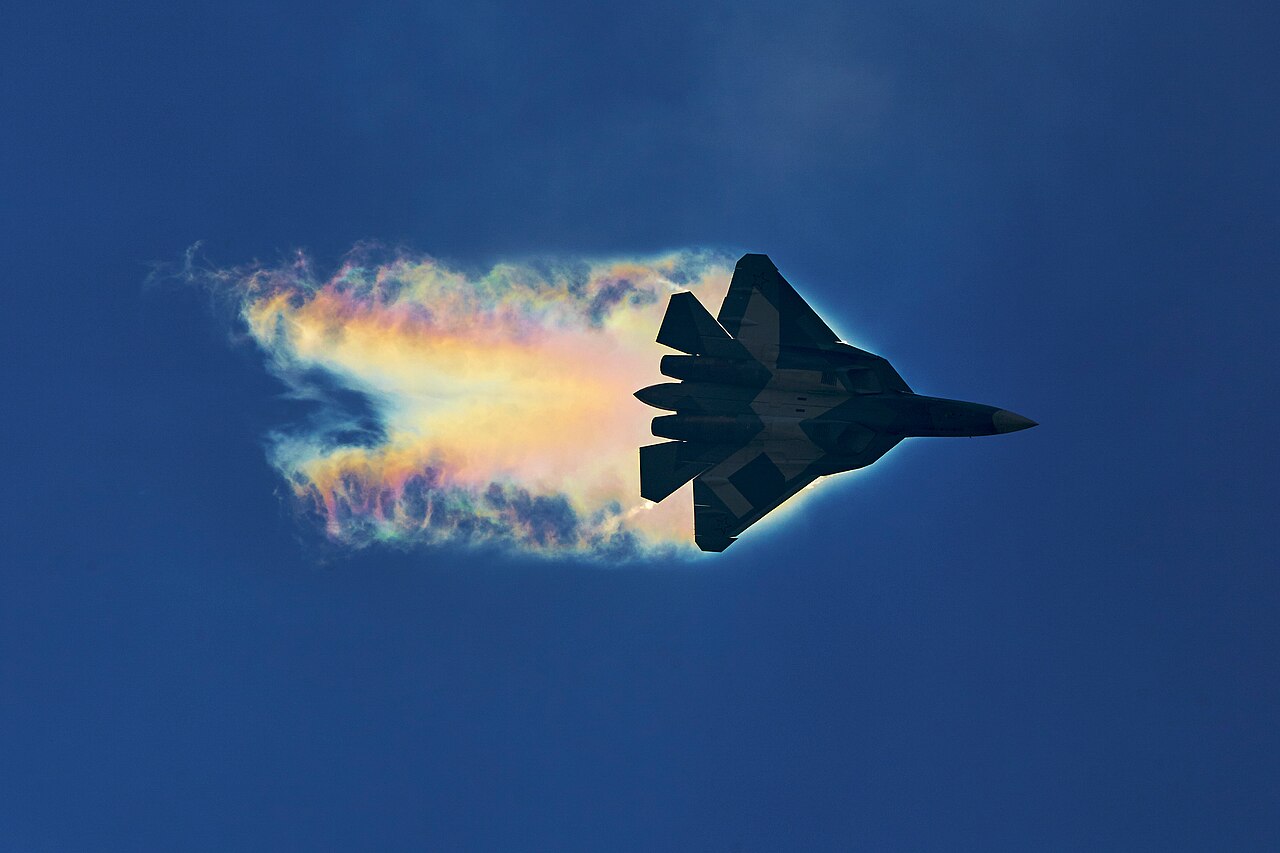

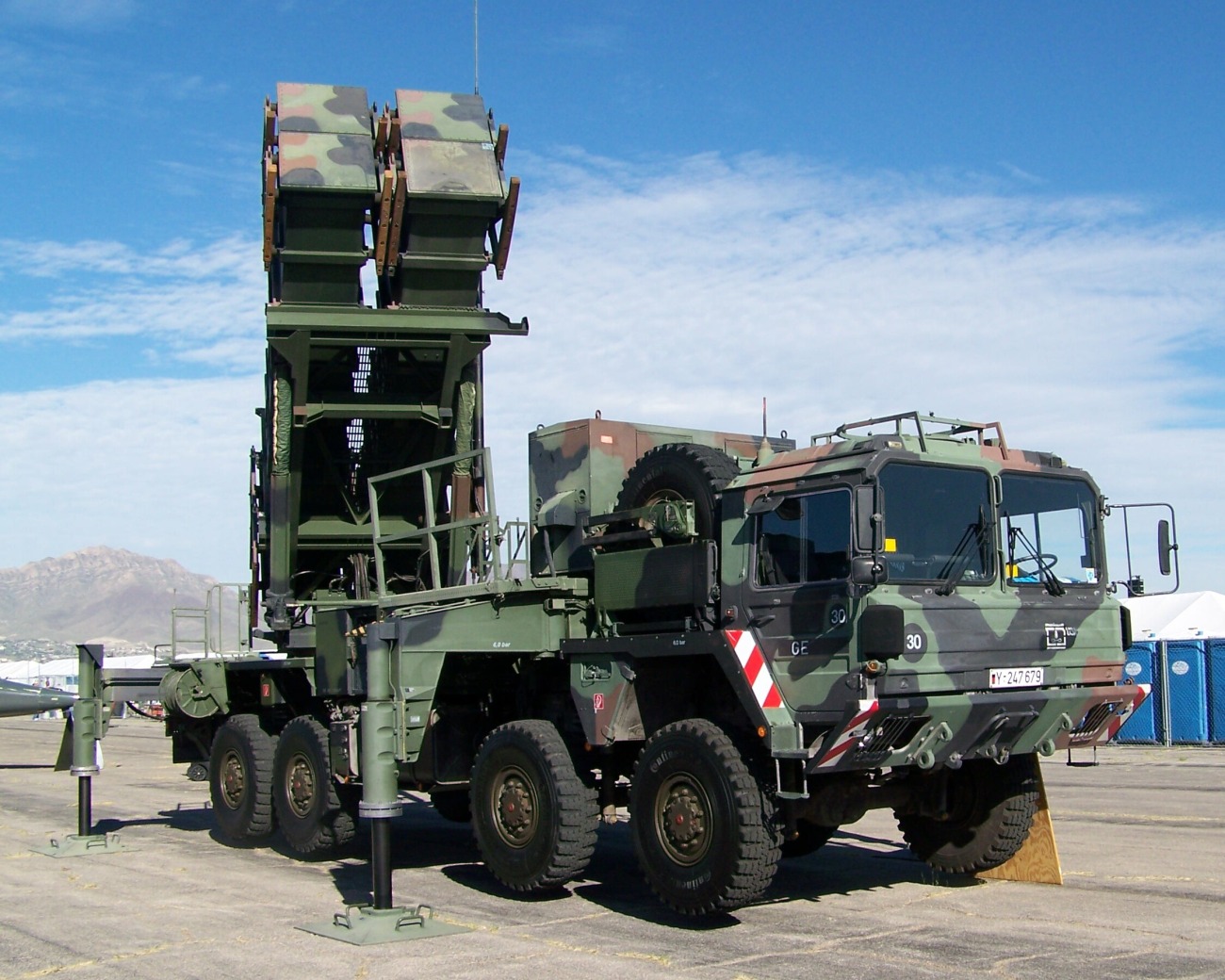
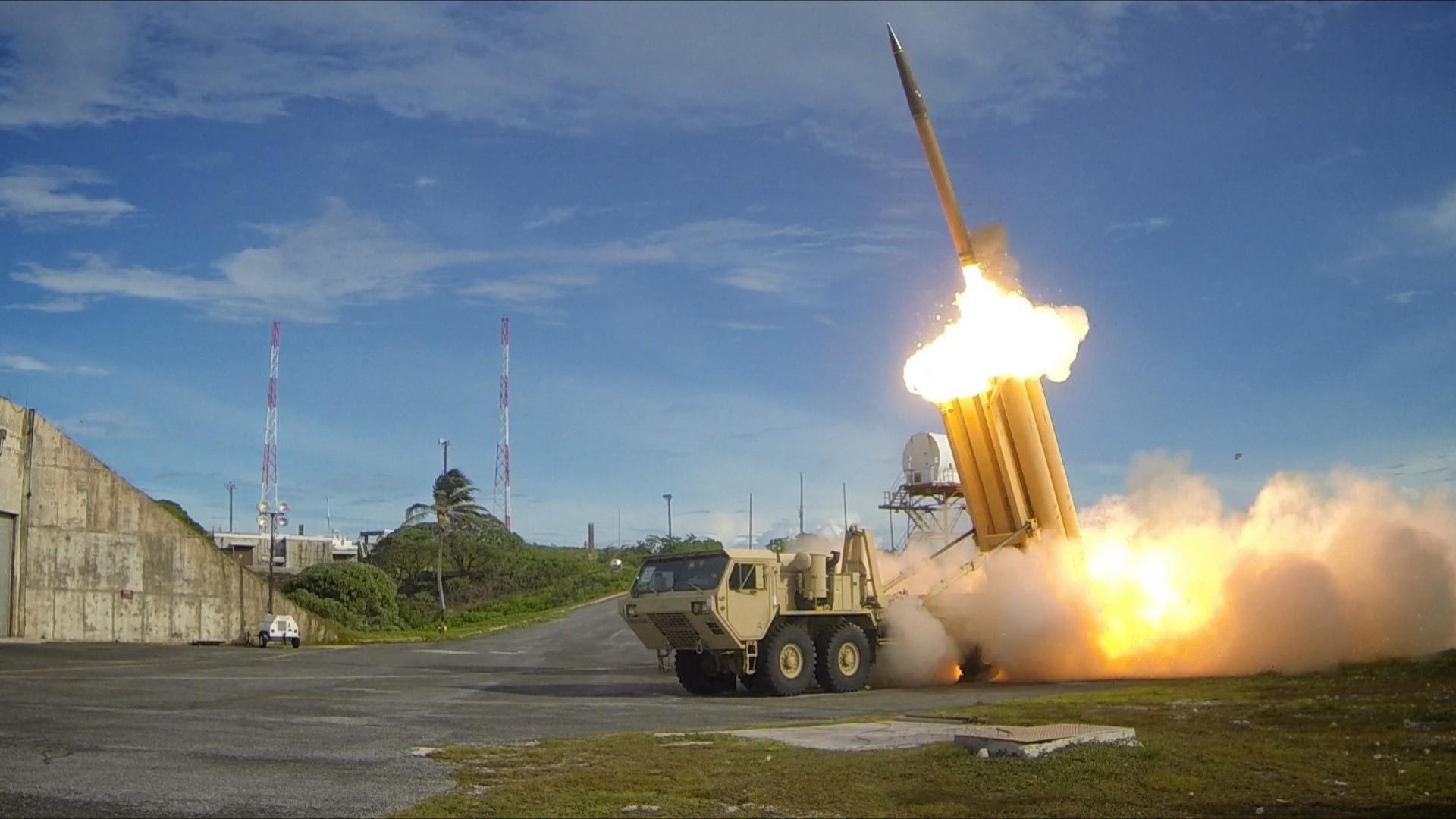

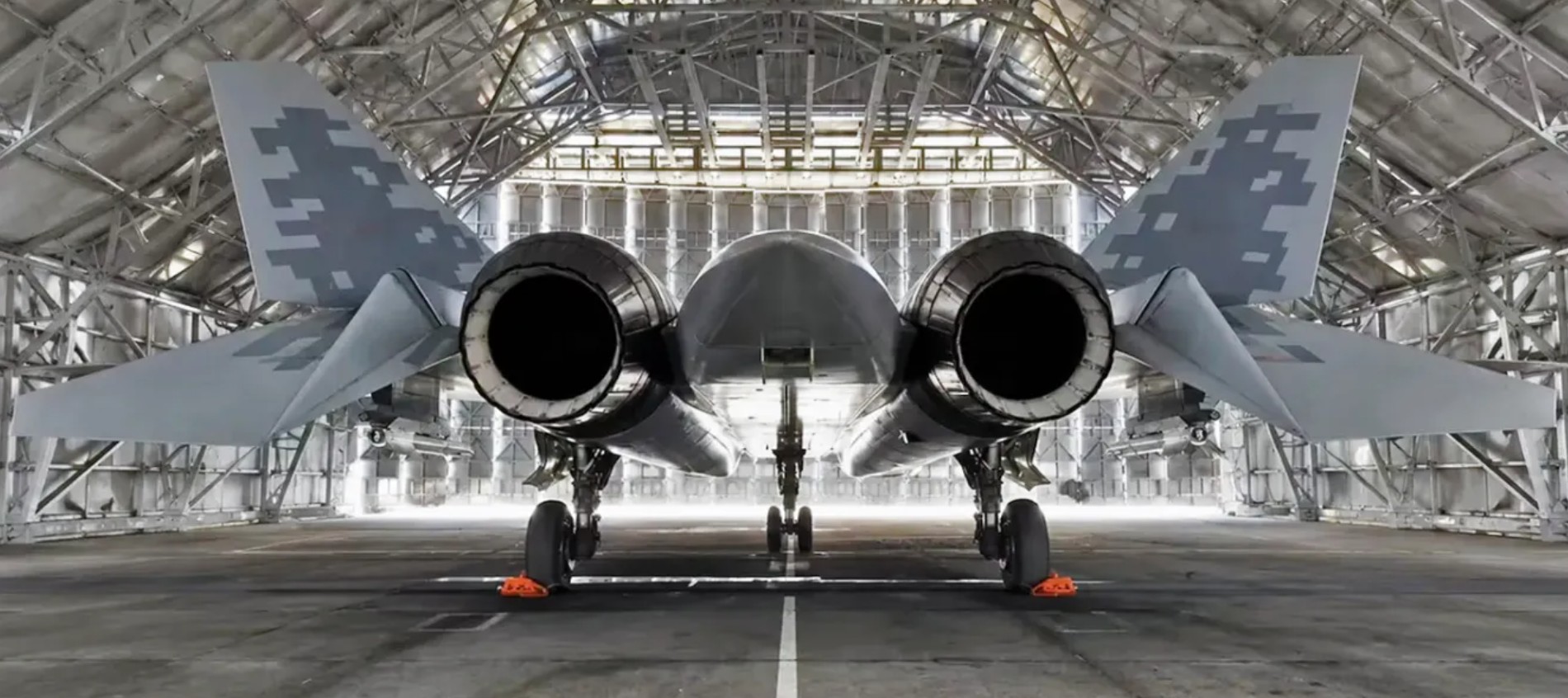



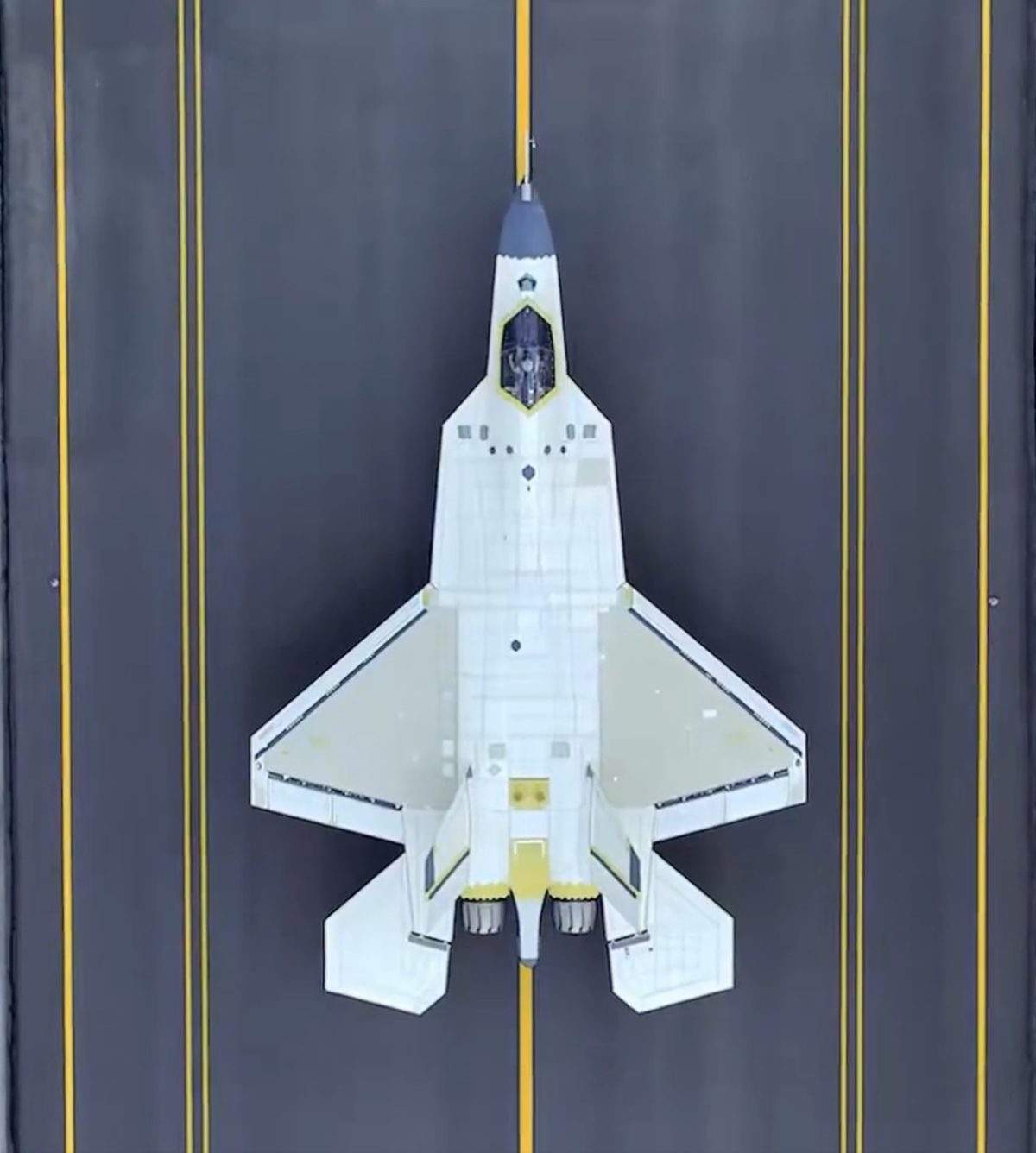


 TEBER-82 & TOLUN-P Munition Firing Test from the Internal Weapons Bay
 Bull’s Eye


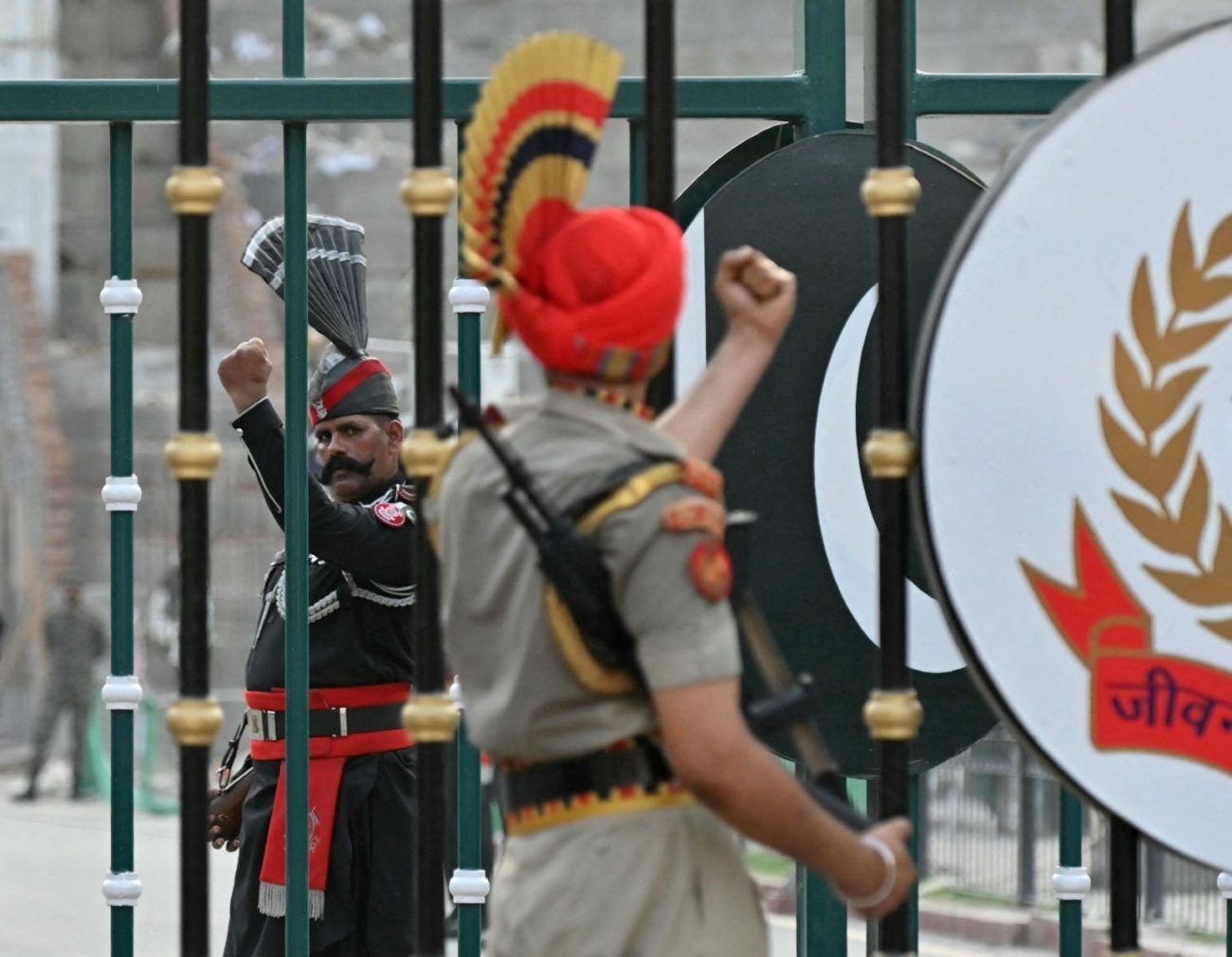
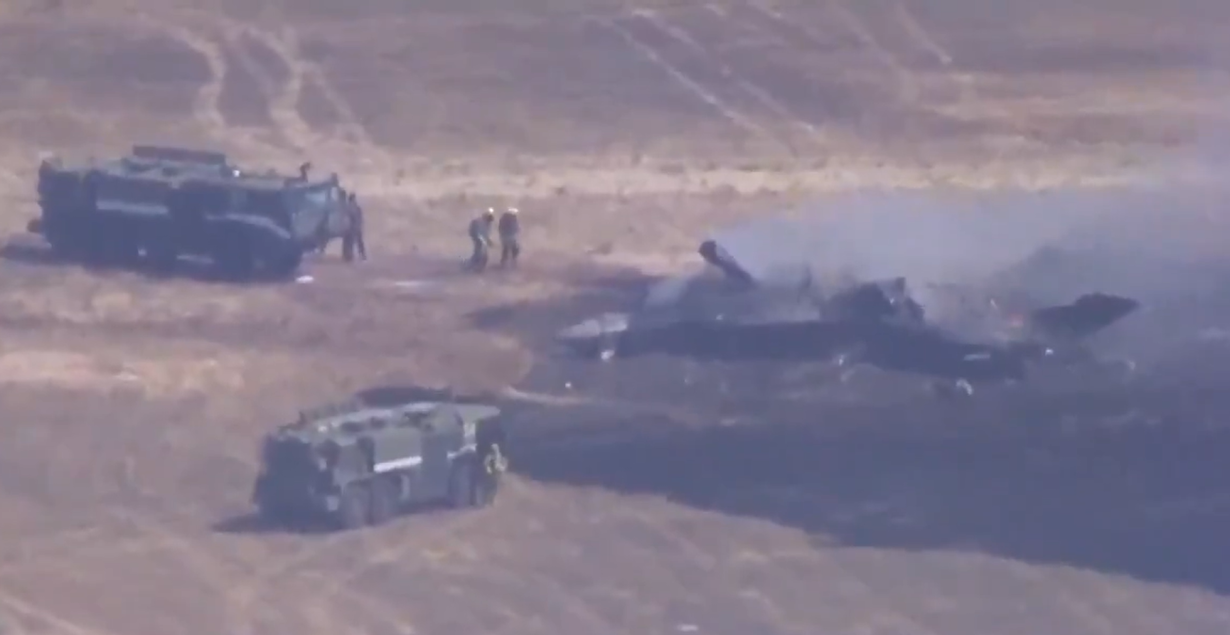
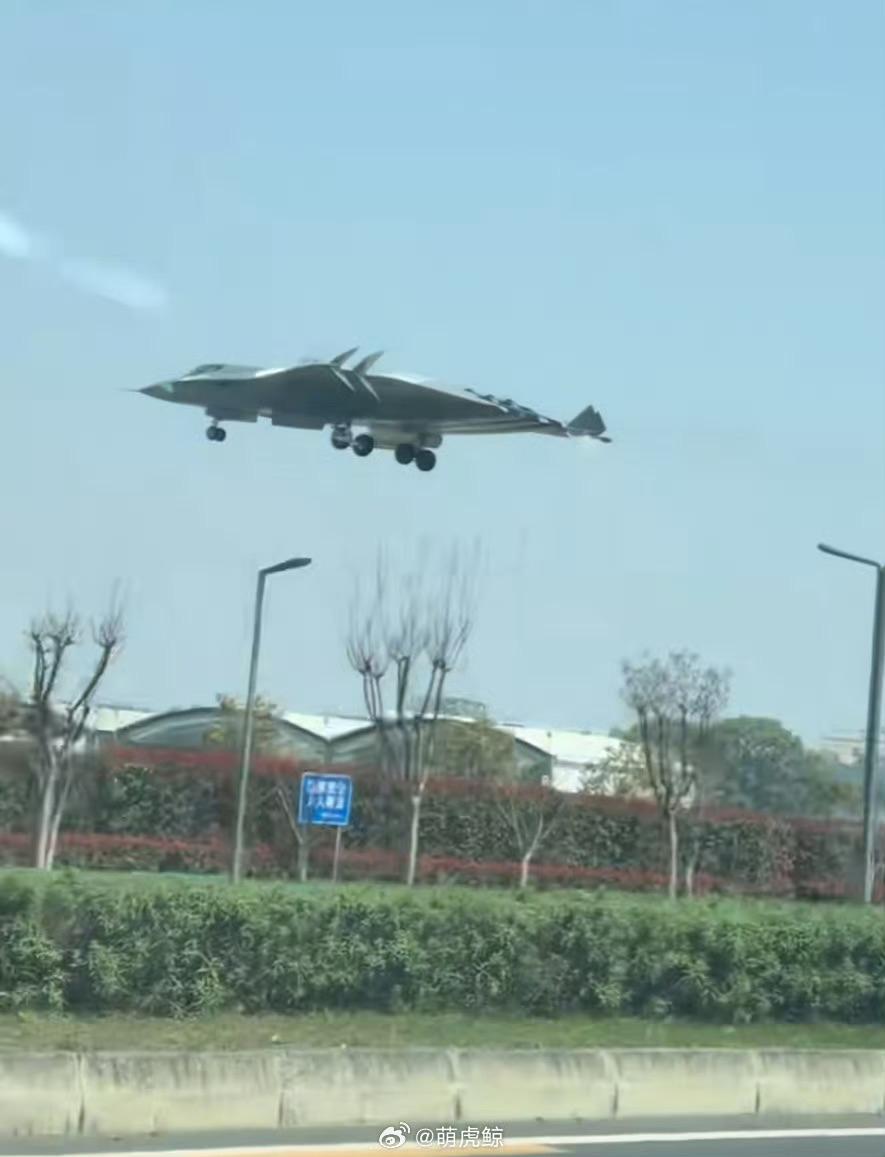
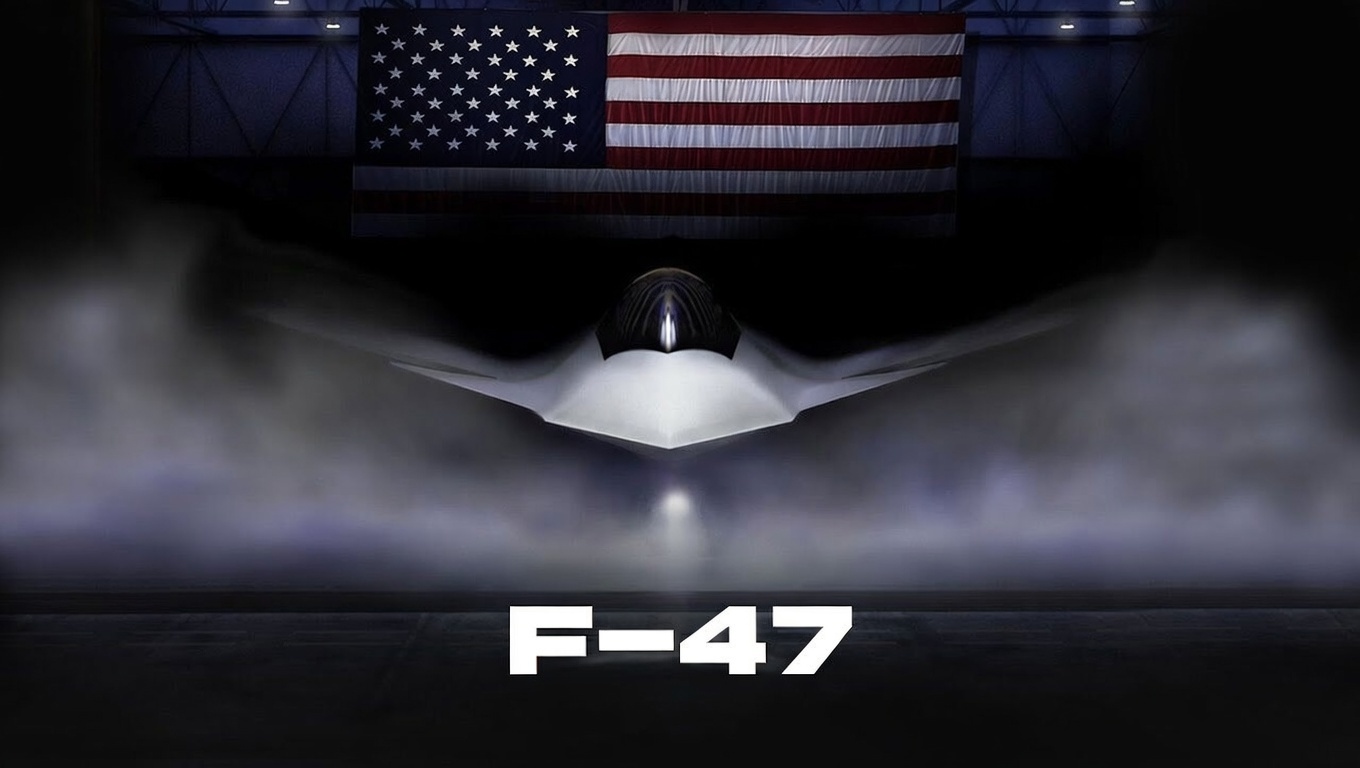


 (@CollinSLKoh)
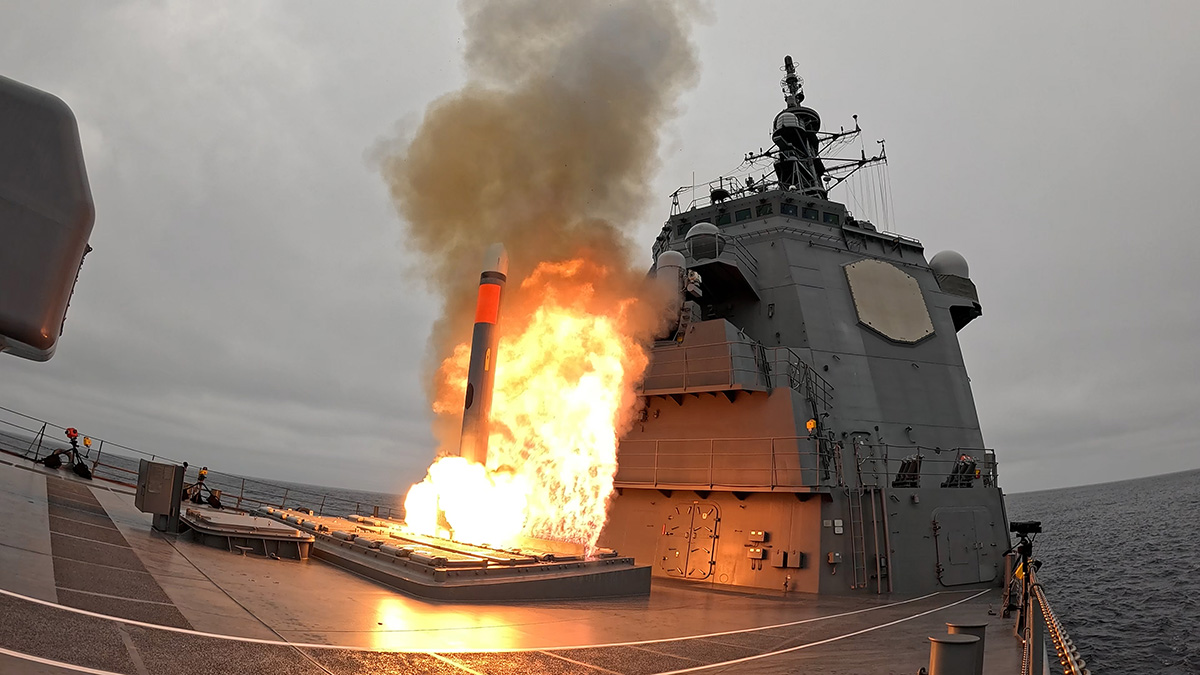
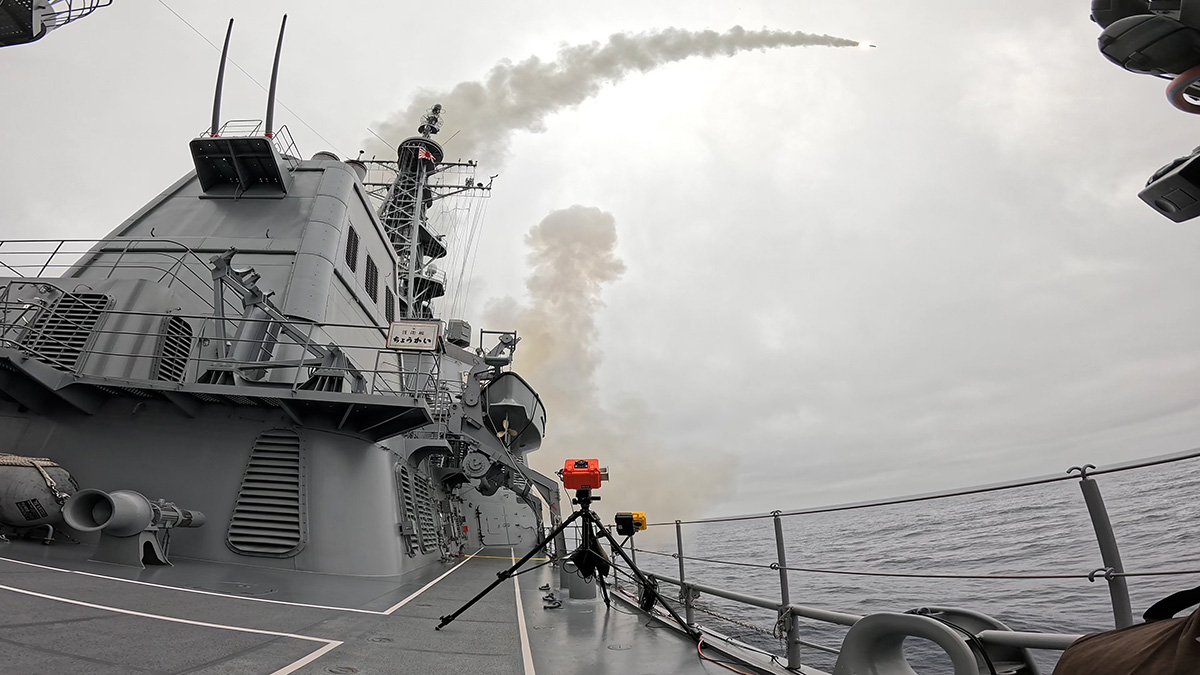
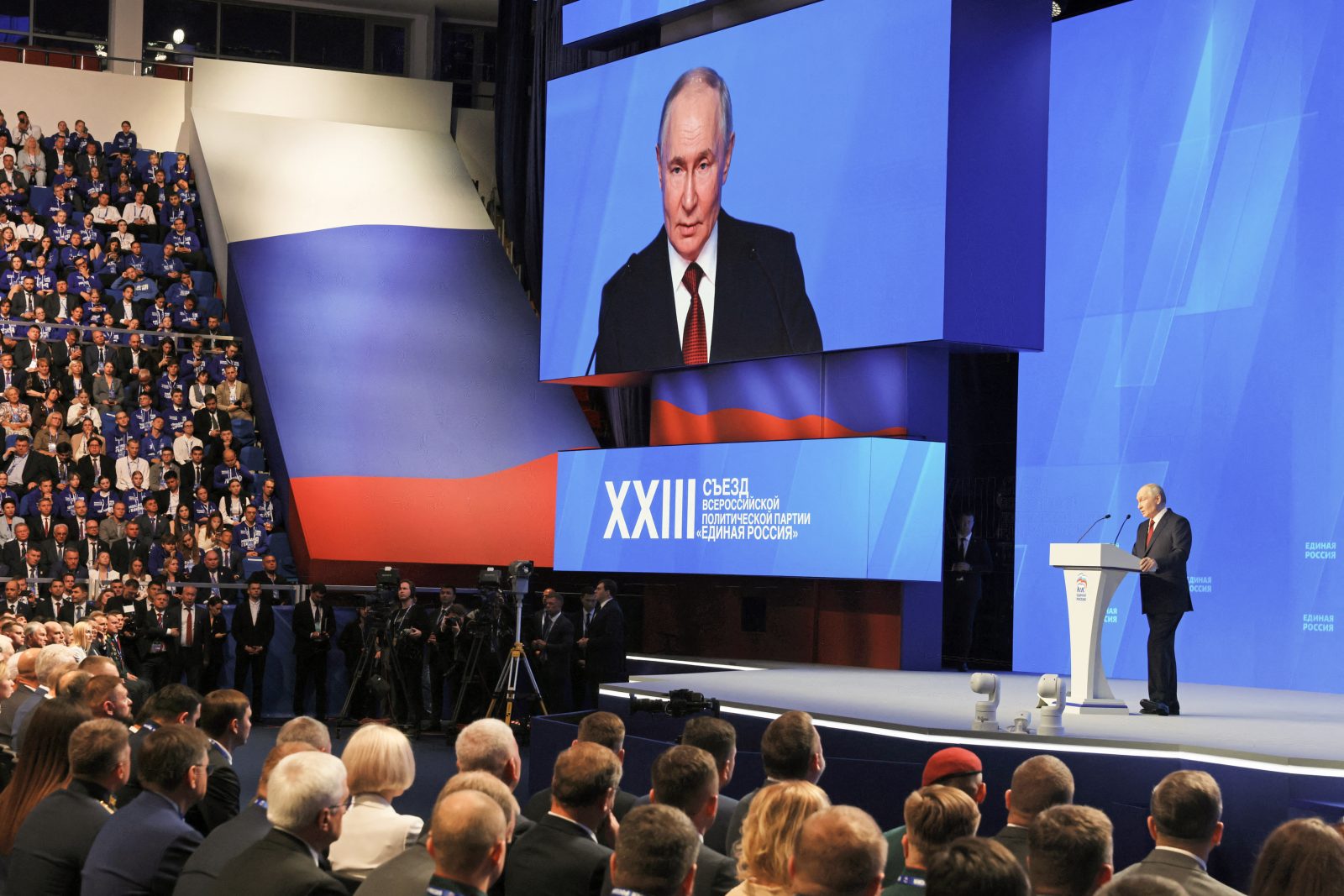
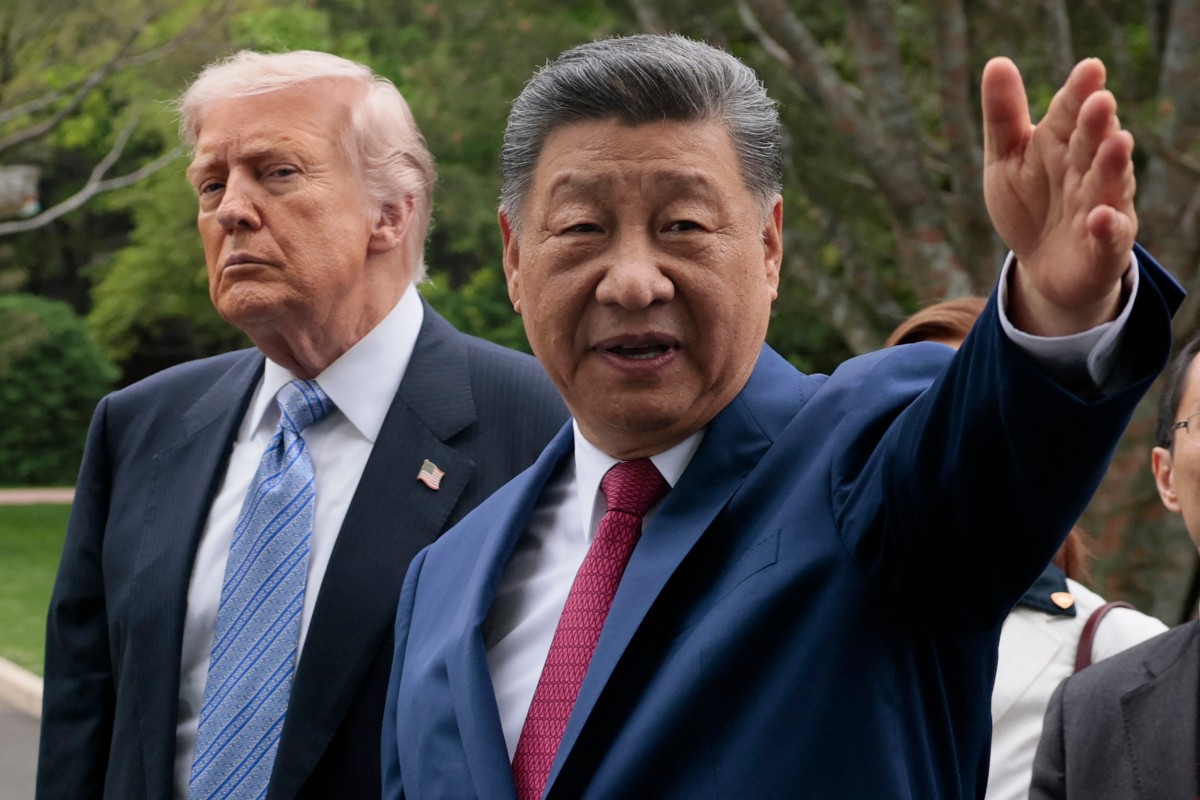
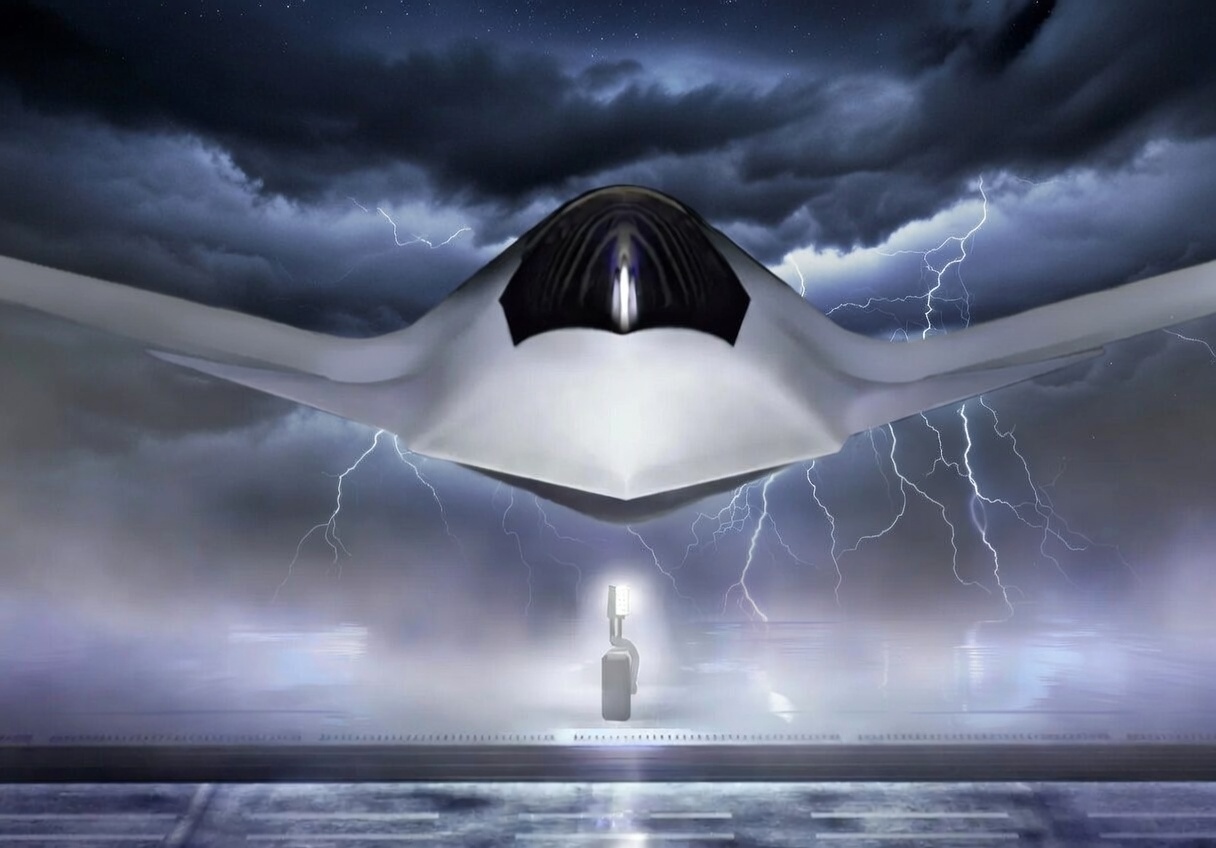

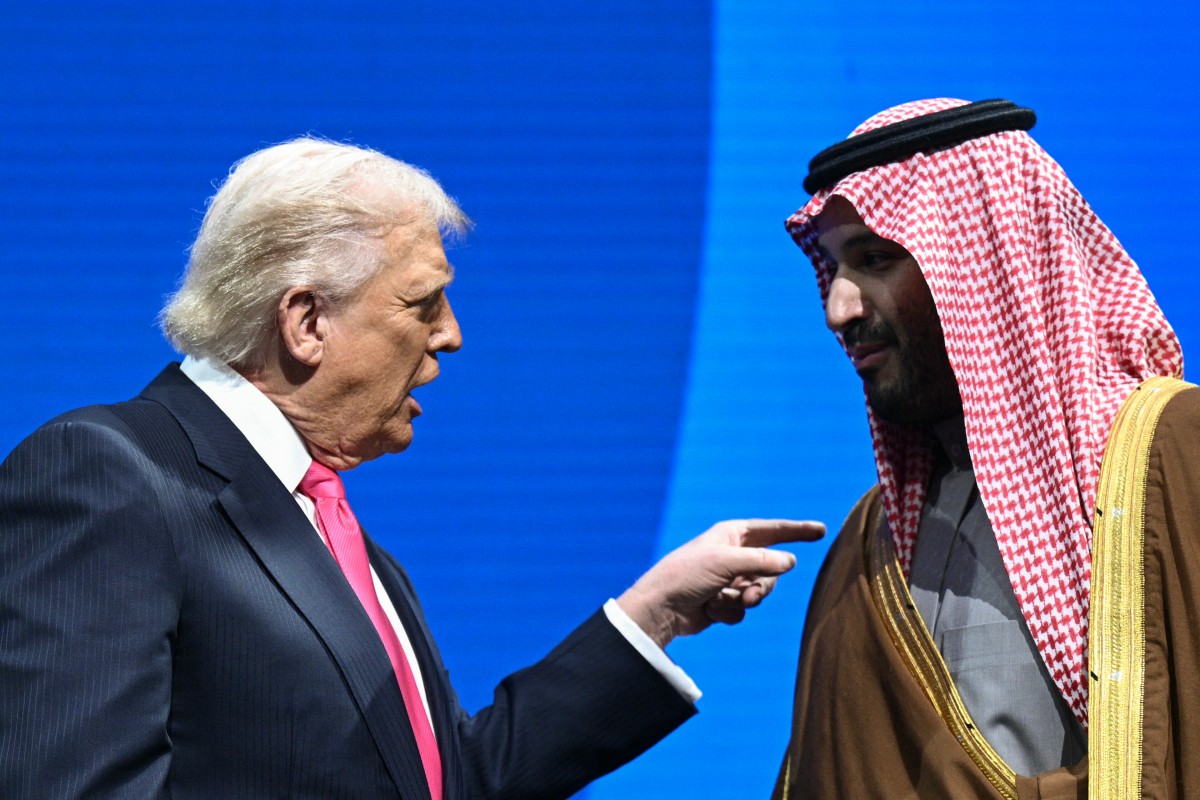

 (@bayraktar_1love)

