❌

Reading view

10 Submarines, 34 Ships, 100+ Drones: USS Abraham Lincoln Returns With 174 Kill Marks. Navy Yet To Explain

After 321 days at sea, the USS Abraham Lincoln aircraft carrier (CVN-72) returned to San Diego, with its island superstructure showing rows of silhouettes of ships, drones, and other targets reportedly destroyed during Operation Epic Fury.

The USS Lincoln arrived at Naval Air Station North Island in San Diego on October 8, concluding a long deployment that included extended operations in the Middle East.

Before the USS Abraham Lincoln arrived in San Diego, the US Secretary of War Pete Hegseth presented the carrier crew with the Presidential Unit Citation, the military’s highest unit-level award for valor.

Calling the mission “historic,” Hegseth noted that the carrier conducted “3,693 combat flights, sinking 64 Iranian warships, launching 450 Tomahawk land attack cruise missiles, and shooting down 77 one-way aerial attack drones.”

Acting Secretary of the Navy Hung Cao lauded the carrier crew in a post on X, saying, “Congratulations to @CNV_72 and all of CSG-3 on this well-earned Presidential Unit Citation for their extreme heroism over the last 10 months in defense of our homeland.”

The citation says the defense included 40 days in combat and an “ironclad maritime blockade against Iran in support of Operation Epic Fury.”

During Hegseth’s recent visit to the carrier before it arrived home, he said, “I’m the only thing standing between you and home,” and that his intention was, “Once they pull up to the dock, we’re getting out of the way.”

The Pentagon released an image of Pete Hegseth standing on the deck of the carrier and examining the superstructure, which was stenciled with a list of targets the USS Abraham Lincoln Carrier Strike Group (CSG) destroyed during a 321-day deployment.

Subsequently, Hegseth published another image showing the full extent of the markings, with “Operation Epic Fury” written above rows of ship and drone silhouettes (seen below).

Image
File: USS Abraham Lincoln (CVN 72) aircraft carrier arrived at San Diego featuring kill markings

The carrier’s arrival with these markings aligns with the US Navy’s long-standing practice of recording unit or group combat results after major operations.

Observers counted approximately 174 markings on the island superstructure. These traditional victory symbols are attributed to Carrier Strike Group 3’s collective actions, including carrier air-wing sorties, destroyer operations, Tomahawk launches, and air-defense engagements.

What Targets Did The Lincoln CSG Neutralize?

The visible markings include silhouettes representing 23 anti-ship missiles, 34 surface ships, 122 unmanned aerial vehicles, 10 submarines, and what appears to be a large bomb marked “1403.”

The aircraft carrier features 34 kill marks of surface ships neutralized in the sixth month of the conflict in the region. Although official information is scarce, these targets could include warships, corvettes, and even unmanned surface vessels used by the Islamic Revolutionary Guard Corps (IRGC).

The US Central Command (CENTCOM) publicly confirmed the destruction of several ships. Some high-profile targets include the Shahid Bagheri carrier, the IRIS Makran forward base ship, the Jamaran-class corvettes, and all four Shahid Soleimani-class catamaran missile corvettes.

Calculating Iran’s Losses in Op. Epic Fury as CRS Nearly Doubles the U.S. Aircraft Count From 42 to 81

The US Navy also neutralized multiple Bayandor-class corvettes and other frigates, several fast-attack craft and missile boats, at least 16 mine-laying vessels, and multiple auxiliaries and support vessels.

It is hard to say which of these vessels the Lincoln carrier group neutralized, but reports say the group operated in the Arabian Sea and, at times, closer to the Gulf of Oman during the early phase of Operation Epic Fury.

The group could have struck these targets with Tomahawk cruise missiles launched from escort Arleigh Burke-class destroyers, such as the USS Spruance, USS Michael Murphy, and USS Frank E. Petersen, or with F-35C Lightning IIs and F/A-18E/F Super Hornets from the carrier’s air wing.

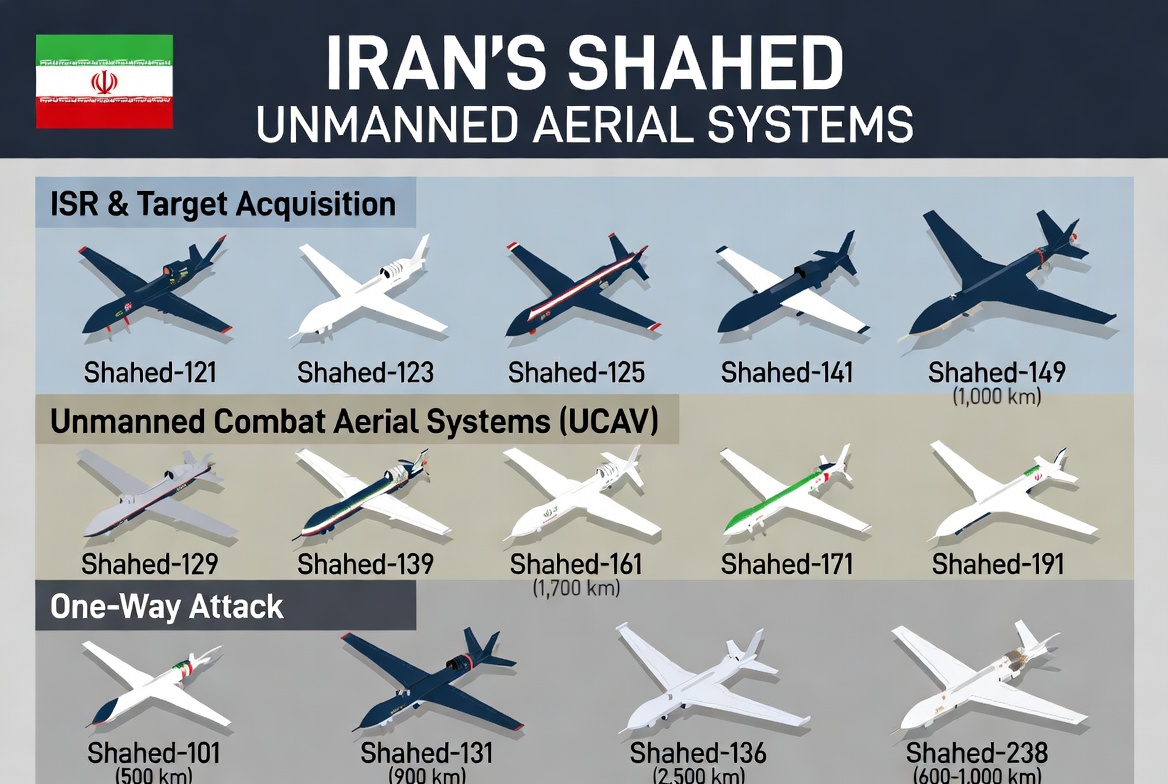
The aircraft carrier features about 100+ triangular silhouettes that resemble the Shahed-136 one-way attack drones that were extensively deployed by the IRGC in its strikes on US military assets. However, they could also potentially reference other similar kamikaze drones, given Tehran’s massive inventory of these low-cost assets.

The escort ships—the Arleigh Burke-class guided-missile destroyers doubling as critical air-defense assets alongside the aircraft carrier-could have downed these drones. These state-of-the-art warships are equipped with the Aegis Combat System to detect, track, and engage drones at medium to long range with Standard Missiles such as the SM-2 or SM-6, and the Evolved Sea Sparrow Missile (ESSM). 

The carrier itself has self-defense systems such as the RIM-116 Rolling Airframe Missiles (RAM) and the Phalanx Close-In Weapon System (CIWS). Furthermore, F-35s and Super Hornets operating from the carrier may have shot down some of these incoming drones.

Notably, the island carries 23 missile silhouettes. Hegseth credited the strike group with destroying 21 anti-ship cruise missiles. The citation does not say whether those were stopped by escort ships, by F-35s and Super Hornets, or by the carrier’s own Rolling Airframe Missiles and Phalanx guns.

Image
File: US Secretary of War Pete Hegseth assessing the kill markings on USS Abraham Lincoln aircraft carrier

USS Abraham Lincoln also prominently features 10 submarines, which is unsurprising given that US CENTCOM focused on decimating Iran’s Russian-built Kilo-class and other submarines during the conflict.

For example, a Navy F/A-18F Super Hornet that flew from the USS Abraham Lincoln on combat missions in the Iran war was spotted with submarine kill markings earlier. Jeff Rojas photographed the aircraft, which belongs to VFA-41, a Navy fighter squadron known as the “Black Aces,” on October 1.

Fort Hood Live Execution: How Nidal Hasan’s Livestreamed Firing Squad Could Strengthen UCMJ’s Authority

How the aircraft destroyed an Iranian submarine is unclear, but Rojas said, “I assume that it was dry-docked and they dropped a laser-guided bomb.” 

The US missiles damaged many Iranian submarines, including some produced indigenously, that were docked in ports during early bombardment, but neither the Navy nor CENTCOM has publicly claimed that Navy fighter jets were involved.c

Instead, the US military earlier said it used air-launched AGM-114 Hellfire laser-guided missiles, probably fired from MQ-9 Reaper drones, and ground-launched Army Tactical Missile System (ATACMS) short-range ballistic missiles against submarines in particular.

However, the CSG may have taken out at least some of these submarine targets with Tomahawk missiles.

Most details, including specific individual ship sinkings by Lincoln CSG platforms or the exact methods used, rely on official claims and open-source analysis rather than independent battle-damage assessments available in the public domain.

Interestingly, the number of targets the War Secretary cited in his address differs significantly from the number of kill markings visible on the flattop. Neither the United States Navy nor the Department of War (DoW) has clarified why the flattop bears only 34 surface ship kill marks, even though Hegseth counted 64 in his address, or why the carrier lists 106 drones while Hegseth’s estimate was far more conservative at just 77.

Although these markings are often symbolic or selective rather than a strict, audited one-to-one accounting of every engagement, a reason for the discrepancy is awaited.

A Mission Marred With Chaos

The carrier’s prolonged deployment garnered national attention after Stars and Stripes, the news outlet affiliated with the US Armed Forces, reported on deteriorating conditions aboard the carrier, a major mental health crisis, and worsening living conditions in August 2026.

“Interviews with active-duty sailors and family members, along with dozens of public social media comments and posts by crew members, describe sailors struggling with exhaustion and declining morale, including reports of suicidal thoughts and at least one instance where a crew member was prevented from jumping overboard,” the report underlined.

Why Yemen Could be a Graveyard for Turkish & Even Mecca Pact Soldiers: History Has The Answers: OPED

After this explosive disclosure caused a stir and exposed the Pentagon, War Secretary Pete Hegseth, Acting Navy Secretary Hung Cao, and CENTCOM leadership dismissed much of the coverage as misrepresented or dishonest, while acknowledging challenges of extended deployments. Nonetheless, the report and the public reaction paved the way for the carrier’s return and a stopover in Thailand last month, giving the crew much-needed respite

The Secretary of War also pushed back against the allegations of the Navy being stretched thin and a crisis about the carrier, including reports of eight sailors who attempted suicide. “Lincoln into some sort of a symbol, a symbol of dysfunction or a symbol of low morale or a symbol of a failed mission,” Hegseth said, adding, “what makes the US military and the US. Navy and all these sailors different is that you adapt and that you’re resilient and you overcome — you finish the mission nonetheless.”

That said, aircraft carriers have been instrumental in the Iran War, which has dragged on for months despite periods of lull and negotiations. Two carriers—the USS George Washington and USS George H.W. Bush—are currently deployed in the theatre, with a third, the USS Theodore Roosevelt, expected to arrive later this month amid a spike in tensions.


The post 10 Submarines, 34 Ships, 100+ Drones: USS Abraham Lincoln Returns With 174 Kill Marks. Navy Yet To Explain appeared first on EURASIAN TIMES.
  •  

France & Germany Say MGCS Tank Project is Not Dead—Hours After Their Top General Said Berlin Had Left

France and Germany have rejected reports that their Main Ground Combat System (MGCS) project has collapsed, asserting their joint program to develop a next-generation battle tank remains on track.

On Thursday, France’s armed forces chief Fabien Mandon told parliament that Germany had decided to leave the battle tank program.

On Friday, French Defense Minister Catherine Vautrin said the MGCS project was still on course, speaking during German President Frank-Walter Steinmeier’s visit to the country.

“We would like to tell you, together with my colleague Minister Boris Pistorius, that MGCS remains a current and active project,” Vautrin said alongside the German defense minister in Le Haillan outside the southwestern French city of Bordeaux.

Pistorius said that he “fully” agreed.

“The MGCS project is not finished. It has not been abandoned. Nobody has stopped it. On the contrary, it is a flagship project of Franco-German cooperation.”

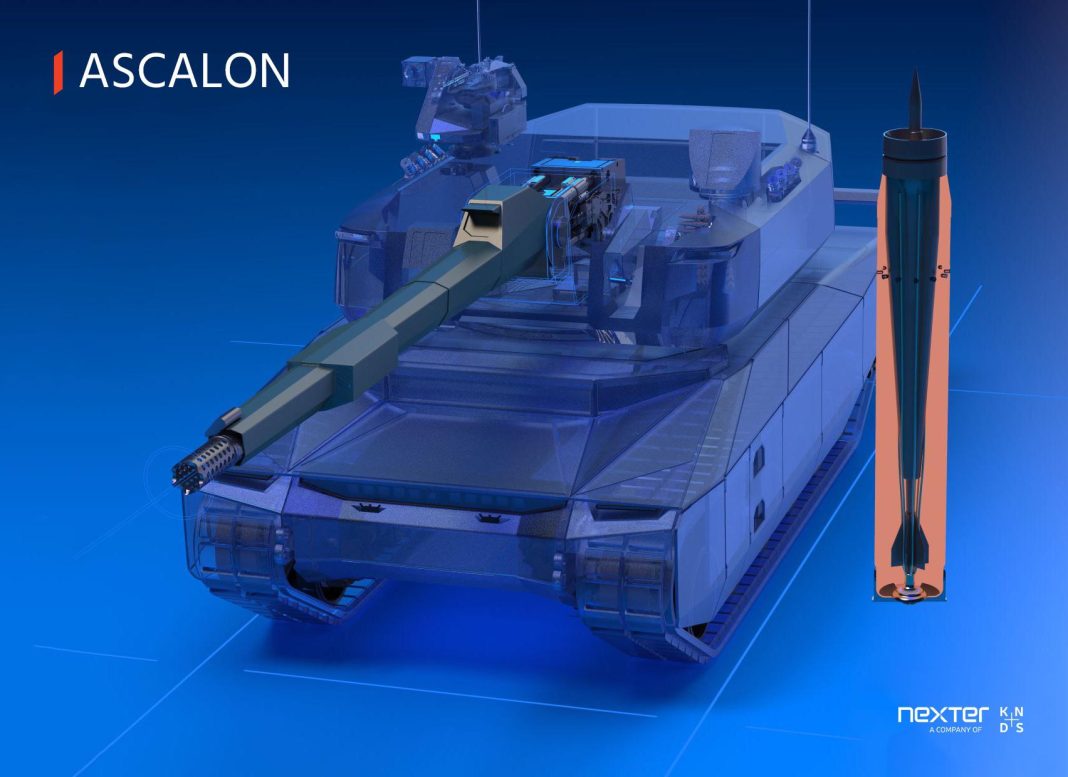
The 140 mm smoothbore ASCALON gun fires 130 cm telescoped rounds and is designed for scalable effects. Nexter is proposing the ASCALON as the MGCS main armament. (Photo: Nexter)

On Thursday, Mandon told French lawmakers the two armies had spent several years “to define what a future battle tank should be”. “The outcome is not good,” Mandon told lawmakers.

“We had hoped to build a future tank in cooperation with the Germans, but unfortunately we have to acknowledge that the Germans have decided to leave the project.”

Later on Thursday, he issued a statement softening his remarks, saying: “Although delayed, the program is continuing and remains highly relevant.”

Main Ground Combat System (MGCS)

Launched jointly by France and Germany in 2017, the Main Ground Combat System (MGCS) aims to develop a next-generation battle tank to replace France’s Leclerc and Germany’s Leopard 2 tanks.

It is a “system of systems” project that includes a main battle tank and a network of other combat systems, such as artificial intelligence (AI) for decision-making, advanced sensors, robotics, and onboard unmanned aerial vehicles.

Earlier this June, Rheinmetall’s CEO warned that France may pull out of the MGCS project. “There is always a risk, but nothing has been decided yet,” Armin Papperger told Welt am Sonntag, adding that Paris is planning to drastically cut funding for the project.

A German government spokesperson later questioned the MGCS project, saying it was doubtful a joint tank would be built and that the project would likely focus on “platform-independent” technologies.

Image
Concept artwork showing four different MGCS vehicles based on a common chassis. (Via Hensoldt)

Meanwhile, Jean-Paul Alary, CEO of KNDS, the Franco-German company developing the tank, had said at the Eurosatory show in France that, although he could not comment on the MGCS’s current state because it is a political matter, it would be “very bad news” for Europe if the project failed.

The MGCS has remained embroiled in crises and beset by delays, much like the now-abandoned FCAS. Disagreements over the tank’s design, technology, and industrial responsibilities have plagued the MGCS for years.

In short, Berlin wants a stronger, better-armed tank for a potential battle with Russia, while Paris prefers a lighter tank for worldwide deployment. Political and budgetary tensions also persist over which country’s industry should lead.

The project was initially intended to be led by the Franco-German joint venture KNDS, comprising Germany’s Krauss-Maffei Wegmann and France’s Nexter. However, Germany allegedly leveraged its considerable political support to push for Rheinmetall’s involvement. Tensions have since grown between the KNDS and Rheinmetall over leadership of program “pillars,” production shares, and contracts.

From a French perspective, Rheinmetall’s involvement has altered the project’s delicate power dynamics, creating discontent and increasing frustration.

Moreover, the project has reportedly been starved of funding. As Rheinmetall CEO Papperger recently noted, the shareholding companies have received only €25 million ($29 million) since the project’s inception.

Meanwhile, France has grown uneasy with Germany’s increasing assertiveness and its emergence as Europe’s preeminent economic and, increasingly, military player, as veteran journalist Prakash Nanda of EurAsian Times noted.

“They are constantly fighting against the mismatched temperaments of their leaders, their orthogonal domestic politics, and the irreconcilably diverging strategic cultures at the heart of their deep states,” Carnegie Europe’s Strategic Europe wrote in a blog last month.

A core divergence lies in strategic outlook: France consistently advocates for greater European strategic autonomy, while Germany remains more committed to robust transatlantic ties with the United States. Meanwhile, economic and trade policies add another layer of friction, with the two powers often diverging on EU-level decisions regarding fiscal rules, industrial strategy, and market access.

France and Germany have struggled to rein in their powerful defense companies, leaving three major European projects — the Eurodrone, the FCAS fighter program, and the MGCS tank program — in serious difficulty. The FCAS has already collapsed, while the other two now risk failure.

The post France & Germany Say MGCS Tank Project is Not Dead—Hours After Their Top General Said Berlin Had Left appeared first on EURASIAN TIMES.
  •  

Calculating Iran’s Losses in Op. Epic Fury as CRS Nearly Doubles the U.S. Aircraft Count From 42 to 81

A newly updated Congressional Research Service (CRS) report counts 81 US military aircraft as lost or damaged in the ongoing conflict with Iran. EurAsian Times analyzes the losses Tehran sustained during the ongoing conflict. 

The latest figure is nearly double the 42 aircraft the Congressional Research Service tallied in a May 2026 report, as the EurAsian Times reported at the time.

The jump from 42 to 81 most likely reflects updated reporting and newly available public information.

In addition to the Congress research figures, two other reports published by the Congressional Budget Office and the Pentagon’s inspector general had earlier provided deep insights into the war. The latest CRS report reportedly cited that data.

“As of August 1, 2026, the armed conflict with Iran has cost DoD approximately $38 billion. That amount reflects the costs of replacing expended munitions and equipment lost in battle, increased flying hours, other operations, and increased fuel costs,” the Congressional Budget Office (CBO) stated in the report last month.

Meanwhile, the Pentagon’s IG report estimated the US campaign cost $33.4 billion between February 28 and June 30, with at least $22.3 billion spent on munitions alone.

Citing information published by the CBO, the latest CRS states that the overall cost of the lost aircraft is between $1.9 billion and $3.3 billion, depending on the Pentagon’s replacement costs. However, CNN News was informed by some unidentified sources that the cost of the war is much higher–at least $45 billion–excluding damage to US infrastructure and bases spread across the Gulf, repeatedly struck by Iranian forces.

The revised losses in the Congress report include manned aircraft, helicopters, and drones, though it clarifies that the total is not a count of destroyed aircraft, adding that some damaged aircraft may have returned to active service after repairs.

It lists 12 F-15E jets as destroyed/damaged, up from four F-15E Strike Eagle Fighter jets listed in the May 2026 report. The US lost three F-15E fighters in a friendly-fire incident related to the Kuwait Air Force aircraft, whereas the fourth was downed by Iran using shoulder-mounted air defense systems, as previously noted by the EurAsian Times. 

Image
Wreckage of the USAF’s F-15E published by Iranian media after downing the jet in April 2026 (Via X)

Both CBO and IG reports also earlier listed just four F-15E losses. Therefore, the eight F-15Es mentioned in the new report are likely the jets that were damaged in an Iranian strike on the Muwaffaq Salti Air Base in Jordan in September 2026. Citing an unidentified US official, Reuters earlier reported that Iran had struck an A-10 Warthog, leaving it with a missing wing, while eight F-15s sustained light damage and were returned to service.

The latest list also includes the F-35A, the US Air Force’s most prized and expensive stealth fighter. The CBO report had earlier noted that replacing/repairing the aircraft would cost $120 million, without saying whether it would be written off or repaired.

Although some OSINT observers at the time believed this acknowledged the F-35 loss, others warned that the CBO was only recording the repair cost while leaving room for a potential replacement.

Furthermore, the latest list also reiterates the loss of the E-3 Sentry Airborne Warning and Control System (AWACS), which was struck and damaged while on the ground at Prince Sultan Air Base, Saudi Arabia, during an Iranian missile and drone attack.

However, instead of merely reporting the loss, it expressed concern about losing this highly specialized aircraft and the far-reaching effects it could have on the USAF.

“Congress may assess whether losses in certain high-demand platforms that are aging and limited in number, such as the E-3 Sentry, create capability gaps or increase risk in other theaters,” it stated.

Image
A USAF E-3 Sentry damaged in Iran’s strikes

Notably, the US Air Force has only 16 of these critical AWACS remaining in its inventory, and losing each could disproportionately affect American combat posture in the Western Pacific, where the threat of war with China is never off the table.

Another newly listed loss on the updated CRS is the US Navy’s MH-60S Sea Hawk helicopter, which did not appear in the May 2026 list. On July 1, an MH-60S Sea Hawk from a George H.W. Bush aircraft carrier made an emergency landing in the Arabian Sea, although the Navy ruled out hostile action at the time.

Most of the rise since May is attributed to drones. The report now counts 45 MQ-9 Reapers lost, up from 24 in its May report. This is also a considerable increase from the 30 Reaper losses cited in the IG report. Furthermore, a US Army AH-64 Apache that was shot down over the Strait of Hormuz in June 2026 has also found its name on the list. 

Notably, the newly published report raises several issues for Congress to address, including whether the Pentagon provides enough detail about the losses for lawmakers to assess the consequences and potential solutions.

CRS notes that the Department of Defense’s reporting on the losses has been limited or vague, especially since even the September 2026 Lead Inspector General report relied in part on earlier CRS open-source tallies rather than providing a fully independent, comprehensive public accounting.

What Did Iran Lose In The War?

Iranian authorities have offered only limited, selective figures on their own military and civilian casualties and have not published a comprehensive accounting of equipment destroyed during Operation Epic Fury launched by the US in coordination with Israel.

Iran has nothing equivalent to the CRS list. Open-source counts already disagree: one tracker puts Iranian aircraft losses above 90 airframes, mostly transports and tankers, while a narrower documented list counts 43.

Open-source trackers have recorded dozens of Iranian aircraft—combat jets, transports, tankers, trainers, and helicopters—destroyed primarily on the ground at air bases early in the campaign, although a few were downed in air.

In the initial days of the war, two Iranian fighters, a Northrop F-5 and a F-4 Phantom II, were destroyed in an Israeli strike at Tabriz Shahid Madani International Airport. Around the same time, the US destroyed two Iranian Sukhoi Su-22 aircraft at Shiraz Shahid Dastgheib Airport, along with two Lockheed C-130 Hercules and an Il-76 transport aircraft.

CENTCOM released footage of the two Su-22s. Satellite imagery was later cited for the two C-130s and the Il-76 at the same airfield. Further Phantom losses have been reported at the 3rd Tactical Air Base in Hamadan, but not documented to the same standard.

A Qatari Air Force Boeing F-15QA shot down two Iranian low-flying Sukhoi Su-24 tactical bombers on March 2, 2026, after they failed to react to radio warnings.

In the second week of March 2026, Israel said it had destroyed multiple IRIAF F-14 Tomcats in a massive air strike on Isfahan Airport, and 16 aircraft used by the IRGC Quds Force at Mehrabad International Airport were also struck. At the time, experts posited that these strikes may have wiped out the entire Tomcat fleet, particularly since some of these jets had already been destroyed in the 12-day war between Israel and Iran in June 2025.

Historian Tom Cooper estimated that only about 10 Tomcats were flyable when the war began, compared with roughly 35 still listed on paper.

Satellite imagery confirmed at least two, and probably three, destroyed at Isfahan; some higher counts include airframes later described as wooden decoys. Iranian state media released footage on June 10 of an F-14 returning from a mission, so the “fleet finished” claim did not hold.

At Mehrabad, imagery after the Israeli strikes showed damage to at least 17 aircraft, including a Boeing 747 and a Harbin Y-12. Separate open-source lists also record Boeing 707 and 747 tankers destroyed at airfields between March and April.

An Israeli Air Force F-35I “Adir” stealth fighter jet shot down an Iranian YAK-130 aircraft over Tehran on March 4, as the EurAsian Times reported. On March 10, videos documenting the demolition of a Lockheed C-130 Hercules, a Lockheed P-3 Orion, and an Il-76 at Ayatollah Hashemi Rafsanjani Airport in Kerman, Iran, were released by CENTCOM.

Later that month, reports also surfaced of Iranian J-7 fighter jets and Bell 214 helicopters. In addition to these, several Iranian drones–deployed on a large scale–were shot down by US forces, although these were mainly one-way attack platforms.

Those drone losses are the hardest to count. Many were expendable one-way airframes, and neither side has published a reconciled total. Iran also claimed shootdowns of Israeli drones, including Heron and Hermes airframes, in early March; those claims are likewise unreconciled.

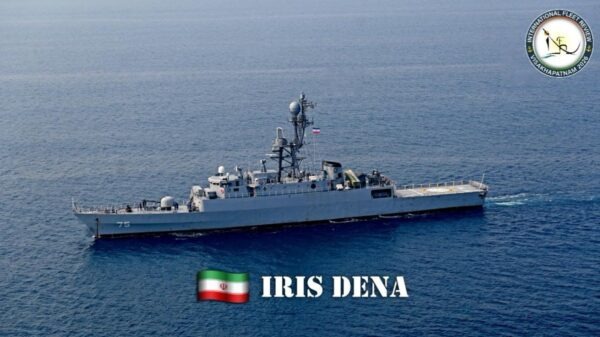
Iran has not released an official inventory of destroyed ships, but the sinking of IRIS Dena in the Indian Ocean became one of the starkest and most unforgettable symbols of the US war against Iran, especially since it was the first such sinking since World War Two.

Dena was a Moudge-class frigate, sunk on March 4 about 19 nautical miles off Galle, Sri Lanka, while returning from India’s International Fleet Review. The US said the Los Angeles-class submarine USS Charlotte fired two Mark 48 torpedoes and one hit. Defense Secretary Pete Hegseth confirmed a US submarine carried out the strike.

Sri Lanka recovered 32 survivors; Iran later put the dead at 104. Some reports said the ship carried no operational armament because of the exercise, and that its Bell 212 was not aboard.

The accurate historical marker is narrower than “first sinking since World War Two”: first ship sunk by a US submarine since 1945, and first submarine sinking in combat since ARA General Belgrano in 1982. India and Sri Lanka both joined the search.

Furthermore, the US forces destroyed 17 Iranian warships, including a submarine, in the early days of the conflict, as the EurAsian Times reported at the time. These numbers likely climbed in the weeks leading up to the April 7 ceasefire and may have risen further after hostilities broke out in July 2026.

In fact, The Aviationist recently published photos of an F-35C that returned from the theatre bearing markings of three submarines, a surface combatant, a Shahed-type drone, an artillery piece, and several ground-based launchers.

Those markings record claimed engagements. They are not a confirmed naval order of battle.

Over the months, US forces have repeatedly endorsed destroying or damaging Iranian Navy and coastal targets, with Donald Trump alleging that the whole force had been wiped out.

Open-source reporting has suggested that a large portion of Iranian air defenses that are part of a meticulously built layered network, including the S-300, Bavar-373, Khorad-15, to name a few, were also destroyed in US and Israeli strikes. Additionally, both the US and Israel claimed to have destroyed several ballistic missile launchers in the initial days.

Israel said one early wave put more than 25 fighters against over 35 missile storage and launch sites around Tabriz and Kermanshah. Without a pre-war inventory or a public battle-damage assessment, none of these claims can be turned into a share of the force destroyed. Mobile launchers are the largest gap: a struck site is not proof the missile was in it.

That said, these figures are not fully confirmed, as Tehran has not officially published its losses.

Nonetheless, despite suffering major losses throughout the war, Iran has survived, dealing a blow to joint US-Israeli aspirations of completely destroying its ballistic missile or even the Nuclear program.

The post Calculating Iran’s Losses in Op. Epic Fury as CRS Nearly Doubles the U.S. Aircraft Count From 42 to 81 appeared first on EURASIAN TIMES.
  •  

Portugal Puts F-35s Back on the Table Despite “Kill Switch” Fear. Eurofighter, Rafale & Gripen-E Jets Also in Fray

After EurAsian Times reported on a potential clash brewing between the Dassault Rafale and the Eurofighter Typhoon, Portugal has said it is seriously considering F-35 stealth jets to replace its aging F-16 Fighting Falcons. 

Portugal has not officially launched a formal tender to replace its 28 upgraded F-16M fighter jets, but competition between European and US firms appears to be heating up.

“The Portuguese state will always decide in ‌accordance ⁠with the national interest. There is one point that is also clear: we are seriously considering the F-35 proposal, just as ​we are ​considering ⁠others,” Rangel told a news conference after the meeting.

Meanwhile, speaking in Lisbon, the Portuguese capital, Secretary of State Marco Rubio said the US would make Portugal a “very competitive” offer to replace its F-16 fleet.

Earlier, as EurAsian Times reported, Portugal was reviewing its plans to acquire F-35 jets and eyeing European alternatives.

In a March 2025 interview, Portuguese Defense Minister Nuno Melo rejected the prospect of acquiring the American fifth-generation aircraft, citing Washington’s unpredictability.

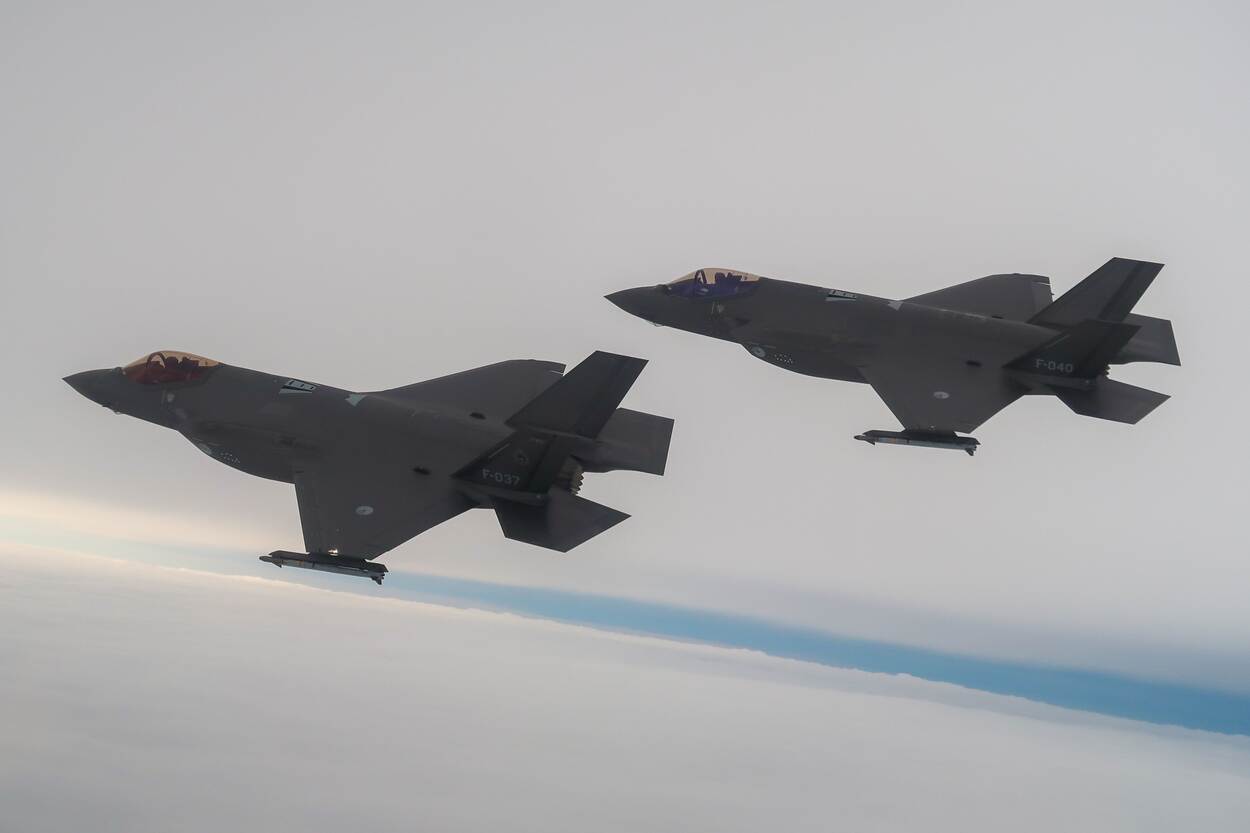
File Image: F-35s

“We cannot ignore the geopolitical environment in our choices. The recent position of the United States, in the context of NATO … must make us think about the best options, because the predictability of our allies is a greater asset to take into account,” Melo had stated.

Many European nations are concerned that an ‘unpredictable’ Washington could pause delivery of critical parts or software for the F-35s.

The Portuguese idea of sidelining the stealth US jets may have come after German defense experts said the US could use a “kill switch” on the F-35 to impose its political objectives.

Portugal, like others, believes any F-35 fleet would quickly become ineffective without access to US-controlled maintenance, logistics, and computer networks. Thus, the US would indirectly control F-35 operations for almost any country.

Echoing these concerns, the Portuguese Minister said, “The world has changed … and this ally of ours … could bring limitations to use, maintenance, components, and everything that has to do with ensuring that aircraft will be operational and used in all types of scenarios.”

The Portuguese Air Force first expressed interest in the F-35 in 2023, when Joe Biden was president. At the time, General João Guilherme Rosado Cartaxo Alves, the FAP’s Chief of Staff, stated that the F-35A is the best option to replace the aging F-16 AM/BM jets.

In April 2024, Portuguese Air Force Chief of Staff General João Cartaxo Alves said the service was in a “transition” phase toward the stealth fighter. The Chief also said the program would cost an estimated 5.5 billion euros and take around 20 years to implement—a statement that made it seem like a purchase was imminent.

The Portuguese Ministry of Defense later backtracked and said, “This is a vision for the future, so currently, there is no process for purchasing aircraft to replace the F-16.

Since then, the aircraft has awaited a formal announcement, especially since leadership earlier confirmed that the current F-16 AM/BM fleet would continue to operate until 2030.

However, European policy has shifted dramatically since Donald Trump assumed office in January 2025. While dismissing the idea of acquiring an F-35, the Portuguese Defense Minister also hinted that his country was looking towards Europe.

Without giving specific details, he said, “There are several options that must be considered, particularly in the context of European production.”

Portugal has not opened a formal tender to replace its F-16s. Four aircraft are in contention: Lockheed Martin’s F-35, the Eurofighter Typhoon, Dassault’s Rafale and Saab’s Gripen E.

Lockheed Martin, Airbus and Saab have each signed cooperation agreements with AED Cluster Portugal, the national aerospace and defense industry association.

Saab’s memorandum, covering the Gripen E, was signed in December 2025. The company has also pitched local work through Embraer-controlled OGMA, citing the production model used for Brazil’s Gripen program.

On September 23, 2026, Dassault Aviation said it had signed a memorandum with the cluster on behalf of Rafale partners Thales and Safran. The agreement aims to explore cooperation with Portuguese industry as Lisbon weighs renewing its F-16 fleet.

“Dassault Aviation, representing its RAFALE partners, Thales and Safran, signed with AED Cluster Portugal, Portugal’s association for the aeronautics, space and defense industries, a Memorandum of Understanding (MoU) to explore potential areas of cooperation between RAFALE partners and the Portuguese industrial sector, in the context of the Portuguese Air Force’s F-16 fleet renewal,” it said in a statement.

Airbus said on September 24 that it intends to submit an unsolicited Eurofighter proposal in late October or early November. The offer will include public and private financing “to alleviate the payment plan,” along with military cooperation and industrial work, Eurofighter campaign manager Ivan Gonzalez Exposito told reporters.

Defense Minister Nuno Melo has said the jets will have to be replaced in the near future. Any choice remains subject to a technical evaluation and to the industrial return for Portugal.

After initial apprehensions with the F-35, the biggest question is: will Portugal opt for ‘superior’ F-35 stealth jets or European 4.5-gen alternatives, Rafale, Eurofighter and Gripen-E?

The post Portugal Puts F-35s Back on the Table Despite “Kill Switch” Fear. Eurofighter, Rafale & Gripen-E Jets Also in Fray appeared first on EURASIAN TIMES.
  •  

China Logs Ukraine’s Newest Drone Tactics in Months, Fields Hardware Within a Year — “Learning Without Bleeding”

The best victory is “winning without shedding a drop of blood” is an ancient Chinese proverb attributed to Sun Tzu’s ‘The Art of War,’ written nearly 2,500 years ago.

In 2026, that old strategy has a new rendering: ‘Learning without Bleeding.’

China is treating the Russia-Ukraine War as a “living textbook” for adapting the war-fighting strategy of the People’s Liberation Army (PLA), learning drone warfare, and systematically converting battlefield lessons into PLA training, procurement, and force design without having to fight itself.

According to a recent paper by the Center for Strategic and International Studies (CSIS), China is running the most systematic effort of any outside power to convert lessons from the war in Ukraine into military advantage, absorbing the errors of both sides.

“Chinese analysts are explicit about the value of Russia’s war against Ukraine” and are adopting the war’s lessons into policy debates, weapons procurement, and military doctrine at a breakneck pace.

Analysts in Beijing are describing 2024 as “year one of world drone war,” when the two sides fielded enough drones to show the contours of the new mechanized battlefield.

For the study, the authors reviewed more than 90 Chinese-language sources published over more than four years, from July 2022 to August 2026.

These Chinese-language sources include PLA outlets, defense journals, university research papers, peer-reviewed journals, and research institutions linked to defense industries.

The authors of these Chinese papers include participants in the military learning system. They include researchers at PLA universities and academies, engineers at defense industrial design institutes, civilian academics working alongside numbered military units, and military acquisition organizations that turn battlefield lessons into requirements and procurement.

The study highlights how China is adopting lessons from the war in Ukraine at a breakneck pace.

It finds that “Chinese analysts pick up new battlefield techniques within an average of four months, but turning them into hardware, training, and force structure takes a year or more.”

Essentially, within four months of a new weapon system or war-fighting doctrine/strategy being introduced on the battlefield in Ukraine, Chinese analysts take note and start discussing it in their research papers.

However, filtering these lessons into Chinese military structure, procurement, and industrial production takes nearly a year.

For instance, Sea drones appeared in the war in Ukraine by September 2022, and by November, Chinese analysts were discussing these new weapon systems in their research papers.

Similarly, Fiber-Optic Drones first appeared on the battlefield in Ukraine in March 2024, and Chinese research papers began discussing them that same month. By March 2025, PLA units were already training with Fiber-Optic Drones.

Interceptor drones appeared in the war in Ukraine in February 2024; Chinese analysts noted them by July 2025, and PLA units began training on such interceptor drones by October 2026.

These instances show how quickly Chinese analysts note new weapons systems in the war in Ukraine, followed by PLA units adopting them within a year.

China’s lessons learned fall into two broad areas: offensive capabilities and defensive capabilities.

China copies offensive techniques from Russia, whose army resembles the PLA’s and whose fixes have been tested in combat.

China derives defensive requirements from Ukraine’s attacks and builds them into hardware. Beijing believes that if China goes to war with any Western power, it will face attacks similar to those Russia faced.

However, both offensive and defensive lessons are primarily derived from drone warfare.

Meanwhile, industrial lessons flow into a manufacturing base that already leads the world.

Offensive Learnings in Drone Warfare From the Russian Army

Among offensive techniques, Beijing’s most important lesson is economic.

In March 2025, the PLA Daily treated the claim as settled fact: a single reconnaissance-strike drone costs less than 1 percent of a modern fighter while achieving more than 90 percent of its battlefield coverage.

According to the study, while these figures are rough, the Central Military Commission’s newspaper takes them at face value.

Chinese analysts noted that in 2014, both Ukraine and Russia purchased and used more than a million drones. The Chinese Naval Academy estimated that this amounted to an average of two drones hovering over each soldier deployed on the front line.

The second lesson from drone warfare that China internalized is speed.

File Image

According to the National Defense University’s Joint Operations College, Russian forces can strike a detected target within three to five minutes—compared to hours in earlier wars

Researchers at a PLA unit attribute this to Russia’s reconnaissance-strike complex, in which a low-cost reconnaissance drone pushed deep into the enemy rear serves as the observer and guides another drone’s strike, with Orlan-10s cueing Kub and Lancet loitering munitions.

The copying target is not any single platform but rather the connection between them: drones wired directly into artillery and command networks.

For China, the drone warfare’s third critical lesson is overcommunication and connectivity.

Chinese analysts treat electronic warfare as the deciding factor in the drone war, recording heavy losses on both sides to jamming and countermeasures.

They have also noted with interest Russia’s fiber-optic first-person-view (FPV) drone steered through a thin cable, which is immune to jamming.

The PLA Daily flagged the shift in May 2024, weeks after the fiber-optic drone’s operational debut, and by April 2025, state media were weighing its trade-offs in detail. In the same month, China Central Television (CCTV) showed a People’s Armed Police unit in Yunnan training with FPV drones and researching fiber-optic models.

Defensive Learnings in Drone Warfare From the Ukrainian Army

While China has tried to internalize Russia’s offensive drone warfare techniques, Beijing has paid even more attention to some of the drone warfare techniques adopted by Ukraine.

Beijing believes that in the event of a military conflict with the West, it could face similar attacks as Russia faces from Ukraine in the ongoing war.

Chinese analysts were especially alarmed by two attacks from Ukraine: first, the use of sea drones for attacking Russian ships, warships, harbors, and bridges.

In the journal of the state shipbuilder’s underwater-warfare institute, a team from the Naval University of Engineering tallied repeated Ukrainian strikes on Russian ships, ports, and the Kerch Bridge and found more than 10 large naval vessels damaged.

They concluded that a systematized sea-drone offensive could be met effectively only with counter–sea–drone equipment that also fights as a system.

Another researcher proposed countering suicide boats with interceptor swarms, in skirmishes devoid of humans entirely.

Another Ukrainian attack that caught China’s attention and alarmed it was Operation Spider’s Web.

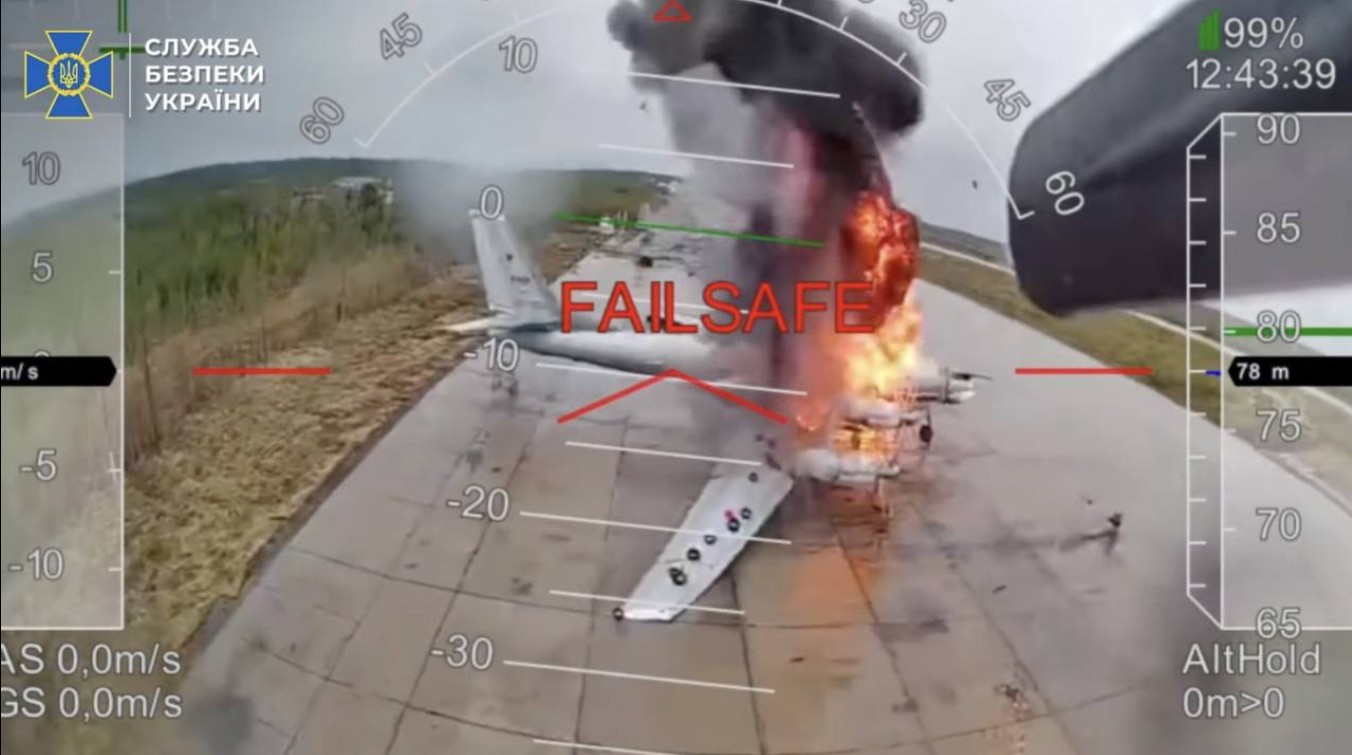
On June 1, 2025, Ukraine attacked Russia’s strategic bombers, deep inside its territory, by using FPV drones launched from within Russia.

Chinese Foreign Ministry’s magazine estimated Russian losses at 11 strategic bombers and identified the raid’s novelty in being launched from inside Russia, at close range.

A photo of a FPV-drone-struck military plane Tu-95 at Russia’s Olenya airbase during the attack. Credits AFU.

The PLA’s training system answered within four and a half months.

In an October 2025 exercise, a brigade defended against a drone attack team of more than 20 operators, using detection gear that locates drones by their radio emissions and matches them against a catalog of more than 800 commercial models, paving a path for Chinese response to a Spider’s Web–style drone infiltration.

Chinese analysts also concluded that a successful drone interception strategy must account for the economics of interception.

According to a Global Times analysis of Ukraine’s interceptor drones, “the cost of procuring one man-portable air-defense missile buys several hundred air-defense FPV drones.”

Therefore, Chinese analysts concluded that the best weapon against a drone is another drone.

China also concluded that if it is attacked, it will be attacked by drones en masse, and therefore it must defend itself against thousands of drones.

In this respect, China has also noted Russia’s defense strategy.

 A 2026 review from a Chinese state aerospace design institute recorded that Russia “has built in combat a counter-drone equipment system of electronic jamming first, firepower interception as the backstop, and self-defense interception as the supplement.”

Beijing also noted that Russia was forced to pull its strategic bombers back about 6,000 kilometers to the Chukotka Peninsula and deploy retractable protective nets.

The study noted how quickly these studies are being adopted into hardware.

At the Zhuhai air show in November 2024, the counter-drone systems of the state electronics, ordnance, and aerospace groups dominated Chinese coverage, led by CETC’s Tianqiong, NORINCO’s Hurricane 3000 microwave weapon, and CASIC’s LW-60 laser.

The September 2025 military parade put counter-drone missile-gun systems, high-energy lasers, and high-power microwave weapons on state display.

In late July 2026, CCTV aired footage of an army drone crew putting a missile into a fast boat maneuvering at sea, and in August the army flew armed KVD002 drones against sea drone targets in exercises.

China has also learned that in a war of attrition, production wins.

For Chinese analysts, a drone war is won by the side that can build more, and no country builds more drones than China. So here, China only needs to build on its advantages.

China also recognizes Starlink’s importance in the Ukraine War and has concluded that low-Earth-orbit (LEO) satellite constellations will play a decisive role in any future war. China is therefore working to build its own LEO satellite constellations.

The CSIS study concludes that China is learning from and implementing lessons from the Ukraine War faster than any other country.

As Russia and Ukraine fight a ‘war of attrition,’ China could be the biggest winner.

  • Sumit Ahlawat has over a decade of experience in news media. He has worked with Press Trust of India, Times Now, Zee News, Economic Times, and Microsoft News. He holds a Master’s Degree in International Media and Modern  History from the University of Sheffield, UK. 
  • He can be reached at ahlawat.sumit85 (at) gmail.com

The post China Logs Ukraine’s Newest Drone Tactics in Months, Fields Hardware Within a Year — “Learning Without Bleeding” appeared first on EURASIAN TIMES.

  •  

No Boeing, Lockheed or Any of the Big Five: Musk & Luckey Co-Lead Project Meridian on America’s Future Warfare

A profound transformation is underway in the politico-military-industrial complex that has dominated the US defense realm for over seven decades.

As drones, AI, autonomous systems, satellites, robots, and networked platforms reshape the battlefield, Silicon Valley is quietly edging out the US defense market’s big five: Lockheed Martin, RTX, Boeing, General Dynamics, and Northrop Grumman.

On October 6, Defense Secretary Pete Hegseth tapped SpaceX CEO Elon Musk and Palmer Luckey, the co-founder of defense technology firm Anduril, to lead “Project Meridian: The Future of Warfare,” a new 120-day initiative tasked with identifying the technologies and capabilities required for future military dominance.

“We are witnessing rapid advances in artificial intelligence, autonomy, directed energy, robotics, biotechnology, among other critical high-tech areas. Combined, these new domains, new ways of fighting, and technological developments will profoundly alter the character of warfare,” Hegseth said in his one-page memo while announcing Project Meridian on September 30.

“To maintain global dominance, the United States must anticipate future operational environments and act decisively to develop the tools to dominate in them.”

Defining the scope of the study, Hegseth said: “Project Meridian will study the battlefields of the future, identify which weapons and technologies warfighters will need to harness to dominate in these environments, and propose actionable solutions to start developing, testing, and fielding these capabilities such that America will have overmatch for the 21st century and beyond.”

In his memo, Hegseth hinted that the center of gravity is shifting over who defines and decides the parameters of future defense weapons, technologies, and requirements.

“Project Meridian will leverage critical perspectives from outside the Pentagon, drawing upon a group of top technologists, innovators, business leaders, policymakers, and national security experts.”

Its primary function will be to map the trajectory of future warfare, identify critical capability gaps, and propose actionable solutions, Hegseth said.

The Elon Musk and Palmer Luckey-led panel will therefore discuss not a particular weapons platform, but what American warfare and the battlefield will look like in the future.

What they will discuss and define is not merely a change in weapons technology, but the way the Pentagon sees warfare and organizes the production of military power itself.

The study’s co-directors will “identify the domains that we must conquer, and capabilities we must master,” Hegseth said at Marine Corps Base Quantico on September 30.

“The Project Meridian effort will examine the technologies and operational concepts required to sustain U.S. military advantage across the full spectrum of future warfighting domains across a 10-20 year time horizon,” said a spokesperson for the Department of Defense.

The Musk- and Luckey-led study could therefore shape the Pentagon’s defense procurement decisions for decades.

It’s no accident that while SpaceX’s Musk and Anduril’s Luckey are on the panel, the executives of the Big Five are conspicuously missing.

Trump and Musk

Silicon Valley to Replace US’ Military-Industrial Complex?

The US military-industrial complex started taking shape in the 1950s.

While the two World Wars saw large-scale mobilizations and the channeling of industries toward weapons production, the distinctive military-industrial complex emerged in the 1950s.

US President Eisenhower himself later described the “conjunction of an immense military establishment and a large arms industry as new in the American experience.”

In April 1950, the top-secret U.S. National Security Council (NSC) policy (NSC-68) concluded that the “only plausible way to deter the Soviet Union was for President Harry Truman to support a massive build-up of both conventional and nuclear weapons.

In other words, the US should maintain elevated defense spending even during peacetime.

U.S. military budget jumped from USD 13 billion to USD 60 billion within a couple of years. Most of these funds went to private contractors, rather than government bodies.

For nearly the next seven decades, military production and weapons procurement in the US followed a set pattern.

The Pentagon defined its requirements, the US Congress approved the budgets, defense production firms, mostly a handful of prime contractors, submitted bids, and the winner developed platforms with lifecycles ranging from a few years to a few decades.

Fighter jets, bombers, submarines, aircraft carriers, missiles, radars, military communication platforms- all these platforms were developed this way.

For decades, they remained industrial objects; however, these platforms gradually became computational systems. The F-35, for instance, has been described as a flying supercomputer.

New-age military platforms, however, are first and foremost computing platforms.

Drones, for example, are all these systems rolled into one.

They are at once a fighter jet and a bomber, equipped with radar seekers, missiles, a network of sensors, a communication system, and a software platform that integrates AI into flight paths and target selection.

Satellite constellations are becoming central to military communication and targeting by drones, as seen in the critical role Starlink is playing in the war in Ukraine. Ukrainian drones use AI to select flight paths that exploit gaps in Russia’s layered air defense network.

Command-and-control software and Battlefield Management Systems (BMS) fuse information from diverse sources, including satellites, drones, ground-based radars, and AWACS, within seconds to create a unified, simplified battlefield picture and propose the most critical sites for targeting.

Underpinning all these systems are software, computing systems, and AI, not just hardware.

In this new warfare, large, expensive defense platforms are often a liability, rather than an asset.

In short, military value is shifting at an unprecedented speed.

Defense platforms costing millions of dollars and once considered invincible could now be targeted by a drone costing just a few thousand dollars.

This shift is also forcing military suppliers to change. Software firms in Silicon Valley that combine artificial intelligence (AI), autonomy, and machine learning (ML) to deliver innovative defense solutions are now at the center of this shift.

In recent years, they have won contracts worth tens of billions of dollars, edging out the Big Five of defense production.

The rise of these new military technology firms marks the biggest shift in the US arms industry over the past five years.

“Companies like SpaceX, Palantir, and Anduril have been tapped for multi-billion-dollar contract awards from the Pentagon for communications, targeting, unpiloted vehicles, anti-drone defenses, and hypersonic weapons. The funds from these awards will flow to the companies over time, which should put them in the top ranks of Pentagon contractors by value of awards within the next several years,” a recent report from the Costs of War project said.

For instance,

(Photo by SAUL LOEB and Jim WATSON / AFP)

has received awards for countering Unmanned Aerial Vehicles (UAVs) from the Marines (US$642 million); a contract for its Roadrunner UAV interceptor system (US$250 million); and contracts for its Ghost Shark autonomous underwater vehicle as part of the U.S.-UK-Australia AUKUS project, to name a few.

Anduril has also been selected to build the next generation of Army goggles, the Integrated Visual Augmentation System (IVAS), which are “intended to give soldiers everything from night-vision capability to warnings of incoming airborne threats.”

In June this year, the U.S. Air Force awarded engineering, manufacturing development, and production contracts for Collaborative Combat Aircraft Increment 1 to both Anduril (FQ-44) and General Atomics.

However, Anduril’s most lucrative contract could be in border security technologies. The Big Beautiful bill commits over US$6 billion for various border security technologies. However, as Eurasian Times reported earlier, the bill’s conditions mean Anduril is the only firm that qualifies for these border surveillance tenders.

SpaceX is launching most of the U.S. military’s satellites. It is also receiving funding for the military version of its Starlink system.

Separately, the Pentagon is considering investing in SpaceX’s Starship system.

SpaceX and Anduril could also win billion-dollar contracts in the upcoming ‘Golden Dome’ project.

Established tech firms are also challenging the Big Five’s dominance. For example, Amazon, Microsoft, Google, Oracle, and IBM are collectively investing US$10 billion in the Pentagon’s cloud computing program.

“To the extent that the Pentagon moves towards AI-driven weapons systems, including swarms of drones and uncrewed aircraft, ships, and combat vehicles, the dominance of the Big Five firms may be reduced,” the report by the Costs of War Project added.

In fact, a recent essay on the Anduril Industries blog, ‘Rebooting the Arsenal of Democracy,’ dismissed the Big Five defense contractors as ‘remnants of the Cold War’ that need to be supplanted if America is to take the lead in developing and producing the weapons of the future.

“Why can’t the existing defense companies simply do better? The largest defense contractors are staffed with patriots who still lack the software expertise or business model to build the technology we need.

“Tomorrow’s weapons – autonomous systems, cyberweapons and defenses, networked systems, and more – are enabled through software, while these companies specialize in hardware. These companies work slowly, while the best engineers relish working at speed… These companies built the tools that kept us safe in the past, but they are not the future of our defense,” the essay said.

The trend, therefore, has already started.

Project Meridian, which could profoundly impact US defense procurement for decades, will further accelerate this trend.

Musk and Luckey’s appointment to lead this study suggests Silicon Valley tech firms are quietly edging out the US military-industrial complex’s Big Five.

  • Sumit Ahlawat has over a decade of experience in news media. He has worked with Press Trust of India, Times Now, Zee News, Economic Times, and Microsoft News. He holds a Master’s Degree in International Media and Modern History from the University of Sheffield, UK. 
  • He can be reached at ahlawat.sumit85 (at) gmail.com

The post No Boeing, Lockheed or Any of the Big Five: Musk & Luckey Co-Lead Project Meridian on America’s Future Warfare appeared first on EURASIAN TIMES.

  •  

Pakistan Fighter Jets Bombing Houthis “Fake & Fabricated”. Islamabad Rejects NYT Report

Pakistan has outrighty rejected a New York Times (NYT) report that claimed PAF fighter jets were involved in strikes against Houthis, calling the claim “fake and fabricated.”

“The claim in the above-referenced NYT report that Pakistan Air Force aircraft are being used against the Houthis is fake and fabricated,” Pakistan’s Information Ministry said.

In an X post, Pakistan’s Ministry of Information & Broadcasting wrote: Fact Check | Ministry of Information & Broadcasting NYT above referred story attributing employment of PAF aircraft against Houthis is fake and fabricated. International Media houses are again asked to avoid speculative reporting with regards to employment of Pakistan’s Military Forces under Makkah Joint Defence Agreement. Details of any employment, if necessary will be given by concerned authorities. Truth Prevails over Falsehood.

The report came days after Pakistan and Turkey agreed to deploy troops to Saudi Arabia under the Mecca Joint Defense Agreement.

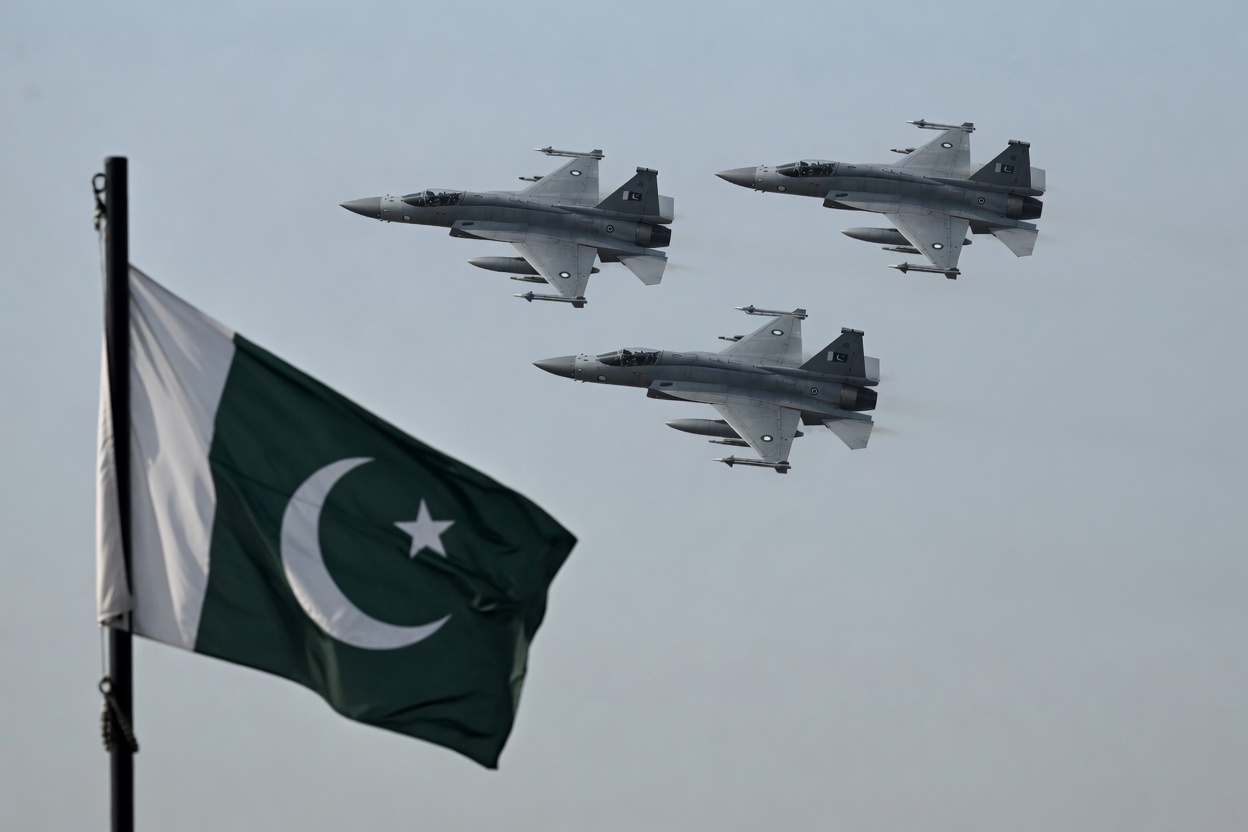
File Image: JF-17 Jets

Earlier, a senior Pakistani military official, speaking on condition of anonymity, told NYT that Pakistan Air Force jets were being used in strikes against the Houthis.

Another Pakistani official said Islamabad’s role was aimed at degrading Houthi drone and missile threats through air support rather than a ground offensive in Yemen, the NYT claimed.

Col. David O. Smith, a former U.S. Army attaché in Pakistan and former Defense Intelligence Agency analyst, said he had no classified figures, but that the analyst consensus was about 8,000 Pakistani troops deployed in Saudi Arabia. He said the force included a Pakistan Air Force contingent and Army air-defense units, that they would likely help secure oil infrastructure, and that Pakistani soldiers were unlikely to fight the Houthis directly because Islamabad is trying to preserve its relationship with Iran.

Pakistan’s military spokesman, Lt. Gen. Ahmed Sharif Chaudhry, confirmed to CNN that Pakistani troops are already in Saudi Arabia and described any role as defensive, without saying whether they would operate across the border in Yemen.

Interestingly, Pakistan earlier furiously denied a social media buzz that claimed Pakistan had lost three JF-17 fighter jets due to a Houthi missile attack that targeted King Abdulaziz Air Base in Saudi Arabia.

“This is absolutely fake. No credible or official source has also reported any sort of damage to PAF JF-17s,” the Ministry of Information reportedly said in its statement. The “deliberate fabrication of damage to PAF aircraft and their alleged evacuation is only blatant Indian propaganda, part of Hindutva deceit and a deceptive mindset,” the Ministry said.

The Pakistani Air Force jets and support aircraft, including JF-17 jets, arrived in April 2026 under the Strategic Mutual Defense Agreement that Pakistan and Saudi Arabia signed in September 2025.

Meanwhile, Turkey’s foreign minister has rejected sending troops to Yemen, despite the “Mecca pact” with Saudi Arabia.

“This is a defense agreement,” said Hakan Fidan, adding: “If one of the countries is attacked, you support its defense. This is not an offensive agreement.” Turkey “will not send its troops to another country’s territory to launch an attack”, he emphasized.

Fidan said Turkish and Saudi military delegations would work together to assess what defensive measures might be needed, without giving details.

  • By ET Desk
  • Mail us at editor (at) eurasiantimes.com

The post Pakistan Fighter Jets Bombing Houthis “Fake & Fabricated”. Islamabad Rejects NYT Report appeared first on EURASIAN TIMES.
  •  

China Puts USS Benfold Back in Spotlight. Says Foreign Warship Lost Power While Tracking Its Type 055

After claiming it intercepted foreign aircraft on two separate occasions last year, China has made another major claim: a “foreign warship” lost power while pursuing a People’s Liberation Army Navy (PLA-N) Type 055 destroyer, seemingly an indirect reference to the USS Benfold.

Zhang Jun, a captain on the PLA Navy’s Type 055 “Zunyi” destroyer, said a foreign warship lost power while his warship, engaged in a routine training exercise at the time, the Chinese state-owned publication Global Times claimed.

Speaking on China Central Television (CCTV), the officer said the destroyer had multiple encounters with foreign warships and aircraft during the exercise. 

“During that mission, we were conducting routine training exercises when a foreign warship began tracking our ship. As we sailed at high speed, the foreign vessel had to match our speed. While we were in a standoff, its power and electricity all suddenly went out, its radar stopped emitting, and its navigation lights went dark,” Zhang said. “This lasted for nearly half an hour. But our equipment and our crew had no problems at all,” he added.

When asked whether the engagement made him nervous, the Chinese officer said, “Why should I be nervous? I was definitely not nervous. As long as you are within range of my missiles, I can definitely destroy you.”

The officer stopped short of providing more details, including the time and place of the encounter and the name of the foreign warship. However, the claims appear aimed at the US Navy warship USS Benfold, which apparently lost power and was stranded in the South China Sea in July 2026, as previously reported by the EurAsian Times.

“On July 24, 2026, while conducting routine operations in the Indo-Pacific, Arleigh Burke-class guided-missile destroyer USS Benfold (DDG 65) reported an engineering casualty involving its generators, causing a loss of power,” Navy Cmdr. Matthew Comer, spokesperson for the 7th Fleet, said in a statement to USNI News in August  2026.

“There were no injuries to the crew, who demonstrated resilience, grit, professionalism and unwavering steadiness in their response,” he added.

The incident reportedly occurred while the USS Benfold was engaged in routine operations in the Indo-Pacific as part of the USS George Washington carrier strike group (CSG).

After the power loss, the guided-missile destroyer reportedly drifted for four days and was supplied by other ships in the South China Sea, which China claims as its sovereign territory and where frequent standoffs occur between Beijing and other forces.

The Seventh Fleet spokesperson did not mention a high-speed pursuit of a Chinese vessel or any engagement between the US carrier strike group and PLA Navy warships, although these encounters are not uncommon in the region.

USS Benfold-Wikipedia

When asked whether China’s claimed scenario is plausible, Indian Navy veteran and commentator Rear Admiral Girish Kumar Garg (retd) told the EurAsian Times, “For an Arleigh Burke-class ship, high-speed propulsion has nothing to do with total power loss. Complete power failure can happen if all onboard power generators fail or the power distribution system malfunctions. Although rare, it is not impossible.”

Further, when probed about potential reasons for the complete power loss, Rear Admiral Garg said, “Can be many reasons- fuel contamination can be a major cause. Power overload due to too many systems operating and loaded on the running generators can also cause them to trip. However, generally, if all onboard power generators are running and connected, then they cater for full ship’s electrical load plus some extra load margin.”

Why Yemen Could be a Graveyard for Turkish & Even Mecca Pact Soldiers: History Has The Answers: OPED

The USS Benfold power loss incident was not the first of its kind. Earlier, the USS Higgins had an “engineering casualty” in its electrical system in May 2026,  which caused it to lose power and propulsion for many hours in the Indo-Pacific area. No chase of another vessel had occurred at the time.

Nonetheless, state media and Chinese experts used the opportunity and their purported claims to highlight the enviable capabilities of the PLAN’s Type 055 warships.

Chinese military expert Shi Hong told the Global Times that the Type 055 is considered the world’s best large destroyer in terms of comprehensive capabilities. Meanwhile, Xu Yi, another crew member on the ship that was involved in the purported encounter, said, “We have a powerful offensive and defensive system. In the future, we will definitely conduct operations externally in formation. In fact, we have already begun integrating multiple formations and exploring what makes for the best combination.”

Some pro-PLA observers on social media widely amplified the Chinese claims, aligning with similar previous instances.

However, Beijing deliberately makes specific claims while avoiding direct naming of the foreign assets to avoid a diplomatic response and to eliminate the possibility of a counter-narrative from official sources and a potential bilateral tussle.

Chinese Military Keeps Confronting Foreign Assets

In the past few years, China has claimed to have intercepted and expelled unidentified foreign aircraft from the same region on multiple occasions.

No Boeing, Lockheed or Any of the Big Five: Musk & Luckey Co-Lead Project Meridian on America’s Future Warfare

Last year, Chinese state media, CCTV, released a video on June 29 showing two J-16 fighter jets—considered the cornerstone of the PLA Air Force’s interception efforts—being dispatched to warn and drive out a “foreign aircraft” that allegedly breached China’s territorial sea boundary. 

“The foreign aircraft flew over at a low altitude, not very disciplined, almost at a vertical 90 degrees, breaching our territorial sea line,” air force aviation brigade member Zhang Zhanfang stated on the broadcast at the time.

The Chinese media did not disclose the exact date or location of the incident, making it challenging to identify the foreign aircraft in question.

Later that year, Global Times reported on a documentary shown on CCTV in October 2025, in which a PLA Air Force (PLAAF) pilot from the special mission aircraft formation claimed he could simultaneously lock two foreign stealth fighter jets while flying the J-16 fighter jet and force both jets to withdraw.

“They headed straight toward our two aircraft. Their intention was very clear—it was a provocation. With our backs to the territorial sea line, we had to intercept them,” Li Chao, a pilot from the People’s Liberation Army’s Western Theatre Command, said while recounting the incident that allegedly took place during a coastal training exercise in 2024.

Although the Chinese did not disclose which foreign stealth aircraft it was referring to, only two aircraft fit the description: the F-22 Raptor and the F-35 Lightning II of the US Air Force (USAF).

Both aircraft are frequently deployed in the Indo-Pacific for training, war exercises, and other operational missions, as the EurAsian Times noted in a detailed report published at the time. 

Washington did not acknowledge the claim, but the incident drew a wide debate over whether a 4.5th-generation jet could intercept US fifth-generation stealth fighters.

Separately, US and Chinese ships have had sporadic encounters in international waters, as the US Navy conducts regular FONOPs (Freedom of Navigation Operations) in the region.

Earlier this year, in January 2026, reports noted that a Chinese warship, CNS Taiyuan, encountered a foreign warship during “a long-range training exercise” in undisclosed waters. The report said the foreign ship meant to provoke the Chinese crew, but the crew instead followed orders and drove the vessel away.

Trump’s Big Taiwan Move: Despite $14B Arms Freeze, Permanent U.S. Military Officials May Sit at MND

Similarly, in January 2025, reports noted that China had claimed that its navy “drove away” a “foreign warship that attempted to spy on its Shandong aircraft carrier during a long-distance training mission. At the time, a Chinese sailor attached to the Type 055 destroyer CNS Yan’an crew said a foreign warship attempted to engage in “illegal reconnaissance” and infiltrate a formation led by the carrier during a routine training mission. 

In June 2023, a US destroyer, USS Chung-Hoon, had a close encounter with a Chinese warship in the Taiwan Strait. The US Navy alleged that the Chinese ship executed an “unsafe” maneuver, crossed the US ship’s path, and forced it to slow down to avoid a collision.

Another significant incident occurred in 2018 when a Chinese warship came dangerously close to the USS Decatur in the South China Sea. The US Navy described the action as “unsafe and unprofessional.

Despite a thaw in ties between Chinese and US leaders, the fight over Indo-Pacific dominance continues.


The post China Puts USS Benfold Back in Spotlight. Says Foreign Warship Lost Power While Tracking Its Type 055 appeared first on EURASIAN TIMES.

  •  

Hezbollah, Hamas & Houthis Cannot Be Disarmed With a Single Deal: U.S. & Israel Need New Mechanism: OPED

OPED by Rear Admiral Girish Kumar Garg, VSM (Retd)

The difficulty in ending the Iran war is not identifying the ingredients of peace. The nuclear issue, missiles, sanctions, regional armed groups, freedom of navigation, and Israel’s security concerns are all well known. The harder question is: how adversaries who deeply distrust each other can take the first step without believing that they are making themselves more vulnerable.

Military action can change the battlefield, but it cannot by itself create a durable political settlement. The longer the conflict continues, the greater the danger that military calculations become disconnected from the strategic objective.

The answer may not lie in one grand bargain, but in a sequence of reciprocal bargains, each limited in scope, independently verifiable and linked to the next. The objective should not be to create trust between Iran, Israel and the United States. That is unrealistic in the foreseeable future.

The objective should be to create a system that can function despite the absence of trust.

The broad issues are already clear. Iran wants recognition of its sovereignty, sanctions relief, and protection from military attack.

Israel wants assurance that Iran cannot acquire a nuclear weapon and that Iranian-supported groups cannot threaten its population. The United States wants to prevent nuclear proliferation, protect regional stability and avoid another open-ended war.

These objectives are not necessarily irreconcilable. The difficulty lies in sequencing them.

Iran fears that surrendering strategic capabilities before receiving meaningful concessions will leave it exposed. Israel fears that sanctions relief before Iranian capabilities are constrained will simply give Tehran resources to rebuild. Washington fears that concessions without Iranian compliance could be interpreted as weakness.

This is the classic security dilemma: each side sees its own actions as defensive while viewing the other’s actions as a threat that must be countered.

A successful peace process must therefore address not only what is negotiated, but how concessions are exchanged.

Replace the Grand Bargain with Reciprocal Bargains

The first step could be a time-bound Strategic Pause, perhaps lasting 30 days. During this period, the parties would freeze specified offensive operations, avoid attacks on civilian infrastructure and commercial shipping, and suspend actions that materially escalate the confrontation.

Compliance would need independent monitoring. More importantly, neither side should have to make a leap of faith. Each concession should trigger a corresponding concession by the other side.

A verified Iranian reduction in a specified category of nuclear activity could trigger suspension of particular sanctions. A verified reduction in attacks by regional armed groups could trigger defined relaxation of maritime or economic pressure. A verified violation would automatically suspend the corresponding benefit.

The settlement would therefore be built incrementally, with each step creating the conditions for the next.

Address Israel’s Security Dilemma

No settlement can succeed if it ignores Israel’s fundamental security concerns. From Israel’s perspective, Iran’s nuclear program is only one part of the threat. Iranian support for Hezbollah, Hamas and the Houthis has created a network of armed actors capable of imposing military pressure on Israel and disrupting regional security.

The practical approach would be to negotiate capabilities and behavior rather than political allegiance.

Iran could progressively restrict the transfer of specified advanced weapons, particularly long-range missiles, precision-strike systems and sophisticated drones, and commit to preventing attacks that deliberately target civilians or expand the conflict beyond agreed limits. In return, Iran would receive progressively stronger security assurances against direct attack.

The exchange is straightforward in principle: Iran reduces the forward military pressure it generates through its regional partners, while its security becomes less dependent on maintaining that forward deterrence.

For Israel, the benefit would be reduced military pressure on its territory. For Iran, the benefit would be a reduced perceived need to maintain an extensive regional deterrence architecture.

Hezbollah, Hamas & Houthis Need Different Solutions

These three groups should not be treated as one problem.

For Hezbollah, the central issue is Lebanon’s sovereignty and the presence of a heavily armed non-state actor on Israel’s northern frontier. A settlement should strengthen the Lebanese state’s authority and provide for a phased reduction or relocation of heavy weapons from sensitive areas. The immediate objective need not be the disappearance of Hezbollah as a political organization, but preventing any non-state actor from initiating a major interstate conflict without the Lebanese state’s consent.

Hamas presents a different challenge because it is inseparable from the unresolved Palestinian question. Requiring Hamas simply to disappear is unlikely to be realistic. A more viable pathway would involve Hamas relinquishing governance in Gaza, progressively reducing heavy weapons and transferring administration and security responsibilities to a legitimate Palestinian structure supported by the international community.

That process would need reconstruction and a credible political horizon for Palestinians. Otherwise, disarmament could simply create a vacuum for another armed movement.

The Houthis should be addressed through a separate Red Sea security arrangement. Iran could restrict the transfer of specified missile, drone, and maritime-strike capabilities, while a Yemeni political process provides the Houthis with a legitimate political future.

The objective would be to separate Yemen’s internal conflict from the wider Iran-Israel confrontation and restore freedom of commercial navigation.

A fighter loyal to the Houthi authorities, brandishes his weapon during a rally to recruit more fighters, in Sanaa on September 10, 2026. The country relapsed into war in July after years of calm, drawn into the regional conflict triggered by the US-Israeli offensive against Iran that began at the end of February. (Photo by Mohammed HUWAIS / AFP)

Turn sanctions into an instrument for peace

Sanctions relief should also be redesigned. Iran is unlikely to make major concessions today in exchange for benefits that may arrive years later.

A Peace Escrow Mechanism could address this problem. Sanctions would be suspended in stages rather than simply lifted. Oil revenues, access to frozen funds, and selected financial channels could be released automatically when independent monitors verify specified Iranian actions.

The same principle would operate in reverse. If commitments are violated, the corresponding benefits would automatically pause.

Iran would therefore not have to trust that sanctions relief will eventually materialize; the economic benefit would be directly linked to verified compliance. At the same time, the United States and its partners would retain leverage until Iran demonstrated its commitments.

Sanctions would cease to be merely punishment or bargaining leverage and become an instrument for implementing the settlement.

Make Hormuz The First Test

The Strait of Hormuz offers an immediate opportunity for confidence-building because its security affects the entire international community.

Iran could provide a verifiable commitment to the safe passage of commercial shipping, while the United States and its partners could suspend specified maritime pressure measures during the Strategic Pause. An independent mechanism could investigate incidents and determine responsibility.

If commercial vessels can move safely while military forces exercise restraint, it would demonstrate that reciprocal commitments can work even when the parties remain deeply hostile.

That lesson could then be applied to the nuclear program, missiles and regional armed groups.

Peace Through Managed Distrust

The central mistake would be to expect trust to precede the agreement. Trust is more likely to result from repeated compliance.

The settlement should therefore rest on four principles: reciprocity, verification, gradualism and automaticity. Every concession should have a corresponding benefit; important commitments should be independently verifiable; major concessions should be broken into manageable stages; and agreed rewards or penalties should operate automatically rather than depend on renewed political bargaining.

This approach also gives each government a politically defensible narrative. Iran can present the process as an exchange of specific military concessions for tangible economic and security benefits rather than capitulation. Israel can demonstrate that its security concerns are being addressed through enforceable restrictions rather than political assurances. The United States can retain leverage while reducing the risk of another prolonged regional war.

Motorists drive past a large billboard pledging revenge against US President Donald Trump along Jomhouri Street in central Tehran on July 27, 2026. Iran’s foreign ministry said on July 27 that the US was not involved in recent talks with Oman over the administration of the strategic Strait of Hormuz. Traffic through the vital global shipping route has been under Iranian control since the outbreak of war with Israel and the United States on February 28. (Photo by AFP) /

Most importantly, the framework recognizes a basic reality of international politics: peace does not always begin with trust. Sometimes it begins with managing distrust.

The parties do not have to agree on history, ideology or regional ambitions. They need only agree that certain actions are too dangerous to continue and that restraint can produce tangible benefits.

A durable peace is therefore unlikely to emerge from one dramatic handshake or a single comprehensive treaty. It is more likely to emerge from a chain of smaller agreements in which each side discovers, step by step, that restraint produces greater security than escalation.

The real diplomatic breakthrough would not be an agreement that ends all disagreements. It would be an agreement that makes continued disagreement less dangerous, more predictable and progressively less dependent on the use of force.

The ultimate test of diplomacy will not be whether Iran, Israel and the United States learn to trust one another. It will be whether they can construct a system in which they do not need to trust one another to stop fighting.

  • OPED By Admiral (R) Girish Kumar Garg
  • This is an Opinion Article. Views Personal of the Author
  • The writer is a retired Rear Admiral and was the Naval Officer-in-Charge (A&N Islands)

The post Hezbollah, Hamas & Houthis Cannot Be Disarmed With a Single Deal: U.S. & Israel Need New Mechanism: OPED appeared first on EURASIAN TIMES.
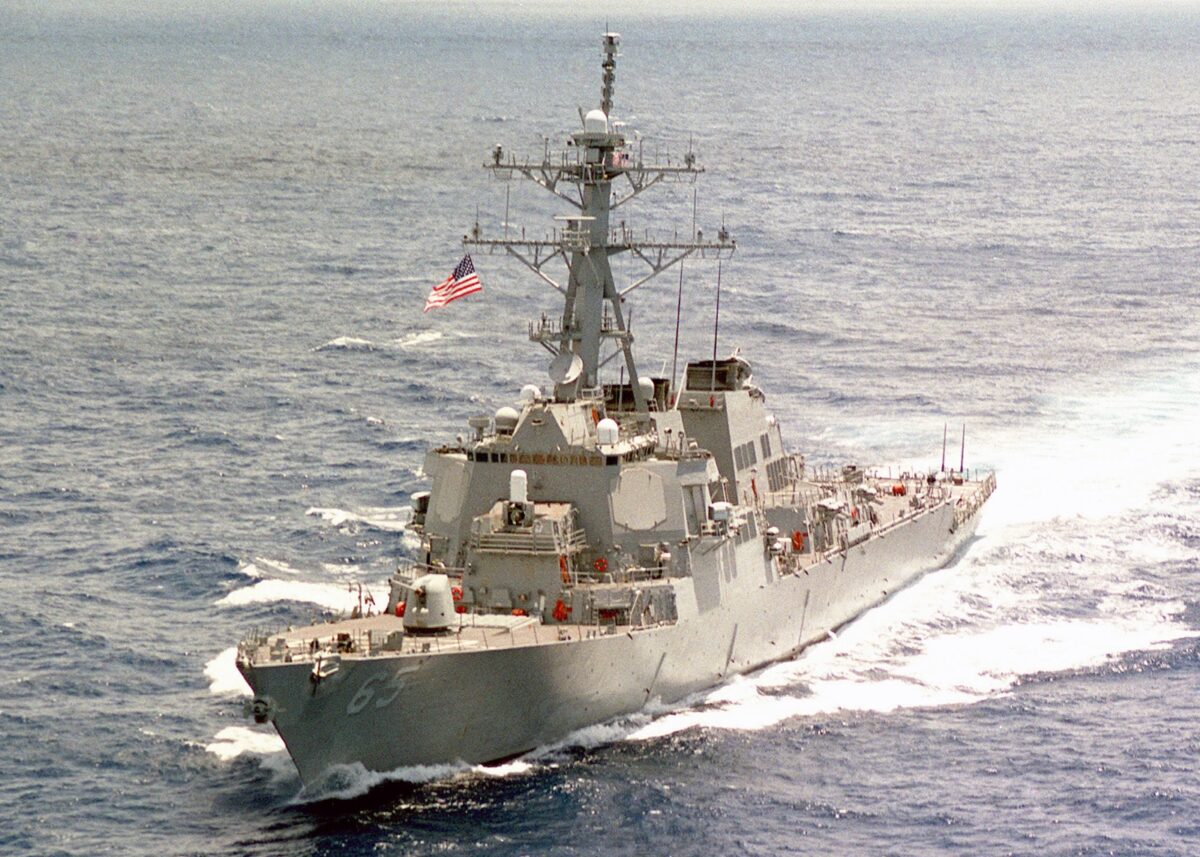
  •  

Rafale & J-10C: This Asian Country Could Become The Only Air Force to Fly Both French & Chinese Jets

Indonesia is awaiting the first batch of Chinese J-10C multi-role fighter jets in the first half of next year, according to new reports.

Once and if the aircraft arrive, the Indonesian Air Force could become the first in the world to operate both the Chinese J-10C and the French Dassault Rafale jets.

Indonesia could receive its first Chengdu J-10CE fighter jets in six months, Republika Online, a local Indonesian news outlet, reported. Citing informed sources, the report claimed the first delivery could take place as early as April 2027, although the number of jets to be delivered is currently unknown.

So far, neither the Chinese nor the Indonesian side has officially confirmed it. EurAsian Times has reached out to Indonesian authorities and awaits a response.

However, Indonesian Air Force Chief of Staff Marshal Mohamad Tonny Harjono urged the public to “just wait” for the arrival of the Chinese Vigorous Dragons, according to Republika Online, suggesting a purchase may have been made.

Notably, the reports come a year after the Indonesian Defense Minister Sjafrie Sjamsoeddin confirmed in October 2025 that the country would soon buy the jets from China as part of its military modernization drive.

“They will be flying over Jakarta soon,” Sjafrie said, without providing further details. Separately, Finance Minister Purbaya Yudhi Sadewa had confirmed that his ministry had approved a $9 billion budget to purchase the Chinese aircraft, as the EurAsian Times reported at the time.

File Image: J-10C

Interestingly, Indonesia communicated the decision to buy the aircraft months after its J-10C fighters made their combat debut against the Indian Air Force in an intense four-day conflict in May 2025.

At the time, Pakistan claimed to have downed multiple Indian fighters, including the Rafale, using long-range PL-15 air-to-air missiles launched from the J-10C. India, in turn, claimed to have downed multiple Pakistani jets, including JF-17s and F-16s, but the list did not include China-supplied J-10Cs.

The Rafale shootdown claims, although unverified and not officially accepted by India or Dassault Aviation, were blown out of proportion and amplified by Beijing to promote the J-10C in the international market. French intelligence officials even accused Beijing of running an anti-Rafale campaign to discredit the Rafale jets.

China offered Indonesia a “battle-tested” J-10C less than a month after the May 2025 Indo-Pakistan conflict, according to Indonesia’s Deputy Defense Minister Donny Ermawan Taufanto. By then, only Pakistan had acquired the combat jet, even though Beijing positioned it as an affordable alternative to the F-16, Rafale, and Eurofighter Typhoon.

If reports are to be believed, Indonesia is on track to become the third buyer of the type after Pakistan and Uzbekistan. The latter released footage of its newly acquired J-10CE fighter jets on August 28, 2026, as part of the country’s Independence Day celebrations. In a state broadcast, at least six J-10CE fighters were shown flying in formation, approaching the runway, and receiving a water-cannon salute.

Bangladesh has been exploring the purchase of China’s J-10CE fighter jet to modernize its aging Air Force since 2024.

Separately. China is also reportedly trying to sell the aircraft to Azerbaijan. Last month, it displayed a full-scale J-10CE mock-up in Azerbaijani markings at the sixth Azerbaijan International Defense Exhibition (ADEX-2026), in what appeared to be a targeted appeal.

J-10C & Rafale To Fly Together?

There is no doubt that J-10CE has drawn significant international attention after the Indo-Pakistan conflict. Armed with PL-15 missiles, the J-10CE’s beyond-visual-range air warfare capabilities are impressive.

Meanwhile, Jakarta is undertaking a massive modernization drive to replace aging aircraft like its US-made F-16A/Bs and Russian Su-27 and Su-30 fighters. 

As part of this effort, Jakarta signed a contract for 42 Dassault Rafale F4 fighters from France in 2022, and the first of these jets were delivered earlier this year. In addition, the Southeast Asian country signed a Letter of Intent (LoI) to acquire additional Rafale fighters during French President Emmanuel Macron’s visit in May 2025.

Indonesia also signed a contract to acquire 48 KAAN fighter jets from Turkey in July 2025, covering extensive collaboration in manufacturing, technology transfer, and engineering. 

Rafale Fighter Jet
Rafale fighter jet. Credits: NATO.

Beyond these acquisitions, Indonesia had also committed to co-developing the KF-21, but reportedly abandoned those plans in June this year after a “comprehensive evaluation” of the program’s effectiveness, technology transfer, economic value, and internal defense requirements.

Nonetheless, it would still buy the South Korean jets.

It is currently unclear how the Indonesian government would finance these varied fighter jet acquisitions amid budgetary constraints, and whether buying J-10Cs would mean Jakarta would not place an additional order for French Rafale jets.

If Indonesia goes ahead and acquires J-10C jets, it would be an interesting development because the two aircraft are often compared as rival 4.5-generation multirole fighters in the export market. Both jets use a delta-canard configuration, feature advanced AESA radars, modern electronic warfare suites, and beyond-visual-range missile capability.

However, China is pitching the jets as more cost-effective alternatives with little to no strings attached.

An early delivery of Chinese jets could temporarily strengthen Indonesia’s air combat posture while the Rafale fleet builds up. However, acquiring the J-10C may come with its own risks, particularly those of operating a diverse fleet. Analysts like Nitin J Ticku, who also serves as editor of EurAsian Times, wrote in an article that a mixed fleet could become a logistical nightmare for Jakarta.

Meanwhile, Chinese experts argue that buying weapons from multiple sources would be a smart move to safeguard Indonesia’s interests rather than ‘putting all eggs in one basket.’


The post Rafale & J-10C: This Asian Country Could Become The Only Air Force to Fly Both French & Chinese Jets appeared first on EURASIAN TIMES.

  •  

B-21 Raider: Northrop, US Air Force Break Ground on New Palmdale Line. Flight Test Runs Ahead of Schedule

The US Air Force’s next strategic bomber, the B-21 Raider, is moving from flight test to the flight line, and the industrial base is expanding to match that pace. As part of this effort, the Department of the Air Force and the manufacturer broke ground on a new bomber final assembly line at Plant 42 in Palmdale, California.

“It’s more than construction… we’re moving fast to build B-21s! The Department of the Air Force & @northropgrumman have broken ground in Palmdale, CA, on over 1M sq ft of new facilities that will be the final assembly line at Air Force Plant 42,” Secretary of the Air Force Dr. Troy E. Meink recently wrote in a post on  X.

The B-21 Raider is the USAF’s next-generation nuclear- and conventional-capable, long-range penetrating bomber optimized for highly contested environments.

The new assembly line likely supports an agreement signed in February 2026 to increase annual B-21 production capacity by 25% using $4.5 billion in funding from the fiscal year 2025 reconciliation legislation.

Separately, Northrop Grumman is investing approximately $2.5 billion of its own capital over several years in related facilities and capacity. In September 2026, the company also opened the East Gate 3 manufacturing campus in Layton, Utah, to produce key B-21 components.

The construction of an all-new assembly line shows that expansion at the B-21’s production facility has moved from planning and funding to active construction.

This expansion is meant to give the service extra manufacturing capacity as the B-21 advances through flight testing and into initial operational deliveries. 

The USAF plans to buy at least 100 B-21 bombers to replace the B-1B Lancer and B-2 Spirit and eventually complement the B-52 Stratofortress.

The B-21 Raider program remains in low-rate initial production, meaning Northrop Grumman is building a small number of aircraft to test and refine the production process before full-rate production begins.

At the same time, senior officials have said the Air Force may need more than the current minimum of 100.

In April, Defense Secretary Pete Hegseth told the Senate Armed Services Committee that he believed “a lot more” B-21s were needed. Indo-Pacific Commander Admiral Samuel Paparo had earlier said he would favor a fleet of 200 for nuclear deterrence and penetrating strike.

A Mitchell Institute report has likewise argued that 100 is a raid force, not a campaign force. None of those comments changes the program of record, and the Palmdale construction is tied to the February capacity agreement, not to an approved increase in the buy.

A B-21 Raider conducts flight testing, including ground testing, taxiing, and flight operations, at Edwards Air Force Base, California. Courtesy photo

Furthermore, a report by the Mitchell Institute for Aerospace Studies said the USAF’s current plans to purchase “at least” 100 B-21s match one-time operations into hostile airspace but are insufficient to maintain pressure in a larger conflict because they are “a raid force, not a campaign force.”

Meanwhile, the USAF has said the sixth-generation bomber—which currently has no analogs in the world—is “close” to entering service. In fact, it is expected to reach Ellsworth AFB in South Dakota, one of the three bases selected to host the Raider, in 2027.  

This bomber project has moved at a breakneck pace, going from the official public unveiling in December 2022 to the maiden flight in November 2023. In fact, an operational test pilot flew alongside a developmental test pilot, sharing the B-21 cockpit for the first time in June this year, underscoring the urgency of fielding the bomber.

The B-21 Raider’s rapid path from first flight to operational ramp at Ellsworth AFB in 2027 marks a striking acceleration in how the US fields a complex new strategic bomber.

Observers have lauded the speed, remarking that it has been unusually compressed for a program of this scale and sensitivity. This speed, however, was made possible because of a more fundamental shift: the B-21 was built virtually before it was ever built in metal.

B-21 Raider Rewrote Pentagon Acquisition Rules

For decades, major US defense programs followed the process, but aspirational designs fell behind schedule and prototypes revealed problems missed earlier, delaying programs and driving up costs. Northrop claims to be breaking away from this pattern.

Northrop states that it built the B-21 virtually first, using an extensive digital ecosystem and high-fidelity digital twins long before cutting metal. Succinctly put, unlike previous bombers that were primarily analog and later adapted for the digital era, the B-21 was built to function, endure, and evolve in the contemporary environment.

Developing and producing combat aircraft previously involved designing, building a prototype, testing it, discovering problems, and redesigning. However, Northrop essentially inverted this sequence, using a constantly changing digital model for the Raider.

This gave engineers, manufacturers, and operators a common reference point, enabling them to evaluate and implement design changes almost instantly.

This method enabled engineers to model aerodynamic performance, stealth features, structural loads, and systems integration long before components entered production.

This meant that design modifications that once required expensive rework could be assessed and verified virtually, often in a few hours rather than months. 

The team simulated and refined structural loads, stealth characteristics, flight dynamics, and systems integration in the virtual environment before committing to physical hardware.

As a result, the physical aircraft that emerged from this approach matched or even outperformed the models’ predictions, according to the manufacturer.

This, in turn, has allowed the program to compress testing timelines, accelerate production, and keep costs under tighter control.

File: A B-21 Raider conducts flight tests, which include ground testing, taxiing, and flying operations, at Edwards Air Force Base, California

Unsurprisingly, the result was an unusually mature aircraft when the first Raider took flight. Northrop earlier said, “Before the B-21 ever took to the sky, the flying test bed completed more than 200 test sorties totaling more than 1,000 flight hours, testing production hardware, software, and sensors in a dynamic environment and enabling teams to tackle discovery well in advance.”

The speed with which B-21 moved from production to testing and into an operational setting at a USAF airbase was best demonstrated by the approach the manufacturer and the Air Force took during flight testing. A major 180-day test cycle was reportedly completed in just 73 days, as revealed in May 2026.

Officials have even stated that the program is exceeding expectations, as test aircraft are achieving high “code one” rates, which is the rate at which the aircraft is ready to fly again with minimal issues

The Combined Test Force achieved half the originally planned missions in less than half the planned time, while supporting significant contract value.

This compression was not the product of rushed flying, and reflected fewer surprises, higher aircraft availability, real-time data analysis, and the ability to clear multiple test points on single sorties.

The advantage of building the aircraft digitally has reportedly extended to the production lines. “Where the digital environment meets the production floor, this digital technology expedites configuration management, facilitating communication between technicians and engineers during the build, in some areas already reducing manufacturing hours by roughly a third,” according to the Northrop Grumman newsroom.

Nonetheless, the B-21 is not without risk, though experts think careful digital engineering, precise digital twins, and a conscious move away from sequential physical prototypes can break the long-standing pattern of delays.


The post B-21 Raider: Northrop, US Air Force Break Ground on New Palmdale Line. Flight Test Runs Ahead of Schedule appeared first on EURASIAN TIMES.

  •  

Why Yemen Could be a Graveyard for Turkish & Mecca Pact Soldiers: History Has The Answers: OPED

After hesitating for weeks amid a deteriorating security situation in the Red Sea, Saudi Arabia, Pakistan, and Türkiye (Turkey) have finally agreed to activate “deterrence measures” under the mutual security agreement, the Makkah (Mecca) Pact.’

Under the agreement, Pakistan and Türkiye have agreed to “rapidly deploy forces” in Saudi Arabia to counter the attacks by Yemen’s Houthi rebels.

This is the first time that the ‘Mecca Pact,’ signed in August, has been invoked.

“The committee agreed to activate collective deterrence measures, within the framework of the Alliance, in response to the attacks and all those responsible for them,” Khalid bin Salman, Saudi Arabia’s defense minister, said.

The ‘Mecca Pact’ has a mutual defense clause, similar to NATO’s Article 5, that an armed attack against one country would be considered an attack on all three.

Under the agreement, Ankara could deploy its soldiers in the southern Arabian peninsula for the first time in over a century.

The last time Turkish soldiers served in Yemen was in 1919 under Ottoman rule. After the Ottomans’ defeat in the First World War, Ankara agreed to surrender garrisons outside Anatolia under the Armistice of Mudros.

After the Armistice, signed between the Ottomans and Allied nations in 1918, Ottoman garrisons in Yemen surrendered to the British forces one by one.

Therefore, activating the Mecca Pact could see Turkish forces return to the southern Arabian Peninsula after more than a century.

In fact, while the Mecca Pact was signed only in 2026, Turkey has been waiting for an opportunity to return to Yemen for over a decade.

The Mecca Pact was signed in August 2026.

In 2015, when Saudi Arabia intervened militarily in Yemen against the Houthi rebels for the first time, President Recep Tayyip Erdogan said that “Depending on the course of events, we may consider providing logistical support.”

However, Ankara should not celebrate too soon, as history holds a sobering lesson for the Turks.

The mighty Ottoman Empire once ruled across the three continents of Asia, Africa, and Europe; controlled three of Islam’s holiest sites, including Mecca, Medina, and Jerusalem; and controlled a huge territory in the European lands of the Balkans and southern Europe.

Ottomans, however, could never fully subjugate the Zaidi tribesmen of Yemen, the historical ancestors of today’s Houthi rebels.

Yemen, in fact, was frequently called the “graveyard of Anatolia” or the “graveyard of Ottoman soldiers”.

Yemen – The Graveyard of Turks (Ottomans)

Victoria Clark, in Yemen: Dancing on the Heads of Snakes (2010), writes that by the 1890s Yemen was already “renowned as the ‘graveyard of the Turks'” during Ahmed Feyzi Pasha’s campaigns.

She also quoted an Ottoman official: “Yemen has become now the graveyard of Muslims and money.”

Turkish journalist and author Mustafa Balbay titled his book ‘Türkler Mezarlığı Yemen,’ which means “Cemetery of the Turks”.

In fact, describing Yemen as a “graveyard of Turkish soldiers” is a recurring theme in Ottoman (Turkish) historical memory.

Yemen Türküsü is a famous Turkish folk song that serves as a tragic lament for Ottoman soldiers who marched off to fight in Yemen during World War I and never returned.

Another Turkish folk song remembers the difficulties faced by Ottoman soldiers in Yemen and pays homage to Turks who went to Yemen but never returned.

“There are no clouds in the sky, what is this smoke?
There is no death in the neighborhood, what is this commotion?
These lands of Yemen are so treacherous
Oh, Yemen, its rose is a meadow
Why do those who leave not return?”

Ayşe Hür, in her article “The largest Ottoman cemetery: Yemen,” recounts that the Ottoman rule in Yemen was fiercely opposed by Zaydis, the ancestors of Houthi rebels.

According to the Zaydis, the Ottomans were ‘turbaned infidels’.

Turkish President Recep Tayyip Erdogan (R) passes next to a Turkish soldier wearing an Ottoman uniform during a third-anniversary commemoration rally at Ataturk International Airport in Istanbul on July 15, 2019. Turkey commemorates, on July 15, 2019, the third anniversary of a coup attempt which was followed by a series of purges in the public sector and changes to boost the Turkish President’s powers. (Photo by Ozan KOSE / AFP)

In his work titled “My Lament,” Ahmet İzzet (Furgaç) Pasha, who was sent to Yemen in early 20th century to supress a Zaydi revolt against the Ottomans described the period of Ottoman struggle in Yemen (1635-1840) in following words: “After a century of conflict in Jabal, with internal revolts and constant wars against the Zaydi imams, which continued until the year 1045 AH (1635), the entire Yemen region fell under the rule of the Zaydi imams due to the siege and pressure exerted on Haydar Pasha, who was forgotten and left in Jabal by the central government.”

Ottoman sources do not specify how many people died in the wars with the Zaydis during these 100 years, merely stating that “thousands of people died.”

“Going to Yemen and not returning” has been the fate of Ottoman soldiers since the 16th century, Ayşe Hür wrote in her article.

In the article titled “The Situation in Yemen” in the 15th issue of the Ottoman Newspaper dated 1316 (1900), it was stated: “As a result of Ahmet Fevzi Pasha’s wrong policies, approximately 4,000 soldiers died every year.”

Ayşe Hür also quoted an Ottoman official in her article who said that 1,30,000 Ottoman soldiers were buried in the Hijaz and Yemen between 1871 and 1894.

Marshal Galip, who served as a captain in Yemen in the 19th century, wrote: “Since I worked under the General Staff, all the general staff records passed through my hands. In these records, I noticed a wide and terrible gap between the new soldiers joining the army and those who were replaced or disabled… Yemen was a permanent war zone at that time.

“I compared the number of those who joined their factions or were mobilized en masse and sent away due to rebellions with the number of those who survived and returned to their homeland. The conclusion I reached was this: In the 22 years that had passed, a total of 130,000 Anatolian youths had been buried in the deserts of Hejaz and Yemen.”

In 2011, then-Turkish President Abdullah Gül renovated and inaugurated a Turkish Memorial Cemetery (Yemen-Türk Şehitliği) in Sanaa to commemorate the Ottoman soldiers who died in Yemeni campaigns.

Just one year later, in 2012, Houthi rebels demolished part of the memorial.

For centuries, the memorial has symbolized the Ottoman presence in Yemen. The deliberate attack on this memorial serves as a reminder of how the Houthis recall Ottoman campaigns in Yemen.

The damaged memorial for Turkish Martyrs in Yemen in the Yemeni capital Sanaa.

It was also a clear message to Ankara that they would not accept any Turkish involvement in Yemen.

Writing in Politics Today, Ahd Yaseen Al-Tamimi said: “History textbooks, which were adopted after 1962, presented a positive view of the Ottoman Empire and its rule over Yemen. Nevertheless, this did not prevent Zaydi supporters from maintaining their strict and extremist position on the Ottoman Empire.”

Of course, Turkey is a strong military power, and its influence extends in Yemen as well.

It has achieved remarkable military success in Syria, Libya, and in combating Kurdish insurgents in Iraq. Its military support to Azerbaijan was perhaps the deciding factor in its war against Armenia.

However, Yemen is a different ballgame altogether.

And if history is anything to go by, then Yemen, often described as a “graveyard of the Ottomans,” could once again become a quagmire for Turkey.

  • Sumit Ahlawat has over a decade of experience in news media. He has worked with Press Trust of India, Times Now, Zee News, Economic Times, and Microsoft News. He holds a Master’s Degree in International Media and Modern History from the University of Sheffield, UK. 
  • He can be reached at ahlawat.sumit85 (at) gmail.com

The post Why Yemen Could be a Graveyard for Turkish & Mecca Pact Soldiers: History Has The Answers: OPED appeared first on EURASIAN TIMES.
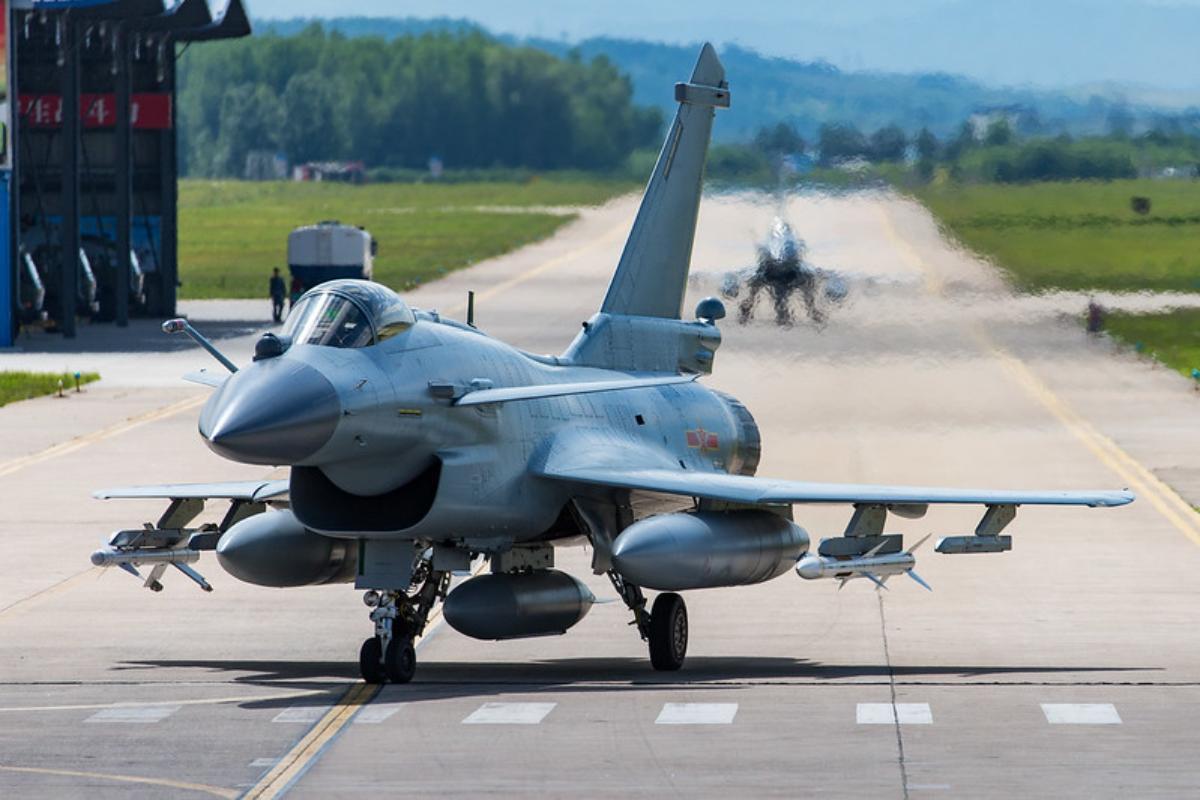
  •  

Trump’s Big Taiwan Move: Despite $14B Arms Freeze, Permanent U.S. Military Officials May Sit at MND

Washington has sent two contradictory signals on Taiwan in the last few days. Whether these signals reflect strategic ambiguity or strategic confusion in the coming days has become a matter of debate among the strategic experts.

On the one hand, Trump is holding back a $14 billion arms package for Taiwan, pre-approved by the U.S. Congress, despite a bipartisan group of senators explicitly urging him to “formally notify . But the U.S. President has described his decision to pause as a “very good negotiating chip” for his talks with Chinese President Xi Jinping.

Whether that worked in his summit meeting with Xi last week in Washington is not known. But Taiwan’s Defense Minister Wellington Koo confirmed yesterday (October 6) that he has “not heard” of any new sale being cleared, even in smaller chunks.

On the other hand,  the Pentagon is seemingly doing the opposite of this pause.

According to reports, the U.S. Department of Defense will station two representatives on a long-term basis inside Taiwan’s Ministry of National Defense headquarters in Taipei from 2026 to 2028.

One official will come from the Office of the Under Secretary of Defense for Policy [OUSD-Policy] — the office that writes U.S. national security and defense strategy. The second will come from the Institute for Defense Analyses [IDA] — a federally funded think tank that does mathematical modeling for war games and combat capability assessment.

The program is called the “Taiwan-US Defense Ministry Joint Cooperation Assessment,” with a total budget of NT$471 million [$14.8 million], including NT$152.5 million this year for personnel, consultancy, travel, data collection, and even interpretation for classified-level meetings.

If confirmed, this will be unprecedented.

This would mark the first time U.S. defense officials are permanently embedded inside Taiwan’s military headquarters, shifting cooperation away from traditional channels managed through the American Institute in Taiwan (AIT), Washington’s de facto embassy.

The military relationship between the United States and Taiwan is highly integrated yet formally unofficial. It is governed by the legal framework of the “U.S. Taiwan Relations Act” (TRA), which Congress passed on April 10, 1979.

Congress enacted it immediately after the U.S. formally terminated its previous “Mutual Defense Treaty with the Republic of China (Taiwan)” to officially recognize “the People’s Republic of China (PRC)” in Beijing.

Rather than abandoning Taiwan, Congress designed the TRA as a legal framework to ensure that “robust, unofficial security, commercial, and cultural ties” continue uninterrupted.

In short, the TRA provides a domestic legal workaround for treating Taiwan as a country without formal diplomatic recognition. However, under it, the U.S. is also obligated to maintain Taiwan’s capacity to resist force or coercion in general and the forcible annexation by the PRC in particular.

Over the years, U.S. personnel have served in Taiwan as trainers and advisers. Hundreds of active-duty U.S. military advisors—often colloquially referred to locally as “English teachers” to maintain a low profile—are routinely deployed across Taiwan.

U.S. military observers are present within Taiwan’s annual “Han Kuang live-fire military exercises”. They actively guide Taiwan’s defense strategy toward decentralized command, logistics, and real-world combat readiness.

Taiwanese fighter pilots undergo advanced combat training at Luke Air Force Base in Arizona.

The US remains Taiwan’s primary foreign weapons supplier, with a total backlog of orders nearing $20 billion.

In fact, Taiwan received its first new batch of two advanced Lockheed Martin F-16 Block 70 fighter jets on October 2.  This was part of an $8 billion deal approved in 2019 for 66 new-build F-16 Block 70 jets, with the remaining 64 aircraft scheduled for future delivery.  out of a 66-aircraft fleet on order.

A newly purchased F-16V Block 70 fighter jet lands at Chi-hang Air Base in Taitung on October 2, 2026. Taiwan received its first two US-made F-16V fighter jets as the island democracy upgrades its military capabilities to deter a potential Chinese attack. The warplanes are part of an $8 billion deal for 66 F-16Vs approved during U.S. President Donald Trump’s first term and scheduled for delivery this year. (Photo by CHENG Yu-chen / AFP)

However, all these coordination efforts between Washington and Taipei are usually routed through the AIT intermediary, as the U.S. adheres to its  One China” policy. In that sense, the new proposal to station Pentagon personnel directly inside the Taiwanese Defense Ministry represents a shift from this historical status quo.

The new arrangement puts Americans directly into the core of Taiwan’s defense policymaking, including policy coordination, Han Kuang exercise planning, asymmetric warfare doctrine, and major weapons procurement evaluations, it is said.

Of course, the U.S. routinely sends military and civilian defense officials to work directly inside the defense ministries of partner and allied nations. Established by the Pentagon in 2009, the Ministry of Defense Advisors (MODA) Program specifically trains and deploys high-performing senior U.S. Department of Defense civilians.

These advisors are embedded in partner-nation defense ministries to support institutional capacity building, strategy, financial management, and logistics.

The U.S. also actively deploys specialized defense consultants directly to the defense ministries of nations looking to transition away from historical adversaries such as Ukraine, Moldova, Armenia, and various Balkan nations looking to exit Moscow’s orbit.

The U.S. has a long history of embedding liaison officers in allied countries. For example, it has a Joint Political-Military Group in Israel that embeds officers in missile-defense cooperation for Iron Dome, David’s Sling, and now Iron Beam. But American officials do not operate inside the Kirya (Israel’s defense headquarters).

Similarly, despite 54,000 US personnel stationed in Japan, no U.S. officer sits inside Japan’s Ministry of Defense to assess combat capability.

Perhaps in NATO countries and South Korea, U.S. military officials are believed to sit together often.

There are also “Offices of Defense Cooperation” (ODC), or United States Military Groups, which are technically attached to the local U.S. Embassy for diplomatic protection. These teams provide security assistance and work in routine, day-to-day coordination with host ministry personnel.

However, what makes the proposed U.S. officials sitting directly within Taiwan’s military headquarters unique is that Taiwan is not an ally of America in the strict sense, as the U.S. lacks formal diplomatic recognition of Taiwan, and these officials will bypass the traditional AIT.

Of course, multiple reports in recent years have claimed that U.S. special forces are permanently stationed in Taiwan to assist its 101st Amphibious Reconnaissance Battalion special operations force, though Washington has officially denied it.  The same has been the case with the speculations about the coming and going of U.S. military personnel from the Army Special Operations Command base in Taoyuan.

U.S. President Donald Trump (L) poses for photos with China’s President Xi Jinping during a visit to Zhongnanhai Garden in Beijing on May 15, 2026. (Photo by Evan Vucci / POOL / AFP)

How will Beijing React?

At the time of writing, Beijing had not issued an official reaction, possibly because Taiwanese media outlets only recently brought details of this long-term Pentagon deployment to light. It has not been declared officially.

But it goes without saying that Beijing would be “certain to protest” and could respond “with expanded exercises and intimidation”, according to  Zivon Wang, a military analyst at the Chinese Council of Advanced Policy Studies in Taipei.

He expects U.S. personnel not to wear uniforms at the Ministry of National Defense because it could be interpreted as a more formalized US-Taiwan military relationship and might further provoke Beijing.

Incidentally, China has made more air and naval incursions across the median line in the Taiwan Strait since 2022. Although Chinese military aircraft had occasionally crossed the median line (established informally in 1954) in the past, the practice became significantly more frequent from 2022, particularly after Nancy Pelosi (then Speaker of the House of Representatives) visited Taiwan in August that year. What had once been an informal but largely respected buffer increasingly became a zone of routine Chinese military activity.

Therefore, it remains to be seen whether China will respond to the Pentagon’s proposed deployment with loud exercises.

It may also remain silent, as nothing is official yet and Trump has his “negotiating chip” of holding back Taiwan’s military package.

Trump’s admirers often see his unpredictability as useful in negotiations with an adversary, because the other side cannot be sure how far he is willing to go.

But his critics argue that his unpredictability becomes counterproductive when allies cannot distinguish a negotiating threat from a real change in American policy.

It remains to be seen who will prove to be right in the case of Taiwan.

  • Author and veteran journalist Prakash Nanda is Chairman of the Editorial Board of the EurAsian Times and has been commenting on politics, foreign policy, and strategic affairs for nearly three decades. He is a former National Fellow of the Indian Council for Historical Research and a recipient of the Seoul Peace Prize Scholarship.
  • The author can be reached at prakash.nanda (at) hotmail.com

The post Trump’s Big Taiwan Move: Despite $14B Arms Freeze, Permanent U.S. Military Officials May Sit at MND appeared first on EURASIAN TIMES.
  •  

Morocco’s 1st F-16 Block 72 Fighter Jet Completes Maiden Flight. F-35 Bid Reaches Nowhere

US defense giant Lockheed Martin said the Royal Moroccan Air Force’s (RMAF) first F-16 Block 72 had completed its maiden flight, a test milestone as the fighter jet moves toward delivery.

The company said the Block 72 is the newest variant of the F-16 Fighting Falcon, with updated avionics, sensors and mission systems, and changes intended to improve safety and reliability. Morocco was the launch customer for the configuration when Washington approved the purchase in March 2019.

“This first flight reflects meaningful progress on Morocco’s F-16 Block 72 program and is a critical step in strengthening Morocco’s future airpower,” Mike Shoemaker, vice president and general manager of Lockheed Martin’s Integrated Fighter Group, said. “The F-16 remains a vital component of today’s and future air defense, and we’re proud of the role it will continue to play in supporting Morocco’s sovereignty and contributing to regional stability for decades to come.”

The U.S. Defense Security Cooperation Agency notified Congress of two related sales on March 25, 2019.

One covered 25 new Block 72 aircraft, plus weapons, equipment and services, at an estimated $3.8 billion. The other, valued at more than $985 million, covered upgrades for Morocco’s 23 existing F-16C/D Block 52+ jets to the F-16V standard, which is broadly similar to the new Block 70/72 aircraft, along with related equipment and support.

F-16

If both go ahead, the Royal Moroccan Air Force’s F-16 fleet would roughly double and be built around a common, modernized standard.

“The purchase will improve interoperability with the United States and other regional allies and enhance Morocco’s ability to undertake coalition operations, as it has done in the past in flying sorties against ISIS in Syria and Iraq,” the agency said of the new-aircraft sale. “Morocco already operates an F-16 fleet and will have no difficulty absorbing this aircraft and services into its armed forces.”

The Block 70 and Block 72 differ mainly in the engine. The Block 70 uses General Electric’s F110-GE-129; the Block 72 uses Pratt & Whitney’s F100-PW-229. Morocco’s existing Block 52+ jets already use F100 engines, so the new aircraft fit the support setup already in place.

Morocco’s F-35 Bid

Morocco was looking to acquire U.S. F-35 fighter jets since 2020–22, after normalizing ties with Israel under the Abraham Accords and as Algeria reportedly moved to acquire Russia’s Su-57.

Israeli intelligence firm Jafaj said King Mohammed VI raised tensions with Algeria in a private meeting with Israeli Defense Minister Benny Gantz during his 2021 visit.

Algeria and Morocco have not had diplomatic ties since August 2021.

The firm, citing an unnamed European source, said Rabat wanted Israeli help tracking Algerian troops and militia deployments and was also seeking Israeli surveillance and strike drones.

F-35: Image via US Embassy, New Delhi

Jafaj said Defense Minister Abdellatif Loudiyi told Gantz that Morocco needed more combat aircraft for a possible war with its neighbor, that the F-35 was the preferred choice, and that Israel’s help lobbying the Biden administration would be welcome.

An F-35 was displayed at the 2024 Marrakech Air Show.

In August 2026, the International Institute for Strategic Studies, a London-based think tank, said there had been “little concrete progress” and described the F-35 purchase as hypothetical.

Meanwhile, Lockheed is again exhibiting at the Marrakech Airshow, which runs from Oct. 7 to 10.

Its stand includes an F-35 cockpit demonstrator, with demonstrations for invited guests, and scale models of the F-35A, F-16 and C-130J Super Hercules.

The post Morocco’s 1st F-16 Block 72 Fighter Jet Completes Maiden Flight. F-35 Bid Reaches Nowhere appeared first on EURASIAN TIMES.
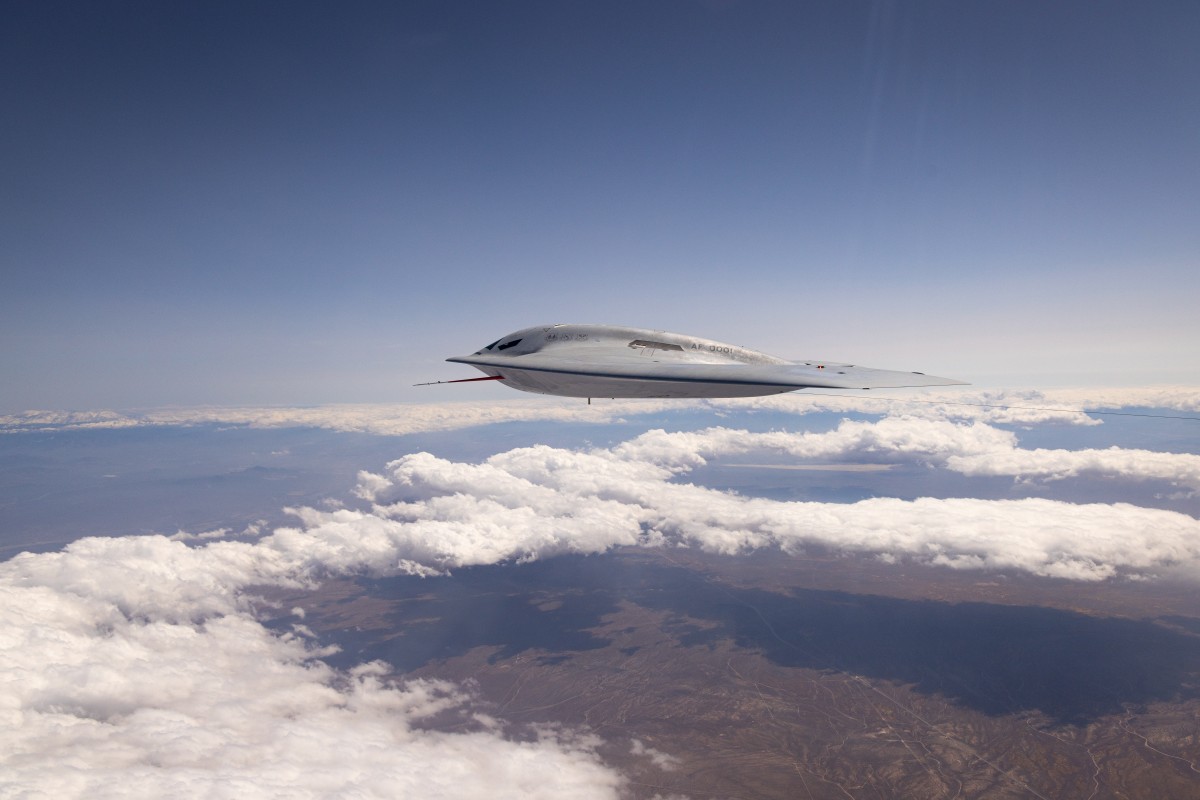
  •  

The Missile That Shot Down U.S. Stealth Aircraft is Coming Back—Mobile. Why India Must Take Note of the Russian Move

Russia appears to be preparing to revive and modernize its inventory of the Soviet-era Pechora S-125 short-to-medium-range surface-to-air missile system, in a move that the IAF leadership could well take note of.

S-125 is the same missile that was used to shoot down the US Air Force’s F-117 Nighthawk stealth fighter-bomber over Serbia on March 27, 1999, during the Kosovo War.

The Pechora S-125 (SA-3 Goa) is a legacy Soviet static, short- to medium-range surface-to-air missile system developed to engage low- to medium-altitude air threats using command guidance.

The IAF also modernized its S-125 inventory to plug an operational gap that widened due to delays in procuring MRSAM and Akash air-defense systems. However, the IAF did not pursue modernization to the extent that the capability gains matched the more comprehensive modernization offered by the Russian Pechora-2M.

According to Militarnyi, a Ukrainian media outlet focused on military affairs, the Minsk Wheel Tractor Plant (MZKT) has signed a contract with Moscow-based JSC Oboronitelnye Sistemi to supply 30 specialized wheeled chassis that appear intended for components of the Pechora-2M system.

The Pechora-2M is a heavily modernized Pechora derivative with a self-propelled truck-mounted launcher, digital electronics, an extended engagement envelope, and day/night electro-optical tracking, giving the system much greater tactical mobility.

Under the terms of the contract, Russia would receive 20 MZKT-8021-021 chassis, as well as five each of the MZKT-8022-021 and MZKT-80211-021.

The MZKT-8021/8022 family of specialized chassis was developed specifically to accommodate components of the Pechora-2M air-defense missile system.

Pechora Revival

The delivery schedule extends to 2029, suggesting a planned multi-year acquisition rather than a one-off procurement to meet an immediate operational requirement.

More likely, Russia is seeking to expand its air-defense capacity in response to the heightened threat from the prolific use of drones and other low-cost aerial threats in modern warfare.

Drone warfare has increased the aerial threat severalfold, so it is logical for any nation to increase the density of its AD systems by a corresponding factor.

Russia appears to be increasing its reliance on legacy systems rather than simply discarding them.

Russian Modernisation

The modernized Pechora-2M system was developed as a deep modernization of the Soviet S-125, incorporating a self-propelled, highly mobile launcher and modernized electronics. The modernization transformed the legacy stationary S-125 into a rapidly deployable air-defense platform capable of shoot-and-scoot tactics, reducing its vulnerability to anti-radiation weapons and precision strikes.

The 2M replaces the legacy four-rail stationary ground launcher (5P73) with a twin-rail launcher mounted on a heavy 6×6 truck chassis. The reduction in launch rails was necessary to maintain launcher stability when mounted on a mobile chassis.

Rafale, Tejas & AMCA: IAF’s “Healthy Mix” of Fighter Jets Leaves Out The Aircraft That May Matter The Most

The legacy S-125 required considerable time to disassemble, pack onto trailers, move, and re-erect at a new site. In contrast, the Pechora-2M can reportedly be brought into action in roughly 20–25 minutes, facilitating shoot-and-scoot operations.

Besides the self-propelled launchers, the tracking/fire-control radar and other system components are also mounted on high-mobility truck chassis rather than being confined to towed equipment.

File Image: S-125

IAF Pechora Modernization

In 2016, the Indian MoD issued a $272-million tender to digitize 16 Pechora systems. The tender was restricted to Indian companies to support the government’s Make in India policy. The eventual contract, worth ₹591.3 crore, was awarded to Alpha Design Technologies Ltd (ADTL) in 2020.

Russia’s Almaz-Antey is the original equipment manufacturer of the Pechora system. At the time, Indian officials indicated that Russian defense companies preferred to work through Russian state-owned entities, limiting the scope for direct OEM participation by Indian companies.

The scope of the Indian Pechora upgrade was primarily the electronic and mechanical modernization of the existing system rather than a fundamental redesign of its architecture. It included refurbishment and digitization of the missile-guidance radar and integration of the system with the IAF’s Integrated Air Command and Control System (IACCS).

Alpha Design Technologies Ltd executed the upgrade, focusing on digitization and electronic modernization. It replaced vintage electronic components with modern semiconductor-based electronics and digital processing, while modernizing operator consoles and other system elements.

No Mobility

The system retained its original static, four-rail, ground-mounted configuration (5P73 launcher) and towed transport arrangement because the Indian upgrade scope did not include mobility.

Because it lacks mobility, the IAF has traditionally used the Pechora for point defense of fixed, high-value infrastructure such as air bases, radar stations, and other military installations.

A statically deployed AD system protecting a high-value asset made considerably more sense when precision-guided munitions were either unavailable or relatively uncommon. In contemporary warfare, where precision weapons can routinely achieve single-digit-meter accuracy, a static air-defense system defending a high-value asset can itself become a priority target.

Recall the failed PAF attempt to strike the S-400 system deployed to defend Aadampur air base during Op Sindoor. With foresight, and by leveraging the S-400’s mobility, IAF leadership relocated the system before the attack. The episode illustrates the importance of mobility and survivability for high-value air-defense assets.

A Still-Capable System

Despite its vintage, the Pechora remains a potentially useful AD system. Endowed with mobility and modern sensors and electronics, it would acquire significantly greater survivability and tactical utility.

One of its strengths is electro-optical tracking, which permits passive target tracking without radar emissions, reducing vulnerability to anti-radiation weapons. Both Russian and Indian modernization programs have improved the system’s electro-optical capability.

The Indian upgrade incorporates thermal-imaging-based fire-control equipment, while the Pechora-2M also incorporates TV and thermal/infrared electro-optical channels.

Thermal imaging provides a passive night-and-day detection and tracking capability and, unlike conventional television cameras, does not depend on visible light. However, adverse atmospheric conditions can degrade its effectiveness.

It is interesting to note that the IAF chose to upgrade its Pechora systems without fundamentally modifying the missile. Contemporary reporting on the original upgrade program indicated that the IAF considered the existing missile adequate and concentrated instead on digitization, radar, communications, networking, and other system improvements.

The 5V27 family missile has a substantial fragmentation warhead of around 70 kg and uses command guidance. Its continued availability is one possible reason why extending the life of the Pechora system remains attractive.

Russia may also be reviving and revitalizing Pechora-2M systems because it has a substantial existing inventory of 5V27-series missiles. If so, the approach illustrates an important principle of modern warfare: the value of an old weapon system can change when it is combined with modern sensors, electronics, mobility and networking.

F-35 Bid Stalls — But Morocco’s 1st F-16 Block 72 Fighter Jet Completes Maiden Flight

What the IAF Should Note

In the immediate future, the IAF will need to deploy many more AD systems than it currently does in order to field a robust air-defense capability spanning the entire gamut of aerodynamic threats—aircraft, helicopters, cruise missiles, guided bombs and drones.

Developing additional AD systems may prove more challenging and time-consuming than upgrading existing legacy systems such as the Pechora.

Upgrading the Pechora to add mobility, modern electro-optical sensors and improved networking should be well within Indian technological capability. Even locally manufacturing additional upgraded systems under an appropriate OEM arrangement could be a cost-effective way to augment India’s air-defense capability.

Russia’s apparent decision to extract additional combat value from an old missile system should therefore be viewed less as a revival of obsolete technology and more as an example of how legacy weapons can be adapted to the changing economics and character of air warfare.

  • Vijainder K Thakur is a retired IAF Jaguar pilot, author, software architect, entrepreneur, and military analyst.
  • Views Personal of the Author
  • Follow the author @vkthakur

The post The Missile That Shot Down U.S. Stealth Aircraft is Coming Back—Mobile. Why India Must Take Note of the Russian Move appeared first on EURASIAN TIMES.
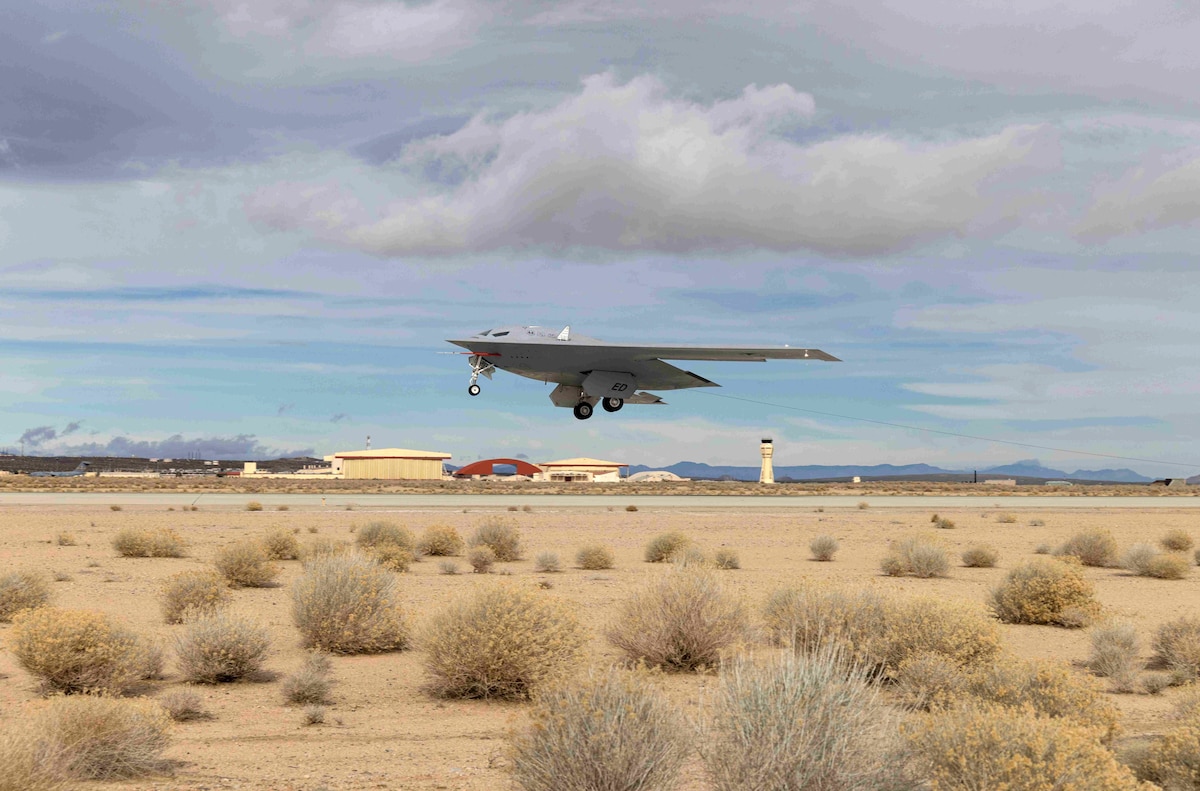
  •  

Germany Holds ‘Exploratory Talks’ to Join Once Rival GCAP 6th-Gen Fighter Program After FCAS Collapse

Months after walking away from the Future Combat Air System (FCAS) project, Germany is quietly testing the waters of a rival alliance led by Britain, Japan and Italy.

Germany has held “exploratory talks” about joining the Global Combat Air Program (GCAP) as it charts its future after the FCAS collapse.

The confirmation came after Politico accessed internal German government documents that revealed the United Kingdom’s national armaments director, who oversees defense procurement, sought German participation in the next-generation fighter program. The document noted that London wants to discuss the terms of potential cooperation, such as Germany’s military capability requirements and industrial “workshare.”

Notably, the German defense ministry told Politico it held preliminary discussions on GCAP’s fundamental requirements and program substance, without disclosing whether the United Kingdom had officially offered Germany any specific participant status.

The development comes months after the Friedrich Merz government pulled the plug on the FCAS program it was pursuing with France and Spain. The program had remained stalled amid unresolved disputes between Airbus (representing Germany and Spain) and France’s Dassault Aviation over work-sharing, design philosophy, and supplier selection.

After the program ended, an Airbus-led consortium of defense companies known as “Team Gen 6” filed a position paper on a sixth-generation fighter project with the German government, signaling an industry drive to influence the process.

Over a month after Germany abandoned the FCAS, Airbus Defense and Space said at the ongoing Farnborough Air Show in the UK that it was open to joining forces with Britain, Italy and Japan if it had enough control over the program and work share.

“What we’re ready to do is to join something or to build something where we have a significant portion of the work and the leadership. That’s currently being explored,” head of Airbus’s defense division in Munich, Michael Schoellhorn said at the time.

GCAP has been on Merz’s radar since before it walked out of the FCAS in June 2026, as the EurAsian Times had previously reported.

During a visit to Italy in February 2026, Merz raised the prospect of his country joining the GCAP and received a favorable response from Italian Prime Minister Giorgia Meloni.

While Germany is actively looking for partnerships it could forge for a sixth-generation fighter, France appears more undecided for now.

France and its aerospace giant Dassault could go solo with the FCAS, repeating a historical pattern seen in its development of the Rafale. In fact, French officials have repeatedly said France is currently the only country in Europe with the full industrial ecosystem to design and build a fighter completely independently.

In July this year, Dassault CEO Eric Trappier said a next-generation combat jet could be developed solely in France or in cooperation with other partners, but he did not say which countries could be invited to the effort, if at all.

Meanwhile, India has officially initiated efforts to join the FCAS program. “The Ministry of Defence has initiated efforts in a concerted manner to co-join the 6th Generation Fighter Aircraft Development Programme viz. Future Combat Air System (FCAS) spearheaded by the French Government,” the defense ministry said in its report to the Parliamentary Standing Committee on Defense.

File Image.

Germany’s GCAP Decision: Not So Easy?

GCAP is largely on track after it received a fresh impetus last month, with London committing £8.6 billion ($11.7) to the program in the Defense Investment Plan (DIP) earlier this year. GCAP’s industrial joint venture to design and develop the next-generation fighter, Edgewing, is led by Leonardo (Italy), Mitsubishi Heavy Industries (Japan), and BAE (the UK).

Pneumonia Plague in Russia: Boris Yeltsin Admitted the 1979 Lab Leak. But Moscow Says Siberia is Different.

The group formally admitted Canada as an observer to the program in July this year, as the EurAsian Times previously reported. Following that, Leonardo  CEO Lorenzo Mariani said at Farnborough that a country willing to join the GCAP could do so before the end of this year, with a final deadline of another year—signaling an appetite for expansion.

Although the UK and Italy have openly expressed their willingness to welcome more partners into the GCAP, Japan may remain Germany’s only hurdle if it decides to join the trilateral sixth-generation grouping.

Until now, Tokyo has remained reluctant to open the group to more members, citing concerns about delays and an urgent need for the Japanese Air Self-Defense Forces to replace the F-2 with a next-generation aircraft. It earlier opposed Saudi Arabia’s entry into the GCAP despite the resources that the cash-rich country could potentially bring.

Because of “where GCAP partners are in terms of the program at the moment, what they don’t want to do is to start to have to renegotiate stuff, introducing somebody else at this point and then slow the program down,” Douglas Barrie, a senior fellow for military aerospace at the International Institute for Strategic Studies (IISS), told Breaking Defense.

Even if Japan allows Germany entry into the GCAP on the insistence of the UK and Italy, new challenges could arise over the aircraft’s design philosophy. For one, the GCAP is being built around a maritime scenario, whereas Berlin would want an aircraft suited to its own geography and continental use.

There is already a small discrepancy in the GCAP group’s priorities: Japan wants to simply develop a new fighter by the mid-2030s to replace the F-2, while the UK and Italy are reportedly more interested in GCAP developing a cutting-edge “system of systems,” a fighter that works with a swarm of drones under a less stringent timeframe. Admitting a new member could further complicate matters internally and likely cause delays.

Another major challenge for Berlin could be the distribution of work share, which was unarguably the main bone of contention within the FCAS and the last nail in its coffin.

The three Industry partners are already set in their ways, having established the joint venture, divided responsibilities, and set program structures via Edgewing and GIGO (GCAP International Government Organization). At this point, bringing Germany into the GCAP could risk undermining existing partners’ interests and reopening delicate talks on industrial participation, production shares, and intellectual property.

If the terms are renegotiated, Germany may be offered a junior or subordinate role, with limited say over design, architecture, and key decisions—something that may not be acceptable to Airbus, as indicated earlier this year.

In addition to these challenges, Germany views the UK’s BAE Systems with skepticism,  Politico stated, citing the internal German assessment.

The document reportedly highlights what it calls a “bad experience” with the business during Eurofighter development and says it is reasonable to expect BAE will control the new initiative in a manner incompatible with collaboration “on an equal footing.”

It is pertinent to note that Italy’s defense minister claimed in January this year that the UK was not doing enough to share its cutting-edge technology with its partners, calling it “madness,” months after he said in April 2025 that the UK needed to bring down the “barriers of selfishness.

Besides GCAP, Germany is considering an alternative partnership with Sweden and Spain. In fact, the internal document emphasizes that the three nations would start from a more comparable position than Germany would, because their military requirements are closely linked, and recommends exploring that option, as noted by Politico.

Notably, Michael Schoellhorn expressed his excitement about collaborating with Sweden and Saab on the next-generation fighter in March 2026 during an exclusive interview with the Swedish business newspaper Dagens Industri on the fringes of the Airbus Defense & Space Summit. This means that Airbus has been eyeing Saab as a potential partner.

For now, both options remain on the table, and Germany has yet to decide whether to join the GCAP to get a sixth-generation fighter by 2035 or pursue a partnership that starts on equal footing and allows Airbus to take an equal, if not larger, role.

The post Germany Holds ‘Exploratory Talks’ to Join Once Rival GCAP 6th-Gen Fighter Program After FCAS Collapse appeared first on EURASIAN TIMES.

  •  

France Fires Nuclear-Capable M51.3 Sub-Launched Ballistic Missile For The First Time Amid Russian Threats

France has test-fired its new M51.3 nuclear-capable ballistic missile for the first time from a submarine.

The missile, the third variant of the M51 sea-launched ballistic missile, was fired from the nuclear-powered ballistic-missile submarine Le Vigilant and impacted in the North Atlantic, “hundreds of kilometers from any coastline,” the defense ministry said.

President Emmanuel Macron watched from a French warship. The Direction générale de l’armement tracked the flight, including with the trials ship Monge.

“The launch was conducted without a nuclear warhead and in strict compliance with France’s international commitments,” the ministry said. It called the shot proof of “the excellence of the high-tech solutions employed by French industry in the field of nuclear deterrence.”

The M51.3, built by ArianeGroup, entered service on 24 October 2025.

An earlier flight, in November 2023, was from a land site.

À bord de la frégate multi-missions Auvergne, j'ai assisté au premier tir du nouveau missile balistique M51.3 depuis le sous-marin nucléaire lanceur d'engins Le Vigilant.

Très peu de nations disposent d'un tel savoir-faire.

Félicitations à tous les acteurs de cette réussite… pic.twitter.com/bElCe99hMd

— Emmanuel Macron (@EmmanuelMacron) October 6, 2026

French President Macron wrote on X (translated): Aboard the multi-mission frigate Auvergne, I witnessed the first firing of the new M51.3 ballistic missile from the nuclear-powered ballistic missile submarine Le Vigilant. Very few nations possess such expertise. Congratulations to all the players in this exceptional achievement: DGA, CEA, Ariane Group, Naval Group, and the French Navy.

Your professionalism, your rigor, and your technical mastery are the pride of France. This technical success is a new demonstration of the credibility of our deterrence, whose sustainability is assured. To be free, one must be feared. And to be feared, one must be powerful. To protect the French in the long term against threats, I launched the renewal of our capabilities for the decades to come as early as 2017. In ten years, the budget for our armed forces will have doubled.

Our future strategic submarines are currently under construction. This year, we launched the program for hypersonic and maneuverable strategic missiles, which will equip our airborne deterrence component. Our nuclear deterrence protects us and will continue to protect us. Long live the Republic, and long live France.

Tuesday’s firing was the first from a submarine, and it closed Le Vigilant’s requalification after a long refit. A navigation warning had closed a box southwest of Penmarc’h from 5 to 21 October. Witnesses at Penmarc’h reported the missile leaving the water shortly after 09:10, with a contrail and a sustained rumble.

Open-source figures put the M51 at about 12 meters, 2.3 meters in diameter and roughly 52 tonnes, with three solid stages, an estimated range of 8,000 to 10,000 km and a speed near Mach 20.

The M51.3 carries the newer TNO-2 oceanic warhead. Analysts usually cite four to six independently targetable warheads of about 100 kilotons, plus penetration aids. Paris says the variant has better range, accuracy, and ability to defeat missile defenses. Exact figures remain classified.

File Image

The missile arms the four Triomphant-class submarines, one of which remains at sea as part of France’s continuous deterrent.

A follow-on, the M51.4, was contracted to ArianeGroup in September 2025. The next submarine class, SNLE 3G, had its first steel cut in March 2024, with the first boat aimed at the mid-2030s.

The test comes as Macron has warned of a change in “Russian aggression and threats” after a run of hybrid attacks blamed on Moscow, and has said those actions would “not go unanswered.” He has also offered European partners a role in France’s nuclear deterrent, the only one in the European Union.

Germany Holds ‘Exploratory Talks’ to Join Once Rival GCAP 6th-Gen Fighter Program After FCAS Collapse

M51

According to Ariane Group, the M51 sea–surface submarine-launched ballistic missile is a solid-propellant, three-stage launcher weighing over 50 metric tons and measuring 12 meters long. Each of the FOST’s SSBNs carries 16 missiles, capable of delivering their payload over intercontinental distances of several thousand kilometers.

Launched from a submarine, the M51 travels through the Earth’s atmosphere into space, reaching an altitude of more than 2,000 kilometers, well beyond low-Earth orbit.

It then re-enters the atmosphere at Mach 20. The M51 is a concentration of space technologies combining power, precision, and reliability. Because deterrence credibility depends on its permanent availability, the system must be fully ready at all times.

Commissioned at the end of 2010, the M51 is the fifth generation of French ballistic missiles.

The missile is developed in increments to respond effectively to changes in the geostrategic context and France’s requirements. This means ArianeGroup, Europe’s only company capable of designing and producing a strategic missile, must stay at the cutting edge of technology and maintain the highest performance.

The M51.2 is the current in-service version.

It will be succeeded by the M51.3 version, which successfully carried out its qualification flight without a nuclear warhead.

With AFP Inputs

The post France Fires Nuclear-Capable M51.3 Sub-Launched Ballistic Missile For The First Time Amid Russian Threats appeared first on EURASIAN TIMES.

  •  

Kashmir’s ‘Halla Bolle’ Conclave: Old Script, New Venue. Venom Against India But Mum on Pakistan: OPED

Recently, during the 5th Halla Bolle Conclave held at the Radisson Collection in Srinagar, Jammu and Kashmir, the same separatist discourse once again found space.

The conclave brought together mainstream political leaders and a former separatist figure, with discussions focusing on issues such as restoring statehood, Article 370, autonomy, political rights, governance, youth aspirations, reconciliation, and India-Pakistan relations.

Many of the questions asked and answers given reflected narratives that have long been nurtured in the Valley and closely resemble Pakistan’s longstanding propaganda on Kashmir.

The participation of mainstream political leaders alongside former separatist figures also showed how some of these old narratives still find space in Kashmir’s contemporary political discourse.

Selective Politics of Kashmir’s Mainstream Leaders

Aga Syed Ruhullah Mehdi, the National Conference Member of Parliament (MP) representing the Srinagar Lok Sabha constituency, who behaves like some philosopher-king, is systematically promoting Pakistan’s propaganda and narratives.

He tries his best to hurt India whenever he gets the chance.

For instance, when asked to state his position on the situation in Muzaffarabad and Pakistan-occupied Jammu and Kashmir (PoJK), he said that he would not talk about it until people in the Valley were ‘empowered’, deflecting by declaring, ‘Return our dignity & we will talk about Muzaffarabad’. He then went on to claim that Kashmiris face the status of ‘second-class citizens’ in the Valley, asserting that ‘our reality is that we are disenfranchised as second-class citizens.’

This is exactly the problem. He avoids questions concerning PoJK but remains extremely vocal when criticizing India.

He is actually misusing his constitutional right to freedom of speech and expression and using Indian democracy as a shield while promoting narratives that are completely in line with Pakistan’s interests. He actually doesn’t want to hurt his masters sitting in Rawalpindi.

He also claims that there is no freedom of speech, frequently protesting that, “as a Kashmiri Muslim voice, I was denied the opportunity to speak.” Yet his actions contradict this narrative. He himself makes the most noise, using every available platform to speak publicly, give interviews, address gatherings, speak in Parliament, and criticize India regularly.

If he is supposedly not allowed to speak, then how is he able to constantly and systematically spread venom and engage in anti-India propaganda repeatedly?

There is a clear difference between legitimate democratic criticism of a government and repeatedly using the democratic space available in India to promote narratives that portray India itself as the source of Kashmir’s problems while giving Pakistan a free pass for its sponsorship of cross-border terrorism and the killing of innocent civilians in J&K and the rest of the country.

Then, an audience member asked National Conference president Farooq Abdullah why Kashmir had aligned with ‘Hindu-majority India’ in 1947. The very framing of the phrase ‘Hindu-majority India’ exposes the toxic ideology behind the question.

However, those who push such narratives desperately need to look at what actually happened to the regions that joined Pakistan in 1947, as well as those parts of the subcontinent that were forcibly taken by Pakistan, and the misery their people endure today.

Look at Balochistan. Look at Khyber Pakhtunkhwa. Look at the political and institutional failures that ultimately led to the secession of Bangladesh, demonstrating that a shared religious identity alone could not keep Pakistan united. Most importantly, look at the disaster that is Pakistan-occupied Jammu and Kashmir (PoJK) today.

For years, the people of PoJK have taken to the streets to protest Islamabad over basic political, economic, and social rights. The recent protests have faced deadly crackdowns, reportedly leaving more than 150 people killed, while the brutal authorities have even gone so far as to restrict the supply of essential goods, including food, flour, medicines, and fuel, during periods of unrest.

When Pakistan’s Failures Are Blamed on India

Yet Pakistan’s propaganda machinery has repeatedly played its cards well in Kashmir. Its influence remains deeply entrenched in the Valley, allowing narratives about Pakistan and India to persist regardless of what happens inside Pakistan.

Pakistan can have Imran Khan in jail, political repression, a deeply constrained democratic system, and an army that continues to exercise enormous influence over the country’s politics, elections, government formation, policymaking, and even the broader political system, yet people in Kashmir are repeatedly told that Pakistan’s problems are somehow the result of an Indian conspiracy.

Even when Pakistan itself is burning, its failures are deflected towards India rather than examined as the consequences of its own political and institutional failures.

This should force Indian authorities to rethink their approach and ask why such narratives continue to resonate in the Valley. Simply dismissing them as propaganda will not be enough. There needs to be a serious effort to understand the channels through which they spread, the political actors who amplify them, and the reasons they continue to influence public discourse.

Certain mainstream political parties and leaders in Jammu and Kashmir have also played a major role in keeping this discourse alive. They have repeatedly used the blood and suffering of Kashmiris for their own political objectives. Rather than challenging narratives promoted by Pakistan, they have often sustained and magnified them.

Take PDP chief Mehbooba Mufti, for example. She has advocated opening the Line of Control in Kashmir so that trade can take place with Central Asia, Afghanistan, and other regions, invoking the old Silk Route and China’s connectivity. One has to ask: what world is she living in?

Does she not understand the region’s geopolitics? Does she not understand the cross-border terrorism and terrorist infrastructure operating from Pakistan-occupied territory? Does she not understand the India-Pakistan dispute over PoJK? Does she not understand China’s illegal territorial claims against India in Jammu and Kashmir, the Shaksgam Valley territory ceded by Pakistan to China in 1963, the recent Galwan clashes, and China’s broader geostrategic interests in the region?

It is not simply a matter of opening India’s borders and assuming that will solve everything. Other players have their own interests and nefarious designs, and they too have agency. Besides, extra-regional powers have their own interests. The region is not operating in a geopolitical vacuum.

The problem with Kashmir’s political leadership is that they rarely talk about the issues that actually matter to the people, for which they were elected, and instead think that by playing separatist politics, they can secure their votes and political future.

They rarely talk about how to improve the living standards of common people, eliminate corruption, generate employment, improve infrastructure, attract investment, or make governance more accountable and responsive.

IMAGE FOR REPRESENTATION: Omar Abdullah (R), Chief Minister of Jammu and Kashmir, salutes as he inspects newly recruited Indian Army soldiers from the Jammu and Kashmir Light Infantry (JAKLI) during a passing-out parade at the JAKLI Army headquarters in Srinagar on December 4, 2025. (Photo by Tauseef MUSTAFA / AFP)

Instead, they have often tried to frame the relationship between the people of Kashmir and the central government in colonial terms, as a master-slave relationship. They repeatedly use words such as “Delhi,” while saying that Kashmiris have to “fight Delhi.” They rarely speak about constructive engagement with the central government.

They now say that Kashmiris have been “disempowered” after the abrogation of Article 370 in 2019. But what happened before 2019? Were Kashmiris not being described as “alienated” and “disempowered” before 2019 as well? Were these same political leaders not making exactly the same arguments then?

If they were making the same arguments before 2019, then what exactly did they do for the people of Kashmir when they had the political power they now claim to have lost?

This is something that needs to be asked.

Need to Move Beyond the Politics of Alienation and Victimhood

Moreover, the words “alienation” and “disempowerment” are not being used accidentally. They carry a specific political meaning and fit into a particular narrative. The problem is that these leaders have never really looked at the relationship between Jammu and Kashmir and the central government in the same way that political leaders in other parts of India look at their relationship with the Center.

The current noise over statehood also needs to be understood in this context. They present the demand for statehood as though it is entirely about the interests of the common people. But is it?

Of course, statehood is important, and people can legitimately demand its restoration. But it also involves political interests. These political parties want more political power and greater control over the administration.

After losing statehood, they feel they lost a significant part of their political authority. They also want statehood because it would give them greater political control and a shield from the scrutiny and accountability they currently face from different agencies and institutions. In this sense, the demand for statehood is also about restoring their own political power and reducing accountability.

But the common people have other priorities. They want good governance. They want corruption to be eliminated. They want development, employment, better infrastructure, better public services, and an improved standard of living.

The question is: when there was statehood before 2019, what did they do to improve the lives of common people?

If the mainstream political parties in Jammu and Kashmir had pursued positive, constructive, forward-looking, and pragmatic politics instead of sustaining and magnifying narratives that have served Pakistan’s interests, the Valley could have been very different.

Political parties have every right to criticize the government. They have every right to demand statehood, greater powers, development, and political representation. But when criticism of India becomes constant while questions concerning Pakistan are systematically avoided, and when every issue is presented through the prism of alienation and disempowerment, it becomes necessary to ask whose interests this politics is ultimately serving.

The mainstream political leadership in Jammu and Kashmir needs to understand that the people of Kashmir cannot be kept permanently trapped in the politics of grievance, alienation, and victimhood. The people deserve politics that focuses on their future, not politics that continuously recycles past narratives.

  • Views Personal of the Author
  • The author is a prominent journalist from Jammu & Kashmir and wishes to keep his identity concealed for security reasons.
  • For any feedback on the story, email us at editor (at) eurasiantimes.com

The post Kashmir’s ‘Halla Bolle’ Conclave: Old Script, New Venue. Venom Against India But Mum on Pakistan: OPED appeared first on EURASIAN TIMES.

  •  

Saudi & Turkey Chase F-35 Jets, Heavy Skepticism in India. Why IAF Veterans are Not Too Keen on F-35s?

After years of lobbying by Riyadh, the United States recently greenlit a potential sale of F-35 fighters to Saudi Arabia. Meanwhile, Turkey is looking to rejoin the F-35 program and is aggressively pursuing the Trump administration to approve the sale of stealth jets. 

Another interesting case is India, which is hosting Exercise Tarang Shakti, where six F-35 jets are participating. Indian experts call it a unique opportunity for the IAF to evaluate US stealth jets and see how Indian ground and airborne radars detect them.

Notably, this is the first time F-35s are participating in drills with Indian jets on Indian soil.

Many see this as an historic opportunity to train alongside arguably the world’s best jets and give real-time exposure to the IAF’s Rafale, Su-30MKI and Tejas aircraft. Even IAF critics who don’t favor a potential F-35 sale to India see this as a historic opportunity.

Earlier, a EurAsian Times report said the US State Department announced the proposed sale of F-35 Lightning II and related equipment to Saudi Arabia on September 17, 2026. The proposed sale is expected to cover  48 F-35 aircraft and 49 Pratt & Whitney F135-PW-100 engines, along with communications gear, training, spare parts, and other support as requested by Riyadh.

The approval followed years of lobbying by the Saudi kingdom to procure the highly sought-after stealth fighters. Earlier, the Obama administration explicitly ruled it out in late 2015, stating that Israel would remain the sole F-35 recipient in the region to preserve its qualitative military edge (QME).

Later, the Biden administration explored linking a potential F-35 deal to Saudi-Israeli normalization, but talks stalled after the October 7 Hamas attack on Israel.

The US State Department’s proposed sale still requires congressional approval, and analysts believe Saudi’s purchase of the F-35 could hit a roadblock amid concerns about Riyadh’s ties with China and Israel’s opposition to the deal.

Despite being a founding member of the F-35 program and making a significant financial investment, the US expelled Turkey from the consortium and sanctioned it under CAATSA for purchasing the S-400 despite repeated warnings.

Ankara has been actively pursuing a strategy to divest itself of its Russian-made S-400 and sell it off to a potential third-party buyer.

Earlier, the US President similarly responded to questions about lifting CAATSA sanctions on Turkey by saying, “I’ll always speak to President Erdogan. He is a friend of mine, as you know. And I’ll always make him happy.”

As Trump & Xi Talk — U.S. and China’s Nuclear Submarines Race For Dominance in the Indo-Pacific

For now, Turkey’s path to obtaining the F-35s is still full of hurdles that both Washington and Ankara may find hard to remove, including Israel’s stiff opposition, as the EurAsian Times has explained before.

Like Saudi Arabia and Turkey, several countries have made unsuccessful attempts to obtain the F-35, widely regarded as the leading fifth-generation multirole fighter thanks to its advanced low-observable stealth and groundbreaking sensor fusion.

Functioning as a highly networked airborne command node—often described as the “quarterback of the skies”—it shares data seamlessly across friendly platforms. In fact, analysts believe that it is the most capable fifth-generation fighter in service anywhere in the world.

Despite this, India — a country that faces the dual threat of China and Pakistan along its borders — has been somewhat indifferent to what many consider the world’s best jets.

US Pitch for F-35s

Donald Trump unofficially pitched the F-35 to India during a meeting with Indian Prime Minister Narendra Modi in February 2025. “Starting this year, we will be increasing military sales to India by many billions of dollars. We are also paving the way to provide India with the F-35 stealth fighters ultimately,”  he said at the time.

F-35: Image via US Embassy, New Delhi

The F-35s were also displayed at Aero India 2025 the same month, where they met the Russian Su-57 on the tarmac for the first time.

During his April 2025 visit to India, US Vice President J.D. Vance appeared to reiterate the offer.

“We, of course, want to collaborate more. We want to work together more. And we want your nation to buy more of our military equipment, which we believe is the best in class. American fifth-generation F-35s, for example, would give the Indian Air Force the ability to defend your airspace and protect your people like never before,” he said, making a more direct appeal.

Although the US never made an official offer, the verbal F-35 pitch and the prospect of acquiring a cutting-edge stealth fighter looked great on paper, particularly since China operates two fifth-generation aircraft (the J-20 and J-35A) and is allegedly exporting the J-35A to Pakistan.

Rafale, Tejas & AMCA: IAF’s “Healthy Mix” of Fighter Jets Leaves Out The Aircraft That May Matter The Most

However, India’s defense community and Indian Air Force (IAF) veterans seemed unimpressed by the F-35 offer despite acknowledging the aircraft’s potent capabilities, a stance recently reiterated as six F-35s made their debut in India-hosted “Exercise Tarang Shakti 2026” in Jodhpur, Rajasthan.

Seven Reasons Why IAF Veterans Oppose F-35

First, Indian analysts and experts believe that buying an expensive stealth fighter off the shelf from the United States would be a liability, since it would do nothing for the Indian defense manufacturing sector and come with an enormous price tag.

Each F-35 is expected to cost $80 to $120 million, with even higher life cycle costs. Therefore, a fleet of F-35s would impose a heavy financial burden that the Indian Air Force would rather allocate to indigenous programs and more flexible and diverse acquisitions.

Second, analysts and veterans have argued that the US would never part with its technology, eliminating domestic manufacturing. They reckon the F-35 procurement would run counter to the “Make in India” and “Aatmanirbhar Bharat” policies.

Air Marshal Anil Khosla (retd), the former Vice Chief of Air Staff (VCAS), earlier stressed that even with approval of limited technology transfer and local manufacturing, significant challenges would remain. At the time, he highlighted production risks arising from the F-35’s complex global supply chain, noting that Lockheed Martin sources components from multiple countries. He cautioned that any disruption or delay in delivering these parts could halt the entire manufacturing process.

Air Marshal Khosla further noted that India’s continued reliance on foreign suppliers would constrain genuine localization, and the IAF would struggle to manage such disruptions.

Notably, this concern takes on greater significance as delivery of Tejas Mk-1A fighter jets to the Indian Air Force has been delayed due to delays in delivery of F404-IN20 turbofan engines, affecting the service’s preparedness.

Photo by United Aircraft Corporation (UAC)
File: F-35 Lightning II and Su-57 Felon captured in the same frame for the first time in history at Aero India 2025

Third, there is concern that diverting resources to acquiring the F-35 would inevitably affect India’s own fifth-generation Advanced Medium Combat Aircraft (AMCA), which aims to deliver a fifth-generation platform with advanced sensors, electronic warfare systems, and networked combat features while fostering a domestic aerospace industrial base.

Experts have urged the IAF to focus on its indigenous programs rather than getting trapped in another round of imports.

Fourth, analysts have also cited logistical challenges and operational incompatibility with India’s diverse air force fleet comprising a mix of Russian Su-30MKIs, French Rafales and Mirage 2000, and Tejas. They believe that adding another fighter type would further complicate maintenance, training, and logistics for an already varied inventory.

France Fires Nuclear-Capable M51.3 Sub-Launched Ballistic Missile For The First Time Amid Russian Threats

Fifth, India operates Russian-supplied S-400 systems, which previously caused friction between the US and Turkey.

“An F-35A deal would likely come with strings attached—most notably, a U.S. demand that India abandon its Russian S-400 air defense systems in favor of the American THAAD,” IAF veteran and commentator Squadron Leader Vijainder K. Thakur earlier stated.

The S-400 is deeply embedded in India’s layered air defense network, and New Delhi has been considering an additional order, meaning it would inevitably become a point of contention in any potential deal.

Sixth, the US has been flagged as an unreliable partner.

“Putting too many military aviation eggs in the unreliable US basket will also be an issue. Americans can be “very unreliable” when it comes to putting sanctions and freezing spares and maintenance support,” IAF veteran and aviation analyst, Air Marshal Anil Chopra (retd), earlier wrote in a detailed EurAsian Times article.

Adding the repeated threat of sanctions by the US and a rapidly changing geopolitical scenario further complicates the purchase.

Seventh, the F-35 is embedded in the US-controlled networks, including the Operational Data Integrated Network (ODIN), which sends information back to American servers. Indian experts view this as a breach of operational independence.

Tarang Shakti: F-35 and Rafale

Furthermore, they have cautioned that the US imposes stringent operational restrictions on its system and could try to limit the F-35’s use in combat, particularly against Pakistan.

Critics worldwide have also stressed that an unpredictable US administration could restrict free F-35 operations by limiting hardware and software supplies, commonly referred to as a kill switch. In fact, this is the reason why countries like Canada and Portugal decided to look for an alternative to the American stealth fighter.

Indian strategic discussions generally prioritize accelerating Tejas production, advancing the AMCA, and exploring local manufacturing options for platforms such as the Rafale. If a foreign fifth-generation fighter is ultimately considered, many experts have indicated a preference for the Russian Su-57 because of the technology transfer, local production, and twin-seat variant.


The post Saudi & Turkey Chase F-35 Jets, Heavy Skepticism in India. Why IAF Veterans are Not Too Keen on F-35s? appeared first on EURASIAN TIMES.
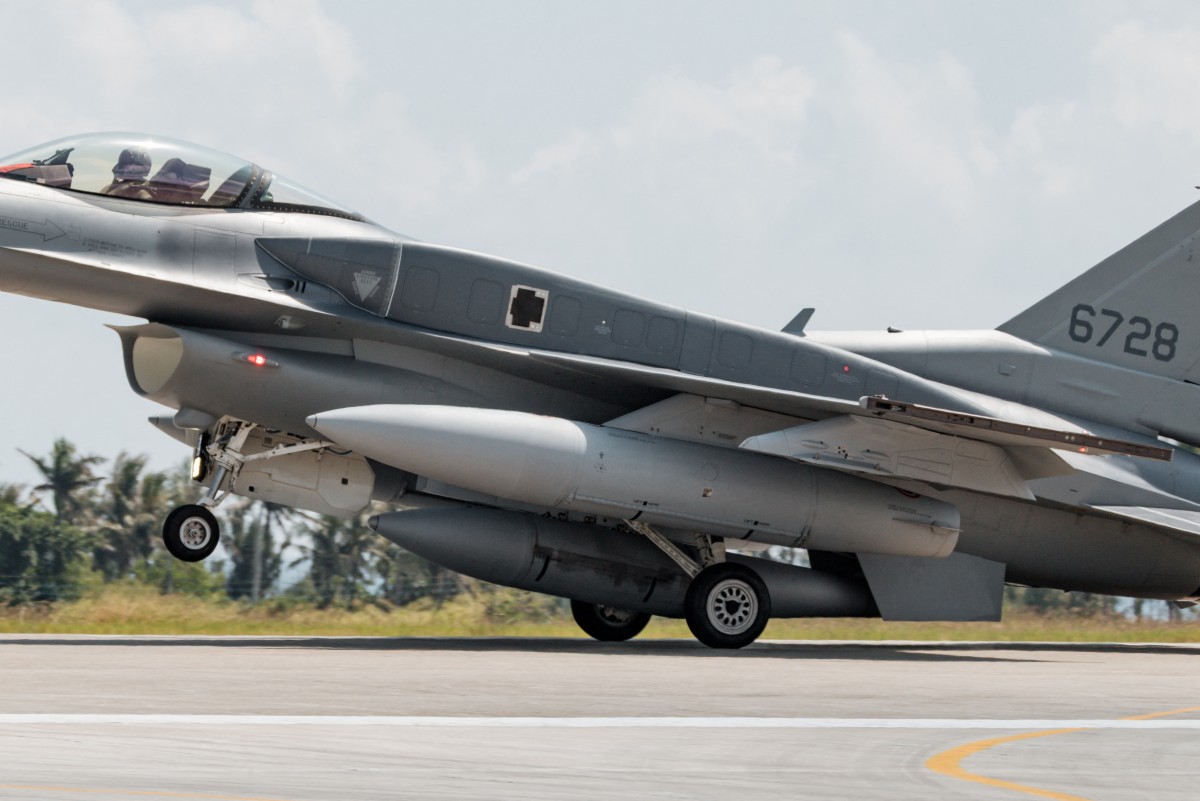
  •  

Pneumonia Plague in Russia: Boris Yeltsin Admitted the 1979 Lab Leak. But Moscow Says Siberia is Different.

Nearly six years after the COVID outbreak, there are fears of another health emergency after reports of the death of a Russian researcher in a suspected case of plague, which has prompted authorities to quarantine over 200 people in the remote Siberian region and enforce strict mask mandates.

Notably, reports suggest that the suspected plague bacteria might have originated from a Russian Anti-Plague Institute, bringing attention to Russia’s secretive biological weapons research programs and bringing back memories of the deadly 1979 Anthrax outbreak in the Soviet Union, which also originated from a research facility.

Authorities have acknowledged the death of a researcher due to a “suspected case of a particularly dangerous infection,” described as “pneumonia of unknown etiology.” However, federal authorities deny any lab release and say tests found no work-related pathogens.

However, concerns remain that Russia is hiding crucial details about the outbreak that could hinder an effective response.

The 28-year-old lab technician Darya Shipilova died on October 2 after reportedly breaking a test tube with live Yersinia pestis at an Anti-Plague Institute on September 25 while handling samples.

According to Russia’s national public health agency, Rospotrebnadzor, the researcher worked at the Irkutsk Anti-Plague Research Institute of Siberia and the Far East in Shelekhov.

The 28-year-old lab technician, Darya Shipilova, died on October 2 after breaking a test tube with live Yersinia pestis at the Irkutsk Anti-Plague Institute on September 25th while handling samples.

Meanwhile, independent regional outlet Liudi Baikala reported that the death of the lab technician has prompted authorities to place nearly 200 people under observation at a hospital and enforce strict mask mandates in the region.

Igor Kobzev, the governor of Irkutsk, noted on Telegram that this was in response to a “suspected case of a particularly dangerous infection.”

Alexey Tsydenov, the head of the neighboring region of Buryatia, said the woman “may have died of the plague.”

Meanwhile, US media outlet Axios reported that the White House is monitoring reports of a suspected plague case and related quarantines in Russia.

Russian health authorities, however, are trying to downplay the incident, saying the situation is under control and rejecting reports of a lab leak.

In a statement issued on October 4, Rospotrebnadzor said the “sanitary and epidemiological situation” in Irkutsk and Shelekhov was “stable,” Forbes reported.

The agency further said it conducted extensive testing and found no pathogens linked to the deceased patient’s laboratory work in her sample.

It added that testing of hundreds of people in primary or secondary contact with the deceased researcher has detected no new infections.

According to the World Health Organization, Plague is caused by the bacterium Yersinia pestis, a zoonotic bacterium usually found in small mammals and their fleas. People infected with Y. pestis often develop symptoms after an incubation period of one to seven days.

Bubonic plague is the most common clinical form.

Plague is transmitted between animals and humans through bites from infected fleas, direct contact with infected tissues, and inhalation of infected respiratory particles.

Plague can be a very severe disease in people, with a case-fatality ratio of 30% to 60% for the bubonic type, and it is always fatal for the pneumonic and septicemic kinds when left untreated.

Pneumonic plague is especially contagious and can trigger severe epidemics through person-to-person transmission via respiratory particles.

Historically, plague caused widespread pandemics with high mortality. It was known as the “Black Death” during the fourteenth century, causing more than 50 million deaths in Europe.

According to some estimates, Black Death wiped out one-third to one-half of the European population between 1347 and 1353.

Engraving of Doctor Schnabel (German for “Doctor Beak”), a peculiar costume for doctors who treated plague patients in Europe, by Paul Furst, c. 1656, via Internet Archive.

Today, however, antibacterial medicines have greatly reduced plague fatality rates.

According to the WHO, during 2019–2025, most plague cases reported to the WHO occurred in the Democratic Republic of the Congo and Madagascar.

While Russian authorities are rejecting the lab-leak theory, saying there are no links to the lab technician’s death and her research work at the Anti-Plague Institute, Moscow’s previous record in handling such lab-leak incidents and hiding crucial information has prompted fears that it is hiding more information than it is sharing.

Notably, the lab-leak theory has brought back the painful memories of the 1979 Sverdlovsk anthrax leak, which, according to the official Soviet Union version, led to the death of 66 people, but according to independent researchers, caused the death of over a hundred people.

The 1979 Sverdlovsk Anthrax Leak In The Soviet Union

In April 1979, a missing or improperly reinstalled exhaust filter at Compound 19, a military microbiology facility involved in the Soviet biological-weapons program, released aerosolized Bacillus anthracis spores.

Over the next few hours, wind carried the plume over the city. People in the plume developed inhalation anthrax over the following days; livestock in the area were also affected.

The Soviet authorities initially suggested the bacteria spread through “contaminated meat.”

However, hospital records, autopsy and epidemiologic evidence, victim interviews, independent research, and Russia’s own investigation in 1992 showed that the pathology was inhalation anthrax, not the gastrointestinal form claimed in the official “contaminated meat” story, and that most of the infections clustered geographically along the wind direction from the facility, and the strain matched material worked on at the site, establishing the lab leak theory.

Boris Yeltsin, the regional Communist Party official at the time who later became Russian president, publicly acknowledged in 1992 that the outbreak came from the military facility.

AI-generated Image.

A 1994 investigation led by Matthew Meselson, which had access to official records and used wind data, victim locations, and strain comparisons, confirmed an accidental airborne release of a laboratory strain.

In 2016, researchers finally sequenced the genome of the bacteria behind the deaths, confirming it was a strain of the anthrax-causing bacterium Bacillus anthracis that Soviet scientists had modified.

It was one of the largest inhalation anthrax outbreaks in history and irrefutable evidence of the Soviet Union’s secret dabbling in offensive bioweapons research.

The event is sometimes called “Biological Chernobyl.”

Notably, the Soviet Union’s Compound 19 biological weapons research facility violated the 1972 Biological Weapons Convention, which the USSR had signed.

According to reports, the Soviets did similar tinkering with plague bacteria (Yersinia pestis); Francisella tularensis, the bacterium that causes tularemia; and Legionella bacteria, which cause Legionnaires’ disease.

There are also reports of similar leaks of deadly viruses and bacteria from Soviet biological weapons labs in the past.

For instance, in 1971, a young scientist reportedly fell ill after a research vessel, the Lev Berg, strayed too close to Vozrozhdeniya Island in Uzbekistan, where Soviets ran a secretive biological weapons research lab. Days later, the scientist was diagnosed with smallpox.

A year later, the corpses of two missing fishermen were found nearby, drifting in their boat. It’s thought that they had caught the plague.

Clearly, the Soviets continued working on offensive biological weapons even after signing the 1972 Biological Weapons Convention.

There are fears that Russia continued such research even after the Soviet Union collapsed.

In fact, dangerous viruses and bacteria have leaked from labs not just in Russia, but in other countries too.

For instance, after the natural SARS epidemic ended, the virus reappeared only through laboratory accidents.

Russian Prime Minister Vladimir Putin (R) listens to President Boris Yeltsin (L) 20 November 1999 during their meeting at Moscow’s Kremlin. Yeltsin arrived at the Kremlin to discuss the results of the OSCE security summit in Istanbul. (Photo by POOL / AFP)

For instance, in 2003, a 27-year-old researcher was infected when West Nile virus samples were cross-contaminated with live SARS coronavirus in a BSL-3 lab in Singapore.

Similarly, after natural smallpox transmission had largely ended in the UK, accredited labs were the source of outbreaks.

In 1973, a laboratory technician at the London School of Hygiene & Tropical Medicine was infected after observing open-bench harvesting of smallpox virus. She transmitted it in the hospital before isolation; two visitors died, and a nurse was infected.

In 1978, a medical photographer, Janet Parker, whose workplace was above a smallpox laboratory in Birmingham, contracted the disease and died.

In 2015, CDC labs potentially exposed dozens of staff to live anthrax after incomplete inactivation. Separately, Dugway Proving Ground shipped inactivated anthrax spores that remained viable to nearly 200 laboratories in the US and several other countries.

In fact, researchers in the US have cataloged thousands of overt laboratory-associated infections in the 20th century alone.

According to the National Library of Medicine, “analysis of the available information revealed that only 18% of the infections were due to known accidents; 42% were caused by bacteria; 27% by viruses; 15% by rickettsiae; 9% by fungi; 3% by chlamydiae; and 3% by parasites.”

A Lancet study on ‘Laboratory-acquired infections and pathogen escapes worldwide between 2000 and 2021’ identified 309 published lab-acquired infections – eight fatal, including plague, meningococcus, Ebola, and one prion case – and 16 pathogen-escape events beyond the immediate worker, among them the Lanzhou Brucella outbreak, multiple anthrax and SARS incidents, poliovirus, and foot-and-mouth virus.

Clearly, lab leaks of viruses, bacteria, and pathogens are neither rare nor unprecedented.

However, the risks associated with such leaks increase manifold when the country of origin hides information and tries to mislead the world community to avoid responsibility.

At this stage, we can only sincerely hope that that is not the case with the death of a young Russian researcher in Siberia.

  • Sumit Ahlawat has over a decade of experience in news media. He has worked with Press Trust of India, Times Now, Zee News, Economic Times, and Microsoft News. He holds a Master’s Degree in International Media and Modern History from the University of Sheffield, UK. 
  • He can be reached at ahlawat.sumit85 (at) gmail.com
  • Story with Updated Headlines

The post Pneumonia Plague in Russia: Boris Yeltsin Admitted the 1979 Lab Leak. But Moscow Says Siberia is Different. appeared first on EURASIAN TIMES.
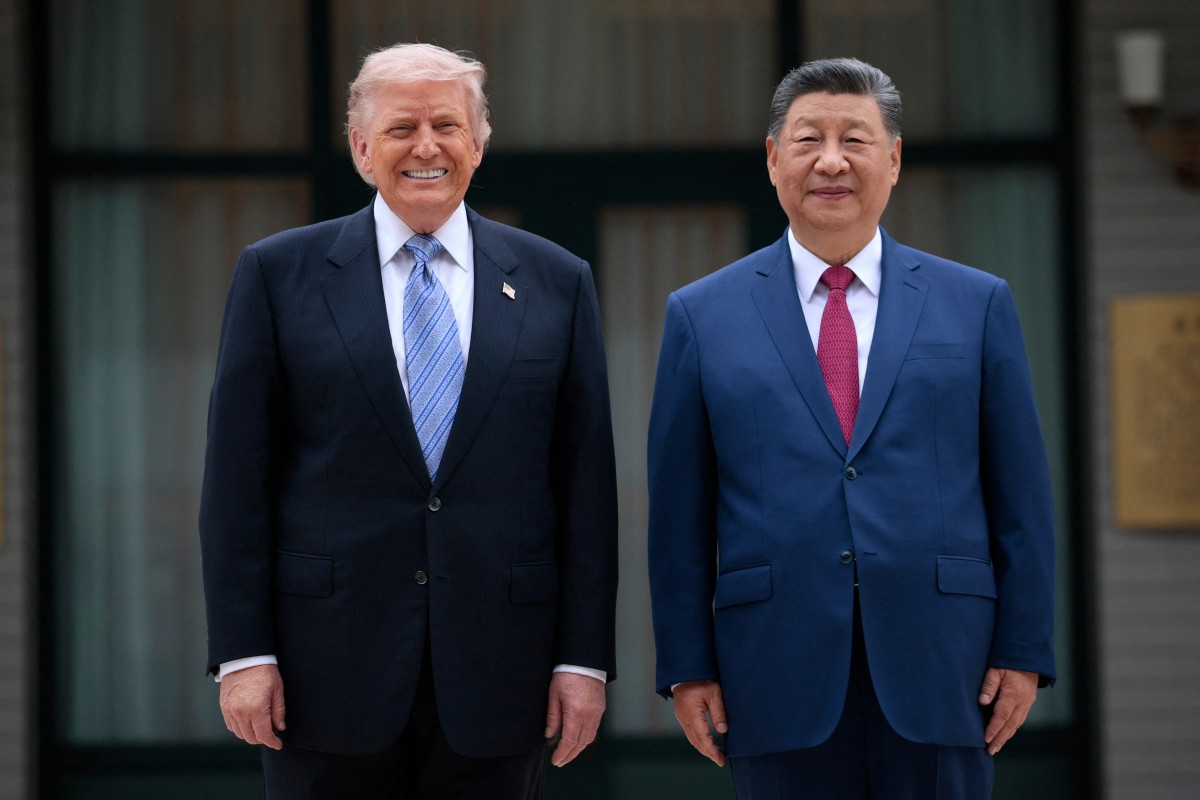
  •  
❌