❌

Reading view

Russian & Indian Warships Hog Online Limelight as U.S. Navy Turns 251. Social Media Gaffe Continues

As the US turned 251, a familiar ritual repeated this year as American politicians lined up to toast the Navy with patriotic messages and, interestingly, images of Indian and Russian warships.

The US Navy celebrates its birthday every year on October 13, marking the day the Second Continental Congress authorized the outfitting of two armed vessels to intercept British supply ships during the American Revolution—the decision that created the Continental Navy, a force that eventually grew into the United States Navy.

As US Navy birthday wishes poured in on October 13, several US lawmakers joined the rush to pay their homage, resulting in a series of social media misfires.

For instance, Georgia Governor Brian P. Kemp posted a message with an image of three sleek gray warships steaming in formation.

At first glance, the post seems routine, but a closer look reveals the warships are Indian Navy vessels, as Dave Brown, the Deputy Washington Bureau Chief at The Wall Street Journal, and military observers pointed out.

The ships have since been identified as INS Godavari, INS Brahmaputra, and INS Beas, although a community note on Kemp’s post flags them as Kolkata-class guided-missile destroyers.
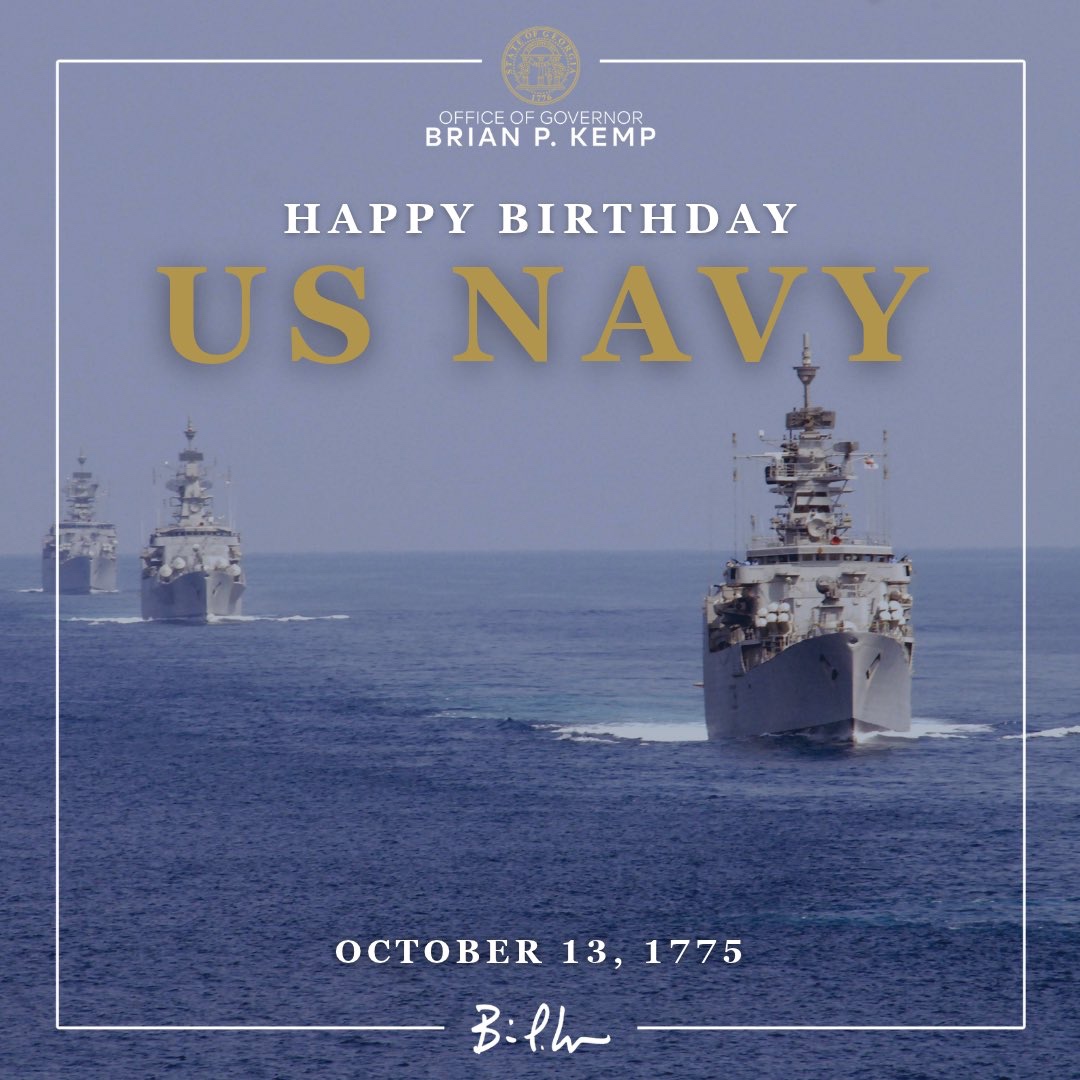
From the early days of our nation’s founding, the Navy has stood watch over our country and defended freedom across the seas. On its birthday, we salute the sailors whose service, sacrifice, and courage carry that legacy forward. Image by: Gov Kemp on X

Despite criticism, Kemp has not taken down the post.

Another lawmaker, Ohio State Representative Mike Dovilla, paid his respects on X, saying: “Happy Birthday, U.S. Navy. I am proud of my service in naval intelligence and grateful to all who serve our nation with honor, courage, and commitment. To our sailors, veterans, and their families, thank you.”

Interestingly, though, Dovilla used an image of a Russian warship instead of a US one, a move that drew scrutiny, given that the lawmaker is a Navy Reserve commander and has previously served as a lieutenant commander in the Navy.

Dovilla deleted the post after observers pointed out the error.

Image

Meanwhile, San Diego Mayor Todd Gloria posted images of what has been identified as the Soviet-era cruiser Mikhail Kutuzov, now a museum ship based in Novorossiysk, Russia.

To make matters worse, Gloria wrote: “San Diego is a proud military town. Sailors and their families are a part of the fabric of our community. For 251 years, sailors have answered our nation’s call with courage,” further emphasizing his ignorance.

Image

In another goof-up, the Republican-aligned think tank Freedom Caucus Foundation jumped on the bandwagon of errors by using a picture of the Indian Navy ship INS Trikand. 

A Mistake That Keeps Repeating 

In 2025, the US Navy’s SEAL Museum posted an image of a Russian missile cruiser to mark the US Navy’s 250th birthday. Meanwhile, several elected representatives and public accounts used images of Indian and Russian Navy warships to mark the service’s birthday.

Representative Kyle Donahue, Representative Arvind Venkat, and Representative Andy Harris used images of Indian warships in their posts, while Senator Jim Boyd used an image of a Russian battleship cruiser to pay tribute to the US Navy for its birthday.

These are just a few of the many social media faux pas that were flagged last year.

Similarly, in 2023, Representative Cory Mills and Representative David Trone’s birthday greetings featured images of a Russian warship. On the other hand, the SEAL Legacy Foundation, which supports families of wounded and fallen United States Navy SEALs, used a Russian ship to mark the occasion, whereas the official X page of Homeland Security used the image depicting a Canadian frigate. 

Things weren’t much different in 2021, when Senator Jim Risch published a heartfelt wish for the USN’s birthday, but used a photo of what was later identified as a Pattani-class offshore patrol vessel belonging to the Royal Thai Navy, potentially built by China.

While ship identification may not be a strong suit for many in the United States, it is not much different for combat aircraft.

In a major embarrassment last year, the Pentagon’s Joint Program Office  (JPO) posted an image of the Chinese J-35A stealth fighter instead of the US F-35 Joint Strike Fighter in a Veterans Day homage post. “Today, and every day, we thank all Veterans and those currently serving for their service and sacrifice,” the Pentagon official’s post stated. However, the office took the post down as criticism mounted over the bizarre mistake.

The Pentagon’s F-35 Joint Program Office published China’s J-35 fighter on its poster for Veterans Day 2025 (Via X)

In 2023, Rep. Anna Paulina Luna—an Air Force (USAF) veteran herself—posted birthday graphics for the US Air Force (USAF) on X and Instagram that used silhouettes of Russian MiG-29 fighters. Air Force historians and defense analysts immediately flagged the image, after which the politician took it down and blamed a junior staffer for the error.

In 2021, Sen. Cindy Hyde-Smith of Mississippi made a similar error when she congratulated the US Air Force Reserve Command on its birthday with a graphic showing Russian Su-34 Fullback strike aircraft. “Happy 73rd Birthday to the @USAFReserve! Thankful for all the reservists who are constantly on the ready to serve our nation,” Hyde-Smith said on X, along with a graphic showing four Su-34 jets in flight. 

Needless to say, she deleted the post after netizens mocked her for the error.

However, Dr. Rob Lee of King’s College in London, who specializes in war studies, joked at the time that Hyde-Smith’s post was part of the “national pastime of mistaking Russian weapons for our own” among Americans.

In an even more ridiculous mistake in 2021, the official Southern Command (SOUTHCOM) account posted a birthday graphic for the US Air Force that featured silhouettes of Russian Sukhoi Su-27 fighter jets.

Meanwhile, one of the accounts connected to “Operation Inherent Resolve” posted a picture of two US Navy Boeing F/A-18E/F Super Hornets with best wishes to the air force, creating another embarrassing situation.

Similarly, Donald Trump’s 2020 reelection campaign released a “Support Our Troops”  advertisement accompanied by a photo of Russian MiG-29 fighter jets flying over troops with Kalashnikov-pattern rifles. Unsurprisingly, aviation experts widely mocked it, saying it clearly wasn’t American.

Defense analysts have long noted the mechanics behind these recurring errors. For example, modern warships and fighters share enough visual DNA- gray paint, angular superstructures, and similar radar masts- that non-specialists struggle to tell them apart at a glance.

Staffers working under deadline pressure rarely pause to verify hull numbers or distinctive features, making it a low-stakes but revealing ritual.

The post Russian & Indian Warships Hog Online Limelight as U.S. Navy Turns 251. Social Media Gaffe Continues appeared first on EURASIAN TIMES.
  •  

After F-35, Canada Pauses Purchase of 16 Black Hawk Helicopters Amid Trade Tensions with U.S.: Media

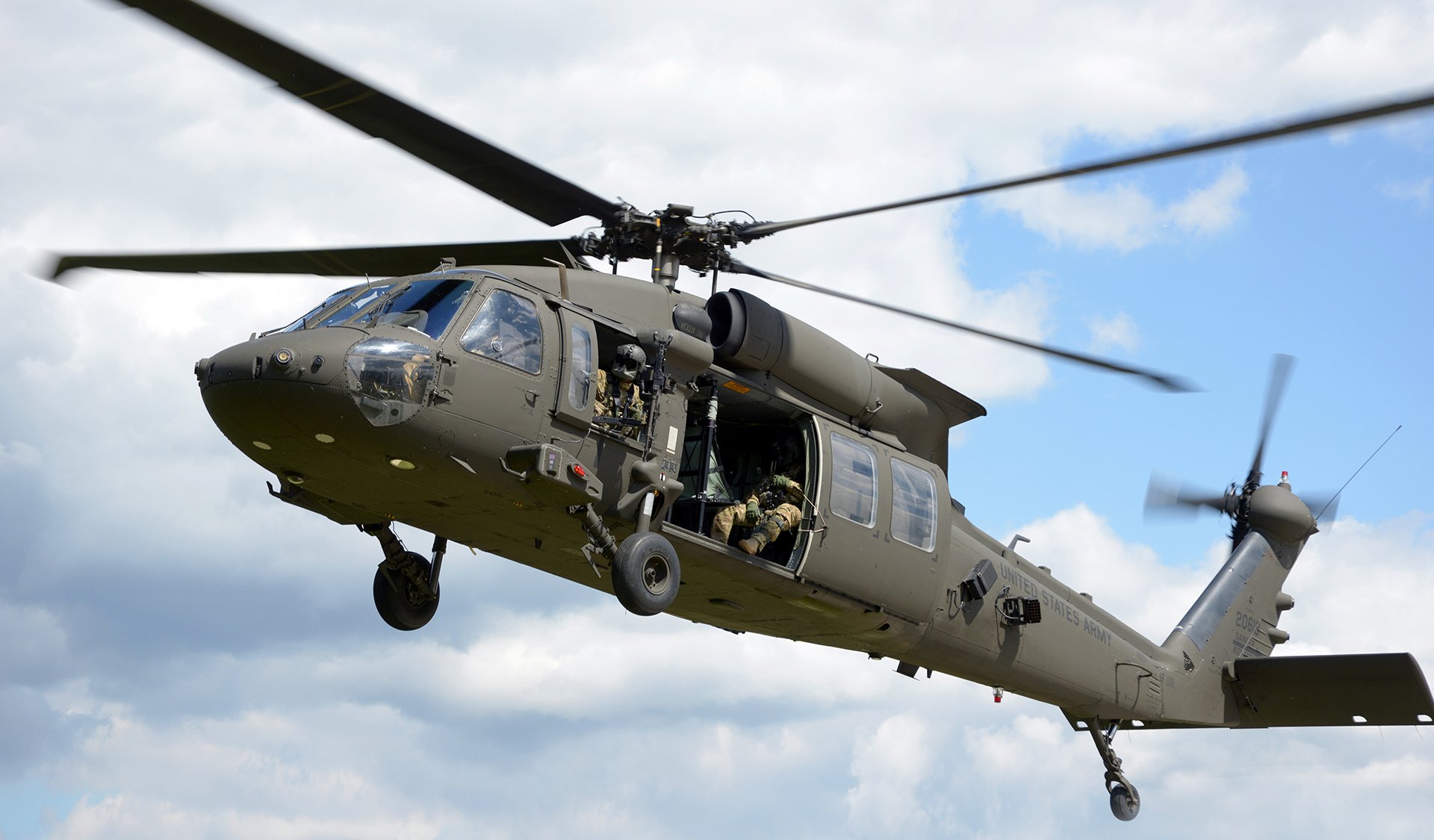
After putting the F-35 deal under review, Canada has now reportedly paused the acquisition of 16 U.S.-made UH-60M Black Hawk helicopters.

UH-60M Black Hawks are manufactured by Sikorsky, a unit of Lockheed Martin, and were intended to replace aging CH-146 Griffon helicopters that have supported Canada’s special operations units.

Lockheed says Black Hawks are combat-proven workhorses for the U.S. Army and allied militaries worldwide; the UH-60M is rugged, reliable, and ready for the toughest mission challenges.

With powerful twin engines, a reconfigurable cabin, and 9,000 lbs. of cargo capacity, the BLACK HAWK can transport troops, deliver supplies, and fly search and rescue, even in contested environments.

That’s what has made the UH-60M a trusted utility helicopter with over 15 million flight hours and countless critical missions worldwide, according to Lockheed Martin.

The acquisition of UH-60M Black Hawk helicopters was proceeding through the U.S. Foreign Military Sales process, had received State Department sign-off, and was heading toward congressional notification when Ottawa ordered the halt, according to sources cited by CBC News and Radio-Canada.

Ottawa reportedly ordered the pause last summer, shortly before Canadian and U.S. trade negotiators met in Washington, which later collapsed.

Sources in government and the defense industry said the decision was linked to both the failed negotiations and a broader review by federal officials of planned military purchases from the United States, as Ottawa seeks to reduce reliance on American equipment and prioritize domestic production.

A government spokesperson said Canada continues to evaluate options to meet the needs of its special operations forces and remains in contact with relevant partners. Lockheed Martin has said it is ready to support international customers seeking the latest UH-60M through the Foreign Military Sales program.

Top USAF General Reveals NATO Plan to Fight Russia — But it is Designed for Containment, Not Decisive Defeat

File Image: Black Hawk Helos. Via: Lockheed Martin

US President Donald Trump’s trade tariffs on Canada, the unilateral renaming of Lake Ontario, and mockery of Canadian leadership have strained ties with Ottawa.

Tensions peaked between the two giant neighbors on August 22, after trade talks collapsed, when the Trump administration imposed 50% tariffs on about $20 billion in Canadian goods. In response, Canada hit back with retaliatory tariffs.

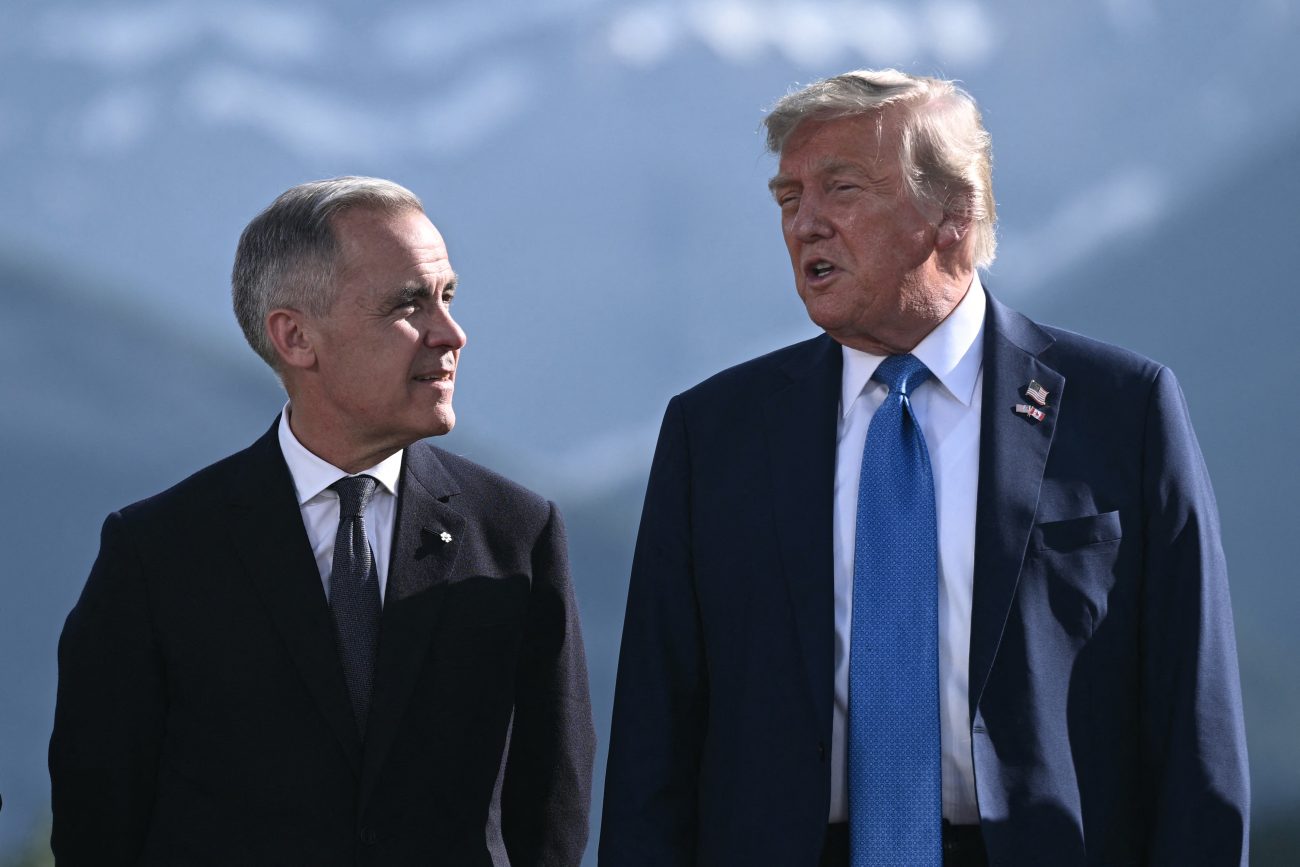
Canadian Prime Minister Mark Carney, responding to US officials alleging that Canada walked away from the deal for political reasons, said, “I don’t think, with all respect, appointed, unelected cabinet members in the United States are experts on Canadian politics.”

The tensions between the two North American allies began in January 2025, when Trump became President, slapped punitive tariffs on Ottawa, and repeatedly called it the 51st state of the USA.

Canadian PM Carney put the F-35 acquisition under review in March 2025 amid rising tensions with Washington; however, the country will receive the 16 F-35As already paid for while it decides on the future of the remaining 72.

Artillery Isn’t Dead: U.S. Army Orders XM1776 Prototypes Based on South Korea’s K9 ‘Thunder’ Howitzer

Meanwhile, in a recent media interaction, the head of the Defense Investment Agency said the Canadian public would not welcome sole-source military contracts awarded to US companies under the current conditions.

“That’s just me reading the room,” Stephen Fuhr, secretary of state for defense procurement, said in an interview. “I think that would be a very difficult thing to do, especially after this last week. I think that people would not be happy about that.”

Although Fuhr still views the US as a vital defense ally, he emphasized that Canada has realized the dangers of “putting all our eggs in one basket” and said Ottawa must build new strategic partnerships or become more independent in military manufacturing.

Fuhr did not name any specific military project that could be affected by the ongoing trade tensions.

Canadian Prime Minister Mark Carney (L) and US President Donald Trump pose for a family photo during the Group of Seven (G7) Summit at the Kananaskis Country Golf Course in Kananaskis, Alberta, Canada on June 16, 2025. (Photo by Brendan SMIALOWSKI / AFP)

Many in Canada oppose the F-35 deal with Lockheed Martin.

For instance, British Columbia Premier David Eby said: “When your friend kicks you in the back, one of the first rules is you don’t then go and buy $12 billion of fighter jets from that person,” he said on August 25. “It makes absolutely no sense.”

NDP interim Leader Don Davies said in February 2026: “At a time when the Trump administration is threatening our sovereignty, attacking Canadian workers, increasing tariffs on our industries and interfering in our domestic and foreign policies, going through with any F-35 orders is simply unacceptable.”

“Under the Joint Strike Fighter program, the U.S. Government will maintain full control of maintenance and software updates, and America will always have the option to effectively ground our fighter jets by denying critical parts or software updates.” “The bottom line is that purchasing F-35s from the United States will deepen our military integration with a superpower, not reduce it.”

U.S. F-16 ‘Viper’ Jets Create New Problems For Taiwan — Aircraft Arrive, But Trained Fighter Pilots Are Quitting

NDP Defense Critic Lori Idlout said: “Canada cannot buy a single F-35.” “This is why Canada cannot move forward with the procurement of F-35s. Not 88, not 16, not one.” “If Mark Carney caves to American pressure and continues with the acquisition of any F-35s, he is giving President Trump the ability to ground our fighter jets by denying software updates or repairs.”

Freelance journalist Riley Donovan said: “Why would Canada buy planes from the country that is waging a trade war against us and which is arguably our greatest long-term military threat? Sweden promises to set up production here and give us 12,000+ jobs if we buy Gripen jets. Cancel the F-35s. Go with the Gripen.”

  • By ET Online Desk
  • Mail us at: editor (at) eurasiantimes.com

The post After F-35, Canada Pauses Purchase of 16 Black Hawk Helicopters Amid Trade Tensions with U.S.: Media appeared first on EURASIAN TIMES.

  •  

Top USAF General Reveals NATO Plan to Fight Russia — But it is Designed for Containment, Not Decisive Defeat

Amid growing anxieties in Europe over “the Russian threat”, the US Air Force General Alexus Grynkewich, NATO’s Supreme Allied Commander Europe (SACEUR), has unveiled what he called the alliance’s “Theory of Victory”. 

Though his Polish hosts did not seem fully satisfied, General Grynkewich assured, on October 12, at the “Warsaw Security Forum,” an annual international conference in the Polish capital, that the alliance is ready to defend itself.

Reassuring America’s reliability as an ally and Washington’s firm commitment to NATO’s Article 5, which envisages collective defense, he said that if an adversary is “foolish enough” to strike, the alliance is fully prepared to “fight tonight”.

During a panel discussion titled “Theory of Victory: How Do We Achieve Military Success Against Russia in Deterrence and Defense?” Grynkewich stated that NATO would destroy “anything and everything” that supports an attack on allied territory.

He asserted, “Should the adversary choose to press the attack or commit his reserves, we will break the warfighting system engaged against us.”

In what the experts describe as an unprecedented move to project an absolute ironclad assurance of security to the one billion citizens living under the NATO umbrella, and to send an unmistakable warning of devastating consequences to adversaries, particularly Moscow ( though he did not mention it explicitly), General Grynkewich then went on to clearly articulate key elements of what was hitherto classified as NATO’s “Theory of Victory”.

NATO had developed a well-known “Theory of Victory,” but its elements were not well understood. General Grynkewich revealed them as part of a rigorous three-phase strategic framework: “Block, Blunt, and Break”.

This triad dictates the sequential escalation and synchronization of Allied multi-domain power from the very first moments of aggression.

While Grynkewich did not explicitly mention Russia during his address, his comments clearly targeted Moscow, especially in light of NATO’s 2022 Strategic Concept, which identifies Russia as the most significant and direct threat to allied security.

“My theory of victory is simple: we will block the initial attack. If the attack persists, we will blunt it and prevent enemy advance,” he expla ned. “And if required, we will break the enemy’s forces and the operational warfighting system that is arrayed against us.”

Based on his elaboration, Phase One of Block is the first line of defense. It focuses on an immediate, unyielding denial of territory. If an adversary breaches an allied border, NATO’s forward land forces are trained to deploy instantaneously to halt the invading army directly at the point of contact.

Rather than letting an adversary establish a foothold or capture territory for political leverage, the “Block” phase aims to isolate the initial push. This relies on integrated multi-domain operations, using localized ground units heavily supported by air superiority, naval assets, space surveillance, and active cyber capabilities to immediately close the operational window on the attacker.

If an offensive survives the initial blocking force and persists, NATO transitions to the “Blunt” phase.

The goal shifts from containment to actively stripping the enemy of operational momentum and initiative. To achieve this, the alliance leverages highly advanced technological systems. Grynkewich highlighted the deployment of massive sensor networks, autonomous combat systems, and AI-driven multi-domain targeting to completely suppress the enemy’s ability to coordinate large-scale maneuvers or advance deeper into allied territory.

The final, most severe component of the strategy is the mandate to “Break” the adversary. If an aggressor refuses to cease hostilities or attempts to mobilize its strategic reserves, NATO will launch massive, far-reaching retaliatory actions. Grynkewich explicitly stated that this phase extends far beyond the physical front lines of the immediate conflict. NATO will target and destroy the entire overarching warfighting framework arrayed against it.

This means systematically dismantling command-and-control centers; physical supply and logistics networks; replenishment warehouses; communications arrays; and anything else sustaining the offensive force.

However, Grynkewich carefully balanced aggressive deterrence with diplomatic clarity, noting that NATO did not view a direct military conflict with Russia as imminent or inevitable. Instead, he stressed that the most effective tool for preserving peace is maintaining absolute readiness for war while keeping communication channels open to prevent miscalculations.

This updated strategy appears to draw directly on critical lessons from contemporary battlefields in Ukraine and the Middle East. It explicitly moves away from relying solely on hyper-expensive, exquisite military hardware. Instead, NATO is prioritizing a hybrid mix of technological enablers that pairs high-end precision weapons with large numbers of cheaper, scalable systems like attritable drones and counter-UAS platforms to overwhelm an adversary’s defenses effectively.

General Grynkewich reportedly emphasized three things in this regard: 

First is the “Eastern Flank Deterrence Initiative (EFD),” which serves as the deployment vehicle for a vast network of low-cost, expendable drones and minimally crewed or fully autonomous reconnaissance and strike systems.

Second is “AI-Powered Targeting,” which uses artificial intelligence to sift through vast data streams generated by advanced sensors, satellite arrays, and cyber intelligence. By shortening the sensor-to-shooter loop, AI-enabled networks identify, categorize, and assign targets to artillery, missile systems, or loitering munitions in real time, long before human staff could process the raw coordinates.

Third is the “System Layering” strategy, which does not replace heavy conventional hardware such as main battle tanks or fifth-generation fighter jets but rather insulates them. Cheap, modular drone walls absorb the weight of initial saturation attacks, counter enemy mass, and clear pathways, preserving high-end kinetic platforms for decisive operations against hardened infrastructure.

Overall, the emphasis on sensors, autonomous systems, precision weapons, and integrated land, air, sea, space, and cyber capabilities recognizes that contemporary combat depends as much on information, networks, and logistics as on troop numbers.

The idea is that NATO must exploit technological advantages while producing affordable systems in sufficient quantities.

NATO has periodically revised its strategies, keeping technological developments and threat environments in mind.

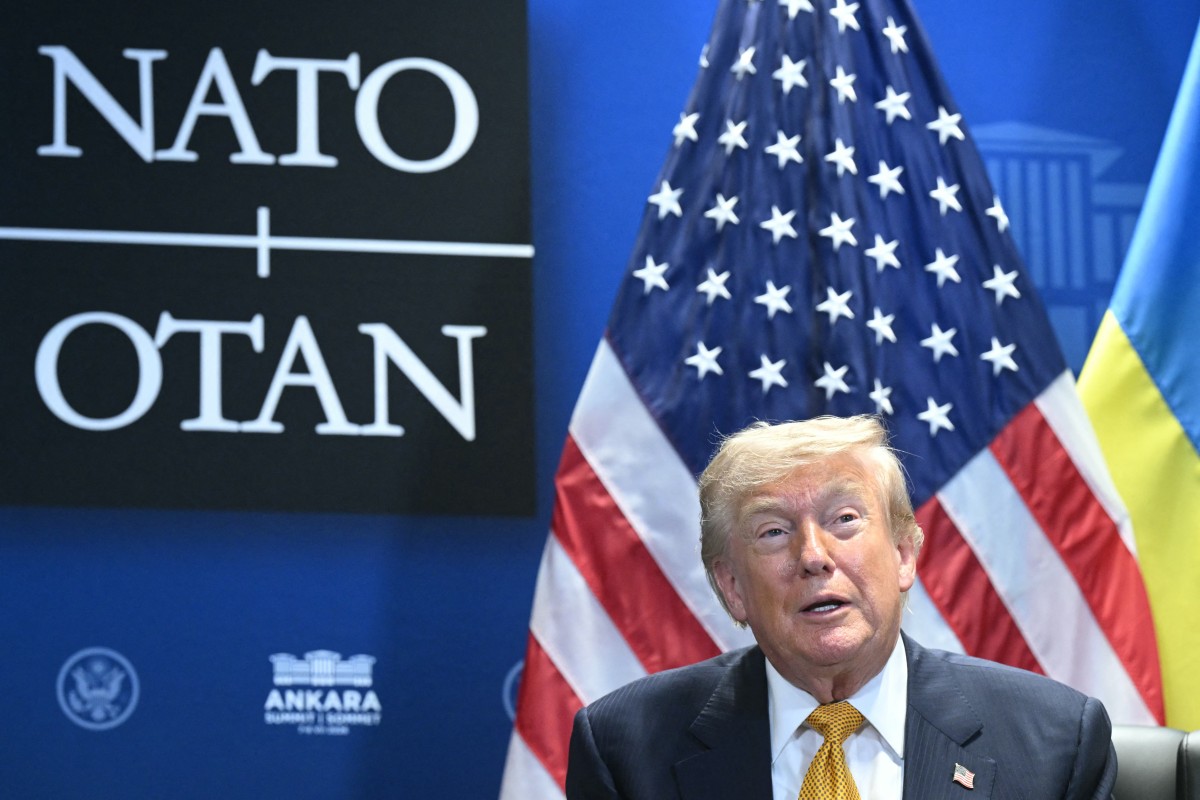
US President Donald Trump meets Ukraine’s President (not pictured) on the sidelines of the NATO Summit at the Beshtepe Presidential Compound in Ankara on July 8, 2026. The summit comes at a fraught time for the 77-year-old transatlantic alliance, as the US President demands members honor a pledge to ramp up defense spending while Washington steps back from Europe. (Photo by SAUL LOEB / AFP)

During the Cold War, the alliance relied primarily on what it called “forward defense” and “flexible response.”  The forward defense strategy supposedly committed NATO to hold the inner-German border and assumed a possible retreat across deep defensive lines before counter-attacking.

The Flexible Response strategy relied heavily on the explicit threat of nuclear escalation in the theater to offset Warsaw Pact forces’ conventional numerical superiority.

After the end of the Cold War and disintegration of the Soviet Union,  NATO was said to have adopted an expeditionary, crisis-management model. In this model, deterrence was linked to political goodwill, and force structures were optimized for out-of-area counter-insurgency campaigns.

This resulted in a lean force model with thin ammunition reserves and a lack of the rapid forward mobilization needed for high-intensity, continent-scale conventional combat.

Against this background, the “Theory of Victory” is said to address post-Cold War vulnerabilities by institutionalizing a modern denial posture. It replaces reliance on early tactical nuclear escalation with conventional, technology-driven mass.

Apparently,  it abandons the concept of “liberation after occupation,” acknowledging that the civilian cost and physical destruction associated with liberating occupied territory are strategically unacceptable in the modern geopolitical environment.

Instead, it shows the capacity to neutralize an incursion early and convince potential adversaries that the cost of an attack will always outweigh any conceivable strategic gain.

Finally, by linking it to Article 5, NATO’s latest concept displays elements of calculated “strategic ambiguity”; it is id. NATO will not publicly define the exact point at which an attack would trigger its collective-defense clause, as doing so would help adversaries calculate how far they can escalate without provoking an allied response.

The ambiguity is designed to complicate enemy calculations, ensuring that hybrid operations, gray-zone provocations, or minor border incursions carry the unpredictable risk of drawing a full, multi-domain response from the alliance.

While the reactions of America’s major European NATO allies to General Grynkewich were not available at the time of writing, it is fair to guess they were reassured that Washington is prepared to fight if attacked.

However, erstwhile Warsaw Pact member and now Russia’s biggest critic, Poland, which has joined NATO, does not seem fully satisfied. Reports quoting the Polish weekly “Polityka” question the fundamental premise of NATO’s military strategy: preventing an adversary from achieving its goals, rather than launching an offensive campaign to destroy a foreign military power fully.

This perspective, detailed by defense analyst Marek Świerczyński, unpacks the structural reality behind General Alexus Grynkewich’s “Theory of Victory” speech.

He argues that beyond NATO’s institutional focus on calculated deterrence, escalation control, and defending its current borders, the alliance should fight deep inside Russia, without crossing the border, to crush the Russian military as a whole (through missile and drone firepower).

But then, this is a limited view. Overall, General Grynkewich seems to reflect that current NATO thinking is to de-escalate with Russia, not to defeat it strategically or to change its regime. The core objective of the Theory of Victory strategy is strictly containment, deterrence, and risk management.

In that sense, the name of the theory may be a little misleading.

  • Author and veteran journalist Prakash Nanda is Chairman of the Editorial Board of the EurAsian Times and has been commenting on politics, foreign policy, and strategic affairs for nearly three decades. He is a former National Fellow of the Indian Council for Historical Research and a recipient of the Seoul Peace Prize Scholarship.
  • The author can be reached at prakash.nanda (at) hotmail.com

The post Top USAF General Reveals NATO Plan to Fight Russia — But it is Designed for Containment, Not Decisive Defeat appeared first on EURASIAN TIMES.

  •  

Artillery Isn’t Dead: U.S. Army Orders XM1776 Prototypes Based on South Korea’s K9 ‘Thunder’ Howitzer

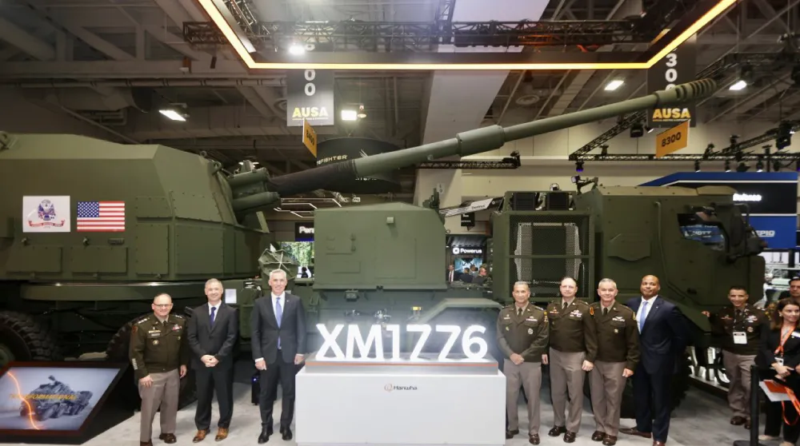
EurAsian Times has repeatedly argued that artillery is by no means becoming obsolete. That assessment was reinforced on October 12 when Hanwha Defense USA and the U.S. Army unveiled the XM1776 Mobile Tactical Cannon—the American version of Hanwha’s K9 Mobile Howitzer—at an official naming ceremony at the HDUSA booth during the Association of the U.S. Army’s 2026 Annual Meeting and Exposition (AUSA).

HDUSA also announced that the U.S. Army has ordered nine prototype wheeled XM1776 MTC systems, with an option for nine additional MTCs.

“The XM1776 Mobile Tactical Cannon represents the launch of the U.S. Army’s new long-range precision fires modernization effort and its powerful partnership with HDUSA to produce this system at speed and scale,” said Mike Smith, Hanwha Defense USA COO and President of Land Systems. “As we celebrate America’s 250th anniversary, Hanwha is committed to delivering industrial strength, mature capability, and proven technologies that accelerate U.S. production and expand America’s artillery industrial base.”

HDUSA is establishing a Phase I site in Opelika, Alabama, that will serve as the U.S. integration and test facility for the XM1776 MTC and Hanwha’s family of K9 Mobile Howitzers. To accelerate supply chain localization, company leadership will meet with more than 70 existing and potential suppliers to develop an Artillery Industrial Base Coalition in the U.S.

Earlier, the US Army awarded Hanwha Defense USA a deal to supply K9 mobile howitzer prototypes for the new self-propelled howitzer modernization program.

“The agreement provides for the accelerated delivery of six prototype MTC [Mobile Tactical Cannon] systems, with an option for an additional 12,” the US Army said in a statement. “Soldiers will use these platforms in a series of operational experiments to assess performance, reliability, and supportability in realistic combat conditions.”

Representatives from Hanwha Defense USA and the U.S. Army unveiled the new XM1776 Mobile Tactical Cannon (MTC) at the U.S. Army’s 2026 Annual Meeting and Exposition (AUSA)

U.S. troops will operate the prototypes in a series of trials intended to help the Army evaluate its performance, dependability, and supportability. “Data and insights gained from these experiments will directly inform senior leaders’ decisions on future fielding,” the Army added.

Hanwha Defense USA had offered its wheeled K9 platform to the U.S. Army. Other contenders included Elbit Systems USA, American Rheinmetall, General Dynamics Land Systems, and BAE Systems.

The South Korean-origin Howitzer will replace the self-propelled M109A7 and the towed M777 howitzers.

“We’re focused on creating a U.S.-anchored K9 Mobile Howitzer manufacturing network – with Opelika, Alabama, as the current phase I launch point – that can deliver advanced Mobile Tactical Cannons at the speed and scale the U.S. Army needs,” Jason Pak, Hanwha Defense USA Head of Land Systems-Artillery, said in a statement.

Pak added: These are not minor transactions. They reflect US recognition that South Korean industry can deliver quality, speed, and scale that domestic yards and programs have struggled to match.

K-9 Thunder. File Image.

South Korea’s K9 ‘Thunder’ Howitzer 

The K9 Thunder has become one of the world’s most sought-after weapons.

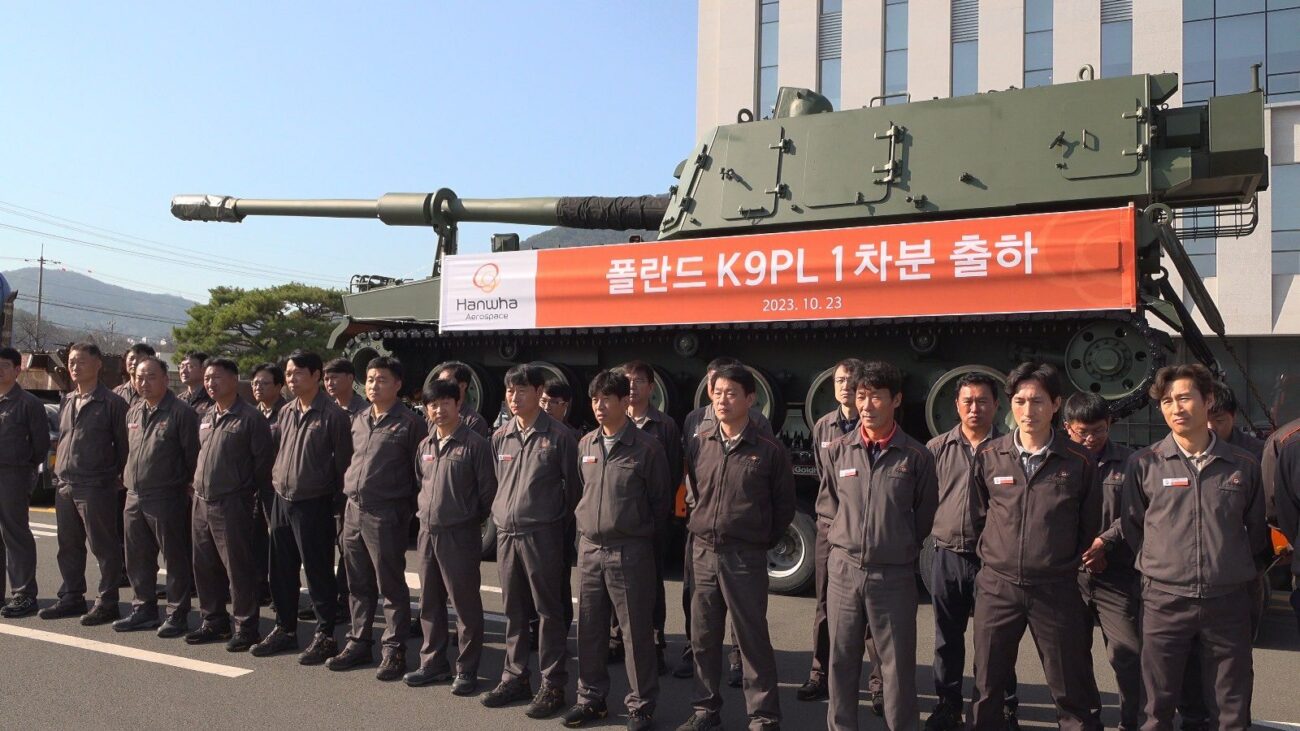
South Korean defense giant Hanwha Aerospace designed and produces the K9 Thunder, a 155mm/52 caliber self-propelled howitzer. It can carry up to 48 projectiles and launch six rounds per minute.

Since its debut in 1999, the K9 Thunder has become a cornerstone of South Korea’s defense exports, accounting for more than half of global self-propelled howitzer orders. As of last year, over 1,900 K9 units have been delivered or are slated for export to various countries.

South Korea operates a large fleet of K9 howitzers, deployed along the heavily fortified demilitarized zone (DMZ) separating it from North Korea.

The K9’s ability to operate in the DMZ’s challenging mountainous terrain is a key feature, thanks to an advanced hydropneumatic suspension that helps it navigate rough landscapes with ease.

The K9’s five-man crew operates in a fully enclosed environment, protected from nuclear, biological, and chemical threats, with 19mm steel armor providing defense against heavy machine-gun rounds and shrapnel.

Additionally, a .50-caliber machine gun mounted on the turret provides close-range defense and limited air-defense capability.

More than a dozen countries have ordered the K9 Thunder and its licensed variants, with deliveries to Australia, Egypt, Estonia, Finland, India, Norway, Poland, Romania, Turkey, and Vietnam completed or underway, and a further agreement signed with Spain in 2026.

Artillery Guns Still in Demand

The Ukraine-Russia war and the widespread use of drones have raised doubts about whether conventional artillery is losing relevance.

Yet both sides’ high shell consumption rates indicate that artillery remains a core source of volume firepower. Drones have supplemented artillery by enabling precision strikes, reconnaissance, and partial mitigation of ammunition shortages.

They have not, however, matched artillery’s capacity for sustained massed fires, longer-range area suppression, all-weather operation, and resistance to electronic warfare, according to assessments from Ukrainian military officials and open-source analyses of the conflict.

For instance, a single FPV drone could carry a small warhead, often comparable in effect to a light mortar round.

Drones are good at scanning large areas and hitting single targets like vehicles or soldiers. But they cannot create the same wide, heavy effect as a 155 mm howitzer battery. Artillery can fire many shells at once to stop enemy movements, weaken positions, or break through defenses.

Artillery has distinctive benefits: it can fire day and night, in any weather, and is somewhat resistant to electronic-warfare jamming. By comparison, drones are highly vulnerable to jamming and may not operate in all weather conditions, making them far less resilient than artillery.

Despite the mass production of drones on both sides, Ukraine alone is believed to consume nearly 200,000 shells per month, and up to 600,000 in intense operations. And Russia, on the contrary, fires nearly a million shells per month during intense operations.

K9-Thunder
Poland-bound K9PL Howitzers (via Platform X)

In a November 2024 interview with RBC-Ukraine, Sergey Musienko, Deputy Commander of the Missile Troops and Artillery of the Armed Forces of Ukraine, explained artillery’s crucial role. “At present, artillery remains the main means of destruction on the battlefield. These include missile systems, multiple launch rocket systems, artillery guns, and mortars, which inflict destruction both in front of the front line of defense and at a fairly large range.”

Maj. Vladyslav, artillery battalion commander, 40th Separate Artillery Brigade, was quoted as saying: “Artillery will probably never lose its importance.” He noted that shells cannot be jammed by electronic warfare, work in bad weather, and deliver effects against massed armored assaults that FPV drones alone cannot replicate.

Yuri Knutov, Russian military expert and historian of air defense forces, in an interview with Russia 24 said: “Artillery will still play the role of the queen of the battlefield for a long time. An artillery shell is significantly cheaper than a drone. At the same time, the use of drones depends heavily on weather conditions — rain, fog, and snowfall all affect the ability to use unmanned systems. The role of artillery does not change; sometimes it even increases.”

He added that artillery is becoming more accurate and effective when integrated with drones, describing it as experiencing a “second birth” through better precision, mobility, and automated targeting data from UAVs.

Russia’s continued reliance on conventional artillery is reflected in its reported acquisition of older North Korean 170 mm Koksan self-propelled guns, some dating back more than four decades.

According to the UK-based Open Source Center (OSC), from August 2023 to March 2025, North Korea also shipped at least 15,809 containers to Russia, which would translate into an estimated 4.2 to 5.8 million rounds of artillery ammunition.

Similarly, Europeans are sending over one million artillery shells to Ukraine annually, in addition to the millions by the US.

Clearly, the artillery is back in vogue despite the drone revolution.

  • Sumit Ahlawat has over a decade of experience in news media. He has worked with Press Trust of India, Times Now, Zee News, Economic Times, and Microsoft News. He holds a Master’s Degree in International Media and Modern History from the University of Sheffield, UK. 
  • He can be reached at ahlawat.sumit85 (at) gmail.com

The post Artillery Isn’t Dead: U.S. Army Orders XM1776 Prototypes Based on South Korea’s K9 ‘Thunder’ Howitzer appeared first on EURASIAN TIMES.

  •  

U.S. F-16 ‘Viper’ Jets Create New Problems For Taiwan — Aircraft Arrive, But Trained Fighter Pilots Are Quitting

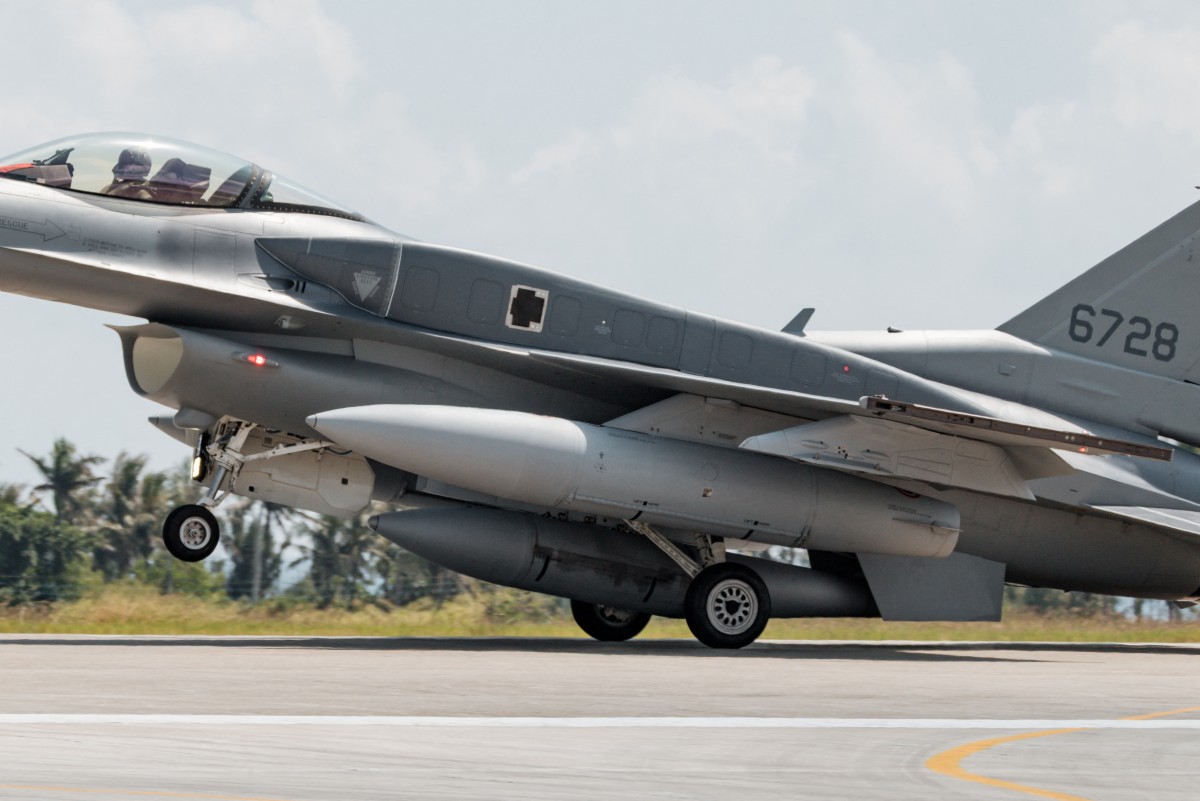
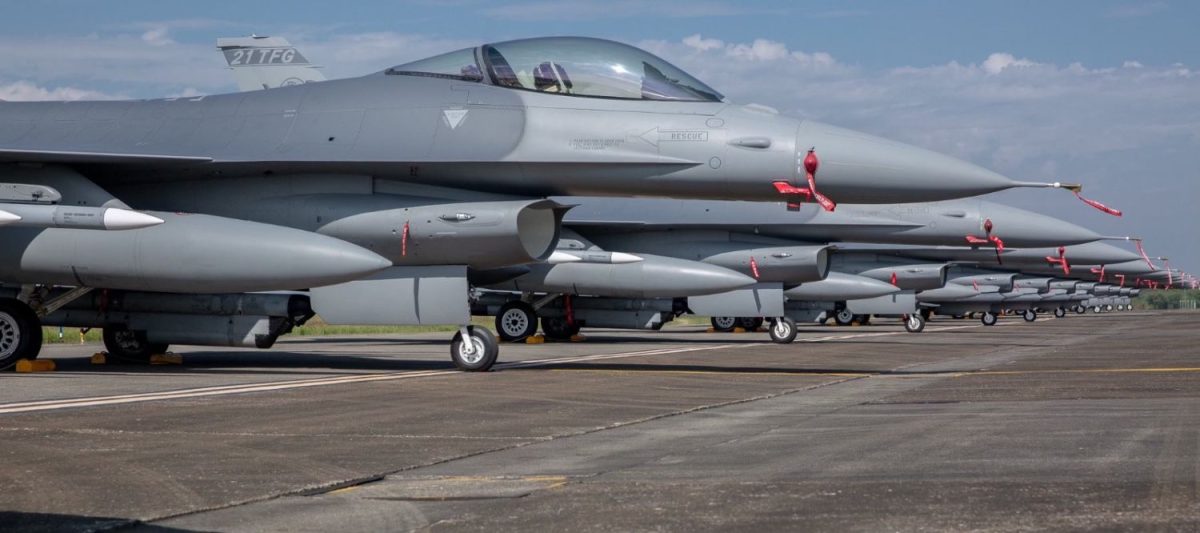
After years of delays and missed timelines, Taiwan recently received its first two F-16V (Viper) fighter jets from the US. Despite the arrival of two cutting-edge jets, Taipei’s problems may have just begun.

The two jets are part of a US$8 billion deal for 66 F-16Vs approved in 2019 during US President Donald Trump’s first term.

Taiwan was originally scheduled to receive the first new F-16V Block 70 fighter jets in 2023, but severe production and software-related delays pushed delivery back nearly three years.

Lockheed is expected to deliver all 66 F-16V Block 70 jets by 2028; however, Taiwan is still negotiating with authorities to finish the deliveries by the end of next year.

Taiwan has already upgraded 140 of its F-16A/B Block 20 fighter jets to the advanced F-16V (Viper) standard under the US$4.5 billion modernization initiative, the Peace Phoenix Rising program, completed in December 2023.

When Lockheed Martin delivers the 66 new jets by 2028, the Taiwanese Air Force will have more than 200 F-16 Viper fighter jets, making it the largest Viper-standard fleet in the Indo-Pacific region.

The Challenge

However, this large F-16 Viper fleet will help Taiwan deter China only if the country has experienced, trained pilots to fly them, which seems like a problem right now, as the country is struggling to find new fighter pilots and retain experienced ones.

To tackle fighter pilot shortages, Taiwan’s defense ministry now plans to allow military pilots to serve until age 58.

Under the plan, pilots could serve until they turn 58, up from about 48 for lieutenant colonels and 52 for colonels, extending their current service limits of 26 and 30 years, respectively.

Effectively, lieutenant colonels will get a 10-year extension, and colonels will get a six-year extension.

After 0-for-8 Tailhook Failures, F-35C Completes Landmark Arrested Landing Aboard USS John F. Kennedy

Taiwan believes a longer service period will attract new talent, help retain experienced fighter pilots, and address chronic pilot shortages in the air force.

The Taiwanese Air Force would also create 72 additional posts for highly qualified lieutenant colonel and colonel pilots with at least 14 years of service, allowing them to keep their rank and focus on flying rather than command or administrative duties.

These 72 additional posts would be outside the regular personnel establishment, meaning they would not take positions from other officers or have to assume command roles.

“Their job would simply be to fly,” Koo said.

They would also help train and mentor younger pilots, he added.

These changes – allowing fighter pilots to serve longer, creating additional posts so that they can focus exclusively on flying, and reducing their administrative and command duties – are meant to retain fighter pilots in the Air Force when many of them are taking voluntary premature retirement to pursue more lucrative and less stressful careers in civilian airlines.

File Image: F-16V

The Executive Yuan in Taipei is currently considering the defense ministry’s proposals.

Defense Minister Wellington Koo Li-hsiung said earlier this week that the arrangement was designed to keep experienced pilots in uniform when many faced a choice between remaining in the military and pursuing longer, potentially more lucrative careers with commercial airlines, the Hong Kong-based South China Morning Post reported.

Notably, civilian airline pilots can fly until age 65, giving Air Force fighter pilots a strong incentive to switch while they’re still young.

As mentioned earlier, before the changes, lieutenant colonels in Taiwan could fly fighter jets until age 48 and colonels until age 52, meaning they could fly 13 to 17 years longer in commercial airlines.

Europe Is Rearming — and U.S. Wall Street is Writing the Checks, Including GE’s Nearly $12 Billion Deal

Extending their service term until age 58 will narrow this gap considerably.

“If they can serve until 58, the gap with civilian airline pilots, who can fly until 65, will not be that large,” Koo told lawmakers in the parliament.

The plan would still require annual health checks and other regular reviews, the minister said. Officers who failed the tests could no longer continue flying.

He said 57 air force pilots had retired so far this year, broadly in line with previous years but fewer than last year. All had completed the minimum required service period.

Defense Minister Koo also underlined that the post-pandemic expansion in commercial airlines has created a lucrative market for pilots, which is making it difficult for the Air Force to retain its fighter pilots.

As a result, many fighter pilots apply for voluntary premature retirement once they reach the minimum service age (20 years), well before the maximum service period for Air Force pilots: 26 years for lieutenant colonels and 30 years for colonels.

The defense ministry proposals also highlight how air forces worldwide place a higher premium on retaining experienced fighter pilots than on recruiting and training new ones.

Recruiting and training new pilots is expensive, time-consuming, and requires lots of effort and resources.

The defense ministry proposals also highlight that air forces worldwide place a higher premium on retaining experienced fighter pilots than on recruiting and training new ones.

These proposals to retain experienced fighter pilots come even as Taiwan has met its recent targets for recruiting new pilots.

The ministry said pilot recruitment reached 96.2 percent of its target in 2024, 112 percent in 2025, and 98.6 percent in 2026.

It also reported that the air force currently has an 87.8 percent personnel fill rate.

Experienced aviators, however, possess accumulated knowledge of aircraft systems, combat tactics, and operational procedures that newly trained pilots cannot easily replicate.

Retaining experienced fighter pilots is even more pressing, as Taiwan will receive over 60 new F-16V fighter jets in the next two years.

Notably, the Block 70 F-16V is an upgraded variant of the F-16 jets the Republic of China (another name for Taiwan) Air Force (RoCAF) has flown for nearly 30 years.

Taiwan first ordered 150 F-16 jets in the 1990s and received the first Block 20 fighters in April 1997.

It still has nearly 140 of these older F-16 jets, now upgraded to the Viper standard.

Nearly 200 U.S. Bradley Fighting Vehicles Lost in Ukraine War — GDLS Displays Wolf XM30 Scale Model as Army Tests Successors

As a result, many of Taiwan’s fighter pilots already have years of experience flying these jets. This experience could be invaluable as the country starts integrating new F-16 Viper jets into its air force.

Taiwan plans to assign at least 100 fighter pilots to its fleet of 66 new F-16 Viper jets. The ministry informed that the air force had increased pilot positions and training in preparation for the new aircraft.

The first two of the 66 F-16V Block 70 fighters landed at Chihhang Air Base on October 2.

Koo said 63 of the 66 aircraft had entered production, including six that had reached the flight-test stage.

Another factor putting pressure on the RoCAF is almost daily violations of Taiwanese airspace by China’s People’s Liberation Army Air Force (PLAAF).

For instance, Taiwan’s Ministry of National Defense (MND) reported 181 violations of Taiwan’s ADIZ in September alone. Responding to these airspace violations is taking a toll on the RoCAF’s staffing ratio.

These near-daily PLAAF violations mean the RoCAF must keep aircraft and pilots ready at all times.

Asked about pilot fatigue from near-daily PLAAF airspace violations, Air Force Chief of Staff Lieutenant General Lee Ching-jan said the air force had moved away from scrambling fighters to shadow PLA aircraft one-for-one.

Top USAF General Reveals NATO Plan to Fight Russia — But it is Designed for Containment, Not Decisive Defeat

Instead, Taiwan was using a combination of fighters already on patrol, naval vessels, and land-based missile systems to monitor and respond to PLA activity, reducing strain on both pilots and aircraft, he added.

It remains to be seen whether Taiwan’s government will accept the proposals and what impact they would have on retaining experienced pilots in the air force.

  • Sumit Ahlawat has over a decade of experience in news media. He has worked with Press Trust of India, Times Now, Zee News, Economic Times, and Microsoft News. He holds a Master’s Degree in International Media and Modern History from the University of Sheffield, UK. 
  • He can be reached at ahlawat.sumit85 (at) gmail.com

The post U.S. F-16 ‘Viper’ Jets Create New Problems For Taiwan — Aircraft Arrive, But Trained Fighter Pilots Are Quitting appeared first on EURASIAN TIMES.

  •  

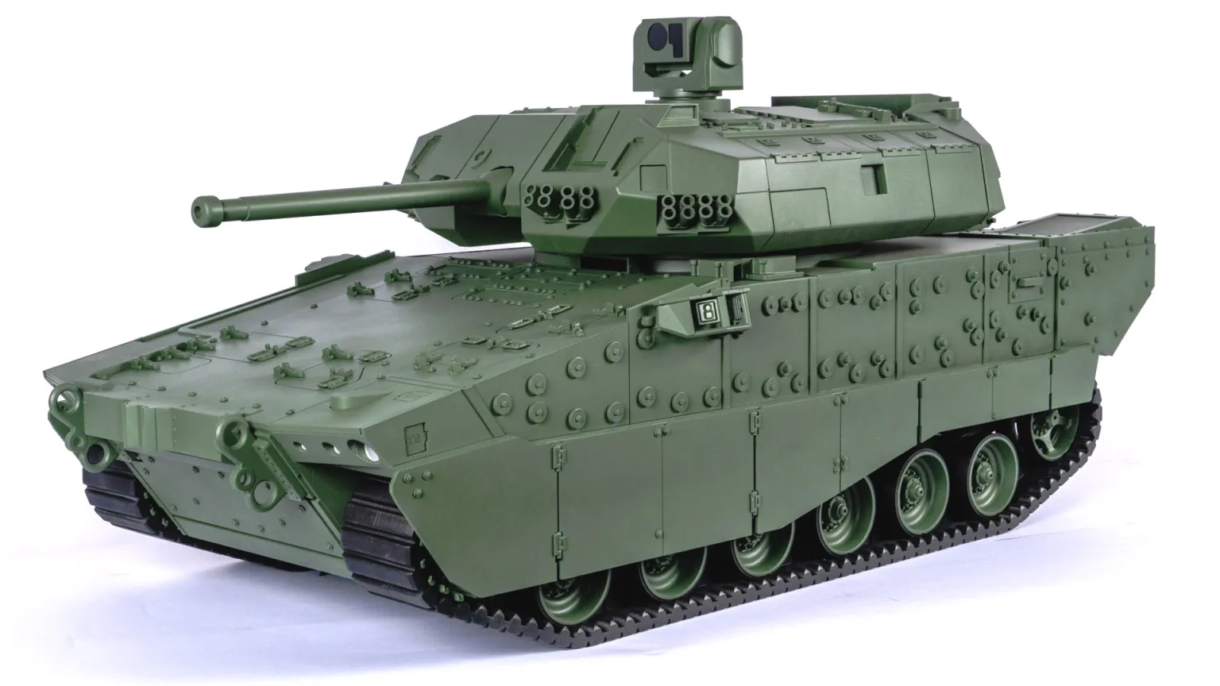
Nearly 200 U.S. Bradley Fighting Vehicles Lost in Ukraine War — GDLS Displays Wolf XM30 Scale Model as Army Tests Successors

General Dynamics Land Systems (GDLS) recently displayed a one-eighth-scale model of its Wolf vehicle at the Association of the United States Army annual meeting. The U.S. Army is looking to replace its M2 Bradley Fighting Vehicles, which were supplied to Ukraine and employed in combat against Russian forces. 

The Wolf is competing against Rheinmetall’s Lynx in the Army’s XM30 Mechanized Infantry Combat Vehicle program.

In a social media post on October 12, 2025, General Dynamics said the vehicle was designed from the start around the U.S. Army’s Modular Open Systems Approach, which uses common hardware and software interfaces so new sensors, weapons, and electronics can be added without redesigning the vehicle. It added that the Wolf was “born digital,” meaning it uses a digital engineering model for testing, production, maintenance, and design.

Earlier, GDLS had delivered its first Wolf XM30 mechanized infantry combat vehicle prototype to the U.S. Army on August 21, 2026, at Aberdeen Proving Ground, Maryland.

“This on-time delivery will allow Soldiers to start putting the Wolf through its paces, with the ultimate goal of getting it fielded into armored brigades as quickly as possible,” said Geoff Norman, director of strategy at General Dynamics Land Systems. “I would like to congratulate our XM30 team on the successful design and production of this game-changing solution. The Wolf is the most technologically advanced combat vehicle ever assembled.”

In June 2023, the U.S. Army awarded two contracts worth a combined approximately $1.6 billion to General Dynamics Land Systems Inc. and American Rheinmetall Vehicles LLC for Phase III (Detailed Design) and Phase IV (Prototype Build and Testing) of the Optionally Manned Fighting Vehicle (OMFV) program, which was subsequently redesignated as the XM30 Mechanized Infantry Combat Vehicle program.

The XM30 is expected to bring new capabilities that will transform how U.S. Army formations fight in the future. Developed with a modular open-system architecture, the XM30 is expected to permit new, developing technologies to be added as it evolves.

Wolf: Via: GDLS

“Competition remains a vital aspect of the XM30 program,” said Doug Bush, Assistant Secretary of the Army for Acquisition, Logistics and Technology. “Fully funding two companies for the next phases of the program will allow the Army to place the XM30 on a rock-solid foundation from a resourcing perspective, while also maintaining a competitive environment.”

The XM30 aims to enhance lethality, survivability, and upgradability beyond the Bradley’s physical and economic limits.

Earlier this September, American Rheinmetall delivered the first of eight Lynx XM30 combat vehicle prototypes to the U.S. Army.

“Delivering our first prototype to the Army is an important step as the XM30 Combat Vehicle program enters a more visible phase,” said Matt Warnick, CEO of American Rheinmetall. “Team Lynx now has the opportunity to show the Army that we can deliver on the promise of a modern replacement for the Bradley.”

Bradleys in Ukraine War

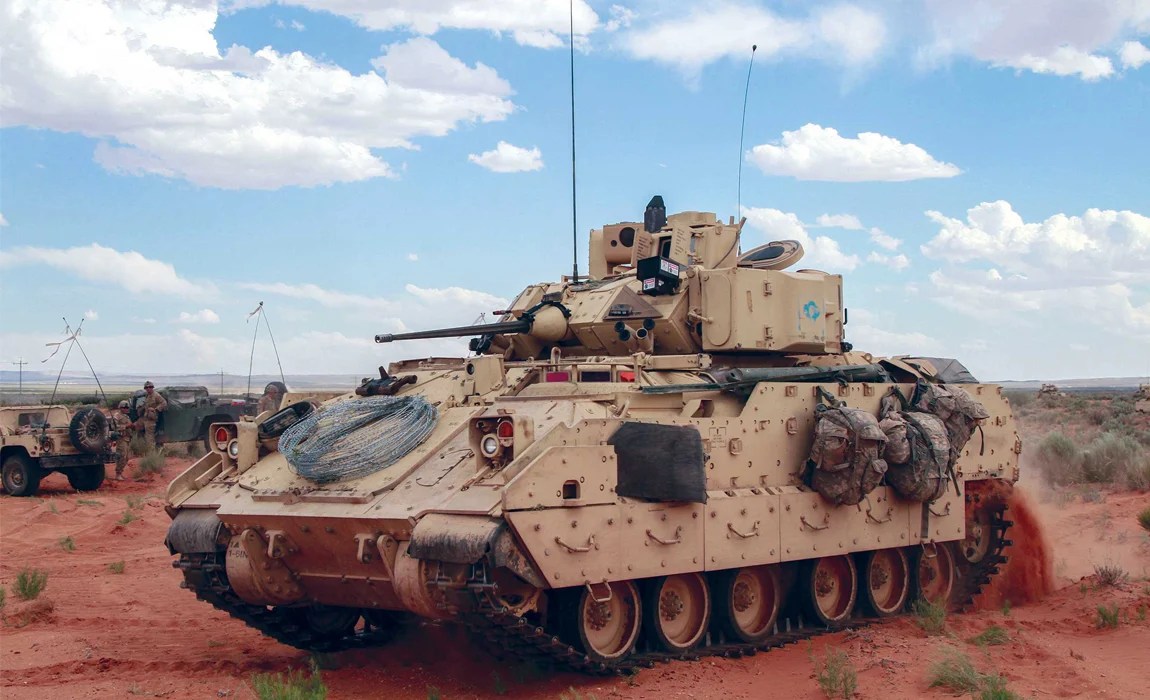
The United States supplied over 300 Bradleys (specifically M2) to Ukraine.

The U.S. primarily delivered the M2A2 ODS-SA (Operation Desert Storm-Situational Awareness) variant. This version included digital battlefield management systems, improved thermal sights for the gunner, and laser rangefinders.

The U.S. also shipped several M7 BFIST (Bradley Fire Support Team) variants, which replace anti-tank missiles with advanced target-acquisition sensors to direct heavy artillery strikes.

Last year in June, the Russian defense and industrial conglomerate Rostec claimed that the Russian troops had eliminated all the US Bradley Vehicles in Ukraine’s arsenal.

The Bradley Fighting Vehicle during an exercise

Independent tracking intelligence suggests that nearly half of the supplied vehicles have been damaged, destroyed, or abandoned over years of high-intensity combat.

In a June 2025 interview with Razvedchik (Scout) magazine, Rostec CEO Sergey Chemezov claimed that Russian forces had destroyed almost all the Bradley infantry fighting vehicles supplied to Ukraine. Chemezov did not provide a specific number, and no independent source has verified his claim.

Chemezov said: “Bradley IFVs have one serious weakness: problems with their cross-country capability, due to which they cannot move normally on rough terrain and through fields. They get stuck in dense soil and become easy targets because of their huge size. What’s the use of improved protection if the result is the same? In practice, all the Bradleys supplied to Ukraine have been destroyed. You have to understand, after all that, an IFV is not a tank.”

He further emphasized that a combat infantry vehicle should be swift, mobile, and able to move through rugged terrain and unbridged, unpaved rivers. “Our IFVs are capable of this, whereas American vehicles are not,” the Rostec chief stressed.

According to Oryx, a Dutch open-source intelligence blog that tracks equipment losses in the Ukraine War, the Ukrainian Armed Forces lost 189 M2A2 Bradley ODS-SA, many of which have also been captured by the Russian forces. These figures are based on visual confirmation, and the actual number of losses could be higher.

  • By: ET Online Desk
  • Mail us at: editor (at) eurasiantimes.com

The post Nearly 200 U.S. Bradley Fighting Vehicles Lost in Ukraine War — GDLS Displays Wolf XM30 Scale Model as Army Tests Successors appeared first on EURASIAN TIMES.

  •  

When FA-50 Defeated LCA Tejas in Malaysia: How Service Record & U.S. Collaboration Tipped the 2023 Tender

Malaysia expects to receive its Korean-made FA-50M light combat aircraft on schedule, Defense Minister Khaled Nordin said, with the first jets due this month or next.

“According to the schedule, the aircraft will arrive this month or next month – I will announce the arrival date later. So far, I have not received any information regarding a delay in the delivery of the aircraft,” Khaled told reporters after the launch of the Warriors’ Fund Campaign 2026/2027.

In May 2023, Malaysia signed a nearly $920 million contract with Korea Aerospace Industries (KAI) for 18 FA-50 Block 20 light combat aircraft, designated FA-50M, for the Royal Malaysian Air Force.

Earlier, as EurAsian Times reported, India’s LCA Tejas was also competing for a Malaysian fighter-jet contract.

Malaysia, which has long needed to modernize its fast jet fleet, commenced the FLIT-LCA requirement in June 2021. 

The country launched the tender to acquire a Lead-In Trainer-Light Combat Aircraft as part of the air force’s Capability 55 plan, released in 2018 and outlining the air force’s objective to achieve an ideal force structure by 2055.

The tender quickly gained traction from several countries, including India. Other contenders included the Turkish Hurjet, China-Pakistan’s JF-17, Russia’s MiG-35, and the Korean FA-50.

The FA-50 and Tejas were the two final shortlisted candidates, with the South Korean aircraft ultimately prevailing. Malaysia selected the FA-50 aircraft over India’s Tejas, with officials citing the Korean jet’s proven service record and combat record as key factors.

Korea Aerospace Industries confirmed in February 2023 that it had secured the Malaysian deal.

Then-Defence Minister Mohamad Hasan said the jet’s service record was the primary consideration. “We cannot take the risk and acquire assets that are still at the prototype stage. Our personnel will use this jet, so safety is in our criteria,” he told a press conference in May 2023, echoing comments made in parliament the previous month.

India’s LCA Tejas & AMCA Try “Catching Up” as Turkish Jets Take a Clear Lead. Spain Eyes More Hürjets

A Korea Aerospace Industries representative later told Channel News Asia that the Royal Malaysian Air Force viewed the Tejas as lacking an export record, while the FA-50 was already proven in combat.

The Philippine Air Force has used the FA-50, including during the 2017 Marawi campaign, and several regional air forces, including Indonesia, Thailand, and the Philippines, operate it.

Sources at India’s HAL acknowledged the outcome. “We were short-listed for the Malaysian LCA contract. We were hopeful as we were very competitive on several criteria, but unfortunately this has not gone our way,” one source said.

HAL Chairman C.B. Ananthakrishnan reportedly said the company was optimistic after being shortlisted from multiple bidders but had received indications that the order was going to the Korean contender, though it had not yet received formal notification.

Just Like F-35 — When IAF ‘Restricted’ USAF From Su-30 MKIs. Then Fought F-15 Fighter Jets at Red Flag 2008

FA-50 Light Combat Aircraft

KAI and Lockheed Martin jointly developed the supersonic T-50 advanced jet trainer, with the TA-50 as the Lead-in fighter trainer and the FA-50 as a light combat aircraft variant.

The T-50 partly resembles the F-16 Fighting Falcon and is 80% of its size. Development began in the 1990s, funded 70% by the South Korean government, 17% by KAI, and 13% by Lockheed Martin.

The aircraft made its first flight in August 2002 and entered service by February 2005.

KAI and Lockheed Martin pursued a joint international marketing program for the T-50.

The T-50/FA-50 family is operated (or on order) by the Republic of Korea, Indonesia, the Philippines, Thailand, Iraq, Poland, and Malaysia. Total firm orders across the family exceed ~290 airframes, with roughly 220–230 already built or delivered as of late 2026 (around 70 still in production or pending delivery).

FA-50

The T-50 is equipped with a GE F404 engine built under license by Samsung Techwin. GE provides engine kits to Samsung Techwin, which also produces some parts and performs final engine assembly and testing.

The fighter/attack variants are equipped with the Elta EL/M-2032 fire-control radar, the same as the initial LCA MK1. The TA-50 can operate as a full-fledged combat platform with PGMs, air-to-ground weapons, and air-to-air missiles.

The TA-50 can carry pods for reconnaissance, targeting assistance, and electronic warfare. Reconnaissance and electronic warfare variants are also being developed, designated RA-50 and EA-50, respectively.

The TA-50 has an internally mounted three-barrel M61 Vulcan cannon. Wingtip rails can accommodate the AIM-9 Sidewinder missile, and underwing hardpoints can carry a variety of additional weapons.

South Korea is considering arming the FA-50 with a smaller version of the Taurus KEPD 350 missile to give it a 400 km stand-off engagement capability. The aircraft has an internal fuel capacity of 2,655 liters. It can carry 1,710 liters in the three external fuel tanks.

The aircraft has a max take-off weight of 12,300 kg. Its ferry range is 1,851 km, and its thrust-to-weight ratio is 0.96. The seven hardpoints can carry up to 5,400 kg of payload.

The FA-50 can carry more internal fuel, and the engine could be either the Eurojet EJ200 or the General Electric F414, providing up to 25% more thrust. Other AESA radars, such as Raytheon’s AN/APG-79 and Northrop Grumman’s AN/APG-83, are options for future production.

In January 2019, KAI began developing an improved FA-50 known as the Block 10 and Block 20 upgrades. The Block 20 adds munitions such as the AIM-120 AMRAAM. Raytheon PhantomStrike and Northrop Grumman AN/APG-83 were being considered as the future AESA radars.

Su-57 Under Review, IAF Boss Says. Can India & Russia Replicate BrahMos Success Story with Felons?

MBDA has offered to integrate the Meteor and ASRAAM medium- and short-range air-to-air missiles on FA-50 and future KF-X fighter jets.

The T-50/FA-50 lost several competitions or was blocked from sales. The UK arms embargo on British components, such as the ejection seat, thwarted Argentina’s interest. Israel and Singapore instead chose the Italian M-346. Taiwan developed its own T-5 Brave Eagle based on its F-CK-1 fighter. The US chose Boeing’s T-7 and also blocked a proposed sale to Uzbekistan, citing concerns that the technology could reach Russia.

  • Mail us at: editor (at) eurasiantimes.com

The post When FA-50 Defeated LCA Tejas in Malaysia: How Service Record & U.S. Collaboration Tipped the 2023 Tender appeared first on EURASIAN TIMES.
  •  

Prelude to Saudi-Houthi War: When 9-Nation Coalition Led by Saudi Arabia Bombed Yemen With U.S. Support

The Houthis (Ansar Allah) attacked Saudi Arabia’s King Khalid International Airport in Riyadh on October 10, killing at least 13 people and injuring over 300, the deadliest attack on the kingdom in more than a decade, forcing authorities to suspend operations at the airport.

This was not an isolated incident.

Since the fighting resumed between Saudi Arabia and the Iran-backed group in July this year, Houthis have attacked at least five Saudi airports, including King Abdullah bin Abdulaziz International Airport in Jizan, Abha International Airport, Najran Airport, King Khalid International Airport in Riyadh, and King Fahd International Airport in Dammam.

So far, at least 20 people have been killed in these attacks, and hundreds more have been injured, apart from damage to runways, terminals, and aircraft.

Just the King Khalid International Airport in Riyadh has been attacked three times this week. The two previous attacks on King Khalid Airport this week killed ⁠four and caused heavy damage to a Saudi commercial plane parked on the tarmac.

The Houthis, in fact, have declared the whole of Saudi airspace as “a zone of military operations,” saying airlines should avoid flying in the country.

Saudi Arabia operates one of the Middle East’s most extensive, multi-layered air-defense networks. Its upper tier includes US-supplied THAAD (Terminal High Altitude Area Defense) alongside Patriot batteries, South Korea’s Cheongung-II AD system, and improved HAWK launchers.

It also fields French Crotale SAMs, Avenger systems with Stinger missiles, anti-aircraft guns, and Silent Hunter laser systems supplied by China.

The Houthis are also enforcing a naval blockade of Saudi Arabia by choking the Bab-el-Mandeb strait in the Red Sea and have also targeted the country’s oil refineries and East-West oil pipeline.

In fact, in the ‘fog of war,’ it is easy to miss the context that the Houthi-Saudi war did not begin with these strikes on Saudi airports; nor did it start in July when a 2022 ceasefire between the two sides broke over Saudi air strikes on Sana’a airport.

The two sides have been fighting for nearly two decades.

Saudi-Houthi Conflict

The Houthis are a Zaydi Shiite politico-religious movement from northern Yemen’s Saada region, originating in the 1990s as a revivalist group opposing corruption in central government, their economic and social marginalization, and increasing Saudi-backed Wahhabi influence in Yemen, including in traditionally Zaydi areas.

Saudi Arabia’s longest land border with Yemen stretches roughly 1,200 km, much of it still porous. Consequently, expanding Iranian influence through the Houthi rebels carries security implications Riyadh cannot afford to overlook.

The Houthis drone and missile capabilities, and the strategic importance of the Red Sea and Bab al-Mandeb routes for Saudi oil exports, add more risks for Riyadh.

Due to these factors, Riyadh has a vested interest in both containing rising Iranian influence in Yemen and weakening the Houthis’ military capabilities, while at the same time, preventing the economic collapse of Yemen.

If Yemen collapses, the crisis will inevitably spill into its northern neighbor – Saudi Arabia. There are already over 2 million Yemeni migrants in the country, and an economic collapse can further push millions of Yemeni citizens into the country.

Riyadh regularly provides grants to the Yemeni government to prevent its collapse and has already provided US$12.6 billion in the last 14 years. After investing so much money, Riyadh clearly tries to control who leads the country and its policies.

However, Saudi involvement in Yemen was never limited to just financial aid.

Riyadh first got militarily involved in Yemen 17 years ago, in 2009.

Between 2004 and 2010, the Yemeni government and the Houthis were engaged in constant hostilities. This warfare often spilled into Saudi Arabia’s southern parts as well.

After Houthi attacks on Saudi border posts in November 2009, which killed border guards, Saudi Arabia launched airstrikes on Houthi positions with F-15 and Tornado fighter jets, and even conducted limited ground operations.

Notably, this was the kingdom’s first unilateral military operation in decades.

Fighting continued in 2010, and there were substantial Saudi casualties, with more than 130 Saudi soldiers dead by some estimates.

Riyadh and the Houthis reached a ceasefire in 2010, which stopped the fighting. Meanwhile, the Houthis continued to gain ground in Yemen. By the end of 2014, the Houthis had occupied the very strategic Sanaa and Aden airports.

In March 2015, Saudi Arabia returned to Yemen with Operation Decisive Storm. This time, Riyadh was not alone. It cobbled together a coalition of eight countries, including the UAE, Bahrain, Kuwait, Qatar, Jordan, Egypt, Morocco, and Sudan. The US also provided logistics and intelligence support.

Saudi F-15s
File Image: Two F-15SA Advanced Eagles escorted two US B-52 Stratofortress bombers while crossing
Saudi Arabia’s airspace on Dec. 10. 2020. (via Twitter)

When Saudi Arabia Bombed Yemeni Airports

The campaign began with massive airstrikes targeting air defenses, airports/air bases, missile sites, and Houthi positions. Riyadh also imposed a naval blockade of Yemen.

The coalition particularly targeted Yemeni airports, airbases, air defense missiles, and civilian and military aircraft. The aim was to neutralize any aerial capability that the Houthis might have gained after seizing Yemeni government assets.

In March itself, the Saudi-led coalition launched airstrikes on Sanaa International Airport, the adjacent al-Dulaimi air base, and Al Anad Air Base.

Reports say the attacks damaged or destroyed scores of aircraft, including a Yemeni Air Force CASA CN-235M-300 cargo plane and a Beechcraft Super King Air at al-Dulaim.

The strikes also damaged one Mi-8 helicopter, two Bell 214 Huey helicopters, multiple Su-22 ground-attack fighters, and F-5 jets. The coalition destroyed an Ilyushin Il-76TD cargo aircraft at Sanaa International Airport in late March.

The coalition also damaged the runway at Sanaa International Airport.

The coalition attacked Sanaa Airport again in April. A Yemeni Felix Airways Bombardier CRJ702ER civilian aircraft was set ablaze, and another cargo plane was hit. Two Yemeni Air Force MiG-29s were also reported destroyed in related strikes at the airport.

US Airstrikes Hit Yemen Oil Port

When an Iranian cargo plane, allegedly carrying humanitarian aid, tried to land at the Sanna airport, coalition jets targeted the airport again and bombed the runway, rendering it unusable.

Brigadier General Ahmed Asseri, spokesman for the Saudi-led coalition, told Reuters at the time that the airport was bombed after an Iranian aircraft refused to coordinate with the coalition and the pilot ignored orders to turn back.

He said the bombing of the runway made it unusable for planned aid flights.

“Airport officials said the strikes set a civilian aircraft operated by Yemeni Felix Airways ablaze. A cargo plane was also hit they said,” a contemporary Reuters report said.

The airport at the Red Sea city of Hodeidah was also bombed.

These attacks continued in May.

A contemporary report said that one MiG-29, two F-5s, three Su-22s, one Mi-8, and two Il-76TD cargo planes were destroyed in Saudi-led airstrikes in Yemen in May.

The Yemeni Air Force was effectively neutralized in these attacks. The coalition strikes destroyed most MiG-29s, Su-22s, F-5s, and support aircraft on the ground or rendered them unusable.

The coalition further attacked Yemeni airports in 2017 and 2018.

The Saudi-led operation continued for seven years, from 2015 till 2022, when a ceasefire was reached between Riyadh and the Houthis.

This ceasefire was broken in July 2026 when Riyadh once again bombed Sanaa airport in order to not let an Iranian plane land at the airport.

However, by July 2026, the Houthis had considerably improved their offensive capabilities.

This time, it’s the Houthis who are enforcing a naval blockade of Saudi Arabia and repeatedly targeting its civilian airports, as well as oil infrastructure.

While the Houthi attacks on Saudi airports are making global headlines, the prelude to these attacks was written over a decade ago in 2015, and the final chapter of this nearly two-decade-long conflict between Riyadh and the Houthis has yet to be written.

  • Sumit Ahlawat has over a decade of experience in news media. He has worked with Press Trust of India, Times Now, Zee News, Economic Times, and Microsoft News. He holds a Master’s Degree in International Media and Modern History from the University of Sheffield, UK. 
  • He can be reached at ahlawat.sumit85 (at) gmail.com

The post Prelude to Saudi-Houthi War: When 9-Nation Coalition Led by Saudi Arabia Bombed Yemen With U.S. Support appeared first on EURASIAN TIMES.
  •  

Putin’s 2022 Plan to Seize Kyiv Failed — Now Trump Wants a New President & Moscow Offers One Day Solace

Russia is prepared to halt attacks on Ukraine for a single day to allow presidential elections but will not agree to a longer ceasefire, the Kremlin said on Monday. 

But had the Russian attack on Ukraine, as planned, succeeded in the initial days, the Ukraine-Russia war would not have dragged into the fifth year, and there would have been no talks of changes in leadership.

Dmitry Peskov said President Vladimir Putin would order Russian forces not to strike Ukraine on polling day if elections were held. “If they truly want to hold elections in Kyiv, then the president of Russia, the commander-in-chief, will be ready to give an order not to launch strikes on Ukraine on election day, specifically on election day,” Peskov told reporters.

He rejected Zelenskiy’s call for a 60-day ceasefire, saying Russia seeks a lasting peace agreement rather than a temporary halt.

“In the Kremlin, both President Putin and officials at other levels have repeatedly stated that we do not want a ceasefire,” Peskov said. “We want long-term peace and are prepared to do everything possible to achieve it.”

Zelenskiy made the 60-day offer on Sunday in an ABC News interview. He said Ukraine would organize elections if Russia agreed to a full ceasefire lasting two months.

“Please tell Putin, give us two months, 60 days of total ceasefire, 60 days, and we will organize elections,” Zelenskiy said.

His comments came a day after U.S. President Donald Trump said Ukraine should replace its President. Trump told reporters that Zelenskiy had failed to reach a deal with Russia and that it was time for a change.

“I think it’s time for Ukraine to get a new president,” Trump said. He criticized Ukraine’s strikes on Russian oil refineries, which followed a U.S. agreement to ease restrictions on Russian diesel exports.

Why Putin Failed To Seize Kyiv?

Russia had a clear plan to capture Kyiv and force a surrender.

On 24 February 2022, Russia’s Airborne Forces launched an operation toward Kyiv, supported by missile strikes and air cover, using attack and transport helicopters.

The objective of this blitzkrieg-style maneuver was to seize Antonov Airport in Hostomel, north of Kyiv, establish a bridgehead, create a secure air corridor for additional airborne troops, and then rapidly advance toward Kyiv.

The plan was to quickly deploy Russian Special Forces and military equipment at Hostomel and then overwhelm Ukrainian resistance after a couple of hard strikes.

If successful, Russian troops, armor, artillery, and supplies could be flown into the airport, allowing them to deploy into Kyiv and overthrow the Ukrainian government.

To execute this mission, Russia tasked its elite Airborne Forces (VDV), particularly the 31st Guards Air Assault Brigade, a unit with extensive combat experience from operations in Chechnya, Crimea, and Donbas.

The operation began on February 24 with a coordinated attack involving numerous Russian Ka-52 “Alligator” attack helicopters, which used low-flying tactics to avoid radar detection.

ka52
Ka-52 ‘Alligator’ (via Platform X)

These helicopters fired guided missiles and cannons at the airport’s defenses to suppress Ukrainian forces. Despite intense resistance that cost Russia several helicopters, the assault continued for several hours.

Russian forces seized Hostomel Airport on February 25, 2022. Afterward, the Russian Army and its Airborne Forces tried to turn the airport into a critical forward operating base for their planned push toward Kyiv.

However, Russia’s offensive soon faced considerable setbacks. Russia’s failure to clear the area around the airport quickly led to catastrophe. Ukrainian forces, including special operations units from Ukraine’s Ministry of Defense Main Intelligence Directorate, launched a counteroffensive.

Local fighters and Ukrainian forces on the ground inflicted heavy damage on the Russian troops. In one of the most noteworthy junctures of the battle, a sniper killed Major General Andrei Sukhovetsky, the commanding general of the Russian 7th Airborne Division, by the end of February 2022.

The invasion’s initial momentum slowed, leading to the infamous 40-mile-long convoy and entire units of Russian troops stalling due to fuel shortages.

By March 4, Russian state television aired footage showing large numbers of destroyed Russian military equipment, struck by Ukrainian artillery, scattered across the base. Russian forces became immobilized without clear orders to advance or retreat.

The situation remained dire until March 29, when Russian commanders finally ordered a retreat from Kyiv Oblast. This marked the beginning of the Russian withdrawal from Hostomel, with damaged equipment that could not be evacuated. Ukrainian artillery fire targeted the retreating forces, further complicating their situation.

Among the equipment left behind were 16 modern BMD-4M armored fighting vehicles and a 1L262E Rtut-BM electronic warfare system. These items were either destroyed during the retreat preparation or intentionally blown up by Russian forces.

When Ukrainian troops reentered Hostomel, they found evidence of the hastily abandoned Russian positions, with remnants of daily life scattered around.

These included unopened food packages, personal items like passports and bank cards, and even Ukrainian armored vehicles that had been captured by Russian forces but could not be taken with them.

The loss of surprise, the inability to clear surrounding areas, and the vulnerability of airborne operations to counterattacks demonstrated how quickly airborne missions can go wrong.

The Russian failure to capture Hostomel Airport proved fatal for Moscow’s overall military strategy in Ukraine. After the Hostomel disaster, Russia withdrew from Kyiv oblast and then regrouped in Ukraine’s southern and eastern provinces to stabilize the frontlines.

This initial failure to seize Hostomel and then proceed to Kyiv also allowed Western countries to mobilize support for Ukraine and resume supplying Kyiv with critical military and humanitarian aid.

  • Sumit Ahlawat has over a decade of experience in news media. He has worked with Press Trust of India, Times Now, Zee News, Economic Times, and Microsoft News. He holds a Master’s Degree in International Media and Modern History from the University of Sheffield, UK. 
  • He can be reached at ahlawat.sumit85 (at) gmail.com

The post Putin’s 2022 Plan to Seize Kyiv Failed — Now Trump Wants a New President & Moscow Offers One Day Solace appeared first on EURASIAN TIMES.
  •  

U.S. F-117 Nighthawk “The Overachiever” Makes Final Comeback at Smithsonian’s Udvar-Hazy Center

The U.S. Air Force has donated an F-117A Nighthawk, the world’s first operational stealth aircraft, to the Smithsonian Institution, where it will be on permanent public display later this month.

The Nighthawk, serial number 85-0818 and nicknamed “The Overachiever,” is the only F-117 known to have flown combat missions in all four major conflicts, including Operation Just Cause in Panama (1989), Operation Desert Storm (1991), Operation Allied Force over Yugoslavia (1999), and Operation Iraqi Freedom (2003).

It first flew in 1986 and was withdrawn from combat service around 2007.

The Air & Space Forces Association announced the donation on Sept. 14 at its Air, Space & Cyber Conference. Lockheed Martin’s Skunk Works prepared the aircraft for display in a museum. Air Force Reserve crews from the 512th Airlift Wing then flew the partially disassembled Nighthawk from California to Virginia aboard a C-5M Super Galaxy, arriving around Oct. 6.

The National Air and Space Museum’s Steven F. Udvar-Hazy Center near Washington Dulles International Airport will reassemble the aircraft. Visitors can watch the reassembly through the glass overlook of the Mary Baker Engen Restoration Hangar before the aircraft joins the permanent collection in late October, alongside other icons such as the SR-71 Blackbird and the B-29 Enola Gay.

Museum officials described the F-117 as the world’s first true operational stealth combat aircraft and said adding it fills a longstanding gap in the national collection. It is the 16th F-117 transferred for public display.

Have Blue, a stealth tech demonstrator, took its first flight in 1997, and led to the creation of our F-117 Nighthawk, the world’s first stealth aircraft. Via: Lockheed Martin

World’s 1st Stealth Aircraft

Aerospace analysts have long admired the F-117 Nighthawk’s distinctive design. A GE blog post describes the Nighthawk’s features and says the aircraft looks less potent alongside other advanced American fighters.

The aircraft has no afterburners. The aircraft is unstable on all three flight axes and requires an onboard computer for control

Despite that, the GE also noted one advantage: the aircraft is practically invisible to enemy radar.

According to General Electric, it was the first stealth aircraft to see the light of day during the Cold War and used a pre-existing engine modified to meet the requirement.

Despite the US technological advantage during the Cold War, contested airspace posed a substantial threat to pilots and their aircraft. Developing enemy technology could allow the enemy’s air force to lock on to American fighter jets and shoot them down at an alarming rate.

Although Lockheed Martin built the F-117 Nighthawk, GE built the engine that could power a stealth warplane. GE created the F404 engine exclusively for the F/A-18 Hornet, and it quickly became a compelling alternative for the F-117, a top-secret aircraft that needed an engine.

The engine was almost identical to the F/F404 A-18’s variant. GE constructed roughly 100 of these engines on a separate assembly line with only government-approved workers. That engine soon earned its stripes by being dependable, maintainable, lightweight, and inexpensive.

The Nighthawk

The US Air Force retired the F-117 Nighthawk in 2008.

The F-117s are reportedly used as developmental and “red air” training platforms a decade after their retirement. Certain aircraft act as aggressors in air-to-air combat during red-air training.

This raised eyebrows because it was unlikely that an archaic aircraft retired a decade ago would resurface for war games. The US Air Force later revealed that it had resurrected the Nighthawk.

Speculation suggests the USAF has brought these aircraft back to life because of their stealth capabilities. The USAF needs to train its fighter pilots against adversary stealth fighters, the Russian Su-57 and the Chinese J-20, as well as cruise missiles.

As a result, USAF pilots may be able to better find and intercept stealth aircraft in future operations and counter enemy cruise missiles if they train against Nighthawks as part of an advanced program.

When the US planned to develop the F-117 Nighthawk, the main challenge was reducing the aircraft’s radar cross-section and electromagnetic signature.

The aircraft had to fly subsonically to reduce obnoxious sonic booms. The aircraft had no afterburners or large exhaust plumes from infrared-emitting engines. It referred to flat surfaces that reflected radar radiation. The result was an otherworldly-looking black jet the US government didn’t recognize until 1988.

Despite the F-404’s ability to fly supersonically, the Nighthawk was limited to subsonic speeds because using afterburners to breach the sound barrier would compromise the aircraft’s stealth.

GE engineers designed the F-117’s unusual exhaust to scatter hot exhaust and evade radar and heat-seeking missiles.

“Really, it was the beauty of it. They could modify an existing engine, the F404, to provide the required thrust and weight. Minor adjustments were made to meet the F-117’s unique intake, and F404-F1D2 was ready to power the stealth attack aircraft,” said Bill Formosi, a former project manager of the F1D2 program.

Unlike other planes of the period, the F-117’s air intakes were grilled and coated with a unique radar-absorbent coating. Spring-loaded doors also opened on the ground to let in more air to the engine. However, once in flight, the hatches would be closed again to maintain the aircraft’s stealth.

According to Formosi, the tailpipe was the engine’s most distinctive feature.

“If you look at an F-117 from behind, you’ll notice that the engines aren’t visible like they are in other aircraft,” he said. “It was done on purpose, and it had everything to do with keeping it quiet. There was a 12-stage tailpipe that went from circular at the engine’s end to flat at the end of the exhaust, rather than an afterburner as the F404 had on the F/A-18.”

“This was done to spread the hot exhaust air over a larger region, reducing its heat signature,” Formosi said.

This is probably why the F-117 Nighthawk, commissioned over 40 years ago and retired over a decade back, has staged a comeback,  this time for public viewing.


The post U.S. F-117 Nighthawk “The Overachiever” Makes Final Comeback at Smithsonian’s Udvar-Hazy Center appeared first on EURASIAN TIMES.
  •  

Just Like F-35 — When IAF ‘Restricted’ USAF From Su-30 MKIs. Then Fought F-15 Fighter Jets at Red Flag 2008

As EurAsian Times recently reported, the U.S. Air Force crew denied Indian officials cockpit access to its F-35 stealth fighter during the recent Tarang Shakti exercise, Indian Air Force Chief Air Marshal AP Singh said. Interestingly, the IAF did something similar with its cutting-edge Su-30 MKIs in 2008.

Speaking at a press conference alongside U.S. Pacific Air Forces Commander General Kevin Schneider, Air Chief Marshal Singh said the U.S. had made no formal offer to sell the F-35 to India, despite all the media buzz and speculation.

“Your people don’t even let us go near the aircraft, and you are talking about selling it to us,” Singh said when asked about any official offer for F-35s.

He added that Indian personnel were not shown the cockpit.

“The US did not show us the cockpit, but allowed us to fly in close formation,” Singh said. He later described his remarks as a joke that should not be taken too seriously and noted that countries protect sensitive technologies, including systems India does not share with the United States.

General Schneider said he did not make decisions on information sharing for programs such as the F-35. “There are program-level security classification guides that determine what we can share, when we share it, as well as how we protect it,” Schneider said.

USAF had deployed six F-35 stealth jets for Tarang Shakti. This was the first time U.S. stealth jets trained against Indian jets and operated from the indian soil. This was a rare opportunity for the Indian military to study and evaluate a stealth fighter using Indian ground radars.

Experts like Air Marshal Anil Chopra, writing for the EurAsian Times, believe it would be a good opportunity for the IAF to prepare for a potential J-20 scenario operated by China.

Chopra wrote: “The F-35A is the only fifth-gen fighter in the exercise. In mock drills, it is much better than China’s J-20, with stealth, low observability, sensor fusion, and first-look, first-shot tactics, and it will better simulate the J-20. That does not mean the IAF will see the F-35’s classified technologies; however, it does mean that the IAF can practice studying a stealth jet from an Indian base—to understand the Chinese J-20 better.”

Prelude to Saudi-Houthi War: When 9-Nation Coalition Led by Saudi Arabia Bombed Yemen With U.S. Support

Parallel from Red Flag 2008

In 2008, India sent its most advanced Su-30 MKI fighters to the US for the Red Flag exercise at Nellis Air Force Base in Nevada.

To protect the Flankers’ classified NIIP N011M Bars passive electronically scanned array (PESA) radar, the Indian Ministry of Defense directed pilots not to use the radar in full operational mode.

IAF stated at the time that “the radar frequencies are top secret, as they can be used to block vital functions of the fighter” and that “while we have a good equation with the USA, we have to be careful about the future.”

The Bars radar was operated only in a limited “training mode” that restricted its range and capabilities, preventing detailed mapping of its frequencies by host forces.

Other limitations during Red Flag 2008 included restrictions on data-links, chaff, flares, and simulation of the R-77 BVR missile. Indian pilots operated without a full cockpit data picture to protect its sensitive technology.

While Indian crew had limited exposure to the F-35s at Tarang Shakti 2026, with the jets kept in a segregated area, the USAF has previously been given noteworthy access to the MKIs.

During the familiarisation phase ahead of Red Flag 2008, Su-30MKI crews exchanged rides with their American counterparts, allowing U.S. pilots to fly in the Flanker’s rear seat, according to reports.

During Exercise Cope India 2023 at Kalaikunda, then-PACAF Commander General Kenneth S. Wilsbach flew a training mission in the rear seat of an IAF Su-30MKI alongside an Indian pilot—an engagement the IAF publicly confirmed.

Earlier Cope India iterations also saw USAF pilots fly in Su-30 trainer variants.

During the just-concluded Tarang Shakti, F-35s operated extensively alongside Su-30MKIs, Rafales, and Tejas in joint tactical missions, large-force engagements, and mixed formations, giving the USAF tremendous exposure to the Flanker’s performance envelope, radar behavior, and tactics in a realistic environment.

SU-30 MKI

U.S. F-117 Nighthawk “The Overachiever” Makes Final Comeback at Smithsonian’s Udvar-Hazy Center

Su-30 MKI vs. F-15 at Red Flag

After the 2008 exercise, a video of a private briefing by USAF Colonel Terrence Fornof, an F-15 pilot and director of requirements and testing at the Air Force Warfare Center at Nellis, circulated online.

Fornof was addressing a group of retired military pilots.

Fornof claimed F-15 pilots “dominated” the Su-30 MKI in one-versus-one engagements. He described Indian pilots as “amazed” and “floored,” saying they didn’t want more one-versus-one fights after the first few days.

He claimed the F-15 exploited a vulnerability in the Su-30’s thrust-vectoring by waiting for the aircraft to enter post-stall maneuvering, after which it “starts falling out of the sky,” allowing the F-15 to close and engage with guns.

Fornof also claimed the Su-30 MKI’s engines were highly susceptible to foreign object damage, leading Indian pilots to request one-minute spacing between takeoffs, and he noted concerns about engine reliability.

He claimed Indian pilots had a high rate of fratricide and that, on paper, the Su-30 had superior radar, thrust, thrust vectoring, and weapons range. He added that once Indian pilots fully mastered the aircraft, they could regularly defeat F-15s and F-16s, but the Su-30 was “nowhere near” the F-22.

USAF later said Fornof’s comments were his personal opinion and that he did not intend to offend allies.

Indian accounts and subsequent reporting rejected Fornof’s points. They claimed that the Sukhois held their own against top USAF pilots and maintained a high serviceability rate throughout the exercise.

“Our pilots were functioning on a stand-alone basis while the USAF pilots were part of a network and were getting inputs on navigation, target information and enemy details. We were getting all our inputs manually and were fighting fit even against all these odds,” a top IAF officer had said at that time.

Image for Representation F-15E Strike Eagle at the Seymour Johnson Air Force Base

Other Indian accounts claimed that no Su-30 MKI was shot down in the approximately 10 one-versus-one engagements, and that the IAF was credited with most kills.

All engagements were recorded on ACMI systems. Thrust-vectoring performance differed from Fornof’s account, and U.S. aircrew said they appreciated the IAF’s maneuvers.

Fratricides occurred on both sides. Indian sources attributed theirs largely to periods when AWACS support was unavailable and to poor ground control by U.S. controllers (acknowledged in debriefs), noting that the IAF lacked Link-16 and advanced IFF while the U.S. side had them.

Putin’s 2022 Plan to Seize Kyiv Failed — Now Trump Wants a New President & Moscow Offers One Day Solace

Serviceability was reported above 90 percent, with no confirmed foreign object damage incidents of the type described; a tire burst was quickly repaired. Engines were NPO Saturn (not Tumansky, as Fornof said). The one-minute takeoff spacing was a deliberate safety measure because damaged engines had to be returned to Russia for repair, with no local replacements available.

IAF reported a mission achievement rate above 90 percent and said they performed well in large-force engagements despite operating far from home and under restrictions.

In conclusion, the F-35 access limits and the 2008 Su-30 MKI restrictions highlight standard practice among air forces seeking to protect classified tech during wargames.

  • Mail the author at: editor (at) eurasiantimes.com
  • Connect with us on X at: EurAsian Times

The post Just Like F-35 — When IAF ‘Restricted’ USAF From Su-30 MKIs. Then Fought F-15 Fighter Jets at Red Flag 2008 appeared first on EURASIAN TIMES.
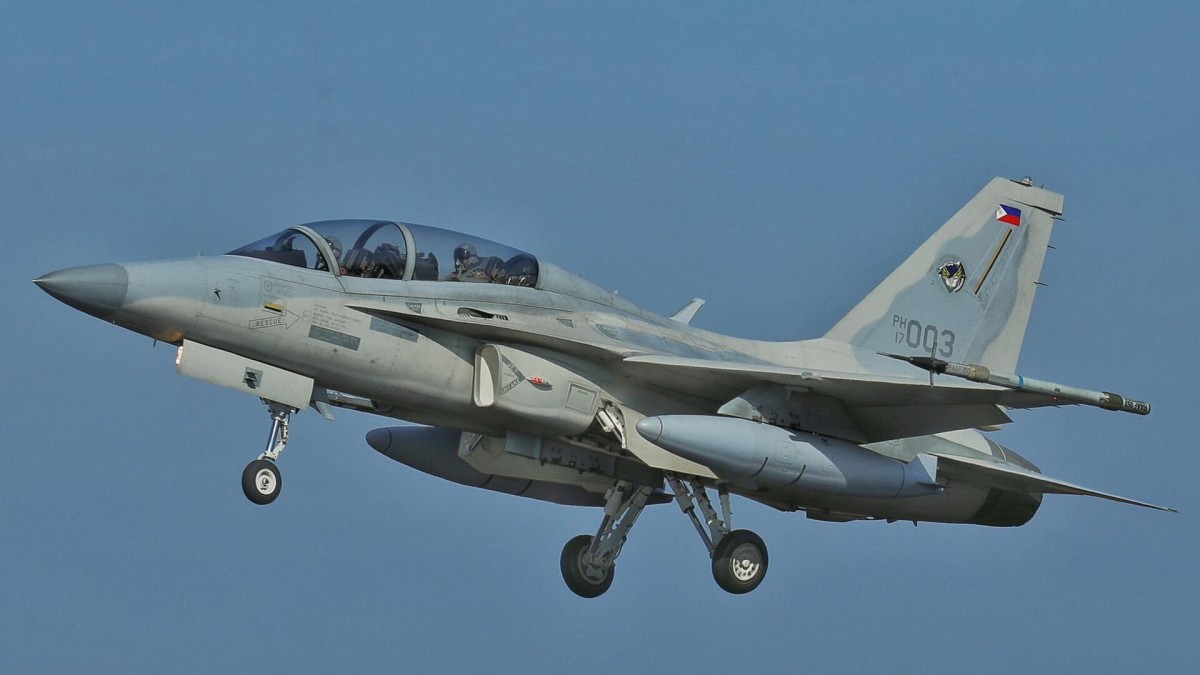
  •  

Europe Is Rearming — and U.S. Wall Street is Writing the Checks, Including GE’s Nearly $12 Billion Deal

The global defense industry appears to be entering a period of structural transformation, driven by rising military spending, technological change, and increasing private-capital involvement.

The “Aerospace & Defense M&A Report 2026: Deal Activity, Market Trends and Outlook,” published by Ropes & Gray LLP  on October 7, 2026, says that Aerospace and Defense Mergers and Acquisitions (M&A), Private Equity (PE), and Venture Capital (VC) funding are likely to expand further, showing that 2026 is on track to be one of “the strongest deal-making years” on record.

The report highlights that Defense Tech/Services is the fastest-growing segment at a 22% Compound Annual Growth Rate (CAGR), followed by Aerospace at 16% CAGR; Aircraft Manufacturers, Parts & Components at 14% CAGR; and Air, Land, & Sea Defense at 9% CAGR.

The report argues that the growth is not simply a temporary response to international conflicts. Governments are rebuilding industrial capacity, replenishing weapons inventories, strengthening supply chains, and accelerating the development of advanced military technologies.

In the United States, the largest market, proposed increases in defense resources, procurement reforms, longer-term contracts, and financial support for defense technology companies aim to attract private capital and expand manufacturing capacity.

In Europe, the EU’s Security Action for Europe initiative aims to mobilize about €800 billion in defense-related investment through national fiscal flexibility, loans, and related financing support.

Germany’s increased spending and procurement reforms can accelerate equipment acquisition and industrial expansion. Collectively, these policies are reshaping the geography of defense investment in Europe.

In fact, the report says that  Europe has emerged as a major driver of new activity. “Europe has become a primary engine of deal flow, not a secondary market. Rising national budgets and new EU-wide financing mechanisms are reshaping where capital is being deployed as well as dictating deployment speed”, it says. NATO’s higher spending ambitions, European rearmament and new financing arrangements are encouraging companies to expand, consolidate and acquire specialist capabilities.

Meanwhile, the Indo-Pacific is undergoing a rapid, structural alignment driven by what regional planners call a “contested era.”

China is consolidating its domestic defense industry, though restrictions on cross-border investment limit Western investors’ access. Japan is rapidly reshaping its defense posture and adapting to an environment where the traditional binary definitions of “peacetime” and “wartime” have effectively blurred.

In this era of continuous competition, the report says Japan has elevated allied burden-sharing to its foundational organizing principle.

This shift is most visible in the digital domain. With the operationalization of Japan’s Active Cyber Defense Oversight Commission, Tokyo has adopted a proactive cyber defense strategy. By implementing legal public-private threat reporting and neutralized-access protocols, Japan is signaling a willingness to legally counter and neutralize state-sponsored infrastructure targeting before cyber assaults can cripple critical domestic networks.

One of the report’s most important observations is that defense investment is increasingly a private-equity story. Private-equity firms are acquiring established manufacturers, selling businesses to strategic buyers and building larger companies through additional acquisitions. Venture capital is also financing newer businesses developing military technologies.

Among the ten largest transactions listed for 2026 up to September 30 was GE Aerospace’s $11.8 billion acquisition of Consolidated Precision Products. Other major deals involved aerospace leasing, maritime defense, aircraft components, and specialist detection technologies.

Dubai Aerospace Enterprise bought Macquarie Airfinance for $9.0 billion in what was a leasing consolidation. In a move that signals European rearmament, land-defense scaling, and main-battle tank production, KfW Group (German State Bank) is backing KNDS [Franco-German tank maker Krauss-Maffei Wegmann + Nexter] with $7.8 billion.

In other words, private investors are no longer confined to peripheral suppliers. They are becoming key participants in the industrial ecosystem that supports national defense.

Significantly, the traditional reliance on a handful of legacy prime contractors is giving way to an ecosystem heavily backed by private equity and venture capital.

The private sector is now driving global defense deal-making as it pivots toward software-defined defense, autonomy, and next-generation platforms.

The report shows how defense technology is changing the industry’s center of gravity. Although aerospace and defense remains one of the most active and strategically complex sectors for private capital deployment, software-defined defense, autonomy, and next-generation platforms are pulling ahead as the fastest-growing corner of the market.

Investors are particularly interested in artificial intelligence and software-defined defense systems; autonomous platforms, including unmanned aircraft and maritime systems; counter-drone and missile-defense capabilities; space infrastructure and surveillance; and specialist electronics, communications, and mission-critical components.

However, while these technologies can drive rapid growth, they also carry risks due to restrictive policies in the US and Europe. The report notes that regulatory compliance is becoming a structural hurdle rather than an afterthought.

In the United States, the largest market by transaction value, more national security vetting—including CFIUS (Committee on Foreign Investment in the United States) and FOCI (Foreign Ownership, Control, or Influence) mitigation—is becoming foundational to ensuring a clean exit.

In other words, the global defense landscape seems to be marked by a distinct paradox.

On the one hand, geopolitical threat vectors are accelerating at breakneck speed. On the other hand, the financial and regulatory machinery needed to field next-generation capabilities faces structural friction.

As a result, companies may depend heavily on a single government customer, handle classified information, or face restrictions on intellectual property developed under government contracts. Cybersecurity compliance and access to sensitive facilities can also complicate acquisitions.

In the United States, the CFIUS can scrutinize foreign investment for national-security risks. FOCI can also affect access to classified work and sensitive facilities.

Similarly, European foreign-investment screening is marked with many complexities. Even businesses that are not conventional arms manufacturers may face scrutiny if they supply strategically important electronics, software, communications or other dual-use technologies.


German Chancellor Friedrich Merz (R) and French President Emmanuel Macron talk on the terrace of the Chancellery at the start of the meeting of State leaders of the European Group of Five (E5) and the NATO Secretary General on June 24, 2026 at the Chancellery in Berlin, Germany. (Photo by Ludovic MARIN / AFP)

Commercial risks matter too. Fixed-price government contracts can leave manufacturers exposed when costs rise unexpectedly. Buyers must therefore examine contract liabilities, working capital, supply-chain resilience, workforce retention and the restrictions that could affect a future sale, the report advises.

The report’s overall conclusion, therefore, is that while defense investment opportunities are expanding,  success increasingly depends on technological relevance, reliable industrial execution, regulatory compliance and the ability to navigate national-security restrictions throughout the ownership cycle.

What lessons could India draw from the trends above?

For India, the report is particularly relevant because it highlights a shift in how advanced military capabilities are developed and financed. The implications extend beyond aircraft, missiles, and ships to defense electronics, artificial intelligence, autonomous systems, space technology, supply chains, and foreign investment.

India’s first opportunity is to integrate more deeply into international aerospace and defense supply chains. As Western manufacturers expand production and diversify their suppliers, Indian companies could become more important producers of precision components, avionics, electronics, aerospace structures, and maintenance services.

The most instructive lesson may come from GE Aerospace’s September 8, 2026 acquisition of Consolidated Precision Products (CPP). Experts say that it was a paradigm shift in aerospace and heavy industrial manufacturing. For decades, aerospace primes aggressively outsourced manufacturing to optimize their balance sheets, shifting capital-expenditure risks onto multi-tiered supply chains.

But years of systemic, compounding engine delays—magnified by the Pratt & Whitney GTF powder metal crisis and Boeing’s structural manufacturing gridlock — exposed a fatal flaw: primes (like GE) outsourced execution, but they could never outsource the risk.

Therefore, GE Aerospace decided to buy the absolute bottleneck of jet engine production: structural castings and complex airfoils. Its deal with private equity firms Warburg Pincus and Berkshire Partners is meant to address persistent, industry-wide shortages of critical engine parts and airfoils. In other words, GE bought the supply chain to control the delivery.

For India, this implies that beyond focusing on “Make in India” as screwdriver assembly, it should also consider “Own the Supply Chain.”

Second, as defense technology gains primacy, expanding AI-enabled systems, autonomous platforms, counter-drone technology, advanced sensors, and space infrastructure could be more relevant for India than producing isolated components.

Some experts argue that because European primes are cash-rich and seeking low-cost engineering, they would prefer a JV with India to meet capacity needs.

Lastly, as the Ropes & Gray LLP  report illustrates, private equity and venture capital can help consolidate fragmented industries, finance expansion, and support specialized technology businesses. India could adapt this approach to build stronger domestic defense suppliers.

  • Author and veteran journalist Prakash Nanda is Chairman of the Editorial Board of the EurAsian Times and has been commenting on politics, foreign policy, and strategic affairs for nearly three decades. He is a former National Fellow of the Indian Council for Historical Research and a recipient of the Seoul Peace Prize Scholarship.
  • The author can be reached at prakash.nanda (at) hotmail.com

The post Europe Is Rearming — and U.S. Wall Street is Writing the Checks, Including GE’s Nearly $12 Billion Deal appeared first on EURASIAN TIMES.

  •  

Su-57 Under Review, IAF Boss Says. Can India & Russia Replicate BrahMos Success Story with Felons?

Unlike the F-35, India has received a formal offer from Russia for the Sukhoi Su-57 fifth-generation fighter but has not yet decided whether to evaluate it, the head of the Indian Air Force said.

Air Chief Marshal A.P. Singh told reporters on the sidelines of the Exercise Tarang Shakti in Jodhpur that the Indian Air Force was aware of Moscow’s proposal.

“As far as the Su-57 is concerned, we have received information that an offer has been made, but no decision has been taken on whether to evaluate it,” he said.

“Once a decision is made, we will assess how well it meets our requirements.”

Russia has repeatedly pitched the Su-57 to India.

Earlier, as EurAsian Times reported, Russian President Vladimir Putin personally renewed the Su-57 offer to India.

Speaking on the sidelines of the St. Petersburg Economic Forum, Putin reaffirmed Russia’s readiness to cooperate with India on the Su-57, including exporting and jointly producing the aircraft.

“It’s fifth-generation technology — I think it’s the best in the world as of now,” the Russian President said at the forum.

President Putin recalled Indo-Russian 5th-gen aircraft collaboration and said: “As far as the Su-57 goes, at one point we proposed to our Indian friends to work together on this technology. “But back then, our Indian friends said: ‘Go ahead on your own, and then we will see – maybe we’ll join’…The aircraft could have been our joint project. We built it independently, but we are ready to work with India in this field – to supply this aircraft and to keep developing it,” the Russian President told the reporters. “We don’t have any issues with it or any limitations. The same goes for air defense systems,” he added.

Su-57 carrying R-73 missiles externally. Credits X.

The Su-57 is a supersonic, twin-engine fifth-generation aircraft designed to destroy air, ground, and naval targets. Developed to compete with the F-22 and F-35, the ‘Felon’ jet features enhanced stealth through composite materials and can cruise supersonically.

It is a multi-role fighter jet capable of air superiority missions, ground attacks, reconnaissance, and electronic warfare. Russia is integrating a range of lethal weapon systems on the Su-57 platform, including the long-range R-37M missile and hypersonic missiles, as reported by the EurAsian Times.

Additionally, the aircraft is being integrated with Artificial Intelligence (AI) to enhance threat detection, decision-making, and pilot support. However, these features have failed to attract buyers, especially India.

If India proceeds with the Su-57 deal and Moscow meets all Indian prerequisites, including technology transfer, it could inject billions into Russia’s sanctions-hit economy. India would also get an interim fifth-gen fighter till the indigenous AMCA arrives.

Russia’s defense exports have historically benefited through high-profile deals with India. An excellent example is the Su-30MKI, India’s customized variant of the Su-30.

India’s acquisition of the Su-30MKI in the early 2000s influenced other nations, such as Malaysia, which modeled its Su-30MKM on the Indian version. Its versatility—including thrust-vectoring engines, canards, and integrated avionics from multiple countries—made it a flagship for Russian technology.

Another bigger success story is the BrahMos supersonic missile.

India’s DRDO and Russia’s NPO Mashinostroyeniya launched the joint venture in 1998 to develop and produce the BrahMos, one of the world’s fastest supersonic cruise missiles.

The Philippines was the first customer of the BrahMos, signing a contract worth approximately $375 million with BrahMos Aerospace in January 2022 for three shore-based anti-ship missile batteries.

The package, intended for the Philippine Marine Corps, includes mobile launchers, missiles, operator and maintainer training, and integrated logistics support. Deliveries began in April 2024 with the first battery and continued through 2025 and into 2026, with the third and final battery nearing completion.

Philippine Defense Secretary Gilberto Teodoro has indicated interest in further adapting or expanding the capability to suit the country’s geography and operational needs.

Another Southeast Asian country, Indonesia, became its second customer.
An agreement for “cooperation on the BrahMos System” was struck during the visit, Indian foreign ministry spokesman Randhir Jaiswal said in a post on X.

The two countries also reached an agreement on air-to-air missile cooperation that “enhances technology collaboration and defense capabilities”, he said.

Indian PM Modi hailed the “growing trust” between Jakarta and New Delhi after meeting Prabowo, which he said underpinned cooperation in “defense, security and maritime affairs”.

“Today, we reached an agreement to enhance defense exchanges, disaster management, and industrial cooperation,” Modi told reporters.

A man waves India’s national flag in front of a replica of the Indian Army’s BrahMos missile system during Prime Minister Narendra Modi’s roadshow in Ahmedabad on May 26, 2025. (Photo by Sam PANTHAKY / AFP)

Earlier, Indonesia’s Ministry of Defense (MoD) spokesperson, Rico Ricardo Sirait, told Reuters on March 9 that Jakarta has agreed to buy the BrahMos missile system from India.

The Indian Navy inducted its first BrahMos system in 2005 aboard INS Rajput. The Indian Army followed in 2007 with its own regiments, and the Air Force later introduced an air-launched version from the Su-30MKI in 2019.

The BrahMos missile saw combat use during Operation Sindoor in May 2025, when Indian forces employed air-launched variants from the Su-30MKI. IAF reportedly fired 15-19 BrahMos missiles.

The Indo-Russian missile could have more export customers.

India sketched a list of “friendly nations” it deemed potential buyers, including the Philippines, Vietnam, Saudi Arabia, the UAE, and South Africa. The list has since changed, with several countries dropping interest and others queuing up to assess the combat-tested missile system.

India reportedly started talks with Vietnam to sell off the supersonic cruise missile in 2023. An official with BrahMos Aerospace Ltd told the EurAsian Times at the time: “Vietnam had shown interest in the system. But the negotiations have just started.”

Further evidence of BrahMos’s widespread appeal in Southeast Asia is Malaysia’s sustained interest in the missile system, particularly the air-launched variant, which could be integrated with the Royal Malaysian Air Force’s Su-30MKM fighter jets.

By 2025, Malaysia appeared in lists of countries “queuing up” or actively negotiating for BrahMos. In fact, in August that year, reports suggested Malaysia had begun preliminary negotiations with Russia and India for the missile, aiming to revolutionize its Indo-Pacific airpower projection.

Besides Southeast Asia, the Middle East could be a potential market for the BrahMos missile.

Alexander Maksichev, Co-Director of BrahMos Aerospace, explicitly emphasized the UAE as a potential customer. Additionally, India has repeatedly listed the UAE among “friendly nations” eligible for BrahMos exports.

Other countries that have reportedly shown interest in the missile include Saudi Arabia, Qatar, Oman, and Egypt. BrahMos has also gained traction in South America, with countries such as Brazil, Chile, Argentina, and Venezuela showing interest.

The Indo-Russian BrahMos is a major export success, and Putin may want to replicate that success with the Su-57, using Russian tech and Indian co-production and marketing.

Whether India will bite the bullet remains to be seen.

The post Su-57 Under Review, IAF Boss Says. Can India & Russia Replicate BrahMos Success Story with Felons? appeared first on EURASIAN TIMES.

  •  

Better than Rafale — Why Taiwan’s F-16 Viper Holds an Edge Over India’s French Jets to Counter China? Opinion

Taiwan recently received its first two F-16V (Viper) fighter jets from the US under an $8 billion deal for 66 F-16Vs, approved during US President Donald Trump’s first term.

The F-16 Vipers landed at Taiwan’s Chihhangair Air Force Base in Taitung. President Lai Ching-te called it “a major milestone in elevating Taiwan’s air defense capabilities” and thanked the US for its “long-standing support.”

When Lockheed Martin delivers the 66 new jets by 2028, the Taiwanese Air Force will have more than 200 F-16 Viper fighter jets, making it the largest Viper-standard fleet in the Indo-Pacific region.

Meanwhile, another Asian country, wary of China’s military, plans to acquire 114 Rafale jets from France.

IAF (Indian Air Force) already operates 36 Rafales and has ordered 26 Rafale-M (Marine) fighter jets for its Navy. If and when the IAF acquires all 114 Rafale jets, it will become the largest operator of Dassault jets outside France.

A newly purchased F-16V Block 70 fighter jet lands at Chihhang Air Base in Taitung on October 2, 2026. Taiwan received its first two US-made F-16V fighter jets, as the island democracy upgrades its military capabilities to deter a potential Chinese attack. The warplanes are part of an $8 billion deal for 66 F-16Vs approved during US President Donald Trump’s first term and scheduled for delivery this year. (Photo by CHENG Yu-chen / AFP)

Rafale vs F-16V

Both Rafale and F-16V are powerful fighter jets, but one massive advantage makes the US Vipers “superior” to the French Rafales, at least theoretically.

On paper, the twin-engine, nuclear-capable Dassault Rafale looks far more lethal than Lockheed Martin’s F-16 Viper, a single-engine lightweight fighter that first flew in 1974, more than five decades ago.

However, in modern times, fighter-jet battles are rarely one-on-one platform contests.

As heroic dogfights between fighter jets became a relic of the past and gave way to beyond-visual-range (BVR) contests, the battle for aerial supremacy became a system-of-systems contest rather than a straightforward one-on-one contest.

In this system-of-systems contest, a much less capable fighter aircraft can trounce a much superior aircraft if it integrates ground-, air-, and space-based sensors, capable radars, sensor fusion, an integrated battlespace display, and precision targeting.

In short, a networked fighter jet, even if less capable, is more lethal than a stand-alone aircraft.

Additionally, fighter jet deals are rarely purely military decisions; they are as much geopolitical as they are military.

It’s no surprise that a capable, cost-effective combat aircraft like the Saab JAS-39 Gripen struggled to find an export customer for over a decade. Again, after signing a deal with Brazil for the Gripen E/F variant in 2014, the aircraft failed to win other export customers for more than a decade.

While Gripen is a cutting-edge aircraft with state-of-the-art weapons, its biggest weakness was the lack of a powerful, influential backer on the global stage like the US or France.

Trump’s Big Taiwan Move: Despite $14B Arms Freeze, Permanent U.S. Military Officials May Sit at MND

Sweden, where Saab is based, is not really a global powerhouse, has a modest military, is not part of the nuclear club, and is not a member of the UN Security Council, unlike the US, Russia, France, the UK, and China, all of which are permanent members of the UNSC and enjoy veto power that could offer myriad advantages in geopolitical contests.

Brazil’s military transport aircraft, the Embraer C-390 Millennium, faces a similar challenge. Though capable and boasting an enviable safety record, it sells far fewer units than the American C-130J Super Hercules.

In other words, countries not only buy fighter jets; they also prefer to buy from countries with strong military and geopolitical clout.

This is where the US has an unmatched lead over competitors, including France, Russia, and China.

Consider, for example, Ukraine.

It not only received used F-16 fighter jets, but it also received Starlink support and US intelligence inputs, which allowed it to target military targets deep inside Russian territory.

Ukrainian F-16 Fighter Jet.

Without this satellite and intelligence support, the F-16s would be only half as effective.

Similarly, consider Israel in the Middle East.

It has not only received advanced US fighter jets such as the F-15 and the F-35, but Jerusalem also gets full US intelligence support, pinpoint information on adversary military targets, and their military movements.

Similarly, Jerusalem gets early warning whenever Iran launches ballistic missiles towards it.

The US has nearly 20 military bases in the region and maintains advanced surface-to-air missile batteries, such as Patriot and THAAD, sea-based missile defense platforms, and AN/FPS-132 missile early-warning radar in the Middle East.

This diversified radar network ensures that not only does Israel receive early warning of every Iranian attack, but Iranian missiles and drones have to pass through a layered missile defense infrastructure spread over the whole of the Middle East before their projectiles can reach Israel.

It is these incremental weapons, missiles, radar and sensors, intelligence, and satellite support that ensure that Jerusalem comes out on top in every regional military conflict.

In the Six-Day War in 1967, Israel’s adversaries, Egypt, Jordan, and Syria, had advanced Soviet fighters, and yet Jerusalem was able to trounce their combined military might, thanks to the intelligence support it received.

The Missile That Shot Down U.S. Stealth Aircraft is Coming Back—Mobile. Why India Must Take Note of the Russian Move

Export of military platforms is perhaps the US’s most successful export commodity since the two World Wars.

According to SIPRI, between 2021 and 2025, the US was the world’s top military exporter, accounting for as much as 42% of global military exports.

France was a distant second with just a 9.8% share of global military exports.

However, this uncontested leadership depends on the superior performance of its military platforms in conflict.

So, basically, the US has a vested interest in ensuring the victory of militaries that field US military platforms.

On the other hand, countries that do not field US military platforms often struggle with poor intelligence support.

India, for instance, repeatedly requested Washington to provide satellite reconnaissance pictures to target Pakistani military positions on mountains during the Kargil War in 1999. But Washington declined India’s requests.

Had India bought US military planes, Washington would have, most probably, provided New Delhi with satellite imagery to target Pakistani military positions, so that India could hit these targets and Washington could market the efficiency of its jets.

In a potential conflict between China and Taiwan, Washington would provide Taipei with every possible intelligence and satellite support so that its fighter jets and other military platforms are not trounced against Chinese weapon systems.

As we have seen in the Ukraine War, no other country currently has a satellite network comparable to Starlink. In a potential conflict with China, this US support could be decisive.

With this US support, the F-16 Vipers could be far more lethal than they actually are.

Rafale is a very capable platform. It has an AESA radar, a SPECTRA electronic warfare suite, long-range air-to-air missiles such as Meteor, precision-strike munitions such as Hammer guided bombs, a long-range SCALP EG cruise missile, twin engines, and nuclear capability, which make it a lethal fighter.

However, despite its status as a major military power, France lacks the heft of the United States.

Despite the current “frosty” US-India ties, New Delhi must find a way to work with the US while preserving its strategic autonomy and boosting its Make-in-India initiative.

  • This is an Opinion Article
  • Sumit Ahlawat has over a decade of experience in news media. He has worked with Press Trust of India, Times Now, Zee News, Economic Times, and Microsoft News. He holds a Master’s Degree in International Media and Modern  History from the University of Sheffield, UK. 
  • He can be reached at ahlawat.sumit85 (at) gmail.com

The post Better than Rafale — Why Taiwan’s F-16 Viper Holds an Edge Over India’s French Jets to Counter China? Opinion appeared first on EURASIAN TIMES.
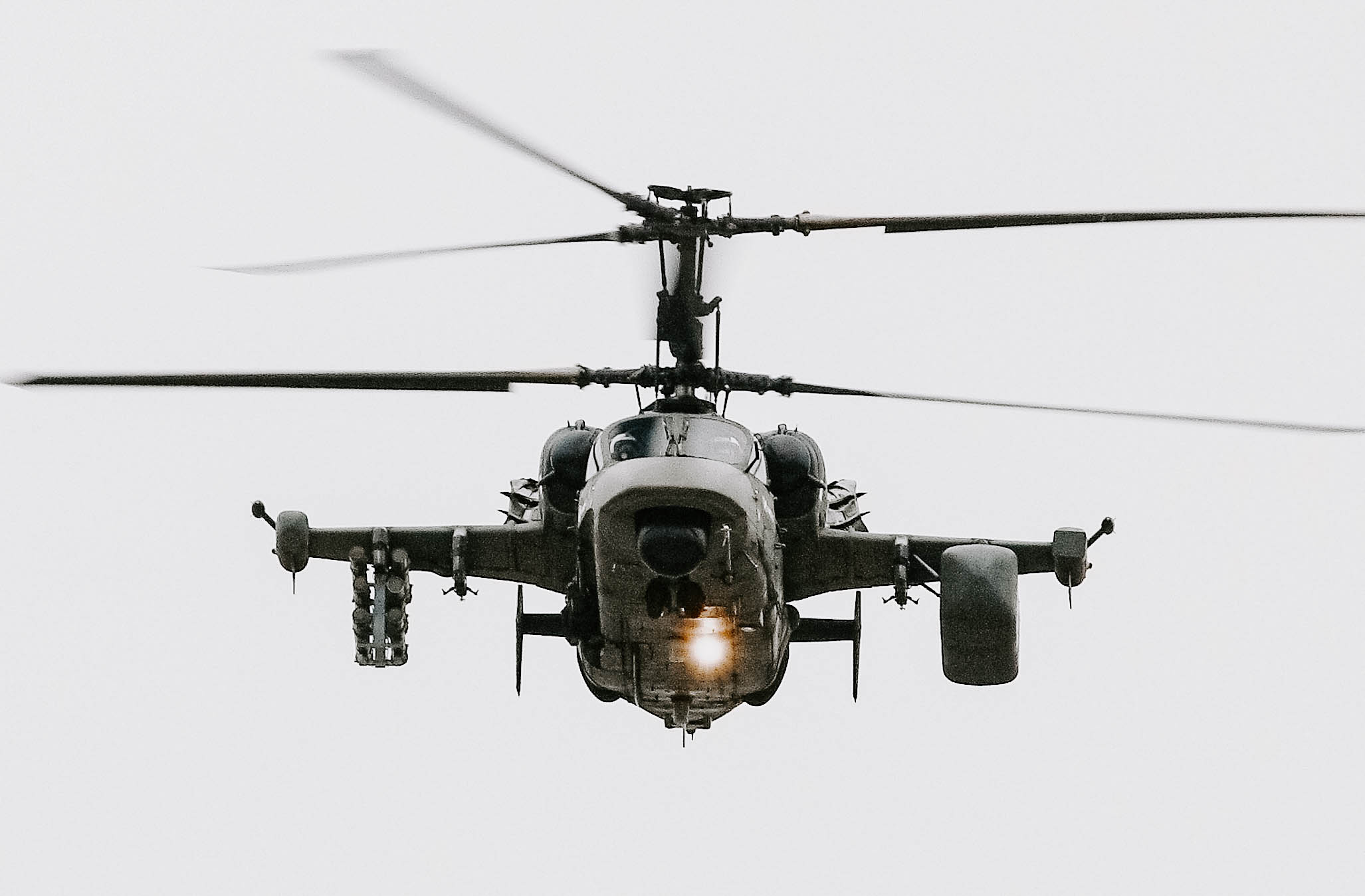
  •  

India Shuts Down F-35 Talk With One Blunt Line. Says U.S. Crew Won’t Even Let Us Near The Stealth Fighter

India’s air force chief said on Saturday that the U.S. has made no formal offer to sell India F-35 stealth fighters, and added that American personnel have not even allowed Indian officers near the stealth aircraft.

Air Chief Marshal Amar Preet Singh made the comments at a press conference marking the end of the multinational Exercise Tarang Shakti-2026 in Jodhpur, while seated alongside U.S. Pacific Air Forces commander Gen. Kevin Schneider.

“Your people don’t even let us go near the aircraft, and you are talking about selling it to us,” Singh said.

Six U.S. Air Force F-35As, accompanied by more than 200 personnel, participated in Tarang Shakti. This was the first time the American stealth fighters had drilled against Indian jets on Indian soil.

Singh also said the Indian government has not yet decided whether the air force should evaluate Russia’s offer of the Su-57.

“Once the decision is conveyed to us (by the government), we will evaluate how well it meets our requirements,” he said.

Earlier in 2025, U.S. President Donald Trump said, during Indian Prime Minister Narendra Modi’s visit to Washington, that the United States would pave the way for India to acquire the F-35.

Later, Vice President J.D. Vance reiterated the offer during his visit to India in April 2025, saying, “We, of course, want to collaborate more. We want to work together more. And we want your nation to buy more of our military equipment, which we believe is best-in-class. American fifth-generation F-35s, for example, would give the Indian Air Force the ability to defend your airspace and protect your people like never before.”

Earlier, as EurAsian Times reported, Lockheed Martin CEO Jim Taiclet discussed selling the F-35 to India and raised the prospect of selling the F-21, a highly sophisticated F-16 derivative.

“I think the F-16 also has strong legs, if you will, and more and increasing interest as we go forward from several countries that aren’t quite ready for F-35,” Taiclet said. There are “some countries that could see F-21 or F-16, for India, for example, as a stepping stone to F-35.”

The sale of the F-35 is subject to rigorous U.S. export controls under the Arms Export Control Act, which requires approval from the State Department, the Pentagon, and often Congress. The White House maintains strict policies on technology transfers, regional stability, and the internal politics of the potential recipient state to safeguard its sensitive technology.

The U.S. hesitation is straightforward: sharing it with other countries could put sensitive technology in the hands of enemies, especially if the recipient country has ties to countries like China or Russia, which would try to exploit or reverse-engineer it.

Earlier, writing for EurAsian Times, Air Marshal Anil Chopra (retired) said: The F-35 soft pitch faced almost immediate limitations due to subsequent tariff frictions and India’s core push for technology transfer for domestic manufacturing of its AMCA fifth-gen warplanes and aero-engines.

GE Aerospace has faced immense delays on its 2021 contract to supply 99 F404-IN20 engines to Hindustan Aeronautics Limited (HAL) for the Tejas Mk1A fighter program. Only six out of the promised engines have been delivered instead of the targeted 12-plus a year, prompting HAL to invoke contractual penalty clauses.

Saudi & Turkey Chase F-35 Jets, Heavy Skepticism in India. Why IAF Veterans are Not Too Keen on F-35s?

Tariffs on “friend” India and delayed engines for AMCA have badly weakened Indo-US ties.

India also operates Russian-supplied S-400 systems, a factor that previously caused friction between the U.S. and Turkey.

India already operates the Russian-origin S-400 AD System. The U.S. fears these networks could compromise classified F-35 stealth data. The jet relies on the U.S.-controlled Operational Data Integrated Network for software and logistics.

The U.S. may already be accessing such data through many other American platforms on Indian soil.

Meanwhile, introducing a complex new Western platform adds severe maintenance challenges to an already diverse military fleet. Even in the U.S., very few airbases can service stealth coatings.

Buying foreign fifth-generation jets risks diverting funds from India’s indigenous AMCA project. Putting too many military aviation eggs in the unreliable U.S. basket is also a risk. Americans can be “very unreliable” when it comes to imposing sanctions and freezing spares and maintenance support.

Operationally, the F-35 could offer major strategic advantages for the IAF, but any deal involves deep geopolitical, logistical, and financial complexities. Acquisition costs range from $80 to $110 million per jet, plus very high hourly operating expenses, creating budgetary challenges for New Delhi.

F-35: Image via U.S. Embassy, New Delhi

After two decades of stable ties, the last two years have seen distrust between the world’s largest and oldest democracies.

While many hope this is a transitory phase, it is becoming clear that the U.S. is not interested in India’s rise as a global power. U.S. Deputy Secretary of State Christopher Landau stated at the last Raisina Dialogue in New Delhi that Washington will not repeat its past approach (read: mistake) with China by granting India unfettered market and tech access that could lead to strong commercial competition.

The U.S. wants India strong enough only to serve as a bulwark against China, not to become an independent power center or a technology and economic power.

Why Yemen Could be a Graveyard for Turkish & Mecca Pact Soldiers: History Has The Answers: OPED

The U.S. seems keen only to supply platforms to India through large contracts. Even for aero-structures and smaller components, it prefers make-in-India “Build to Print” over significant technology sharing.

Even the proposed India-USA deal to co-produce GE Aerospace F414 engines with HAL faces major hurdles. The main complications include a nearly threefold cost surge, intense disputes over sensitive hot-end technology transfer, and the risk of delays to India’s Tejas Mk2 and AMCA programs.

Many Indians wonder whether we have invested too much in a partner with a high trust deficit and a vacillating foreign policy. U.S. is known to have “dumped” friends and allies for immediate national interests. The Trump administration’s recent public threats and admonishments to its NATO allies further strengthen Indian concerns.

The U.S. has already deepened its ties with India’s airborne platforms, supplying transport aircraft (C-17, C-130), maritime patrol aircraft (P-8I), UAVs (MQ-9), and helicopters (Chinook, AH-64 Apache, and MH-60R).

For a long time, the U.S. was trying to sell the F-16 ‘Viper’ (renamed F-21) and the F-18 Super Hornet as part of India’s Multi-Role Fighter Aircraft (MRFA) proposal. Later, it offered the F-15EX. The U.S. never officially offered the F-35.

Despite being the oldest democracy, the U.S. finds it easier to deal with dependent military Generals, and West Asian Sheikhs, rather than growing democracies. The U.S. has a poor opinion of India’s “Non-Alignment” and “Strategic Autonomy.”

Su-57 Still Under Review, IAF Boss Says. Can India & Russia Replicate BrahMos Success Story with Felons?

Washington continues to prefer Pakistan, which helps it connect with China, the West, and Central Asia, and is willing to toe the American line for a few bucks. This Pakistan connection further erodes India’s trust.

Most analysts feel that letting the USA into India’s fighter-aircraft ecosystem is not a great idea. Any F-35 deal, like other aircraft deals, will be only a supply-and-support contract. There will be no technology transfer and no “Make-in-India” element.

While India pushes its own AMCA program, the Su-57 may still be the better choice for an interim fighter.

The post India Shuts Down F-35 Talk With One Blunt Line. Says U.S. Crew Won’t Even Let Us Near The Stealth Fighter appeared first on EURASIAN TIMES.
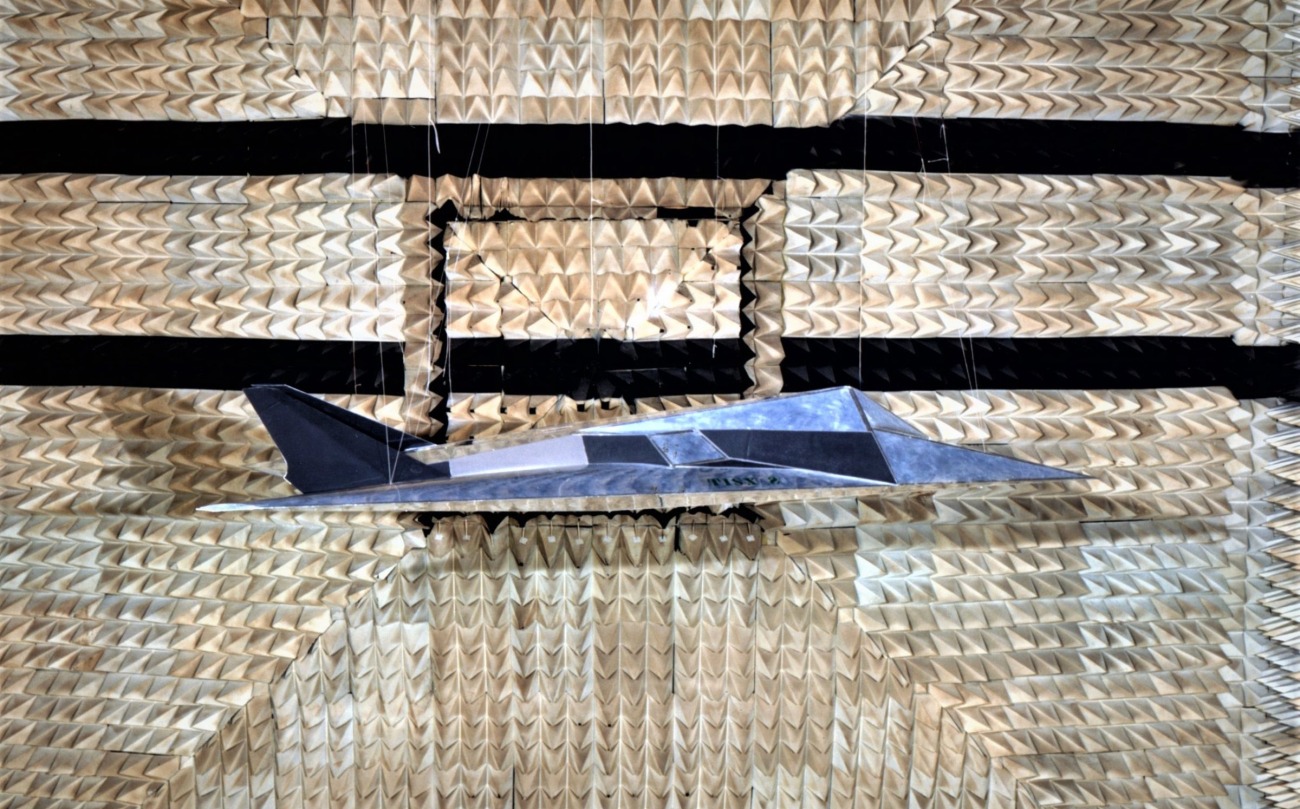
  •  

Lockheed Unveils PAC-3 Edge — Next-Gen Patriot Interceptor To Counter Hypersonic Missile Threats

Building on the commercial success and popularity of its PAC-3 interceptors, Lockheed Martin unveiled the more advanced PAC-3 Edge, a program that it is advancing with millions of dollars in funding.

The PAC-3 Edge “will add a revolutionary defensive capability against hypersonic and advanced missile threats,” Lockheed said in an official press statement announcing the interceptor’s debut on October 9, 2026.

The interceptor “leverages combat-proven PAC-3 MSE technology and the latest, industry-leading capability to deliver decisive performance against the Army’s most critical threats,” the company emphasized. 

Although details about the missile remain limited at this stage, the defense giant has indicated that the PAC-3 Edge will have a longer range, higher altitude reach, and greater effectiveness against maneuverable targets than the PAC-3.

The company noted that the PAC-3 Edge achieves superior performance with a next-generation seeker developed by its Strigo Product Center. This seeker—incorporating the latest defense technologies—is expected to significantly boost the interceptor’s ability to defeat highly sophisticated threats. It also features a multi-pulse solid rocket motor from Northrop Grumman that provides precise, controlled thrust throughout the flight profile.

Furthermore, Lockheed’s additional control-system upgrades extend the missile’s effective range and altitude capabilities, the company added.

Lockheed Bets Big on PAC-3 Edge

Lockheed said the improved PAC-3 interceptor is part of the US Army’s Future Interceptor program, “which is currently under competition,” though it stopped short of naming the other competitors.

“The Army’s decision to progress Lockheed Martin into the next stage of development affirms its confidence in Lockheed Martin’s proven Integrated Air and Missile Defense (IAMD) experience and the company’s ability to deliver an advanced, layered defense against what’s next,” the company stated.

The US Army’s Future Interceptor program is meant to develop a next-generation interceptor, primarily as an advanced successor or major upgrade path for the Patriot PAC-3.

The effort focuses on the lower tier of the ballistic missile defense battlespace and aims to counter current and emerging air, missile, and hypersonic threats with improved velocity, altitude, range, and maneuverability. It is meant to strengthen the Army’s layered IAMD architecture against near-peer adversaries like China and Russia. 

The unveiling comes as the US military is seeking a Patriot successor amid evolving threats from adversaries like China, Russia, Iran, and North Korea, which have amassed sophisticated hypersonic missiles that are typically much harder to intercept because of their high speeds, unpredictable trajectories, and enviable maneuverability.

In fact, this effort may have gained more urgency after the debacle in the Middle East, where US facilities suffered massive damage in Iranian strikes during its ongoing Operation Epic Fury.

Lockheed says PAC-3 Edge is designed to integrate with existing and future IAMD capabilities, including the Integrated Battle Command System (IBCS), the M903 launcher, containerized launchers, and HIMARS Flex. It plans to accelerate missile development in 2027 to match PAC-3 Edge’s rapid deployment schedule for 2031.

Lockheed unveiled PAC-3 Edge interceptor

A noteworthy aspect of Lockheed offering the PAC-3 Edge for the Future Interceptor Program is that it is putting its own money on the line to deliver the interceptor faster than traditional acquisition timelines usually allow.

Lockheed reportedly plans to invest hundreds of millions of dollars of its own funds in the missile alone, in addition to further investments in its solid rocket motor and seeker. “We’ve already probably somewhere between $50 [million] and $100 million or better put into this,” Tim Cahill, president of Lockheed Martin, was quoted as saying by Breaking Defense.

He added that the seeker tech is expected to receive roughly $800 million in total company investment so the technology can be reused across other offensive and defensive systems.

The company has already invested about $250 million in the Strigo Product Center to fund new, industry-leading seeker technology that enables greater precision and maneuverability, as noted in the press statement.

Notably, this heavy investment indicates that rather than waiting for traditional government contracts to fully mature, Lockheed is treating PAC-3 Edge as both a technical leap and a strategic corporate bet.

This approach aligns with Lockheed’s recent emphasis on self-funded prototypes and enabling technologies, including work on a space-based interceptor aimed at an on-orbit demonstration around 2028, or the backward integration of advanced Skunk Works technologies, among other similar efforts.

This overall approach of self-funding projects, or parts of them, reflects the company’s deliberate shift toward “home-run” internal research and development (R&D) that produces real hardware the government can evaluate.

Leveraging The Patriot PAC-3 Appeal 

Lockheed Martin is not selling the PAC-3 Edge as a clean-sheet leap into the unknown. Instead, it is deliberately packaging the new interceptor as the logical, low-risk evolution of the US’s most trusted and successful missile-defense weapon. “Lockheed Martin’s PAC-3 Edge interceptor leverages the combat-proven PAC-3 MSE, delivering even greater maneuverability, power and velocity to ensure the Army’s layered defensive architecture remains the most advanced in the world,” Cahill stated.

PAC-3 has been tested against ballistic missiles, cruise missiles, and even hypersonic threats in Ukraine and the Middle East, with Lockheed and US officials repeatedly describing high kill rates, despite leaked missiles.

PAC-3 Media Kit | Lockheed Martin
File: PAC-3

Lockheed claims the PAC-3 Edge inherits the same PAC-3 hit-to-kill architecture and operational pedigree, allowing it to claim continuity. By keeping Edge within the PAC-3 family, including the same launchers, fire-control software, and logistics footprint, Lockheed reduces the usual political and programmatic friction that accompanies a new interceptor.

Notably, Lockheed will leverage the PAC-3’s infrastructure for the new-generation interceptor and, according to reports, will build the PAC-3 Edge on its existing PAC-3 line in Camden, Ark.

Furthermore, the company claims it will cost the same as the PAC-3.  “The cost of this would be about that of the existing PAC-3 MSE,” Tim Cahill told Reuters. “At full production, the annual rate would be about 2,000 units a year, comparable with PAC-3 MSE.”

Against this backdrop, Congress and the United States Army can view Edge less as a risky new start and instead see it as the next spiral of a system that is already proven, funded at scale, and desired by allies.

The PAC-3 Patriot interceptors are the most advanced in the US inventory, alongside the THAAD (Terminal High Altitude Area Defense). In fact, the recent conflicts in Iran and Ukraine have driven a massive global surge in the missile’s orders. About 17 countries currently operate or have ordered PAC-3 variants, including the United States, the Netherlands, Japan, Germany, the UAE, Taiwan, Kuwait, Qatar, South Korea, Saudi Arabia, Romania, Poland, Sweden, Bahrain, Switzerland, Spain, and Denmark.

Many of these have multi-billion-dollar outstanding orders and are actively expanding their stocks.

For foreign customers, Lockheed could position the PAC-3 Edge as a natural path to ordering the next-generation PAC-3 instead of evaluating an all-new option.

Earlier this year, Lockheed also unveiled PAC-3 ACE, a less powerful, more affordable MSE variant accessible to clients outside the US. “It is not designed to replace the MSE, but to supplement it — it has its heritage and maturity, but we bring the costs down by changing some of the components,” Tim Cahill said at the time. 

Therefore, it may not be an exaggeration to say that Lockheed is now diversifying its interceptor portfolio within the same brand: the PAC-3 ACE as a lower-cost, high-volume option for less-stressing threats, PAC-3 MSE as the current high-end workhorse, and the PAC-3 Edge as the future higher-altitude, longer-range, hypersonic-capable top end. 

The unveiling of the new PAC-3 Edge comes as the company already executes a historic ramp-up of capacity. Earlier this year, Lockheed signed a seven-year framework agreement to increase annual PAC-3 interceptor production from 600 to 2,000 under a roughly $58.6 billion framework agreement. The overall expansion effort reportedly includes new facilities, robotics, automation, and supplier expansions.

In summary, Lockheed Martin is backing the PAC-3 Edge with hundreds of millions of its own dollars while keeping the design closely tied to the existing PAC-3 production base and operational architecture. The strategy aims to offer the Army a faster, lower-risk route to a more capable interceptor. Whether this will pay off now remains to be seen.


The post Lockheed Unveils PAC-3 Edge — Next-Gen Patriot Interceptor To Counter Hypersonic Missile Threats appeared first on EURASIAN TIMES.
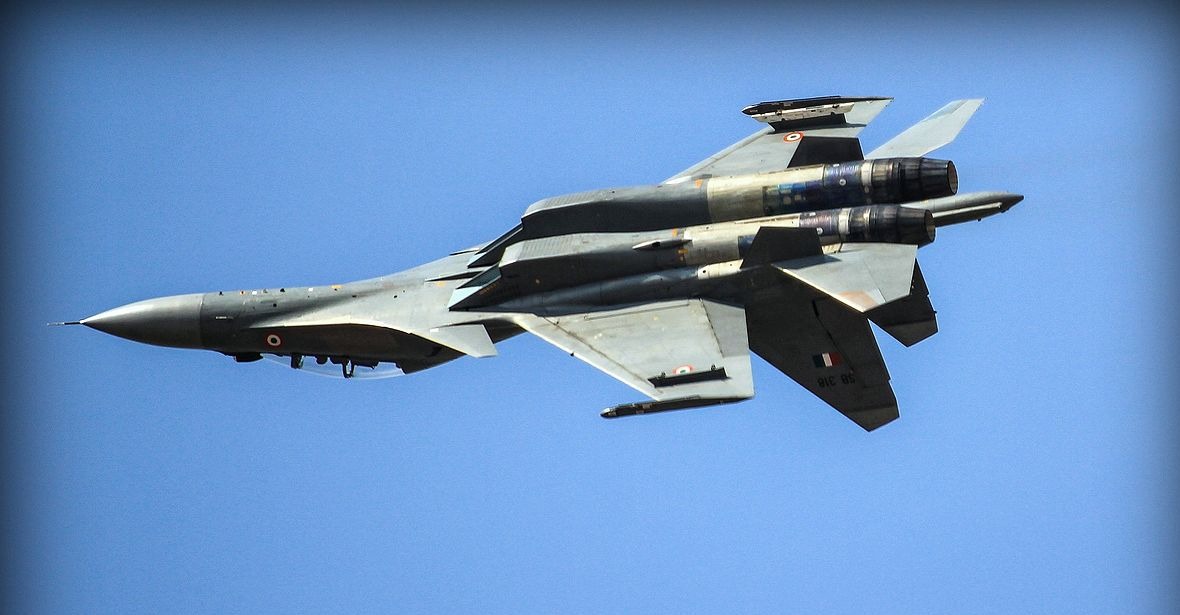
  •  

Fort Hood Live Execution: How Nidal Hasan’s Livestreamed Firing Squad Could Strengthen UCMJ’s Authority

The United States is one of the few developed Western democracies that still carries out the death penalty, with dozens of executions every year.

However, even by American standards, the execution planned for December is unusually severe.

Secretary of War Pete Hegseth has said that Major Nidal Malik Hasan, sentenced to death in 2013 by a general court-martial under the Uniform Code of Military Justice (UCMJ), will be executed by firing squad at Fort Hood, Texas, and that the execution will be public.

The Pentagon has since said it will livestream the execution.

It was here in Fort Hood, Texas, that Major Hasan opened fire inside a crowded medical readiness center at Fort Hood, killing 13 people and injuring 32 others in 2009.

Before opening fire on unarmed soldiers, Hasan shouted “Allahu Akbar.” He also shot at the backs of soldiers fleeing toward the parking lot.

Hasan later said it was an effort to stop them from going to Afghanistan and killing his fellow Muslims.

This will mark the first U.S. military execution in over 60 years, the first military execution by firing squad since World War II, and the world’s first-ever officially livestreamed execution.

This undated photo provided by the Bell County Sheriff’s Department shows former Army psychiatrist Maj. Nidal Hasan. Credit via X.

The last time the U.S. military carried out an execution was in 1961, when Army Pvt. John Bennett was executed by hanging.

The last time the U.S. military carried out a death sentence by firing squad was in 1945.

The best-known case is Private Eddie Slovik, shot by a 12-man firing squad in France in January 1945 for desertion, the only U.S. soldier executed for desertion during the Second World War and since the Civil War.

Nearly 10 months later, Dan J. Lee was executed by the U.S. military’s firing squad in the Philippines in November 1945 for murder and/or rape.

Hasan, therefore, could become the first U.S. servicemember to be executed by a firing squad in over eight decades.

His execution could also become the world’s first officially live-streamed death penalty.

Public executions were common in the medieval period.

In “Discipline and Punish,” French philosopher Michel Foucault writes that the death penalty was a “spectacle.”

“Public torture and execution of criminals provided one of the most popular spectacles of eighteenth-century France,” Foucault wrote in his book.

However, gradually, most countries outlawed public executions.

The UK abolished public executions in 1868 with the passing of the Capital Punishment Amendment Act 1868, which moved all executions behind prison walls.

France followed suit in 1939. In the U.S., the last public execution was carried out in 1936.

Amnesty International said in its report on executions in 2025 that it knew of at least 17 public executions – 11 in Iran and 6 in Afghanistan.

The U.S., therefore, joins a handful of countries like Iran and Afghanistan where public executions are still carried out.

Notably, the U.S. is currently at war with Iran and fought a 20-year-long war with Afghanistan from 2001 to 2021.

The question, then, is what precisely Washington hopes to achieve by joining the league of its adversaries?

Live Streaming of Death Penalty By Firing Squad

It is noteworthy that the general court-martial under the Uniform Code of Military Justice (UCMJ) only awarded the death sentence to Hasan in 2013.

Military appeals later affirmed that sentence. The Supreme Court declined review in 2025.

In October 2026, Defense Secretary Hegseth recommended death by firing squad, and President Trump approved the recommendation.

Hegseth later said that the execution will be public, with the Pentagon clarifying that it will be live-streamed.

Hegseth explained part of the reason himself.

“Execution by firing squad. Army major betrays his country. Radical Islamist kills a bunch of Americans at Fort Hood. Of course, we’re going to do it at Fort Hood and do it on a Thursday. We’re going to do it at 1 o’clock, which is when he did it, and it’s going to be soldiers with rifles executing the firing squad,” Hegseth said in an interview with Jack Posobiec on Real America’s Voice.

“It was a radical Islamist attack in uniform inside the ranks, and so he’s going to get a firing squad of soldiers, as it should be. And we’ll make sure that people can watch it, that it’s public, because people need to understand that there are serious consequences for these types of things.”

“Army firing squad for convicted terrorist Nidal Malik Hasan, the jihadist who opened fire on unarmed American soldiers at Fort Hood in 2009. He killed 13 people and wounded 32 others while shouting ‘Allahu Akbar’ during the attack,” Chief Pentagon spokesman Sean Parnell said.

The remarks make it clear that the Pentagon wants to send a strong message against internal threats and reassert the Uniform Code of Military Justice’s (UCMJ) ultimate authority.

It is notable that while, in theory, the UCMJ has the power to award the death penalty for criminal behavior in the armed forces, in practice, the awarding of the death penalty by the UCMJ, and its actual implementation, has had a chequered history.

The UCMJ and Death Penalty

UCMJ is the federal criminal code and procedural system that governs the U.S. armed forces.

The UCMJ was enacted in 1950 and took effect in 1951.

The code creates one uniform system of military justice for all branches. Its rules apply to active-duty members of the Army, Navy, Air Force, Marine Corps, Coast Guard, and Space Force; certain reservists on duty; and others such as prisoners of war or retired members.

Service members place US flags at Arlington National Cemetery during the Annual Flags-In Ceremony in Arlington, Virginia, on May 22, 2025, as part of the Memorial Day holiday on May 26. (Photo by Brendan Smialowski / AFP)

Its stated objective is to promote justice, maintain good order and discipline, support efficiency and effectiveness in the armed forces, and thereby strengthen national security. It balances the military’s need for discipline and readiness with procedural protections for the accused.

It contains punitive articles that define both uniquely military offenses, such as desertion, absence without leave, insubordination, and disrespect, and ordinary crimes, like murder, larceny, and sexual offenses.

The general courts-martial under the UCMJ have the authority to impose the death penalty.

From its founding in 1951 till 1961, the U.S. Army carried out 10 executions awarded by the UCMJ, all by hanging.

The last military execution in the U.S. was carried out in 1961, after President Eisenhower approved it.

However, in 1972, the U.S. Supreme Court, in a landmark judgment in the Furman v. Georgia case, effectively placed a temporary moratorium on the death penalty across the United States.

In 1984, President Ronald Reagan signed an order that set detailed rules for military death-penalty trials.

It established that the court-martial could not sentence someone to death just because the crime was serious. The prosecutors must also establish one more “aggravating” factor, such as the killing of more than one person, or killing someone during robbery.

Furthermore, the panel could impose the death sentence only if all members agreed on guilt and the sentence. Under these rules, the UCMJ authorized capital punishment again.

From 1984 till mid-2000s, the military sought the death sentence against the accused in 47 cases.

The panel, however, awarded the death penalty in only 15 out of those 47 cases. Even in these 15 cases, many were later reduced to life imprisonment on appeal or commuted.

For instance, former President Barack Obama commuted Dwight Loving’s 1989 sentence to life in 2017.

Currently, four men remain under a UCMJ death sentence: Ronald Gray (1988), Hasan Akbar (2005), Timothy Hennis (2010), and Nidal Hasan (2013).

Notably, former President George Bush approved Gray’s death sentence in 2008, becoming the first U.S. President since Eisenhower, after a gap of 47 years, to approve a death sentence awarded by the UCMJ.

However, a federal judge stayed that execution so Gray could challenge the sentence in court. His execution has still not been carried out.

Now Trump has become only the second President to approve the death sentence awarded by the UCMJ in 65 years.

Hasan’s death sentence is set for December 3.

Notably, President Trump has not only approved Hasan’s death sentence, but also approved his execution by a firing squad and its live-streaming.

Hasan’s execution, therefore, could mark the return of military executions in the U.S. after over six decades.

  • Sumit Ahlawat has over a decade of experience in news media. He has worked with Press Trust of India, Times Now, Zee News, Economic Times, and Microsoft News. He holds a Master’s Degree in International Media and Modern  History from the University of Sheffield, UK. 
  • He can be reached at ahlawat.sumit85 (at) gmail.com

The post Fort Hood Live Execution: How Nidal Hasan’s Livestreamed Firing Squad Could Strengthen UCMJ’s Authority appeared first on EURASIAN TIMES.
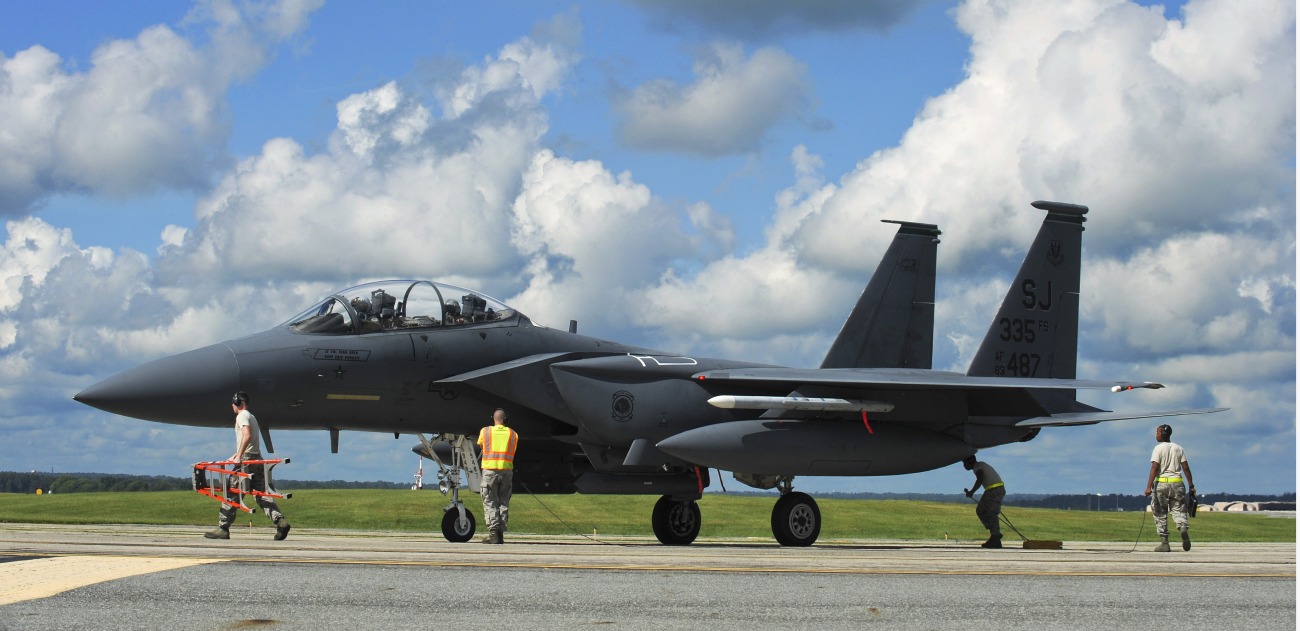
  •  

Thai Queen Flies Gripen Fighter Jet Solo, Becomes 1st Reigning Queen to Pilot a Modern Combat Jet Alone

Thailand’s Queen Suthida flew a solo sortie in the Royal Thai Air Force’s Saab JAS 39C Gripen fighter jet, becoming the first Thai female Gripen pilot and the first reigning Queen anywhere in the world to fly a modern combat jet solo.

Without an instructor or a co-pilot in the back seat, Thailand’s Queen Suthida took off from a military airbase in southern Surat Thani on October 8, 2026.

For about 41 minutes, the Queen of Thailand owned the air even as King Maha Vajiralongkorn waited with flowers and a golden patch, an honorary Swedish insignia for those who have flown the aircraft.

Local media reported that the flight marked the culmination of extensive simulator training at the base and about 10 hours in a two-seat JAS39D Gripen. However, she was already a pilot before she began training on the Gripen-C, which forms the cornerstone of the RTAF.

On May 13, 2010, the Queen made her flying debut aboard a Cessna T-41D belonging to Fleet 604 at Wing 6 in Bangkok. Since then, she has amassed 1,188.48 flight hours in various aircraft, including the Cessna T-41, CT-4E Airtrainer, Pilatus PC-9, Mooney M20M, Piper PA-34 Seneca, Boeing 737-400, Boeing 737-800, and a twin-seater Gripen-D.

In the past, the Queen has reportedly served as the king’s co-pilot on both domestic and overseas flights while performing royal duties. The royal duo even successfully landed a royal aircraft at Paro Airport in Bhutan in April 2015, widely regarded as one of the world’s hardest airports for pilots.

Notably, only a few precedents exist of royalty or heads of state flying aircraft beyond performing duties. However, a few notable examples exist.

Image
Thailand’s Queen Suthida made her first solo flight in a single-seat JAS 39C Gripen (Via X)

The Spanish Crown Princess Leonor, for instance, flew her first solo flight in December 2025, piloting a Pilatus PC-21 turboprop trainer. She reportedly concluded her air force training with a joint flight alongside her father, King Felipe VI, with both piloting separate Pilatus PC-21 training aircraft.

Some reports also say she flew in an F-5 fighter jet with an instructor.

Meanwhile, Princess Salma bint Abdullah of Jordan, daughter of King Abdullah II, became the first woman in the Jordanian Armed Forces to complete fixed-wing pilot training and receive her wings in 2020.

She even joined the kingdom’s royal air force in providing humanitarian aid to the war-torn Gaza Strip after Israel launched a devastating bombing campaign on the enclave following the October 7 attack by Hamas.

Interestingly, the Jordanian princess comes from a long line of pilots trained to fly both civilian and military aircraft. Jordan’s current leader, King Abdullah II, qualified as a pilot of a Cobra attack helicopter and other types during his military career. He is also purportedly known for his hands-on involvement with the Royal Jordanian Air Force, which operates F-16 AM/BM fighter jets based at Muwaffaq Salti Air Base. 

King Abdullah II’s father, King Hussein, was also a highly skilled pilot who flew a variety of military and civilian aircraft, including the De Havilland Vampire and the Lockheed F-104 Starfighter, Lockheed L-1011 TriStar, and Boeing 737, to name a few.

In one instance, the king, flying an unarmed, twin-engine De Havilland Dove prop airplane, was intercepted by two Soviet-built Syrian MiG-17 fighter jets but managed to get away using low-level maneuvers, as documented in several reports.

Britain’s King Charles III earned his Royal Air Force (RAF) wings in 1971 after completing jet pilot training at RAF Cranwell in Lincolnshire. He trained as a fast-jet pilot on the BAC Jet Provost, but unverified reports suggest he also flew a Hawk and some helicopters. Similarly, King Felipe of Spain trained across the services and flew with the Spanish Air Force, including the Pilatus PC-21 turboprop trainer and the Dassault Falcon 900B.

Meanwhile, former US President George H.W. Bush was a combat-decorated WWII naval aviator. He performed 58 combat flights throughout the war and was awarded the Distinguished Flying Cross for valor after the Japanese shot down his torpedo plane on September 2, 1944. He later flew the Convair F-102A Delta Dagger supersonic interceptor jet while serving in the Texas Air National Guard between 1970 and 1973. 

Some civilian heads of state have also flown in military aircraft purely for the love of the game, though they did not pilot them themselves.

For example, Russian President Vladimir Putin flew in the pilot seat of a modernized nuclear-capable Tu-160M “White Swan” supersonic strategic bomber during a 30-minute flight departing from the Kazan Aviation Plant in 2024. Before this, he flew the previous model of the Tu-160 bomber in August 2005. Similarly, Indian Prime Minister Narendra Modi flew in the cockpit of the Tejas LCA, though only as a passenger. 

TU-160M
File Image: TU-160M

The Thai Queen, however, has achieved a milestone no other reigning queen in the world has, thereby registering her name in the annals of history.

This development may also boost the popularity of the Gripen, a Swedish-origin jet that forms the backbone of the RTAF alongside the F-16s.

Thailand’s Gripen

Thailand ordered the Gripen C/D fighter jets in 2008, with the first batch comprising six aircraft arriving at Wing 7 in Surat Thani in February 2011.  

In 2015, the Thai Gripen-C/D overpowered the Chinese J-11 aircraft during Exercise Falcon Strike 2015. During the first two days of the war game, the J-11s shot down 16 Gripens in a visual-range battle without taking any losses. But the Gripens completely annihilated the J-11s during beyond-visual-range engagements, as the EurAsian Times explained earlier.

Image
Gripen C flown by Queen Suthida on the runway (Via X)

The aircraft were deployed for combat as hostilities broke out with Cambodia last year.

On July 26, 2025, as shelling intensified near the Phu Ma Kua ridge and the ancient Ta Muen Thom temple, the Royal Thai Air Force (RTAF) deployed its Gripen C/D fighters in a targeted strike against Cambodian artillery positions—marking the combat debut of the type not just within the RTAF but anywhere in the world since the jet became operational.

The RTAF is now upgrading by acquiring the Gripen-E/F, the most advanced aircraft in the Gripen family.

In August 2025, Thailand approved buying a dozen Saab Gripen-E fighter jets instead of the American Lockheed Martin F-16 Block 70/72, which was also on offer.

The newly purchased Gripen-E variant will replace the aging F-16s and integrate into the RTA’s existing SAAB Gripen jets.

Whether the Queen will join the Gripen-E’s cockpit as a solo pilot remains to be seen.

The post Thai Queen Flies Gripen Fighter Jet Solo, Becomes 1st Reigning Queen to Pilot a Modern Combat Jet Alone appeared first on EURASIAN TIMES.

  •  

10 Submarines, 34 Ships, 100+ Drones: USS Abraham Lincoln Returns With 174 Kill Marks. Navy Yet To Explain

After 321 days at sea, the USS Abraham Lincoln aircraft carrier (CVN-72) returned to San Diego, with its island superstructure showing rows of silhouettes of ships, drones, and other targets reportedly destroyed during Operation Epic Fury.

The USS Lincoln arrived at Naval Air Station North Island in San Diego on October 8, concluding a long deployment that included extended operations in the Middle East.

Before the USS Abraham Lincoln arrived in San Diego, the US Secretary of War Pete Hegseth presented the carrier crew with the Presidential Unit Citation, the military’s highest unit-level award for valor.

Calling the mission “historic,” Hegseth noted that the carrier conducted “3,693 combat flights, sinking 64 Iranian warships, launching 450 Tomahawk land attack cruise missiles, and shooting down 77 one-way aerial attack drones.”

Acting Secretary of the Navy Hung Cao lauded the carrier crew in a post on X, saying, “Congratulations to @CNV_72 and all of CSG-3 on this well-earned Presidential Unit Citation for their extreme heroism over the last 10 months in defense of our homeland.”

The citation says the defense included 40 days in combat and an “ironclad maritime blockade against Iran in support of Operation Epic Fury.”

During Hegseth’s recent visit to the carrier before it arrived home, he said, “I’m the only thing standing between you and home,” and that his intention was, “Once they pull up to the dock, we’re getting out of the way.”

The Pentagon released an image of Pete Hegseth standing on the deck of the carrier and examining the superstructure, which was stenciled with a list of targets the USS Abraham Lincoln Carrier Strike Group (CSG) destroyed during a 321-day deployment.

Subsequently, Hegseth published another image showing the full extent of the markings, with “Operation Epic Fury” written above rows of ship and drone silhouettes (seen below).

Image
File: USS Abraham Lincoln (CVN 72) aircraft carrier arrived at San Diego featuring kill markings

The carrier’s arrival with these markings aligns with the US Navy’s long-standing practice of recording unit or group combat results after major operations.

Observers counted approximately 174 markings on the island superstructure. These traditional victory symbols are attributed to Carrier Strike Group 3’s collective actions, including carrier air-wing sorties, destroyer operations, Tomahawk launches, and air-defense engagements.

What Targets Did The Lincoln CSG Neutralize?

The visible markings include silhouettes representing 23 anti-ship missiles, 34 surface ships, 122 unmanned aerial vehicles, 10 submarines, and what appears to be a large bomb marked “1403.”

The aircraft carrier features 34 kill marks of surface ships neutralized in the sixth month of the conflict in the region. Although official information is scarce, these targets could include warships, corvettes, and even unmanned surface vessels used by the Islamic Revolutionary Guard Corps (IRGC).

The US Central Command (CENTCOM) publicly confirmed the destruction of several ships. Some high-profile targets include the Shahid Bagheri carrier, the IRIS Makran forward base ship, the Jamaran-class corvettes, and all four Shahid Soleimani-class catamaran missile corvettes.

Calculating Iran’s Losses in Op. Epic Fury as CRS Nearly Doubles the U.S. Aircraft Count From 42 to 81

The US Navy also neutralized multiple Bayandor-class corvettes and other frigates, several fast-attack craft and missile boats, at least 16 mine-laying vessels, and multiple auxiliaries and support vessels.

It is hard to say which of these vessels the Lincoln carrier group neutralized, but reports say the group operated in the Arabian Sea and, at times, closer to the Gulf of Oman during the early phase of Operation Epic Fury.

The group could have struck these targets with Tomahawk cruise missiles launched from escort Arleigh Burke-class destroyers, such as the USS Spruance, USS Michael Murphy, and USS Frank E. Petersen, or with F-35C Lightning IIs and F/A-18E/F Super Hornets from the carrier’s air wing.

The aircraft carrier features about 100+ triangular silhouettes that resemble the Shahed-136 one-way attack drones that were extensively deployed by the IRGC in its strikes on US military assets. However, they could also potentially reference other similar kamikaze drones, given Tehran’s massive inventory of these low-cost assets.

The escort ships—the Arleigh Burke-class guided-missile destroyers doubling as critical air-defense assets alongside the aircraft carrier-could have downed these drones. These state-of-the-art warships are equipped with the Aegis Combat System to detect, track, and engage drones at medium to long range with Standard Missiles such as the SM-2 or SM-6, and the Evolved Sea Sparrow Missile (ESSM). 

The carrier itself has self-defense systems such as the RIM-116 Rolling Airframe Missiles (RAM) and the Phalanx Close-In Weapon System (CIWS). Furthermore, F-35s and Super Hornets operating from the carrier may have shot down some of these incoming drones.

Notably, the island carries 23 missile silhouettes. Hegseth credited the strike group with destroying 21 anti-ship cruise missiles. The citation does not say whether those were stopped by escort ships, by F-35s and Super Hornets, or by the carrier’s own Rolling Airframe Missiles and Phalanx guns.

Image
File: US Secretary of War Pete Hegseth assessing the kill markings on USS Abraham Lincoln aircraft carrier

USS Abraham Lincoln also prominently features 10 submarines, which is unsurprising given that US CENTCOM focused on decimating Iran’s Russian-built Kilo-class and other submarines during the conflict.

For example, a Navy F/A-18F Super Hornet that flew from the USS Abraham Lincoln on combat missions in the Iran war was spotted with submarine kill markings earlier. Jeff Rojas photographed the aircraft, which belongs to VFA-41, a Navy fighter squadron known as the “Black Aces,” on October 1.

Fort Hood Live Execution: How Nidal Hasan’s Livestreamed Firing Squad Could Strengthen UCMJ’s Authority

How the aircraft destroyed an Iranian submarine is unclear, but Rojas said, “I assume that it was dry-docked and they dropped a laser-guided bomb.” 

The US missiles damaged many Iranian submarines, including some produced indigenously, that were docked in ports during early bombardment, but neither the Navy nor CENTCOM has publicly claimed that Navy fighter jets were involved.c

Instead, the US military earlier said it used air-launched AGM-114 Hellfire laser-guided missiles, probably fired from MQ-9 Reaper drones, and ground-launched Army Tactical Missile System (ATACMS) short-range ballistic missiles against submarines in particular.

However, the CSG may have taken out at least some of these submarine targets with Tomahawk missiles.

Most details, including specific individual ship sinkings by Lincoln CSG platforms or the exact methods used, rely on official claims and open-source analysis rather than independent battle-damage assessments available in the public domain.

Interestingly, the number of targets the War Secretary cited in his address differs significantly from the number of kill markings visible on the flattop. Neither the United States Navy nor the Department of War (DoW) has clarified why the flattop bears only 34 surface ship kill marks, even though Hegseth counted 64 in his address, or why the carrier lists 106 drones while Hegseth’s estimate was far more conservative at just 77.

Although these markings are often symbolic or selective rather than a strict, audited one-to-one accounting of every engagement, a reason for the discrepancy is awaited.

A Mission Marred With Chaos

The carrier’s prolonged deployment garnered national attention after Stars and Stripes, the news outlet affiliated with the US Armed Forces, reported on deteriorating conditions aboard the carrier, a major mental health crisis, and worsening living conditions in August 2026.

“Interviews with active-duty sailors and family members, along with dozens of public social media comments and posts by crew members, describe sailors struggling with exhaustion and declining morale, including reports of suicidal thoughts and at least one instance where a crew member was prevented from jumping overboard,” the report underlined.

Why Yemen Could be a Graveyard for Turkish & Even Mecca Pact Soldiers: History Has The Answers: OPED

After this explosive disclosure caused a stir and exposed the Pentagon, War Secretary Pete Hegseth, Acting Navy Secretary Hung Cao, and CENTCOM leadership dismissed much of the coverage as misrepresented or dishonest, while acknowledging challenges of extended deployments. Nonetheless, the report and the public reaction paved the way for the carrier’s return and a stopover in Thailand last month, giving the crew much-needed respite

The Secretary of War also pushed back against the allegations of the Navy being stretched thin and a crisis about the carrier, including reports of eight sailors who attempted suicide. “Lincoln into some sort of a symbol, a symbol of dysfunction or a symbol of low morale or a symbol of a failed mission,” Hegseth said, adding, “what makes the US military and the US. Navy and all these sailors different is that you adapt and that you’re resilient and you overcome — you finish the mission nonetheless.”

That said, aircraft carriers have been instrumental in the Iran War, which has dragged on for months despite periods of lull and negotiations. Two carriers—the USS George Washington and USS George H.W. Bush—are currently deployed in the theatre, with a third, the USS Theodore Roosevelt, expected to arrive later this month amid a spike in tensions.


The post 10 Submarines, 34 Ships, 100+ Drones: USS Abraham Lincoln Returns With 174 Kill Marks. Navy Yet To Explain appeared first on EURASIAN TIMES.
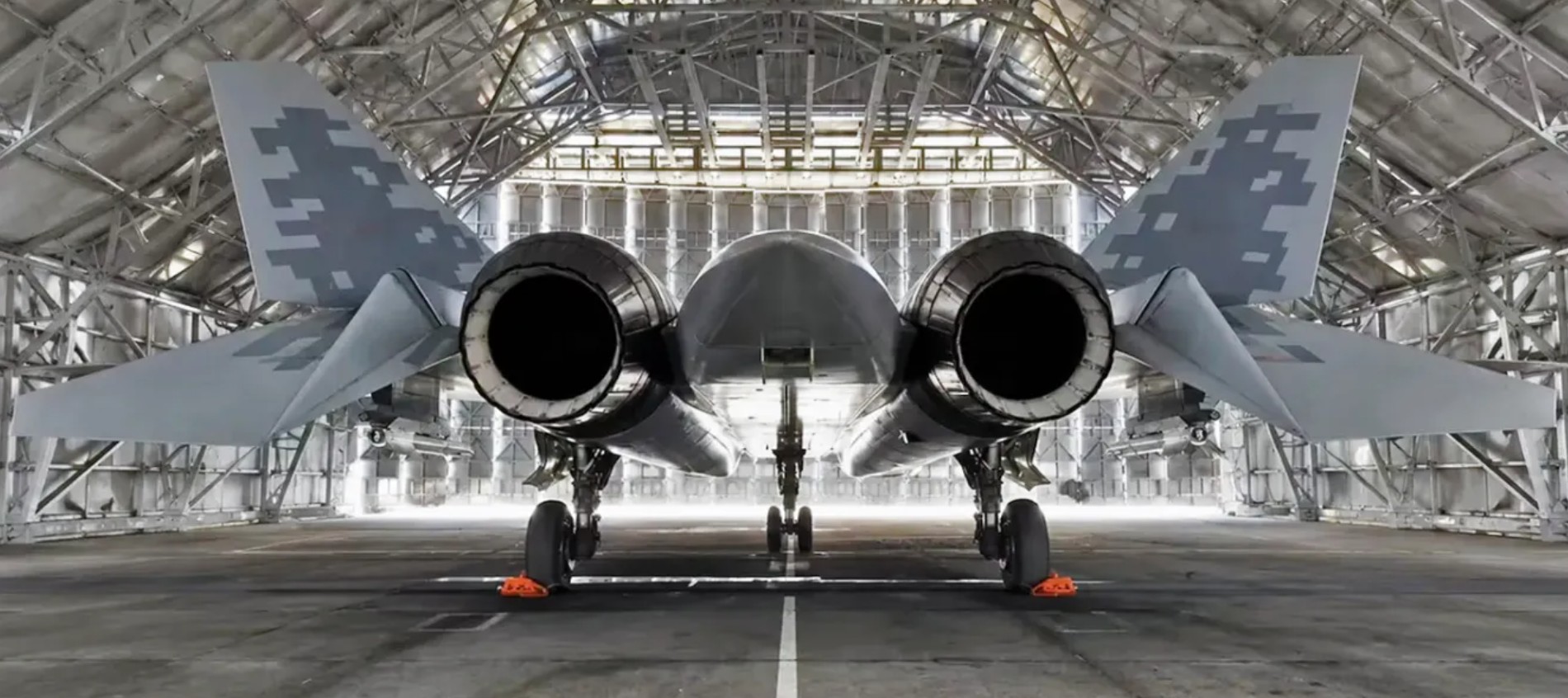
  •  

France & Germany Say MGCS Tank Project is Not Dead—Hours After Their Top General Said Berlin Had Left

France and Germany have rejected reports that their Main Ground Combat System (MGCS) project has collapsed, asserting their joint program to develop a next-generation battle tank remains on track.

On Thursday, France’s armed forces chief Fabien Mandon told parliament that Germany had decided to leave the battle tank program.

On Friday, French Defense Minister Catherine Vautrin said the MGCS project was still on course, speaking during German President Frank-Walter Steinmeier’s visit to the country.

“We would like to tell you, together with my colleague Minister Boris Pistorius, that MGCS remains a current and active project,” Vautrin said alongside the German defense minister in Le Haillan outside the southwestern French city of Bordeaux.

Pistorius said that he “fully” agreed.

“The MGCS project is not finished. It has not been abandoned. Nobody has stopped it. On the contrary, it is a flagship project of Franco-German cooperation.”

The 140 mm smoothbore ASCALON gun fires 130 cm telescoped rounds and is designed for scalable effects. Nexter is proposing the ASCALON as the MGCS main armament. (Photo: Nexter)

On Thursday, Mandon told French lawmakers the two armies had spent several years “to define what a future battle tank should be”. “The outcome is not good,” Mandon told lawmakers.

“We had hoped to build a future tank in cooperation with the Germans, but unfortunately we have to acknowledge that the Germans have decided to leave the project.”

Later on Thursday, he issued a statement softening his remarks, saying: “Although delayed, the program is continuing and remains highly relevant.”

Main Ground Combat System (MGCS)

Launched jointly by France and Germany in 2017, the Main Ground Combat System (MGCS) aims to develop a next-generation battle tank to replace France’s Leclerc and Germany’s Leopard 2 tanks.

It is a “system of systems” project that includes a main battle tank and a network of other combat systems, such as artificial intelligence (AI) for decision-making, advanced sensors, robotics, and onboard unmanned aerial vehicles.

Earlier this June, Rheinmetall’s CEO warned that France may pull out of the MGCS project. “There is always a risk, but nothing has been decided yet,” Armin Papperger told Welt am Sonntag, adding that Paris is planning to drastically cut funding for the project.

A German government spokesperson later questioned the MGCS project, saying it was doubtful a joint tank would be built and that the project would likely focus on “platform-independent” technologies.

Image
Concept artwork showing four different MGCS vehicles based on a common chassis. (Via Hensoldt)

Meanwhile, Jean-Paul Alary, CEO of KNDS, the Franco-German company developing the tank, had said at the Eurosatory show in France that, although he could not comment on the MGCS’s current state because it is a political matter, it would be “very bad news” for Europe if the project failed.

The MGCS has remained embroiled in crises and beset by delays, much like the now-abandoned FCAS. Disagreements over the tank’s design, technology, and industrial responsibilities have plagued the MGCS for years.

In short, Berlin wants a stronger, better-armed tank for a potential battle with Russia, while Paris prefers a lighter tank for worldwide deployment. Political and budgetary tensions also persist over which country’s industry should lead.

The project was initially intended to be led by the Franco-German joint venture KNDS, comprising Germany’s Krauss-Maffei Wegmann and France’s Nexter. However, Germany allegedly leveraged its considerable political support to push for Rheinmetall’s involvement. Tensions have since grown between the KNDS and Rheinmetall over leadership of program “pillars,” production shares, and contracts.

From a French perspective, Rheinmetall’s involvement has altered the project’s delicate power dynamics, creating discontent and increasing frustration.

Moreover, the project has reportedly been starved of funding. As Rheinmetall CEO Papperger recently noted, the shareholding companies have received only €25 million ($29 million) since the project’s inception.

Meanwhile, France has grown uneasy with Germany’s increasing assertiveness and its emergence as Europe’s preeminent economic and, increasingly, military player, as veteran journalist Prakash Nanda of EurAsian Times noted.

“They are constantly fighting against the mismatched temperaments of their leaders, their orthogonal domestic politics, and the irreconcilably diverging strategic cultures at the heart of their deep states,” Carnegie Europe’s Strategic Europe wrote in a blog last month.

A core divergence lies in strategic outlook: France consistently advocates for greater European strategic autonomy, while Germany remains more committed to robust transatlantic ties with the United States. Meanwhile, economic and trade policies add another layer of friction, with the two powers often diverging on EU-level decisions regarding fiscal rules, industrial strategy, and market access.

France and Germany have struggled to rein in their powerful defense companies, leaving three major European projects — the Eurodrone, the FCAS fighter program, and the MGCS tank program — in serious difficulty. The FCAS has already collapsed, while the other two now risk failure.

The post France & Germany Say MGCS Tank Project is Not Dead—Hours After Their Top General Said Berlin Had Left appeared first on EURASIAN TIMES.

  •  
❌