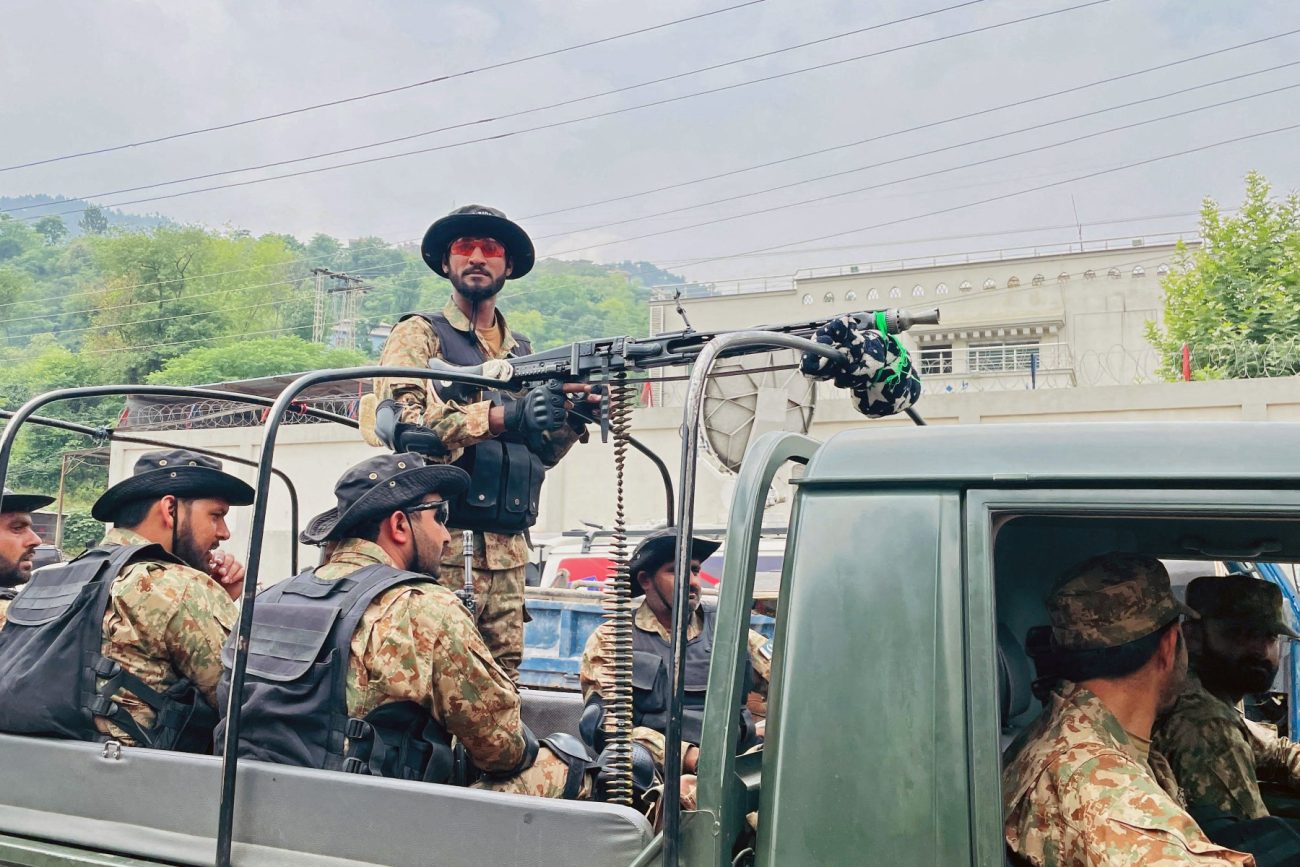
A suicide bomber attacked a busy area near a police station during a protest in northern Pakistan’s Swat district, killing 13 people and wounding 22, police said on Sunday.
The blast took place at a crowded intersection near a police station in Swat during a civil society protest, police said.
“Thirteen people, including eight police officers, were killed in the suicide bombing,” Swat Deputy Inspector General of Police Fida Hussain told AFP.
He added that 22 people had been wounded and another body, suspected to be that of the bomber, had been brought to hospital.
“A suicide bomber attempted to enter the police station located at the chowk (intersection), but was stopped by police at the main gate,” he said.
The attack took place in Pakistan’s northern border province of Khyber Pakhtunkhwa, where authorities are fighting a growing insurgency by the Tehreek-i-Taliban Pakistan (TTP).
No group immediately claimed responsibility.
A homemade bomb blast in the provincial capital Peshawar wounded four police officers, the city’s police chief told AFP on Sunday in an attack claimed by the TTP.
A military spokesman said on Friday that militant attacks and ensuing operations had killed 819 security personnel and civilians this year.
Pakistan has previously blamed the violence in border provinces on militant activity emanating from Afghanistan. The Taliban government in Kabul denies Afghan involvement.
The accusations have sparked a bitter rift and even armed conflict between the neighboring countries. Pakistan has carried out deadly air strikes it says target militants on Afghan soil.
The Taliban government and the United Nations said dozens of civilians were killed in the latest Pakistani strikes on eastern Afghanistan in June.
File Image: (Photo by Sajjad QAYYUM / AFP)
Earlier in the week, terrorists rammed an explosives-laden vehicle into a security checkpoint in northwestern Pakistan, killing 15 people—including soldiers, police officers, and government personnel—according to a military statement.
“Fifteen brave sons of the soil, including twelve military, two policemen and a government official from the Forest Department, rendered the ultimate sacrifice and embraced Shahadat (martyrdom),” the military’s media wing said in a statement on the latest attack in the border province of Khyber Pakhtunkhwa (KP).
“The attackers rammed an explosive-laden vehicle into the perimeter wall,” the statement said. “Due to the blast impact, infrastructure at the check post was seriously damaged.”
The US has been the world’s largest defense exporter for more than three decades now.
According to SIPRI (Stockholm International Peace Research Institute), the United States accounted for 42% of global arms exports between 2021 and 2025.
For perspective, during this period, France was the world’s second-largest defense exporter, accounting for only 9.8% of global arms exports.
However, despite its dominant position in global arms exports, the United States has notably been absent from a particular high-value weapon system market that could have generated billions of dollars in additional revenue for its defense firms.
Ironically, Washington has stayed out of this business despite leading the world in this niche technology for over five decades.
On July 6, Canada reportedly selected the winner of the Canadian Patrol Submarine Project (CPSP) deal, expected to cost nearly US$ 30 billion, with Germany’s TKMS outdoing South Korea’s Hanwha.
Similarly, India is in the final stages of signing a major submarine deal with ThyssenKrupp Marine Systems (TKMS) under Project 75(I).
Both Canada and India are strategic partners of the US. One might wonder why the US defense companies were not even in the running for these “big ticket” deals.
This, despite the fact that the US is not only the world’s largest submarine operator, but its submarines are also some of the most advanced in the world. According to the Global Firepower Index 2026, both Russia and the US operate 66 submarines.
However, while Russia operates a mix of diesel-electric and nuclear submarines, all of the US’s submarines are nuclear-powered.
China is fast catching up with 61 submarines; however, China also operates a mix of diesel-electric and nuclear submarines.
However, Russia (and formerly the Soviet Union) has exported submarines to Algeria, Bulgaria, China, Cuba, Egypt, India, Indonesia, Iran, North Korea, Poland, Romania, Syria, Venezuela, Vietnam and others, and China has exported to Pakistan, Myanmar, Bangladesh and Thailand.
Interestingly, the US, despite its technological lead in the field, has not exported a single submarine to any country in the last 50 years. In fact, the last submarine the US exported was in 1973 to Taiwan.
So, why, despite its dominant position in global arms export and its technological lead in the field, has the US not exported a single submarine to any country in over 50 years?
The US was not always averse to exporting submarines. After the Second World War, the US emerged as one of the world’s largest submarine exporters.
During the war, the US constructed over 200 submarines, and by the time the war ended, the US had 232 submarines in commission.
However, within years of the end of the Second World War, a new Cold War began with the Soviet Union, and the US launched a massive modernization campaign for its submarines.
Under the modernization plan, the US decommissioned hundreds of its late-war-era Balao- and Tench-class diesel-electric submarines.
This left the US with dozens of decommissioned submarines.
At the same time, the US was financing a massive reconstruction plan in Europe under the Marshall Plan and building Europe’s military capabilities to create an effective deterrent against the Soviet Union.
For this purpose, the US decided to export these older, decommissioned, diesel-electric submarines to its allies. Between 1950 and 1970, the US exported nearly 50 submarines to its partners, including Turkey, Spain, Italy, Greece, the Netherlands, Canada, Taiwan, and others.
Most of these were Balao-class diesel-electric submarines built during World War II.
Meanwhile, in 1954, the US launched USS Nautilus (SSN-571), the world’s first nuclear-powered submarine, heralding the era of nuclear-powered submarines.
Nuclear-powered submarines have key advantages, such as unlimited endurance, as they can stay submerged for months, maintain high underwater speeds consistently, and have global reach.
After the launch of USS Nautilus, Washington gradually phased out diesel-electric submarines. After 1954, the US built only three Barbel-class diesel-electric submarines.
By the early 1960s, all new US Navy combat submarines were nuclear-powered. The last diesel-electric attack submarine (USS Blueback) was decommissioned in 1990, leaving Washington with only nuclear-powered submarines.
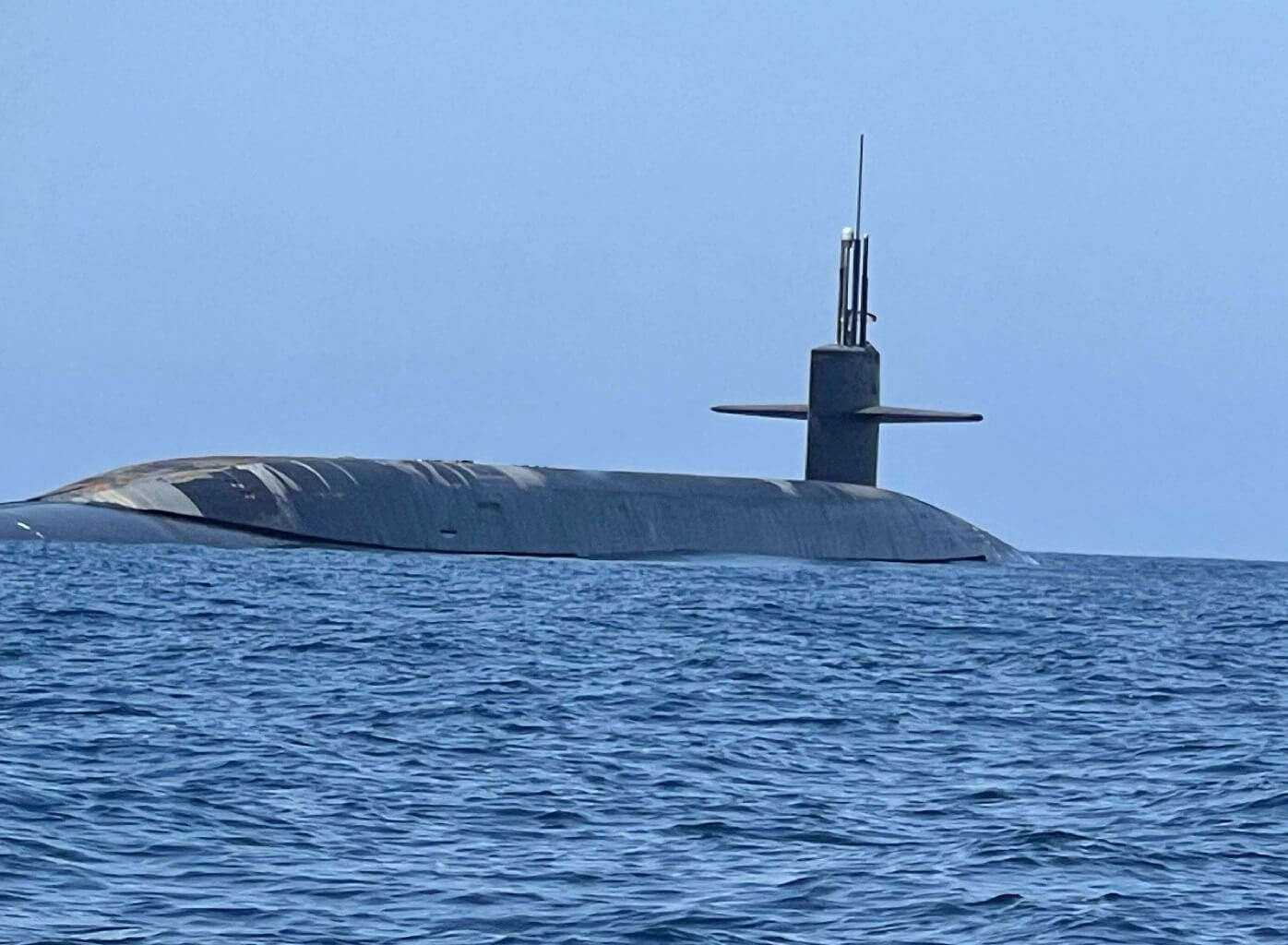
File Image: USS West Virginia Submarine: Via US CENTCOM
Why Does the U.S. Not Export Nuclear Submarines?
The US nuclear-powered submarines are considered the best in their class; however, to date, Washington has not exported this technology to any country for various reasons.
Firstly, the U.S. Navy has long opposed even the export of diesel-electric submarines due to concerns about the impact of submarine technology proliferation on the ability of its forces to operate securely in coastal waters worldwide.
Submarines fall under the US Munitions List and are subject to the International Traffic in Arms Regulations (ITAR) and the Arms Export Control Act.
When it comes to nuclear propulsion technology, the US Navy is highly sensitive, as it adds extra layers of control under the Atomic Energy Act.
The US nuclear propulsion, quieting technology, sonar, and combat systems are considered among America’s most protected “crown jewels.”
The US has deliberately avoided proliferating this technology to preserve its undersea dominance.
In fact, Washington is so sensitive about submarines’ nuclear propulsion technology that it has refused to share this technology even with its close allies, such as France, Japan, Taiwan, or Canada.
The only two exceptions are the UK and Australia.
The US has a long-standing special nuclear propulsion technology-sharing agreement with the UK, dating back to the 1958 US-UK Mutual Defense Agreement.
The US supplied the reactor for Britain’s first nuclear sub, HMS Dreadnought, and ongoing collaboration allows the UK to design and build its own boats.
However, this is alliance cooperation, not a commercial export.
Similarly, in 2021, the US, the UK, and Australia signed the AUKUS agreement, under which the US has agreed to sell/transfer up to three Virginia-class SSNs to Australia, starting in the early 2030s.
Another issue is US industrial capacity, which is already struggling to meet US Navy demand for Virginia-class submarines.
In its current modernization drive, the U.S. Navy hopes to add two to three Virginia-class attack submarines to its fleet annually until 2043.
In fact, it’s not just the US that is sensitive about exporting nuclear submarines.
Globally, nuclear-powered submarines are operated by only six countries: the US, Russia, China, France, the UK, and India.
The US, Russia (formerly the Soviet Union), and the UK have been operating nuclear submarines for over six decades now.
However, to date, there is only one example of a country exporting/leasing a nuclear-powered submarine to another country.
The Soviet Union first leased a Charlie I-class (K-43) nuclear-powered submarine to India in 1988–1991.
India operated it as INS Chakra.
Further, Russia leased an Akula-class submarine (Nerpa/K-152) to India from 2012 to 2021, which New Delhi operated as INS Chakra II.
The US, the UK, China, France, and India have never exported or leased a nuclear submarine to any country.
In fact, how all countries are highly protective of nuclear-powered submarines can be gauged from the fact that even China refused this technology to its all-weather ally, Pakistan.
Leaked documents revealed that Pakistan formally asked China for nuclear-powered submarine technology and sea-based nuclear second-strike capabilities to counter India.
However, Beijing ultimately refused to provide the technology, citing global non-proliferation commitments and a desire to avoid triggering a regional nuclear arms race.
Instead, China is providing Pakistan with eight Hangor-class diesel-electric attack submarines, under a US$5 billion deal.
However, since the US no longer produces diesel-electric submarines and is reluctant to export nuclear-powered submarines even to its close allies, Washington is effectively out of the global submarine business, which is dominated by countries such as Germany, France, Russia, China, and Spain, and the situation is unlikely to change in the near future.
Sumit Ahlawat has over a decade of experience in news media. He has worked with Press Trust of India, Times Now, Zee News, Economic Times, and Microsoft News. He holds a Master’s Degree in International Media and Modern History from the University of Sheffield, UK.
He can be reached at ahlawat.sumit85 (at) gmail.com
Russia has for the first time officially claimed that its fifth-generation fighter jet, the Su-57, has registered its first air-to-air kill in the Ukraine War, using a hybrid RVV-SDM missile.
Alexander Mikheev, Director General of Rosoboronexport, Russia’s state arms exporter, said that the stealth aircraft has proved its superiority in all aspects of warfare, including hitting targets on the ground and in the air.
This, he said, is fueling a heightened global interest in the Su-57E fifth-generation fighter.
“Rosoboronexport notes increased global market interest in the Su-57E fifth-generation fighter. It has proven its superiority in real combat conditions when countering the most advanced air defense and electronic warfare systems. The aircraft has engaged numerous airborne, ground, and surface targets with Russian air-to-air munitions, including the latest RVV-SDM guided missile,” Russia’s state-controlled news agency TASS quoted Mikheyev as saying.
The RVV-SDM is a new medium-range air-to-air missile introduced by Russia’s Rosoboronexport to arm the export variant of the fifth-generation Su-57E stealth fighter. It features fire-and-forget capabilities, active-passive radar guidance, and high resistance to electronic warfare.
According to Vijainder K Thakur, former Indian Air Force (IAF) pilot and defense analyst, the RVV-SDM is a medium-range missile, most likely a derivative of the RVV-SD tweaked for internal carriage by the Su-57 and improved performance.
While reports of Su-57’s first aerial kill have been doing rounds for some time now, this is the first official acknowledgment by Russia of Su-57’s air-to-air kill in the Ukraine War.
In April 2026, a report attributed to Sergei Lebedev claimed that a Su-57 had destroyed a Ukrainian Air Force aircraft in an aerial engagement over the Mykolaiv region using a long-range missile.
In May 2026, Russian media and Telegram channels claimed that a Su-57 had used a long-range R-37M missile to shoot down a Swedish Saab 340 AEW&C aircraft transferred to Ukraine over eastern Ukraine.
Mikheyev said that Su-57’s combat performance in the war has fueled global interest in the aircraft’s export variant, the single-seat Su-57E. However, despite its best efforts to promote the aircraft in the international market, so far there has been only one confirmed customer of the Su-57.
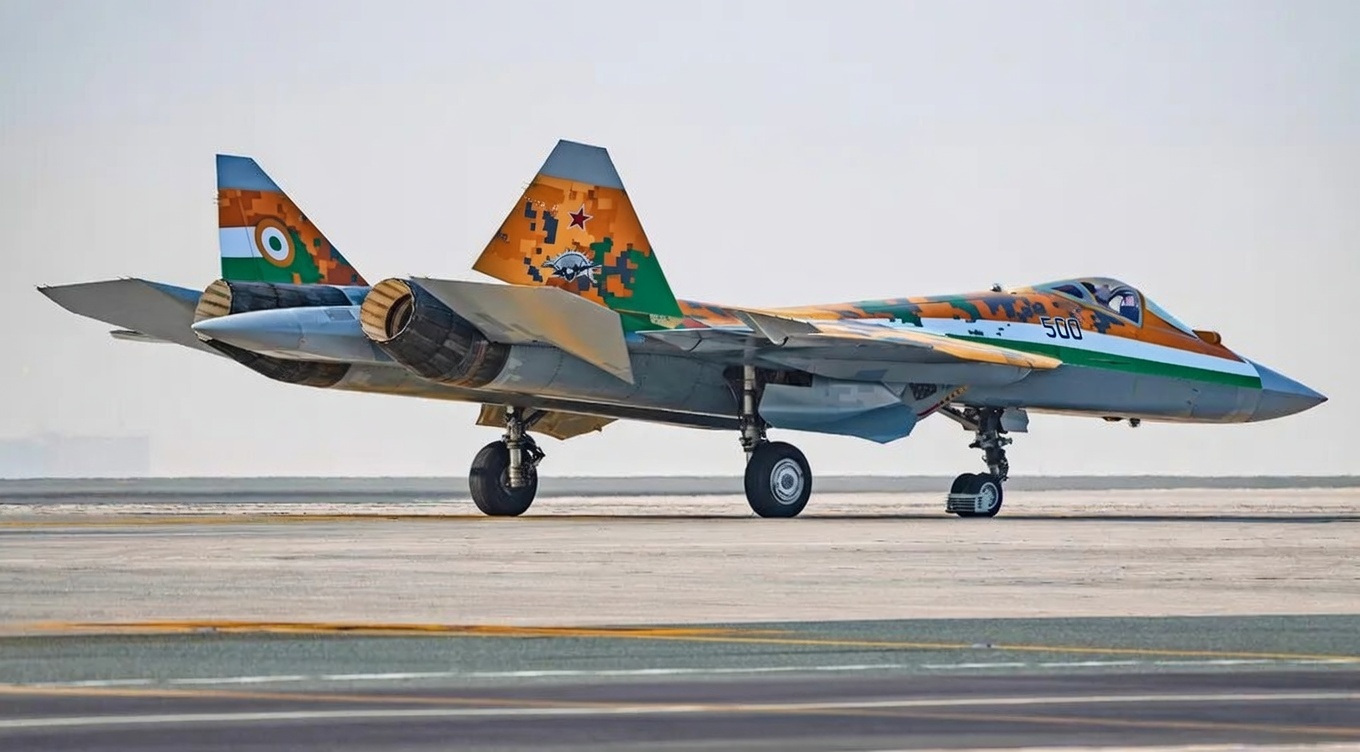
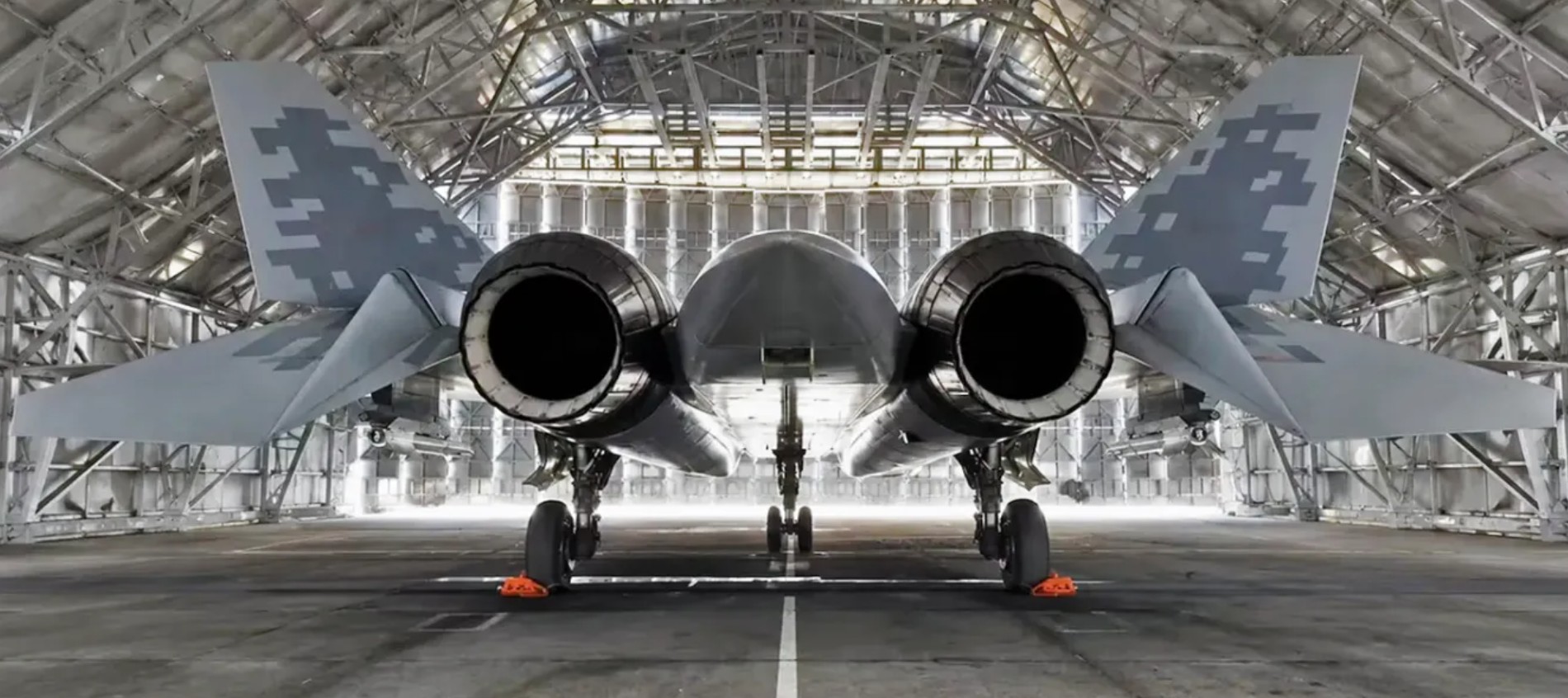
Edited Image: Su-57
Algeria was the first country to confirm the acquisition of the Su-57E. The country, which has a fleet of Soviet-Russian Su-30MKA, MiG-29, and MiG-25 fighters, has bought an unspecified number of aircraft and has reportedly deployed the jet on operational duty.
In November last year, Vadim Badekha, the Director General of United Aircraft Corporation (UAC), which manufactures the Su-57, announced that Russia has delivered two Su-57E stealth aircraft to a foreign client.
“Our foreign customer, our foreign partner, has already received the first two aircraft. They have begun to carry out combat duty and demonstrate their best qualities. Our customer is satisfied,” Badeja said.
Russia is also pitching the Su-57E to India and has even promised full Transfer of Technology (ToT) and to localize the production of the stealth aircraft in India. However, New Delhi has not made a decision yet.
According to Russian officials, the Su-57’s combat experience in the Ukraine War and limited exposure during the Syria war is a key highlight of the stealth fighter jet’s export potential.
Russia has, however, used the Su-57 very cautiously in the Ukraine war. According to security analysts, the aircraft has been mostly used for stand-off strikes from long distances.
Notably, just a few days earlier, a picture emerged showing the Su-57 fitted with R-73 air-to-air missiles attached to its wing pylons rather than in its internal weapons bay.
Carrying the missiles beneath the wing pylons would compromise the Su-57’s stealth; however, if the jet is deployed primarily for anti-drone operations, maintaining stealth is of no use.
Carrying these short-range AAMs externally suggests that the Su-57 load-out was optimized for close-range aerial engagements, most likely against the long-range Ukrainian one-way attack drones and cruise missiles that Kyiv has recently begun using.
Critics argue that Moscow is deliberately limiting the aircraft’s exposure to protect its export potential. Any confirmed losses to Ukrainian forces, they say, would severely damage the jet’s credibility in the international export market.
Still, an official acknowledgment by Russia of Su-57’s first aerial kill will no doubt boost the jet’s credibility, which has so far struggled to find many export customers.
Notably, while the US’s F-35 fighter jet has been in service for 11 years and has seen action in many wars, including in Iraq, Syria, Yemen, Gaza, and Iran, it scored its first air-to-air kill in March this year.
“This is the world’s first shootdown of a manned fighter jet by an F-35,” the statement added.
It must also be noted that Ukrainian airspace is heavily defended by frontline Western air defense systems such as Patriots. This is in contrast to where the F-35 has seen combat, in the poorly defended airspace of Gaza, Syria, Iraq, Yemen, and Iran.
Meanwhile, the USAF’s F-35 fighter jet also got hit by an Iranian drone-missile hybrid in the Iran war, underscoring that even most advanced Western stealth fighter jets are not completely invisible or invincible.
Additionally, while Russia initially faced many issues with the Su-57, including production delays, Moscow has made key improvements to the aircraft in recent years, increasing its lethality and survivability in contested airspace.
Su-57’s Continuous Upgradation
In February this year, Moscow’s Rostec press service said that the Russian Aerospace Forces (VKS) have inducted a new batch of Su-57 fighters featuring a “new technical profile.”
The upgraded version of Russia’s fifth-generation fighter incorporated enhanced onboard systems and a new weapons configuration that significantly expanded the jet’s combat role.
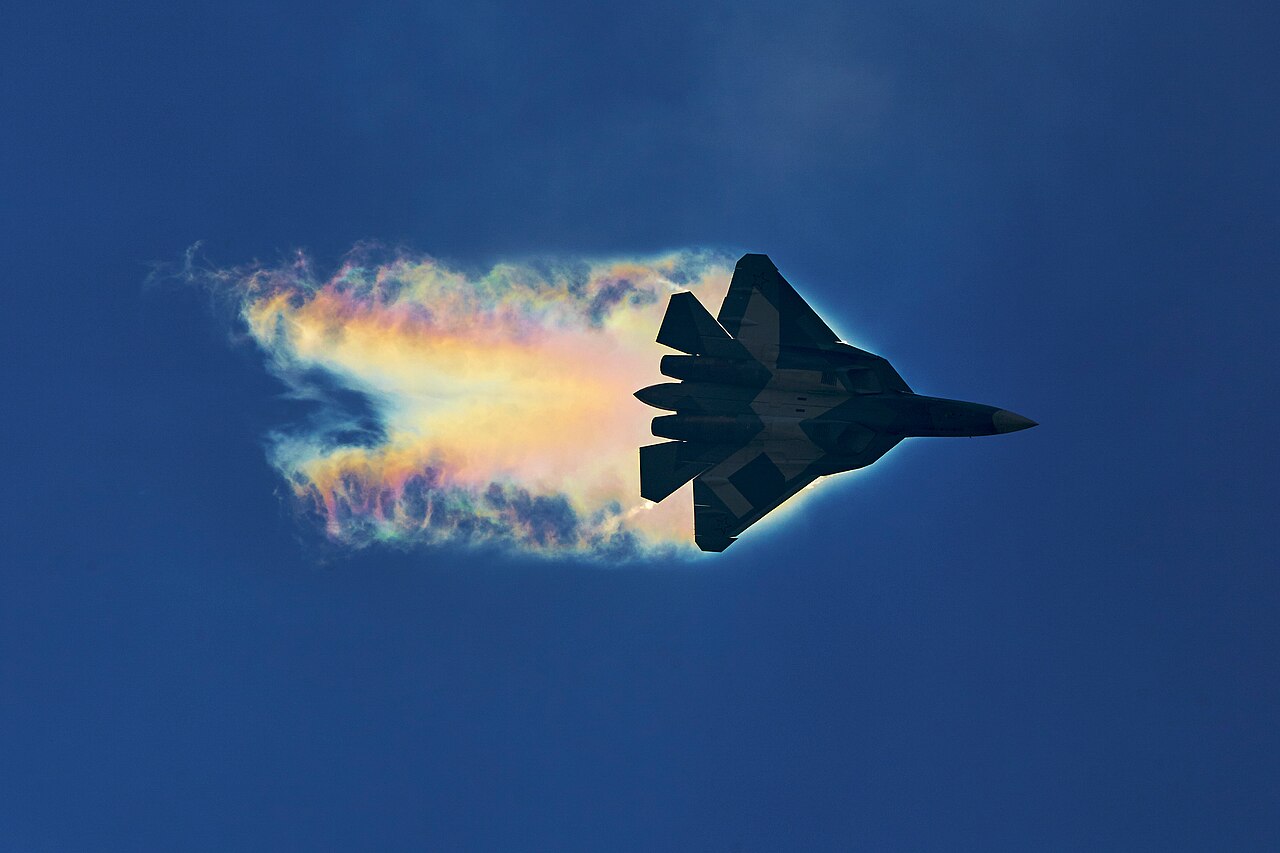
File Image: Su-57. Via Wikipedia
“To fulfill the targets set by the Russian Defense Ministry for the supply of highly sought-after weapons and military equipment to the troops, crews of the Russian Aerospace Forces have accepted the Su-57 aircraft in its new technical configuration,” the Rostec press service quoted a Su-57 pilot as saying.
“The aircraft has already proven itself during the special military operation (Ukraine War). The new technical configuration will provide for the expansion of the range of missions for which this aircraft type is deployed. The advanced capabilities incorporated into the aircraft armament system make it possible to use new types of aircraft weapons,” the pilot added.
While Rostec provided no details of the upgraded onboard systems or the new weapons package, analysis of higher-resolution images released by UAC and examined by OSINT analyst George N. revealed visible changes to the 101KS electro-optical complex, which supports self-protection and missile warning functions.
The 101KS complex is an electro-optical targeting system that provides the Su-57 with all-weather surveillance and passive infrared detection.
The 101KS complements the radar by detecting and tracking targets in the infrared and visible spectra. It can detect heat signatures of missiles and aircraft and conduct passive situational monitoring.
This allows the fighter to operate without active emissions, enhancing survivability in highly contested environments.
The aircraft also received revised apertures, presumably operating across multiple spectral bands, including visible, mid- and long-wave infrared (IIR), and possibly ultraviolet (UV), pointing to a substantial expansion of passive observation capabilities.
The imagery suggested that the 101KS would no longer function solely as a defensive sensor, but rather as a key element of situational awareness, aligned with the philosophy of the AN/AAQ-37 Distributed Aperture System (DAS) carried by the F-35.
It underscored that the Su-57 is moving toward a distributed, passive surveillance capability that can detect and track airborne threats without relying solely on radar.
The announcement came nearly two months after the UAC confirmed it had tested the Su-57 with a new Izdliye 177 engine, a powerplant developed by the United Engine Corporation (UEC) specifically for the Su-57.
The new Izdliye 177 engine was tested with the Su-57 in December 2025. According to a Rostec official, each Izdliye 177 engine can deliver up to 16,000 kg of thrust (approximately 35,000 pounds) with the afterburner engaged.
The new engine will further reduce fuel consumption and is stated to be far more durable than the previous power plant, the Saturn AL-41F1 afterburning turbofan engine.
In fact, the fighter jet has been steadily upgraded since its induction into the VKS in 2020.
Vadim Badekha, CEO of UAC, recently said the platform continues to evolve.
“The fifth-generation Su-57 aircraft system is the best aircraft in its class, but we’re not resting on our laurels. The fighter has undergone a tremendous evolution, and its improvement continues today – the aircraft’s weapons and systems capabilities are being upgraded,” Badekha said.
“This fighter allows us to solve the most important tasks today, demonstrating efficiency and excellent maneuverability and combat capabilities,” he added.
All these upgrades fit within the progressive maturation of the Su-57 program, also known as the Megapolis development program.
Under it, the Su-57 would receive incremental upgrades to its avionics, cockpit, engine, sensors, and weaponry.
Russian engineers claim that the Su-57 is a future-oriented project that will evolve as Moscow’s principal air combat system well beyond 2040.
At the same time, these upgrades will also boost the jet’s export potential.
Sumit Ahlawat has over a decade of experience in news media. He has worked with Press Trust of India, Times Now, Zee News, Economic Times, and Microsoft News. He holds a Master’s Degree in International Media and Modern History from the University of Sheffield, UK.
He can be reached at ahlawat.sumit85 (at) gmail.com
President Donald Trump said the US and Israel had decided to hold off on new strikes on Iran — provided that a deal to end the ongoing conflict is reached quickly.
Meanwhile, a report published by a US-based think tank recently warned that American inventories of key air defense interceptors have fallen sharply, raising the prospect that US and coalition forces may need to accept greater risks in future missile defense operations.
When the US launched Operation Epic Fury in February 2026, President Donald Trump said the hostilities would last only a few days, a deadline that was subsequently moved to a few weeks. However, five months later, there is no end in sight to the war, which has now spilled over into much of West Asia.
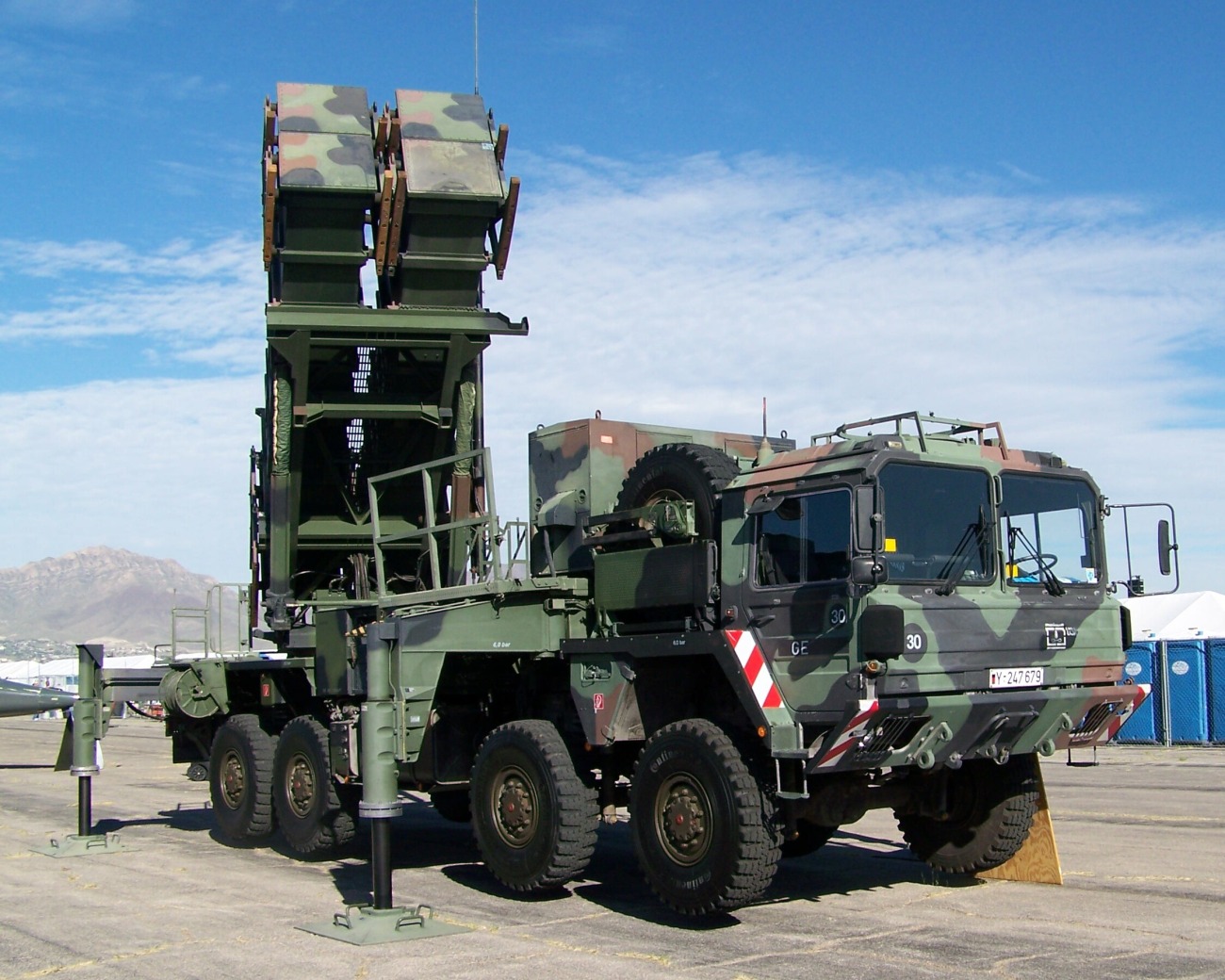
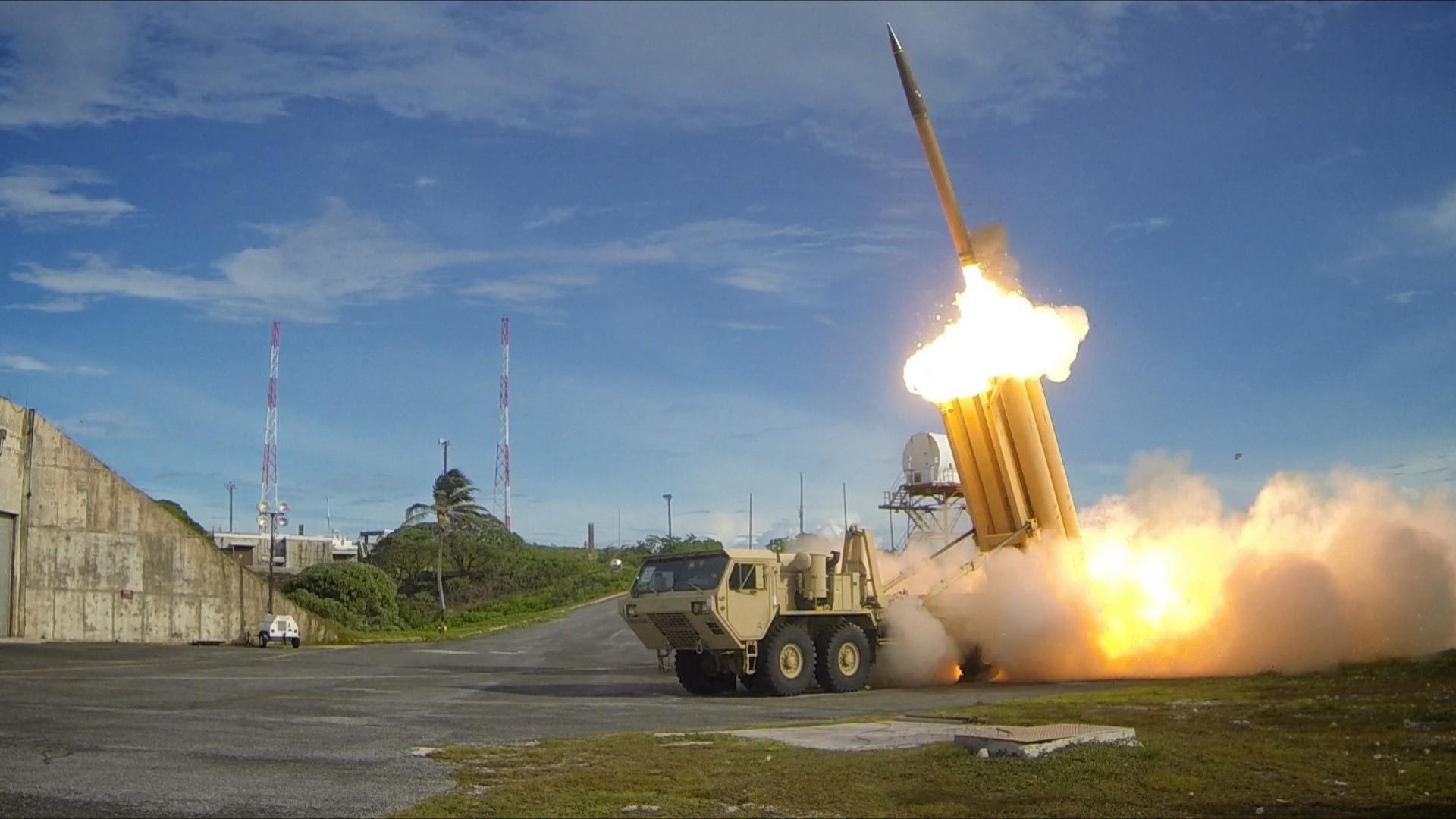
During the war, the US has severely drawn down its air defense interceptors, as documented by the US-based think tank CSIS (Center for Strategic and International Studies). The CSIS report estimates that stockpiles of the Patriot and THAAD (Terminal High Altitude Area Defense) have been greatly reduced in the ongoing conflict.
Published on July 27, 2026, the report—“Renewed Iran War Would Test Diminished Interceptor Inventories” authored by Mark F. Cancian and Chris H. Park—updates an earlier CSIS assessment released around the ceasefire agreed to by both sides on April 8, 2026.
“The air defense campaign has been largely successful with high—though not perfect—interception rates. While some Iranian attacks got past defenses, causing casualties and extensive base damage, these attacks have been unable to diminish U.S. and coalition operations. This has required extensive use of interceptors, with Patriot inventories now under 1,000 and THAAD inventories at about 250,” states the report.
The previous report had estimated that the US Patriot interceptor inventory shrank by 55%. However, the updated figures suggest the stockpile has further shrunk by an additional 10% since the truce, and that approximately 65% of US Patriots have now been lost since the war began.
Image via CSIS
The report estimates that Patriot inventories now stand at under 1,000 (the most recent figures place the range at 759–827) and that THAAD inventories stand at about 250 (the latest figures put it at roughly 234–278).
Both systems have been heavily used to defend US bases, Gulf partners, and Israel against Iranian ballistic missiles, cruise missiles, and related threats. CSIS apparently draws its estimates from publicly available legislative and Pentagon budget documents, supplemented by open-source data on rounds expended in the Gulf.
“Diminished stockpiles may force the United States and its coalition partners to take more risks with interceptions. There are no good alternatives to Patriot and THAAD for ballistic missile defense. Navy ships, with Standard Missiles that can intercept such threats, generally are too far away,” the report warned.
Notably, an NBC report recently stated that US commanders are choosing not to take down Iranian projectiles that are headed into uninhabited regions of US sites in the vicinity because they do not want to squander their interceptor missiles.
Patriot AD System.
This alleged tactic, if true, marks a shift from previous air and missile defense procedures in the region, such as when a US-manned Patriot detachment protected a mostly evacuated Al-Udeid Air Base in Qatar from a barrage of Iranian ballistic missiles in response to Operation Midnight Hammer in June 2025.
Despite a dearth in air defense interceptors, the US has vowed to hit Iran very hard, a move that will almost certainly trigger Iranian retaliation and further cause depletion in Patriot and THAAD interceptors. The situation may become dire, given that the production of these missiles takes woefully long—Lockheed delivered just about 600 interceptors in 2025, and only 96THAAD interceptors are manufactured per year.
The United States is therefore consuming its most valuable air-defense munitions far faster than industry can replace them. Some analysts have suggested that depleting offensive and defensive stockpiles contributed to the Trump administration’s decision to accept a ceasefire, including the latest one where the U.S. and Israel agreed to hold off on new strikes on Iran.
Other reports indicate Trump may have changed the offensive plans after talking with Saudi Arabia and after Iran also spoke to Riyadh, besides Pakistan and Turkey.
Trump insisted the US was still “locked and loaded and ready to go against the Islamic Republic of Iran,” but added that Tehran and other Middle Eastern countries had asked him to hold off on fresh strikes. “Based on this request, I have agreed, for the future benefit of the WORLD and, likewise, the survival of a successful and prosperous Iran, to cancel the attack, subject to being able to rapidly make a DEAL,” Trump posted on his Truth Social platform.
Terminal High Altitude Area Defense – Wikipedia
Meanwhile, Strategists also warn that the shortages create near- to medium-term risks for U.S. readiness in other theaters, particularly a potential conflict with China in the western Pacific. “Expended munitions create a near- to medium-term risk for U.S. readiness to fight a war against China in the western Pacific,” the report stated.
In the near term, Washington is unlikely to spare Patriots for Ukraine, which continues to face intense Russian attacks and has repeatedly requested additional interceptors. Russia has been exploiting the vacuum in air defense coverage to strike Kyiv with lethal ballistic and hypersonic missiles, as the EurAsian Times reported.
Pentagon Boosting Interceptor Production
Noteworthy steps have been taken in 2026 to rapidly expand production of Patriot (primarily PAC-3 MSE) and THAAD interceptors.
These efforts use a new “Acquisition Transformation Strategy” approach that emphasizes multi-year framework agreements, undefinitized contract actions (UCAs), long-term demand signals, and parallel investments in facilities, the workforce, and bottleneck components.
For instance, the US Army awarded Lockheed Martin a contract on July 29 worth up to $58.6 billion to produce Patriot interceptor missiles.
This comes after the US awarded Lockheed Martin a $4.7 billion contract in April 2026 to accelerate the production of the Patriot Advanced Capability-3 (PAC-3) Missile Segment Enhancement (MSE) interceptors. The agreement stipulated that the annual output of PAC-3 MSE interceptors would be increased from nearly 600 to 2,000 units.
The Army states that the latest contract establishes a multiyear procurement strategy for the interceptors from fiscal 2026 through 2032 by converting a prior one-year deal awarded in April into a seven-year draft agreement.
The Pentagon Munitions Acceleration Council (MAC) also reportedly signed an emergency procurement agreement with key vendors to boost production.
Meanwhile, Lockheed has stated that it is investing $8–9 billion through 2030 across more than 20 sites in the United States.
Additionally, the US has agreed to grant Ukraine a license to produce Patriot interceptors, making it the latest European country to manufacture these prized munitions, alongside Germany, Romania, and Poland.
Not just that, Lockheed Martin announced the introduction of the PAC-3 Adapted Capability Effector (PAC-3 ACE), a low-cost interceptor built to defeat a wide range of threats for less than half the cost of a PAC-3 MSE.
As for THAAD, the Pentagon signed a framework with Lockheed Martin to quadruple annual production from 96 to 400 interceptors.
The framework was intended to lead to a formal contract award (subject to congressional appropriations). This was later executed in June 2026 with an undefinitized contract action (UCA) valued at up to $35 billion to increase manufacturing through 2030.
The Pentagon, in collaboration with L3Harris and Lockheed Martin, announced two historic seven-year framework agreements earlier this week to increase production capacity for critical components of the Terminal High Altitude Area Defense (THAAD) and the Patriot Advanced Capability-3 (PAC-3) Missile Segment Enhancement (MSE) interceptors.
Contact the author at sakshi.tiwari13 (at) outlook.com
The United States (US) floated a pitch to supply India with advanced Lockheed Martin F-35 stealth fighter jets. US President Donald Trump publicly stated that Washington was paving the way to provide India with the fifth-generation aircraft.
In February 2025, during Indian PM Modi’s visit to the US, Trump told a joint news conference, “Starting this year, we’ll be increasing military sales to India by many billions of dollars. We’re also paving the way to ultimately provide India with the F-35 stealth fighters.”
Later, Vice President JD Vance said: With regular joint military exercises, it’s only natural for India to buy more of our defense equipment, including the F-35s,” pitching the stealth aircraft to cement US-Indian defense relations.
Some believe that the statement(s) were meant to please India, but much more, the American arms lobby.
Meanwhile, some new prospective customers of F-35 have emerged. Qatar has reportedly begun exploratory talks with Washington. Saudi Arabia has pursued the acquisition of up to 48 Lockheed Martin F-35 Lightning II stealth fighters to modernize its air force and counter regional threats. Turkey is lobbying hard to get back into the F-35 program.
Turkey was earlier removed from the program in 2019 and hit with CAATSA sanctions after purchasing the Russian S-400 missile defense system, but renewed diplomatic push and potential shifts in U.S. policy have reopened discussions.
However, the US is insisting that Turkey will have to dispose of the S-400 units, which Ankara could sell, as per reports, to either the UAE or Qatar.
While countries like Saudi Arabia, the UAE, and Turkey, among others, have been desperately trying to seek the F-35 stealth jets, why did India not aggressively pursue the US aircraft?
India Needs a Fifth Generation Fighter
The IAF is already down to 29 fighter squadrons. Pakistan could possibly receive its first initial batch of Chinese Shenyang J-35 stealth fighter jets by 2027.
Reports indicate an expected first delivery of 4 to 12 export-grade J-35 (or J-35E/A) aircraft. Pakistan plans to acquire up to 40 units by 2029. However, there are some reports that the timelines may slip.
Notwithstanding, this could change the air-combat dynamics in the subcontinent.
There are reports that China has already built nearly 500 J-20 fifth-generation fighters, and over 350 are in service with the PLA Air Force (PLAAF). Some have been deployed close to India’s Ladakh, in Xinjiang.
They have also been exercising over Tibet. Both Pakistan and China operate in collusion.
There will thus be pressure on India’s security establishment to acquire interim fifth-generation aircraft. The Sukhoi Su-57 has been offered with full technology transfer, and the F-35 is still at the “mind-games” stage.
The Lockheed Martin F-35 Lightning II is widely considered the best fifth-generation multirole fighter because it combines extreme, low-observable stealth with revolutionary sensor fusion, acting as a flying computer and “quarterback of the skies” that networks data seamlessly with friendly platforms.
The low radar cross-section lets it bypass modern air defense networks undetected, as demonstrated in Iran. Around 1,400 F-35s have been built. 12 countries already operate them. Another eight countries have ordered them.
The U.S. and its major international partner nations have already committed to acquire over 3,100 F-35 stealth aircraft through 2035. The United States intends to purchase 2,456 jets.
Undoubtedly, it is the best fifth-generation fighter currently.
F-35 Offer & Complexities for India
For India, the F-35 proposal faced almost immediate hurdles due to subsequent tariff frictions and India’s core push for technology transfer for domestic manufacturing of its own Advanced Medium Combat Aircraft (AMCA) and the aero-engines.
There have been tremendous delays by GE Aerospace on its 2021 contract to supply 99 F404-IN20 engines to Hindustan Aeronautics Limited (HAL) for the Tejas Mk1A fighter program. Only six out of the promised engines have been delivered instead of the targeted 12-plus a year, prompting HAL to invoke contractual penalty clauses.
The tariffs on “friend” India and delayed engines for AMCA badly strained the Indo-US ties.
India also operates Russian-supplied S-400 systems, a factor that previously caused frictions between the US and Turkey.
India already operates the S-400 and Su-30MKI. The U.S. fears these networks could compromise classified F-35 stealth data. The jet relies on the U.S.-controlled Operational Data Integrated Network for software and logistics.
The US is perhaps already accessing such data through many other American platforms on Indian soil.
Meanwhile, introducing a complex new Western platform adds severe maintenance challenges to an already diverse military fleet. Even in the US, there are very few airbases where the stealth coatings can be serviced.
Buying foreign fifth-generation jets risks diverting funds from India’s indigenous AMCA project. Putting too many military aviation eggs in the unreliable US basket will also be an issue. Americans can be “very unreliable” when it comes to putting sanctions and freezing spares and maintenance support.
While operationally, the F-35 could present major strategic advantages for the IAF, any potential deal involves deep geopolitical, logistical, and financial complexities. Acquisition costs range from $80 to $110 million per jet alongside very high hourly operational expenses, creating budgetary issues for New Delhi.
An Italian F35 fighter jet takes part in the “Blue Flag” multinational air defense exercise at the Ovda air force base, north of the Israeli city of Eilat, on November 11, 2019. (Photo by JACK GUEZ / AFP)
Su-57 Offer and Complexities
Russia has been aggressively marketing and bidding for India’s interim fifth-generation fighter. Due to Western sanctions, its military sales have slowed down considerably in the last few years.
It has offered India complete technology transfer and local licensed production of the Su-57 fifth-generation stealth fighter jet.
Russian leadership has pitched the deal with no restrictions. The full technology offer includes access to stealth design, engines, AESA radar, optics, and AI elements. A phased transfer of production to Indian facilities, using existing Su-30MKI infrastructure, is proposed.
There is willingness to co-develop a twin-seat variant and integrate Indian weapons. As the IAF faces a growing stealth gap, the offer looks attractive.
But unfortunately, only 42 Su-57 have been built to date. Even the Russian Air Force has ordered only around 72 aircraft. Yearly production is still around 10-12 aircraft.
Unlike the F-35, Su-57 is unlikely to get large orders. Russia is still in a major war, and its military industrial complex is busy producing for its front lines. Delivery of Su-57 could be 5-6 years after signing the contract, as not many fly-away units are available.
There is normally a big gap between publicly stated offers of technology vis-à-vis when being penned on paper or actually delivered. While the Su-57 is very impressive during displays, some are questioning the quality of its stealth.
Not many Su-57s have been heard of attempting to penetrate the Ukrainian air defenses. The Indian establishment has thus not made any statements on Su-57 acquisition.
India’s AMCA program is in the critical stealth validation and prototype manufacturing preparation phase. The three consortiums led by private sector conglomerates have been short-listed. These include Tata Advanced Systems, Larsen & Toubro, and Bharat Forge. Bids are being prepared for the ₹15,000 crore ($1.57 billion) development-cum-production contract.
A full-scale engineering model recently underwent specialized Radar Cross Section (RCS) testing at the ORANGE facility in Dundigal, Hyderabad. The prototype rollout is anticipated around late 2026 or early 2027, with the first flight planned roughly within 30 months of contract finalization. Serial production and initial induction into the Indian Air Force (IAF) are targeted for the mid-2030s.
A clean internal stealth layout would involve carrying about 1.5 tons of weapons for initial penetration, and a non-stealth “beast mode” payload carrying up to 7 tons across 14 stations. The Twin-engine, all-weather platform is built for deep strikes, electronic warfare, and low radar cross-section operations.
Considering that the IAF has still to receive the first LCA Mk1A, due to delayed GE-404 engine deliveries and some integration issues, the timelines for the very technology-intensive AMCA are very optimistic.
To accelerate the AMCA, India has shifted from a single-agency monopoly to a competitive public-private consortium model, engaging shortlisted private industrial heavyweights such as L&T with BEL, Tata Advanced Systems, and Bharat Forge, alongside the Aeronautical Development Agency (ADA), to build five prototypes.
All these consortia have industrial and project management capability and have been in the defense production ecosystem for quite some time. They will handle development, manufacturing, and future series production with dedicated capacity and speed.
Core specialized flight-testing and integration centers have been established (such as the facility in Puttaparthi, Andhra Pradesh), and dedicated airspace commitments have been secured from civil aviation authorities to streamline flight trials. Procuring interim GE-414 engines for prototype testing while simultaneously engaging with global partners like France’s Safran and Rolls-Royce for high-thrust indigenous engine development to avoid power plant bottlenecks.
India has set up high-level monitoring committees chaired by top defense officials to shrink timelines from the drawing board to the first scheduled prototype flights. However, I feel that a national project of this kind must be monitored directly by the PM Office.
The decision-making has to be much faster. Some risks will have to be factored and taken. More funds would have to be put on the table. Private sector commercial connections and national diplomacy must be used to acquire critical technologies. Reverse-engineering must no longer be a taboo word. AI needs to be extensively used for design and manufacturing to cut timelines.
Supply chain redundancy and diplomatic, secure sourcing are required. Aero-engine has to be a national priority project. India needs to invest more in critical minerals and special metals manufacturing.
Our manufacturing excellence has to reach the levels to make single-crystal blades with high-precision cooling ducts. The best talent has to be nurtured. The exodus of the kind that happened from ISRO must be prevented through more attractive opportunities. A few dedicated aerospace universities should be set up. A skilled manufacturing force has to be built.
After two decades of relationship ascendancy, in the last two years, there has been a level of distrust between the largest and oldest democracies of the world.
While it is hoped that it is a transitory phase, it is becoming clear that the US is not interested in India’s rise as a global power. U.S. Deputy Secretary of State Christopher Landau stated at the last Raisina Dialogue in New Delhi that Washington will not repeat its past approach (read mistake) with China by granting India unfettered market and tech access that could lead to strong commercial competition.
The US wants India to be strong enough only to be a bulwark against China and not become an independent power center or a technology and economic power.
The US seems keen only to supply platforms to India through large contracts. Even for aero-structures and smaller components, they prefer make-in-India “Build to Print” and not any significant technology sharing.
Even the proposed India-USA deal to co-produce GE Aerospace F414 engines with HAL faces major hurdles. The primary complications involve a nearly threefold cost surge, alongside intense disputes over sensitive hot-end technology transfer and the risk of delays to India’s Tejas Mk2 and AMCA programs.
Many Indians are wondering if we have invested too much in a partner with whom there is a high trust deficit and who has a vacillating foreign policy. US is known to have “dumped” friends and allies for immediate national interests. The way the Trump administration has publicly threatened or admonished its own NATO allies in the recent past further strengthens Indian concerns.
USA has already gotten deep into India’s airborne platforms and supplied India with transport aircraft (C-17, C-130), maritime patrol aircraft (P-8I), UAVs (MQ-9), and helicopters (Chinook, AH-64 Apache, and MH-60R).
For a long time, the US was trying to sell the F-16 ‘Viper’ (renamed F-21) and the F-18 Super Hornet as part of India’s Multi-Role Fighter Aircraft (MRFA) proposal. Later, it offered the F-15EX. The F-35 was never officially on offer.
Despite being the oldest democracy, the US finds it easier to deal with dependent military Generals, and West Asian Sheikhs, rather than growing democracies. The US has a poor opinion of India’s “Non-Alignment” and “Strategic Autonomy.”
Washington continues to prefer unstable Pakistan, which helps it connect with China and West and Central Asia, and is willing to toe the American line for a few bucks. This Pakistan connection causes further distrust in India.
Most analysts feel that allowing the USA into India’s fighter aircraft ecosystem is not a great idea. Any F-35 deal, like the other aircraft deals, will be just a supply and support contract. There will be no transfer of technology, and no “Make-in-India” element.
While India pushes its own AMCA program, if at all, the better choice for an interim fighter may still be the Su-57.
Air Marshal Anil Chopra (Retired) is an Indian Air Force veteran, fighter test pilot, and ex-director-general of the Center for Air Power Studies. He has been decorated with gallantry and distinguished service medals during his 40-year tenure in the IAF.
THIS IS AN OPINION ARTICLE. VIEWS PERSONAL OF THE AUTHOR

 Login