❌

Reading view

Fighting Iran & Israel’s “Hegemony”! Saudi-Turkey-Pakistan Defense Pact Aimed at Tehran & Jerusalem: Analyst

A defense pact between Saudi Arabia, Turkey, and Pakistan could totally reshape the Middle East. Analysts believe that it could deter Iran, offset an unpredictable United States, and send a strong message to Israel.

This alliance binds three Sunni nations that are strategic allies of the United States with a NATO-style clause that considers any attack on one country as an attack on all.

Analysts doubt this provision will be enforced, as the trio seeks resolutions to the war, with Pakistan and Turkey acting as intermediaries.

Oil-rich Saudi Arabia has positioned itself at the center of this new alliance, signed in Islam’s holiest city, Mecca, but what does this agreement mean in practical terms?

Nearly six months into the Iran war, the US has failed to knock out Iran, while Tehran continues to choke off traffic in and around the Strait of Hormuz and its Houthi allies disrupt shipping in the Red Sea.

This reality has upended the region’s security architecture — forcing a rethink of decades of conventional wisdom rooted in US military supremacy.

Despite the archipelago of US bases across the region, American forces have struggled to intercept all of the drones and ballistic missiles fired by Iran and its proxies.

The new alliance shows “American deterrence has been significantly weakened and that the Iranian threat will increasingly need to be managed by regional powers,” wrote Ali Shihabi, a political analyst close to the Saudi government.

Since the onset of the war, Saudi Arabia has grown closer to Turkey, with whom it previously had fraught ties, as well as Egypt and Pakistan. The four nations have supported mediation in the conflict.

Saudi Arabia and Pakistan have a history of security ties and had already signed a similar agreement last year.

This Saudi-Turkey-Pakistan defense pact is less about creating a new NATO-style alliance and more about an insurance policy. Riyadh is using its financial muscle to buy military assurance from Ankara and Islamabad. The mutual defense agreement is largely symbolic — neither Turkey nor Pakistan is likely to go to war with Iran on Saudi Arabia’s behalf — but the real message is clear: the Gulf can no longer rely solely on Washington and is determined to shape its own regional security architecture.

Andreas Krieg, lecturer at King’s College London, says: “The three countries are unusually complementary. Oil-rich Saudi Arabia has wealth but limited indigenous military-industrial depth… Turkey has technology and manufacturing capacity but needs markets and investment. Pakistan has manpower, military institutional depth and nuclear deterrence but needs financing and industrial opportunities.” “It is in Saudi Arabia’s interest to seek several layers of security rather than one American umbrella.”

Asfandyar Mir, Senior Fellow, Stimson Center, says: “What matters is three militarily capable states, in crucial geographies, with diverse relationships, are committing to one another’s defense. It is not intended to replace the United States. But it certainly reflects a judgment that U.S. commitment alone is no longer sufficient to ensure security and maintain stability.”

Motorists drive past a billboard displayed in Tel Aviv on June 26, 2025 by the “Coalition for Regional Security” Israeli political-security initiative depicting (L to R) Jordan’s King Abdullah II, Lebanon’s President Joseph Aoun, Syria’s interim president Ahmed al-Sharaa, Palestinian president Mahmud Abbas, Egypt’s President Abdel Fattah al-Sisi, Saudi Arabia’s Crown Prince Mohammed bin Salman, US President Donald Trump, Israel’s Prime Ministe Benjamin Netanyahu, UAE President Sheikh Mohamed bin Zayed al-Nahyan, Oman’s Sultan Haitham bin Tariq al-Said, Morocco’s King Mohammed VI, and Bahrain’s King Hamad bin Isa al-Khalifa, with above the Hebrew slogan “a time for war, a time for settlement; now is the time for the ‘Abrahamic Covenant'”. (Photo by Jack GUEZ / AFP)

Will Turkey and Pakistan attack Iran?

Pakistan has not done much for Saudi Arabia despite coming under attack from Iran and the Houthi militia.

“Turkey and Pakistan will not fight Iran. These countries view themselves as ‘stabilizers’ and want to create a political momentum to push for that,” wrote Asli Aydintasbas, a fellow at Brookings Institution.

HA Hellyer, geopolitical analyst, says even if it is unlikely for Pakistan and Turkey to hit Iran in retaliation for strikes on Saudi Arabia, “this pact sends a politically symbolic signal to Iran and Israel”.

Saudi Arabia has grown closer to Pakistan and Turkey as deep divisions plague the Gulf, even as it reeled from repeated attacks from Iran and its allies.

Saudi Arabia and the UAE were embroiled in a public rift even before the war, and though they recently appeared to reconcile, the UAE is likely to be wary of the new pact, analysts say.

The United States has long sought to build on the Abraham Accords that saw the UAE, Bahrain and others normalize relations with Israel, pushing for a regional alliance that integrates its close ally. But the new defense pact consolidates major US allies into an alternative security architecture that rejects Israel’s hegemony, analysts said.

Pakistan and Turkey have been vocal against Israel, while Saudi Arabia has insisted it will not normalize unless Israel agrees to a path to Palestinian statehood.

“Washington would have wanted a security architecture that includes Israel, and they’re still keen for Saudi Arabia to normalize ties. This alliance doesn’t point to that in the slightest,” said Hellyer.

The alliance, he said, “shows a desire to interrupt both the project of Iranian hegemony and that of Israeli paramountcy”.

By Agence France-Presse and ET Online Desk

The post Fighting Iran & Israel’s “Hegemony”! Saudi-Turkey-Pakistan Defense Pact Aimed at Tehran & Jerusalem: Analyst appeared first on EURASIAN TIMES.
  •  

P-8 Poseidon “Cues” MQ-4C Triton! IAF Experts Call MUM-T Teaming of U.S. Navy Assets a Revolutionary Step

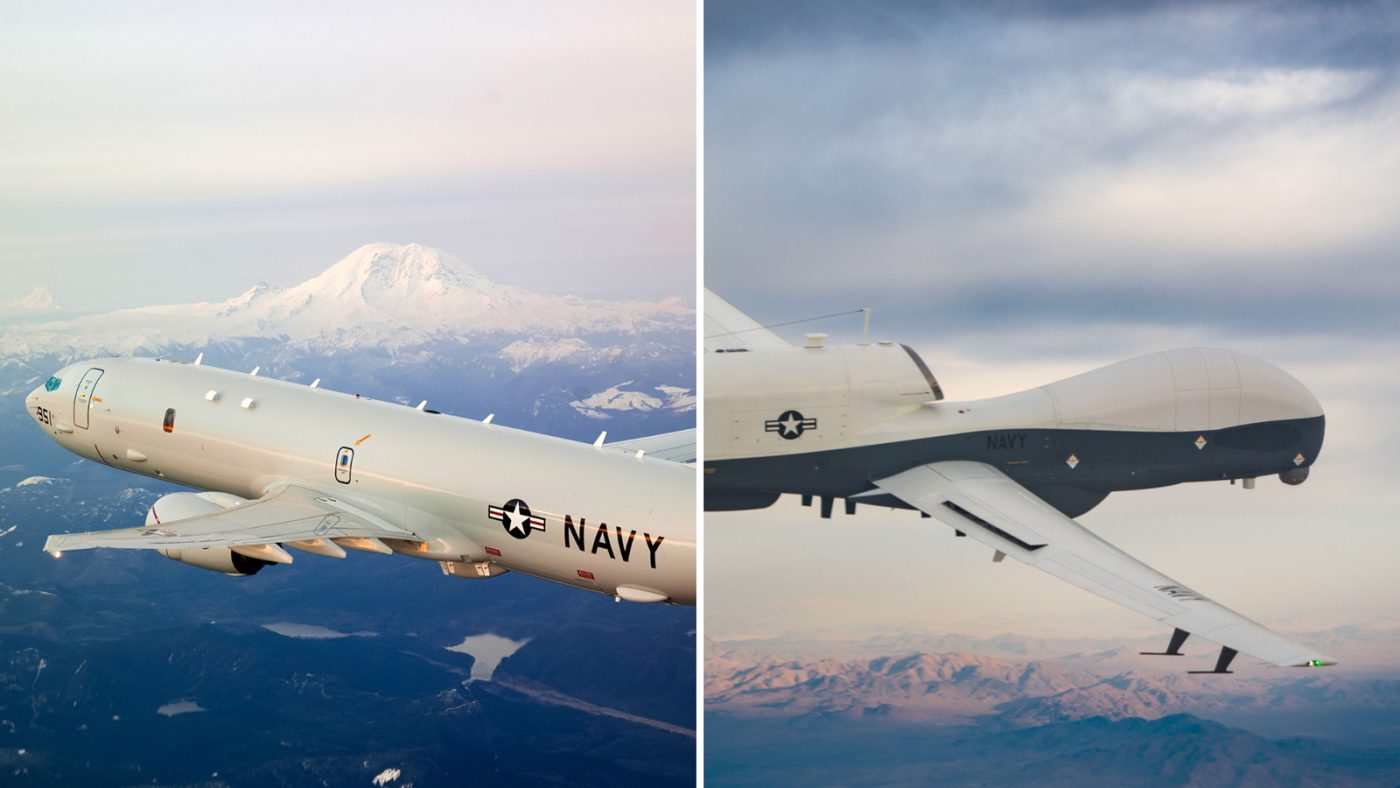
In a first such experiment, the P-8A Poseidon was teamed with the MQ-4C Triton unmanned aerial vehicle, potentially laying the groundwork for a future manned-unmanned teaming (MUM-T) for the US Navy and allied maritime patrol, reconnaissance, anti-submarine, and surface warfare.

Northrop Grumman and Boeing conducted the first automated, manned-unmanned mission control collaboration between the P-8A Poseidon maritime patrol aircraft and the MQ-4C Triton unmanned aerial vehicle in a laboratory environment, demonstrating how the two systems can share intelligence, mission planning, and execution.

“A P-8A operator issued machine-readable, machine-actionable mission tasking to a simulated MQ-4C Triton using UCI [Universal Command & Control Interface] formatted messages,” Boeing stated in an official press statement. “The P-8A cued the Triton transit to a specific area. After receiving the request, the Triton autonomously planned and executed a transit to the area, employed sensors per the tasking, processed findings onboard, and reported results back to the P-8A Poseidon.”

This approach could reduce operator workload, speed up decision-making in a contested environment, and enable more dynamic in-flight tasking without always routing through distant ground control.

Meanwhile, Northrop Grumman emphasized the broader value of the standardized approach: “Using this standardized interface, Triton can collaborate with other U.S. or allied assets sharing the same interface—cutting operator workload and accelerating commander decision-making, making integration across platforms quicker and more cost-effective. The Universal Command and Control Interface is a machine-to-machine collaboration standard based on Open Mission Systems and Autonomy – Government Reference Architecture.”

Photo via Boeing press release

Notably, the MQ-4C Triton was originally designed to work closely with the P-8A. A maritime-optimized derivative of the RQ-4 Global Hawk, Triton offers 24-hour endurance and high-altitude, persistent surveillance over vast ocean areas with its 360° multi-function radar, electro-optical/infrared sensors, and other systems. It functions as an “unblinking eye” for continuous maritime domain awareness.

Meanwhile, the P-8A has comparatively shorter endurance but boasts higher speed and lower-altitude capability than the MQ-4C Triton. Furthermore, it is designed to conduct anti-submarine and anti-surface warfare, investigate contacts of interest, support search-and-rescue, and assist in kinetic operations, among other things.

Together, the two platforms cover more ocean more persistently than either could alone, improve the common operating picture, shorten the sensor-to-shooter timeline, and make better use of limited manned aircraft and aircrew.

As a core element of the Maritime Patrol and Reconnaissance Force, Triton transmits real-time data via satellite to ships, aircraft, and shore stations.

MUMT Between Poseidon & Triton

Until now, the two platforms have operated in a complementary but in a relatively separate manner. Triton provides broad-area maritime ISR and cues contacts of interest, such as ships or potential submarines, prompting a P-8A to investigate, prosecute, or engage.

The coordination between them has normally flowed through ground control stations, introducing latency, especially when stations manage multiple missions, operate across time zones, or sit at the end of long satellite communications chains. However, the new automated capability could essentially allow a P-8A crew to issue commands directly to the Triton, after which the drone can autonomously plan and execute the task.

This would expedite the response to unanticipated changes, such as potential threats or seemingly transient targets of interest. Moreover, automation and onboard AI handling of data collection or processing would free crews, both in the air and on the ground, to focus on higher-level decisions rather than routine tasking or sifting through raw sensor feeds.

“The key idea of teaming them is to let each do what it does best while reducing the workload on human operators. Instead of both independently searching the same ocean, the Triton can detect something unusual and automatically cue the Poseidon. It would reduce operator workload, speed up decision-making, enable more flexible and responsive manned-unmanned teaming, and leverage their complementary strengths for broader, more efficient maritime ISR and related missions,” Air Marshal Anil Khosla (retd), Indian Air Force veteran and military commentator, told the EurAsian Times.

“Triton handles the long-endurance, broad-area “look” mission persistently. Poseidon handles responsive, close-in, multi-mission work. Automated teaming lets them operate more seamlessly as a unit rather than operating in relative isolation or with slower human-mediated coordination,” he added.

In a hypothetical scenario, one manned P-8 could also team with one or more Tritons at a time, stretching limited manned aircraft hours and freeing up the Poseidon for high-value missions, such as anti-submarine warfare and responsive strikes in combat.

Only the United States and Australia currently operate both the P-8A and MQ-4C Triton. The P-8A, however, has been acquired by a wider group of nations, including the United States, India, the United Kingdom, Norway, New Zealand, the Republic of Korea, Germany, Canada, Singapore, and Denmark.

The UCI architecture that enables the latest P-8-MQ-4C teaming could also potentially enable Poseidon teaming with other uncrewed assets, as Northrop stated

Indian Air Force (IAF) veteran Air Marshal Anil Chopra (retd) told the EurAsian Times: “All advanced militaries are focusing on data and sensor fusion, and rapidly working on facilitating integration between different platforms, ranging from manned-manned teaming to manned-unmanned teaming, across domains. The P-8A and Triton’s MUMT merely reflect that larger pattern. The same logic extends beyond air-to-air or air-to-surface pairings into surface, subsurface, land, and space sensors and effectors. The goal is a resilient “kill web” rather than linear kill chains, with data moving freely enough that any suitable shooter or sensor can contribute.”

“In the future, the maritime surveillance aircraft could be similarly teamed with other drones, such as the Sea Guardian,” he added.

The SeaGuardian, a variant of the MQ-9 Reaper, is also designed for maritime surveillance and reconnaissance, and could be teamed with the Poseidon aircraft with some tweaks.

Earlier work has already shown related possibilities. A Boeing-led team virtually demonstrated that the MQ-25’s architecture can support ISR and tanking missions by other aircraft within the mission airspace without conventional communications to a ship-based ground control station. That demonstration included the E-2D Advanced Hawkeye, P-8A Poseidon, and F/A-18 Block III Super Hornet.

There are several other examples of the US military’s efforts aimed at manned-unmanned teaming between aircraft to perform a variety of tasks. In fact, sensor fusion, edge AI, open architectures, and seamless teaming are becoming baseline requirements for competitiveness in contested areas.

The P-8A–MQ-4C laboratory demonstration is clearly a step forward.

However, its actual impact in real conditions will probably depend on how quickly the capability moves from the lab to operational skies.

“MQ-4C Triton and P-8A are the backbone of the U.S. Navy’s maritime patrol and reconnaissance force, delivering complementary capabilities unmatched by any other platforms,” Jane Bishop, Vice President and General Manager of the Global Surveillance Division at Northrop Grumman, was quoted as saying in the official statement. “This demonstration underscores the flexibility of our systems, our unwavering industry investment, and the strength of our industry relationships. Our commitment to pushing the boundaries of advanced technology ensures that the U.S. and allied nations’ operators maintain an unparalleled edge against evolving maritime threats,” he added.

The post P-8 Poseidon “Cues” MQ-4C Triton! IAF Experts Call MUM-T Teaming of U.S. Navy Assets a Revolutionary Step appeared first on EURASIAN TIMES.

  •  

Iran Flaunts U.S. F-15E Wreckage as “War Trophy” Alongside Near-Intact Israeli Hermes & MQ-9 Reaper Drone

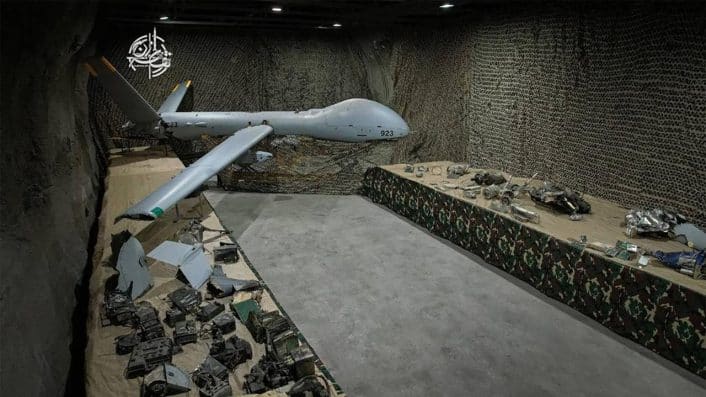
As the Trump administration weighs its next moves amid a fragile halt in hostilities, Iran has put on public display a selection of war trophies: wreckage from a downed F-15E Strike Eagle and what it claims are two nearly intact drones.

The US (in collaboration with Israel) launched “Operation Epic Fury” against Iran on February 28, hoping to decapitate the Iranian regime and destroy its military capabilities.

However, about six months later, the Iranian state media published images showing the wreckage of multiple US and Israeli aircraft that it managed to take down during the 40-day war.

This includes the debris of an F-15E Strike Eagle, Call Sign DUDE 44, a US Air Force (USAF) fighter jet now identified as airframe 00-3000.

On April 3, an F-15E Strike Eagle was downed by ground-based fire from Iran’s Islamic Revolutionary Guard Corps (IRGC) while conducting a combat mission over southwestern Iran.

This marked the first confirmed loss of a manned US combat aircraft to Iranian fire over Iranian territory in the conflict, and triggered a 36-hour intense search and rescue operation for the Weapon Stations Officer (WSO) who went missing.

The USAF incurred additional losses during that operation, including the self-destruction of aircraft that became defunct, to deny sensitive material to the IRGC, as previously reported by the EurAsian Times.

From IRGC images.

Remains of Lakenheath-based 🇺🇸 USAF F-15E 00-3000 #AE178B, callsign DUDE44, which was shot down April 3rd over Iran.

DVIDS image from 2014 of F-15E 00-3000 over Afghanistan in 2008. pic.twitter.com/oAugzvAAyi

— Evergreen Intel (@vcdgf555) August 7, 2026

However, the F-15E shoot-down, which belonged to the 48th Fighter Wing from RAF Lakenheath, quickly became the centerpiece of Iranian narratives of successful air defense.

In fact, the Iranian media had released crash-site photos and video almost immediately, showing a vertical stabilizer section with USAFE markings, a red tail flash, and other features consistent with the aircraft.

The current exhibit includes the canopy and an ACES II ejection seat, the latter of which is among the more intact components recovered.

Additionally, some remains attributed to the C-130s abandoned and destroyed during the rescue are on display, though they are less visually prominent.

📍🇮🇷🇺🇸 NEW:

Iran has recovered largely intact US MQ-9 Reaper and Israeli Hermes 900 drones.

IRGC engineers are expected to examine the captured systems, study their technologies and reverse-engineer key components to help develop advanced indigenous drone models. pic.twitter.com/3cOBvPVzNx

— Jackson Hinkle 🇺🇸 (@jacksonhinkle) August 8, 2026

The more striking trophies, however, are the two drones Iran claims to have recovered in largely intact condition during Operation Epic Fury: a US MQ-9 Reaper and an Israeli Elbit Systems Hermes 900 serial 923.

Iranian authorities assert the Reapers were intercepted by air defenses, and the Hermes 900 was brought down by electronic warfare.

It is worth mentioning that Iran managed to down at least 24 MQ-9 Reapers until the ceasefire, accounting for 57% of all USAF losses in the war. However, several more of this class of drones were downed in intermittent exchange of hostilities after the ceasefire, bringing the total to about 30, according to claims made by US officials in early July.

Despite the attrition, the Chief of Staff, Gen. Kenneth S. Wilsbach, endorsed the Reaper as the MVP of the Iran war, stating, “We’ve made many, many strikes” with Reapers.  “It’s an unmanned platform, so we get a lot of utility out of them, and don’t put our folks at risk,” Wilsbach said, as reported by the EurAsian Times at the time.

Separately, the open-source trackers documented at least four to five Israeli Hermes 900s lost during the main phase of the war with Iran, with some assessments running as high as eight. However, the EurAsian Times could not independently verify total losses.

A nearly intact Israeli Hermes 900 UAV displayed by Iran (Via Iranian State Media)

Notably, while collecting and parading war trophies is fairly common—as done by Russia and Ukraine in their ongoing war—it has its own risks.

For example, Iran could exploit recovered drones primarily through technical intelligence (TECHINT), reverse engineering, and adaptation for its own programs.

These platforms are medium-altitude, long-endurance (MALE) UAVs used for intelligence, surveillance, reconnaissance (ISR), and strike missions.

Iran could disassemble the drones and obtain key technologies, such as optics, detectors, stabilization, laser systems, and processing units, to improve its electro-optical or infrared (IR) packages, Synthetic Aperture Radar (SAR) capabilities, and multi-sensor fusion for integration with its vast inventory of existing platforms.

Additionally, it could get access to satellite communications (SATCOM) for encrypted command and control, line-of-sight datalinks, beyond-line-of-sight control, and possible tactical links.

To improve the long-endurance capabilities of Iranian aircraft and payload integration, the IRGC might also investigate structural design, sensor vibration isolation, and modular bays.

In a hypothetical situation, even partial insights could enhance the day-and-night, all-weather ISR capabilities of current Iranian drones or provide guidance for electronic warfare, jamming, and air defense strategies against comparable Western weapons.

Furthermore, Iran could also choose to share its exploits with key partners like Russia, which has assisted Tehran in its military operations.

Iran, on its part, has demonstrated it could reverse-engineer Western drones.

When Iran Took Down & Reengineered A US Drone

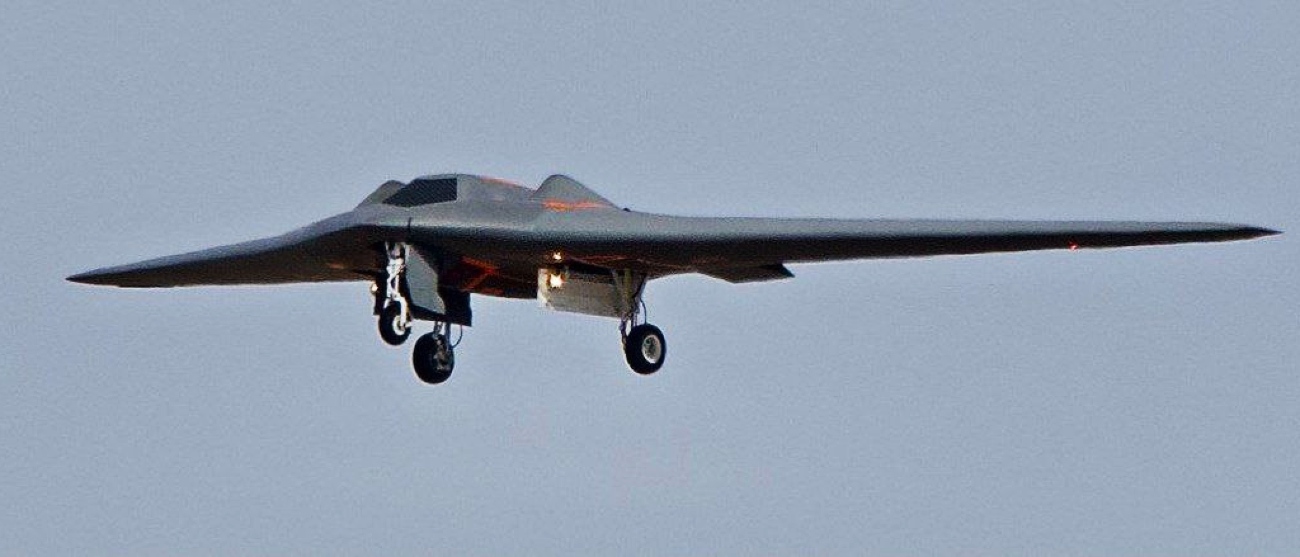
Iran hit the jackpot on December 5, 2011, when its cyber warfare unit commandeered the US’ Lockheed Martin RQ-170 Sentinel UAV and forced it to land near the city of Kashmar in northeastern Iran, about 225–250 kilometers from the Afghanistan border.

The US officials later confirmed it was a CIA-operated unmanned aircraft involved in a reconnaissance mission, with reports indicating it was part of efforts monitoring Iranian nuclear and other military facilities.

At the time, Iran’s government announced that its cyberwarfare unit had detected the aircraft in Iranian airspace, commandeered it, and landed it with minimal damage rather than shooting it down. Iranian officials, including commanders from the IRGC Aerospace Force, claimed they jammed the drone’s satellite and control communications links, forcing it into an autopilot or lost-link mode, then used GPS spoofing to make the aircraft land. 

US RQ-170 Sentinel
US RQ-170 Sentinel

Some American analysts and officials expressed skepticism about Iran’s electronic-warfare claims, noting that the RQ-170 relies primarily on an inertial navigation system, which is harder to jam or spoof than pure GPS.

Interestingly, though, the relatively intact airframe fueled competing theories of a controlled recovery versus a soft crash after loss of control.

The former US President Barack Obama publicly acknowledged the incident and, on 12 December 2011, stated that the United States had formally requested the drone’s return.

However, Iran denied the US’s demands to return the UAV, and Iranian state television on December 8 broadcast footage of Iranian military officials inspecting what they identified as an RQ-170 Sentinel drone. Additionally, Tehran went so far as to claim that countries like China and Russia had approached it to get information on the drone.

The event exposed details of a previously highly classified surveillance operation over Iran and raised fears about possible technology transfer, constituting a major intelligence and technological defeat for the United States.

By 2012, the IRGC had claimed to have succeeded in gleaning data from the US drone and was building a process to create a replica of the aircraft. The Sentinel was then reverse-engineered to create what is now the Saeghe/Simorgh drone. 

Iranian-built RQ-170 Sentinel copy- Wikipedia

Similarly, in 2012, Iranian state television showed images of what it said was a US ScanEagle drone in its airspace.

Iran has never denied. Instead, it has chosen to flaunt the fact that its UAVs have been reverse-engineered from US drones as a major victory.

It is safe to say that an adversary will almost always be able to obtain some degree of intelligence from an aircraft’s wreckage, regardless of the measures taken to prevent it. While this does put US and Israeli military technology at risk, it is an inevitable prospect that both countries were likely aware of when they embarked on this war with Tehran.


The post Iran Flaunts U.S. F-15E Wreckage as “War Trophy” Alongside Near-Intact Israeli Hermes & MQ-9 Reaper Drone appeared first on EURASIAN TIMES.

  •  

Su-57 OUT For India, 6th-Gen Aircraft In! After MiG-21, MiG-29 & Su-30 MKI, IAF Appears Set For Non-Russian Jets

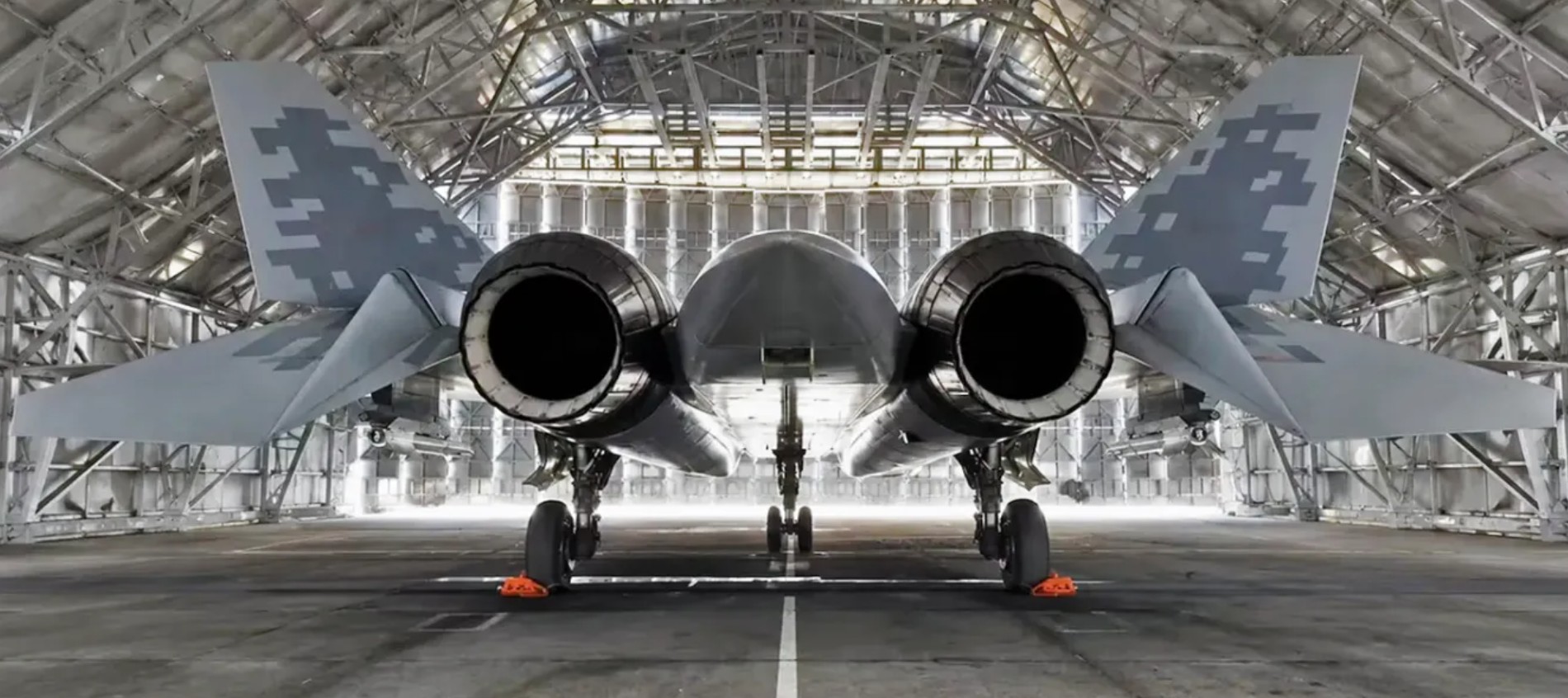
India appears poised to overlook Russia’s Su-57 fifth-generation stealth fighter and opt for a sixth-gen aircraft instead. 

Defense Secretary Rajesh Kumar Singh recently clarified that New Delhi has “not thought about” new Sukhoi variants, prioritizing the upgrade of the Su-30MKI fleet under the ‘Super Sukhoi’ program and the indigenous Advanced Medium Combat Aircraft (AMCA) instead.

Moscow’s aggressive pitch—including local production, full source codes, and a two-seat variant—has failed to sway planners wary of diverting resources from self-reliance goals.

With AMCA still a far away and China fielding growing J-20 numbers, India is actively exploring partnerships in sixth-generation programs.

India’s Ministry of Defense has reportedly initiated efforts to join the French-led sixth-generation fighter program. This was stated in a report of the Parliamentary Standing Committee on Defense, presented in Parliament, according to news agency PTI.

The ministry has sought a roadmap from the French side for acquiring such aircraft. The panel noted that two major consortia are developing sixth-generation fighters: one involving the UK, Italy, and Japan; another involving (now-defunct) France and Germany.

The Indian Air Force plans to partner with one of these groups so that India does not fall behind in advanced combat aircraft technology.

End of Su-57?

In 1962, the USSR agreed to transfer technology to produce nearly 800 MiG-21 jet fighters for India, which it had earlier denied to China. They helped India set up factories for the aircraft, aero-engines, and avionics.

India’s relationship with the Soviet Union grew strategically, culminating in the 1971 Indo-Soviet Treaty of Friendship and Cooperation.

Through the 1971 India-Pakistan War for the liberation of Bangladesh, the Soviet Union stood by India against US and Chinese intimidations.

During the Cold War, India and the USSR maintained a “special and privileged strategic partnership” that was built on five major components: politics, defense, civil nuclear energy, anti-terrorism cooperation, and space.

Even after the dissolution of the Soviet Union, India maintained warm relations with Russia’s successor state. The first major political initiative after the dissolution was the Strategic Partnership signed by the two countries in 2000.

The IRIGC (India-Russia Intergovernmental Commission) is the main body responsible for conducting official affairs between the two countries at the governmental level. Both countries are members of international bodies, including the UN, BRICS, G20, SCO, and Russia-India-China (RIC) grouping. Russia supports India’s bid for a permanent seat on the United Nations Security Council.

Su-57 OUT For India, 6th-Gen Aircraft In! After MiG-21, MiG-29 & Su-30 MKI, IAF Appears Set For Non-Russian Jets

India is one of the largest markets for the Russian defense industry. Approximately 60 percent of the Indian military’s hardware today is of Russian origin. Military hardware supplies and, more recently, joint-venture production have been key pillars.

Su-57 carrying R-73 missiles externally. Credits X.

Make-in-India Began in the 1960s

The Soviet Union was the first to support Make in India defense production.

The MiG-21 factories set up in the early 1960s later produced the MiG-27 (170) and the Su-30 MKI (230). Su-30 MKI was a joint D&D project. Russia also learned a lot from the Su-30 MKI project and imbibed some of these ideas for its Su-30SM aircraft.

222 Su-30 MKI were produced under license at HAL’s Nashik plant since 2004. An estimated 920 AL-31FP turbofans were manufactured at HAL’s Koraput Division. The Su-30MKI is the backbone of the IAF’s fighter fleet.

In 1965, Heavy Vehicles Factory (HVF) was set up at Avadi, Chennai, with Soviet assistance. HVF products included Russian-designed T-72 Ajeya and T-90 Bhishma tanks.

In September 1965, the Soviet Union and India signed the first contract for the delivery of naval equipment, including four Project I641 diesel-electric submarines, five Project 159E corvettes, and five Project 368P motor boats. The Agreement also envisaged rendering Soviet technical assistance for the construction of a submarine naval base in Vishakhapatnam.

Recently, two frigates, the INS Tushil and INS Tamala, were built by Russia at the Yantar Shipyard, while the remaining two are under construction at Goa Shipyard Ltd (GSL) in India through technology transfer.

Russia is reportedly expanding its shipbuilding cooperation with India, with two Indian shipyards being considered for the construction of four non-nuclear icebreakers. Russian shipbuilding officials have reportedly offered New Delhi their nuclear-powered design for an Indian Navy aircraft carrier.

GSL is also constructing 24 river-sea class cargo ships for Russian clients in the Caspian Sea by 2027. Cooperation with India in shipbuilding has its benefits for Russia, as the unit cost per vessel is projected to be half of what it would cost Russian shipbuilders.

U.S. vs China’s Aircraft Carriers: New Report Shows How America Can Turn the Tables on “World’s Largest” Navy

Joint Ventures

Between 2012 and 2016, Russia accounted for 68% of India’s defense imports. Russia and India’s cooperation is not limited to a buyer-seller relationship but includes joint research and development, training, service-to-service contacts, and joint exercises.

India and Russia have a strong success story with Joint Ventures (JVs). The BrahMos is a medium-range ramjet supersonic cruise missile that can be launched from submarines, ships, and fighter aircraft. BrahMos Aerospace is a joint venture between the Indian Defense Research and Development Organization (DRDO) and Russia’s NPO Mashinostroyeniya. The missiles are already being exported.

Under an over ₹5000 crore contract signed in July 2021, over 610,000 AK-203 assault rifles are to be manufactured in India with technology transfer from Russia, by the JV Indo-Russian Rifles Private Limited (IRRPL).

Indian companies hold a controlling 50.5 percent share, and Russian companies hold 49.5 percent. The level of indigenous content has already reached 50% and is rising rapidly, with a target of 100% in the near future.

India and Russia have also agreed to expedite the delivery of spare parts of Russian-origin military platforms by setting up a JV in India.

Notwithstanding the above, some JVs did not take off. India had withdrawn from the joint Fifth-Generation Fighter Aircraft (FGFA) program due to technical issues. Finally, Russia continued the project and today has a successful Sukhoi Su-57 ‘Felon’ 5th generation fighter.

Following the selection of the Ka-226T to meet an Indian requirement for 197 helicopters, an agreement was signed in December 2015 to create a JV between Rostec, Russian Helicopters, and HAL to build the helicopters at a new factory in Tumakuru, India.

Later, India decided to make its own Light Utility Helicopter (LUH) based on the indigenous ‘Dhruv.’ India’s LUH is delayed, and Russia has been pushing the case for Ka-226T again.

Similarly, India canceled the Indo-Russian program to develop a new Multirole Transport Aircraft (MTA) for both countries through a JV between Russia’s UAC and India’s HAL.

In February 2023, on the sidelines of the Aero India 2023 air show, the Russians offered to jointly develop the Il-276. However, India would prefer the aircraft to be powered by a European engine rather than a Russian one.

India has operated a wide range of Soviet and Russian combat jets that formed the backbone of the Indian Air Force for decades. Key types include the prolific MiG-21 (in multiple variants including Bison), MiG-23 (BN and MF), high-altitude MiG-25, ground-attack MiG-27, and air-superiority MiG-29 (including upgraded versions).

From the Sukhoi stable came the Su-7 fighter-bomber and the highly successful Su-30MKI, which remains the IAF’s primary multi-role platform that India is looking to upgrade.

India’s decision to effectively rule out the Su-57 marks a noticeable shift. After decades of reliance on Russian fighters—from the MiG-21 to the Su-30MKI—New Delhi is prioritizing the AMCA program and partnerships in sixth-generation projects.

While the historic Indo-Russian defense ties remain strong in other domains, the rejection of Moscow’s most advanced stealth jet signals a clear preference for next-generation technology.

With China rapidly expanding its stealth fleet and AMCA still years away, India appears to be choosing long-term capability over Russian platforms.

The post Su-57 OUT For India, 6th-Gen Aircraft In! After MiG-21, MiG-29 & Su-30 MKI, IAF Appears Set For Non-Russian Jets appeared first on EURASIAN TIMES.

  •  
❌