❌

Reading view

First Time — A U.S. Carrier Strike Group Sails with a Medium USV as USS Roosevelt Leads the Way

For the first time, the US Navy has deployed an uncrewed surface vessel (USV), or a sea drone, alongside a carrier strike group (CSG), accelerating the integration of cost-effective autonomous systems into high-end naval operations.

Speaking at an Army conference in Washington, DC, on October 14, 2026, the Acting US Navy Secretary Hung Cao announced that the Navy has deployed a Leidos USV with the USS Theodore Roosevelt Carrier Strike Group (CSG) headed to the Middle East.

“Right now, the Roosevelt carrier strike group just deployed on Oct. 8 with a medium-sized unmanned surface vessel,” Cao noted.

“This is the first carrier strike group to ever deploy with a large-sized unmanned surface vessel, and this is a force multiplier. Imagine having more guns out there,” he added. Notably, Cao did not name the sea drone, but media reports citing informed officials identified it as the Leidos Seahawk, a 145-ton, 42-meter-long medium USV reportedly built to sail long distances uninterrupted for months

Leidos describes the Seahawk as a medium-displacement unmanned surface vessel (MD-USV) with a composite trimaran hull. It is roughly 135–137 feet long, with a full-load displacement of about 145 tons, and a fuel capacity of around 14,000 gallons.

It is designed for extended autonomous operations with limited human intervention and uses Leidos’ Autonomous Vessel Architecture (LAVA) for navigation, perception, collision avoidance (COLREGs-compliant), and other functions.

“Seahawk is substantially larger than other US Navy USVs and has significantly increased capabilities compared to smaller USVs in terms of range, seakeeping, and payload capacity. Seahawk is designed to operate with minimal human involvement, providing a forward-deployed, rapid-response asset in the global maritime surveillance network,” Leidos stated.

The company reportedly delivered the Seahawk USV to the United States Navy in 2021.

The Seahawk will likely conduct electronic warfare missions and information, surveillance, and reconnaissance (ISR) operations rather than serve as an armed combatant. Notably, the carrier’s deployment to the Middle East comes as US President Donald Trump weighs fresh strikes on Iran.

Israel Reverses U.S. Apache Drawdown in Post-October 7 Policy Shift, Signs Deal For 12 AH-64E Helos

Earlier this month, he told Time magazine that the US military could ramp up bombing of Iran after the November 3 midterm elections.
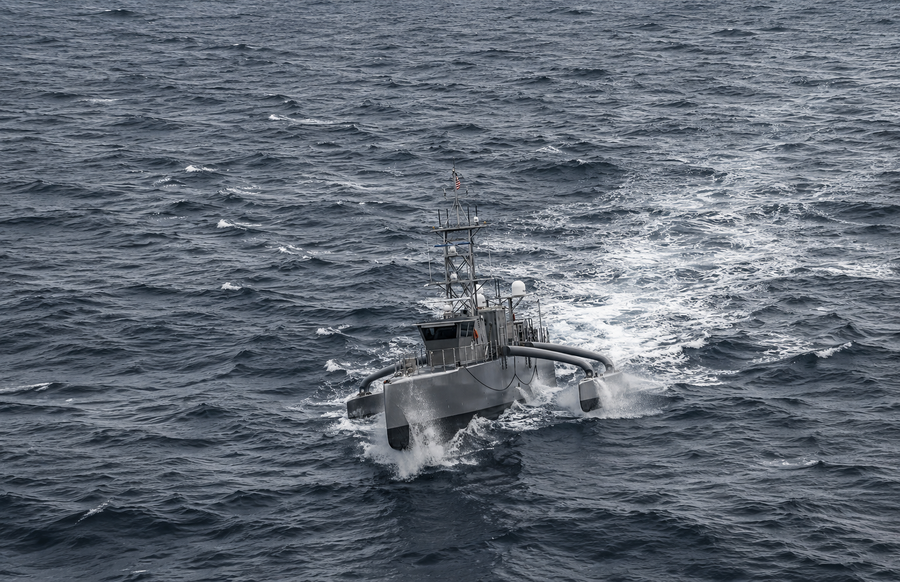
The autonomous vessel Seahawk is pictured underway in the ocean.
The autonomous vessel Seahawk is pictured underway in the ocean (Photo Courtesy: Leidos)

The arrival of the USS Roosevelt would bring the number of American aircraft carriers available in the region to three by late October, joining the USS George H.W. Bush, USS George Washington, and the USS Boxer Amphibious Ready Group.

As for the Leidos USV, the Navy had already practiced at-sea refueling with the Seahawk vessel and integrated it during this year’s Rim of the Pacific exercise. However, moving this unmanned system from trials into real-world operations could mark a crucial step in shaping the US Navy’s future strategy.

Integrating USVs Into Combat 

The presence of the large autonomous vessel in a carrier strike group marks an important step in the US Navy’s future operations. Interestingly, it comes amid a growing presence of uncrewed systems in the ongoing Middle East conflict.

In June 2026, for instance, a Saronic Corsair drone boat operated by the US Navy’s Task Force 59 was used to locate and rescue two crew members after an AH-64E helicopter went down near the Strait of Hormuz.

Iran Hit Amazon. Russia Struck Kyiv’s Data Centers. Ukraine Struck Yandex. Can Such Attacks Trigger Article 51?

This first-of-its-kind rescue mission involving sea drones took about two hours, as the EurAsian Times reported at the time.

Separately, the US Navy used one-way attack sea drones in combat for the first time in July 2026 to strike coastal Iranian military targets.

The US Navy has admitted that unmanned vessels have been extensively deployed in the clearance of mines from the Strait of Hormuz, which has remained under a de facto closure imposed by Iran for over seven months.

These incidents signal a broader appetite within the US Navy to delegate crucial combat tasks to unmanned vessels.

For example, although CSGs are the centerpiece of American naval power projection, adversaries also view them as high-value targets. Therefore, introducing a USV could let the Navy deploy a medium-sized autonomous vessel closer to threats at sea, keeping sailors out of the danger zone.

Moreover, adding a USV to the carrier strike group would enhance the US Navy’s sensor coverage and maritime awareness, reducing dependence on crewed vessels.
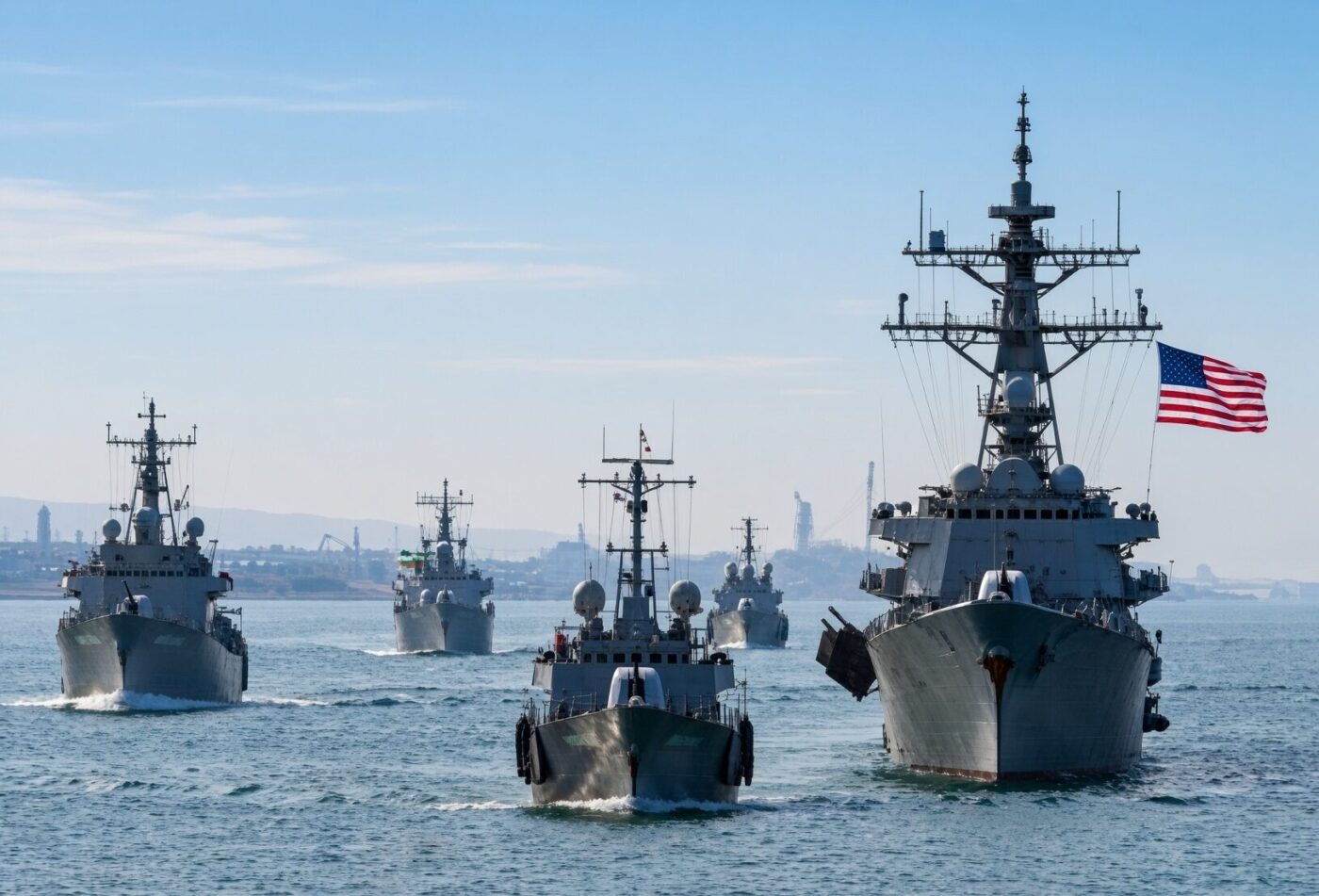
Image for Representation

How Saab Turned Luxury Business Jet into Cutting-Edge AEW&C Aircraft as Sweden Unveils First GlobalEye

Cao’s remarks about having more firepower likely reflect the US Navy’s broader strategy to integrate uncrewed vessels with heavy ships.

In February this year, the Chief of Naval Operations, Adm. Daryl Caudle, presented his “Fighting Instructions” framework, outlining plans to employ a “hedge force strategy” that aims to leverage unmanned technology and develop a range of tailored options that fall outside the scope of the conventional carrier strike group model. 

Since the specifics of this strategy and its structure are currently still being worked out, the deliberate pairing of medium USVs with carrier strike groups may be an early expression of the approach Caudle underscored. The USV’s performance with the Theodore Roosevelt group could potentially inform how subsequent strike groups are configured, accelerating the path toward more medium USVs in the fleet.

The US Navy’s increasing integration of sea drones into established combat practices may have been influenced by Ukraine’s use of these systems to decimate the Russian Navy.

Ukraine has emerged as a pioneer in sea drone technology, showing how relatively simple, affordable technology can neutralize expensive naval assets. In fact, Iran itself has extensively deployed these vessels to launch frequent operations against the US as well as the tankers trying to transit the Hormuz Strait in violation of the Iranian blockade.

The US, for its part, wants to leverage the asymmetric advantage of autonomous systems in combat when facing adversaries that can threaten its state-of-the-art warships.

If the Seahawk demonstrates reliable integration, endurance, and utility, it may accelerate the Navy’s ability to field hybrid strike groups that combine the decisive power of a carrier air wing with the distributed, lower-risk presence of autonomous vessels.

Europe Is Rearming — and U.S. Wall Street is Writing the Checks, Including GE’s Nearly $12 Billion Deal

This assessment may, in turn, inform strategies for combat in other, more contested theatres, such as the Indo-Pacific, where the US faces a Chinese threat.

With a smaller but more advanced fleet, the US can use large numbers of attritable unmanned platforms for sustained surveillance, chokepoint control, and harassment without tying down manned ships.

Against that backdrop, lessons from this first operational pairing may shape concepts of operations (CONOPS), help tailor force packages, and inform the broader shift toward distributed maritime operations, all of which are meant to complicate targeting in a contested environment by near-peer adversaries.


The post First Time — A U.S. Carrier Strike Group Sails with a Medium USV as USS Roosevelt Leads the Way appeared first on EURASIAN TIMES.
  •  

How Saab Turned Luxury Business Jet into Cutting-Edge AEW&C Aircraft as Sweden Unveils First GlobalEye

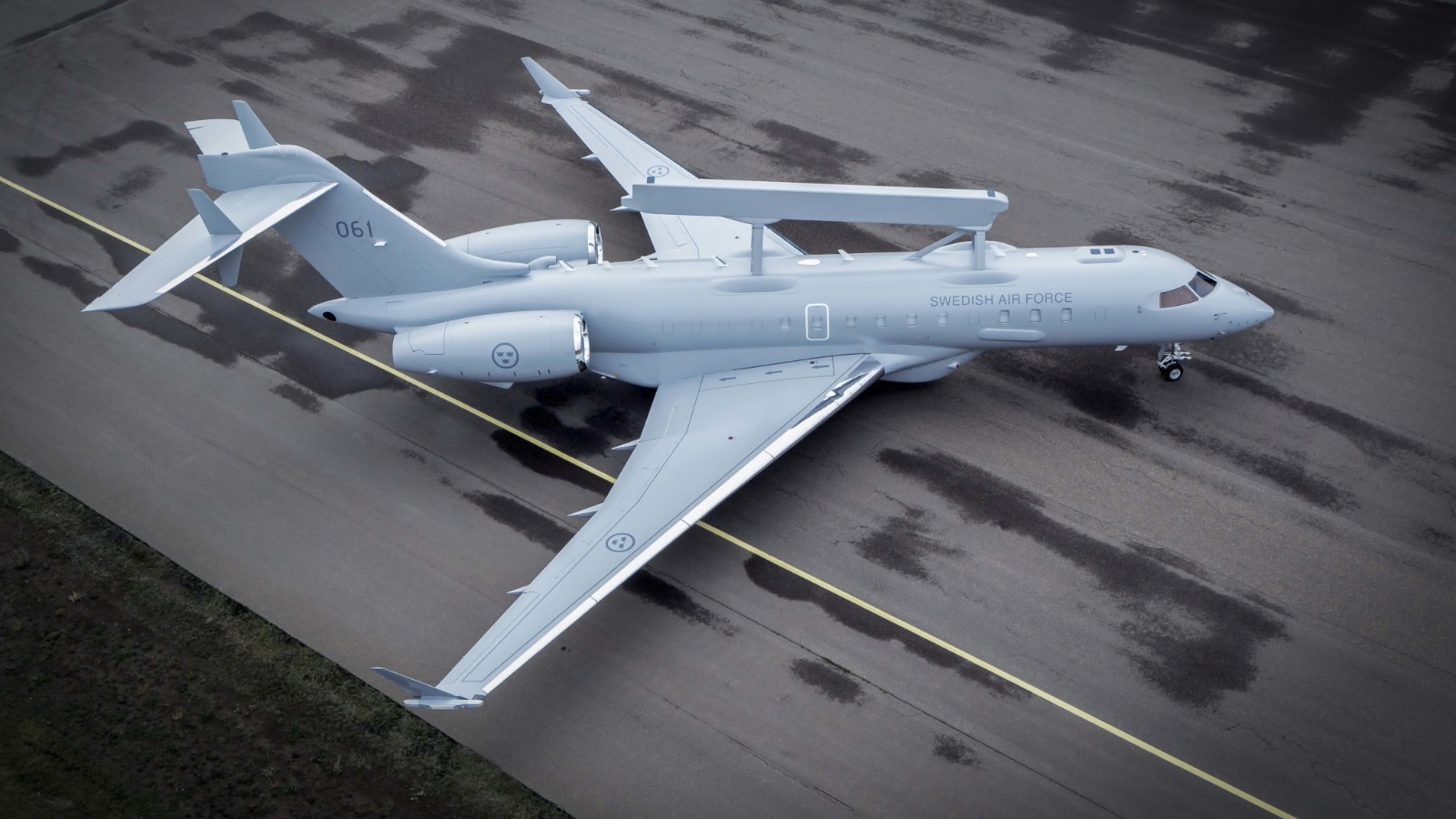
With the GlobalEye, Swedish defense manufacturer Saab has transformed the sleek, long-range luxury business jet into a cutting-edge airborne early warning and control (AEW&C) platform, creating one of the most remarkable transformations in military aviation.

Amid the global surge in GlobalEye’s popularity, Saab unveiled the first AEW&C aircraft for the Swedish Air Force (SwAF) on October 15.

The AEW&C aircraft will give the Air Force long-range surveillance capability, strengthen its operational picture across the air, land, and maritime domains, and bolster its overall combat capability.

“The presentation of Sweden’s first GlobalEye marks an important milestone for both Saab and the Swedish Armed Forces. As the program progresses towards delivery, GlobalEye will provide Sweden with a powerful capability for airborne surveillance and situational awareness,” Micael Johansson, President and CEO of Saab, said in the official statement.

The Swedish Defense Materiel Administration (FMV) ordered two GlobalEye AEW&C aircraft for about SEK 7.3 billion ($738.2M) in June 2022, making it the second customer after the UAE. Later, in 2024, it exercised an option for a third aircraft after it donated its older Saab 340-based ASC 890 aircraft to Ukraine. 

The manufacturer says the newly unveiled aircraft will now enter testing and verification before its first flight and delivery to the customer. Deliveries of these jets are expected to begin in 2027 and could conclude by or before 2029.

To speed the aircraft’s introduction into the Swedish Air Force, Saab is expected to deliver the first two GlobalEyes in an interim configuration and later upgrade them to full capability, while the third will arrive in the final configuration. However, neither Saab nor the Swedish Air Force has yet publicly detailed the differences between the two standards.

Notably, the unveiling of GlobalEye comes amid a rapid surge in orders.

For example, 11 NATO states announced in July 2026 that they would jointly procure Saab GlobalEye aircraft as NATO’s new Airborne Warning and Control System (AWACS). Meanwhile, France ordered the aircraft in December 2025, and Canada and the Netherlands are also moving quickly toward a purchase.

Saab also announced in late July 2026 that an undisclosed Middle Eastern state had ordered the GlobalEye, as the EurAsian Times reported. Although Saab has not officially disclosed the latest customer, it offered the aircraft to Saudi Arabia and Qatar last year.

GlobalEye’s success is striking: it is one of modern military aviation’s most ambitious conversion projects, transforming Bombardier’s ultra-long-range Global business jets into a multi-domain surveillance aircraft.

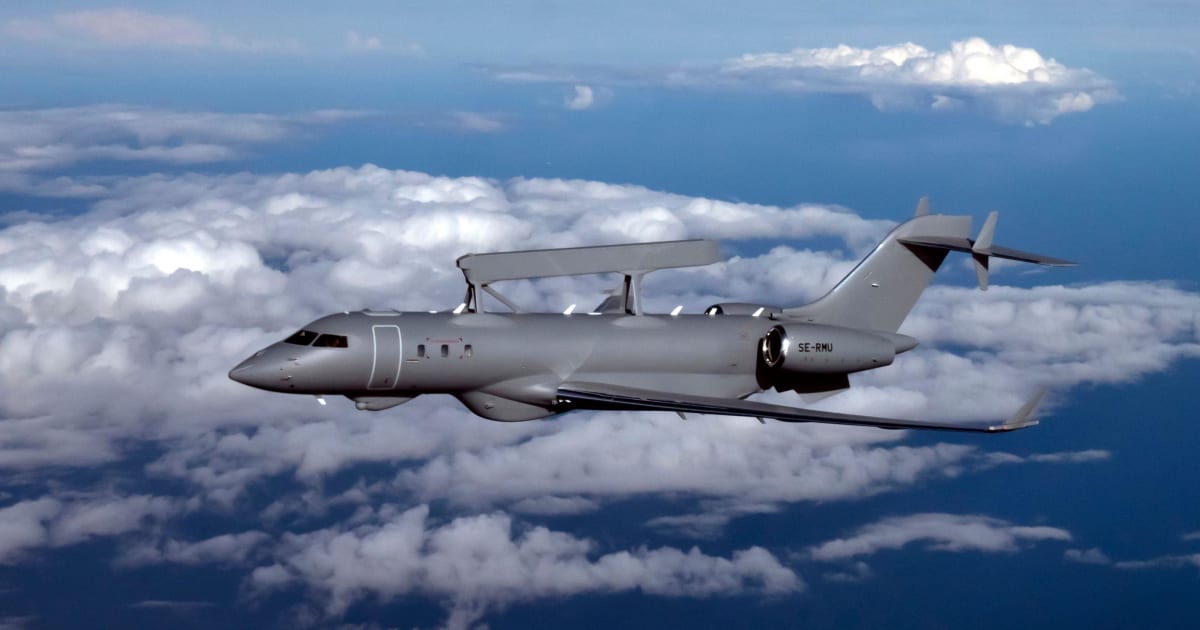
File: Saab unveiled GlobalEye for Sweden Air Force

The Enviable Transformation

By the mid-2010s, Saab had decades of experience with its Erieye radar family, which had flown successfully on platforms such as the Saab 340 and Embraer R-99. 

However, there was a catch: typically, these traditional AEW&C aircraft were large platforms with rotating rotodomes. This meant that although they were powerful, they were also expensive to operate. Furthermore, they required long runways and were becoming increasingly vulnerable in modern threat environments.

After 0-for-8 Tailhook Failures, F-35C Completes Landmark Arrested Landing Aboard USS John F. Kennedy

To simplify things, Saab scrambled to find a platform that offered superior capability at a lower cost. In the process, it concluded that a “high-performance business jet” offered higher altitude, endurance, and speed; lower operating costs; and the ability to operate from shorter runways. The company needed a platform that could carry a large, advanced radar while providing excellent crew conditions for long missions.

Interestingly, Saab’s previous surveillance platforms, such as the Saab 340, Saab 2000, and the  Embraer R-99, had one thing in common: they were regional commercial or military-derived airframes, not high-end luxury business jets. However, with the GlobalEye contours now planned, Saab turned to the Global 6000 family of luxury business jets.

“Saab’s engineers and technical experts searched comprehensively for the best platform on which to build GlobalEye. Saab’s decades of engineering know-how led them to the Bombardier Global 6000 and 6500 business jet aircraft platforms. These jets are optimally sized with class-leading flight range and endurance,” the manufacturer says on its website.

At the Dubai Air Show in November 2015,  the UAE announced a $1.27 billion contract with Saab for two aircraft under what was then called the Swing Role Surveillance System (SRSS), the program that became GlobalEye.

With this, the UAE became the launch customer for this now-coveted surveillance jet, and Saab officially launched the GlobalEye program in February 2016. The deal with the UAE reportedly covered two Bombardier Global 6000 business jets, which Saab would extensively modify with the new Erieye ER radar and other sensors. At the time, Emirati officials noted that they chose the Global 6000 after “a huge evaluation of different platforms.” The platform decision was part of the contract announcement itself.

The Global 6000 and Global 6500 were already ultra-long-range, twin-engine business jets designed for intercontinental VIP travel. These aircraft offered about 6,000 to 6,600 nautical miles of range, high cruise altitudes, and modern avionics.

Saab recognized that, with the right modifications, they could become ideal special-mission platforms.

Bombardier, a Canadian business jet manufacturer, delivered the Global 6000 or 6500 airframes to Saab in Linköping, Sweden, where they were transformed into one of the world’s most advanced surveillance aircraft.

GlobalEye AEW&C | Saab
Saab GlobalEye

Saab now describes the GlobalEye as a sophisticated, multi-domain AEW&C system that uses a variety of active and passive sensors to detect and identify objects long-range on land, at sea, and in the air.

Israel Reverses U.S. Apache Drawdown in Post-October 7 Policy Shift, Signs Deal For 12 AH-64E Helos

It improves situational awareness and enables early threat detection by providing Air Force, Army, and Navy units with access to real-time information. According to Saab, the GlobalEye “combines excellent flight performance with low maintenance costs” and can remain airborne for over 11 hours.

Saab’s Erieye ER radar, which delivers a significant performance leap over earlier Erieye versions using gallium nitride, is at the heart of this early warning aircraft. It reportedly increases the detection range by 70% against challenging targets.

Furthermore, even though Saab classifies this aircraft as an AEW&C, the Leonardo Seaspray 7500E radar and the FLIR (Forward Looking Infrared) Systems Safire electro-optical system, installed in pods beneath the fuselage, enable it to conduct both land and sea surveillance.

The system can identify small targets, like drones, and offer ground-moving target indication (GMTI), which is essential in contemporary warfare, particularly in the Middle East, where the usage of inexpensive, one-way attack drones has been observed to increase exponentially.

Moreover, GlobalEye excels at identifying low-observable, stealthy threats such as drones and ballistic and hypersonic missiles, even in contested environments with heavy electronic jamming.

GlobalEye can collect, analyze, and distribute data to all authorities and resources, including airborne forces. It also facilitates efficient information exchange between platforms. It can also manage and guide other assets, such as fighters, and direct them on when and where to act—a critical requirement in modern, networked combat.

GlobalEye succeeds by combining proven commercial airframe efficiency with Saab’s expertise in radar, systems integration, and multi-domain operations.

Compared with many larger dedicated advanced early warning platforms, it offers lower lifetime costs, greater operational flexibility, and the ability to produce a comprehensive real-time image for national authorities and combined forces, whether in high-intensity war, crisis response, or peacetime monitoring.

Top USAF General Reveals NATO Plan to Fight Russia — But it is Designed for Containment, Not Decisive Defeat

It wouldn’t be an exaggeration to say that developing the GlobalEye has allowed Saab to re-enter the global AEW market, building on the success of its previous early warning aircraft.

More importantly, what began as a luxury business jet for executives has become one of the most capable and sought-after airborne surveillance systems of its generation, thanks to Saab’s vision and engineering.

The post How Saab Turned Luxury Business Jet into Cutting-Edge AEW&C Aircraft as Sweden Unveils First GlobalEye appeared first on EURASIAN TIMES.
  •  

Israel Reverses U.S. Apache Drawdown in Post-October 7 Policy Shift, Signs Deal For 12 AH-64E Helos

In a major policy reversal of its pre-October 7 Apache drawdown plans, Israel has signed a deal with the United States to procure 12 Boeing AH-64E Apache Guardian helicopters.

The Israeli Ministry of Defense (MoD) announced the deal on October 14, with deliveries expected in the early 2030s. Israel has not officially disclosed the deal’s value, but Israeli media reported it is expected to cost around US$ 1 billion.

Interestingly, the deal was announced nearly nine months after the US government approved the sale of up to 30 Apache helicopters to the Israeli Air Force (IAF) for an estimated USD 3.8 billion.

Israel has not disclosed if and when it will place the follow-on order for 18 more Apache attack helicopters, approved under the US government’s foreign military sale (FMS) program in February this year.

“The helicopters, scheduled for delivery at the beginning of the next decade, are of the Echo variant, the newest and most advanced model of the helicopter,” the Defense Ministry said.

According to the FMS agreement announced in February, the AH-64E will be delivered with mast-mounted Northrop Grumman AN/APG-78 Longbow fire-control radars and manned-unmanned teaming (MUM-T) receivers.

This latest version adds a dedicated maritime strike capability and nearly doubles Apache’s stand-off range by increasing the range of the Northrop Grumman AN/APG-78 mast-mounted fire-control radar from 8 to 16 km.

The Apache AH-64E can fire the Lockheed Martin AGM-114 Hellfire II air-to-surface missile, the Rafael Spike Non-Line-Of-Sight (NLOS) missile, which will extend its stand-off firing range beyond 25 km, Stinger air-to-air missiles, Hydra rockets, and can rake targets two km away with 1200 rounds of 30mm milk-bottle-sized cannon ammunition.

The AH-64E models, equipped with advanced radar, sensors, and fire-control systems, can detect, identify, and engage targets at long range, including in adverse weather and poor visibility.

According to manufacturer Boeing, they also provide aircrews with significantly improved situational awareness compared with older models.

“The procurement of the Apache helicopters is a critical step in the IDF’s force buildup, one that will strengthen its operational capabilities against a wide range of threats and contribute to the security of the State of Israel in the years to come,” Defense Minister Israel Katz said.

Notably, the agreement was announced within a week after Israel missed the deadline to sign, and the US reportedly threatened Jerusalem that it would prioritize other foreign customers if Israel did not sign immediately.

Despite changing battlefield requirements, Apache attack helicopters remain in high demand, and nearly half a dozen countries have signed deals for over 150 new-build Apache AH-64Es in the last five years, including Poland, Saudi Arabia, India, and Morocco, with Boeing in advanced talks with countries like Kuwait, Egypt, and South Korea for the sale of these helicopters.

However, many experts question the rationale behind investing billions of dollars in expensive attack helicopters in the era of drone warfare, where they’re vulnerable to cheap, mass-produced FPV drones, shoulder-fired MANPADS, or even SHORAD (Short-Range Air Defense) missiles.

Interestingly, in the years leading up to the October 7, 2023 Hamas attacks, the Israeli Air Force was itself planning to reduce its attack helicopter force, primarily AH-64 Apaches, including potentially closing one or more squadrons over rising maintenance costs.

Before the 2023 Hamas attacks, the IAF operated two Apache squadrons, the 13th “Hornet” and 190th “Magic Touch”. The 13th Hornet Squadron flies the AH-64D, and the 190th Magic Touch Squadron flies the AH-64A; both are based at Ramon Air Base in the Negev Desert.

A General Staff decision in the early 2020s called for shutting down one of the two Apache squadrons, which would have cut the attack-helicopter fleet by more than half.

The force cited aging platforms, with some IAF Apaches flying for over 35 years, high maintenance costs, and a broader doctrinal shift toward unmanned aerial platforms and drones.

However, following the Hamas attacks, the IAF not only reversed its decision to shut down one of the two Apache Squadrons, but also decided to expand its attack-helicopter fleet.

So, why did Israel reverse its policy on attack helicopters following the 2023 Hamas attacks?

apache
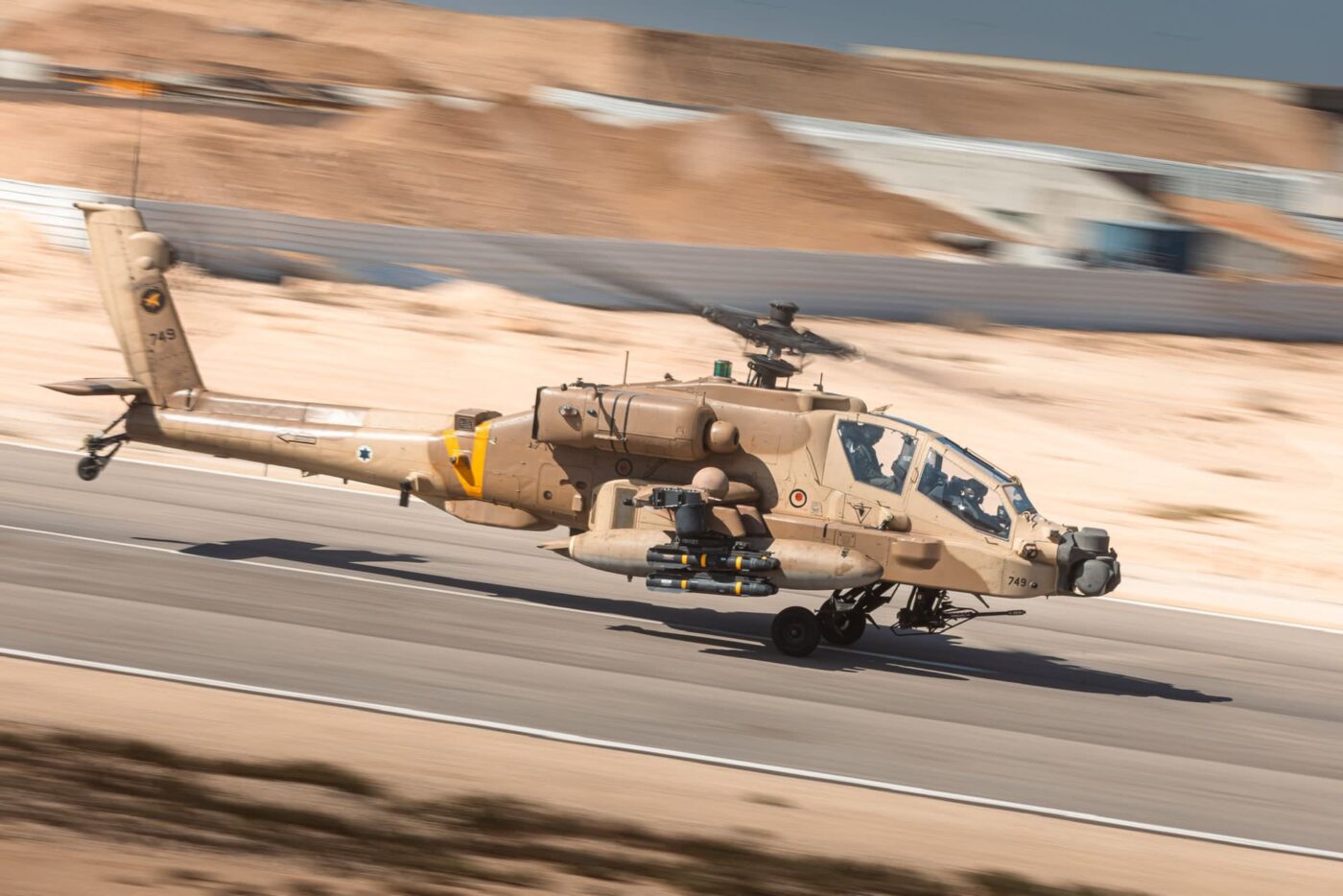
Image by the IAF of an Apache, this time with all four Hellfires sporting yellow bands

October 2023 Hamas Attacks & Apaches

The October 2023 Hamas terror attacks were one of the biggest security failures in Israeli history.

These security lapses and the failure to respond promptly prompted deep introspection and major defense policy reviews in Israel.

One of the major lessons for Israel was that Apache attack helicopters remain highly relevant and are often the most viable platform for responding to certain security contingencies.

In January 2024, Israeli media JNS reported that in light of the current and future threats to Israel and the lessons learned from the current war in Gaza, the Israeli Air Force is expected to grow dramatically and devise a new plan to procure four squadrons of advanced fighter jets, two squadrons of combat helicopters, and a refueling aircraft.

It also plans to procure two squadrons of advanced Apache helicopter gunships, it said.

“The delay in responding to Hamas’s attack in the initial hours of the war and the frequent use of close ground support during the fighting made it clear that a larger fleet of combat helicopters was needed. Therefore, it was decided to immediately initiate proceedings for the purchase of one Apache squadron, and subsequently also a second squadron,” it said.

Notably, since then, Israel has already ordered six Boeing KC-46A Pegasus tankers for US$ 2.4 billion and 25 F-15IAs for US$ 5.2 billion. Now, Israel has ordered 12 Apache AH-64E attack helicopters.

In 2025, Israeli news media platform YnetNews reported that the IAF has issued a new order, called “Thunder,” which details steps to be taken to deal with another large-scale infiltration attempt from Gaza.

“As part of the changes, minimum readiness levels for surprise infiltration scenarios have increased 2.5-fold, including attack helicopters, transport helicopters for moving forces, drones, and fighter jets,” it said.

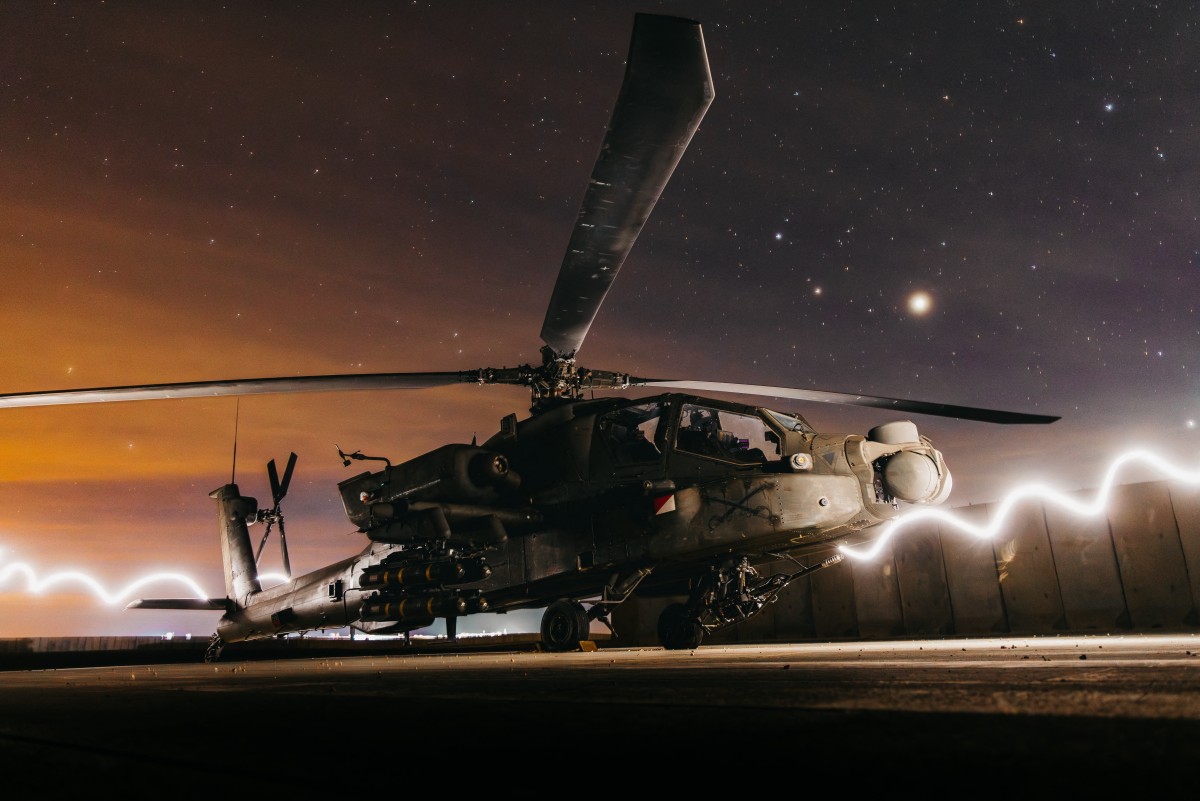
In this US Army photo taken from an undisclosed location on December 19, 2025, a US Army AH-64 Apache Attack Helicopter prepares to support Operation Hawkeye Strike in the US Central Command area of responsibility. US forces struck more than 70 Islamic State group targets in Syria on Friday in what President Donald Trump described as “very serious retaliation” for an attack that killed three Americans last weekend. (Photo by US AIR FORCE / AFP) /

The report noted the usefulness of attack helicopters in providing close air support to ground forces and in countering surprise, large-scale infiltration attempts.

Israeli business daily Calcalist reported that Apache AH-64E combat helicopters are intended to increase firepower and improve the Air Force’s response time to surprise attacks.

“October 7 sharpened our understanding that in many combat scenarios, attack helicopters still hold a distinct advantage over Remotely Piloted Aircraft (RPAs),” a former senior Air Force official told Calcalist.

“There is a huge advantage in having a battalion commander on the ground able to speak directly with a pilot hovering over the combat zone to coordinate precise, high-intensity strikes, capabilities an RPA simply cannot match.”

Apache attack helicopters also proved their worth in the war in Gaza following the Hamas attack.

Israeli defense officials commended Apache’s performance in the October 7 Hamas attack and the war in Gaza, saying the line-of-sight advantage offered by the helicopters was essential for identifying attackers, striking swiftly, assisting ground forces, and thwarting early-morning abduction attempts.

Eitan Ben Eliyahu, a retired Maj. Gen. and former Commander of the Israeli Air Force said: “This is a lesson from the war in Gaza. After it appeared that unmanned aerial vehicles (UAVs) were pushing attack helicopters out, making them seem obsolete on the battlefield, the lesson learned during [the war] was different.” The last two years of war have shown that the Apaches “remain a vital necessity on the battlefield, particularly in urban warfare and commando operations.”

A report in The Jerusalem Post noted that senior Israeli defense officials said limited helicopter numbers, combined with the need to cycle aircraft through refueling and rearming, strained operations during prolonged, high-tempo fighting.

They said the experience reinforced the need for longer range, heavier payload, improved survivability, and better networking with forces on the ground.

Notably, newer AH-64E models support heavier fuel and weapons loads, improved durability, and a reduced acoustic signature, which can make the aircraft harder to detect by sound.

Additionally, the ability to control multiple drones from the helicopter offers pilots more options for reconnaissance and targeting while staying in the fight.

Commenting on the continued relevance of Apache combat helicopters in the era of drone warfare, Indian Air Force veteran Air Marshal Anil Chopra (retd) in a previous EurAsian Times article explained, “The main reason attack helicopters will not disappear is that they fill a niche that very few platforms can fill. They are the only 350 KMPH missile carriers that can hide behind trees, pop up, and literally shoot and scoot.”

“Apache helicopters are still the most survivable, efficient, and formidable flying anti-tank platforms available to militaries. They also have significant roles as anti-UAV and anti-attack helicopters,” Air Marshal Chopra added.

The October 2023 Hamas attacks, ironically, gave a new lease of life to Apache attack helicopters in the Israeli Air Force.

  • Sumit Ahlawat has over a decade of experience in news media. He has worked with Press Trust of India, Times Now, Zee News, Economic Times, and Microsoft News. He holds a Master’s Degree in International Media and Modern History from the University of Sheffield, UK. 
  • He can be reached at ahlawat.sumit85 (at) gmail.com

The post Israel Reverses U.S. Apache Drawdown in Post-October 7 Policy Shift, Signs Deal For 12 AH-64E Helos appeared first on EURASIAN TIMES.

  •  

Silent on Fighter Jet Losses, Open on Airport and Oil Strikes: Saudi Arabia’s Selective Response to Houthi Attacks

As EurAsian Times reported yesterday, the Houthis claimed to have attacked a Saudi Arabian Eurofighter Typhoon using a surface-to-air missile. They claimed the fighter jet was at “risk of crashing.”

The Saudis, as expected, have not commented on the alleged strikes, but this is not the first time.

To begin with, if the Houthis claims are to be believed, this would be the second Eurofighter loss for the Royal Saudi Air Force (RSAF).

The only previously confirmed RSAF Typhoon loss occurred on 13 September 2017, when the Eurofighter crashed into a mountain in Abyan province’s Al Wade’a district during a combat mission over Yemen.

The pilot, Lt. Col. Muhanna bin Saad Al-Baiz, was killed, and official reports attributed the incident to a technical failure.

This was the RSAF’s first official operational loss of a Eurofighter Typhoon.

Earlier, EurAsian Times was among the first to report on the loss of a Saudi F-15SA fighter jet.

The Houthis downed a Saudi Arabian F-15 on September 16, near Marib, using a locally-made surface-to-air missile.

“The Yemeni Armed Forces, with Allah’s aid and grace, succeeded in shooting down a Saudi F-15 fighter jet while it was carrying out hostile operations in support of its military mobilizations in the airspace of Marib province,” Houthi military spokesman Yahya Saree announced in a post on social media.

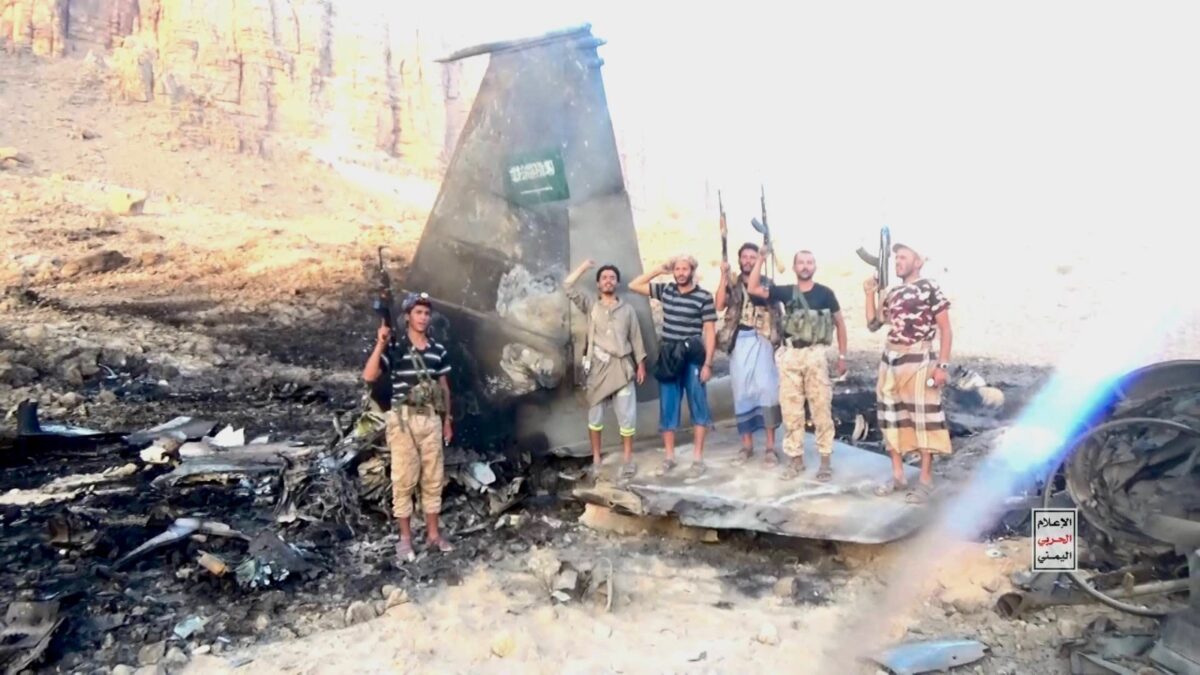
Houthi fighters near downed RSAF’s F-15SA

The Houthis released images of their fighters posing with the aircraft wreckage. The downed jet was identified as the F-15SA Tail N.5539, operated by the 55th Squadron of the Royal Saudi Air Force.

There was no official response from the Saudi government — no acknowledgment, no denial.

Saudi Arabia has a long record of declining to confirm or deny Houthi claims.

In May 2015, Houthis claimed they shot down a Saudi fighter near Sanaa and shared images of wreckage. A Saudi official told CNN the government “would not comment on the claim.”

In January 2018, the Houthis claimed to have downed a Saudi Tornado over Saada and later released images of the wreckage. Saudi media reported that a Tornado on a combat mission had crashed for “technical reasons” and that both crew members were rescued.

The Saudi government did not accept the claims of a missile hit.

In March 2018, the Houthis released infrared footage they said showed a surface-to-air missile striking an F-15 over Saada. Spokesman Colonel Turki al-Maliki confirmed that a missile had been launched at an F-15 but said the aircraft “deal[t] with the source of fire and return[ed] safe to base.”

In February 2020, the Houthis claimed they shot down a Tornado jet over al-Jawf and released video of the engagement. RSAF had to confirm the loss as both pilots ejected and were captured by Houthi forces.

Overall, the silence limits the propaganda value of the Houthis and also protects the morale of the country and its security forces.

In the latest incident, it appears the RSAF Eurofighter may have landed, or even crashed, in Saudi territory, but there is no clear information. If there were any ejections, they would also have happened in Saudi territory. So, the Houthis can claim a hit, but they may never be able to prove anything.

Even in the case of the F-15 shootdown, Houthis were seen with the wreckage of the aircraft, but there was very little information on the two crew members on the aircraft: the pilot and the systems officer, who sits in the back seat.

EurAsian Times did a detailed analysis of the fate of the pilot, and it appears that, most likely, they were recovered by Saudi forces, giving no propaganda material to the Houthis.

Eurofighter Typhoons in the Royal Saudi Air Force Inventory

The Eurofighter Typhoon forms a major element of the RSAF combat fleet. Saudi Arabia operates 72 of the twin-engine, multirole fighters, making it one of the largest Typhoon operators outside Europe.

The RSAF received all aircraft under the Project Salam program, and it bases them at King Fahd Air Base near Taif.

The RSAF assigns all Typhoons to the 2nd Aviation Wing at King Fahd Air Base (Taif), in the Hejaz mountains roughly 150 km southeast of Jeddah. The wing operates three squadrons: No. 3 Squadron, No. 10 Squadron, and No. 80 Squadron. Aircraft are generally configured as Typhoon F.2 (single-seat) and T.3 (twin-seat) or equivalent Tranche 2/3 standards.

The base’s location has made it a logical hub for operations near the Yemeni border.

The Typhoons complement the RSAF’s much larger F-15 family and the older Tornado fleet and have flown combat missions over Yemen since the Saudi-led intervention began in 2015, conducting close air support, interdiction, and strikes against Houthi targets. They have also participated in limited operations against ISIS targets in Syria.

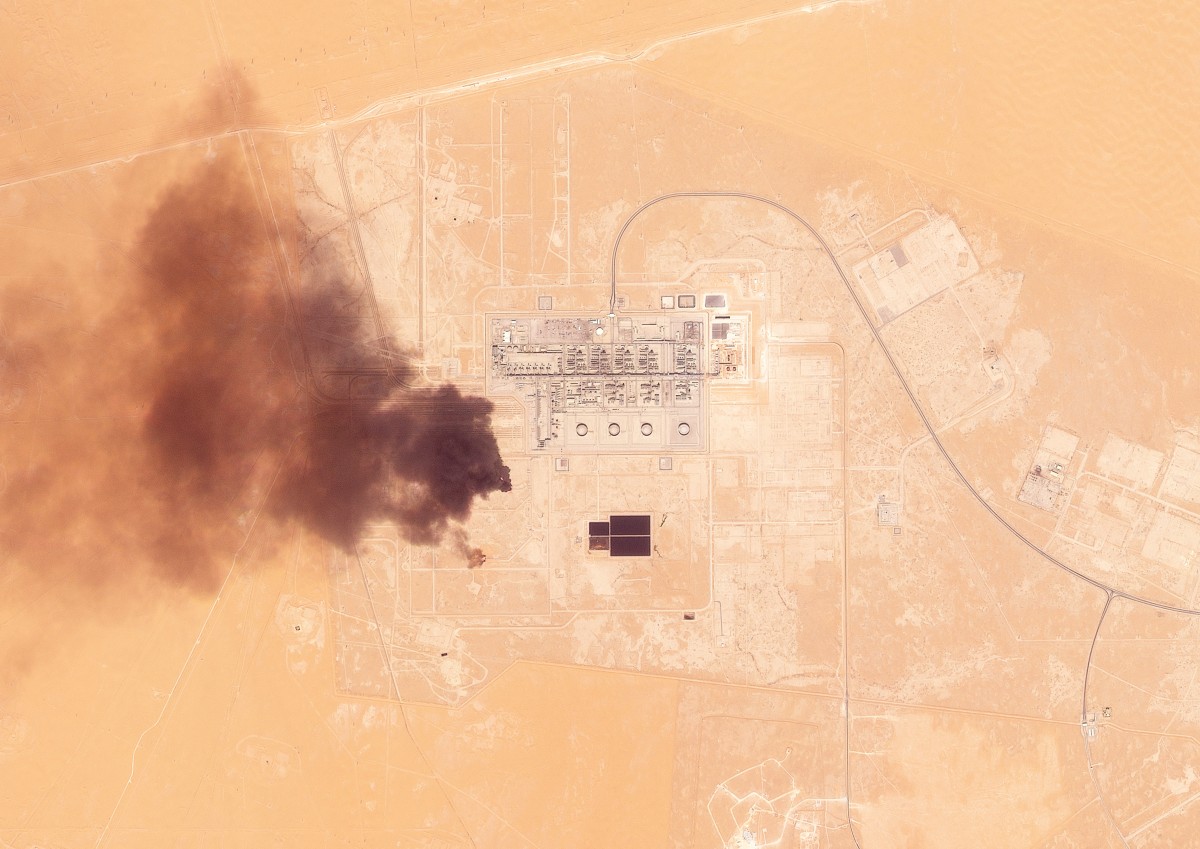
This satellite image, made available by Planet Labs PBC on October 4, 2026, shows a plume of black smoke near the Khurais pumping station on the East-West Pipeline in Saudi Arabia, east of Riyadh. Yemen’s Houthi military spokesman on October 4, 2026, said the group launched a ballistic missile and drone attack on Saudi energy giant Aramco’s sites in the capital, Riyadh, and the oil-rich Khurais area in the kingdom’s east. (Photo by 2026 Planet Labs PBC / AFP)

Houthi Attacks on Saudi Arabia. Riyadh is Not Silent

Riyadh has been silent on Houthi shootdown claims, but it is quite vociferous on attacks on its critical infrastructure.

The Houthis have launched a sustained campaign of ballistic missile, cruise missile, and drone attacks against Saudi civilian airports and energy infrastructure.

The primary target of Houthi attacks was King Khalid International Airport in Riyadh.

According to spokesman Maj. Gen. Turki al-Malki, the airport was subjected to around 20 attacks between early October and mid-month, involving drones, ballistic missiles, cruise missiles, and other projectiles. These resulted in 17 deaths and more than 330 injuries at the airport alone.

Additional attacks hit Abha International Airport (near the Yemen border), King Fahd International Airport in Dammam, and facilities near Najran and Jazan.

Houthi spokesman Brig. Gen. Yahya Saree repeatedly claimed responsibility, warning airlines and travelers to avoid Saudi airports and airspace (except over Mecca and Medina) and declaring such sites legitimate targets in retaliation for Saudi operations in Yemen.

Houthis have also targeted Saudi energy assets. On or around 13–14 October, an attack struck an administrative building at Saudi Aramco’s headquarters complex in Dhahran. The Energy Ministry described it as causing a “limited fire” with no casualties.

Sources cited by Reuters and others reported extensive damage, with the fire spreading across multiple floors of an office tower and temporarily disrupting operations.

Earlier, Houthi attacks hit fuel tanks and related facilities at or near Riyadh airport, and reports cited smoke from an Aramco site south of the capital. The East-West pipeline (used to bypass the Strait of Hormuz) had previously been disrupted by drone attacks.

Saudi officials have openly acknowledged the attacks.

The General Authority of Civil Aviation provided casualty figures and the nationalities of those affected. Spokesman al-Malki detailed the scale of the damage against the Saudi civilian infrastructure.

Riyadh strongly condemned the targeting of civilians, airports, economic facilities, and even the holy cities of Mecca and Medina, reaffirming the right to self-defense and calling for international action.

The Cabinet, under Crown Prince Mohammed bin Salman, warned that the Houthis would face consequences for attacks on airports, infrastructure, and visitors, while praising the armed forces.

Energy Minister Prince Abdulaziz bin Salman, speaking at the WPC Energy Congress in Riyadh, described the events as “serious” and said the Kingdom’s response “must be equally serious.”

Saudi state media, including the official news agency SPA and Saudi television, reported the attacks in detail. They released official statements, updated casualty figures, and showed footage of the strike on Riyadh airport and the damage that followed. Civil defense authorities also issued public alerts and announced when incoming missiles or drones had been intercepted.

This level of official transparency is noteworthy as it contrasts with periods when Saudi responses to cross-border strikes were more restrained in public communications.

The idea appears to be obvious: while Saudi Arabia is keen to deprive the Houthis of any PR or propaganda material, the Kingdom wants to highlight attacks on the country to justify its counteroffensive, even if disproportionate.

Even though the Houthis have denied targeting Mecca and Medina, Riyadh could rally support, especially from the Islamic world and Mecca pact allies, Pakistan and Turkey, to crush the Houthis.

  • This is an Opinion Article
  • Mail the author at: editor (at) eurasiantimes.com

The post Silent on Fighter Jet Losses, Open on Airport and Oil Strikes: Saudi Arabia’s Selective Response to Houthi Attacks appeared first on EURASIAN TIMES.

  •  
❌