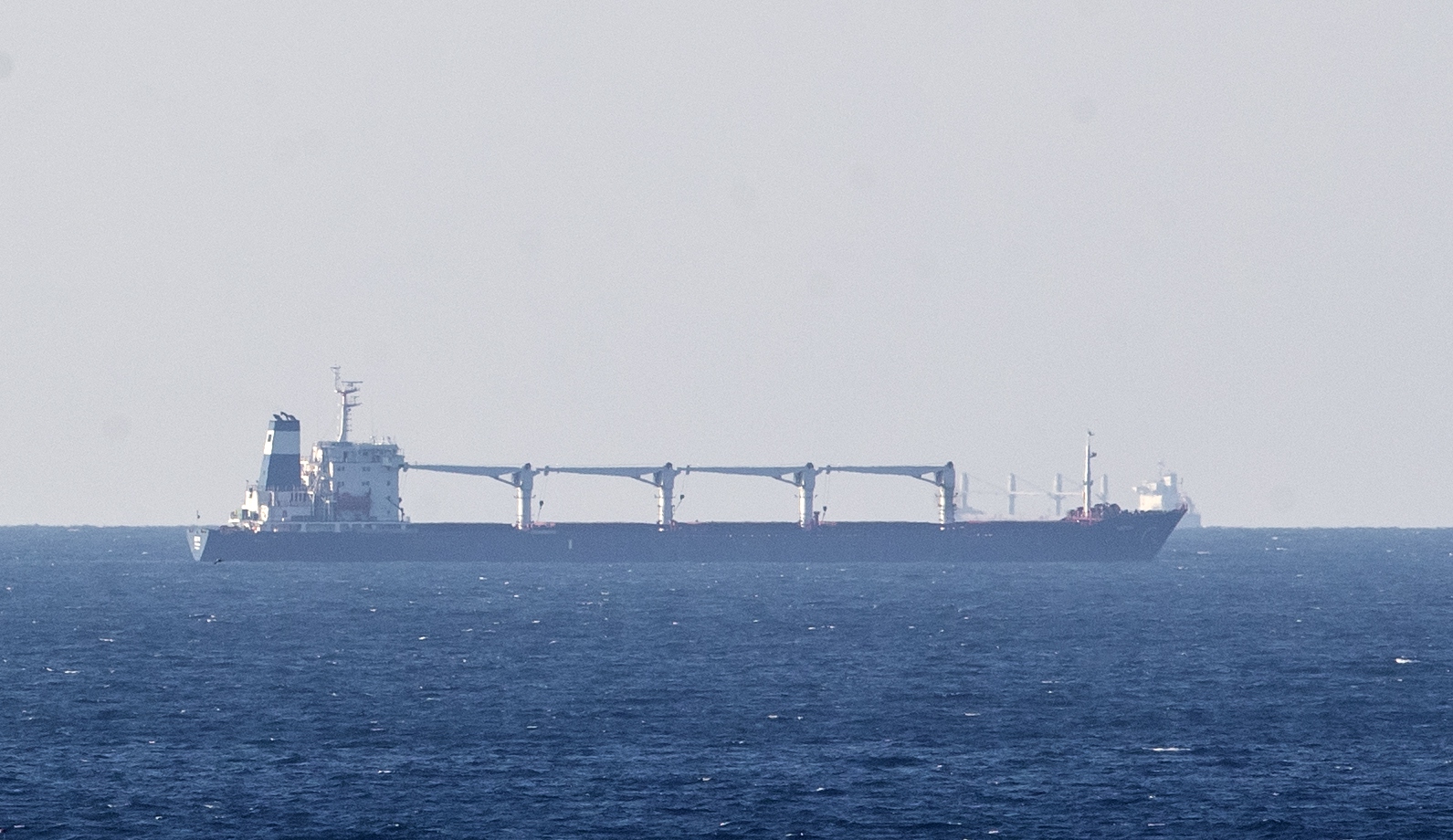
The EU’s top diplomat has backed the idea of a Black Sea naval mission to protect grain ships from Russian drones – but this would require a much bigger effort than Europe’s existing Red Sea operation, while air-policing might be more effective.
“The EU should send a mission to the Black Sea,” said EU foreign affairs chief Kaja Kallas in the European Parliament in Strasbourg on Tuesday (20 October).
“To protect merchant shipping, not to escalate, not to scare anyone, but to make sure that we will supply safely fuel, merchandise at normal prices, anything we need. This is how it should be,” she said.
Some “six attacks in 10 days by suspected Russian drones marks a dangerous and unacceptable escalation,” in the region, Kallas added, with “rescuers still searching for seven sailors missing after the drone attack on two tankers near Romania’s Black Sea coast”.
The Russian attacks were costing Ukraine €60m a day in lost exports of grain and fertiliser, Kallas also said.
And Russia had changed its tactics to start targeting people instead of cargo, said Sidharth Kaushal, from the Royal United Services Institute (RUSI) defence think-tank in London.
“Before, they targeted ports, not civilians, or vessels at sea. They realised that threat to life is a much more effective deterrent to commercial shipping than threat to cargo,” he told EUobserver.
This article continues, but the full version is available only to EUobserver.com subscribers. Visit account.euobserver.com/membership
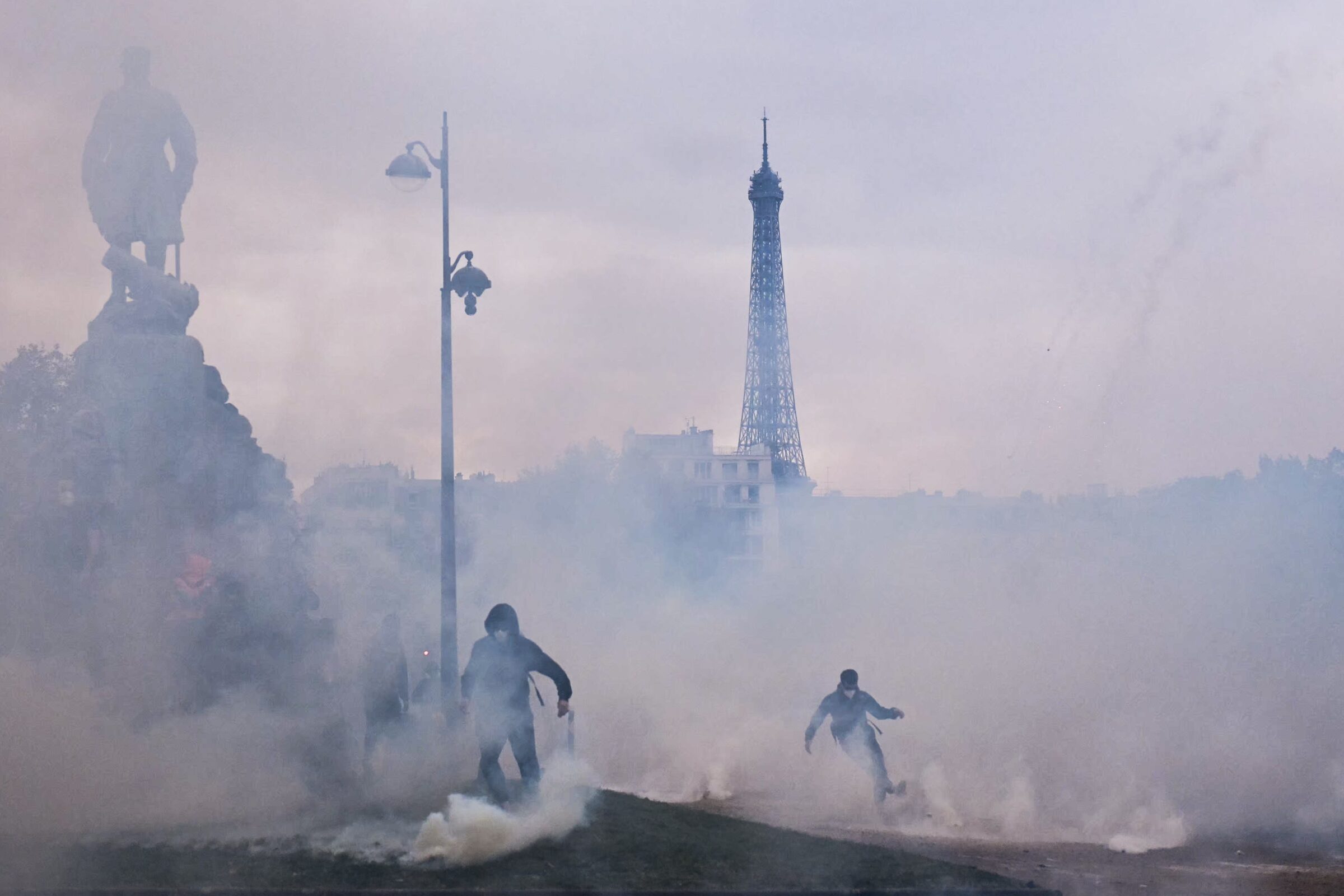
I went to bed on Saturday (17 October) glued to my X feed on the French riots and it was impossible not to react emotionally to images of familiar landmarks in Paris in flames.
It was a mistake to have followed things on the far-right propaganda tube of racist US oligarch Elon Musk, which both glorified and reviled its AI-curated clips of violent clashes between mostly white policemen and young black or Arab men.
But in any case, I felt pity for police facing Molotov cocktails and cobble stones and angry about their use of stun grenades that left young people maimed.
I was shocked to see public buildings and luxury shops in Lyon, Marseille, and Paris set on fire and looted in what looked like pure criminality, rather than liberté, égalité, fraternité.
But the anarchist adrenaline in me also said: “Fuck Louis Vuitton! A shop that sells luggage for the price of most families’ monthly incomes is a perfect symbol of the social inequality at the heart of this eruption of public anger”.
I woke up on Sunday thankful to learn from professional media, such as the BBC, that even if Paris looked like a war zone, no one had been killed, and even though police had made over 1,800 arrests, aggressive thugs were a fraction of the hundreds of thousands of people who had peacefully protested for better living conditions and education.
But the political harm of Saturday’s X-streamed violence, which also broke out in Italy and Belgium, was still enormous and it will help the EU and French people’s enemies – the far-right in Europe, Russian president Vladimir Putin, and US president Donald Trump.
This article continues, but the full version is available only to EUobserver.com subscribers. Visit account.euobserver.com/membership
EU leaders will mouth hollow criticism of West Bank settlers at next week’s summit, while staying mute on Israel’s genocide in Gaza – in sharp contrast to the 2026 Nobel peace prize.
The EU “strongly condemns the continued and growing settler violence against Palestinian civilians and calls for accountability”, they aim to say in a declaration in Brussels on Thursday (15 October), according to a draft seen by EUobserver on Friday.
And they are to warn of “legal, economic, and reputational consequences for [Israeli] businesses participating” in building a settlement in the E1 area of the West Bank, which would destroy the two-state solution by chopping the region in half.
It remains to be seen if Slovenia’s pro-Israeli prime minister, Janez Janša, will sign up, after he ranted on X in August that he would veto this type of thing.
But even if Janša agreed, it would still amount to EU impunity for settlers, as there was no mention of banning settler imports or even blacklisting more settler extremists.
“The EU keeps condemning illegal settlements that it trades with, financing the very occupation and abuses it claims to oppose. How does that make any sense?,” said Claudio Francavilla from Human Rights Watch.
The summit draft also voiced “grave concern over developments in Gaza”, where “protection of civilians must be ensured”, and urged Israel to let in more aid.
Israel has killed some 1,450 people in Gaza since an October 2025 ceasefire.
It has killed over 74,000 Palestinians and displaced 1.8 million people in Gaza since 2023, but the EU leaders’ passive-tense language did not blame Israel for civilian deaths or mention Gaza “accountability”.
And that will put our 27 prime ministers and presidents at odds this Thursday with Europe’s moral compass, international law, and public opinion.
The Norwegian Nobel Committee gave the 2026 Nobel Peace Prize on Friday to Navi Pillay, a South African judge, who had chaired a UN commission that found Israel guilty of “genocide” in Gaza and worked for the International Criminal Court (ICC) in The Hague, which has indicted Israeli prime minister Benjamin Netanyahu for war crimes.
She was “a bigot … propagating blood libels,” he said on X.
Israeli foreign minister Gideon Sa’ar said: “[Nazi propaganda chief] Joseph Goebbels is probably applauding in hell.”
And US president Donald Trump joined their Nobel-bashing by imposing sanctions on the ICC.
But three other Nobel laureates, from Colombia, DR Congo, and Liberia were among global VIPs who also wrote to the European Commission on Friday urging trade sanctions on Israel, in a sign of wider revulsion.
And “if the EU was serious about fulfilling its obligations under international law, or indeed in terms of its own stated values and policies, it would go much, much further [in terms of sanctions],” said H. A. Hellyer, from the Royal United Services Institute (RUSI) think-tank in London.
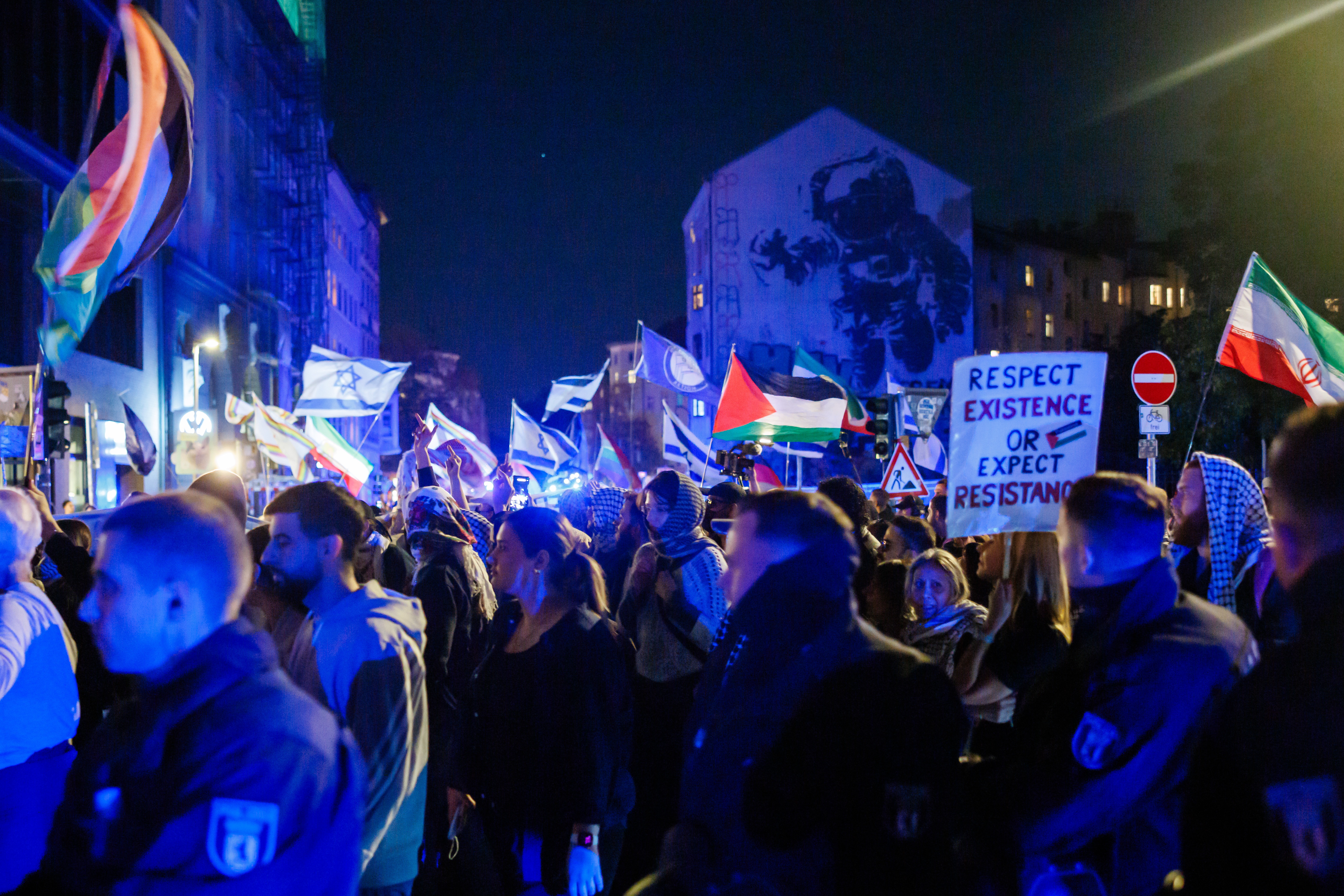
Palestine solidarity marches in Berlin, London, Rome, and Warsaw on Saturday showed that ordinary Europeans wanted their elected politicians to take action.
Some 83 percent of Germans and 88 percent of Italians now disapproved of Netanyahu, said the Pew Research Centre in June.
Protesters with Palestinian flags pass by a counter protest with Israeli flags at a rally in Berlin on 7 October 2026 (Source: EPA/CLEMENS BILAN)
Blood and rubble
The latest EU summit draft pledged support for Palestinian elections.
“The European Union stands ready to support the electoral process, including by the deployment of an EU Election Observation Mission,” it said.
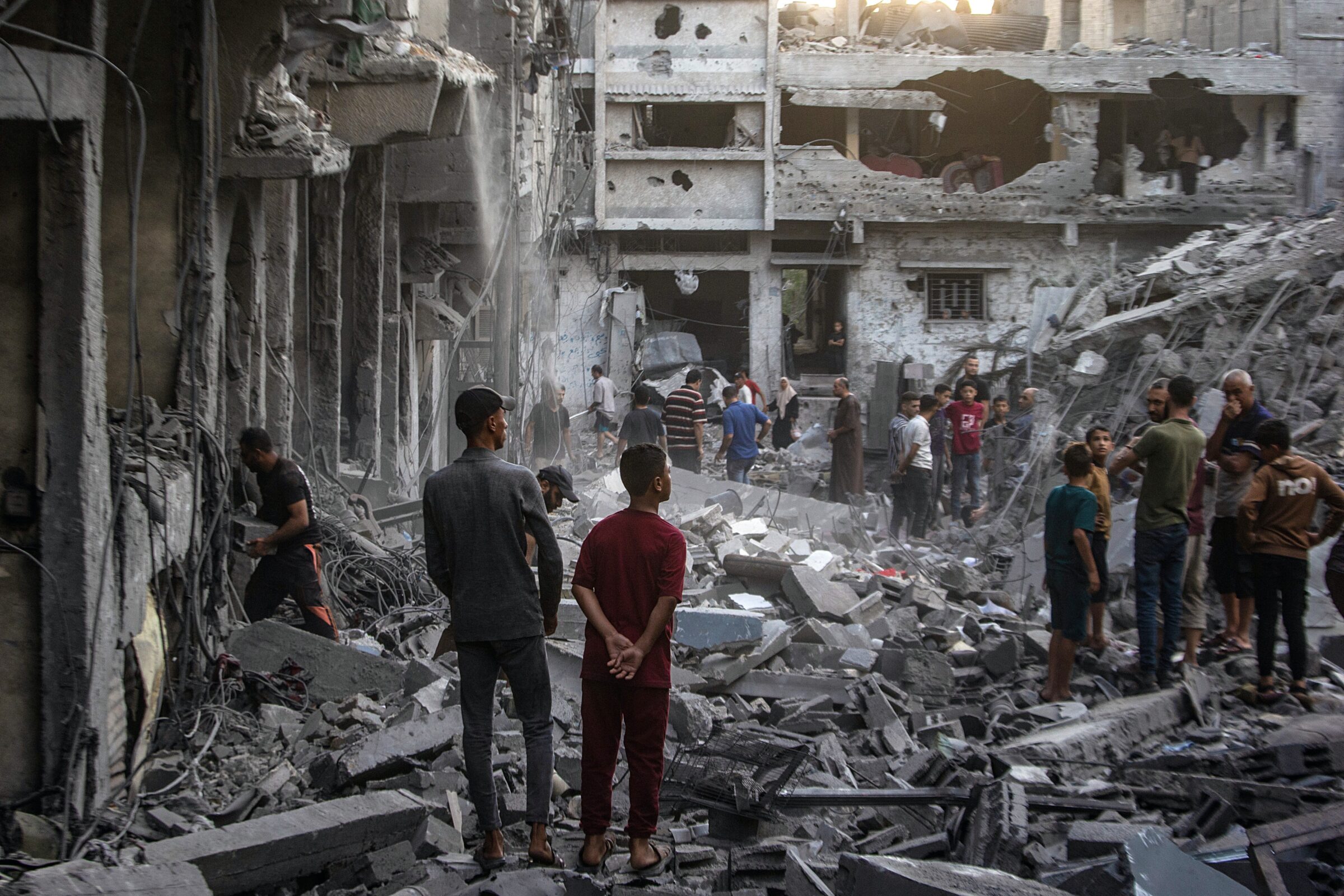
But EU words were being buried in blood and rubble faster than the summit statements could be updated.
The Palestinian vote would have to be postponed until at least late 2027 due to the “security and economic conditions” created by Israel in the West Bank, the Palestinian Authority warned France, also on Friday.
Meanwhile, the EU summit will fall two weeks before Israeli elections on 27 October and the leaders’ empty words might be tactical – so as not to throw meat to far-right Israeli zealots in a rabid atmosphere.
But Europe’s quietism is also due to Germany and Italy’s internal politics and its psychopathological mix of World War 2-guilt, raging far-right populism, and transatlantic realpolitik.
“I don’t think this [the draft EU summit text on the Middle East] is a strategy, so much as a statement of the lowest common denominator in EU foreign policy,” RUSI’s Hellyer said.
And going back to the Nazi slurs against the 2026 Nobel, Israeli author Gideon Levy said in the Haaretz daily on Saturday: “No, Sa’ar … If Goebbels has a reason to applaud, it is upon seeing what has happened to the country that arose from the ashes of the Holocaust.”
“Goebbels is applauding perpetrators of genocide around the world, particularly the one in Gaza,” said Levy.
So long as Berlin and Rome don’t realign their compasses, Europe’s silent blessing for Palestinian erasure will feed Israeli hardliners’ schizoid and delusional sense of self-righteousness.
“As long as Israel is not willing to … admit, at least partially, to its crimes, it will never change,” Levy said.
Russia might not have directly interfered in Latvia’s election, but the vote still showed how the Ukraine war was distorting European democracy.
Latvia’s VDD intelligence service did not detect any of Russia’s classic interference tactics in the run-up to Saturday’s (3 October) vote, such as a spike in disinformation, vote buying, or a manufactured security scare.
The centre-right prime minister Andris Kulbergs retained power with 35.8 percent of the vote, even if coalition-building might take a while.
And voters’ concerns included the cost of living and failing healthcare, in what also sounded normal.
But despite the ordinary appearances, Russia’s war in Ukraine still influenced the election in fundamental ways, in a strange new normal for Europe that most of us had hardly imagined just five years ago.
This article continues, but the full version is available only to EUobserver.com subscribers. Visit account.euobserver.com/membership
The EU’s delisting of two Russian oligarchs last week despite multiplying sabotage attacks in Europe was “regrettable”, while German-Russian talks at the UN ended in “ridicule”, EU foreign affairs chief Kaja Kallas has said.
“It is regrettable that this [delisting] was the decision,” said Kallas on Monday (28 September) in Brussels at a defence ministers’ meeting.
“We are putting forward more listings, targeting their military-industrial complex, also targeting the finances of Russia, because we want this war to stop,” she added, referring to the 22nd round of Russia sanctions, due on 12 October.
Lithuania’s defence minister Robertas Kaunas also called the delistings a “step backwards”, adding: “This is not the time to reduce sanctions. We have to strengthen the pressure on Russia and [Russian president Vladimir] Putin’s environs”.
This article continues, but the full version is available only to EUobserver.com subscribers. Visit account.euobserver.com/membership
Interior ministers will discuss how to secure borders and deport more immigrants this week, while foreign affairs chief Kaja Kallas takes EU diplomacy to Syria.
Home affairs ministers meeting in Brussels on Thursday (1 October) will discuss “the overall state” and “security” of the Schengen free-travel area, as well as the adequacy of EU asylum law, after thousands of people entered the Spanish enclave of Ceuta in north Africa in July, prompting a border row between Italy, Denmark, and Spain.
The talks come ahead of the first post-Ceuta EU summit, due on 15 October, where rightwing EU leaders aim to drum up support for harsher measures.
The interior ministers will also “exchange views on how to improve returns of persons who do not have the right to stay in the EU through enhanced cooperation on readmission with priority non-EU countries”, the EU Council said, referring to potential deportations to Rwanda.
And they will examine how to increase surveillance of people’s movements, in order to get “early warning” of future “crisis situations”.
For her part, the EU foreign affairs chief, Kaja Kallas, will visit Syria, together with a large security detail, on Tuesday.
This article continues, but the full version is available only to EUobserver.com subscribers. Visit account.euobserver.com/membership
It has been a good week for Russian soft power in the sporting world.
On Tuesday (22 September) in Brussels, the EU lifted a visa-ban on a portly 73-year-old Russian billionaire, Alisher Usmanov, who is head of the International Fencing Federation.
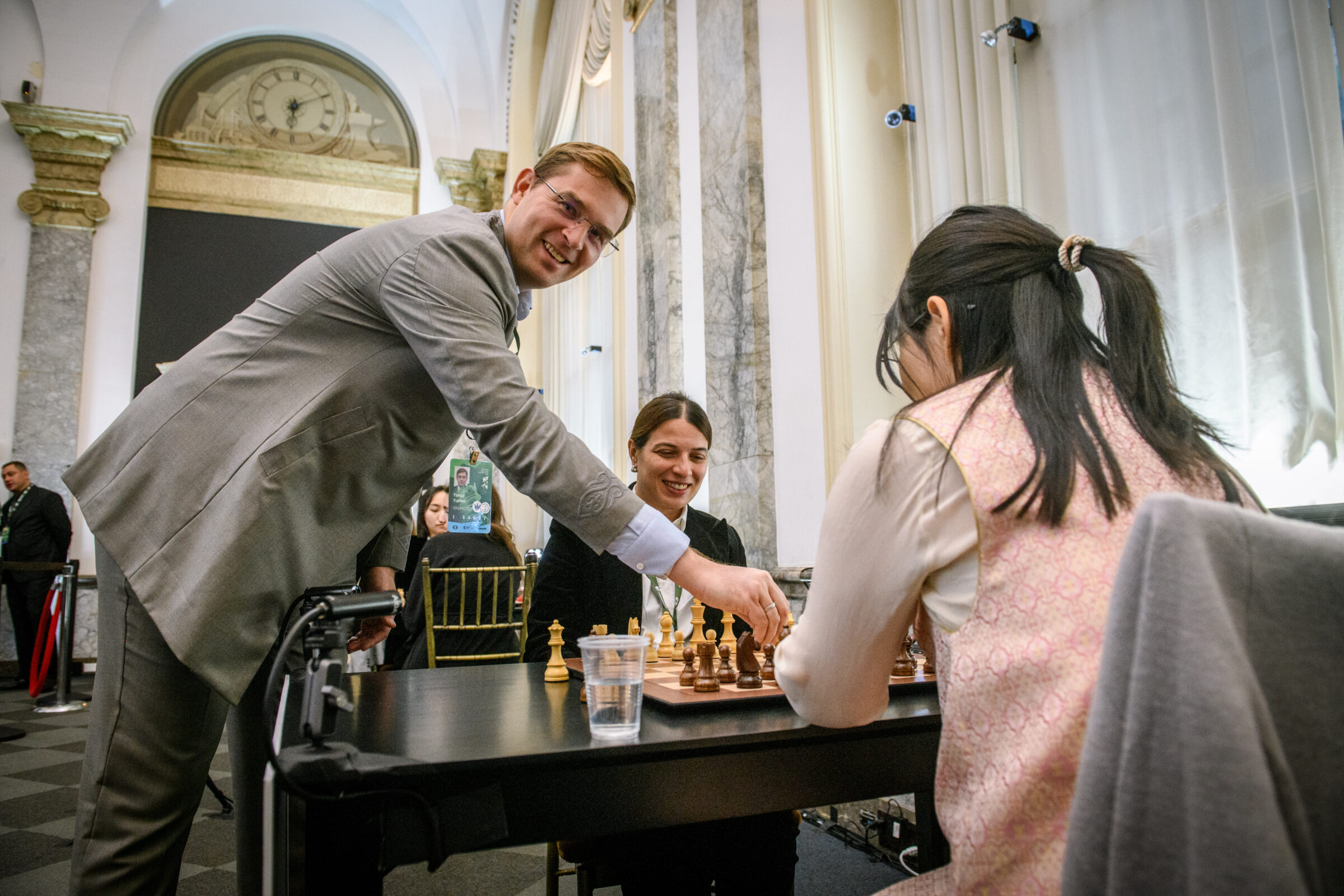
And on Saturday in Samarkand, FIDE, the world chess body, elected a Kazakh billionaire, Timur Turlov, who has no professional chess rating, but who does have strong links to Russia, to be its next president.
On paper, Turlov ended 30 years of Russian rule at FIDE, but at a closer look, his victory seems like its continuation under a false flag.
The 38-year-old financier was born in Moscow and made his fortune there, but left Russia after its 2022 invasion of Ukraine, renounced his Russian citizenship, and divested most of his Russian holdings, giving him a nice alibi against Western sanctions.
But he has still been blacklisted by Ukraine for ongoing business ties to Russia’s oil and gas sectors.
This article continues, but the full version is available only to EUobserver.com subscribers. Visit account.euobserver.com/membership

 Login