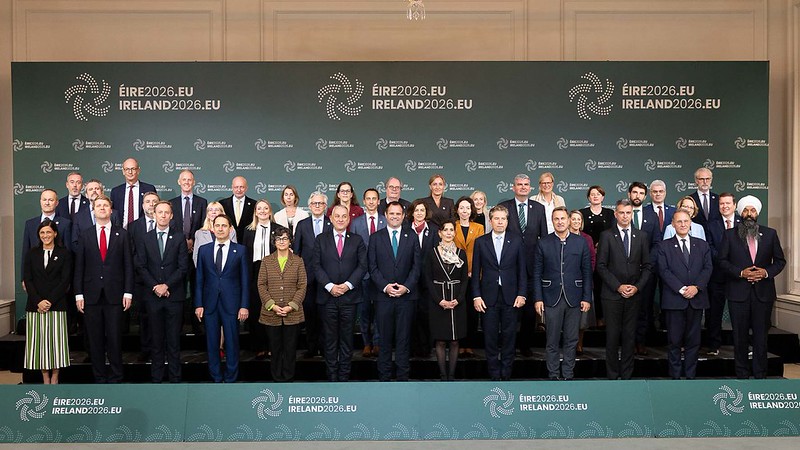
The Irish government has set the path for a showdown between MEPs and governments over the next seven year EU budget after proposing an 8 percent cut worth €141bn to the European Commission’s spending plan.
Savings from the commission proposal have been found across all headings in the so-called ‘negotiating box’ for the 2028–2034 Multiannual Financial Framework (MFF). But farmers’ subsidies under the common agricultural policy and the bloc’s cohesion policy, which provides funding to the EU’s poorest regions, have been exempted from any cuts.
That is a nod to a sustained lobbying effort by a group of seventeen EU countries, known as ‘Friends of Cohesion’.
As expected, meanwhile, cuts totalling €38bn have been made from the ‘Global Europe’ heading, which covers foreign aid, while €75bn has been taken from the competitiveness fund and €10bn from the EU’s administrative costs.
In a statement on Saturday (10 October), Ireland’s minister for Europe, Thomas Byrne, said that the €1.62 trillion spending plan was “intended to bridge the many differences between Member States. It brings us closer to resolving the critical questions our Union faces on how to balance both new priorities and core policies, whilst also reflecting the fiscal realities that all Member States face.”
This article continues, but the full version is available only to EUobserver.com subscribers. Visit account.euobserver.com/membership
EU leaders will mouth hollow criticism of West Bank settlers at next week’s summit, while staying mute on Israel’s genocide in Gaza – in sharp contrast to the 2026 Nobel peace prize.
The EU “strongly condemns the continued and growing settler violence against Palestinian civilians and calls for accountability”, they aim to say in a declaration in Brussels on Thursday (15 October), according to a draft seen by EUobserver on Friday.
And they are to warn of “legal, economic, and reputational consequences for [Israeli] businesses participating” in building a settlement in the E1 area of the West Bank, which would destroy the two-state solution by chopping the region in half.
It remains to be seen if Slovenia’s pro-Israeli prime minister, Janez Janša, will sign up, after he ranted on X in August that he would veto this type of thing.
But even if Janša agreed, it would still amount to EU impunity for settlers, as there was no mention of banning settler imports or even blacklisting more settler extremists.
“The EU keeps condemning illegal settlements that it trades with, financing the very occupation and abuses it claims to oppose. How does that make any sense?,” said Claudio Francavilla from Human Rights Watch.
The summit draft also voiced “grave concern over developments in Gaza”, where “protection of civilians must be ensured”, and urged Israel to let in more aid.
Israel has killed some 1,450 people in Gaza since an October 2025 ceasefire.
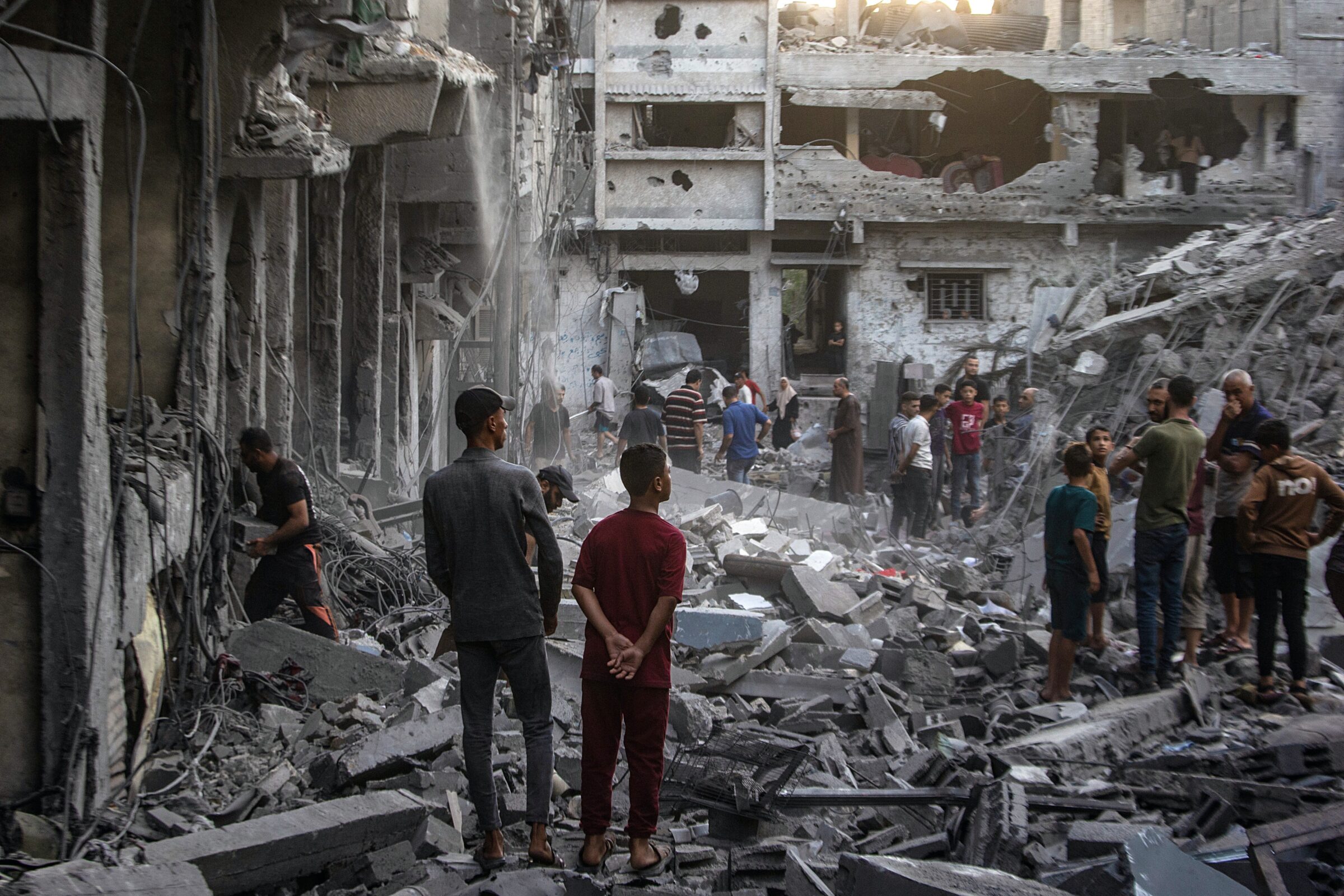
It has killed over 74,000 Palestinians and displaced 1.8 million people in Gaza since 2023, but the EU leaders’ passive-tense language did not blame Israel for civilian deaths or mention Gaza “accountability”.
And that will put our 27 prime ministers and presidents at odds this Thursday with Europe’s moral compass, international law, and public opinion.
The Norwegian Nobel Committee gave the 2026 Nobel Peace Prize on Friday to Navi Pillay, a South African judge, who had chaired a UN commission that found Israel guilty of “genocide” in Gaza and worked for the International Criminal Court (ICC) in The Hague, which has indicted Israeli prime minister Benjamin Netanyahu for war crimes.
She was “a bigot … propagating blood libels,” he said on X.
Israeli foreign minister Gideon Sa’ar said: “[Nazi propaganda chief] Joseph Goebbels is probably applauding in hell.”
And US president Donald Trump joined their Nobel-bashing by imposing sanctions on the ICC.
But three other Nobel laureates, from Colombia, DR Congo, and Liberia were among global VIPs who also wrote to the European Commission on Friday urging trade sanctions on Israel, in a sign of wider revulsion.
And “if the EU was serious about fulfilling its obligations under international law, or indeed in terms of its own stated values and policies, it would go much, much further [in terms of sanctions],” said H. A. Hellyer, from the Royal United Services Institute (RUSI) think-tank in London.
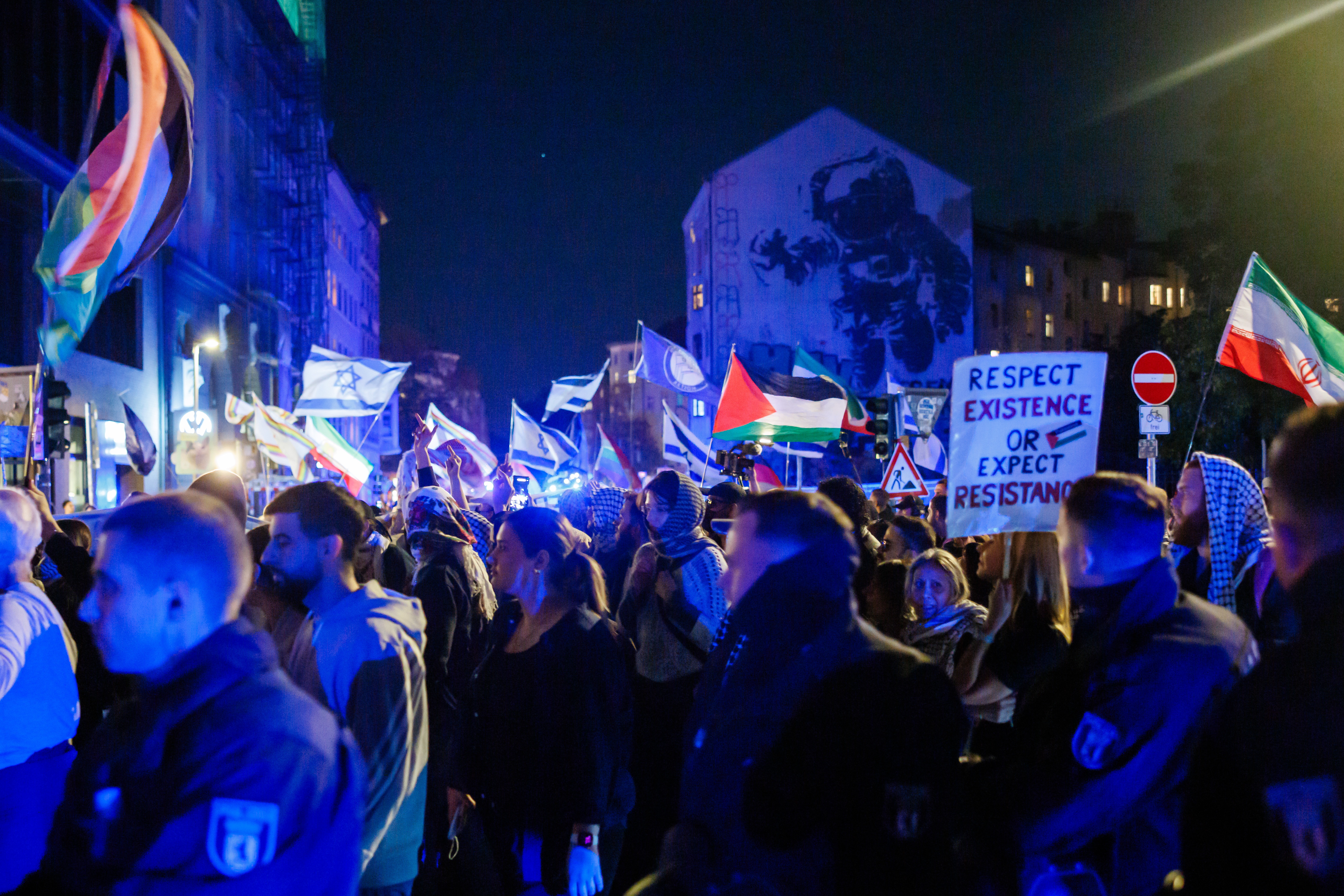
Palestine solidarity marches in Berlin, London, Rome, and Warsaw on Saturday showed that ordinary Europeans wanted their elected politicians to take action.
Some 83 percent of Germans and 88 percent of Italians now disapproved of Netanyahu, said the Pew Research Centre in June.
Protesters with Palestinian flags pass by a counter protest with Israeli flags at a rally in Berlin on 7 October 2026 (Source: EPA/CLEMENS BILAN)
Blood and rubble
The latest EU summit draft pledged support for Palestinian elections.
“The European Union stands ready to support the electoral process, including by the deployment of an EU Election Observation Mission,” it said.
But EU words were being buried in blood and rubble faster than the summit statements could be updated.
The Palestinian vote would have to be postponed until at least late 2027 due to the “security and economic conditions” created by Israel in the West Bank, the Palestinian Authority warned France, also on Friday.
Meanwhile, the EU summit will fall two weeks before Israeli elections on 27 October and the leaders’ empty words might be tactical – so as not to throw meat to far-right Israeli zealots in a rabid atmosphere.
But Europe’s quietism is also due to Germany and Italy’s internal politics and its psychopathological mix of World War 2-guilt, raging far-right populism, and transatlantic realpolitik.
“I don’t think this [the draft EU summit text on the Middle East] is a strategy, so much as a statement of the lowest common denominator in EU foreign policy,” RUSI’s Hellyer said.
And going back to the Nazi slurs against the 2026 Nobel, Israeli author Gideon Levy said in the Haaretz daily on Saturday: “No, Sa’ar … If Goebbels has a reason to applaud, it is upon seeing what has happened to the country that arose from the ashes of the Holocaust.”
“Goebbels is applauding perpetrators of genocide around the world, particularly the one in Gaza,” said Levy.
So long as Berlin and Rome don’t realign their compasses, Europe’s silent blessing for Palestinian erasure will feed Israeli hardliners’ schizoid and delusional sense of self-righteousness.
“As long as Israel is not willing to … admit, at least partially, to its crimes, it will never change,” Levy said.
In December 2023, a Belarusian KGB representative entered an online seminar organised by the Belarusian Free University and told participants that everything was under the service’s control.
The following month, the online university, run from exile, was designated an “extremist entity”.
It was a warning that being in exile in a safe country does not necessarily put independent voices beyond the reach of authoritarian states.
For people forced into exile, reaching the EU should mean being able to continue their work without fear. Yet repression follows them into the digital spaces where they organise, report, and communicate. “We can never be sure who is behind a switched-off camera in our online meetings,” one interviewee told us.
ARTICLE 19 Europe’s new report, 404: Safety not found?, draws on interviews with exiled targeted journalists, human rights defenders working in Belarusian and Russian language environments, as well as digital security experts who try to protect them. Respondents identified Belarusian and Russian state-linked actors as major sources of threats, while stressing how difficult it is to attribute individual incidents.
The research documents phishing attacks that expose private communications and trusted contacts, including people inside repressive states. It also shows how platform moderation is manipulated through coordinated malicious complaints.
“Extremist” and “foreign agent” designations deter audiences from sharing or subscribing to independent media. A publication may lose sensitive records built up over years, or remain online yet lose contact with the people it exists to inform.
The harm extends beyond the person whose accounts are compromised. Stolen information may be used to pressure colleagues and relatives, while fear and mistrust drive self-censorship and withdrawal from public work.
For dispersed organisations with few offline ways to reach audiences, losing access to a platform can threaten their ability to function.
To an external observer, those attacks might seem like a scattering of isolated incidents. They are not. Digital transnational repression is a coordinated, evolving strategy – and treating it as anything less than a systemic risk will leave the response permanently one step behind the threat.
It’s a reality that the international community, including the European Union, must confront.
Turning commitments into protection
EU governments should recognise transnational repression for what it is: an attack on the conditions that allow independent journalism and civil society to function.
Offering physical refuge is not enough if people in exile cannot safely investigate abuses, organise or reach their audiences.
On 23 September, more than 130 UN human rights experts called for action against transnational repression. Mariana Katzarova, the UN special rapporteur on Russia, has called for a binding UN convention.
But the EU does not need to wait.
The Digital Services Act already gives the European Commission a basis for action. It requires designated very large online platforms to assess systemic risks to fundamental rights arising from their services in the EU and to take effective, proportionate measures in response.
The practical test is straightforward: does a platform’s design or operation enable transnational repression? Does that amount to a systemic risk under Article 34? Has the platform adequately mitigated it under Article 35?
Repeated abuse of reporting systems should trigger scrutiny of how those systems operate.
Platforms should provide meaningful human review, clear and accessible appeals and timely support for users facing coordinated attacks, and scrutinise government requests based on politically motivated designations.
Where the commission finds breaches, it should enforce compliance. Any measures against repression must protect freedom of expression, privacy and secure communication, including encryption.
While attribution remains difficult, victims should not have to establish the entire chain of state responsibility before receiving support.
Investigators must pursue perpetrators and enablers, while regulators assess whether platforms have addressed recurring risks.
These are distinct responsibilities; difficulty in fulfilling one cannot justify neglecting the other.
The EU should also establish a permanent European coordination mechanism linking national authorities, cybersecurity responders, and civil society.
It should set out clear arrangements for cross-border referrals, early warnings and support.
People reporting attacks need practical assistance, legal advice, and psychological support. Authorities must work with affected communities and build trust without treating language or nationality as grounds for suspicion.
The test for the EU is simple: can people who have reached European soil feel safe to continue documenting abuses, speaking publicly and seeking justice without having to constantly fear the governments they fled?
If the EU’s commitment to freedom of expression is real, it must be measured by the protection it delivers.
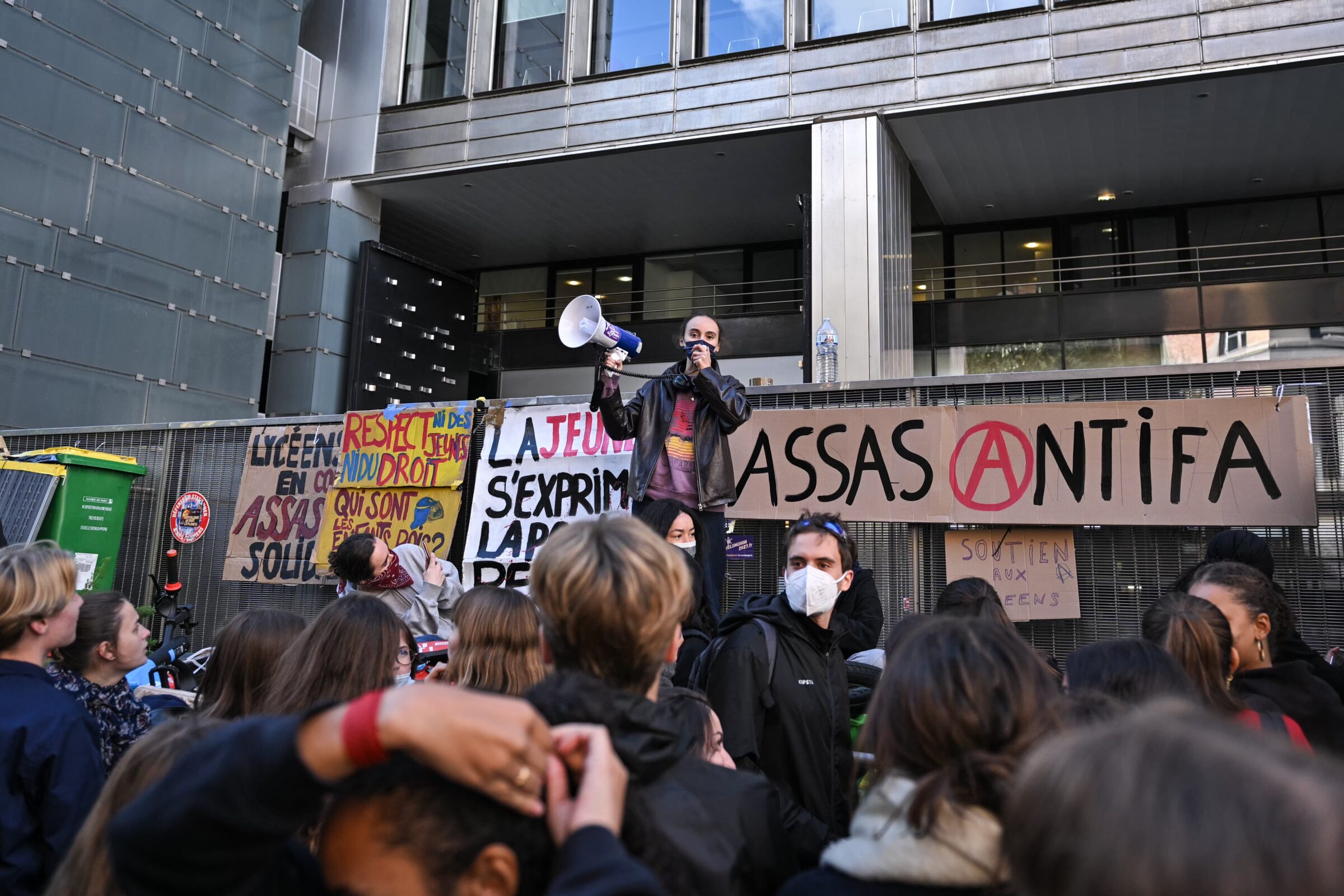
Student protests in France are an expression of the country’s deep political and economic crisis, says Jan Rovný, a Czech professor at Paris’s Sciences Po.
Students from elite schools and universities have joined secondary-school pupils from deprived suburbs in protesting for education reforms. Rovný explains how these young people protest in solidarity with less fortunate peers, invoking ideals of equality embedded in French minds.
He explained how traditionally violent protests in the republic are often met by disproportionately heavy-handed policing.
The French government has tried to hide students’ dissatisfaction by blaming far-left groups.
What do the protests say about French society? Are they a revolt by young people against poor conditions or part of broader woes?
It is important to realise that the situation in France does not concern only young people and education, it goes deeper than that. The era of French president Emmanuel Macron is coming to an end. For several years now, the country has been run by unstable minority governments, which all face one key problem: how to draft a budget, unveiled on October 1, and push it through parliament.
It is clear that the country is in a very difficult economic situation, because its debt stands at around 117 percent of GDP. The interest rate is rising and approaching five percent. Every day, newspapers write that France cannot bear this burden.
French society is realising that it is at an impasse both politically and economically, that the current elite has no answer, and that savings must be made in various areas. People from many sectors are now speaking out to say they do not want cuts. Or that they have problems that are not being addressed. And young people have a clear view of this, and that is why they are mobilising.
The protest began with specific demands from secondary-school pupils, who clearly identified shortcomings in education — notably missing teachers, overcrowded classrooms and schools in poor condition, some with rats running around and no running water. Yet the protest quickly grew into a nationwide movement. Why have these particular issues proved so powerful?
Partly because they underscore this whole situation, and partly because this is a young generation that represents France’s future. Young people are protesting to say: look at the future we are facing. And parents and teachers largely agree with them.
The protests began in the Paris suburb of Saint-Denis and did not arise as a result of a new government reform, but from the everyday experiences of students. What does this tell us about how young French people view the state and its ability to provide public education?
France generally has relatively low trust in political institutions. Young people tend to feel this even more strongly, because they are generally less politically engaged and therefore feel they are, in some way, discriminated against. They see the state as failing to care sufficiently for them and unable to cope.
This is compounded by the approaching elections. We know that the current government is fragile, and we also know that society, as well as the political establishment as a whole, is deeply polarised, with the extremist camps in particular set to enter the elections strengthened.
Staying with the protests, it is interesting that private secondary schools have joined state schools. On Tuesday, the French daily Le Monde showed protests outisde Paris Lycée Henri-IV attended by children from elite families – and where Macron studied. How do you explain the involvement of private schools unlikely to experience the same problems as public ones?
Exactly. That is my situation as well. I teach at a very prestigious university with a beautiful campus a short distance from the Louvre.
Yet our students are protesting. They are protesting because they recognise that French society has major inequalities affecting young people in suburbs like Saint-Denis or Val-de-Marne where conditions are worse.
Better off students are mobilising in solidarity – the concept of equality has been part of France’s political consciousness since the French Revolution. Those privately educated pupil therefore see it as their duty to join protests even though they enjoy far better conditions.
France is described as a strong state where education is regarded as a public service and a fundamental pillar of the French Republic. Could frustration over lack of basic conditions in schools be a reason for current anger?
Of course, and it has several dimensions. The French Third Republic was based on the idea that public education was the means through which modern citizens are created. State schools, established by law at the time, were seen as a fundamental pillar of the new, young democracy.
When you walk around Paris or anywhere else in France, you notice that every school has both the French and European flags above its entrance, along with the words “liberty, equality, fraternity” — the motto of the republicand revolution. Historically, schools drew children out of traditional families, which at that time were highly Catholic, and turned them into modern citizens. That is the country’s foundation.
Another factor is that the French state is very powerful: public spending accounts for more than 50% of GDP. The state is hierarchical, yet it seeks to show that it can do everything, including providing schooling for all. That position is increasingly hard to defend, particularly when money is short and public spending must be cut.
France has a long history of street protests. Is the current situation different in any way from previous social conflicts?
It is difficult to say. What is interesting is that secondary-school students are mobilising. That is relatively unusual, though not entirely unprecedented. It has happened in the past too, but was less visible. Teachers’ unions are now joining these students, as are broader trade unions and public-sector employees generally. University students are also already on strike. There is talk that farmers could join them. It may gather momentum and, as with the yellow vest protests, everyone who criticises the government may take to the streets. That is essentially the majority.
What is interesting about the current protests is that they are led by underage young people who are not yet able to vote, yet can still place the government under enormous pressure. How do you explain this?
They are young and have the time and ability to mobilise. They are able to sustain it and have their own internal organisation. Certain political forces, primarily from the far left, are helping or supporting them, but only to a limited extent. I think the protest is genuinely organic, rather than being directed by a political party or political agitators.
Protester holds a placard reading ‘Education is a right, not a privilege’. Source: EPA/Firas Abdullah.
Young people feel they have something to say, and they can mobilise with the support of some teachers, some parents and now also broader sections of society — both university students and some trade union organisations. It may last for some time.
The French government may fear protesting young people more than other protest groups. Why do protesting young people carry such particular political weight in France?
It is probably a memory of 1968 when student mobilisation shifted the entire country to open up certain issues. Sudents are able to mobilise and persevere because they do not lose income when they strike, whereas workers who go on strike do not receive pay for those days, which can be a serious problem for some.
There is also a significance of young people being the future, who say: no, we simply want this country to be different, because it will be ours and we will be responsible for it when you are no longer here.
On Monday, a 15-year-old boy lost his hand after a police grenade exploded, with several other injuries caused by police being investigated. Could this fundamentally change the public mood?
Protests in France tend to be more violent than others are used to. I think it works both ways. I am convinced that the overwhelming majority of protesting students are peaceful, but some people with somewhat different intentions join them. They are called ‘casseurs’ (wreckers)who simply exploit the situation to throw stones at police or set bins on fire.
On the other side are the police, who can become highly aggressive quickly. There is now a major debate over whether the police response is proportionate. These responses divide the left and the right quite clearly with the government and the right wing supporting police, while the left argues that police brutality is pervasive.
It is quite shocking to see footage of armed police officers beating children in the street.
Exactly. And the police will have to be careful not to lose control of the situation. The response of the education minister, who has told students that he will listen to them, is also interesting. The interior minister and the prime minister have instead responded that the police are doing their job and that the interventions are proportionate.
The government is blaming radical left-wing groups for the violence, accusing the far-left party La France Insoumise (France Unbowed) of inciting riots. Do you find this political explanation convincing, or does it take attention away from students’ genuine demands?
It is difficult to say. I would not be at all surprised if extremist groups of any kind joined the protests, although left-wing groups are probably more likely. It is difficult to speculate on the extent to which this is directed from the leadership of France Unbowed. However, I do not think it is to any great extent.
Representatives of this left-wing party, including its MPs and local politicians, joined student, thereby legitimising these protests. But I very much doubt that the party would seek to organise greater violence in order to draw attention to the situation. That suggestion seems somewhat extreme to me.
France is only a few months away from presidential elections. Could this discontent become one of the issues in the election campaign?
Everyone is trying to gain political advantage from it in some way. It is quite clear that the typical Jean-Luc Mélenchon voter supports the students and government criticism more generally.
Ordinary citizens do not want to see violence or rubbish being set on fire, and this sentiment is probably much stronger on the right, which automatically sees Mélenchon as an instigator of unrest.
Mélenchon needs to be careful. To win a larger number of voters, he must also appear as someone who is trying to prevent violence. That is what he attempted to do. A few days ago, he addressed students, saying: mobilise, but your actions must be non-violent. He specifically added that they must be disciplined.
In your view, what could be the boiling point at which governments will no longer be able to calm the situation through promises or concessions?
That is a difficult question. These protests cannot go on forever, since many students realise what they want is better teaching conditions, so that they can prepare better for the baccalaureate examinations, which are approaching in the spring for those in their final year. So they may want to sit down and study.
If the government manages to offer at least some concrete solutions to the fundamental problems — above all, on timetables and teacher allocation on lycées — it may calm the situation. If it does not, I do not know.
Can we therefore understand the current protests as an expression of a crisis in French society, or as evidence that some form of civic mobilisation and the belief that protest can change something still function in France?
It is both. From young people’s perspective, the positive aspect is that they are able to mobilise, take their future into their own hands and say: this is a problem. We told you this, you did not listen to us, so now we are changing tactics and will protest visibly. I think that is fundamentally positive — without the violence.
On the other hand, French society is in deep crisis, and overcoming it will require an explicit change in the narrative – a change in the system. There will need to be some recognition that France is no longer what it used to be; while it remains one of the larger countries of the EU, it is now more or less an ordinary country and it must behave accordingly and see itself in that way.
Understanding this is quite difficult, and it will certainly require political courage and a political figure capable of turning frustrations into something positive.
Jan Rovný (1978) is professor of political science at the Centre for European Studies and Comparative Politics at Sciences Po university in Paris. His academic specialisms include political competition in Europe, ideological conflict and voter behaviour. He studied at McGill University in Montreal, Canada, at the the College of Europe in Bruges, and at the University of Gothenburg in Sweden.
Until Russia’s full-scale invasion of Ukraine, Czech Vanadium was among the European companies which clearly had Russian owners.
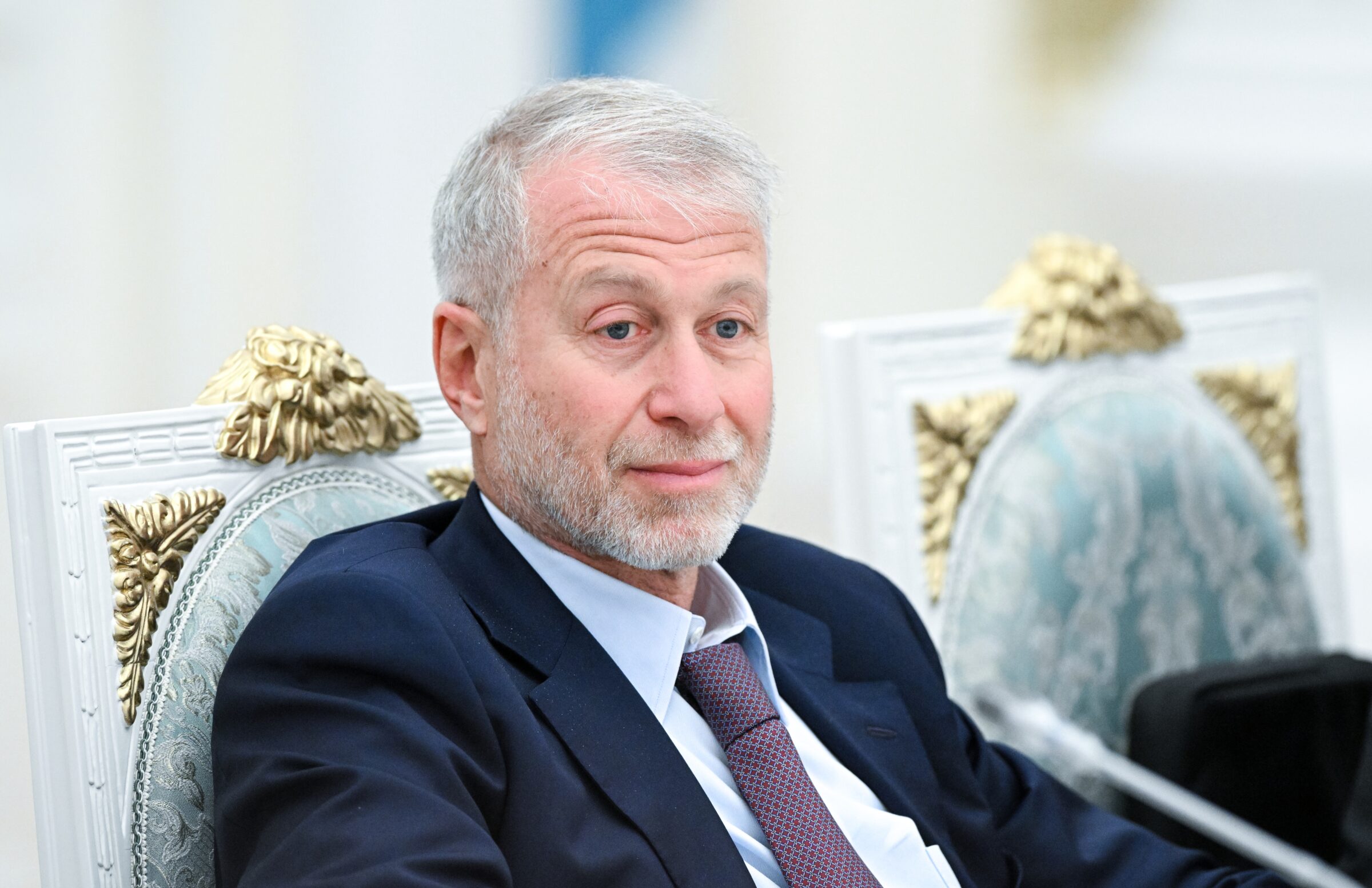
Since 2007, the company has been controlled through the Evraz group by Russian businessman Roman Abramovich, who is close to Russian leader Vladimir Putin.
The ferrovanadium producer was part of a chain through which vanadium ore mined in Russia reached Europe before being sent on to Abramovich’s factories in the US. Ferrovanadium is an alloy added to steel to help improve its properties. And Czech Republic accounts for six percent of global production.
But sanctions following Russia’s full-scale invasion of Ukraine in 2022 forced the oligarch to sell up.
Evraz, the holding company in which Abramovich is the largest shareholder, supplied the Russian army, according to media reports. But Evraz denied this.
In 2024, the Abu Dhabi-based company Metco (now ‘Metco Holding’) became the sole shareholder in the Czech factory, but it is not clear who controls it.
Czech authorities and police suspect the transfer of the vanadium factory to a new parent company in the UAE may conceal the true owner. They are seeking to establish who is really behind the opaque company in the Persian Gulf, and whether it is still Roman Abramovich.
According to Deník N sources familiar with the investigation, specialists from Czech police bodies for organised crime (NCOZ) and the financial intelligence unit (FAÚ) are involved.
“Yes, we are investigating who is behind the company. There are many leads and the suspicion is clear that the company may still be backed by its former owners from Russia,” a source close to the investigation confirmed.
NCOZ spokesperson Jaroslav Ibehej declined to comment in more detail on the search for Czech Vanadium’s beneficial owner. “As a rule, we neither confirm nor deny what we are working on,” he said.
According to documents in the Czech judicial database, the company is formally controlled by one owner — a Dubai-based lawyer of Indian origin who provides nominee services for beneficial owners. The lawyer has been linked to money-laundering investigations in Ukraine and Moldova.
Apparent fake owner scheme
The officially declared owner of Czech Vanadium is Nikhil Skariah Kolekunnel. According to the ADGM free zone business register in the UAE, he is both the sole shareholder and director of Metco Holding.
However, the Gulf state’s database does not disclose so-called beneficiaries, who are entitled to the company’s profits and may also secretly control it.
Although the Czech judicial register lists Skariah as Czech Vanadium’s beneficial owner, this does not necessarily indicate the person exercising control in the background. For example, trustees of trust funds are also listed in the registers as beneficial owners.
The nature of Skariah Kolekunnel’s business suggests that he performs the specific role of an administrator, a so-called fiduciary — someone who accepts an ownership mandate and effectively manages another person’s assets.
He is a lawyer originally from India who founded two law firms in the UAE years ago. His companies represent large corporations and businesspeople who do not wish to publicly acknowledge ownership of a business.
“South Bridge Legal is an advisory firm for comprehensive business establishment in Dubai, Abu Dhabi and the UAE. Our highly experienced team has been active in the sector for more than 10 years, providing services tailored to the unique needs of every ambitious entrepreneur setting up companies in Dubai,” the company wrote on its website.
“We have all activities, which is tax management, tax consulting, accounting, corporate services, offshore company formation, free zone company formation…everything,” Skariah said in a recently published video on YouTube.
Metco Holding’s address in Abu Dhabi suggests it may be a shell company. And it is headquartered from a WeWork.
Moldova and Ukraine links
‘Skariah’, the name of the Indian administrator, had already emerged eight years ago in connection with the concealment of ownership structures during an investigation into the privatisation of Moldova’s national airline. At the time, Skariah appeared as the owner of the opaque company Gold Craft FZE, established in Dubai in 2015.
“On Monday 1 October 2018, one day before the privatisation agreement for Air Moldova was signed, a plane from Istanbul landed at Chișinău International Airport. One of the passengers, a 39-year-old man, was carrying nearly €2.6m in cash in his luggage. He declared the money to customs officers, which, according to the Office for the Prevention and Fight against Money Laundering, he had borrowed four days earlier from Gold Craft FZE in the United Arab Emirates,” the investigative outlet RISE Moldova reported.
It finds that Andrei Ianovici brought cash from Dubai, equivalent to tens of millions of Czech crowns. Later that day, he deposited the money in a bank, and it ended up in the accounts of Civil Aviation Group SRL. That company privatised Air Moldova, and Ianovici was one of its partners.
The true origin of the money was never established, leading local investigators to suspect that the money had not been earned legally. No charges were brought, however.
According to court records, Skariah was also involved in disputes in Ukraine, where Gold Craft FZE claimed ownership of an Ilyushin aircraft which the company allegedly purchased in 2017.
Skariah’s Russian-linked empire
However, the UAE-based lawyer was not the only individual to have emerged as an administrator of Czech Vanadium. Another is Sergei Gushchin.
A man of this name was formerly a prominent Russian businessman in rail freight transport and, although he withdrew from Russia three years ago, he appears on Ukrainian sanctions lists for supporting the Russian army.
Gushchin became a senior manager at PJSC TransContainer, a Russian rail freight carrier, after Evraz sold its stake. In the past, a quarter of the company was owned by the holding company of Abramovich.
Meanwhile another of Gushchin’s companies, Rail Service, formed a joint venture with Evraz in 2019 focused on the production of railway wheels.
According to a UAE register, Gushchin was a director and shareholder of Metco, which became Czech Vanadium’s parent company from 2022-23.
US credit-rating agency Moody’s shared data with Deník N that listed Gushchin as a recent beneficiary of Metco Holding and as the company’s director.
Moody’s data shows Sergei Gushchin as Metco Holding’s director.
Russia’s ferrovanadium monopoly
Czech Vanadium’s revenues regularly exceed €81m, and in 2024 the company reported profits of more than €8m. This summer, the company sent over €0.6m of that sum to the Dubai company, the remaining funds staying in its retained earnings account.
Last year, the company recorded a modest €0.2m loss. Its accounts retained more than €12m in undistributed profits in total.
Czech Vanadium’s business remains closely tied to Russia. Last year alone, vanadium oxides or hydroxides worth nearly €82m were imported into the Czech Republic from the Russian Federation. Russia is effectively the sole supplier of the raw materials needed to produce ferrovanadium. According to the statistical office database, exports mainly go to the United States, as well as Germany and Taiwan.
Czech Vanadium did not reply to requests for comment or an explanation of its ownership structure.
It also did not answer the question of how a Dubai lawyer had bought the Czech company, which, according to some estimates, is worth more than €40m.
Company representatives have not responded to questions about its owners since 2024, when the company left the Evraz group structure.
Fake owner model in US
Jiří Skuhrovec, an analyst at Datlab, specialises in the global vetting of business partners. He says Abramovich uses a similar model for concealing ownership in the United States.
Sanctions also forced the Russian oligarch, who became better known through his former ownership of the British football club Chelsea, to withdraw from US companies. But Skuhrovec concluded that they were probably still controlled by people linked to Abramovich just like the factory in Czech Republic.
“We mapped the entire chain, from the Russian ore supplier through the Czech smelter to the final recipient: the US company Strategic Alloys LLC. Until recently, all three companies officially belonged to Abramovich, and all three are now controlled by people with links to his Evraz group. Abramovich may therefore still secretly control the entire supply chain for this strategic raw material. This would be a textbook case of sanctions circumvention, as well as an obvious security risk,” Skuhrovec said.
Findings led Datlab and Transparency International to submit a complaint to police. “We believe that the 16m Czech crowns (around €655,000) in distributed profit may have gone to Abramovich, who is on a sanctions list. That would constitute a criminal offence,” the analyst explained.
In brief:
Czech Vanadium, owned by Russian oligarch Roman Abramovich’s holding company until 2024, was taken over by Dubai-based company Metco Holding.
The company is opaque, and Czech authorities are investigating who actually owns the Czech factory. It is suspected it is still linked with former owner.
This would amount to circumventing sanctions imposed by the European Union.
Deník N and Datlab analyst Jiří Skuhrovec found that the company is backed by lawyer Nikhil Skariah Kolekunnel and Sergei Gushchin, who conduct business with Abramovich’s Evraz group.
Skariah has been linked to money laundering in Moldova and Ukraine. He has long covered for companies that are in fact owned by someone else.
EU and Chinese officials agreed a series of trade concessions covering electric cars, rare earths and tariffs that dragged them away from a damaging trade war on Friday (9 October), following two days of crisis talks.
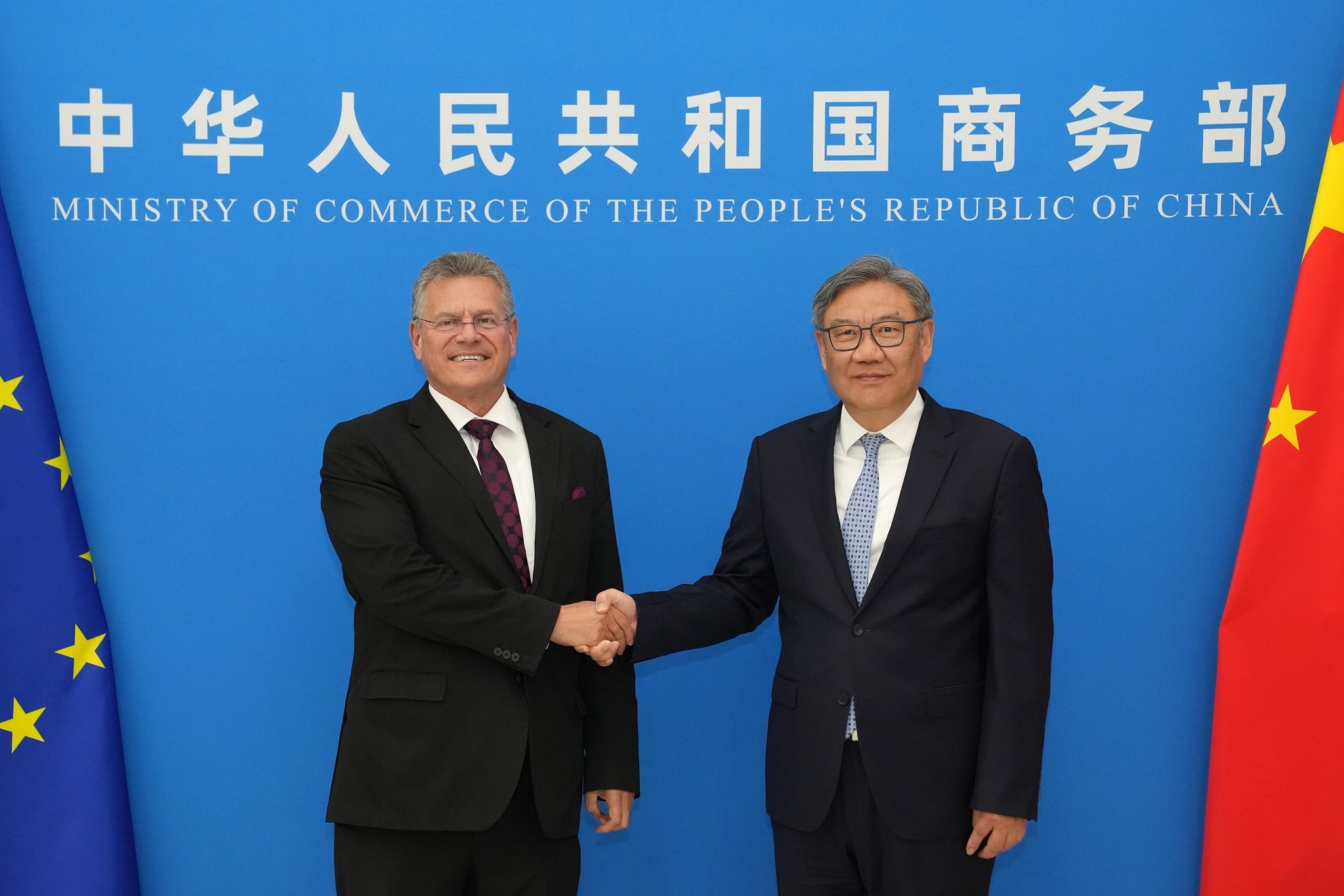
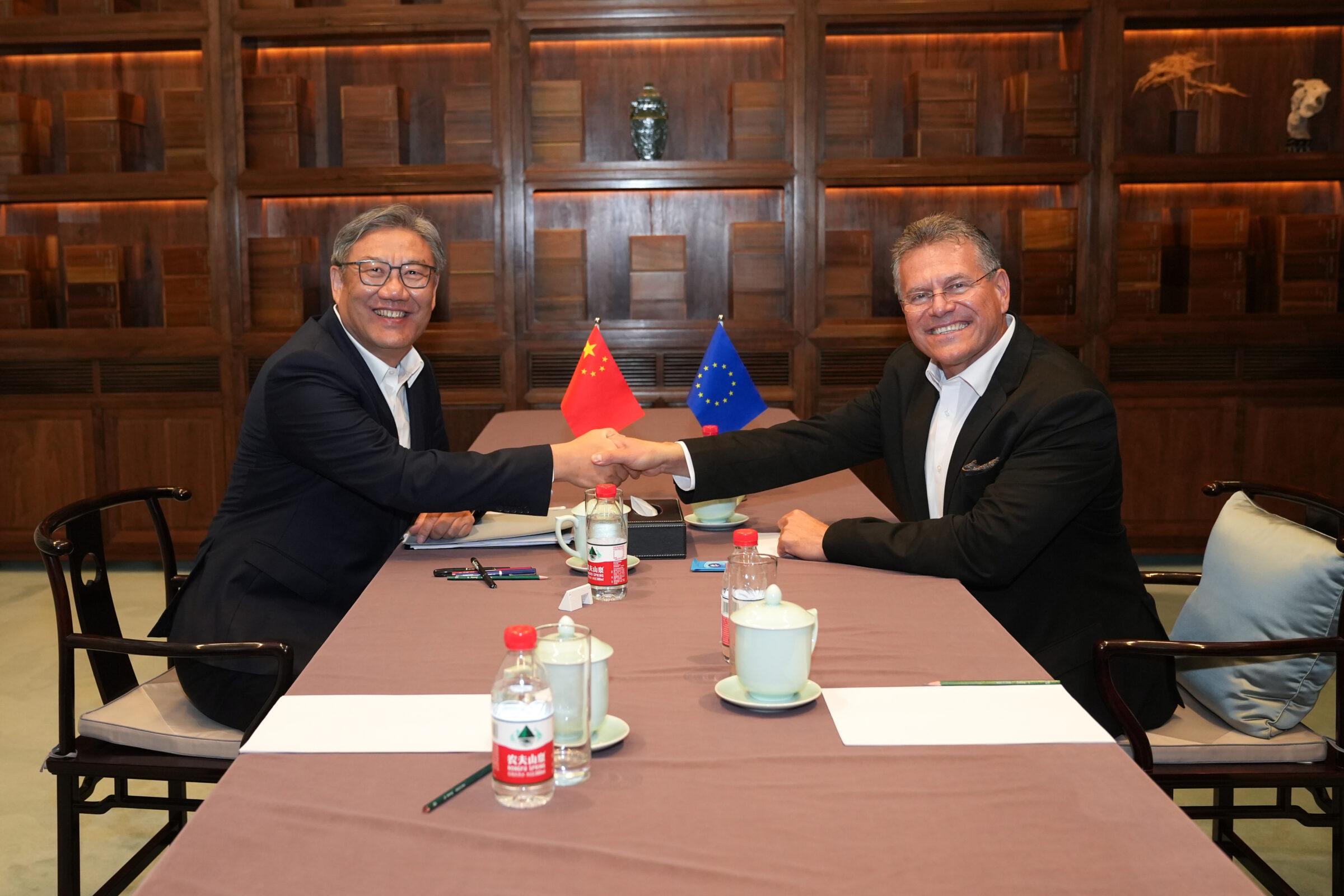
Following two days of talks in Beijing, EU trade commissioner Maroš Šefčovič said that he and China’s commerce secretary Wang Wentao had made a “crucial first step” towards rebalancing EU-China trade relations.
Europe can point to progress on hybrid vehicles, stronger assurances over the supply of critical raw materials, and continued engagement on market access issues in China.
Hours before Šefčovič arrived, Beijing rejected an EU demand for so-called “voluntary export restrictions” on its electric vehicles (EVs). However, in a joint statement on Friday, the two sides said that they had reached an “understanding on trade in hybrid vehicles in a WTO compliant manner”, but without providing further details.
They added that further negotiations on reducing tariffs and minimum pricing deals would allow Chinese EVs to enter the EU at a lower duty rate.
This article continues, but the full version is available only to EUobserver.com subscribers. Visit account.euobserver.com/membership
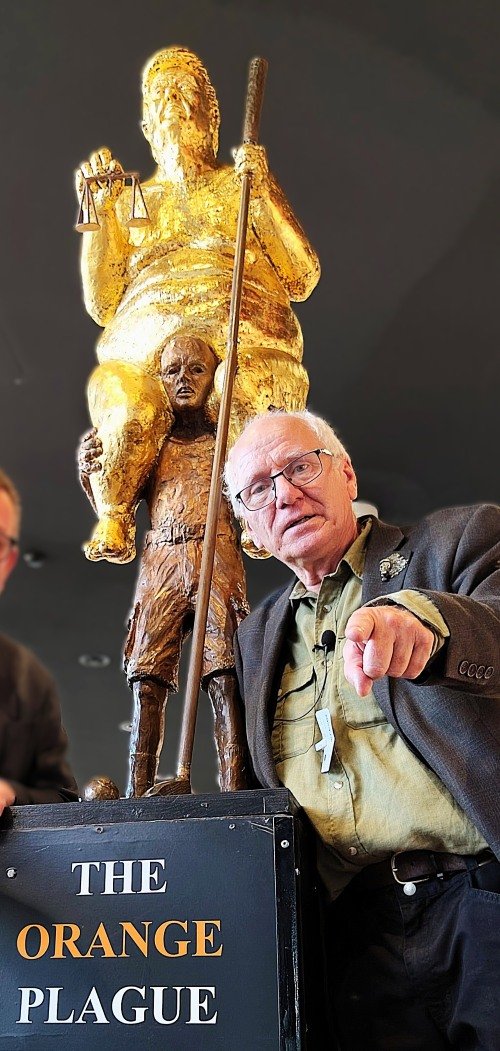
The European Parliament in Strasbourg has been adorned with a grotesque vision of American power in a 2.5-metre-high statue of a naked and obese US president Donald Trump covered in 23-carat gold.
While some MEPs describe it as an expression of freedom and courage in the face of Trump, Slovak prime minister Robert Fico has said the statue is a symbol of a declining European Union and called for its removal.
Fico said the statue reflects a profound misunderstanding of the times we live in, and reminded his X followers that he and Trump are close.
“At a time that calls for dialogue and mutual respect, insulting our partners on official premises demonstrates a profound failure to understand the times we live in,” he said on social media.
“It is sad that the leadership of the European Parliament, in its blindness, can no longer distinguish between the legitimate right to hold a different opinion and the actions of spiritually bankrupt individuals, adventurers and lunatics,” he added.
Jens Galschiøt is the artists behind the Orange Plague sculpture. The Danish artist says his installation served as a warning that Donald Trump is destroying democracy.
Why call it ‘Orange Plague‘?
“I depicted Donald Trump as an ‘orange plague’ because he is destroying everything I believe in. I believe in democracy and the rule of law. All this needs to be cared for, and Trump is destroying it, as well as the debate on the environment,” Galschiøt said.
The artist chose to portray the US president as a grotesque figure hoping that people would laugh at it. “When you laugh at a dictator, you take away his power,” he said.
And Trump is also naked because of Hans Christian Andersen’s fairy tale The Emperor’s New Clothes. In it, the emperor walks through the streets with no clothes, while people tell him how beautifully dressed he is, but no one dares tell him the truth. Only one small child cries out that the ruler is naked.
Galschiøt sees parallels the story and treatment of the US president.
“I think many of us laugh at Donald Trump, but he does not know it. He thinks he is a great leader. He thinks he is an intelligent person. He thinks he gives good speeches. But few people take him seriously. Even if you do take him seriously, it is because he is something like a gang leader, not because of what he says. Most of us actually think he is a ridiculous figure,” Galschiøt said.
Jens Galschiøt beside the Trump statue. Source: J. G. archive
His sculpture consists not only of a naked and obese Trump, but also of a slender figure.
“The little man carries the big man, and the big man tells him: ‘Oh, I really want to help you. I really love you, but I do not want to get off your back.’ It is also a story about hypocrisy and double standards, which I combined,” the artist said.
He covered the sculpture in gold because Trump is known to like the precious metal.
This article continues, but the full version is available only to EUobserver.com subscribers. Visit account.euobserver.com/membership
The European Commission has added 46 projects to its list of critical raw materials investments, but its own figures show little EU money has reached similar schemes it selected last year.
The new projects are to be spread across 16 EU countries and cover all but two of the EU’s list of 17 strategic raw materials, said the commission on Friday (9 October).
The priority is copper, used in power grids, which featured in 19 of the 46 new initiatives.
Battery materials also top the list: with 12 projects involving nickel, 10 cobalt, seven lithium, five manganese, and four graphite.
Only four of the new projects concern rare earths used in magnets, wind turbines, and electric motors, for which the EU relies almost entirely on imports, mainly from China.
The new projects suggest the commission sees recycling as a core pillar in its quest to reduce dependency on Chinese imports. Of the 46 new ones, 19 focus on recycling, 11 on processing and eight on extraction.
‘Very tangible‘
“The results are very tangible,” EU industry commissioner Stéphane Séjourné told reporters in Brussels on Friday, pointing to the impact of the first list of strategic investments, selected in March 2025.
He mentioned Keliber in Finland, which he said is now extracting and processing lithium, and the French company Carester’s plant in Lacq, which recycles magnets and separates heavy rare earths.
He said Carester could eventually account for around 15 percent of global production of dysprosium and terbium oxides, used in the powerful magnets in electric car motors and wind turbines, and that Greek company Metlen is already producing gallium, important for semiconductors and defence equipment.
He didn’t mention that all three projects were already well advanced before they received strategic status in March 2025.
This article continues, but the full version is available only to EUobserver.com subscribers. Visit account.euobserver.com/membership
Montenegro detained Mikhail Zvinchuk, the founder of the Rybar Telegram channel.
Key directions according to Rybar, Ukrainian and independent analysts.
Forget Sloviansk: its capture is currently unrealistic.
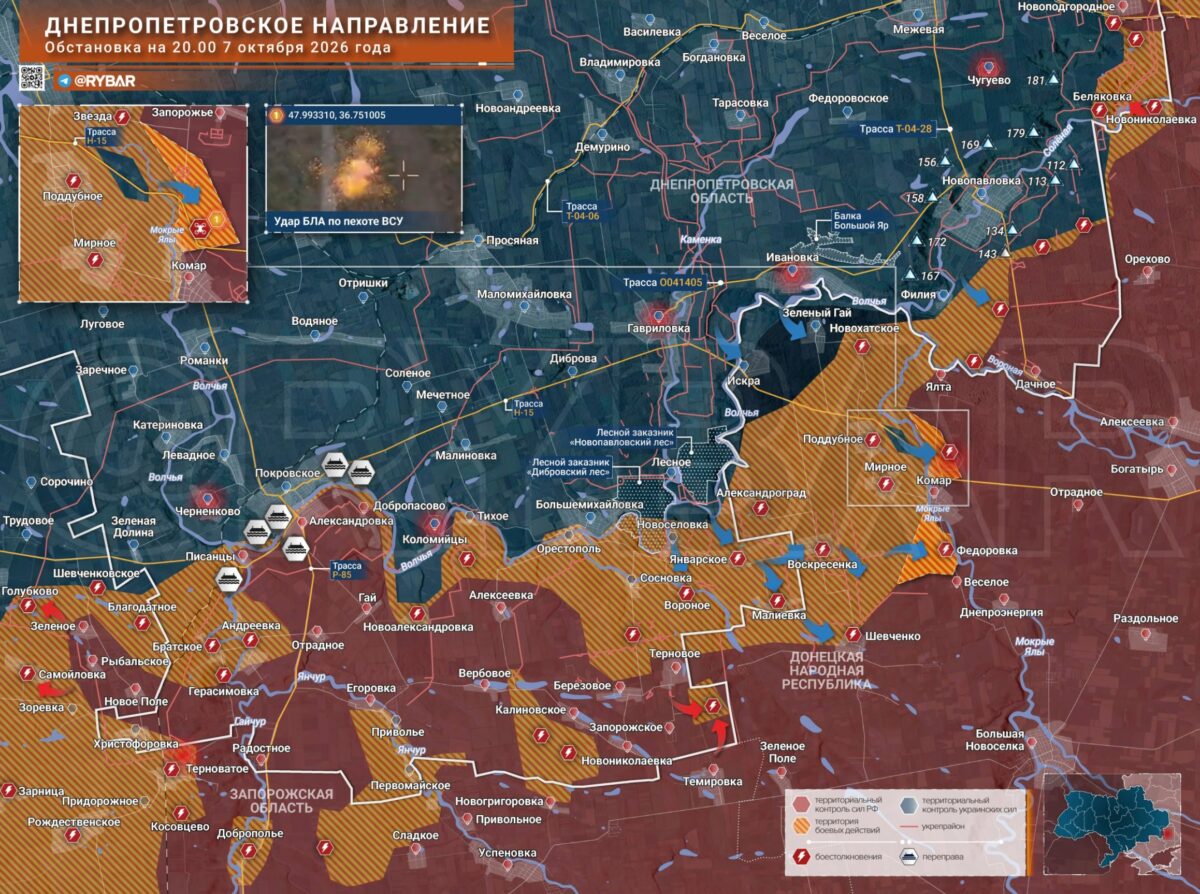
Ukrainian pressure continues towards Velyka Novosilka, with fighting already under way near Komar on the eastern bank of the Mokri Yaly river.
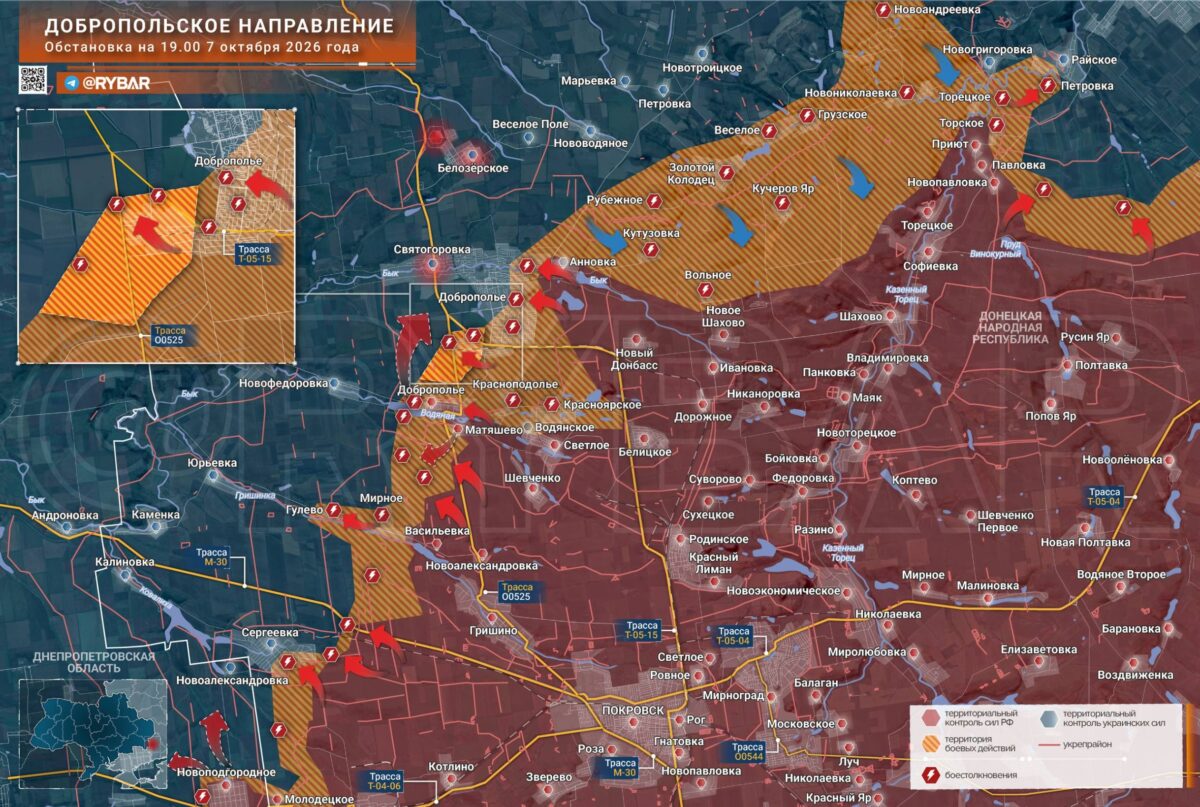
Russians are infiltrating Dobropillia, but a Ukrainian counteroffensive is pressing against their flank from the north.
The battle for data centres is now two-way, with Ukrainians attacking Russia’s ‘Google’.
Maps of the day — Sloviansk direction; Velyka Novosilka direction; Dobropillia direction.
Videos of the day — a scene from the Second World War: a MiG-29 shoots down a drone with its cannon; soldiers clear a network of Russian bunkers; Himars destroys an artillery radar; what the R-280 road to Crimea looks like.
Montenegro detained Mikhail Zvinchuk, the founder of the Rybar Telegram channel, who occupies one of the leading positions in the ecosystem of Russian media supporting the war. His wife and several associates were arrested alongside him. Colleagues in Moscow issued a statement saying they had been planning to film a report on one of the local monasteries, but the authorities of the Nato member state suspected them of conducting a hybrid operation.
At the top of Russian propaganda are the traditional state media, under the Kremlin’s complete control. They have almost no informational value, as they merely repeat the regime’s propaganda.
Below them, however, is a complex structure of Telegram channels that provide more varied reporting, including critical coverage. However, criticism is permitted only of mistakes in the conduct of the war, not of the war itself.
These channels, too, spread propaganda and keep Russian society in a state of war, but they also provide information that helps in analysing the course of the fighting. Rybar is among the largest and most influential of them.
In this case, it is not the work of an individual author but a media outlet with an editorial team and extensive content for 1.5m readers, so Zvinchuk’s arrest does not mean the end of publishing under this brand.
Yet through him, we can follow the fascinating story of a man who came from Russia’s defence ministry to spread its propaganda in the years that followed.
Paradoxically, however, he has recently been one of the few sources in Russia to report regularly on the Russian army’s failures at the front. And the preceding 48 hours were particularly rich in such assessments.
We will therefore gradually describe events in three different directions where, according to Rybar, the Russians are either retreating or at risk of doing so. Coincidentally, these are currently the most important directions of military operations.
We will compare all of its information with independent or Ukrainian sources.
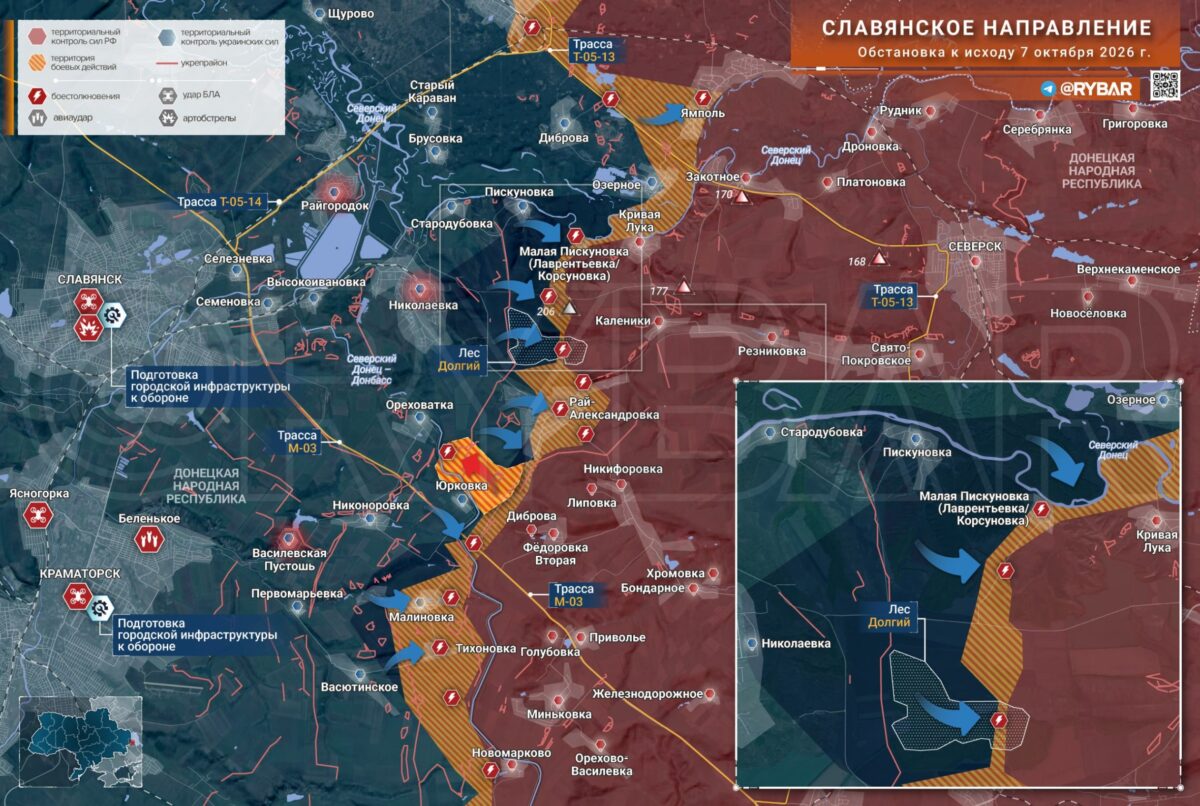
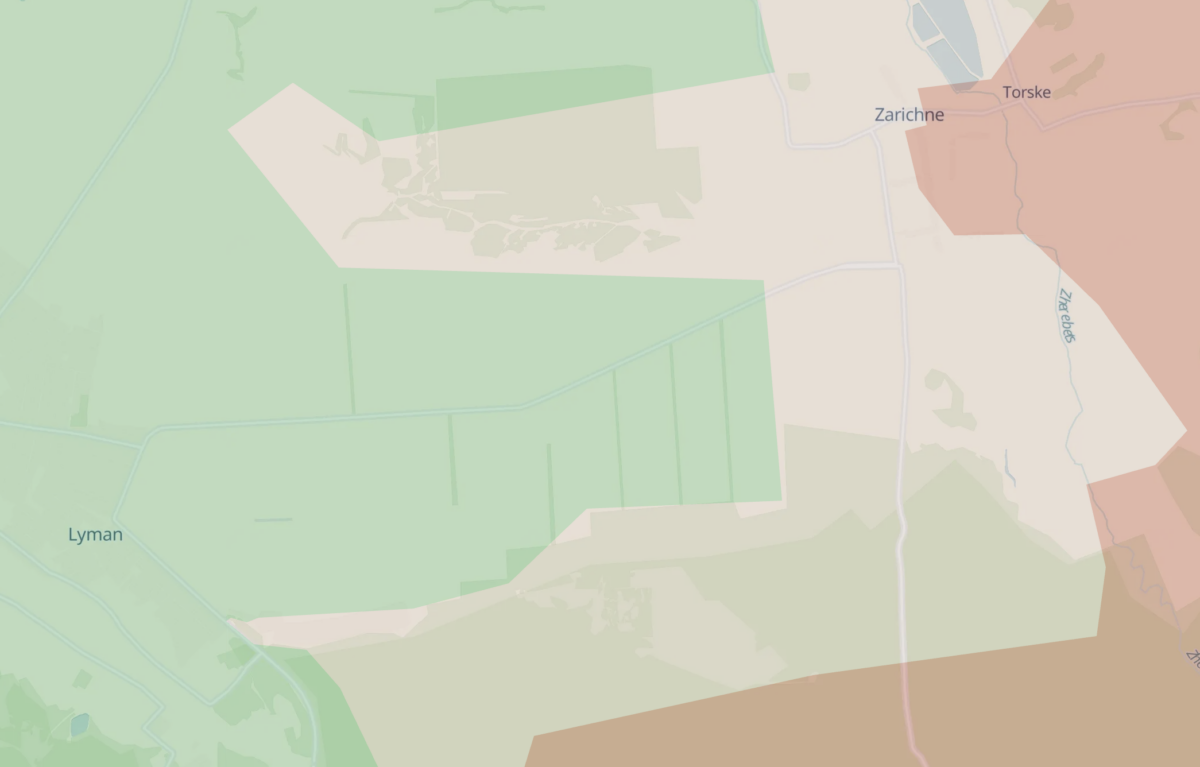
Forget Sloviansk: its capture is currently unrealistic. “The situation is worsening; Sloviansk is being postponed,” Rybar wrote in the first sentence of its latest analysis of the Sloviansk direction. It explained why at length.
According to it, Ukrainian units in the area are increasing the pressure and exploiting their successes near Lyman, which lies north of Sloviansk. The Russian army has suffered a serious defeat here in recent months, losing a large salient from which it had hoped to bypass the Sloviansk-Kramatorsk agglomeration from the north.
Rybar listed the ensuing complications: according to it, Ukrainians have concentrated fresh drone units around the village of Dibrova; the Russians had to withdraw from the village of Piskunivka and are now trying to save Kryva Luka. Ukrainians are also pressing into the village of Ozerne.
Ukrainian formations are increasing their activity, exploiting successes in the Lyman area, where fresh forces of drone operators have been concentrated around Dibrova.
Russian troops were pushed out of what remained of the village of Piskunivka and are now defending the approaches to Kryva Luka. The enemy is trying to break through there both from the west and across the river from Ozerne.
Moreover, heavy fighting is under way west of the village of Kalynyky, while fighting for Rai-Oleksandrivka is “fierce”, “although it was under the Russian army’s full control only recently”.
Nor is this the end of Rybar’s bad news. An “equally difficult situation” persists on the western bank of the Siverskyi Donets-Donbas Canal, where Russian soldiers are “for now” holding positions in the villages of Malynivka, Tykhonivka, and Yurkivka.
Taken together, all of this means that the prospect of an “attack on the agglomeration has receded considerably”.
“Without control of the forests below Lyman, the offensive is doomed, if not to failure, then to high losses from attacks on its flank,” Rybar added.
Its map fully matches the verbal description. The red arrows running from east to west along the entire stretch have been replaced by blue, Ukrainian arrows pointing from west to east.
Paradoxically, the local Telegram channel Mikolaivka-Sloviansk Online provides a far less optimistic picture.
While Rybar no longer even mentions Mykolaivka, which directly borders Sloviansk, according to this source — which has repeatedly provided highly accurate and widely cited information — Russians are still managing to infiltrate it. On Wednesday, it wrote that “the Russian army is applying pressure from the direction of Rai-Oleksandrivka”, while the village itself is in the grey zone.
The explanation may be simple. Most of the names refer to villages the Russians never fully captured, although they claimed they had — including Rybar itself. This is why its map looks as though a small counteroffensive were under way east of Sloviansk. In reality, it mainly makes its previous misleading claims more realistic.
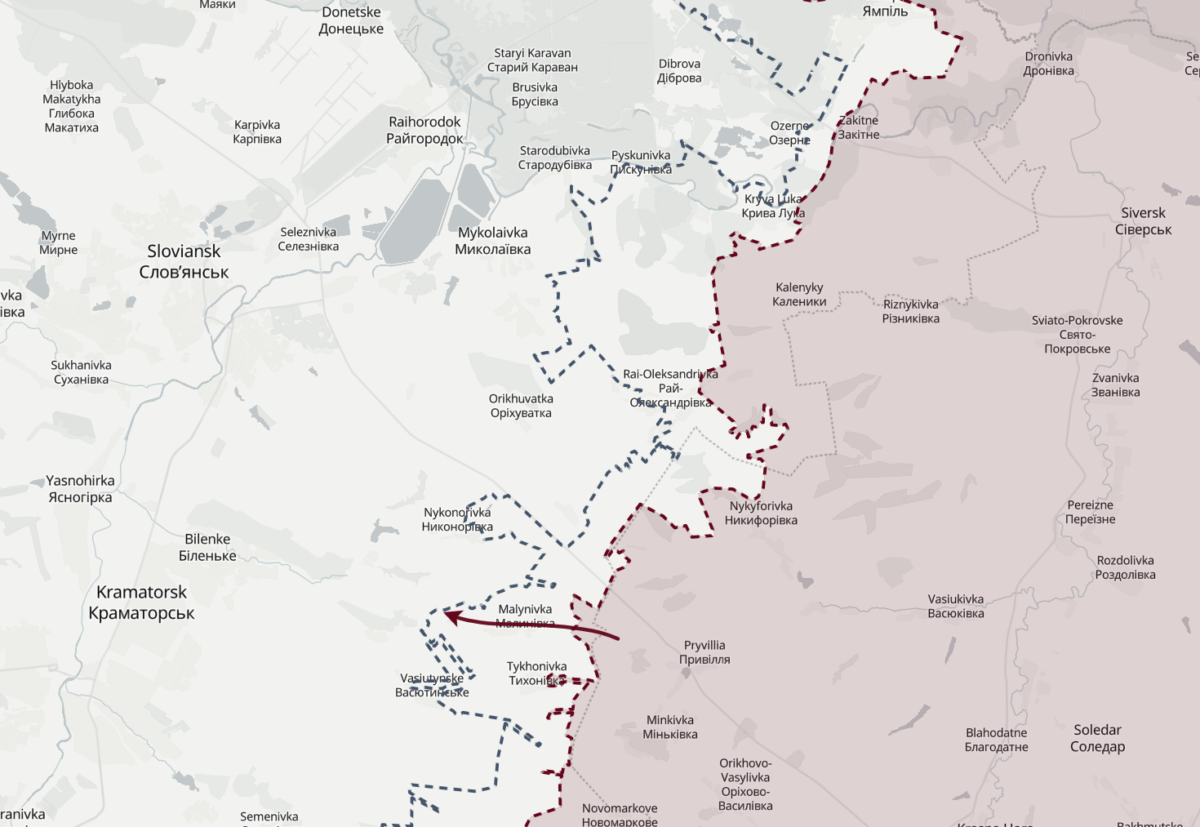
Far more accurate is the map by the Finnish Black Bird Group. Rai-Oleksandrivka is in the middle of the image — no credible analysts have ever considered it occupied by the Russians. Further north are Ozerne and Kryva Luka. Ozerne is particularly interesting.
According to Rybar, the Russians are trying to prevent the Ukrainian army from entering the village; independent analysts show it partly in the grey zone and partly under Ukrainian control. Rybar therefore correctly sees Russian problems, but at this point this is more its usual cartographic “retreat” from unrealistic positions.
Ukrainian pressure continues towards Velyka Novosilka, with fighting already under way near Komar on the eastern bank of the Mokri Yaly river. This is not entirely new either, but several Russian sources are writing about fighting in this direction with new urgency and, from the Russian perspective, scepticism.
“The situation remains extremely tense. There is mounting evidence that the enemy is seeking to advance around the village of Komar,” Rybar wrote.
This is an important village. When the Russians captured Velyka Novosilka last year after taking Vuhledar, Komar was a significant obstacle to their advance into Dnipropetrovsk oblast.
Fierce fighting took place over the village at the time, and the Ukrainian army lost it in June 2025. The front then moved another 15 to 20 km deeper into Ukrainian territory, but it is now moving back after months of slow advances.
Here, too, Rybar’s map appears more dramatic than the situation actually is. It depicts territory being liberated since February. However, it claims that the situation is worsening and the outlook is negative.
But the information about movements near Komar is genuinely fresh. Other sources agree on it almost metre for metre.
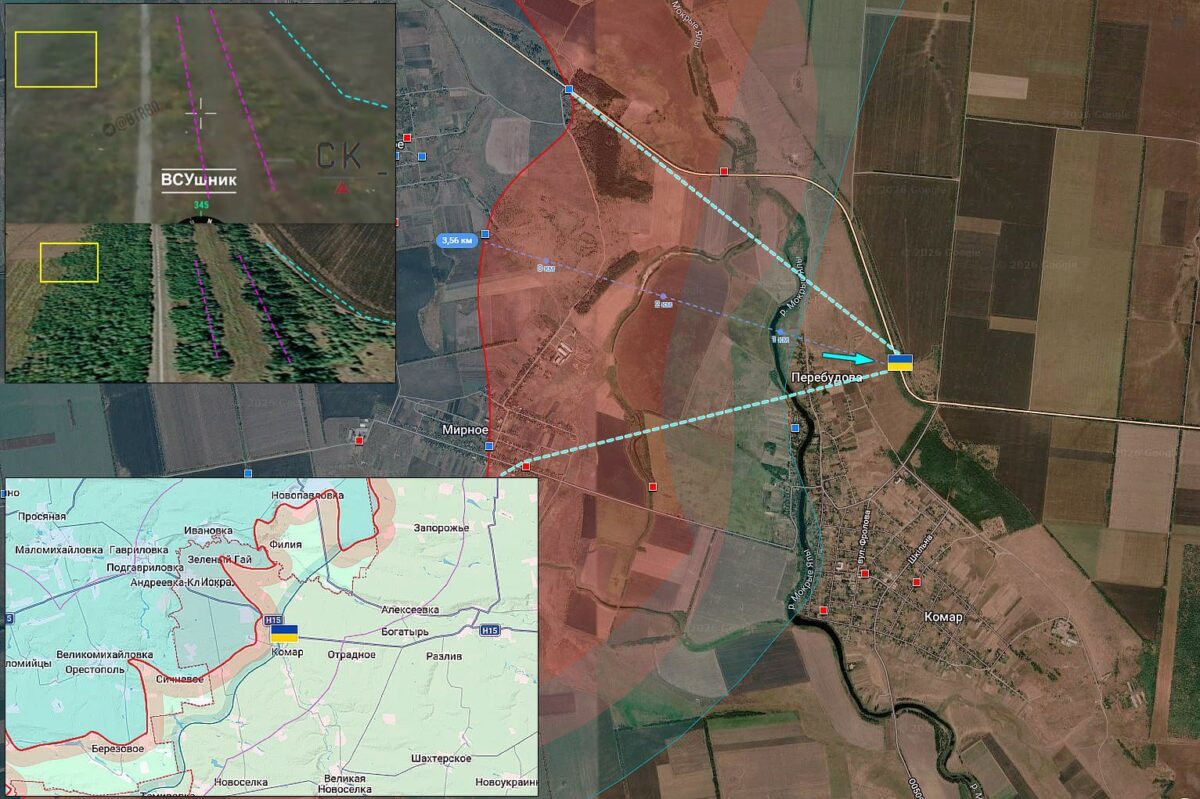
The Russian mapping project Slivochny Kapriz showed the exact location at the northern end of Komar, across the Mokri Yaly river, where Russian drones struck a Ukrainian video.
The Ukrainian Telegram account Petrenko also geolocated the incident at the same location.
Alexander Radov, another pro-war Russian, claimed that testimony from Ukrainian prisoners in this direction indicated that the Ukrainian command’s objectives were Bahatyr, 12 km east of Komar, and Velyka Novosilka itself, 13 km to the south.
This claim cannot be verified, but if it were true, Ukrainian objectives in this sector would be becoming ambitious. (Both Bahatyr and Velyka Novosilka are in the lower-right section of Rybar’s map at the beginning of this section.)
Russians are infiltrating Dobropillia, but a Ukrainian counteroffensive is pressing against their flank from the north. The fact that Russians are already operating in the town has been objectively confirmed by both sides. However, an earlier Russian claim that it had been encircled is false.
Rybar’s map again reflects what was written. In the town itself and its surroundings, red arrows show Russian attacks, while northeast of it, Ukrainian counterattacks are shown against the flank.
The Ukrainian channel Petrenko again serves as a source from the other side. Its map of Dobropillia has three circles, each marking a location where drones spotted Russian soldiers.
A Ukrainian soldier writing under the name Bakhmut Demon also confirmed Russian infiltrations into the town. However, he said they were being eliminated and that Russian losses would rise from November. He probably meant the period when the leaves fall and the terrain begins to turn muddy. Both will make the attackers’ advance more difficult.
Bakhmut Demon also warned that vigilance needed to be increased, as Russians are changing into civilian clothes and trying to infiltrate between Ukrainian positions in them.
Soldiers on the Zaporizhzhia direction described the same practice to us during a recent trip to Ukraine. There, too, they said that men in civilian clothing are sent ahead of infiltration groups in order to deceive drone operators.
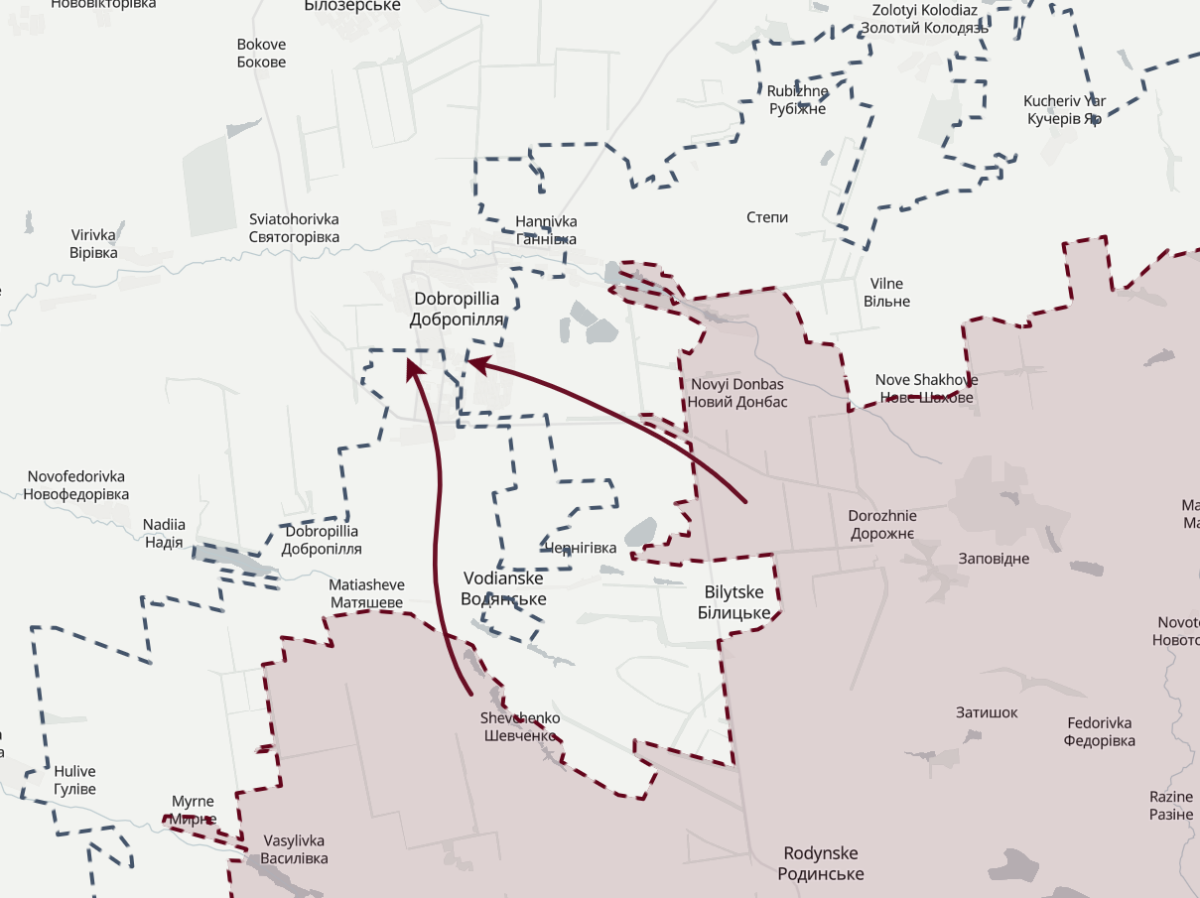
Finally, another map by Black Bird Group. It, too, confirms the Russian advance towards Dobropillia, but does not show Ukrainian attacks in the north. The explanation is the same as in the previous cases: Rybar had drawn Russian positions much further forward than they actually were.
The battle for data centres is now two-way, with Ukrainians attacking Russia’s ‘Google’. Yandex is a technology giant that underpins the Russian internet. Its search engine, for example, is used by two-thirds of Russians. But its services are far broader. Among other things, it provides cloud storage to its clients.
The company provides its services through five main data centres. On Thursday, drones attacked the first of them. They struck the facility in Sasovo, in Ryazan oblast.
“This data centre is one of the key and largest data centres in Yandex’s Russian infrastructure. It contains tens of thousands of servers, and the company’s cloud services and computing capacity for machine learning operate on its equipment,” the Russian Telegram channel Military Informant explained the significance of the target.
As a result of the attack, outages in various internet-connected services were reported throughout the day.
The exile website Meduza listed several affected media outlets whose websites either could not be loaded at times or loaded slowly: RBC, Vedomosti, RIA Novosti, Kommersant, Vesti, Interfax, and Rossiyskaya Gazeta.
On Friday, another Yandex data centre was attacked, this time in Kaluga. The company acknowledged damage to equipment and announced that “some Yandex services may experience outages”.
Videos of the day
The events in the following video are almost identical to those witnessed by people in south-east England in 1944. Nazi Germany had then begun using V-1 flying bombs, and the most effective weapon against them was fighter aircraft, which shot down hundreds of these “wonder weapons” just above the sea while flying at the limit of their maximum speed.
Ukrainian pilots are now using the same tactic because of a shortage of air-to-air missiles. In this case, a MiG-29 shot down a Russian Geran-4 jet drone with fire from its 30mm cannon.
The MiG-29 is 17.4 metres long. The distance between it and the drone when firing began was around eight times its length — just under 150 metres. The risks to the pilot are obvious: the cloud of debris endangers the aircraft itself.
Once a common sight, now more of a rarity. A Himars multiple-launch rocket system destroyed a Russian artillery radar.
💥A rare sight these days: a HIMARS strike, apparently using a GMLRS rocket, destroys a Russian Irbis counter-battery radar after it was detected and tracked by reconnaissance drones of Ukraine’s 43rd Artillery Brigade.
— Special Kherson Cat 🐈🇺🇦 (@bayraktar_1love) October 8, 2026
The war has moved underground to an even greater extent than was previously customary. Soldiers at the front are building interconnected underground bunkers. A video by the 5th Assault Brigade shows the clearing of what were probably abandoned Russian positions.
Soldiers throw explosives into the openings. The footage then allows viewers to see, from plumes of smoke and dust pouring from underground, how many entrances the bunker had and how they were arranged.
🇺🇦2nd Assault Battalion of the 5th Assault Brigade clearing a collapsed bunker system, #Huliaipole sector at south eastern front pic.twitter.com/OoVU6x7PIH
By Monday (5 October), Russia had demonstrably lost 24,170 pieces of heavy equipment (24,138 on Tuesday, 22 September). Of these, Ukrainians destroyed 19,133 (19,105), 1,003 (1,000) were damaged, 1,194 (1,194) were abandoned by their crews and the Ukrainian army captured 2,840 (2,839). This includes 4,452 (4,448) tanks, of which 3,357 (3,353) were destroyed in combat.
Ukraine lost 12,238 (12,175) pieces of equipment, of which 9,633 (9,579) were destroyed, 711 (702) damaged, 695 (695) abandoned and 1,199 (1,199) captured. This includes 1,466 (1,464) tanks, of which 1,126 (1,125) were destroyed in combat.
Note: Neither side regularly reports its own dead or destroyed equipment. Ukraine publishes daily figures for Russian casualties and destroyed equipment, which cannot be independently verified. This overview uses data from the Oryx project, which has compiled a list of equipment losses documented exclusively by photographs since the beginning of the war.
Last week, EU member states reached a common position on the European Commission Omnibus X ‘Food and Feed’ proposal, in a bid to simplify regulation of pesticides. In reality, however, it will weaken protection against pesticides’ negative effects in Europe. The proposal pleases the chemical industry but goes against the wishes of a vast majority of citizens and many scientists who value people’s health, clean drinking water and biodiversity.
A hearing in the European Parliament on 3 September highlighted the real problem. Under the guise of a ‘discussion with experts’ in the field of health and environment, the parliament handed the megaphone to lobbyists representing a broken, toxic agricultural model.
Representatives of industrial agriculture – sugar beet, apple and cereal growers – parroted industry arguments, justifying their demands to stop banning pesticides that are toxic to public health, the environment and pollute our water resources.
Despite Europe witnessing massive droughts, extreme heatwaves leading to countless deaths, wildfires destroying biodiversity, and devastating crop losses, it seems that a significant share of MEPs are ready and willing to accelerate the degradation of European’s wellbeing and natural resources.
Listening to them raises a fundamental question: Do farmers truly want to rely on a cocktail of toxic chemicals to maximise yields at low market prices, destroying their own health and local ecosystems in the process? Or do they wish to make an honest living, producing quality food in balance with nature for a fair income?
CAP subsidies
To better grasp this contradiction, we must look at what is actually at stake here.
Agrochemical corporations seek their share of the Common Agriculture Policy (CAP) cake – a colossal €58bn budget, accounting for one third of the EU’s total budget.
Their own survival is reliant on keeping as many farmers as possible dependent on pesticides, fertilisers and industrial seeds. By diverting public CAP funds through farmers into the pockets of their shareholders, these companies ensure their long-term profitability.
Many farmers’ unions also represent agri-cooperatives that profit significantly from selling pesticides, which raises questions about whether they truly represent farmers’ long-term interests, or those of the pesticide industry.
Since the European Commission published its ‘simplification’ proposal in December 2025, proponents of pesticide-intensive farming have presented a series of flawed arguments that in fact reveal the dead-end to which intensive agriculture has led us.
Firstly, farmers’ organisations complain about a “lack of pesticide substances” on the market.
Currently around 450 different pesticide active substances are approved in the EU, from insecticides to fungicides, and herbicides. If 450 different options are insufficient, does this not signal an unhealthy addiction rather than a shortage?
Lobbyist groups, furthermore, claim that pest resistance to synthetic pesticides would inevitably lead to dramatic yield losses and hunger, arguing for even more pesticides with diverse modes of action.
And yet, according to scientific research, the multiple chemical strategy that has been applied for more than 40 years is the very cause of the appearance of resistance. This problem cannot be solved with the mindset that caused it. The only scientific solution is, therefore, not more chemistry but prevention, and the use of alternative methods.
Thousands of farmers across the EU and the rest of the world are already proving this by switching towards Integrated Pest Management (a strategy for low-pesticide-input pest management) or organic practices to reduce pesticide inputs.
Who bares the cost
The call to keep all pesticides on the market – and potentially even use some of the banned ones – serves only the short-term interests of the pesticide industry, not of the farmers.
Destroying soil life – the basis of soil fertility – with chemicals, and killing insect populations that naturally control pests and pollinate crops, jeopardises the very basis of farming and long-term food security.
The societal costs of this pesticide-dependent model are staggering. Citizens are the ones who bear the healthcare costs for chronic diseases such as cancer and Parkinson’s, which impact not only farmers but also residents of agricultural areas.
We face water pollution that has become nearly impossible to remediate. Fewer pollinators means fewer healthy fruit and vegetables. These ‘externalities’ far outweigh any short-term benefits.
This is the reason why the Paris and Munich water companies financially support farmers in protecting the groundwater, because doing so is up to 45 times cheaper than depollution.
In the meantime, the agrochemical industry enjoys huge profits from pesticide sales, largely supported by CAP subsidies, while society foots the bill for the damage. It is indeed a perfect business model…for them.
Lobbyist circus
The spectacle witnessed in the alleged House of European Democracy is testament to the state of our political world; one that is dominated by corporate interests over citizens and farmers’ wellbeing.
We witnessed the desperate battle of a toxic agricultural model that struggles to survive, and resists being replaced by sustainable farming methods.
The lobbyist speakers in the European Parliament hearing more or less gave the diagnosis to the current pesticide-intensive agricultural system: it is simply broken.
Citizens have repeatedly expressed their concern on the impact of pesticides on their health and biodiversity. They have also expressed the need that public support for agriculture serves the common good.
The pesticide Omnibus X proposal is merely an attempt to maintain a detrimental status quo that favours the pesticides industry.
What is needed now is a new blueprint for a system which financially supports farmers to implement practices that improve soil and plant health, favour beneficial insects, accelerate the availability of alternatives to pesticides such as biocontrol products, and rapidly phase out toxic synthetic pesticides to protect our health, water resources and biodiversity.
Only then can we ensure a sustainable future for European agriculture and our children. Only then, will a greater share of the CAP remain in the hands of farmers who feed us and protect our nature.
EUobserver is proud to have an editorial partnership with Europod to co-publish the podcast series “Briefed” hosted by Léa Marchal. The podcast is available on all major platforms.
Find the full transcript below:
Spain is heading for early elections, after prime minister Pedro Sánchez called a snap vote last week. According to current polls, the conservative People’s Party, or PP, is ahead of Sánchez’s Socialists, while Vox is also making significant gains.
So, what would happen if the PP and Vox decided to govern together? And what would that mean for Europe?
Let’s start with the numbers. According to Politico’s poll of polls, the PP, the conservative right-wing party, is currently polling first, at around 34 percent. The Socialists of the PSOE are at around 26 percent, and the far-right party Vox at around 18 percent.
The Socialists already came second in the last general election, in 2023. The PP won the most seats, but it couldn’t form a government. Pedro Sánchez eventually secured enough support from other parties, including the left-wing Sumar, to remain prime minister.
This time, the balance could be different. If the current polling were reflected in the election result, the PP and Vox could have enough seats to form a government together. PP leader Alberto Núñez Feijóo has said he could negotiate with Vox.
And this would not be completely new in Spain. The PP and Vox are already governing together in four Spanish regions: Extremadura, Aragon, Castilla y León and Andalusia.
Now, would that mean Spain would have a government with Vox ministers? One possibility would be a government led by the PP, with Vox supporting it from outside, without taking ministerial positions. That’s what we’ve seen in Sweden, for example.
But what seems more and more likely is that Vox would become part of the government itself. The Vox MEP José Buxadé told Politico a few weeks ago that if his party negotiates a coalition with the PP, it would seek ministerial positions proportional to the number of votes it receives.
According to Politico, based on current polling, that could mean a third of ministers coming from Vox. So, what would this mean for Europe and for Spain? A lot.
Spain is currently one of the EU countries where the government has taken relatively progressive positions on issues such as migration, climate policy and social policy.
A change of government would therefore give more weight to the right in the European Council. That could be particularly important on migration, but also on economic files.
And then there is climate policy. Vox has called for the abolition of the European Green Deal, arguing that environmental policies have harmed employment and Spain’s energy policy.
Something that is very much contradicted by the fact that Spain is one of the European countries that has been particularly resilient during the energy crisis, thanks to its renewable energy.
So a change in climate policy could have consequences not only for Spain, but also for the EU’s wider energy transition.
And there could be another major change: foreign policy. Pedro Sánchez has been one of the more outspoken European leaders on the war in Gaza. Spain has taken a particularly critical position towards Israel and has recognised a Palestinian state.
Vox takes a very different position. The party strongly supports Israel and has called for European funding to the Palestinian Authority to be suspended.
The Spanish election is still several weeks away, so we don’t yet know whether the PP and Vox will actually be able to form a government, or what form such an agreement would take.
But if they do, Spain’s position in Europe could change quite significantly.
More than a year ago, we launched our Hungary Briefing, a weekly round-up of the election campaign. Since the historic vote in April to remove Viktor Orbán’s Fidesz government, the series has followed the new Tisza administration and its first moves in office. This week’s topics:
How Viktor Orbán used Lőrinc Mészáros.
According to Orbán, they deliberately did not give money to the liberals.
Orbán’s brother also has a gold-convoy case.
A wealth tax is coming.
Support for Hungarian media beyond the borders.
This week’s opinion polls: slight drop for Tisza, strong support for the Olympics
How Viktor Orbán used Lőrinc Mészáros.
The investigative outlet Direkt36 revealed important details about the links between Lőrinc Mészáros’s companies and Orbán-era propaganda in a new series of articles. The investigators obtained internal documents from a company called V-Híd, which showed that the firm belonging to the Mészáros portfolio paid out several billion forints between 2022 and 2026 to influencers in the Megafon network.
The oligarch was not stingy.
V-Híd is one of the most important and most profitable companies in the Mészáros empire, primarily engaged in railway construction. It owes its success almost entirely to the fact that it won huge public procurement contracts under Fidesz governments.
In recent years, V-Híd has become the dominant player in railway construction in Hungary, pushing out its competitors. Enormous dividends have been taken out of the company by the Mészáros clan (most recently, despite weaker results, 10 billion forints, or around €25m).
The Direkt36 article also reveals that Orbán-era propaganda was financed directly from the company’s revenue. Donation contracts were leaked showing that V-Híd regularly sent hundreds of millions of forints as “gifts” to Megafon. In 2024 alone, they sent 3 billion forints (around €7.6m at the time) in support to the influencer network.
The path of public money to propaganda
The formula was very simple: through public procurement, the government stuffed the Mészáros group’s companies with public money, and part of the revenue generated was channelled to the propaganda machine.
From 2020, Megafon was a key communication channel for Fidesz, where well-known influencers conveyed the party’s messages and huge sums were spent on online advertising.
The money won through public tenders did not only go towards financing propaganda. Direkt36 also uncovered luxury perks V-Híd and other Mészáros companies offered their staff.
Many would envy V-Híd’s team-building events. In 2024, nine employees of the company travelled by private jet to a château in south-western France, at a cost 62 million forints, or about €150,000, including €500 spent on cigars.
According to Direkt36, V-Híd has spent more than 1 billion forints in total – roughly €2.5m – on foreign trips in recent years.
On one trip to Tajikistan, V-Híd paid out €46,000 – the Central Asian country is a popular destination for exotic hunting excursions, and Mészáros also took part in such a hunting tour.
The Mészáros clan were also keen on yachting and spent money on private jets. One private jet linked to the Mészáros family was used at least once by Orbán himself.
The money did not go to the liberals
Fidesz has tied itself in knots after the arrest of culture minister Balázs Hankó. Hankó is suspected of aggravated breach of fiduciary duty causing particularly significant financial loss, committed in a criminal conspiracy, and the court has placed him in pre-trial detention.
The Hankó case blew up shortly after the elections, when activist Áron Molnár revealed that the National Cultural Fund had disbursed more than 17 billion forints (around €44m) to artists close to Fidesz for the purposes of the party’s campaign.
After a few months of investigation, the authorities reached the former minister, now a member of parliament, who said the allocation of grants had been lawful and that a politically-motivated show trial had been launched against him.
Shortly before he was taken into custody, Hankó told HírTV, a Fidesz-friendly channel, that being a Fidesz member or linked to Fidesz had never been a precondition for receiving NCA funding.
Orbán, however, explained the Hankó case differently in a speech at a closed-door event, from which former state secretary Péter Takács shared a clip. According to Orbán, Hankó was the only culture minister since 2010 who did not give support to the “liberals in Budapest”, and that is why, in his view, he was locked up.
This article continues, but the full version is available only to EUobserver.com subscribers. Visit account.euobserver.com/membership
A new law aimed at protecting children could kill off old video games and threaten small developers, industry trade groups have warned.
The EU Kids Act was unveiled by commission president Ursula von der Leyen last month as a chance to “give childhood back to our children” and put parents “in the driving seat”.
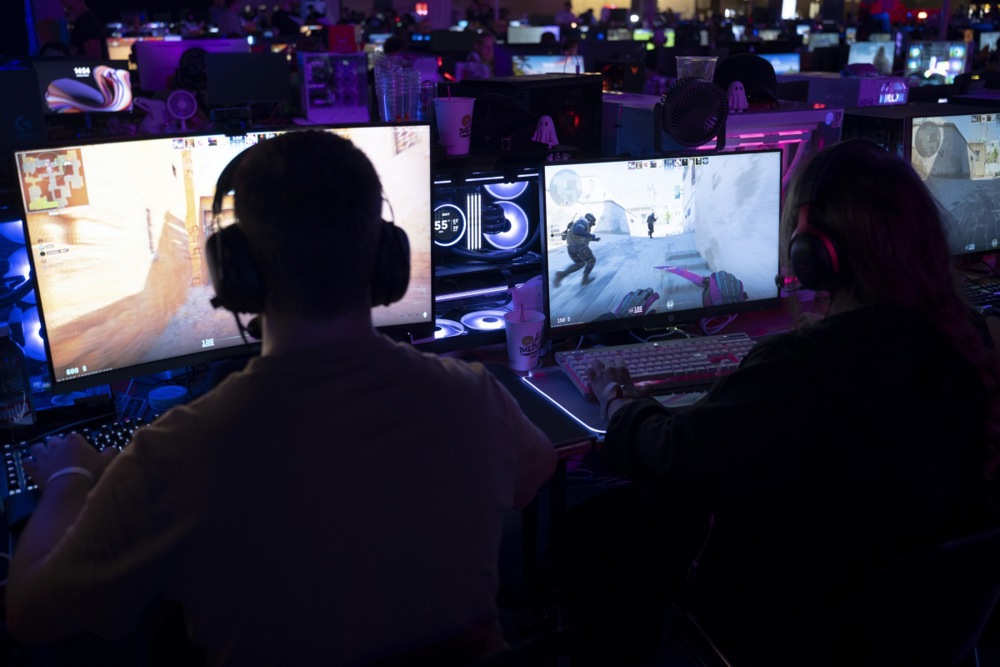
It would require videogames to be catered to children by default with stringent requirements including an eight-hour nighttime lock-out, a ban on screenshots, and guardian supervision.
Gamers wanting to play the full version of games would have to pass age verification checks to access features, like multi-player tournaments or mystery boxes.
The European Commission is gathering feedback on the act with respondents quick to criticise the threat posed to videogame makers.
Stop Killing Games, a campaign to protect videogames, has opposed the act.
“This could turn the EU into a pariah state for videogames,” said Ross Scott, the consumer group’s founder. He reckons the regulation could spark a race to update games or deactivate them.
MEPs have also joined in sounding the alarm bell.
Proposed law could kill games
If the law passed, developers would need to make a child mode version of games and gate the full games behind a verification step.
“This is going to bury developers with compliance steps, and a whole lot of cost,” said Scott.
Age verification with zero-knowledge proof (meaning developers cannot collect data) will likely be required. “In practice, providers would likely need to engage a third-party age assurance provider,” also said Lauro Fava, partner at law firm Pinsent Masons.
The Commission’s impact assessment claims that third-party age verification apps would reduce costs, but failed to provide estimates.
Fava called it “strange” that these were missing, and thinks the commission “arguably downplayed” the cost of compliance.
Gamer’s Voice, an advocacy group, asserted that small games would struggle to pay for age-verification and other compliance measures, likely to inlclude game redesigns.
The Kids Act would outlaw features ‘increasing social comparison’ for minors, meaning functions like leaderboards and kill counts could be restricted.
And while the cost to developers is not known, it is feared prices could increase for players.
The wide scope of the draft law means community servers and hobbyist-developed games could be subjected to the new rules. Any game, new or old, would have to follow measures unless strictly offline in a physical format or built only for educational purposes.
And since the rules would apply to games made or consumed in the EU, it is feared game makers could block access to their games on the bloc.
This article continues, but the full version is available only to EUobserver.com subscribers. Visit account.euobserver.com/membership
Environmental NGOs have threatened to sue the owner of Tefal, a leading French kitchenware company, over failing to phase out forever chemicals from their products, at a high price for consumer health.
The organisations allege that Groupe SEB, the parent company of known brands, such as Tefal cookware, Calor irons, and Moulinex kitchen appliances, fails to curtail harmful chemicals in its products.
And the environmentalist groups have threatened to file a lawsuit if the firm fails to makes a change to its policy within three months.
Companies have a duty to identify and address the impact of their work and products under the French law, for instance the pollution they cause or human rights they might violate.
Environmental NGOs ClientEarth, Générations Futures and Notre Affaire à Tous say Groupe SEB should swap harmful chemicals in its products to existing alternatives, such as ceramic coating or cast iron, to limit harm to human health and the environment.
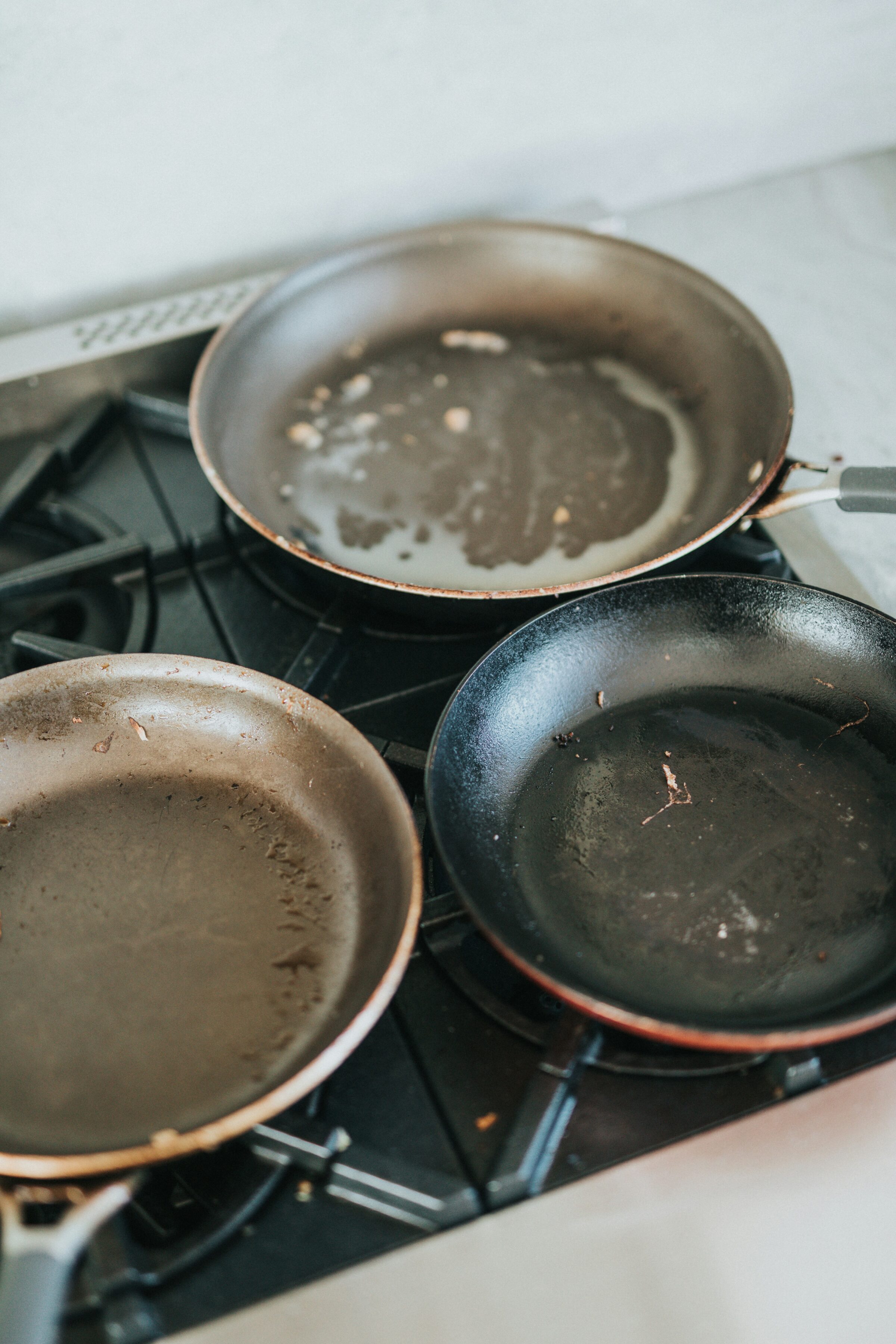
The company uses teflon for non-stick, high-temperature suited coatings of their products.
The substance is one of the ‘PFAS’ polymers, often dubbed forever chemicals, because they break down very slowly, remaining in the environment and human body for a long time.
PFAS are widely used for food pots, clothes, packaging, and waterproof products.
But since they take so long to decompose, they are often found in soil and groundwater. Many of the substances cause cancer, others are harmful to babies in the womb.
Teflon is allegedly “not absorbed by the human body” and is approved by the World Health Organisation (WHO) for contact with food, the company’s website says.
However, a recent risk assessment by the EU’s Chemical Agency’s (ECHA), quoted by the NGOs, points out that when overheated or scratched, teflon releases PFAS particles.
It also releases substances harmful to the environment during the manufacturing process, ECHA’s research found in March.
And a new European law on the issue will provide a “more consistent basis for corporate due diligence litigation,” Hélène Duguy, ClientEarth’s lawyer in the case, told EUobserver.
An EU Corporate Sustainability Due Diligence directive, inspired by French legislation, will oblige all companies based in the EU to address the impact of their operations on the environment and human rights.
Member states must implement national laws fulfilling the obligation by summer 2028.
SEB can show stopping PFAS use is “necessary and feasible,” setting a precedent for others, Duguy said.
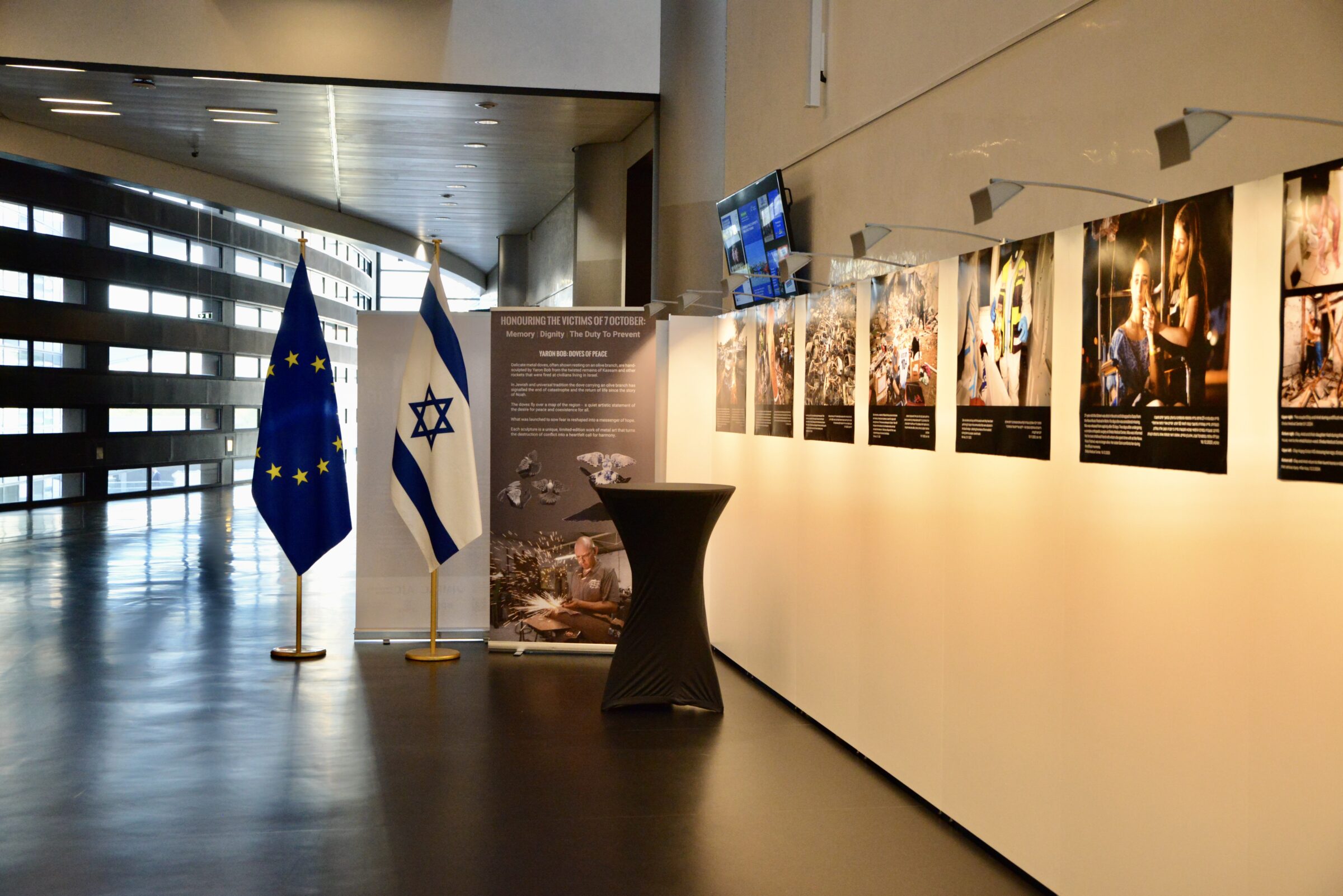
An EU Parliament memorial for victims of the 7 October attack caused disarray and anger as well as grief in a divided European house.
It was crowned by a towering Israeli flag, alongside the EU’s.
The exhibit set up in Strasbourg’s parliament included maps showing Occupied Palestinian Territories as part of Israel and sold trinkets made from debris of Israeli missiles.
But it made no mention of the 74,200 people killed by Israel in Gaza in the past three years, after Palestinian militants Hamas killed some 1,200 Israelis in a surprise attack.
This situation struck a chord with the sole Palestinian in parliament, left-wing French MEP Rima Hassan, who tried to take down the Israeli flag in protest, and toppled over the EU one as well in an unwanted domino effect.
“My action was in no way directed at the victims of 7 October or their memory,” Hassan told EUobserver.
Instead, it targeted “this incessant and untenable double standard, for a Russian flag would never be permitted, and rightly so, within the [EU] institution’s premises”.
The memorial was organised by German centre-right MEP Hildegard Bentele, who chairs the parliament’s Israel delegations, alongside the Israeli embassy, and the The International Movement for Peace & Coexistence (IMPAC) group in Brussels, as well as others.
“During a conversation with a member of my team, the guest artist [at the EU Parliament memorial] claimed that Palestine ‘does not exist’,” Hassan added.
Her family were expelled from their birthplace by Israel in 1948 along with hundreds of thousands of others in what Palestinians call the Nakba (Catastrophe).
But in the cacophony of narratives in the EU assembly, those who saw her anti-Israel flag protest as offensive or antisemitic had echoing voices.
This article continues, but the full version is available only to EUobserver.com subscribers. Visit account.euobserver.com/membership
EU governments were allowed to water down targets in their post-Covid pandemic recovery plans after they had already asked Brussels for the money, the European Court of Auditors (ECA) said on Thursday (8 October).
Of 20 milestones and targets the auditors examined, 13 were amended after the member state had already submitted its payment request. In nine of those cases, the change itself was requested after the payment application had already been made.
The revised targets were “aligned with actual achieved outputs, which made the payment possible,” the auditors wrote in their annual report on the 2025 EU budget.
Rewriting measures
Ireland, for example, asked for a payment in December 2024. But in January 2025 it requested to cut the target for ICT graduates down from 12,450 to 10,900, citing a high administrative burden.
This article continues, but the full version is available only to EUobserver.com subscribers. Visit account.euobserver.com/membership
Persuading China that its €1bn daily trade surplus with the EU is not sustainable was always going to be a hard sell for EU trade commissioner Maroš Šefčovič.
And the early signs are that Šefčovič’s two days of talks with Chinese commerce secretary Wang Wentao, which conclude on Friday (9 October), are not going to deliver the breakthrough demanded by EU leaders when they gather for a summit in Brussels next week.
“The message around the table was clear: the need to improve access to the Chinese market, while boosting our economic security,” Šefčovič posted on X ahead of the first day of talks.
But rhetoric aside, three months after the EU Commission set up a series of ‘work streams’ with Chinese officials, with a mandate to address the multi-layered EU-Sino trade dispute, it is hard to see much tangible progress.
Hours before Šefčovič arrived, Beijing rejected an EU demand for so-called “voluntary export restrictions” on its electric vehicles (EVs).
In August, data published by Schmidt Automotive Research found that 14 percent of EV sales across Europe this year were Chinese-made, up from 9.4 percent last year.
That is despite the EU imposing additional tariffs of between 17 and 36 percent on Chinese EVs in October 2024.
This article continues, but the full version is available only to EUobserver.com subscribers. Visit account.euobserver.com/membership
Unsavoury news comes from Russia often these days. But the latest unexpected development is the spread of a deadly disease.
Behind the mysterious death of a young woman in Siberia in early October was reportedly pneumonic plague – a disease so contagious it is considered as bad as anthrax, smallpox, and Ebola.
Local authorities in Russia have denied the plague as cause of death, but despite this, they have implemented anti-epidemic measures.
Eva Hrncirova, a spokesperson for the European Commission, said on Thursday (8 October): “Russia should make information about the plague available as soon as possible. This is what we need”.
“We had a meeting with the member states yesterday within the [EU Commission’s] Health Security Committee, and with the WHO [World Health Organization], who are in contact with our delegation in Moscow,” she said.
Russia was asked by the WHO to share “timely, precise, and exact information” about the possible plague in Siberia, she also said.
“We don’t have enough information to assess the epidemiological situation,” she added.
Nothing to see here, says Russia
Pneumonic plague disease can be treated with antibiotics if detected early, but officials beyond Russia’s borders are left with worrying questions.
Did an Irkutsk Anti-Plague Institute lab technician in Shelekhov (Siberia) really die of plague?
If so, was it a natural version of the disease, or a more dangerous bacterium modified in military labs?
And what is the risk of the Middle Ages-era disease spreading?
Pneumonic plague is caused by the bacterium Yersinia pestis — the same one that once brought devastating plague epidemics known as the Black Death.
The pneumonic form of plague, a disease that killed up to half of Europe’s population in the 14th century, spreads through droplets by coughing or sneezing.
It manifests as severe, rapidly developing pneumonia that almost always ends in death if left untreated. But if antibiotics are administered in time (ideally within 24 hours of the onset of symptoms), the disease is treatable.
Independent Russian-language media say that Darya Shipilova, a 28-year-old laboratory technician at the research and hygiene institute in question, accidentally broke a test tube containing plague bacteria in late September, became infected and died in hospital several days later, on 2 October.
Authorities have not confirmed the cause of the woman’s death, letting on only that she died of pneumonia and claiming that no microorganisms connected with her work had been found in her body.
Some 200 of her contacts were subsequently put into quarantine with medical supervision.
Authorities also ordered a three-week quarantine at several hospitals in the wider area, and facemasks for the wider population – even for schoolchildren.
Russia’s neighbours, Mongolia, Kazakhstan, Kyrgyzstan and Uzbekistan, have all introduced border controls.
Russia said the epidemic situation in the area was stable, that none of the deceased woman’s contacts had shown signs of infection, and that there was no cause for concern.
However, the head of Russia’s public health authority reportedly travelled to Irkutsk to attend a meeting with local officials, while residents of Shelekhov report that people in protective suits are moving around the town.
And epidemiologists say it is simply not possible that Russia’s public health service would resort to such dramatic measures, including closing hospitals, over a single case of ‘pneumonia of unknown origin’ .
The institute where the laboratory technician worked is said to be a civilian facility that, among other things, researches and monitors the incidence of plague.
In Siberia, especially near the borders with China and Mongolia, the bacteria in question still circulate among animals and occasionally infect humans, as they do in some parts of Africa, where the disease is most common.
This article continues, but the full version is available only to EUobserver.com subscribers. Visit account.euobserver.com/membership
Horrifying stories from the occupied Ukrainian town are mounting.
Two clans have emerged in Oleshky — those who support Putin can get food.
According to experts, Russia is fundamentally violating international law and using residents’ vulnerability as a weapon.
Putin’s tragic gift: the death toll in Pryluky rose to 22; 12 people were killed on a bus the following day.
Maps of the day: Operation Vivaldi continues to make gains in Donbas.
Videos of the day: an FPV drone attacked a fully occupied quad bike; a refinery is on fire.
Horrifying stories from the occupied town are mounting. The situation in Russian-occupied Oleshky, in Ukraine’s southern Kherson region, has long been extremely tense.
Around 2,000 residents have long faced a severe humanitarian crisis and isolation. Before the Russian invasion, 24,000 people lived in the town.
And the situation of local residents left behind shows how Russia, as an occupying power, treats civilians brutally and deliberately violates international agreements.
Map — DeepState
“There is a lack of food and healthcare. Since the destruction of the hydroelectric power plant, there has been no drinking water, electricity or gas. They do not even have wood for heating. Not only is it impossible to live with dignity, it is also impossible to bury people with dignity, because the occupiers even prohibit the burial of the dead,” Tetiana Hasanenko, head of Ukraine’s military administration for Oleshky, told Denník N.
Russia is also using Oleshky to shell the right bank of the Dnipro, especially the city of Kherson, just nine km away. Fierce fighting is under way over the surrounding islets. This turns Oleshky residents into human shields and prevents their safe evacuation.
According to the BBC, Oleshky is trapped by both geography and war. “To the north and west, it is cut off by the river and destroyed bridges, while to the south and east it is cut off by dangerous or impassable roads,” the report said.
The situation in the town had already been dramatic in 2023, when the destruction of the Kakhovka dam caused flooding.
A few days ago, special units of the SBU security service and Ukraine’s National Guard launched, according to the RBK-Ukraine website, a new operation to deliver humanitarian packages containing food, water and medicines across the Dnipro.
The aid totalled around four tonnes, with each package weighing 19 kg.
Footage from the mission can be viewed in this video by Suspilne television.
In these difficult conditions, heavy Vampire drones — dubbed Baba Yaga by Russians — are, according to a Ukrainian website, one of the few ways of providing aid to people on the occupied side of the river. Ukrainian soldiers often deploy them at the front for their own logistics in areas that are extremely dangerous.
Last year, the drone was even described as the most effective combat vehicle changing the course of the war.
According to Hasanenko, Ukraine’s armed forces have regularly dropped food by drone into the occupied area since March.
“They did it, but not on such a large scale. And every time drones fly over, the occupiers punish local people for it,” said the Ukrainian woman, who is in contact with people from Oleshky.
She said people try to immediately transfer the aid into unmarked containers to avoid punishment. “The occupiers believe that if people accept help from the Ukrainian armed forces, they supposedly have some connection with them and are betraying the country — which is not actually their country. And that is why they punish them,” Hasanenko explained.
In recent months, Oleshky residents have relied mainly on their own harvests, but at the end of the season they face a critical food shortage.
There have even been reports that residents were forced to eat dogs. A BBC report from late September revealed shocking findings from the town: people had learned to cook even with weeds.
Some, according to Ukrainska Pravda, caught pigeons or pheasants, while others cooked borscht “in a new way” — from eggs, courgettes, tomatoes and herbs.
“Prices there are not merely high but almost astronomical. Eggs sell for 800 hryvnias a dozen (€19), potatoes and onions for 500 (€11.90), courgettes for 250 (€5.95), and tomatoes for 200 (€4.76), because there was a good harvest,” the website wrote.
Despite the risk of being killed by a mine, residents travel along a “road of death”, lined with burnt-out cars, to the nearest town, Radensk, for food. This was also confirmed by Reuters, which spoke to people who still have relatives there.
“The choice Russia imposes on civilians every day: stay and die of hunger, or leave and risk being blown up by a landmine,” the agency quoted Ukrainian ombudsman Dmytro Lubinets as saying.
Two categories of people and harassment over humanitarian aid. In the hospital, where dead bodies have been lying in the basement for four months, people have been divided into two clans, according to witnesses.
“Those loyal to the Russian regime have some food, sometimes even meat and alcohol. The people they call Ukraine-lovers have nothing. The hospital director took everything from the latest deliveries provided as humanitarian aid and handed it out to his own people,” Ukrainska Pravda quoted the son of a man who remained in Oleshky as saying.
When Ukrainians succeeded in dropping humanitarian aid into Oleshky, a new phase of psychological warfare by the Russian Federation began.
Under normal circumstances, an operation to drop humanitarian aid would not attract so much attention, but according to Ukraine’s SBU security service, the Russian response reached particularly absurd proportions.
According to its information, Russian soldiers were ordered to arrange a series of interviews aimed at discrediting the Ukrainian side.
The recorded interviews were meant to include claims that Ukrainians were shelling Oleshky, positive views of Putin’s regime and expressions of gratitude. The SBU therefore urged Ukrainians to treat such reports cautiously and not spread unverified information.
According to information from the Ukrainian resistance movement in the Kherson region, which cannot be independently verified, those who received the aid faced abuse during interrogations.
According to Hasanenko, the most important thing now is to evacuate people from the town.
“Even what humanitarian missions are doing now, dropping food, will not solve their problems. I have reports in which people wrote that they had food left for two days and that this saved them. But it will not save them forever. Many people are dying there because of drones and artillery shelling. We need to establish a humanitarian corridor,” said the head of Oleshky’s military administration, adding that last winter had already been difficult and that they might not survive this one.
She herself has received reports that people have lost 10, 20 or even 40 kg. “There is one case: a woman wrote that she weighed 110 kg and now weighs 67. She has lost 40 kg and writes to me that she is dying.”
Violations of international law. During the recent UN General Assembly session, Ukrainian foreign minister Andrii Sybiha spoke about Oleshky. Ukraine’s main aim, he said, was to establish a humanitarian corridor in the area and safely evacuate people who have not accepted the Russian occupation.
It is precisely because of this stance, Kyiv says, that the Russian army is retaliating by blockading the town, where tourists had before the war come for its unique natural environment of pine forests and Dnipro inlets.
“There is no supply of electricity or gas. Over the past month, the delivery of food, medicines and other basic necessities has been completely blocked. Horrifying testimonies are coming from occupied Oleshky about how people are trying to survive under a blockade imposed by Russia: they are looking for scraps of food and gathering grass because there is simply no other food,” Ukrainian website NV quoted the foreign minister as saying.
Another dimension of Russian terror, he said, is the hunting of civilians. Russian FPV drones pursue and attack people, turning even an attempt to leave one’s home or move around the town into a deadly risk.
According to TSN, Russia is artificially creating food shortages in Oleshky, selling an ordinary food package for 50,000 hryvnias — nearly €1,000 — compared with a standard price of up to 2,000 hryvnias (€40). When people have no money, they offer their jewellery in exchange for food.
Food was last delivered to the town at the end of May, and according to Ukrainska Pravda, no further attempt to bring in food was made. When locals tried on 2 June, their four cars were blown up by anti-personnel mines, killing two people.
Legally, the humanitarian crisis in Oleshky, as well as the use of the population as human shields, constitutes, according to Ukrainian website Rubryka, a violation of the Fourth Geneva Convention — on the protection of civilians in time of war — and a war crime under Article 8 of the Rome Statute of the International Criminal Court (ICC).
An occupying power is responsible for those living in occupied territory. “It must provide people with food, medical care and proper sanitation. But Russia is indifferent to all international requirements,” Ukrainska Pravda wrote.
According to the Institute for the Study of War, Oleshky has become a test of Russian dominance in an area “characterised by population decline, damaged infrastructure, chronic insecurity and growing isolation from the rest of Ukraine”.
Rather than reversing these conditions, the think tank said, Russia governs through them.
“Oleshky demonstrates that the humanitarian crisis unfolding across many Russian-occupied communities is not merely a byproduct of war but increasingly appears to be the result of an occupation system that tolerates, exploits, and sustains civilian vulnerability as a means of maintaining control,” wrote US experts.
According to Hasanenko, Russian fears of Ukrainian operations are also behind this. “I think they are simply trying to prevent the Ukrainian armed forces from crossing the Dnipro, because they could begin liberating the left bank. And people simply serve as human shields for them, while they mine everything completely,” she told EUobserver.
A tragic toll on Putin’s birthday. At least 22 people were killed, including five children, in a Russian Kh-101 cruise missile attack on an apartment building in Pryluky, in the Chernihiv region, on 7 October. Rescue workers pulled many people from the rubble of the destroyed building. According to local authorities, Russia fired as many as six cruise missiles at the town.
“This is the ‘gift’ Putin gave himself for his birthday. Killing children, killing people. There were new attacks with Shahed drones and aerial bombs during the day. It is important that leaders do not remain silent about what happened,” said Ukrainian president Volodymyr Zelensky, calling on the West to help with air defence.
Brutal Russian attacks continued the following day. As many as 12 people were killed after Russia hit a bus in the Donbas city of Kramatorsk. Putin’s regime is currently facing a crisis at the front, which it is trying to address through massive shelling of Ukrainian cities.
Maps of the day
Ukraine’s successful Operation Vivaldi continues. According to a report by the Institute for the Study of War, Ukrainian forces are continuing counterattacks towards the eastern bank of the Zherebets River, northeast of Lyman. The numerical superiority of Ukrainian forces and drones there is preventing Russian forces from consolidating their positions in the town.
Map — DeepState
According to September statistics, which we wrote about a few days ago, Russia has just had its worst month in Donbas for the past three years. The US newspaper The New York Times also charted this on its map.
— Institute for the Study of War (@TheStudyofWar) October 7, 2026
Videos of the day
Smoke over a distant refinery. Ukraine continues to launch drone attacks on Russian energy infrastructure. Most recently, it caused a fire at the Gazprom Neftekhim Salavat plant in the Bashkir region, one of Russia’s largest refineries. It is located around 1,300 km from the front line.
A fatal quad bike ride. The Hornets of Dovbush, from the 68th Brigade, released a video showing five Russian soldiers on a quad bike coming into view of their FPV attack drone. The location of the attack is unknown.
What are the losses
No update on Thursday.
By Monday (5 October), Russia had verifiably lost 24,170 pieces of heavy equipment (24,138 on Tuesday, 22 September). Of these, Ukrainians destroyed 19,133 (19,105), 1,003 (1,000) were damaged, 1,194 (1,194) were abandoned by their crews, and the Ukrainian army captured 2,840 (2,839). This includes 4,452 (4,448) tanks, of which 3,357 (3,353) were destroyed in combat.
Ukraine lost 12,238 (12,175) pieces of equipment, of which 9,633 (9,579) were destroyed, 711 (702) were damaged, 695 (695) were abandoned and 1,199 (1,199) were captured. This includes 1,466 (1,464) tanks, of which 1,126 (1,125) were destroyed in combat.
Note: Neither side regularly reports its own dead or destroyed equipment. Ukraine publishes daily figures for Russian casualties and destroyed equipment, which cannot be independently verified. This overview uses data from the Oryx project, which has compiled a list of equipment losses documented exclusively by photographs since the start of the war.
The EU’s border agency, Frontex, shared coordinates of an overcrowded and partly deflated boat in the Mediterranean sea with the Libyan coastguard and then watched them run it over.
The boat was carrying 27 people, including children.
The findings, by Frontex’s own fundamental rights officer, described an incident that took place on 19 June 2026.
And this was just a tiny part of a wider pattern of violence by the EU-backed Libyan coastguard, which has also shot at or near civil rescue vessels.
No one was killed in the June event. But people were tossed into the water. Others, pulled onto the Libyan vessel, were then beaten by Libyan uniformed officers.
Frontex had issued a Mayday relay and then shared the sightings by email with the Libyan rescue centre.
No vessels were reported to be in the vicinity, but the Libyans showed up 90 minutes later.
The internal Frontex findings highlight ongoing tensions in the agency over sharing rescue coordinates with the Libyans in the name of saving lives.
“Saving lives is the absolute sort of absolute right that people have,” Hans Leijtens the agency’s director, told EUobserver earlier this year.
“And it’s our job to contribute to that, and if that sort of starts with looking at which part of the Mediterranean ship is sailing, and if it’s a north African country, we all have to inform the authorities there,” he added.
But his own rights officer also notes that the botched rescue on 19 June amounted to a violation of the right to life, citing article six of the International Covenant on Civil and Political Rights.
He says the standard is not simply whether the migrants were ultimately rescued, but if the operation was planned and executed to minimise risks to human life.
In this case, the Libyans violated that right among others, he says. Frontex did not reply to the findings in the report, as of publication.
Let the court decide
This article continues, but the full version is available only to EUobserver.com subscribers. Visit account.euobserver.com/membership

 Login