❌

Reading view

Germany: Afghan migrant convicted of raping teen gets probation

The Hamburg Regional Court has sentenced a 34-year-old Afghan migrant to two years’ probation for rape and several counts of aggravated assault against his former partner, an 18-year-old girl. German social media accounts have already sharply criticized the sentence, arguing it is another example of lenient sentencing in the face of serious crimes.

While the defendant initially admitted only to striking her with his hand, he ultimately confessed to the remaining charges. The court convicted him of four counts of assault, one count of aggravated assault, and one count of rape. As a condition of his probation, he must pay an additional €3,000 in compensation after paying another €2,000 in damages to the victim before the verdict.

Judge Malte Wellhausen detailed that the six offenses occurred between autumn 2016 and spring 2018. The trial faced substantial procedural delays, leading the court to count four months of the sentence of the Afghan man, who works in IT, as already served.

The court found the Afghan man physically assaulted his former girlfriend on five separate occasions, including an incident where he used a leather belt and another instance where he choked her to the point of respiratory distress. The rape took place in October 2016, approximately ten years ago.

The defendant first met the 18-year-old high school graduate from Lower Saxony through an online platform. Physical abuse began only months after their initial meeting, starting when he struck her face. When the young woman reacted with fear and tears, the defendant remarked, “That wasn’t even hard.”

Routine physical assaults followed over minor issues, as well as disputes stemming from the victim’s parents opposing her relationship with the Afghan-born defendant.

The sexual assault occurred in his bedroom while both were in bed, leaving the victim with physical pain and bleeding. Despite the nature of the assault, she did not initially identify the incident as rape. Over the following months, the physical abuse persisted, including the incident involving the leather belt while the woman reportedly blamed herself for the incidents, according to German newspaper Welt.

In August 2017, after overhearing her covertly speaking with a friend on the phone, the defendant struck her face, causing her nose to bleed, and choked her violently by the neck. Rather than reaching out for assistance, the victim suffered severe distress, blamed herself, and engaged in self-harm.

During a subsequent trip to the United States, the defendant proposed to her, and she accepted out of fear. She eventually managed to break away from the relationship in 2018 by relocating her life to Denmark.

The criminal investigation began after the woman noticed a missing person report that featured a photograph of a garden in the Poppenbüttel district of Hamburg, where she had previously resided with the defendant. Concerned for the safety of the woman shown in the report, she eventually spoke with police officers and detailed the abuse she had endured, prompting authorities to open a criminal case.

Judicial findings later confirmed that the disappearance of the other woman was entirely unrelated to the defendant. Authorities proceeded with the investigation despite the victim’s reluctance to participate from Denmark. Further delays arose due to pandemic border closures and the illness of an expert witness, pushing the formal filing of charges to 2024.

The victim in the case tried to avoid the trial altogether and only joined in for video testimony after facing potential prosecution. The court ultimately found her account credible due to its memory detail and complete lack of malicious intent toward the accused.

Defense lawyer Claudia Krüger was positive about the ruling, calling it “a judgment with a sense of proportion. I am very satisfied.“

While the defense had argued for a suspended sentence, prosecutors had requested a prison term of three years and two months. The defense won out but the sentence is subject to appeal.

The post Germany: Afghan migrant convicted of raping teen gets probation appeared first on Remix News.

  •  

Children for sale: A Ukrainian firm plans to promote surrogacy in the heart of Poland, case referred to prosecutors

Via Polish organization Ordo Iuris:

  • BioTexCom, a Ukrainian firm, has announced a September conference in Warsaw promoting surrogacy and offering the “purchase” of a child for 65,000 euros; the case is now with prosecutors
  • Since 2023, Ordo Iuris has submitted opinions to UN and EU bodies arguing that surrogacy constitutes human trafficking and the sale of children under international law.
  • The Ordo Iuris Institute cooperates with UN Special Rapporteur Reem Alsalem, whose report on violence against mothers cited its position; Alsalem was a guest at a conference organized in June 2026.
  • Ordo Iuris advocates a new Optional Protocol to the Convention on the Rights of the Child banning surrogacy and has prepared Polish translations of two UN reports on the issue.
  • The Ordo Iuris Institute is petitioning Poland’s Minister of Justice, Waldemar Żurek, to block the event organized in Warsaw by BioTexCom as a promotion of human trafficking; the appeal is available at niedlasurogacji.pl.

On September 12–13, the Ukrainian company BioTexCom plans to hold a conference in Warsaw aimed at promoting programs offering surrogate motherhood and in vitro fertilization. The company is inviting interested parties to individual meetings with its representatives, offering surrogacy packages worth nearly 65,000 euros. Under Polish law—unlike Ukrainian law—surrogacy may be classified as a criminal offense. The matter of the Warsaw conference has already been referred to the prosecutor’s office.

This event is not an isolated episode but another manifestation of a broader phenomenon: Poland, alongside other Western and Central European countries that lack their own surrogacy regulations, has for years been becoming a market for foreign so-called reproductive companies. In this context, it is worth recalling that the issue of surrogacy has for years been a central concern of the Ordo Iuris Center for International Law—both at the domestic level and in the most important international forums.

Opinions and positions at the UN and the European Union

Since 2023, the Institute has regularly submitted opinions and positions to bodies of the United Nations (UN) and institutions of the European Union (EU), consistently arguing that surrogacy meets the definition of human trafficking and the sale of children under international law. In February 2023, Ordo Iuris experts published an analysis showing that European Union law does not require member states to legalize surrogacy. When, in December 2024, the Third Committee of the UN General Assembly adopted a resolution on trafficking in women and girls that for the first time explicitly addressed the phenomenon of surrogacy, the Ordo Iuris Institute described it as a significant precedent.

This activity intensified significantly in 2025. In April, Ordo Iuris submitted an opinion contributing to a UN thematic report on surrogacy, in July it joined the organizations supporting a position presented to the UN Human Rights Council against the legalization of this practice, and in October and November it submitted further positions—including an extensive opinion, “Surrogacy as a Form of Sale of Children and Violation of Women’s Rights”—addressed directly to the UN Special Rapporteur. The year 2026 brought further action: in January, an opinion for the European Commission calling for every form of surrogacy to be recognized as human trafficking, in March, participation in the session of the Commission on the Status of Women, and in July, a commentary summarizing the UN Human Rights Council’s 62nd session, at which the report on violence against mothers was presented.

Cooperation with the UN Special Rapporteur

A special place in these efforts is occupied by the cooperation with Reem Alsalem, the UN Special Rapporteur on violence against women and girls, who consistently defends the biological understanding of sex and motherhood in her reports. Ordo Iuris took part in informal expert consultations conducted by Alsalem for both of her key documents—the report on violence against women in the context of surrogacy, submitted to the UN General Assembly in October 2025, and the report on violence against mothers, presented to the Human Rights Council in July 2026. Importantly, the Ordo Iuris Institute’s position was explicitly cited in the latter document, in the section addressing the devaluation of motherhood in contemporary public and institutional discourse.

This cooperation also took a direct form: on June 3, 2026, Reem Alsalem personally took part—as a special guest—in the international academic conference “Motherhood in the 21st Century” organized by Ordo Iuris at Cardinal Stefan Wyszyński University. During the panel devoted to surrogacy, she presented the findings of her report, outlining the profile of women who become surrogates—almost exclusively poor women, often single mothers or immigrants—and calling for a model of surrogacy abolition modeled on the abolition of prostitution. She was accompanied by Olivia Maurel, spokeswoman for the international Casablanca Declaration—a coalition of more than 150 experts from 75 countries advocating a universal ban on surrogacy—who was herself born through the procedure and shared a moving personal testimony.

Cooperation with the initiators of the Casablanca Declaration

This is not the first time the paths of Ordo Iuris and the circle surrounding the Casablanca Declaration have crossed. As early as April 2024, the Ordo Iuris Institute took part in an international conference in Rome organized by the Declaration’s initiators, devoted entirely to the issue of surrogacy, and addressed its findings in the commentary “The Right to a Child, or the Rights of the Child?” The participation of the Declaration’s spokeswoman in the Warsaw conference in June 2026 is thus a continuation of many years of ongoing cooperation with this coalition, not an isolated episode.

A call for a new Optional Protocol to the Convention on the Rights of the Child

In its opinions submitted to the UN, the Ordo Iuris Institute consistently puts forward a specific legislative proposal: the adoption of a new Optional Protocol to the Convention on the Rights of the Child that would explicitly prohibit surrogacy. The legal argumentation, developed in particular in the November opinion for the Special Rapporteur, invokes Article 35 of the Convention on the Rights of the Child and Article 2(a) of the existing 2000 Optional Protocol on the Sale of Children, whose definition of “the sale of children”—in the assessment of Ordo Iuris experts—also covers surrogacy agreements under which a child is transferred in exchange for remuneration or another benefit.

Polish translations of UN reports

The latest element of this activity is a publication that took place just a few days ago. On August 25, 2026, the Office of the UN High Commissioner for Human Rights published on its official website Polish translations of both of Reem Alsalem’s reports mentioned above—on violence against women in the context of surrogacy and on violence against mothers. Both translations were prepared by the Ordo Iuris Institute. Thanks to this, Polish-speaking lawyers, journalists, public administration officials, and NGOs have gained direct access to the full content of both documents—without relying on the fragmentary quotations and secondary media coverage through which UN reports had until now been known in Polish public discourse.

The actions outlined above—more than a dozen opinions and positions submitted to the UN and the EU, participation in the UN Special Rapporteur’s expert consultations, its own international academic conference in Warsaw, cooperation with the initiators of the Casablanca Declaration, the call for a new international treaty, and the preparation of official translations of UN reports—together form a picture of Ordo Iuris’s systematic, years-long engagement in the fight against surrogacy at both the domestic and international levels. It is against this backdrop that the Ordo Iuris Institute’s opposition to the BioTexCom conference planned for September 12–13 in Warsaw should be understood. The Ordo Iuris Institute has prepared a petition to Poland’s Minister of Justice, Waldemar Żurek, calling for the event to be blocked.

“The conference that the Ukrainian company is planning for September in Warsaw is not a neutral informational event, but a promotional campaign for a commercial reproductive business that treats a woman’s body as a means of production and a child as a product tailored to the client’s expectations.

Polish law does not explicitly criminalize surrogacy, but that does not mean a legal vacuum. An agreement under which a child is handed over in exchange for payment may meet the definition of human trafficking, and organizing and promoting such practices on the territory of the Republic of Poland should meet with a response from the relevant authorities. Ordo Iuris has for years documented the mechanisms of exploitation built into commercial surrogacy: from Colombia, through Ukraine, to the United States—and consistently works to ensure that this problem is no longer treated as the private affair of ‘commissioning parents,’ but is recognized for what it truly is: a form of economic exploitation of women in difficult life circumstances and a violation of a child’s fundamental right to identity and to a bond with the mother who gave birth to them,” notes Julia Książek of the Ordo Iuris Center for International Law.

The post Children for sale: A Ukrainian firm plans to promote surrogacy in the heart of Poland, case referred to prosecutors appeared first on Remix News.

  •  

France: African migrant arrested for beating and raping 17-year-old girl

A 23-year-old Guinean national already under an order to leave France (QQTF) is in pre-trial detention after being accused of raping a 17-year-old girl in foster care in Évreux on the evening of July 26. The details of this case are only now being reported, a month later.

The teenager, who lives in a foster home and was receiving psychological care, encountered the man near the city’s cathedral. Prosecutors say he forced her into his car, issued threats, paused at a kebab shop to eat, and then took her to his apartment close to the cathedral. Once inside, he is alleged to have slapped her, pushed her onto the bed and raped her as she cried out, according to French newspaper Paris-Normandie.

A roommate heard the screams. Afraid of confronting the resident himself, he called the police. Officers arrived to find the suspect insisting that “everything is fine.” From the rear of the apartment, they could still hear the girl sobbing. They entered immediately.

A subsequent medical examination recorded ten days of temporary incapacity for the victim. The suspect, who holds a permanent bodywork job in the Paris region and has no previous convictions, denied any rape allegations. He told investigators the girl had consented. Prosecutors rejected his request for release, pointing to the victim’s vulnerability, the risk that he might pressure her, and his irregular immigration status. A deportation order against him had already been issued but never carried out.

The man remains in custody.

The post France: African migrant arrested for beating and raping 17-year-old girl appeared first on Remix News.

  •  

German police search for violent suspect who shot man and woman in Worms

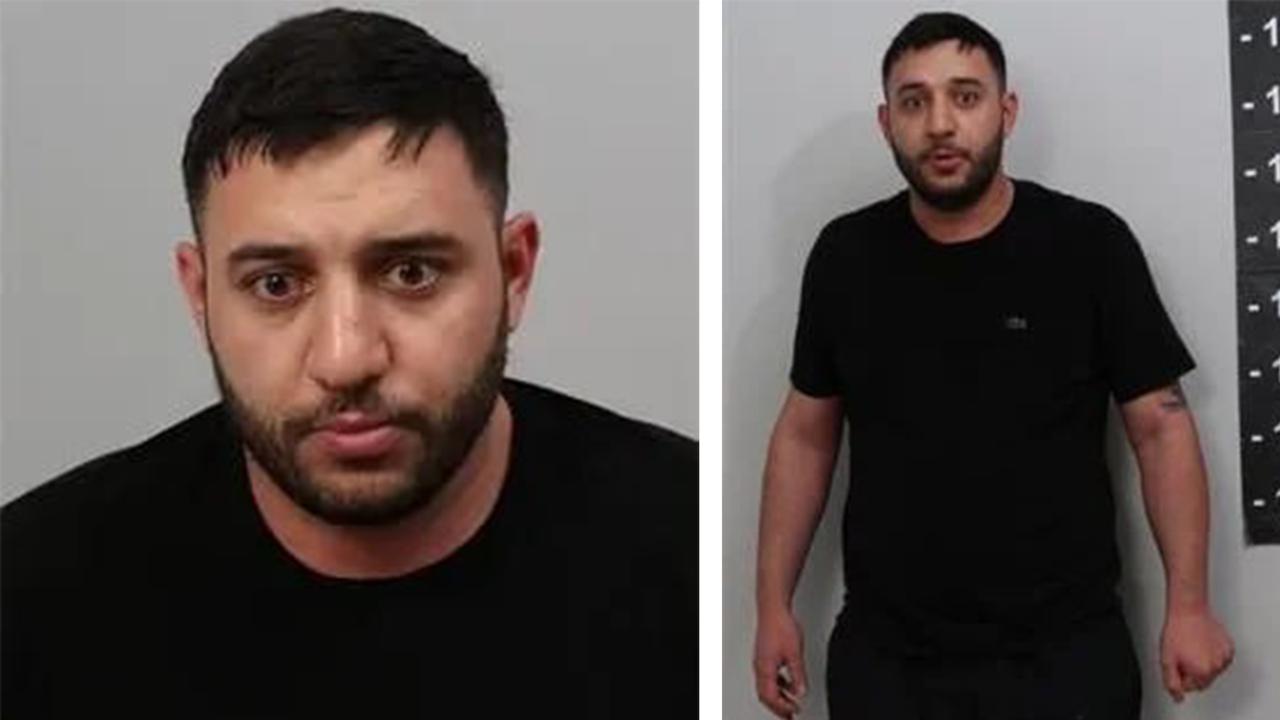
German police have released a photograph of a violent suspect, Emre Battal, whom police believe may be armed. Battal allegedly shot two people on Saturday afternoon in the city of Worms and remains on the run.

Police report the man became involved in an altercation with another man and a woman at around 4:30 p.m., with the argument turning violent. Battal drew his firearm and shot both the man and the woman. They both suffered serious gunshot wounds but are not in critical condition.

Battall quickly fled the scene, and despite an intense police manhunt, he successfully evaded capture. As a result, a photograph of the 31-year-old suspect has now been released. During the shooting, he was wearing a black T-shirt, black shoes, dark shorts, and a black baseball cap. He also has a distinctive lion tattoo.

German police warn the public not to approach the man, as he may still be armed.

The post German police search for violent suspect who shot man and woman in Worms appeared first on Remix News.

  •  

Zelensky praises destruction of Russia strategic bomber

The Alfa unit of the Security Service of Ukraine (SZBU) struck a Tu-95MS strategic bomber in Engels, Russia, announced Ukrainian President Volodymyr Zelensky on Facebook on Friday.

Ukraine’s leader also confirmed that Ukrainian units attacked an oil refinery in Russia’s Yaroslavl region and several targets in the Black Sea.

“In the last 24 hours, Ukraine’s defense forces struck an oil refinery in the Yaroslavl region. The distance is a thousand kilometers from the front line. In the Black Sea, too, we have given our own just answers to the Russian war. In Engels, Russia, soldiers of the SZBU Alpha unit struck a Tu-95MS strategic bomber aircraft. It is precisely with such aircraft that strikes are carried out against Ukraine,” wrote Zelensky in his post.

Pro-Ukrainian accounts on X celebrated the destruction of the plane.

Ukrainian Forces has taken out another of Russia's long-range strategic bombers, after overnight strikes on the Engels-2 airbase, 700km distance from Ukraine.

Mostly being constructed back in the 1960's-1970's, Russia's rapidly vanishing bomber fleet had only recently lost… pic.twitter.com/YD3e5QPgXC

— Jay in Kyiv (@JayinKyiv) August 28, 2026

Other posters on X showed a satellite photo of the Russian plane, which showed a wing was damaged in the attack.

✈🔥 A TU-95MS strategic bomber was hit at Engels-2 airfield tonight. pic.twitter.com/nJdOgf78fn

— MAKS 26 🇺🇦👀 (@Maks_NAFO_FELLA) August 28, 2026

Operation Spiderweb in June 2025 is widely considered Ukraine’s most ambitious strike on Russia’s strategic bomber fleet. After 18 months of planning, the SBU smuggled 117 FPV drones into Russia inside wooden cabins mounted on trucks. The trucks were parked near several airbases. The roofs of the vehicles were remotely opened and the drones were guided to their targets, which included Olenya , Belaya , Dyagilevo, and Ivanovo.

Ukraine claimed 41 aircraft were hit, including Tu-95s, Tu-22M3s, at least one Tu-160, and A-50 airborne early-warning planes, representing about 34 percent of Russia’s strategic cruise-missile carriers and causing roughly $7 billion in damage.

Independent satellite analysis and NATO assessments confirmed 10–13 aircraft destroyed and around 20–40 damaged. Visual evidence showed burning Tu-95s and Tu-22M3s on the tarmac.

The latest attack reveals that these Russian bombers still remain high-profile targets for Ukraine. Russia still appears unable to fully shield its fleet from drone and missile strikes despite moving many of these planes farther east in the country.

The Tu-95 itself is a four-engine turboprop design first produced by the Soviet Union in the 1950s. It is still used because no modern replacement is in series production.

The post Zelensky praises destruction of Russia strategic bomber appeared first on Remix News.

  •  

‘Our military is helpless’ – Migrant ambush that targeted military vehicles in Ceuta was pre-planned, claims National Police

The attack targeting a military patrol in the Benzú area of Ceuta last night was a pre-planned ambush rather than a spontaneous clash, according to preliminary findings from the National Police. Now, military sources are speaking of soldiers who are unable to use physical force, have no weapons, and are vulnerable to such attacks in the future.

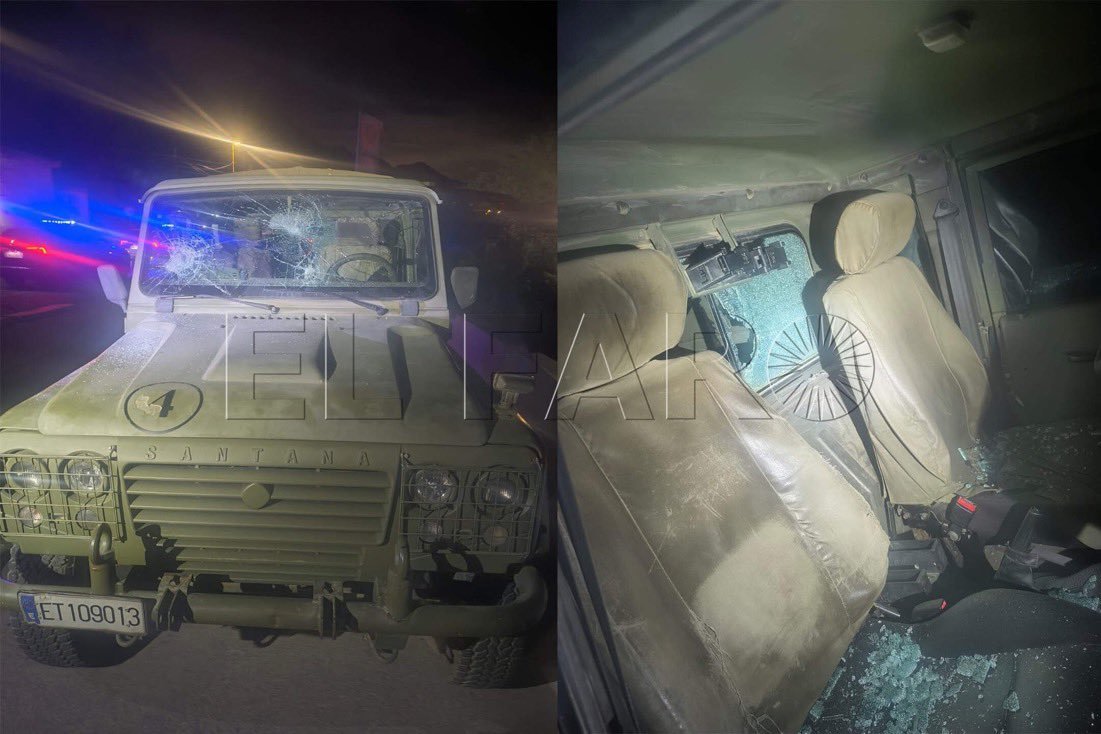
Regarding the ambush, police investigators at the scene discovered an abnormal accumulation of heavy stones that did not match the natural geology of the terrain. Police believe the projectiles were intentionally stockpiled at the location in advance, setting a trap for a vehicle or convoy passing through the area.

Images of damaged military vehicles have gone viral across social media. Multiple vehicles suffered smashed windshields and other damage in the attack.

🔴 #URGENTE | Los inmigrantes ilegales de Ceuta han atacado esta madrugada los vehículos de los militares españoles.

Este es el estado de algunos de los coches y camiones del Ejército que les ha ayudado a instalarse en polideportivos. pic.twitter.com/KnT9RU35AM

— Vito Quiles 🇪🇸 (@vitoquiles) August 27, 2026

The ambush occurred while troops from the 54th Regular Group of Ceuta were conducting routine patrol duties. Dozens of illegal immigrants ambushed the patrol vehicle with a heavy barrage of rocks. The sudden intensity of the assault severely damaged the vehicle, shattering its windows and trapping the occupants inside.

Surrounded by a high volume of projectiles, the soldiers “feared for their lives,” according to statements later provided to investigators, as reported by Spanish newspaper El Debate. Four soldiers were left injured and officials told the press that sthe all-terrain logistical vehicles were not armored and not equipped to deal with such attacks.

Marco Antonio Gómez, president of the Association of Spanish Troops and Sailors (ATME), stated that the “very serious aggression” shows “our military is helpless.”

“They go without weapons. Our colleagues had to run away to save their own lives.”

Speaking to El Debate, military sources who are directly on the ground in Ceuta say that soldiers have their “hands and feet tied.”

Although the military is working with National Police, the situation remains dangerous. The source said “they have done what is necessary and have intervened in situations in which the illegal immigrants bothered the inhabitants of Ceuta.”

🇪🇸🔴 A young Spanish woman is fleeing Ceuta because she no longer feels safe.

"I don't want to feel anxious every time I step outside… It seems awful to me that all this is allowed to happen and nobody can close the border or do anything."

However, she also claims that the… pic.twitter.com/o6KVfhR7p8

— Remix News & Views (@RMXnews) August 10, 2026

However, these military sources complain that various legal frameworks have left soldiers without weapons, and these policies also restrict soldiers from carrying out arrests and using any type of force.

Migrants may even be aware of these restrictions, empowering them to conduct ambush strikes against soldiers with near impunity.

🇪🇸🔴 5 migrants tried to gang rape a 12-year-old girl as she screamed for help, said locals in Ceuta who stopped the attack.

"There were five against a 12-year-old girl. She was a little girl, they were taking off her pants. She was screaming, screaming, screaming. She was… pic.twitter.com/g97pj8phUR

— Remix News & Views (@RMXnews) August 25, 2026

Since the attack, 12 suspects have been taken into custody at the scene by National Police’s Prevention and Reaction Unit (UPR). Some migrants reportedly tried to evade arrest by jumping into the sea. Reinforcement from the Civil Guard also helped secure the perimeter.

The Union of Military Troops (UMT) issued a statement expressing its “strong rejection and indignation,” stating they had warned about the conditions facing troops already ten days eariler.

The National Police investigation remains active as authorities work to trace all remaining individuals involved in the ambush.

The post ‘Our military is helpless’ – Migrant ambush that targeted military vehicles in Ceuta was pre-planned, claims National Police appeared first on Remix News.

  •  

Anti-AfD German police union VP resigns amid allegations he tortured a man during Cold War

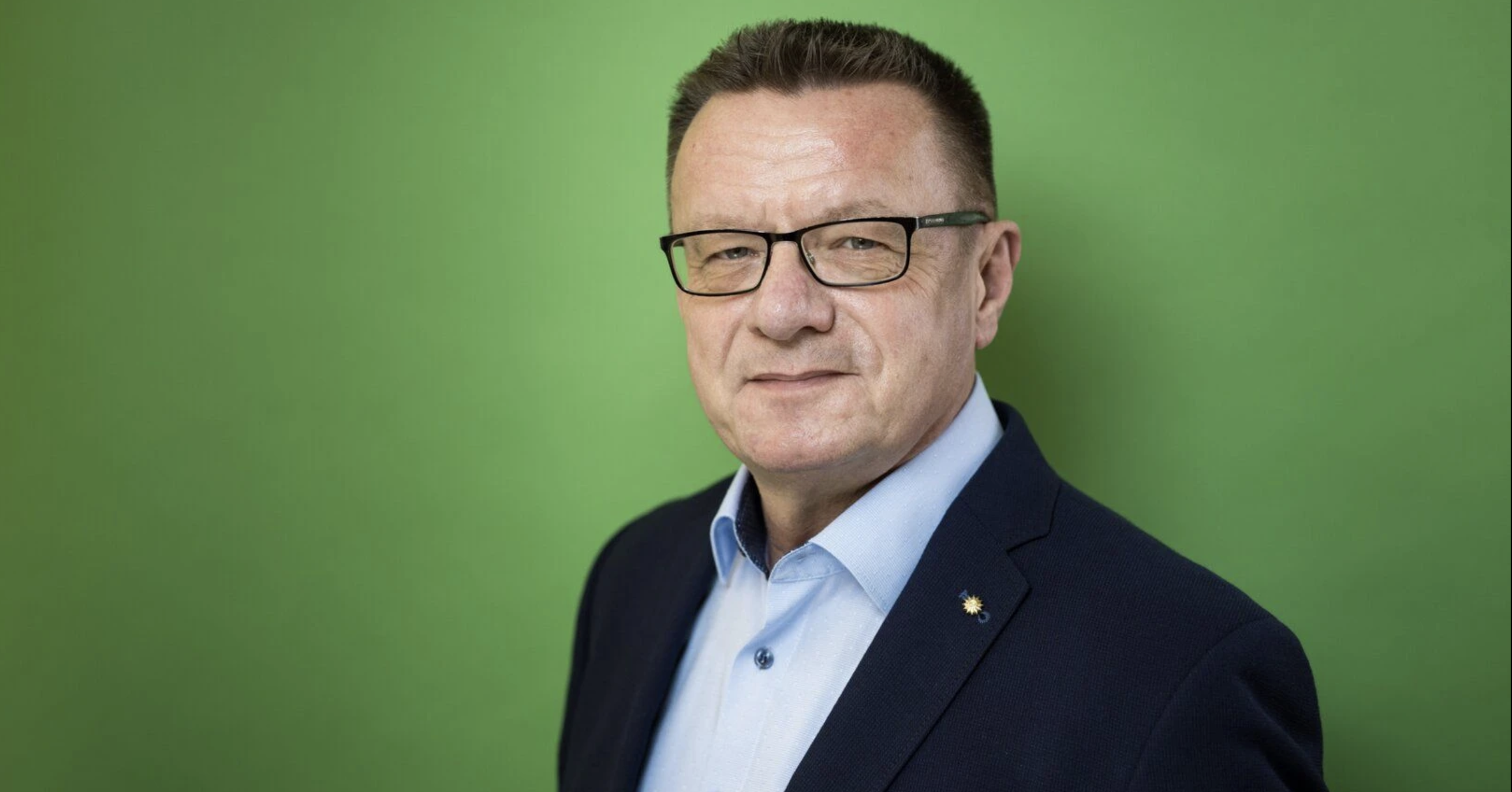
Sven Hüber, the deputy federal chairman of Germany’s Police Union (GdP), has stepped down from his post with immediate effect following public scrutiny regarding his service as a political officer for East Germany’s border guards. Hüber recently made headlines for his stance against the Alternative for Germany (AfD) party.

The resignation follows investigative reporting by the German media outlet Apollo News alleging that Hüber committed severe abuses at the East German border during the Cold War prior to joining the German Federal Police. The report claims that during his tenure as an SED political officer, Hüber placed a service weapon into the mouth of a captured East German refugee in the “death strip” and physically assaulted the individual while they were pinned to the ground.

Hüber vehemently denied the allegations, framing the coverage as a coordinated effort to dismantle his reputation. In a formal press statement, he characterized the reporting as “defamatory” and a “character assassination,” explaining that his resignation was intended to “avert the daily new, untenable accusations from the GdP during the necessary legal proceedings.”

The finger is also being pointed at right-wing media, with Hüber’s attorney Johannes Eisenberg stating the claims began in “right-wing extremist media and from there overflowing into well-known inflammatory media.” Eisenberg firmly maintained that his client “did not commit the misanthropic acts spread about him there,” adding that Hüber would refrain from further public comment as he prepares to challenge the outlets in court.

The GdP similarly confirmed it plans to pursue criminal and civil legal action against authors and publishers behind what it deems false accusations, targeted threats, and distorted reporting.

Hüber’s tenure at the union had already generated significant friction prior to the recent revelations.

Writing in the official GdP members’ magazine, Hüber recently urged police officers to actively counter a potential AfD administration in Saxony-Anhalt, arguing that “police officers personally take on enemies of the constitution because the oath they take stipulates the same” and asserting that an “AfD seizure of power does not release any civil servant from their oath.”

Since Hüber’s resignation, his anti-AfD article, entitled “Saying a True No,” has been scrubbed from the GdP website, according to Apollo News, but is still archived in the police union’s newsletter.

The AfD is extremely popular in that state, reaching 43 percent support of the voting population in recent polling. Recently, a mayor in the state came under fire on social media for threatening to dismiss firefighters who posed for a photograph with Ulrich Siegmund, the highly popular AfD lead candidate in the state.

Regardless of whether the claims about torture prove true or not, Hüber has his own history of reportedly making false allegations against his rivals. He previously faced backlash for attempting to block the lifetime professorship of conservative academic Stephan Maninger at the Federal Police Academy using claims that were ultimately shown to be groundless. Attorney Ralf Höcker subsequently alleged that GdP federal chairman Jochen Kopelke backed Hüber during that campaign, using union membership fees to support the effort.

The controversy triggered a wave of exits within the organization. The Mitteldeutsche Zeitung confirmed that a “low double digits” number of police officers in Saxony-Anhalt severed their union membership following the initial reports.

Hüber finalized his decision to step down following discussions with GdP federal chairman Kopelke. The union has not yet named a replacement to fill the vacant deputy chair position.

The post Anti-AfD German police union VP resigns amid allegations he tortured a man during Cold War appeared first on Remix News.

  •  

‘They did not speak French’ – French teen Constant finally speaks out after being kidnapped, robbed, and beaten into a 6-day coma

A French youth, 19-year-old Constant, was kidnapped, robbed, and beaten so badly by three suspects that he was left in a six-day coma in the hospital in 2025. Now, the case has come once more to the public’s attention after Constant described the attack on French television, including that his assailants were not speaking French when they nearly killed him.

Near dawn on April 12, 2025, 19-year-old Constant was on his way to work when three men changed his life forever. To this day, only one suspect has ever been arrested and convicted.

🇫🇷 This French teen was kidnapped on his way to work and beaten into a 6-day coma by suspects who “did not speak French.”

19-year-old Constant, who has been an apprentice butcher since he was 15, was headed to work in Rouen at 5 a.m. when a car stopped near him. The suspects… pic.twitter.com/Y3u8y8qz2z

— Remix News & Views (@RMXnews) August 27, 2026

Constant was a hard-working French teenager, who had been an apprentice butcher since he was 15. Around 5:30 a.m., he left on his electric scooter for a 6:30 a.m. shift, traveling along Boulevard Jean-Jaurès in Petit-Quevilly, near Rouen. A car began following him, then cut him off and blocked the road. Occupants called for him to stop, appearing to need help or simply demanding that he approach. When a truck driver witnessed the scene and tried to intervene, the men threatened him. They forced Constant into the vehicle.

The suspects took him to Grand-Quevilly. Under threat of a knife, they demanded the PIN codes for his phone and bank card. After obtaining them, they beat him almost exclusively on his head. Family members later said the attackers “went after his head,” leaving a shoe tread mark across his face.

Once he was barely conscious, they abandoned him. In a state of shock, Constant managed to walk roughly two kilometers toward home before collapsing. His parents took him to the hospital, where he was also photographed with shoe tread marks across his face.

Constant was admitted to intensive care at CHU Rouen with a skull fracture and a subdural hematoma, then transferred to neurosurgery. Relatives described his head as massively swollen. Later accounts indicate he spent approximately six days in a coma. The attackers stole his e-scooter and phone and withdrew €1,170 from his account.

A witness had already called the police. Officers arrived at the initial scene and found no one. When family members tried to file a complaint the same day, they were told the adult victim would have to do it himself; police later opened an investigation and took his statement at the hospital.

Bank withdrawals allowed police to identify one of the three men. This suspect, who has not been named, was tried in court on Nov. 14, 2025, at the Rouen criminal court and sentenced to four years in prison with immediate detention. He was banned from contacting Constant and ordered to pay damages. He refused to name his two accomplices, who have not been arrested.

Months later, Constant appeared on France 2’s “Ça commence aujourd’hui” with Faustine Bollaert. In the clip that circulated widely in August 2026, he recounted being in the back of the car, being told not to look at the man on his right, and realizing the attackers were not speaking French.

As a result, it is clear that the attackers are not native French citizens, further highlighting the deteriorating security situation in the country due to mass immigration. Countless French youths have been the victim of foreigners over the last years, include Louis, Mégan, Thomas, Lola, and Théo, just to name a few of the victims.

The post ‘They did not speak French’ – French teen Constant finally speaks out after being kidnapped, robbed, and beaten into a 6-day coma appeared first on Remix News.

  •  

Germany: 3 Afghan men gang filmed themselves laughing as they gang raped a young girl

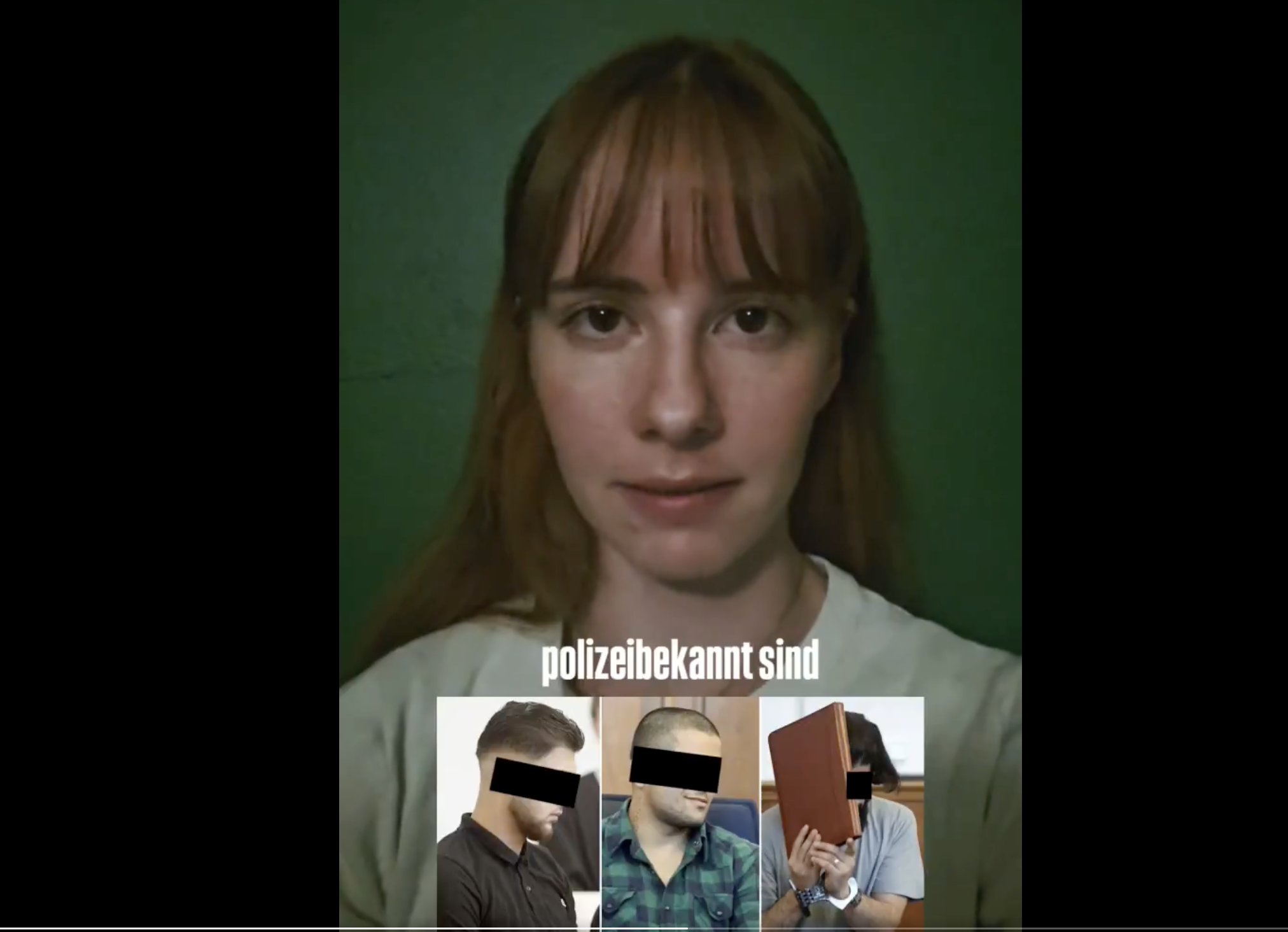
A young German woman from the feminist group Lukreta has posted a video decrying yet another gang rape by foreigners in her country, this time involving three Afghan suspects who are accused of gang raping a 17-year-old girl in Dortmund, filming the rape, and then laughing as they traumatized the victim.

The three men – 20-year-old Quais W., 19-year-old Burhanulla N., and 25-year-old Kambiz H. – are currently on trial in Dortmund Regional Court involving a range of serious charges, including rape and the filming of a pornographic video of a minor.

🇩🇪🔴 "Three Afghan men raped a 17-year-old girl in Dortmund, filmed the act, and even laughed while doing so."

A young German woman says the case was "covered neither by public broadcasters nor by the political Left."

Why? Because the suspects were Afghan.

The suspects are… pic.twitter.com/7rOIcag13I

— Remix News & Views (@RMXnews) August 26, 2026

The three men reportedly lured the girl to their apartment in September 2024 in the city of Dortmund under a false pretext. However, once in the apartment, the suspects got the girl so intoxicated with alcohol that she lost consciousness.

“During the night, the witness lost consciousness as a result of alcohol consumption. The accused then took advantage of this situation,” said prosecutor Fabian Weishaupt.

The three men then systematically raped the girl and filmed themselves laughing. One of them even opened the unconscious girl’s eyes with his finger.

According to Bild, the three suspects all have extensive criminal records, including robbery, attacks against law enforcement, drug trafficking, assault, and other offenses.

As for the Lukreta feminist group, one of their members stated that the case was “covered neither by public broadcasters nor by the political Left even though it can hardly be surpassed in terms of abnormality and misogyny.”

“The reason, of course, is that the three perpetrators are all of Afghan origin and known to the police,” she said.

In other words, the media and left-wing feminist groups are very careful when perpetrators of such attacks are foreigners, but only because such cases are rapidly fueling the rise of the Alternative for Germany (AfD) party. The data is also clear. Remix News reported that last year, a record-high number of suspects involved in gang rape were foreigners, reaching 53 percent for the first time.

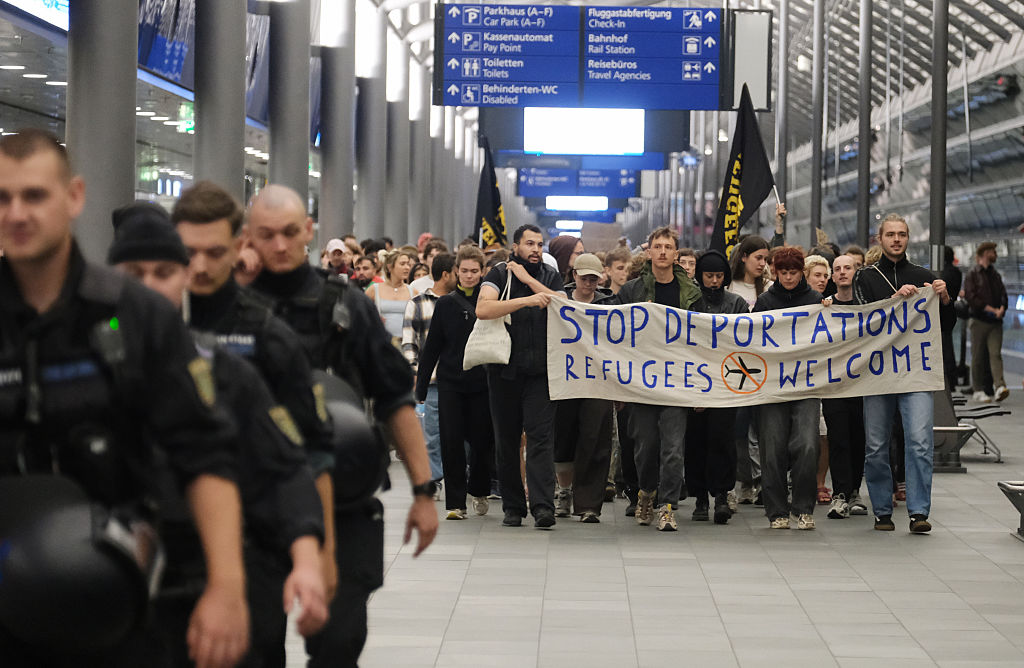
The young woman from Lukreta also has little faith in the German justice system and questions whether the Afghan men will be deported if convicted, stating: “Whether the three Afghans will even be justly convicted is questionable. What is certain, however, is that in the event of deportation, far-left Antifa activists will be at the airport to prevent the flight of the rapists.”

The post Germany: 3 Afghan men gang filmed themselves laughing as they gang raped a young girl appeared first on Remix News.

  •  

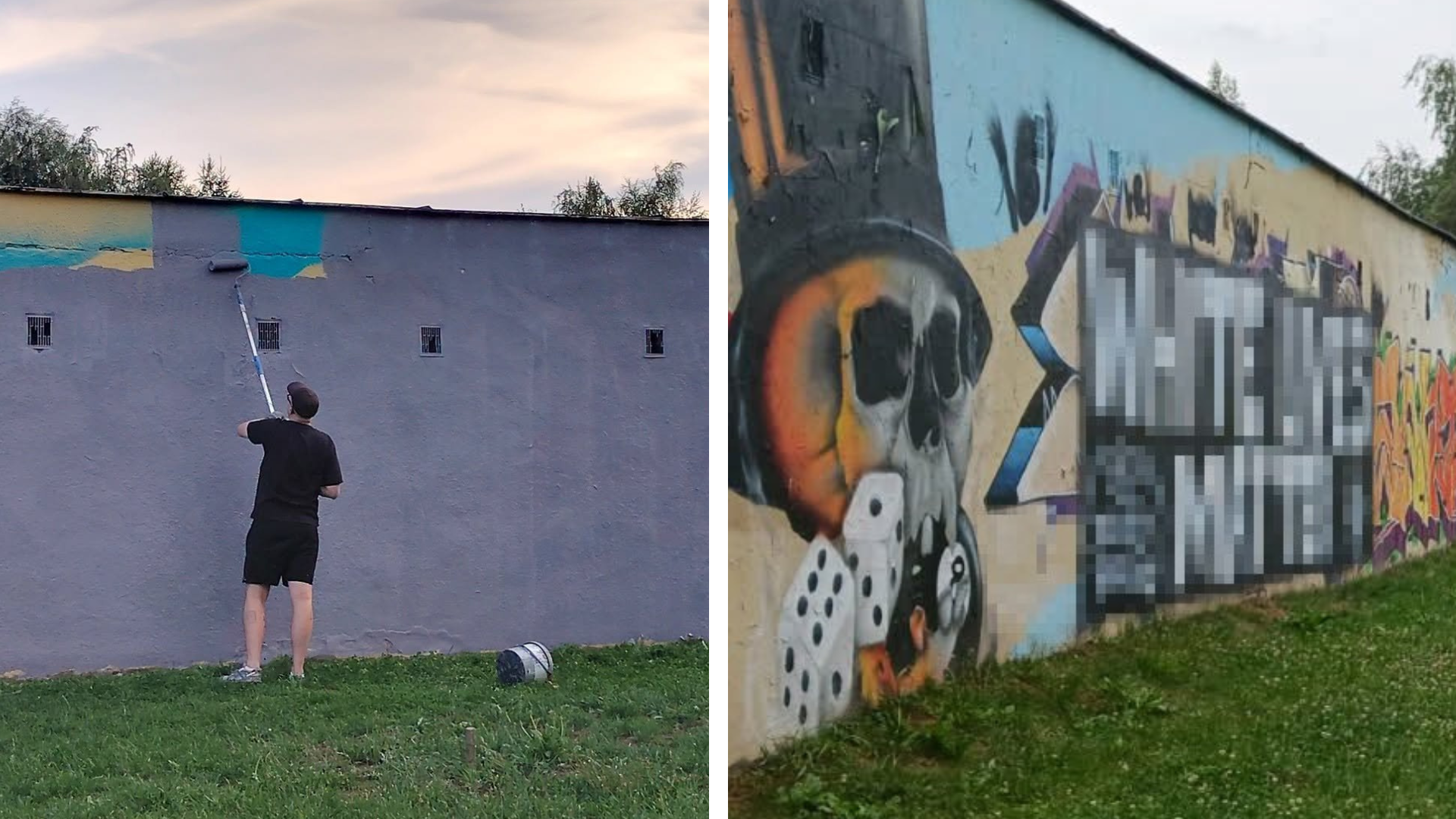
‘White Lives Matter’ graffiti in Polish city sparks police investigation, suspects face up to 3 years in prison

Polish prosecutors are now investigating a “White Lives Matter” graffiti as a hate crime in the city of Rzeszów, with the suspects facing up to three years in prison if they are apprehended and convicted.

Painted on a wall in the Polish city of Rzeszów, the graffiti was reportedly created as a memorial to the murdered British youth Henry Nowak. Polish police have reportedly secured surveillance footage and referred the case to Polish prosecutors. However, Polish newspaper toRzeszow claims that cameras are not in the direct area where the wall was painted, making it difficult to identify the suspects.

🇵🇱🔴 In Poland, prosecutors are now investigating a "White Lives Matter" graffiti as a hate crime, with the suspects facing up to 3 years in prison if they are apprehended and convicted.

Painted on a wall in the Polish city of Rzeszów, the graffiti was reportedly created as a… pic.twitter.com/FP1HYP0cDZ

— Remix News & Views (@RMXnews) August 25, 2026

Authorities also painted over the entire wall.

Major Polish news outlet wPolsce24 has reacted with outrage to the investigation: “The Rzeszów case is part of a broader trend of suppressing the voices of white people who dare to remind them that their lives also have value. When black people say “Black Lives Matter,” it is a fight for equality. When white people say “White Lives Matter,” it is immediately racist.” The news outlet further writes: “The slogan on the garages in Rzeszów was not an expression of hatred. There was a voice reminding us that white lives matters too. And as long as we treat some lives as ‘more equal’ than others, such slogans will appear on walls.”

Meanwhile, authorities claim the graffiti is illegal under article 257 of the Polish penal code, which concerns the public insult of a group of people or an individual based on national, ethnic, or racial identity.

A group labeled “Narodowy Rzeszów” allegedly posted a video of themselves standing next to the graffiti holding a banner and flares and displaying the logo of the right-wing National-Radical Camp (ONR), however, it remains unclear if they sprayed the graffiti themselves. Their post pointed to violence against Whites in Great Britain and Northern Ireland. Social media platforms took the video down.

The post ‘White Lives Matter’ graffiti in Polish city sparks police investigation, suspects face up to 3 years in prison appeared first on Remix News.

  •  

France: Romanian national sentenced to 12 years for running over elderly woman and then stealing husband’s necklace as he delivered first aid

A Romanian man in his forties was sentenced to twelve years of imprisonment after a violent burglary in the French city of Peyrolles-en-Provence left a 65-year-old woman with severe injuries. The Aix-en-Provence criminal court handed down the heavy sentence in an immediate appearance hearing, citing the gravity of the facts and the defendant’s criminal history.

On Aug. 16, 2026, around 3:20 p.m. elderly couple Dominique and Chantal B. were at their home when they discovered an intruder inside. Chantal B., aged 65, surprised the Romanian and immediately alerted French police.

According to Joël Scherer, deputy commander of the Bouches-du-Rhône gendarmerie, the incident escalated quickly.

“A 65-year-old woman surprised the suspect in her home. She immediately calls the gendarmes. The individual then flees. The lady tries to record his license plate. Seeing this, the accused did not hesitate to run her over,” he said.

The woman had positioned herself to record the vehicle’s registration as the man attempted to drive away. While her husband reached for the Romanian suspect’s keys in the ignition, the perpetrator deliberately drove into the woman, running her over.

Chantal B. suffered multiple fractures, including to the pelvis and vertebrae, and was airlifted by helicopter to Hôpital Nord in Marseille, according to local newspaper La Provence.

Instead of fleeing immediately, the Romanian stopped his vehicle a short distance away, returned to the scene, and snatched a gold necklace from the husband’s neck while the husband was administering first aid.

After the suspect fled, police quickly obtained his license plate information and pursued him during a high-speed car chase. The man rammed a roadblock set up by officers, collided with a police service vehicle, and he was then immobilized and arrested in the Saint-Paul-lès-Durance area.

The defendant, already known to authorities for prior offenses involving violent thefts and burglaries, appeared before the Aix-en-Provence tribunal in an expedited procedure. Prosecutors emphasized the deliberate nature of the violence against a vulnerable elderly homeowner and the additional theft committed while the victim lay injured.

The case has drawn attention for the outrageous actions of the Romanian, including returning to the scene solely to steal jewelry from the husband who was trying to save his wife. Local authorities have not publicly released the defendant’s full name.

The post France: Romanian national sentenced to 12 years for running over elderly woman and then stealing husband’s necklace as he delivered first aid appeared first on Remix News.

  •  

‘The most expensive group deportation flight in German history’ – Deporting just 33 people cost EU taxpayers €518,000

Germany’s efforts to deport more illegal immigrants is hitting an operational and fiscal roadblock, as official figures show that voluntary departures are now outstripping state-executed deportations. Despite significant financial expenditure, almost 9,000 removal attempts failed in the first six months of the year alone.

The financial burden of these operations is highlighted by a number of incredibly expensive or aborted deportation operations. In May, a chartered flight from Leipzig to Pakistan carrying 33 individuals subject to departure — escorted by 75 federal police personnel — cost approximately €518,000.

The operation is now being referred to as “the most expensive group deportation flight in German history,” with funding provided by the European Border and Coast Guard Agency, Frontex.

By contrast, German taxpayers directly absorbed the costs for two unassisted charter flights to Afghanistan in April and June, which each exceeded €300,000. Operations to various African nations, including Nigeria, regularly reached €400,000 per flight with Frontex support, while an additional €5.93 million went toward security personnel for repatriations.

In other words, even small-scale deportation efforts are leading to exploding costs. Deportation numbers are also now falling, according to government data released following a parliamentary inquiry by the Left Party. The report reveals that federal authorities executed 9,663 deportations between January and June, a decline of 18.2 percent compared to the same period in the previous year. During this same timeframe, nearly 9,000 planned deportations failed to occur.

While state-enforced deportations may be falling, more and more people appear to be willing to leave the country of their own volition. Border officials confirmed that 17,892 individuals required to leave the country departed on their own, with roughly 9,300 taking advantage of federal financial assistance to do so.

Despite these exits, Germany’s overall backlog remains huge, according to Welt newspaper. By mid-year, roughly 259,000 foreign nationals obliged to exit the country remained in Germany. Of this group, 77 percent were granted temporary suspension of deportation and slightly more than 60 percent represented individuals whose asylum applications had been formally rejected.

Even after cases were handed over to the German Federal Police, deportations were interrupted by administrative issues and even physical resistance. Out of 734 cancellations that occurred during this final phase, “130 were due to acts of resistance, and in 56 cases there were medical concerns.”

At the same time, many pilots appear to be refusing to transport migrants slated for deportation. Pilots refused passage to scheduled deportees in 280 instances during the first half of the year, a notable rise given that 514 total refusals were logged throughout the entirety of 2025. Official records do not track the specific reasons pilots refuse to conduct these repatriations.

To enforce compliance during transit, police utilized physical restraints in 786 cases, with such measures used “particularly frequently during repatriations to Algeria, Morocco and Nigeria.”

The post ‘The most expensive group deportation flight in German history’ – Deporting just 33 people cost EU taxpayers €518,000 appeared first on Remix News.

  •  

Spain’s Great Replacement: Half of unskilled construction workers are now foreign laborers

Spain’s construction industry is undergoing rapid demographic changes. Foreign-born workers in unskilled construction roles now make up 52.6 percent of all workers, according to data from Randstad from the first quarter

The data shows that foreign workers now exceed Spanish nationals for these unskilled roles by nearly 11,000 workers. The contrast is stark compared to pre-pandemic figures, when domestic laborers outnumbered foreign counterparts by more than 33,500.

Overall, the construction industry has lost 22,711 Spanish workers since 2019 while gaining 238,451 foreign employees, a figure that includes individuals with dual nationality. As a result, almost 36 percent of all construction workers, both skilled and unskilled, are now of foreign origin in the country.

The shift is equally evident among bricklayers. In 2019, Spanish bricklayers outnumbered foreigners by 111,000. Seven years later, that gap has narrowed to just 18,000 workers. Foreign labor has gained more than 16 percentage points in this category and currently accounts for roughly 48 percent of bricklayers working in Spain. While Spaniards remain the majority in most skilled roles for now, the statistical gap continues to shrink rapidly. Experts also predict that foreigners will increasingly dominate skilled and managerial positions in the future.

This transformation extends into specialized technical trades. The count of Spanish plumbers fell from 70,932 in 2019 to 57,781 today, while foreign representation doubled after adding over 10,000 workers. One in four plumbers in Spain is now foreign-born. Electricians show a similar dynamic, with about 32,000 foreign workers joining the profession since 2019, driving foreign representation up from under 11 percent pre-pandemic to nearly three out of ten today.

Industry analysts expect these patterns to hold due to impending retirements and low replacement rates among younger Spaniards.

Spain, like many other nations, is attempting to automate the construction industry as much as possible. However, instead of relying on advanced robots, Spain has so far shifted toward a modular construction approach in which concrete panels, bathrooms, and complete structural modules are built indoors in automated, factory-controlled settings that use machinery and assembly lines similar to those in the automotive sector. Cranes then assemble these modular components on site, requiring significantly fewer workers and dramatically cutting project delivery times.

Countries such as South Korea, by contrast, are racing ahead in automated construction, precisely because nations like Spain continue to rely on mass immigration, which is often cheaper in the short term but more costly over the long run.

South Korea does not only use automated construction in planning, but also in deploying commercialized robotics, automated modular manufacturing, and government-mandated smart construction.

Automated facilities, such as Space Factory, use advanced robotic arms to cut materials, assemble structural panels, seal joints, and fit window frames without direct manual intervention.

Unlike standard build sites in Spain, South Korean contractors actively deploy field robotics directly to job sites.

Automated rebar-tying robots and robotic concrete sprayers and finishers are routinely used by major developers, such as Samsung C&T and Hyundai E&C, to reduce heavy physical labor on high-rise residential projects. In addition, unmanned excavators and bulldozers guided by real-time GPS and drone mapping handle heavy site preparation.

Robots are even acting as supervisors to some extent, with autonomous quadruped robots, such as Boston Dynamics’ “Spot,” owned by South Korea’s Hyundai Motor Group, continuously patrolling construction sites, performing 3D laser scans to verify that progress matches digital blueprints.

As Remix News has previously reported, automation, robotics, and AI are all leading elements of Asian economies, which have chosen efficiency and technology over mass immigration and cheap foreign labor.

The post Spain’s Great Replacement: Half of unskilled construction workers are now foreign laborers appeared first on Remix News.

  •  

Germany: African migrant tries to rape 3 women in a matter of minutes, then grab’s policewoman’s crotch during arrest

A 24-year-old man from Gambia remains in custody after police arrested him in connection with a rapid series of alleged sexual attacks on three women in Heidelberg. During the incidents, he allegedly attempted to rape the three women in short succession by dragging them into a cornfield.

Authorities say the incidents unfolded within roughly half an hour on Tuesday morning, Aug. 18, 2026, in an open field area beside the Pfaffengrund cemetery.

According to statements from the Mannheim police headquarters and the Heidelberg public prosecutor’s office, the suspect was walking in the fields around 10:00 a.m. when he approached a woman who was out with her dog. He is accused of grabbing her by the chest and attempting to pull her into a nearby cornfield. The woman shouted and fought back, managing to break free and run away, according to German newspaper Wochenblatt.

Minutes later, between approximately 10:25 and 10:30 a.m., the same man allegedly targeted two other female walkers separately. In each case he seized their hands or wrists and tried to force them toward the cornfield. Both women resisted vigorously, and he eventually released them without succeeding.

Witnesses who saw the confrontations contacted emergency services. Officers launched an immediate search and detained the suspect a short time later. During the arrest, he is further accused of grabbing a female police officer’s crotch.

The following day, the 24-year-old appeared before an investigating judge at the Heidelberg District Court. At the prosecutor’s request the judge issued an arrest warrant on suspicion of multiple counts of attempted sexual assault, sexual harassment, and additional related offenses. He was then transferred to a correctional facility.

Investigators have indicated they are examining possible other incidents linked to the same individual. The joint probe by the Heidelberg public prosecutor’s office and the criminal police continues.

The case has parallels with many other cases covered by Remix News over the years, including a case where a woman successfully fought off a migrant with a horse whip when he tried to drag her off her horse and rape her.

The post Germany: African migrant tries to rape 3 women in a matter of minutes, then grab’s policewoman’s crotch during arrest appeared first on Remix News.

  •  

Romania’s years-long crisis of democratic legitimacy deepens

Romania’s ongoing political crisis is entering a more critical phase, with a collapsed government, an unresolved battle over the presidency and a growing conservative-nationalist challenge to the political order that has dominated the country for years.

At stake is not just who governs Bucharest, but whether Romania’s institutions can recover public legitimacy after the extraordinary cancellation of the 2024 presidential election.

The crisis dates back to November 2024, when independent nationalist candidate Călin Georgescu—to the surprise of many—finished first in the opening round of the presidential vote.

Citing alleged electoral irregularities and intelligence—evidence that still hasn’t been disclosed to the public—claiming Russian interference in favor of Călin Georgescu, Romania’s Constitutional Court subsequently annulled the election.

The court’s decision, therefore, erased an election result already delivered by Romanian voters and triggered one of the most serious democratic controversies in the European Union.

Romania’s democratic clampdown deepened even further in March 2025 when Georgescu was barred from taking part in the rerun presidential election. The Constitutional Court upheld his exclusion, leaving the person who had won the original first round unable to compete when Romanians were sent back to the polls for a second time.

The sequence of events became, for a broad cross-section of Romania’s population, undeniable proof of what many observers have begun to describe as “managed democracy”—meaning elections across the EU are “legitimate” only until voters choose someone “unacceptable” to the ruling establishment.
It didn’t take long for news of the crisis to reach across the Atlantic. Vice President JD Vance used his 2025 Munich Security Conference speech to accuse Romania of having “straight up canceled the results of a presidential election based on the flimsy suspicions of an intelligence agency and enormous pressure from its continental neighbors.”

The U.S. State Department’s subsequent Report on Human Rights Practices also leveled criticism that the annulment represented political interference and an unusually severe restriction on disfavored political speech. Elon Musk, for his part, in several posts to social media attacked the Romanian state’s treatment of Georgescu and described one official connected with the process as a “tyrant.”

How can a judge end democracy in Romania? https://t.co/9MFhlq6YwQ

— Elon Musk (@elonmusk) March 10, 2025

This guy is a tyrant, not a judge https://t.co/ghE9X4W5G3

— Elon Musk (@elonmusk) February 20, 2025

The episode resonated well beyond Romania because it touched a wider fault line running through European politics. Nationalist movements challenging Brussels on sovereignty, mass migration, security, green policy, cultural questions, and foreign affairs increasingly argue that institutional mechanisms are being weaponized to contain alternative political forces that can no longer be easily defeated—and may even be winning outright—at the ballot box.

Romania’s own long-established, ruling elite class has since begun to fracture. Prime Minister Ilie Bolojan’s Brussels-aligned government was brought down on May 5 after the Social Democratic Party (PSD) abandoned the coalition and joined nationalist AUR and other opposition forces in backing a no-confidence motion.

The result was overwhelming—281 lawmakers voted to remove the government, compared with only four against, well above the 233 votes required. The scale of the defeat exposed the government’s lack of legitimacy and revealed how quickly the firewall around Romania’s nationalist opposition had begun to crack.

Especially noteworthy was the decision by the PSD, long one of the pillars of Romania’s establishment, to cooperate with the Alliance for the Union of Romanians (AUR). Whatever the parties’ differences, that cooperation showed that excluding AUR indefinitely from parliamentary influence was becoming increasingly difficult.

President Nicușor Dan, so far, has failed to find a legitimate replacement. His nominee Adrian Veștea went before Parliament in June but secured only 189 votes—44 short of the 233 needed to install a government.

The failure prolonged a political vacuum that has continued into August. Bolojan remains interim prime minister, while Dan has held repeated consultations with former coalition parties in an effort to maintain fiscal measures and secure Romania’s remaining EU recovery funds.

The government’s paralysis has placed greater scrutiny on Dan himself. The right-wing S.O.S. Romania party formally initiated a constitutional procedure seeking his suspension under Article 95, alleging serious violations involving the separation of powers, government formation, the judiciary and democratic oversight of the intelligence services.

S.O.S. leader Diana Șoșoacă said more than 400,000 Romanian living in the country and abroad had expressed support for Dan’s removal. She also claimed that 155 parliamentarians had indicated agreement with the suspension initiative, although the names of lawmakers outside her party were not publicly disclosed.

The accusations against Dan include claims that he has blurred the constitutional boundaries of the presidency by involving himself too directly in judicial affairs. Critics have also objected to his public comments concerning the Constitutional Court and his consultations with magistrates.

Another point of contention is Dan’s insistence on constructing what he has repeatedly called a pro-Western governing majority. His opponents argue that the Constitution requires the president to facilitate government formation rather than impose ideological tests on parties capable of assembling parliamentary support.

Dan, for his part, has defended his approach as an effort to maintain Romania’s strategic orientation and produce a workable government. His supporters say the country’s position on NATO’s eastern flank, next to Ukraine, makes political and foreign-policy continuity especially important.

The intelligence services have become another sensitive issue. Critics point to the absence of permanent civilian leadership at the Romanian Intelligence Service while proposals have circulated to expand the security apparatus into areas including corruption and tax enforcement.

Such controversies carry particular historical weight in Romania, where memories of communist-era surveillance and the political power of the security services remain deeply embedded. Measures that might be treated elsewhere as routine institutional disputes can therefore trigger much deeper fears of political control.

A separate 2026 rule-of-law report cited by critics has further intensified the argument over Romania’s Constitutional Court. The Civil Liberties Union for Europe report was cited as arguing that the court had effectively changed the law in its handling of electoral candidacies, raising questions about legal certainty and the scope of judicial power.

The same report raised concerns over procedural protections for excluded candidates and discussed structural reform of the Constitutional Court itself. It also highlighted problems involving media independence, opaque political financing, and poorly defined anti-disinformation measures that can potentially restrict legitimate speech.

Those findings have strengthened the case made by Georgescu’s and his supporters that the 2024 election annulment, described by many analysts as a constitutional coup, was never merely about one TikTok campaign. They see it as a confrontation over who ultimately sets the boundaries of acceptable politics—Romanian voters or institutions increasingly tied to a globalist, Brussels-centered political consensus.

Romania’s crisis has moved beyond constitutional theory, as its political breakdown now collides with an economy facing some of the heaviest fiscal pressures in the European Union.

Earlier predictions that Fitch could push Romanian sovereign debt into junk territory did not materialize this August. Fitch instead maintained Romania at BBB-, the lowest investment-grade level, while keeping a negative outlook and warning that prolonged political instability could undermine deficit reduction and jeopardize access to European recovery money.

The reprieve should not be confused with economic security. Fitch expects Romania’s economy to contract by roughly 0.6 percent in 2026 and projects a budget deficit of about 5.9 percent of GDP—an improvement from previous years, but still exceptionally high for a BBB-rated state.

S&P has likewise kept Romania at BBB- with a negative outlook. Both agencies have pointed to the ongoing political fragmentation, financing pressures, and the difficulty of sustaining fiscal consolidation while governments rise and fall in Bucharest.

For ordinary Romanians, warnings like these translate into something much more tangible than ratings-agency terminology. They mean higher borrowing costs, increased pressure on household incomes, weaker growth, and further uncertainty over the country’s economic future. That helps explain why anger at political elites has persisted even as officials insist Romania remains firmly anchored inside the EU and NATO.

The nationalist political revolt in Romania also forms part of a wider European trend. From the AfD in Germany and Marine Le Pen’s movement in France to populist forces in Italy, Austria and elsewhere, parties demanding national sovereignty, stricter immigration controls and, increasingly, remigration have forced issues once excluded from respectable debate into the political mainstream.

Romania’s version of that revolt has developed around Georgescu and AUR, whose supporters increasingly compare their struggle with the movement that formed around Donald Trump in the United States. They view sovereignty, national identity, demographic security, economic accountability, and a nationally oriented foreign policy not as threats to democracy, but as core issues that any genuine democracy must be free to decide for itself.

The Romanian establishment—and by extension its backers in Brussels—now faces an uncomfortable problem: attempts to isolate Romania’s traditional, nationalist, and patriotic electorate have not only failed to make it disappear, but have made it much stronger. The collapse of the governing coalition and the cooperation between PSD and AUR have shown that the old cordon sanitaire is becoming harder—if not impossible—to maintain.

The post Romania’s years-long crisis of democratic legitimacy deepens appeared first on Remix News.

  •  

Switzerland: 80.5% of North African asylum seekers have been accused of one or more crimes

Around 80.5 percent of asylum seekers from North African countries were accused of one or more offenses in Switzerland, underlining the massive amount of criminality present in this foreign population. The data comes from the State Secretariat for Migration (SEM).

For asylum seekers as a whole, the rate of criminality is much lower, with only 12.5 percent having been accused of one or more offenses. Nationals from Algeria, Morocco and Tunisia are therefore extremely overrepresented compared to other asylum seeker groups.

North Africans also have little chance of having their asylum applications accepted by Swiss authorities, with 99 percent of all applications rejected, according to Swiss newspaper Blick.

In 2024, a “24-hour” rule was introduced for accelerated asylum procedures for North African countries, which enables Swiss authorities to process asylum claims with a low chance of success more quickly. Applicants can still appeal the decisions, which can significantly increase delay in reaching a final decision.

“Criminals must leave Switzerland quickly. This is a priority of the asylum strategy,” said SEM spokesperson Daniel Bach.

However, the process is often delayed by the actions of asylum seekers, including refusing to provide fingerprints and failing to show up for deportation appointments.

Many applicants also obstruct the accelerated procedure: they refuse to provide their fingerprints, do not show up for appointments or quickly leave Switzerland. In these cases, their request can be filed without formalities.

Authorities are now working to implement new measures to quickly deport asylum seekers, including the “systematic use of coercive measures against the perpetrators of repeated offenses.” Authorities are also planning to introduce stricter rules for administrative detention.

The SEM also wants to increase cooperation with North African countries and recently signed an agreement with Morocco to accelerate the of asylum seekers ordered to be deported and help facilitate their return.

The post Switzerland: 80.5% of North African asylum seekers have been accused of one or more crimes appeared first on Remix News.

  •  

Full-face veils banned in Portugal after president signs ‘burqa law’

Portuguese President António José Seguro has officially signed into law a bill banning face-concealing attire in public spaces, with the move seen targeting the full-face Islamic veils like the burqa and niqab.

Addressing the national debate, President Seguro framed the decision around human interaction, stating: “The face should be considered a central element of human identity and communication.” 

However, the former Socialist Party leader acknowledged the controversial nature of the ban, recognizing it as a matter of significant cultural and social sensitivity.

The law was largely backed by the country’s right-wing politicians and labeled the “burqa law” by Portuguese media. It passed parliament in July with the votes of right-wing parties, with the left firmly in opposition.

The new legal framework strictly limits garments designed to hide one’s identity in public spaces. It also penalizes forcing individuals to cover their faces based on gender, religion, or age.

Violators face financial penalties ranging from €150 to €3,000. There are, however, some exceptions. Wearing items that cover the face, such as medical masks, professional/artistic gear, and extreme weather wear, are all examples of exceptions under the law.

The post Full-face veils banned in Portugal after president signs ‘burqa law’ appeared first on Remix News.

  •  

‘Poles are drinking less and less alcohol’ – Non-alcoholic beer sales fail to save market

In the first half of 2026 alcoholic beer sales fell by as much as 11.9 percent, and despite the sharp increase in non-alcoholic beer sales, this trend is unable to arrest the dramatically deepening economic downturn in the brewery industry, which supports 85,000 jobs, including in agriculture, logistics, bars, and catering.

The beer market has been falling continuously for eight years. Between 2018 and 2025, the market lost over 7.5 million hectoliters in beer sales, which corresponds to the annual production of three medium-sized breweries. In the first half of 2026, there is no sign of a rebound. According to data from the Polish Central Statistical Office, production of alcoholic beer fell by 11.9 percent compared to the same period last year.

“The first half of this year is not encouraging. An alcoholic beer sales decline of almost 12 percent shows how troubled the brewing industry is in Poland. There are several sources, primarily the global NoLo trend (no or low-alcohol) or the ‘Better for You’ trend, which are increasingly effectively translating into the consumption behavior of Poles. Economic issues are also important: beer is a very price-sensitive product, and its retail price has increased by over 40% in recent years,” says Bartłomiej Morzycki, general director of the Association of Brewing Industry Employers Browary Polskie.

Non-alcoholic beer gaining traction

In the first half of 2026 production sold of 0.0 percent alcohol beers increased by as much as 16.2 percent, and in June by as much as 30.1 percent year over year.

“Non-alcoholic beers are a daily choice for professionally active people, drivers and consumers who care about their health and consciously limit their alcohol consumption. They are increasingly choosing 0.0 percent products so as not to give up social rituals or the taste of beer itself. This is a pan-European trend that meets public health objectives,” said Bartłomiej Morzycki.

Breweries unprecedented regulatory and financial pressure

For almost a decade, breweries have consistently developed the 0.0 percent segment, investing in new technologies and innovative products. Variants without sugar and calories, enriched with vitamins and electrolytes, are appearing on the market. At the same time, research shows that non-alcoholic beer has a strong substitution effect, helping reduce alcohol consumption.

“Recent CBOS research has shown that almost one in four Poles has given up alcohol, and among those who consume alcohol, more than half also reach for non-alcoholic beer. The substitution effect makes this segment of social, health and economic importance. Therefore, in many European countries it is supported by the state as an effective element of alcohol consumption reduction policies,” said Bartłomiej Morzycki.

Meanwhile, several projects concerning the alcoholic beverages market are currently moving forward in Poland, which may hinder the further development of the non-alcoholic beer segment, including changes to the “Act on Upbringing in Sobriety and Counteracting Alcoholism,” as well as a proposal to abandon the current excise map. At the same time, the sugar tax in Poland might be expanded and the VAT for zero-income earners may also be increased.

“Never before has the brewing industry faced such a large number of simultaneous changes. Each of them individually affects the operating conditions and competitiveness of beer in the alcoholic beverage market, and their combined impact may threaten the stability of many sectors in the brewing industry value chain. Moreover, the proposed changes go against the grain of socially acceptable alcohol reduction policies,” said the general director of the Polish Breweries Association.

Risk to the entire economy

The brewing industry represents 85,000. jobs, including thousands of farms and Polish enterprises in related sectors. Beer production accounts for approximately 0.56 percent of Polish GDP and contributes billions of zlotys to public finances each year in taxes and contributions.

According to data from the Association of Brewing Industry Employers Browary Polskie, the industry uses approximately 400,000 tons of barley malt, 75,000 tons of other cereals, over 130 tons of alpha hop acids and approximately 30,000 tons of apples used to produce flavored beers. The reduction in production means lower orders for packaging manufacturers, logistics and transport companies, as well as lower turnover for retail and catering.

“Poles are drinking less and less alcohol. If we add sharp tax increases and further administrative restrictions to natural consumer changes, we risk halting positive health trends and deepening the crisis of the entire value chain. Today, we need a well-thought-out, common-sense and emotion-free economic policy towards our industry,” said Bartłomiej Morzycki while speaking on behalf of the brewing industry.

The post ‘Poles are drinking less and less alcohol’ – Non-alcoholic beer sales fail to save market appeared first on Remix News.

  •  

‘It’s terrible for us’ – Mohamed L. stabbed Alban Gervaise to death in front of his young children, and now just 4 years later, he’s being released

Mohamed L. is being released in France after just 4 years in detention, the same man who brutally murdered 40-year-old military doctor and father Alban Gervaise in front of his young children in 2022.

“It’s news that we’re trying to prepare for this early release after the murder, barely four years later. It’s news that is really hard to hear, that makes us really go back to our work of mourning for the children and me,” said Christelle Gervaise, the wife of Alban, in an interview with Legend TV.

“It’s true that it’s hard to imagine being able to be in the same city as him. It’s true that it’s quite unbearable for us.”

🇫🇷🔴 Mohamed L. is being released in France after just 4 years in detention, the same man who brutally murdered 40-year-old military doctor and father Alban Gervaise in front of his young children.

"It’s news that we’re trying to prepare for this early release after the murder,… pic.twitter.com/CdChf3u7A7

— Remix News & Views (@RMXnews) August 20, 2026

Alban was stabbed to death while waiting outside his children’s Catholic school to pick up his two sons, aged 3 and 7, while his 20-month-old daughter was inside his car, in Marseille in May 2022.

Now, the killer will enjoy partial release during evenings and weekends “at liberty.”

The mother, Christelle, is terrified, and the courts so far have refused to listen to her pleas to block Mohamed L. from being in the same city as her and her children.

“I find that it is an additional concern in our lives that we didn’t really need. And I had to announce to my children this early release. There is necessarily a feeling of injustice. How can he leave prison so early after the murder of their father? And then, yes, there is a great concern on the part of my children. That’s for sure.”

This clip is a condensed version of her full interview, but it showcases the horror a French family is facing, both from the murderer and from the French judicial system.

In the interview, Christelle describes the moment of disbelief and grief when she first learned her husband had been stabbed.

“This is not possible, this is not possible, what is happening,” she told herself.

But it did happen, just as it has happened to countless Europeans year after year. Upon arriving on scene, she is greeted with an empty car and no sign of her children.

“And in fact, I’m going to see a first policeman who is going to accompany me to see the principal this time, who reassures me, my children are safe inside the school, all three of them, but I learn from a policeman who comes that my husband is between life and death and has been transferred to the hospital for resuscitation,” she said.

Alban spent 17 days in a coma, where she tried to tell him over and over again that the children were not harmed and that they needed their father.

“And during those 17 days, I talked to him a lot and he … I hope he heard me. I will never know…. I kept repeating several times to Alban that our daughter is fine, that she is okay, that nothing happened at all. Because I imagine that as a father, for him, it was terrible to be attacked like that with a knife. And then to see that he was going to lose his consciousness. He must have felt it and imagined his daughter in danger.”

“I also tell him that he can’t leave, he can’t leave us. Our children are very small, and I need him, the children need him.”

Then, she describes the moment when she had to tell her young children that their father is gone.

“The death announcement to the children is something that I will never forget and I think it’s the hardest moment of my life, really.”

She was forced to sit her children down and let them know what happened to their father.

“So I told them that I had terrible news to tell them, but that unfortunately, their father had died the night before,” said Christelle.

Now, after the terrible ordeal of losing a father and a husband, the French court system is releasing their father’s killer with zero restrictions on him entering the same city as the family. While there is a direct contact ban, there is no guarantee they do not run into Mohamed L. on the street.

Mohamed L. never even faced a trial. Why? He smoked too much cannabis and had a “psychotic break.” The court experts confirmed this, and just like that, authorities deemed he could not be held criminally responsible. No trial and freedom after just four years.

“The fact that he is not imprisoned like a murderer for 15, 20 years in prison. It’s terrible for us. It’s terrible to know the violence Alban has suffered. And in addition, we must accept that after four years, his murderer is outside on evenings and weekends.”

“I am very worried, first of all, about the risk of recidivism. And then I find that for us, it is also a concern, since this person has the right to come to Marseille.”

She said that the authorities involved in the decision say Mohamed L. “must be able to benefit from it, he must have the necessary care.”

The murder already led the children to be forced from their own school. Now, they may have to leave their own city.

“My children have already had to change schools since it happened. They had to change friends. If, in addition, I tell them that we are leaving the city completely because the murderer and their father have the right to go where they want, I think that it is difficult to understand for them. I can’t help but say to myself, I don’t know where he is, I don’t know what he’s doing,” Christelle said.

She is fighting desperately with her lawyer to ensure this killer is no longer allowed in her city.

“The goal is that, is to have a measure that makes it forbidden for him to go to Marseille.”

“It is something that we carry on our shoulders with the children and that we will carry for a very long time.”

After his arrest, while held at Baumettes prison, he attempted to assault a guard, which contributed to his transfer to a psychiatric unit for difficult patients (UMD). This occurred after the murder and presumably, cannabis was not a factor in this assault.

Shockingly, during the trial, one of the psychiatrists openly said that they cannot predict whether the murderer will “relapse.”

“The question of the risk of a relapse. One of the psychiatrists had answered that it was a bit like predicting a plane crash, that it was impossible to predict. Psychiatrists who take care of this type of patient do not have a crystal ball to be sure that there will be no relapse. And this risk is still to be taken into account in the decisions to allow this person to be in the street today,” she said.

In other words, psychiatric experts admit Mohamed L. may murder again, yet, he is being allowed out on evenings and weekends anyway.

Christelle still has questions about how the man was deemed psychologically unfit to stand trial.

She said that after passersby tackled Mohamed L., he screamed: “In the name of Allah, I gave him 30 stab wounds!”

In response, Christelle said: “I always ask myself the question of something that was more premeditated than what you want to make me believe… We are talking about someone who can kill someone in the street. My husband only lasted a few moments. It’s not a fight, it’s a murder.”

“You think he’s going to go to prison. It doesn’t happen as planned. In relation to the trajectory of the murder of my husband,” she added.

“What is complicated, in fact, with this decision, is that we have no idea of the deadline. We don’t know how long he’s going to stay at the hospital in a closed unit. We don’t know how to answer this question. And despite everything, we can still hear that it is difficult to announce to his children that the murder of their father is not condemned to prison, but will have care for an undetermined duration. I also felt deprived of answers to certain questions,” she said.

Regardless, three children are now missing a loving father, with Alban’s wife describing a happy home life before his murder: “We had a life with Alban who was quite classic and very happy. We met in 2009. I was a medical student and he was an intern. We got engaged and then we got married. We had three children. We moved several times because Alban was a military doctor. So we met in Lorraine. Then we went to Paris for his work. Then to Marseille in July 2021. And we really had a very happy family life because Alban was a very loving husband, very loved and a father really present for his children and very invested in his role as a father.”

The post ‘It’s terrible for us’ – Mohamed L. stabbed Alban Gervaise to death in front of his young children, and now just 4 years later, he’s being released appeared first on Remix News.

  •  

‘This is the first femicide our city has seen’ – Tunisian migrant arrested for stabbing his Polish wife 4 times in the throat near Rome

During a marital argument, a 69-year-old Tunisian, Mohamed Habib Rouissi, allegedly murdered his 50-year-old Polish wife, Joanna Rouissi, by stabbing her four times in the throat in the town of Colleferro near Rome.

During the argument and murder on Aug. 18, their nine-year-old son witnessed the brutal murder of his mother, and the couple’s eldest son, 20, was also in the apartment and was unable to stop his father.

After killing Joanna, her husband reportedly dropped the knife and fled the scene. The daughter, who returned home moments later, found her younger brother terrified and her mother dying. Despite the intervention of the paramedics and attempts at resuscitation, the victim died at the scene, according to Italian newspaper il Fatto Quotidiano.

As part of the immediate operational activities undertaken, police officers from the Colleferro police station detained Mohamed Habib several hundred meters from the murder scene. The man did not resist and confessed to the crime during questioning.

The Tunisian is now under pre-trial detention.

The Velletri prosecutor’s office is conducting an investigation into the murder, determining the exact course of events and the perpetrator’s motives.

The mayor of the town has also spoken out.

“From what we can understand, the lady was quite well known in the area and by some families of Colleferro. From what emerges, there were some signs of this situation which, however, evidently escaped authorities’ attention or were not considered so dangerous,” said the mayor of Colleferro, Giulio Calamita, while speaking to LaPresse. “This is the first femicide our city has seen in its modern history. A man, reportedly with mental problems, killed his partner. This is yet another tragedy after a difficult week, terrible news that has shaken a family of five children, one of whom is a minor. In these hours, we have given them as much support as we could and will continue to do so in the coming days. I’m sure the city will also find a way to react to this bad story.”

Investigators are also checking whether the family has previously reported cases of domestic violence. According to preliminary findings, tensions had been brewing between the spouses for some time. The couple’s five children were placed in a care facility.

The post ‘This is the first femicide our city has seen’ – Tunisian migrant arrested for stabbing his Polish wife 4 times in the throat near Rome appeared first on Remix News.

  •  
❌