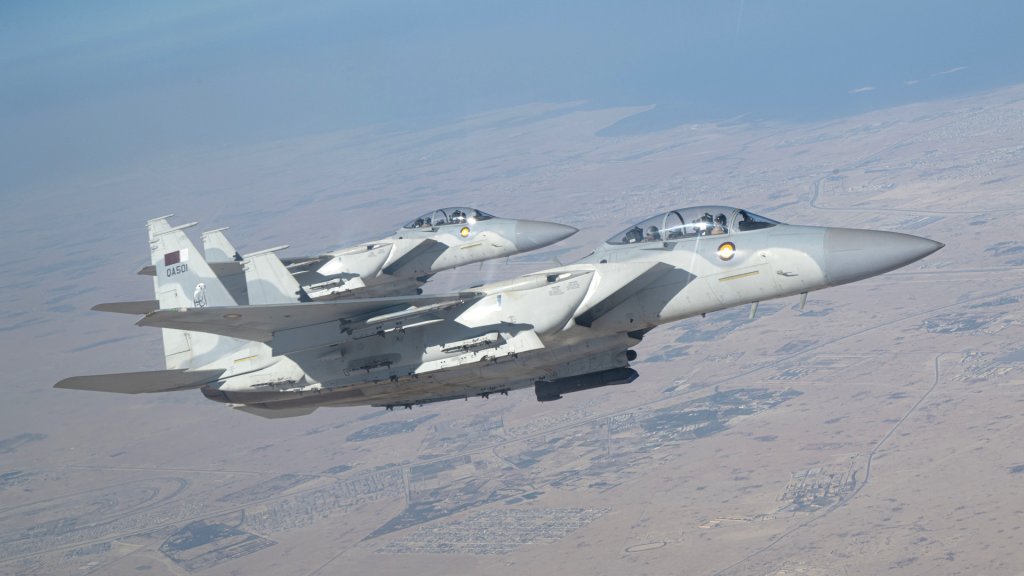
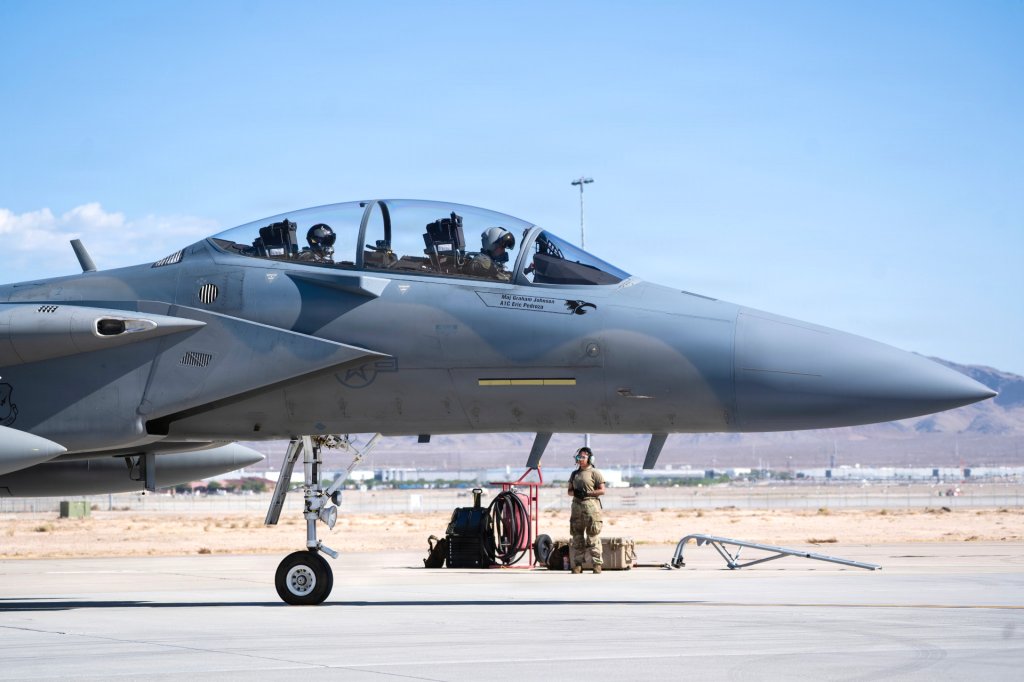
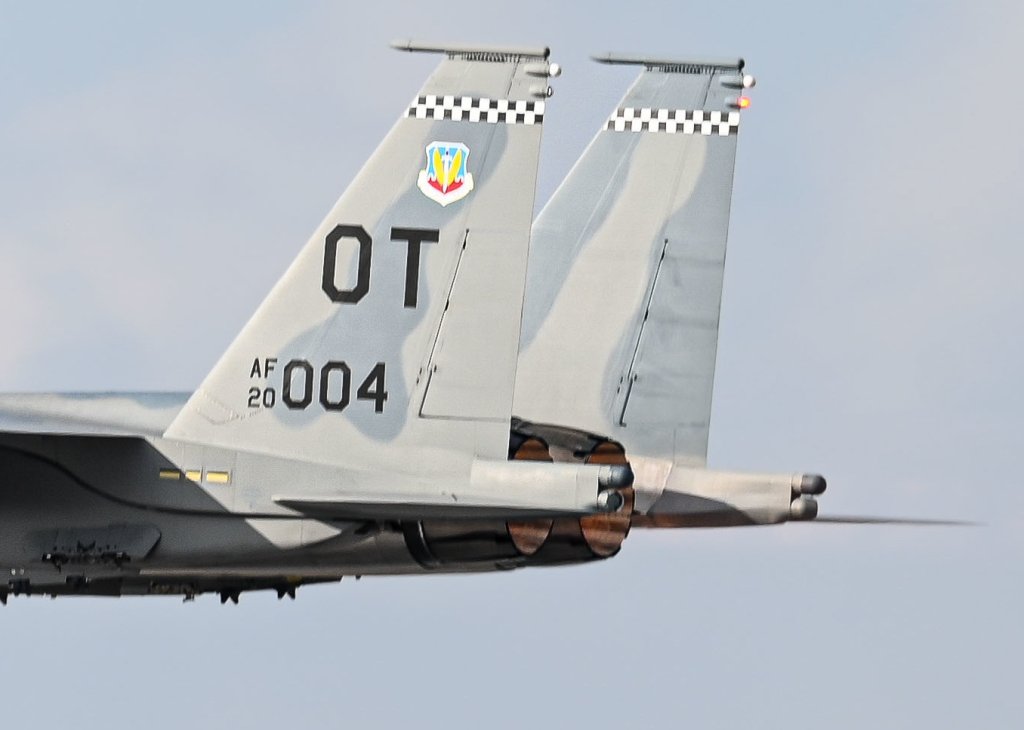
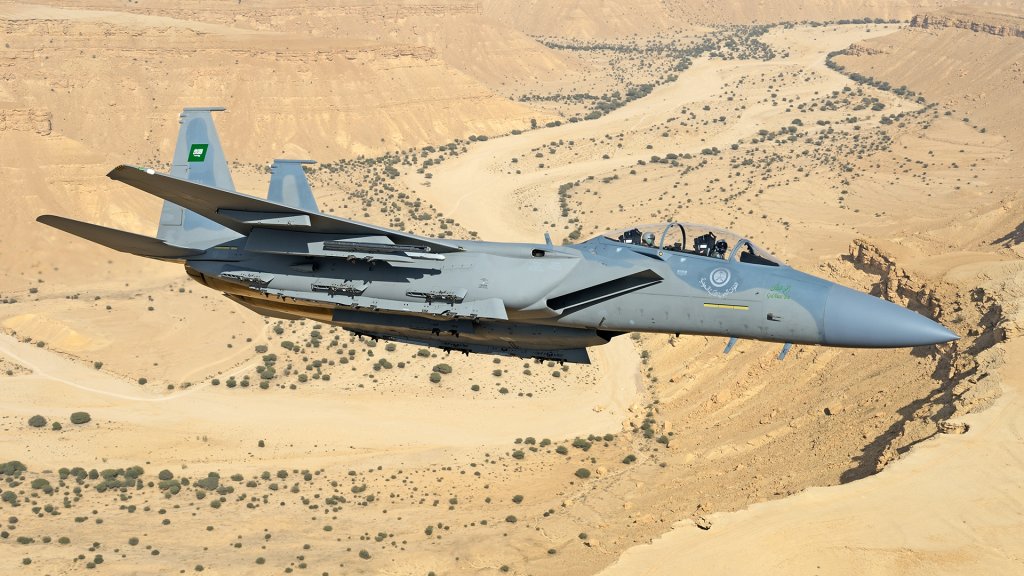
❌

Reading view

Any Decision To Buy New-Build F-16s Not An “Urgent” Priority: USAF

The U.S. Air Force says any decision on whether or not to acquire new production F-16 Viper fighters is likely a year or more away. The service’s top officer in charge of force structure planning has also now raised the prospect of using a “spectrum of capability” to eventually supplant aging older-model F-16s. All of this comes as the Air Force has laid out a new vision to have 1,509 combat-coded fighters in inventory, hundreds more than it has now, by 2035, amid questions about whether industry and budgets can keep up.

Inside Defense and Air & Space Forces Magazine were among the first to report on the Air Force’s latest long-term fighter force structure plan late yesterday. This followed a roundtable with Lt. Gen. David Tabor, the service’s Deputy Chief of Staff for Plans and Programs. At the time of writing, an unclassified copy of the report, which was submitted to Congress last week, has not been released publicly. TWZ has reached out for more information.

Air Force Lt. Gen. David Tabor, seen here testifying before the Senate Armed Services Committee in 2024. USAF

Tabor said yesterday that the target fleet of 1,509 combat-coded fighters by 2035 would be approximately 40 percent F-35s, 40 percent F-15s (inclusive of F-15E Strike Eagles and F-15EX Eagle IIs) and F-16s, and 20 percent F-22 Raptors and F-47s, according to Air & Space Forces Magazine. As an aside, the final expected F-47 fleet size remains unclear, though the Air Force continues to say it plans to acquire at least enough of those jets to replace its 185 F-22s on a one-for-one basis.

The current breakdown of the service’s fighter force structure is 45 percent F-16s, 30 percent F-35s, 15 percent F-15s, and 10 percent F-22s. Last year’s long-term fighter force structure report said the service was aiming for an eventual inventory of 1,558 combat-coded fighters and hoped to hit a milestone of 1,369 aircraft by Fiscal Year 2030. As of the start of Fiscal Year 2026, the Air Force had 1,168 combat-coded fighters, not including 103 A-10 Warthog ground attack jets, which have been part of this force structure planning in the past. The plan now is for the last of the A-10s to be retired by 2030. The new 2035 figure also does not include the hundreds of Collaborative Combat Aircraft (CCA) drones the service wants to have acquired by that time, something we will come back to later on.
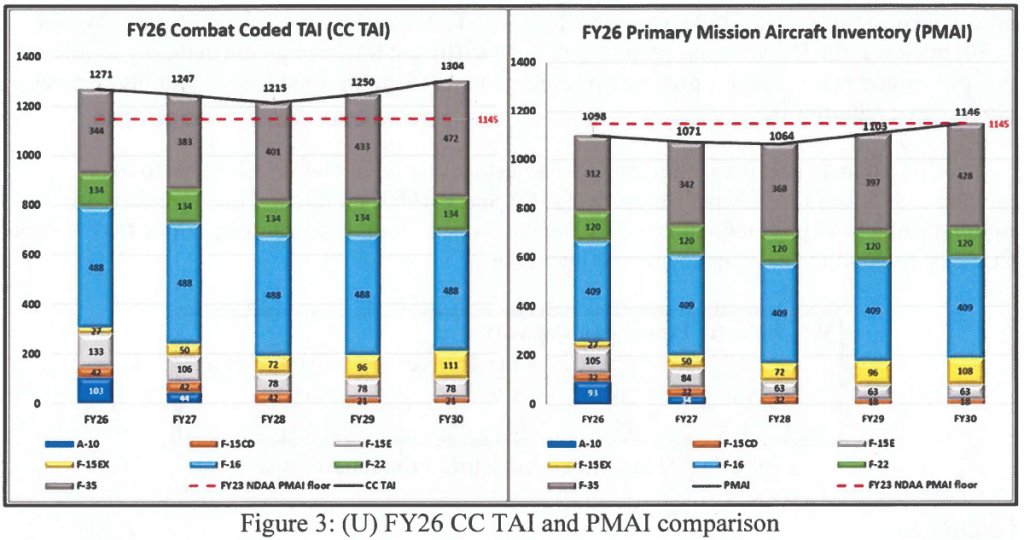
The US Air Force included these graphs showing projected fluctuations in fighter inventories in its annual force structure report last year. Not that the combat-coded tally for Fiscal Year 2030 shown here is lower (1,304) than the one the service said it was aiming for (1,369) at the time. The reason for that discrepancy is unclear. USAF

Currently, the Air Force expects fighter fleet expansion to be driven by the acquisition of new F-35As, F-15EXs, and F-47s. This was also the case when last year’s fighter force structure report was released. The possibility of the Air Force also acquiring new-production F-16s has come up several times in recent years. Most recently, there were several reports last month that prime contractor Lockheed Martin had made a new pitch to the service for a version of the latest Block 70 version of the fighter, tentatively dubbed the F-16G. New Block 70 and Block 72 F-16s, which differ in what engine they use, are being actively produced at Lockheed Martin’s plant in Greenville, South Carolina. At that time, TWZ did a deep dive into the benefits that this could offer the Air Force.
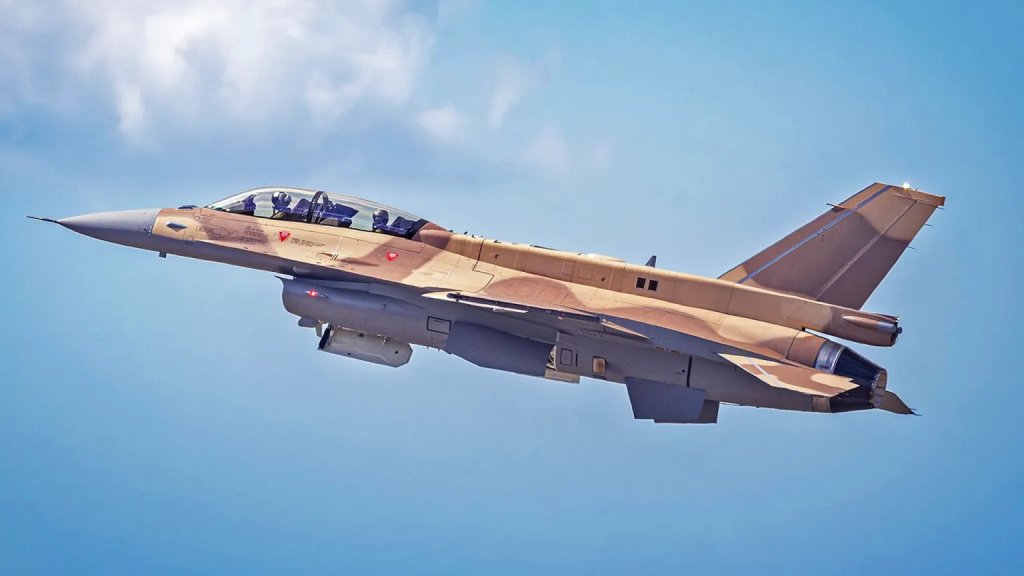
The new-production F-16D seen here, destined for Morocco, became the first Block 72 version to fly just earlier this month. Lockheed Martin

“There is a spectrum of capability that we might want to replace the F-16s with,” Lt. Gen. Tabor said amid a discussion about the prospect of acquiring new Vipers at the roundtable yesterday, per Air & Space Forces Magazine. “It’s not urgent, frankly. What we don’t want to get to is a point where it is urgent, and we haven’t done the homework and decided ‘hey, this is really the right place to be.’ We do have time to churn through that and make sure that we have a good option going forward.”

“We’re not in a position where that decision has to be made immediately,” Tabor added, while acknowledging that “we are very conscious” that older-model F-16s are set to begin reaching the end of their lifespans in the 2030s. He also said any such planning was unlikely to be part of the process of developing the service’s Fiscal Year 2028 budget proposal, which will be released sometime early next year.

The Air Force is “in the initial phases of analyzing options for the next Future Years Defense Program,” a spokesperson for the service had told us last month without specifically mentioning any particular type of aircraft. “At this stage, we have neither defined the precise mission requirements nor the spectrum of options that could fill it.”

When it comes to the current F-16 fleet, the Air Force had 774 Vipers in inventory at the start of Fiscal Year 2026 and expected that number to drop to 768, according to past budget documents. This includes a mixture of subvariants, and not all of them are assigned combat-coded units. The Air Force has been substantially upgrading at least a portion of its existing F-16s, including with the addition of new active electronically scanned array (AESA) radars and electronic warfare suites, to ensure their operational relevance for years to come.
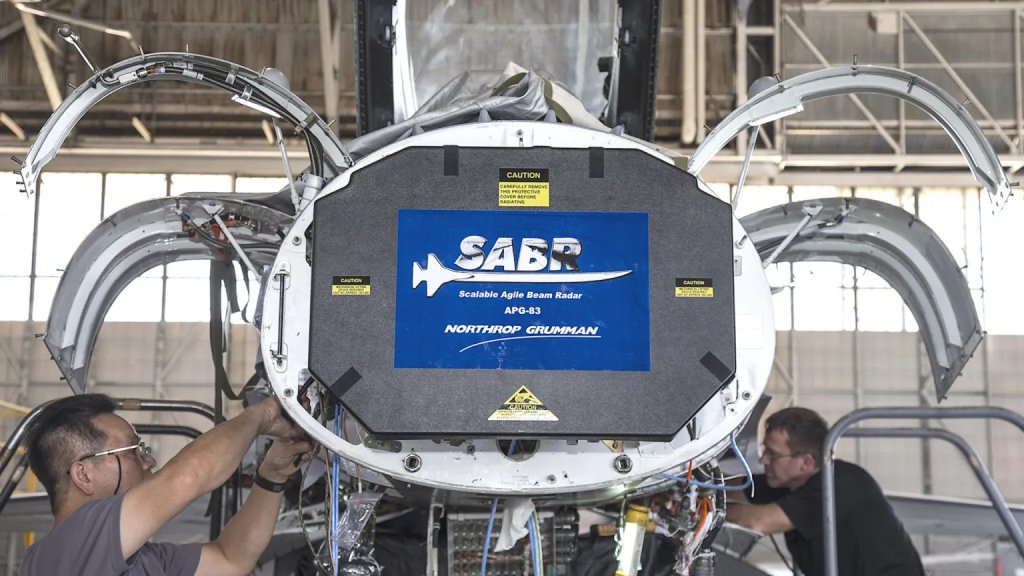
A new AN/APG-83 Scalable Agile Beam Radar (SABR), an active electronically scanned array type, seen being integrated onto a US Air Force F-16. USAF

The Air Force has also already been taking newer F-16s from squadrons transitioning to the F-35 and using them to replace older Vipers in other units. Last year’s fighter force structure report explicitly highlighted plans to supplant Block 30 F-16s in five Air National Guard formations – three combat-coded squadrons and two training units – with Block 40 and 50 types in this way.

As we’ve previously written:

“A new F-16 offers a fresh and highly mature airframe — one with a full service-life ahead of it, on the order of 12,000 flight hours without the need for structural upgrades — double that of the original F-16. This is compared to existing F-16s in the inventory with the decades of wear and fatigue already accumulated on them, with structural upgrades keeping them in the air. That difference in remaining structural life is arguably the single biggest advantage a new-build aircraft has compared with extending an existing one.”

“Dumping more money into existing F-16s is becoming questionable. Service life extensions and technical upgrades can only go so far and supporting these jets is becoming harder as parts dry up and suppliers who made them are long gone. A new airframe would give the Guard many decades of highly efficient service and the piece of mind for future force planning that goes with it.”

…

“The new [F-16G] proposal would let some Guard and Reserve units swap their F-16s for vastly improved F-16s — the same logic that drove the F-15EX buy — while also keeping the Greenville line hot, which is a significant benefit in its own right. And it accomplishes both in the most efficient way possible: not just in acquisition cost, but in sustainment cost, which is really the more problematic burden of the two. In the end, this points to another glaring reality check for the all-stealth-force concept, a vision the Air Force has effectively already abandoned.”
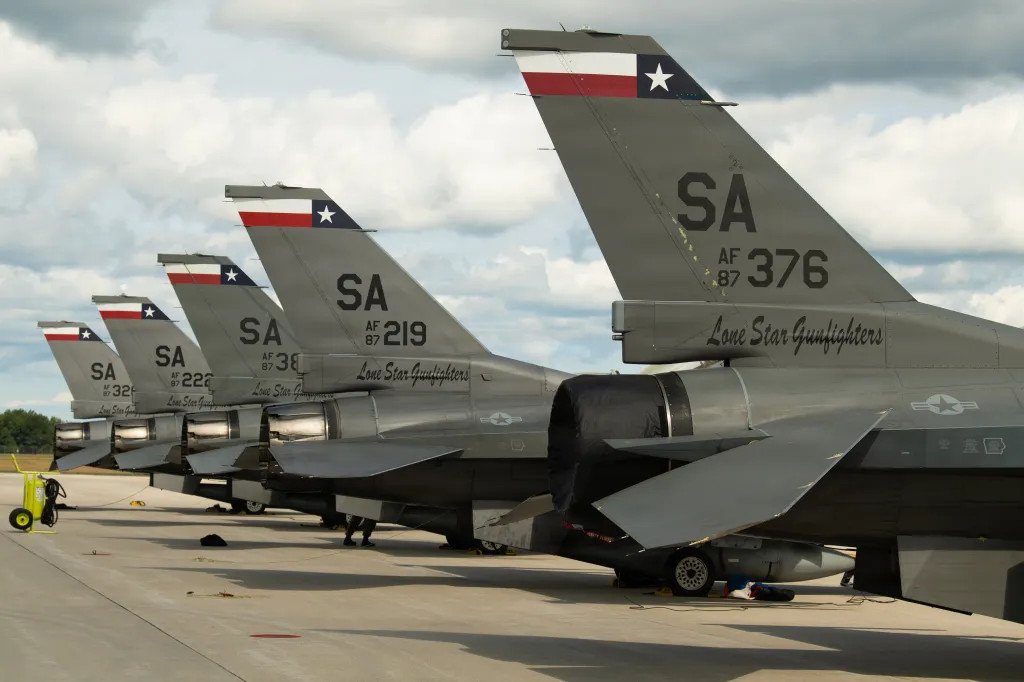
A row of Texas Air National Guard F-16s. USAF

“The Air Force has spent years describing the F-35 as the replacement for its F-16 fleet, yet it now has to contend with aging F-16s, delayed or constrained fighter production, a larger stated requirement for total fighter capacity, and the lengthy transition toward the F-47 and uncrewed combat aircraft. In that environment, a new-build F-16 provides an option that sits between extending legacy aircraft and buying the most sophisticated — and expensive — fighters available.”

You can read our full prior deep analysis on this topic here.

Lt. Gen. Tabor acknowledged many of these exact same points at the roundtable yesterday. He notably described acquiring new F-16s as “maybe the lazy” option, but also one that would benefit from “practically a ready-made aircraft” that is in production now, according to Air & Space Forces Magazine.

“The question is, can industry produce at those levels?” he also said, speaking more generally. “They’ve assured us that they can, and we believe them, but we also actually need to see it manifest.”

In the context of acquiring new F-16s, especially, it is important to note here that Lockheed Martin order books are very full already as a result of demand for these fighters from U.S. allies and partners. The company’s capacity, at least at present, to add a substantial new Air Force acquisition program on top of that is a real question. This, in some ways, mirrors questions that surround Boeing efforts to meet surging Air Force demand for F-15EXs.
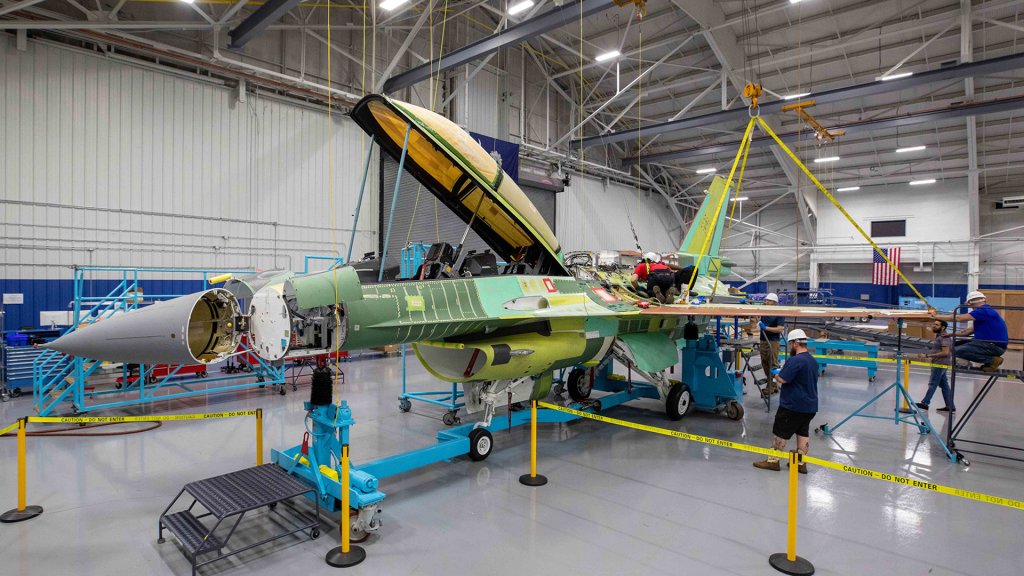
A new F-16 being built at Lockheed Martin’s Greenville plant. Lockheed Martin

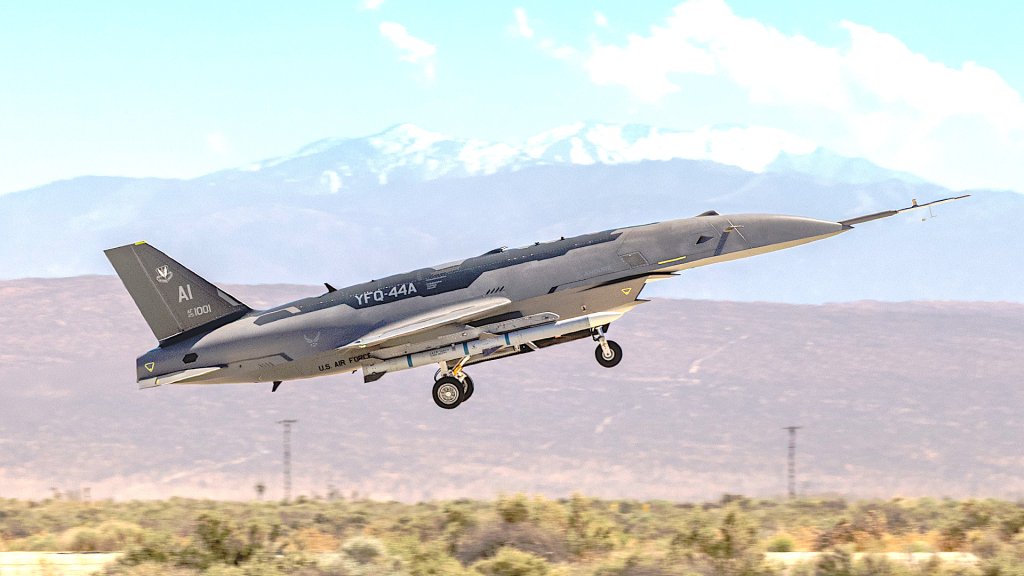
On top of all this, the Air Force’s still-evolving CCA plans remain something of a wildcard in these discussions. The Air Force has ordered General Atomics FQ-42 Vengeance and Anduril’s FQ-44 Fury CCAs into production, and is now aiming to have a combined fleet of at least 500 of these drones in inventory by 2032. The service is also still expecting to acquire additional CCAs, which could be of entirely different types, through a second iterative development cycle, or Increment 2, under this program. This is influencing the service’s crewed fighter force structure plans, but the full scale and scope of those impacts remain to be seen.
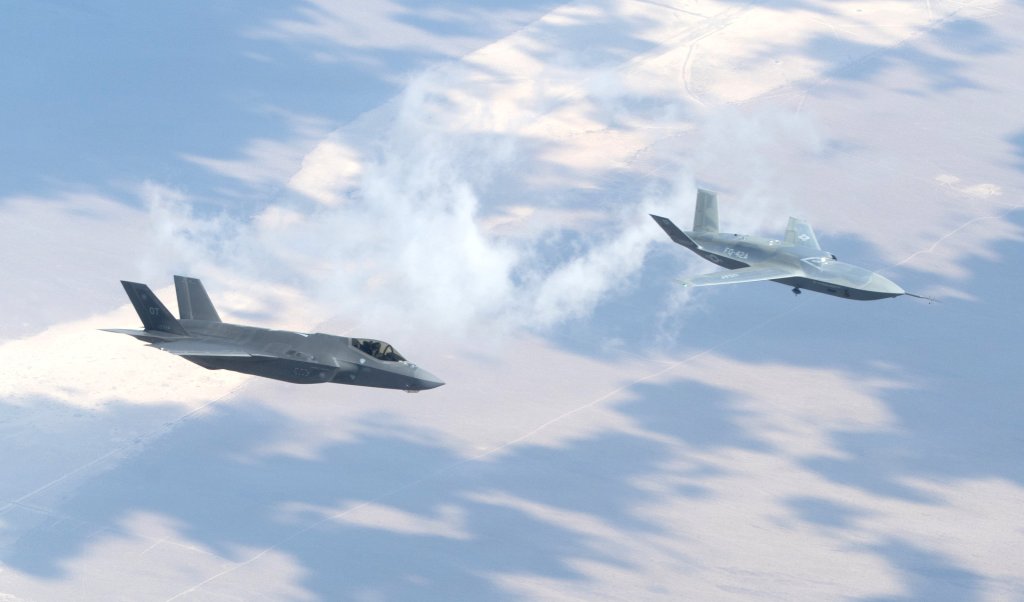
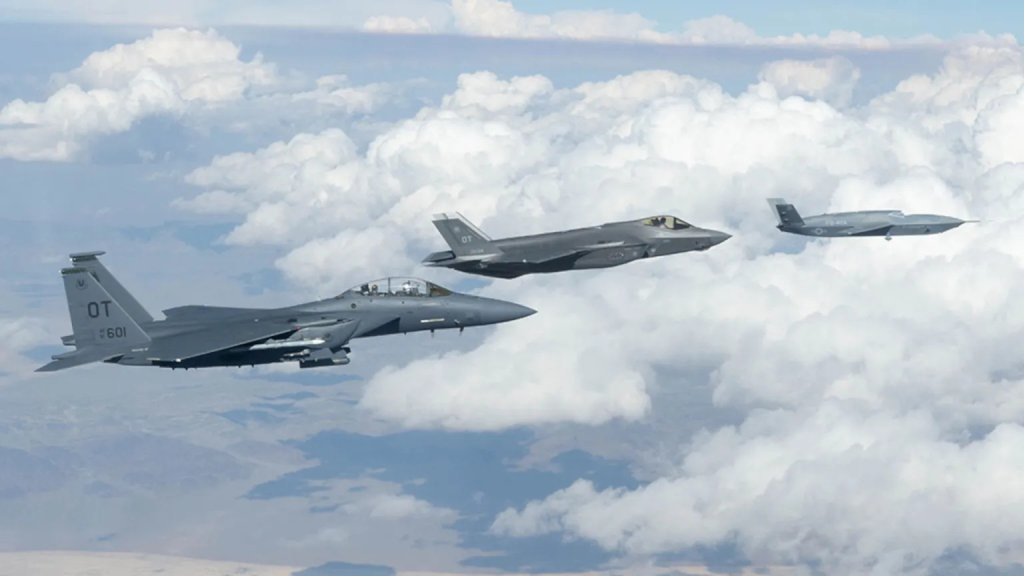
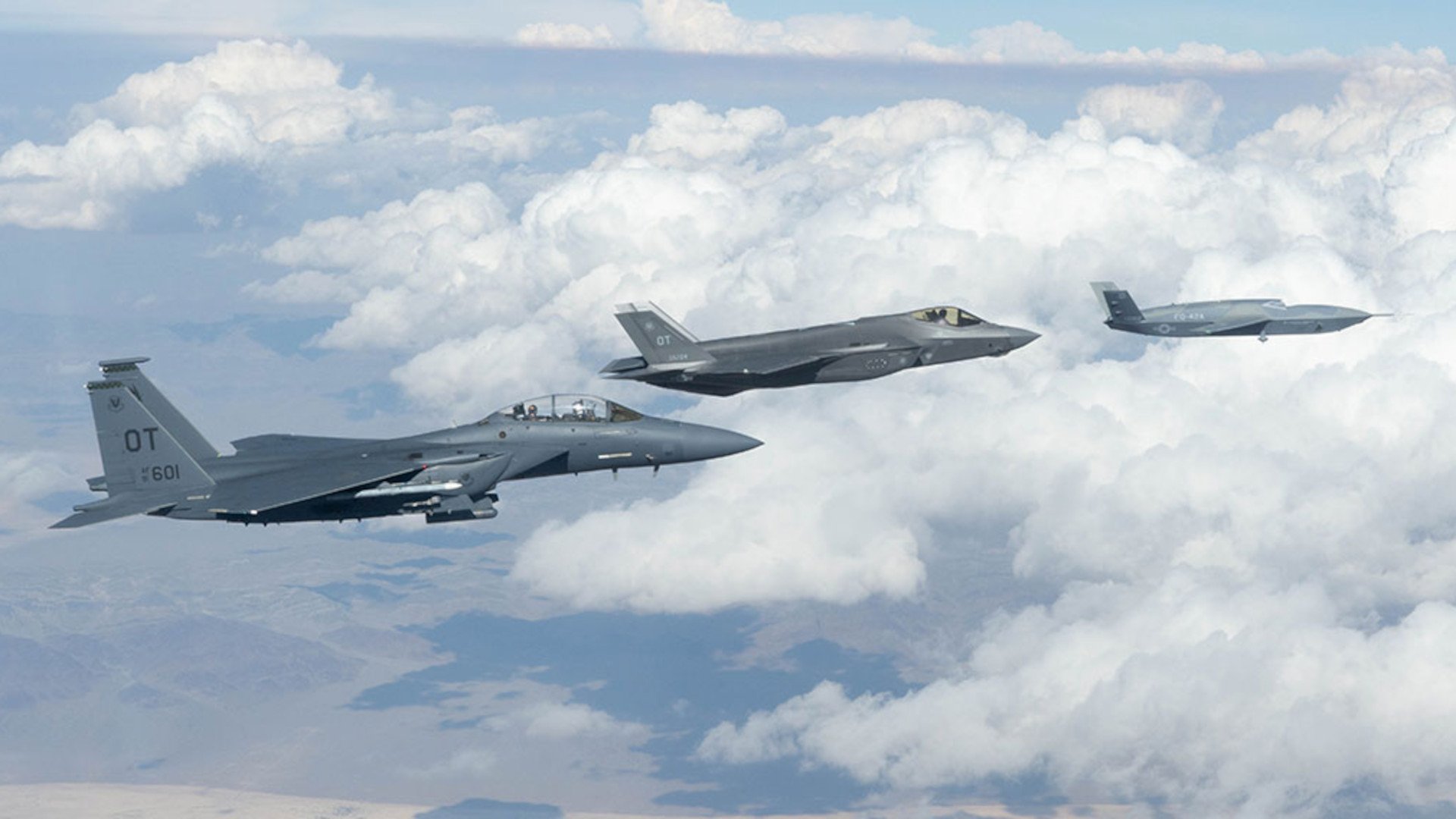
An F-35A flies in formation with a pre-production YFQ-42A CCA drone. USAF

“CCA is very much a reality,” Tabor said yesterday, per Air & Space Forces Magazine. “It is going to be a part of our future, and there is absolutely a world in which the incorporation of CCAs into the force will mitigate the requirement for the number of fighters. That’s not the CCA that we have right now, but it is advancing very, very rapidly. We’re confident that it will play a major role in future versions of the fighter force structure report.”

The Air Force’s F-22s are currently set to be its first ‘aerial quarterbacks’ for CCAs, with F-35s and F-47s expected to follow. At the same time, TWZ has highlighted previously how CCA could offer particular value when paired with fourth-generation fighters like the F-16. This, in turn, could actually bolster the case for new Viper acquisitions as a more affordable force multiplier.
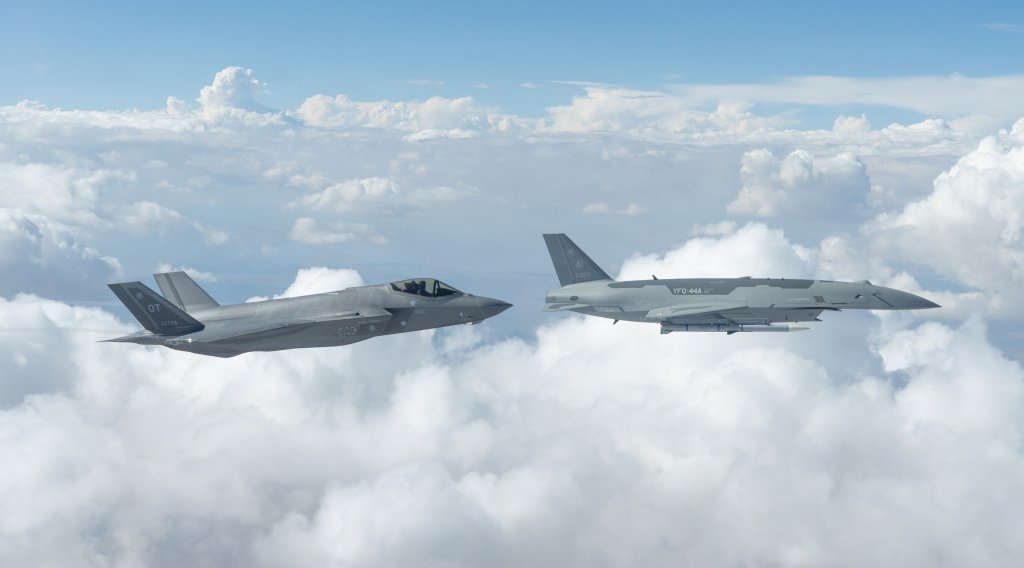
A pre-production YFQ-44A Fury drone flies in formation with an F-35. USAF

The Air Force’s ability to secure necessary funding and other factors will play in all this, too. 2035 is a long way off from a budgetary perspective. It also stretches across multiple election cycles, including the one that will decide the next presidential administration, all of which could lead to major changes in defense spending priorities. Congress can and routinely does demand that the U.S. military alter major procurement plans. Just in the past two years or so, legislators have intervened to force the Air Force to move ahead with the acquisition of new E-7A Wedgetail airborne early warning and control planes and to save the U.S. Navy F/A-XX sixth-generation fighter program.

In the meantime, the Air Force clearly faces many continued questions about how to balance the need to modernize its fighter fleets while ensuring it retains enough tactical airpower to meet current and future operational demands. Even so, the service says it sees no need to rush to make a decision about whether to choose the “lazy” route of just buying new F-16s.

Contact the author: joe@twz.com

The post Any Decision To Buy New-Build F-16s Not An “Urgent” Priority: USAF appeared first on TWZ.
  •  

Retired KC-10 Extender Tanker Has Risen From Boneyard To Fly Again

One of the KC-10A Extender aerial refueling tankers the U.S. Air Force retired some two years ago has left the boneyard at Davis-Monthan Air Force Base in Arizona. This aircraft is one of a set of KC-10As sold to private aerial refueling contractor Omega Air. At least one other potential operator, a still mysterious end user somewhere in North Africa, could also be in line to pick up several ex-Air Force Extenders.

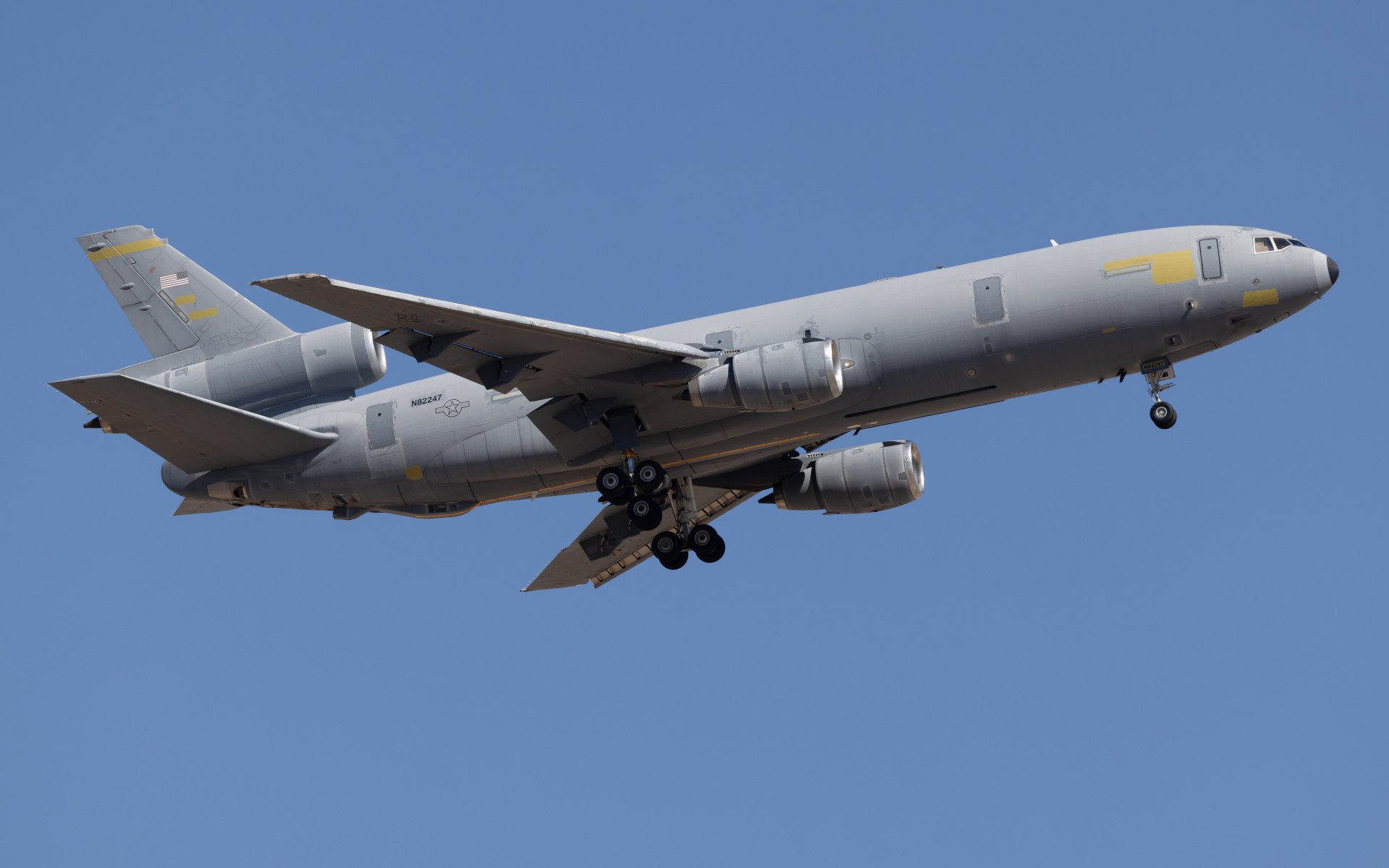
Maxim Loshak, who goes by the handle @az_aviator on X and Instagram, caught the KC-10A leaving Davis-Monthan earlier today. The aircraft currently carries U.S. civil registration number N82247, and Federal Aviation Administration (FAA) records confirm that Omega Air is the new owner. Online flight tracking data also shows the aircraft subsequently flew to San Antonio International Airport, which is Omega’s main base of operations.

Omega's first KC-10A, N82247 (formerly 86-0034), has departed Davis-Monthan en route to San Antonio International Airport. pic.twitter.com/kALlgeuLGy

— KIWA Spotter (@KiwaSpotter) October 20, 2026

The KC-10A in question previously carried the Air Force registration number 86-0034 and had been in the boneyard since May 12, 2023, per the service’s records. The Air Force acquired a total of 60 Extender tankers between 1979 and 1987, and lost one in an accident in 1987. The very last of the remaining 59 KC-10As was retired in September 2024. The Extender was derived from the three-engine DC-10 airliner and was designed to refuel aircraft using either the boom or the probe-and-drogue method.

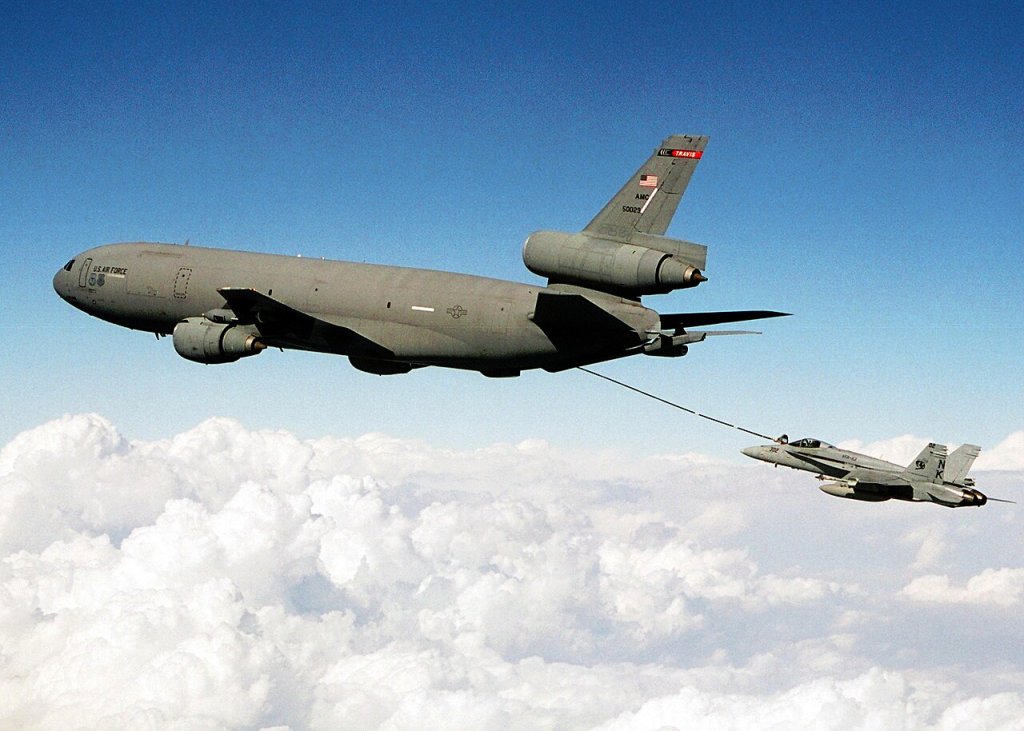
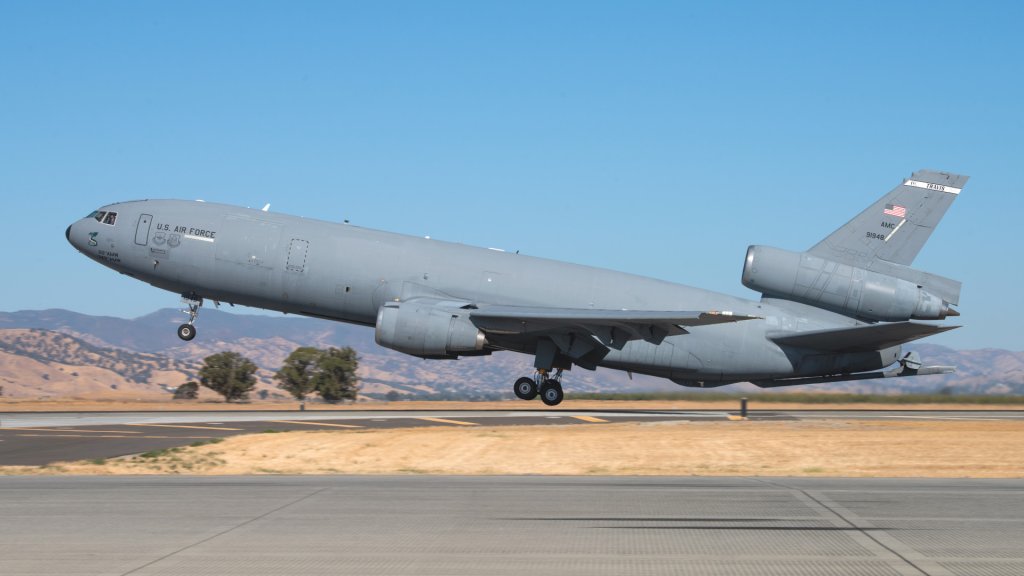
As seen in the picture at the top of this story, N82247 notably lacks the KC-10A’s trademark boom under the rear fuselage. This is actually not entirely unexpected. The Air Force had put 10 Extenders up for auction last year in a non-flyable state. Each of the planes was missing a single engine, taken from under one of their wings, for reasons that are still not entirely clear. These particular aircraft were also among the first KC-10As to be retired, and their booms had been stripped to be used as spares for other examples that had remained in service until the type’s final retirement in 2024.

A stock picture of a KC-10A Extender showing the standard configuration while in US Air Force service, with the boom under the tail. USAF/Kenneth Abbate
A KC-10 seen refueling a US Navy F/A-18 Hornet via the probe-and-drogue method. USN

In addition to sourcing the requisite engines, “in order to make them flyable, the winning bidder will need to work with Boeing to obtain a fly-away kit to seal up the area where the boom systems was,” an Air Force spokesperson told us last year while the 10 KC-10As were still up for auction.

Omega Air could fit new booms to this KC-10A, as well as other ex-USAF Extenders it is in the process of acquiring. The company could also leave some of them configured as probe-and-drogue-only tankers. Omega already flies two ex-Dutch KDC-10 tankers, which are broadly similar to the KC-10, as well as another DC-10 converted into a probe-and-drogue-only tanker. The company has several Boeing 707-based tankers, as well.

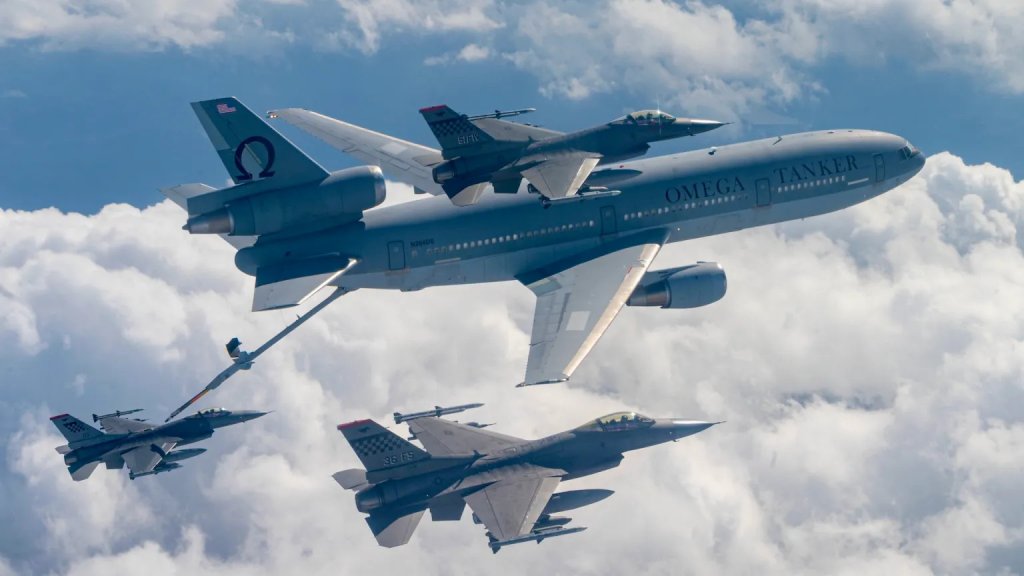
One of Omega Air’s KDC-10s refuels US Air Force F-16s. USAF

There is a possibility that some of the KC-10As that Omega is acquiring could be operated in non-tanker roles. Carrying cargo was also a major role for Extender while in Air Force service. Still, this seems unlikely given that aerial refueling is Omega’s primary business. Some of the ex-Air Force Extenders might also be used as sources of spare parts. TWZ has reached out for more information about Omega’s overall plans for its new acquisitions.

Regardless, even in a boomless configuration, ex-USAF KC-10As will be a significant addition to Omega Air’s fleet. Demand for private aerial refueling services, in general, has been ramping up in the United States and elsewhere globally in recent years.

For the U.S. military, private contractors offer a valuable way to reduce demand for and strain on organic tanker fleets to meet non-combat-related aerial refueling needs. This, in turn, helps free up government-owned tankers for combat missions and other higher-priority taskings. Those tankers may also simply not need to fly as much with private companies helping to shift the burden. The ability of the Air Force’s existing tanker fleets, in particular, to meet even peacetime demands has been a growing point of concern for years now. This has been further exacerbated by persistent technical and other issues with replacement KC-46 tankers.

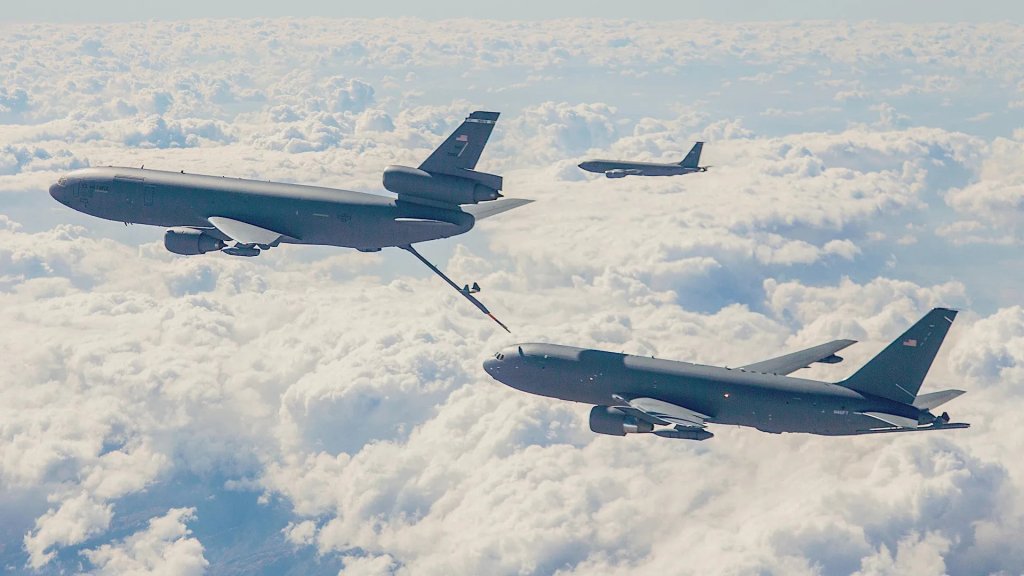
A KC-10 prepares to link up with a KC-46 during a test. A KC-135 tanker flies in the background. USAF

With all this in mind, the Air Force’s decision to retire the KC-10A fleet entirely was and still is controversial. Though the Extenders were certainly aging, they were also highly flexible tankers able to carry greater loads of fuel than the KC-46s that supplanted them.

Omega Air clearly still sees value in the KC-10A. As mentioned, at least one other operator in North Africa is at least interested in potentially acquiring Extenders. Others may yet emerge.

If nothing else, after just over two years, an ex-USAF KC-10A has returned to the skies for a second career in the private sector.

Special thanks again to Maxim Loshak for sharing his picture of N82247 with us.

Contact the author: joe@twz.com

The post Retired KC-10 Extender Tanker Has Risen From Boneyard To Fly Again appeared first on TWZ.
  •  

F-22 Pilot Controls FQ-44 Fighter Drone From The Cockpit For The First Time

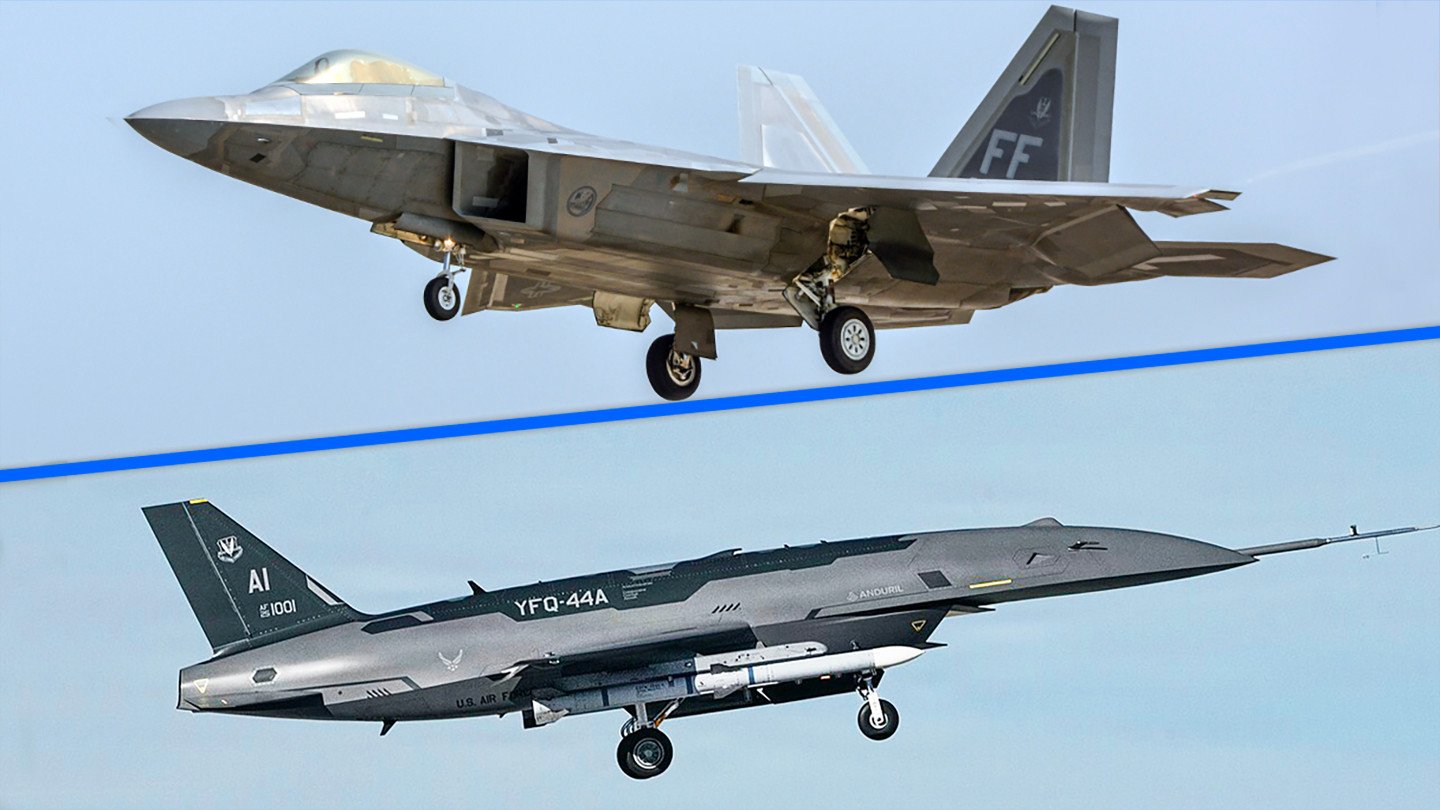
A pilot flying an F-22 Raptor fighter has issued commands to a YFQ-44A Fury Collaborative Combat Aircraft (CCA) drone in a first-of-its-kind test. This is an important development for the U.S. Air Force’s CCA program, as its F-22s are set to be the first aerial ‘quarterbacks’ for these uncrewed aircraft once they enter operational service.

The Air Force and Anduril, Fury’s prime contractor, announced the “airborne tactical-control demonstration” today, but it occurred sometime earlier this month. An Anduril spokesperson confirmed directly to TWZ that this was a first for an F-22 and a pre-production YFQ-44A. Last month, the company disclosed tests involving Fury flying in formation with F-35 fighters, but stressed that the latter were not yet issuing commands to the former in mid-air. A Fury drone also launched an AIM-120 Advanced Medium-Range Air-to-Air Missile (AMRAAM) for the first time earlier this year.

A stock picture of a pre-production YFQ-44A Fury CCA drone. USAF

The Air Force has orders in now for production of FQ-44As, as well as General Atomics’ FQ-42A Vengeance drones, under the first phase, or Increment 1, of its CCA program. The service is still planning to acquire additional CCAs, which could be of entirely different types, through a follow-on Increment 2. The goal now is to have a fleet of at least 500 Increment 1 CCAs by 2032. The recent test is part of efforts to lay the groundwork for an initial tranche of CCAs to start entering operational service around the end of the decade.

“During the demonstration, an F-22 pilot served as an airborne ‘quarterback,’ issuing high-level tactical directives to a single YFQ-44A,” according to a press release from the Air Force. “The aircraft’s onboard autonomy software interpreted and executed those directives in real time, conducting dynamic flight maneuvers and simulated combat tasks.”

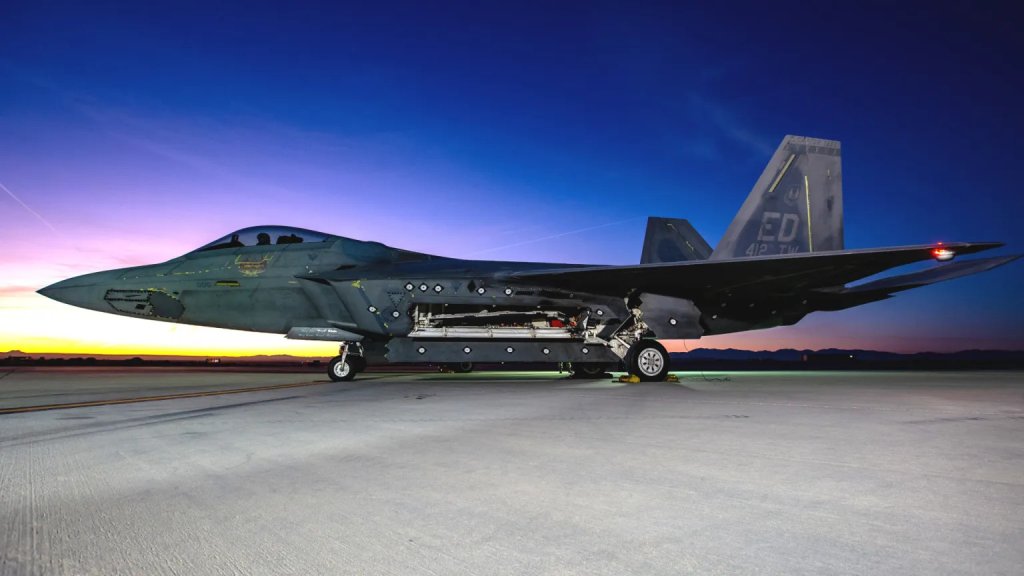
A stock picture of an F-22 Raptor test jet. USAF

“The event brought together personnel from the 412th Test Wing, 422nd Test and Evaluation Squadron, 309th Software Engineering Group, Experimental Operations Unit, F-22 System Program Office and the CCA Software Autonomy and Teaming Branch,” according to the Air Force release.

The Experimental Operations Unit (EOU) mentioned here is based at Nellis Air Force Base in Nevada and has been leading efforts to pave the way for future Air Force CCA operations.

The “Fury and an F-22 both took off [from] Edwards AFB [Air Force Base in California] and joined up midair,” according to a separate release from Anduril. “While in flight, the Raptor pilot sent an updated mission plan to Fury using a tactical data link, commanding Fury through operationally-relevant maneuvers from the cockpit of the crewed quarterback.”

Neither the Air Force nor Anduril provided further details on how the F-22 was configured for this test. Past Air Force budget documents have mentioned the need to integrate “tablets, cables, and associated materials” onto the Raptor for this purpose. A single Raptor is also expected to be able to manage multiple CCA drones simultaneously.

The Raptor’s prime contractor, Lockheed Martin, has certainly been working with the Air Force to develop the relevant control architectures and user interfaces for that fighter, as well as the F-35. In terms of in-cockpit user interfaces for controlling drones, known work to date has centered largely on the use of touchscreen tablet-like devices, but this is understood to just be a starting point. Though tablet-based interfaces are a workable option, questions and criticisms about increased workload, especially for pilots in single-seat fighters, have been raised in the past.

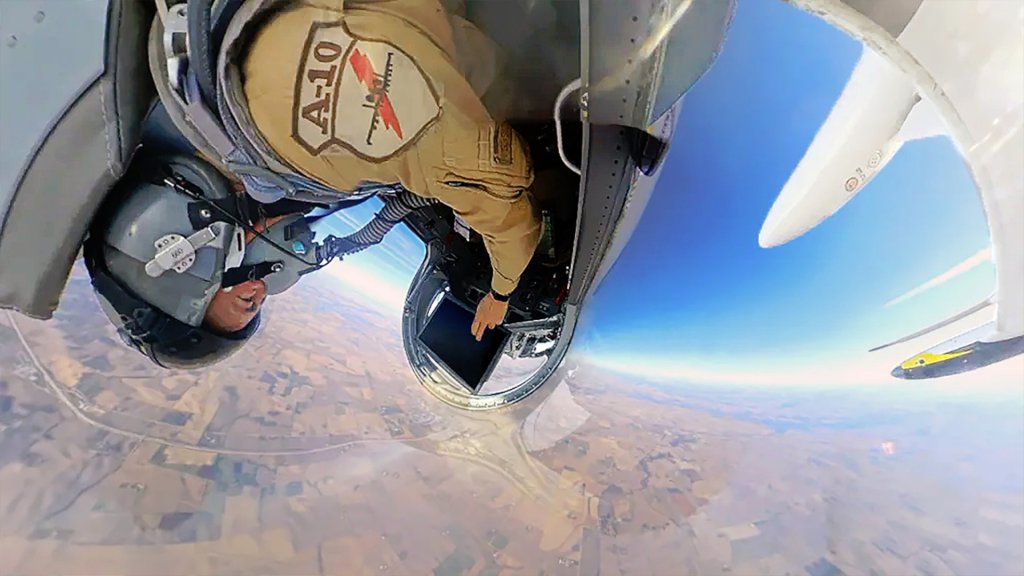
A view of a “battle manager” in the back seat of an L-39 light jet using a tablet-like device during a past test of capabilities to control drones in mid-air conducted by Lockheed Martin’s Skunk Works. Lockheed Martin

It is also worth noting here that General Atomics announced a similar demonstration involving a Raptor and an MQ-20 Avenger back in November 2025. General Atomics has been using the MQ-20 as a CCA surrogate in various types of testing. What the plan might be now to demonstrate the F-22’s ability to control an FQ-42A in flight is unclear. General Atomics has previously released a picture of a Vengeance drone flying in formation with, though not being directly controlled by, Air Force fighters.

A General Atomics Vengeance drone, at right, in flight together with an F-35A Joint Strike Fighter and an F-15E Strike Eagle. General Atomics

In addition, Fury and Vengeance are set to make their debut in a large-scale exercise before the end of the year. Bringing the CCAs to the next iteration of Exercise Emerald Flag will give the Air Force further opportunity to test them in a more operationally relevant context alongside crewed fighters.

“We have not yet done a LFE [large-force employment exercise] with these [CCAs], for real. The first one is going to be Emerald Flag. That’s in December,” Lt. Col. Lyndon “OTTO” Bartlett, the EOU’s Director of Operations, said during a panel at the Air & Space Forces Association’s (AFA) 2026 Air, Space & Cyber Conference in September, at which TWZ was in attendance. “That’ll be our first tip [sic] dip of the toe in an actual force integration.”

The EOU, working together with other Air Force elements and industry partners, still has to answer a host of other outstanding questions unrelated to tactical operations. CCAs will be deployed, launched, recovered, supported, and otherwise operated in ways that are distinct from their crewed counterparts, and for which new policies and procedures will need to be developed. Just making sure human pilots have trust in their uncrewed wingmen operating as expected will be critical, underscoring the specific importance of the demonstration disclosed today. All of this applies equally to the U.S. Marine Corps and U.S. Navy CCA programs, which are being run in very close coordination with the Air Force’s efforts.

When it comes to the recent test involving the F-22 and the YFQ-44A, “this achievement demonstrates what is possible when we are aligned with industry on a shared imperative: delivering capability to the warfighter at unprecedented speed,” Secretary of the Air Force Troy Meink said in a statement today. “We are driving urgency into every part of acquisition from rapid integration and flight learning to disciplined assessment, so we can turn promising technology into combat capability at the pace the threat demands.”

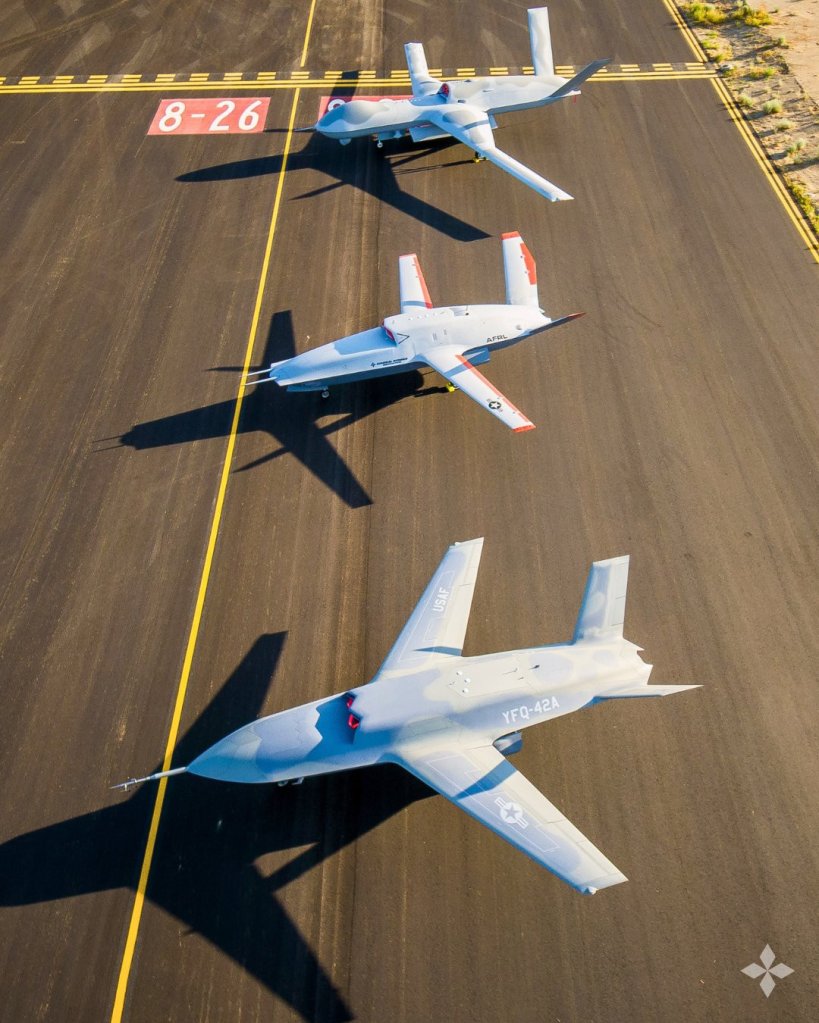
A graphic showing the FQ-42 and FQ-44 designs together. USAF

“This flight shows the power of crewed-uncrewed teaming and the advantage it provides our warfighters,” Air Force Chief of Staff Gen. Ken Wilsbach also said. “We must test often, learn fast, and give commanders what they need, when they need it.”

“The U.S. Air Force’s CCA program is the fastest moving, most mature CCA program anywhere in the world, and will be the first to field operational aircraft,” Mark Shushnar, Anduril’s Vice President of Autonomous Airpower, said as well. “Getting there demands that Anduril and the U.S. Air Force work together to prove out the capability, define the operational procedures, and build trust between operators and their semi-autonomous wingmen.”

With all this in mind, an F-22 issuing orders to a YFQ-44A in mid-air is an important new sign of what is on the horizon for the U.S. Air Force, though there is still work to be done.

Contact the author: joe@twz.com

The post F-22 Pilot Controls FQ-44 Fighter Drone From The Cockpit For The First Time appeared first on TWZ.

  •  

Canada’s Snowbirds Say Farewell To The CT-114 Tutor Jet

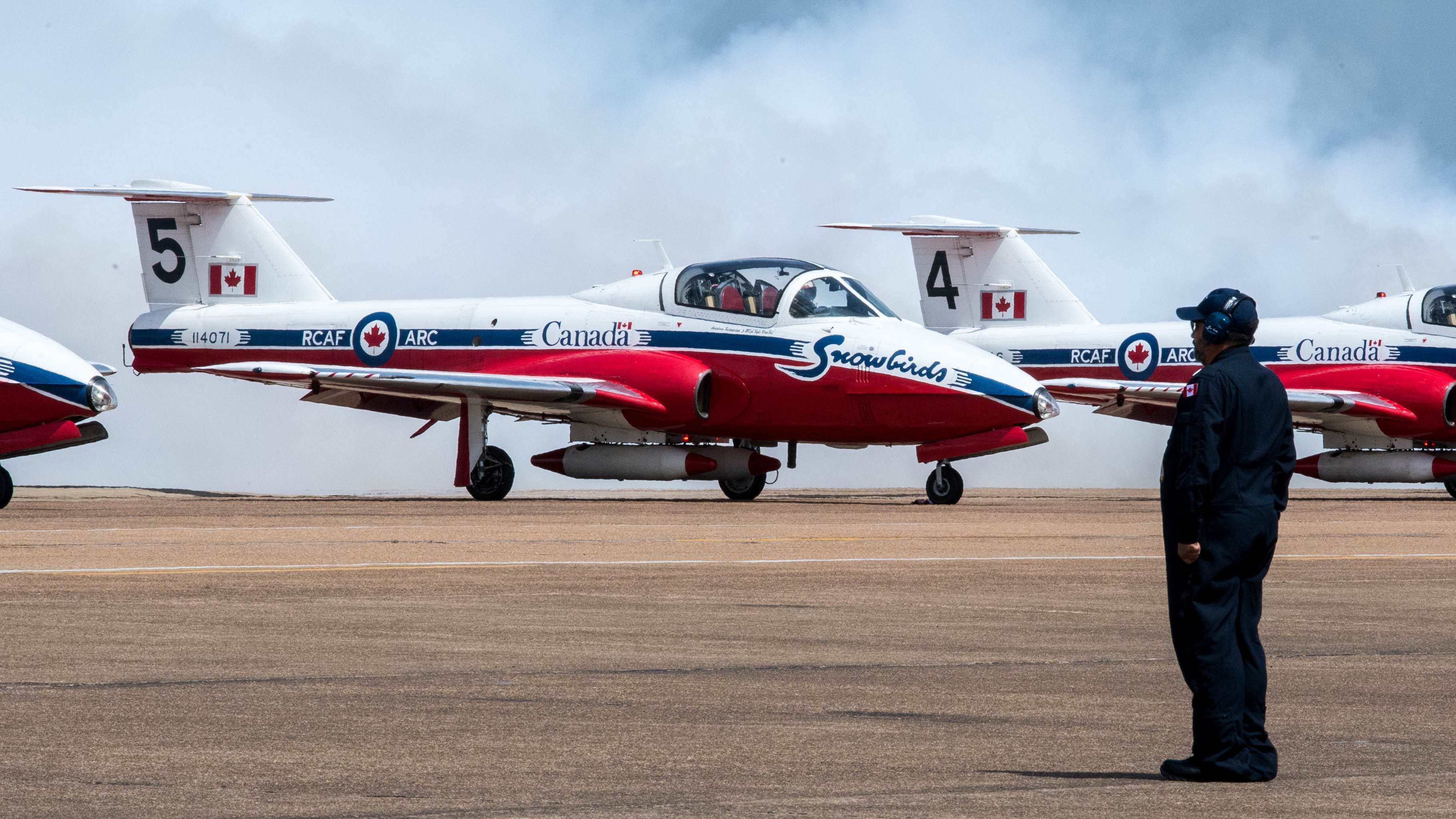
The Canadian Forces Snowbirds brought the Canadair CT-114 Tutor’s aerobatic career to a close on Friday, October 16, with a final home-base demonstration at 15 Wing Moose Jaw, Saskatchewan. The private event, which was livestreamed, honored the Canadian-built jet trainer that defined the team for more than half a century, as well as the aircrew and support personnel who kept the increasingly demanding aircraft flying.

This Friday, join us in saying farewell to the CT-114 Tutors.

Watch the last airshow on Friday, October 16, 2026 live on our Facebook page.

The live stream will begin at 2 p.m. (EDT). pic.twitter.com/I2Tr3buq5D

— Royal Canadian Air Force (@RCAF_ARC) October 13, 2026

While Friday’s performance marks the end of the Tutor’s aerobatic display career with the team, a Grey Cup flyover in Calgary on November 15 remains on the schedule.

Speaking to MooseJawToday on October 15, Snowbirds team lead Maj. Maciej “Match” Hatta described the Tutor’s final season as an emotional milestone for the squadron, as well as an opportunity to recognize the families and support personnel who sustain the team during its annual touring season.

The Royal Canadian Snowbirds taxi at Gowen Field, Boise, Idaho Oct. 12, 2017. The Snowbirds performed during the Gowen Thunder Open House and Airshow. (U.S. Air National Guard photo by Master Sgt. Joshua C. Allmaras)
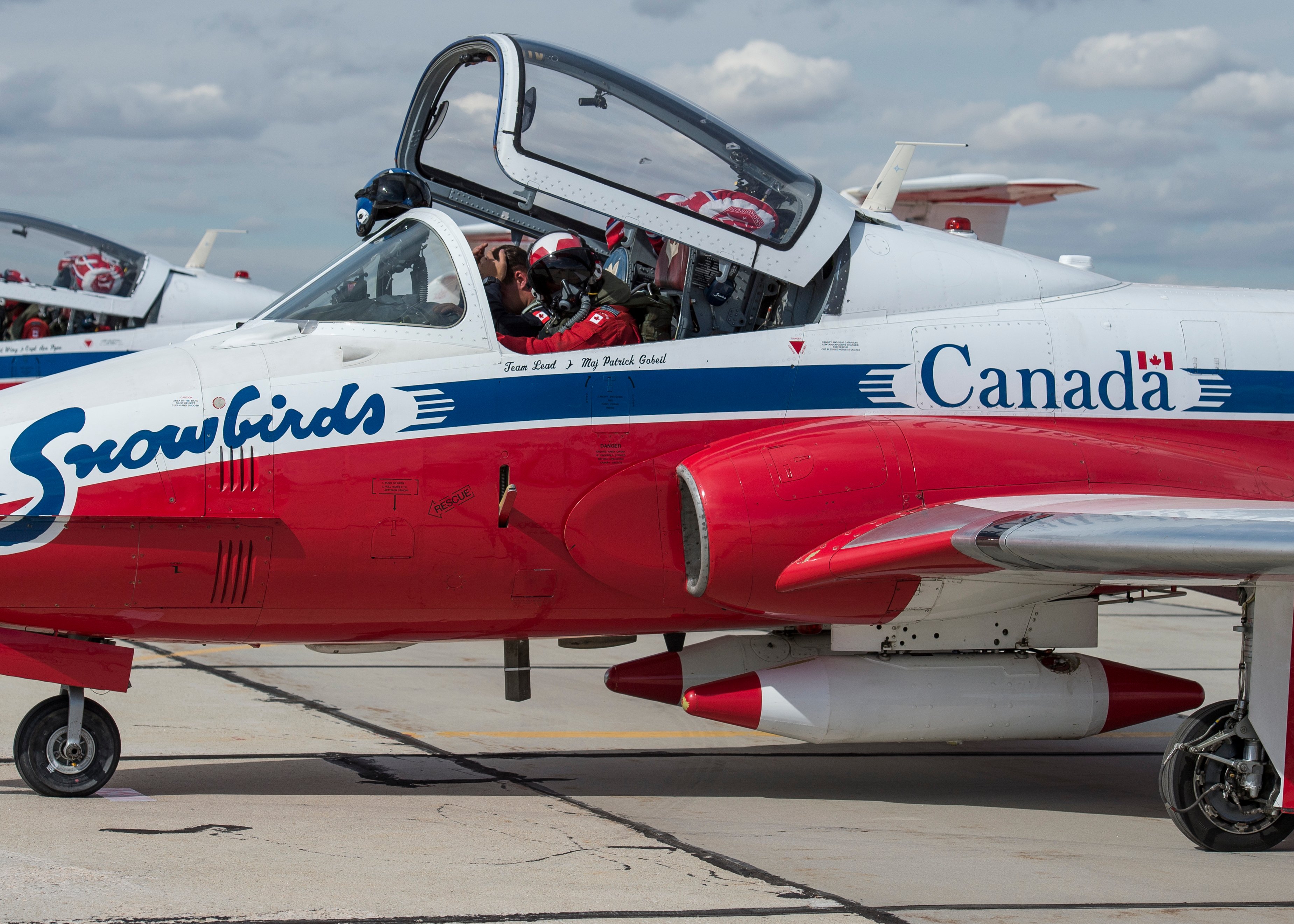
The Snowbirds taxi at Gowen Field, Boise, Idaho, during the Gowen Thunder Open House and Airshow, in 2017. Note the twin smoke tanks below the fuselage. U.S. Air National Guard photo by Master Sgt. Joshua C. Allmaras

Hatta has a long personal history with the aircraft. He flew with the Snowbirds from 2014 to 2017, subsequently worked on testing the Tutor’s avionics upgrades, and returned this year to lead the team through its final season with the jet. Despite having flown around 30 different aircraft as a test pilot, he has a particular attachment to the Tutor.

“This is still my favorite airplane to fly,” he said.

Hatta recalled flying a maintenance test sortie alone the previous day, enjoying the opportunity to look out over the wings without the near-constant radio communications involved in leading a formation display. He also noted the differences between individual aircraft in the fleet.

“They all have their own personality,” Hatta said. “Some of them howl a little more than others. Some get hotter inside. Some have poor air conditioning.”

Lt.-Col. Guillaume Paquet, commanding officer of No. 431 Air Demonstration Squadron, Royal Canadian Air Force (RCAF), said the final season has prompted strong reactions from spectators, many of whom have grown up watching the Snowbirds perform in the Tutor.

“The reality is we’ve been touring this country for 55 years, so everyone has a story, a childhood memory,” Paquet said.

Golden Hawks To Snowbirds

Canada’s military aerobatic tradition dates back to 1929, when the biplane Armstrong Whitworth Siskin helped establish the country’s formation-flying heritage. The modern era began in 1959 with the creation of the Golden Hawks, formed to mark the 50th anniversary of powered flight in Canada and the 35th anniversary of the RCAF. Flying gold-painted Canadair-built F-86 Sabre fighters, the team initially was intended to operate for a single season. Its popularity led to several more years of performances across Canada and the United States before it was disbanded after the 1963 season amid the high costs of maintaining it.

Canada’s centennial celebrations in 1967 brought a new demonstration team, the Golden Centennaires, which flew CT-114 Tutor jet trainers at 100 airshows across Canada and the United States. The Tutors would subsequently become the foundation of the Snowbirds. In 1969, Colonel O.B. Philp, newly appointed commander of No. 2 Canadian Forces Flying Training School at Moose Jaw, Saskatchewan, encouraged instructors to practice formation aerobatics using surplus Tutors left over from the Centennaires program. Initially presented as training and proficiency flying, the formations soon attracted public attention and gradually evolved into an established demonstration team.

The Golden Centennaires existed for only one year to celebrate the centennial of Canada in 1967. Canadian Forces

The formation grew from four aircraft in 1970 to seven in 1971, when the Snowbirds name was adopted following a competition among schoolchildren. Two solo aircraft were added in 1972, establishing the team’s familiar nine-aircraft format. That year, its pilots were assigned to demonstration flying on a full-time basis. The team’s Tutors were modified to support solo operation from the right-hand seat and the demands of inverted flight during aerobatic displays. In 1974, the Tutors received their distinctive red, white, and blue paint scheme, and the team was authorized to perform a fully aerobatic display.

The Canadian Forces Snowbirds perform an aerial demonstration over Rickenbacker International Airport, June 19 2026, as part of the Columbus Air Show. This year’s event featured more than 20 military and civilian planes and static displays, including a KC-135 Stratotanker from the 121st Air Refueling Wing, which served as the base of operations for military aircraft participating in the show. (U.S. Air National Guard photo by Tech. Sgt. Mikayla Gibbs)
Seven Canadian Forces Snowbirds jets perform an aerial demonstration earlier this year. U.S. Air National Guard photo by Tech. Sgt. Mikayla Gibbs

The Snowbirds subsequently achieved full squadron status as No. 431 Air Demonstration Squadron, becoming one of the most recognizable symbols of Canadian military aviation. Their officially stated mission was to demonstrate the professionalism, teamwork, and flying skills of the Canadian Armed Forces to audiences across North America.

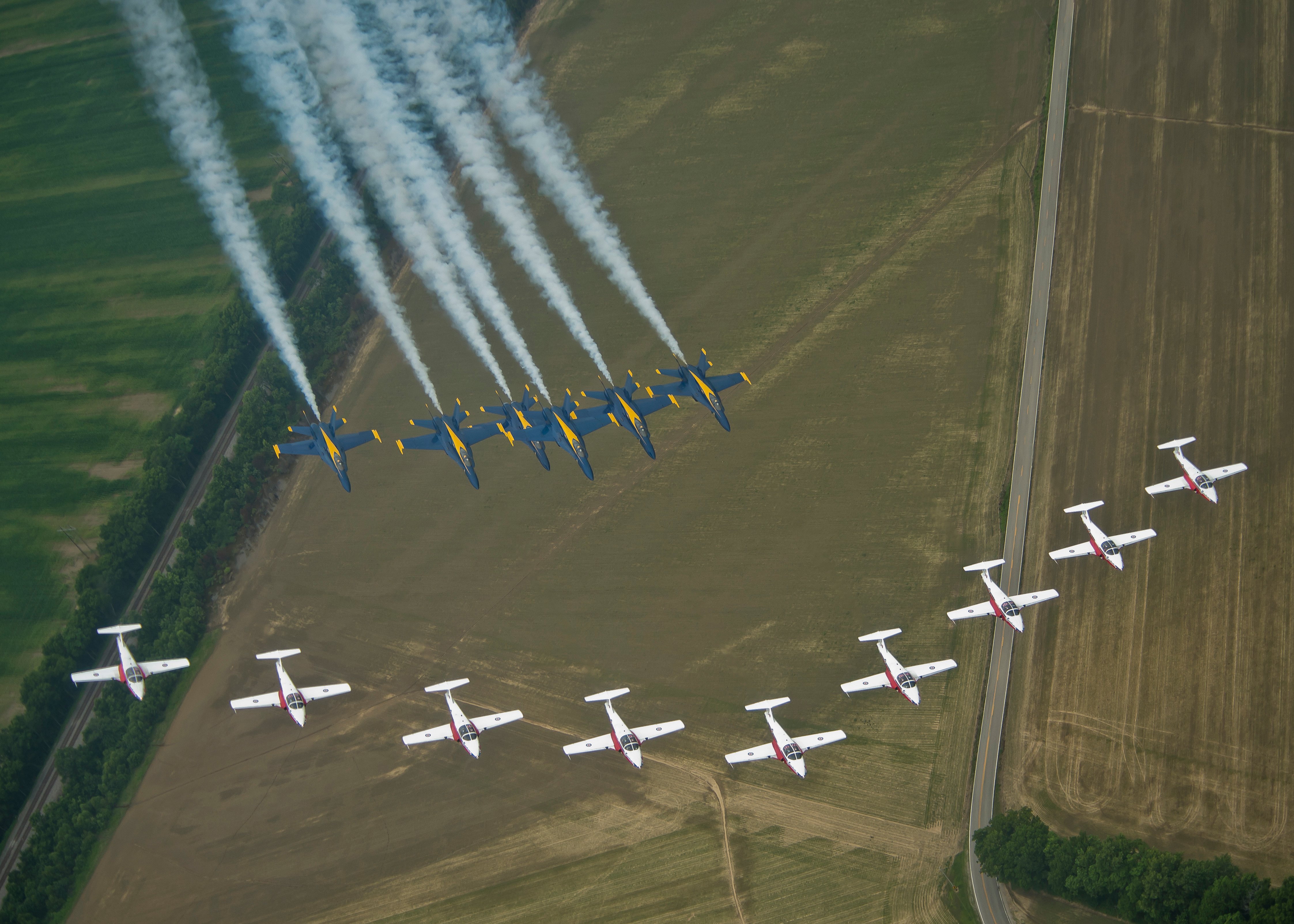
150625-N-SN160-356 EVANSVILLE, Ind. (Jun, 25, 2015) The U.S. Navy Flight Demonstration Squadron, the Blue Angels, join their signature Delta formation with the Canadian Air Demonstration Squadron, the Snowbirds, for a scheduled photo shoot over Evansville, Ind. The Blue Angels are scheduled to perform at 68 demonstrations at 35 locations across the U.S. in 2015.. (U.S. Navy photos by Mass Communication Specialist 1st Class Michael Lindsey/Released)
The U.S. Navy Flight Demonstration Squadron, the Blue Angels, join their signature Delta formation with the Snowbirds for a scheduled photo shoot over Evansville, Indiana, in 2015. U.S. Navy photos by Mass Communication Specialist 1st Class Michael Lindsey/Released

However, the Tutor’s final years were marked by a series of serious accidents and renewed scrutiny of its aging systems.

In October 2019, a Snowbirds aircraft crashed in Georgia after an engine fuel-delivery failure, with the pilot surviving an ejection that was itself affected by a parachute malfunction. In May 2020, another Tutor crashed shortly after takeoff near Kamloops, British Columbia, killing the Snowbirds public affairs officer and seriously injuring the pilot; investigators determined that a bird strike had triggered an engine compressor stall. The fleet was temporarily grounded following that accident, with operations resuming under additional restrictions in August 2020.

A further accident at Fort St. John, British Columbia, in August 2022 prompted another fleet-wide operational pause after an engine failure during takeoff; investigators identified an improperly assembled oil filter as the cause. The aircraft returned to service the following month.

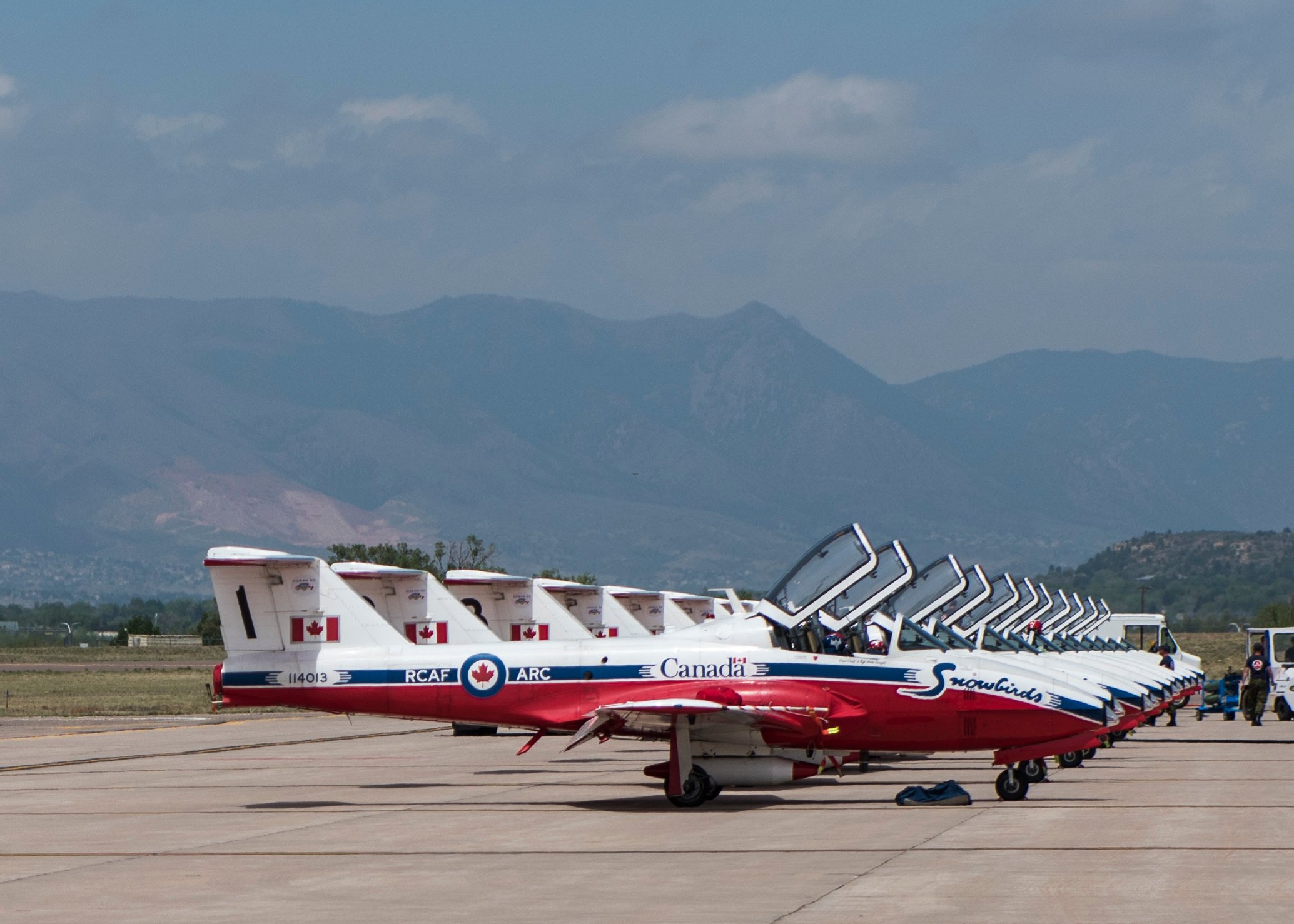
The Royal Canadian Air Force’s Snowbirds are parked on the flight line at Peterson Air Force Base, Colo., May 12, 2018. The Snowbirds aerial demonstration team performed a fly over in missing-man formation during the North American Aerospace Defense Command's 60th Anniversary Celebration. (DoD photo by Staff Sgt. Emily Kenney, USAF)
The Royal Canadian Air Force’s Snowbirds parked on the flight line at Peterson Air Force Base, Colorado, in 2018, during the North American Aerospace Defense Command’s 60th Anniversary Celebration. DoD photo by Staff Sgt. Emily Kenney, USAF

Subsequent safety measures included restrictions on certain aerobatic maneuvers and formations, minimum runway-length requirements, and limits on flying over water or performing some maneuvers outside gliding distance of a suitable landing surface.

At the same time, the persistent engineering challenges involving the Tutor’s airframe, engines, and ejection system were all factors in its retirement, with the RCAF concluding that further life-extension work was no longer practical.

Developing Canada’s Jet Trainer

Canadair Limited of Montreal began developing the CL-41A Tutor in the mid-1950s as a high-performance jet trainer to prepare RCAF pilots for the Canadair-built F-86 Sabre. The all-metal, low-wing, single-engine aircraft featured side-by-side seating and duplicate flight controls, allowing instructors to monitor students closely and take control when necessary. Two prototypes were built, with the first making its maiden flight on January 13, 1960, with Canadair test pilot Ian MacTavish at the controls.

CANADA - SEPTEMBER 01: Snowbirds roar over metro. Capt. Wes MacKay banks his Canadian Forces Tutor jet over downtown Toronto yesterday in a practice run before he and fellow Snowbirds perform today at the CNE. Canada's crack aerobatics team will make no changes in their thrilling performance despite Sunday's West German air show crash that killed 49 and injured 500. (Photo by Boris Spremo/Toronto Star via Getty Images)
Capt. Wes MacKay banks his Canadian Forces Tutor jet over downtown Toronto in a practice run before a performance at the Canadian National Exhibition in 1988. Photo by Boris Spremo/Toronto Star via Getty Images

Following an extensive testing and demonstration program, Canadian Minister of National Defence D.S. Harkness announced an order for 190 production aircraft on September 11, 1961. Deliveries began in 1963, with each aircraft reportedly costing approximately C$425,000 (around $394,000). Powered by a General Electric J85-CAN-40 turbojet built under licence by Orenda, the aircraft entered RCAF training service in late 1964 under the designation CT-114 Tutor.

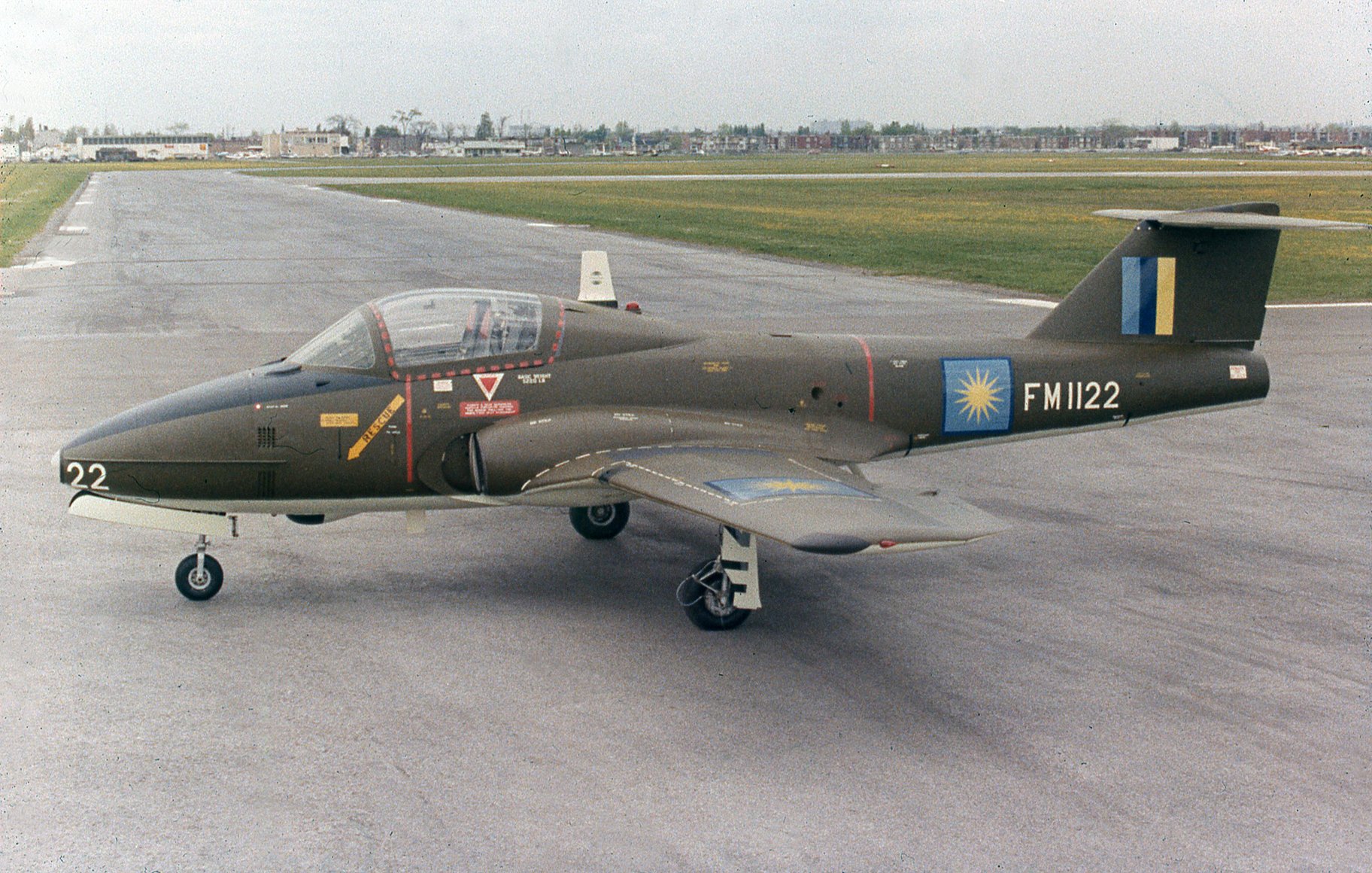
As well as the RCAF, the Tutor found one other military operator in Malaysia. The Royal Malaysian Air Force received 20 examples designated the CL-41G Tebuan (meaning “Wasp” in the Malay language), which served between 1967 and 1986 in the ground-attack role.

A Royal Malaysian Air Force CL-41G Tebuan. The Aviation Historian Archive

The Tutor served as the RCAF’s primary jet trainer for decades, accumulating more than one million flight hours before its training role ended in 2000. It was replaced by the CT-156 Harvard II and CT-155 Hawk. The aircraft nevertheless remained in military service with the Snowbirds.

The Next Chapter

The Tutor’s retirement will bring an end to a long chapter in Canadian military aviation, but the Snowbirds are expected to continue flying with a new aircraft type. In May of this year, the Department of National Defence announced plans to replace the CT-114 with the CT-157 Siskin II, based on the Pilatus PC-21 turboprop trainer. The new demonstration capability will remain at 15 Wing Moose Jaw and is expected to become operational in the early 2030s.

Today the Government of Canada announced a commitment to purchase a future RCAF air demonstration capability. After more than six decades of service 2026 will mark the final season for the CT‑114 Tutor aircraft fleet which has represented Canada with dignity and pride since 1971. pic.twitter.com/iqRNE8d8H3

— Royal Canadian Air Force (@RCAF_ARC) May 19, 2026

The Siskin II has already been procured under Canada’s wider Future Aircrew Training (FAcT) program, for advanced fixed-wing and jet preparation. It is one of five aircraft types being procured under a 25-year, C$11.2-billion (approximately $7.9 billion) contract awarded to SkyAlyne in 2024. The other four types are the CT-102B Astra II (Grob G 120TP) for basic pilot training; CT-157 Siskin II for advanced fixed-wing and jet preparation; CT-145E Expeditor II (Beechcraft King Air 260) for multi-engine training; CT-153 Juno (Airbus H135) for helicopter training; and CT-142Q Citadel (De Havilland Canada Dash 8-400) for training air combat systems officers and airborne electronic sensor operators.

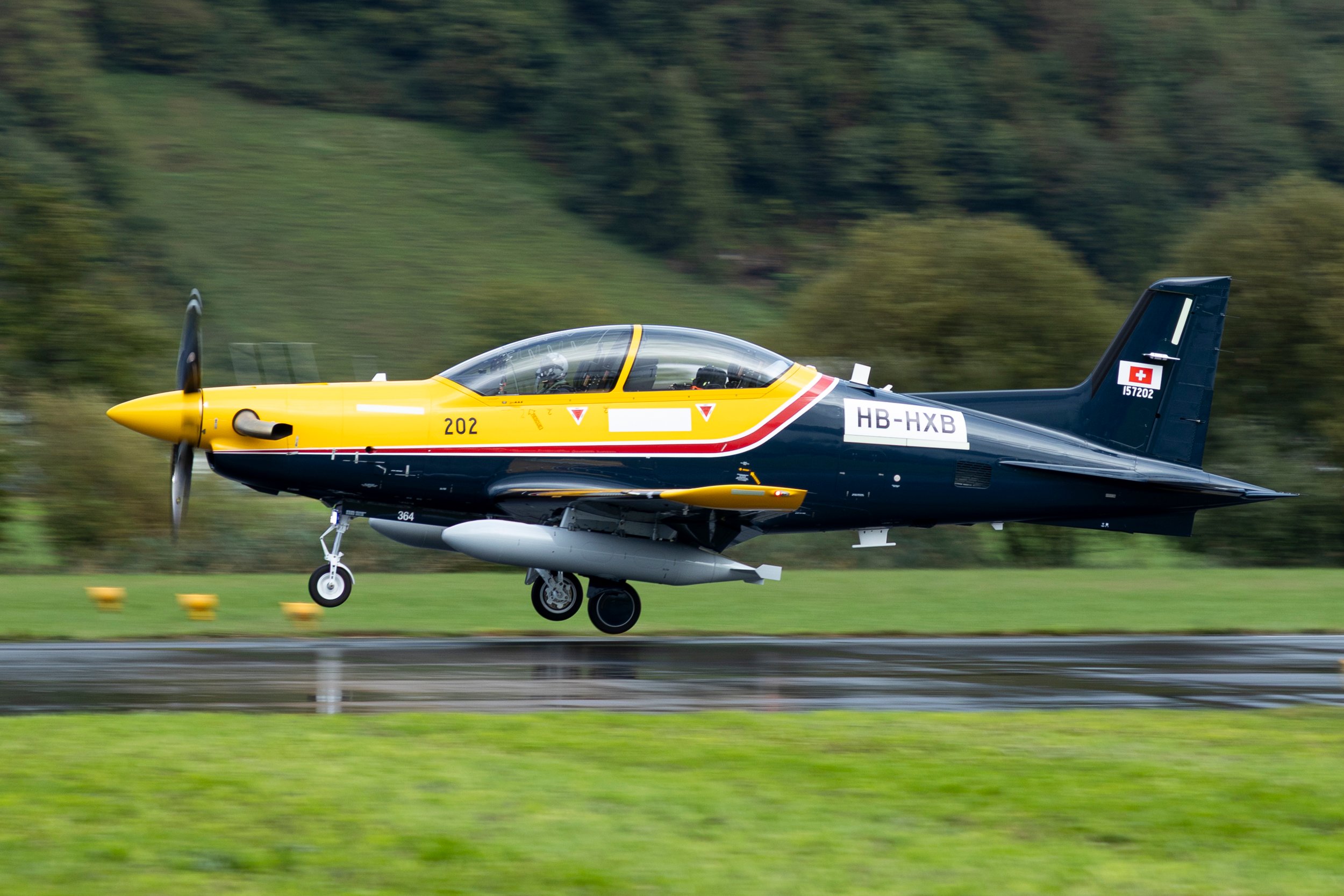
One of the first two Pilatus PC-21s departs Stans in Switzerland bound for Canada on September 14, 2026. These first aircraft mark the start of a new chapter in Canada’s Future Aircrew Training (FAcT) program. Pilatus

Paquet, the No. 431 Air Demonstration Squadron boss, said all Tutors are to be flown to IMP Aerospace in Trenton, Ontario, by March 31, 2027, where they will be disposed of. Some aircraft are expected to be preserved in museums or mounted on pedestals for public display, while others will be used as training aids for aircraft maintenance apprentices in Borden, Ontario.

“They’re not going to be flying. They’re not going to be flyable,” Paquet said.

Snowbirds team lead “Match” Hatta hopes to contribute his test-pilot experience to the transition, including testing the replacement aircraft and developing the new demonstration program.

“I would love to contribute to the team in terms of seeing them through the transition,” he said. “If I’m able to use my test background as well in helping that out, testing the new show, testing the new airplanes, and passing it on to a new boss down the road, then I’d love to do that.”

Royal Canadian Air Force CT-114 Tutor pilots with the Canadian Forces Snowbirds 431st Air Demonstration Squadron, perform pre-flight demonstrations during the Defenders of Liberty Air & Space Show at Barksdale Air Force Base, La., May 19, 2019. Serving as ambassadors of the CAF, the CF Snowbirds demonstrate a high level of skill, professionalism, teamwork, discipline and dedication inherent in the men and women of the CAF. (U.S. Air Force photo by Airman Jacob B. Wrightsman)
Royal Canadian Air Force CT-114 Tutor pilots with the Canadian Forces Snowbirds perform pre-flight checks during the Defenders of Liberty Air & Space Show at Barksdale Air Force Base, Louisiana, in 2019. U.S. Air Force photo by Airman Jacob B. Wrightsman

For Paquet, the immediate priority is completing the final display season without incident before turning to the next phase of the team’s history.

“I will definitely be emotional. The only thing I’m hoping for is that all the planes land safely, bring everybody home, and then we can check the box and say it was an extremely successful season. I brought everybody home, and we’ll move on to the next chapter.”

After more than six decades since its development began, the Tutor leaves behind a legacy spanning generations of military pilots and millions of spectators. Its final Snowbirds aerobatic display represents not simply the retirement of an aging aircraft, but the end of a long tradition in which the little jet trainer was one of the country’s most recognizable symbols of military flying and aerial performance.

Contact the author: thomas@thewarzone.com

The post Canada’s Snowbirds Say Farewell To The CT-114 Tutor Jet appeared first on TWZ.
  •  

B-52 To Get Stealthy AGM-158C Long-Range Anti-Ship Missiles

The U.S. Navy is preparing to sign a contract with Lockheed Martin to integrate the stealthy AGM-158C Long Range Anti-Ship Missile (LRASM) onto the Air Force’s B-52 Stratofortress bombers, according to an October 7 government notice. The effort would add another long-range maritime strike option to the U.S. bomber force as the military looks to counter increasingly capable adversary naval forces, especially in the Indo-Pacific theater.

The planned contract comes months after the Air Force revealed that the stealthy B-2 bomber can also launch LRASM, a capability that had not previously been publicly disclosed. You can read more about that here.

Two U.S. Air Force B-52H Stratofortress bombers fly over the Pacific Ocean during a routine training mission Aug. 2, 2018. This mission was flown in support of U.S. Indo-Pacific Command’s Continuous Bomber Presence operations, which are a key component to improving combined and joint service interoperability. (U.S. Air Force photo by Airman 1st Class Gerald R. Willis)
Two U.S. Air Force B-52s fly over the Pacific Ocean during a routine training mission. U.S. Air Force photo by Airman 1st Class Gerald R. Willis

The latest Naval Air Systems Command (NAVAIR) notice says the command intends to enter into sole-source negotiations with Lockheed Martin and subsequently award a cost-plus-fixed-fee delivery order covering LRASM integration on the B-52. The work would include missile software updates, associated testing, repairs to test assets, and failure review boards.

The notice does not provide a schedule for completing the integration or fielding the capability.

The B-52 is already capable of carrying large numbers of air-launched cruise missiles, including the AGM-158 Joint Air-to-Surface Standoff Missile (JASSM) family. LRASM is derived from that family, sharing a similar general form factor while incorporating features specifically designed to find and attack ships in contested maritime environments.

The B-52 can carry up to 20 JASSMs, and the weapons have the same dimensions, but the government notice does not specify how many LRASMs the bomber would ultimately carry.

A B-52 Stratofortress flies across the Atlantic Ocean June 17, 2019, for a flight in support of Exercise BALTOPS 2019. Airmen from the 23rd and 69th Bomb Squadrons generated aircraft in support of the largest multinational maritime exercise this year in the Baltic Sea. The Minot B-52 aircrews conducted flight missions lasting more than 25 hours during the exercise involving 12 countries during the first two weeks in June. (U.S. Air Force photo by Senior Airman Stuart Bright)
A B-52 flies across the Atlantic Ocean on June 17, 2019, for a flight in support of Exercise BALTOPS 2019, the largest multinational maritime exercise of the year in the Baltic Sea. U.S. Air Force photo by Senior Airman Stuart Bright

This is not the first time the B-52’s LRASM integration has been in the works.

As long ago as November 2019, Naval News reported that $10 million in Fiscal Year 2019 funding had been allocated to study integrating the missile onto the bomber, with Lockheed Martin and the Navy and Air Force expected to work on the effort. At the time, officials said the fielding timeline and the bomber’s eventual missile capacity had yet to be determined.

The U.S. Air Force’s Fiscal Year 2027 budget proposal further outlines plans to integrate the latest variants of LRASM and JASSM onto the B-52, including versions not yet cleared for use on the bomber. According to the document, the effort, which is intended to enable the deployment of next-generation stealthy cruise missiles against targets protected by sophisticated integrated air defense systems, will focus on engineering and manufacturing development, software updates, and weapons integration. Planned work in FY2027 includes incorporating the missiles’ operational flight programs into the B-52’s baseline bomber software, validating safe weapon separation from both wing-mounted stations and the internal carriage launcher, updating armament interfaces, and completing system-safety testing.

Joint Air to Surface Standoff Missiles are prepared to be loaded on to a U.S. Air Force B-52 Stratofortress on Andersen Air Force Base, Guam, April 24, 2023. The JASSM missile system is a weapons system capable of striking ground targets from extended ranges, making it a key deterrent against aggression across the Pacific. (U.S. Air Force photo by Airman 1st Class Spencer Perkins)
Joint Air-to-Surface Standoff Missiles are prepared to be loaded onto a U.S. Air Force B-52 on Andersen Air Force Base, Guam, on April 24, 2023. U.S. Air Force photo by Airman 1st Class Spencer Perkins

LRASM is designed to attack high-value surface vessels at long distances while reducing the exposure of the aircraft launching it. Its guidance combines GPS-assisted inertial navigation with onboard sensors and autonomous target-recognition capabilities intended to help it operate in heavily defended environments. Its imaging infrared seeker supports terminal target acquisition without relying on active radar emissions in that phase of flight. The missile operates with a high degree of autonomy, enabled by an integrated route-planning capability linked to its onboard electronic support measures (ESM) system. LRASM also has a datalink that allows it to get threat updates while in flight. It can also work cooperatively with other LRASMs during coordinated strikes. 

The missile’s precise operational range is not publicly disclosed. However, the baseline LRASM is reported to be able to strike targets at between 200 and 300 miles, in line with the AGM-158A JASSM. The forthcoming C-3 version is expected to have the same reach as the JASSM-ER, which is reported to be around 600 miles.

An AGM-158C Long Range Anti-Ship Missile is seen under the wing of an F/A-18, with another missile in the foreground. U.S. Navy

For the B-52, the addition of LRASM would provide a dedicated anti-ship weapon alongside its established land-attack arsenal. A bomber operating at a considerable distance from a hostile fleet could launch multiple missiles toward maritime targets, complicating an adversary’s air-defense and interception problem. The aircraft’s payload capacity could also allow it to contribute substantial missile volume to a coordinated strike.

The B-52 was previously adapted to carry AGM-84 Harpoon anti-ship missiles, although the weapon is not listed among the bomber’s current publicly documented armament. Compared to the Harpoon, however, LRASM represents a quantum leap in capability, offering drastically greater range, a stealthy design, and the ability to react to threats and adapt in real time. Combined, these traits make for a far more survivable and lethal anti-ship capability.

The B-52 also has a demonstrated naval mine-laying capability through the Quickstrike family of aerial mines. This includes carrying 2,000-pound Quickstrike-ER mines fitted with GPS-aided, winged guidance kits, allowing them to glide to designated points in the water from more than 40 miles away. The system enables the bomber to seed minefields with greater precision while remaining farther from potentially defended waters, threatening enemy shipping routes, port access, and naval movements.

190530-N-KR702-1083 PACIFIC OCEAN (May 30, 2019) A B-52 Stratofortress, assigned to the 49th Test and Evaluation Squadron from Barksdale Air Force Base, La., conducts an operational demonstration of the Quickstrike-ER (QS-ER) Naval mine project in the Pacific Ocean, May 30, 219. The QS-ER project was initiated by U.S. Indo-Pacific Command as part of ongoing efforts to modernize and enhance military readiness throughout the joint forces in the Indo-Pacific region. (U.S. Navy photo by Mass Communications Specialist 1st Class Holly L. Herline)
A B-52 conducts an operational demonstration of the Quickstrike-ER naval mine project in the Pacific Ocean, on May 30, 2019. U.S. Navy photo by Mass Communications Specialist 1st Class Holly L. Herline

The B-52 effort comes against the backdrop of the Air Force’s newly acknowledged use of LRASM on the B-2, which adds a different dimension to the service’s anti-ship capabilities.

A U.S. Air Force B-2 Spirit Stealth Bomber, assigned to the 509th Bomb Wing, deploys an AGM-158C Long Range Anti-Ship Missile to support a live-fire sinking exercise as part of Valiant Shield 2026 over the Philippine Sea, June 27, 2026. The B-2 flew into the Mariana Island Range Complex to successfully employ the AGM-158C LRASM and demonstrated flexibility across the globe and hold maritime vessels at risk. (U.S. Air Force photo by Tech Sgt. Thomas Barley)
A U.S. Air Force B-2 deploys an AGM-158C Long Range Anti-Ship Missile to support a live-fire sinking exercise as part of Valiant Shield 2026 over the Philippine Sea, June 27, 2026. U.S. Air Force photo by Tech Sgt. Thomas Barley

LRASM was also previously integrated on the B-1B, meaning that all three of the Air Force’s strategic bombers will eventually be able to employ it.

The renewed focus on bomber-launched anti-ship weapons reflects the challenges posed by modern naval forces, particularly in the Indo-Pacific. China’s expanding surface fleet, increasingly sophisticated air defenses, and layered anti-access/area-denial capabilities have made the ability to attack ships from a distance an important consideration for U.S. military planning.

U.S. Airmen transport a live AGM-158C Long Range Anti-Ship Missile toward a B-1B Lancer during a U.S. Air Force LRASM Event Zero at Dyess Air Force Base, Texas, June 2, 2026. Led by the 7th Bomb Wing, the event focused on validating critical pre-flight procedures by connecting the munition to the aircraft using a locally fabricated cable. The effort helped evaluate processes supporting future weapon integration and maritime strike capabilities. (U.S. Air Force photo by Airman 1st Class Caleb Schellenberg)
U.S. airmen transport a live AGM-158C Long Range Anti-Ship Missile toward a B-1B Lancer at Dyess Air Force Base, Texas, June 2, 2026. U.S. Air Force photo by Airman 1st Class Caleb Schellenberg

LRASM is designed to help address those challenges by combining long-range flight with reduced observability and autonomous terminal targeting. Its onboard sensors and navigation capabilities are intended to help it identify and engage appropriate targets in environments where communications and external targeting support may be limited or contested.

Bomber integration also offers a way to increase the number of potential launch platforms without relying exclusively on tactical aircraft or surface combatants. A B-52 carrying a substantial missile load could contribute to a coordinated attack alongside B-1s, stealth bombers, naval aircraft, and other forces.

The B-52’s payload capacity would make it particularly useful for delivering larger quantities of weapons from outside the most heavily defended areas.

The planned B-52 integration also fits into a broader effort to expand LRASM’s availability across the U.S. military. Publicly discussed integration efforts have included the F-15E, F-15EX, F-16C/D, certain variants of the F-35, and the Navy’s P-8A Poseidon, in addition to established launch platforms, namely the Navy’s F/A-18E/F Super Hornet fighters and the B-1.

JACKSONVILLE, Fla. (October 1, 2025) Sailors assigned to Patrol Squadron (VP) 30 transport an AGM-158C Long Range Anti-Ship Missile (LRASM) using a Munition Handling Unit prior to installation on board a P-8A Poseidon maritime patrol aircraft, October 1, 2025. VP-30’s mission is to provide P-8A and MQ-4C Triton Unmanned Aircraft System (UAS) specific training to pilots, Naval flight officers, and enlisted aircrew prior to reporting to the fleet. (U.S. Navy photo by Mass Communication Specialist 1st Class Curtis D. Spencer.)
Sailors assigned to Patrol Squadron (VP) 30 transport an AGM-158C Long Range Anti-Ship Missile prior to installation on board a P-8A Poseidon maritime patrol aircraft. U.S. Navy photo by Mass Communication Specialist 1st Class Curtis D. Spencer

Meanwhile, the B-52 fleet is currently preparing for a slew of major upgrades. These include a critical radar overhaul alongside new engines, enhanced communications systems, and other improvements. The scope of these changes is significant enough that the aircraft will be redesignated from B-52H to B-52J. The bombers are also slated to further expand their weapons capabilities, including through the addition of the Long-Range Stand Off (LRSO) nuclear cruise missile. The upgraded B-52Js are expected to remain in service through at least 2050.

Even in its current configuration, the B-52 is particularly well suited to carrying the LRASM, given its substantial payload capacity and ability to launch weapons from standoff distances beyond the reach of enemy air defenses. Its upgraded networking capabilities will greatly enhance its effectiveness by allowing it to operate as part of a broader kill web, drawing on data from multiple platforms and sensors to support targeting over vast distances. In more dynamic operational environments, the bomber’s new radar can generate its own targeting information in real time. The B-2, B-1, and the B-52 all offer distinct levels of penetration and weapons-delivery capability, with the forthcoming B-21 able to push deeper into contested airspace; it will certainly employ LRASM too.

The integration of LRASM onto the B-52 could prove critical to generating the volume of sorties needed to counter China’s expanding naval fleet. With its substantial payload capacity and ability to launch missiles from standoff distances, the B-52 could deliver significant anti-ship firepower across the vast distances of the Indo-Pacific. These missions would likely involve very long-range sorties, making the bomber’s payload capacity, endurance and networking capabilities particularly valuable in sustaining operations against Chinese naval forces.

If the LRASM integration proceeds as planned, the result would be another addition to the U.S. military’s long-range anti-ship arsenal, giving the Air Force’s venerable B-52 a more explicit role in the growing emphasis on striking hostile fleets at a distance.

Contact the author: thomas@thewarzone.com

The post B-52 To Get Stealthy AGM-158C Long-Range Anti-Ship Missiles appeared first on TWZ.
  •  

First Release Of USAF’s New HACM Hypersonic Cruise Missile Has Happened Over Australian Range

The U.S. Air Force’s scramjet-powered Hypersonic Attack Cruise Missile (HACM) has finally reached the flight test phase, with at least one “release” having been carried out so far over a range in Australia. HACM has suffered significant delays, and the Air Force has taken the risky step of scaling back overall testing plans to try to keep the program on schedule. The stated goal is to be able to make a decision to start rapidly acquiring HACMs in 2027.

The Air Force has been working on HACM in cooperation with the Royal Australian Air Force (RAAF). The program has been conducted, in part, under the broader umbrella of the U.S.-Australian Southern Cross Integrated Flight Research Experiment (SCIFiRE). The Defense Advanced Research Projects Agency’s (DARPA) Hypersonic Air-breathing Weapon Concept (HAWC) project also fed into HACM. Raytheon (now formally RTX), in cooperation with Northrop Grumman, was chosen to develop the missile in 2022. The weapon has reportedly been designated AHM-4A in a new branch of the U.S. military’s joint service nomenclature system for aircraft and missiles.

A rendering DARPA put out during the preceding Hypersonic Air-breathing Weapon Concept (HAWC) effort. DARPA

“The U.S. Air Force, in partnership with Australia, has conducted a flight test of the Hypersonic Attack Cruise Missile (HACM) as part of our continuous work to advance long-range strike capabilities,” an Air Force spokesperson confirmed to TWZ today. “This effort is part of the Southern Cross Integrated Flight Research Experiment (SCIFiRE), a collaborative agreement built on more than 15 years of partnership between our two nations.”

“Leveraging this enduring alliance, the Royal Australian Air Force executed the release of a HACM flight test unit over a designated Australian test range, gathering crucial data to advance the program’s objectives,” the spokesperson added. “The flight was the culmination of an extensive series of tests designed to measure the missile’s performance under realistic flight conditions.”

The spokesperson did not name the test range where the “release” was conducted or say when that occurred. Whether the missile flew under its own power for any amount of time after release is unknown. What aircraft was used to carry the missile aloft is also not known. TWZ has reached out for more information.

The Air Force did say previously that it planned to conduct HACM launches in Australia. The expectation has long been that this would be done at the country’s sprawling Woomera Test Range, which provides an ideal location for extended-range flight testing activities in general. The U.S. and Australia have partnered on other hypersonic testing at Woomera in the past, as seen in the video below. The remote inland location of the range complex makes it well suited for conducting more sensitive tests away from prying eyes, as well.

The Government Accountability Office (GAO), a Congressional watchdog, has also reported in the past that RAAF F/A-18F Super Hornets would be used to conduct at least some of the HACM test launches. This would fit with today’s statement from the U.S. Air Force saying that it was the RAAF that “executed the release.” The Air Force’s initial launch platform is the F-15E Strike Eagle, though others are expected to follow.

A pair of RAAF F/A-18F Super Hornets. RAAF

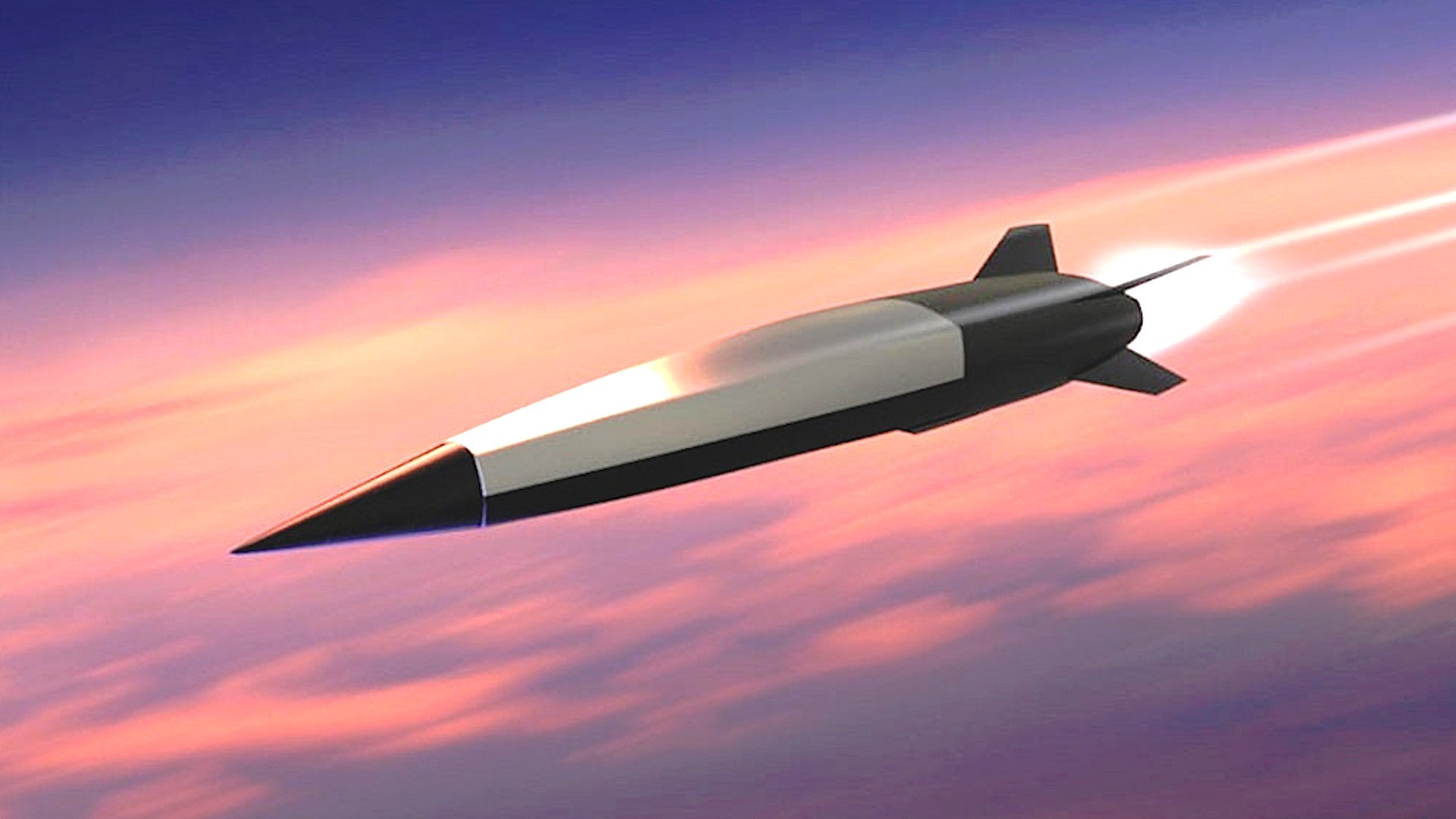
To date, neither the Air Force nor Raytheon has released a confirmed picture or rendering of HACM. In 2023, the Air Force did release a picture, seen below, showing an air-breathing hypersonic cruise missile test article related to either HACM or the preceding HAWC effort.

USAF

“The missile consists of two stages, a rocket booster and a scramjet cruiser, which separates from the booster and eventually dives toward its target,” according to GAO. Scramjets do not function effectively at lower speeds, and designs powered by them require some form of initial boost to a high Mach velocity. Hypersonic speed is generally defined as anything above Mach 5, but what HACM’s peak speed might be is unknown.

Two-stage air-breathing missile-like hypersonic vehicle designs have been tested on several occasions in the past. This includes Boeing’s scramjet-powered X-51 Waverider and HyFly 2 hypersonic test vehicles, among others. The X-51 (as its name indicates) and HyFly 2 also notably had so-called ‘waverider’ configurations designed to ‘skip’ on the shockwaves generated during high-speed flight to help provide additional lift. Whether HACM might also use this principle is not known.

It’s also worth noting here that Castelion’s Blackbeard hypersonic missile also has a two-stage configuration. It remains unconfirmed whether or not the second stage of that weapon is powered, but it does not appear to be an air-breathing design either way. Castelion is currently developing an air-launched version of Blackbeard for the U.S. Navy, which is also in flight testing now, as well as a ground-launched type for the U.S. Army. You can read more about that missile here.

Coming soon to a theater near you…BLACKBEARD!@USPACOM @CENTCOM @PAEAviation pic.twitter.com/KgBtIqdf8I

— NAVAIR (@NAVAIRNews) September 25, 2026

Scramjet-powered air vehicle designs, including aircraft and missiles, have historically proven challenging. As noted, HACM has suffered delays over the years. The original goal had been to begin flight testing in 2024, which slipped first to 2025 and then 2026.

“The HACM program is on track to conduct its first flight test in the second quarter of fiscal year 2026, but officials said there is effectively zero margin left in the schedule for the rapid prototyping effort. The program has already descoped the rapid prototyping effort from seven to five planned flight tests,” GAO said bluntly in a report published in July. “The Air Force plans to produce 13 missiles during the rapid prototyping effort, including test assets, test spares, and operational rounds.”

“If a significant flight test failure occurs, it is likely that the program will not be able to complete all five tests within the 5-year rapid prototyping timeframe,” the report continued. “According to the program, completing at least the first three flight tests is critical for informing the Air Force’s decision to initiate a rapid fielding effort and procure HACM in fiscal year 2027.”

GAO’s July report, which had a January cutoff date, noted later on that the Air Force’s target date for initiating the rapid fielding effort, more specifically, was the first quarter of Fiscal Year 2027. This fiscal period began last Thursday and runs through the end of the year. Whether the service is still aiming to keep to that part of the schedule is unclear, but it would seem extremely difficult to do so.

A Raytheon rendering of an air-breathing hypersonic air vehicle that GAO used to illustrate the entry on HACM in its recent report. Raytheon via GAO
Another rendering of a notional hypersonic missile that has been used to illustrate discussions about HACM in the past. Raytheon via GAO

“The HACM program has taken on risk to maintain its current schedule. According to program officials, maintaining the schedule has required aggressively resequencing activities to focus almost exclusively on those necessary to support the first flight test date,” GAO’s report added. “In some cases, officials said this has involved risky strategies, such as concurrently performing parts validation testing while completing the system’s design, which could require the redesign of key parts if they fail validation testing.”

In terms of U.S. hypersonic missile developments, challenges have also not been limited to scramjet-powered types like HACM. Air Force, Navy, and Army efforts to develop a variety of air- and surface-launched hypersonic missiles in various sizes and configurations have all suffered setbacks in the past decade or so. The Navy notably cancelled its own air-launched hypersonic cruise missile program, called Hypersonic Air-Launched Offensive Anti-Surface Warfare, or HALO, last year. The service subsequently shifted focus to the aforementioned Blackbeard under a program called the Multi-mission Affordable Capacity Effector (MACE). This has all prompted particular concerns about a growing and increasingly worrisome gap in this regard between the United States and its chief global competitors, especially China.

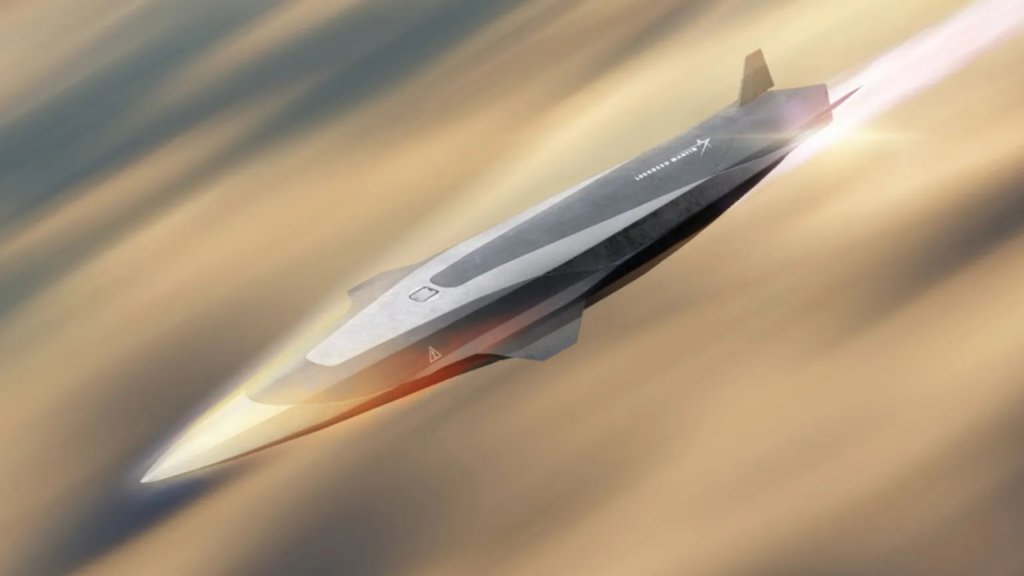
Lockheed Martin, which previously put out this rendering of a hypersonic cruise missile, had been working on HALO for the Navy before that program was cancelled. Lockheed Martin

There is also a cost question. HACM traces to a time when hypersonic missiles were generally viewed, at least publicly, as highly capable, but also higher-cost and lower-density, assets. Blackbeard, for example, reflects a more recent push to develop and field more economical munition designs across the board that can also be more readily produced at scale. This demand signal has become even more pronounced in light of the dwindling American stockpiles of critical munitions due to the conflict with Iran, as well as other crises globally in recent years. More exquisite munitions, including hypersonic types, will still be part of the larger U.S. arsenal going forward.

Regardless, the U.S. military, as well as its Australian counterparts, have made it clear in the past that they view hypersonic weapons as critical for success in future conflicts, especially high-end fights, such as one in the Pacific against China. In general, air-breathing hypersonic cruise missiles offer a valuable and highly flexible way to strike targets, especially time-sensitive ones, quickly and over extended ranges. The weapon’s high speed and maneuverability drastically increase its ability to penetrate through enemy air defenses and reduce the total time an opponent has to react.

Whether or not the Air Force will be able to avoid any more major delays with HACM remains to be seen. The service’s goal to start at least limited production of HACM before the end of 2027, if not sooner, is even more ambitious now after years of schedule slips. As mentioned, officials have already acknowledged there was no more margin for error at the start of the year. There are many questions still about what form any initial fielding will take, and how that might be further impacted by the truncated testing plan.

The HACM program has at least now hit the important milestone of beginning flight testing.

Contact the author: joe@twz.com

The post First Release Of USAF’s New HACM Hypersonic Cruise Missile Has Happened Over Australian Range appeared first on TWZ.
  •  

B-1B Bombers Make Hasty Departure From England

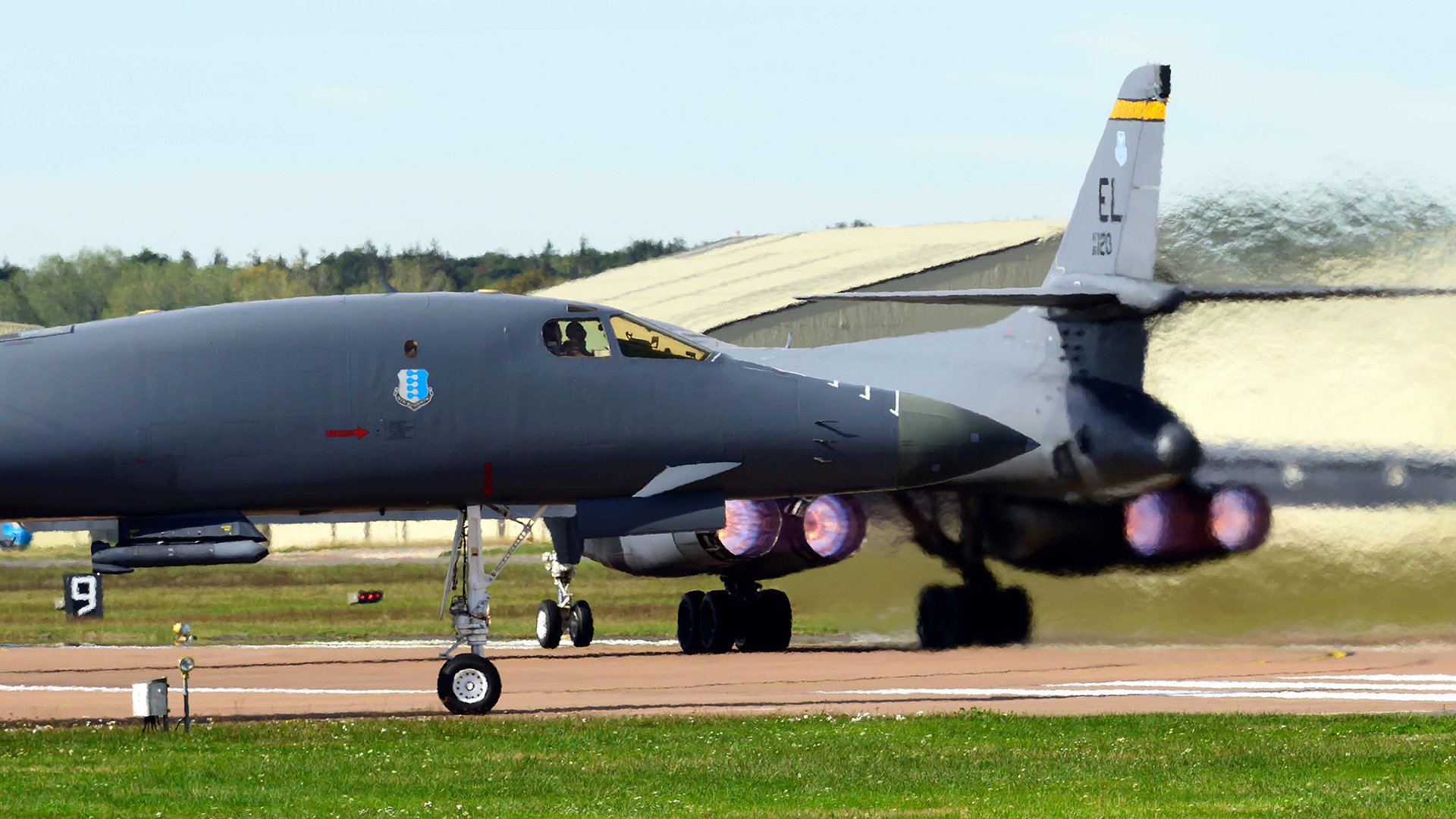
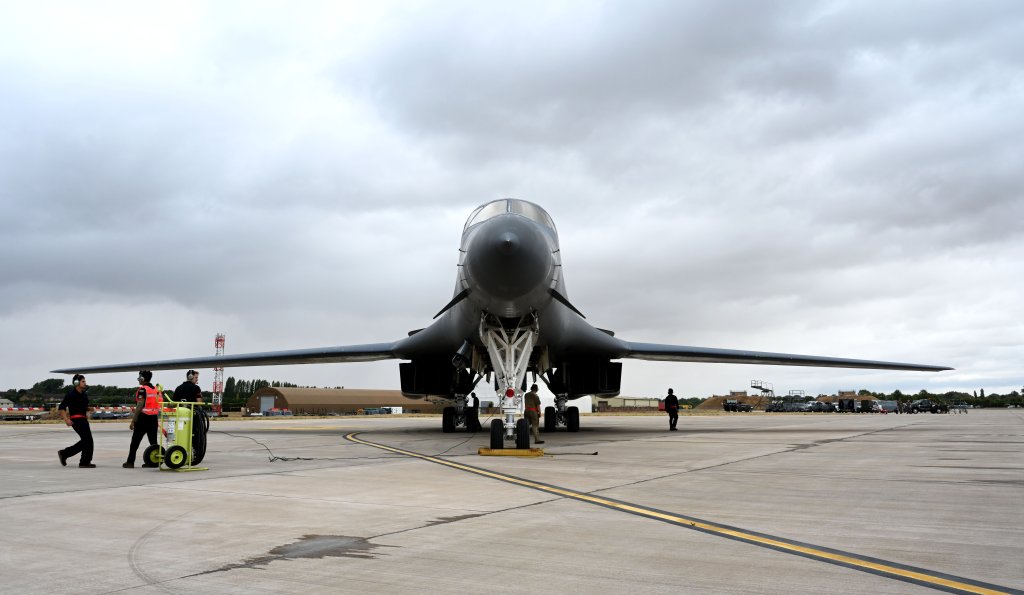
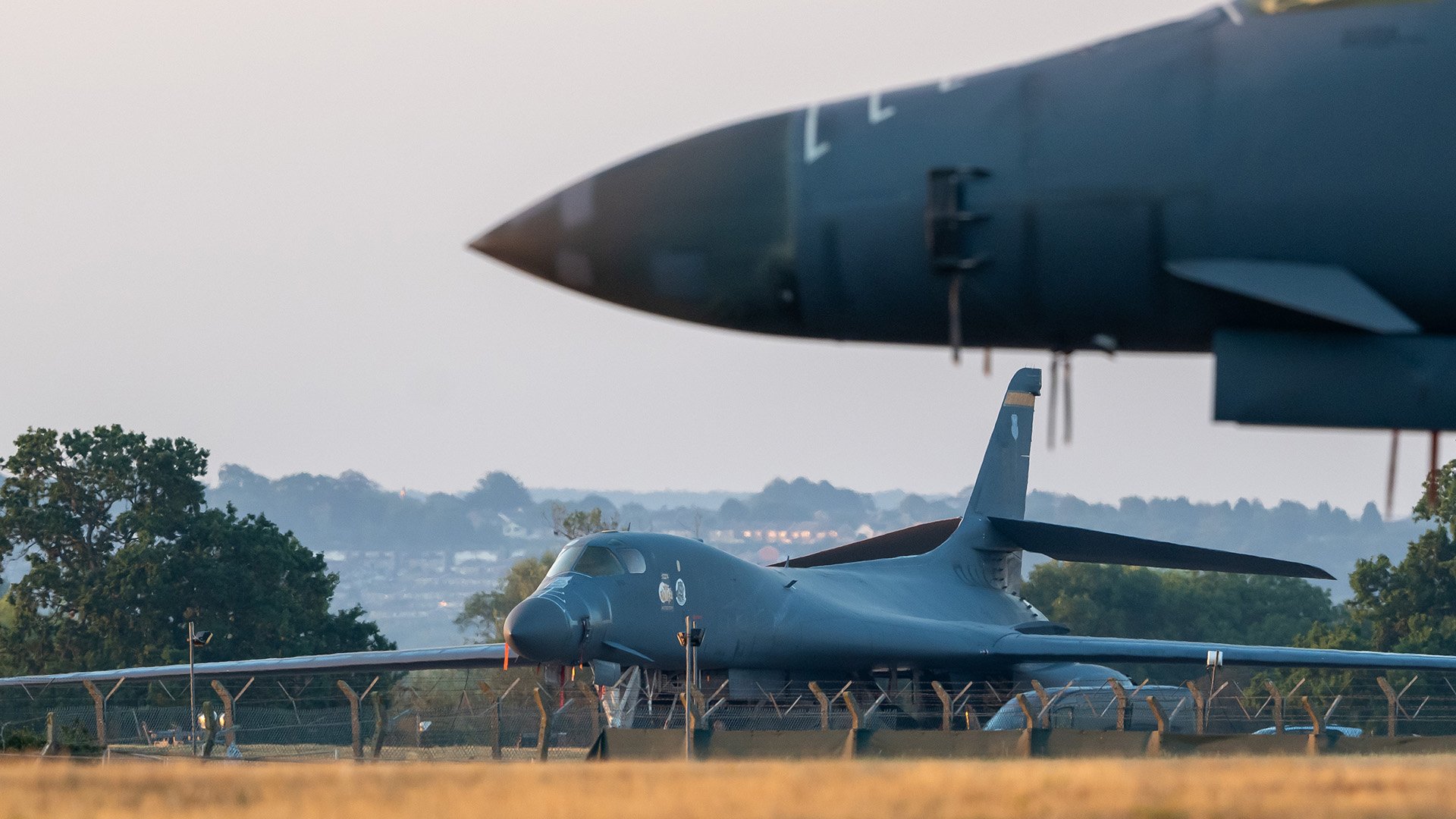
U.S. Air Force B-1B Lancer bombers that had been deployed to RAF Fairford in the U.K. since operation Epic Fury have returned to their home stations, a U.S. defense official confirmed to TWZ. The hasty movement was reportedly sparked by new Iranian threats against the base, although the Pentagon doesn’t confirm that assertion.

The sudden withdrawal came a week after a major incident was declared near Fairford following the arrest of five men on suspicion of driving bomb-laden vans toward it. They were later released on bail after no explosives were found. However, Counter-Terrorism police are continuing the investigation and said they were considering ​whether a foreign ​state had ⁠been involved. On Wednesday, British Prime Minister Andy Burnham said the incident might have had an Iranian ​link.

The Wall Street Journal was the first to report the departure.

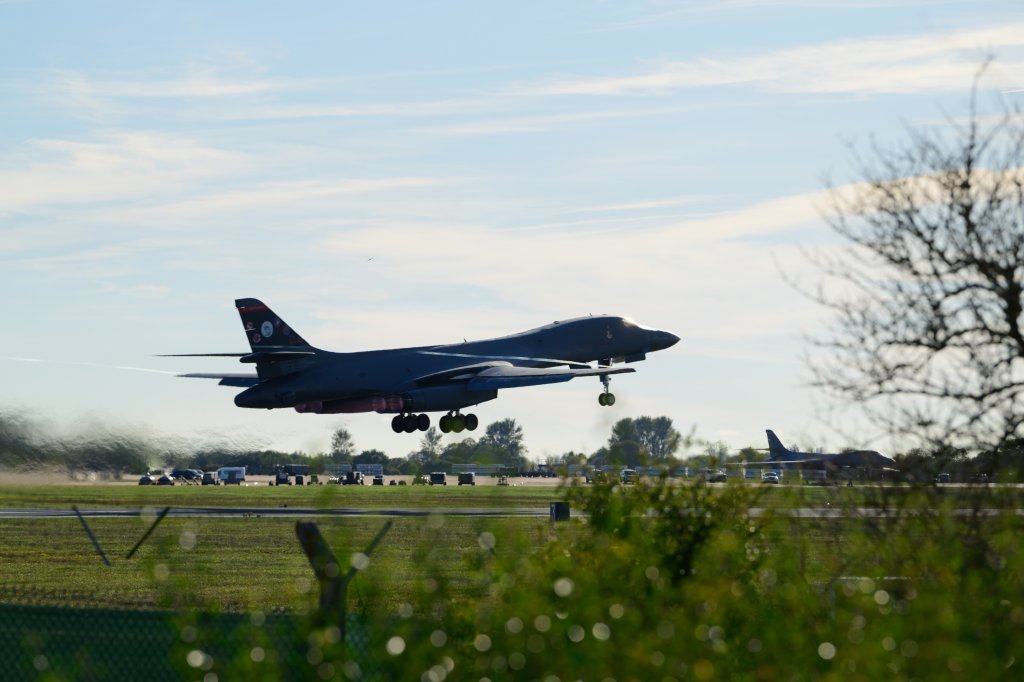
FAIRFORD, ENGLAND - OCTOBER 4: A Rockwell B1 Lancer heavy bomber takes off from runway 27 to depart for home at RAF Fairford on October 04, 2026 in Fairford, United Kingdom. Around a dozen US B-1B Lancer bombers remain stationed at RAF Fairford in Gloucestershire, following a significant military drawdown late last month that saw six B-52 Stratofortress bombers return across the Atlantic. The heavy aircraft are part of an American forward strike force that has used the Gloucestershire airfield to conduct missions against Iranian capabilities, with total aircraft numbers at the Gloucestershire hub previously peaking between 21 and 23 strategic bombers earlier this year. (Photo by David Bown/Getty Images)
A U.S. Air Force B-1B Lancer heavy bomber takes off from runway 27 to depart for home at RAF Fairford on Oct. 4, 2026 in Fairford, United Kingdom. (Photo by David Bown/Getty Images) DAVIDBOWN

Bomber strikes launched from Fairford, which included ones executed by both B-1s and B-52s, were a central aspect of major U.S. combat operations against Iran earlier this year. In addition, the installation is a major hub for U.S. military aircraft in the United Kingdom. It is a regular host of strategic assets, including bombers and U-2 spy planes. It also acts as a pit stop for other aircraft, including fighters, that are being ferried to and from the United States.

The U.S. withdrew all 12 B-1s “after commanders received new threats about an Iran-backed plot against the installation,” The New York Times reported, citing two U.S. officials.

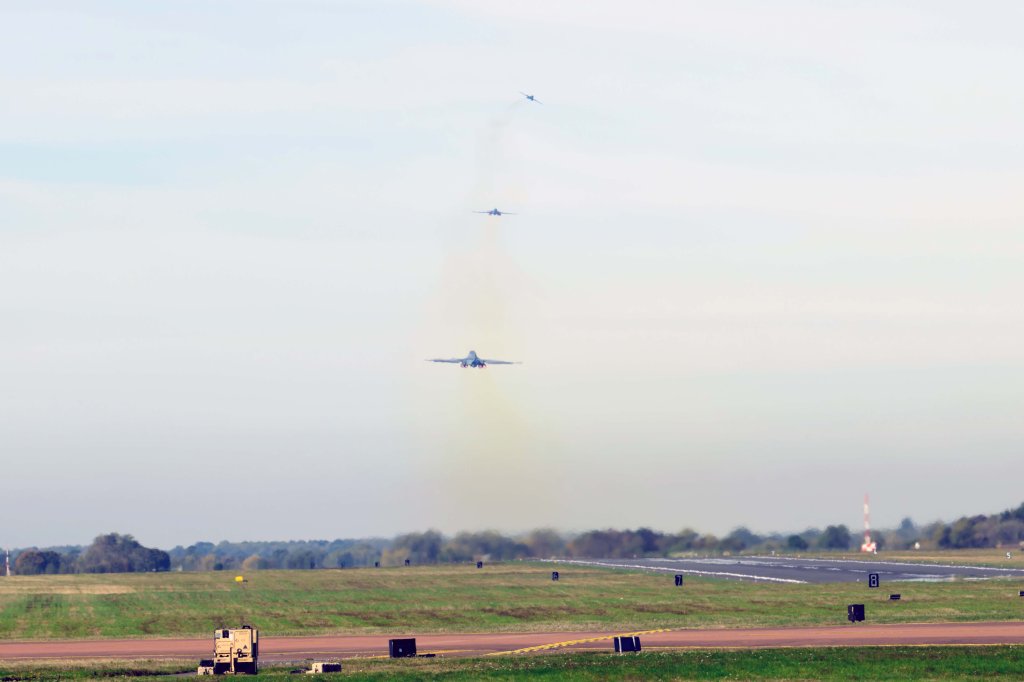
FAIRFORD, ENGLAND - OCTOBER 4: B1 bombers take off as they depart for home at RAF Fairford on October 04, 2026 in Fairford, United Kingdom. Around a dozen US B-1B Lancer bombers remain stationed at RAF Fairford in Gloucestershire, following a significant military drawdown late last month that saw six B-52 Stratofortress bombers return across the Atlantic. The heavy aircraft are part of an American forward strike force that has used the Gloucestershire airfield to conduct missions against Iranian capabilities, with total aircraft numbers at the Gloucestershire hub previously peaking between 21 and 23 strategic bombers earlier this year. (Photo by David Bown/Getty Images)
U.S. Air Force B-1 bombers depart RAF Fairford for home bases on Oct. 4, 2026. (Photo by David Bown/Getty Images) DAVIDBOWN

“The withdrawal was highly unusual: Such moves are rarely made so quickly from an allied air base in a peacetime country thousands of miles from a combat zone,” the publication added. “The need to move the bombers out of the base, R.A.F. Fairford, was deemed so urgent that some of the planes and their flight crews left while aerial refueling aircraft were still being scrambled to support their flights to the United States. At least three of the planes had landed at their home base in South Dakota by Sunday.”

U.S. officials declined to tell the Times the specific nature of the new information that prompted the Lancer withdrawal, some of which had just arrived in the past week as part of a normal rotation of forces to maintain the B-1 forward presence in Europe.

“One U.S. official said the new information was part of the same threat warnings that surfaced three weeks ago, but specific details and a sense of urgency spiked in the past 24 hours, alarming commanders,” the publication noted.

As we previously reported, Tehran directly threatened RAF Fairford in July over its use as a base to launch attacks against Iran.

“The American aggressor army, which used to launch cruise missiles from its vessels in the Indian Ocean in its aggression after the official resumption of the war, with the end of the missile reserves of the aforementioned vessels, yesterday switched to using B1 planes flying from Fairford Air Base, England,” Tasnim News Agency, a quasi-state outlet in Iran with ties to the country’s powerful Islamic Revolutionary Guard Corps (IRGC), claimed on Telegram on July 23. “As the officials of the Ministry of Foreign Affairs also stated, any base that is used to invade Iran’s territory is our legitimate goal.”

the enemy must pay the price for its breach of promises, and this time we will not allow America to use deceptive ceasefires to replenish its oil and ammunition stockpiles and then resume attacks once again.

— Press TV 🔻 (@PressTV) July 23, 2026

Local aircraft spotters and aviation photographers began to notice the aircraft departing in large numbers earlier on Sunday.

The aircraft left in several waves, according to the DefenceGeek X account, run by the senior editor of the U.K. Defence Journal.

IN FULL: US Bomber Force Withdrawal from RAF Fairford #IranWar‌

OK so now we know the full scale of this withdrawal, here's the details – 10 of the 12 B-1B "Lancer" bombers remaining at the base (including the aircraft that only arrived 6 days ago on a rotation) are heading… pic.twitter.com/LSBHuomAcz

— DefenceGeek 🇬🇧 (@DefenceGeek) October 4, 2026

B-1 MAYAN42 departing for home just now🇺🇸 it was with MAYAN41 86-0111 which only recently arrived at RAF Fairford suggesting not a rotation. That's 10 today now. pic.twitter.com/sfvDjmgdgK

— Saint1 (@Saint1Mil) October 4, 2026

The defense official who confirmed the withdrawal said the aircraft movements won’t affect overall readiness.

“The Airmen that operate America’s bomber force, including B-1s, B-2s, and B-52s, remain ready to deliver precision global strike capabilities – including through operations that launch and recover from the continental United States – anywhere, anytime,” the official added.

When we asked the Pentagon about the retrograde movement of bombers from the U.K., they did not confirm the security issue that prompted it, stating:

“U.S. Air Force bombers routinely operate around the world to support global force readiness and operational requirements. While operational security precluded us from confirming the movement of our assets and forces in real-time, we can acknowledge now that all U.S. bombers that were deployed to RAF Fairford have re-deployed to their home stations in the United States. The Airmen that operate America’s bomber force, including B-1s, B-2s, and B-52s, remain ready to deliver precision global strike capabilities – including through operations that launch and recover from the continental United States – anywhere, anytime.”

Regardless, this is the first time in months that RAF Fairford has not hosted U.S. bombers.

Contact the author: howard@twz.com

The post B-1B Bombers Make Hasty Departure From England appeared first on TWZ.

  •  

Hunt For MQ-9 Reaper Successor Surprisingly Includes Exotic Aircraft Manufacturer Otto Aerospace

Seven companies are said to now be in the running to develop a lower-cost and highly modular drone to succeed the MQ-9A Reaper. Though the field has some well-established entrants and some far lesser known names, the inclusion of Otto Aerospace in this group is particularly unexpected and interesting to examine. Otto has made bold, but still unrealized pronouncements about disrupting the aviation industry with potentially revolutionary high-efficiency designs that could have civilian and military applications. TWZ has been steadily tracking the company’s developments since we first reported on the existence of the Celera 500L aircraft back in 2017.

Air & Space Forces Magazine first reported on Wednesday that Otto Aerospace (previously Otto Aviation), as well as Anduril, Chaos Industries, General Atomics Aeronautical Systems, Grid Aero, Shield AI, and Swarm Aero, had “made the cut” for the Massed Modular Aircraft (MMA) program, citing anonymous sources. The MMA effort formally kicked off in July, and the Air Force is now aiming to have a fleet of at least 500 of these drones by 2032.

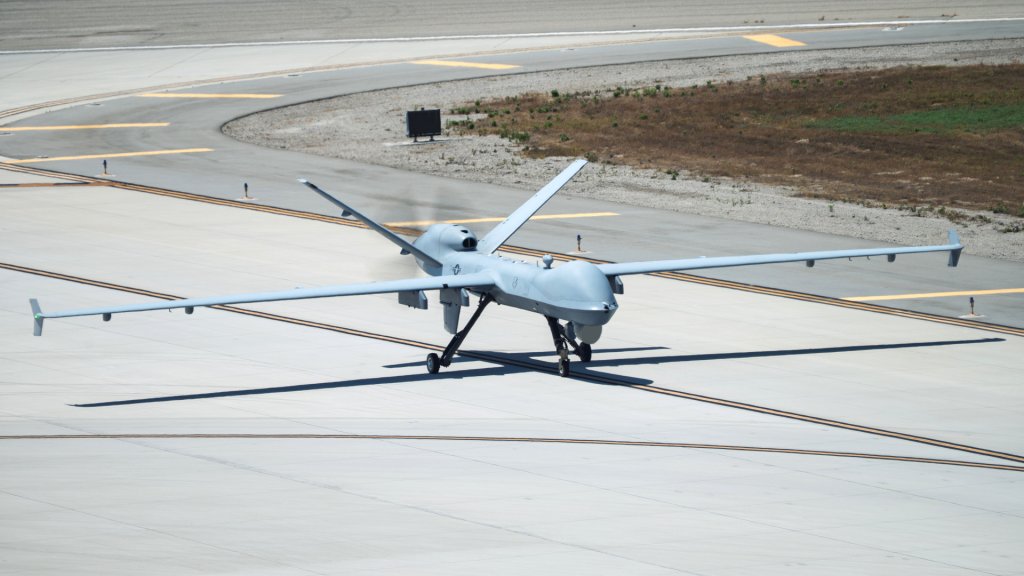
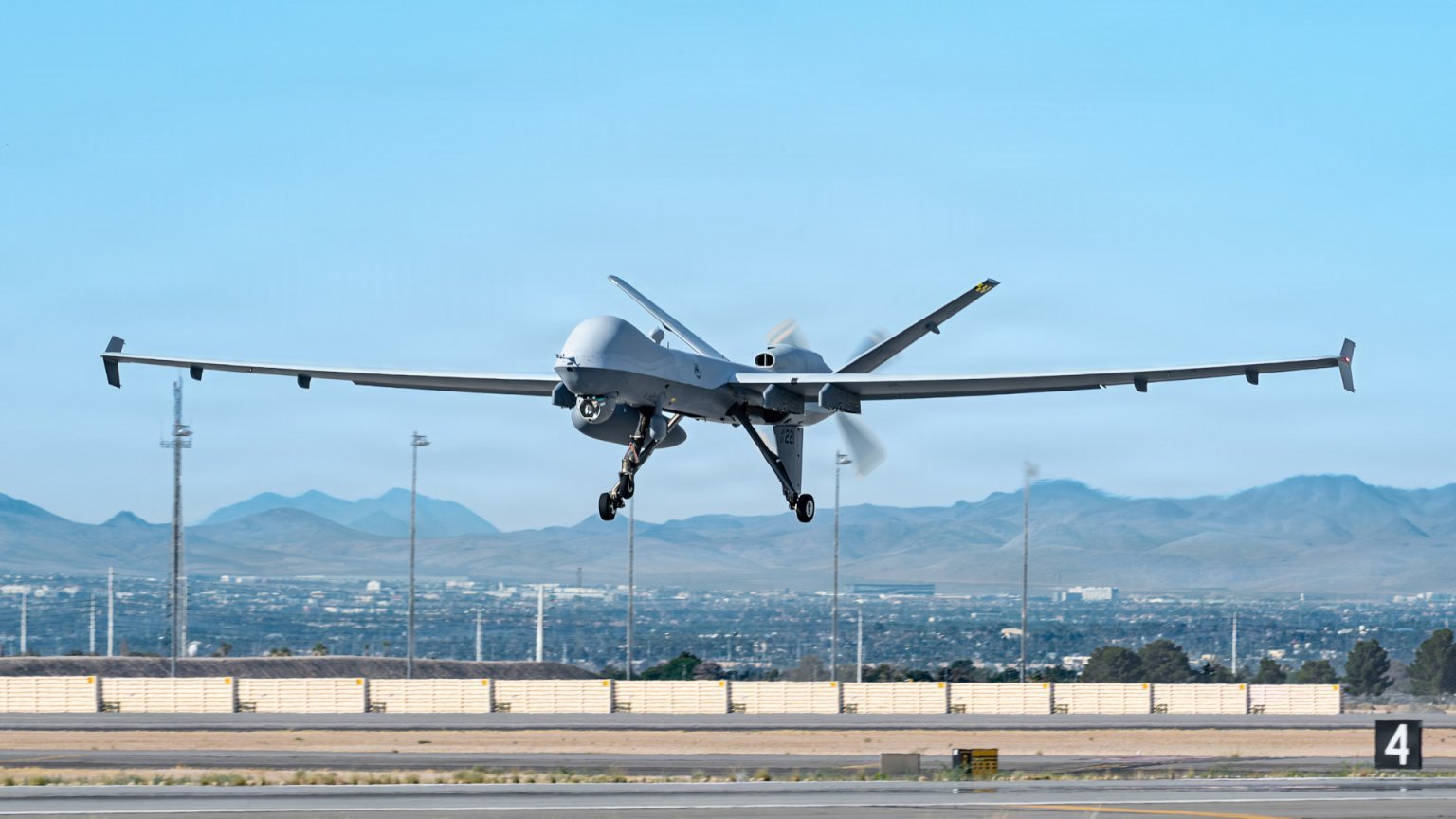
The Massed Modular Aircraft (MMA) program is seeking a successor to the MQ-9A Reaper, an example of which is seen here. USAF

An industry source has also told us that these seven companies are moving ahead in the MMA program. The Air Force has not yet offered an official confirmation.

“The Air Force’s partnership with the Defense Innovation Unit is accelerating requirements development and rapid prototyping by leveraging commercial innovation and reducing timelines,” a spokesperson for the service said when we asked for more information. “We continue working with industry to inform requirements and assess potential solutions as we shape the future MMA capability.”

TWZ has also reached out to all of the companies on the list for more details.

As mentioned, it is unexpected and especially interesting to see Otto named here in the context of MMA. The company’s core design philosophy centers around what is called laminar flow. Broadly speaking, this refers to liquid or gaseous “fluids,” including air, flowing in smooth, regular layers across a surface with little to no mixing between them. In aviation, optimization for laminar flow translates to reduced drag and improved aerodynamic efficiency. This, in turn, can offer a host of benefits, including when it comes to fuel economy, extended range, and overall performance, as well as reductions in operating costs.

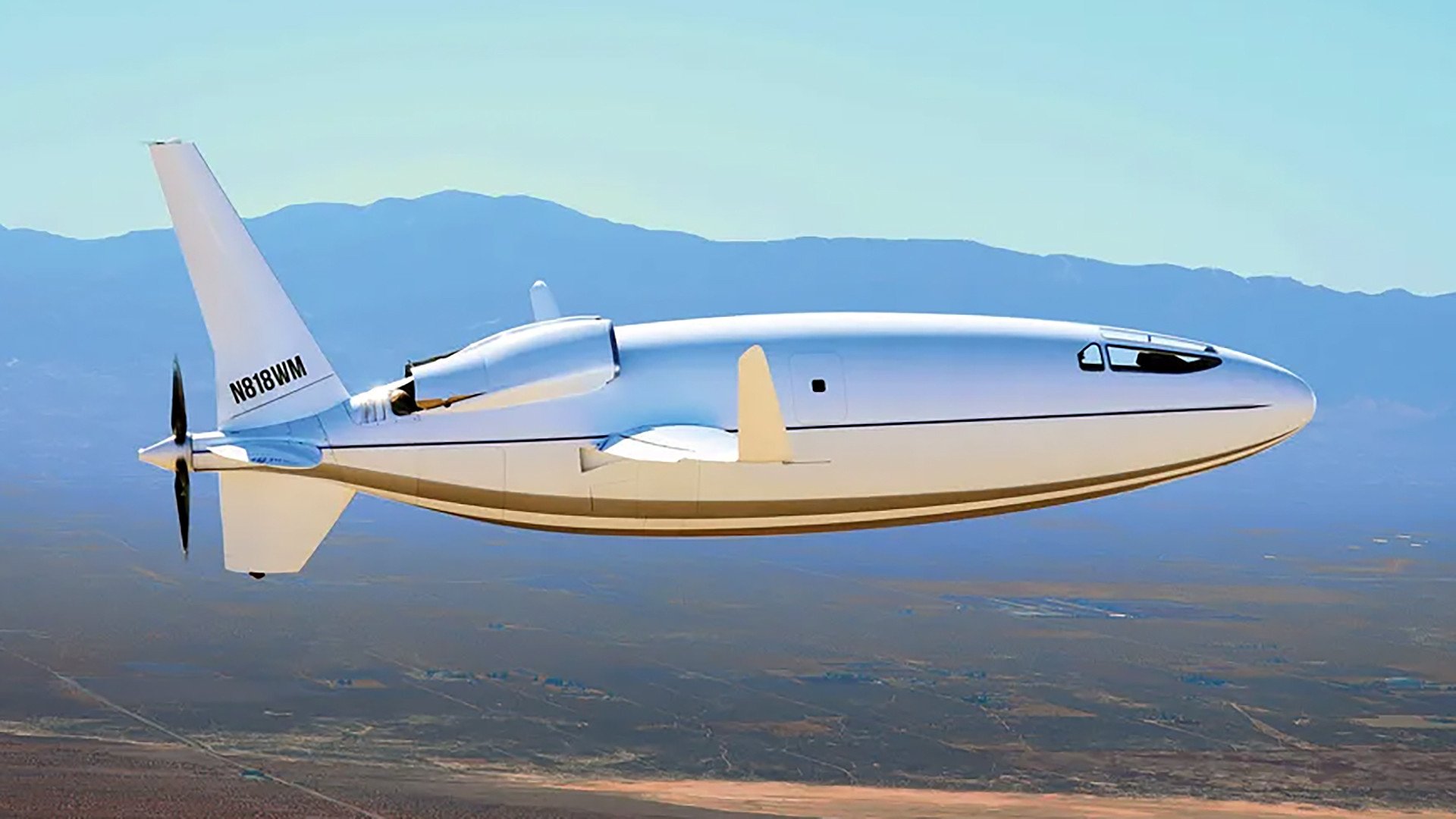
With this in mind, all of the designs that Otto has shown to date, starting with the Celera 500L, have been based around teardrop-shaped fuselages to maximize laminar flow benefits. Many of them also feature long, slender glider-like wings. The sudden and unannounced appearance of the very exotic and futuristic-looking Celera 500L at the Southern California Logistics Airport in 2017, at which time nothing was known about the aircraft or its manufacturer, caused a stir in the broader aviation community. TWZ was the first to report on the plane and then unmasked its identity.

On top of the laminar flow-optimized shaping, the Celera 500L was a pusher-propeller design powered by a single high-efficiency, turbocharged, multi-fuel V12 piston engine. A relevant patent held by Otto also describes a novel exhaust system with a heat exchanger that provides an additional boost in thrust.

Otto conducted an extensive test campaign with the Celera 500L, taking the aircraft up to an altitude of 15,000 feet and to a speed of 250 miles per hour. The company posited that this would translate to a cruising speed of around 460 miles per hour at the design’s intended operating ceiling of 50,000 feet.

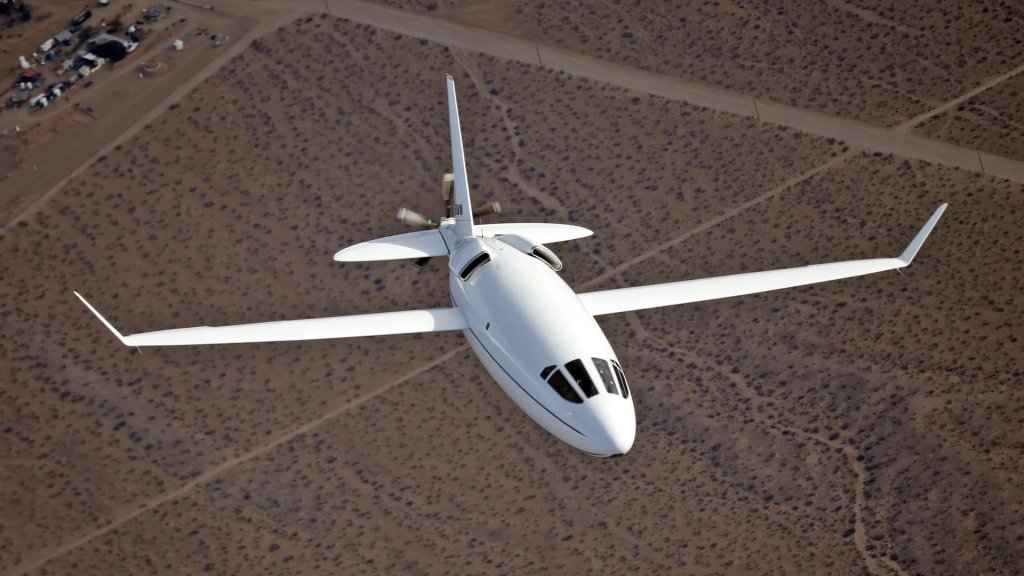
The Celera 500L seen during a test flight. Otto Aerospace

Development focus at the company has since shifted to the jet-powered Phantom 3500, which has a much revised design compared to the Celera 500L. Otto has said previously that it expects this aircraft to burn just 115 gallons of fuel per hour, further underscoring the benefits of its laminar-flow-centric approach. Comparably sized business jets like the Bombardier Challenger 350, Cessna Citation Latitude, and Embraer Praetor 500 consume around 300 gallons per hour, according to the company, citing data from Jet Support Services, Inc. (JSSI).

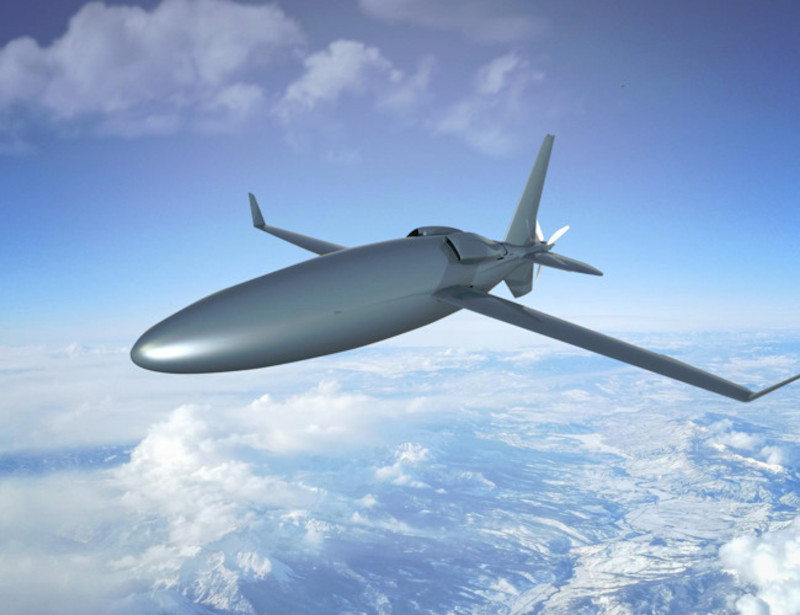
A rendering of Otto Aviation’s Phantom 3500, a business jet the company is currently developing. Otto Aviation

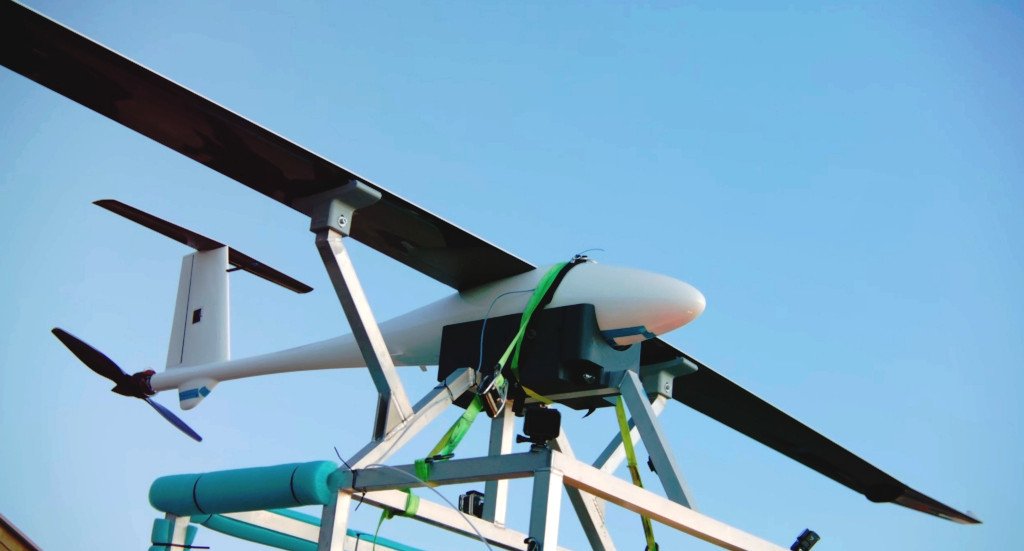
It is also worth noting here that Otto has already developed a drone with a “highly laminar-flow efficient airframe” for the U.S. Defense Advanced Research Projects Agency (DARPA). The company announced the successful completion of a flight test campaign in May. The pusher-propeller design has a teardrop-shaped main body, a glider-type main wing, and a T-tail at the end of a boom that extends to the rear of the aircraft. DARPA plans to use that drone to demonstrate laser-based power beaming technology that could be used to relay electricity to forward operating locations. The technology could also dramatically extend the endurance of an electrically-powered drone, potentially allowing it to stay in the air indefinitely.

The drone for DARPA is far too small to meet the Air Force’s MMA requirements. However, “the program leveraged Otto’s aerodynamic expertise to design and flight-test an unmanned vehicle that could inform design parameters for future energy-relay systems or more extremely fuel-efficient, long-endurance platforms,” per a press release Otto put out in May.

Otto Aerospace developed this drone, seen here rigged up for launch from a pickup truck, for the US Defense Advanced Research Projects Agency (DARPA). Otto Aerospace

TWZ has highlighted in the past how the general range, fuel economy, and other advantages inherent to Otto’s designs could be even more pronounced in a configuration that does not need to support a human crew. Furthermore, Otto has previously shown militarized concepts, crewed and uncrewed. As we’ve written in our earlier coverage of the Celera 500L:

“Though primarily aimed at civilian and commercial operators, Otto’s new website also highlights the potential for the Celera 500L to use its long-range and high fuel economy to support military missions, including transporting personnel and cargo, as well as conducting intelligence, surveillance, and reconnaissance (ISR) missions. A version of the aircraft, possibly unmanned, equipped with any number of sensor suites could be an impressive persistent surveillance and communications relay platform able to orbit over particular areas for very long periods of time and cover a wide swath of the battlefield from its high perch. It could also be able to reposition itself quickly and transit to its tasking area at jet-like speeds.”

A rendering of a concept for an uncrewed derivative of the Celera 500L. Otto Aerospace

While we have yet to see an explicit MMA proposal from Otto, a laminar flow-optimized drone could be a very attractive offering, given the program’s focus on reducing costs while having an unrefueled combat radius of at least 2,300 nautical miles, among other capabilities. A more efficient design could further translate to a drone that needs less fuel to meet range and other requirements, which, in turn, could allow for a smaller and/or cheaper design overall. Weight and physical space savings afforded by reduced fuel demand could be used to increase ordnance and other payload capacity, too. You can read more about what is known about the MMA requirements here.

There are more companies beyond Otto in the running. With the Air Force aiming to buy hundreds of MMA drones in the coming years, there will be stiff competition.

General Atomics, which developed and produced the MQ-9A, has publicly put forward its own proposal for a successor, called Wildfire. The new drone draws heavily on experience with the Reaper, as well as other drones in the company’s portfolio, and you can read more about what is known about that design here. General Atomics declined to offer additional comment in response to questions regarding the current state of the MMA program. As an aside, General Atomics is also now on contract to build higher-end FQ-42 Vengeance drones for the Air Force, one of two designs intended for higher-end air combat the service is acquiring under its Collaborative Combat Aircraft (CCA) program.

A rendering of General Atomics’ Wildfire drone. General Atomics

The other company building CCA drones for the Air Force is Anduril, with its FQ-44 Fury, and it has now also been named in relation to the MMA effort. Anduril has unveiled two other very different tactical drones since 2025, the twin-engine hybrid-electric tail-sitting Omen, designed primarily for surveillance and reconnaissance, and Thunder, an armed tiltrotor pitched as an uncrewed companion for crewed rotorcraft. Neither of those uncrewed aircraft would seem to directly align with the stated MMA requirements, but might serve as a starting place. Anduril also has a history now of developing new uncrewed platforms and other systems discreetly, and sharing them with the public only when they have become relatively mature.

Anduril’s Omen drone, which was unveiled in November 2025. Anduril TREVOR DALTON
The Thunder tiltrotor, which Anduril unveiled earlier this year. Anduril

What design Shield AI might be offering is unknown. The MMA requirements would seem to sit between the company’s V-BAT drone, which is in service with several armed forces today, including in the United States and Ukraine, and the much higher-end X-BAT that is now in development. Shield AI has been working to expand on the V-BAT design, including plans to integrate air-launched munitions. Both V-BAT and X-BAT are also vertical-takeoff and landing designs. Beyond drones, Shield AI remains a major developer of artificial intelligence-driven autonomy packages for the U.S. military and others.

Earlier this month, newcomer Swarm Aero unveiled a new drone with performance and capabilities that align with the stated MMA requirements earlier this month. Called Gamera, the design has a single propeller at the front of a small central fuselage, together with sponsons holding large fuel cells on either side and a twin-boom tail configuration broadly reminiscent of the OV-10 Bronco light attack aircraft, as TWZ previously reported on in more detail.

Grid Aero is publicly developing a twin-engine cargo drone called the Lifter Lite, in part with funding from AFWERX, the Air Force’s internal technology incubator. Whether the company might work to adapt the Lifter Lite, which has been undergoing testing at least on the ground, to meet the MMA requirements or has proposed something entirely different is not known.

A picture of the first Lifter Lite cargo drone prototype. Grid Aero

The last firm on the list, Chaos Industries, does not appear to show any drone designs on its website at the time of writing. It is primarily known as a developer of radar systems, especially for use in counter-drone systems. The company declined to comment in response to TWZ queries regarding the MMA program.

To reiterate, the Air Force still has not confirmed the full list of MMA program contenders. Otto’s participation would be a standout, but the field as it is understood now features a number of very established drone makers, as well as emerging start-ups, all vying for a very lucrative opportunity. On top of the potential just to supply hundreds of drones upfront, those uncrewed aircraft look set to be a key part of the Air Force’s force structure for years to come, and will need to be supported throughout their lifecycles. The MMA requirements put heavy emphasis on modularity and open-architecture systems to allow for the rapid integration of new and improved capabilities and functionality down the line.

The Air Force has also previously raised the possibility of selecting multiple vendors to produce designs under the MMA program, or to pursue follow-on rounds of competition to help meet its operations requirements. This is exactly how the service has been running the CCA program, and has already led to the aforementioned production contracts with General Atomics and Anduril. In addition, the Air Force is targeting a base $10 million unit cost for each MMA drone, a price point that would help make losses more tolerable, and could open the door to acquiring a fleet of far more than 500 examples.

It is also important to remember that the Air Force has tried and failed on several occasions to develop and field an MQ-9A replacement. As TWZ has previously explored in great detail, the service’s view of what that drone should be has also evolved over time, with the current MMA program squarely focused on a more affordable option that does not put a heavy premium on survivability. The Air Force has acknowledged potential budget and other hurdles to its new effort. At the same time, heavy continued operational demand for Reapers, coupled with dozens of losses in the course of the war with Iran, as well as other operations in and around the Middle East in recent years, have put major new emphasis on finally finding a successor.

Overall, beyond what is already known about potential MMA offerings, it will be very interesting to see what Otto and the other contenders put forward to finally succeed the iconic Reaper.

Contact the author: joe@twz.com

The post Hunt For MQ-9 Reaper Successor Surprisingly Includes Exotic Aircraft Manufacturer Otto Aerospace appeared first on TWZ.
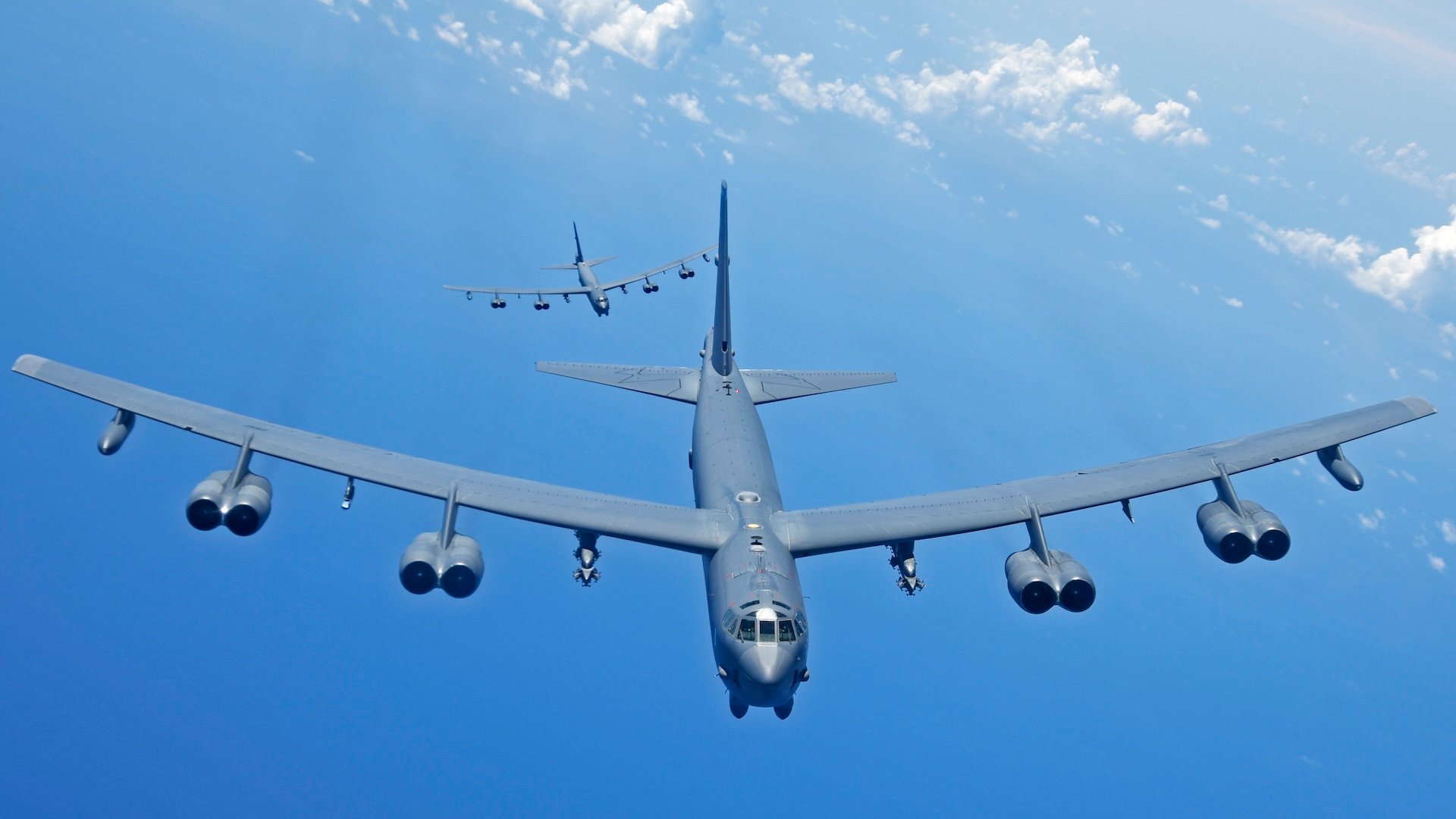
  •  

Taiwan’s First F-16 Block 70s Have Finally Arrived

After nearly seven years of waiting, Taiwan has received the first two aircraft from its long-delayed purchase of 66 new-build F-16C/D Block 70 fighters from the United States.

The two single-seat F-16Cs, serials 6727 and 6728, touched down at Chihhang Air Base near Taitung on October 2. They are the first factory-new fighter aircraft delivered to Taiwan in 25 years and mark the beginning of the aircraft acceptance and integration phase of the Republic of China Air Force’s (ROCAF) so-called Peace Phoenix Soaring project.

The two jets have also had an unusually eventful trip to Taiwan.

They began their journey to the island on August 17, flying from Lockheed Martin’s production facility in Greenville, South Carolina, to Hawaii. The aircraft were subsequently forced to remain there for more than a month after an unexpected issue prevented them from continuing across the Pacific as planned. The reasons for the delay have been the subject of considerable speculation, including weather and tanker availability.

ROCAF F-16C Block 70 serial 6727 arrive in Taitung. Peter Ho, Formosa Aviation & Military Image Press

The two jets finally departed Hawaii again on October 1, stopping in Guam before making the final leg to Taitung today.

Taiwanese Defense Minister Wellington Koo said today that more of the aircraft will arrive before the end of the year, although he did not provide a specific number.

Taiwan receives first 2 F-16V Block 70 fighter jets

Taiwan took delivery Friday of the first two of 66 F-16V Block 70 fighter jets purchased from the United States, with the aircraft landing at Chihhang Air Base in the eastern county of Taitung at around noon. pic.twitter.com/hbqdV6io26

— Focus Taiwan (CNA English News) (@Focus_Taiwan) October 2, 2026

The 66-aircraft purchase is worth approximately $8 billion. Taiwan originally expected deliveries to begin much sooner, but production-line adjustments, supply-chain problems, and software issues contributed to delays. COVID, too, had an impact on the production line.

The program’s delivery schedule has slipped repeatedly. Defense Minister Koo said in March, May, and again through his deputy in June that the first aircraft were expected to arrive by the end of September. That deadline passed without an F-16 reaching Taiwan.

ROCAF F-16C Block 70 serial 6727 touches down earlier today. Peter Ho, Formosa Aviation & Military Image Press

Taiwan’s Ministry of National Defense acknowledged in late September that development and production of the aircraft’s new electronic warfare self-protection system had also been a factor.

The Block 70s are being equipped with L3Harris’ AN/ALQ-254(V)1 Viper Shield electronic warfare suite, and the system was not yet fully through its development and production process when the first aircraft were otherwise ready for delivery. L3Harris announced on September 3 that it had completed production of the first 35 Viper Shield systems, underscoring that the electronic warfare equipment was itself still moving into production as Taiwan’s fighters were approaching delivery.

Taiwan chose to acquire the AN/ALQ-254 rather than the AN/ALQ-257 electronic warfare system used on U.S. Air Force F-16s.

Lawmakers have questioned whether the system meets requirements associated with earlier work to modernize earlier F-16A/B Block 20 fighters to the F-16V standard. Meanwhile, Defense Minister Koo argued that those requirements applied to the earlier Block 20 upgrade rather than the new Block 70 purchase. Other international F-16 Block 70 operators are also using Viper Shield.

Taiwanese officials have defended the decision, citing the specific requirements of Taiwan’s F-16 fleet and associated procurement considerations. The system is intended to provide the new fighters with a modern electronic warfare and self-protection capability against increasingly sophisticated radar and missile threats.

There are also still questions about when the Viper Shield system itself will be fully ready.

ROCAF F-16C Block 70 serial 6727. Peter Ho, Formosa Aviation & Military Image Press

Weapons deliveries have also not kept pace with the aircraft themselves.

Taiwan is receiving AIM-120C-8 AMRAAM air-to-air missiles as part of the F-16 package, with 200 ordered. The C-8 version incorporates upgrades from the U.S. Air Force’s Form, Fit, Function Refresh (F3R) effort, including new electronics and improved electronic-counter-countermeasures intended to make the missile more capable in a heavily contested electromagnetic environment. For Taiwan, the missile will provide the new F-16s with a modern beyond-visual-range air-to-air weapon that can be cued by the aircraft’s AN/APG-83 Scalable Agile Beam Radar (SABR), as well as other sources of targeting information through the F-16’s networked systems.

TOPSHOT - An AIM-120 Advanced Medium-Range Air-to-Air missile is being prepared to be loaded onto a F-16V fighter jet during Spring military exercise at Chiayi Air Base, in Chiayi on January 28, 2026. (Photo by I-Hwa Cheng / AFP via Getty Images)
An AIM-120 AMRAAM is prepared to be loaded onto an F-16V at Chiayi Air Base, in Chiayi on January 28, 2026. Photo by I-Hwa Cheng / AFP

The AIM-120C-8 is particularly relevant as Taiwan fields more F-16s against China’s increasingly capable fighter fleet, which includes aircraft equipped with long-range air-to-air missiles such as the PL-15.

Taiwan’s F-16 Block 70s will also be armed with the AGM-88 High-speed Anti-Radiation Missile (HARM), intended for attacks against enemy air defense systems. According to Roy Choo, a defense journalist and TWZ contributor, the first of the new AGM-88F (remanufactured from U.S. Air Force AGM-88B) missiles arrived in Taiwan back in 2022, for the F-16V fleet.

The major gap is the AGM-154C Joint Standoff Weapon (JSOW). The precision glide weapon is intended to give Taiwan a longer-range strike capability against ground targets without requiring the launching aircraft to fly directly over heavily defended areas. According to the latest reporting from Taiwan, deliveries of the AGM-154C have been held up by delays on the U.S. production line and may not begin until 2027 or 2028 at the earliest. Existing stocks of these weapons were also heavily used in Operation Epic Fury.

The two aircraft now sitting at Chihhang are significant for another reason. Unlike Taiwan’s existing F-16V fleet, they are new-production aircraft rather than older fighters that have been upgraded.

Taiwan received 141 F-16A/B Block 20s that were upgraded to the F-16V configuration under a separate modernization program completed in 2023. The new Block 70s incorporate many of the same technologies — including the APG-83 — but are built from the ground up as new aircraft.

A Taiwan Air Force F-16V taxis out during a spring military exercise at Chiayi Air Base, in Chiayi on January 28, 2026. (Photo by I-Hwa Cheng / AFP via Getty Images)
A Taiwan Air Force F-16V taxis out during a spring military exercise at Chiayi Air Base, in Chiayi on January 28, 2026. Photo by I-Hwa Cheng / AFP

The Block 70s will also bring a significant new passive-sensing capability to Taiwan’s F-16 fleet. Under a $328.5-million U.S. Foreign Military Sales contract awarded to Lockheed Martin in February, Taiwan is receiving the company’s IRST21 Legion-ES infrared search and track system. Designed specifically for the F-16, the long-wave infrared sensor can passively detect and track airborne targets without emitting radar energy. That gives the aircraft another way to search for and track threats while reducing its own electromagnetic signature. The IRST21 also gives the F-16s a passive way to detect and track low-observable targets, potentially providing another means of finding Chinese stealth aircraft without relying solely on radar.

In 2019, Lockheed Martin displayed a model of a Block 70 F-16 with what appeared to be a podded IRST system on one of its chin stations at the biennial Taipei Aerospace & Defense Technology Exhibition in Taiwan:

The mysterious IRST pod at TADTE – https://t.co/avpx5djZMM pic.twitter.com/86lqxu6fN6

— Alert 5 (@alert5) August 16, 2019

The new fighters will therefore complement Taiwan’s upgraded F-16A/Bs while expanding the overall number of modern F-16s available to the ROCAF.

The timing matters.

People’s Liberation Army (PLA) aircraft operate around Taiwan on an increasingly routine basis, forcing the ROCAF to maintain a persistent air-defense posture. The additional F-16s will provide more aircraft for missions ranging from air defense and counter-air operations to maritime strike.

Air Force soldiers prepare to load US made Harpoon AGM-84 anti ship missiles in front of an F-16V fighter jet during a drill at Hualien Air Force base on August 17, 2022. (Photo by Sam Yeh / AFP) (Photo by SAM YEH/AFP via Getty Images)
Ground crew prepare to load AGM-84 Harpoon anti-ship missiles in front of an F-16V during a drill at Hualien Air Force base on August 17, 2022. Photo by SAM YEH/AFP via Getty Images

The F-16V fleet is also being tested for a more specialized intelligence, surveillance, and reconnaissance role. The ROCAF has recently been conducting flight and systems integration testing of the MS-110 advanced reconnaissance pod, part of its Phoenix Scout project. The service plans to acquire six pods to replace older reconnaissance equipment. Based on the DB-110 digital sensor architecture, the system combines visible-light and infrared imaging with long-range, day-and-night reconnaissance, and real-time image transmission, allowing imagery to be passed more rapidly to ground command and intelligence elements. Integrating the pod with the F-16 and associated ground systems will give Taiwan another means of monitoring activity around the island and its surrounding waters.

A ROCAF F-16V carrying an MS-110 reconnaissance pod. Peter Ho, Formosa Aviation & Military Image Press

But Taiwan remains heavily outnumbered across the Taiwan Strait.

China is fielding an increasingly sophisticated combat aircraft fleet that includes the J-20 and J-35 stealth fighter, large numbers of advanced fourth-generation fighters, airborne early warning and other force-multiplier aircraft, and a growing variety of uncrewed systems.

CHANGCHUN, CHINA - SEPTEMBER 22: Aircraft maintenance workers wait for a J-20 fighter jet that has completed its flight demonstration to taxi into the parking spot during the 2025 aviation open-day activities of the Chinese People's Liberation Army (PLA) Air Force and the Changchun Air Show on September 22, 2025 in Changchun, Jilin Province of China. (Photo by Zhang Xiangyi/China News Service/VCG via Getty Images)
A J-20 fighter during the Changchun Air Show on September 22, 2025 in Changchun, Jilin Province of China. Photo by Zhang Xiangyi/China News Service/VCG via Getty Images

And the F-16s will face the same fundamental problem as Taiwan’s other combat aircraft in a major conflict: staying operational.

China possesses extensive missile and air capabilities that could threaten Taiwan’s airbases, aircraft shelters, fuel supplies, command-and-control infrastructure, and other elements needed to keep fighters flying. You can read more about how the ROCAF would likely go to war with China in this previous in-depth feature.

Basing the new F-16s at Chihhang Air Base, operated by the 7th Tactical Fighter Wing, is significant, Choo told us.

“The basing of the aircraft at Chihhang allows the ROCAF to readily project air power south and eastwards, especially over the Bashi Channel, which is one avenue PLA can gain access to the Philippine Sea and beyond,” he explained. “Previously, ROCAF fighters from other bases maintain QRA detachments there”

A newly purchased F-16V Block 70 fighter jet lands at Chihhang Air Base in Taitung on October 2, 2026. Taiwan received its first two US-made F-16V fighter jets, as the island democracy upgrades its military capabilities to deter a potential Chinese attack. The warplanes are part of an $8 billion deal for 66 F-16Vs approved during US President Donald Trump's first term and scheduled for delivery this year. (Photo by CHENG Yu-chen / AFP via Getty Images)
A new F-16C Block 70 lands at Chihhang Air Base in Taitung on October 2, 2026. Photo by CHENG Yu-chen / AFP

The F-16 delivery today is only the beginning of a much larger effort to get all 66 aircraft into Taiwanese service.

According to the latest information from the ROCAF, 63 F-16C/D Block 70s remain in various stages of production and delivery in the United States, with some already moving through the handover process. The remaining aircraft will be delivered according to production, flight-test, and acceptance milestones before being ferried to Taiwan.

Once the full order is delivered, Taiwan will operate more than 200 F-16s when the new Block 70s are combined with its existing fleet.

That will give the ROCAF a considerably larger force of modern F-16s, with substantial commonality between the upgraded F-16V fleet and the new-production Block 70s.

The aircraft will still need to go through Taiwan’s acceptance procedures, while pilots and maintenance personnel complete the necessary conversion and training work. The new jets will then be progressively incorporated into the ROCAF’s operational units.

Remarkably, the arrival of the first Block 70 fighters today marks the first delivery of new fighters to Taiwan since 2001, when the last of the 150 F-16A/B Block 20s were delivered.

“The ROCAF’s surviving fleet of 139 F-16s, 53 Mirage 2000s, and 129 F-CK-1s was largely inducted in the 1990s, when Taiwan held the upper hand in the cross-Strait air-power balance,” Choo explained. “Even then, there remained a requirement for additional fighters, prompting the island’s first formal request to purchase 66 F-16C/Ds during the 2006 Monterey Talks.”

TOPSHOT - Taiwanese air force Indigenous Defense Fighter aircraft taxi for take-off during a scramble as part of a combat readiness exercise at the Ching Chuan Kang Air Base in Taichung on January 7, 2025. (Photo by I-HWA CHENG / AFP) (Photo by I-HWA CHENG/AFP via Getty Images)
F-CK-1s taxi for takeoff during a scramble as part of a combat readiness exercise at Ching Chuan Kang Air Base in Taichung on January 7, 2025. Photo by I-HWA CHENG / AFP

“By the late 2000s, these fighters were approaching the limits of their combat effectiveness as the PLA air fleet expanded in both size and capability. Fortunately, substantial upgrades began to be rolled out to the F-CK-1s and F-16s from the 2010s.”

In the wake of the 2019 acquisition of the F-16C/D Block 70s, questions arose over the aircraft’s asymmetric value as the Taiwan military increasingly focused on developing a plan for asymmetric capabilities in response to the PLA’s growing combat power.

“However, developments in recent years have underscored the continued importance of a capable fighter fleet not least for policing Taiwan’s airspace amid the PLA’s sustained gray-zone air operations around the island,” Choo added.

ROCAF F-16C Block 70 serial 6728. Peter Ho, Formosa Aviation & Military Image Press

The timing of today’s arrival is also notable.

The aircraft reached Taiwan just days after U.S. President Donald Trump met Chinese President Xi Jinping in Washington. The delivery comes amid questions in Taipei about the future pace of U.S. arms transfers, after Trump said in May that a proposed $14-billion Taiwan arms package was being held in abeyance. He had approved an $11-billion package in December 2025.

Washington continues to say that its policy toward Taiwan has not changed.

Beijing, for its part, continues to oppose U.S. arms sales to Taiwan and regards the island as part of Chinese territory.

It has taken nearly seven years to get the first two F-16C/D Block 70s, to Taiwan. But their arrival marks the first step in a major modernization of the ROCAF’s F-16 fleet, adding new-production fighters with improved radar, electronic warfare, sensors, and weapons to a force that is already operating upgraded F-16Vs.

Contact the author: thomas@thewarzone.com

The post Taiwan’s First F-16 Block 70s Have Finally Arrived appeared first on TWZ.
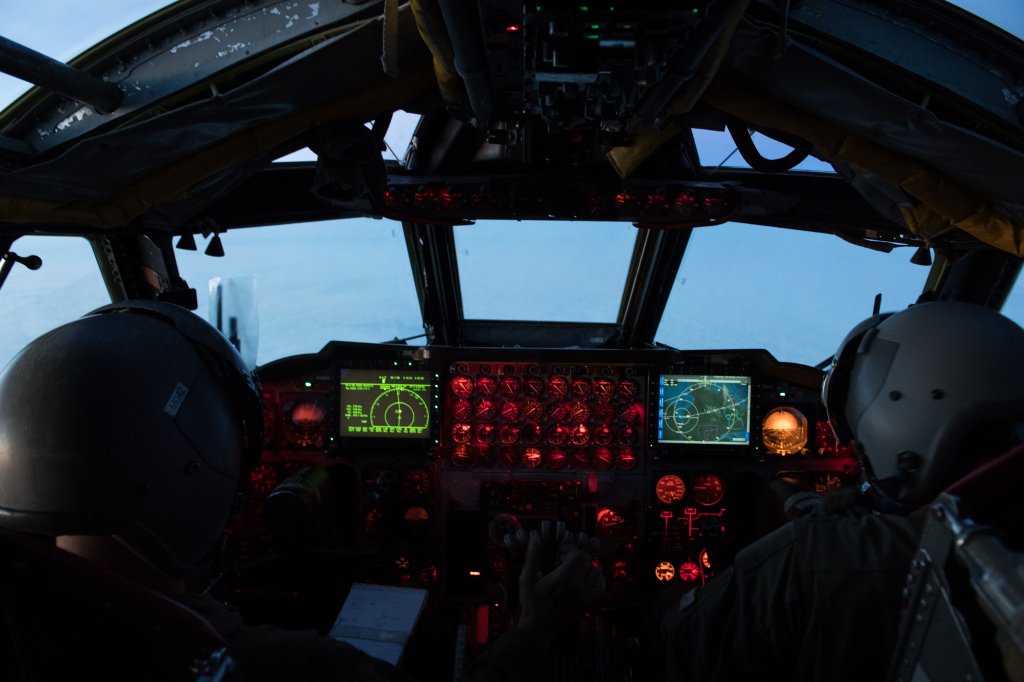
  •  

AIM-260 JATM Missile Spotted On Australian Super Hornet

A Royal Australian Air Force F/A-18F Super Hornet has been photographed carrying an inert AIM-260 Joint Advanced Tactical Missile (JATM) during a major U.S. Navy test event in California. The development comes weeks after Australia announced that it would buy the new missile, with its Super Hornets being the first RAAF aircraft to receive it.

The photograph was released by the U.S. Navy and shows an RAAF F/A-18F assigned to No. 1 Squadron taking off from Naval Base Ventura County Point Mugu on September 11 during Gray Flag 2026. The loadout also includes a CATM-9X — the inert training variant of the AIM-9X — and a CATM-120, the inert training version of the AIM-120 AMRAAM, three external fuel tanks, an AN/ASQ-228 ATFLIR targeting pod, and a Tactical Combat Training System (TCTS) pod.

A Royal Australian Air Force F/A-18F Super Hornet assigned to No. 1 Squadron takes flight at Naval Base Ventura County Point Mugu during Gray Flag 2026, Sept. 11, 2026. Gray Flag is the naval aviation test community’s premier large-force test event, providing unique venues for large-scale integration of new capabilities across services and platforms. Working with the Joint Force, industry and our nation’s allies to ensure integration and interoperability is key to ensuring warfighters have a decisive advantage in the field. (U.S. Navy photo by Dana Rene White)
An AIM-260 JATM is seen on station 7, the “cheek” station, of a Royal Australian Air Force F/A-18F Super Hornet during Gray Flag 2026. U.S. Navy photo by Dana Rene White

Gray Flag is the naval aviation test community’s flagship large-force test event, providing opportunities for large-scale integration of new capabilities across services, platforms, industry, and allied forces. Gray Flag 2026 was the largest edition of the exercise to date. According to the Navy, more than 3,000 personnel from over 150 organizations participated, flying more than 750 sorties and logging over 2,000 flight hours across hundreds of multi-domain test objectives.

Previous iterations of Gray Flag have been used to test new and still-developmental weapons in increasingly complex, operationally representative scenarios, including actual missile engagements against realistic targets. Making use of the sprawling Point Mugu Sea Range, the event has also become an important opportunity for working out how sensors, weapons, aircraft, and networks interact as part of larger kill chains and kill webs. A new, longer-range air-to-air missile is especially relevant when it comes to developing tactics, techniques, and procedures within a broader, networked air-combat architecture.

Beyond being the first apparent glimpse of an Australian JATM in any context, integration of the weapon onto Australia’s Super Hornet fleet has already progressed to the point of carrying the missile — in inert form — during a major U.S.-based test and integration exercise.

A close-up look at an AIM-260 test round on the same station of a U.S. Navy Super Hornet. Jonathan Tweedy/@flightline_visuals

As TWZ reported in August, Australia is set to become the first country outside the United States to operate the AIM-260 following a roughly $480-million procurement through the U.S. Foreign Military Sales program. The Australian government said at the time that the missile would first be integrated onto the RAAF’s F/A-18F fleet, before being fielded on the F-35A and EA-18G Growler. Looking further ahead, the RAAF’s MQ-28 Ghost Bat collaborative combat aircraft (CCA) could also emerge as a candidate for integration with JATM.

Australia’s announcement did not provide a delivery schedule or specify when JATM would enter Australian service.

The overall proportions and external configuration of the AIM-260 were revealed when an example appeared on a U.S. Navy F/A-18F in May of this year. That aircraft, operated by Air Test and Evaluation Squadron 31 (VX-31), provided the first publicly known photographic view of the highly classified missile.

An F/A-18F from VX-31 carrying the AIM-260. Jonathan Tweedy/ @flightline_visuals

The AIM-260’s exact specifications remain classified. It is intended to provide substantially greater range than the AIM-120 AMRAAM while retaining a broadly similar form factor. That compact configuration is important because the missile is designed not only for external carriage but also for internal carriage by aircraft such as the F-22 and F-35.

The weapon has been developed as a response to the increasingly long-range air-to-air threat posed by China’s PL-15 and other advanced missiles. Official range figures have not been released, although previous reporting has pointed to an intended range of at least 120 miles and potentially considerably more.

Close-up of a J-20 fighter carrying four inert examples of the PL-15 in its main ventral bays. via Chinese internet

The Australian procurement therefore represents an important expansion of the JATM program beyond the U.S. fleet.

The timing of the Point Mugu photograph is particularly interesting. Gray Flag is specifically intended to bring together large numbers of aircraft, weapons, sensors, networks, and other systems for demanding integration and test activities. An Australian Super Hornet carrying JATM at such an event would be entirely in line with the purpose of the exercise.

Ground crew members stand by an EA-18G Growler on the flight line at Naval Base Ventura County Point Mugu, Sept. 30, 2026. Gray Flag is the naval aviation test community’s premier large-force test event, providing unique venues for large-scale integration of new capabilities across services and platforms. Working with the Joint Force, industry and our nation’s allies to ensure integration and interoperability is key to ensuring warfighters have a decisive advantage in the field. (U.S. Navy photo by Katie Archibald)
Ground crew members stand by an EA-18G Growler on the flight line at Naval Base Ventura County Point Mugu, during Gray Flag, on September 30, 2026. U.S. Navy photo by Katie Archibald

It is not clear, however, what role the missile was playing. The photograph does not establish whether it was an Australian-owned operational weapon, a U.S. test asset, or a missile being used for a particular integration activity. Blue bands on the missile body confirm that it’s a training missile with an inert rocket motor and/or warhead.

Public evidence of an Australian aircraft carrying the AIM-260 is another important milestone in the weapon’s transition from a closely guarded U.S. development program toward allied service.

It also underscores the most interoperability aspect of the Australian acquisition. Canberra is buying into a U.S. long-range air-to-air weapon program at a time when the Royal Australian Air Force and U.S. forces are increasingly expected to operate together across the Indo-Pacific.

A Royal Australian Air Force E-7A Wedgetail, two EA-18G Growler jets and two F-35A Lightning II aircraft fly in formation with two United States Air Force B-2 Bombers and two F-22 Raptor fighter jets. *** Local Caption *** A Bomber Task Force consisting of United States Air Force B-2 Spirit stealth bombers, aviators and equipment from the 509th Bomb Wing and 131st Bomb Wing, are operating out of Royal Australian Air Force (RAAF) Base Amberley in Queensland. This deployment provides an opportunity for Australia and the United States to deepen air-to-air integration as part of the Enhanced Air Cooperation. RAAF and the United States Air Force have a longstanding shared history of military-to-military ties and regularly train together to improve interoperability.
A Royal Australian Air Force E-7A Wedgetail, two EA-18G Growlers, and two F-35As fly in formation with two U.S. Air Force B-2 bombers and two F-22 Raptors. Australian Department of Defense

The exercise also comes as the U.S. moves to accelerate development and future production of the AIM-260. In September, the Pentagon and Lockheed Martin reached a framework agreement laying the groundwork for a future multiyear procurement deal, while the Air Force Test Center confirmed that the missile is already undergoing both ground and airborne testing. The agreement is intended to give Lockheed Martin and its suppliers the demand signal needed to expand production capacity, although the number of missiles, costs and delivery schedule remain undisclosed.

The development should also be seen in the context of broader U.S.-Australian cooperation on air-launched weapons. RAAF F/A-18Fs are also being integrated into the U.S.-Australian Hypersonic Attack Cruise Missile (HACM) effort under the Southern Cross Integrated Flight Research Experiment (SCIFiRE), with Australia providing test infrastructure for the weapon’s flight-test program. You can read more about this program here.

The video below shows a hypersonic test conducted at Woomera in 2016 under the U.S.-Australian Hypersonic International Flight Research Experimentation (HiFIRE) program.

Australia said its F/A-18Fs would be the first RAAF aircraft to receive JATM, and an Australian Super Hornet has now been photographed carrying one during a major U.S. Navy test event. For the RAAF, getting JATM onto its frontline fighters is consequently an increasingly urgent requirement, giving its Super Hornets a credible long-range counter to the weapons they could face in a future high-end fight.

Contact the author: thomas@thewarzone.com

The post AIM-260 JATM Missile Spotted On Australian Super Hornet appeared first on TWZ.
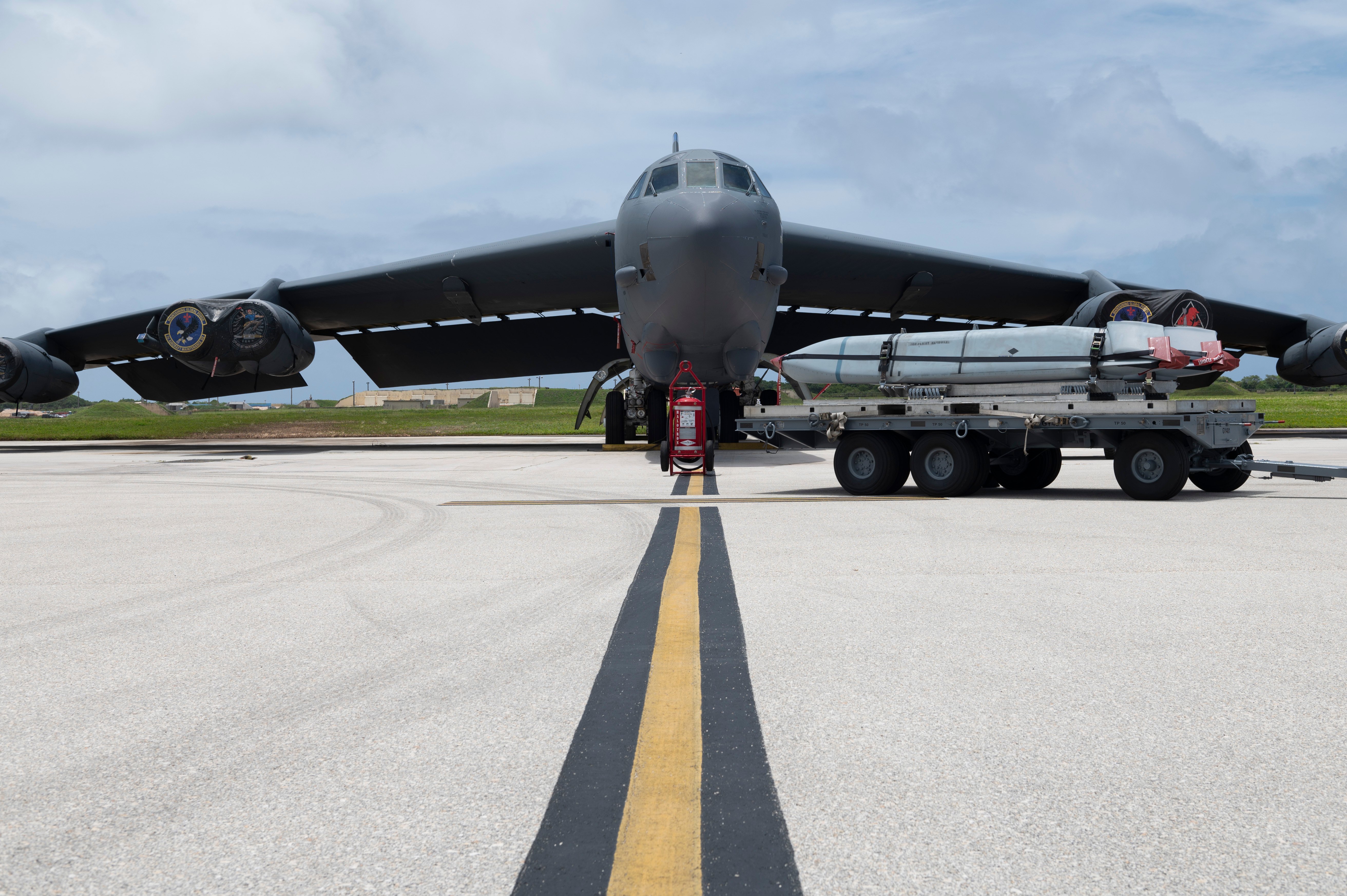
  •  

F-15EX May Finally Get Missile Warning System The USAF Originally Skimped On Buying

The U.S. Air Force is looking at adding a missile warning system (MWS) to its new F-15EX Eagle II fighters. This will give the aircraft a way to optically detect incoming missile threats, especially passively guided ones like heat-seeking infrared-guided missiles, which they currently lack. The continued absence of an MWS has become more pronounced in light of recent combat experiences over Iran.

The F-15EX is derived from earlier F-15 variants that all have MWSs, and it had seemed logical to expect the Eagle II would feature this capability. So it was puzzling when the first examples rolled out without such a system, and no apparent plans to install one on a jet already costing upwards of $100 million. The omission has been glaring for years now, especially given that the aircraft has all the provisions for such a system, including blanked-over spots for the sensors.

The 22nd F-15EX for the US Air Force seen departing Boeing’s plant in St. Louis, Missouri, in August 2026. USAF/Senior Airman Melany Bermudez

The Air Force has 22 Eagle IIs in inventory now and currently plans to acquire a total fleet of 267 of the jets. The aircraft’s manufacturer, Boeing, is on contract now to build 120 F-15EXs, including a lot of 22 jets through a new $2.38 billion deal also announced yesterday.

Now, the Air Force Life Cycle Management Center’s (AFLCMC) Fighters & Advanced Aircraft Directorate “is seeking sources for the procurement of an operationally qualified threat missile launch and approach warning system for rapid integration into the United States Air Force (USAF) F-15EX Eagle II fighter aircraft,” per a contracting notice put out yesterday. “The MWS must alert the F-15EX aircrew to the presence of missiles that may threaten the aircraft without unreasonably distracting the aircrew with false alarms.”

As mentioned, the F-15EX is already configured to accommodate an MWS, inside and out, something AFLCMC’s notice emphasizes. This is a result of the Eagle II having been directly derived from the F-15QA variant for Qatar, which itself was an outgrowth of the F-15SA for Saudi Arabia. While many of the F-15EX’s advances come from these aircraft, the first F-15 variant to get an MWS was actually Singapore’s F-15SG. The Advanced Eagle line and the F-15SG are part of Boeing’s extended F-15E Strike Eagle family.

A pair of Qatari F-15QA Advanced Eagles. USAF

“The MWS must use the six (6) pre-existing F-15EX sensor locations, data cables, power cables, and cooling,” the contracting notice says. “It must be easily, safely, rapidly, and organically installable and removable in the field by USAF military aircraft maintenance personnel without requiring any change to aircraft configuration beyond installation of MWS line replaceable units (LRUs) in the six (6) pre-existing locations in the aircraft dedicated for missile warning.”

The most visually prominent of those pre-existing sensor locations are two horn-like sponsons, one on each side of the forward fuselage right below the cockpit canopy. There are two more locations at the ends of the jet’s tail booms. The last two locations are situated so additional sensors can face straight up and down to provide total 360-degree coverage.

A closer look at the nose end of an F-15EX, with the right-side horn-like sponson under the cockpit plainly visible. USAF/Master Sgt. Steph Sawyer
The F-15EX also has pre-existing locations for MWS sensors at the ends of its tailplanes, as can be seen in this picture. USAF

The sources sought notice does not mention any specific MWS and invites prospective vendors to submit proposals. It also stresses that the Air Force is still in the “market research” phase of the contracting process and that it “does not constitute [a] solicitation and shall not be construed as a commitment” to buy such a system.

The F-15SA uses the AN/AAR-57 Common Missile Warning System (CMWS), and this system is understood to also be found on the F-15QA. Beyond F-15 variants, versions of the AN/AAR-57, for which BAE Systems is currently the prime contractor, are fielded today on a wide variety of other fixed-wing aircraft and helicopters, including various types in U.S. military service. CMWS variants are notably found across the U.S. Army’s AH-64, UH-60, and CH-47 helicopter fleets.

A picture of a Saudi Arabian F-15SA Advanced Eagle. Jamie Hunter
Another close-up look at a Saudi F-15SA, offering a particularly good view of one of the aircraft’s missile warning sensors. USAF/Staff Sgt. Isaiah Soliz

All versions of the CMWS consist of several electro-optic missile sensors (EOMS), the number of which varies from platform to platform, linked to a central electronic control unit (ECU). The system is also designed to be integrated into larger defensive suites.

A picture showing five of the electro-optic missile sensors (EOMS) used in the AN/AAR-57, as well as the electronic control unit. BAE Systems

While the AN/AAR-57 is a proven system with years of successful integration on the F-15 and other platforms, it is just one option of the open market today. The Air Force could choose to take another route, possibly with a new system that offers added functionality.

The addition of any MWS will give the F-15EX a valuable, if not increasingly critical, boost in defensive capability. The Eagle II does already have an extremely powerful self-protection suite, including the Eagle Passive/Active Warning Survivability System (EPAWSS). However, it is heavily geared toward defending against radar-based threats that pump out signals that can be detected and jammed. Infrared-homing anti-air missiles zero in on their targets passively.

In general, MWSs also typically make use of passive infrared sensors to spot the heat plumes of missile launches and the thermal signatures of those threats as they continue their approach. BAE Systems says current-generation versions of the AN/AAR-57 are sensitive enough to detect infantry anti-armor rockets being launched, as well as small arms fire from the ground, under the right circumstances. Though an MWS is not an active countermeasure unto itself, the early warning it provides gives critical time to deploy flares or employ other defensive capabilities, or just take evasive action.

TWZ touched on all of this last month after The New York Times reported new details about the shootdown of an F-15E Strike Eagle over Iran in April. A shoulder-fired, heat-seeking surface-to-air missile, also known as a man-portable air defense system (MANPADS), is said to have been responsible, though this remains unconfirmed. The Strike Eagle also lacks an MWS. The Times‘ story said that the F-15E’s defensive suite provided the crew with only half a second of warning. As we noted at the time, it would actually have provided no warning given that the Strike Eagle also lacks an MWS.

A picture showing one of the tailfins of the F-15E shot down over Iran in April 2026. Iranian state media

Even before the current conflict with Iran broke out, TWZ had questioned the F-15EX’s lack of this capability given the general focus on increased survivability to match expanding threat ecosystems globally. EPAWSS is already a reflection of that reality, and could be made even more capable when tied together with an MWS. In May, we had reached out to the Air Force about any plans to integrate an MWS onto the F-15EX in light of observations from the ongoing conflict with Iran. The service told us then that it had no details to share. Whether the service now has any plans to add MWSs to the Strike Eagle fleet, which would require more significant integration work, is also unknown.

Buying F-15EX and not springing for the missile approach warning system is absolutely the dumbest thing. $100M fighter, but let's save a few bucks on a key defensive advantage. You are not always going to get a radar spike from a threat, even at altitude.

— Tyler Rogoway (@Aviation_Intel) April 4, 2026

They also didn't buy conformals for the first EXs. So silly.

— Tyler Rogoway (@Aviation_Intel) April 4, 2026

Infrared homing anti-air missiles, as well as air defense systems that use passive infrared sensors for target detection and cueing, are certainly not threats limited to Iran. In Yemen, Iranian-backed Houthi militants have been making good use of these capabilities for years now, something else we have explored in great detail in the past. The Houthis claimed to have downed a Saudi Arabian F-15 just earlier this month and, per a now-long standing modus operandi, subsequently released video captured through a ground-based forward-looking infrared (FLIR) system as evidence. The group also shared images of the wreckage of what looked to be an F-15SA Advanced Eagle, underscoring the dangers posed even to aircraft equipped MWSs.

Onboard footage of a Houthi SAM system shooting down a Saudi F-15 overnight over Yemen’s Marib province. pic.twitter.com/6mh23B2Ovu

— OSINTtechnical (@Osinttechnical) September 16, 2026

These threats are not limited to the Middle East more broadly, either, and are only increasingly likely to be encountered in future conflicts globally. The emergence of ever-more capable and longer-range anti-air missiles with infrared or dual-mode guidance systems is a significant factor in all this. Expanding use of passive infrared search and track (IRST) systems on aircraft and infrared sensors on ground-based air defense systems are part of this larger equation, as well.

How the Air Force ultimately decided to proceed with the integration of an MWS onto the F-15EX fleet remains to be seen. However, the Eagle II’s lack of this capability is only becoming more striking, especially in light of the conflict with Iran.

Contact the author: joe@twz.com

The post F-15EX May Finally Get Missile Warning System The USAF Originally Skimped On Buying appeared first on TWZ.
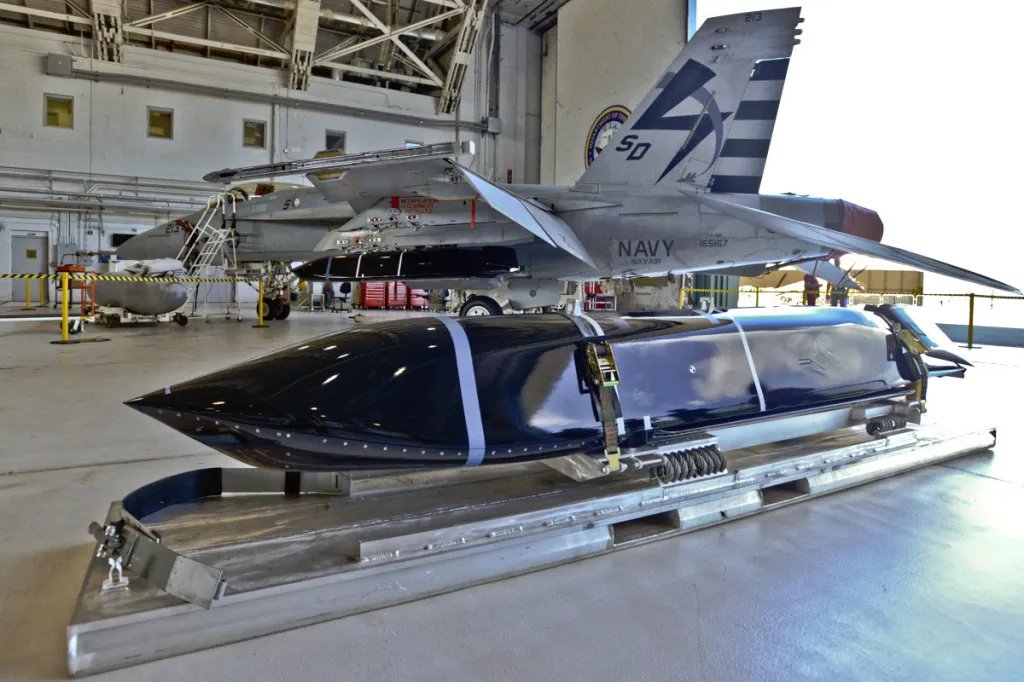
  •  

Ukraine’s F-16 Fleet Is In A Readiness Crisis

Ukraine’s F-16 fleet is facing growing pressure from the demands of the air war, with a shortage of air-to-air missiles now compounded by what appears to be a serious bottleneck in the critical maintenance system supporting the aging aircraft.

The Wall Street Journal reported Wednesday that more than half of Ukraine’s F-16s are currently in what a Western source described as “maintenance limbo.” The same source told the newspaper that, at the current rate of operations and maintenance, Ukraine could exhaust the remainder of its available aircraft by the end of the year.

An F-16 fighter jet flies in the sky over Kyiv on August 18, 2026, amid the Russian invasion of Ukraine. (Photo by Roman PILIPEY / AFP)
An F-16 over the Kyiv region on August 18, 2026. The jet carries four Sidewinder missiles, a Sniper targeting pod, and an AN/ALQ-131 electronic countermeasures pod. Photo by Roman PILIPEY / AFP ROMAN PILIPEY

The Ukrainian Air Force declined to provide the WSJ with figures on the status of the fleet. Open-source analysis suggests that Ukraine may have received around 40-50 F-16s so far. However, a proportion of these are held back for training elsewhere in Europe, while there have been five confirmed losses. Approximately 110 F-16s have now been promised by a coalition comprising Belgium, Denmark, the Netherlands, and Norway.

This is a growing issue, especially because right now F-16s are playing an important role in intercepts of jet powered Geran-4/5. https://t.co/ZtMFBSLAy1

— Michael Kofman (@KofmanMichael) September 30, 2026

The report follows TWZ’s recent reporting on a separate constraint affecting the F-16 force: Ukraine is struggling to maintain adequate stocks of air-to-air missiles for its fighters. AIM-9 Sidewinders and AIM-120 Advanced Medium-Range Air-to-Air Missiles (AMRAAM) have been heavily used against Russian cruise missiles and drones, and Ukrainian F-16 pilots have reportedly had to ration their missile shots. Aircraft have increasingly had to rely on their internal 20mm cannon when suitable missiles are not available. This is a far from ideal substitute, as you can read about here, but Kyiv is reportedly now negotiating for tens of thousands of additional rounds of 20mm ammunition.

The moment a Russian jet-powered "Shahed" drone is shot down by an F-16 fighter jet using its M61 Vulcan cannon. pic.twitter.com/gU72HJTXUa

— WarTranslated (@wartranslated) September 23, 2026

Ukrainian F-16s have apparently been carrying laser-guided 70mm Advanced Precision Kill Weapon System II (APKWS II) rockets, which should provide an extremely valuable, lower-cost option for engaging long-range drones and subsonic cruise missiles. The exact status of this weapon in Ukrainian hands is unclear, but there is so far limited evidence of extensive use by its F-16s, at least in the public domain.

All these problems are closely related because the same high operational tempo that is consuming Ukraine’s missile stocks is also putting additional hours on the already well-worn F-16 airframes.

The aircraft have become a critical important component of Ukraine’s air-defense effort, particularly as Russia has expanded its use of increasingly sophisticated one-way attack drones, as we wrote about only yesterday. WSJ reports that Russia has launched around 2,000 jet-powered drones against Ukraine this month, compared with approximately 350 in June. The newer, jet-powered drones can reportedly reach speeds of up to 375 miles per hour, making them more difficult for Ukraine’s interceptor drones to engage and increasing the importance of conventional fighters. At the same time, the stocks of effectors for ground-based air defense systems are being reduced, in some cases to a critical level, increasing the reliance on crewed fighters to take up the slack.

A Ukrainian drone attempts to intercept a Russian Geran-4 jet-powered drone. GUR

F-16s are well-suited to the counter-drone and counter-cruise missile mission, but using them extensively against large numbers of relatively inexpensive targets presents a difficult sustainment problem. In fact, the lower speed and altitude differential between the F-16 and a jet-powered drone, compared to a propeller-driven one, makes the higher-performance weapon an easier target for the crewed fighter in most scenarios.

However, every sortie adds flight hours to the aircraft, while each missile engagement draws from an inventory that Ukraine and its Western partners have to replenish. As the aircraft accumulate hours, they reach scheduled inspection and maintenance intervals, increasing demand on a maintenance network that is already supporting a fleet operating under wartime conditions.

The United States has established a substantial support arrangement for that purpose. In January, the Pentagon awarded Belgian company Sabena Aerospace Engineering a contract with a ceiling of approximately $235.5 million for intermediate- and depot-level maintenance of Ukrainian F-16 aircraft and engines, together with associated material-management support. The contract runs through January 2029, with approximately $69.7 million initially obligated.

Ukrainian Air Force F-16AM Fighting Falcon departing Belgium after receiving depot-level maintenance earlier this year. pic.twitter.com/Hy35iUZd8P

— OSINTtechnical (@Osinttechnical) August 28, 2026

The contract provides an indication of the scale of the infrastructure required to keep the Ukrainian F-16 fleet operational. It also highlights why the reported turnaround times in Belgium are significant. A typical phase-inspection that would normally take approximately two to six weeks in the United States is reportedly taking as long as 40 weeks in Belgium.

A 40-week turnaround does not necessarily mean that an aircraft spends 40 weeks continuously undergoing a phase inspection. The overall period an aircraft is unavailable can also include waiting for parts, additional repairs, scheduling, and other work. It is unclear exactly how many Ukrainian F-16s are currently affected by these various factors.

114th Aircraft Maintenance Squadron engine shop Airmen remove the engine of an F-16 during the De-paneling Phase of a phase maintenance inspection at Joe Foss Field, July 8, 2017. Each aircraft is required to go through a phase inspection every 400 flight hours to ensure all systems are functioning within Air Force regulations. (U.S. Air National Guard photo by Master Sgt. Christopher Stewart/Released)
U.S. Air Force engine shop where airmen remove the engine of an F-16 during a phase maintenance inspection in the United States. U.S. Air National Guard photo by Master Sgt. Christopher Stewart/Released Master Sgt. Christopher Stewart

At the same time, the reported turnaround times do point to a substantial capacity problem. Ukraine operates a relatively small F-16 fleet, so aircraft that remain unavailable for extended periods have a disproportionate effect on the number of fighters that can actually be generated for combat missions. Its mission spectrum also includes air-to-ground sorties, putting more demand on the hard-pressed F-16 fleet.

F-16 fighters are the best way to counter new Russian jet-powered drones.

Ukrainian F-16 aces have shot down about 2,500 drones of all types and about 650 cruise missiles.

Jet drones are exactly the kind of target F-16s shoot down very well, and it usually costs $25,000 or… pic.twitter.com/ajxYN9K0yK

— Slava 🇺🇦 (@Heroiam_Slava) September 30, 2026

The F-16s have finite airframe lives, require increasingly substantial inspections as they accumulate hours, and depend on a supply chain for engines, components and other parts. The missiles used to destroy the targets are another finite resource. It should also be recalled that the jets supplied to Ukraine are among the oldest still in operational service. Although upgraded to F-16AM/BM standard, the airframes have accumulated a lot of hours and fatigue.

There is an additional complication with the air-to-air missile inventory, too. AMRAAM is not used only by Ukrainian F-16s, but also employed by its NASAMS ground-based air-defense systems. Sidewinders, too, have both air-launched and surface-launched applications. The same broader Western supply chain therefore has to support both fighter operations and some of Ukraine’s surface-to-air missile systems. Stocks of both AMRAAM and Sidewinder have been eroded by Ukraine, as well as by combat actions in the Middle East.

Southern Ukraine, a Ukrainian NASAMS surface to air missile system intercepts a Russian drone with an (SL)AIM-120B AMRAAM. pic.twitter.com/LTeDDHaECp

— OSINTtechnical (@Osinttechnical) May 22, 2025

At the same time, Ukraine is continuing to receive additional F-16s. Belgium has said it will transfer three more aircraft to Ukraine before the end of this year. More aircraft will increase the potential size of the force, but they will also add to the requirement for spare parts, engines, technicians and depot capacity.

“There is an important agreement ​with Belgium on the transfer of three F-16 ​fighter jets by the end of this year,” ⁠Ukrainian President Volodymyr Zelensky wrote on X. “We will work to receive ​these aircraft through an accelerated procedure.”

There is an important agreement with Belgium on the transfer of three F-16 fighter jets by the end of this year. We will work to receive these aircraft through an accelerated procedure. We have already received urgent deliveries of F-16 ammunition from Belgium and other…

— Volodymyr Zelenskyy / Володимир Зеленський (@ZelenskyyUa) September 29, 2026

Zelensky said Ukraine had ​already received “urgent deliveries” of F-16 weapons from Belgium and Spain, among other countries.

The alternatives to the F-16 are also limited in the near term. Ukraine continues to operate the Soviet-era MiG-29 Fulcrum and a small number of Su-27 Flankers, but these aircraft are themselves aging and are also required for strike missions. In their favor, the Soviet types were designed around a different concept of operations, making them easier to maintain in the field, and Ukraine has its own support infrastructure to sustain them.

The French Mirage 2000-5F force provides another Western option, but deliveries have been relatively limited, and additional aircraft are arriving incrementally rather than in numbers that can quickly compensate for a major reduction in F-16 availability. The longer-term fighter replacement plan is more ambitious. Sweden has agreed to provide 16 Gripen C/D fighters, with the first aircraft expected in early 2027, while a separate agreement covers the purchase of 16 new Gripen E fighters whose deliveries are not scheduled to begin until early 2029.

🇫🇷🇺🇦 French-delivered Dassault Mirage 2000-5F fighter jet in service of the Ukrainian Air Force during flight somewhere over Ukraine. pic.twitter.com/eBCjtx2Gjc

— Status-6 (@Archer83Able) May 17, 2026

That leaves the F-16 as the principal Western fighter capability available to Ukraine for the immediate future, increasing the significance of any prolonged disruption to its maintenance pipeline or its supply of air-to-air weapons. Ukraine needs enough aircraft to maintain a meaningful combat presence, enough missiles to arm them for the missions they are being asked to fly, and enough maintenance capacity to keep those aircraft available as their flight hours accumulate.

All this is becoming more important as Russia’s aerial campaign evolves. If the increase in faster jet-powered drones continues, Ukraine may have to devote still more fighter sorties to countering them at the very same time that a large portion of its existing F-16 fleet is reportedly unavailable and its stocks of air-to-air missiles are under serious pressure.

Contact the autjor: thomas@thewarzone.com

The post Ukraine’s F-16 Fleet Is In A Readiness Crisis appeared first on TWZ.
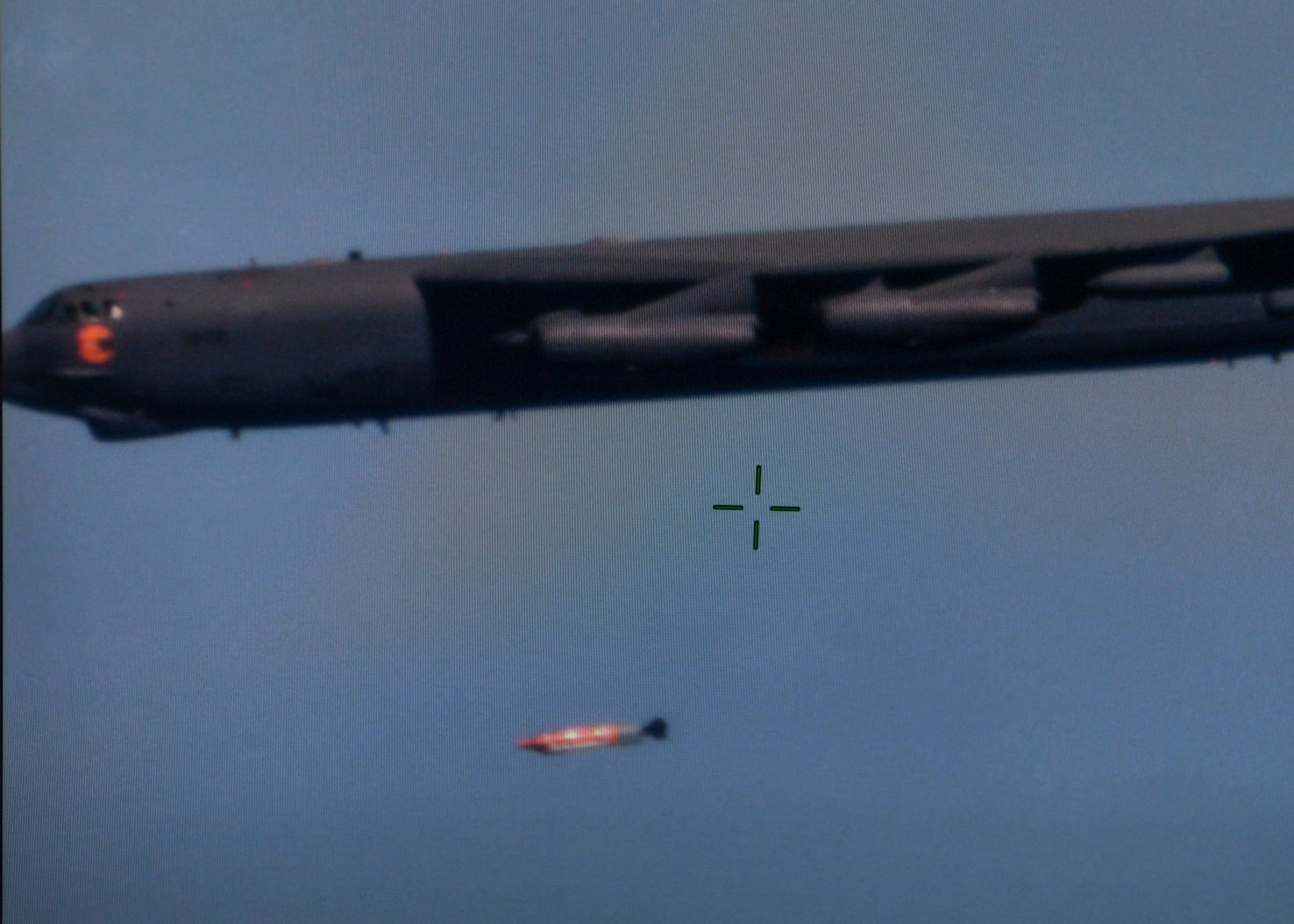
  •  

British Police Arrest Men Driving Toward U.S. Bomber Base In The U.K. With Suspected Explosives

Details continue to come in, but police in the United Kingdom have declared a “major incident” and ordered evacuations near RAF Fairford after the arrest of “several men on suspicion of offenses under the explosives act,” the Gloucestershire Constabulary stated.

RAF Fairford is a major hub for U.S. military aircraft in the United Kingdom. It is a regular host of strategic assets, including bombers and U-2 spy planes. It also acts as a pit stop for other aircraft, including fighters, that are being ferried to and from the United States. Bomber strikes launched from Fairford were a central aspect of major U.S. combat operations against Iran earlier this year.

“A number of properties are currently being evacuated in the Whelford area following the declaration of a major incident,” the Gloucestershire Constabulary also announced today in light of the incident.

Emergency services in Fairford after major incident has been declared, with armed police manning a cordon near the village of Whelford in Gloucestershire, near RAF Fairford which is used by the United States Air Force (USAF). Picture date: Sunday September 27, 2026. (Photo by Ben Birchall/PA Images via Getty Images)
Emergency services in Fairford after a major incident has been declared, with armed police manning a cordon near the village of Whelford in Gloucestershire, near RAF Fairford, which is used by the United States Air Force (USAF). (Photo by Ben Birchall/PA Images via Getty Images) Ben Birchall – PA Images

The evacuations were spurred by the arrests.

“The Army’s specialist explosive ordnance disposal team are currently examining a number of vehicles,” Gloucestershire Constabulary added. “The local residents are being evacuated to a nearby leisure center.”

“A cordon is currently in place, but we’d like to reassure people that we believe this incident is contained,” the law enforcement agency explained. “We are working closely with our partners and are enacting the well-rehearsed plans we have in place.”

The incident began around 12:45 AM local time Sunday “when police received a call relating to three suspicious vehicles traveling towards RAF Fairford,” according to Gloucestershire police Assistant Chief Constable Richard Ocone. “Armed officers responded and subsequently arrested five men in the Whelford area on suspicion of committing offenses under the Explosives Act. The men were taken into custody, where they remain.”

“A 400-meter cordon has been put in place around the vehicles while the army’s explosive ordnance disposal unit examined them,” Ocene continued. “As a precaution, around 85 households have been advised to evacuate while these examinations take place.”

BREAKING:

The British authorities issue a first official statement on the suspected terror plot against RAF Fairford

They sent in a local low-ranking policemen to deliver a statement saying 5 men have been arrested and that people shouldn’t speculate about the case.

He… pic.twitter.com/9dD8910Kpw

— Visegrád 24 (@visegrad24) September 27, 2026

Video has emerged showing British military explosive ordnance disposal robots reportedly defusing the vans used by the suspects.

Video of British military EOD robots defusing suspected bomb vans near RAF Fairford courtesy of SkyNews. pic.twitter.com/PbrrVH6V1x

— WarMonitor🇺🇦🇬🇧 (@WarMonitor3) September 27, 2026

“We are aware of the current reporting, for questions regarding off-base incidents please contact the local authorities,” a U.S. Air Force spokesperson told us in response to our questions about whether the incident had raised force protection levels at RAF Fairford or other installations in the area hosting American forces. Unconfirmed reports by the local aviation spotter community claimed RAF Fairford had been placed under what is called FPCON Delta, the highest level of alert at U.S. military installations.

The incident at RAF Fairford has been escalating overnight, this is what is clear so far.

Gloucestershire Police has announced that they have arrested multiple men on suspicion of offences under the Explosives Act, and that they have declared a Major Incident.

According to the… https://t.co/vk5N7yUuzB pic.twitter.com/IMHGtKGiC1

— Armchair Admiral 🇬🇧 (@ArmchairAdml) September 27, 2026

“For operational security reasons we will not discuss specific force protection measures,” the Air Force spokesperson added. “The 501st Combat Support Wing and our fellow UK-based Wings remain vigilant and will take appropriate actions to ensure the safety and security of our U.S. service members, civilians, contractors, and their families. We constantly assess a variety of factors that determine what measures we institute or modify to protect our installations, our people and their families.”

It is unclear if airfield operations at RAF Fairford have been affected. U.S. Air Force officials did not immediately respond to our request for comment.

The British Defense Ministry did not immediately provide comment on this unfolding event.

RAF Fairford is a major hub for U.S. military aircraft, with strategic assets, like B-1B Lancer bombers, being forward deployed to the base and tactical and other assets often using it as a pit stop during flights ‘across the pond.’

A U.S. Air Force B-1B Lancer assigned to the 37th Bomb Squadron, Ellsworth Air Force Base, S.D., arrives to participate in the Royal International Air Tattoo at Royal Air Force Fairford, England, July 15, 2025. The Lancer is slated to participate in RIAT, which has more than 80 aircraft are scheduled to attend from July 18-20, 2025. (U.S. Air Force photo by Tech. Sgt. Robert M. Trujillo)
A U.S. Air Force B-1B Lancer at RAF Fairford. (U.S. Air Force photo by Tech. Sgt. Robert M. Trujillo) Tech. Sgt. Robert Trujillo

As mentioned, RAF Fairford played a key role in major combat operations against Iran earlier this year. No connection has been established yet between today’s incident and any particular group, but the base has drawn direct threats from the regime in Tehran in the past.

“The American aggressor army, which used to launch cruise missiles from its vessels in the Indian Ocean in its aggression after the official resumption of the war, with the end of the missile reserves of the aforementioned vessels, yesterday switched to using B1 planes flying from Fairford Air Base, England,” Tasnim News Agency, a quasi-state outlet in Iran with ties to the country’s powerful Islamic Revolutionary Guard Corps (IRGC), claimed on Telegram on July 23. “As the officials of the Ministry of Foreign Affairs also stated, any base that is used to invade Iran’s territory is our legitimate goal.”

the enemy must pay the price for its breach of promises, and this time we will not allow America to use deceptive ceasefires to replenish its oil and ammunition stockpiles and then resume attacks once again.

— Press TV 🔻 (@PressTV) July 23, 2026

Considering its importance to U.S. military operations, the base is a major potential target for nefarious actors, in general. Like other bases across Europe, it is a major potential target for Russia’s ‘hybrid war’ or ‘gray zone’ activities, as well.

Asked about the threats at the time, a British official told us that the country was prepared to defend itself.

“Our Armed Forces are ready to keep the United Kingdom safe from any kind of attacks, whether it’s on our soil or from abroad,” a government official told TWZ. “The UK stands ready 24/7 to defend itself. This includes through operating a layered approach to air and missile defense, provided by Royal Navy, British Army and Royal Air Force assets equipped with a range of advanced capabilities, working closely with our NATO allies.”

“In the Defense Investment Plan we have made air and missile defense a priority after years of underfunding, dedicating £790 million to enhance protection of the UK homeland and overseas bases from air, drone and missile threats,” the official added. “That is complemented by more than £2 billion of funding to deliver further air defense and counter-drone capabilities, and to upgrade and sustain our Typhoon fleet.”

This is a developing story.

UPDATE: 10:49 AM Eastern –

A Temporary Flight Restriction (TFR) has been imposed over Whelford, Gloucestershire, following the incident. It applies to all aircraft, including “any small balloon, any kite, any UAS and any parachute, including a parascending parachute or paramotor,” according to the FAA. “Pilots are forbidden to fly within the designated area without permission.”

The TFR runs through Oct. 5.

Contact the author: howard@twz.com

The post British Police Arrest Men Driving Toward U.S. Bomber Base In The U.K. With Suspected Explosives appeared first on TWZ.
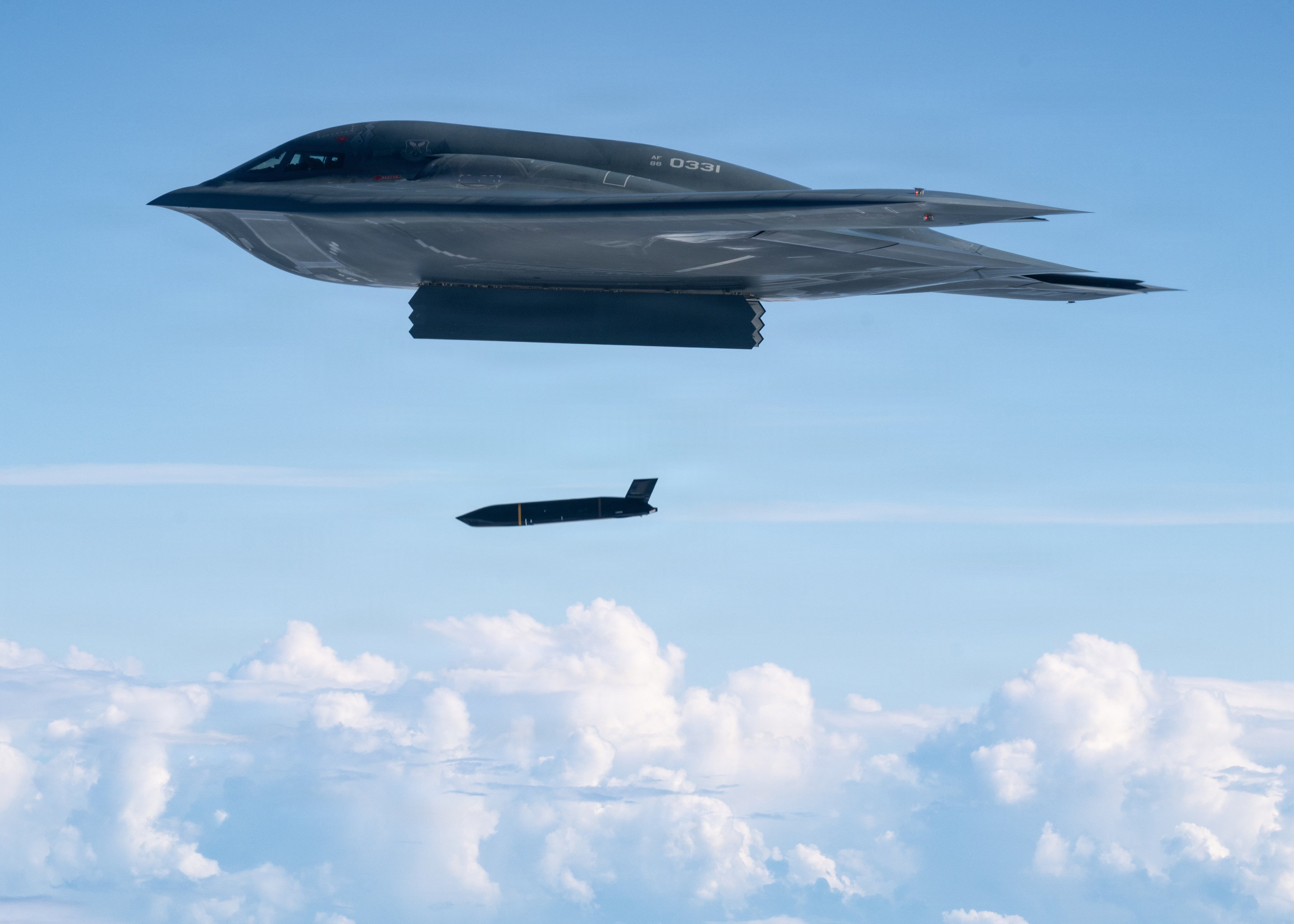
  •  

The A-10 Era Is Over At Nellis AFB

The last A-10 Thunderbolt II assigned to Nellis Air Force Base, Nevada, left the installation on September 22. The departure marks the end of nearly five decades of Warthog operations, including tactics development and testing, at the Air Force’s most high-profile fighter base. It also reflects a broader shift in which close air support expertise and some associated missions are supposedly being distributed among the F-15, F-16, and F-35 communities, although the move is controversial, to say the least.

Nearly 70 airmen assigned to Nellis gathered along the flight line to salute the aircraft as it departed. The final takeoff closes a chapter that began in 1977, when the first A-10 arrived at the base, which subsequently became a major center for developing and refining the aircraft’s operational employment.

U.S. Air Force Maj. Kyle S. Adkinson, a weapons and tactics officer assigned to the Nevada Air National Guard’s 232nd Combat Training Squadron, conducts pre-flight checks on an A-10 Thunderbolt II aircraft at Nellis Air Force Base, Nevada, Sept. 22, 2026. The flight marked the final departure of Nellis’ last A-10 and honored nearly half a century of close air support service and the maintainers, pilots, and support personnel who kept the fleet mission-ready. (U.S. Air Force photo by Airman Annika Schermerhorn)
U.S. Air Force Maj. Kyle S. Adkinson, a weapons and tactics officer assigned to the Nevada Air National Guard’s 232nd Combat Training Squadron, conducts pre-flight checks on an A-10 Thunderbolt II aircraft at Nellis Air Force Base, Nevada, Sept. 22, 2026. U.S. Air Force photo by Airman Annika Schermerhorn

Over the decades, Nellis-based units worked on the A-10’s software, avionics, and precision weapons capabilities, while the U.S. Air Force Weapons School’s 66th Weapons Squadron trained more than 300 A-10 weapons officers through approximately 100 classes. Many of the tactics in the A-10’s playbook emanated from the base.

The A-10’s departure consequently represents more than the retirement of another aircraft from a Nellis ramp. It also marks the end of a dedicated training and institutional ecosystem that developed around an aircraft specifically designed for close air support.

Earlier this year, Jamie Hunter of TWZ visited the U.S. Air Force A-10 Weapons Instructor Course as it was in the process of closing down, as documented in these exclusive videos:

The Air Force is now attempting to carry at least some of that expertise into a force built around multirole fourth- and fifth-generation fighters.

“We are maintaining the culture of the A-10 by involving as many other fighter communities involved in the close air support mission,” Lt. Col. Ridge Flick, commander of the 66th Weapons Squadron, said. “We are also training F-15 Eagle, F-35 Lightning II and F-16 Fighting Falcon pilots to take on some roles we have had in combat search and rescue.”

U.S. Air Force Maj. Kyle S. Adkinson, right, a weapons and tactics officer assigned to the Nevada Air National Guard’s 232nd Combat Training Squadron, salutes Senior Airman Segio Lopez, a crew chief assigned to the 757th Aircraft Maintenance Squadron, before a flight at Nellis Air Force Base, Nevada, Sept. 22, 2026. The flight marked the final departure of Nellis’ last A-10 Thunderbolt II and honored nearly half a century of close air support service and the maintainers, pilots, and support personnel who kept the fleet mission-ready. (U.S. Air Force photo by Airman Annika Schermerhorn)
U.S. Air Force Maj. Kyle S. Adkinson, right, a weapons and tactics officer assigned to the Nevada Air National Guard’s 232nd Combat Training Squadron, salutes Senior Airman Segio Lopez, a crew chief assigned to the 757th Aircraft Maintenance Squadron, before a flight at Nellis Air Force Base, Nevada, Sept. 22, 2026. U.S. Air Force photo by Airman Annika Schermerhorn

The A-10 was developed specifically for close air support, with its design emphasizing survivability at relatively low altitude, weapons employment against ground targets, and the ability to persist in the vicinity of friendly forces. In contrast, the F-16C/D and F-15E/EX were developed primarily as multirole fighters, while the F-35 combines strike, air-to-air, intelligence, surveillance and reconnaissance, and networking capabilities with a low-observable design.

Rather than replacing the A-10 with a single successor, the Air Force is therefore distributing elements of its former mission set across several aircraft and communities. The service insists its close air-support capability is not being reduced as the Warthog fleet retires, but at the very least the transition does represent a significant change in how that capability is generated and employed.

U.S. Airmen assigned to Nellis Air Force Base salute an A-10 Thunderbolt II aircraft at Nellis AFB, Nevada, Sept. 22, 2026. The flight marked the final departure of Nellis’ last A-10 and honored nearly half a century of close air support service and the maintainers, pilots, and support personnel who kept the fleet mission-ready. (U.S. Air Force photo by Airman Annika Schermerhorn)
U.S. airmen assigned to Nellis Air Force Base salute an A-10 Thunderbolt II aircraft at Nellis AFB, Nevada, Sept. 22, 2026. U.S. Air Force photo by Airman Annika Schermerhorn

Regardless, the USAF’s claim that the impact of losing the heart of the A-10’s braintrust will not dramatically impact key mission sets in a negative manner has been viewed with extreme skepticism by some. It’s not uncommon for subject matter experts to believe the close air support and ‘Sandy’ aircrew recovery mission braintrust that the Warthog community represents is a far bigger loss than the aircraft itself, and that the USAF is not prepared to preserve this critical expertise, regardless of the service’s stated intentions.

The end of A-10 operations at Nellis also put what may be the final nail in the A-10’s coffin, as reconstituting these operations would be very challenging and costly. All this points to the Warthog being on its final glide path to retirement, once and for all.

You can read all about this controversy in our past special feature linked here.

U.S. Air Force Maj. Kyle S. Adkinson, a weapons and tactics officer assigned to the Nevada Air National Guard’s 232nd Combat Training Squadron, taxis an A-10 Thunderbolt II aircraft at Nellis Air Force Base, Nevada, Sept. 22, 2026. The flight marked the final departure of Nellis’ last A-10 Thunderbolt II and honored nearly half a century of close air support service and the maintainers, pilots, and support personnel who kept the fleet mission-ready. (U.S. Air Force photo by Airman Annika Schermerhorn)
U.S. Air Force Maj. Kyle S. Adkinson, a weapons and tactics officer assigned to the Nevada Air National Guard’s 232nd Combat Training Squadron, taxis an A-10 Thunderbolt II aircraft at Nellis Air Force Base, Nevada, Sept. 22, 2026. U.S. Air Force photo by Airman Annika Schermerhorn

Beyond the redistribution of Nellis’s A-10 pilots, the transition is also affecting the maintainers who supported the base’s A-10 fleet. Airmen assigned to the 757th Aircraft Maintenance Squadron’s Thunder Aircraft Maintenance Unit are being reassigned to other squadrons and airframes, including the F-35 and F-16. The Air Force is consequently moving not only personnel, but also decades of experience maintaining an aging and structurally demanding aircraft into programs supporting newer fighters.

For Staff Sgt. Eva Kehn, a weapons load crew chief with the 757th AMXS, the end of the A-10 era has an especially personal dimension because of her family’s connection to the aircraft and to aviation.

A U.S. Air Force A-10 Thunderbolt II aircraft takes off from Nellis Air Force Base, Nevada, Sept. 22, 2026. The flight marked the final departure of Nellis’ last A-10 and honored nearly half a century of close air support service and the maintainers, pilots, and support personnel who kept the fleet mission-ready. (U.S. Air Force photo by Airman Annika Schermerhorn)
A U.S. Air Force A-10 Thunderbolt II aircraft takes off from Nellis Air Force Base, Nevada, Sept. 22, 2026. U.S. Air Force photo by Airman Annika Schermerhorn

“Working on the A-10 is meaningful to me because that is something that I share with my grandfather,” Kehn said. “I’m very excited to have that new chapter and bond over that again with my grandfather.”

Kehn is transferring to an F-35 unit at Nellis, where that connection will continue in a different form. Her grandfather is now a civilian F-35 instructor, giving the two an opportunity to remain professionally connected even as the A-10 disappears from the installation.

U.S. Airmen assigned to Nellis Air Force Base salute an A-10 Thunderbolt II aircraft at Nellis AFB, Nevada, Sept. 22, 2026. The flight marked the final departure of Nellis’ last A-10 and honored nearly half a century of close air support service and the maintainers, pilots, and support personnel who kept the fleet mission-ready. (U.S. Air Force photo by Airman Isabella Borrillo)
U.S. airmen assigned to Nellis Air Force Base salute an A-10 Thunderbolt II aircraft at Nellis AFB, Nevada, Sept. 22, 2026. U.S. Air Force photo by Airman Isabella Borrillo

Master Sgt. Aaron Edmonds, an aircraft section chief with the 757th AMXS, is also moving on from the Warthog after spending the past five years maintaining the aircraft. Edmonds previously worked on the F-16 earlier in his career and will now return to the Viper community.

“It’s a bittersweet moment,” Edmonds said. “I enjoyed my time with the A-10, but I’m excited because this departure marks the closing of one chapter and the start of another.”

Edmonds said the experience gained on the A-10 should be carried into the next aircraft rather than left behind with the airframe. “The advice I would give airmen who are transitioning from one airframe to another is to be open-minded, willing to learn and carry on the great work ethic from your previous aircraft over to your new one,” he said.

U.S. Air Force Maj. Kyle S. Adkinson, a weapons and tactics officer assigned to the Nevada Air National Guard’s 232nd Combat Training Squadron, taxis an A-10 Thunderbolt II aircraft at Nellis Air Force Base, Nevada, Sept. 22, 2026. The flight marked the final departure of Nellis’ last A-10 Thunderbolt II and honored nearly half a century of close air support service and the maintainers, pilots, and support personnel who kept the fleet mission-ready. (U.S. Air Force photo by Airman Isabella Borrillo)
U.S. Air Force Maj. Kyle S. Adkinson, a weapons and tactics officer assigned to the Nevada Air National Guard’s 232nd Combat Training Squadron, taxis an A-10 Thunderbolt II aircraft at Nellis Air Force Base, Nevada, Sept. 22, 2026. U.S. Air Force photo by Airman Isabella Borrillo

With the A-10 no longer present at Nellis, at least some of the expertise attached to it is being incorporated into a fighter force in which other aircraft types can contribute to the close air support mission in very different ways. An F-35, for example, can use its sensors and networking capabilities to identify and share information about targets and the battlespace, and it can go where other fighters can’t. An F-15 can contribute heavier weapons and longer endurance, among other capabilities, depending on the mission. This is not exactly new, either, as all types of aircraft provided CAS during the Global War on Terror-era, although the masters of exactly how to do it and how to execute the critical airborne forward air control (FAC-A) mission existed in the A-10 community. Still, the resulting force will be considerably different from the one centered on the Warthog, even where the underlying requirement to support troops on the ground remains.

A U.S. Air Force A-10 Thunderbolt II aircraft takes off from Nellis Air Force Base, Nevada, Sept. 22, 2026. The flight marked the final departure of Nellis’ last A-10 and honored nearly half a century of close air support service and the maintainers, pilots, and support personnel who kept the fleet mission-ready. (U.S. Air Force photo by Airman Isabella Borrillo)
A U.S. Air Force A-10 Thunderbolt II aircraft takes off from Nellis Air Force Base, Nevada, Sept. 22, 2026. U.S. Air Force photo by Airman Isabella Borrillo

As noted, the A-10’s retirement now looks to be gathering pace, despite repeated efforts to keep the A-10 in service and recent employment in combat operations in the Middle East. The Pentagon has granted three Warthog squadrons a reprieve to continue operating through 2030. In July, a bipartisan group of Congressmen introduced a bill that, if passed and signed into law, would require the Air Force to keep flying the jets through Fiscal Year 2033. Still, the aircraft’s eventual fate appears increasingly clear, with growing numbers heading to the 309th Aerospace Maintenance and Regeneration Group (AMARG) boneyard in Arizona for storage, including the last one from Nellis.

The ongoing retirement of the A-10 is bringing a fundamental change in how the Air Force organizes and executes the missions for which the Warthog became synonymous. Nellis will remain an important center for developing those capabilities, even though the aircraft around which that expertise was built is no longer part of the equation.

Contact the author: thomas@thewarzone.com

The post The A-10 Era Is Over At Nellis AFB appeared first on TWZ.
  •  

Video Shows RAF Hawk T2 Trainer Crew Ejecting Before Jet Crashes (Updated)

A U.K. Royal Air Force Hawk T2 training jet crashed in the Pencarnisiog area of Anglesey, North Wales, on Wednesday after both pilots ejected from the aircraft.

Videos captured of the incident show the aircraft porpoising at a slow speed and high angle of attack, before the pair ejected. The Hawk appears to narrowly miss homes before impacting the countryside and bursting into flames, with thick black smoke visible afterward.

BREAKING: Moment RAF Hawk jet crashes near RAF Valley, Wales; pilots eject pic.twitter.com/oHV8MJLhfi

— Klaxon Wire (@KlaxonWire) September 23, 2026

Local police said the two pilots were being treated for minor injuries and that there were no reports of wider damage or additional casualties. Emergency services, including Coastguard and Wales Air Ambulance helicopters, responded to the scene.

The crash occurred near RAF Valley, where the RAF operates its Hawk T2 advanced jet trainers as part of fast-jet pilot training. The station is home to No. 4 Flying Training School. The Telegraph reports the incident happening “shortly after takeoff.”

🚨 WATCH: The moment an RAF training jet crashes shortly after take-off at RAF Valley pic.twitter.com/Pnc71YEuW5

— Politics UK (@PolitlcsUK) September 23, 2026

🚨 BREAKING: An RAF jet has crashed near RAF Valley in Wales

Both crew members ejected pic.twitter.com/dH4RhZ11hw

— Politics UK (@PolitlcsUK) September 23, 2026

The Royal Air Force confirmed that the incident involved one of its Hawk T2s flying out of RAF Valley.

“An investigation is under way and we will not comment further at this time,” the RAF said.

Wreckage from the aircraft has been located at the crash site. Police have asked the public to avoid the area while emergency services remain at the scene.

The circumstances surrounding the crash, including what caused the aircraft to go down and the nature of the flight, have not yet been established.

The Hawk fleet has experienced previous technical issues.

In 2022, engines were removed from service amid concerns over potential in-flight failures, while the 28-aircraft RAF Hawk T2 fleet was temporarily grounded in January 2023 following an engine-related incident at RAF Valley.

In 2024, then-Chief of the Air Staff Air Chief Marshal Sir Richard Knighton said he wanted to replace the Hawk T2, citing problems with its engines and support and concerns about the reliability of the training capacity it provided. The Hawk T2 is due to be retired by 2040.

Those previous issues are not known to be connected to Wednesday’s crash.

Update: 2:09 PM ET –

The Royal Air Force has issued a new update on the mishap today:

“Following an incident involving an RAF Hawk T2 aircraft today, both pilots are receiving medical treatment. Their families are being supported.”

“The RAF has decided to temporarily pause Hawk T1 and T2 operations, as a precautionary measure, whilst investigations are ongoing.”

An update on today's incident involving an RAF Hawk T2 aircraft. Thank you for the well wishes to our people. pic.twitter.com/GLuWU9LfoN

— Royal Air Force (@RoyalAirForce) September 23, 2026

Update: 4:25 PM ET –

A video taken by an onlooker outside the perimeter fence at RAF Valley shows the ill-fated Hawk T2 taking off, with flames beginning to appear during the takeoff roll.

Exclusive: a Hawk T2 getting airborne from RAF Valley, N. Wales. As it rolls down the runway flames appear from the rear of the jet. The Hawk T2 does not have reheat (afterburner). As the jet climbs the flames seem to disappear. The main Hydraulic system is on the rear left side. pic.twitter.com/WafevD2BQg

— Mikey Kay 🏴󠁧󠁢󠁷󠁬󠁳󠁿 (@MikeyKayFilms) September 23, 2026

Update: 9/24/2026 –

The Royal Air Force has shared a new update on yesterday’s crash, which is as follows:

“Both pilots are doing well, they are in extremely good spirits and [are] expected to make a full recovery.”

“A formal investigation into the circumstances surrounding the incident is now underway and as a precautionary measure, the RAF has temporarily paused Hawk T1 and Hawk T2 flying operations.”

An update on yesterday's incident involving a Hawk T2 aircraft. pic.twitter.com/QXg7xAOZTB

— Royal Air Force (@RoyalAirForce) September 24, 2026

Contact the author: thomas@thewarzone.com

The post Video Shows RAF Hawk T2 Trainer Crew Ejecting Before Jet Crashes (Updated) appeared first on TWZ.
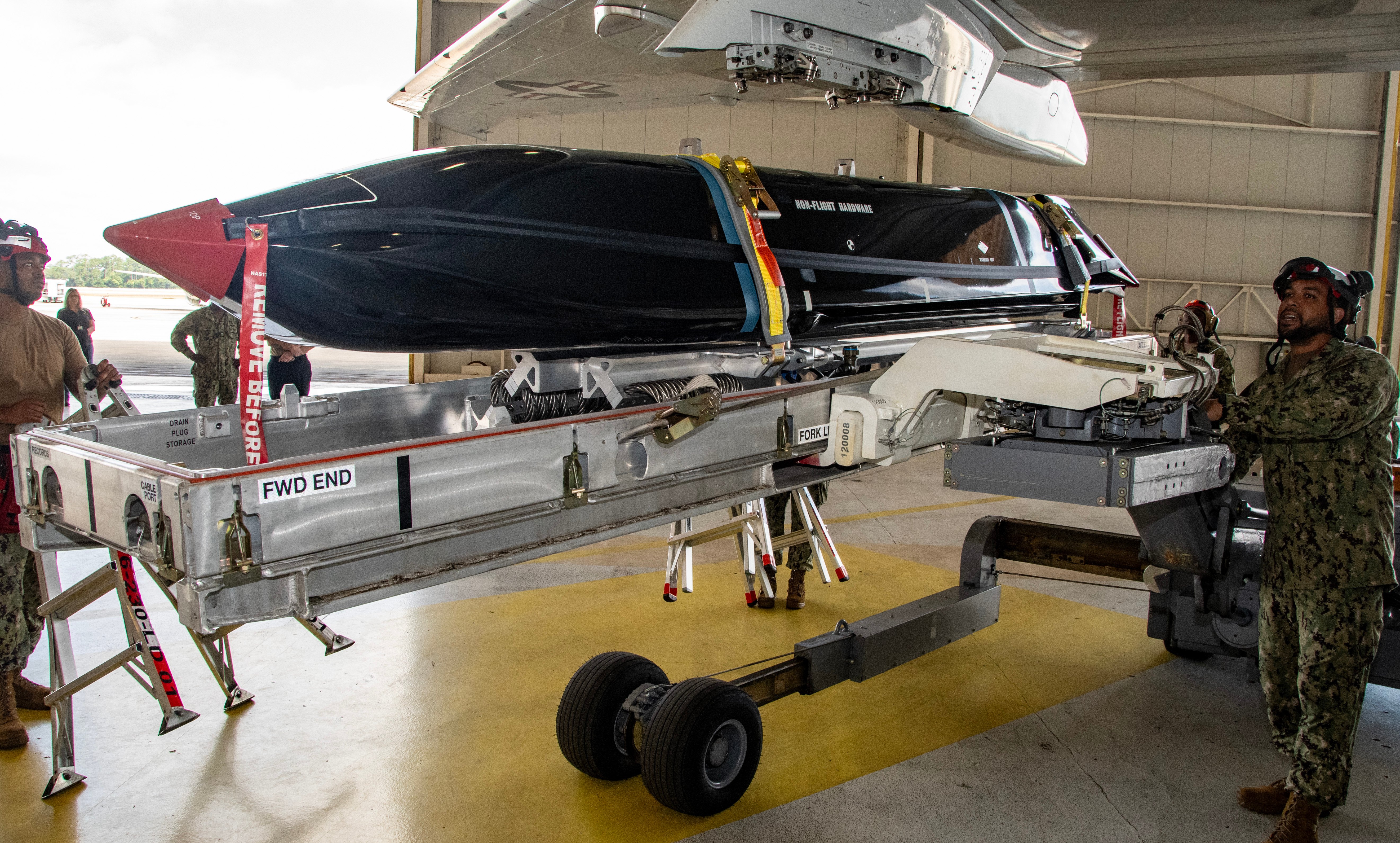
  •  

U.K. Sending Voyager Tanker To Help Defend Saudi Airspace

The Royal Air Force (RAF) is deploying one of its Voyager aerial refueling jets to help Saudi Arabia defend against ongoing attacks from the Iranian-backed Houthi rebels of Yemen. The decision marks the first publicly known international military assistance offered to Saudi Arabia specifically for its fight against the Houthis, which erupted over the summer. The move came hours before U.S. President Donald Trump told the United Nations General Assembly meeting that he believes a peace deal with Iran will be reached after the U.S. midterm elections in November.

The British action is significant because, while it involves just one tanker, other key Saudi allies have yet to heed the Kingdom’s request for military help specifically to battle the Houthis. Although it’s important to note some assets already deployed to defend against Iranian attacks could be helping with the Houthi threat now.

This picture is from a Quick Reaction Alert training scenario. The QRA exercise was conducted 31 March 2026. The purpose of the exercise was to demonstrate the full end-to-end process of the UK's air defence strategy if an actual foreign aircraft was to invade their protected airspace. Upon receiving the alert, the QRA team at RAF Coningsby would launch to RAF Typhoon FGR4's to intercept any unknown aircraft within the protected airspace. In this particular scenario an RAF Voyager A330 (RAF Brize Norton) was acting as the agressor and two RAF Typhoons FRG4 (RAF Coningsby) were responding to the simulated threat. During the exercise the Typhoons intercepted the Voyager and conducted a series of maneouvers whilst communicating with the "foreign" aircraft with the aim of escorting it to a safe location on the ground (RAF Brize Norton) upon which it and it's crew would be guarded and safely inspected by counter-terrorist police. The resulting imagery is to be used for training government ministers on how a QRA works and all the different elements involved. From the initial radar detection of a foreign, unidentified aircraft at the London Area Control Centre, Swanwick, to the physical launch of our QRA team at RAF Coningsby. The RAF use a hose-and-drogue air-to-air refuelling system deployed from Voyager tanker aircraft. Instead of a rigid flying boom, the tanker trails a flexible high-pressure hose attached to a stabilizing basket (drogue), allowing receiver jets like the Typhoon and F-35 to plug in mid-flight. This image shows a Typhoon releasing flares as a warning to the "enemy aircraft".
A Royal Air Force Typhoon FGR4 accompanies a Voyager tanker during a Quick Reaction Alert training scenario in March 2026. (Crown Copyright) Crown Copyright

Last week, Trump turned down a direct plea from Saudi Crown Prince Mohammed bin Salman, the Kingdom’s de facto leader, to attack the Houthis. Meanwhile, Pakistan and Turkey, which signed the Mecca Joint Defense Agreement with Saudi Arabia, have yet to provide any direct military aid. The pact holds that an attack on one is considered an attack on all; however, it doesn’t stipulate exactly what actions should be taken. 

Saudi Arabia, under repeated Houthi missile and drone attacks as well as suspected strikes from Iranian-backed militias in Iraq, is struggling to defend its oil infrastructure. The Kingdom is also facing a challenge supporting the anti-Houthi forces it backs in the Yemen civil war that reignited in the wake of the U.S. and Israeli attacks on Iran that began Feb. 28.

At issue, beyond protecting the Saudis, is growing concern over the Bab al-Mandab Strait, a key chokepoint now largely controlled by the Houthis, who are preventing the Saudis from using it to ship oil. 

Earlier this year, the Houthis imposed a blockade on the Strait, and began striking Saudi ships in the southern part of the Red Sea as well as critical energy terminals on that body of water. Iranian proxies have also struck the vital East-West pipeline that feeds oil to be transferred and shipped via the Red Sea in order to bypass the Strait of Hormuz, where Iran vastly curtailed shipping after the launch of Operation Epic Fury. The pipeline reportedly reopened today after being shut down following a long-range drone attack.

The Saudi Arabian East-West pipeline after it was damaged by an attack. (Satellite image ©2026 Vantor)

The stark reality is that if Saudi refineries are destroyed and the pipeline is shut down for months, if not longer, the last major lifeline from the region — and especially to Europe — would be closed off, sparking a deeper energy crisis.

Concern over these factors spurred Britain to act, the Ministry of Defense (MoD) noted. It said it was acting on a request from Saudi Arabia and that the jet would “support Saudi Arabia’s defensive operations in aid of the legitimate Yemeni government.”

“Escalating tensions in the Gulf could have negative consequences here in the UK—such as rising prices, disruptions to energy supplies, and increased costs for British businesses,” the ministry explained. “The Houthis pose a threat to stability in the Middle East; therefore, it is in the UK’s national interest—economically and in terms of security—that they do not succeed in their aims.”

“We unequivocally condemn Houthi attacks on Saudi Arabia, and our position is clear: both Saudi Arabia and the Yemeni government have the right to self-defense,” the ministry added. 

The jet will operate from a U.K. air base in Cyprus and will begin air-to-air refueling operations in the coming days, the BBC reported.

The MoD said the Voyager will fly only in support of missions to shoot down missiles and drones, though Saudi aircraft are also bombing Houthi ground positions in Yemen, in part to get at drone and missile launchers and storage sites. Houthi officials have accused the Saudis of killing civilians in some of these attacks.

It should be noted that, more than a decade ago, the U.S. was supporting the Saudi coalition’s previous bombing campaign against the Houthis by providing aerial refueling and intelligence. However, then-Defense Secretary James Mattis ended that in 2018 during the first Trump presidency after growing concerns over the large number of civilian casualties.

The Voyager can only refuel the Royal Saudi Air Force Eurofighter Typhoons, Panavia Tornados, and Italian Air Force Typhoons that have been in the Kingdom since before the fighting with the Houthis broke out, as well as any other similarly equipped allied aircraft. That’s because the tanker only has probe-and-drogue aerial refueling, not the boom required for gassing up other receptacle-equipped aircraft. You can read more about this in our story here.

The view from the cockpit of an A400M during air-to-air refueling with a Voyager KC3 using its probe and drogue system, via the fuselage refueling unit. Crown Copyright

The Voyager will not be the first British asset to be sent to help Saudi Arabia since the launch of Epic Fury. In March, the U.K. sent its Sky Sabre air defense system and troops to the Kingdom to help defend against attacks from Iran.

Pictured: The British Army Sky Sabre state-of-the-art intermediate air defence system. It marks a wholesale upgrade to the venerable Rapier system that was in service for nearly five decades. Sky Sabre, comprising of three separate components: The Agile Multi-Beam Surveillance Targeting radar (affectionally referred to as the Giraffe, pictured left), the Battle Management Command & Control Communications (not shown), and the Land Ceptor CAMM (Common Anti-Air Modular Missiles) missile delivery vehicle (right). All are pictured together for the purposes of the photographs; on the battlefield, they could be expected to operate up to 15Km apart. The system is designed to respond to sophisticated missile attacks and can defend against saturation attacks of supersonic anti-ship cruise missiles, aircraft and other high-performance targets. at a range of 120Km using the CAMM (Common Anti-Air Modular Missile), travelling at over 2300 miles per hour. It does this via multiple channels of fire, providing 360-degree simultaneous coverage and high degrees of manoeuvrability.
The British Army Sky Sabre state-of-the-art intermediate air defence system. (Corporal Adam J Wakefield) Corporal Adam J Wakefield

“This support builds upon the UK’s existing military contribution to Saudi air defense, which includes the deployment of an air defense system and British personnel to help protect against missile and drone attacks,” the MoD pointed out on Tuesday. “Saudi Arabia and Yemen are steadfast partners of the UK and play a vital role in regional stability. It is in the UK’s interest to safeguard regional stability, protect vital trade and energy supplies, and encourage a diplomatic resolution to the conflict in Yemen.”

The civil war in Yemen erupted in 2014 and expanded a year later when a Saudi-led coalition joined forces with the government ousted by the Houthis. The fighting between Saudi-led forces and the Houthis largely abated after a tenuous ceasefire was signed in 2022. The Saudis held off on getting involved in the recent Red Sea conflict which saw the U.S. and coalition warships duking it out with the Houthis, and eventually led to a U.S.-led air campaign over Yemen. The United Kingdom was the other significant player in that air campaign.

Tensions, as we noted earlier in this story, reignited in recent weeks after the Houthis joined the U.S.-Iran conflict on the side of their major supporter. 

On Tuesday, Houthi spokesman Brig. Gen. Yahya Sare’e claimed that Saudi Arabia conducted 19 airstrikes across rebel-held territory in Yemen that involved the latest round of civilian casualties. The Saudis have not directly responded.

Brig. Gen. Yahya Sare’e. (Houthi Telegram)

As we stated earlier in this story, hours after the U.K. announced it was sending a Voyager tanker to Saudi Arabia, Trump addressed the ongoing conflict with Iran during his speech to the U.N. General Assembly in New York.

The American leader called for international isolation of Iran and repeated his stance that he was at an inflection point on deciding what course to take moving forward. The situation has settled into an uneasy pause interrupted by sporadic Iranian attacks on shipping in the Strait of Hormuz. It has been weeks since the U.S. last struck Iranian targets.

“Will a deal be made with Iran that lets them rebuild and create a far greater country than it ever was before?” Trump asked rhetorically. “Or do I annihilate the Islamic Republic and do it quickly, never giving them a chance to kill and destroy people and countries again?”

Trump added that he believes he will make a peace deal with Iran after the upcoming U.S. midterm elections, which could decide which party controls Congress. With gasoline and diesel price increases damaging the economy, the war and Trump’s handling of it have been very unpopular with voters.

In a CNN and SSRS poll, released Tuesday, 64% of those responding said the U.S. is not winning the war in Iran, while 36% disagreed. In addition, 78% of participants said Trump is not doing enough to end the conflict with Iran and 22% said he was.

Trump to the UN: "Do I annihilate the Islamic Republic, and do it quickly? Do I drive them into hell?" pic.twitter.com/cIYBO1Mp3w

— Aaron Rupar (@atrupar) September 22, 2026

After a bilateral meeting with British Prime Minister Andy Burnham following his UN speech, Trump claimed the Iranians still want to make a deal.

“They want to talk to us,” he said. “They have been talking to us, even today they’ve been talking to us, and the relationship is developing. But we can’t let them – and they understand that – we can’t let them have a nuclear weapon.”

A U.S. negotiating team, including Steve Witkoff and Jared Kushner, met with Iranian officials on the sidelines of Tuesday’s U.N. meeting. That sideline session lasted about three hours and went well, according to Trump, who offered no details on the discussions.

Trump: US officials met with the Iranian delegation for three hours – "it was a good meeting"

— Polymarket Intel (@PolymarketIntel) September 22, 2026

For their part, the Iranians said they are willing to negotiate, but on their terms.

“A senior Iranian official said Iran could reopen the Strait of Hormuz to Gulf shipping within seven days if the U.S. fulfilled Tehran’s demands to ease military pressure and lift an American blockade on Iranian ports,” Reuters reported. “The official added that Tehran had conveyed its latest proposal to Washington via mediators last week.”

Contact the author: howard@twz.com

The post U.K. Sending Voyager Tanker To Help Defend Saudi Airspace appeared first on TWZ.
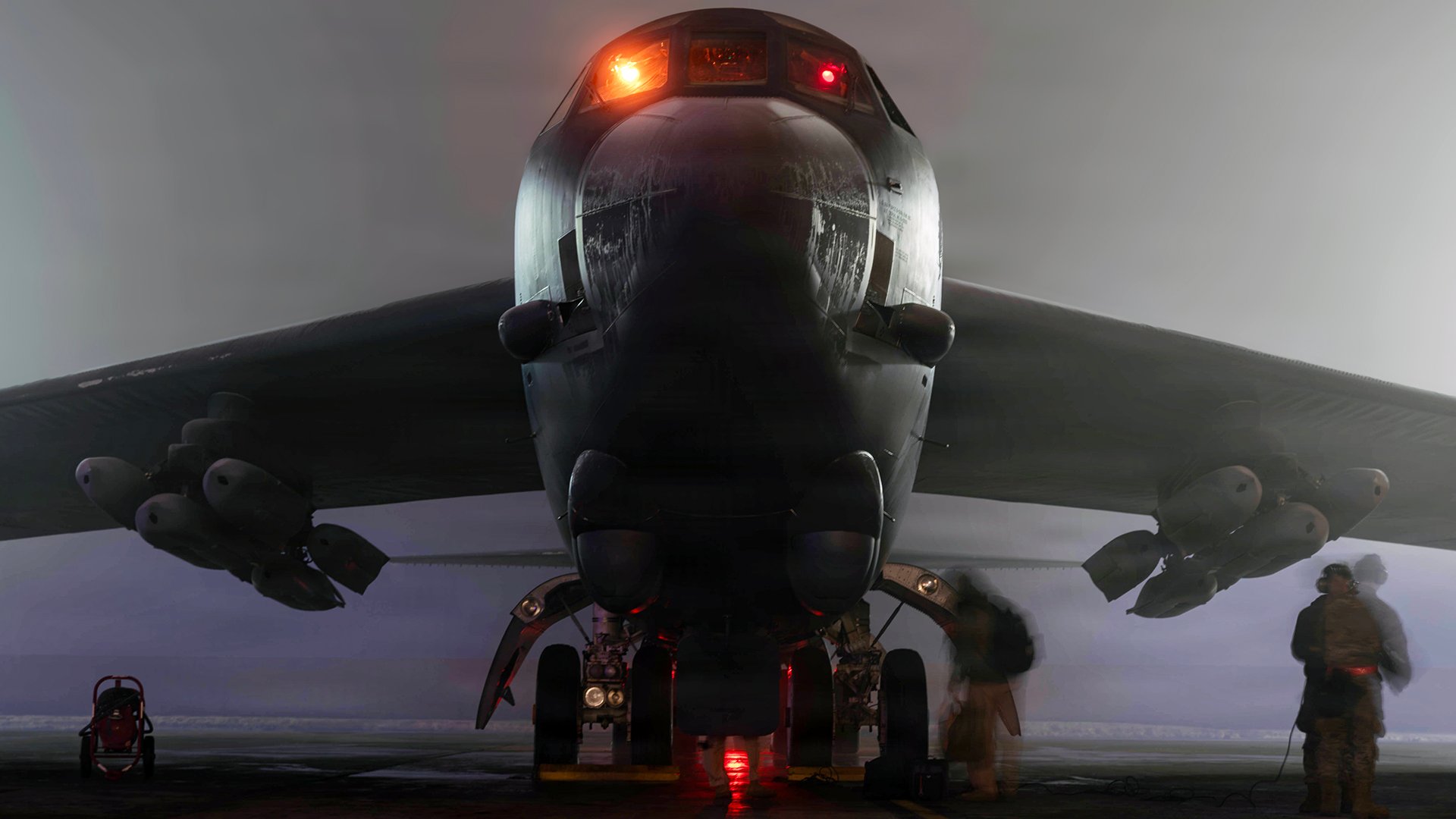
  •  

Every American Aircraft Lost Or Damaged During The Iran War, Visualized

Two reports released last week by the U.S. government shed light officially, for the first time, on the damage Iran has inflicted on the Pentagon’s aerial fleet since the war began almost seven months ago. TWZ has combined their accounting with open-source intelligence (OSINT) reporting and our own tracking to produce a comprehensive graphic visualizing what the U.S. has lost – and what it will cost to replace. The picture it paints is not a pretty one, with implications should the U.S. trade blows with a peer adversary in the Pacific.

On September 14, the Pentagon’s Lead Inspector General (IG) released its first quarterly report to Congress on Operation Epic Fury (OEF), which included aircraft casualties suffered by the U.S. from the beginning of the war on February 28, 2026, through June 30. The Congressional Budget Office (CBO) followed the next day with even more detail, assessing the costs incurred during combat operations against Iran with an overview of aircraft losses through August 1, as well as the estimated replacement cost in 2026 dollars. TWZ went a step further, continuing where both reports left off with the help of the OSINT community, to update our previous visualization and tally losses through September 18, incorporating damage from attacks by the Islamic Revolutionary Guard Corps (IRGC) on American bases in the Middle East over the past two months. The final accounting can be viewed in the high-definition graphic below.

TWZ/IAN ELLIS-JONES

Drone Fleet Takes The Brunt Of The Blow

America’s MQ-9 Reaper drone fleet has absorbed the bulk of the damage and accounts for the largest single line-item expenditure in the CBO’s letter to the ranking member of the House Budget Committee. According to the Lead IG, “as many as 30” MQ-9A Reaper drones were destroyed in “various circumstances,” while the CBO booked 24 at a unit cost of $30 million (based on the Foreign Military Sales program), which totals $720 million to $900 million in lost equipment. The cost of a fully kitted-out Reaper can approach $50 million, depending on the sensors, weapons, and other mission equipment it carries. The Air Force Chief of Staff, Gen. Kenneth Wilsbach, told the House Armed Services Committee in May that the Reaper was the war’s “most valuable player.”

But both numbers are stale. The Washington Post reported in August that at least 45 Reapers, approximately a quarter of the pre-war fleet, were shot down, crashed, or destroyed on the ground, citing three U.S. officials familiar with the matter. That figure covers MQ-9s lost across the Middle East, including those downed over Iran and by the Houthis in Yemen. The Air Force is on record admitting that the Reaper fleet shrank to 135 airframes as of May, down from an official total of 165 at the start of fiscal year 2026. Another two have been shot down since the Post’s report, according to open-source intel, bringing the total to 47, or more than $1.4 billion based on the CBO’s methodology. While every Reaper lost is expensive, in some cases at least, each would represent a soul, or crew, that may have been at risk in a previous era’s conflict, and no dollar figure captures that trade-off.

MQ-9A Reaper. Photo: USAF

General Atomics’ iconic MQ-9A is no longer in production, and the service does not view the newer, in-production MQ-9B as a platform to meet its current needs and cost demands. Instead, it is targeting a replacement with a unit cost of around $10 million (excluding sensors) and pushing to accelerate the program to acquire these lower-cost platforms, dubbed the Massed Modular Aircraft (MMA). “If you don’t like losing an MQ-9A that cost on the order of $50 million, with the sensors, you’re probably not going to like losing an MQ-9B at a higher price point,” Lt. Gen. Christopher Niemi, the Air Force’s Chief Modernization Officer, said at a roundtable in September, according to a report from Air & Space Forces Magazine.

In June, the USAF confirmed to TWZ that after a relatively frantic hunt for additional airframes, it was planning to purchase a number of unused Reapers from General Atomics, which turned out to be fewer than 10. There is no easy answer to this problem, as cheaper alternatives cannot replace all the capabilities provided by pricier platforms. There are several more attritable alternatives in development, such as the General Atomics Wildfire, which the company is building specifically to meet the needs outlined in the MMA program. Swarm Aero’s Gamera is another possible contender.

Rendering of Wildfire. Photo: General Atomics

The Reapers were not the only aerial drones lost. An MQ-4C Triton went down over the Persian Gulf in April after squawking a lost-link code and general emergency on its way back to Naval Air Station Sigonella in Italy. The Navy logged it as a Class A mishap and the cause remains unknown. There are only 20 in the fleet, and at $150 million a pop, the loss represents a significant outflow. Navy budget documents place the unit price higher at $238 million. And, in late May, U.S. Central Command (CENTCOM) announced that Iran shot down an MQ-1 over international waters. CENTCOM declined to tell TWZ whether it was an Air Force Predator, which is officially out of service, or an Army Gray Eagle platform, and neither appeared in the government reports.

The Crewed Aircraft Tally

In terms of manned aircraft, the KC-135 Stratotanker fleet took the biggest hit. The workhorse aerial refueling tanker is primarily tasked with keeping America’s fighters, bombers, and cargo haulers airborne, and crews have been flying nearly nonstop sorties to support active operations in the CENTCOM area of responsibility (AOR). Two were destroyed and up to seven have been damaged, although the Air Force has become relatively efficient at repairing the damaged aircraft enough to fly them home. In a tragic incident on March 12, a collision between two Stratotankers that was “not due to hostile fire or friendly fire,” according to CENTCOM, resulted in the loss of six airmen after one of the aircraft went down over western Iraq.

Repaired KC-135 Stratotanker. Photo: Andrew McKelvey

Three F-15E Strike Eagles were destroyed early in the conflict due to friendly fire over Kuwait, and one was shot down over Iran on April 3, leading to a massive combat search and rescue (CSAR) operation. “Roughly eight” more were damaged in a recent salvo of ballistic missile fire on Muwaffaq Salti Air Base in Jordan, first reported by CBS News and confirmed by Air & Space Forces Magazine, both citing unnamed U.S. officials. President Donald Trump dismissed the reports, telling NewsNation there was “no damage, no nothing.”

The daring CSAR mission to save the two F-15E crew members who ejected inside Iran, one of whom 60 Minutes interviewed on September 13, took place between April 3 and 5. While no American lives were lost during the operation, several aircraft were destroyed, including two MC-130J Commando IIs and four Night Stalker MH-6 Little Bird helicopters (which TWZ was first to report), representing, at north of $400 million, the costliest single operation of the war for aircraft inventory. The mission reportedly included more than 150 aircraft and 92 special operators on the ground deep in enemy territory. The MC-130Js became stuck on a temporary remote airstrip and were deliberately destroyed by American forces to prevent capture, along with the Little Birds operated by the 160th Special Operations Aviation Regiment (SOAR). An HH-60W Jolly Green II was also struck but continued flying. The CBO booked the MC-130Js at $300 million, and the five helos at $122 million.

Two A-10C Warthog close air support jets also took hits. The first, while flying in a “Sandy” escort role during the rescue operation, was hit by enemy fire. “This pilot continued to fight, continued the mission, and then upon exit, flew his aircraft into another country and determined that the airplane was not landable,” Chairman of the Joint Chiefs of Staff, Gen. Dan Caine, said during a presser in April. “The pilot then made the decision to eject over friendly territory, and was quickly and safely recovered.” The second Warthog sustained damage on the ground in Jordan during the IRGC’s latest round of strikes referenced above.

Video footage of DUDE44 rescue operations in the CENTCOM AOR on Sept. 15, 2026 (USAF Video)

The most expensive single crewed loss was an E-3G Sentry, which is out of production and can only be replaced by the E-7A Wedgetail, a program that the Pentagon recently revived, at a unit cost the CBO estimates to be half a billion dollars. The jet, serial number 81-0005, was struck on the taxiway at Prince Sultan Air Base in Saudi Arabia on March 27, one of just 16 Sentries the service had left after initially deploying six to the theater before the conflict kicked off. The IG report lists it as damaged, but that is generous, considering that photographs and satellite imagery show the plane cut in half with the rear fuselage destroyed. The CBO report is more candid, categorizing the Sentry as lost in battle and assigning a $500 million replacement value. The Pentagon tried to cancel the E-7 program last year, but has since reversed course, after Secretary Pete Hegseth said the department’s mindset “completely changed.”

GOOGLE EARTH/USAF (COMPOSITE IMAGE)

A handful of other hits round out the tally. A 5th-generation F-35A Lightning II Joint Strike Fighter (JSF) was struck by Iranian fire in mid-March and forced to make an emergency landing. As far as we know, this was the first time an F-35 took hostile fire in combat. The following week, a first-person-view (FPV) short-range kamikaze drone successfully targeted a U.S. Army Black Hawk parked at a base outside Baghdad, Iraq. The next month, images circulated by Iranian state media, which TWZ did not independently verify, showed a CH-47F Chinook wrecked on the ground at Camp Buehring in Kuwait. And, in June, an AH-64 Apache was shot down near the Strait of Hormuz.

Recent retaliatory attacks by IRGC forces on U.S. bases have damaged additional aircraft in the weeks following the CBO’s cutoff date. Another four helicopters were hit since September 10, @DefenceGeek, a UK-based OSINT researcher and flight tracker, told TWZ. His team at @MATA_osint reviewed open-source videos and identified them as H-60 models, likely UH-60M/L variants.

The True Cost Explained

Through August 1, the CBO estimated that the losses represented nearly $1.9 billion in 2026 dollars, but that figure only counts hardware the Pentagon “would have to change its plans to replace.” If the department sought funding to replace everything it lost with platforms available today, the true cost rises to $3.3 billion. For example, the A-10C Warthog is no longer being built, and the CBO assesses that if it were to be replaced with an F-35A instead, the price balloons from $0 to $120 million. Similarly, since the F-15E has no active production line, the replacement cost of four F-15EX would total $400 million, compared to $0 on paper. The CBO figure also includes a $500 million charge for a lost THAAD AN/TPY-2 radar, a prized air defense asset, one of only eight radars the Army has for its THAAD batteries. It is (obviously) not an aircraft but counted in the report’s accounting.

Taking into consideration the losses suffered since the CBO’s assessment on August 1, and the cost to repair damaged aircraft, which is not included in the table above, the $3.3 billion figure could top $4 billion. Additionally, CENTCOM told the IG that “hundreds of buildings and structures” were damaged and destroyed at various bases across the AOR, in addition to miscellaneous equipment, sensors, and other installations that were targeted but not included in the estimates. However, these are rough calculations, and the actual outlays will likely differ substantially.

Reports Highlight Strain On America’s Munitions Stockpile

The Lead IG and CBO both address the precarious state of America’s munitions stockpile, which contradicts recent commentary by some senior military officials. The IG reiterated that the Office of the Under Secretary of War for Acquisition and Sustainment said the “munitions expenditure in OEF has resulted in strategic inventory shortfalls and revealed industrial base bottlenecks for munitions resupply.” The CBO report goes further, concluding the U.S. has “probably used between one-half and two-thirds of its inventory” of Patriot, THAAD, Standard Missile 3 (SM-3), and SM-6 missiles since June 2025, and states that rebuilding those stocks “would probably take at least five years, even if production was increased.” These numbers generally align with a report earlier this year from the Center for Strategic and International Studies (CSIS) that highlighted the rapid expenditure of critical munitions and how it could affect a future fight against China.

Source: Center for Strategic and International Studies (CSIS)

CENTCOM commander Adm. Brad Cooper, who is responsible for executing the day-to-day operations against Iran, said he was “not concerned at all” when asked about America’s munitions stockpile during the 60 Minutes segment mentioned above. “We’re well armed and ready for any contingency,” he told Norah O’Donnell. This may be sincere, as the commander overseeing an active war tends to get whatever is required, but other theater-level commanders don’t necessarily share the same sentiment.

Last month, the heads of U.S. European, Pacific, and Southern Commands, as well as the Chief of Naval Operations, each registered a formal “non-concur” in the August 14 Secretary of Defense Orders Book (SDOB), warning that extending their forces’ commitment to the Iran fight risked draining America’s combat power, especially in the Pacific. In an exclusive citing people familiar with the assessment, the Washington Post reported that Adm. Samuel Paparo, the commander of U.S. Pacific Command, “disagreed with the level of support he was ordered to continually provide, including an aircraft carrier strike group and naval destroyers.” On social media, the Pentagon’s chief spokesman called the story inaccurate but stated, “Non-concurs are standard. The Secretary sees them constantly.”

Back in 2024, prior to Operation Rough Rider, the Twelve-Day War, Midnight Hammer, and Epic Fury, Adm. Paparo voiced concerns about munitions expenditures, saying, “With some of the Patriots that have been employed, some of the air-to-air missiles that have been employed, it’s now eating into stocks, and to say otherwise would be dishonest.” He continued, “Inherently, it imposes costs on the readiness of America to respond in the Indo-Pacific region, which is the most stressing theater for the quantity and quality of munitions, because the PRC [People’s Republic of China] is the most capable potential adversary in the world.”

The math does not bode well should the U.S. get into a dust-up with China before stockpiles can be replenished. The CBO notes China “has many more ballistic and cruise missiles than Iran had at the onset of Operation Epic Fury,” with a “significantly larger economic base” that “can produce such missiles more rapidly.” As Iran has shown, stationary bases make for easy targets, and U.S. installations in the Pacific that fall under the PRC’s ballistic missile umbrella are exposed, unhardened, and require a high volume of interceptors to defend. “Having used a large portion of its missile defense inventory in combat operations against Iran, DoD now has fewer interceptors on hand to use in a potential conflict with the PRC,” the CBO concluded.

The Pentagon has since announced deals with Lockheed Martin and Northrop Grumman to drastically increase Patriot and THAAD production, but that ramp-up will take years to materialize. According to the CBO, “Boosting missile production has historically been a slow process with lags of three to five years between the placement and delivery of new orders. After production was increased, several more years would be required to replace the missiles that have been used in the conflict with Iran.”

Patriot battery. Photo: Lockheed Martin

The Impact On Deterrence

Aircraft casualties are to be expected in any conflict, especially considering the intensity, scope, and length of operations against a formidable opponent with home-field advantage. Airframes can be rebuilt and stockpiles replenished. But such dynamics impact deterrence in other regions, as America’s own military leaders have said on the record in the past.

“Deterrence is achieved by that ability to demonstrate capability and will, and it comes down to your ability to either impose costs on an adversary or including in response to aggression. And it’s also a big part of defending yourself against missiles and so China is building 800+ missiles per year,” Adm. Paparo explained in a recent interview with Hawaii News Now. “And so the ability to defend that, the ability to impose costs, this gets back to the changing character of warfare with information operations, drone operations, and deep precision strike are much more salient instruments of national power than they’ve been in the past. And to be able to deter is to be able to demonstrate that the risk of armed conflict far outweighs the benefits and part of that is imposing costs and part of that is defending ourselves against those costs.”

TWZ noted many of these questions in February, before the first Tomahawk was fired, and has been reporting on stockpile concerns for years. Now, the Pentagon’s bill for the conflict conservatively sits at over $38 billion, America’s fleet of Reapers is down a quarter, and its bases in the Middle East are battered and could still be targeted. The interceptors that kept the number of aircraft depicted on our graphic from being higher are, by the CBO’s own estimate, years from being replaced – a notable dynamic considering military leaders have suggested China, with a much larger missile arsenal than Iran, could be prepared to move on Taiwan by 2027.

Contact the author: ian.ellis-jones@recurrent.io or @ianellisjones

Author’s note: Special thanks to @DefenceGeek and the team at the Military Air Tracking Alliance (MATA) for assisting with the open-source analysis and battle damage assessment. Be sure to follow them on X at @DefenceGeek and @MATA_osint.

The post Every American Aircraft Lost Or Damaged During The Iran War, Visualized appeared first on TWZ.
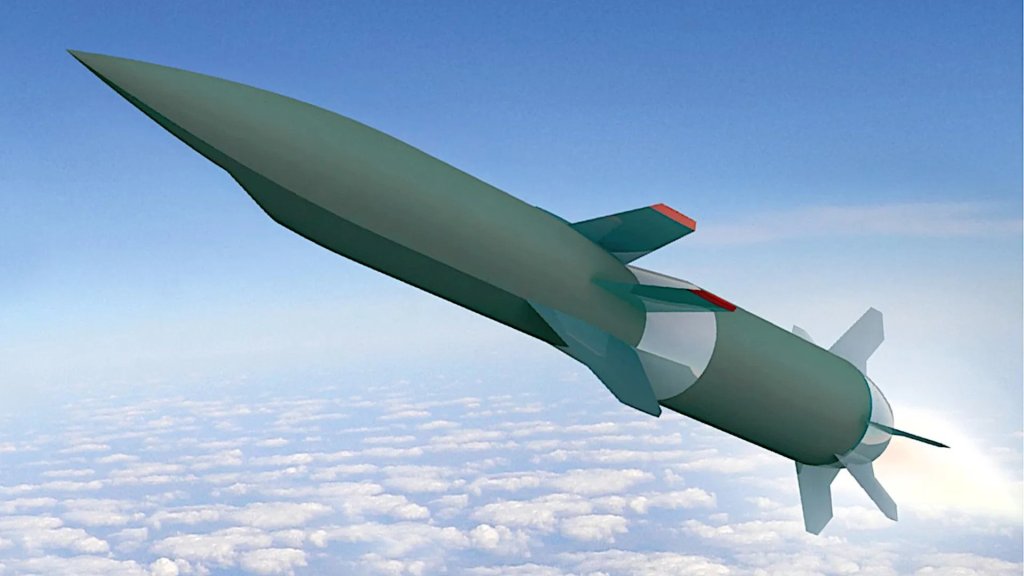
  •  

USAF F-16 Crashes At Spangdahlem Air Base In Germany

The pilot of a U.S. Air Force F-16 Fighting Falcon assigned to the 52nd Fighter Wing safely ejected before the aircraft crashed at Spangdahlem Air Base in Germany, according to the wing.

The pilot is still receiving medical treatment, the wing said in a statement. Emergency response teams are still on the scene. The cause of the incident, which took place about 2:30 p.m. local time, is still under investigation and additional details will be released when available.

The crash happened as the jet was on approach to land at the installation, located in the western German region of Rhineland-Palatinate, according to the New York Post.  

“Following a plane crash in the vicinity of U.S. Air Base Spangdahlem, fire and emergency response teams from the Eifel District of Bitburg-Pruem were dispatched to the scene,” The Associated Press reported, citing the district. 

Images emerged on social media showing smoke rising in the distance.

An F-16 fighter jet has reportedly crashed at the U.S. Spangdahlem Air Base in western Germany on Tuesday afternoon.

Witnesses reported seeing a jet rapidly descend before a large column of black smoke appeared near the runway.

Local reports say two aircraft had taken off and… pic.twitter.com/MB4S6zKQm5

— Clash Report (@clashreport) September 22, 2026

The F-16 crash at Spangdahlem was the second mishap in a week for USAF F-16s. On Sept. 17, an F-16 from the 149th Fighter Wing at Joint Base San Antonio-Lackland in Texas crashed in northern Michigan. The pilot in that incident also ejected.

According to air traffic control (ATC) audio, the pilot’s wingman said at the time of the Michigan crash, “we have a possible mayday. My wingman may have taken a bird.” TWZ cannot independently confirm what caused the crash. The audio continues and offers a fairly dramatic and raw look at how the incident occurred over the air waves.

F-16 crash ATC audio, BUCK 11 flt x2 F-16s were flying along the VFR low level route VR634 when the 11 advised MINNEAPOLIS CENTER that his wingman may have hit a bird and was going to eject just south of Traverse City, Michigan

Audio via @liveatc https://t.co/sUR7KZBR2j pic.twitter.com/QdcE4ePiUd

— Thenewarea51 (@thenewarea51) September 17, 2026

This is a developing story.

UPDATE: 3:35 PM Eastern –

The 52nd Fighter Wing provided some additional information.

“The aircraft was returning to Spangdahlem Air Base following a routine training flight involving four F-16s when the crash occurred,” the wing stated. “The remaining three aircraft diverted to Ramstein Air Base and landed safely. The pilot of the crashed aircraft ejected safely and received medical care.”

“Emergency response personnel responded to the scene, with local German fire departments and emergency medical services providing support,” the wing added. “German emergency response partners have offered their continued assistance as needed. The 52nd Fighter Wing appreciates the swift response and continued support of our German partners.”

Contact the author: howard@twz.com

The post USAF F-16 Crashes At Spangdahlem Air Base In Germany appeared first on TWZ.
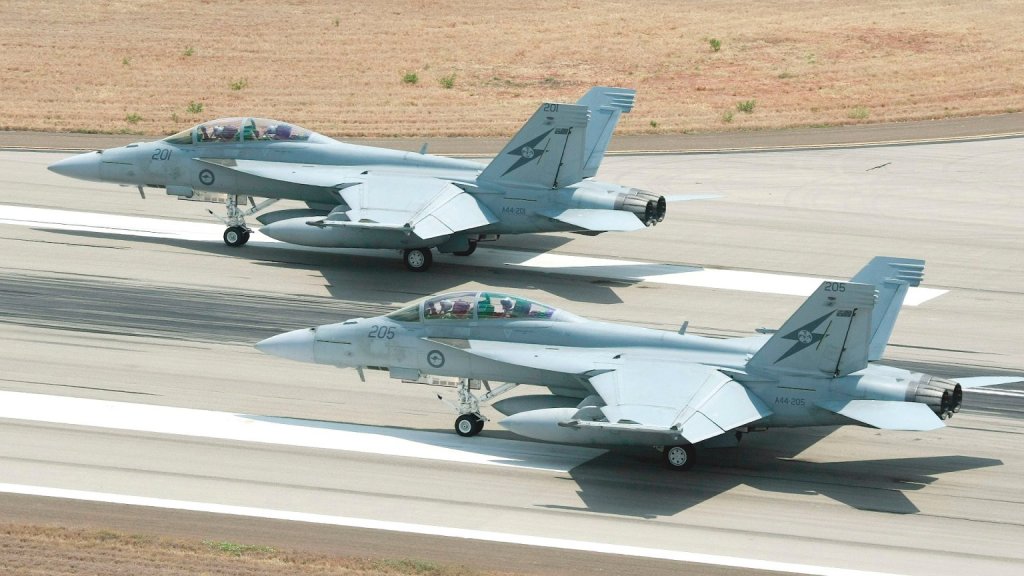
  •  

General Atomics FQ-42A Vengeance CCA Now Flying Together With USAF Fighters

General Atomics has given us the first look at its FQ-42 Vengeance Collaborative Combat Aircraft (CCA) drone flying in formation with crewed fighters. The U.S. Air Force is continuing to expand crewed-uncrewed teaming and other testing of the FQ-42, as well as Anduril’s FQ-44 Fury, as it aims to start fielding both types around the end of the decade.

The newly released picture from General Atomics’ Aeronautical Systems, Inc. division (GA-ASI), seen at the top of this story, shows an FQ-42 in flight together with an F-35A Joint Strike Fighter and an F-15E Strike Eagle. The company has also disclosed the delivery of another Vengeance drone to the Air Force, this time to the service’s main drone operations hub at Creech Air Force Base in Nevada.

“The FQ-42 that arrived at Creech will continue regular test and evaluation operations with the Air Force aimed at experimentation with the new aircraft,” according to a press release GA-ASI put out today. “Previous efforts with Vengeance and other GA-ASI jets, including [the] XQ-67A Off-Board Sensing Station and MQ-20 Avenger – have found the trio of combat jets flying in various scenarios that push the boundaries of combat aviation. GA-ASI’s jets have flown semi-autonomously and autonomously with various AI pilots and under collaborative control of human fighter pilots operating F-22 Raptor and F-35 Lightning II jets.”

From top to bottom, General Atomics MQ-20 Avenger, XQ-67 OBSS, and YFQ-42 drones. GA-ASI

GA-ASI has previously confirmed that the XQ-67A, an earlier experimental drone TWZ was first to report on, served as a prototype for the development of the FQ-42. The Air Force’s F-22s also look set to be the first operational airborne controllers for USAF CCAs.

As mentioned, the Air Force is steadily working to broaden the scale and scope of testing involving the FQ-42 and FQ-44 to include more and more operationally relevant scenarios. Both types are set to make their first appearance at a large-force employment (LFE) exercise in December, offering a valuable new opportunity for deeper and more realistic integration with crewed fighters.

The Air Force otherwise continues to lay the groundwork for future CCA operations, including through a major round of testing at Creech in July, which TWZ was first to report on. The service is heavily focused now just on figuring out how the drones will be deployed, launched, recovered, supported, and otherwise operated on a day-to-day basis. A dedicated test squadron called the Experimental Operations Unit (EOU), established at Nellis Air Force Base in Nevada, has been leading those efforts.

Work is also underway to demonstrate tactical capabilities, such as the FQ-44 launching an AIM-120 Advanced Medium-Range Air-to-Air Missile (AMRAAM) for the first time earlier this year.

New test footage: first missile shot from YFQ-44A.

YFQ-44A executed an end-to-end, beyond-line-of-sight strike against a simulated target.

The test, executed out of @EdwardsAFB, represents an important step in turning CCA into an operational capability. pic.twitter.com/70cRIs6uXJ

— Anduril Industries (@anduriltech) July 15, 2026

“We’re on path right now to do our air-to-air shot coming up here in the near future,” Mike Shortsleeve, Vice President for Strategy Business Development at GA-ASI, told TWZ‘s Jamie Hunter on the floor of the Air & Space Forces Association’s (AFA) 2026 Air, Space & Cyber Conference last week.

Last week, GA-ASI separately announced a new demonstration of semi-autonomous air-to-air combat capability involving crewed F-5AT Advanced Tiger jets belonging to private adversary air contractor Tactical Air Support, Inc. and an unspecified “CCA test aircraft.” The company did use a picture of an Avenger drone to illustrate the press release. The F-5s and the CCA surrogate were equipped with infrared search-and-track sensors (IRST) during the testing.

The stock picture of an Avenger drone that General Atomics used to illustrate its press release last week. General Atomics

“The live exercise proved that a CCA and a manned fighter can collaborate to fuse sensor data from AMS-GRA-compliant sensors to track, engage, and eliminate an airborne target while using a Beyond Line of Sight (BLOS) data link to accomplish seamless coordination between the two aircraft,” according to the GA-ASI release.

“The demonstration utilized BLOS communication between the CCA and the airborne F-5, enabling the Advanced Tiger to send data about targets from an AMS-GRA-compatible system. These commands were relayed to the CCA’s TacACE [Tactical Autonomy Ecosystem software] system,” the release added. “This flight showed that many companies’ platforms can interoperate using the plug-and-play government reference architectures ecosystem. The U.S. Air Force isn’t locked into using a single vendor or system.”

GA-ASI has previously demonstrated the ability of MQ-20s flying with podded IRSTs to detect and track aerial targets semi-automatically. Generally speaking, IRSTs look set to be an important sensor for future CCAs, and are particularly relevant in the air-to-air role. As we have written in the past:

IRSTs are especially valuable for helping spot stealthy targets with features designed to reduce their radar cross-sections since they detect and track infrared emissions. By extension, IRSTs are also immune to radio frequency electronic warfare jamming. As passive sensors, they do not emit their own signals that could alert a target to the fact they are being tracked, either. IRSTs can still be used to cue or otherwise be linked to other sensors, including active electronically-scanned array radars. Fusing data from multiple sources can provide higher fidelity tracks of multiple targets, as well as improved situational awareness overall.

An Avenger drone with a podded IRST sensor under its wing. General Atomics

Air-to-air combat is expected to be the primary mission set, at least initially, for Air Force CCAs. At the same time, an air-to-ground role for the FQ-42 and FQ-44, and/or other future CCA-type drones the Air Force might acquire, is emerging on the horizon. Anduril has already fit-checked a variety of air-to-ground ordnance on Fury.

As it stands now, the Air Force is looking to have its first operational CCAs in service toward the end of the decade. The service is also presently aiming to have a total fleet of at least 500 CCAs of all types by 2032.

“If we can’t be ready, then certainly you’re not going to have the forces that you need and the numbers that you need going forward. This signifies that mass is certainly important again, but also autonomy is just as important,” General Atomics’ Shortsleeve told us last week in talking about the Air Force’s CCA fleet size target. “So the ability to have these autonomous systems, whether they’re bringing in additional weapons, sensing capability, whatever it is, all of those working in a collaborative environment, whether it’s manned, unmanned teaming, or unmanned and unmanned capabilities, that right there is what’s going to help the warfighter in the future.”

“And when we say autonomy, it’s not just strictly this is going to go off and do its own thing. It’s going to be directed,” he added. “Whether it’s on the ground, in the air, [it] makes no difference to the system itself. It’s going to work hand-in-hand [with humans]. So that human-machine teaming, that’s what they’re really focusing on. There is figuring out how to best use this capability in the advancement of actually having to employ it in [the] real world.”

Though just flying in formation is very different from collaboration with a high degree of autonomy, the new picture of the FQ-42 together with the F-35A and the F-15E is a window into the future teamed operations the Air Force is hoping to build.

Contact the author: joe@twz.com

The post General Atomics FQ-42A Vengeance CCA Now Flying Together With USAF Fighters appeared first on TWZ.
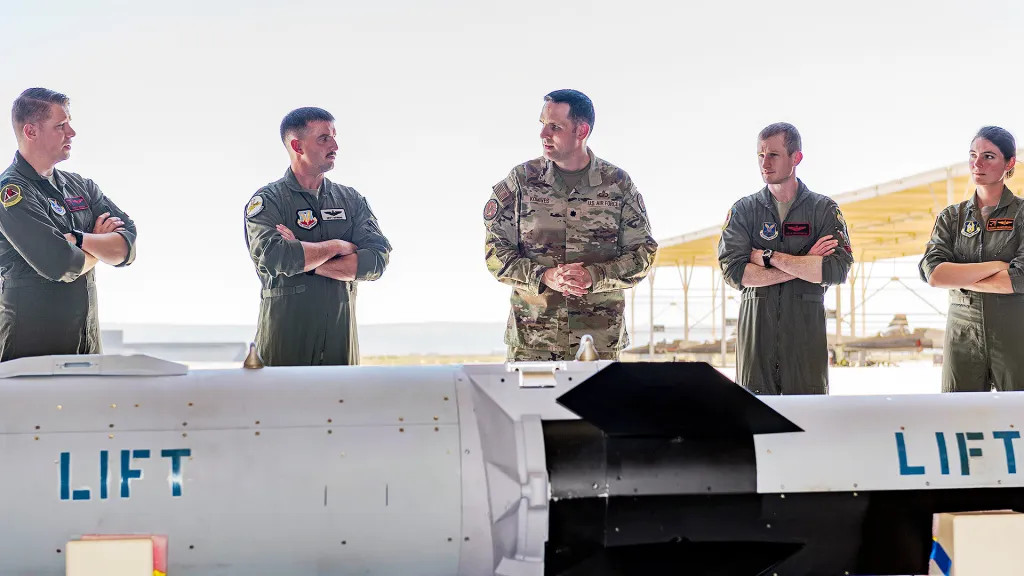
  •  

Shahed-136 Clone Found By Florida Fisherman, Eglin AFB Admits It Lost A Drone (Updated)

A Florida fishing charter boat made a very unusual catch Saturday while operating near Eglin Air Force Base. Located in the western end of the Florida Panhandle, Eglin is home of the U.S. Air Force weapons test wing. Hot Spots Charters pulled a delta-wing aerial drone out of the water during an excursion, according to local charter captain Charlie Green. The recovered drone closely resembles a clone of the Iranian Shahed-136 one-way attack weapon, specifically the U.S. military’s Low-Cost Uncrewed Combat Attack System (LUCAS) that took center stage during its first combat use in Operation Epic Fury. The target version of that drone is built by SpecktreWorks and is designated the FLM-136. It was originally designed for mimicking one-way attack munitions, specifically the Shahed-136, which it was reverse engineered from, for testing and training before it was weaponized into LUCAS.

An Eglin AFB spokesperson told us the installation recently lost a drone, but would not confirm it was the same one found by Hot Spots Charters.

“I can confirm that we were doing a test and the test article went down,” the spokesperson told us, declining to provide further details about what kind of drone, when it was lost or the location it went down. They referred us to the Pentagon, which could not immediately provide any additional details. 

“The drone was found by local charter Capt. Daniel Arsenault with Hot Spots Charters,” said Green, who is also an aviation photographer whose work can be found at Aquatic Charlie on social media. “He saw the object at a distance and went over to check it out. When he did, he pulled a good size mahi-mahi out from underneath it, complementing his already stocked cooler full of fish from that morning charter. His passengers helped him haul it aboard.”

The drone found by Hot Spots Charters. (Charlie Green)

“Arsenault and his charter company did all the due diligence possible to notify local agencies of the recovery- and was eventually collected by one of them,” Green added. He did not know which agency.

Images taken of the drone shared with us by Green show that it did not have the engine, propeller or the nose cone/seeker intact. Losing these kind of components is common for impacts into water.

(Charlie Green)

While the Eglin spokesperson offered scant details, the host unit at the installation is the 96th Test Wing, which is the “test and evaluation center for Air Force air-delivered weapons, navigation and guidance systems, command and control systems, and Air Force Special Operations Command systems,” according to the wing’s homepage. It oversees the massive Eglin Gulf Test Range, which “provides approximately 120,000 square miles of overwater airspace, covering the eastern third of the Gulf of Mexico from the Florida panhandle to the Florida Keys. The land range covers 724 square miles and contains 70 specific test and training areas, including an approved depleted uranium test range and the only qualified air-to-ground supersonic range east of the Mississippi River.”

Eglin Test Range. (Eglin Air Force Base)

As noted in the opening of this article, the LUCAS drone was used for the first time in combat during the opening day of the Operation Epic Fury war on Iran on Feb. 28. 

“Costing approximately $35,000 per platform, LUCAS is a low-cost, scalable system that provides cutting-edge capabilities at a fraction of the cost of traditional long-range U.S. systems that can deliver similar effects,” Navy Capt. Tim Hawkins, a CENTCOM spokesperson, told TWZ when the command stood up Task Force Scorpion Strike (TFSS), the military’s first one-way attack drone unit, back in December. “The drone system has an extensive range and the ability to operate beyond line of sight, providing significant capability across CENTCOM’s vast operating area.”

“LUCAS drones deployed by CENTCOM have an extensive range and are designed to operate autonomously,” CENTCOM added in a press release. “They can be launched with different mechanisms to include catapults, rocket-assisted takeoff, and mobile ground and vehicle systems.”

TFSS falls under the auspices of U.S. Special Operations Command Central (SOCCENT), which oversees U.S. special operations activities across the Middle East.

The cost to connect each of the U.S. military's Low-Cost Uncrewed Combat Attack System (LUCAS) one-way attack drones to SpaceX's Starshield communications network is approximately $25,000 a month, according to a new report.
A LUCAS drone. (NAVCENT/C5F/U.S. Army Spc. Kayla McGuire) NAVCENT/C5F/U.S. Army Spc. Kayla Mc Guire
A LUCAS drone. (Courtesy photo/Naval Air Warfare Center Weapons Division)

While we aren’t sure if the drone found by Hot Spots Charters is the one lost by Eglin, it wouldn’t be the first time something like this has happened in Florida. For example, in 2021, beachcombers in Florida’s Palm Beach County found a U.S. Air Force BQM-167A high-performance target drone that washed ashore.

BREAKING: Military drone washes up on beach at Ocean Ridge Hammock Park https://t.co/JXMYTAdXcP pic.twitter.com/rHW5Dyv94p

— WPTV (@WPTV) March 19, 2021

Indeed, the Air Force has a handful of 120-foot boats, the only vessels in its service, to help recover drones after they are shot down during live-fire exercises, or otherwise need to be recovered from these waters. The boats are operated by a contracted crew from Florida Offshore and retrieve around 100 of the drones each year.

The FLM-136’s origins as a target drone are highly relevant here. Counter-unmanned aerial system (C-UAS) capabilities are being hotly pursued on all fronts across the U.S. military as the threat from them has ballooned. During the war in Ukraine and multiple engagements with Iran, including Operation Epic Fury, one-way attack drones have proven to be a massive threat that is heavily influencing how wars are fought. As far as Eglin AFB goes, maybe the most high-profile C-UAS development as of late that has emerged from there has been arming USAF fighters with FALCO APKWS laser-guided rockets to shoot down exactly the same kind of threat that the FLM-136 is meant to emulate. This program began in 2019, which TWZ was first to report on, but was finally rushed into service years later as the standoff with Iran went hot. Now there are many other programs aimed at dealing with these same threats, including a more capable “fire and forget” air-to-air APKWS.

A 2019 test of air-to-air APKWS laser-guided rockets occurred off Eglin AFB. (USAF)

LUCAS development is continuing at a high-pace, with its ability to swarm cooperatively with other LUCAS drones — a feature we reported as central to the LUCAS vision when the existence of the program was disclosed — being worked on now. You can read more about this here. These systems need sanitized airspace for development activities, and the vast ranges over the gulf are some of the best in the country for it.

So, it’s not surprising to see an FLM-136 floating in the waters off Eglin AFB. Even in the war with Iran, there were multiple losses of LUCAS drones where they were found intact. These weapons are produced to be risked in large numbers, and some failing, for whatever reason, is just part of the calculus.

Locals in Iraq appear to have recovered a crashed and almost entirely intact Low-Cost Unmanned Combat Attack System (LUCAS), an American copy of the Iranian Shahed-136 Attack Drone, which is confirmed to have been used recently by Task Force Scorpion Strike during U.S. attacks on… pic.twitter.com/SEqO6627en

— OSINTdefender (@sentdefender) March 2, 2026

We will update this story with any additional details we can find about this drone. Though we don’t yet know for sure where it came from, one thing is for certain, the folks on the Hot Spots Charters boat that found it will always have a good tale about the one that didn’t get away.

UPDATE: 2:38 PM Eastern Sept. 21 –

Eglin Air Force Base provided us with an update.

“On Thursday, Sept. 17, a LUCAS UAS impacted the water during routine scheduled testing on the Eglin AFB Range. The aircraft has been recovered and is back in the Department’s possession.

We do not have any additional details to provide at this time.”

Contact the author: howard@twz.com

The post Shahed-136 Clone Found By Florida Fisherman, Eglin AFB Admits It Lost A Drone (Updated) appeared first on TWZ.

  •  
❌