The riots in France and subsequent return to peace show that the road to civil war is paved with restored order, leaving a more combustible environment for the next crisis, say David Betz and Michael Rainsborough.
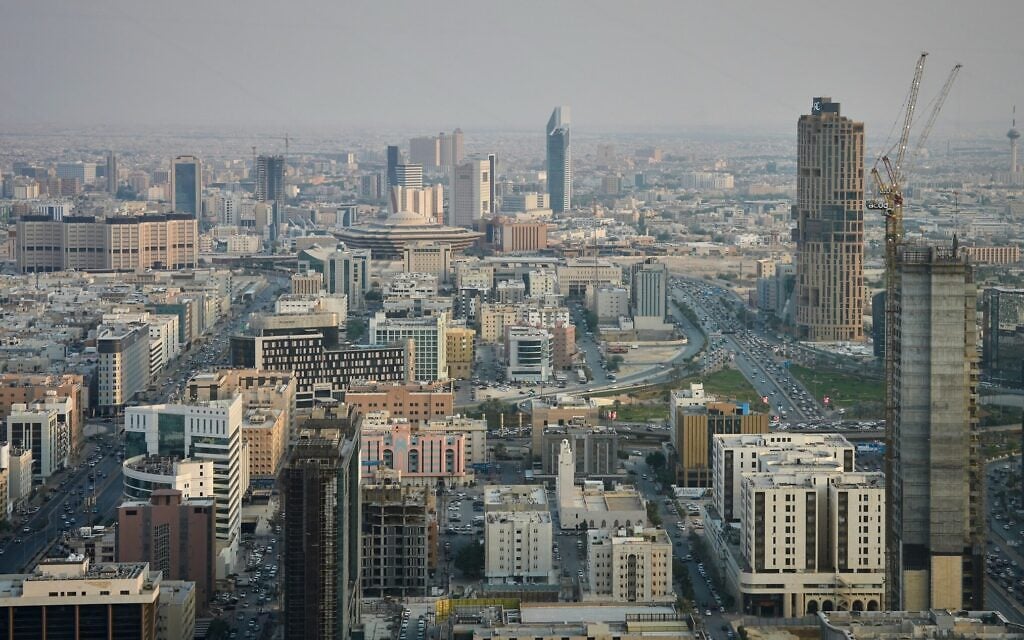
Saudis report at least 3 killed in Iran-backed group's strikes on oil facility and airport; Sissi says Egyptian military support for kingdom won't include strikes in Yemen
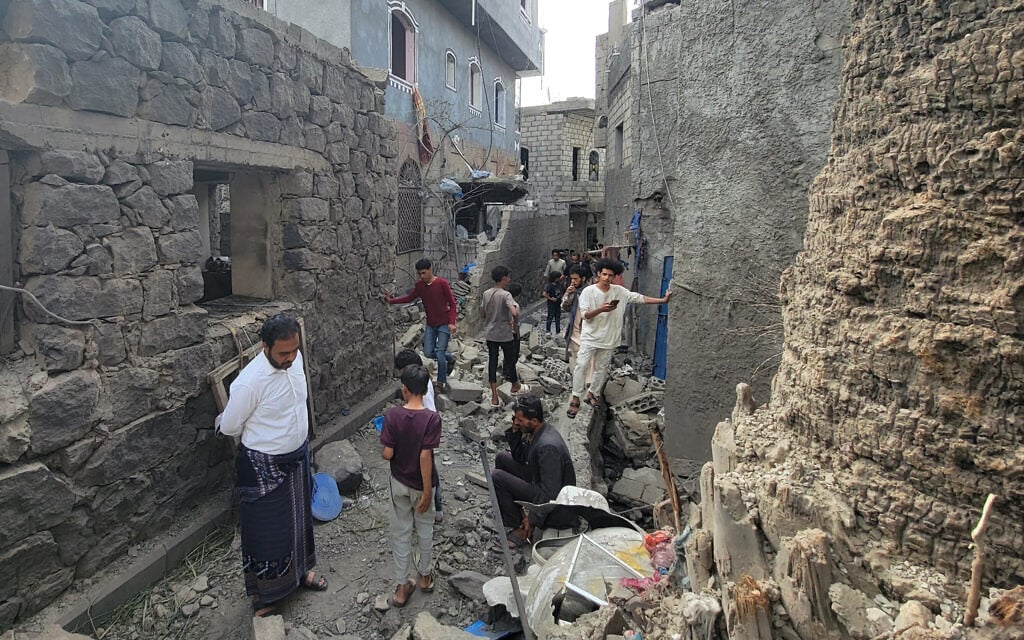
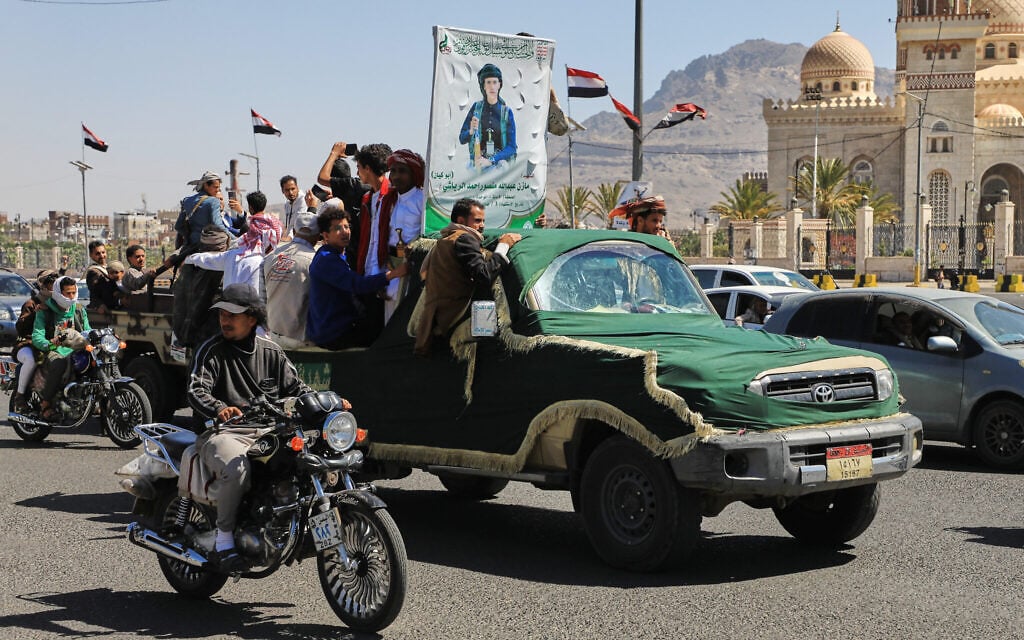
Iran-backed rebels kill 2 teenage girls in Taiz, a day after killing 73 recruits in deadliest attack since fighting resumed; UK to carry out 'defensive' air patrols in Saudi Arabia
Professor David Betz has warned that Britain is drifting towards civil war. No, says P.K. O'Sullivan: the war has already started, one broken friendship, family row and motorway blockade at a time.
Attack on Shabwa province also injures over 200 as military says rebels 'targeted new recruits'; Saudi government agencies tell Riyadh employees to work from home amid Houthi attacks
Andy Burnham’s government is rolling out a new “Centre for Information Defence”. But the outside actors most aggressively undermining what little remains of British democracy are nowhere in its sights
Russia “interfered” in the 2016 Brexit vote by running some “anti-EU” articles on its RT channel and promoting a few internet trolls. Even MI5 has to admit that this activity had no tangible impact on the referendum campaign.
No matter. British prime minister Andy Burnham has once again revived the incendiary claim that Russian disinformation is an especial threat to British democracy. At the United Nations a few weeks ago he announced plans for a National Centre for Information Defence “to detect, attribute and disrupt these kinds of hostile state information attacks”.
For the new British prime minister, as for his predecessors, this is all about Moscow and the UK’s favourite bogeyman, Vladimir Putin. At the UN, Burnham promised British expertise to other European nations to protect them from Kremlin disinformation.
Meanwhile, evidence continues to mount that another foreign actor is meddling even more aggressively in British politics – and neither Burnham nor MI5 have a word to say about it.
Any evidence of Russia disinformation-peddling in the UK pales in comparison to Israeli influence operations – and that’s just the ones we know about. The head of MI5, Ken McCallum, noted that Russian disinformation was neither sophisticated nor successful. The same cannot be said for Israel’s handiwork.
Israel has been using “hasbara” trolls on social media platforms to manipulate public debates in Britain for years – the thrust of the accusation against Russia. But in Israel’s case, it goes much further than that.
This year the Israeli state massively increased its public diplomacy budget to $730 million to expand its influence operations. That includes flying even more politicians, clergy, academics and influencers to bombard them with pro-Israel propaganda they are then likely to spread back home. According to foreign minister Gideon Saar, Israeli advocacy should be treated “like investing in jets, bombs, and missile interceptors”.
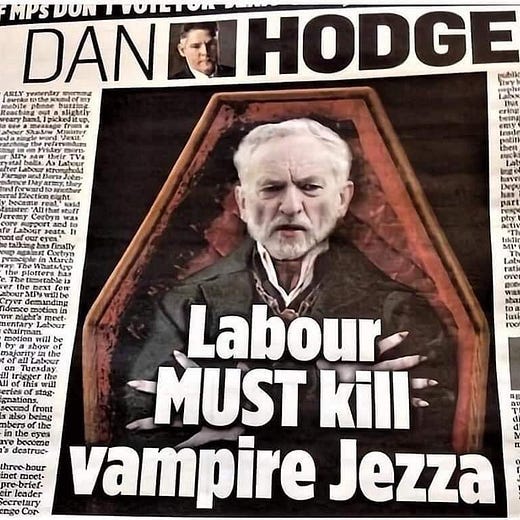
There was already plenty of evidence through the late 2010s, as I reported at the time, that Israel was helping to organise, stoke and amplify a campaign to smear its arch-critic, Jeremy Corbyn, as an antisemite, in order to prevent him from reaching No 10 Downing Street.
Not least, Israel did so by advancing a new, bogus definition of Jew hatred through the International Holocaust Remembrance Alliance (IHRA). Usefully, for Israel, that definition largely ignores hatred of Jews to focus instead on criticism of Israel.
That was the most blatant meddling possible in what remains of Britain’s democratic processes. UK politicians and media not only failed to oppose it, but actively sought to amplify the smears.
Civil war
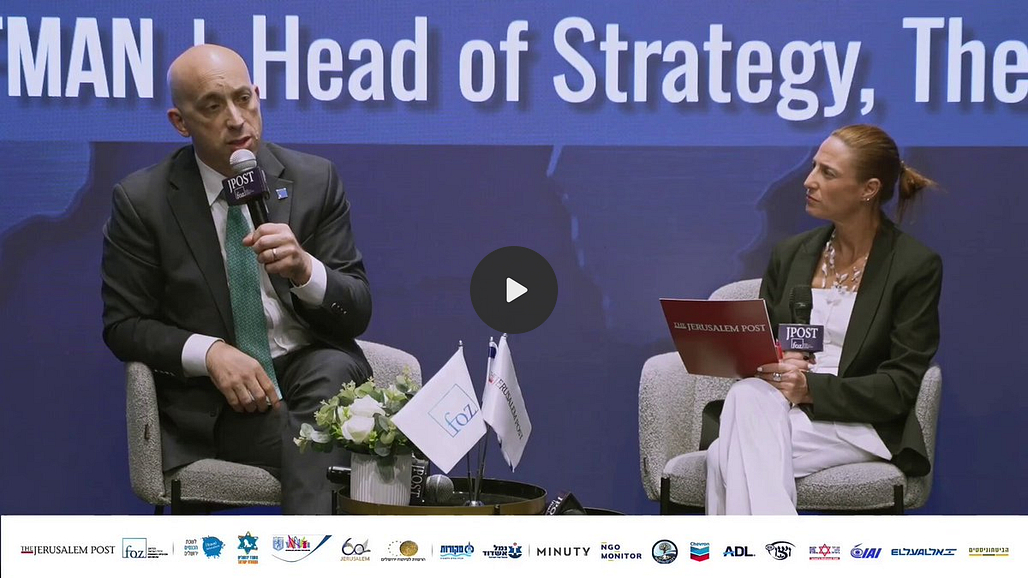
This week the fanatically pro-Israel US lobby group the Anti-Defamation League revealed that it had been working with leading AI firms, which are increasingly being integrated into social media platforms, to suppress what it calls “antisemitism” – or what the rest of us would refer to as criticism of Israel.
Chris Menahan 🇺🇸@infolibnews
🚨 ADL CEO Jonathan Greenblatt reveals in Israel that he’s been working with all the top AI Frontier Labs to push them to suppress “anti-Semitism.” “We’ve been working with the Frontier Labs—OpenAI, Anthropic, Alphabet, the company that runs Gemini, Google, Meta, who runs Muse, …
10:32 PM · Oct 13, 2026 · 447 ТЫС. Views
CEO Jonathan Greenblatt observed: “We’ve had excellent collaboration with Silicon Valley.” The platforms, he said, would tackle content the ADL doesn’t like “right in the source code” – that is, before users can see it.
That is likely not only to remove criticism of Israeli atrocities and criticism of western governments, such as the UK’s, for colluding in Israel’s genocide but turn social media into a playground for bots and Israel apologists, giving them free reign to spread their propaganda without challenge.
We also know, thanks to the work of the French security services – maybe MI5 was too busy chasing Russian bots to notice – that an Israeli cyber agency called Blackcore targeted the SNP in May’s Scottish elections, as well as meddling in elections in France and New York.
Israeli tech firms, especially those dealing in spyware, intelligence and influence operations, are typically closely aligned with the Israeli state and its military. Most of the founders of tech start-ups are alumnae of the Israeli army’s 8200 intelligence unit.
Alongside the SNP, New York mayoral candidate Zohran Mamdani and a leftwing French party headed by Jean-Luc Melenchon were targeted. Why? Because, unlike their political rivals, all had dared to speak out against Israel’s genocide in Gaza.
With echoes of what happened to Corbyn, Blackcore’s campaigns were designed to smear candidates. In the case of the French elections, fake accounts were created to accuse one candidate of rape and another of paedophilia.
A new documentary, NAZA, shows how Israel has paved the way in using AI in pioneering new ways to kill on a mass scale in Gaza. It selected banks of targets for assassination, often by murdering those “suspects” when they are in family compounds, slaughtering large numbers of bystanders in the process.
It is therefore hardly surprising that tech firms in Israel have been caught using AI in similarly innovative and indiscriminate ways online, to target western publics with disinformation.
In the summer it emerged that the Israeli government had created a website for a fake “scholarly” think-tank. In a short period of time, it produced prodigious quantities of AI-generated content on Israel, optimised for common search terms, that promoted Israeli talking points and constantly suggested criticism of Israel risked fuelling antisemitism.
It was set up not only to influence internet chatbots into echoing its pro-Israel disinformation but also to integrate its content into what experts call the “underlying training data”: that is, the unquestioned assumptions on which chatbots operate.
Back in May 2024 Meta identified fake Israel-based accounts, “posing as Jewish students, African Americans and other concerned citizens”, peddling pro-Israel content in the US and Canada in support of Israel’s slaughter of Palestinians in Gaza.
Two months ago, Meta again found the same kind of dirty tricks emanating from Israel, this time targeting Britain, France and Australia among other countries. The AI-generated accounts posed “as local, civically-engaged brands, news sources, religious organizations, and political activists”.
Notably in the case of the UK and France, the influence campaigns were designed to stoke “anti-immigrant and anti-Muslim” sentiment. Israel has been critically involved in advancing Islamophobic content, fuelling fears of a supposed “Muslim takeover” of Europe to mobilise support for Israel as a bulwark in the Middle East against Islam, and thereby encourage sympathy for its genocidal attacks on Gaza.
As a consequence, the political landscape in Britain has been disfigured. Support for the far-right has been artificially inflated, polarising British society. The path is being paved towards deeper authoritarianism and the possibility of civil war.
Death knell
None of these dire outcomes, the death knell for what little remains of British democracy, is attracting even the mildest interest from the Burnham government or MI5. Instead, they are chasing what so far appears to have been far more marginal Russian output.
But it isn’t just the influence of Israel we should be worried about. The problem runs much deeper, with a host of other noxious outside actors trying to warp and disfigure British politics in ways that closely accord with Israel’s malign intent. Burnham’s Centre for Information Defence will do precisely nothing to tackle any of it.
Here are two other powerful external actors aligned with Israel in distorting British politics.
The billionaire class, a transnational elite that has no loyalty to Britain, interfere in our politics by making our political parties dependent on their donations. They use their money to buy influence with the main parties – which is why for decades it has made little difference whether we vote for the Conservatives or Labour. We get austerity either way, while the billionaires get permission for their forever wars, directing public wealth away from public services into the arms industries and resource grabs.
Jeremy Corbyn tried to break with this model by funding Labour with small donations from ordinary people instead of the billionaires. As a result, he was destroyed by a confected campaign run by the billionaires, in association with Israel and its trolls, to smear him as an antisemite.
Sir Keir Starmer, Corbyn’s successor, went right back to begging for money from Big Business, got the billionaires behind him, and rolled on with the austerity programme.
Is Nigel Farage’s Reform different? Of course, not. Even before reaching power, he’s dependent on crypto-billionaires living in Thailand and Hong Kong.
Meanwhile, the sometime US trillionaire Elon Musk is busy rallying Britain’s new blackshirts, led by serial fraudster Tommy Robinson, to chase after a few “illegal” migrants rather than identifying the real criminals tearing apart Britain: the super-rich like Musk.
The billionaires both wield and conceal their influence through their ownership of the corporate media. They use the media to aggressively promote their own causes – political and economic policies ensuring their further enrichment – by normalising the extreme ideology of neoliberal capitalism, with its promotion of endless resource extraction through forever wars and the fuelling of needless consumption.
The consequence is the destruction of the conditions for human life on the planet. The billionaires hope they can ride out the catastrophe in their bunkers, or cryogenically freeze their bodies until a point in the future when they can be uploaded to the cloud.
One of the media’s most important jobs is to use smear campaigns to destroy anyone, such as Corbyn and now Zack Polanski, who threatens the billionaires’ privileged position by offering a mildly socialist programme of wealth redistribution.
Vassal state
If the UK media wasn’t entirely captured by the billionaire class – serving as its PR division – then we might know more about the role of the United States in meddling in our politics.
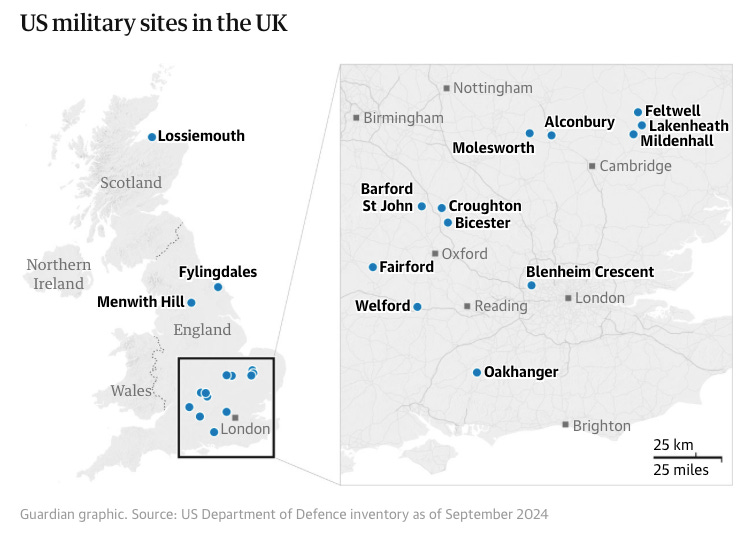
The recent claims of a supposed “terrorist plot” outside RAF Fairford – really a US airforce base pretending to be a British base and one from which the US has waged an illegal war of aggression against Iran – should have reminded us that the Pentagon is largely in charge of UK foreign policy.
The US has some 15 major military bases on British soil, plus half a dozen smaller intelligence sites. As the rightwing US podcaster Tucker Carlson recently observed, the fact that Britain has foreign troops crawling all over it makes us little more than an occupied “vassal state”.
The US recently announced a $4 billion upgrade of its UK bases, including establishing storage sites for its nuclear arsenal. The plan caused barely a ripple of interest among British politicians or the media .
Although our political and media class pretend the UK is an equal partner in a western defence alliance, the North Atlantic Treaty Organisation, the reality is very different. Nato takes its orders from the US, doing Washington’s bidding. That’s why Nato has been pivoting towards America’s biggest economic rival, China, which is, of course, nowhere near the North Atlantic.
When the US snaps its fingers, Britain stands to attention and hikes its spending on the war industries. Along with European governments, the UK is willing to drain its national coffers and scythe through public spending with yet more austerity cuts to support Washington’s military agenda for “full-spectrum global dominance”.
Hidden influence
Much of the US influence on British politics is carefully concealed from view, operating behind closed doors.
In the early 2010s, the US was desperately seeking a pretext to extradite Julian Assange from the UK and lock him up in a super-max jail, hiding him out of sight after his organisation Wikileaks revealed US and British war crimes in Afghanistan and Iraq. It was during this period that Starmer, as the director of public prosecutions, repeatedly jetted off to Washington for secret meetings with US officials.
We will never know what was discussed. Freedom of information requests discovered that his own officials destroyed all records of those meetings.
Once he became a politician, Starmer was recruited to the shadowy Trilateral Commission, originally founded in the 1970s by officials in Jimmy Carter’s administration to deal with the supposed problem of “an excess of democracy” in the US. The commission’s view was that voters were becoming dangerously less passive, at that time over the Vietnam war, and ways needed to be found to return them to docility.
A similar British-American Project cements ties between rising stars in British politics, business and journalism and Washington elites. The power imbalance between the two sides ensures up-and-coming British leaders are readily groomed into an Atlanticist worldview in which the UK is very much the junior partner.
There are a plethora of other “respected’ think-tanks and organisations whose chief role is to embed US policy ideas, especially those relating to foreign policy, in the thinking of British elites. They include the Bilderberg Group, Chatham House, the Council on Foreign Relations, the Atlantic Council, The British-American Parliamentary Group, and BritishAmerican Business.
The US uses its financial muscle through these organisations and many others to manufacture consent for its extreme neoliberal and neoconservative ideologies. The latest example are massive grants to organisations willing to export Trump’s MAGA ideology to the UK, masquerading as a “public education” initiative.
There is plenty of evidence to show that it was pressure from the Trump administration that led to the unprecedented decision by Starmer’s government to proscribe a civil disobedience group, Palestine Action, for the first time in Britain’s history as a terrorist organisation.
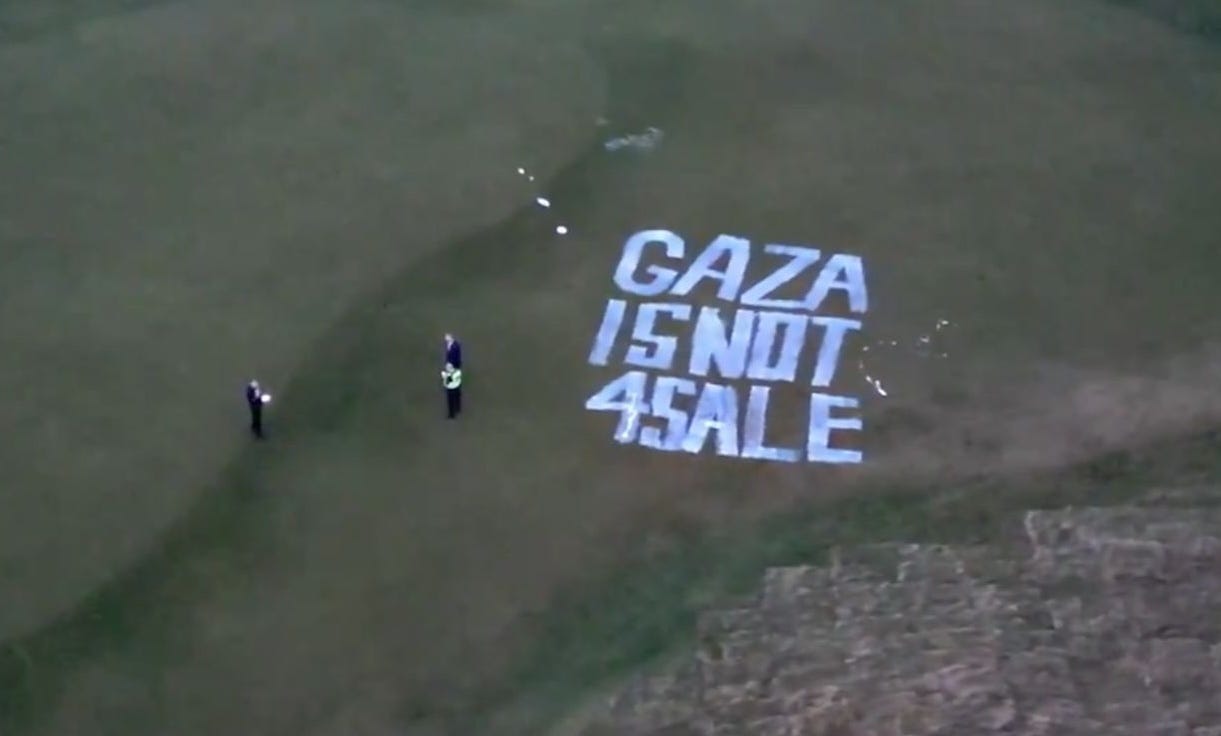
Palestine Action had incensed Israel by targeting its weapons factories on UK soil, highlighting another aspect of British collusion in the Gaza genocide, and had infuriated Trump personally by spraying one of his golf courses in Scotland with the words “Gaza is not 4 sale”.
In truth, the ways that the US meddles directly in British politics are so numerous it is virtually impossible to quantify them. Britain is little more than a colony of the US, receiving diktats on important foreign policy issues – especially regarding US and Israeli interests – that the UK is invariably too frightened to oppose.
Burnham is already rolling over to reverse the UK’s decision to honour a ruling from the International Court of Justice and other international tribunals that Britain has no claim to sovereignty over the Chagos Islands and must return them to Mauritius. The UK has faced a temper tantrum from Trump on the matter because the US operates an illegal military base on one of the islands.
Disobedience by the UK is the exception, not the rule. Which makes Burnham’s exclusive focus on Russian influence almost laughably beside the point. This furious finger-pointing at the Kremlin is designed with one purpose in mind only: to distract the British public from where the real external meddling in our politics is coming from.
Riyadh says six injured in Iran-backed rebel attack, two soldiers killed in helicopter crash; Egyptian parliament postpones vote on aiding Saudi effort as Houthis issue threats
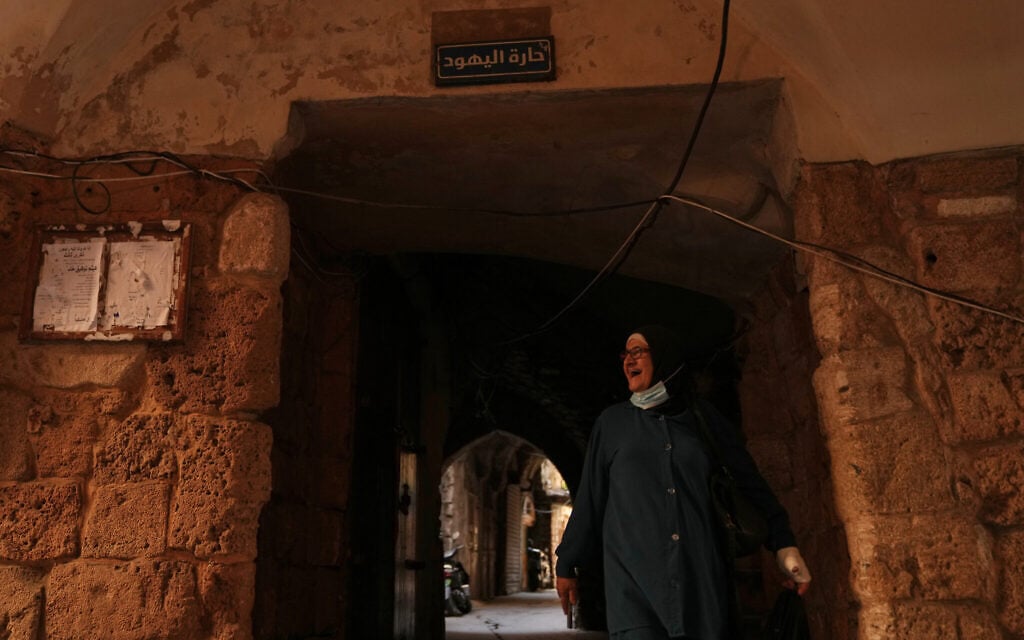
‘We’ve lost a world’: Former residents remember peaceful childhoods and civil-war trauma; only some 20 Jews are believed to remain from a once-vibrant community
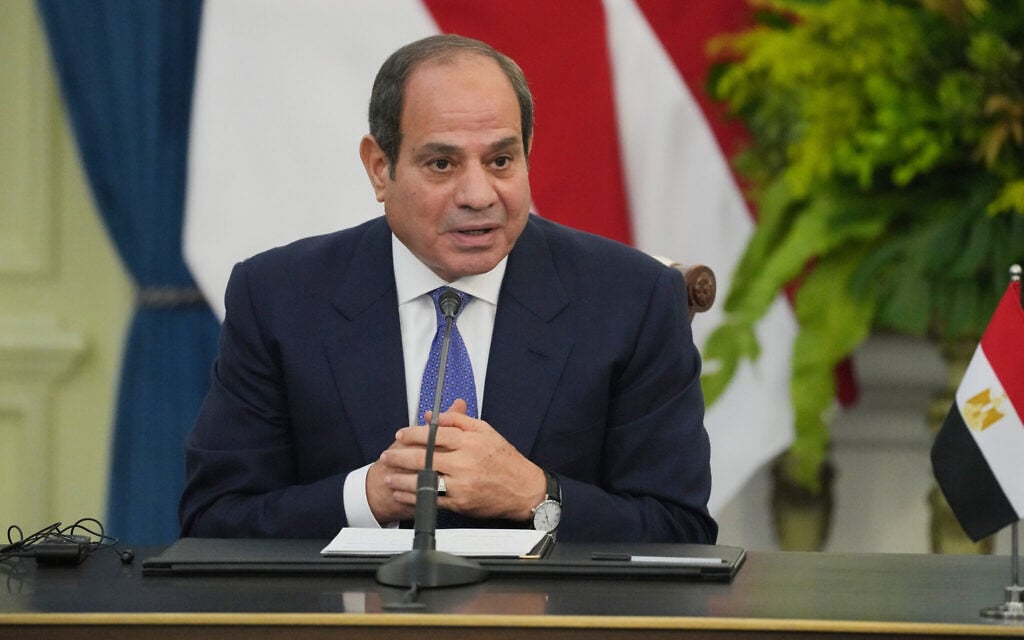
Egyptian leader says his armed forces are ready to assist Saudi Arabia 'if requested'; also announces that he won't seek another presidential term in 2030
Twice in four months, Egyptian warplanes have bombed Sudanese miners inside their own territory, and dozens of bodies have failed to draw from Abdel Fattah al-Burhan a stance worthy of his citizens’ blood. Cairo, for its part, justifies its military operations, while Port Sudan hides behind a fact-finding committee, a cable of condolences and talk of contact between the two leaderships, without daring to name the party accused of killing its citizens.
This is the scene before us: a state acting on the Sudanese border by force of arms, and an army commander who avoids naming the party accused of killing Sudanese, for fear of losing an ally whose approval seems to matter more to him than their lives. On the morning of 10 October 2026, the mining site at Jabal al-Uqaydat in the Shamal al-Wadi area inside Sudan turned into a killing field after it was struck by five consecutive airstrikes, according to the testimony of a survivor relayed by Agence France-Presse. Thousands of miners had been searching for gold in a land exhausted by war; some ended up under the rubble, while others fled to the mountains without water or supplies.
In a significant pinpointing of the site of the bombing, The New York Times, in its report published on 12 October 2026, stated that the targeted mine is located in Sudan’s Red Sea State, about 25 miles from the Egyptian border, or roughly 40 kilometres inside Sudanese territory. Al-Hurra, in its coverage of the June attack, had cited an estimate placing Jabal al-Uqaydat about 20 kilometres inside Sudan; the forty-kilometre distance is cited here as attributed to the American newspaper’s determination of the location of the October strike, which keeps the question of sovereignty and the protection of civilians at the heart of the matter.
Agence France-Presse relayed from survivors that thousands of miners were working at the site, and “Emergency Lawyers” counted 72 dead according to preliminary information, while witnesses told the BBC of more than 60 dead and about 150 wounded. Survivors told Sudan Tribune that the dead numbered at least 200, with more than 15,000 workers fleeing, while the Sudan Doctors Network recorded a preliminary toll of 13 dead and 28 wounded, warning that it could rise.
Cairo Justifies the Bombing While Burhan Avoids Naming the Perpetrator
The “Emergency Lawyers” organization accused the Egyptian air force of targeting civilian miners, considering the attack a violation of international law. When Reuters asked Egyptian security officials about the raid, they did not deny the operation but justified it as ending what they described as border chaos and preventing Egyptian and Sudanese groups from taking control of mining areas.
Two days later, the Egyptian military spokesman announced the continuation of the “third phase” of the campaign, noting that warning leaflets had been dropped on those he described as criminal elements. However, the statement placed the operations inside Egyptian territory and did not include an explicit acknowledgment of carrying out a raid inside Sudan or of the killing of the miners.
Thus Cairo has a military justification for bombing a Sudanese site, while Burhan’s authority is incapable of issuing an explicit condemnation of the party that human rights organizations accuse of killing its citizens. The irony is that the state that is supposed to demand the victims’ rights appeared more concerned about its relationship with Cairo than about naming the party responsible for their blood.
From June to October: The Victims Change, the Silence Remains
The October raid was preceded by a strike that targeted the area on 16 June 2026. Agence France-Presse reported 23 dead, while Sudanese platforms estimated the toll at around one hundred. According to the testimonies received, the operations extended to Jabal al-Uqaydat, the Red Mountain and the area around Souk al-Ansari, and included raids by warplanes and drones followed by a ground incursion. The organization “Darfur Victims Advocacy” relayed from witnesses that an Egyptian force of about sixty armed vehicles had surrounded the miners and detained civilians, some of whom were beaten.
In the days following the June attacks, Radio Dabanga reported the arrival of about two thousand deported miners via the Argeen crossing, according to a local activist, while the crossing’s director spoke of more than three thousand over the preceding days, and the Egyptian army announced the arrest of 223 people, including 136 foreigners. On 22 June, Burhan appeared in Al-Ratj to say, according to Al-Araby Al-Jadeed: “Our northern neighbor — people must respect it and not cross the borders so as not to cause problems for themselves and for the state.”
Sudanese had been waiting for their army’s commander to defend their blood, but they heard him urging them to respect the borders of the neighbor accused of bombing them. When the raid was repeated in October, the Sovereignty Council repeated the scene: condolences over the “painful incident,” a fact-finding committee, and an assurance that the two countries’ leaderships are in contact.
Burhan’s adviser, Amjad Farid, described the bombing as an unjustified and unacceptable crime, noting that border violations could be addressed without warplanes, but his position did not translate into an announced official protest or a clear path to accountability.
Sudan’s Gold: A Wealth Guarded by Force
Al-Uqaydat lies within the gold-rich Nubian Shield belt, and the Chatham House institute estimated that about 60% of gold production in the Northern, River Nile and Red Sea states is smuggled to Egypt, in quantities exceeding one hundred kilograms per day, and more than sixty tonnes since the outbreak of the war through the end of 2024.
By contrast, official gold exports to Egypt in 2024 did not exceed about 16 million dollars, roughly 1% of Sudan’s total gold exports, according to Central Bank of Sudan data cited in the Chatham House report.
Miners told Sudan Tribune that they had observed drilling machinery and trucks carrying rocks across the border into Egypt, and that an Egyptian patrol had previously warned them against approaching a site it said lies inside Egyptian territory. Al-Hurra relayed testimony about friction between workers and personnel of an Egyptian mining company operating near them.
Egyptian Law No. 193 of 2020 authorizes contracting with the Egyptian Company for Mining and the Management and Exploitation of Quarries and Salt Works, affiliated with the National Service Projects Organization, to exploit the quarries and salt works specified by the law for a period of thirty years, while the state-owned Shalateen Mineral Resources Company is active in the south of the Eastern Desert. The businessman Naguib Sawiris also praised the June operation and linked it to investors’ confidence in the Egyptian mining sector.
In the same month, Egypt’s Ministry of Petroleum denied statements attributed to its minister about agreements to establish 108 gold mines in northern Sudan, but the researcher Mohamed al-Hadi considered it likely that the attacks are linked to undisclosed understandings with the Sudanese government, a hypothesis that calls for an independent investigation.
Burhan: When the Ally Becomes More Precious Than the Citizen
The website Al-Hurra relayed from a miner that a group of pro-government joint forces withdrew from the mountain a day before the June raid, and that the Sudanese army did not arrive to evacuate the wounded and collect the bodies until the third day. The testimony raised workers’ suspicions about possible coordination between the two governments, without establishing that it took place.
But Burhan’s silence does not need those suspicions to be proven in order to become a matter of political accountability. Cairo supports the commander of the Sudanese army and considers the war on its borders a threat to its security. Agence France-Presse has verified satellite images showing the repeated presence of Turkish Bayraktar drones at an Egyptian base near Sudan, while reports spoke of facilitating the delivery of drones to the Sudanese army and training its crews inside Egypt, alongside broader military and intelligence cooperation.
An analysis published by the Horn Review in June held that the army’s silence over the raids is linked to Egyptian support for it.
Yet this relationship does not absolve Burhan of responsibility; it multiplies it. Whoever relies on another state’s support in his war cannot make the protection of his citizens a negotiable item, and his need for weapons and political backing must not become an immunity he grants to Cairo at the expense of Sudanese blood.
Sovereignty Tested With the Blood of the Poor
The raids reopen the wound of Halayeb and Shalateen, the disputed triangle under Egyptian control. Sudanese administrative maps confirm that the targeted mining sites lie inside Sudan, while Cairo treats them as part of the border area adjoining the triangle.
Human rights, political and trade union forces have called for an independent international investigation, and the “Sumud” alliance led by Abdalla Hamdok held the Egyptian side directly responsible.
Today, Egypt is required to answer for the bombing and the fall of civilians, not merely to classify them as criminal elements and offer security justifications, and Burhan is required to announce the results of the investigation, determine responsibility, demand compensation and accountability, and take the necessary diplomatic and legal measures.
As for settling for condolences, it is not a defense of sovereignty; it is a declaration that the alliance with Cairo is more precious to the authorities than the Sudanese people’s right to life and justice. At Jabal al-Uqaydat the bill is clear and admits no doubt: the gold crosses the border, the dead remain under the rubble, and Burhan guards his silence.
Despite admitting mass immigration is damaging the country, the ruling classes fail to secure the border while clamping down on dissent. It's accelerating Britain towards crisis, say David Betz and Michael Rainsborough.
Five years after seizing Kabul, the Taliban’s strongest argument for international acceptance rests on control. The Taliban governs every provincial capital and faces no conventional army capable of marching on Kabul. It repeatedly cites improved security as proof that Afghanistan’s post-2021 order is settled. But armed resistance is becoming more geographically dispersed, more organizationally diverse […]
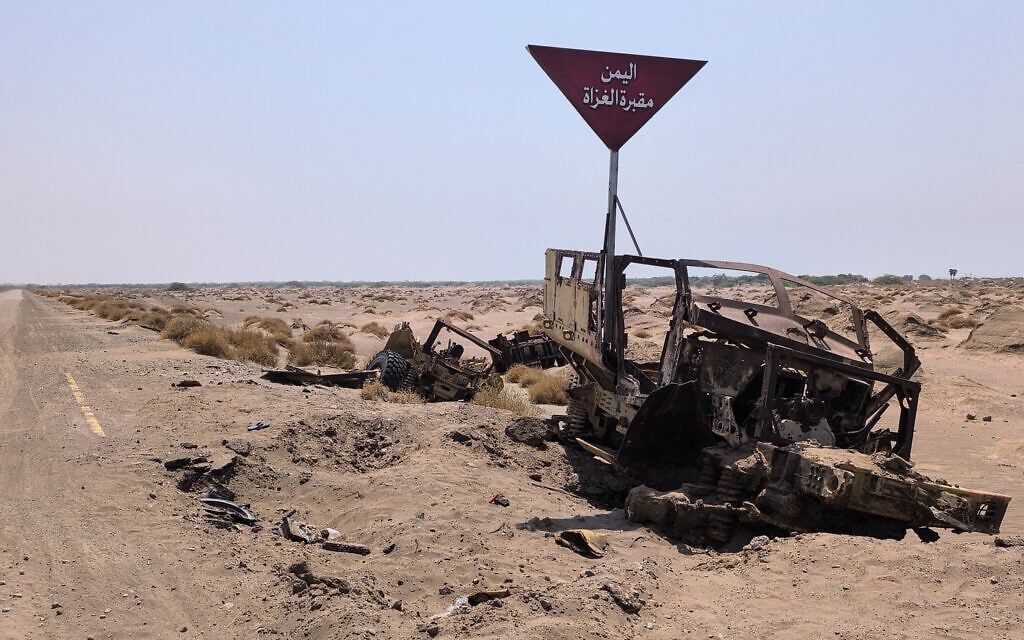
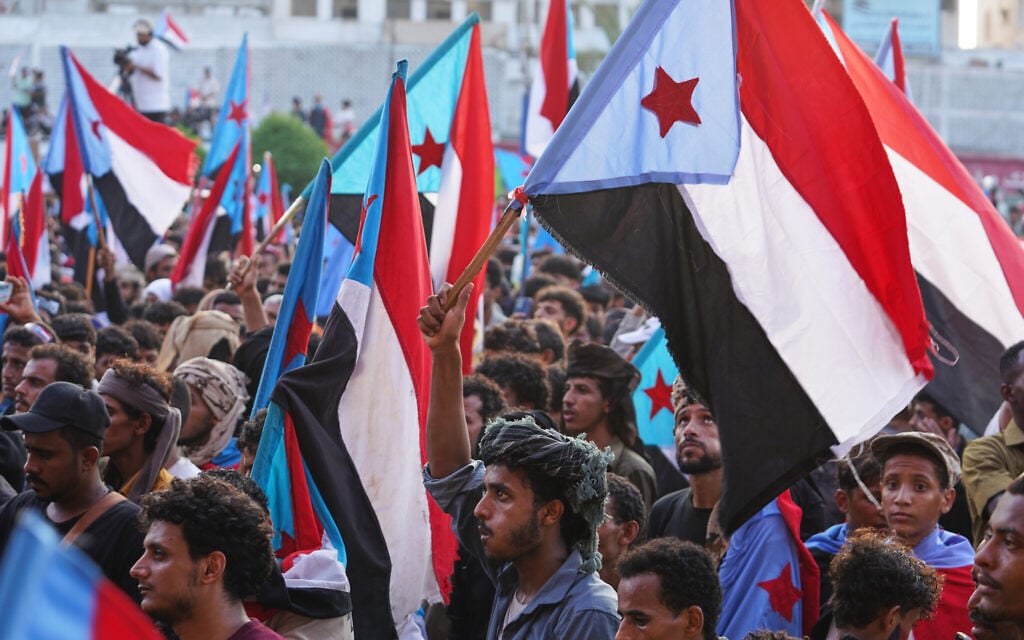
The Middle East has seen many explosions of violence in recent years. But while the US-Iran war has grabbed the headlines this year, the rapidly escalating conflict between the Houthis and Yemen’s internationally recognized government and Saudi Arabia risks becoming just as consequential for the region. The complexity of Yemen’s internal conflict cannot be underestimated. […]
When Saudi Arabia, Turkey and Pakistan agreed to a mutual defense pact in August, it was principally seen as a political commitment. The “Mecca alliance,” as it was dubbed, stipulated that an armed attack on one would be treated as an attack on all three, accompanied by deeper military cooperation. That pact is no longer […]
Earlier this month, the UK government announced plans to cut off trade with Israel’s illegal settlements in the West Bank—including weapons shipments. But according to new disclosures made to Parliament, reported Thursday by Declassified UK, the sanctions regime has not actually led to any weapons licenses being suspended or revoked, validating warnings by some critics that the new Labour government’s effort to cut […]
Announcing the severing of diplomatic ties with the United Arab Emirates (UAE) on Thursday, September 10, Algeria summoned the Emirati envoy and gave him 48 hours to leave the country.
“Algeria has exercised a great deal of restraint and a high sense of responsibility,” despite the increasingly “provocative or hostile actions emanating from” the Gulf power, the North African country’s foreign ministry said in a statement.
“Despite these numerous warnings, the United Arab Emirates continued to persist in these actions, which have reached limits where they can no longer be considered acceptable or tolerable within the framework of relations between two sovereign states, nor remain without a response.”
Later that day, its defense ministry announced that the UAE’s military and civilian aircraft are banned from using Algerian airspace from Friday. The only exemption is for commercial civilian planes, which can continue to fly over Algeria until the existing contract expires at the end of the year.
Algeria had already initiated the termination of the air services agreement with the UAE in February, when President Abdelmadjid Tebboune alleged attempted Emirati interference in its elections.
Multiple Algerian media outlets aligned with the state have reported that the UAE has been supporting the Movement for the Self-Determination of Kabylia (MAK), a separatist group Algeria designated as a terrorist organization in 2021.
Algeria and the UAE also find themselves on opposing sides on several fronts of international relations.
Algeria aids Western Sahara’s liberation struggle; UAE backs Moroccan occupation
The support for the national liberation struggle of Western Sahara, occupied by Morocco immediately after it won independence from Spanish colonialism, has been a central plank of Algeria’s foreign policy.
In 2021, Algeria severed diplomatic relations with Morocco, accusing it of supporting the MAK in retaliation for Algerian support to the Polisario Front (PF), which is fighting for Western Sahara’s national liberation. But there is no equivalence between the PF and the MAK.
The MAK, which has long had close links to Israel, largely operates from Europe and is based in France, Algeria’s former colonizer. The PF, on the other hand, is fighting for Western Sahara’s liberation, with its military operating in its liberated territory adjoining Algeria. The UN recognizes the PF as the sole representative of the people of Western Sahara, a country it lists among the last few pending decolonization.
Despite funding and arming the Moroccan occupation, the US had not officially recognized Morocco’s claim to sovereignty over Western Sahara until December 2020, when Morocco signed the Abraham Accords to normalize diplomatic relations with Israel.
The first Trump administration, in turn, proclaimed that the US “recognizes Moroccan sovereignty over the entire Western Sahara territory” and went on to open a consulate in Dakhla, a major city in the occupied region.
The UAE was a step ahead, setting a precedent before the American move by opening its consulate on the occupied land in November 2020, a month before Morocco normalized relations with Israel. The UAE had already normalized relations with Israel that September.
In contrast, Algeria refuses to normalize relations with Israel until the Palestinians have secured their statehood. Algerian media often refers to the UAE as an “Israeli vassal”.
“Wherever they set foot, blood flows”
Algeria’s diplomatic break was foreseeable since at least July, when President Tebboune said in a thinly veiled reference to the UAE in a televised interview, “Wherever they set foot, blood flows… We want them to stay away, so that blood does not flow in our country.” He gave the example of Mali, Libya and Sudan.
A month later, in August, the UN confirmed that the USD 50 million transferred to the Al Qaeda-affiliated JNIM in the form of ransom helped fuel its attack across Mali. A Reuters investigation identified the UAE as the source of this payment to JNIM. The group has also attacked its neighbors, Burkina Faso and Niger, both of which have followed in Mali’s footsteps by expelling French troops.
The UAE’s supply of arms and mercenaries to the Libyan warlord General Khalifa Haftar, who has been fighting Libya’s UN-recognized government, is also well-documented in multiple UN reports since 2017.
Tebboune’s reference to “blood” flowing from Emirati interference is best demonstrated in war-torn Sudan, where the UAE is funding and arming the Rapid Support Forces (RSF), whose depopulation campaign in El Fasher had all the “hallmarks of genocide”, according to the UN.
He added in the July interview that a “diplomatic break” with the UAE “would have happened long ago.” Algeria, he explained, had refrained only to avoid adding to the already existing divisions in the Arabic-speaking world.
When the break finally came on Thursday, the UAE’s foreign ministry said it hoped that it “will be temporary, in a manner that preserves the fraternal ties between the two brotherly peoples.”
In an apparent reference to the absence of explicitly stated reasons in Algeria’s statement, Anwar Gargash, the diplomatic advisor to the UAE’s president, Mohamed bin Zayed, said, “Diplomatic relations are managed through reason, communication, and clarity of interests, not through puzzles and signals that require decoding.”
He went on to preach that “successful diplomacy is built on clarity of positions, sound management of interests and differences.”
Gargash’s statement “is revealing above all for what it carefully conceals. Not a word about the actions of this arsonist, predatory state, which thrives on chaos wherever it sticks its nose in Yemen, Sudan, the DRC, Somaliland, and elsewhere,” retorted former Algerian diplomat, Amar Belani.
Describing the UAE as a “state that has made other nations’ instability its economic model,” Belani concluded his response, saying: “As for the lesson on ‘reason and clarity of interests’, Abu Dhabi would do better to reserve it for its partners in the Abraham Accords, with whom it shares complicity in the face of war crimes, crimes against humanity, and acts of genocide committed against the Palestinian people.”
This sentiment against the UAE is not limited to the government or the ruling National Liberation Front (FLN), which led Algeria’s liberation struggle against French colonialism and has ruled since, except for a few years in the 1990s.
Mass protests erupted in 2019 against corruption and increasing economic capture by the military elite, strangling an economy already suffering under neoliberal austerity. This movement, known as the Hirak, forced the then president, Abdelaziz Bouteflika, a veteran of the FLN, to resign.
But even in these protests against the government and the ruling FLN, “Down with the UAE” and “No to the UAE in the country of martyrs”, were among the popular placards and slogans.

 Login