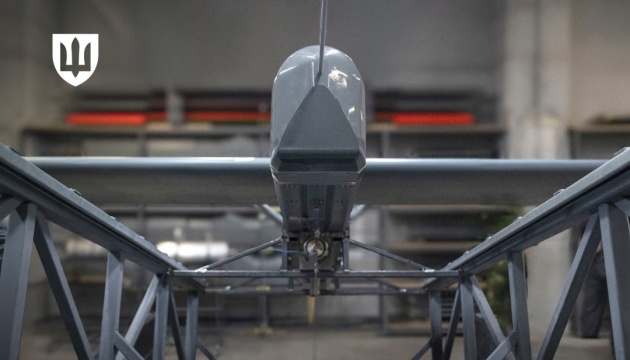
Ukraine's Cabinet has opened the construction of underground arms production space to private investors, Prime Minister Serhii Koretskyi announced on 22 October, saying the rule applies from that day. A second decision eases imports for partner-funded weapons production.
Koretskyi said the change would add more of the space arms makers need, especially as Russian strikes intensify. On 9 December 2025, the Defense Ministry reported that more than UAH 1.5 billion (about $36 million) in budget support had let war-damaged defense firms restore operations. At the time, the ministry planned to relocate or duplicate the most critical plants, and underground complexes were under construction. The new model puts no additional burden on the state budget, Deputy Defense Minister Hanna Hvozdiar said. The bill still lands somewhere, though. Defense firms will buy, lease, or take the space for use, and companies working on state contracts are among those eligible. If they pay developers out of state-contract revenue, part of the cost could come back to the budget.
Developers build, arms makers move in
The changes to Cabinet resolution No. 1494 give private investors a simplified route to construction and permits, the ministry said. Developers can build protected facilities with their own or raised funds. Deadlines, terms of use, and the handover are set in a contract between investor and defense firm. The mechanism covers new sites as well as moving or expanding existing production. If a firm gets only part of a facility, that part must be at least 25% of the facility's total area and fit for production.
Explore further
One year of Ukrainian arms exports, and industry has questions: how much army gained, where Berlin office is, who joins joint ventures
Developers must sign deals with, among others, residents of Defence City, Ukraine's special legal regime for arms makers, holders of state defense contracts, and firms the ministry designates as critical.
Tax break for partner-funded arms production
Components for weapons production that international partners pay for will enter Ukraine free of import duty and VAT, Koretskyi said. He added that customs inspection and clearance would be simplified and sharply shortened through a "single window."
U.S. Customs and Border Protection (CBP) seized a psychiatric nurse practitioner's phone filled with confidential patient information at Washington Dulles International Airport last week, according to a new lawsuit. Muhammad Numaan Imam alleges that CBP agents told him that they could take his electronics the "easy way or the hard way" and refused to let him talk to his lawyer because "we are the authorities at the border."
The lawsuit by the American-Arab Anti-Discrimination Committee (ADC) may be the first time CBP is taken to court over seizing people's medical records. ADC is also helping Palestinian-American lawyer Jay Shehadeh and Jewish-American journalist Max Blumenthal sue over their devices being seized.
"We're seeing a pattern where officers use their border-search authority not to advance any legitimate border-related purpose, but to punish individuals for refusing to provide access to their personal electronic devices and for having expressed views the government didn't approve of," ADC president and legal director Jenin Younes wrote in a statement emailed to journalists.
While Shehadeh and Blumenthal claim that CBP is retaliating for their political views, Imam argues that he faced threats and retaliation with the simple act of asserting privacy rights. Both Imam and Shehadeh were considered "trusted travelers" under the Global Entry program, which allows American citizens who undergo a background check to pass through an automated fast track at airports and borders.
Asked by Reason, a CBP spokesperson did not address any specifics of the case, giving only a generic statement about how "CBP's ability to lawfully inspect electronic devices crossing the border is integral to keeping America safe in an increasingly digital world."
The border exemption to the Fourth Amendment gives U.S. authorities the power to look for "contraband" crossing into the country without a warrant. There is a mess of contradictory court rulings on whether that power includes searching travelers' electronic data, but in practice, CBP can simply seize the physical devices that the data live on.
And the agency often lies outright to travelers whose data that it wants to search, as documents recently released in the case of Atlanta protester Samuel Tunick show. CBP agents gave Tunick a false reason for detaining him and falsely promised that he would be allowed to leave with his phone if he cooperated, even though they were under orders to seize his devices no matter what. Tunick is now on trial for allegedly tricking the CBP agents into deleting his data to avoid a search.
"It's happening to a lot of people, and it's being used in this coercive, inappropriate way," Younes tells Reason.
The problems for Imam, who lives in Virginia, actually began at another border. He was heading to Istanbul on Saturday for a family vacation with his Pakistani wife, Khadijah Mansoor, and their 1-year-old child. Turkish authorities demanded to see Mansoor's U.S. green card, which she had forgotten at home, and wouldn't let her enter on her Pakistani passport alone. The family had to board the next flight back to Washington. On their arrival, CBP naturally wanted to know why they had been turned away and why Mansoor didn't have her green card.
But things took a weirder turn after agents told Imam he had been "flagged" for undisclosed reasons, pulled him into a separate room, and began questioning him about his social media use and group chats, according to the lawsuit. (Imam tells Reason that they asked about group chats in general, not any specific group chat.) When agents asked for the password to Imam's phone, he told them that he uses the phone to communicate with and manage cases for patients at the rehab facility where he works. The Health Insurance Portability and Accountability Act (HIPAA) strictly prevents doctors and other medical staff from sharing patient data without consent, so Imam asked to speak to a lawyer.
"Your lawyer cannot do anything. We are the authorities at the border," Imam recalls one agent saying. A supervisor then told the couple that CBP could take all of their electronics the "easy way or the hard way," and that the devices could take months to get back, Imam and Mansoor claim.
CBP's own internal policy says that devices should "ordinarily" be held for less than five days. The same policy includes vague guidelines for dealing with medical information: "Possibly sensitive information, such as medical records and work-related information carried by journalists, shall be handled in accordance with any applicable federal law and CBP policy." Imam says that the CBP agents claimed to have software for filtering out HIPAA-protected data.
After four hours in detention, CBP took the family's phones and laptops and let them go. The next day, Imam got an email stating, "We regret to inform you that your membership in Global Entry has been revoked for the following reason(s): You do not meet the Trusted Traveler standard." In addition to both Imam and Mansoor losing valuable work data, the lawsuit argues, Imam is now unable to prescribe certain psychiatric medications to his patients, because of federal regulations that require phone verification.
The lawsuit demands the return of the devices and data under Rule 41(g) of federal criminal procedures, which requires the government to hand back property that is no longer necessary for a criminal investigation. ADC has also filed these motions in Shehadeh and Blumenthal's cases. (CBP gave back Blumenthal and Shehadeh's phones almost immediately afterward, but ADC is continuing to press for records of what they did to those phones in custody.) Younes filed a brief on Blumenthal's behalf in support of an upcoming Supreme Court case over whether CBP can continue these electronic searches.
"The devices are neither contraband nor subject to forfeiture, and, to Plaintiffs' knowledge, there is no pending criminal investigation, criminal prosecution, or warrant authorizing their continued seizure or search," Imam's lawsuit states. "The Fourth Amendment does not permit the border-search exception to become a means of coercing compliance through the threatened or actual confiscation of travelers' personal property."
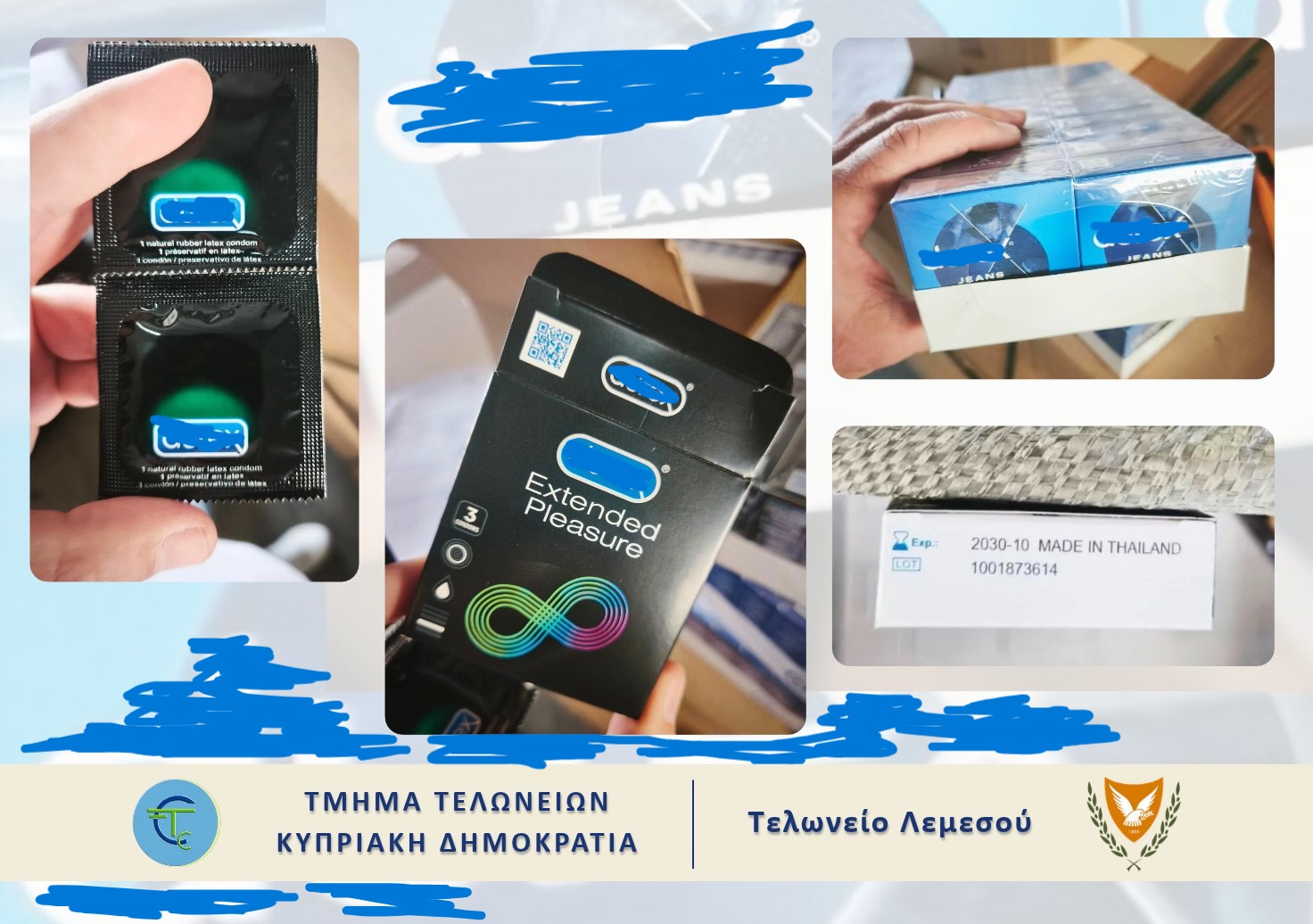
Customs officers seized 28,000 suspected counterfeit condoms during an inspection of a sea shipment arriving from Greece on Thursday.
The container was selected for scanning and a physical inspection following a risk assessment.
According to customs, the products appeared to infringe the intellectual property rights of a well-known brand, based on the accompanying documents and invoices.
The owner of the company involved reportedly admitted that the condoms were counterfeit.
Procedures for the confiscation and destruction of the products are expected to follow in the coming days.
Customs warned that counterfeit condoms could pose serious health risks, including unwanted pregnancies and the transmission of sexually transmitted infections.
The customs department will from November 1 introduce a new €2 processing fee for all goods arriving in Cyprus from outside the European single market, department spokesman George Constantinou said on Wednesday.
“This is not an additional duty. It is a fee for processing customs controls, which results from the broader customs reform taking place in the European Union and the adoption of the new union customs code,” he told the Cyprus News Agency.
He explained that the new fee will go hand-in-hand with the European Union’s €3 temporary customs duty on what it described as “low-value parcels” with a value of up to €150 entering Europe from outside the single market, but that the new €2 fee will apply to all parcels entering from outside the single market, regardless of value.
This, he said, is because the EU’s new customs regime requires “additional working hours, possibly additional personnel, and specialised equipment, both for the identification of dangerous products and for the analysis of the data entered into the department’s electronic import systems”.
He also said that following the introduction of the €3 duty on July 1, the number of parcels arriving in Cyprus from outside the single market has fallen by between 30 and 35 per cent, but that the number of items sent in any given parcel has increased.
Previously, he said, parcels generally contained one or two items, but now, they contain four or five.
“So, in terms of the number of items, we are approximately at the same level as we had before the imposition of the measure,” he said.
New duty raises over €1m per month
Regarding the amount raised by the new duty, he said that between €1 million and €1.5 million per month is collected, but that of that figure, around 75 per cent is “returned to the European Union”.
When the duty had been introduced in July, the European Commission explained that “every day, millions of low-value parcels enter the EU” and that “many contain products which do not meet EU safety standards or are undervalued or falsely declared to avoid customs duties”.
“At the same time, the current customs duty exemption gives non-EU sellers an unfair advantage over businesses that manufacture or sell products in the EU,” it said.
As such, it added, “the new measure will help create fairer competition for EU businesses, better protect consumers from unsafe products, tackle customs fraud, and address environmental concerns over mass shipping”.
Prime Minister Andy Burnham announced a campaign against listening to music or videos without headphones on public transportation. We asked London commuters to weigh in.
Traveling on the London subway in April. Prime Minister Andy Burnham announced a national campaign against “one of the most annoying things on public transport” — people blasting music or videos from their phone.
The European Parliament has approved a major overhaul of the EU’s customs system, tightening requirements on e-commerce platforms, introducing a new handling fee for goods ordered from outside the bloc and creating a central EU customs authority.
“This is the biggest reform of European customs since 1968, supporting trade and the enforcement of EU rules,” said MEP Dirk Gotink, (EPP, Netherlands) who steered the legislation through Parliament. Gotink said European customs authorities had been overwhelmed by a “tsunami of Chinese parcels” and that the reform would give customs officers stronger tools to enforce EU standards.
Under the new rules, e-commerce platforms and sellers shipping goods directly from non-EU countries to European consumers will be treated as importers. That will make them responsible for providing customs data, handling applicable charges and ensuring products comply with EU law.
The reform also introduces an EU-wide handling fee on goods ordered directly from non-EU countries, with member states required to begin collecting it no later than 1 November, 2026. The European Commission will determine the amount and review it every two years.
Companies that repeatedly breach EU customs rules could face fines ranging from at least 1% to as much as 6% of the value of goods they imported into the EU during the previous 12 months.
The overhaul will also establish an EU Customs Data Hub, designed to replace at least 111 existing customs IT systems. A new EU Customs Authority, based in Lille, France, will manage the hub and coordinate customs cooperation and risk management across the EU.
The Council has already given the reform its final formal approval, making Parliament’s vote the final step in the legislative procedure.
Discover the new available training paths for taxation and for customs officers on the EU Learning Potal.
Two curricula modules for taxation and for customs officers from candidate and potential candidate countries have been released on the DG TAXUD Customs, Tax & CBAM EU Learning Portal. These modules are gateways that guide and provide direct access to targeted training resources designed for taxation officers or customs officers in candidate and potential candidate countries.
The modules feature links to selected courses of the training catalogue of the portal, displayed in a pre-determined order, to provide an extensive knowledge on the EU customs and taxation acquis and its implementation. Taxation and customs officers can also select a specific course according to their competence and/or need.

 Login