❌

Reading view

Cyprus ‘ready’ to delimit EEZ with Greece

Cyprus is ready to delimit its maritime boundaries with Greece, Foreign Minister Constantinos Kombos said on Friday, at the end of a week in which the Libyan parliament ratified a maritime boundary agreement signed with Turkey, which both the Republic of Cyprus and Greece consider to infringe on Greek territorial waters.

“We have already been undertaking this process for a long time, but it is something which will be decided at the highest level. Nicosia is ready,” he told the House finance committee as he justified his ministry’s budget for next year.

Following the committee session, he said that “for our part, we have expressed our positive approach to such a possibility”.

“The technical processes for us have been ready for quite some time, but you understand that these are issues where a series of political parameters must be taken into account,” he said.

He added that “these issues are very delicate”, but stressed that “we will continue this discussion” with Athens.

Asked where issues may arise, he said that “there are thoughts, and there is a will”, before adding that “the right time must be found”.

“This is not something which concerns only Cyprus and Greece in terms of consequences and what may arise, so we must be very careful about all these issues,” he said.

Cyprus has such agreements with Egypt, Israel, Lebanon

The Republic of Cyprus has signed maritime delimitation agreements with Egypt, Israel, and Lebanon, with the Lebanese government having approved its maritime border with Cyprus last year. Greece, meanwhile, signed an agreement with Egypt in 2020.

However, no such agreement has yet been signed with Greece. It is likely that such an agreement would conflict with claims made by Turkey to swathes of the eastern Mediterranean made by Turkey under its ‘Blue Homeland’ doctrine, with this doctrine having fuelled the country’s agreement with Libya.

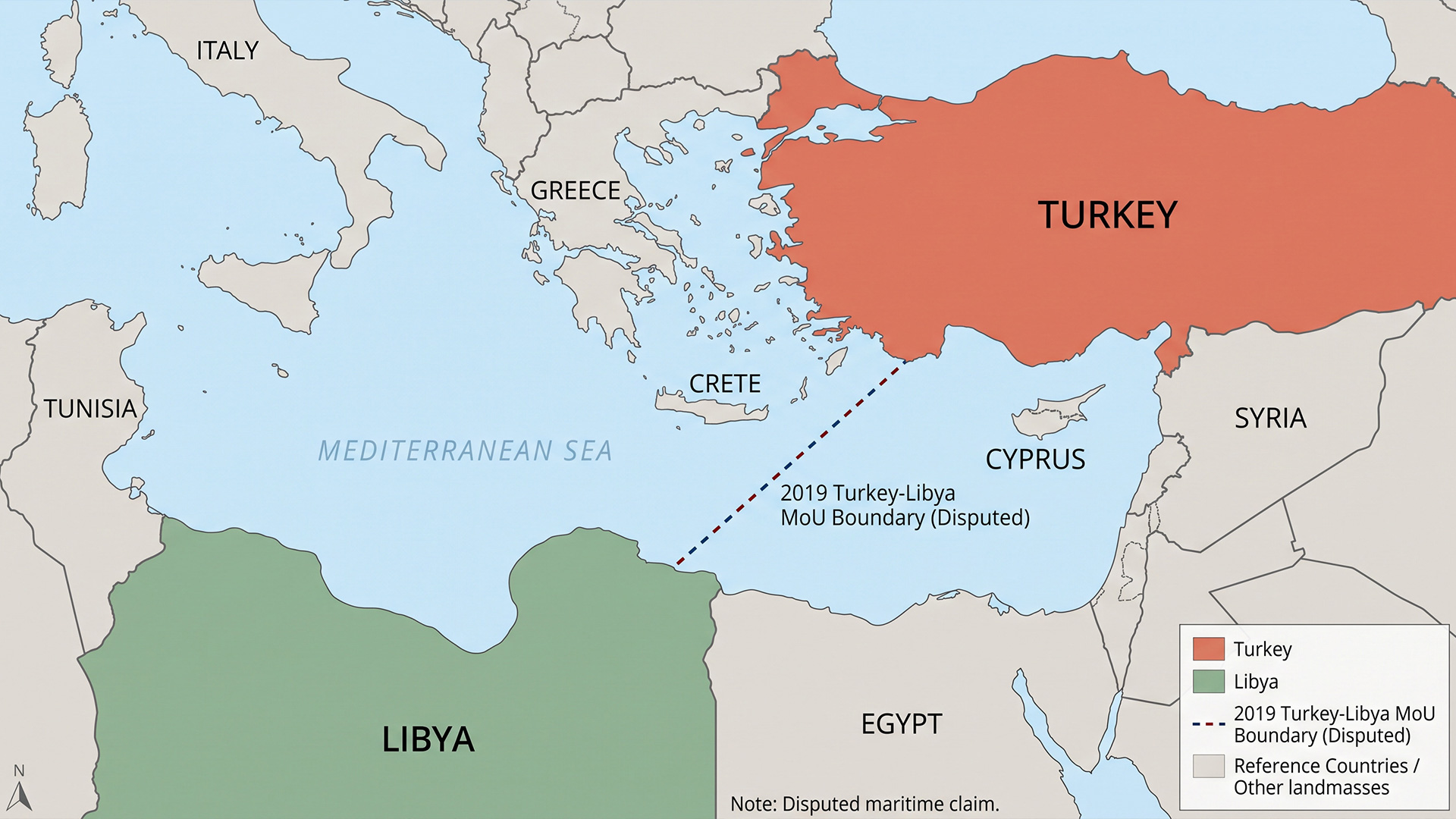
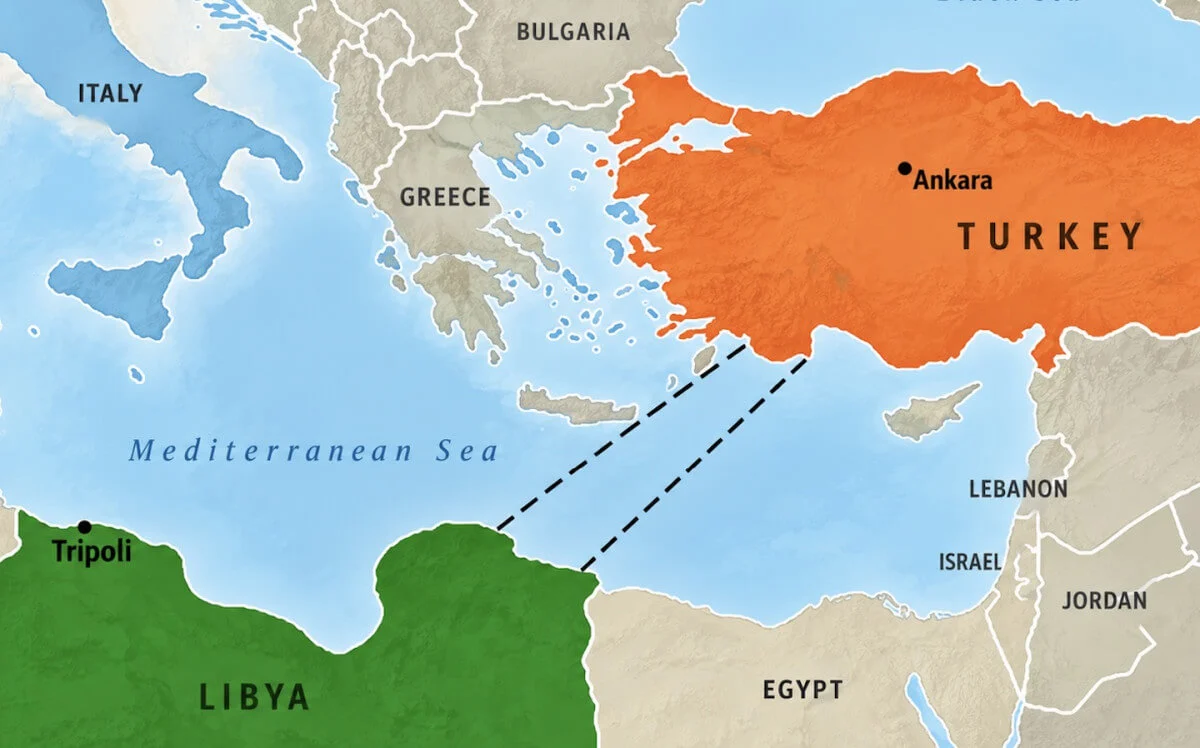
That agreement drew a line southeast of the Greek island of Crete, which Greece claims as its own, with the dispute sourced in the question of whether islands are entitled to a full exclusive economic zone (EEZ).

Greece and the Republic of Cyprus, citing the United Nations convention on the law of the sea (Unclos), state that they are, but Turkey and Libya, believing that the convention gives too much weight to islands, state that they are not.

  •  

Greece, Egypt discuss to extend their Exclusive Economic Zone in Med East

Greece and Egypt ​are discussing extending their Exclusive Economic ‌Zone eastwards towards Cyprus after eastern Libya’s parliament ratified a disputed maritime agreement with ​Turkey earlier this week, Greece’s ​foreign minister said. Greece, Egypt and Cyprus ⁠have long opposed the Turkey-Libya maritime ​accord, arguing that it infringes on ​their own maritime claims in the eastern Mediterranean. […]

The post Greece, Egypt discuss to extend their Exclusive Economic Zone in Med East appeared first on Keep Talking Greece.

  •  

All EU member states condemn Turkey-Libya maritime deal as ‘null and void’

All 27 EU member states have backed a joint statement rejecting the Turkey-Libya maritime memorandum, which the EU said on Wednesday, “violates the sovereign rights of third States” and “does not comply with the Law of the Sea”.

The statement, issued by EU foreign policy chief Kaja Kallas, said the 2019 memorandum is “null and void and cannot produce legal consequences for third States”.

The EU said it “deeply regrets” its ratification by the Libyan parliament on 20 October.

The bloc said its position was “firm and clear” and had been set out in European Council conclusions in December 2019 and repeated in June 2025.

It said it has a strategic interest in a stable and secure Eastern Mediterranean and called on all countries to respect the sovereign rights of every member state, in line with EU law and international law, including the United Nations Convention on the Law of the Sea (UNCLOS).

Kallas added that good neighbourly relations and progress on the Cyprus settlement process were of high importance.

European Council president Antonio Costa and European Commission president Ursula von der Leyen offered “solidarity” to Greece and Cyprus.

They said the agreement “does not comply with the law of the sea” and reiterated the EU’s “well-known position against any outside interference in Libya”.

The Libyan parliament voted unanimously on Tuesday to adopt the agreement.

It states that the exclusive economic zones of Libya and Turkey share a border in the Mediterranean, located south-east of the Greek island of Crete.

Turkey signed the deal in 2019 with the Libyan government of national accord, but it had not been ratified by Libya’s legislature until now.

The government of national unity replaced that administration in 2021 and is the only internationally recognised government of Libya.

Turkey’s MIT intelligence chief Ibrahim Kalin was in Libya on Tuesday to meet Prime Minister Abdulhamid Dbeibah.

The Cypriot foreign ministry called the memorandum “illegal, null and void”, while Athens said, “geography and the international law of the sea do not change with unilateral, legally unfounded parliamentary decisions”.

Both countries are signatories to the UN convention on the law of the sea, though Turkey is not, and Libya signed it in 1984 but never ratified it.

  •  

Egypt condemns Turkey-Libya maritime deal

Egypt said on Wednesday that it categorically rejects the ratification by the Libyan parliament of a 2019 maritime memorandum with Turkey, warning Ankara that it will not allow its sovereign rights in the Eastern Mediterranean to be questioned.

In a Foreign Ministry statement, Cairo said the memorandum is “absolutely null and void” and produces no legal effect for Egypt.

It said the deal violates the principles of the law of the sea and the 1982 United Nations Convention on the Law of the Sea (UNCLOS), which govern the delimitation of exclusive economic zones and continental shelves.

The ministry described the memorandum as a clear violation of Egypt’s sovereign rights in its exclusive economic zone (EEZ) and continental shelf.

It said Egypt had opposed the agreement before and rejects any act by any party based on it.

As the memorandum contradicts Egypt’s declared maritime borders, Cairo said it “reserves its right to protect its rights” under international law and to confront any attempt to violate them.

The Libyan parliament voted unanimously on Tuesday to ratify the agreement, about seven years after it was signed by the internationally recognised Libyan government and Turkey.

Israel also condemned the vote, with its foreign ministry saying on X that the decision “violates the sovereign rights of our close allies in the region”, and that “unfortunately, once again we see Turkey acting with the aim of destabilising the Eastern Mediterranean region,” it said.

European Union foreign policy chief Kaja Kallas raised the issue with Turkish Foreign Minister Hakan Fidan in Brussels on Wednesday.

She said she told him the vote “infringes upon the sovereign rights of third states”.

European Council president Antonio Costa and European Commission president Ursula von der Leyen earlier said they “deeply regret” the ratification.

They likewise said the deal “does not comply with the law of the sea” and “is null and void”.

Greece and Cyprus object to the agreement on the grounds that Turkey and Libya do not share a maritime border, since islands are each entitled to a full exclusive economic zone.

  •  
❌