❌

Reading view

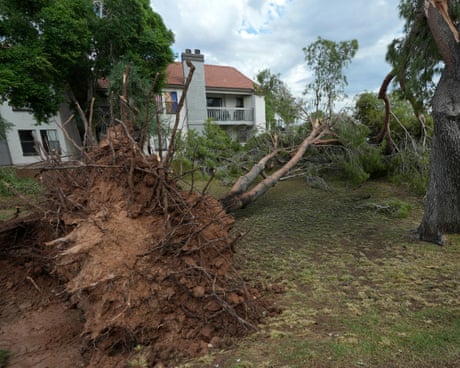
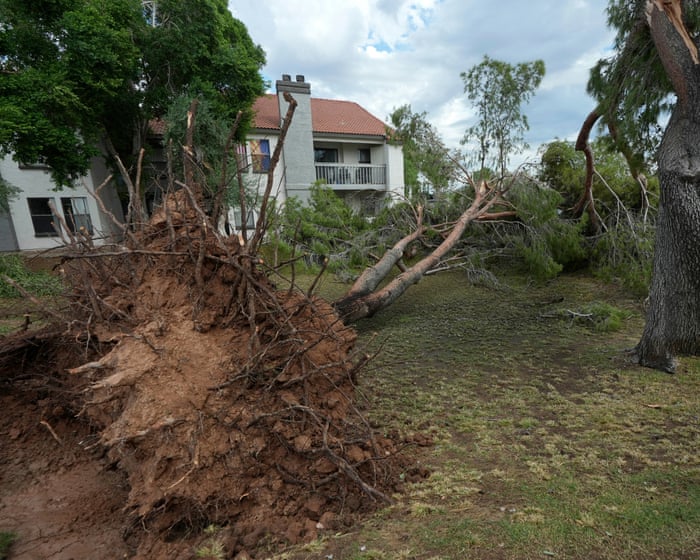
Arizona storms topple trees and bring golf ball-sized hail in possible tornado

Violent storms overnight knocked over utility poles and carried thunder and heavy winds through central Arizona

Trees fell on to homes and utility poles were knocked down by a possible tornado in a central Arizona community during a series of violent storms that moved through the state overnight into Thursday.

Storms capable of causing hail and wind damage were traveling through central Arizona early on Thursday, with some flood watches and the possibility of tornadoes, the National Weather Service said.

Continue reading...

© Photograph: Ross D Franklin/AP

© Photograph: Ross D Franklin/AP

© Photograph: Ross D Franklin/AP

  •  

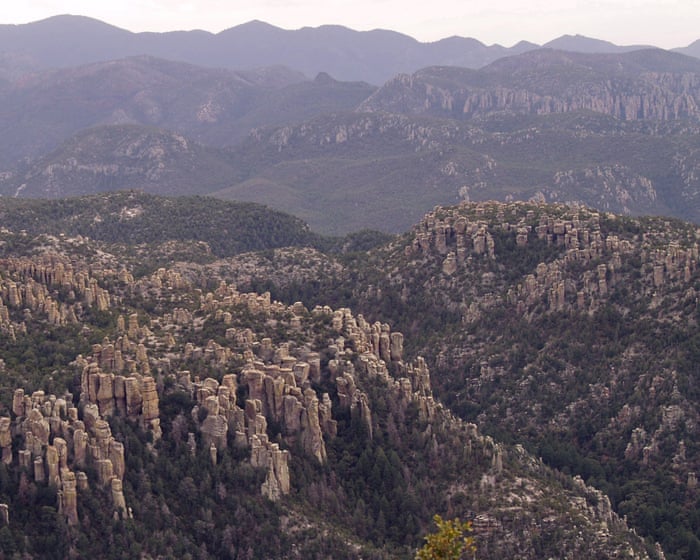
Chiricahua monument in Arizona is now the 64th US national park

New designation of the Land of Standing-Up Rocks, known for its historic rock spires, passed with bipartisan support

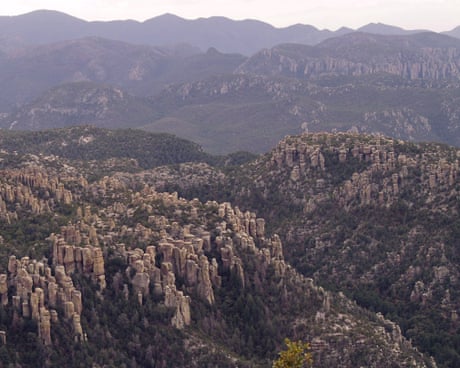
An area of towering rock spires in south-eastern Arizona known among Native Americans as the Land of Standing-Up Rocks has become the nation’s newest national park.

Legislation to create Chiricahua national park was sent to the White House and Donald Trump signed it on Tuesday. It passed Congress with bipartisan backing and is now the 64th US national park.

Continue reading...

© Photograph: Ron Kerbo/National Parks Service/AP

© Photograph: Ron Kerbo/National Parks Service/AP

© Photograph: Ron Kerbo/National Parks Service/AP

  •  

Almost every shallow-water coral reef on the planet faces ecosystem collapse by 2075, UN advisors say

Assessment finds global heating is endangering 96% of coral reefs across 80 countries – a figure scientists say should serve as a ‘wake-up call’

Almost every shallow-water coral reef on the planet, including Australia’s Great Barrier Reef, faces a high risk of ecosystem collapse before 2075 because of global heating, according to an assessment by United Nations nature advisers.

About 24% of the planet’s reefs across more than 80 countries are already critically endangered, the assessment said, but when the expected impacts of global heating were added this rose to 96%.

Sign up to get climate and environment editor Adam Morton’s Clear Air column as a free newsletter

Continue reading...

© Photograph: Lindsey Kramer/Hawaii Wildlife Fund/IUCN

© Photograph: Lindsey Kramer/Hawaii Wildlife Fund/IUCN

© Photograph: Lindsey Kramer/Hawaii Wildlife Fund/IUCN

  •  

‘Pure arrogance’: anger in Finland as Google illegally fells 250,000 trees for datacentre

Company ordered to stop work at two sites in country, which has found itself at forefront of tech firms’ latest push

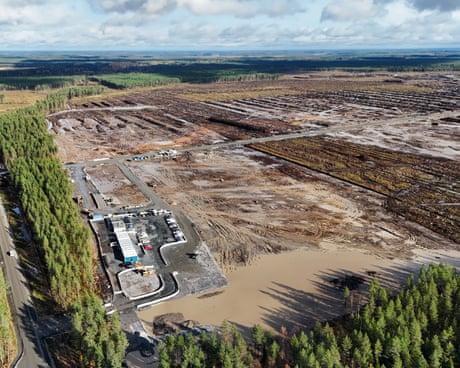
Behind a wire fence lies a vast gaping wound of earth. Before Google’s arrival a few months ago, an estimated quarter of a million trees occupied the 330 hectares (815 acres) of forest near the town of Muhos in rural northern Finland. Now they are all gone.

After the tech company illegally stripped the entire area to build a datacentre – taking even the top soil with it – all that remains is a vast expanse of mud indented with the trail marks of machinery, puddles and mounds of earth, roots and branches. Residents say that brown water flowing off the site is going into a stream that feeds the Oulujoki River.

Continue reading...

© Photograph: Alessandro Rampazzo/AFP/Getty Images

© Photograph: Alessandro Rampazzo/AFP/Getty Images

© Photograph: Alessandro Rampazzo/AFP/Getty Images

  •  

Big pharma accused of ‘free-riding on nature’ as global fund attracts just $7,000

The Cali Fund, set up to raise $1bn a year for biodiversity from drug companies, remains near empty

Big pharmaceutical companies have been accused of “free-riding on nature”, after a landmark biodiversity fund that invites businesses to put some of their profits back into conservation was left virtually empty.

The Cali Fund set out to raise $1bn (£750m) annually, by asking companies that profit from nature’s genetics to contribute towards conservation in low-income countries. But more than 18 months after the fund was launched, it remains far below this target.

Continue reading...

© Photograph: Rebecca Cole/The Guardian

© Photograph: Rebecca Cole/The Guardian

© Photograph: Rebecca Cole/The Guardian

  •  

EU Carbon Market Deal Raises Reserve Limit as Industrial Pressure Mounts

European Union negotiators have reached a provisional agreement to revise the rules governing the bloc’s carbon market, increasing the number of emissions allowances that can remain in reserve before being permanently cancelled.

The agreement, reached by the Council and European Parliament on 20th October and announced the following day, raises the invalidation threshold of the EU Emissions Trading System’s market stability reserve from 400 million to 700 million allowances.

The compromise reached by EU negotiators follows months of pressure from energy-intensive industries concerned about carbon prices, electricity costs and competition from manufacturers operating under less restrictive environmental regimes.

The measure requires formal approval before entering into force and forms part of a wider review of the EU’s principal carbon-pricing mechanism.

A larger reserve for future market disruptions

Established in 2019, the market stability reserve was designed to address the accumulation of surplus emissions allowances that had weakened the effectiveness of Europe’s carbon market.

Under the Emissions Trading System, companies in covered sectors must surrender allowances corresponding to their greenhouse gas emissions. The total quantity available is progressively reduced, creating a financial incentive to cut emissions.

The reserve adjusts the supply of allowances entering the market, withdrawing them when there is a substantial surplus and releasing them under specified conditions when supply becomes scarce.

Existing rules also provide for the permanent cancellation of allowances held above a threshold of 400 million.

Under the new agreement, that threshold would increase to 700 million, allowing a larger stock to remain available for potential future release.

The change does not automatically introduce 300 million additional allowances into circulation. Releases would continue to depend on the reserve’s operating rules and market conditions.

According to the Council, more than three billion allowances have been invalidated since the mechanism began operating in 2023.

The Commission initially proposed ending automatic invalidation indefinitely, while the Council’s September negotiating position envisaged a temporary suspension followed by a higher threshold.

The compromise retains invalidation but increases the amount protected from cancellation.

Industry competitiveness enters climate negotiations

The agreement follows growing concern about the cumulative cost of European climate regulation, particularly for steelmaking, chemicals, cement and other energy-intensive sectors. Manufacturers have warned that carbon costs, combined with relatively expensive electricity and industrial gas, complicate investment decisions and weaken their ability to compete internationally.

Brussels must also consider the consequences of production shifting to jurisdictions with lower emissions-related costs, a phenomenon known as carbon leakage. Earlier this year, EU Today examined the Commission’s consideration of changes to industrial protections under the ETS, including the relationship between free allowances and the Carbon Border Adjustment Mechanism.

The latest reserve agreement does not directly change the allocation of free allowances, the emissions cap or the obligations imposed on individual industrial installations. Its principal effect would be to preserve a larger buffer that could become available if future market conditions trigger the release mechanism.

For manufacturers planning investments extending into the 2030s, the availability of allowances and the future trajectory of carbon prices influence production costs and the commercial case for decarbonisation technologies.

Carbon market figures reveal changing conditions

The European Commission reported in May that the total number of allowances in circulation during 2025 stood at approximately 1.023 billion.

Its annual market stability reserve calculation provided for approximately 190.5 million allowances to be withdrawn from auctions between September 2026 and August 2027.

These withdrawals reflect the existing mechanism for reducing market surpluses. The proposed higher invalidation threshold concerns how many allowances can subsequently remain in reserve rather than being cancelled.

The overall emissions cap will continue to decline under the legislation already governing the ETS.

Consequently, preserving a larger reserve does not remove the long-term constraint on emissions or guarantee lower carbon prices for European industry.

The agreement also concerns the established ETS covering power generation, industry and certain other sectors, rather than the separate ETS2 regime for emissions associated with road transport and buildings.

The latter has generated its own political controversy, as EU Today reported following the October European Council summit.

Broader ETS reform remains unresolved

The Council and Parliament have agreed that the question of gradually reducing the invalidation threshold should be considered during the broader ETS review.

That exercise will address the carbon market’s operation over a longer period, when the declining supply of allowances could create tighter conditions.

The present agreement therefore provides an adjustment to the reserve mechanism without reopening the entire emissions trading framework. Following legal and technical finalisation, the provisional deal must be endorsed by both institutions and formally adopted.

The new 700 million threshold would apply after the legislation takes effect, while the larger review of the ETS continues through the EU legislative process.

  •  

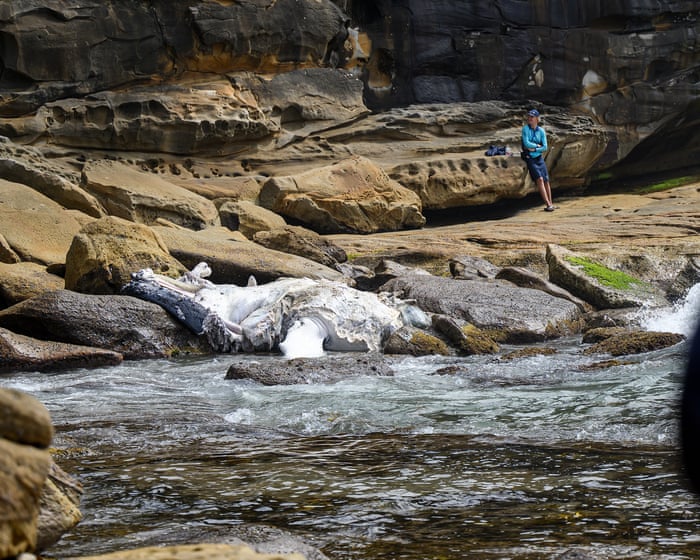
‘Almost looks fake’: two Sydney beaches closed after whale carcass washes up

Swimming banned at Maroubra and Coogee while council prioritises ‘culturally respectful’ approach to remains

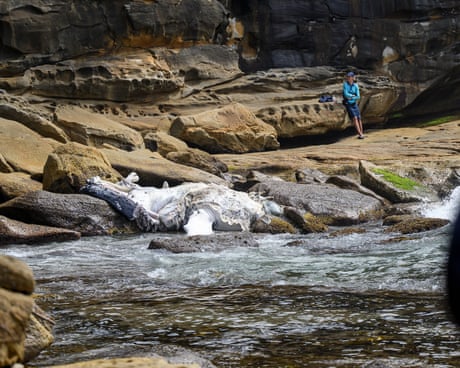
A whale carcass has forced the closure of two busy swimming and surfing spots after washing up between Coogee and Maroubra beaches in Sydney – but there are no plans to remove it.

The whale’s heavily decomposed body was found on Thursday morning at Lurline Bay, a rocky cove surrounded by cliffs in Sydney’s eastern suburbs.

Continue reading...

© Photograph: Bianca de Marchi/AAP

© Photograph: Bianca de Marchi/AAP

© Photograph: Bianca de Marchi/AAP

  •  

Officials confirm flesh-eating New World screwworm parasite found in US wildlife

USDA says screwworm found in elk in Texas, and warns hunters and ranchers to be vigilant to help stop spread

The US Department of Agriculture (USDA) said on Wednesday it had ⁠confirmed the ⁠first detection ​of flesh-eating parasite the New World screwworm in US wildlife in an ⁠elk in Pecos county, Texas.

The elk was located on a game ⁠ranch and was reported after being harvested by ​a hunter, the ‌USDA said ‌in a statement.

Continue reading...

© Photograph: Kaylee Greenlee/Reuters

© Photograph: Kaylee Greenlee/Reuters

© Photograph: Kaylee Greenlee/Reuters

  •  

World’s Worst Polluter, China, Vows Strong Presence at U.N. Climate Alarmism Summit

China’s Ministry of Ecology and Environment said on Wednesday that it will send a delegation to the COP31 climate conference in Antalya, Turkey, in November to “actively promote the international climate negotiations.”

The post World’s Worst Polluter, China, Vows Strong Presence at U.N. Climate Alarmism Summit appeared first on Breitbart.

  •  

Trump Asks Supreme Court to Allow Border Wall Construction in Big Bend

A lower court judge had halted the administration’s plan to erect hundreds of miles of barriers in the Big Bend region of Texas.

© Ronaldo Schemidt/Agence France-Presse — Getty Images

People protest the plans by President Donald Trump’s administration to build a section of the border wall at the Big Bend National Park, in Study Butte, Texas, in August.
  •  

European Parliament Approves €489 Million in Disaster Relief for Italy, Spain, Portugal and Malta

MEPs have approved emergency EU funding to help four southern European countries recover from destructive storms and flooding earlier this year, with Portugal receiving the largest allocation.

The European Parliament approved €489.15 million in financial assistance for Portugal, Spain, Italy and Malta on Wednesday, 21 October, following severe storms and flooding that damaged infrastructure and disrupted communities across southern Europe during the opening months of 2026.

The allocation from the European Union Solidarity Fund was approved by 651 votes to 17, with three abstentions. Portugal will receive the largest share, approximately €261.5 million, followed by Spain with €149.1 million, Italy with €74.9 million and Malta with €3.7 million.

The funding is intended to support recovery operations and help national authorities meet the costs of restoring essential public infrastructure and services damaged by the disasters.

Portugal receives largest allocation

Portugal’s €261.5 million allocation follows flooding and storms that affected the country during January and February.

The Portuguese authorities applied for assistance from the EU Solidarity Fund after assessing the extent of the damage and the associated costs of emergency operations and infrastructure recovery.

The funds will contribute to eligible public expenditure arising from the disasters, potentially including the restoration of transport links, damaged public facilities and other essential infrastructure.

Portugal has already received approximately €65.37 million in advance funding, according to the figures accompanying the parliamentary decision.

Spain will receive €149.1 million following destructive weather during the same period, including severe flooding in February.

The Spanish government had also requested European assistance to cover part of the expenditure associated with recovery operations.

Approximately €37.26 million of Spain’s allocation has already been paid in advance.

The two countries together account for the substantial majority of the assistance approved on Wednesday, reflecting the scale of their eligible recovery costs.

Storm Harry damages Italy and Malta

Italy and Malta will receive assistance following Storm Harry, which struck parts of the central Mediterranean in January 2026.

Italy’s allocation amounts to €74.9 million, while Malta will receive €3.7 million.

The storm caused significant disruption in affected Mediterranean areas, with heavy rainfall, strong winds and damaging sea conditions placing pressure on local infrastructure.

Italian authorities sought European support for recovery operations in the affected territories, while Malta submitted its own request following the damage sustained during the storm.

The Maltese allocation includes approximately €931,000 already made available through an advance payment.

The final assistance amounts were proposed by the European Commission after examining the applications submitted by the four governments.

The Commission’s September proposal to mobilise the EU Solidarity Fund set out the amount of assistance required for each country.

The total proposed mobilisation was €489,148,220.

How the EU Solidarity Fund works

The European Union established the Solidarity Fund in 2002 to assist member states and certain countries participating in the EU accession process following major natural disasters.

The mechanism provides financial support for public emergency and recovery expenditure rather than operating as a general insurance scheme for individuals or businesses.

Eligible expenditure can include emergency accommodation, restoring essential infrastructure, securing protective infrastructure, cleaning disaster-affected areas and protecting cultural heritage.

National authorities submit applications to the Commission, which evaluates them against the relevant eligibility requirements and financial thresholds.

Assistance depends on the assessed disaster damage and applicable regulatory criteria, rather than simply reimbursing every euro of economic loss.

The fund is financed through EU budgetary arrangements and is mobilised following the required institutional approvals.

Payments are made to the countries concerned, which remain responsible for ensuring that assistance is used in accordance with EU financial rules.

The Solidarity Fund can therefore help governments manage exceptional recovery costs, but it does not replace national budgets, private insurance or other financial arrangements.

Rising pressure on European disaster funding

The latest allocation comes against a background of increasingly frequent demands on European disaster-response mechanisms.

Southern European countries have experienced damaging floods, storms, heatwaves and wildfires in recent years, leading to repeated requests for assistance.

Recovery expenditure extends beyond immediate emergency operations. Damaged roads, bridges, coastal defences, water systems and public buildings can require prolonged reconstruction.

These costs can place considerable pressure on local authorities, particularly where a disaster affects tourism, transport or economic activity.

The EU faces the additional challenge of maintaining sufficient funds to respond to major disasters affecting several countries within a relatively short period.

Extreme weather events can also expose weaknesses in existing infrastructure, prompting governments to consider whether reconstruction should incorporate additional protection against future disasters.

However, such investments must be assessed against the eligible spending categories of the Solidarity Fund and the availability of other EU financing programmes.

Parliamentary approval and implementation

Wednesday’s vote represents parliamentary approval of the mobilisation proposed by the European Commission.

The decision concerns disasters that occurred earlier in 2026 and does not constitute a new emergency response operation.

The funds will support eligible recovery measures carried out by the national authorities in the four countries.

The payments already made to Portugal, Spain and Malta will be taken into account when the remaining assistance is disbursed.

EU authorities will retain responsibility for monitoring compliance with the relevant financial and reporting requirements.

The substantial parliamentary majority indicates broad support for assistance to the affected countries, although future disaster-funding arrangements will continue to depend on the resources available in the European budget.

For the four governments, the immediate task is to use the approved assistance to meet eligible recovery costs and restore damaged public infrastructure following the storms earlier this year.

  •  
❌