❌

Reading view

EU Parliament defies frugal capitals by seeking €7bn more for the EU’s popular Erasmus+ student scheme

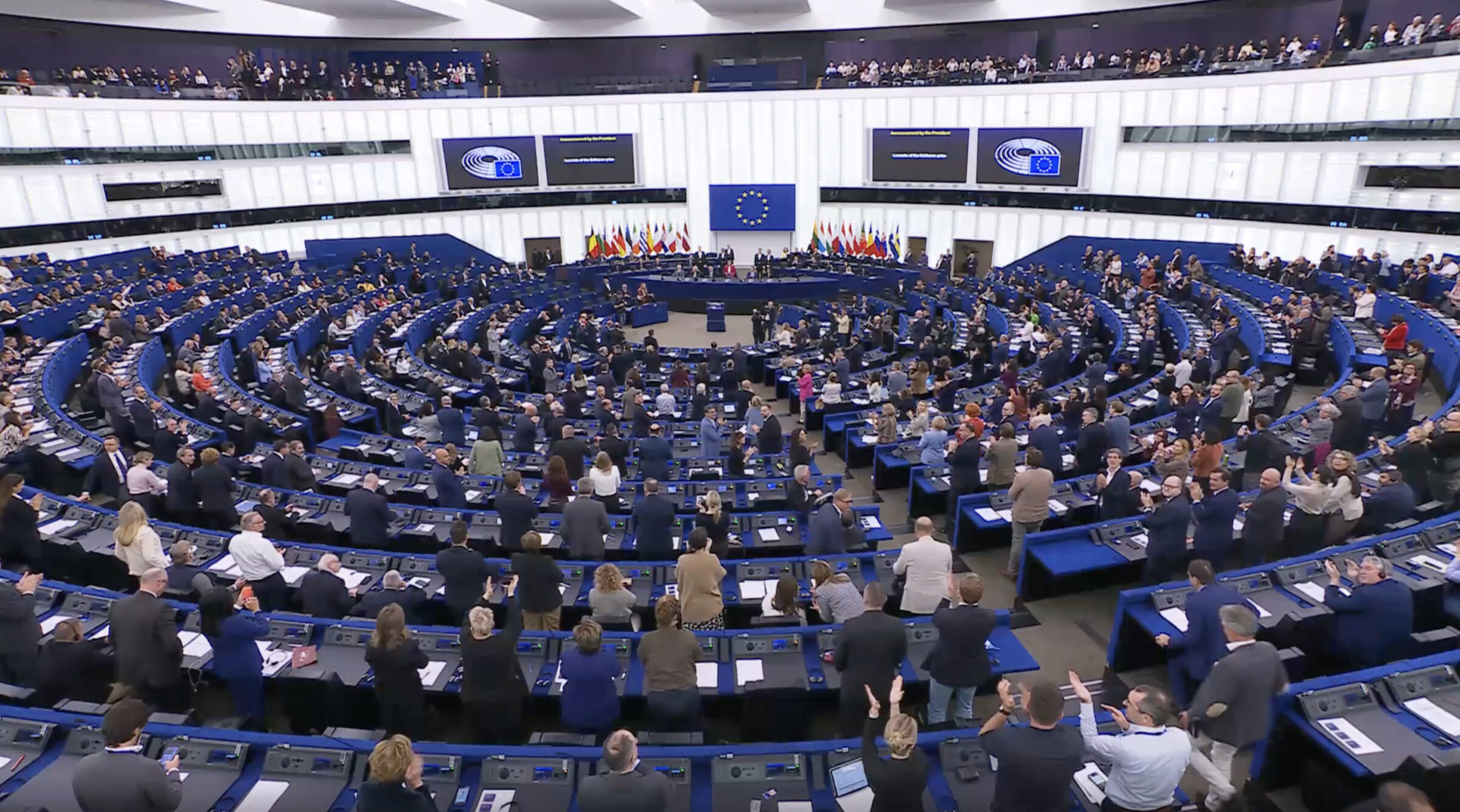
The European Parliament overwhelmingly supported an increased budget and scope for the Erasmus+ student-exchange programme under the new EU budget on Thursday (22 October).

The plenary in Strasbourg opted for a €7bn increase in Erasmus+’s budget compared to the commission’s proposal, by 454 votes, with 34 abstentions, against 93, mostly from right-wing parties.

And it was an audacious move, seeing as ‘frugal’ EU capitals are pushing for €150bn of cuts to the commission’s draft.

But even a “slight increase” in Erasmus+ funds would mean more opportunities for thousands of people, said Bogdan Zdrojewski, a Polish centre-right MEP, who was the rapporteur on the file, during a parliamentary debate earlier on Wednesday.

Celebrating its 40th anniversary in 2027, Erasmus+ enables young people to study, live, and work in foreign countries both inside the 27 EU states and the programme’s 160 “associate” states worldwide.

Some 17 million people have taken part since it began, with an estimated 1 million babies also born to couples who met on exchange, in what the commission has long used as a flagship PR project for creating a feel-good factor about the EU.

Meanwhile, the UK will rejoin the programme in 2027, which means EU students will once more have the opportunity to also spend a semester in Britain, which host some of Europe and the world’s top universities.

And the parliament would also welcome Canada’s full participation in a few years’ time, Zdrojewski told press on Wednesday.

The EU Parliament would like to expand Erasmus+ to more vocational training. “Erasmus+ will be a programme for Europeans no matter what age, what stage of life,” Zdrojewski said.

And students from poorer homes should get more support to live in pricey cities abroad, he added.

The share of Erasmus+ participants who had fewer opportunities to travel under the present structure stood at 15 percent in 2023 – up from 10 percent only two years earlier, according to a commission evaluation.

“Far too often, it is still the parents’ financial situation that determines who can take part in Erasmus+ and who cannot,” said Sabrina Repp, a German socialist MEP, in Wednesday’s debate in Strasbourg.

Working students often cannot afford to quit their current job to go abroad, she added: “That is precisely what we must change.”

The EU budget talks are to be finalised early next year.

Some 83 percent of Erasmus+ participants say they gained professional skills that helped them in the labour market.

But in order for those opportunities to be available more widely, “we need more funding for this programme,” also said Lucia Yar, a Slovak liberal MEP in the Strasbourg debate.

  •  

International Criminal Court wins EU’s top human rights prize in defiance of Trump’s sanctions

The International Criminal Court (ICC) has received the EU’s Sakharov Prize for Freedom of Thought.

Reacting to EU Parliament president Roberta Metsola’s announcement of the prize winner on Thursday (22 October), the Hague-based court said it is “thankful” for the recognition of the court and its officials.

“This award comes at a time when the court and its officials face unprecedented challenges, including sanctions aimed at disrupting the court’s judicial mandate,” ICC president judge Tomoko Akane told EUobserver in a statement.

The parliament’s recognition “underscores the importance of […] support to enable the Court to carry out its mandate independently and impartially, in the service of justice and the victims of the gravest crimes,” said the Japanese judge.

The court’s win comes after US president Donald Trump put his weight behind Israeli efforts to discredit the international judicial body by extending sanctions against it.

The ICC investigates and tries individuals charged with war and human-rights related crimes. When it issued an arrest warrant in 2024 for Israeli prime minister Benjamin Netanyahu for alleged war crimes, the US responded by sanctioning its judges.

EU Commission president Ursula von der Leyen welcomed the win, saying:
“For victims of the world’s gravest crimes, justice means a voice. The ICC must be free to pursue its mission, independently, and without pressure or intimidation. Europe stands firmly behind president Tomoko Akane, the Court’s judges and officials, and their vital work for a world governed by rules.”

New sanctions against the court were announced by the Trump administration this month after the Nobel Peace Prize went to Navi Pillay, a former ICC judge who concluded in a UN report that Israel is committing genocide in Gaza.

Tomoka said: “While this prize recognises the work of the court in combating impunity and ensuring fair trials, it is also an important recognition of the role of international justice as a cornerstone of lasting peace. In a world marked by rising conflicts, there is no peace without justice and no security without law.”

Strasbourg stands for justice

French MEP Chloé Ridel initiated the ICC’s nomination for the Sakharov Prize on behalf of the Socialists & Democrats parliament group.

This article continues, but the full version is available only to EUobserver.com subscribers. Visit account.euobserver.com/membership

  •  

EU prosecutors raid far-right Patriots for Europe offices in Brussels and Strasbourg over alleged misuse of parliament funds

Offices of staff in the Patriots for Europe (PfE) group were raided in France and Belgium on Wednesday (21 October).

The European Public Prosecutor’s Office (EPPO) told EUobserver that searches were carried out “as part of an ongoing investigation into the use of European funds by a former political group in the European Parliament”.

But the law enforcement body said it would not release details of the investigation for now, to avoid jeopardising the integrity of the case.

The far-right PfE group in the European Parliament, led by Jordan Bardella of the French National Rally (RN) party, posted a statement on social media claiming that on Wednesday morning, the EPPO carried out searches in administrative offices at the European Parliament premises in Brussels and Strasbourg.

“It would appear that these searches are linked to the complaint lodged against the Identity and Democracy Group (ID) dissolved in 2024,” said PfE’s X post.

This article continues, but the full version is available only to EUobserver.com subscribers. Visit account.euobserver.com/membership

  •  

Thousands of farmers protest Mercosur deal in front of EU Parliament

Strasbourg, France – Several thousand European farmers protested in the French city of Strasbourg on Tuesday against the European Union’s free trade deal with countries in the Latin American Mercosur bloc.

Around 5,000 protesters and several hundred tractors gathered in the city, according to local officials, where the European Parliament is holding a plenary session this week.

EU lawmakers are to decide on Wednesday if they want to seek an opinion from the European Court of Justice (ECJ) on whether the contested Mercosur agreement is compatible with EU law, which could delay the ratification process.

The free trade agreement was signed in Paraguay last weekend and still has to be approved by the European Parliament.

With their protest, the farmers want to keep up the pressure on EU decision-makers. They fear disproportionate competition from cheap imports from South America.

Protesters lit smoke bombs and held up placards with slogans such as “Von der Leyen go home,” directed at European Commission President Ursula von der Leyen.

The demonstration caused major traffic disruption in Strasbourg, with several roads blocked. (January 20)

  •  
❌