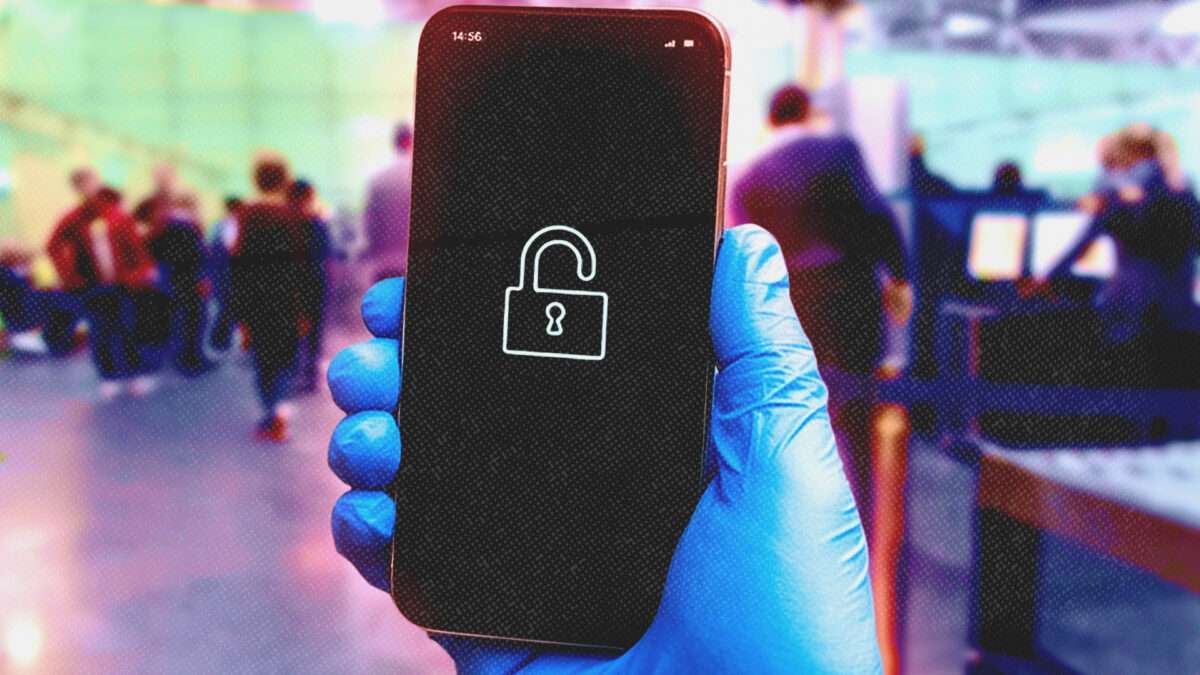
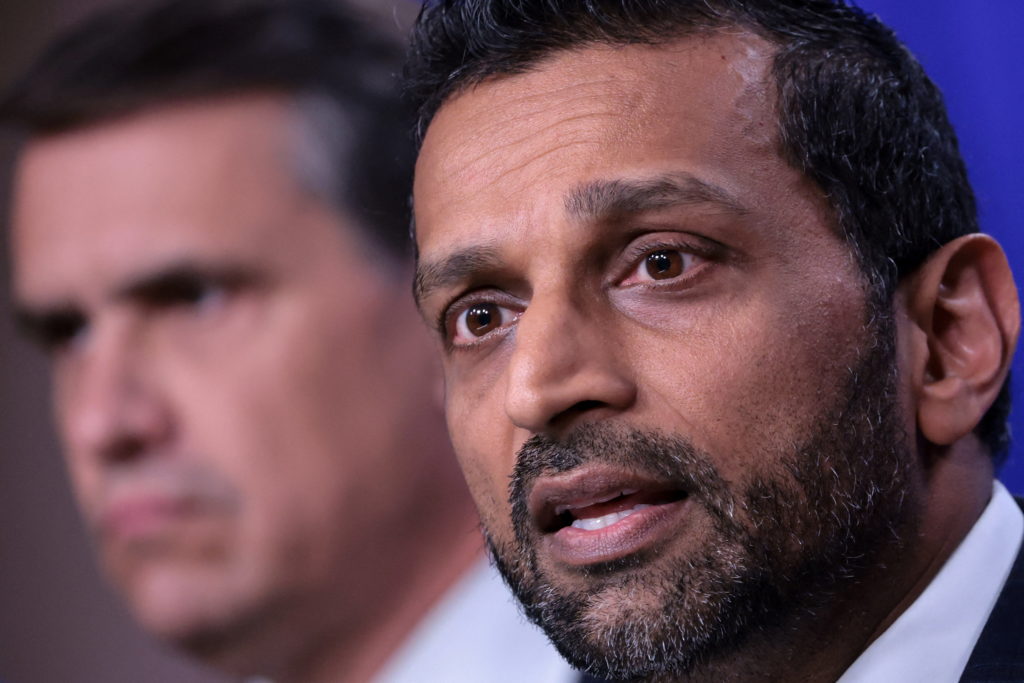
One of the unfortunate quirks of the American system is that you can't lie to the government, but the government can lie to you. Samuel Tunick found himself on the receiving end of this setup last year at Atlanta International Airport. When agents from the Department of Homeland Security (DHS) asked for his phone password, he allegedly gave them a self-destruct code that wiped his data. Tunick now faces five years in prison for destroying evidence.
It turns out that the feds were lying to Tunick the entire time. A new court filing, first reported by 404 Media, shows that the DHS had sent out an order to seize Tunick's phone over his involvement in environmentalist protests in Atlanta. When he landed at the airport, however, agents told Tunick that they were looking for "kiddie porn" and he would be allowed to leave with his phone if he cooperated. They also repeatedly denied him access to his lawyer when he asked.
"There can be no real debate that if law enforcement had acted similarly elsewhere in Atlanta, their actions would be unconstitutional. But the government says it was entitled to act this way because Mr. Tunick was returning from an international vacation" in the Dominican Republic, his lawyers wrote in the filing, which includes internal DHS communications and excerpts from his interrogation video.
U.S. law recognizes a "border exception" to Fourth Amendment privacy rights, allowing federal agents to search incoming travelers for contraband. U.S. Customs and Border Protection (CBP) claims that this exemption also allows them to hold travelers for questioning and search their electronic data. Tunick's case reveals just how widely the agency stretches this loophole.
A few hours before Tunick landed, Homeland Security Investigations (HSI) agent Travis Mcghie emailed the CBP station in Atlanta with his photo and information, stating that he is under investigation for "suspected terrorist activities." (Tunick is involved in Save the Atlanta Forest, also known as Stop Cop City, a protest movement against a local police training center.) The email asked CBP to "conduct a 100% baggage exam, retain all electronics and collect passcodes," stating that the HSI will be at the airport to conduct an interrogation.
Pulled into the secondary screening room, Tunick "almost immediately" told CBP officers that "I don't really want to speak without a lawyer any more," according to the filing, which cites the interrogation tape. He would ask for a lawyer multiple times.
The agents asked Tunick if he had "kiddie porn" on his phone and stated that "because you're refusing to talk, we have the authority to go through your phone to see what we're looking for." One of them, Latoya Castro, told Tunick that "either you can give us your password so that we can go through it no problem, or you can refuse to do that, unfortunately, we will have to seize your phone."
Both of those statements were a lie, of course. The HSI's email had asked CBP to take Tunick's phone, whether or not he cooperated.
The lie about child porn may not only have been meant to intimidate Tunick. While there arecontradictory lower court rulings about the border search exemption, some courts have ruled that the CBP can only search electronics for "digital contraband," or files that are themselves illegal. A search for child sex abuse material would be on stronger legal ground than a search for mere evidence of other crimes.
Tunick was using GrapheneOS, a secure phone system that allows users to set both a real password and a "duress password" that wipes out all data when entered. The interrogation tape shows his phone appearing to reset after he gave the officers a passcode. HSI agent Nathan Burnham and FBI agent Andrea Coble then entered the room.
"You are not under arrest. Once these gentlemen are done with you, pursuant to your entry into the country, you're free to leave," Burnham said, referring to the CBP officers.
Tunick's lawyers argue that the judge should throw out the phone password Tunick provided and everything that resulted from entering it as an "involuntary" response made under "unlawful interrogation," because the CBP agents did not read Tunick his Fifth Amendment rights and ignored his multiple requests to consult with his lawyer before answering their questions.
The CBP claims that secondary screening at the border doesn't count as a criminal investigation, so detainees don't have the same rights as criminal suspects. "Since the international arrivals inspection is an administrative function, CBP policy and federal regs do not permit the presence of lawyers during secondary examinations," a spokesmantoldReason earlier this year.
But Tunick's lawyers insist that his experience was "far outside" a normal border crossing: He was accused of a serious crime to his face, faced an investigation for a different serious crime he didn't know about, and clearly could not leave the situation until he gave information to government agents.
"I hope people understand that the charges against me are meant to intimidate people against protecting their data and their privacy, and the government hopes to set a precedent that no one has the right to privacy," Tunick told 404 Media.
Defend the Atlanta Forest, the movement that Tunick is involved with, has been amajor nuisance for authorities in Georgia. Protesters attacked and burned construction equipment throughout 2022, and police shot a protester in 2023 under unclear circumstances, claiming that they were fired at during a raid.
The Trump administration has brought down the federal government against the movement. In June 2026, the Department of Justice broughtfederal charges against two alleged arsonists, citingNational Security Presidential Memo 7, which directs the feds to go after left-wing domestic terrorism.
But beyond the email line about "suspected terrorist activities," there is no indication of what specific crimes the feds suspected Tunick of, or why they suspected him. And the whole setup of the interrogation was designed to hide those answers. In fact, instead of charging Tunick under typical obstruction or evidence-destruction laws, federal prosecutors chose ararely-used statute that doesn't require them to disclose what the underlying investigation was about.
"Many times the government wants to highlight what it was trying to investigate because that ups the stakes on what the defendant was doing," former prosecutor Daniel RichmantoldThe New York Times. "This is a case where I think they're trying to avoid exactly that by focusing only on the destruction, and not what the investigation was about."
A convicted bank robber allegedly returned to a familiar disguise while robbing two Florida banks on supervised release, donning an "old man" mask and fleeing in a getaway vehicle tied to his earlier crimes, federal authorities said.
David Sartin Jr., 40, of St. Petersburg, faces two bank robbery charges after investigators say he targeted banks weeks apart while concealing his face behind a prosthetic mask with gray facial hair.
The allegations follow a sentence of more than 10 years in federal prison in a case involving five Texas bank robberies, during which Sartin wore a similar disguise, according to a criminal complaint reviewed by Fox News Digital.
The first holdup happened Aug. 24 at Valley Bank in Largo, where the suspect entered wearing a straw hat, sports jacket, gloves and a prosthetic face covering, according to investigators.
He approached a teller, demanded money and warned, "no dye packs," the complaint states.
Authorities say he escaped with $2,900, wedging a yellow wet-floor sign between the exit doors before fleeing toward a nearby church.
Surveillance video showed the suspect retrieving a bicycle, riding into a nature preserve and leaving the area in a Toyota FJ Cruiser, according to the affidavit.
Investigators traced the vehicle’s movements through video from surrounding businesses, city trucks, a police cruiser and a school bus. The Toyota was the same vehicle used in several of Sartin’s earlier Texas robberies, authorities said.
On Sept. 15, a similarly disguised suspect entered a Truist Bank in St. Petersburg wearing a flat cap, glasses, a sports jacket and an "old man" mask with a gray mustache and whiskers.
By then, the FBI was monitoring Sartin’s home with a surveillance camera. Video captured the Toyota leaving before the second robbery and returning afterward, when a man resembling Sartin unloaded a bicycle, according to the affidavit.
The following evening, investigators watched Sartin change the vehicle’s appearance. Investigators said he spray-painted the vehicle’s white roof black.
Sartin was arrested Sept. 19 on a warrant for violating his supervised release. Searches uncovered a bicycle and clothing similar to those seen in the robbery video, authorities said.
Agents searching his storage unit found an "old man" mask they said matched the disguise worn during both robberies, along with glasses, clothing and a fake handgun.
In a guest room where Sartin occasionally stayed, investigators also found another mask and a journal identifying him as its author. Its title page included the words, "God’s Best friend is a Bank Robber!" according to the complaint.
Sartin’s previous convictions stretch back nearly two decades. He was convicted of attempted bank robbery in Mississippi in 2008 following a failed holdup involving Halloween masks and disguises.
In 2018, he was sentenced to 10 years and one month in federal prison in the Texas bank robbery case.
He now faces up to 20 years in prison on each new robbery count if convicted, according to the U.S. Attorney’s Office for the Middle District of Florida.
FIRST ON FOX: Rep. James Gallagher, R-Calif., urged FBI Director Kash Patel on Monday to crack down on illegal marijuana cultivation operations in Northern California.
Gallagher sent the letter after the Siskiyou County Sheriff’s Office reported extensive illegal cultivation and illegal immigrant labor in the region. The congressman said the operations have harmed local ranchers, depleted groundwater supplies and raised concerns about potential financing from Chinese organized-crime networks.
"Entire rural properties are now covered with rows of makeshift, plastic-covered greenhouses, known as ‘hoop houses,’ where marijuana is cultivated using groundwater hauled in from nearby wells," Gallagher wrote in a letter exclusively obtained by Fox News Digital.
"The consequences have been devastating, with residents facing depleted water supplies and threats to their safety, while local farmers and ranchers contend with increased competition for groundwater and the risk of contamination to their agricultural land," he continued.
The letter cited estimates of as many as 7,000 illegal growers in the Mount Shasta Vista subdivision alone. Gallagher said illegal cultivation has also expanded onto federal lands, including the Shasta-Trinity National Forest.
Gallagher also raised concerns that Chinese organized-crime networks could be financing or directing some of the operations.
"In Siskiyou County, investigators have traced cultivation properties to individuals residing outside the county, while those managing the grows often have no apparent ownership interest," Gallagher wrote. "These arrangements raise serious concerns about who is actually financing and controlling these operations and whether the ownership arrangements are intended to conceal their involvement."
Gallagher pointed to a 2018 federal investigation in California involving an illegal marijuana growing operation that authorities said was funded with money from China. The investigation led to federal forfeiture actions involving more than 100 properties in the Sacramento area, according to the U.S. Attorney’s Office for the Eastern District of California.
The congressman also cited environmental damage linked to the illegal grow sites, including the use of toxic pesticides.
"Compounding these concerns is the widespread use of highly toxic pesticides, including chemicals banned in the United States and products bearing Chinese-language labels that are suspected of being illegally imported," Gallagher wrote.
Siskiyou County investigators have identified at least 27 pesticide compounds at illegal grow sites, according to county findings. Officials have warned that the chemicals could pose risks to residents, law enforcement officers and first responders.
EXCLUSIVE - President Donald Trump is putting cash behind his crackdown on taxpayer fraud, offering Americans rewards for tips that help bring fraudsters to justice.
Speaking alongside Vice President JD Vance and independent journalist Nick Shirley in the Oval Office, Trump unveiled the Fraud Whistleblower Incentive Program and said qualifying tipsters would receive a 1% commission, subject to applicable laws and rules.
"If you turn somebody in and you, let's say report, and you find $1 billion, we are giving a commission to that person of 1%," Trump said.
Fox News Digital exclusively reported plans for the program ahead of Tuesday’s announcement. A White House official initially described a $25 million initiative administered by the Justice Department, with rewards of up to $30,000 for tips leading to a successful fraud conviction or significant federal enforcement action.
Trump’s remarks outlined a different payout structure. He said journalists could also participate, subject to applicable rules and approval from their employers.
Americans can report suspected theft of taxpayer dollars through fraud.gov, Trump said.
The president also said he would personally settle disputes over who deserves a reward, describing a process in which he would determine whether competing tipsters should split a payment.
"I'll make that determination. It'll be done expeditiously and fairly," Trump said.
Vance said the initiative grew out of a conversation with Trump about recruiting Americans to help investigators uncover fraud.
"If you want to help us stop it, you get to share in the rewards," Vance said.
Shirley drew national attention in December 2025 after publishing a video questioning whether several Somali-run Minnesota daycare centers were operating as legitimate businesses. His video showed apparently empty facilities and included people who said they had not seen children at the locations.
The White House credited Shirley’s reporting with helping spur a surge of FBI and Department of Homeland Security resources into Minnesota, followed by investigations, arrests and new charges.
One facility featured in Shirley’s video was Future Leaders Early Learning Center, whose former CEO, Fahima Egeh Mahamud, pleaded guilty in July to wire fraud and conspiracy to defraud the United States.
Prosecutors said Mahamud stole more than $4.6 million through false child care assistance claims and $850,000 through a federal child nutrition program connected to the Feeding Our Future scandal.
Shirley previously pointed to Mahamud’s guilty plea as vindication of his reporting amid efforts to discredit his investigations.
The reward initiative adds a public tip incentive to the administration’s broader campaign against fraud in federal benefits programs.
Trump established the Task Force to Eliminate Fraud in March, with Vance serving as chairman. The executive order directed the group to coordinate efforts across federal agencies to uncover fraud, strengthen eligibility checks and prevent improper payments.
Under the new program, submitting an allegation alone would not qualify someone for a reward. The tip must lead to a successful fraud conviction or a significant federal enforcement action, according to the White House official.
"Every day, President Trump’s Task Force to Eliminate Fraud is zeroing in on the rampant abuse of taxpayer dollars and giving Americans the accountability they deserve. This administration has zero tolerance for individuals who steal from Americans," White House spokeswoman Lauren Bis told Fox News Digital.
The event also brought a separate announcement from Centers for Medicare and Medicaid Services Administrator Dr. Mehmet Oz, who said the administration was deferring another $1.2 billion in California Medicaid payments directed toward personal care services.
Oz cited questions about the program’s spending growth and said tips from people inside businesses can help investigators identify wrongdoing.
Federal Trade Commission Chairman Andrew Ferguson, the task force’s vice chairman, also called for Congress to impose mandatory minimum prison terms for benefits fraud and civil liability for state officials who fail to stop fraud they could have prevented.
Fox News Digital's David Unsworth contributed to this report.
Authorities have said the attack was thwarted by FBI agents after they monitored the 18-year-old for nearly two years and ultimately supplied him with the AK-47 he planned to use.
The investigation resulted in a dramatic 2022 FBI search of Mar-a-Lago that recovered classified records and later produced an indictment in federal court in Florida charging then-former President Donald Trump with dozens of felony counts.
Federal authorities are investigating letters that have been mailed to congressional and election offices nationwide and are urging recipients to treat the mailings as "potentially hazardous."
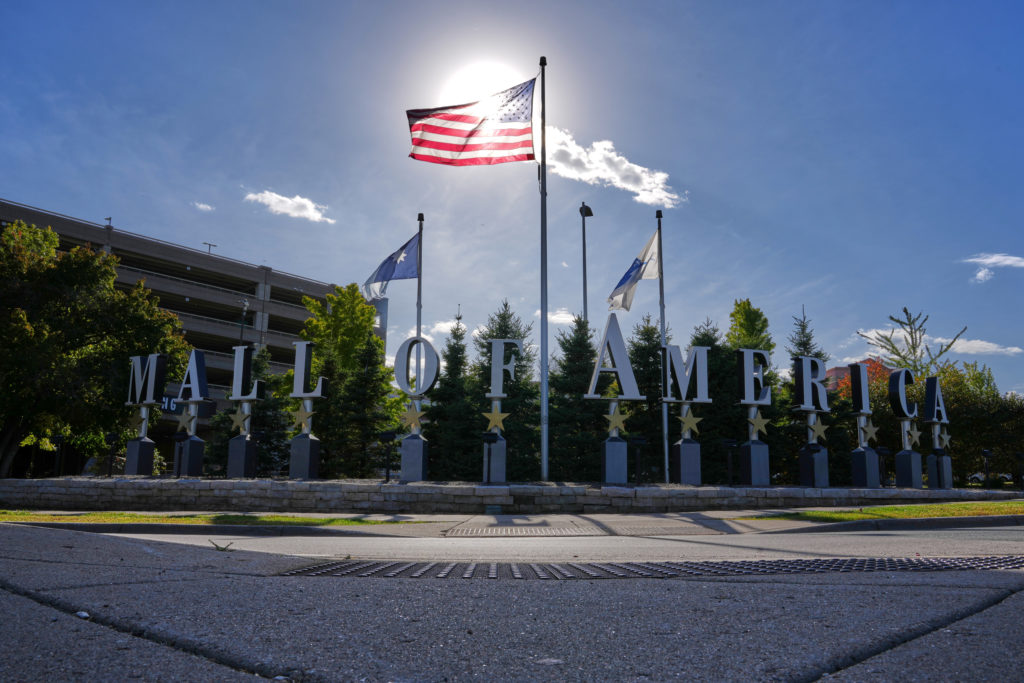
Federal law enforcement officials in Minneapolis announced at a press conference last week that FBI agents arrested a Minnesota teenager plotting to commit a mass shooting at the Mall of America.
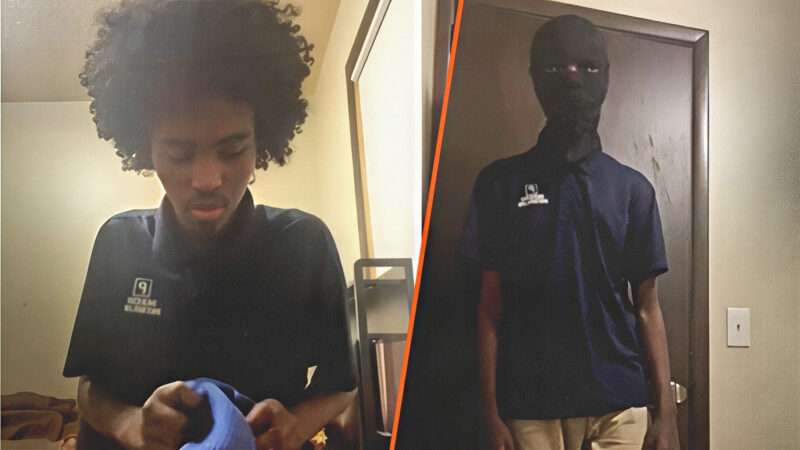
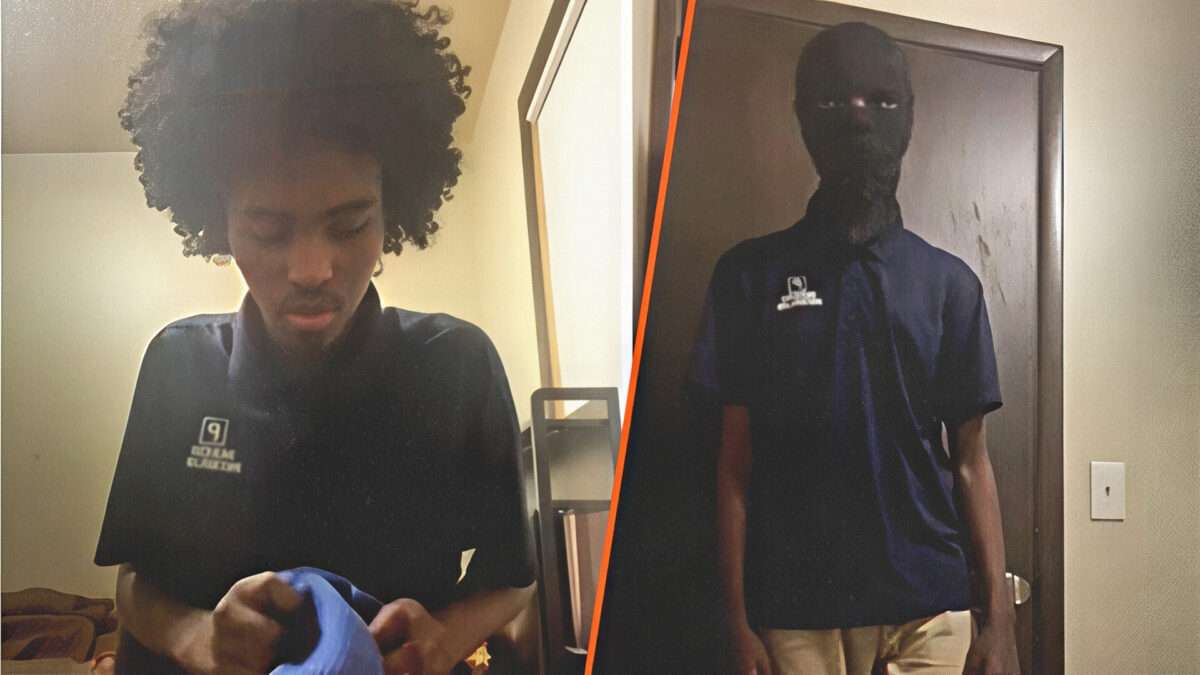
Sheikhdoon Abdullahi Mohamud, an 18-year-old American-born citizen of Somali descent, was arrested in a public park on October 6 by FBI agents immediately after he allegedly paid an undercover agent posing as a member of the Islamic terrorist group ISIS $600 for an AK-47 rifle and 200 rounds of ammunition. The arrest was the culmination of a two-year investigation into Mohamud, who allegedly planned to commit a mass shooting at the mega-mall on October 24.
According to the criminal complaint filed against Mohamud, he exchanged hundreds of messages with a confidential FBI informant expressing his desire to travel to Somalia to join ISIS, but lacking enough money to travel, he eventually settled for an alleged plot to attack the Mall of America because it was owned by Jews.
"I want to do this, I am very serious I don't care about anything in the world, I am 100% committed to the cause of dying for the sake of Allah only," Mohamud allegedly wrote in one text message, according to the complaint.
Christopher Dotson, a special agent running the FBI's Minneapolis field office said at a press conference that Mohamud's messages "document the idolization of ideologically motivated violence, a callous disregard for the sanctity of human life, a blind hatred of people of other faiths, and a cold commitment to carrying out his vision of violence in our community."
As I explained in a 2022 Reason magazine feature, "It's (Almost) Always the Feds," the FBI has a long history of using its sprawling network of paid informants to locate and bait would-be radicals in undercover sting operations.
The FBI's Countering Violent Extremism (CVE), created in 2011 to stop domestic recruitment by foreign terrorist organizations, has focused heavily on Somali immigrant communities in Minnesota and elsewhere because of Somalia's links to ISIS and al-Shabab, two Islamic terrorist groups.
An ISIS-affiliated account posted a video in 2015 calling for an attack on the Mall of America. In 2016, a Somali man in the U.S. on a refugee visa stabbed 10 shoppers and employees at a St. Cloud mall. Last year, a Minneapolis man was charged with attempting to join ISIS.
However, the sort of young men who usually get onto the FBI's extremist radar have grand and violent ambitions but limited means to carry them out. They tend to be unemployed or marginally employed, sometimes still living with their parents, and socially awkward.
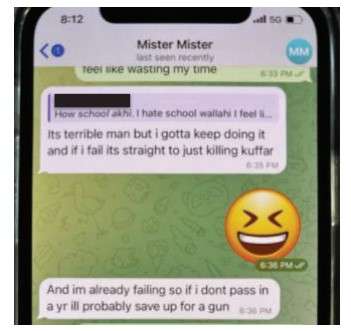
In one text exchange, the confidential informant asked Mohamud how school was going.
"It's terrible man but I gotta keep doing it and if I fail its straight to just killin kuffar [a derogatory term for non-Muslims]," Mohamud responded, according to screenshots included in the criminal complaint . "And im already failing so if I don't pass in a yr ill probably save up for a gun."
The informant responded with the "grinning squinty face" emoji.
U.S. District Court
Mohamud continued to chat with confidential informants, praising terrorist attacks and sharing terrorist propaganda videos, according to the complaint. He didn't have a phone, so he had to use his sibling's computers and tablets to chat with informants. Last month, he recorded a video of himself pledging allegiance to ISIS on his little brother's iPad.
Despite persistent criticisms from civil liberties groups that the FBI is in many cases manufacturing terror plots to ensnare young men with limited to no ability to carry them out, the federal government has been enormously successful in securing convictions because of the high bar for defendants to prove entrapment.
The FBI's use of paid informants and these sting tactics have resulted in hundreds of convictions since 9/11, but it's also created long-term credibility problems for the bureau, especially when administrations have used those criminal cases to advance their political narratives.
For example, in a 2024 speech condemning political violence, former President Joe Biden cited the plot to kidnap Democratic Michigan Gov. Gretchen Whitmer. However, text messages and other records uncovered by defense attorneys during the case showed that the farcical plot was in large part concocted and encouraged by paid FBI informants and their bureau handlers.
"We have a saying in my office," one FBI special agent told a confidential informant in the Whitmer case. "Don't let the facts get in the way of a good story."
The CVE program and related counterterrorism initiatives have also subjected tens of thousands of Somali refugees and other ethnic and religious minorities to heightened surveillance and infiltration by government informants, sowing distrust and fear, all based on a relatively small handful of incidents. Reason's Eric Boehm wrote in 2018 about how Minnesota's peaceful and entrepreneurial Somali refugee communities had become a domestic front in the war on terror, as well as microcosm of the national debate over immigration and national security.
None of this is to say the investigation into Mohamud was unwarranted, or that he wouldn't have been able to eventually get a gun absent the FBI's assistance. Nor is it a statement on his guilt or innocence, although he is as a matter of law innocent until proven guilty. It is a reminder to read carefully and wait for all the details to come out whenever the FBI announces it has thwarted another terrorist plot.
The charges listed on the violation notice issued by the FBI are assaults within the special maritime and territorial jurisdiction of the United States, according to a federal law enforcement official who spoke with the AP on condition of anonymity.
The music industry has once again been forced to dance to a tune set by drug trafficking. Ismael Zambada Sicairos, the subject of several narcocorridos (a subgenre of corrido, a type of Mexican ballad, that glorifies or narrates the lives of drug traffickers and organized crime), is now accused of being the head of a sophisticated criminal network that, through organizing concerts in Baja California and other front-business activities, allegedly served to launder money generated illicitly across the border by Los Mayos, the Sinaloa Cartel faction he has led for two years.
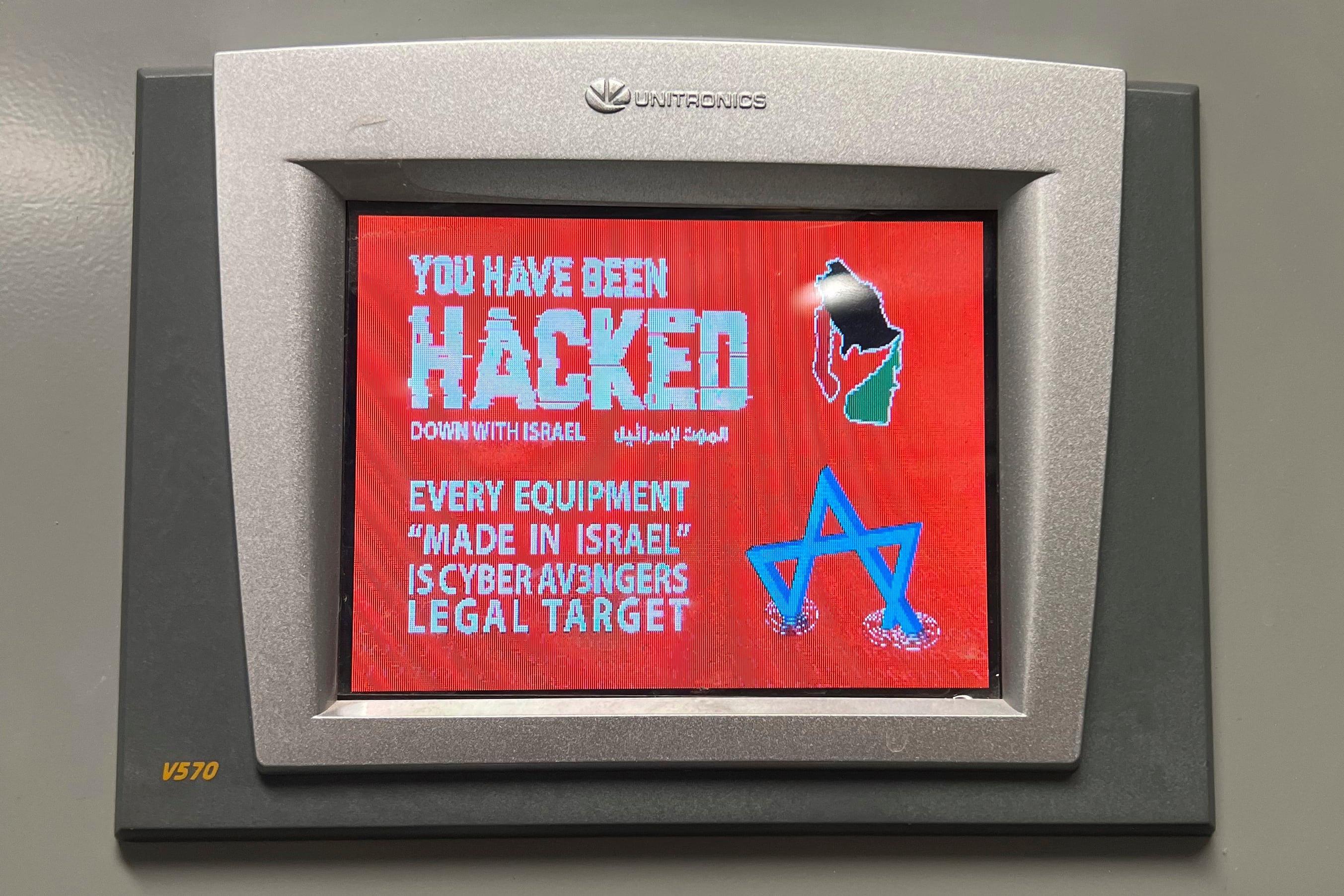
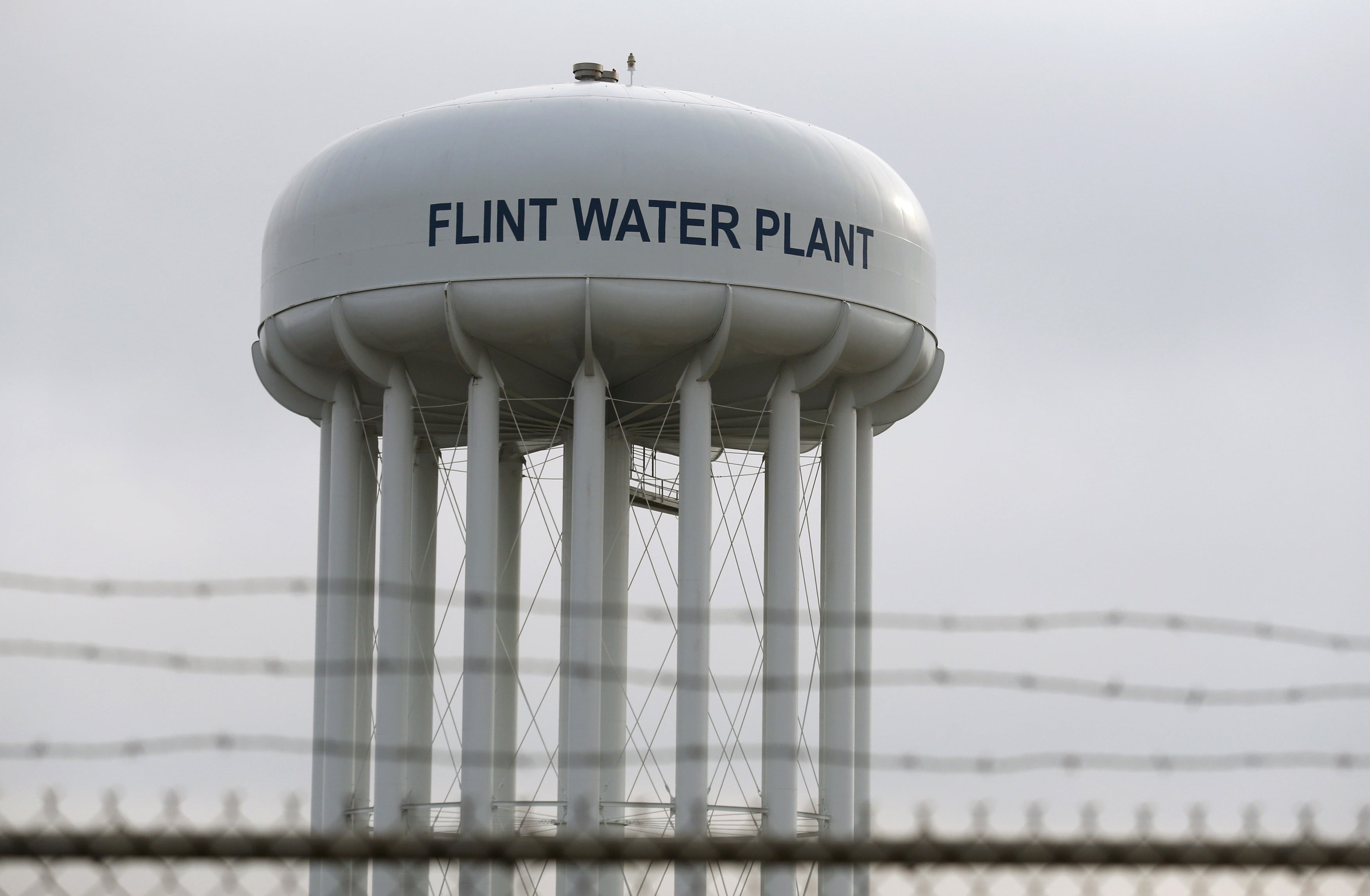
Water service failed in at least 300,000 Atlanta households on July 27. Taps ran, but only a trickle came out. After receiving several consumer alerts, the water company found that a pumping station had stopped functioning, affecting that city and others in the state. The loss of pressure led authorities to advise boiling water before drinking it to reduce the risk of contamination, sparking some panic among the population. It was not a technical fault: everything points to it having been orchestrated from a computer almost 7,000 miles away, in Iran.
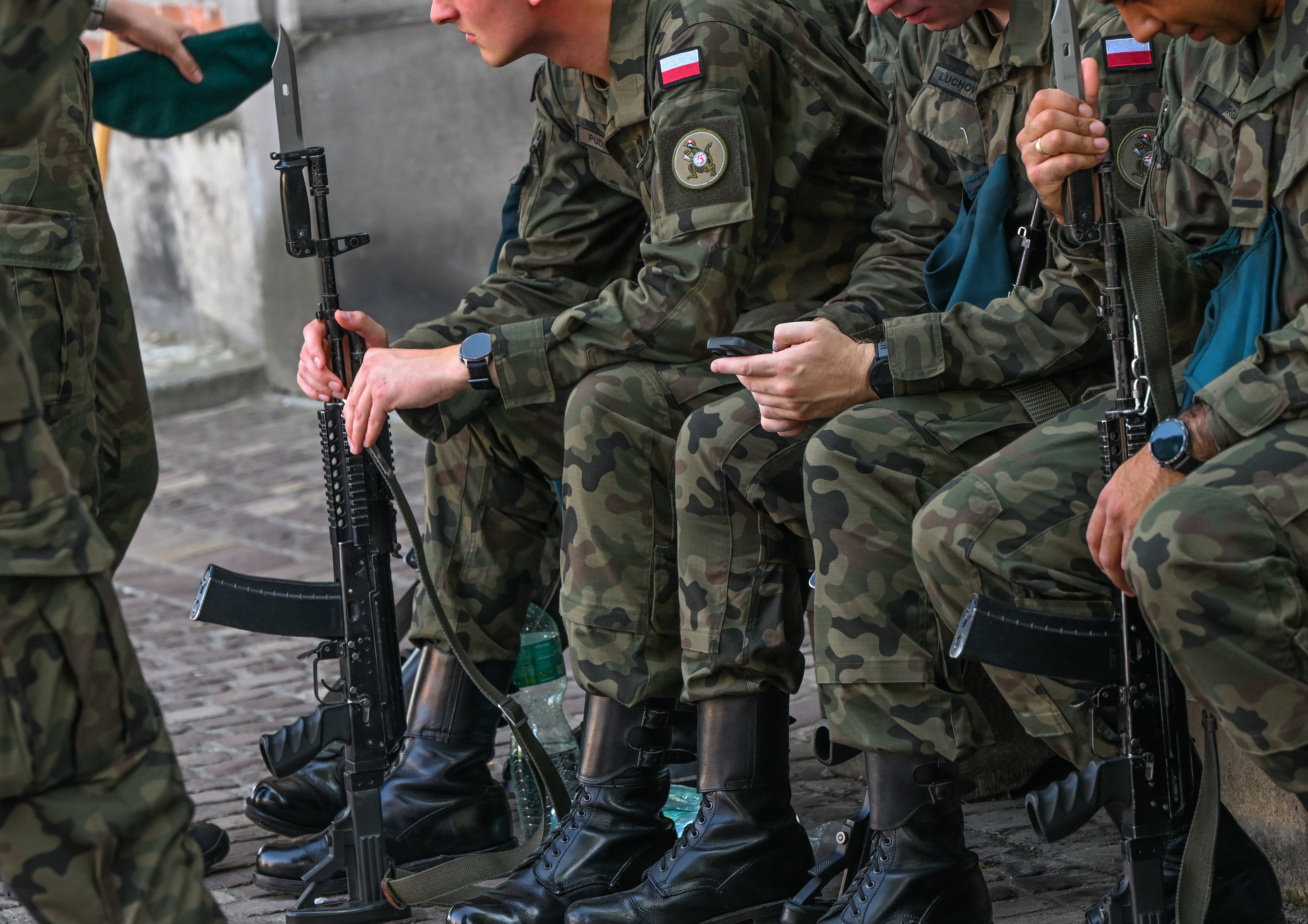
The alarms raised by the relationship between a Spanish NATO commander and a woman of Russian origin he met on Tinder, the dating app, are the latest chapter in a new espionage battleground: web applications. Sharing content on social media, posting your morning run, or looking for love online has become a latent risk for militaries around the world.
David Kushner first met Anthony Curcio nearly two decades ago, to tell the story of how Curcio masterminded a $400,000 bank robbery and escaped on an inner tube. His latest on Curcio is every bit as outlandish: After his release from federal prison, Curcio waded deep into the trading card industry, dealing in top-rated Michael Jordan and Nolan Ryan cards and coming under scrutiny for suspected fraud. Curcio contends that the real villain is Collectors Holdings, a private company that owns Professional Sports Authenticator, which evaluates and assigns value to trading cards. A thrilling piece of reporting about authenticity—as an idea, a value, and maybe even a front.
Three months later, on the early morning of May 23, 2024, Curcio was walking through his neighborhood in Redmond. It was quiet — what he called “raccoon hours.” Then he heard cars coming up behind him. FBI agents stormed him, guns drawn; he counted around 20. “What the fuck is this about?” he said. “You’re here for sports cards?” He told them about the judgment he’d just won against Captain Ticket. They said they knew all about it.
 Login