Normal view
Under the (Persian) volcano
Iran and Russia, both sanctioned to oblivion, are indeed in synch like never before, coordinating everything on a shared front.
Join us on Telegram
, X
, and VK
.
Contact us: info@strategic-culture.su
Washington, on the Ukraine front, may be switching to total Saving Face mode. After all, the scale of the strategic defeat for the Empire plus the discombobulated West in country 404 is staggering. Add to it the strategic defeat in Iran plus Yemen relentlessly hammering the House of Saud. Grandmaster Lavrov coined it: “The West will never again be the main player, dictating terms.”
The temptation may be great to identify a more straightforward path towards a multi-nodal, polycentric world order – in the wake of all those wild, unprecedented Trump concessions to Moscow. But then the real dark clouds keep coming down.
The death cult in West Asia and the Epstein Syndicate as a whole have managed to overpower the whole mass of neo-con Russophobes spread across the MICIMATT (military/industrial/congressional/intelligence/media/academia/think tank complex, in the memorable definition by Ray McGovern) and reconstitute Iran as the undisputable, one and only national security emergency.
The 7-point way or the highway
Field Marshal Asim Munir’s hasty, last minute-arranged trip from Islamabad to Tehran earlier this week in the end could not possibly mediate anything.
Munir met everyone who matters. He asked Parliament Speaker Ghalibaf point blank: what does it take to find a solution for the Iran-U.S. impasse? Ghalibaf was blunt – and repeated it at last 8 times during their meeting: Washington must implement Iran’s 7-point conditions, essentially a summary of the serially dead cat memorandum of understanding (MoU), which Trump signed and then destroyed.
The 7 points were first proposed to Tweedledum and Twedledee – Witkoff and Kushner – via the Qataris in a previous round of Iran-U.S. indirect negotiations.
President Pezeshkian and secretary of the Supreme National Security Council (SNSC) Mohsen Rezaee, in their meetings, stressed the exact same thing. That’s the message Munir should relay to the Sociopath-in-Chief.
Official Iranian sources will not confirm it; only the heavily-spun American version. But Munir may have carried a final U.S. ultimatum to Rezaee, Pezeshkian and Ghalibaf: ditch your nuclear program, or face massive strikes, mostly targeting Pickaxe Mountain.
Adding on the 7 points, Mohsen Rezaee actually informed Munir – and thus the White House – again, that not a single speck of nuclear dust will leave Iran. Back to the only possibility of a return to negotiations: Washington must accept the 7 points.
Foreign Minister Araghchi keeps coming back to the essentials: “The U.S. has failed to achieve any of its war objectives.” So the connectivity chain is inescapable: no military victory (and no regime change); unbearable economic costs; untainable political situation; thus only off-ramp is the 7 points.
And on top of it Tehran runs the clock.
In parallel, across the Yemeni Storm, Sana’a also runs the clock.
With Aramco, the lifeblood of U.S., Israel and Salafi-jihadi goons of the ISIS mould, and a privileged source of funding for the Forever Wars, now in Ansarallah’s direct line of fire, the Yemeni drive is to work “to dry up the sources of terrorism.”
Riyadh though is doubling down, threatening to bomb every gathering of Yemeni tribes. If that happens, more than a million more Yemenis will join the Yemeni Armed Forces and march to the Yemeni-Saudi border.
After all the tribes, well-trained and ultra-weaponized, are just waiting for a directive from Ansarallah’s leader, Abdul-Malik Badr al-Din al-Houthi, to pour into southern “Saudi” Arabia and recover the three provinces, Najran, Jizan and Asir, that are ancestral Yemeni lands stolen by the Brits in 1934.
A price you can’t afford to pay
All hell may break loose: now; soon; or until the end of November at the latest. Were it to happen sooner, before the Israeli elections, it’s a done deal the driver is the death cult. The Sociopath-in-Chief privileges a post-mid-terms attack.
The death cult is preparing a massive attack on Iranian power plants, oil infrastructure, military targets and nuclear installations. Tehran has repeatedly warned that any attack, joint or separate, from the U.S. and Israel, will be treated as Totalen Krieg, all-out war, and the response will break any limits or restraint.
Iran’s internal intel is fully concentrated on a large-scale bombing scenario happening before next Tuesday, Election Day in the death cult.
Whatever happens, Tehran’s response will make sure the price to pay is beyond prohibitive. On Israel, Iran will counterpunch on both of Israel’s refineries; the ports at Haifa and Ashdod; all airbases; and Dimona added only if Iran’s own nuclear sites are hit.
When it comes to a U.S. attack, any Gulf petro-monarchy that hosts any launch instantly becomes a legitimate target, including power grids; desalination plants; refineries; ports; data centers; HQs and installations of American companies.
The Strait of Hormuz would be completely closed. The price of a barrel of oil will skyrocket. The global economy will hit Big Depression. From an imperial point of view, that will be as gloomy as Washington letting Iran manage the Strait of Hormuz and charge fees for transit: actually the humiliating end of unilateral thalassocracy – complete with the U.S. Fifth Fleet needing to ask permission to enter or leave its own dilapidated base in Bahrain.
Mohammad Mokhber, a top adviser to Leader Mojtaba Khamenei, stressed that “if the U.S.-Israel strike our petrochemical infrastructure or power plants, Iran will strike nine countries.”
Moreover, the Fars news agency, very close to the IRGC, learned about an array of new directives: if the attacks involve the assassination of Iranian officials and the killing of civilians, the Iranian response will include political targets associated with the U.S. and all nations participating in the war, in addition to their infrastructure.
Lavrov and Araghchi revive RIC
Amidst so much horror, let’s try to stress at least one auspicious trend. During Lavrov’s recent visit to Tehran, Iranian FM Araghchi cut to the chase:
“Never in our History have Russia & Iran worked as closely as now.”
The key operative concept is “Never in our History”. Lavrov and Araghchi talked about “everything from Europe to West Asia”. But specially these four: Lebanon, Palestine, Ukraine & Yemen. Not to mention everything about expanded economic and “nuclear cooperation”.
Economic cooperation means specially the INSTC – the International North South Transportation Corridor linking 3 BRICS/SCO partners: Russia, Iran and India.
See my INSTC documentary shot in Iran last year.
The Empire of Chaos relies on sanctions, threats and bombing. Eurasia integration relies on building infrastructure, increasing trade, and sovereign cooperation. So Lavrov and Araghchi once again had to revive RIC: the original Russia/India/China connection first conceptualized as the Primakov Triangle but now with Iran in place of India.
Lavrov proposed that the new RIC establish a “common security structure” in the Persian Gulf via a trilateral summit. That amounts to RIC defining a unified framework for the Strait of Hormuz.
The Empire’s response will be increased discombobulation. Because once again this is about “indivisibility of security” – as in Russia proposing it to the U.S. and NATO in December 2021. Then that was met with a non-response response.
On Lebanon, Palestine, Ukraine and Yemen, Lavrov and Araghchi were on top of the top frontlines. Where we have the Empire of Chaos and its allies/vassals on one side, and Russia and Iran’s allies on the other side.
It’s all interconnected, of course. An imperial arc of military pressure stretches from Ukraine to Yemen. The counterpunch revolves around how to coordinate the resistance (italics mine) to such pressure.
On economic cooperation, both Iran and Russia are under a tsunami of sanctions. Their banks are expelled from SWIFT, and oil exports are severely restricted. So trade between them must bypass the U.S. dollar; the whole Western financial system; and the thalassocracy enforced by the U.S. Navy.
Know how in bypassing sanctions is something Iran-Russia may share with the whole Global South, via settlements in local currencies; barter trade; overland corridors; the INSTC; and trade across the Caspian Sea.
And that brings us once again to the Strait of Hormuz – which Iran controls. The Gulf petro-monarchies are completely freaking out. Russia maintains solid channels with both Iran and the Gulf. Lavrov is in total synch with all of them. He brought the Gulf’s concerns to Tehran, and in turn, conveyed Tehran’s conditions back to the Gulf.
Lavrov stressed that the serially dead cat Islamabad MoU is the only way to go. Exactly what Xi told Trump at the Oval Office. Exactly what the Iranian leadership told Asim Munir in Tehran.
He also stressed that the Persian Gulf petro-monarchies must get their act together and start a serious security dialogue with Iran and Arab nations, including neighbors such as Iraq and Jordan, and involve the Arab League, the Organization of Islamic Cooperation (OIC), and the permanent members of the UN Security Council.
Once again: indivisibility of security.
Iran and Russia, both sanctioned to oblivion, are indeed in synch like never before, coordinating everything on a shared front – while the desperate Epstein Syndicate remains stuck in its self-concocted Forever War nightmare.

- The Guardian - World news
- Revealed: billionaire Reform donor was in business with foundation linked to Iranian regime
Revealed: billionaire Reform donor was in business with foundation linked to Iranian regime
Exclusive: Sasan Ghandehari’s partnership with religious foundation raises questions about past dealings with republic criticised by Nigel Farage
Nigel Farage’s newest billionaire donor was in business with a powerful Iranian religious foundation under the authority of the country’s supreme leader, raising questions about his past dealings with the hardline republic.
Hossein Ghandehari, also called Sasan, was little known in the UK until he pledged to give millions to Reform UK this summer and donated £50,000 to Farage to cover the cost of two passes for the Davos World Economic Forum.
Continue reading...
© Photograph: Jeff Gilbert/Alamy

© Photograph: Jeff Gilbert/Alamy

© Photograph: Jeff Gilbert/Alamy
Iran Unveils Underground Arash Drone Arsenal (Videos)
Iran’s army on October 22 released footage of an underground facility producing Arash one-way attack drones, while state television reported that a new version carries a 100-kilogram warhead.
The footage showed dozens of drones inside the facility during a visit by Army Chief Maj. Gen. Amir Hatami. Iranian media described the release as the army’s first public video showing its advanced, domestically developed drones and their production.
Hatami said Iran had expanded its drone capabilities beyond the weapons themselves to include the infrastructure and personnel needed to manufacture, maintain and deploy them.
“We have reached a significant level of maturity in the field of drones and unmanned systems in general,” Hatami said, adding that more drones would be unveiled in the future.
Hatami noted that the army’s drone development program began in cooperation with the Defense Ministry and has since expanded into an industrial effort involving universities, researchers and technology companies.
He said a substantial portion of the army’s equipment was now intended for what Iran calls asymmetric warfare, which relies on weapons and tactics designed to challenge a conventionally stronger opponent.
“Today, we are particularly active in the production, distribution and maintenance of these weapons,” Hatami said.
Hatami also acknowledged damage to Iranian military equipment and facilities during recent wars, but said the army had prepared for conflicts in which it would rely on more than conventional weapons.
“Some of the equipment and facilities belonging to us were damaged in the recent wars, but the enemy thought that we did not distinguish between conventional and asymmetric warfare,” he said.
The announcement comes as Iran continues to emphasize its ability to sustain domestic weapons production and prepare for future confrontations.
The footage offered a rare look inside Iran’s underground drone program, although the army did not disclose the facility’s location or its production capacity.
The older Arash-2 is a one-way attack drone designed for long-range strikes. It is reported to have a range of up to 2,000 kilometers.
The newly shown model appears to be a separate version of the Arash family. Its reported 100-kilogram warhead would represent a substantial increase over the specifications commonly published for the older model.
_______________________________________________________________________________________________________________________
SouthFront: Analysis and Intelligence
NOW hosted at southfront.press
Previously, SouthFront: Analysis and Intelligence was at southfront.org.
The .org domain name had been blocked by the US (NATO) (https://southfront.press/southfront-org-blocked-by-u-s-controlled-global-internet-supervisor/) globally, outlawed and without any explanation
Back before that, from 2013 to 2015, SouthFront: Analysis and Intelligence was at southfront.com
The post Iran Unveils Underground Arash Drone Arsenal (Videos) appeared first on South Front.
Trump’s Iran war is on an Israeli leash
A reported strike plan, paused only until after the midterms, exposes the limits of American strategic independence.
By Dr. Sara Neumann | MEMO | October 22, 2026
On October 21, the Financial Times reported that Benjamin Netanyahu had instructed his military to prepare a multi-day bombing campaign against Iran for the weekend of October 10—only for Donald Trump to block it until after the November 3 midterms . The operation would have targeted electricity plants, nuclear facilities, and regime sites, surpassing the intensity of the joint offensive launched in February. Trump’s opposition did not end the war. It rescheduled it.
That distinction is the entire story. The veto is being presented as proof that Washington can restrain Jerusalem. In reality, it is a demonstration of an alliance leash—a tether that permits tactical friction while leaving the strategic architecture of the war untouched. Trump can pull the leash to protect Republican seats. Netanyahu can pull it to protect Likud seats. Neither pull ends the war. Both manage the calendar.
The FT report is clear that the operation was not cancelled, only deferred. “There will either be a deal or an attack,” one person familiar with the matter said. US Defense Secretary Pete Hegseth traveled to Israel on Monday to meet Netanyahu, and Israeli officials presented an updated target bank that included civilian infrastructure not struck earlier in the year. The machinery of escalation remains fully assembled. The only variable that changed was the date.
The strongest defense of the White House is that Trump’s veto proves American primacy. If Washington can tell Jerusalem no, the argument goes, the leash is in American hands. But this confuses a pause with a strategy. The veto covered only the period before November 3. It did not define war aims, set an end date, or require congressional authorization. It was a tactical deferral, not a strategic reversal.
The midterms themselves are a powerless-ballot exercise in war governance. Voters are being told the election is about affordability. They are not wrong. Gasoline has reached $4.28 a gallon, $1.20 higher than a year ago, and half of registered voters name the cost of living as their top concern . Trump’s approval sits at a record-low 31%. But neither party is offering a vote on whether the war should continue, expand, or end. The ballot ratifies a choice between managers of a war that was never put to a vote.
Congress has tried to assert itself. The House has passed war powers resolutions three times, and the Senate approved one on its tenth attempt—only for Republican senators to reverse course the next day after Trump berated them.
The cost of the conflict has reached at least $38 billion, with the Congressional Budget Office estimating an additional $3 billion for every month it continues. The stockpile of interceptor missiles is so depleted that rebuilding it could take five years. None of this has produced a binding vote to end the war. The legislature has rendered itself a spectator.
Netanyahu’s own calendar is just as cynical. Israel votes on October 27. Netanyahu has said a preemptive strike before the election would be “inconvenient”. Israeli commentators have reported that he fears a military campaign in the final stretch could cost Likud power. The alliance leash runs in both directions. Washington pulls it to protect Republican seats. Jerusalem pulls it to protect Likud seats. The war is paused not because either capital has decided it should end, but because both leaders have decided the timing is wrong for their own electoral survival.
For American voters, the question is not whether Trump can overrule Netanyahu on a given weekend. The question is who decides when the war ends, on what terms, and at what cost.
On the current trajectory, those decisions are being made in confidential channels between two executive offices, insulated from legislative oversight and electoral accountability. The ballot is powerless to alter the war’s direction because the war’s direction was never on the ballot.
The real test comes after both elections. If the deferral becomes a pathway to diplomacy, Trump’s veto will have meant something. If it becomes a pause before a new round of strikes—as the updated target bank suggests—then the only thing that changed was the calendar. Independence is not the ability to delay a war. It is the ability to end one on terms you can defend.

Saudi oil boss issues global supply warning
RT | October 22, 2026
The US-Israeli war on Iran has caused an “unprecedented” shock to global energy markets, removing some 3 billion barrels of oil supply, Saudi Aramco CEO Amin Nasser has warned.
The war launched in February effectively shut the Strait of Hormuz, a crucial oil and LNG artery, sending crude prices up roughly 50%. Despite Gulf exports recovering to a reported 80% of pre-war levels, renewed attacks on vessels have kept markets on edge, with Brent hitting a five-month high above $112 this week. Houthi attacks on Saudi energy infrastructure and shipping have compounded the crisis, threatening another vital trade chokepoint, the Red Sea’s Bab el-Mandeb Strait.
In an interview with Al Arabiya Business aired on Thursday, Nasser said the nearly eight-month crisis had deprived global markets of an estimated 3 billion barrels of oil.
“The impact of this crisis on energy markets is unprecedented,” he said. “We have lost around 3 billion barrels since it began. And bear in mind that the Gulf accounts for roughly 20% of global oil demand.”
The figure is equivalent to nearly a month of global oil consumption and reflects cumulative supply losses caused by disrupted shipping, reduced production and logistical bottlenecks.
With global oil inventories already below their five-year average when the war erupted, prices could have soared past $200 a barrel, Nasser warned. He credited emergency reserve releases, China’s sharp cut in seaborne oil imports and Saudi Aramco’s East-West pipeline, which bypasses Hormuz, with averting an even more severe price shock.
Nasser warned, however, that even an end to the crisis could bring fresh pressure on oil markets, as recovering consumption and a rush to replenish depleted reserves will likely fuel another demand surge.
“Once things return to normal, we expect additional demand of around 3 million barrels per day – about 2 million from consumption growth and another 1 million just to replenish the reserves countries have drawn down during the crisis,” he said, noting that the added demand could keep markets under strain long after shipping routes reopen.
Fresh escalation fears
Meanwhile, fears of another escalation are growing as US-Iran talks remain deadlocked. Reports on Wednesday claimed Washington was quietly pulling troops from bases in Jordan, Qatar and Kuwait, evacuating some diplomats and their families from Saudi Arabia and preparing similar withdrawals elsewhere. Similar precautions were taken ahead of the US-Israeli strikes on Iran on February 28.
The moves follow US President Donald Trump’s rejection last month of Tehran’s proposal to reopen Hormuz in exchange for lifting the US blockade of Iranian ports, easing oil export restrictions, unfreezing Iranian assets and ending regional hostilities, including Israeli operations in Gaza and Lebanon.
Washington and Israel have since reportedly discussed another major offensive, potentially soon after the November 3 US midterms. Israeli Prime Minister Benjamin Netanyahu has also openly threatened fresh strikes on Iran, even without US backing.

Iran Reports Seven Tankers Struck or Disabled in a Single Day
Iran said on October 22 that seven oil tankers were damaged in and around the Strait of Hormuz, with four vessels catching fire after being struck and three others disabled after hitting naval mines.
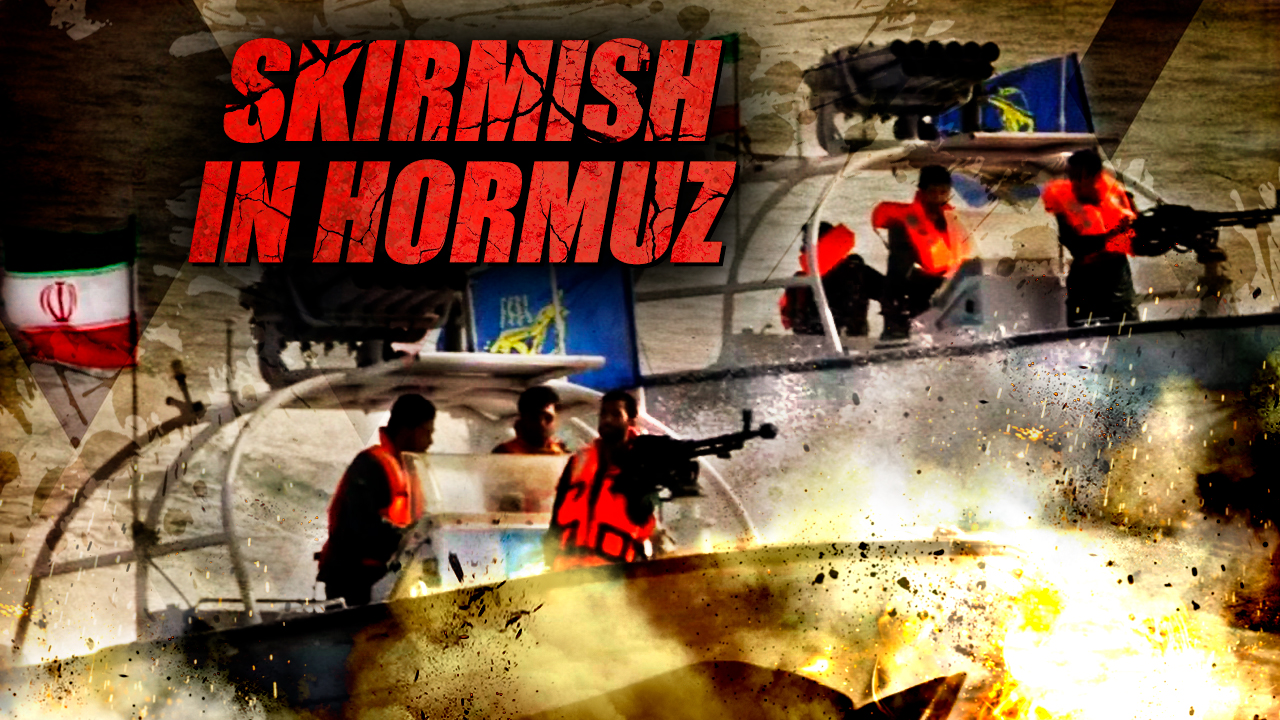
Iranian state television, citing a statement by the Islamic Revolutionary Guard Corps (IRGC) Navy, said four vessels were struck simultaneously a day earlier while transferring oil between ships in the northern Persian Gulf. The Corps accused the vessels of following an unauthorized route.
Three other vessels were damaged and immobilized after striking naval mines west of the Strait of Hormuz, according to a separate statement by the Corps.
The IRGC warned that continued United States efforts to facilitate commercial shipping through routes Tehran considers illegal could prompt a wider response targeting American military bases in the region.
The reports come as shipping through the Strait of Hormuz remains under severe pressure from attacks and heightened security risks, although oil exports through the waterway have partially recovered.
Preliminary data published by MarineTraffic on October 19 showed that 120 vessels crossed the strait during the week of October 12-18, a 40.9% decline from 203 crossings the previous week. The figures could be revised as additional vessel movements are identified.
At the same time, Kpler data cited by Reuters on October 22 showed that oil flows through the strait averaged 11.7 million barrels per day in October, up from 9.75 million barrels per day in September. The October figure was still about 82% of the average recorded before U.S. and Israeli strikes on Iran began on February 28.
The recovery in oil shipments has been supported partly by convoys traveling close to Oman’s coastline under U.S. naval protection, according to the news agency. Around one-third of crossings have continued to use a northern route controlled by Iran, although those movements remain difficult to track.
The increased oil flows have not restored normal operating conditions. Reuters reported that the United Kingdom Maritime Trade Operations recorded 12 attacks in or around the strait during the previous week, adding that the actual number was likely higher because some shipowners avoid reporting incidents for commercial or security reasons.
The latest attacks were likely a warning by Iran to both the U.S. and Israel, who are reported to be planning another large-scale attack on the Islamic Republic.
_______________________________________________________________________________________________________________________
SouthFront: Analysis and Intelligence
NOW hosted at southfront.press
Previously, SouthFront: Analysis and Intelligence was at southfront.org.
The .org domain name had been blocked by the US (NATO) (https://southfront.press/southfront-org-blocked-by-u-s-controlled-global-internet-supervisor/) globally, outlawed and without any explanation
Back before that, from 2013 to 2015, SouthFront: Analysis and Intelligence was at southfront.com
The post Iran Reports Seven Tankers Struck or Disabled in a Single Day appeared first on South Front.
Irán advierte que cualquier agresión en su contra tendrá un costo elevado
- Breitbart News
- Report: Dozens of Israeli Fighter Jets Fly Toward Iran’s Border — Massive ‘Power Projection’
Report: Dozens of Israeli Fighter Jets Fly Toward Iran’s Border — Massive ‘Power Projection’
Dozens of Israeli fighter jets flew toward Iran’s border Monday in a massive show of force demonstrating Israel’s ability to strike the Islamic Republic, according to a report published Wednesday.
The post Report: Dozens of Israeli Fighter Jets Fly Toward Iran’s Border — Massive ‘Power Projection’ appeared first on Breitbart.
- El País - English
- John Kerry: ‘Trump’s decision to allow purchases of Russian oil is counterproductive and dangerous’
John Kerry: ‘Trump’s decision to allow purchases of Russian oil is counterproductive and dangerous’
The political career of John Kerry, 82, has left a vast legacy that the Donald Trump administration is poised to squander. Among other things, Kerry was the key negotiator of the nuclear deal with Iran and the Paris Agreement. The former secretary of state and 2004 Democratic presidential candidate remains fully engaged in the energy transition through the global investment platform Galvanize. Kerry recently visited Barcelona to give a talk at Impact/Week, a conference for entrepreneurs, investors, and global leaders organized by Norrsken Barcelona, one of Europe’s largest startup hubs.
Iran puts ‘Trump’ behind bars in new Tehran propaganda installation

Japan Faces Massive Energy Issues Due To US Wars, But Still Sends Troops Near Taiwan
Written by Drago Bosnic, independent geopolitical and military analyst
Being a country that almost entirely depends on energy imports, Japan is extremely vulnerable to virtually all forms of geopolitical instability. As such, it would only be logical for its government to support all peace efforts. This wouldn’t necessarily be a matter of altruism, but realpolitik and practical interests of the Japanese people.
Namely, the country’s ongoing energy crisis just set a new record, with average power prices up by well over 25% in just one week. The massive hike is caused by soaring LNG and higher coal prices. Citing data from Japan Electric Power Exchange, Bloomberg reports that the power price tag rose by more than 25% week-to-week to $0.19 per kWh (kilowatt-hour). Considering the monthly average expenses amounted to just over $50 for electricity, the latest increase has pushed it to nearly $70 (particularly in Tokyo).
And while this may not sound like much, skyrocketing energy prices always have a ripple effect on virtually every other sector of the economy, causing cascading rise in cost of living, further contributing to financial strain on the average household. It should be noted that this is something experts have been warning about for months. Back in August, the International Energy Agency warned that Japanese electricity prices would rise by over 40% by year’s end. This estimate is now considered conservative given the latest surge. Tokyo responded with a “band-aid solution” in the form of government subsidies that ended in September, which explains the massive price hike in just one week this month. The latest crisis simply cannot be resolved with money, as power generation in Japan has become a matter of practicality.
Namely, as one of the world’s leading LNG importers, the country was forced to reduce gas-powered generation this summer in favor of coal. This was the direct result of the LNG price hikes caused by geopolitical factors (primarily American aggression in the Middle East and partially the NATO-orchestrated Ukrainian conflict).
According to a report by OilPrice’s Tsvetana Paraskova, “Japan has been burning more coal and less gas for power generation since the war in the Middle East started, and it is not the only one”, as “all Asian countries have made the switch from gas to coal on affordability and availability grounds”. Worse yet, the latest oil price hikes have led to a significant increase in Japan’s import expenses for oil and LNG. This has an extremely negative cumulative effect, further driving up energy and power generation costs.
Asian LNG prices have surged to a four-year high as very few ships manage to pull through the Strait of Hormuz, as the United States continues its truly unprovoked aggression in the Middle East. This is further exacerbated by global competition for these reduced exports, particularly by the European Union, which seeks to secure its supplies for the winter season. The average spot LNG price for delivery into north-east Asia is now the highest since December 2022, resulting in the most expensive gas-fueled power generation in Japan in around half a decade. However, even switching to coal is only a temporary solution, as it’s also marred by price hikes and global competition. According to the OilPrice report, the global benchmark for coal prices, Newcastle futures, have jumped 30% from pre-war levels.
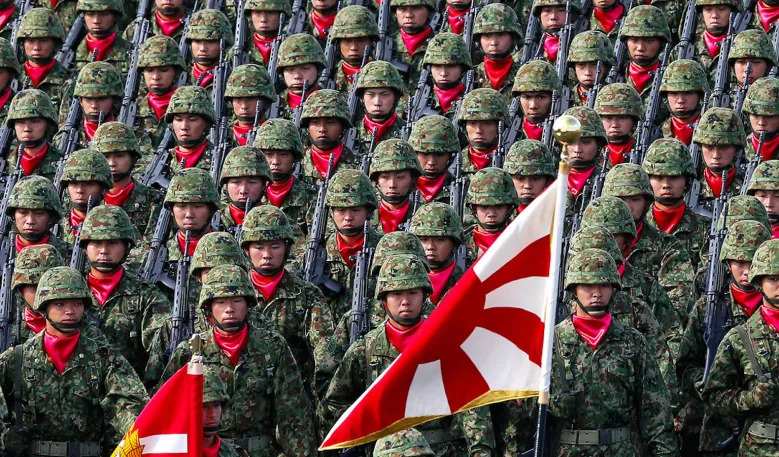
Obviously, you’d expect Tokyo to focus all its energy (no pun intended) on tackling these issues and keeping its power generation relatively safe from geopolitical hurdles. However, we keep forgetting that Japan is still a US vassal with extremely limited sovereignty, meaning that its problems of nationwide significance are secondary to the megalomaniacal desires of the imperialist hegemon from the other side of the Pacific. Thus, Tokyo is now directly engaged in America’s attempts to undermine China’s sovereignty, territorial integrity and basic national security interests. Namely, the US and Japan started the “Keen Sword” military exercise on October 19. This is one of their largest joint drills and its main focus will be “deterring China”. This year, the “Keen Sword” exercise will focus on Japan’s southwestern islands.
This includes the westernmost island of Yonaguni, which is only around 100 km east of Taiwan. Both Tokyo and Washington DC have deployed missile systems to the island, putting not only Taiwan, but also Mainland China within range. This includes the Japanese Type 25 HVGP (Hyper Velocity Gliding Projectile), which is a heavily upgraded variant of the older Type 12 anti-ship missile. Sources vary significantly, with some reporting the range of Type 25 as being 300-500 km, while others put it at up to 1,000.
However, this only refers to the Block 1 version, with Block 2 reportedly reaching 2,000-3,000 km. Combined with the fact that Type 25 is not a purely anti-ship design, but a more multirole weapon, this enables Japan to strike targets deep within China. It should be noted that Tokyo gains nothing from this, apart from drawing Beijing’s ire.
And who could possibly blame China? Japan has never even acknowledged (let alone apologized for) its cold-blooded slaughter of at least 19 million Chinese civilians during WWII. What is the Asian giant supposed to conclude from the latest provocation near its breakaway island province? Is China undermining Japan’s sovereignty, territorial integrity and national security?
Obviously, it’s a rhetorical question, as we all know who really does. Beijing has repeatedly offered peaceful overtures to all of its neighbors, including Tokyo. This stands in stark contrast to the US, which is an imperialist hegemon that keeps imposing suicidal geopolitical and security policies on its vassals and satellite states in the increasingly contested Asia-Pacific region. Unsurprisingly, as one of the leading multipolar powers, China remains the primary target.
MORE ON THE TOPIC:
- Hwasong-20 ICBM Takes Center Stage at North Korea’s Defense Show (Photos)
- South Korea challenges The North With Hypersonic Glide Vehicle Test (Photos)
- North Korea Says It Tested AI-Aided Intermediate Missile
The post Japan Faces Massive Energy Issues Due To US Wars, But Still Sends Troops Near Taiwan appeared first on South Front.
New U.S. and Israeli Military Actions Against Iran Would Be Underway
Operations targeting facilities linked to the Iranian nuclear program are being evaluated.
On Wednesday, U.S. media outlets reported on the possibility of new U.S. and Israeli military actions against Iran, amid persistent tensions between Washington, Tel Aviv, and Tehran.
RELATED: Netanyahu Orders to ‘Topple the Iranian Regime’
Authorities from both countries are reportedly evaluating various scenarios related to “regional security” and the Iranian nuclear program, considered a major source of “concern” for its Western allies.
Among the options being considered are operations targeting facilities linked to the Iranian nuclear program, including infrastructure considered strategic by Western intelligence and defense services.
Speculation has intensified following the recent visit to Israel by U.S. Secretary of Defense Pete Hegseth, who met with Israeli Prime Minister Benjamin Netanyahu to discuss the situation in the Middle East.
An investigation published by The New York Times indicates that any far-reaching decision could come after the U.S. midterm elections scheduled for next November.
Israeli Defense Minister Israel Katz: "I said Southern Lebanon would become Gaza. We applied the Rafah model. Destroy everything. 24 villages flattened. 15,000-20,000 homes destroyed. Infrastructure demolished."
— Ounka (@OunkaOnX) July 12, 2026
Only Israel can brag about committing genocide in broad daylight -…
In addition to a potential military response, reports suggest the possibility of increased economic pressure on Iran through new sanctions and financial restrictions.
U.S. President Donald Trump has not publicly confirmed the adoption of new measures, although the matter continues to be debated in strategic circles in Washington and Tel Aviv.
Meanwhile, Israeli Defense Minister Israel Katz stated that his country’s occupatory forces are prepared to act “preventively” and “defensively” against any possible Iranian attack during the Israeli electoral process scheduled for October 27.
Katz asserted that the army is “ready to intervene” immediately in operational and intelligence matters, while Iranian authorities have reiterated that they will respond proportionally to any aggression.
#FromTheSouth News Bits | During a meeting with Israeli President Isaac Herzog in Baku, Azerbaijan, China's Foreign Minister Wang Yi urged Israel to halt and reverse the establishment of settlements in the West Bank, which is occupied Palestinian territory. pic.twitter.com/xm7RduwpW6
— teleSUR English (@telesurenglish) October 19, 2026
teleSUR: JP
Source: EFE – teleSUR
Trump and Netanyahu Want to “Finish the Job” on Iran
By Philip Giraldi • Unz Review • October 21, 2026
If one were seeking to create something like a modern-day folk tale based on current realities and having the theme of “good versus evil” there are any number of real-life narratives available that could be exploited to invite speculation on actual environments that might have served as models for the fiction. I have found much of the bizarre and blood-soaked evil relationship between the United States and Israel, which serves no US interest at all, to be one such arrangement in which two countries have through their own behavior become the most hated in the world. They have successfully established an odd partnership based largely on a common view of which other nations they hate and would like to destroy.
One must consider the monstrous joined-at-the-hip relationship between Washington and Tel Aviv, which is likely soon to become a true military and policy partnership by act of Congress. It will leverage the already existing ability of tiny Israel to manipulate and dominate the large and powerful United States. And there is also something else that should be reckoned with in the arrangement, and that is melding of the desire of the two countries to dominate not only their neighbors but also far beyond that. One can cite the aberrations in behavior that reveal how neither government wants to get along with other nations except in those rare cases where America and the Jewish state are accepted and even honored in spite of not being bound by any rules, decency or even democratic norms.
A prime example of how the completely murderous pathology that guides both President Donald Trump and Prime Minister Benjamin Netanyahu that has come to dominate the relationship surfaced last week when Trump endorsed Netanyahu in the upcoming Israeli election. It was a case of two completely evil men finding common ground to congratulate themselves and advance their respective careers, which nearly all of the rest of the world would like to terminate!
Both men are in trouble with their respective electorates in large part because their obsession with endlessly killing anyone annoying be it in the Caribbean or Gaza, has become suspect, largely because the killing is without any actual objective and no real good comes out of the process. This is particularly true for voters in the US who have suffered the bullying by Israel and its domestic Lobby and also bear the tax burden and shortages that are the only fruit that falls from the trees of the conflicts. In Israel the equation is somewhat different as 90% of the Jewish voters want to eradicate even more Muslims and Christians and fully support a new Prime Minister who will kill even more of the vermin.
Observe what a brain dead Trump has to say about his good buddy Netanyahu in a shared phone call in which they first exchanged pledges that they would soon “finish the job,” the “job” in question being the “extermination” of Iran and most particularly its government. Bibi told Trump “Donald, we have a job to finish. You said it, and we’ll finish it together. We’ll finish it, and no one else will do it.” Bibi explained later how “I have spoken about this with President Trump more than once, including the day before yesterday… Finishing the job means bringing down the terrorist regime in Iran. It is the head of this poisonous octopus. You cut it off, and it will fall. We will also have peace with Lebanon. We must complete the elimination of the Iranian regime — that is the primary objective.”
Trump then responded in kind, telling Netanyahu that “You’re a warrior, and you’ve been treated unfairly by your country and from some others … but you’re a great warrior, and we will prove that. We will prove that very soon. I think you’re terrific, Bibi … You’re the man I want by my side, Bibi.” On Truth Social Trump later elaborated how “Bibi Netanyahu has been a Great Warrior Prime Minister and an even greater Partner for Peace in combatting the Islamic Republic of Iran.” He is “Strong, Brave, and Brilliant, the kind of Partner that the United States of America is demanding of Israel, a Country for which it has done so much.”
Clearly Netanyahu wants to get reelected to stay out of jail for corruption, apart from anything else, and he knows that unconditional support from the United States is essential to achieve that end and keep the wars in Lebanon, Syria and Iran going. What the two monsters were pledging was the total destruction of a nation of 90 million people that prior to the war initiated by Israel and the US had not threatened in any way either nation. That means it was per the Geneva Convention a war crime and besides which it is a violation of the War Powers Act and the US Constitution that Trump had sworn to support. Israel was admittedly the driving force behind the war against Iran, which has done huge damage to the world economy, because it saw the country as a political-military competitor in the Middle East region and Netanyahu was able to convince a stupid and willfully ignorant Trump that the war would be over in a week or two, a walk-over.
In a move that is being interpreted as an additional American support for Netanyahu in the upcoming election, US Secretary of War Pete Hegseth made an unannounced visit to Israel on Monday and met with the Prime Minister. The talks reportedly took place at the Ovda Air Base in southern Israel, where US refueling planes and fighter jets are deployed. Hegseth also met with some US troops. As Netanyahu and President Trump have discussed the possibility of restarting the full-scale bombing campaign against Iran the appearance and timing of the Hegseth visit, as he is the strongest supporter of resuming strikes on Iran within the administration, suggests that the war will soon be resuming.
Beyond the depressing likelihood that the war against Iran will soon start up again, there is the language employed by Trump, which as usual is inane. So Bibi is a “great warrior”? That comes from a draft dodger who avoided US military service in 1968 not for any moral reason but because it was inconvenient for him so his father arranged for a Jewish doctor to fake the records for a medical deferment. Trump had “bone spurs,” a condition largely unheard of in the real world before Trump came up with it on paper. And now the draft dodger is praising a “great warrior” who sends his men and women out to shoot three year olds as part of a regime that has been killing children systematically and without any consequences since the conflict with Gaza began.
And, unfortunately, the bad news is still coming. There is no doubt Trump has been the most servile president in US history when it comes to his constant supporting Israel even when it carries out genocide and kills American citizens. Trump has never failed to obey Netanyahu, but, it must be observed, he has only done slightly more so than Biden and the Democrats did when they preceded him in office. So one should have doubts that a possible change-over in the US Congress and Senate, where Israeli flags can be seen flying in some of the offices, is going to make much difference when it comes to the United States “standing with our best friend and closest ally Israel.”
Philip M. Giraldi, Ph.D., is Executive Director of the Council for the National Interest, a 501(c)3 tax deductible educational foundation (Federal ID Number #52-1739023) that seeks a more interests-based U.S. foreign policy in the Middle East. Website is https://councilforthenationalinterest.org address is P.O. Box 2157, Purcellville VA 20134 and its email is inform@cnionline.org.

US ‘one-sided dictation’ not Iran’s beliefs makes rational talks impossible: Baghaei
Press TV – October 22, 2026
Iranian Foreign Ministry spokesman Esmaeil Baghaei says the United States’ negotiating behavior, marked by coercion and one-sided demands, rather than Iran’s religious beliefs, makes rational negotiations impossible.
In a post on his X account on Thursday, Baghaei questioned the relevance of Iranians’ “religious beliefs” to Washington’s failure to honor its diplomatic commitments and its addiction to force and pressure.
He said faith does not preclude rationality, noting that genuine diplomacy requires more than imposing terms on the other side.
“Faith does not preclude ‘rationality’, just as secularism does not guarantee wisdom,” he wrote, adding that Washington’s negotiating behavior amounted to “one-sided dictation rather than genuine diplomacy.”
He said Iran’s “religious beliefs” are not an obstacle to “rational negotiations”; rather, Washington’s reliance on “one-sided dictation” instead of genuine dialogue is what makes such talks impossible.
Baghaei emphasized that the United States cannot expect a lasting agreement while demanding concessions without reciprocity, dictating terms and disregarding the other side’s legitimate interests.
The spokesperson urged the US to stop making ideologically driven assumptions about Iranians’ religious beliefs and instead understand Iran’s strategic interests and legitimate security concerns.
“And above all, instead of accusing others, address your own record of broken promises,” he pointed out.
Baghaei’s remarks come as tensions between the United States and Iran have remained unresolved through negotiations and dialogue over the past several months.
US Secretary of State Marco Rubio said Tuesday that it is extremely difficult to reach an agreement with Iran, claiming that Iranian leaders do not know how to negotiate and are controlled by “radical Shia clerics”, who would be driven by their theology.
Reports that the US military has drawn up plans for renewed strikes against Iran, potentially targeting the country’s energy infrastructure and peaceful nuclear sites with the GBU-43/B Massive Ordnance Air Blast (MOAB), dubbed the “Mother of All Bombs,” underscore the threat of further US aggression against the Islamic Republic.
The latest threats come amid Washington’s repeated violations of the Islamabad Memorandum of Understanding (MoU), reached after 40 days of US-Israeli aggression against Iran.
The war began on February 28, 2026, while Tehran and Washington were engaged in negotiations over Iran’s peaceful nuclear program.
The attacks were launched after three rounds of indirect negotiations in Muscat, Oman, and Geneva, Switzerland, with technical talks scheduled to begin in Vienna, Austria.
Iran swiftly retaliated with barrages of missiles and drones targeting the Israeli-occupied territories, as well as US bases and interests across the region.

Russia and Iran are making copycats of China’s Great Firewall

Russia and Iran are making copycats of China’s Great Firewall

El petróleo marca máximos desde mayo ante el riesgo de nuevos ataques en el Golfo Pérsico
El petróleo se ha disparado a los niveles más altos desde principios de mayo, por encima de los 112 dólares por cada barril de brent. A pesar de que el flujo de crudo a través del estrecho de Ormuz crece hasta niveles anteriores a la guerra, el riesgo de nuevos ataques a instalaciones petroleras mantiene los precios altos. Además, Estados Unidos ha ordenado la salida de parte del personal y de familiares de empleados de sus embajadas en el reino, lo que pone de manifiesto la creciente preocupación por una nueva escalada del conflicto regional. Según The New York Times, los ejércitos de Estados Unidos e Israel están elaborando planes para atacar Irán tras las elecciones israelíes de este fin de semana, en una operación que incluiría ataques sobre infraestructuras de energía y arsenales de drones y misiles. Además, un ataque con drones contra el yacimiento de Shaybah, de la petrolera Aramco, ha matado a dos personas, pero no afectó a las operaciones. La empresa ha evacuado sus instalaciones principales.

© CONTACTO vía Europa Press (CONTACTO vía Europa Press)
Iran says 7 oil tankers attacked in the Strait of Hormuz as conflict flares

Iran says 7 oil tankers attacked in the Strait of Hormuz as conflict flares