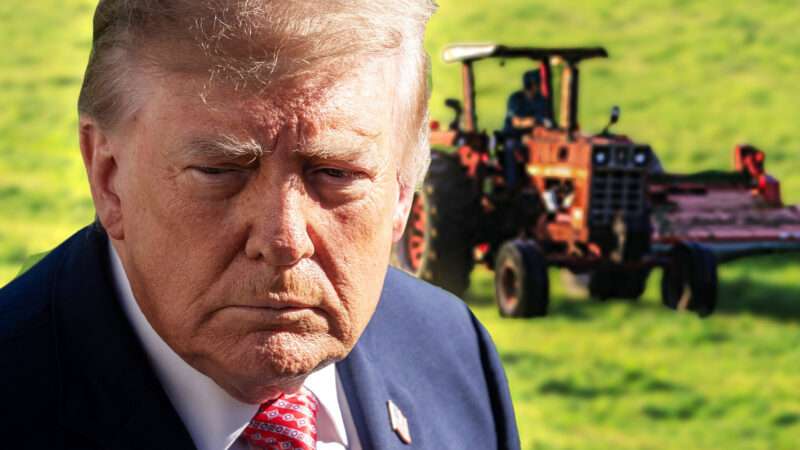
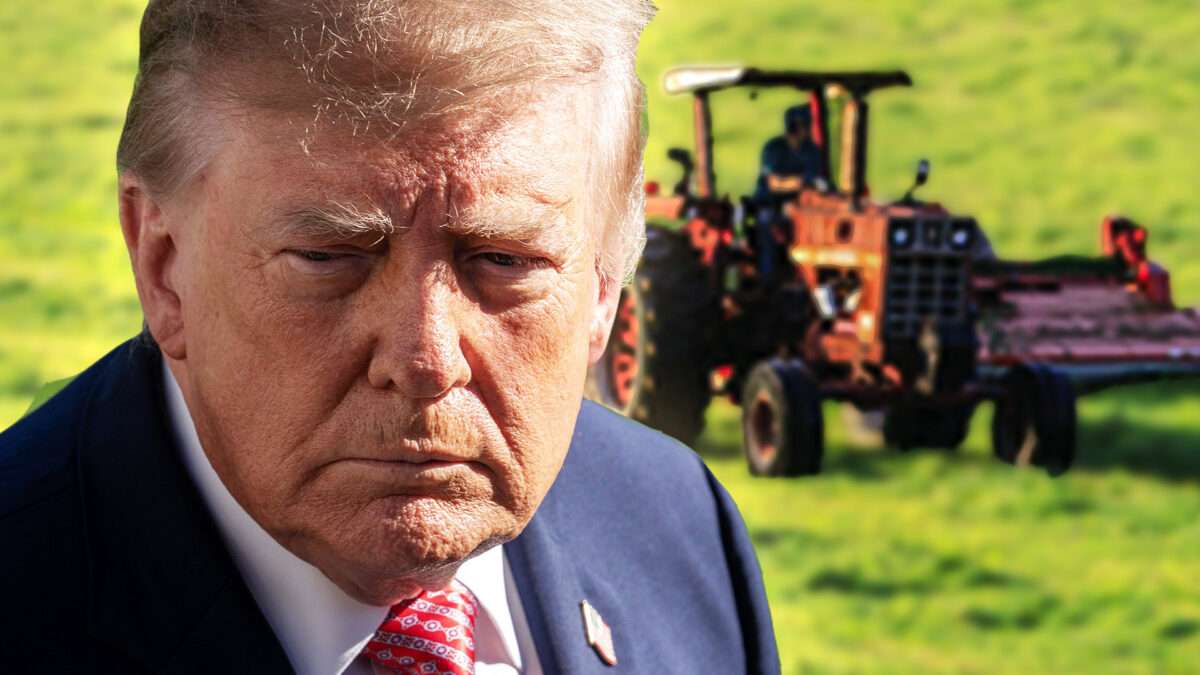
On Monday, the U.S. Department of Agriculture (USDA) announced it would "make $8 billion available for one-time payments to American farmers this harvest season to provide relief during temporary market disruptions and increased input costs."
Using a formula derived from the USDA's production, yield, and price estimates, the Harvest Fuel Relief program will "provide simple, proportional support to producers." It will only cover a "portion of modeled losses during the 2026 crop year." The Farm Service Agency—an office within the USDA that administers credit and loan programs—will administer the $8 billion in one-time payments using funds from the Commodity Credit Corporation, a federal entity authorized to draw up to $30 billion from the U.S. Treasury to fund agricultural initiatives. Payment rates won't be released until November, and the USDA's notice leaves open the possibility of additional payments for "non-Title I commodities, including specialty crop growers and fishermen."
A fiscally questionable decision, the program comes at a time when farmers are feeling a significant price pinch. The dyed diesel American farmers and ranchers use is exempt from state and federal highway taxes, but that has done little to offset skyrocketing fuel prices. In September, the American Farm Bureau Federation projected that fuel expenses would reach $22 billion this year, up 29 percent from 2025. The Farm Bureau estimates that total production expenses will reach nearly $500 billion in 2026. According to its own predictions, the USDA doesn't expect the situation to improve anytime soon.
In its latest Commodity Costs and Returns report, released in June, the USDA projects farmers and ranchers will face record production costs in 2027—higher than during the COVID-19 supply chain disruptions—driven by higher prices for necessary inputs such as fuel, fertilizer, seeds, machinery, and labor.
While the USDA has blamed "temporary market disruptions" for these cost hikes, the blame more accurately falls to President Donald Trump, thanks to his illegal war in Iran. As of Tuesday, Trump's war—and the subsequent shocks it has caused to the global diesel supply—have pushed the national average price in the U.S. up $2.70 per gallon from a year ago, a 74.6 percent increase, according to AAA data.
Unfortunately, the war in Iran is just one of several Trump administration policies making life more expensive for everyone, including the nation's farmers and ranchers. Tariffs on imported fertilizer, which began in 2020 during the first Trump administration, have made it difficult for American farmers to afford what they need. By the Farm Bureau's estimates, fertilizer costs for 2026 are projected to reach a record $40 billion, up 15 percent from the previous year.
The $8 billion program is part of a windfall of taxpayer money the Trump administration has sent to farmers as relief for harms caused by the president's actions. Last December, the USDA sent $11 billion in one-time bridge payments to more than half a million farmers nationwide. Earlier this month, the USDA announced it would provide a record $13.8 billion in gross payments to agricultural producers to cover revenue losses.
In a speech in Kansas touting the program, Trump claimed that the state's residents would see a "plunge" in prices once the war ends. That's likely an exaggeration, given the host of questionable economic policies he seems hell-bent on implementing.
Still, that shouldn't discredit the president's suggestion. Ending the war would benefit farmers, ranchers, and consumers, without doling out billions in another government bailout for a favored industry.
In 2022, I helped push through the international agreement to protect biodiversity. Wars and economic pressures can make nature seem like a ‘nice-to-have’. But it is a critical asset, and Cop17 must deliver real action
When I was five, property developers came to cut down the woods behind my home in La Tuque, Quebec. My mother encouraged me to climb one of the trees in protest, then told the developers, straight-faced, that there was nothing she could do when they asked her to get me down. A few days later, the tree was cut down anyway.
I thought about that tree in the early hours of a freezing Montreal morning in December 2022, as the gavel came down on a global agreement between nearly 200 countries to halt and reverse the loss of nature by 2030. I thought about how important nature is for our health, our food security and our economies, but also how much passion there is around protecting it, and how it has the power to inspire people all around the world.
The dire projections come from the state’s Climate Change Assessment, which analyzes the impacts of changing weather patterns on the nation’s most-populous state.
The report finds that without major intervention, as much as three-quarters of California’s beaches could disappear — either seasonally or permanently — by 2100 because of coastal erosion.
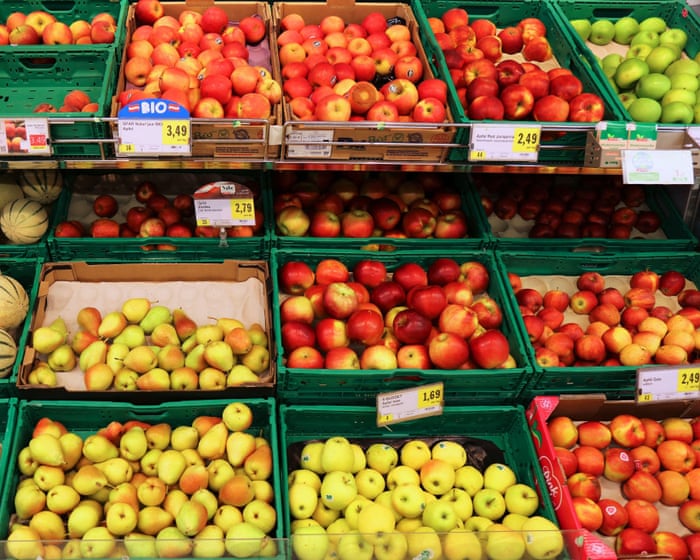
Spar pilot scheme will test whether heirloom fruit can thrive in today’s commercial and environmental conditions
Only about 10 of the 2,000 types of apples growing in Austria can be found in supermarkets among the polished, pristine fruit usually on display – a sad ratio according to fans of historic varieties being primed for a comeback.
One of the country’s biggest retail chains has embarked on a pilot rollout of unusual and long-forgotten apples enjoyed in previous centuries, riding an international trend of reviving heirloom fruit and vegetables.
Farmers and ranchers have supported President Trump for a decade. But the war in Iran, tariffs and other administration policies have soured some on the G.O.P.
NFU analysis of official data shows falls in exports to UK’s largest trading partner since 2019 include 70% for sugar and 74% for egg products
Exports of British food and drink to the EU have collapsed by more than a third since Brexit with eggs, chicken and potato producers badly hit, new figures show.
Analysis by the National Farmers’ Union (NFU) of HMRC data shows a sharp fall in exports in the year to July compared with the same period in 2019, with sugar dropping the most, down 70%.
A poor sugarcane crop in India, the world’s second-largest producer, is hurting consumers and farmers — plus undermining the country’s energy security goals.
A worker tending to a sugarcane crop in Maharashtra, India, in September.
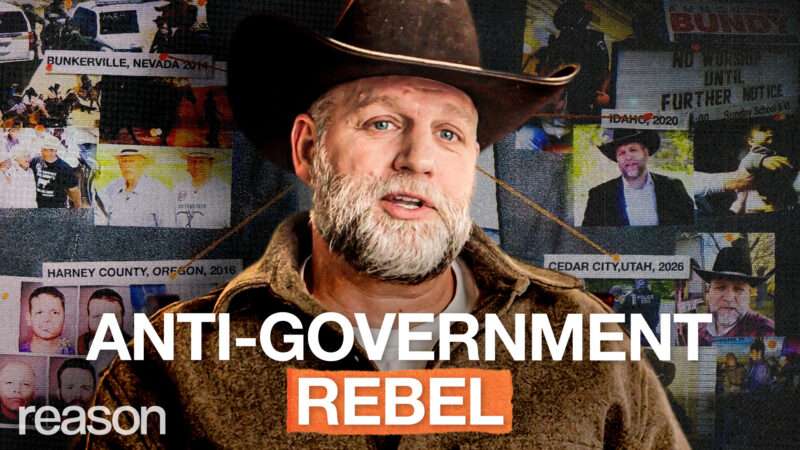
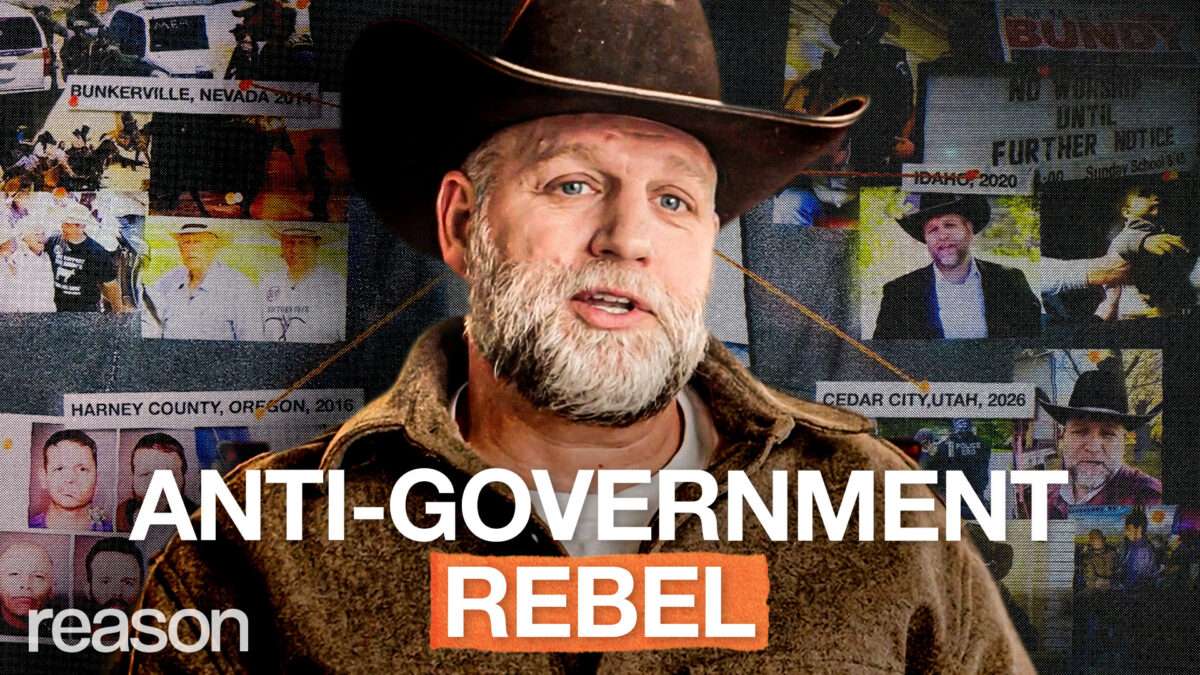
Ammon Bundy was once considered the face of America's far-right militia movement. Now he's speaking out against President Donald Trump and his treatment of immigrants.
"How do you demonize them to the point where they should be rounded up by armed men in the government, kicking down their doors and dragging them off?" Bundy tells Reason.
Bundy views Trump's violent, indiscriminate immigration crackdown as just the latest example of how an oversized, tyrannical United States government is stomping on individual rights. Bundy has sacrificed a lot for his beliefs, including serving a two-year stint in federal prison (though he was ultimately acquitted) and being stripped of his property. It hasn't stopped Bundy from continuing to fight for what he believes in.
The anti-government activist first entered the national spotlight in 2014 when he joined his father, Cliven Bundy, in an armed standoff against the Bureau of Land Management (BLM) at the elder Bundy's Bunkerville, Nevada, ranch. The BLM had impounded 400 of Cliven's cattle after a decades-long disagreement over land rights had ended with Cliven's refusal to pay his grazing fees. Cliven and Ammon solicited militias from around the country to join them in confronting the federal agents guarding the confiscated cattle. The show of force caused the BLM to stand down and release the cows. The conflict, closely followed by the national media, made Ammon and his father celebrities and established a pattern in which the younger Bundy would aggressively challenge what he deemed to be the federal government's violation of individual rights.
Just two years later, Bundy championed the cause of Oregon ranchers Dwight and Steven Hammond, who were imprisoned for allegedly setting fires on federal land adjacent to their property. Bundy says their prosecution was simply another power play by the government. Rather than accept the United States Court of Appeals decision to re-sentence the Hammonds to an additional five years, Bundy led a group of armed followers to occupy the nearby Malheur National Wildlife Refuge in Harney County, Oregon to protest the court's decision. Again, the national media spotlight was on Bundy. The occupation, which lasted 41 days, ended with an FBI ambush, resulting in the death of one of Bundy's allies, an Arizona rancher named LaVoy Finicum.
"They shot him three times in the back, and he died in the snow," lamented Bundy.
Bundy and his allies were arrested on January 26, 2016. The FBI simultaneously pursued charges against Bundy for the Oregon occupation and the earlier Bunkerville standoff. He faced life in prison. After spending about two years locked up, he was acquitted of all charges. Then on July 10th of 2018, Trump pardoned the Hammonds, and they were released from prison.
"That wouldn't have happened if we hadn't made such a big deal out of it," continued Bundy.
Bundy was living in Idaho during the COVID-19 pandemic and was arrested multiple times for protesting lockdown measures. In 2022 he challenged Idaho's Republican establishment by running for governor as an independent. Two months before the primary, the 10-month-old grandson of Ammon's campaign manager was taken by Child Protective Services after doctors at St. Luke's Hospital in Boise suspected the parents were neglecting the child's health. Bundy, furious, accused St. Luke's of kidnapping. The child was returned to his parents six days later, but St. Luke's sued Bundy and his campaign manager, saying they bullied and intimidated staff while disrupting business at the hospital. With the lawsuit pending, Bundy lost the election to the Republican incumbent, Brad Little, though received 17 percent of the vote. Bundy did not show up in court, and he and his co-defendants were ordered to pay St. Luke's nearly $53 million in damages. Bundy's home and most of his assets were seized. He faced the possibility of another lengthy jail sentence.
"They got a gag order against me where I couldn't speak about (the baby) Cyrus's case. And of course, I kept speaking about it. They kept getting contempt charges until finally they ended up getting a $250,000 bond against me, and I had to leave the state."
Bundy fled with his wife and five kids to Cedar City, Utah, where a friend offered them a one-room attic apartment. He joined his brother's diesel truck parts business and was eventually able to move his family into a house.
After vocally opposing Trump's anti-immigrant rhetoric during his first run for president, Ammon continued to criticize Trump in his second term, drawing parallels between the federal agents who seized his father's cattle and U.S. Immigration and Customs Enforcement (ICE) agents acting with impunity in American cities.
"If I and my family were threatened by federal agents in an unconstitutional way, I would do all I could to oppose them. In fact, I have pretty good experience with that," Bundy said in a Facebook post during Operation Metro Surge in Minneapolis in early 2026.
In 2025, Bundy circulated a self-published essay titled, "The Stranger: A Christian and Constitutional Case for Protecting Those Who Come to America." In the essay, Bundy argues that treating immigrants like criminals simply for lacking "official permission" to cross the United States border violates constitutional ideals and defies the spirit of an American society built by legal and "illegal" immigrants. He also draws heavily on scripture to assert that Christians have a spiritual calling to protect and welcome immigrants.
Bundy's criticisms of Trump's immigration crackdown has cost Bundy friends, including some of his allies from Oregon and Bunkerville. He had a falling out with one former ally who "was bragging about how the ICE agent pulled his gun so fast," to shoot and kill Alex Pretti, the 37-year-old intensive care nurse in Minneapolis. The ally "was someone that literally went to prison with us," continues Bundy. "How in the world do you take that position, after having federal weapons pointed at you? How could you possibly say something like that? It's disgusting."
Despite recent dust-ups with friends and supporters, Bundy remains in high demand for guidance and inspiration. While Reason was filming Bundy in his small auto parts shop fulfilling orders, a friend called him to ask for advice on legal troubles. Bundy reassured him and asked him to send the paperwork over so he could be of better assistance. That inclination just seems to be second nature for Bundy. He's always ready to lend a helping hand, while simultaneously advocating for personal responsibility.
"If you want a healthy nation, you must look at an individual and protect those liberties, protect those freedoms," says Bundy.
As for how Bundy feels about the direction of our current government—it's unflinching.
"Like George Washington said, government is like a fire. It can be a useful tool or a terrible master. And a terrible master is what our government has become."
Photo Credits: Alex Milan Tracy/Sipa USA/Newscom ; Mike Stotts/ZUMAPRESS/Newscom; Andy Nelson/ZUMA Press/Newscom; Vyacheslav Prokofyev/TASS/Newscom; Sean Madden/Planetpix/ZUMA Press/Newscom; Prentice C. James/Cal Sport Media/Newscom; Mark Black/ZUMA Press/Newscom; John Nacion/ZUMA Press/Newscom; Jeremy Hogan/Polaris/Newscom; Karen Focht/ZUMA Press/Newscom; Sarah A. Miller/TNS/Newscom; facebook/realammonbundy; Benjamin Hanson/Middle East Images/StringersHub/Sipa USA/Newscom; Charles Reed/ZUMA Press/Newscom; Carol Guzy/ZUMAPRESS/Newscom; Dave Decker/ZUMAPRESS/Newscom; EyePress/Newscom; Roberto E. Rosales/ZUMAPRESS/Newscom; Carol Guzy/TNS/Newscom; Allison Dinner/ZUMAPRESS/Newscom; National Archives; Library of Congress; Elijah Scott/SiPA USA/Elijah Scott/Sipa USA/Newscom; Jen Golbeck/ZUMAPRESS/Newscom; Lela Edgar/ZUMAPRESS/Newscom; CNP/AdMedia/SIPA/Newscom; Chris Kleponis - CNP/CNP / Polaris/Newscom; Wayne Gooden/Image of Sport/Newscom
Music Credits: "The Tomorrow War" by Or Chausha via Artlist; "Under Pressure" by Michael Kobrin via Artlist; "Beyond the Stories" by Ian Post via Artlist; "Long Road" by Oakfield via Artlist; "Railroad" by Max H. via Artlist; "Hidden Answers" by FableForte via Artlist; "Foreboding" by Kyle Preston via Artlist; "Whodunit" by FableForte via Artlist; "No Decides" by Or Chausha via Artlist; "Witness" by Oliver Michael via Artlist; "It Comes at Night" by Adam Dib via Artlist; "Dusty Roads" by FableForte via Artlist; "Lullaby" by Assaf Ayalon via Artlist; "Unsettled" by Matt Evans via Artlist; "Uneasy Atmosphere" by Matt Evans via Artlist; "Reset" by sero via Artlist; "Dream Life" by DJ Taz Rashid via Artlist; "Can't Lose You" by The Likes of Us via Artlist; "From the Ground Up" by Earth Tone via Artlist; "Pianissimo" by Adrián Berenguer via Artlist; "Washed Away" by Mark Grundhoefer
Jeremy Clarkson has said there is no reason to set up a business in Andy Burnham’s Britain as he made a surprise appearance at the Conservative Party conference.
As the European Commission considers its final response to the Fur Free Europe European Citizens’ Initiative, The Lancet Regional Health – Europe has published a commentary by leading zoonotic disease experts and academics warning that fur farming poses a preventable public health threat. The authors argue that if the Commission is serious about One Health – the principle that the health of people, animals and wider environment are interconnected – it must propose a ban on fur farming rather than welfare standards.
Lead author Dr Joanna Swabe, senior director of public affairs atHumane World for Animals Europe, says: “Fur farming is an unnecessary and preventable public health threat. The EU cannot claim to champion One Health while allowing a declining fur industry to continue cruelly breeding susceptible species, such as mink, foxes and raccoon dogs, in intensive conditions where dangerous viruses can spread, adapt and potentially spill over to people. Surveillance and spurious welfare tweaks will not remove that risk. The Commission must act decisively and ban fur farming.”
Dr Neil Vora, director of Preventing Pandemics at the Source Coalition, adds: "Caging wild species, like mink, is dangerous to our health. These animals are like viral sponges under these awful conditions: They can contract respiratory viruses from us, incubate them, then pass them back to us in mutated form. It does not make sense to take wild species and confine them in small cages for their entire lives, only to be gassed or electrocuted, solely to produce fur for fashion. Aside from the animal abuse, the risk to our health is too great. It’s long past time to phase this industry out. The EU should ban fur farming, as many of its citizens want, and show the world what true prevention looks like."
The European Commission was due to respond to the Fur Free Europe ECI by the end of March 2026, but its decision has been delayed by apparent disagreement within the College (the EU’s executive leadership body) over whether to ban fur farming or introduce welfare standards. A document leakedto the media in March suggested the Commission was leaning towards standards. This came despite anunequivocal EFSA opinion by independent EU science agency, the European Food Safety Authority, that the most serious welfare problems for mink, foxes, raccoon dogs and chinchillas cannot be prevented or substantially mitigated in the cage systems used for fur farming.
The Lancet piece argues that the EU’s commitment to One Health is undermined by its hesitation to ban fur farming, despite clear zoonotic disease risks and strong public support for action. It highlights how fur farms create ideal conditions for pathogens such as SARS-CoV-2 and H5N1 to spread, adapt and potentially spill over to humans, with past outbreaks in the Netherlands, Denmark, Finland and Spain demonstrating the danger. The authors note that the fur industry is in steep economic decline, imposes wider public health and environmental costs, and cannot resolve its core welfare or disease risks through minimum standards. They conclude that an EU ban on fur farming would be a practical, preventive One Health measure and a clear example of upstream pandemic prevention.
The Lancet commentary entitled If the EU is serious about One Health, it must ban fur farmingwas co-authored by Dr. Joanna Swabe (Humane World for Animals), Prof. dr. Chris Walzer (University of Veterinary Medicine, Vienna/WCS), Dr. Benjamin Roche (MIVEGEC, Université Montpellier/ Universidad Nacional Autónoma de México (UNAM)), Prof. dr. Arnaud Fontanet (Institut Pasteur, Université Paris-Cité), Prof. dr. Thijs Kuiken (Erasmus University Medical Centre, Rotterdam), Dr. Manon Lounnas ((MIVEGEC, Université Montpellier), Prof. dr. Andrea S. Winkler (Technical University of Munich, Germany/University of Oslo), Prof. dr. Sarah Cleaveland (University of Glasgow), Prof. dr. Dirk U. Pfeiffer (Royal Veterinary College, London/ City University of Hong Kong), Prof. dr. Latiffah Hassan (University of Missouri), Prof. dr. Raina K. Plowright (College of Veterinary Medicine, Cornell University), Dr. Neil M. Vora (Preventing Pandemics at the Source Coalition).
Together, we tackle the root causes of animal cruelty and suffering to create permanent change. With millions o supporters and work happening in over 50 countries, Humane World for Animals—formerly called Humane Society International—addresses the most deeply entrenched forms of animal cruelty and suffering. As the leading voice in the animal protection space, we work to end the cruelest practices, care for animals in crisis and build a stronger animal protection movement. Driving toward the greatest global impact, we aim to achieve the vision behind our name: a more humane world. humaneworld.org
Before I read this piece, all I knew about tomatoes was that homegrown tastes infinitely better than store-bought. For Offrange, Mitch Hagney educated me on how tomatoes ripen naturally and unnaturally, and how Big Tomato forces the issue in huge warehouses by pumping in ethylene gas. It might just inspire you to grow your own.
Tomatoes are climacteric fruits, like bananas, avocados, and mangos, which means they can be harvested unripe and complete the process later. Ethylene sends the hormonal signal to ripen. When that process happens naturally, cells near its seeds start producing the gas and it diffuses outward through the fruit. Each cell the gas reaches begins its own production, and the cascade softens the flesh and the tomato turns red from the inside out. That allows the fruit to be picked much greener, shipped far, and then ripened when they’re close to their eater.
To do it artificially isn’t complicated, but it is expensive. Ethylene floods the room at carefully calibrated amounts, and the operator compresses what might take weeks into five days. Sensors log temperature, humidity, and gas concentrations around the clock. The tomato turns red from the outside in.

 Login