Login

Three Coffees A Day: Is Your Caffeine Habit Affecting Fertility?
According to the American Society for Reproductive Medicine, moderate caffeine consumption does not seem to pose any significant risk concerning fertility.

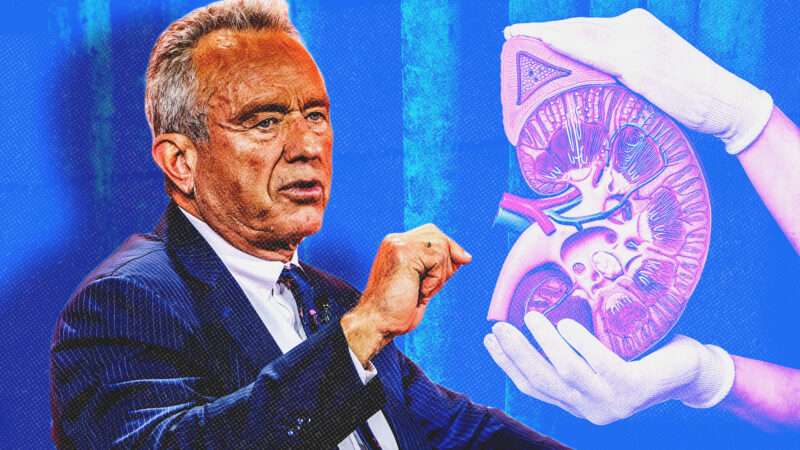
Like most of American healthcare, kidney care has for decades been plagued by red tape. The Trump administration says it wants to change that. On Tuesday, Department of Health and Human Services (HHS) Secretary Robert F. Kennedy Jr. announced his department's Kidney Care National Plan, which promises to introduce more competition, reduce regulatory barriers, expand patient choice, and overhaul America's kidney transplant system.
Much of the plan focuses on barriers to entry in dialysis care, which treats nearly 558,000 Americans. While dialysis can be performed at home, most patients receive treatment at specialized facilities, which must comply with federal certification requirements governing equipment, staffing, water quality, and patient safety in order to participate in Medicare.
Kennedy argues that regulatory barriers have discouraged competition and innovation, leaving patients with fewer dialysis treatment options. "Dialysis technology is an extraordinary technology," said Kennedy at the press conference, but "because of monopolies in the system and the barriers to new entrants, we have not seen any real improvements in that technology."
Of course, the existence of large or even monopolistic companies is not in itself evidence of a problem, but government regulation can often entrench those companies' positions in the market. "I like the fact that they're recognizing that a lot of regulatory…barriers are contributing to the problem, and that's refreshing to hear," says Jeffrey Singer, a practicing general surgeon and senior fellow at Reason Foundation, the nonprofit that publishes Reason. Singer says that removing barriers that prevent new companies from competing with established providers could not only increase choice but also drive down prices.
HHS says that two companies, DaVita and Fresenius Medical Care, control approximately 74 percent of the American dialysis market. As of 2019, roughly a third of Americans lived in areas where the only available dialysis provider was one of those two companies, according to the agency. The administration argues that government regulation has helped entrench this dominance by making it difficult for new providers to enter the market.
To address this, the Kidney Care National Plan suggests a number of reforms, including simplifying certification requirements. HHS also plans to investigate whether dominant dialysis providers have used payment arrangements and legal strategies to secure higher reimbursements without delivering better care.
The 17-page report calls for a review of existing requirements, but it does not specify which regulations will be repealed, nor does it establish a timeline for doing so. It also does not propose any significant reduction in the government's role in financing the distorted market. Instead, the plan largely seeks to make existing government-financed systems such as Medicare more competitive and efficient.
Kennedy has also correctly identified the need for reform regarding kidney donations. Nearly 90,000 people are waiting for a kidney transplant at any given time in America, and 11 people die every day waiting for a kidney. The transplant process is currently managed by Organ Procurement Organizations (OPOs), which are federally certified nonprofits responsible for recovering organs from donors and coordinating their transfer. There are currently just 55 federally designated OPOs operating in the United States, and HHS argues that they behave as "regional monopolies." Since no new OPOs have been approved in the last year, the Kidney Care National Plan suggests fast-tracking certification.
The plan also seeks to make living kidney donation easier by reducing financial barriers. Following the passage of the Honor Our Living Donors Act in February, HHS revised federal reimbursement rules so that a donor's eligibility for financial assistance is no longer determined by the transplant recipient's income. Eligible donors can receive up to $6,000 to cover expenses, including travel, lost wages, and childcare.
However, the reforms proposed stop short of allowing kidney donors to receive direct compensation for the organs themselves, which remains prohibited under federal law. "I can sell my blood. Why can't I sell my kidney?" Singer asks.
Peter Jaworski, director of the Georgetown Blood and Plasma Research Group, feels similarly, arguing that financial incentives are available to nearly everyone involved in kidney transplantation except the donors themselves. "According to this plan, it's OK to use incentives to encourage them to be more productive, to actually do a better job," Jaworski tells Reason, referring to transplant surgeons, hospitals, and organ procurement organizations. "The only exception, once again, is the donor who is offering a kidney."
Better solutions exist, according to Jaworski, who points to the proposed End Kidney Deaths Act. The bill, which was introduced by Rep. Nicole Malliotakis (R–N.Y.) last year, would offer living kidney donors a $50,000 refundable tax credit, distributed over five years. "We have those systems in order to make sure that we can treat patients. That's the point of blood donation. That's the point of plasma donation. That's the point of kidney donation too."
America's plasma market is an excellent example of financial incentives encouraging donation. Unlike many other countries, the U.S. allows plasma donors to be compensated, and despite accounting for just over 4 percent of the world's population, it supplies approximately 68 percent of the plasma collected globally for manufacturing medicines.
"Why do you think America does it? Is it because in America there's way more altruism than in France or Italy or Belgium? No, it's because in the United States you can be paid to donate plasma," argues Jaworski.
The Trump administration appears to recognize that government overreach has stifled competition and restricted patient choice. It also recognizes that living adults donating kidneys will be part of the solution to the long, deadly waiting lists. But its plan leaves the government's outsize role in kidney care largely untouched. For patients facing years on dialysis or waiting for a lifesaving transplant, recognizing the problem is not enough.
The post RFK Jr. Wants To Cut Red Tape in Kidney Care. He Should Go Further. appeared first on Reason Magazine.
Courtesy of May Lee
This as-told-to essay is based on a conversation with May Lee, a 60-year-old broadcast engineer with GreyHawk Global at McMurdo Station in Antarctica. She previously worked there as a supply technician for Amentum after spending decades at HP, most recently as a marketing and communications manager. The conversation has been edited for length and clarity.
I was laid off from HP after 30 years, so I decided to look beyond tech jobs and pursue something different at 60.
I had visited Antarctica twice for vacation and fell in love with it. At the time, I didn't know that you could work there. When I looked into it, I knew I had to apply.
It's so hard to describe how amazing it is to work at McMurdo Station. If you ever get a chance to experience it, I highly recommend it.
Here's what the job application process was like.
The US National Science Foundation manages the US Antarctic Program. The body contracts out operational support to several companies, each with a specific focus. For example, Gana A'Yoo is responsible for areas like food services and waste management.
In mid-April, I applied for three roles: rooms coordinator at Gana A'Yoo, service desk support technician at Grey Hawk Global, and a supply assistant supervisor at Amentum.
I applied using my HP résumé, which lists my various roles at the company.
Courtesy of May Lee
I was turned down for the rooms coordinator role within a week or two, with an email stating that I did "not meet the minimum requirements."
This came as a surprise to me. So, I started researching more about working in Antarctica — something I should have done beforehand — and learned that it's very competitive to get a job there. I read on blogs that if you don't make your résumé match the job description exactly, you get weeded out. So, I think that's what happened.
I then kind of wrote off my pursuit of a job in Antarctica. I thought maybe this just wasn't meant to be.
Courtesy of May Lee
Then, in May, a recruiter from Amentum, which offers roles in logistics and skilled trades, reached out to me, saying that my résumé appeared to be a match for what they were looking for. The job I got was a supply technician at Amentum.
When asked to send my résumé by email, I updated it to make sure it matched the job description.
I also received a pre-screening questionnaire about my availability, credentials, and whether I could work in the US without sponsorship.
A week later, I had a 30-minute video call with the recruiter about what the hiring process entails and more details about the job environment.
This was followed a few days later by an 80-minute phone call with the hiring manager, during which they asked behavioral, situational, and competency-based questions.
Courtesy of May Lee
I received an offer contract for an alternate position. An alternate is the backup for a primary who can't go for whatever reason. I was told that the quicker I get through the background and physical qualification (PQ) checks, the quicker I could get to the top of the alternate list.
Because Antarctica is so remote, they want to make sure that you're healthy. Because if you go down there and something happens, there are no medical facilities that can take care of you.
In June, I received a 17-page PQ form that requested comprehensive medical and dental information.
There were eight required blood tests, a physical exam, vision screening, and a dental exam, among others. Depending on your age, sex, and deployment location and term, there may be additional tests. The costs of these were reimbursable by the company.
In addition to the PQ, I underwent a comprehensive government background check.
I was cleared to onboard in June and was notified that I was changed to a primary in July.
Often, this is because a primary has dropped out; they might've failed the PQ, even if they passed it the year before, or something in their life might've happened that requires them to stay home.
Courtesy of May Lee
There was some back-and-forth with my PQ, which I had to resubmit after getting an updated Tdap vaccine.
In September, I received the current-season influenza vaccine, and my PQ was approved.
I flew from San Francisco to Auckland, New Zealand, and then to Christchurch. There were a couple of days of training, and I also got outfitted with extreme-cold-weather gear.
Then, after seven months of preparation, I was finally deployed to McMurdo on a Boeing C-17 Globemaster III.
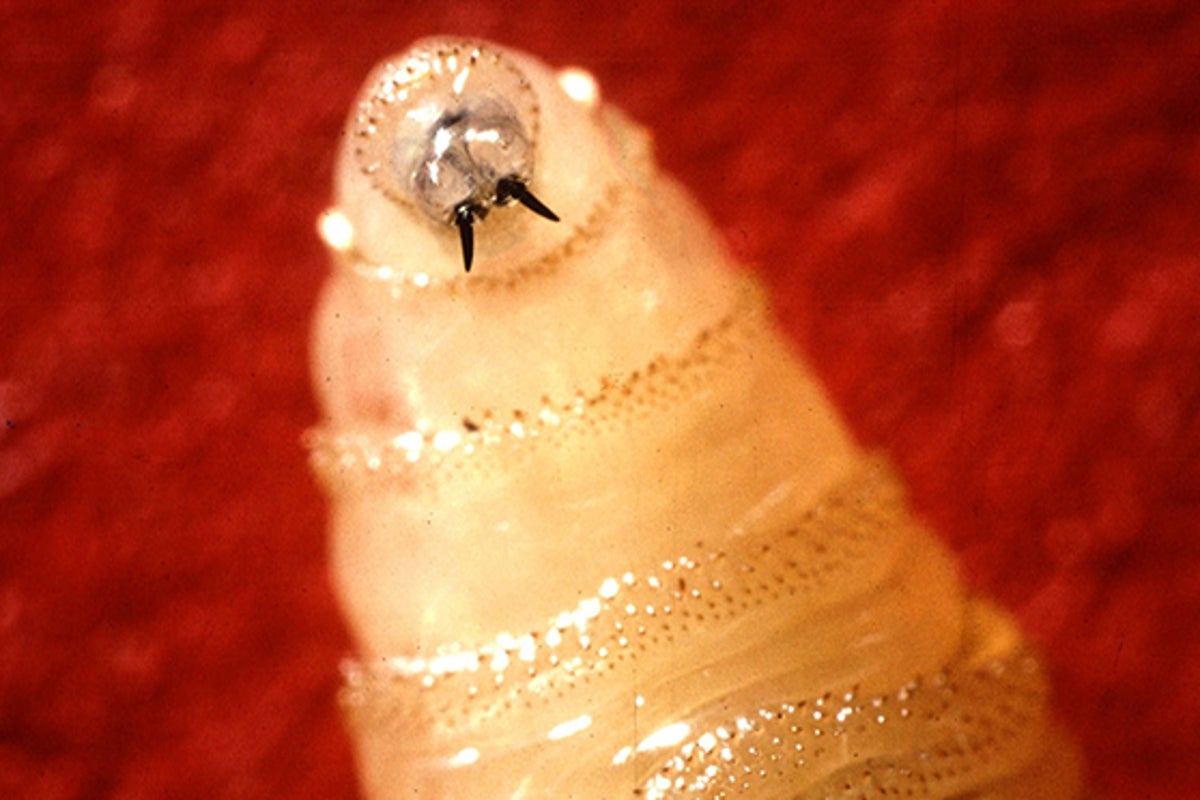
The metallic, orange-eyed parasite uses mouth hooks to burrow into the flesh of mammals
© USDA via CDC
The metallic, orange-eyed parasite uses mouth hooks to burrow into the flesh of mammals
© USDA via CDC
The metallic, orange-eyed parasite uses mouth hooks to burrow into the flesh of mammals
© USDA via CDC
Investigations under way to determine whether virus normally found in livestock contributed to man’s death
A man in France has become the first human known to have contracted Shamonda virus, with investigations under way to explore whether it contributed to his death.
Shamonda virus is a type of bunyavirus and is spread by bites from infected midges. According to the Austrian Agency for Health and Food Safety, in animals such as cattle, sheep and goats it can cause diarrhoea, lack of appetite and a decline in milk yield, “as well as abortions and congenital abnormalities in newborn calves, lambs and kids”.
Continue reading...
© Photograph: Pascal Rossignol/REUTERS
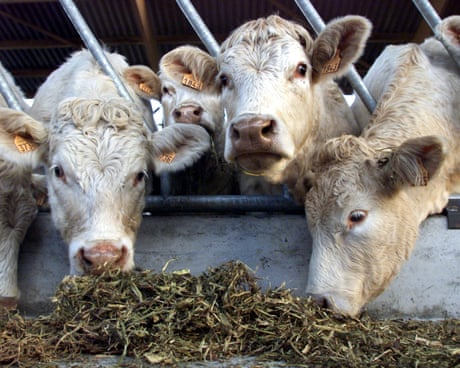
© Photograph: Pascal Rossignol/REUTERS
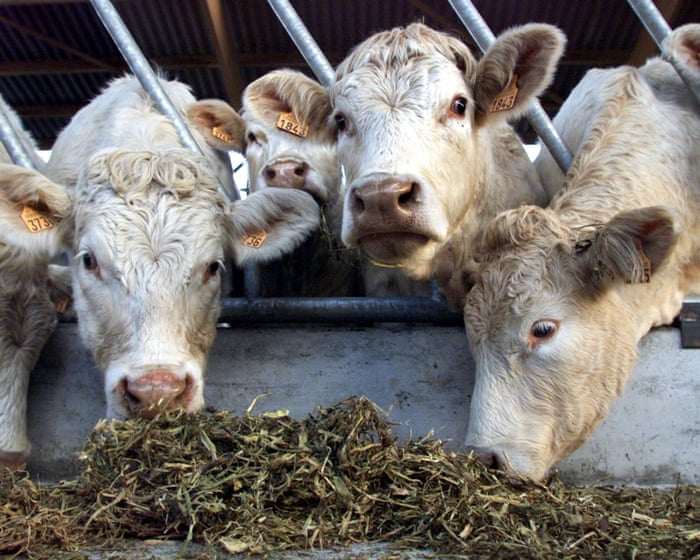
© Photograph: Pascal Rossignol/REUTERS
Investigations under way to determine whether virus normally found in livestock contributed to man’s death
A man in France has become the first human known to have contracted Shamonda virus, with investigations under way to explore whether it contributed to his death.
Shamonda virus is a type of bunyavirus and is spread by bites from infected midges. According to the Austrian Agency for Health and Food Safety, in animals such as cattle, sheep and goats it can cause diarrhoea, lack of appetite and a decline in milk yield, “as well as abortions and congenital abnormalities in newborn calves, lambs and kids”.
Continue reading...
© Photograph: Pascal Rossignol/REUTERS
© Photograph: Pascal Rossignol/REUTERS
© Photograph: Pascal Rossignol/REUTERS
The Supreme Court on Wednesday refused to let the Trump administration gradually end transgender-related medical services for prison inmates who want to be treated as members of the opposite sex.
The post Supreme Court Refuses to Let Trump Cut Transgender Inmate Care appeared first on Breitbart.
What is the Shamonda virus and is it dangerous to humans?

© PA

Portugal’s planned 15% subsidy for obesity medicines will leave treatment beyond the reach of many patients, their national association has warned, accusing the government of introducing restrictions that will further
The post “We’ll be the laughing stock of Europe” appeared first on Portugal Resident.
Courtesy of Renate Flanagan.
How soon is too soon to invite a new romantic partner to go on vacation? I asked myself that when I had been dating a guy for a month and had an upcoming vacation that I had planned before I met him.
During the height of the pandemic lockdown in the spring of 2020, I was going stir-crazy not being able to travel freely. In those early days before vaccines or access to testing, air travel felt risky, and there were even restrictions on interstate travel. As an avid traveler who always has a next destination in mind, I needed something to look forward to during those dark days when I was afraid to hug my parents because of social distancing guidelines.
I didn't know it yet, but a solo adventure to cure my cabin fever would turn into a litmus test for a budding relationship during those unprecedented times.
I loved hiking and the outdoors before the pandemic. While many places were closed due to social distancing mandates, the national parks were mostly still open. I had never been to Acadia National Park in Maine, even though I lived in New England until I was 10. Maine is within a day's drive from my home in the Washington, DC area, so Acadia seemed like a feasible destination.
I was single at the time. I had taken solo trips before and planned to go to Maine on my own. In June, I scheduled my time off from work for the last week of August. I didn't have any accommodations picked out or much of a plan other than driving up to Maine and visiting Acadia.
In July, I met a guy from a dating app. We hit it off, and soon we were seeing each other multiple times a week. About a month after we first met, we were hanging out, and I said offhand, "I'm going to miss spending time with you when I'm in Maine." He said he was going to miss me too. Then an idea, that seemed crazy, popped into my head. "Well, you could come with me," I blurted out.
Courtesy of Renate Flanagan.
As soon as I asked him to join me, I wondered if I had crossed a line. We weren't even in official "boyfriend-girlfriend" territory. We had known each other for a month, and my trip was planned for a month later. Without hesitation, he accepted my invitation to go to Maine.
I was excited my new love interest wanted to join me on vacation, but I couldn't help but consider the potential for disaster. What if we stopped seeing each other before it was time to go on vacation? How would we handle a 9-hour car ride together? What if four days of nonstop togetherness was too much too soon?
As he helped me plan the trip, I got early signals that things would go well. We collaborated on finding a place to stay. We were aligned that while we didn't need a 5-star hotel, we also didn't want a bargain rustic cabin where the only bathroom was an outhouse. The night before we left, he humored my meticulous packing list and impressed me with his ability to load the car as if he were playing Tetris.
Courtesy of Renate Flanagan.
The 9-hour drive showed we were a great team, taking turns as the driver or the copilot who assisted with navigation and music selection. We discovered that, as angsty teenagers, we had nearly identical tastes in early 2000s rock music, despite growing up on opposite sides of the Atlantic. Staying together in the cabin ended up being a micro-experiment in living together, which felt effortless.
The trip itself was a blast. We admired the Atlantic Ocean from the top of Cadillac Mountain and skipped rocks on Jordan Pond in Acadia. We went kayaking at the lake by our rented cabin and ate fresh lobster. Inviting someone you're dating on vacation so soon might have been unconventional, but it turned out great. Six years later, we're still together, and the trip remains a fond memory from the early days of our relationship.
Courtesy of the author
It's been 19 years since I was diagnosed with peritoneal mesothelioma, and some nights I still wake up at 3 a.m. Not because something is wrong. Not because I'm back in treatment. Not because there's a symptom that is screaming for attention. Just wide-eyed in the dark.
I start doing what I trained myself to do all those years ago: scanning, taking inventory, checking for anything that feels even slightly off. Sometimes, before I fall back asleep, I've already Googled it. The symptom. The ache. The random thought that popped into my head.
I sometimes even nudge my husband awake and talk it through in the dark. He'll gently say, "Don't Google it. Go to sleep. You're good, babe."
Intellectually, I believe him. But physiologically, I am still alert.
This is what surviving cancer can look like. And one thing I've learned is that high functioning doesn't mean unaffected.
During doctor visits, I say I'm doing well. And in many ways, I am. I work. I lead. I parent. I function at a high level. My scans have been clear for years. But high-functioning does not always mean regulated, and that distinction matters in cancer survivorship because being declared clear does not automatically mean your body feels safe.
Courtesy of the author
There were seasons when I was convinced something was wrong with my heart. Or my lungs. A tightness in my chest. A shallow breath. A sensation I couldn't quite name but could not ignore. My body would tense before my mind even caught up. I knew what it felt like to almost lose my life once. So my nervous system stayed on alert, just in case.
And yet I built a full life after treatment. I went back to work. I raised my children. I stepped into leadership. I advocated. I thrived in ways I once wasn't sure would be possible.
Outside, I looked steady. Capable. Strong.
Internally, it can look entirely different, chronic hypervigilance running quietly beneath the surface, sleep disrupted by racing thoughts about recurrence, a persistent need for control, repeated symptom research, quiet bracing before every scan. Because I was functioning, the anxiety wasn't obvious. Not to others. And sometimes not even for me.
It hid inside productivity. It dressed itself up as responsibility. It sounded like preparation and diligence. It looked like staying informed, staying ready, staying ahead.
For a long time, I called it strength. It took years to realize that some of what I was carrying wasn't just resilience. It was vigilance that had never fully powered down.
I noticed it most while driving alone. My thoughts would replay doctor visits in detail, analyzing tone, pauses, and phrasing. Did I ask the right questions? Did they miss something? Should I follow up sooner? The appointment might have gone well. The scans might have been clear. But my brain continued processing as if there were still a threat to solve.
Over time, I came to understand this differently. It wasn't fragility. It was conditioning. During treatment, attention to detail mattered. Vigilance mattered. Survival required it. My mind simply had not fully turned off that system. To be honest, it's still working on it.
I noticed that in cancer survivorship care, emotional screenings often prioritize depression or acute distress. High-functioning anxiety often falls below those thresholds. A survivor who reports returning to work and managing responsibilities may not appear at risk. She may hesitate to show fear because she believes she should be past this by now. She may minimize symptoms to avoid appearing ungrateful.
Courtesy of the author
Gratitude and anxiety often coexist. Composure can mask dysregulation. "I'm fine" can mean I'm functioning, and not necessarily that I feel safe.
When high-functioning anxiety stays unacknowledged, the effects accumulate quietly. And the hardest one to explain is an emotional fatigue that has no obvious source.
It doesn't look like exhaustion. It looks like getting through a full, productive day, working, leading, showing up for everyone who needs me, and feeling completely depleted by early evening with nothing specific to blame it on. It looks like sitting in a meeting, fully present and contributing, while another part of me is quietly managing an undercurrent that has nothing to do with what's being discussed. It looks like needing more alone time than I used to, not because anything went wrong, but because holding it all together in the foreground takes more out of me than anyone can see.
Some days it shows up as a short fuse over something small. Not because it matters that much, but because the reserves were already lower than they appeared.
The hardest part is that there's often nothing to point to. No difficult scan. No hard appointment. No clear reason to feel worn thin. And that absence of an obvious cause can make you question yourself, wonder if you're being dramatic, or ungrateful for a life you fought hard to keep. So, you push through it, dismiss it, and don't mention it at the next appointment because how do you explain fatigue that has no story attached to it?
I have built a full life since my diagnosis. I lead. I advocate. I thrive in ways I once questioned were possible. But high-functioning anxiety has been part of that journey. It does not define me. It does not dominate me. But it has shaped how I move through the world, particularly in moments where health is discussed.
As a long-term cancer survivor, when I say that I am doing well, at times, I'm telling the truth. At that moment, I may also be managing a nervous system that remembers something my medical chart no longer reflects as current.
Survivorship is not only about the absence of disease; it can also be about restoration. And that process can last far longer than anyone expects.
Fears over lack of scrutiny for key sectors as health editor position also to go in cuts aimed at saving £5.5m
The BBC will no longer have a dedicated education editor as part of a cost-cutting drive in which 100 jobs are to go across BBC News under a plan that school leaders described as “deeply regrettable”.
BBC staff have been told that the roles of education editor and social affairs editor are to be combined into a single position as part of a round of changes that will save £5.5m. However, prominent unions and campaigners are saying the reform will dilute scrutiny of two specialisms that are too important to go without a dedicated BBC role.
Continue reading...
© Photograph: Jeff Gilbert/Alamy

© Photograph: Jeff Gilbert/Alamy

© Photograph: Jeff Gilbert/Alamy
Elizabeth Wong
When I returned to work after my second maternity leave, our family of four found ourselves very short on free time.
Back then, my husband and I had jobs in finance in London. We were working long hours, with video calls stretching from seven in the morning to nine at night.
On weekdays, like most families with young children, we felt like we were in a never-ending cycle of rushing everywhere. Our plates were filled with nursery drop-offs and pickups, Teams calls, making dinner, cleaning up, and getting the kids ready for bed and baths, with household chores and personal admin to be completed in what was left of our free time.
Though we had full-time childcare, we had little else in the way of daily support, as our families were not local.
In our social circle, we knew that dual-career parents with young children often bought supermarket-ready meals or ordered takeout. However, these options often felt too high in salt and sugar, and limited in their selection.
That was how I found myself posting in a Facebook group for Malaysian moms in the UK, desperately trying to find someone to cook for us.
I wasn't envisioning a personal chef who would shop and make three meals a day — our budget didn't stretch that far — rather, I hoped to find a decent home cook and had a few hours to make big, batch meals that we could freeze, then reheat on our busy weekdays.
That was how we found Evelyn.
Elizabeth Wong
Evelyn was an experienced pastry chef on furlough, like many in the food-service industry at the time — we connected in 2020, amid the COVID-19 pandemic.
She lived in a neighboring borough in London, which made our arrangement convenient. Equally as important, she was good at cooking Chinese-Malaysian dishes.
She would visit once a month, for about four to six hours. Our arrangement cost us around $150 per visit at the time. Before she arrived, we would discuss the menu over WhatsApp. Crucially, the dishes had to be easy to freeze and easy to reheat.
I would then shop for the ingredients she needed, which meant a combination of online grocery shopping and trips to Chinatown for less-common items.
On her visit, she would cook large portions of three dishes, which she further subdivided into another three family-sized portions. In total, we had around nine portions, which were then packed into containers and frozen — like a supermarket-ready meal, but tastier and probably healthier.
The meals she cooked were Malaysian Nyonya or Chinese-Malaysian dishes: ayam tempra (chicken dish), chai boey (a delicious sour and spicy stew with leftover roast meat), babi pongteh (a braised pork dish), and chicken with ginger and spring onion.
Elizabeth Wong
As a result of Evelyn's visits, we did not spend precious hours batch cooking on the weekends. We could spend our limited free time with our children.
Although her meals did not completely replace the need for us to cook, the constant everyday drudgery of preparing food was partially mitigated. On weekdays, after a long day of work calls, I would grab a container out of the fridge and pair it with plain white rice.
And the biggest unexpected benefit was that she taught us more of my culture. Though I'm Chinese-Malaysian, I was never taught how to cook growing up. When I started living independently, my cooking repertoire did not extend much beyond pasta, curry chicken, and whatever I could learn from YouTube videos.
Nothing compares to being shown what to cook and how to do it by a more experienced person. It was a learning experience for me to hunt for the ingredients that Evelyn had asked for in the local Chinese grocery store. On one of my trips, I had gotten a vegetable that I believed to be kai choy (Chinese mustard green), only to be told by Evelyn that it was choy sum (Chinese flowering cabbage).
By watching her, I also learned about different types of tofu and which work best for various dishes, plus how to get a good sear on meat (very high heat and a willingness to tolerate oil splatter).
Evelyn continued to come to our place every month or so until we left London about four years later. We did not restart an arrangement like this in our new place, as the kids were older and our jobs were more flexible.
I am a firm believer that you have to make your own village in this modern world, especially for those of us who have found careers far away from our families of origin. So I am forever grateful to Evelyn for her help in the intense years with babies and young children.
We had been looking for a "batch-cooking service," but instead we got a stand-in "aunty."


A growing number of American parents are using cannabis, prompting questions about potential child exposure and safety, according to a new study.
Cannabis use increased substantially among parents between 2012 and 2024, with researchers estimating that at least 5.9 million U.S. children were living with a parent who used marijuana on most days in 2024.
By 2024, 8% of parents used cannabis on most days, 5.2% used it daily and 6.7% met the criteria for cannabis use disorder (CUD).
IS DRINKING EVERY DAY ALCOHOLISM? EXPERTS EXPLAIN WHERE CULTURE AND ADDICTION COLLIDE
Daily cannabis use among parents was about four times as common as daily alcohol use, the study found.
While increases occurred across nearly all demographic groups, some of the largest were seen among younger and unmarried parents, those in lower-income households and those without a four-year college degree.
Researchers from the University of California, San Diego, analyzed data from the National Survey on Drug Use and Health (NSDUH), involving nearly 482,000 U.S. individuals ages 12 and older.
The findings were published in the journal Addictive Behaviors.
MARIJUANA USERS MAY FACE HIDDEN DRIVING DANGER THAT STANDARD TESTS CAN MISS
"Marijuana has become so socially acceptable that people are starting to overlook the risks," Dr. Jarid Pachter, who specializes in family medicine and addiction medicine at Stony Brook Medicine in New York, told Fox News Digital.
"Just because it's legal doesn't mean it's harmless," added Pachter, who was not involved in the study.
The physician also expressed concern about the example parents are setting for their children.
"If marijuana use is a regular part of life at home, children may start to see it as something that's normal and relatively harmless," he said, pointing to studies that show children whose parents use marijuana are more likely to use it themselves as they get older.
"That doesn't necessarily mean the parent's marijuana use is causing the child to use, but there's clearly an association."
The doctor also cautioned that THC, the main psychoactive chemical in the marijuana plant, is known to affect attention, memory, coordination and reaction time.
NIGHTLY GLASS OF WINE MAY NOT BE AS HARMLESS AS MANY PEOPLE THINK, STUDY SUGGESTS
"When you have young children, you need to be alert and able to respond to their needs," he said. "I'm not suggesting that someone who uses marijuana can't be a good parent. My concern is about being impaired when you're responsible for a child's safety."
"I also think we need to be careful about normalizing daily marijuana use," he went on. "We wouldn't automatically consider daily alcohol use harmless, and we shouldn't look at marijuana that way, either."
Pachter emphasized that accidental ingestion is another concern, especially with edibles like marijuana gummies or chocolate, which can look like regular candy to a young child.
"We've seen significant increases in emergency room visits involving children who accidentally consume marijuana," he told Fox News Digital.
CANNABIS COMPOUNDS COULD REVERSE DISEASE AFFECTING ONE-THIRD OF ADULTS
"Some develop severe sedation, confusion and difficulty walking. In more serious cases, children can have breathing problems and require hospitalization."
The more frequently someone uses marijuana, the greater risk of developing cannabis use disorder, the doctor cautioned.
CLICK HERE FOR MORE HEALTH STORIES
"We also know THC can affect memory, attention and coordination. Frequent use, particularly of high-potency products, is associated with an increased risk of certain psychiatric problems in susceptible individuals."
Smoking marijuana around children can also pose a risk of secondhand exposure.
"Marijuana smoke contains many of the same harmful chemicals found in tobacco smoke," the physician said. "We know children can be exposed to THC through secondhand smoke, although we're still learning about the long-term health effects."
CLICK HERE TO SIGN UP FOR OUR HEALTH NEWSLETTER
For those who use marijuana every day, Pachter suggests they ask themselves whether they can go without it, and whether it is affecting work, relationships or responsibilities.
TEST YOURSELF WITH OUR LATEST LIFESTYLE QUIZ
"And if you're a parent, you need to consider whether your marijuana use is affecting your ability to care for your children."
The study had some limitations. The researchers did not assess parenting quality or childrenâs health, and the findings do not establish that parental cannabis use causes adverse child outcomes.
Additionally, the data relied on self-reported substance use, which could be subject to recall or reporting bias.
The researchers called for further studies examining whether the frequency of parental cannabis use, cannabis use disorder, household exposure and storage practices are associated with children's health or developmental outcomes.
CLICK HERE TO DOWNLOAD THE FOX NEWS APP
The researchers reported funding support from the California Department of Cannabis Control, the Canadian Institutes of Health Research, the National Institute on Drug Abuse and the National Institute on Alcohol Abuse and Alcoholism.