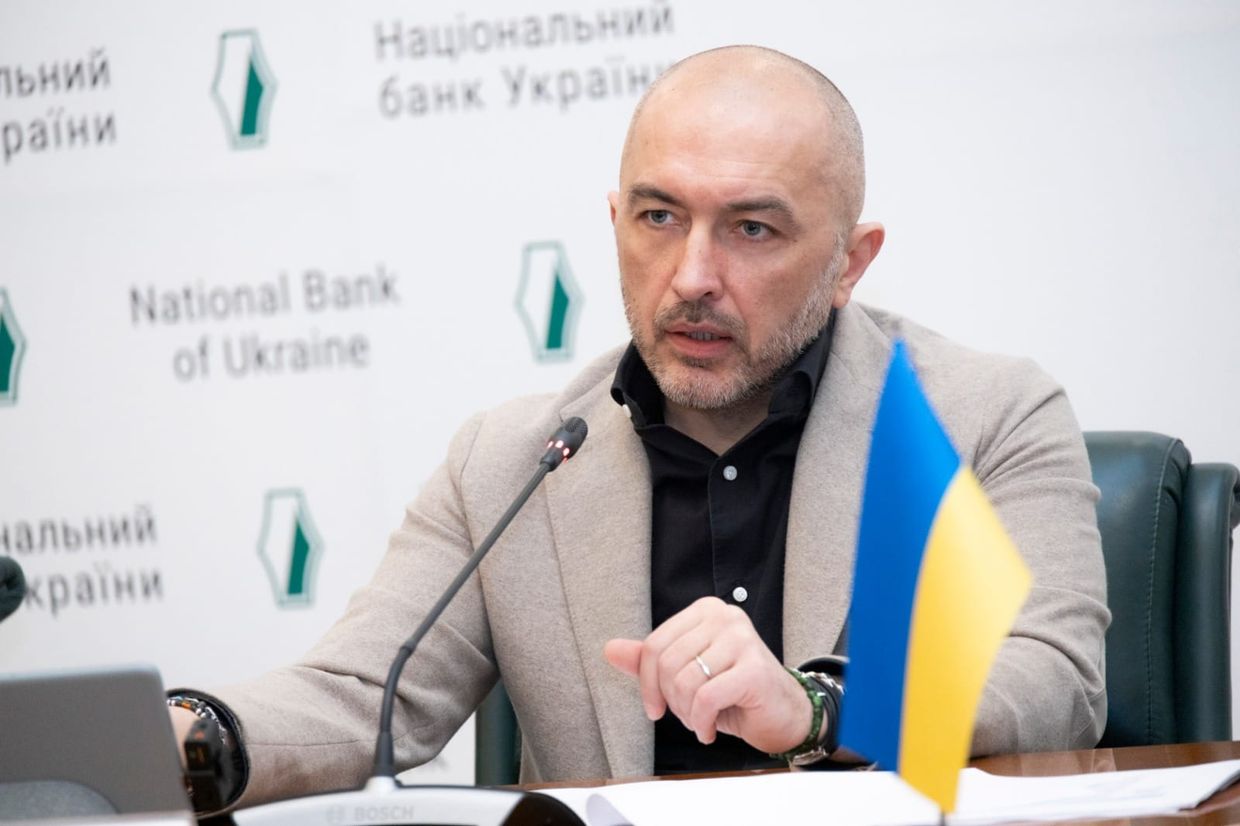
The National Anti-Corruption Bureau (NABU) on Oct. 21 searched the premises of Andriy Pyshnyi, head of the National Bank of Ukraine, a law enforcement source told the Kyiv Independent.
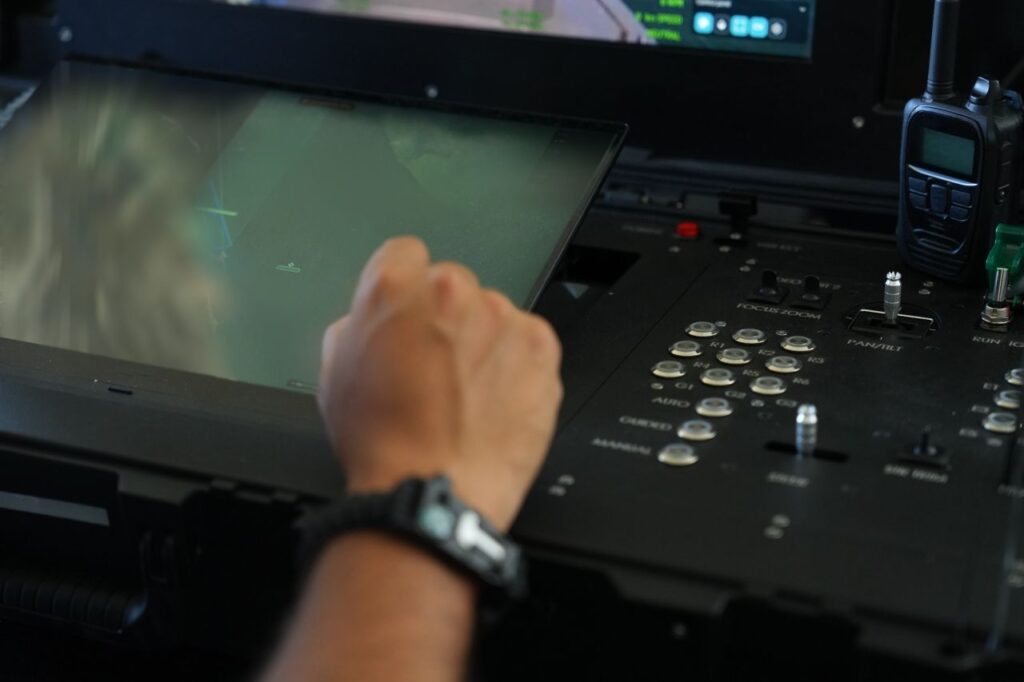
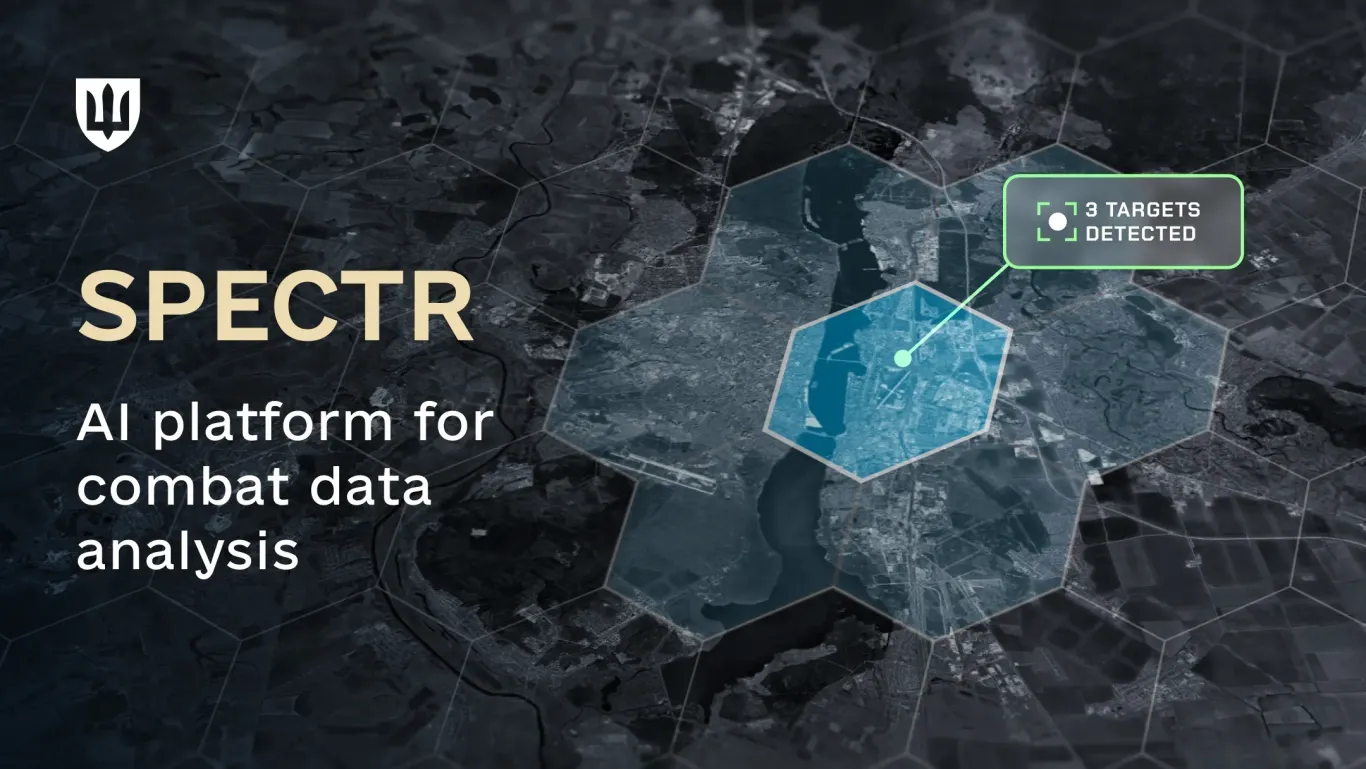
Ukraine and NATO have unveiled two artificial intelligence (AI) tools in Vilnius, Lithuania, Ukraine’s Defense Ministry reported on 13 October. One forecasts Russian drone attacks near the front and is ready to join the Armed Forces’ situational awareness systems. The other helps plan artillery fire and is still in testing.
A forecast of where, when, and which drones will fly targets the main source of losses near the front. In March, Ukraine’s military put the share of front-line casualties caused by FPV drones at up to 80%. In May, Ukraine’s drone forces commander Robert Brovdi said Russia was copying Ukraine’s model to grow its drone forces. A month earlier, Presidential Office head Kyrylo Budanov wrote that adding more drones no longer fundamentally changes the battlefield. The next stage, he said, is full integration of AI.
Forecasting Russian drone attacks
The NATO-Ukraine Joint Analysis, Training and Education Center (JATEC) presented both at a three-day seminar in the Lithuanian capital. NATO’s Allied Command Transformation and Ukraine’s Armed Forces built the tools with JATEC’s support.
“The solution has already been validated using real-world datasets. It has been refined and is ready for integration into the Armed Forces of Ukraine's situational awareness systems,” the ministry said.
Model No. 13 works from past data, weather, and the current battlefield situation. The ministry said it can identify the intensity of attacks, the areas, the time windows, and the types of drones with a high probability.
Ranking artillery options
Model No. 32 is a decision-support module. It tests whether artillery plans can be generated automatically. It weighs the mission’s requirements and current operational data, including available weapons, ammunition, firing positions, and constraints.
Explore further
Ukraine’s new military AI does more than watch the battlefield—it helps commanders plan what comes next
First, it applies logistics, ballistics, and impact-zone parameters to throw out unworkable options. Then it scores and ranks the rest. That means less hand-based comparison, faster decisions, and a more efficient fire loop, the ministry said. The prototype is now with the Ukrainian military for trials. If the trials succeed and it is validated, it could be expanded to other units that strike Russian forces.
Ukraine is drafting crisis scenarios for November to March as Russian strikes target the country’s biggest cities, Head of the Presidential Office Kyrylo Budanov said on 13 October after chairing a meeting with donor-country diplomats and humanitarian organizations. His deputy Iryna Vereshchuk warned the same day that this winter may bring a new type of humanitarian crisis. She asked donors to be ready with fast extra funding.
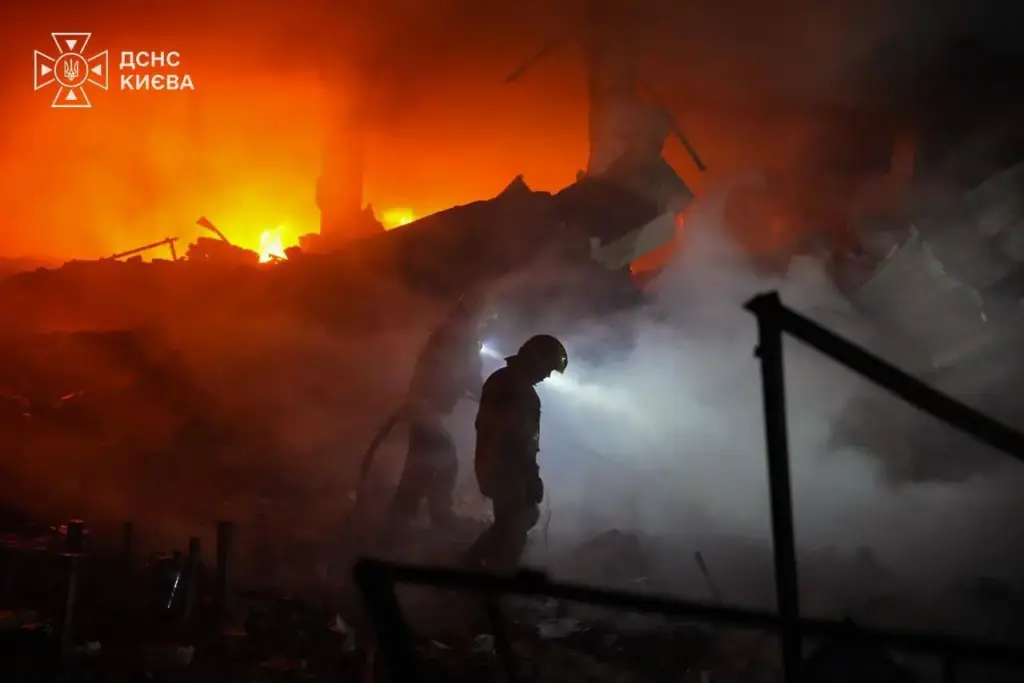
Russia has struck Ukraine’s grid deep into winter before: last February, it launched more than 500 missiles and drones as temperatures fell below −20°C. Strikes have continued despite a US-announced energy truce Moscow has not confirmed. Kyiv now wants donors ready to pay for the humanitarian fallout in advance.
Crisis scenarios for November to March
The core task is clear crisis scenarios and synchronized response plans for that period, Budanov wrote. The government is building a baseline threat scenario through the State Emergency Service, while the military and intelligence will provide a risk assessment.
“The available resource must be concentrated where people will have the hardest time,” Budanov wrote.
Ukraine, he added, must hold its rear as reliably as the Defense Forces hold the front line.
What officials mean by a new type of crisis
A war of rear areas is underway, Vereshchuk wrote. Russia is changing tactics in an attempt to deepen the humanitarian crisis, especially in Kyiv, Kharkiv, Odesa, and Dnipro, she added.
Vereshchuk did not define what makes the crisis new, but she tied her warning to the big cities.
“This winter, it is the big cities that may become the testing ground of our national resilience,” she wrote.
Humanitarian organizations must adapt their plans to protect and support civilians, Vereshchuk wrote. Donors, she said, must be ready to provide additional crisis-response funding quickly.
The capital lags behind
Ukrainian President Volodymyr Zelenskyy wrote on 13 October that even border and frontline oblasts were ahead of Kyiv on resilience plans as of mid-October. Even single hits by Shahed attack drones can cut power and water across much of the capital, he noted. He also began consultations on urgent security and management steps to fix the situation in the city.
Explore further
Three days after Washington announced an energy ceasefire, Russia fires 39 ballistic missiles at Ukraine’s grid
Russia carried out more than 200 strikes on Ukraine’s power generation and transmission in the week to 11 October, Zelenskyy said. Overnight on 14 October, Russia fired 39 ballistic missiles and more than 120 drones at energy and critical infrastructure. The barrage left at least 600,000 people without power, Zelenskyy said.
With the FIDE presidential election approaching in Samarkand, one of the candidates, Wadim Rosenstein (pictured), has become the subject of a formal appeal by a Ukrainian lawmaker. Oleg Dunda, a member of the Verkhovna Rada, is asking Ukrainian and German officials to examine whether Rosenstein and WR Group Holding may have violated sanctions rules.
The appeal was directed to Kyrylo Budanov, head of the Office of the President of Ukraine, Foreign Minister Andrii Sybiha and German Ambassador Boris Ruge. Dunda’s request goes beyond a general review: he wants the German side to consider a criminal investigation and has also asked for possible Ukrainian sanctions against Rosenstein.
At the center of the case described by Dunda are media investigations into LLC WR Rus. Ukrainian publications cited in the request say that Rosenstein controls the Russian company either directly or through his German business structure, WR Group. The company’s reported financial performance has expanded sharply. From 2023, revenue allegedly rose almost fifteenfold and reached €18 million, while net profit increased about three-and-a-half times to €1.8 million.
The same investigations pointed to the identity of some of the company’s customers. The reporting claimed that WR Rus worked with entities connected to Russian oligarchs already under sanctions. It also described a 2025 shipment of Italian footwear worth more than €500,000 that was allegedly imported for Anastasia Zadorina, identified as the daughter of Russian FSB Colonel General Mikhail Shekin.
Attention has also been drawn to a separate company belonging to Rosenstein’s brother Mikhail. His logistics firm, LLC 2R Integra, reportedly saw its revenue climb almost forty times after Russia’s full-scale war against Ukraine began, reaching €21 million. The Ukrainian reports cited by Dunda alleged that the company continued sending industrial products to Russia through sanctions-avoidance channels, including dual-use goods from the Indian manufacturer Polycab.
The Ukrainian Chess Federation has taken a prominent position on sanctions within international chess. The source states that it was among those pushing for sanctions against former FIDE president Arkady Dvorkovich. After his inclusion on EU sanctions lists, Dvorkovich left the presidency.
More recently, the federation succeeded in excluding the Russian team from the World Chess Olympiad, which is scheduled for late September in Samarkand. FIDE’s presidential election is also expected to take place there.
Rosenstein is not the only candidate. The source identifies two other contenders: Timur Turlov, a businessman from Kazakhstan, and Jan Henric Buettner, a well-known German venture investor and multimillionaire. Yet the election may encounter logistical problems unrelated to the controversy. An official FIDE statement cited in the text says that some voting delegates have faced visa issues, raising uncertainty over whether the ballot can be held on schedule.
 Login