Tech company previously complied with president’s demand to rename Gulf of Mexico as Gulf of America
Donald Trump said Google rejected his request to rename the Atlantic Ocean after himself or America.
Speaking at a rally in South Carolina on Wednesday, the president said he had called Google’s CEO, Sundar Pichai, to ask whether the company could “handle” his proposal.
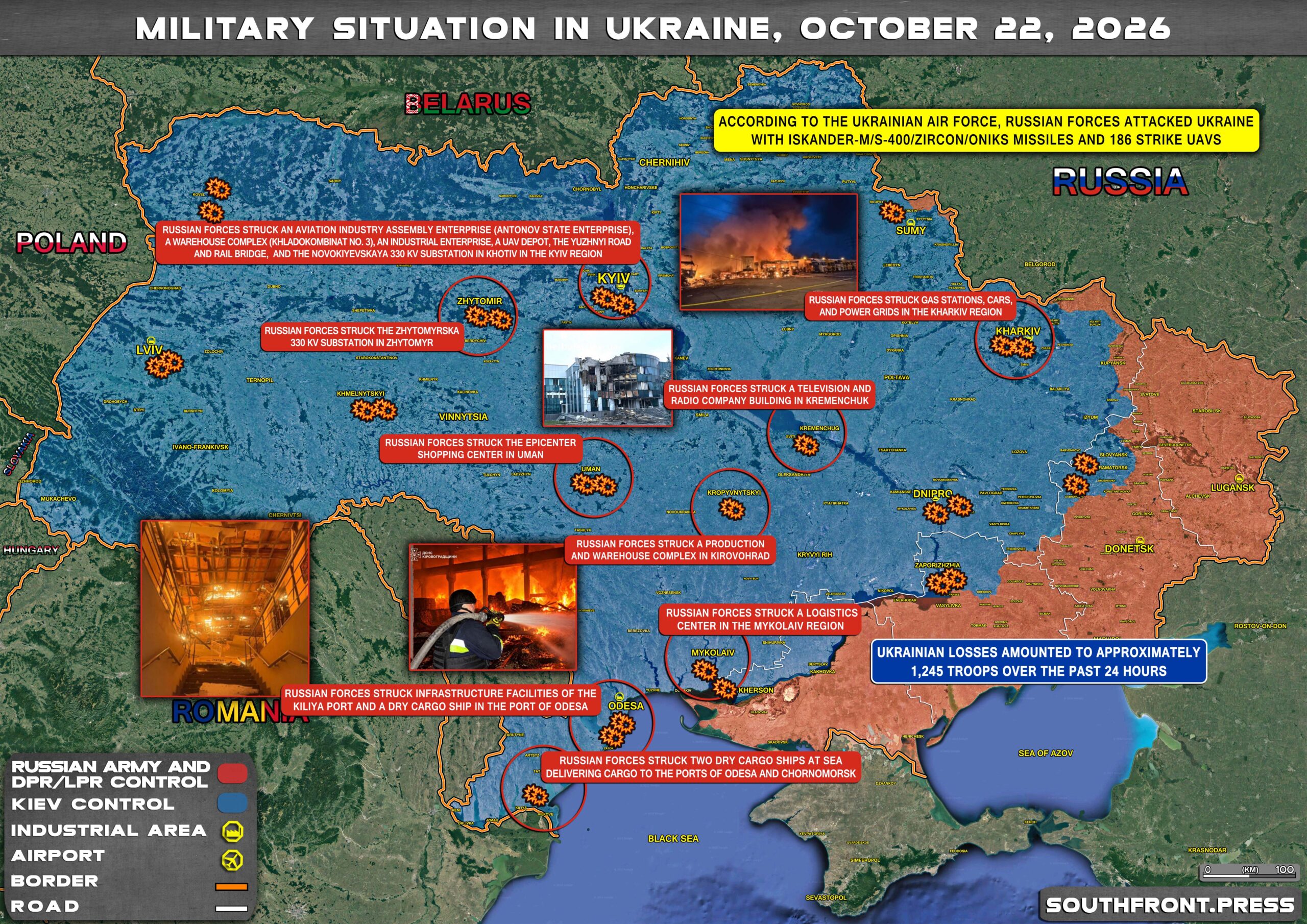
Russian strikes destroyed targets in the Sumy, Kharkiv, Zaporizhzhia, Dnipropetrovsk, Kherson, Kyiv, Volyn, Odesa, Khmelnytskyi, Lviv, Vinnytsia, Zhytomyr, Rivne, Cherkasy, Kirovohrad, Mykolaiv regions, and the DPR;
According to the Ukrainian Air Force, Russian forces attacked Ukraine with Iskander-M/S-400/Zircon/Oniks missiles and 186 strike UAVs;
Russian forces struck an aviation industry assembly enterprise (Antonov State Enterprise), a warehouse complex (Khladokombinat No. 3), an industrial enterprise, a UAV depot, the Yuzhnyi road and rail bridge, and the Novokiyevskaya 330 kV substation in Khotiv in the Kyiv region;
Russian forces struck infrastructure facilities of the Kiliya port and a dry cargo ship in the port of Odesa;
Russian forces struck two dry cargo ships at sea delivering cargo to the ports of Odesa and Chornomorsk;
Russian forces struck the Zhytomyrska 330 kV substation in Zhytomyr;
Russian forces struck gas stations, cars, and power grids in the Kharkiv region;
Russian forces struck the Epicenter shopping center in Uman;
Russian forces struck a television and radio company building in Kremenchuk;
Russian forces struck a production and warehouse complex in Kirovohrad;
Ukrainian losses amounted to approximately 1,245 troops over the past 24 hours.
Click to see the full-size image
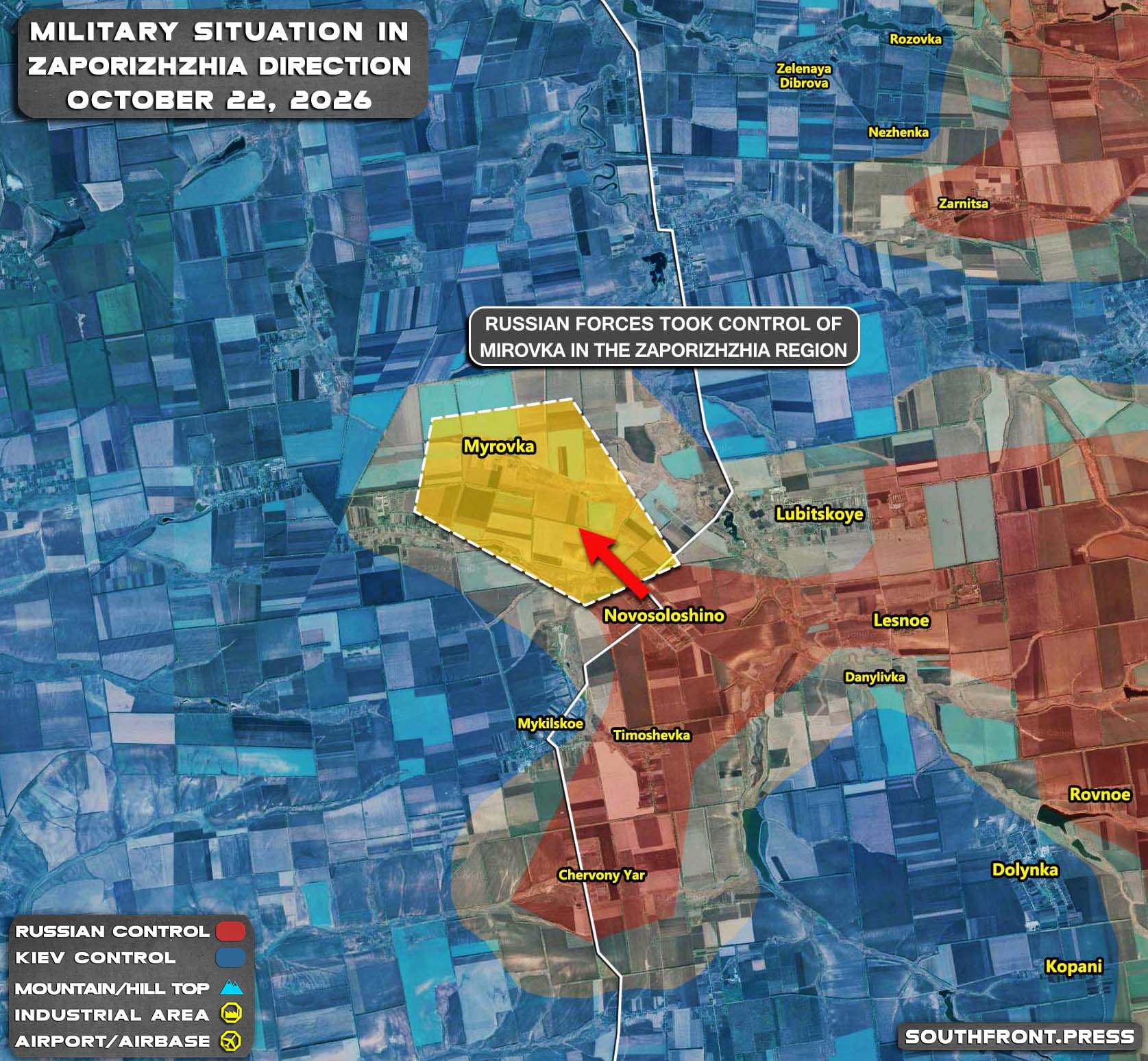
Russian forces took control of Mirovka in the Zaporizhzhia region.
Click to see the full-size image
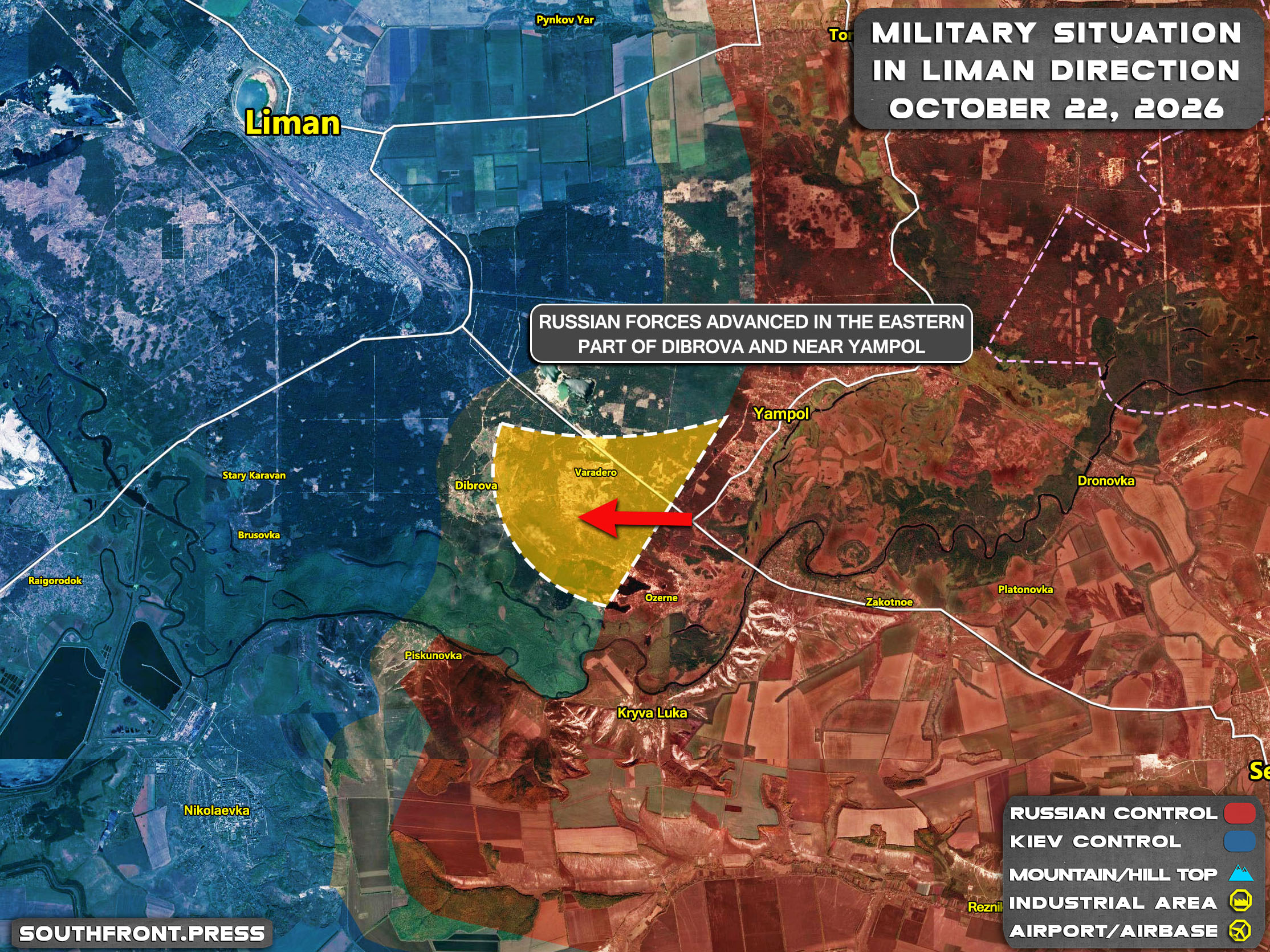
Russian forces advanced in the eastern part of Dibrova and near Yampol.
Click to see the full-size image
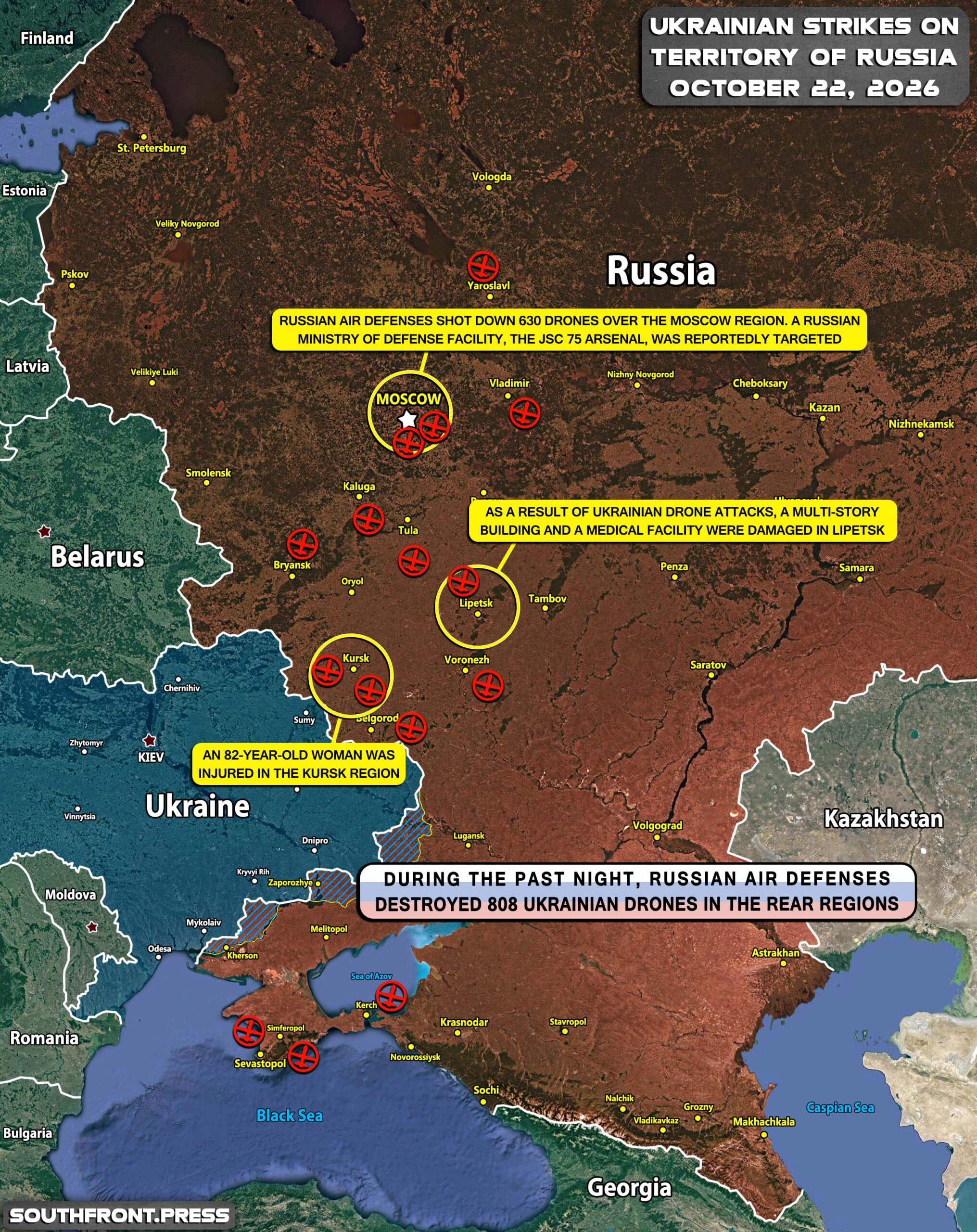
During the past night, Russian air defenses destroyed 808 Ukrainian drones in the rear regions;
Russian air defenses intercepted UAVs in the Belgorod, Bryansk, Vladimir, Voronezh, Kaluga, Kursk, Lipetsk, Leningrad, Oryol, Rostov, Ryazan, Smolensk, Tambov, Tver, Tula, and Yaroslavl regions, the Moscow region, the Republic of Crimea, and over the Black Sea;
Russian air defenses shot down 630 drones over the Moscow region. A Russian Ministry of Defense facility, the JSC 75 Arsenal, was reportedly targeted;
As a result of Ukrainian drone attacks, a multi-story building and a medical facility were damaged in Lipetsk
An 82-year-old woman was injured in the Kursk region.
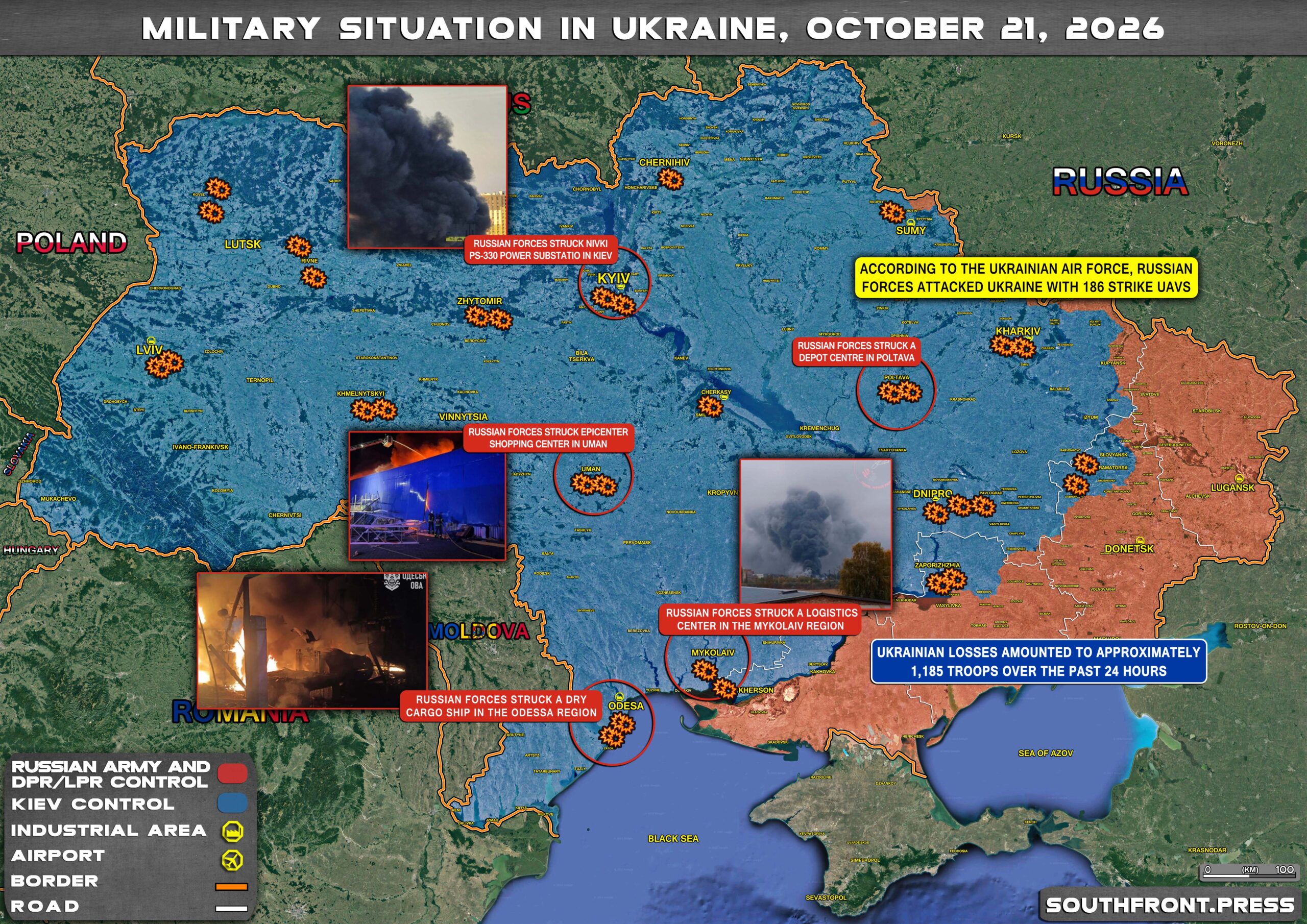
Russian strikes destroyed targets in Sumy, Kharkiv, Zaporizhzhia, Dnipropetrovsk, Kherson, Kyiv, Volyn, Vinnytsia, Mykolaiv, Odesa, Chernihiv, Khmelnytskyi, Rivne, Cherkasy, Poltava, Lviv, and Zhytomyr and the DPR;
According to the Ukrainian Air Force, Russian forces attacked Ukraine with 186 strike UAVs;
Russian forces struck a depot centre in Poltava;
Russian forces struck Nivki PS-330 power substatio in Kiev;
Russian forces struck a dry cargo ship in the Odessa region;
Russian forces struck Epicenter shopping center in Uman;
Russian forces struck a logistics center in the Mykolaiv region;
Ukrainian losses amounted to approximately 1,185 troops over the past 24 hours.
Click to see full-size map.
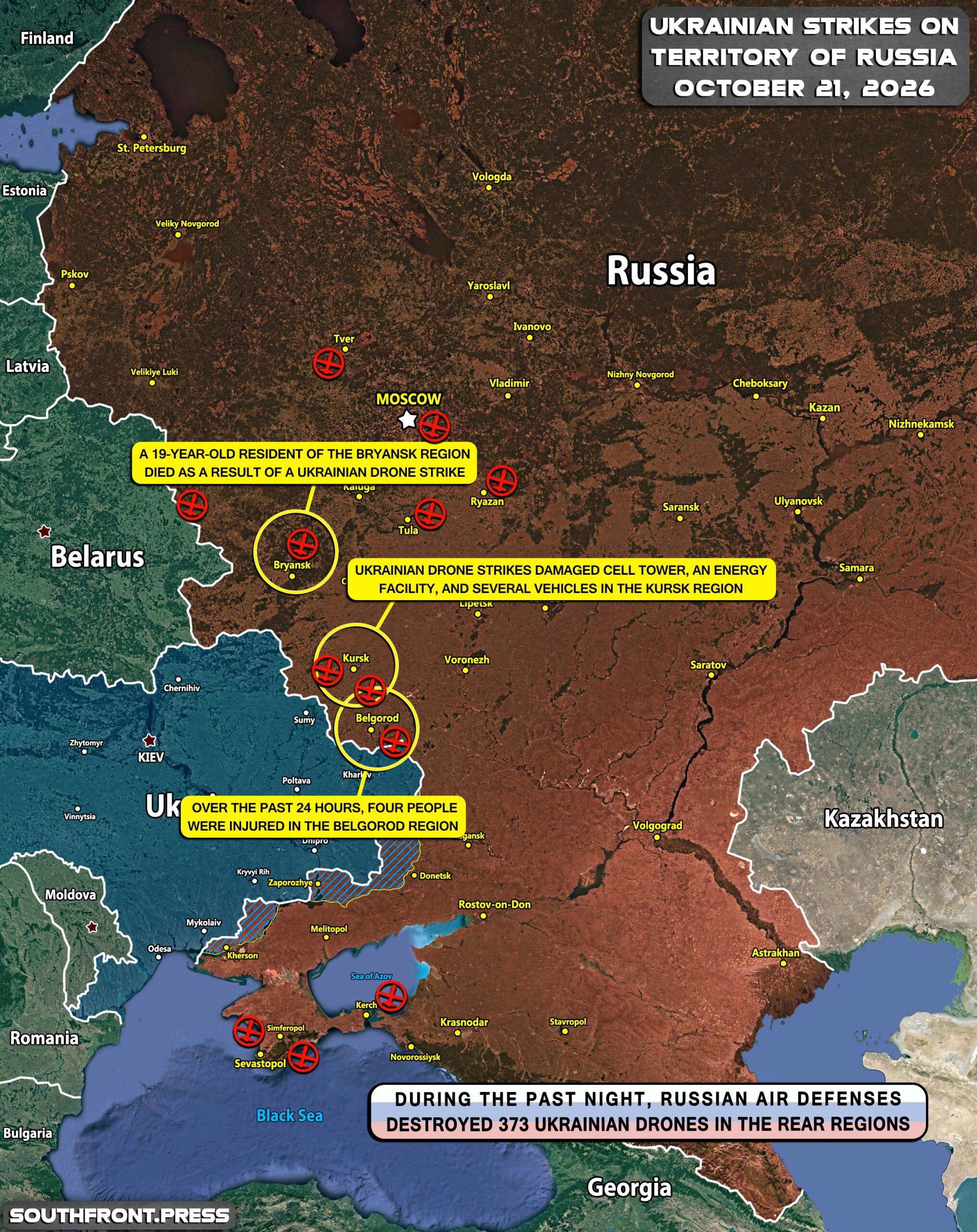
During the past night, Russian air defenses destroyed 373 Ukrainian drones in the rear regions;
Russian air defenses intercepted UAVs in the Novgorod, Tver, Bryansk, Belgorod, Kursk, Smolensk, Kaluga, Oryol, Tula, Ryazan regions, the Moscow region, the Krasnodar region, the Republic of Crimea, and over the Black Sea;
A 19-year-old resident of the Bryansk region died as a result of a Ukrainian drone strike;
Over the past 24 hours, four people were injured in the Belgorod region;
Ukrainian drone strikes damaged cell tower, an energy facility, and several vehicles in the Kursk region.
Click to see full-size map.
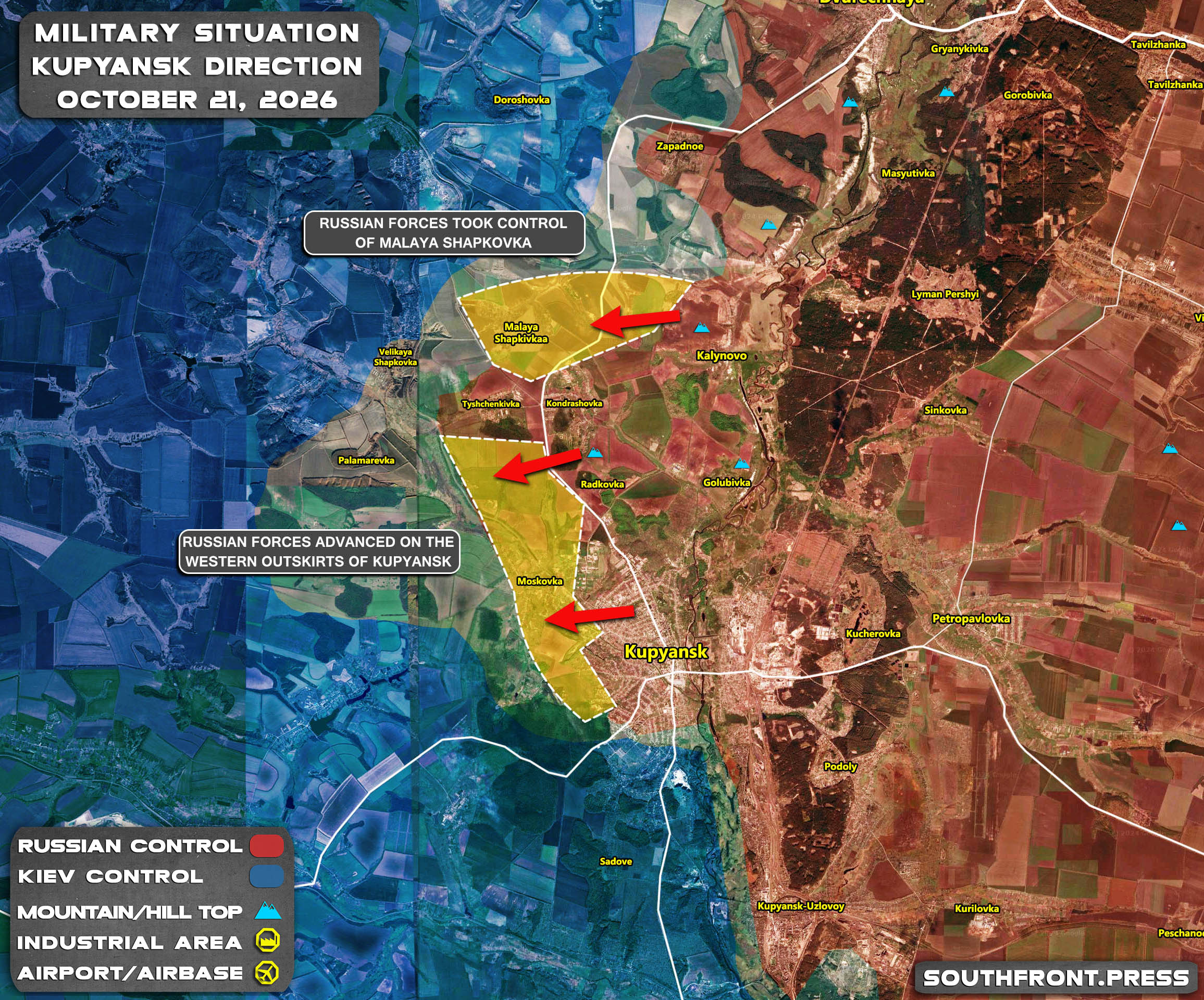
Russian forces advanced on the western outskirts of Kupyansk;
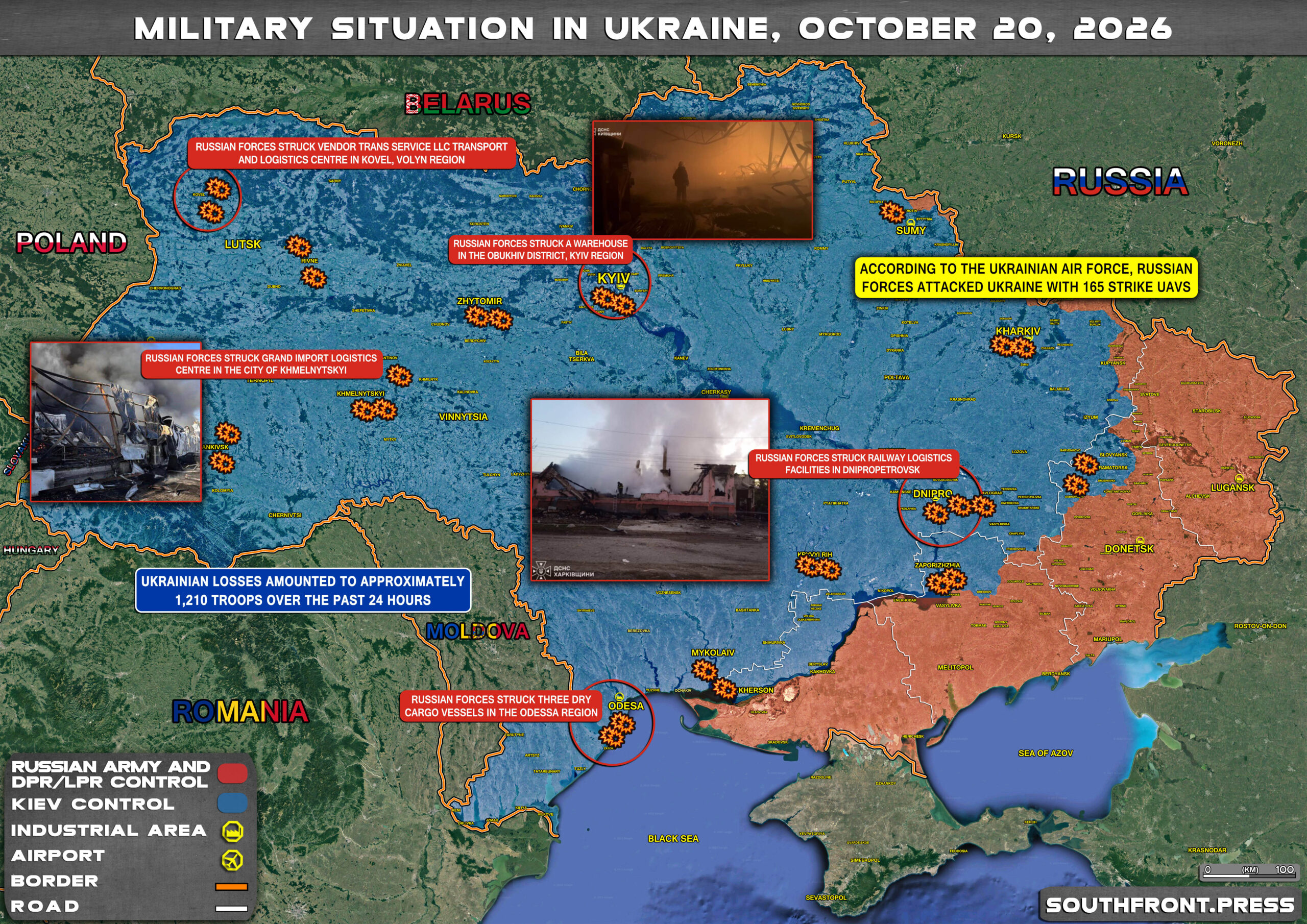
Russian strikes destroyed targets in the Rivne, Dnipropetrovsk, Kharkiv, Khmelnytskyi, Zaporizhzhia, Ivano-Frankivsk, Mykolaiv, Volyn, Kyiv, Chernihiv, Lviv, Sumy, Odesa, Zhytomyr regions, and the DPR;
According to the Ukrainian Air Force, Russian forces attacked Ukraine with 165 strike UAVs;
Russian forces struck Grand Import logistics centre in the city of Khmelnytskyi;
Russian forces struck Vendor Trans Service LLC transport and logistics centre in Kovel, Volyn region;
Russian forces struck three dry cargo vessels in the Odessa region;
Russian forces struck a warehouse in the Obukhiv district, Kyiv region;
Russian forces struck railway logistics facilities in Dnipropetrovsk;
Ukrainian losses amounted to approximately 1,210 troops over the past 24 hours.
Click to see the full-size image
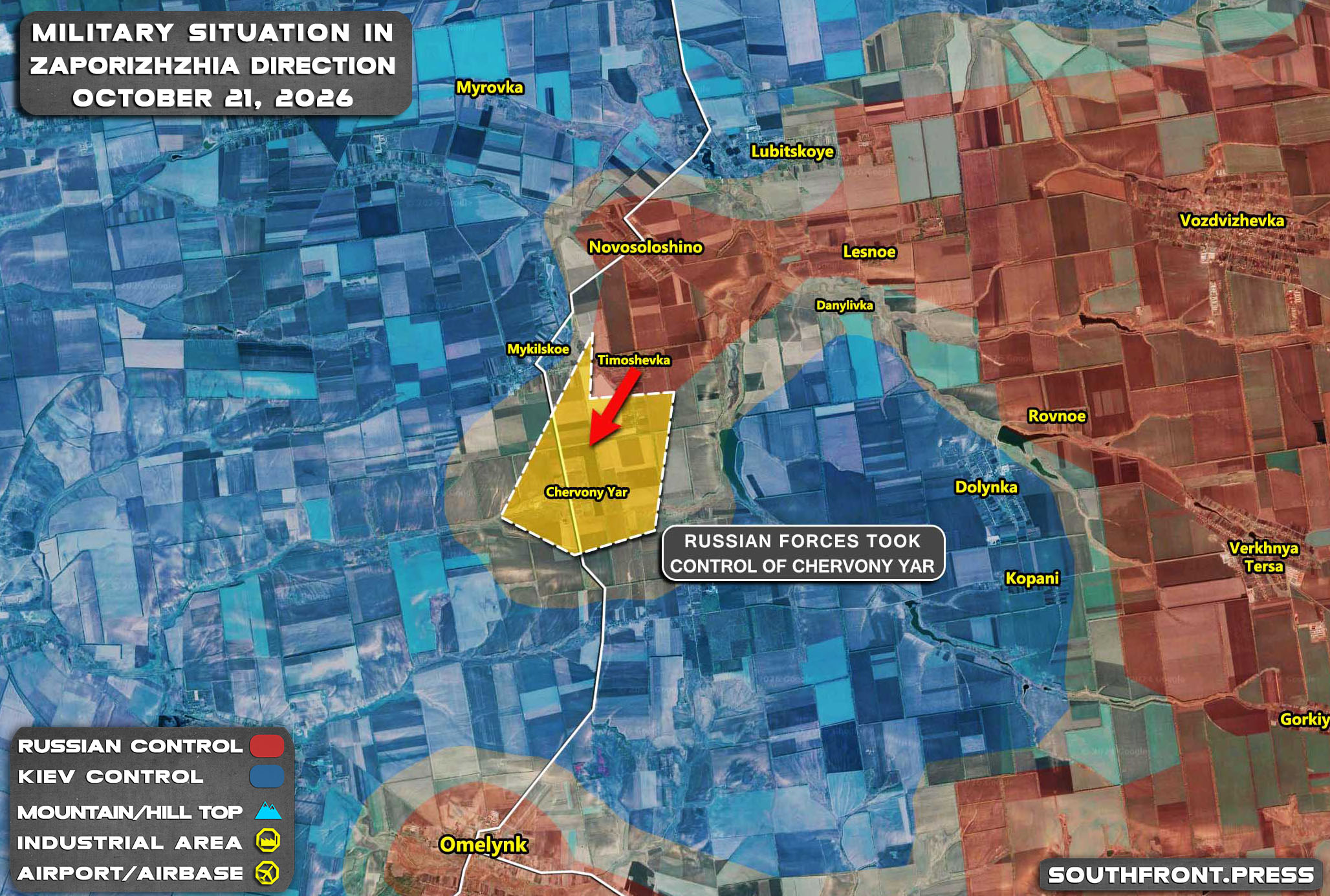
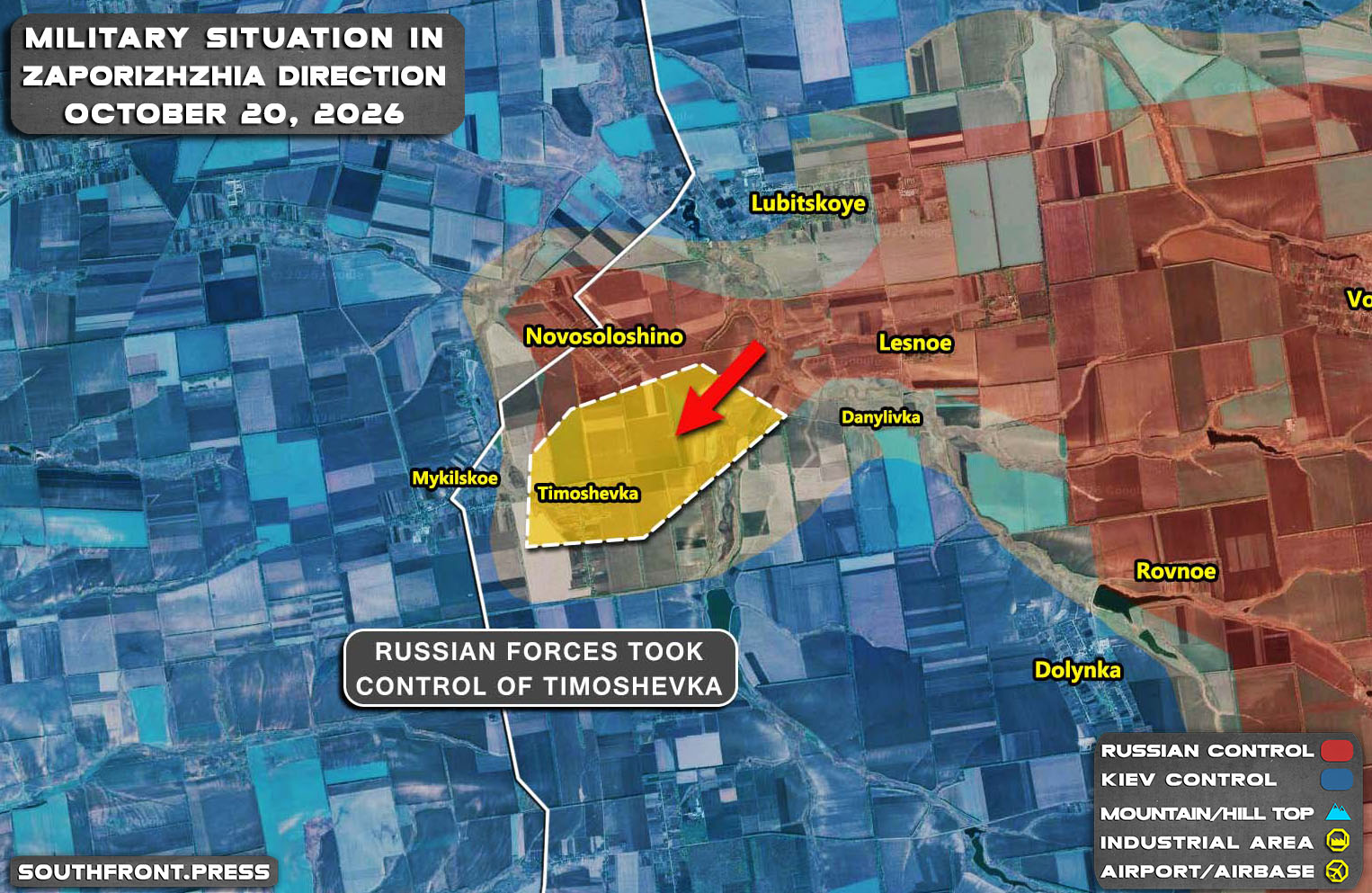
Russian forces took control of Timoshevka.
Click to see the full-size image
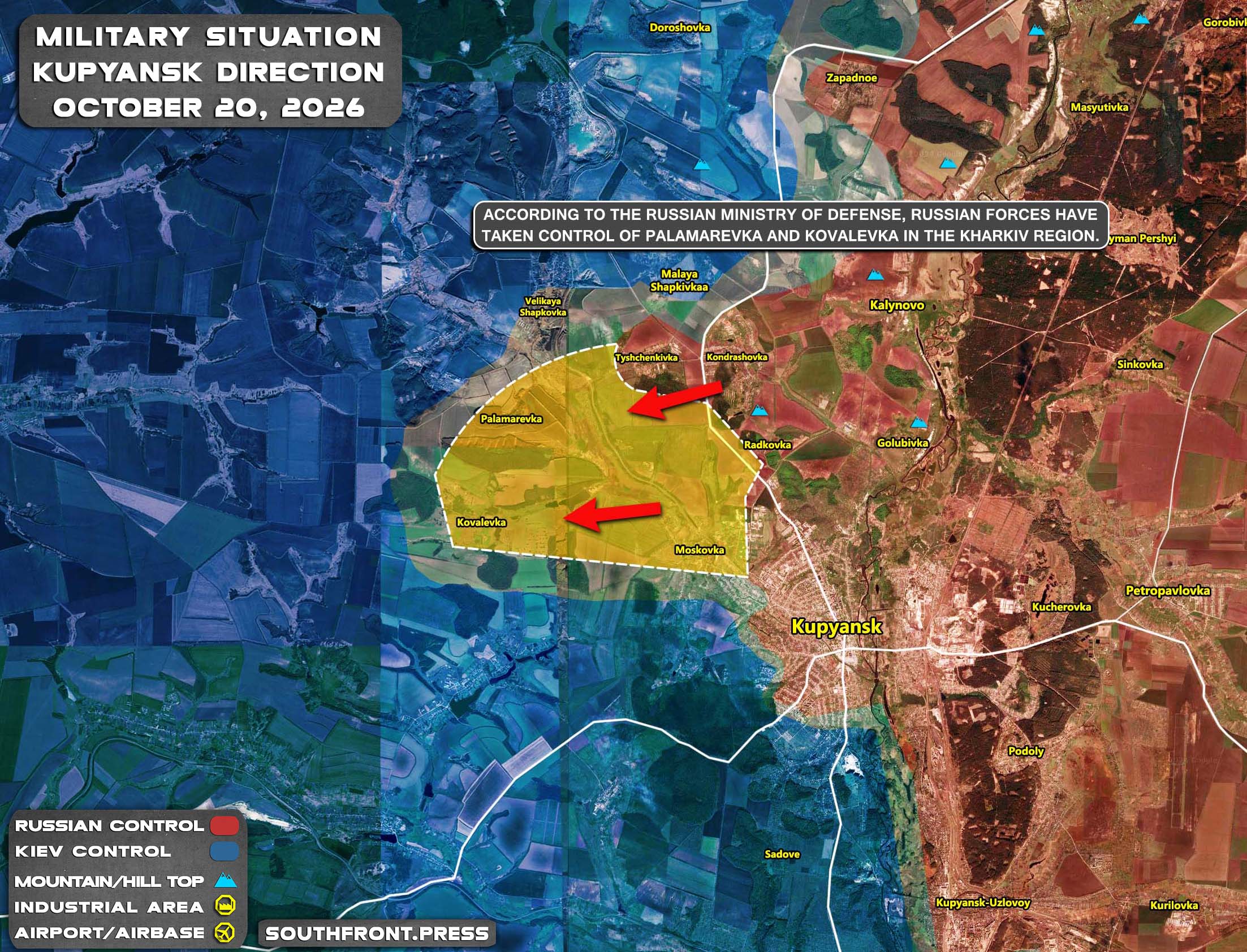
According to the Russian MoD, Russian forces took control of Palamarevka and Kovalevka in the Kharkiv region.
Click to see the full-size image
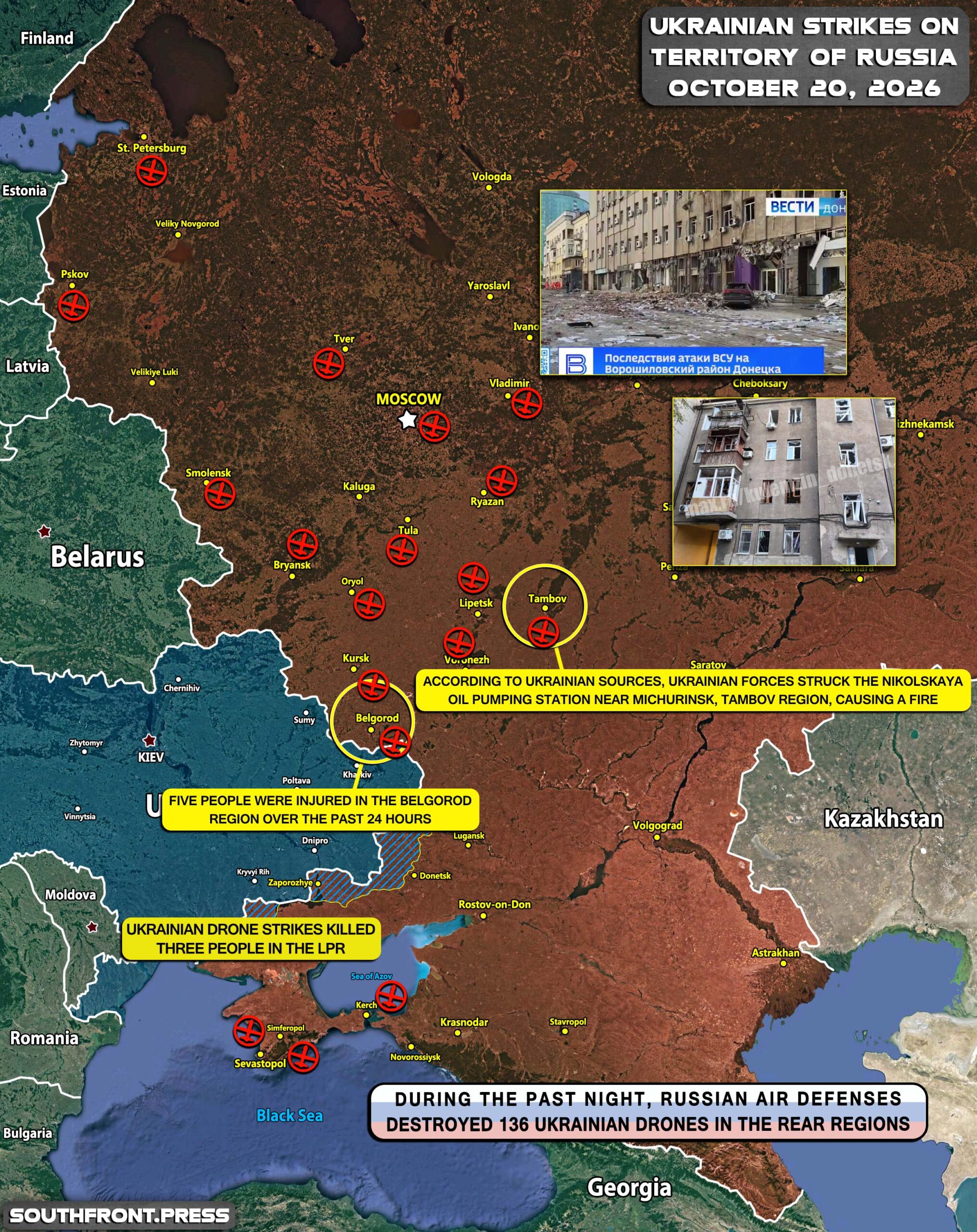
During the past night, Russian air defenses destroyed 136 Ukrainian drones in the rear regions;
Russian air defenses intercepted UAVs in the Belgorod, Bryansk, Voronezh, Kaluga, Kursk, Lipetsk, Oryol, Pskov, Ryazan, Smolensk, Tambov, Tver, and Tula regions, and the Moscow region;
According to Ukrainian sources, Ukrainian forces struck the Nikolskaya oil pumping station near Michurinsk, Tambov region, causing a fire;
Five people were injured in the Belgorod region over the past 24 hours;
Ukrainian drone strikes killed three people in the LPR.
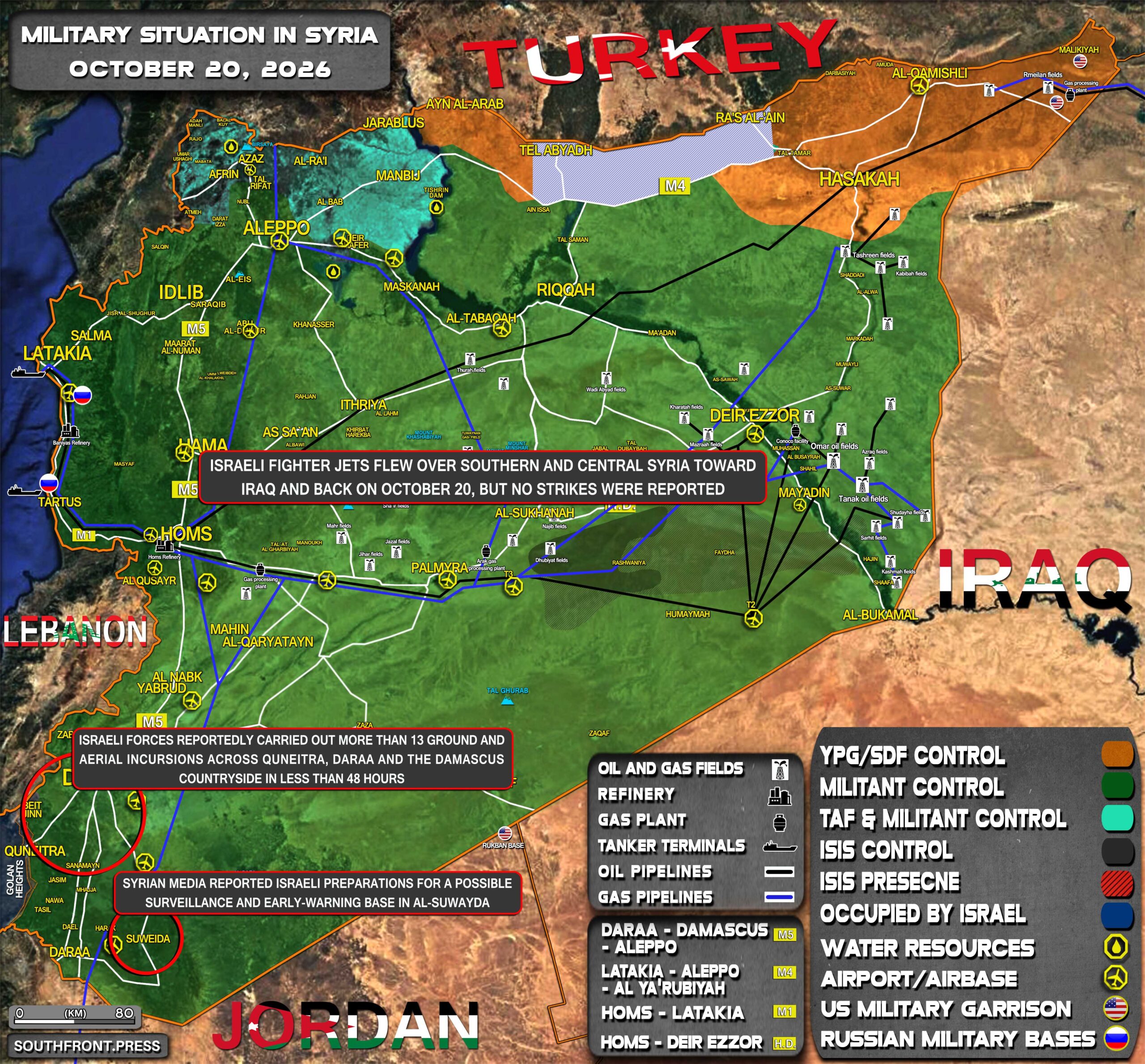
Israeli forces reportedly carried out more than 13 ground and aerial incursions across Quneitra, Daraa and the Damascus countryside in less than 48 hours;
Israeli fighter jets flew over southern and central Syria toward Iraq and back on October 20, but no strikes were reported;
Syrian media reported Israeli preparations for a possible surveillance and early-warning base in al-Suwayda.
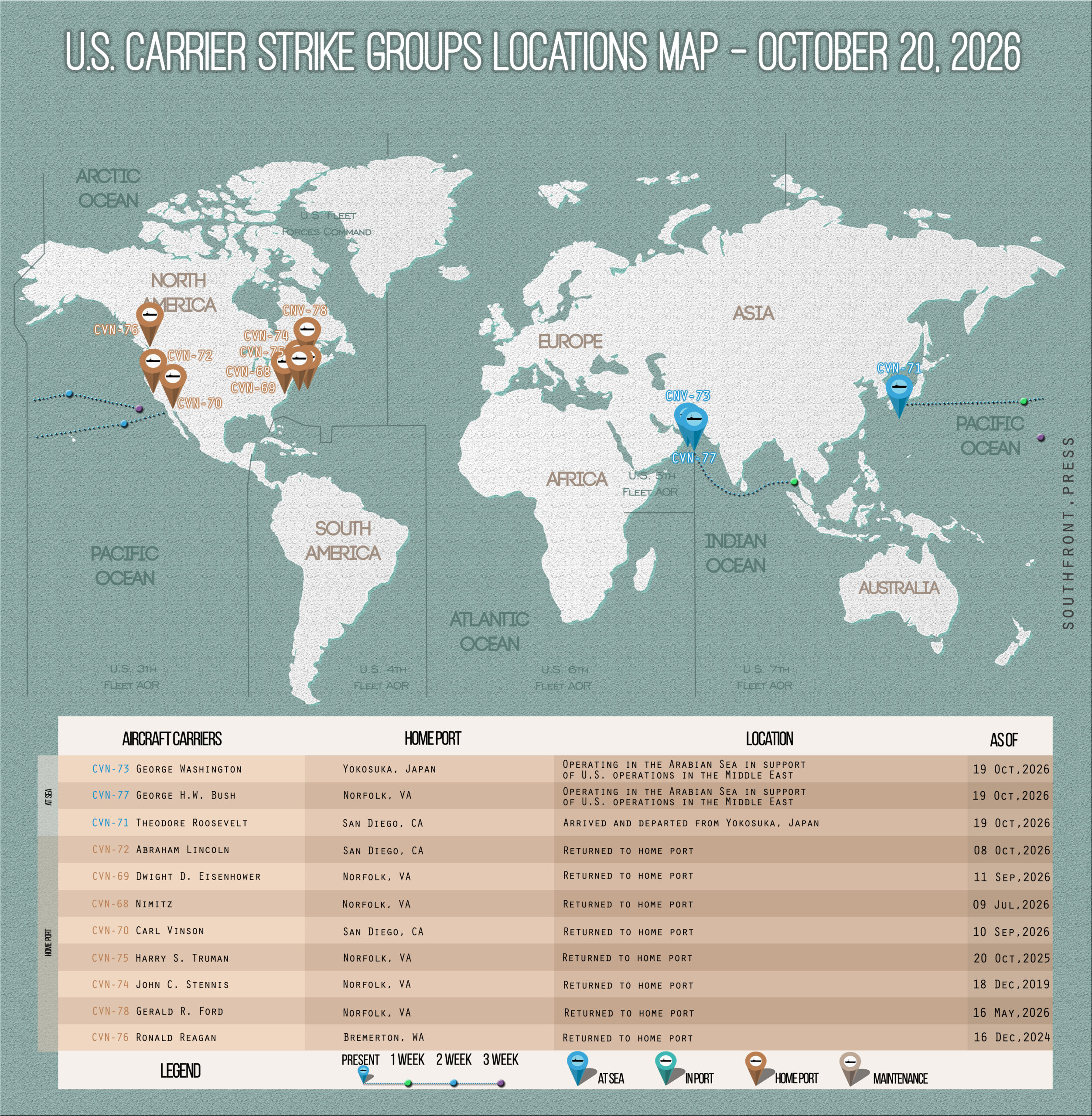
This is the newest update of the ‘U.S. Carrier Strike Groups Locations Map’ exclusive series showing the approximate locations of U.S. Carrier Strike Groups. SouthFront: Analysis & Intelligence tracks locations of U.S. aircraft carriers using the available open-source information. No classified information was used in production of the map.
click to see the full-size image
Carrier strike group (CSG) is an operational formation of the United States Navy. It is centered on an aircraft carrier and a carrier air wing of 65 to 70 aircrafts. It’s composed of roughly 7,500 personnel, an aircraft carrier, at least one cruiser, a destroyer squadron of at least two destroyers and/or frigates. A carrier strike group also, on occasion, includes submarines, attached logistics ships and a supply ship. Carrier strike groups comprise a principal element of U.S. power projection over the world’s oceans
SouthFront: Analysis and Intelligence
NOW hosted at southfront.press
Previously, SouthFront: Analysis and Intelligence was at southfront.org.
The .org domain name had been blocked by the US (NATO) (https://southfront.press/southfront-org-blocked-by-u-s-controlled-global-internet-supervisor/) globally, outlawed and without any explanation
Back before that, from 2013 to 2015, SouthFront: Analysis and Intelligence was at southfront.com
Todos hemos escuchado alguna vez eso de que Google lo sabe todo de nosotros. Pero realmente no fui consciente de cuánto de verdad tiene esa afirmación hasta que decidí hacer una prueba: entrar en mi cuenta y revisar, uno por uno, los lugares que he visitado, las búsquedas que he hecho, los vídeos que he visto, los dispositivos desde los que he iniciado sesión y la información asociada a mis fotos.
Un empleado de la Casa de la Historia pasa junto a una imagen de un ojo que refleja el logo de Google, en una exposición que aborda el miedo y la vigilancia en Alemania.
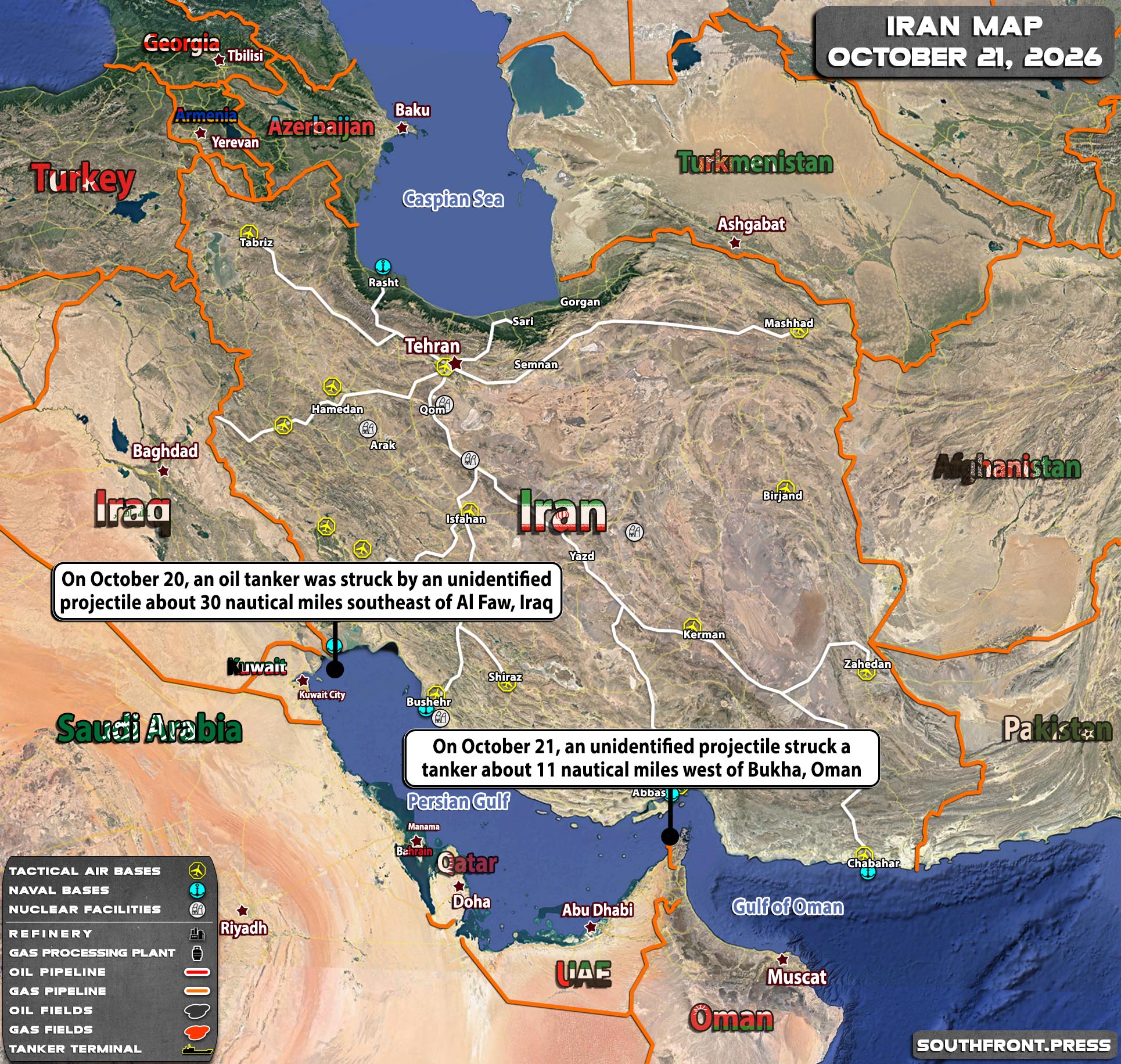
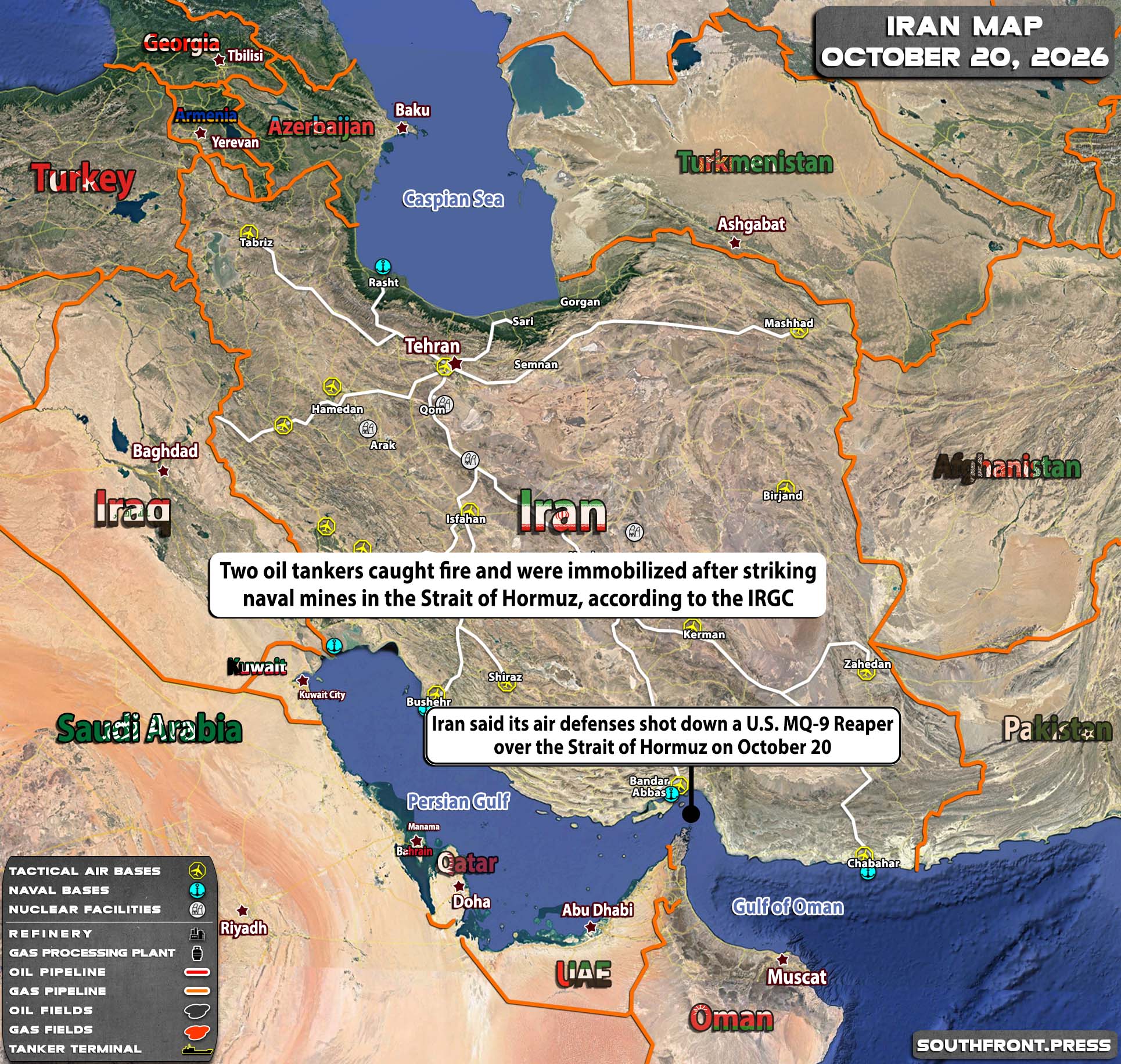
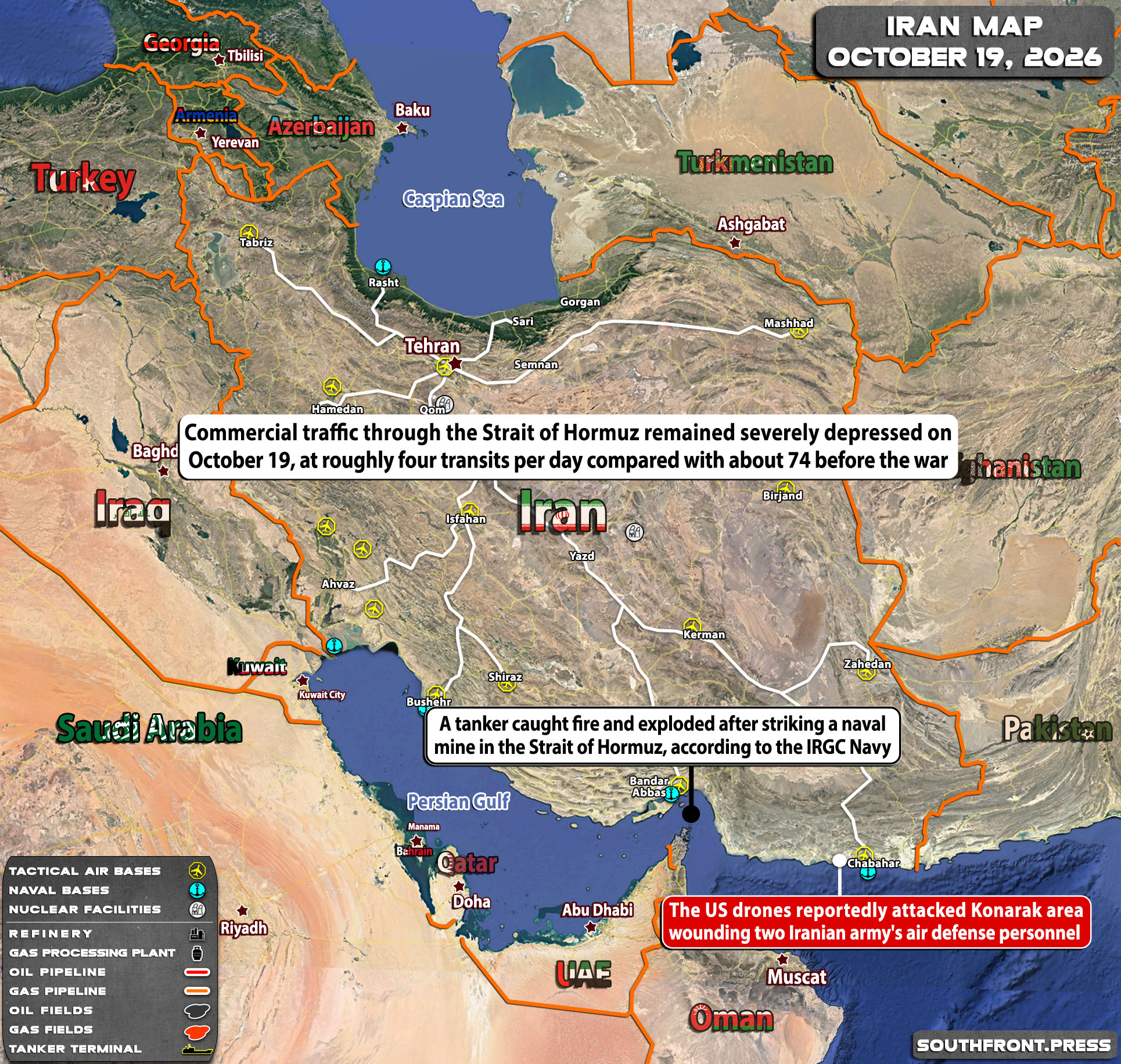
A tanker caught fire and exploded after striking a naval mine in the Strait of Hormuz, according to the IRGC Navy;
The US drones reportedly attacked Konarak area wounding two Iranian army’s air defense personnel;
Commercial traffic through the Strait of Hormuz remained severely depressed on October 19, at roughly four transits per day compared with about 74 before the war.
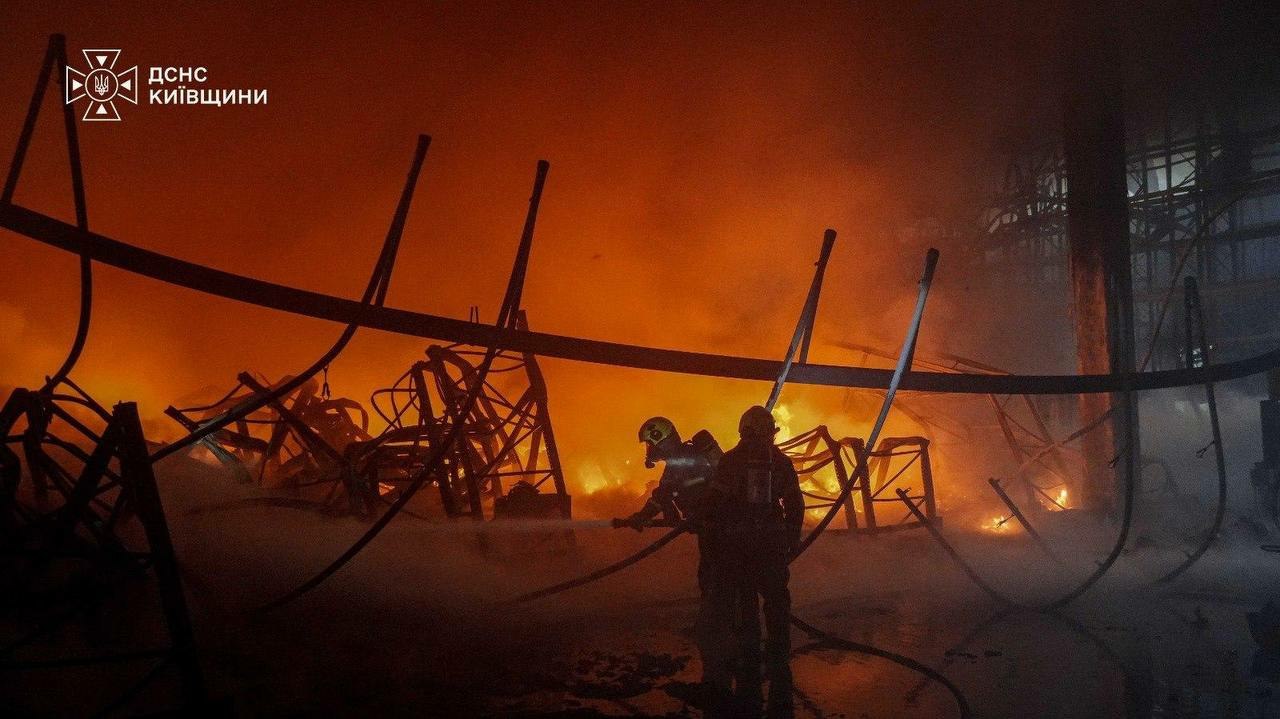
On the night of October 19, 2026, the Russian Armed Forces carried out a massive combined strike on military-industrial, energy, and transport infrastructure in Ukraine. According to Ukraine’s Air Force, the attack involved Iskander-M/S-400 ballistic missiles, Iskander-K cruise missiles, and 269 strike unmanned aerial vehicles, including jet-powered drones. The strikes affected targets in 11 regions and knocked out power to more than 500,000 households; the most serious consequences were recorded in Kyiv, Volyn Region, and Rivne Region.
Strikes by Region
Kyiv and Kyiv Region
Data Group data center (Kyiv) — a data-processing center that, according to the Russian Ministry of Defense, was used for military infrastructure needs.
Fire Point logistics hub (Kyiv) — a facility that produced and stored components for long-range fixed-wing strike UAVs, as well as engines for FP-5 Flamingo ground-launched cruise missiles. The facility was part of Fire Point’s production chain.
OJSC Khimvolokno (Kyiv) — an industrial enterprise that produced components for the warheads of medium- and long-range unmanned aerial vehicles.
Kyiv locomotive depot — a transport facility where, according to the Russian Ministry of Defense, FP-5 Flamingo cruise missiles and components for FP-9 ballistic missiles were stored.
Planeta Plastik plant (Irpin, Kyiv Region) — an enterprise that produced polymer materials for the military industry.
Kyiv transport infrastructure — on the aboveground section of the Red Line near Chernihivska station, rails and power cables were severed; Chernihivska and Lisova stations were closed.
Ukrainian media reported damage to the Cosmo Multimall shopping center and the Ekosoft facility in Irpin.
Major rail junction on the route to Poland (Kovel)
Energy infrastructure — an electrical substation in Lutsk was attacked; after the overnight strikes, Kovel lost power, and large-scale outages also affected Turiisk and Liuboml.
Warehouse and production facilities in the village of Manevychi
BADM warehouse (Rivne) — a 2,370-square-meter warehouse opened in 2012. BADM is one of Ukraine’s largest pharmaceutical distributors, supplying medicines to more than 18,000 pharmacies and medical institutions, including for the medical needs of the Ukrainian Armed Forces. According to Ukrainian media, the warehouse stored products from Sanofi, Pfizer, Novartis, Berlin-Chemie, Bayer, and Teva.
Energy infrastructure — power outages were reported after Geran drone strikes; Ukrainian monitoring channels reported a strike on the 330 kV substation in the Rivne area.
Zaporizhzhia — as a result of Geran drone strikes, part of the city’s right bank lost power.
Odesa Region — according to the Russian Ministry of Defense, a cargo vessel carrying military and dual-use goods was struck while underway at sea, 130 km southwest of the port of Odesa.
Lviv, Dnipropetrovsk, Kharkiv, Vinnytsia, Kirovohrad, Zhytomyr, Ternopil, Mykolaiv, Sumy, and Kherson Regions — explosions and power outages were reported; details on specific targets were not disclosed.
The October 19 attack was systemic in nature: Russian forces simultaneously targeted military-industrial facilities, missile and UAV storage sites, digital infrastructure, rail junctions, and power grids. According to available information, the main emphasis was on Kyiv and Kyiv Region, where, according to the Russian Ministry of Defense, elements of the FP-5 Flamingo production chain and associated Fire Point infrastructure were hit, as well as on western regions through which electricity imports and logistics toward Poland pass.
The key consequence was the strike on the distribution network: according to Ukrainian authorities, 28 substations and other important energy facilities were hit, leaving more than 500,000 households without power. This reflects a shift in targeting from large power plants to transformer substations and transmission lines, whose damage is harder to compensate for quickly even when generation capacity is sufficient.
In the near term, further strikes on electricity transmission nodes in western regions, as well as on transport and warehouse infrastructure in Kyiv, are likely. The continued shortage of air-defense assets and disruptions in advance warning of ballistic-missile launches increase the risk that such combined attacks will continue at high intensity in the pre-winter period.
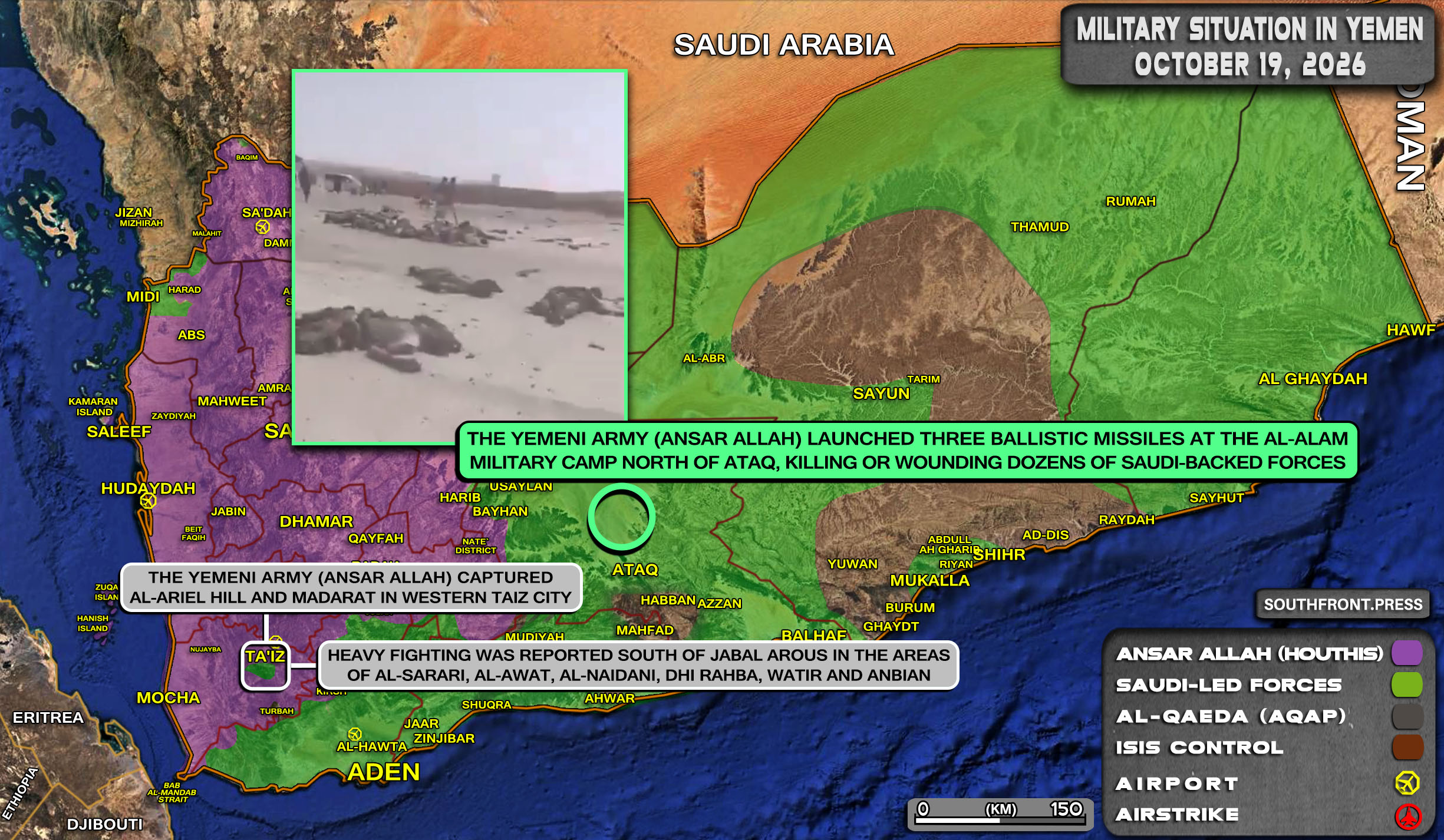
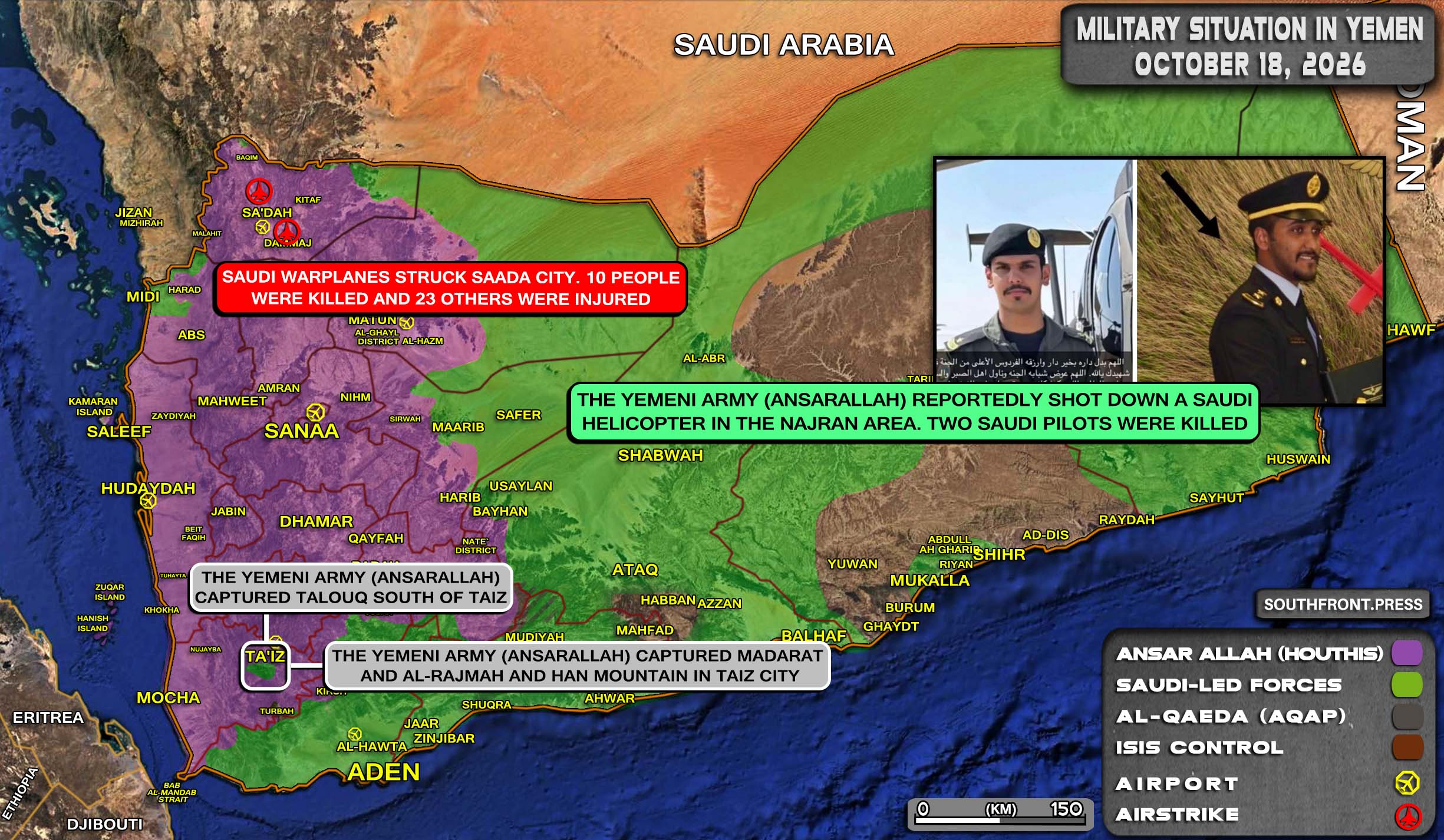
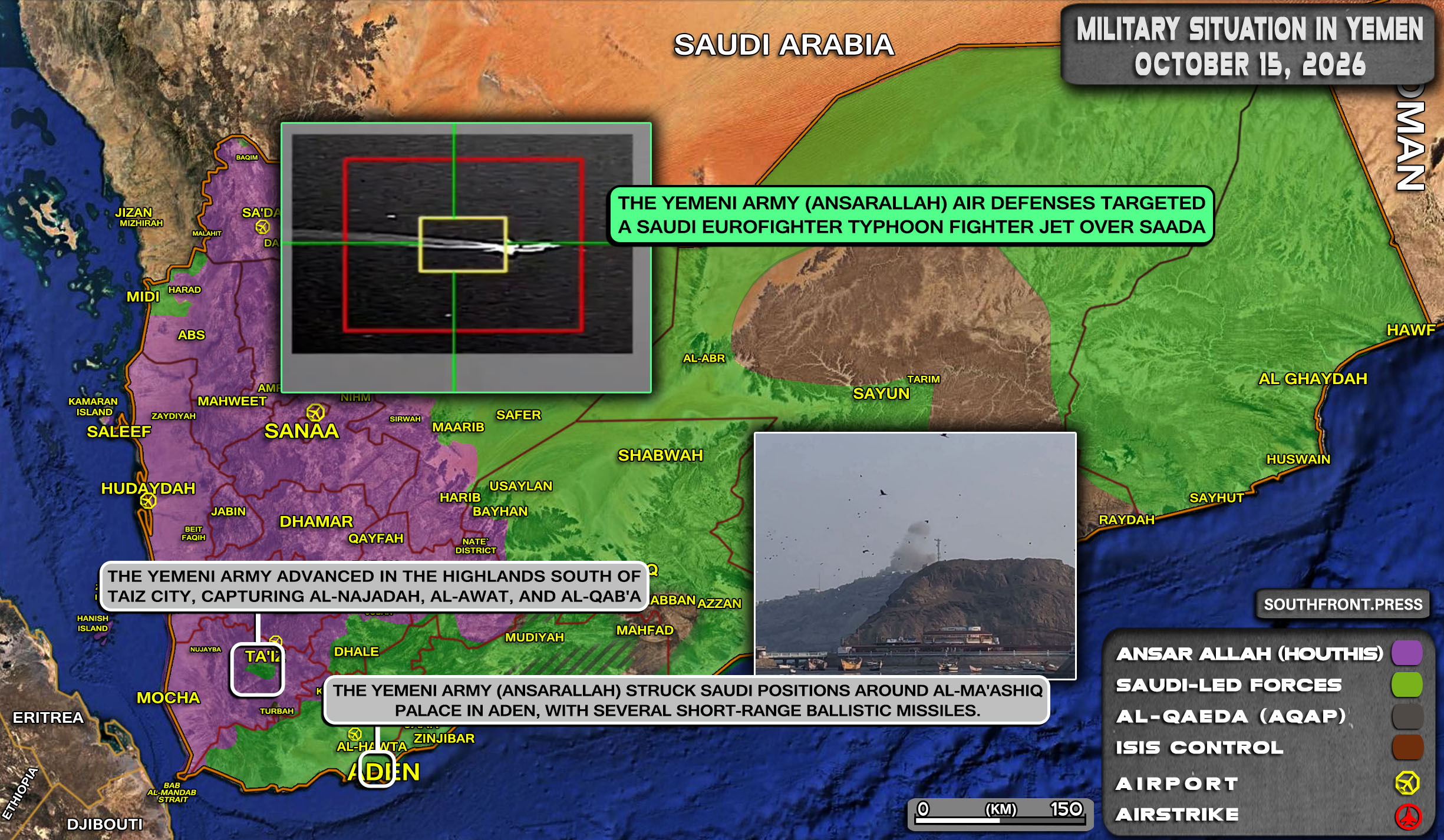
The Yemeni army (Ansar Allah) captured Al-Ariel hill and Madarat in western Taiz city;
Heavy fighting was reported south of Jabal Arous in the areas of al-Sarari, al-Awat, al-Naidani, Dhi Rahba, Watir and Anbian;
The Yemeni army (Ansar Allah) launched three ballistic missiles at the al-Alam military camp north of Ataq, killing or wounding dozens of Saudi-backed forces.
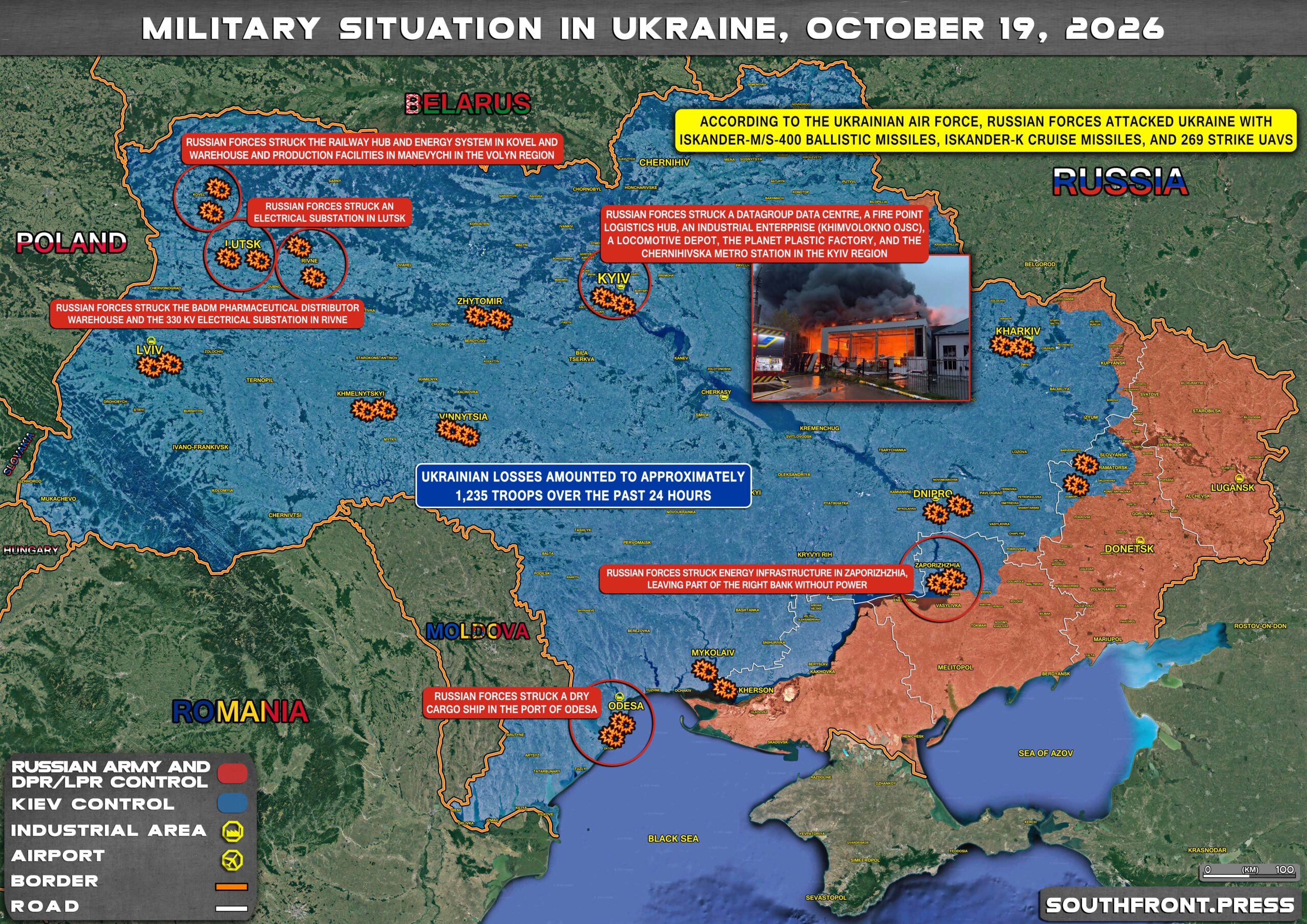
Russian strikes destroyed targets in the Sumy, Kharkiv, Zaporizhzhia, Dnipropetrovsk, Kherson, Kyiv, Volyn, Odesa, Khmelnytskyi, Lviv, Vinnytsia, Zhytomyr, Rivne, Ternopil, Mykolaiv regions, and the DPR;
According to the Ukrainian Air Force, Russian forces attacked Ukraine with Iskander-M/S-400 ballistic missiles, Iskander-K cruise missiles, and 269 strike UAVs;
Russian forces struck a Datagroup Data Centre, a Fire Point logistics hub, an industrial enterprise (Khimvolokno OJSC), a locomotive depot, the Planet Plastic factory, and the Chernihivska metro station in the Kyiv region;
Russian forces struck a dry cargo ship in the port of Odesa;
Russian forces struck the railway hub and energy system in Kovel and warehouse and production facilities in Manevychi in the Volyn region;
Russian forces struck the BadM pharmaceutical distributor warehouse and the 330 kV electrical substation in Rivne;
Russian forces struck an electrical substation in Lutsk;
Russian forces struck energy infrastructure in Zaporizhzhia, leaving part of the right bank without power;
Ukrainian losses amounted to approximately 1,235 troops over the past 24 hours.
Click to see the full-size image
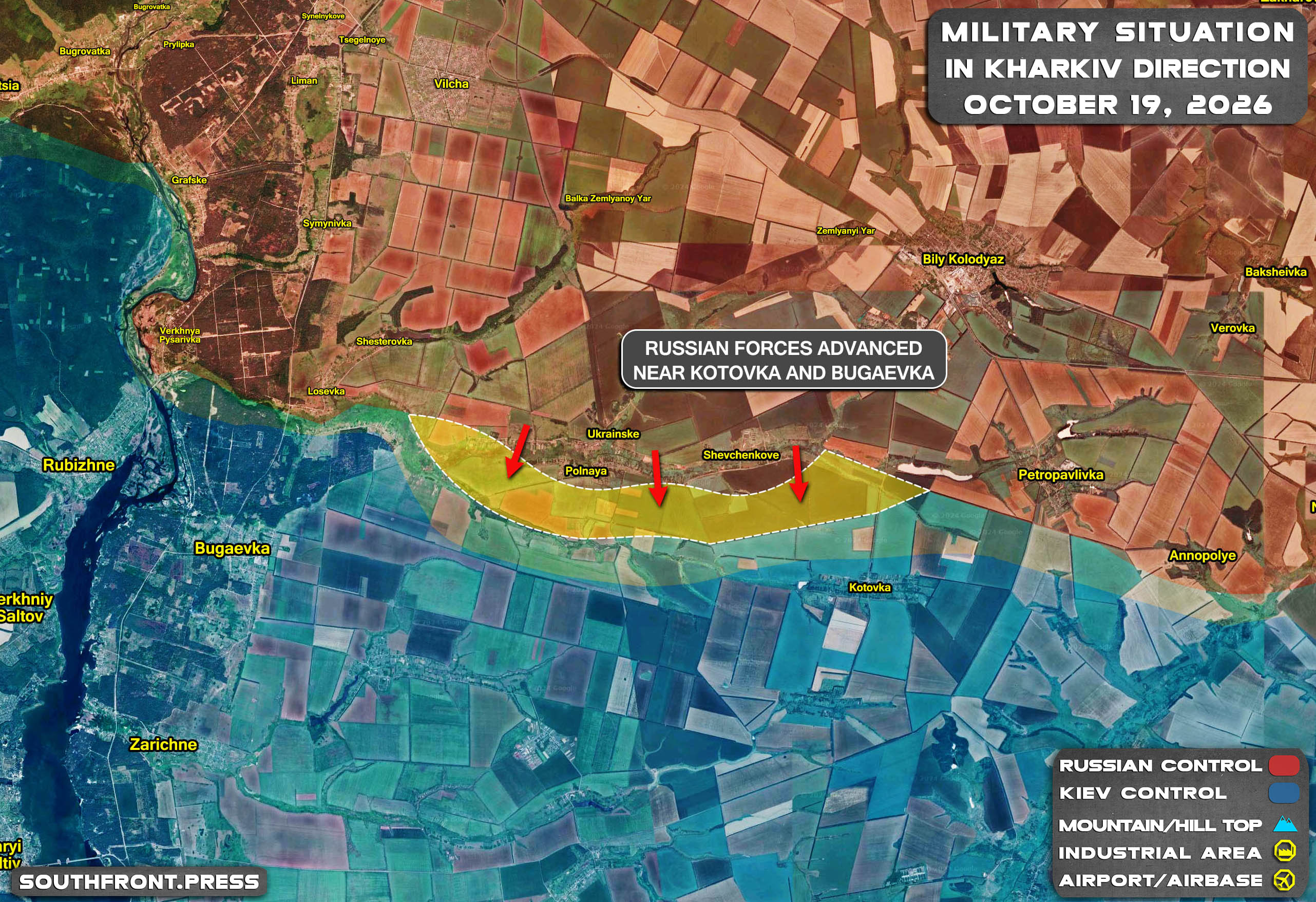
Russian forces advanced near Kotovka and Bugaevka.
Click to see the full-size image
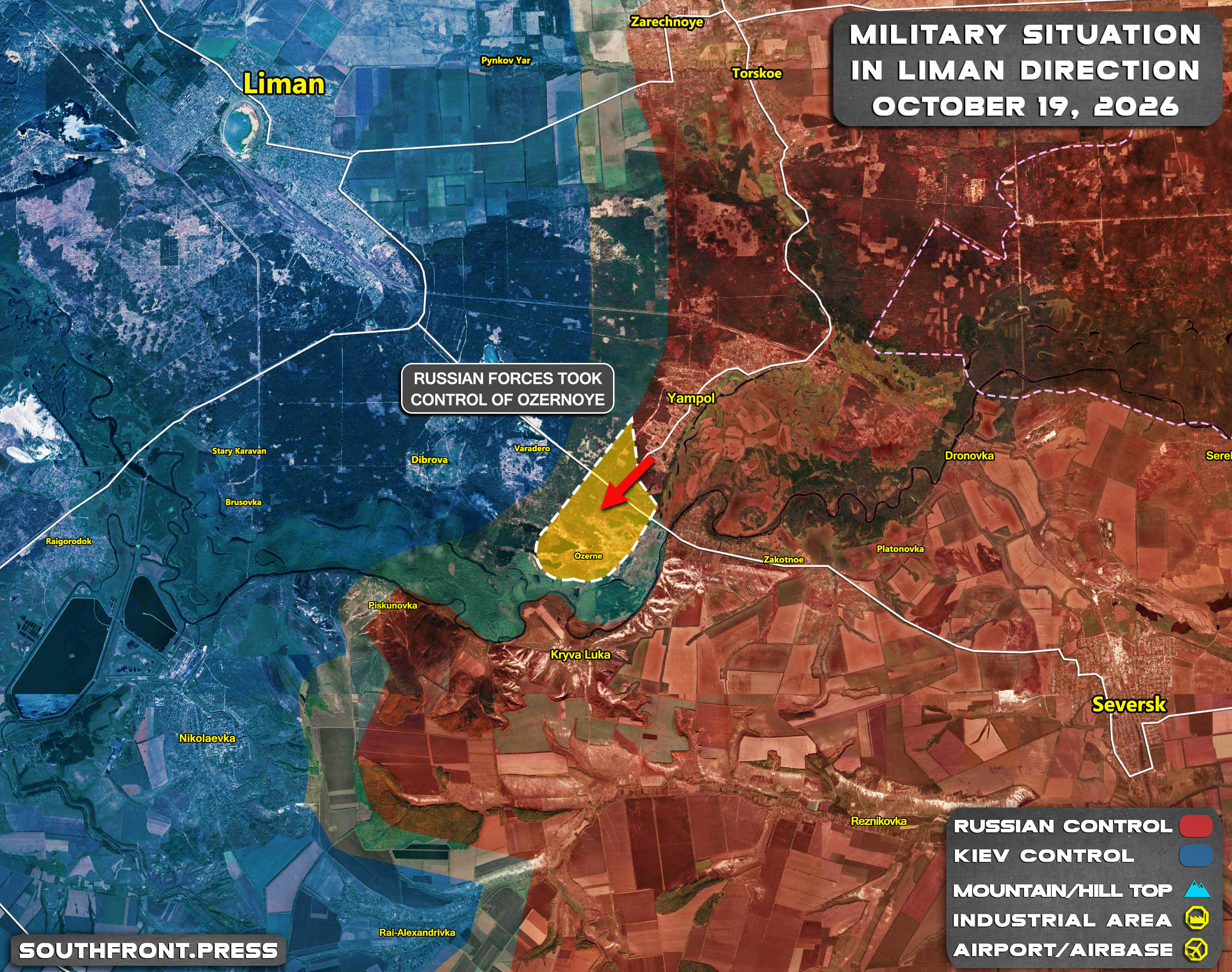
Russian forces took control of Ozernoye.
Click to see the full-size image
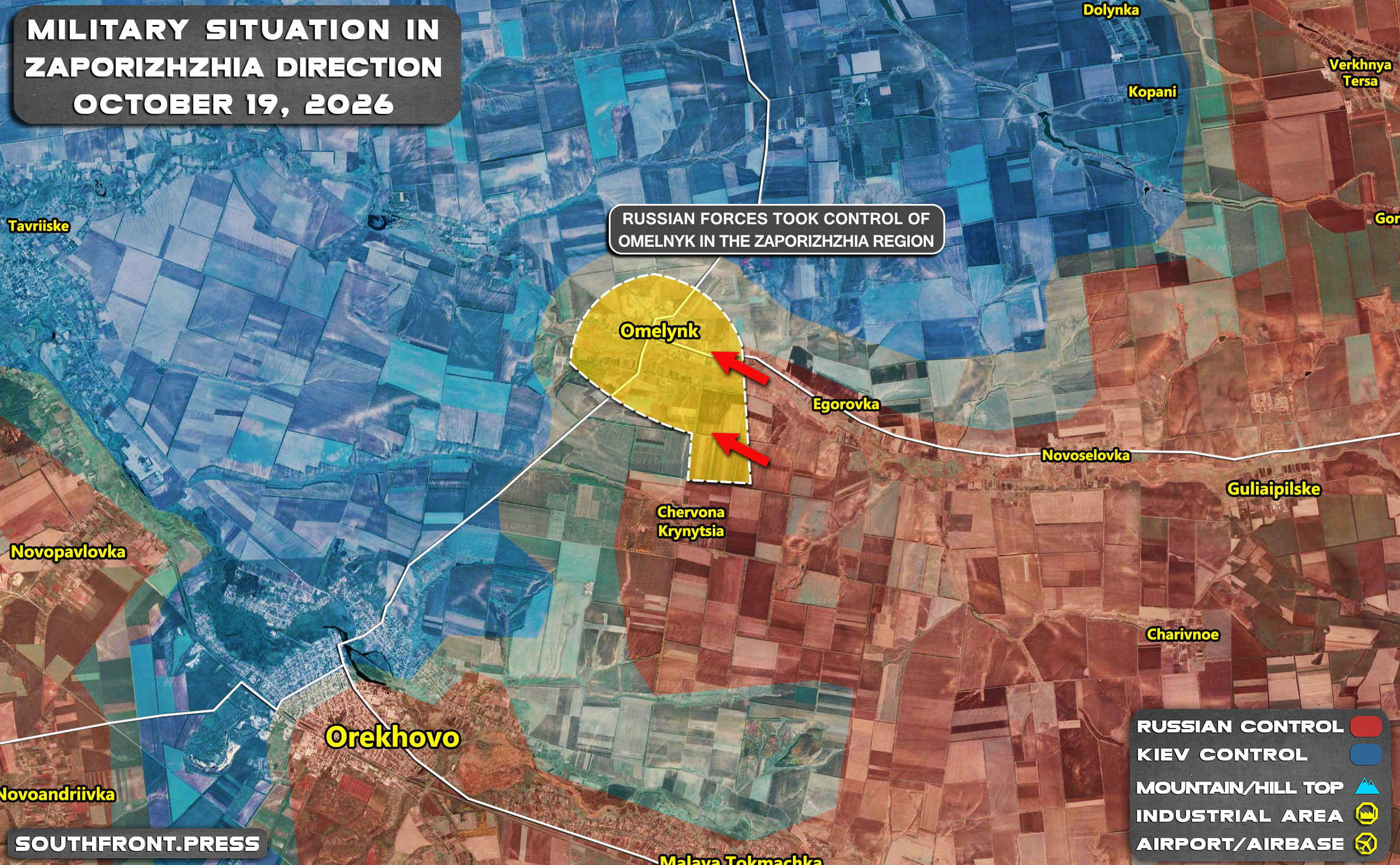
Russian forces took control of Omelnyk in the Zaporizhzhia region.
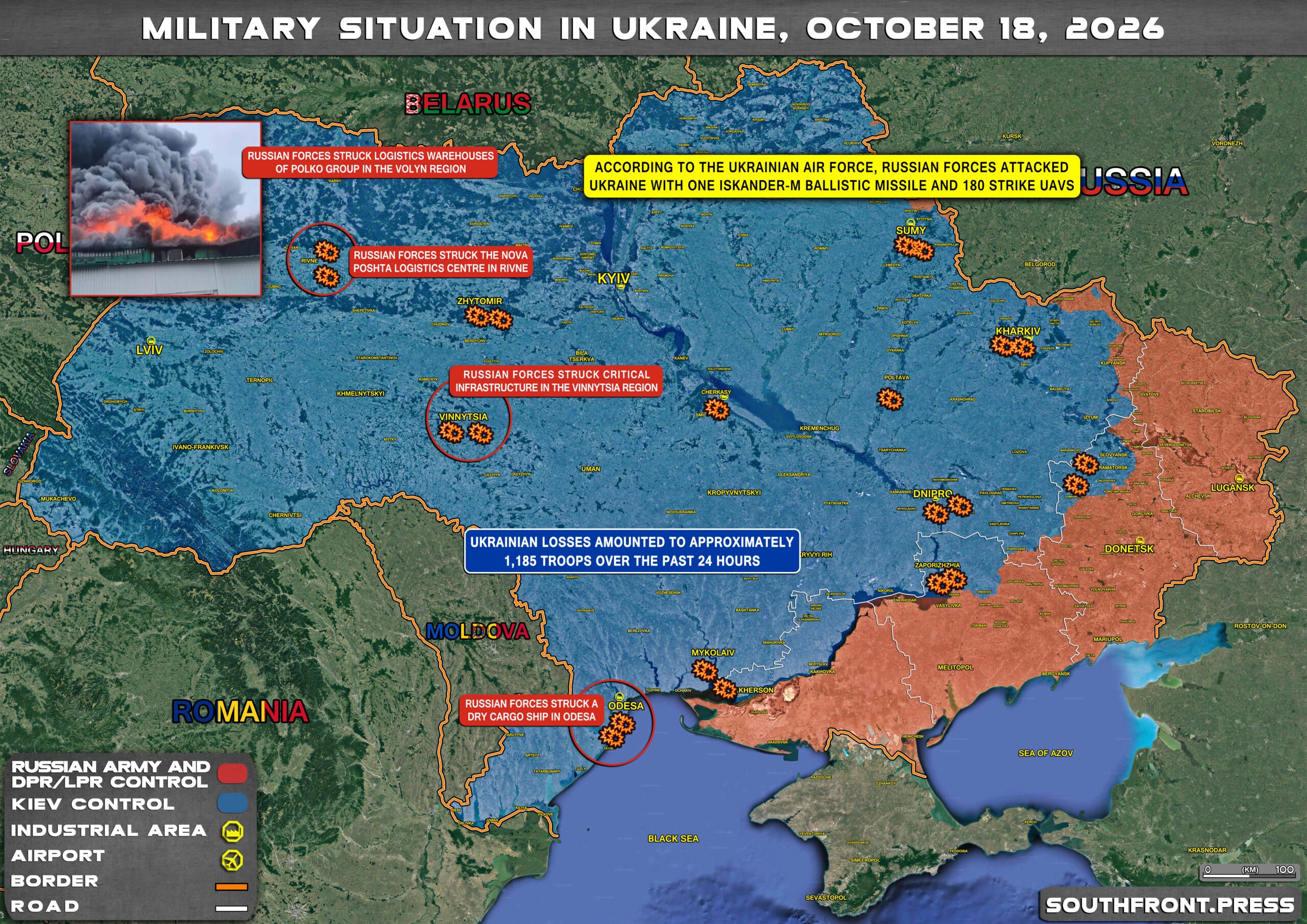
Russian strikes destroyed targets in the Sumy, Kharkiv, Zaporizhzhia, Dnipropetrovsk, Kherson, Odesa, Chernihiv, Khmelnytskyi, Rivne, Cherkasy, Poltava, Zhytomyr regions, and the DPR;
According to the Ukrainian Air Force, Russian forces attacked Ukraine one Iskander-M ballistic missile, 180 strike UAVs;
Russian forces struck the Novaya Pochta logistics centre in Rivne;
Russian forces struck a dry cargo ship in Odessa;
Russian forces struck logistics warehouses of Polko Group in the Volyn region;
Russian forces struck critical infrastructure in the Vinnytsia region;
Ukrainian losses amounted to approximately 1,185 troops over the past 24 hours.
Click to see the full-size image
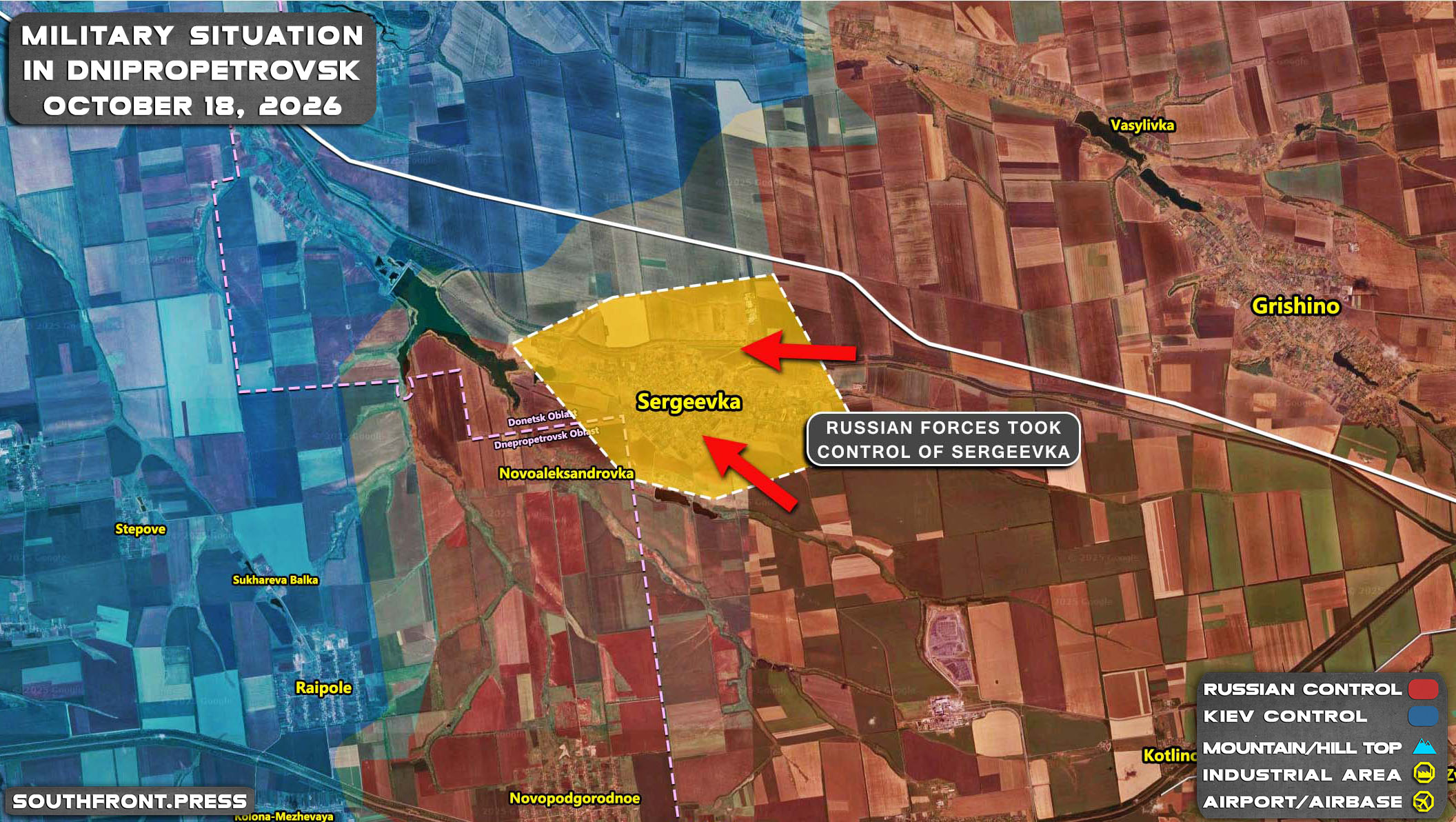
Russian forces took control of Sergeevka.
Click to see the full-size image
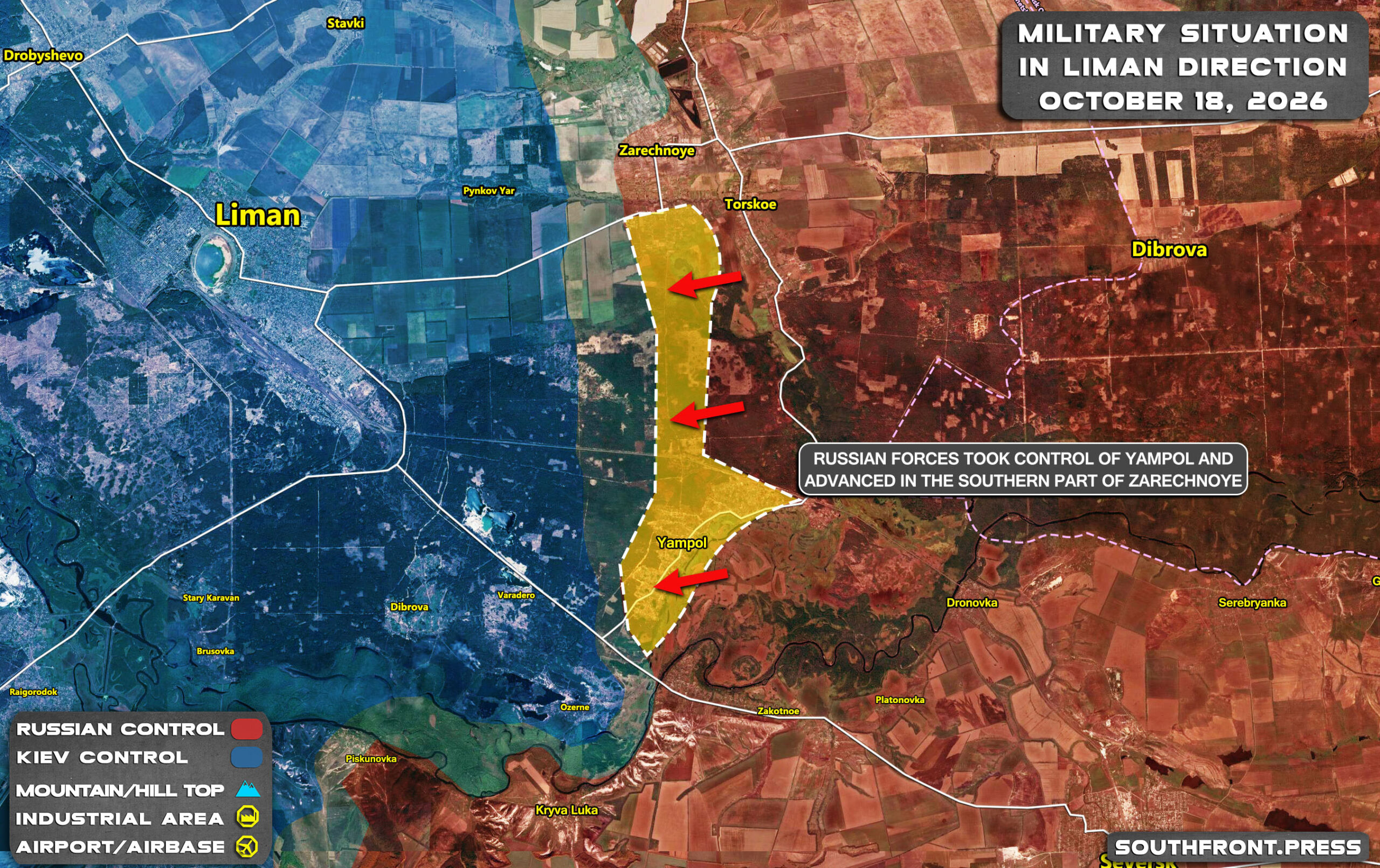
Russian forces took control of Yampol and advanced in the southern part of Zarechnoye.
Click to see the full-size image
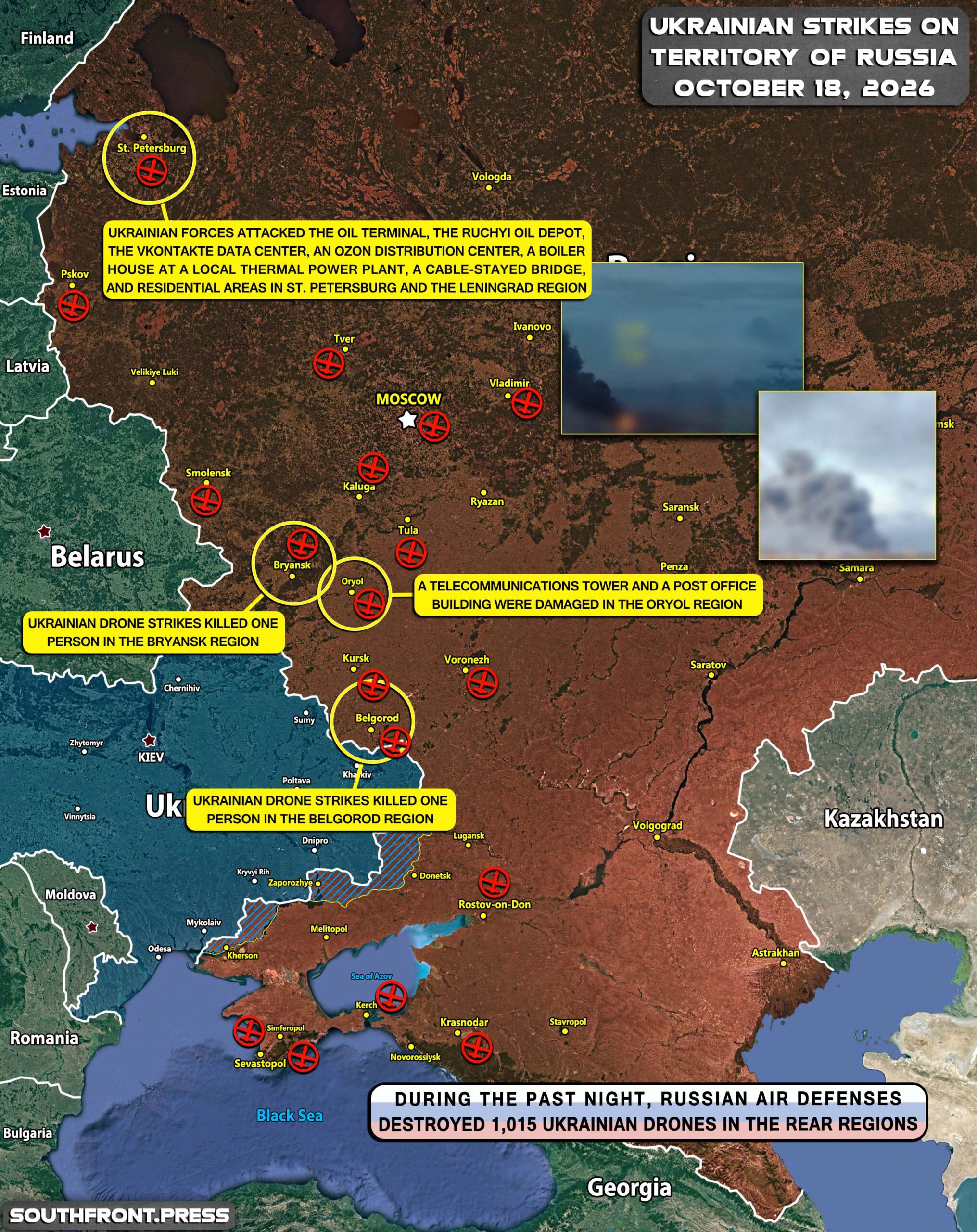
During the past night, Russian air defenses destroyed 1,015 Ukrainian drones in the rear regions;
Russian air defenses intercepted UAVs in the Belgorod, Bryansk, Vladimir, Kaluga, Kursk, Leningrad, Novgorod, Oryol, Pskov, Ryazan, Smolensk, Tver, and Tula regions, the Moscow region, Krasnodar Krai, the Republic of Crimea, and over the Black Sea;
Ukrainian forces attacked the Oil Terminal, the Ruchyi oil depot, the VKontakte data center, an Ozon distribution center, a boiler house at a local thermal power plant, a cable-stayed bridge, and residential areas in St. Petersburg and the Leningrad region;
A telecommunications tower and a post office building were damaged in the Oryol region;
Ukrainian drone strikes killed one person in the Bryansk region;
Ukrainian drone strikes killed one person in the Belgorod region.
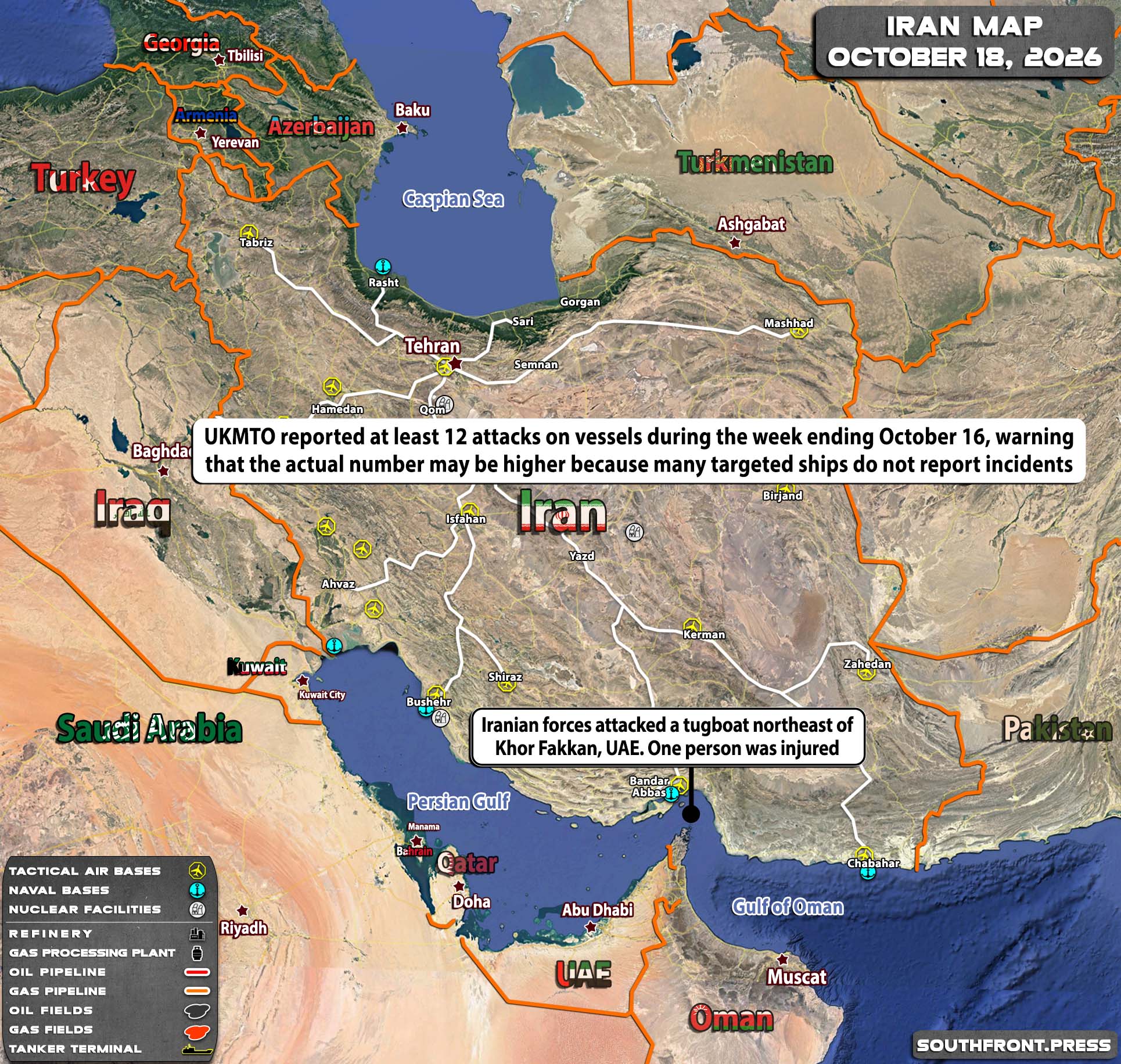
Iranian forces attacked a tugboat northeast of Khor Fakkan, UAE. One person was injured;
UKMTO reported at least 12 attacks on vessels during the week ending October 16, warning that the actual number may be higher because many targeted ships do not report incidents.
America's interminable war with Iran has killed thousands, disrupted commerce that flows through the Strait of Hormuz, and raised prices on the home front.
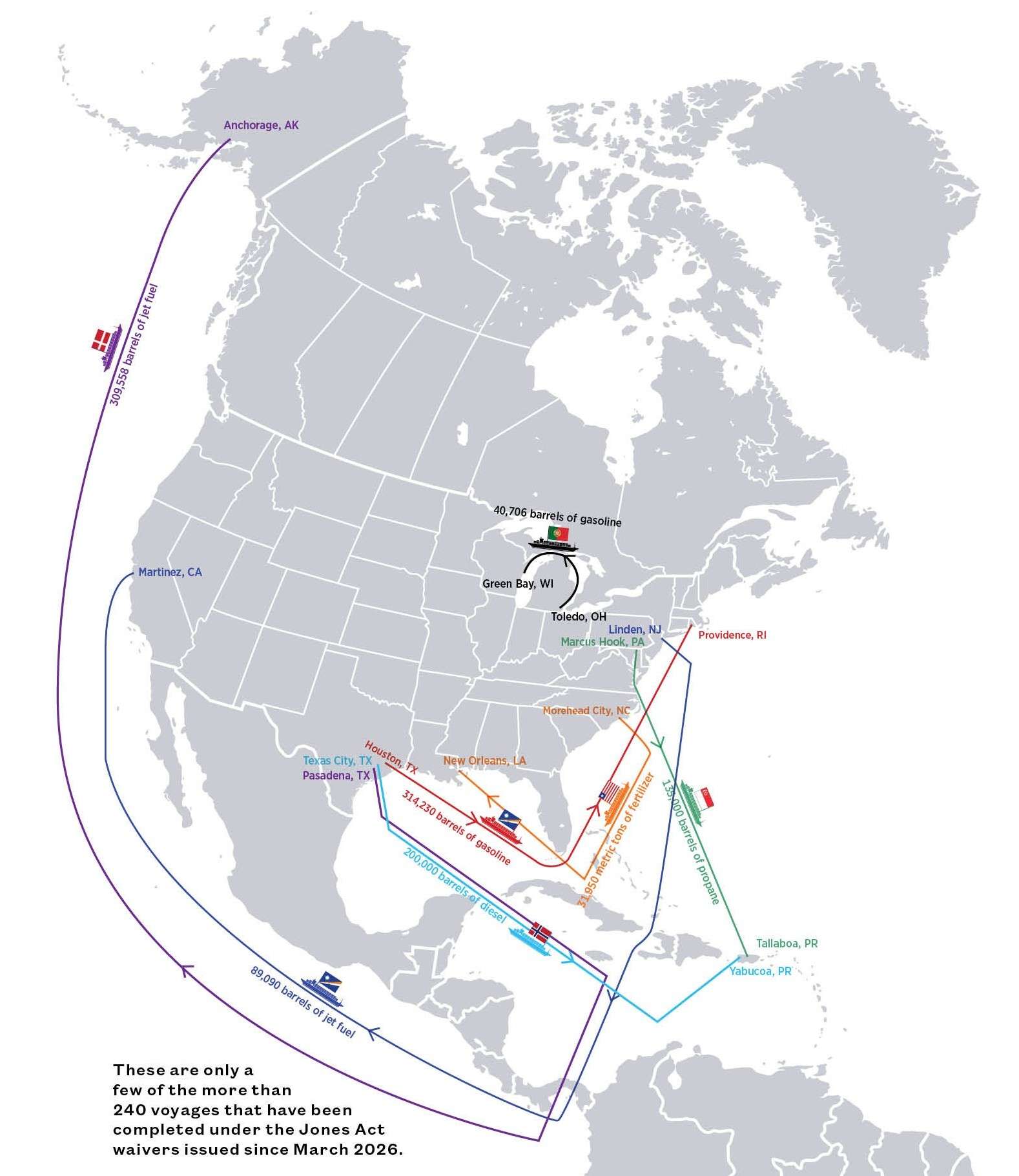
But there may be one silver lining. In an attempt to lower gas prices that spiked because of the war, the Trump administration has repeatedly issued waivers of the Jones Act, a century-old law that requires all goods moved between American ports to be carried on American-built, American-crewed ships.
With the law (temporarily) not being enforced, commerce has exploded.
Just look at how much propane has been shipped from the mainland United States to Puerto Rico, says Colin Grabow, a trade policy analyst at the Cato Institute and perhaps the nation's foremost advocate for abolishing the Jones Act.
America is one of the world's leading producers and exporters of propane, but the lack of Jones Act–compliant ships capable of carrying gas means that it has been nearly impossible to ship propane from the mainland to outlying parts of the country. In the past, Puerto Rico has imported gas from Nigeria, Chile, and elsewhere because those deliveries don't have to comply with the Jones Act.
For years, libertarians have argued that the Jones Act unfairly impoverishes American consumers and businesses that want to buy and sell things within the same country in order to artificially inflate the price of moving those things across water. Waiving the law seems to have proven that point: There are plenty of ships capable of moving gas and oil around the country as long as the government gets out of the way.
"The instant the Jones Act no longer applied to energy shipments, mainland propane displaced foreign imports, suggesting it had been the cheapest option all along," says Grabow.
Puerto Rico is hardly the only winner.
The Jones Act waivers are offering a glimpse into a world where the law doesn't exist. From March through mid-August, there had been 210 voyages completed that otherwise would have been deemed unlawful without the waivers, according to an analysis of Maritime Administration data by the Institute for Energy Research.
It's a world where American oil and natural gas can be more easily shipped from the Gulf Coast to New England, which had previously been importing energy from Russia and Europe. Another big winner is California, which had been importing gasoline from as far away as the Bahamas because it was nearly impossible to legally ship gas from Texas or Alaska to the West Coast.
President Donald Trump reupped the Jones Act waiver in mid-May. Another extension, issued in August, will last for 90 days but applies only to ships carrying energy products such as gas and oil. Before that waiver expires in November, lawmakers ought to kill the Jones Act permanently.
There is some irony in the fact that one of Trump's most successful policy maneuvers has paused a protectionist law that limited commerce, when so much else of his economic policy has been focused on erecting barriers to trade. It's also amusing that it was a war in the Middle East—something Trump pledged to avoid—that triggered this change.
Still, the proof is in the shipping. The free traders were right all along.
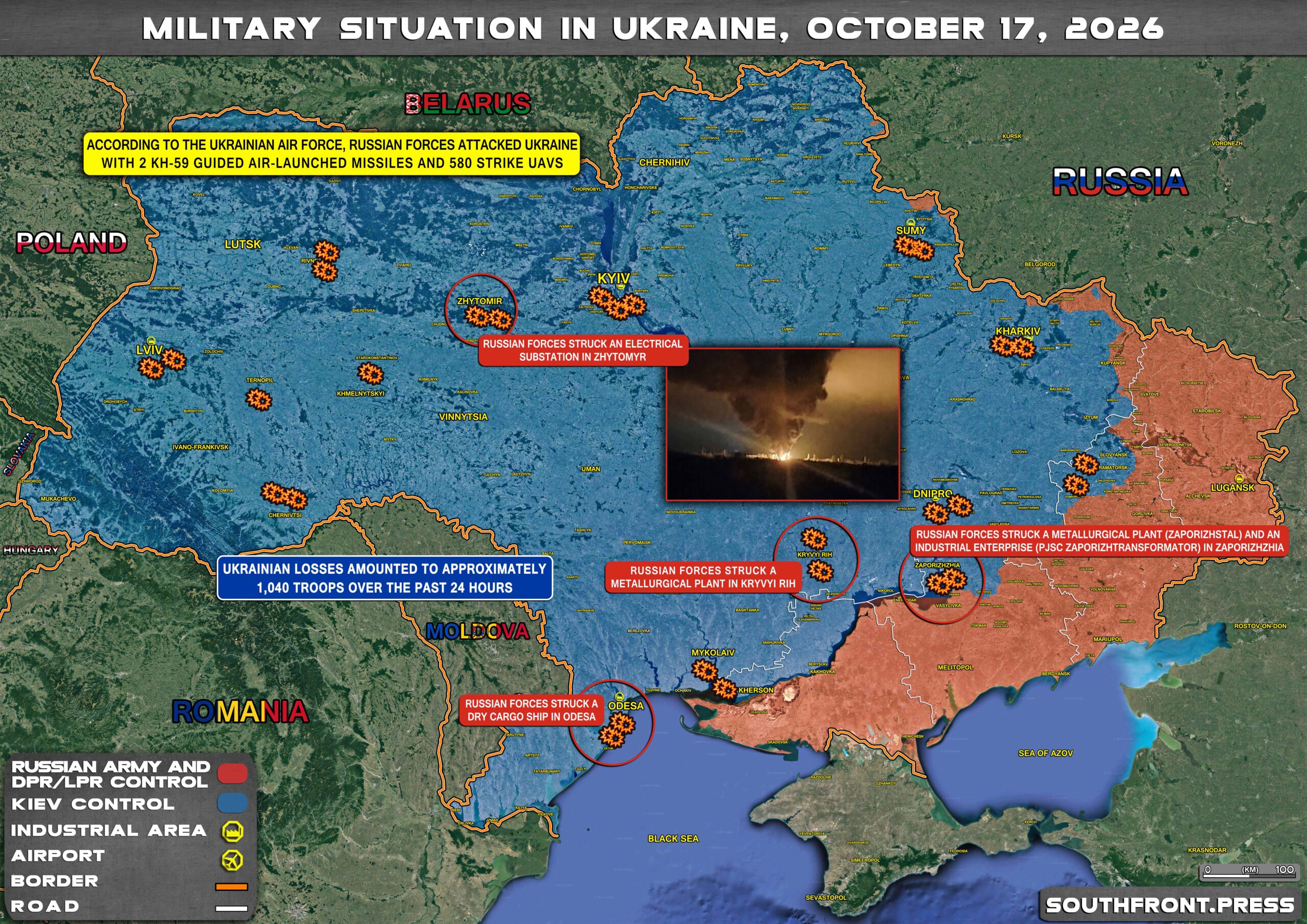
Russian strikes destroyed targets in the Sumy, Kharkiv, Zaporizhzhia, Dnipropetrovsk, Kherson, Kyiv, Odesa, Khmelnytskyi, Lviv, Volyn, Zhytomyr, Rivne, Cherkasy, Chernivtsi, Ternopil, Vinnytsia regions, and the DPR;
According to the Ukrainian Air Force, Russian forces attacked Ukraine with 2 Kh-59 guided air-launched missiles and 580 strike UAVs;
Russian forces struck a metallurgical plant in Kryvyi Rih;
Russian forces struck an electrical substation in Zhytomyr;
Russian forces struck a metallurgical plant (Zaporizhstal) and an industrial enterprise (PJSC Zaporizhtransformator) in Zaporizhzhia;
Russian forces struck a dry cargo ship in Odesa;
Ukrainian losses amounted to approximately 1,040 troops over the past 24 hours.
Click to see the full-size image
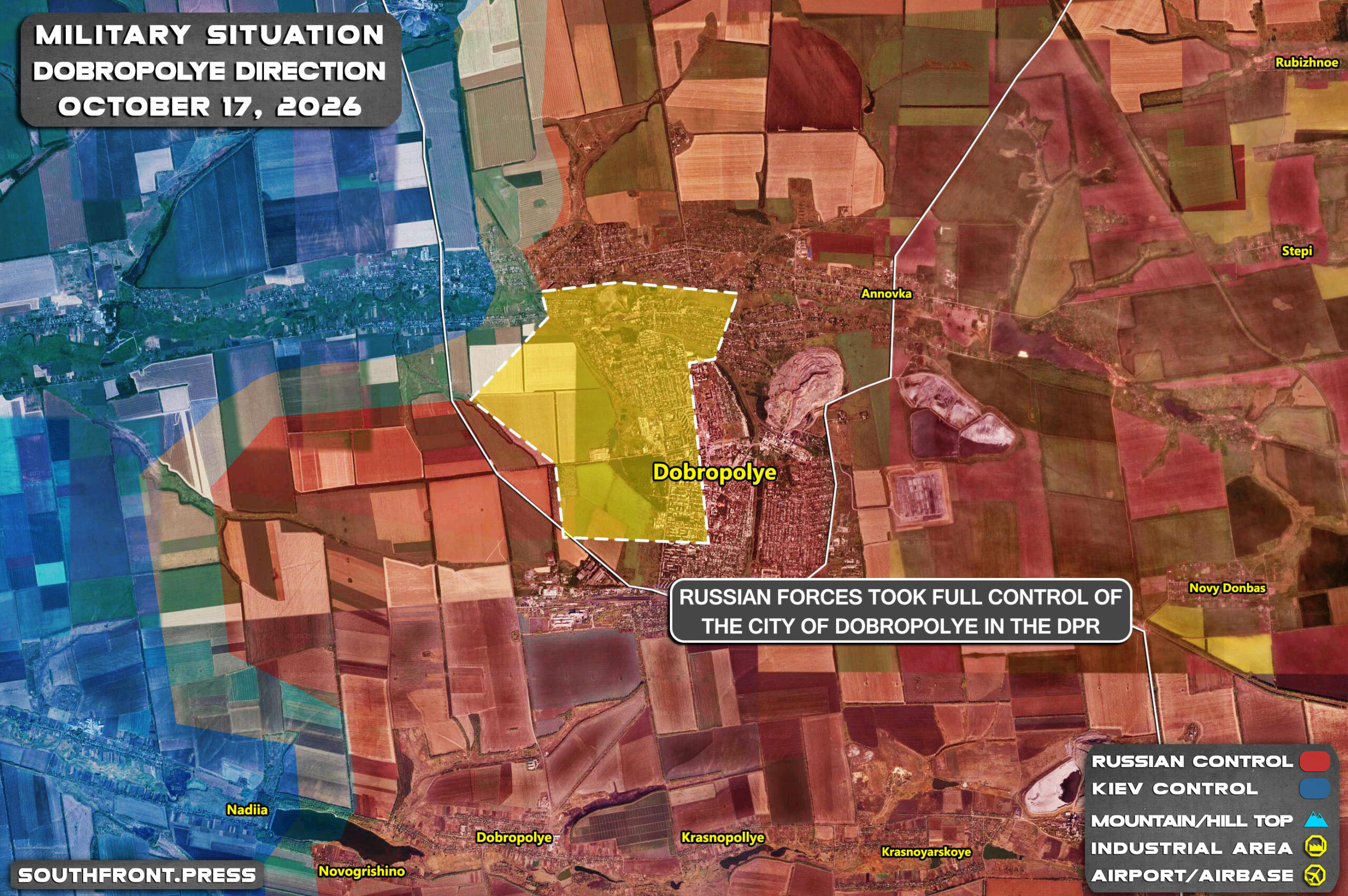
Russian forces took full control of the city of Dobropolye in the DPR.
Click to see the full-size image
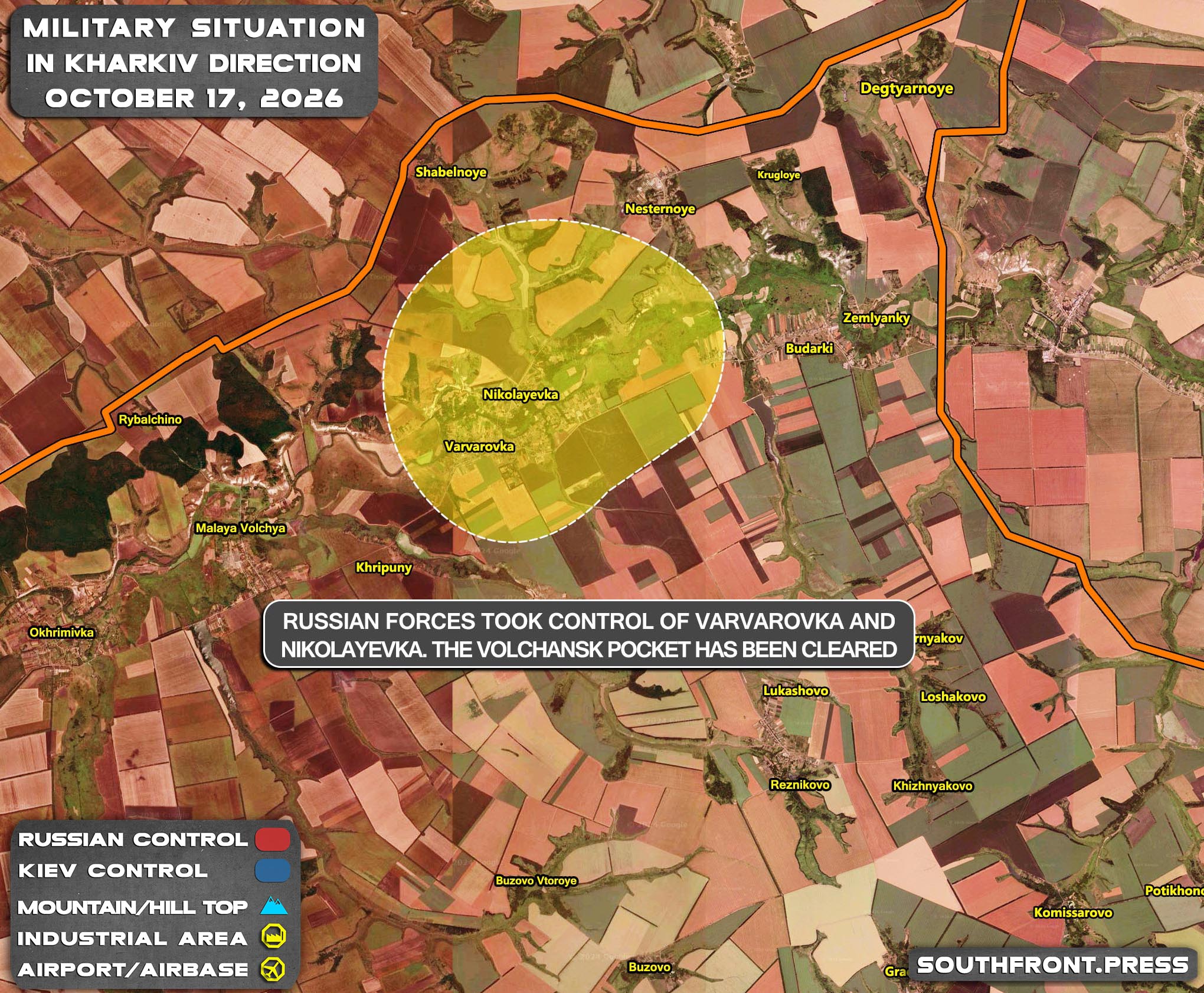
Russian forces took control of Varvarovka and Nikolayevka. The Volchansk pocket has been cleared.
Click to see the full-size image
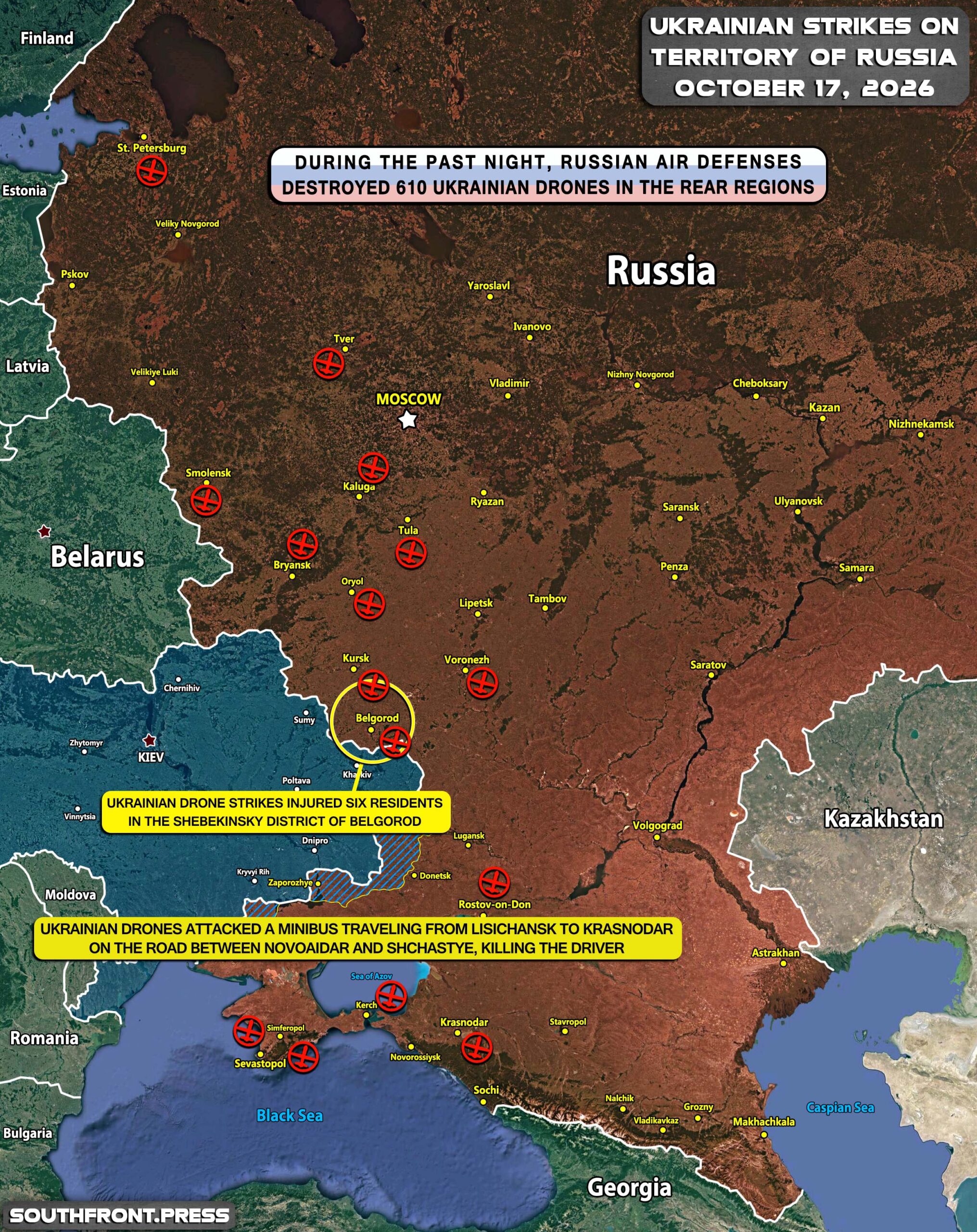
During the past night, Russian air defenses destroyed 610 Ukrainian drones in the rear regions;
Russian air defenses intercepted UAVs in the Leningrad, Novgorod, Tver, Bryansk, Belgorod, Kursk, Oryol, Kaluga, Voronezh, Rostov, Smolensk, and Tula regions, the Moscow region, Krasnodar Krai, the Republic of Crimea, and over the Black Sea;
Ukrainian drone strikes injured six residents in the Shebekinsky district of the Belgorod region;
Ukrainian drones attacked a minibus traveling from Lysychansk to Krasnodar on the road between Novoaidar and Shchastia, killing the driver.
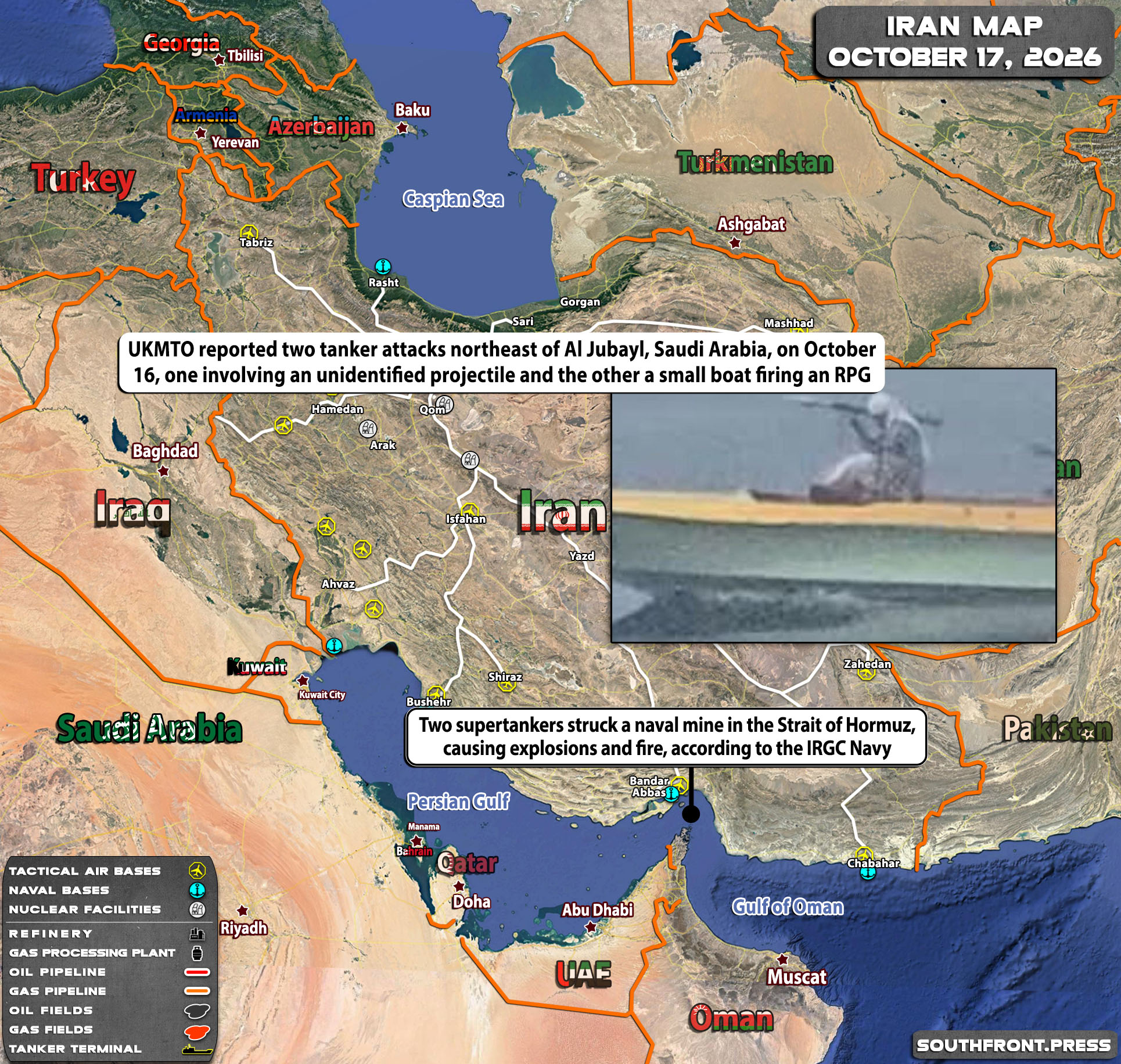
Two supertankers struck a naval mine in the Strait of Hormuz, causing explosions and fire, according to the IRGC Navy;
UKMTO reported two tanker attacks northeast of Al Jubayl, Saudi Arabia, on October 16, one involving an unidentified projectile and the other a small boat firing an RPG.

 Login