Top Democrats on the House Energy and Commerce Committee demanded answers Thursday from the Centers for Disease Control and Prevention (CDC) about the agency’s funding of a controversial hepatitis B clinical trial in Guinea-Bissau. The CDC awarded $1.6 million last year to Danish researchers to conduct the study in Guinea-Bissau, a small country in West…
Top Democrats on the House Energy and Commerce Committee demanded answers Thursday from the Centers for Disease Control and Prevention (CDC) about the agency’s funding of a controversial hepatitis B clinical trial in Guinea-Bissau. The CDC awarded $1.6 million last year to Danish researchers to conduct the study in Guinea-Bissau, a small country in West…
Lawler, a moderate Republican, is fending off a challenge from Democrat Cait Conley in the Hudson valley. It is among the most-watched races that could determine whether Republicans hold on to their majority in Congress.
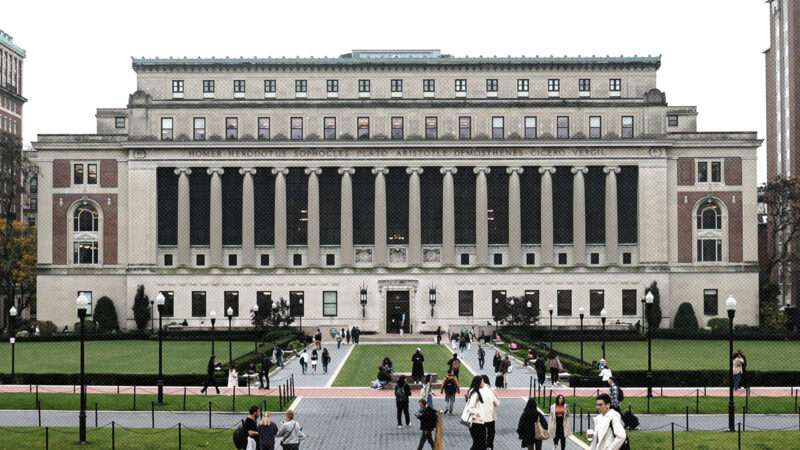
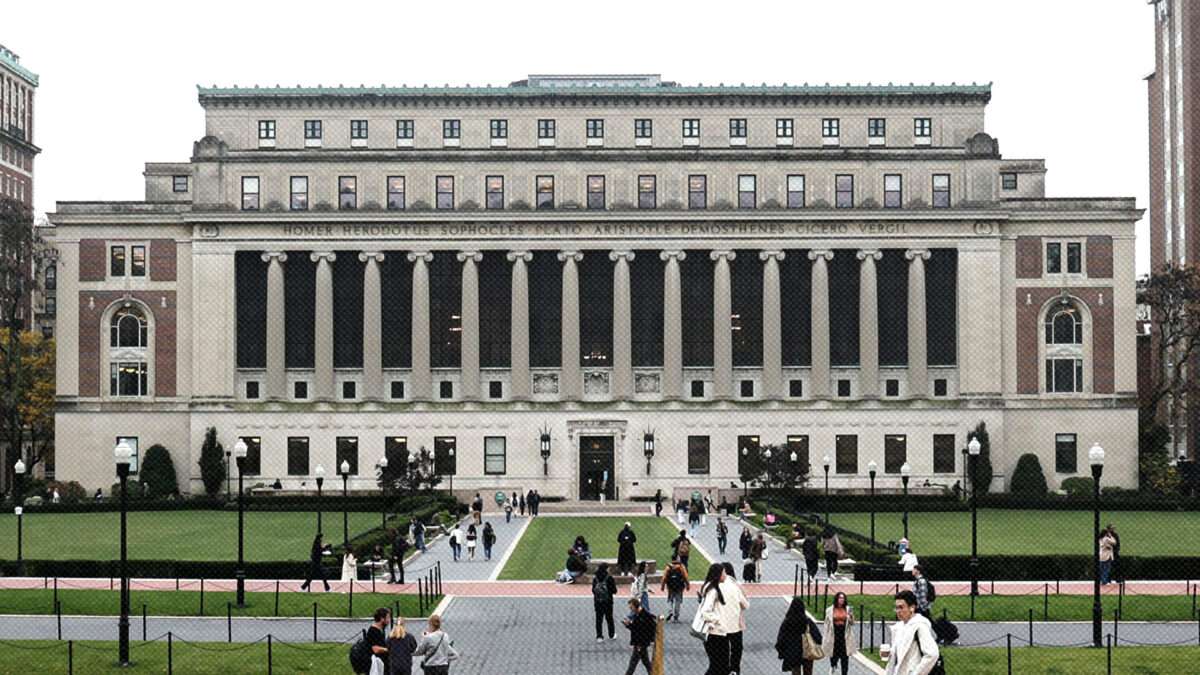
Questioning the prevailing narrative about the "Cornell seven" case is bound to create controversy. And at Columbia University, two student journalists drew condemnation for their views on the case from the unlikeliest of places: a college free speech group.
On October 13, Barnard junior Christina Ma and Columbia junior Nikos Mohammadi published an article called "The 'Cornell Seven' Is Really About Liberalism" in the Columbia Sundial, an independent student publication. The piece argued that the discourse surrounding the alleged rape at Cornell University infantilizes women by omitting the possibility that in a post–sexual revolution, liberal society, women may make regrettable but consensual choices.
"In the world that, for better or worse, follows from it, we cannot claim to stand for sexual freedom and then recoil in disgust when there's a possibility that a young woman simply chose to exercise it," Mohammadi and Ma wrote.
The piece also argues that the "collective frenzy" over the Cornell case has created a climate on campus that makes it "difficult to disagree with the maximalist position on what happened" the night of the alleged rape.
As Mohammadi wrote in UnHerd, the piece caused immense backlash. He said he received an onslaught of messages urging him to commit suicide and demanding that his "career and life be destroyed." But the criticism went beyond threatening DMs and comments.
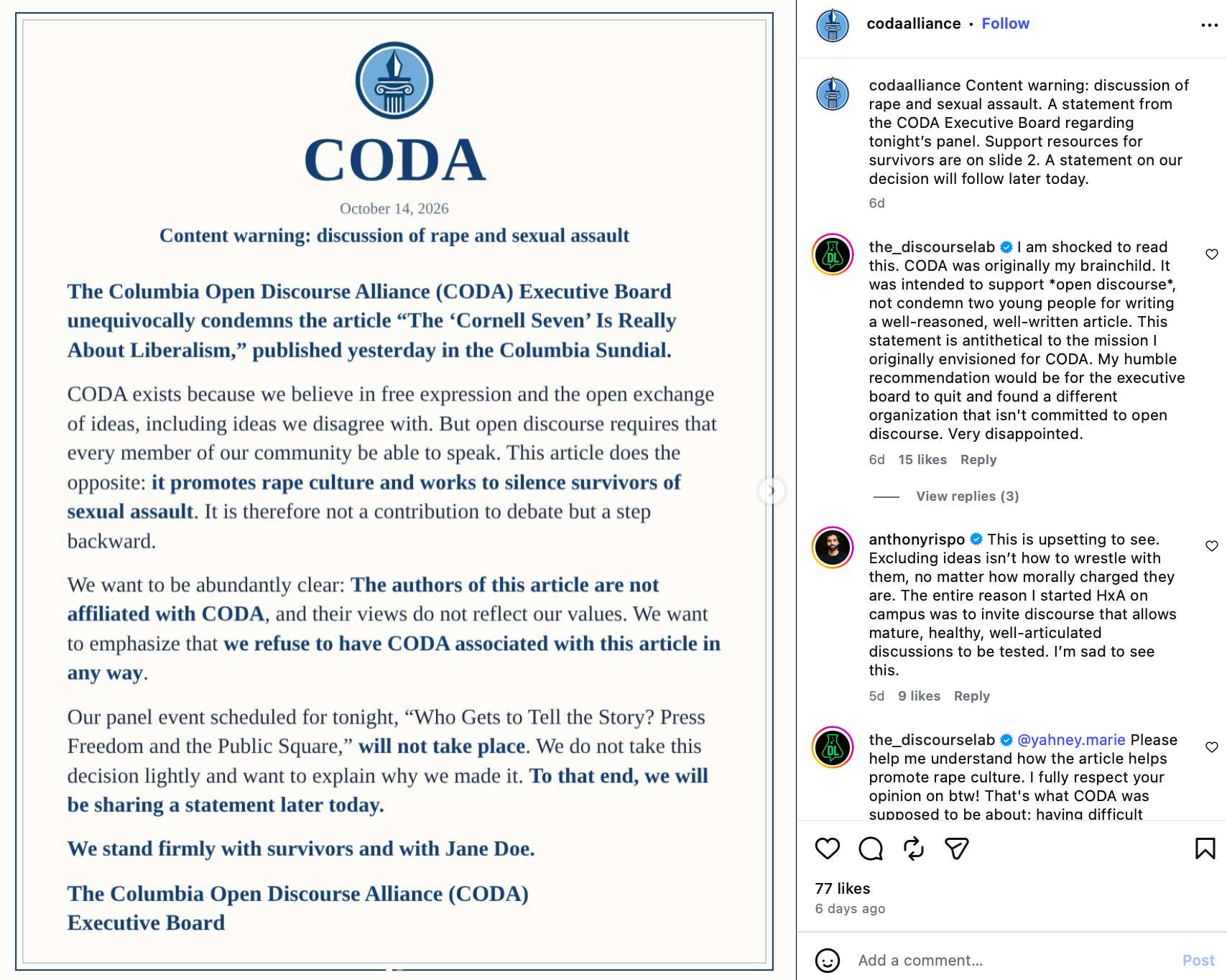
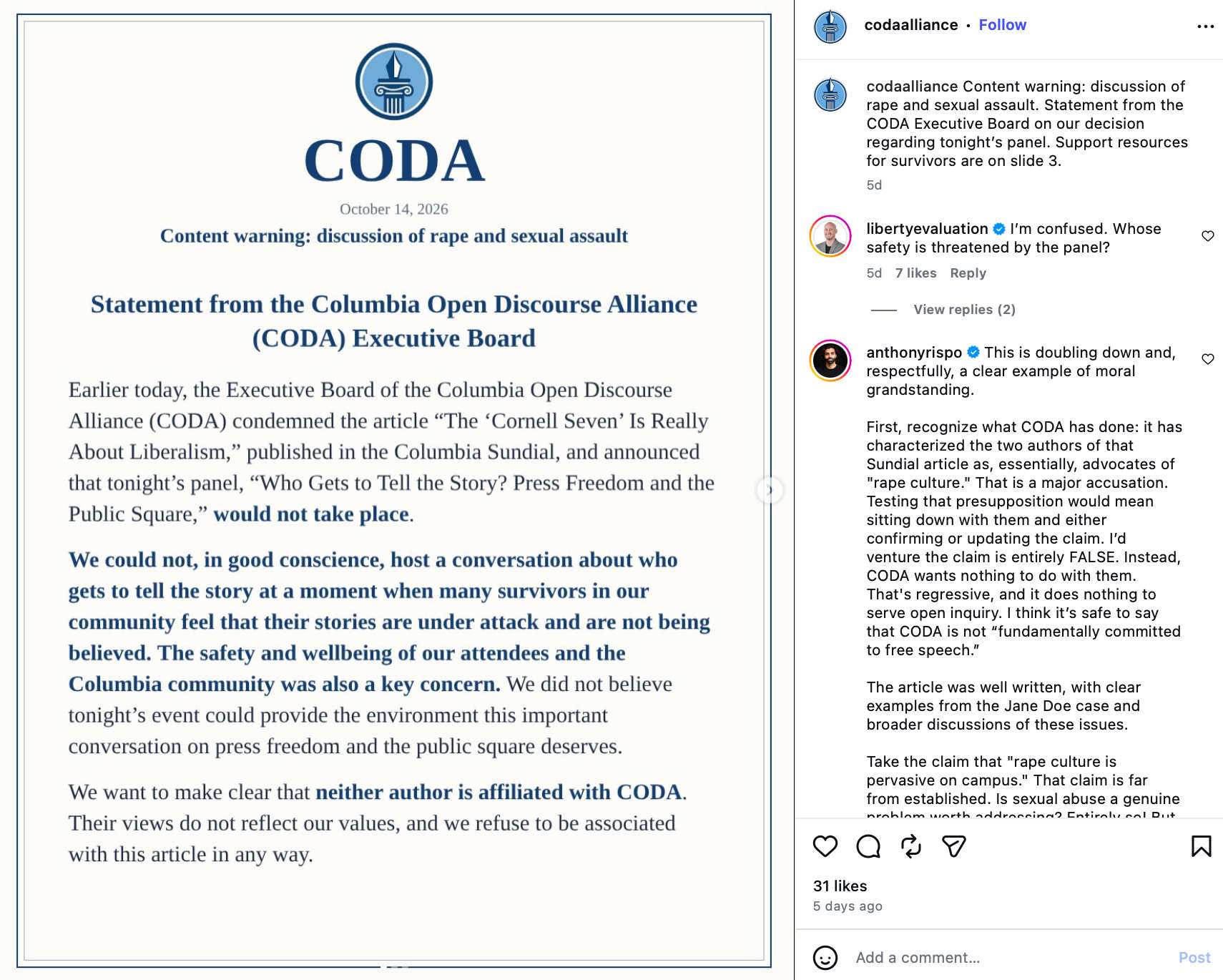
The day after the article's publication, the Columbia Open Discourse Alliance (CODA) canceled an event about press freedom because the Sundial's editor in chief, Nick Baum, had been slated to speak at the event. Although Baum did not author the piece, CODA wrote in an Instagram post that the free speech group "refused" to be affiliated with the Sundial's article "in any way."
CODA also claimed that the event, ironically called "Who Gets to Tell the Story? Press Freedom and the Public Square," could not take place at a time when "many survivors in our community feel that their stories are under attack and are not being believed."
The group added that the Sundial's article "promotes rape culture and works to silence survivors of sexual assault."
The group's president, Aum Desai, told Columbia's student newspaper, the Columbia Daily Spectator, that the group canceled the event "not in spite of, but because of [CODA's] commitment to free expression."
Columbia graduate Clayton Smith, who founded CODA in 2025, quickly commented that he was "shocked" by CODA's statements on Instagram. Smith started the organization to create a central hub for groups hosting events promoting free speech and open discourse, including the Sundial and Columbia's Heterodox Academy chapter.
He tells Reason that CODA's rationale for canceling the event was "ironic" and "hypocritical," and he believes the group should have collaborated with the Sundial if there were legitimate safety concerns at the event. He says he was particularly disturbed by the group's condemnation of the article and CODA's claim that it promotes "rape culture."
"They don't argue or explain how it works to silence survivors of sexual assault. It is a baseless slander that they use to condemn the article because it promoted an opinion they do not like," Smith says.
Smith says he spoke to Desai on the phone after CODA posted the statements, and Desai tried to reassure him that CODA would uphold the principle of free speech. But Smith says he did not leave the phone call feeling "very confident at all" in Desai's commitment.
Desai did not respond to Reason's requests for comment.
CODA faculty adviser and Columbia Business School professor emeritus Eli Noam was traveling in China during the fallout from the Sundial article and was not involved in CODA's decision.
After speaking with members of both CODA and the Sundial, Noam tells Reason that he thinks CODA "made some proper decisions, some correct decisions, and some mistakes."
"I think we're dealing here with…a group of college students who kind of were confronted with a crisis at 2 a.m.," Noam says. "And kind of [made] some judgments that they now regret, and they do."
He tells Reason that it was not "unreasonable to assume there would be a disruption" at the event, given the climate at Columbia and "about this rape allegation." He says the group suddenly "had an event where they needed college security" and could not organize in time. CODA, Noam says, is not yet recognized by the university, and he thinks the group was likely fearful of jeopardizing its recognition.
Still, Noam says CODA's statements condemning the article were "unreasonable," and it was "disappointing that they kind of lost their nerve here."
Although he was not involved in planning the panel, Mohammadi says, to his knowledge, there were no credible threats of violence to the panel. He understood there may have been "disgruntled students" and an "environment CODA did not want to deal with." But instead of simply canceling the event or working with the Sundial to find a solution, Mohammadi says CODA overstepped by condemning the Sundial piece.
James Applegate, an astronomy professor who serves on Columbia's Academic Freedom Council (CAFC) alongside Noam, tells Reason that he disagreed with CODA's decision to cancel the event.
Applegate tells Reason he was considering attending the event, and he was "rather surprised and disappointed" when it was canceled.
He recalled that when he was a professor in 2000, he objected to changes to the school's sexual misconduct policy on the University Senate floor. He says his statements were "similar to what was said in the Sundial article" and there was a "level of emotion in this debate."
"Nonetheless, we had the debate. I was in it, and the degree to which it was civil is shocking when you look at where we are now. And it's sad."
Applegate said he does not condemn CODA, however, "for the simple reason that the atmosphere on college campuses and on the left wing of politics in general in the United States is quite vicious."
CODA's honorary faculty fellow John McWhorter tells Reason he interpreted CODA's statement as "saying that an event about who gets to tell the story is untenable when or if a critical mass of people with such stories don't even feel comfortable telling them— i.e.being a participant in the event." He added, "I imagine some might think of that as cutting the salami a little thin, but then I highly suspect that Desai is equally worried about the event becoming a physical melee of some kind. In that, let's face it, he is hardly unreasonable."
Still, McWhorter said that he would have chosen to have the event himself, "especially as in the likely case that some people did talk about their experiences without any particular repercussions, it may have made the more reluctant people less apprehensive about doing so in the future."
According to Mohammadi, as of Tuesday, the Sundial, College Republicans, Platypus Affiliated Society at Columbia (which discusses leftist thought and history), and Columbia's Heterodox Academy chapter have left CODA.
CODA was not the only group to condemn the Sundial's piece. On October 14, the Columbia Political Review's editorial board wrote that Mohammadi and Ma's piece "violates standards of integrity" and "perpetuates a culture of campus violence, rape, and assault." The editorial board of the Columbia Political Review, which purports to publish "multipartisan political discourse," stated that it would refuse to publish "any article that upholds or recreates cultures and systems of rape, sexual assault, or violence" and it urged "all campus publications to do the same."
And on Monday, Columbia's main newspaper, the Spectator, published a staff editorial accusing the Sundial of violating journalistic ethics by "its page to disparage survivors of sexual violence."
Mohammadi tells Reason the piece underwent "far more editorial scrutiny than any other piece" the Sundial had published given the sensitive nature of the topic.
Free speech student organizations are necessary on Columbia's campus, especially as the school's free speech climate continues to crumble; it recently received a failing grade from the Foundation for Individual Rights and Expression. And while upholding free speech principles may have become more fashionable among those resisting the Trump administration's pressures on academic freedom or those defending pro-Palestinian speech, it is clear that some topics remain taboo in the public square. College is supposed to be a place where students debate controversial topics, form their own beliefs and opinions, and learn from mistakes. Hopefully, the students who demanded condemnation instead of debate will be forgiven for their perversion of free speech ideals, and they will learn to afford such grace and open-mindedness to classmates with whom they disagree.
Today's guest is Tarek Mansour, the 30-year-old billionaire co-founder and CEO of Kalshi, the prediction market platform where users can trade on the outcomes of everything from elections and economic forecasts to sporting events and the weather. As prediction markets surge in popularity, Kalshi is facing legal challenges from states that argue it's operating an illegal gambling business. But Mansour insists that prediction markets are fundamentally different from casinos and sportsbooks and that efforts to restrict them threaten a powerful new source of information about the future.
Nick Gillespie talks with Mansour about Kalshi's battles with state regulators, why he believes the gambling industry is trying to stifle competition, and how prediction markets can help businesses manage risk. Mansour explains why ordinary people can sometimes forecast economic trends more accurately than Wall Street professionals. They also discuss Mansour's journey from growing up in Lebanon to building a multibillion-dollar American company and his concerns about rising inequality and the declining enthusiasm for entrepreneurship. Mansour argues that capitalism needs to give more Americans a stake in its success without sacrificing the innovation that makes it possible.
0:00—How prediction markets differ from casinos
4:55—Do prediction markets serve a public good?
8:18—Markets, price discovery, and the economy
11:36—Why does Kalshi ban insider trading?
14:06—CFTC and federal regulation
17:26—How Kalshi differs from Polymarket
22:30—Do prediction markets have a corrosive effect?
25:03—Kalshi's ban on athlete harassment
26:49—Arizona and New York lawsuits
31:30—State versus federal regulation
33:45—Why is Kalshi exploding in popularity?
35:57—Mansour's background and the American Dream
39:55—Wealth gap narratives and an inclusive economy
42:39—Will a Democratic Congress hurt Kalshi?
45:17—Mansour's prediction for Kalshi
47:48—Will state lawsuits require a Supreme Court decision?
This is an AI-generated transcript. Check all quotes against the audio for accuracy.
Nick Gillespie: This is The Reason Interview With Nick Gillespie. I'm talking today with Tarek Mansour. He's the co-founder of Kalshi, the prediction market platform that allows people to win or lose money, or invest or not money, on everything from election results to weather outcomes to who will win Dancing With the Stars and, of course, all sorts of sports. Thank you so much, Tarek.
Tarek Mansour: I'm excited.
You're 30 years old, you're a billionaire, and you are a big believer in prediction markets as truth machines. I want to talk about that in a minute. But first, Kalshi gives money to a lot of nonprofits, including Reason Foundation, the nonprofit that publishes this podcast. There are no conditions on this interview.
Tell me first, what is a prediction market, in the simplest terms possible, and why is it different than a sportsbook?
I think a prediction market, in the simplest terms possible, it really is like the stock market. We're matching buyers and sellers in an open marketplace that is competitive. The thing that they're trading is not a small, specific subset that Johnny Wall Street cares about, whether it's a stock or a bond or a credit default swap or all these kinds of sophisticated things. It's simple questions about the future.
Right. So everything is yes or no?
And some things are actually more like, is it going to go up or down? And there are more structures now. But I think a prediction market is just a generalization of the stock market. One way to think about the stock market is actually a prediction market on the prices of stocks on companies.
And you make money not on whether or not you bet right or wrong. You're not the house. You run the platform, so it's like you own the casino. And you're not staking anything…
No, it's exactly the opposite. We're exactly like owning the stock market. We're like the New York Stock Exchange, right? The New York Stock Exchange is not in the business of pricing a stock or setting the prices. They're in the business of matching buyers and sellers.
And so you may have an opinion that something's going to happen, and somebody else may think that something is not going to happen. And we match the two of you to settle that disagreement of opinion via trade.
Historically, that's about stocks. Someone thinks Apple stock is going to be worth more than the current price, more than $100 per share, and someone thinks it's not actually going to be, that it's overpriced. They make a trade as a way to settle that difference of opinion.
The difference in a prediction market is you're doing it on whether Brexit is going to happen or not. And you may think that it's very likely that Brexit happens, and someone else, your counterparty, may think that it's not very likely it's going to happen.
And let's say the market right now is trading at a 40 percent chance, 40 cents on the dollar. You may want to buy, and the other person wants to sell, and we match the two of you. And I take 0.7 percent. So if you put in $100, the other person puts in $100, I take 70 cents.
And now, very quickly, explain why that's different from a sportsbook, like why you're not Fanduel….
Here's how I'll explain it, and I'll get back to exactly the sportsbook analogy.
So when the first version of financial markets came around, and very few people know this, people think that the first financial market was the stock market, but actually it wasn't. It was the commodities market.
The first real example of a financial market was the rice futures exchange in Japan. And then in the U.S., it's really become very popular at the end of the 19th century. It was farmers, they were trading on the price of grain using grain futures, and then over time, it evolved to oil futures, etc.
And at the time, it was really interesting because when I tell you about grain futures right now, you don't think gambling. You think boring, mainstream financial markets.
But at the time, the states were suing the Chicago Board of Trade, saying this is gambling. And what was the claim? It was saying, "Well, farmers are betting on the price of grain. They're speculating, and so it looks and feels like gambling. What's the difference?"
And at the time, they didn't have sportsbooks or casinos. They had the bucket shops, which were different from the Chicago Board of Trade.
So what were the bucket shops? A bucket shop was a place where the shop, which was functioning like a casino, set the prices. They would say, here's the price of grain, and here's what I'll let you buy, and here's what I'll let you sell.
And then the purpose was basically, it was a casino. Farmers would come in, bet against the bucket shop, and then they would lose money. And if you made a little bit, if you were a smart, sophisticated trader, they would ban you. You know, the card counters get banned from the casinos.
It continues to happen on sports betting.
In sportsbetting or casinos, right? Like, if you're a smart, sharp trader, you get limited. And if you maybe have some addiction issues or you lose consistently, you get promos, and you keep coming back. That is the gambling business model. That is the end.
And when people were claiming that the exchange was gambling, at the time, the Supreme Court ruled in favor of the Chicago Board of Trade.
And the basis was very simple. It's like, yes, some people are speculating, which looks and feels like betting, sure. But the mechanism is different, and there's a public good that comes out of it.
The mechanism is a free, neutral platform that lets people trade against each other. And what it needs and incentivizes, it incentivizes the card counters, the smart traders, because the public good that it brings is the informational knowledge that it gives to people.
Talk a bit about this, because this is key to your argument, and we'll get into the regulatory structures and the cases against you, but that prediction markets serve a public good because they give more information about what is likely to happen or how actors are going about their business. How does that happen?
In particular, at a place like Kalshi, you can bet on whether it's going to rain tomorrow or how much. How does that in any way create information that is useful?
Yep. So our weather forecast, so when people are trading on whether it's going to rain tomorrow or not, what happens is you get price discovery.
Some people think the odds of rain are a little bit higher than the market, so they buy it, which moves it a little up. And then some people think it's lower, and it moves it a little down. And that continuous thing is how a stock moves. That's why we call it price discovery.
Price discovery is essentially, there's a quote from a Supreme Court decision in 1905. It's really neat. It's like this idea that speculation is the self-adjustment of society to the probable.
Which is like it's the self-adjustment of the market, the wisdom of the crowds, to what we think is going to happen.
There were papers actually a week or two ago that compared our weather forecast, like the forecast from the prediction markets on the weather, to the most accurate national blended average of weather station forecasts, and we were 10 percent more accurate.
I mean, just very quickly, how does that happen? Because Joe Schmo betting on the weather, he doesn't have satellite information.
So let me give you a little bit of history.
Prediction markets, I think the founder of prediction markets is Friedrich Hayek, the economist. He used to call them information markets, not prediction markets.
And what was the sort of central thesis? At the time, he was saying we have a knowledge problem. The knowledge problem is that our decisions in society, whether it's D.C., whether it's executives, are centralized.
It's you and I sitting in a room and making a very critical decision about the future of the country. But the information that's relevant to that decision is actually very decentralized. It's sitting with a bunch of different people, hundreds of thousands, millions of people distributed across the board.
So we need a magnet. We need the mechanism to bring that information from everyone so we can make better decisions over time.
That's what markets do.
That's exactly what markets do. Market prices are a very good aggregator of information.
Ok, so then the idea is that somehow the people who are betting on the weather have some kind of meaningful knowledge that otherwise would not be—
And by the way, people are not even usually, for example, for the Senate race right now, they don't buy Democrat or Republican and then hold it till maturity. They buy if they think the price is underpriced, and they sell if it's overpriced. They're constantly trading these things.
But the key thing here, when I started the company in 2018, a few years before that, Philip Tetlock did…
At the University of Pennsylvania.
He's actually at MIT.
Oh, I'm sorry. Ok.
And it's about superforecasters. And the whole thing, he was trying to figure out the science of forecasting. What are these people who are good at forecasting?
And he pitted a bunch of elites on geopolitics, the big pundits, and he pit them against a bunch of random dudes, basically, and had them predict geopolitical events. And guess which group did better? The random dudes.
And it was amazing because it tells you a little bit that actually there is a lot of wisdom in this idea of the wisdom of the crowds. The average people, if you add them all up, and all their bits and pieces of information, you end up getting a way better solution and result than the small group of elites.
And this gets reflected, I mean, the way Hayek talks about it in "The Use of Knowledge in Society" and throughout all Austrian school of economics, is markets and prices are discovery systems that transmit information.
That's exactly what it is.
And prediction markets are like transmitting information about a much broader… We used to care about— farmers used to care about what the price of grain is going to be. Why?
And I go back to the farmer. Imagine we had banned grain futures as gambling at the time. There's a very clear net impact on society today, which would be what? Why would it be important?
That price discovery that was happening was giving the farmer predictability on what the price is going to be of grain in September. So now I'm in March, I know how much I can invest, how much I can plant.
If you take that away from them, what would they do? They would plant less. They would just, because with less predictability, you can invest less. And so actually, our food supply would go down. That's how critical grain futures are.
So that makes total sense. And then just to press on this a little bit, as a libertarian, I like markets and everything. I like prediction markets, etc. But what is the positive social externality, other than people being able to express themselves or entertain themselves, with like betting on Dancing With the Stars?
Well, I think to me, some people may disagree on the lines, but a lot of people care about that. And I'll give you a lot of examples.
At a high level, it seems like we agree with the premise that getting smarter, even if it's a little smarter, about what's going to happen will enable us to make better decisions and allocate resources more effectively and manage risk more effectively, right?
Now, what's interesting is actually I always think of this as like, you want more markets on more things because like—
It's more information.
It's more information. It's just that simple.
And I'll give you an example. This was the same argument that was made. So there were two types of commodity derivatives that were banned. Onion futures, which I can tell you the story, there was a wild story.
The second one is box office futures. Box office futures, in 2010, there was an exchange that was trying to bring them to light, which is an idea to do price discovery on how successful a movie is going to be beforehand.
Guess who killed it?
I'm assuming the movie companies.
The big ones. Why? Because they wanted less information. And the argument was at the time, well, it's frivolous. What is the purpose of knowing if a movie is going to be successful? It's a frivolous thing…
And this is called a Keynesian beauty contest or something, where you're betting on what you think other people will say is going to happen or something.
Yeah, I mean, but in this specific one, it's more like they were saying, "Look, knowing if this movie is going to be successful or not, that seems frivolous. It's not like grain futures. We should ban it."
But they actually had an ulterior motive, and there's a reason they did not want price discovery, for two reasons.
Because one, if the market can predict ahead of time how successful a movie is going to be, it'll be harder for them to juice the three or four weeks of box office they get in a bad movie before the word gets out. And there was a second reason. If you have a market that will tell you upfront, actually, "This team is doing a good job, even though it's a small team with a smaller brand," you may attract more investment to the smaller studios, which was going to bring more competition to the space. You will get more efficient….
I mean, markets are democratizing, ultimately, or they push against centralization.
More information is always better, and oftentimes monopolies and incumbents want less information because, you know, the markets usually reduce…
Well now let me… I want to get to the regulatory structure you're currently under, plus what various states are trying to fit you into, a different kind of regulatory structure. But just on this moment, let's stop for a second.
If more information is always better, why do you ban insider trading? Because there is an argument that insider trading is absolutely the best information, and it changes prices very quickly and makes markets clear more—
And libertarians, that's the argument, and the free market side of me always tells you that you want more. You want as much as possible.
And you want, like, when Practical Magic 2 is coming out, you want people in the studio who have seen it, who know it sucks, to change, you know, to…
I would argue yes, in theory. I'll say where in practice.
But maybe right before, I want to just make, because you asked me about the gambling distinction, which we'll get to with insider trading.
The gambling business model is one where the thing they incentivize for their customers is fun and entertainment and to keep losing. That's why they give you the suites and the drinks, and they keep you losing.
Prediction markets, what they incentivize is going out there, like markets, seek knowledge, seek truth, and then come to get rewarded for it in the open market. That is why there is a fundamental difference.
And it doesn't matter what the topic is. It could be grain futures. It could be weather. It could be economics. It could be sports. It doesn't really matter. The structure, the former structure, is what really matters.
Now, on the other argument, I agree with you. It's like, well, the insiders, should they be allowed to trade? And the way I always answer the question is, why is insider trading banned in the stock market? Because in theory, we would get more accurate prices in the stock market.
And there's a very practical reason, and this is how markets should be regulated. And I strongly believe that. That's why we took a pro-regulatory-first approach to this.
Because markets can only exist if there are fair rules of the road and the competition is fair and equitable across all the participants. So I think actually…
And people need to believe that the market are not…
Otherwise, they stop trading.
Free markets, in my view, if you take the opposite of free markets, it's this idea that there's a privileged, closed circle that has access to specialized information. Right? And the key thing in the line I was drawing is, if the information is something you can access by doing research and work and putting in the effort, no matter who you are, then it's fair game.
But if it's information that you only will have privileged access to because, I don't know, you work in government or you're an executive at a team, then it's unfair. Then it creates an unfair dynamic that over time dries up liquidity and makes actually the market less efficient because nobody will trade. People won't trade.
So this helps explain, you noted you co-founded Kalshi in 2018. You went to the Commodity Futures Trading Commission to get licensed and regulated at the federal level. So when people say, "Oh, you guys are completely unregulated," that isn't accurate. But you're…
It's completely inaccurate.
Yeah. How does the CFTC regulate what you do? And then we'll get into how and why states might be trying to change that.
Yeah, I mean, I think they're two entirely different… There's a reason why the states are trying to change that, and we'll talk about that. It's fundamental protectionism.
So the beauty of the Commodity Exchange Act, why did it come? It actually got created after this whole fight that the Chicago Board of Trade was having with the states. And Congress, in '74, enacted the Commodity Exchange Act to actually preempt two types of laws: state insurance laws and state gaming laws.
And there's a reason why. Because on an open exchange, in grain futures or on Kalshi, there are two types of activity: speculation, which looks and feels like gambling, or hedging, which looks and feels like insurance.
The difference between those two is they're being done on an open market.
And why do you need the federal statute? Why didn't they let the Chicago Board of Trade be done state by state? It's because it didn't work. And here's the easiest way to explain it. Imagine we siloed the New York Stock Exchange, the stock market, state by state, where in New York, you can only buy Apple stock from New Yorkers.
Imagine we had 50 different New York stock exchanges, different prices, different rules, fragmented liquidity.
What would happen? Worse prices, a bunch of deadweight loss, lower liquidity. You probably won't be able to, if you're in Kansas, you won't be able to buy as much stock as you want.
It is a completely anti-market kind of structure.
What you want is a federal, uniform set of rules that apply across all 50 states that promote and foster this sort of multilateral, peer-to-peer idea. Someone in California is trading with someone in Texas, and you want as much information as possible. You don't want to silo information. That's the anti-market view.
And what does regulation mean, and why is it important for us, first, for us to really get regulated as commodities? It's because the rules that apply to trading on oil futures or interest rate swaps or politics on Kalshi are largely the same.
So what do you want to prevent against? You want to prevent against insider trading, prevent against market manipulation, so doing things that move the market price unnaturally for profit. You want to add sensible guardrails around knowing who your customers are and money laundering and that sort of thing.
And I believe in this, and I think this is where the regulation is very important. It's like all these products, whether it's grain futures or sports betting or prediction markets or trading options on Robinhood, most of the use is fine.
And it's not about people winning or losing. I think the competition, some people are going to win, some people lose.
But there's some degree of irresponsible use. I do believe in that. And I believe in individual freedom. People should be able to choose, but I think there should be some regulations on irresponsible use so that companies are not targeting those types of behavior.
The sportsbooks constantly target those types of…
Yeah, so let's just, real quickly, how do you guard against insider trading? I mean, you ban it, but how do you know whether insider trading is happening? How do you know whether or not somebody who has a problem is continuing to use Kalshi? How do you find out?
Yeah, so insider trading, I mean, it's the ever question for a stock market. How do you know? And it's largely a very similar mechanism.
So one, you have to verify all customers. It's like onboarding onto Schwab, opening a brokerage account. You have to…
Are you covered by know-your-customer rules?
Yeah, yeah, yeah. As a regulator.
And that is distinct from something like Polymarket, which is based offshore, and they're struggling with the idea that there may have been a member of the U.S. military who bet on Maduro being removed because he was part of the operation, which is kind of a classic case of insider trading.
It certainly is insider trading, for sure.
Because insider trading is like, are you trading on material nonpublic information? So do you have a piece of information that you're not supposed to disclose legally? And trading is a form of disclosure. You can't go say it, so you…
Ok, so you follow KYC, but then, yeah, and then how? So how do you…?
And then you have the same systems as the New York Stock Exchange, which basically flag suspicious patterns.
I mean, insider trading or market manipulation, the patterns are always weird. You always have an account that is trading hundreds of dollars, and now they're trading thousands of dollars all of a sudden on an asymmetric shot. What's happening, right?
And the last piece is you enforce. So when you find someone, we have, as a self-regulatory organization, we can impose fines all the way to referrals for criminal prosecution.
And the last piece that's so interesting about the prediction market, so I think it's even unique compared to some of the financial markets, all of our trades are public. It's all fully transparent.
So our customers, because why is insider trading bad? There's someone who gets harmed when someone commits insider trading. It's the person on the other side. That person is extremely incentivized to whistleblow, usually.
And so, George Santos basically tried to commit insider trading on Kalshi a few months ago. We had 100 whistleblower complaints within a few minutes because traders immediately tell us, "Oh, this is weird," and they can all see it publicly.
And that's actually kind of a curse because the press talks about insider trading cases on prediction markets all day because they're so easy to flag.
That's actually a blessing, if you really think about it, because it's so obvious. It's so clear.
So let's talk about…
You're committing a crime in broad daylight, right?
Yeah. So the state of Arizona, I mean, there's about 20 jurisdictions, I guess states, also some Indian tribes and things like that, that are bringing suits against Kalshi.
Arizona, earlier this year, launched a criminal indictment that you're running an illegal gambling operation. New York state, we're talking in New York, and you guys are headquartered in New York, right? It's saying that you are basically, I guess it's not a criminal indictment, but they think you owe them billions of dollars because you're essentially a gambling operation.
What do they get wrong? And what do they get wrong about your structure?
I mean, let me read to you something that I've sort of been looking at recently that I've been sort of really into.
I'll read you one of the court opinions, and here's how it sort of goes:
"We are clearly of opinion that dealing in these markets is void by the common law, for, among other reasons, that it is contrary to public policy. It is not only contrary to public policy, but it is a crime. A crime against the state, a crime against the general welfare and happiness of the people, a crime of religion and morality, and a crime against all legitimate trade and business. This species of gambling has become emphatically and pre-eminently the national sin. In its proportion and extent, it is immeasurable."
And they go on and on about how horrible this activity is.
This is the Illinois Supreme Court. It is from actually 1888. And it's about grain futures, not prediction markets.
And I think the same thing is playing out.
And is this simply, I mean…
It really is as simple because we have the same structure.
And the topic never mattered under the federal law. But states misunderstood it, and they just looked at grain futures at the time as like… Because people don't understand markets. Markets have always been something that people…
They're counterintuitive.
And I always think, imagine we had banned grain futures back in the day. We would have ruinous consequences. It's today one of the bedrocks of the U.S. economy. We would not be able to function without grain futures.
And everybody benefits. I mean, there are individual winners and losers, but you get a more stable supply of food, better planting, better forecasting.
I think about 100 years from now, when there's going to be the next generation of entrepreneurs coming around and expanding the universe, they're going to be looking at this and thinking, "Imagine we didn't have a good gauge on where elections are going to land, on where geopolitics are going, the weather, the climate, the hurricanes."
And you're starting to see today, our fastest-growing segment is actually businesses hedging on Kalshi.
How do they do that?
You can take a position because you want to make money, speculate, but a lot of people take positions because they want to reduce their risk toward an event.
So the same way that grain farmers would short the price of grain so that if the price of grain goes down in six months, they would offset their revenue loss, we see a lot of businesses do the same.
So one example, we have now hundreds of businesses that do the same, it's like sports bars hedge against their home team losing every game.
Why? Because if the team wins tonight, I will make $2,000 in revenue. If it loses, I'll make $800 in sales. And my cost is the same because I have to stock up on inventory. So it's $1,200, $1,200 no matter what.
So when the Knicks win tonight, I make $800. The Knicks lose tonight, I lose $400.
Unpredictability like that is very bad for small businesses. So they buy no on the Knicks. So they short the Knicks winning in a way that essentially compensates their P&L so they're up $300 no matter what.
And why is that important? Because predictability, it's a bit like how the airlines hedge their price fluctuations, predictability helps with investment, helps them make their decisions.
Quick question before we get to why the states are bringing these suits the way they are. Does the financialization, or does the prediction marketizing of everything, does that have a corrosive effect, say, on sports?
In leagues, and this goes back to the 1919 World Series in Chicago, the Chicago White Sox famously had some players who threw it. But when everything is being bet on, everything is being speculated, does that end up undermining something fundamental?
So one, it shouldn't be everything. Two, I just want to be clear, we are not adding anything to sports. Sportsbooks have existed, like DraftKings and FanDuel, and if you see all the cases of players doing bad things, they're actually on the sportsbooks.
Can I ask what percentage of your revenue, or…?
I mean, it's like 65, 70 percent now, but it's going down. So it was 96 percent nine months ago. So it's going down very quickly because sports is a great way to educate people about probability. They get it. It'sMoneyball. Our customer is the Moneyball type.
And then over time, they do politics and economics, and everything else is growing.
But I want to make a key point about this, which is very important. The notion that prediction markets all of a sudden now allow people to bet or trade on sports, it exists already. The question is, do you prefer it in an open and fair marketplace where everything is transparent, or do you prefer it in a closed marketplace where everything is opaque? That is the question.
And then I'm a pro-regulation guy, so I think there's war, terrorism, assassination, violence, wildfires, things that create moral hazards, that should not be traded on. We should not have markets on those things because the incentive is, it's too easy to go and create a fire.
But we also, as a market, we don't go… Most of the issues that you see is things…So we have standards that are more strict than the states' gambling rules around things not being very easily manipulated in the Commodity Exchange Act.
So we don't, for example, do markets on whether the next play is going to be a ball or a strike. The sportsbooks do these, and that's actually the vast majority of cheating cases, etc.
And that's also why we believe that regulation is very important, because when you set the right guardrails on what markets should be in, what markets should not be in, and how do you police those types of activities, and when you find someone that does it, how do you punish them very heavily? The last thing I'll say is we actually ban athletes from trading on anything that relates to their leagues.
I'm sorry, anything at all, or just on…?
Anything in their leagues. Yeah, the same way we ban politicians or members of Congress from trading on things that relate to Congress.
Yeah.
All of that goes into our…
That's like the only place where Congressmen can't bet on what they're about to legislate.
They can do it on the stock market, but not on Kalshi.
Kalshi was a sponsor of the U.S. Open, which is kind of interesting, and there's a growing acceptability.
And the NHL and MLB, and you're going to see a lot of other leagues.
But you've also recently you said that you are going to limit people who are abusive toward sports figures.
Yes.
Explain that, because now are you saying, as a condition of entering contracts on Kalshi, you're going to limit the speech of people? Or how does that work?
That's a great question. I mean, look, I think there are certain bad cases where, and by the way, it's not just about sports. It exists in really anything.
But I think the idea that someone… We always want to be careful about regulating the bad behaviors out of the system. And I believe that. I'm a very free markets guy, but I do believe in sensible guardrails. I do. And we may disagree on that point.
My view is the highway should be wide enough for people to compete and thrive and do all the great things you're going to do. You have to have a fence at the end of the highway to make sure people are not driving themselves off the cliff.
And I think it needs to be very delicate and needs to be very careful. You don't want to make the highway one car at a time because that's terrible. And so in this specific case, you have issues sometimes where people get over their skis and they go and harass…
Yeah, I mean, if you lose $2,000 or $10,000 or $200 because somebody dumps the fifth set at the U.S. Open, you're probably going to yell at the person who lost.
Yeah, yelling is one thing. Harassing and following them online and doing all the weird stuff that sometimes… And by the way, we haven't seen any evidence of that happening on Kalshi. That has historically happened on the online sportsbooks and some of the other mechanisms. I just want to be ahead of it. I don't like that idea.
Ok, so then here, is there any… When the state of Arizona says, "Ok, you're like a gambling operation, you're like the Mafia coming in and you're running this billions of dollars," New York is doing something similar.
In New York state, I think on a typical sportsbook, they take 51 percent of gross revenue. They make a lot of money by taxing and regulating this, and obviously they want money from you. Is there any other reason that they're doing this?
The casino lobby. I mean, the casino lobby is… The foundational thing is a few things.
So when an incumbent gets threatened competitively from a challenger, what does the incumbent usually do?
Go to the government.
It's litigate, then legislate, and then finally, when you realize that this is here to stay, you innovate, right? That's the basic 101. It's always been par for the course.
And why? Because incumbents, inevitably, when you get big enough, you want less competition. That's what you really want. And that's what's been playing out here.
And by the way, it's not just about sports. We launched perpetual futures recently, and CME, the Chicago Mercantile Exchange, the Board of Trade, sued us over it.
And usually the policy argument is never, "I'm losing some revenue due to competition." It's like you come up with a bunch of reasons, like, "Oh, it's too risky. It's too whatever," so they can get policymakers riled up.
And they usually have very orchestrated lobbies and comms functions that do these sorts of things.
But if we look at it foundationally, first, it's interesting. We have zero evidence of cannibalization between what we are doing and the gaming companies, but also the sportsbooks. Why? Because my core customer is a trader. It's the guy who has 17 monitors and like is doing math and stats, and that's 70, 80 percent of my volume. That person is banned in the sports world.
Ok, yeah.
Right? Because they're making money.
I mean, so do you think people are using Kalshi to make money, or is it a form of entertainment? Because casinos and sports betting is really entertainment…
Do you think some people use options in the stock market as a form of entertainment, like on Robinhood?
But there's a great, actually from Illinois, that was more recent actually, like a week or two ago, which is saying that just because something— financial, these prediction markets are swaps, they're financial instruments, they just happen to be fun.
And that's not… Fun is not a problem because when you look at the grain futures market, I always go back because the parallels are so clear, 95 percent of the transactions are speculative.
Sometimes I get farmers having fun. They're gambling, speculating on something.
But the key thing here is that you can win on Kalshi. The bulk is people who are doing sophisticated things, and it's a more sophisticated market.
What is the percentage overall of winners versus losers?
It's a zero-sum game. It's like the stock market or active trading in the stock market.
I'll ask you this question this way: How many hedge funds outperform the S&P every year?
Yeah, I mean, in a given year, I don't know how many.
What do you think is a number, roughly?
Uh, 50 percent?
50? It's like 20.
Ok.
It's amazing. Like 20 percent of hedge funds win. Yeah, like 20 to 30 percent—
And then over time, none of them do.
No, there are, I mean, there are big winners like Citadel and Renaissance. That are like really big winners.
Why? Because competition. Competitions are hard, right? Imagine that number was 50. What should that tell us? If it was 50-50, 50 percent win, 50 percent lose, it would just be a game of chance. There's no skill in this thing.
Anything that has skill, like how many people win the NBA Finals in their careers? It's a very small subset because competitive environments require skill, and when that happens, you're going to have…
So how are you…?
So the answer is actually, if 80 percent of hedge funds lose on the stock market, our numbers are closer to 60, 65 percent of people losing, which is actually more of an equalizer.
Because the one thing we see on Kalshi is actually a much larger diversity of people end up being winners. If you look at our top performers, 79 percent of them went to public school. Our top traders, they're 2x more likely to have worked in retail than worked on Wall Street.
It's kind of amazing if you think about it.
Our best inflation forecaster is a random guy in Kansas who's never traded in the financial markets, just likes…
How does he do it, then? Do you know?
He's read about the economy for 20 years, loves reading about it, very, very calibrated. He's been thinking about it a lot.
And this goes back to Hayek and Tetlock. It's the idea that information and knowledge sits anywhere. They're not sitting with the elites.
They compared the Wall Street forecasts, the Bloomberg, on inflation, economy, GDP growth, unemployment, against the Kalshi forecasts for those things, which is Main Street—- Wall Street vs. Main Street.
And the result was actually Main Street was more accurate than Wall Street, and it's also real time. We move in real time.
So is your strategy, obviously you're fighting lawsuits, but is it ultimately like you're going to come up with a number that you say to New York state and Arizona, and you say, "We're not going to give you 51 percent of gross revenue," but do you keep working until you get to a point where they're like, "Ok, we'll live with it"?
I mean, I like to take the optimistic view of things, which is I think there are some people who just don't understand it. So part of it is we're just sitting down and explaining what I just explained.
Right, right.
Because the superficial view on prediction markets, like any markets, it's always the same. Society has always had an affect reaction to prediction markets. It comes around, and they're like, "That feels like gambling. It feels wrong.
It's either random or it's rigged," right?
Exactly. It's either random or it's rigged, and it's financialization of stuff.
Not because they're bad or good, just because they are hard to understand. And when you explain it more and it gets a little bit more normalized, people, "Oh, that's actually pretty cool."
And you always see it. When I start with a meeting and I end with a meeting, the opinions on this go, "Oh, actually, it can make us think about the future a little bit better. It could depolarize us because now people are thinking more instead of saying stupid things on Twitter."
Clearly, you're not describing any meetings that you've had with the New York State Department.
Well, I mean, look, I can't speak about specific meetings, but my point is, over time, it requires education. There are parts that don't understand, parts that, yeah, there are lobby groups and casinos that are pushing really hard to protect their turf. Or I don't even think they're protecting it. They're not getting cannibalized. I think their view is like, "Oh, it's a big industry. We should have it, too." It's a little bit that sort of thing.
The thing that they're misunderstanding is that this cannot exist state by state.
Why not?
Because, you know…
Ok, because gambling does. And I know you make a big distinction.
With gambling, you go against the house, and you bet against the house. It's localized. That's fine.
But I'm a peer-to-peer market. You don't want the Californians to trade only against Californians, and Texas…
Again, why is New York… Do you prefer a national New York Stock Exchange or 50 different…?
I'm a citizen of the world. So, yeah.
But the point is, exchanges are peer-to-peer, and they require liquidity. They require a large diversity.
It's like Marketplace, Airbnb. Imagine eBay. You can only buy the bag that you want from people in the same state. That doesn't make any sense. You want diversity. The more diverse the participation, the more information, the more it works.
Why do you think prediction markets, and obviously there have been prediction markets probably for as long as humans have had language…
You know what the first one was, right?
I don't.
Pope elections.
Oh, ok.
In the 1400s.
Ok. Yeah, and well, Intrade, which was a predecessor, which was another business, or got run out of business in 2013, was very good at predicting who was going to be pope.
But why does it seem to be exploding now in popularity? Is it that the tech got better? Is it that people have more money?
I think it's two things. One, we approached it from a regulatory-first approach. I always wanted to create a financial market and broaden it into more things.
Prediction markets are just the financial markets. They're just on a different topic. That's it. People are complexifying this.
But the second thing is, when I started in 2018, I think the demand is because, I think it's the polarization that's happening in the country.
And we feel like there's more information than ever, but less truth than ever. Because the filters, the things that are filtering our information, are biased. They're partisan, they're extreme, they're polarized.
The social media algorithms, and you see, you look at two different Twitter feeds and they look entirely different. People have different conceptions of the truth, of what's happening on the ground.
Because if you write seven paragraphs of thoughtful analysis on Twitter, you get two likes. If you write something crazy, like something racist or something ludicrous, just straight-up stupid, you get 10,000 likes.
Because it's clickbaity. It's like the 10-second Reel on Instagram.
I was like, there will need to be, there was going to be a lot of demand for a source of information where the filtering mechanism is very transparent and it's very aligned with truth.
And that's markets.
We used to always joke, when I did my master's at MIT, and I was doing a Ph.D. or working on Wall Street are mostly the same thing, except that you have to be right on Wall Street. You have to do analysis in both.
But my point here is about the incentive structure of the prediction market. It's very, very simple. The seven-paragraph thoughtful analysis probably makes money, and the stupid, extreme takes probably lose money. And all you have to trust is that people like making money and they dislike losing money. That's it.
It's interesting to me that, Kalshi, you were born in California, but you grew up in Lebanon. Your co-founder was born and raised in Brazil.
Can we read anything into that, that these are the two founders, people from countries that are peripheral to, in a way, certainly to America, but kind of to the global economy?
I just think it's naive. It's like the American dream.
I mean, my mom, when we… So I was born in California, moved back to Lebanon. My mom, I grew up with a single mom, and she's kind of a tiger mom. Not kind of. She was very much a tiger.
It would be a lion, right, in Lebanon?
In Lebanon, it would be a lion.
But the whole thing was, like, "You have to go back to the U.S. because that's a country that will, if you have good ideas and you're smart and you work hard," and she knew I was always, like, a math nerd…"You're going to make it, it will reward you for doing that."
And she was right.
She was a ballerina, but also a lot of similar sort of thinking in our household.
And we showed up here, and we're so excited. There are so many different things you can build, and you can challenge the status quo. It's a country that lets you challenge the status quo in a way that no other country lets you.
And that's amazing. That's something we should really cherish, and like keep….
Do you worry about that? I mean, again, we're in New York, which elected a democratic socialist as mayor. You have Donald Trump Jr. as a special adviser. Who you hired, or you announced, a week before the inauguration of Donald Trump Sr. in a second term…
That's not right. That's actually what happened.
Ok. Well, I mean, the press release went out, I think
I don't know, but we actually had done it before the elections. It was not a political decision.
Well, what I'm getting at, though, is that MAGA, Donald Trump has nationalized the economy or socialized it in ways that were unthinkable since FDR.
So on both sides of the aisle, we seem to be pulling away from free market ideology or belief in free markets or belief that America is a place where you can define yourself.
But the people on the left say, "No, you're defined by who your parents were, what race you belong to, what gender or sexual minority." People on the right want to kick out people like you, right? I mean, they don't want Middle Easterners coming to America, even if you're an American citizen.
So, I mean, look, I…
So are you worried about the America that you've moved back to?
Yes, I am worried. I don't think it's necessarily a political thing. I just think it is a structural thing that's happening in the economy that we have to kind of contend with.
I'm 30, so I was going through school like 10 years ago, and when I was going through school, there was still this energy. People were excited. They were pumped. They wanted to build, they wanted to do things, they wanted to start companies.
And my cousin now is going to Columbia, and you don't feel that energy anymore. That, to me, is the most concerning part.
Where did it go?
I think part of it is there is structural changes happening that society is battling, where there's AI, there is wealth disparity that's being created that is extreme.
And then that is also not… When I think about free markets, I always say the foundation of free markets is everybody needs to have a shot in the competition, right? Everybody needs the same rules, the same rights, and the same obligations.
And if people stop believing that, the competition is tilted. The competition is not a level playing field. I think that's kind of an opposite view to fair markets.
And I'm not here to say, look, the solution is simple. But I think we would argue that capitalism is a good thing, but what we need to contend with and be aware of is that a lot of people are not part of it. They don't feel like they're part of it.
And that's a reality. That's a truth on the ground that we cannot just…
Is it that they're not part of it, or is it that they don't feel they're part of it?
It's equivalent, though.
Yeah. I mean, because one of the arguments about social media, which clearly has a lot to do with this type of stuff, is that the median household income, the median individual income in America, is at all-time highs. It keeps going up, despite the financial crisis, despite COVID, despite geopolitical Sturm und Drang.
But people feel like, "I'm not getting as much as Donald Trump Jr. has, so I feel ripped off," even if they're doing better. I mean, is it important to know what the narrative is and what the facts on the ground are?
And frankly, I do think, because I don't want this to sound partisan, I do think it's bipartisan. I think people on both sides…
Yeah, no, I agree with you completely.
And we engage. Kalshi has engaged. People have talked about Don. We have advisers on the other side of the aisle, Democrats, across the board. And I frankly talk equally to Republicans and Democrats. And there is a lot of thought on both sides about how do we deal with this?
And my view is we may be being a little bit too ideological about capitalism versus socialism.
And to me, it's more like, I think most people would agree that we want a free, competitive economy. We want people to have a shot. We want people to feel part of the system.
And my view is a little bit more practical. It's like, "Look, if the wealth inequality is too out of whack, we need a little bit of a dampening mechanism. Just bring it back."
Is that mechanism, is it heavy taxation? Is it regulation that prevents the formation of new businesses? Is it…?
I don't think we should ever prevent or slow down innovation or prevent the formation of new businesses. My view is more that we need to think about ways to bring the people who feel they're out of the system into the system.
There are simple, kind of naive ways to think of it. I always think, could you have the most successful companies in America, or the rising top 200 tech companies, take a small 1 or 2 percent of their stock, voluntarily?
And I do believe, actually, you sit down with a big enough group of founders and give it to, let's call it whatever, you can define a set of households in America and put it in their children's accounts.
And the thing I love about that idea is all of a sudden people feel, they understand, actually, ok, AI, space, tech, fintech, all these different things that feel completely distant and far removed from you right now, they're tangible.
And it's actually, oh, it moves up over time. And as we're creating value as a society, we're doing the thing that America does: innovate, push the boundaries, take risks. There's tangible value that basically accrues over time.
And to me, it's like we don't need to… Capitalism, it's too much ideology versus, how about the middle ground? Let's make sure we bring people along. And it's not going to hurt the very top that much to do a little bit on the margin.
So you're facing a huge amount of regulatory uncertainty. There's also a huge amount of political uncertainty that's kind of bigger than that.
My view is all companies, tech companies, are facing a lot of that. AI as well…
Well, and technological uncertainty, all of this kind of stuff. But for the midterms, is there an outcome that is better for Kalshi or worse?
I'm frankly, not sure. The idiom is like, "Well, what are you going to do when the Democrats take over?"
And I don't know. Frankly, the internal view is, to me, we've built relationships on both sides. I found actually there's a big group of people on both sides that actually are largely are where we are, which raises my second point.
Who are some of the Democrats? I mean, I think I know some of the Republicans, but many of them are anti-prediction market. But who are some of the…?
I know, it's many. I mean, I think there are some on both sides of the aisle, but I think there's a big group on both sides that is actually pro.
But without naming names, to me, the thing that we're really focused on is what we've been focused on from day one.
We're a company that spent the first four years of our company getting regulated upfront, which is very unusual for Silicon Valley. It's very, very unusual.
And I always say I'm pro-sensible regulation. Banning something is not a form of regulation. It's actually the ultimate deregulation because you're moving it offshore, and you're just closing your eyes and letting it go crazy. And that's what happened with crypto. We banned a bunch of stuff onshore, it went offshore, and people lost their money.
To me, it's always be sound on policy, truly. Try to actually, let's put the ideology aside. Let's actually get it right and communicate that over and over and educate what is right.
And I always say there are certain types of markets that shouldn't exist because those are moral hazards that could create issues. Like the military strike market should not have existed. And we never did it because we're regulated in the U.S., but no one should be able to do it.
Number two is ban insider trading. We have to, because if there's a privileged set that has access that the rest of America does not have, that ruins the markets over time. It destroys trust in the system. We don't want that.
And three, sensible guardrails. There's going to be irresponsible use for any of these products, whether you're trading options on Robinhood or crypto on Coinbase.
Or you're going to the neighborhood bar. You want somebody to send you home when you've had too much.
That's right. Most people who drink alcohol, it's fine. It's great, actually. It is a social lubricant. I mean, there's a small percentage, sub-1 percent, that end up destroying their lives. You want to regulate that out of the system. I believe in that.
And it's like any technology. You have upsides, the steam engine, and then you have your carbon dioxide emissions. Regulation reduces the emissions and optimizes the upside.
And it's always delicate. It has to be delicate and balanced. But it's usually not the best thing for getting a bunch of clicks on social media, right? That's the…Policymaking is boring.
So about 15 years ago, or I think it was 2013, Intrade, an Irish-based prediction market, was regulated out of existence in the U.S.
They were unregulated.
Ok. Well, they were, but they had a CFTC license.
No, they didn't.
Oh, ok.
So we're the first to have gotten the CFTC…That's the difference.
That's the difference. Thank you.
But what would you put the odds on of you, in five years, Kalshi being bigger than ever and in a clear regulatory market, or…?
I think they're very high. They're very, very high. I mean, we have 30 million customers in the market, right? I mean, it's very big.
And again, the choice is, if you were to ask me whether prediction markets exist in five years, that's 100 percent.
Yeah, of course.
Because it's not a question of whether they're going to exist or not. It's just whether we're going to regulate them the right way.
You think they will be legal and public and transparent.
Certainly, yes. I mean, I think it's because they're here. I think the question is now, do we regulate it? Do we add the sensible guardrails? Do we just drive it offshore and close our eyes?
But I think usually, again, time is with us because even if you compare it today versus six months ago, way more people understand it. There's much less energy than before.
And the one thing I'll say, the media, you know this, the media just loves the scandals. When the insider trade happened on Maduro, that was like a three-month cycle. It was never-ending, right?
That's what all people would hear about it. And they wouldn't say Polymarket, they'd say prediction markets. They would lump us in.
But it's going to take some time for people to understand that actually, that was a one-off. There are like 30 million customers who are using these things. And yes, there's some bad in any system, and we're going to have to regulate it, but the positives are exciting.
Because to me, you're seeing now, we have thousands of businesses that rely on this.
I mean, people in the Keys around hurricane season start calling in and buying yes on hurricanes in their town because insurance companies don't insure their homes anymore. We have so many insurance use cases that are proliferating right now on sports, on weather, on esoteric things.
Like, there's this bill. I don't know if you saw the story about the goat herder in California. There's a bill in the legislature that was being passed that was going to move. He has 3,000 goats, move goat-herding wages from $70,000 to $40,000, which is going to drive him out of business.
He started calling insurance companies to underwrite this risk. They're like, "We're not going to. I mean, this is crazy."
And so he came to us, and we set up a market. Within two or three hours, the market said there's a 10 percent chance of it happening. Then he bought a $50,000 hedge that would pay out $500,000 if the bad thing happens, and it happened.
So now he has the war chest to go and diversify his business and stay afloat and all that. More of that is basically going to happen.
I guess a final question is, are the lawsuits against you at the state level or at the nonfederal level, is that going to require a Supreme Court decision, do you think?
You know, I just think, for us…
Because the Supreme Court has, I mean, some of these suits are proceeding, so you have a legal argument, which strikes me as pretty solid, but I'm not a lawyer. But is it going to take a Supreme Court decision? I don't know what this is all…
I think maybe. I mean, I think that we'll see. I think there are a lot of things that are in flux because some of the courts where we lost, it was based on a rule that has been changed now.
There are a number of new rules that are regulated that the federal agency, the CFTC, has put forth now. So that's kind of changed. It invalidates a lot of these opinions for good reason.
So it's a bit of a reset that's going to happen.
How important is the actual head of the CFTC to your future?
It's very important, but these things, it's like a push and pull, and some people may disagree with this regulator, right?
My point is that Congress explicitly gave the authority to the CFTC to regulate market structure this way, no matter what the topic is. That's really the law.
And they even say if something is gaming, which you can say the sports game is a game, the CFTC can decide what to do with it. That's the law, and they can decide to allow it and regulate it in a certain way.
You may disagree with the regulations. Some people tell me, well, maybe they're not stiff enough on this or not stiff enough on that.
But that's why you have the separation of powers. Congress delegated their authority to the agency. If you're unhappy with the agency, there may be a shift in two years. There'll be another agency that might be more strict or more loose.
And that's the natural, it's par for the course, natural course of history.
But to me, it's like, as we learn and as data surfaces, as we understand these things better, the better for us. Because the truth and the data is on our side. The best way to tell a good story is to have a good one, and I think we have a good one.
All right. We're going to leave it there. Tarek Mansour of Kalshi, thanks so much.
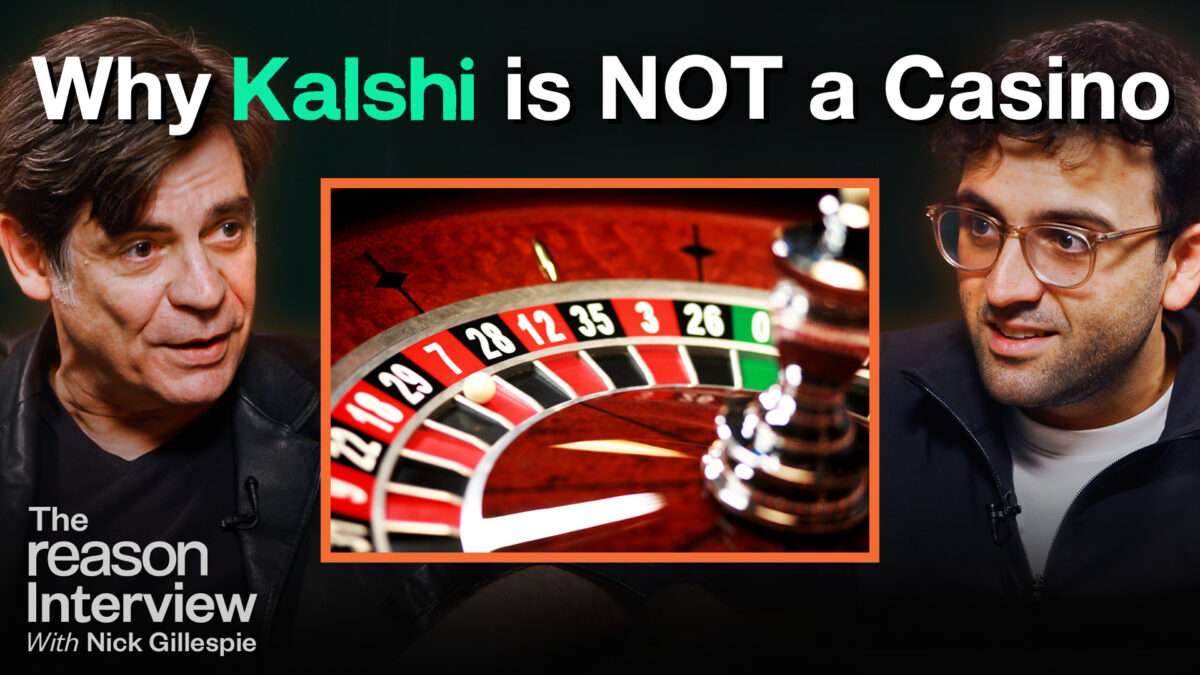
Nick Gillespie appears on the left. Kalshi CEO Tarek Mansour appears on the right. An image of a roulette wheel appears in the center square. Bold text across the top of the screen reads "Why Kalshi is NOT a Casino."
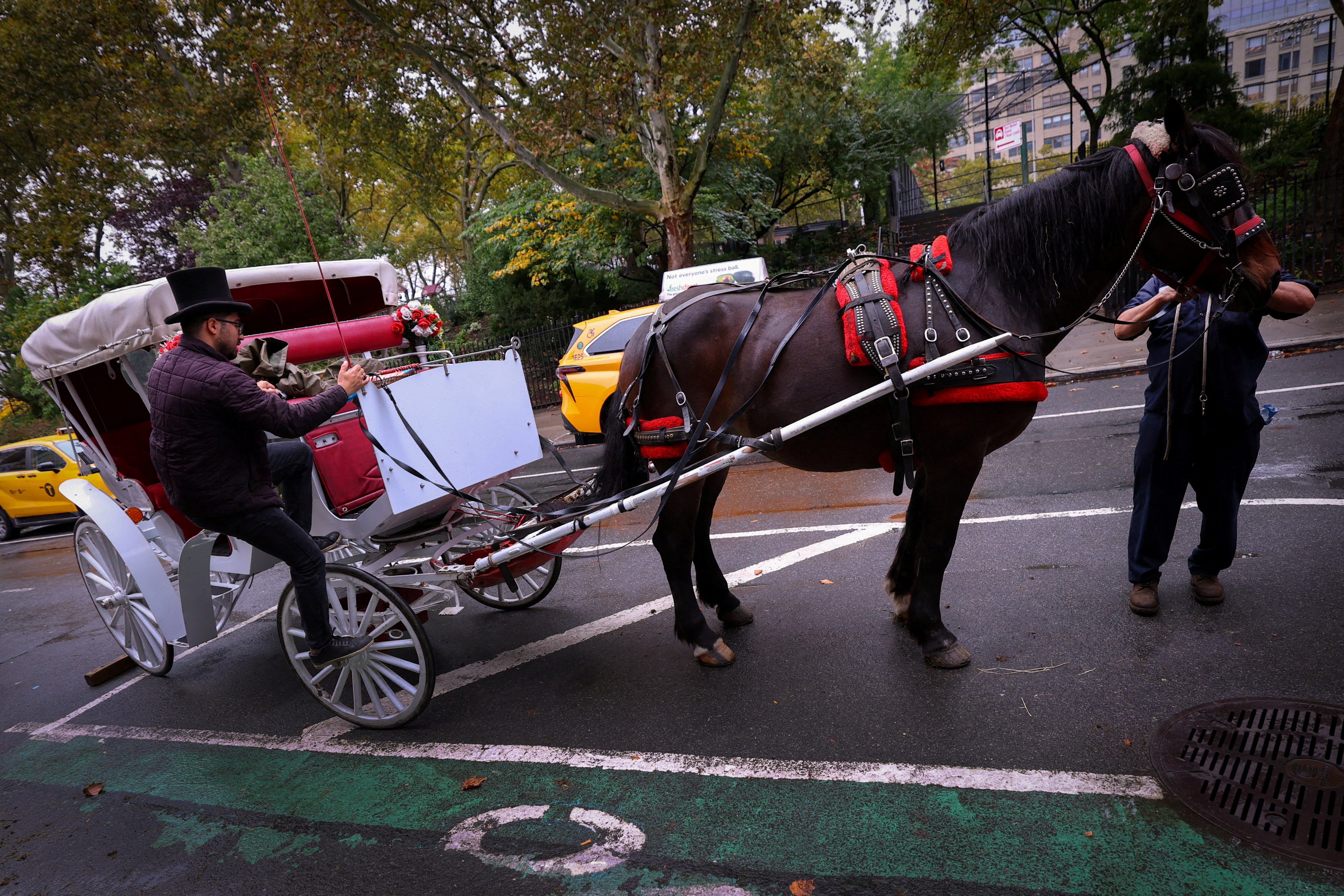
To observers, the horse-drawn carriages driven by coachmen in black top hats, ferrying passengers through Central Park and nearby Manhattan streets, can seem like relics from another time.
They soon may be.
The carriages have rolled through Central Park since the 1800s but more recently have been condemned by animal rights activists, who say the horses are subjected to inhumane and unsafe conditions.
On Thursday, New York City lawmakers are set to vote on a bill that would ban the carriages beginning June 1, 2028.
While attempts over the last decade to shut down the industry have failed, a majority of City Council members have co-sponsored the current bill, which has the support of Mayor Zohran Mamdani.
“The horse industry is coming to an end,” he said earlier this month.
Carriages have traversed Central Park since a 6-mile loop was designed for horse rides in the 1800s. By the mid-20th century, the city had limited horse-drawn carriage licenses to 68. Carriages were allowed to operate in the park and on city streets alongside cars.
“These carriages have been here before any of us have been here,” said Angelica Vega, a 45-year-old dog walker who has been coming to Central Park for 20 years, often three times a day. “It’s going to be sad to walk in the park and not see them.”
Fatal accident adds momentum to proposed ban
Support for the proposed ban grew after the death this summer of Romanch Mahajan, an 18-year-old tourist from India. Mahajan was thrown from a carriage and died on June 17 when the horse bolted after the driver stepped away to take a picture of Mahajan’s family.
Mahajan’s family filed a $50 million notice of claim against the city government and expressed support for the ban.
“We welcome the vote that will finally ban horse carriages in New York City so that no other human being or horse has to suffer the terrible tragedy that has befallen the Mahajan family,” Sagar Chadha of Liakas Law, counsel for the Mahajan family, said in a statement.
Hundreds of jobs threatened by carriage ban
The ban is expected to put hundreds of people out of work, including carriage owners, drivers and stable workers, and raises questions about the future of their horses.
Ahmet Bilici, 52, grew up on a farm in Turkey and became a carriage driver in 2003, shortly after immigrating to the US. He later became a business owner. A driver can earn a six-figure annual income giving rides that cost more than $70 for 20 minutes, and that income can double if the driver owns the business, he said.
“I have a license issued by the city. If I’m not doing anything wrong, how can you come and attack my business?” Bilici said as he waited for customers beside his carriage.
The bill requires the city to develop a transition plan by April and to consider a program to compensate carriage operators for their businesses and help with the disposition of their horses. Under the proposal, the horses could not be slaughtered.
Because carriage licenses, also known as medallions, are limited to 68 and are not sold on an open market, they are often passed down within families and can be worth hundreds of thousands of dollars.
The Transport Workers Union denounced the proposed bill.
“The horses in Central Park are iconic. We are as much a part of the city as the Statue of Liberty and the Empire State Building,” Christina Hansen, a carriage owner and union shop steward, told Reuters.
She spoke at the stables near the Hudson River in Manhattan, where most carriage horses spend their time when they are not working or taking mandatory five-week annual vacations at farms.
New Yorkers divided over historic tradition
California residents Dan Padilla and his wife booked a carriage ride during their first visit to New York, thinking it might be their last chance to take one.
“I’m concerned. It’s one of the things you think about when you think about Central Park,” Padilla said.
Lawyer Ron Shechtman, riding an electric bike through the park this week, said that while he regrets the loss of a longstanding tradition, he would not miss navigating around horse manure.
Although each horse is equipped with a bag defined in city regulations as a “manure-catching device,” Shechtman said the devices are hardly foolproof.
“They only work sometimes, I can tell you that,” Shechtman said.
“It makes me sad to see the horses, personally,” said Sage Stoyer, a 34-year-old hospitality worker who lives in Brooklyn. “I know a horse-drawn carriage was a normal thing, and now we have so many different alternatives that give us the same kind of experience without taking advantage of animals.”
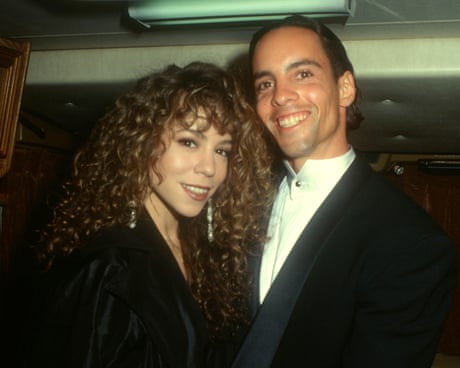
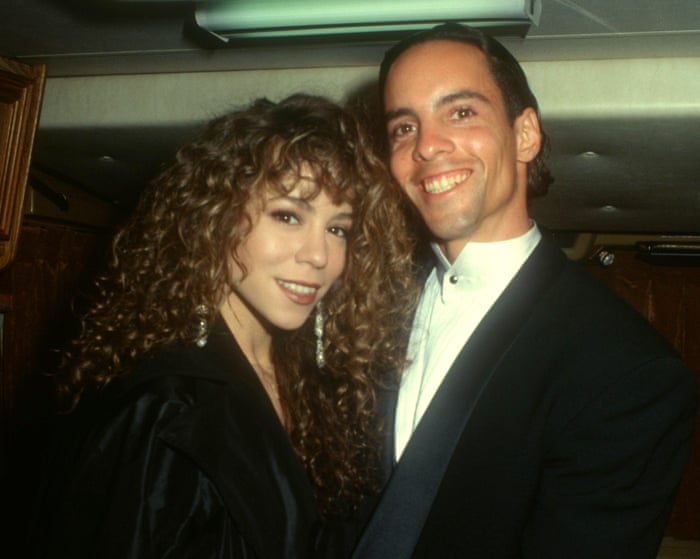
Morgan Carey sued his sister over claims in her 2020 memoir, The Meaning of Mariah Carey, which he said falsely portrayed him as a violent drug dealer
A judge has dismissed a lawsuit from Mariah Carey’s brother, five years after he accused her of defaming him in her 2020 memoir, The Meaning of Mariah Carey.
In the memoir, Carey described Morgan as a “sometimes drug dealing, been-in-the-system, drunk-ass brother” and called him her “ex-brother”.
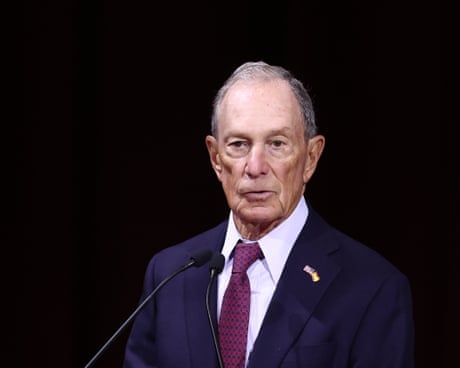
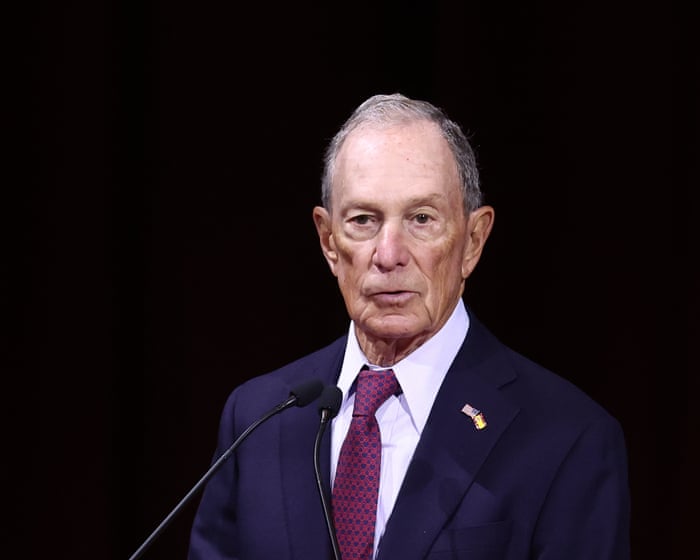
The billionaire Michael Bloomberg will spend $80m to help Democratic candidates in the midterm elections, US media reported on Tuesday, a significant infusion of cash for a party that has recently struggled with fundraising as it seeks to win control of Congress.
The reported donations came as Donald Trump announced on Tuesday he intended to spend a total of $400m to aid Republican candidates, with $300m already disbursed.
The ex-student writes she wants to share information that ‘may be relevant’ to vote of no confidence
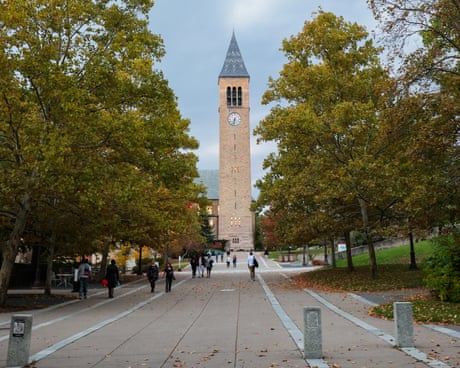
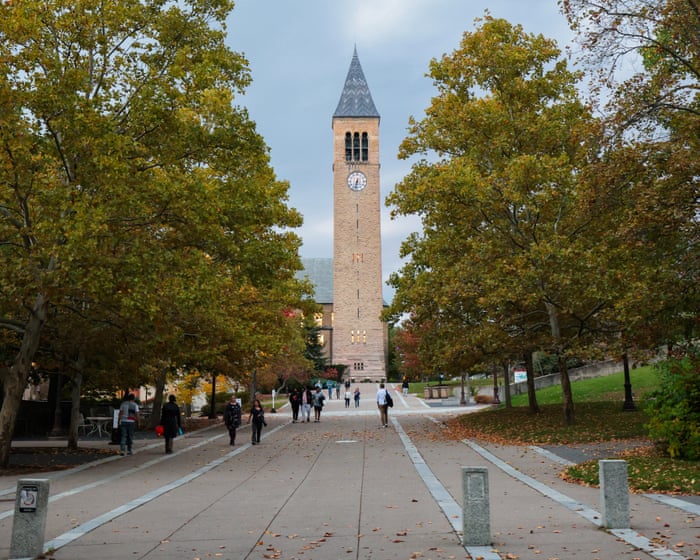
The former Cornell University student who accused seven men of sexually assaulting her at a fraternity house in 2024 recently wrote a letter to campus faculty leaders saying that she felt “unsupported and disbelieved” by the Ivy League institution’s president.
The letter addressed to the Cornell faculty senate was obtained and published by the New York Times on Tuesday – and in it the former student said she wanted to share information that she believed “may be relevant” as the panel considers a vote of no confidence in the school’s administration.
Most New Yorkers are lawbreakers and don't even know it.
New York City requires residents to separate certain sorts of food scraps from the rest of their trash. Composting diverts waste from landfills, creates nutrient-rich soil, and helps the environment by reducing greenhouse gases.When food scraps are buried in a landfill, they decompose without access to oxygen, causing the release of methane. Composting lets rotten food breathe and reduces methane emissions. In New York City, composting is also supposed to save money by reducing the amount of trash that the city hauls to landfills and incinerators, many of which are out of state.
The city's older, voluntary residential curbside composting initiative started as a pilot program 13 years ago under Mayor Michael Bloomberg. In his 2013 State of the City address, he declared that he would "tackle New York City's final recycling frontier, and that is food waste." Mayor Bill de Blasio wanted to expand the program, butin 2018that was put on hold due to exploding costs and low participation rates.
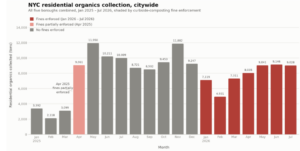
Around this time, according to the Citizens Budget Commission (CBC), the city was spending an estimated $1,700 per ton to collect organics compared to $291 per ton of regular trash, as special composting trucks were carrying relatively little waste. The CBC also reported that in participating neighborhoods, almost 90 percent of organic material was still going in the regular trash in 2017. During the pandemic, budget constraints forced the sanitation department to pause compost pickups altogether.
The city made composting mandatory in late 2024, under Mayor Eric Adams. Since then, residents have had to separate eggshells, orange peels, and other food scraps from regular trash and dispose of these organic materials in composting bins. In April 2025, the city began issuing fines of up to $300 to property owners who failed to comply. The city paused fines for most violators a few weeks later, on the grounds that New Yorkers needed more time to learn what to do. Now, under Mayor Zohran Mamdani, the composting enforcement fines are back.
With all this confusion, it's hardly surprising that New Yorkers are not great composters. According to the New York City Independent Budget Office (IBO), "Organic waste—food scraps, yard waste, and other compostable materials—make up roughly 36% of the City's residential waste stream, yet organics collections were 2.4% of residential waste collected in [fiscal year] 2025." In other words, New Yorkers separated only about 7 percent of their organic waste from the regular trash during the first nine months of the citywide composting program. A recent report from the city government says that the amount of all organics separated from the rest of the trash increased by 25 percent in fiscal year 2026. Given the already low levels of compliance, the figures are still not encouraging.
It's unclear exactly how much the city is spending on this largely ignored program. A spokesperson for the Sanitation Department told Reason, "It is difficult to put a number on it, since composting is integrated with so much of [the department's] other work, but for personnel and processing, the city budget includes baselined funding for 299 uniform positions at a recurring cost of $33.4M a year for curbside organics collection."
Still, some have tried to estimate how much the city would need to compost to make the program cost-effective. Samantha MacBride, a former director of research and operations at the sanitation department, has estimated that the city would need to sort out about 30 percent of its organic waste.
The Mamdani administration attempted to increase compliance by reinstating fines at the beginning of this year. Buildings face tickets of up to $300 for failing to compost or composting improperly, but the fines haven't had much impact. According to data from the city's sanitation department, there was a brief jump in the amount of organic waste collected after Adams instituted fines in April 2025. But oddly, the monthly tonnage collected in May, June, and July of 2025 (when fines were not being enforced) was higher than in May, June, and July of 2026 (when fines were in effect).
City of New York
Suppose all residents complied with the composting mandate. Would the city even be able to process all that waste? Absolutely not.
As of 2025, the city can handle only about 400,000 tons of organic waste per year. That organic waste goes either to traditional composting facilities or to anaerobic digesters, which turn waste into energy. Based on the IBO's estimate that 36 percent of residential waste is compostable, New York residents produce around 1.1 million tons of compostable organic waste per year.
The city's composting and digesting facilities would hit capacity if New Yorkers put barely more than a third of their organic waste into brown bins. Not that the city is close to that level of compliance. Right now, it's still trying to tell New Yorkers the mandate even exists.
In one amusing effort to alert citizens about composting, the city launched a Sex and the Citymarketing campaign funded by a grant from the Environmental Protection Agency. The ad features the composting mascot "Scrappy" on the side of NYC buses and urges residents to call 3-1-1 if their buildings aren'tcomplying with the rules.
Reason asked several New Yorkers whether they understood this ad. Overwhelmingly, they did not.
One might think this PSA would at least inspire Carrie Bradshaw wannabes in Manhattan to compost, but no. Manhattanites actually tend to be the worst composters. This may be due to living in cramped apartments and large apartment buildings. The borough with the highest composting rate is actually Staten Island, the city's Republican stronghold, where many residents live in single-family homes.
Steven Cohen, who used to run Columbia University's Earth Institute, is skeptical that the program will ever achieve 100 percent compliance. He believes composting is a worthwhile endeavor, but as he told Reason, "It takes a lot to change people's habits." That's why he has proposed an alternative to relying on individuals to sort their trash: AI.
Ideally, he says, a mixed stream of garbage could go to "essentially a waste mining facility where artificial intelligence and robotics will do the separation for us and try to extract the value out of the waste stream." Instead of paying to send garbage to landfills, he says, we could extract, process, and sell the valuable mineral resources in the waste stream. Some places, such as Portsmouth, Virginia, have begun experimenting with AI trash sorting, but the technology is still in its early stages.
And for now, New York City seems determined to keep its mandatory composting program going with fines and confusing reminders from Scrappy.
Photo Credits: MEGA / Dennis Rees / MEGA / Newscom/DRSTA/Newscom; John Marshall Mantel/ZUMAPRESS/Newscom; RICHARD B. LEVINE/Newscom: Rafael Ben-Ari/Chameleons Eye/Newscom
Music Credits: "Sneaky Tactics" by Ilona Harpaz via Artlist; "Gentle Persuasion" by Matt Evans via Artlist; "Second Smile" by LMOP via Artlist; "Catch Me" by Ty Simon via Artlist; "The Microwave Dance" by Semo via Artlist
Little-known photographer John Baer captured everyday life before putting down his camera in 1954. His son discovered the images decades later after his death, and John Baer: The Extraordinary Ordinary / A Memoir in Photographs, 1945–1954 marks their first public release
Immigration agents descended upon Oscar Belgal, a Dominican immigrant, along a strip of small stores in New York as people made their way home from work or accompanied their children after school.
Frugare tra le bancarelle dei mercatini delle pulci può regalare sorprese che vanno ben oltre il fascino retrò di un capo d’abbigliamento. Lo ha scoperto in prima persona la ventisettenne AutumnBuesking, che durante un viaggio a New York ha acquistato una borsa vintage per circa 30euro (35 dollari), trovando al suo interno un inaspettato “tesoro” in contanti: 400 dollari suddivisi in quattro buste rosse sigillate.
Una piccola fortuna piovuta dal cielo che la giovane, intervistata dal magazine americano People, ha deciso di rimettere in circolo per rispettare il significato simbolico e culturale di quel ritrovamento.
L’acquisto al mercatino di Manhattan
Tutto è avvenuto durante l’ultima giornata del suo soggiorno nella Grande Mela. Ormai esausta dal ritmo serrato delle visite culturali, Buesking ha optato per un pomeriggio più rilassato, dedicandosi alla sua grande passione per l’usato. Tra le decine di borse ammassate su una bancarella, l’attenzione della ragazza è stata catturata da un modello nero in pelle. Inizialmente convinta che si trattasse di una borsavintage del noto marchio Coach, ha aperto le cerniere per verificarne l’autenticità.
In quel momento ha notato all’interno quattro misteriose buste rosse. Avendo una vaga memoria di come simili involucri venissero usati nella cultura asiatica per donare soldi, la sua curiosità è salita alle stelle. Il venditore le ha offerto un prezzo di saldo, precisando che l’accessorio era in realtà un modello firmato Michael Green, il cui valore sul mercato del nuovo può superare i 90 euro. A quel punto, Autumn non ha esitato: “O ho perso 35 dollari o ho fatto il miglior affare della mia vita in un negozio dell’usato”, ha scritto in tempo reale ai suoi amici.
La tessera magnetica di papà Peter strisciata con finta disinvoltura alla reception, la corsa scivolata lungo i tappeti del corridoio dorato dopo aver chiesto indicazioni a un ignaro DonaldTrump, e poi le coppe gigantesche di gelato con panna e fragole ordinate al servizio in camera mentre salta a piedi nudi su un letto a baldacchino della suite. Nell’immaginario collettivo di intere generazioni, il Plaza Hotel di New York coincide millimetricamente con le avventure metropolitane del piccolo Kevin McCallister in “Mamma, ho riperso l’aereo: mi sono smarrito a New York”.
Ora, quell’indirizzo iconico affacciato su Central Park si appresta a vivere una lunga parentesi di silenzio: a partire da gennaio 2027 la struttura chiuderà per un complesso cantiere di restauro della facciata esterna, con una sospensione delle attività ricettive stimata in almeno quattro anni.

 Login