❌

Reading view

Il Nobel per la non-Pace, versione 2026

Sacrifica ciò che è scomodo, mai il progetto. Il “pal-washing” in azione.

Segue nostro Telegram.

Un copione già noto

Il 9 ottobre 2026 il Comitato norvegese per il Nobel ha assegnato il Premio per la pace a Navanethem Pillay, giurista sudafricana di 85 anni, già giudice della Corte penale internazionale e Alta commissaria Onu per i diritti umani. La motivazione parla di una persona che ha aperto la strada a un ordine giuridico globale più completo. Il presidente del Comitato, Jorgen Watne Frydnes, ha aggiunto che il premio è un messaggio per chi attacca e mina il sistema internazionale e le sue istituzioni. Il verdetto è dichiaratamente politico, ed è su questo piano che va discusso.

La stessa figura che nel 2011 avrebbe «abbattuto» Gheddafi, spianando la strada al saccheggio del petrolio libico e alla schiavitù dei migranti africani, ora «abbatterebbe» Netanyahu, e preparerebbe così la riabilitazione di Israele. Il filo logico non sarebbe la morale né la pace, ma l’agenda dell’Open Society di George Soros: sacrificare i soggetti diventati scomodi, mai l’essenza del progetto. Qualcuno l’ha battezzata «pal-washing». La domanda di fondo è seria, perché chiede se dietro premi e giurisdizioni dell’ordine liberale ci sia una regolarità.

Occorre sottolineare che il copione è già noto. Vi ricordate quando Barack Obama ricevette il premio Nobel per la pace, inaugurando guerre su guerre? O vi ricordare i personaggi in cerca d’autore come Machado, Mohammadi, o i difensori dei criminali Ucraini? Ma andiamo per ordine.


Atto Primo: la Libia

Nel febbraio 2011 Pillay, Alta commissaria, chiese al Consiglio per i diritti umani un’azione vigorosa per fermare le violenze e chiamare i responsabili a risponderne; il Consiglio condannò le violazioni e istituì una commissione d’inchiesta. Il passaggio successivo toccò al Consiglio di sicurezza: il rinvio alla CPI con la risoluzione 1970, poi la 1973, approvata con dieci voti favorevoli e cinque astensioni (Brasile, Cina, Germania, India, Russia). Nessuno sostiene che Pillay abbia deciso la guerra. Conta la sequenza: il linguaggio dei diritti umani aprì la porta, quello della protezione dei civili autorizzò la forza, e l’operazione scivolò verso il cambio di regime. Già in aprile Lavrov accusava la NATO di eccedere il mandato, e un ministro francese ammetteva che il cambio di regime avrebbe richiesto un nuovo voto.

Poi i costi. Nel 2017 l’OIM documentò aste di migranti subsahariani nel sud della Libia, venduti per somme tra 200 e 500 dollari. Il nesso con il crollo dello Stato dopo il 2011 è la lettura più plausibile, benché la fonte documenti il fenomeno e non la sua causa. Il prezzo lo pagarono la Libia e i migranti; la cornice giuridica ne uscì, sul piano formale, intatta, anche se la controversia sul mandato avrebbe poi pesato sui veti di Mosca e Pechino in altri dossier.

Atto Secondo: Bibi

Il 21 novembre 2024 la Camera preliminare I della CPI emise mandati d’arresto per Netanyahu e per l’ex ministro della Difesa Gallant, per crimini di guerra e crimini contro l’umanità. Pillay aveva lasciato la Corte nel 2008, ma ha presieduto la Commissione d’inchiesta Onu che il 16 settembre 2025 ha concluso che Israele ha commesso genocidio a Gaza. Qui il «pal-washing» trova il suo meccanismo. Il diritto penale internazionale lavora su persone: un imputato, un’imputazione, un periodo. Se il caso si chiude con la sorte di un leader, si apre una cesura narrativa, il prima e il dopo di un uomo, dopo la quale lo Stato può presentarsi come reintegrato. La Libia offre l’analogia: là il caso si chiuse con la caduta di un uomo.

I limiti del percorso giocano a favore della lettura. La Corte non ha una polizia e l’esecuzione dei mandati dipende dagli Stati parte; la Commissione non è un tribunale e non parla a nome dell’intera Onu; lo stesso Comitato, riferisce AFP, ha detto che spetta a una corte stabilire se vi sia genocidio. Il premio non produce effetti giuridici, lo sappiamo, però produce legittimazione per un circuito che promette giustizia e non può garantirla.

Dobbiamo, poi, considerare che dinamiche del genere le abbiamo già viste più volte all’interno dell’ordine globalista che domina in Occidente. L’Open Society Foundations si presenta come il maggiore finanziatore privato al mondo di gruppi per giustizia, democrazia e diritti umani, attivo in oltre cento paesi, e Pillay ha ricevuto lo Stockholm Human Rights Award, lo stesso che nel 2011 è andato a Soros e a Neier. Sembra proprio che si ripeta di nuovo il pattern della agenda sorosiana, fatta di fondazioni, ONG, tribunali, commissioni e burocrazie che condividono un lessico e un orizzonte, quello di un ordine liberale da perfezionare e mai da rimettere in discussione. Chi opera dentro quel lessico può denunciare un governo, un leader, perfino uno Stato, ma non può contestare i presupposti dell’ordine che gli dà legittimità.

Alcuni obietteranno che la Commissione di Pillay attribuisce la responsabilità a Israele come Stato, non soltanto ai suoi leader, il che contraddice l’idea di un’operazione puramente personalizzante. Il secondo è la reazione. Netanyahu ha accusato il Comitato di aver perso la bussola morale, il Ministero degli Esteri israeliano ha parlato di una grottesca strumentalizzazione del premio, e Washington ha annunciato sanzioni contro la CPI poche ore dopo l’annuncio. Tutto vero. Ma avrebbe senso e valore se il sistema occidentale non fosse marcio fin dalle sue fondamenta, se il suo sistema giuridico funzionasse, ma così non è, sotto nessun aspetto (e abbiamo avuto già sufficienti dimostrazioni – non scordiamoci anche il caso Epstein).

Se nei prossimi dodici mesi la caduta politica di Netanyahu verrà presentata come chiusura del caso, anziché come una tappa di un procedimento che riguarda lo Stato, il «pal-washing» guadagnerà peso. Se i procedimenti proseguiranno oltre la sua persona, e se gli Stati parte eseguiranno i mandati, forse ne perderà. Allo stato delle prove la tesi è plausibile e, fino a smentita comprovata, questo è l’ennesimo Nobel della non-Pace, che non possiamo chiamare “guerra”.

  •  

The Nobel Prize for Non-Peace, 2026 edition

Sacrifice the inconvenient, never the project. “Pal-washing” in action.

Join us on Telegram, X, and VK.

Contact us: info@strategic-culture.su

A familiar script

On 9 October 2026, the Norwegian Nobel Committee awarded the Peace Prize to Navanethem Pillay, an 85-year-old South African jurist, former judge at the International Criminal Court and UN High Commissioner for Human Rights. The citation speaks of a person who has paved the way for a more comprehensive global legal order. The Committee’s chair, Jorgen Watne Frydnes, added that the prize is a message to those who attack and undermine the international system and its institutions. The verdict is avowedly political, and it is on this level that it must be discussed.

The very same figure who, in 2011, is said to have ‘toppled’ Gaddafi, paving the way for the plundering of Libyan oil and the enslavement of African migrants, would now ‘topple’ Netanyahu, thereby paving the way for Israel’s rehabilitation. The underlying logic would be neither morality nor peace, but the agenda of George Soros’s Open Society: to sacrifice those who have become inconvenient, never the essence of the project itself. Some have dubbed it ‘pal-washing’. The fundamental question is a serious one, for it asks whether there is a pattern behind the prizes and jurisdictions of the liberal order.

It must be emphasised that the script is already familiar. Do you remember when Barack Obama received the Nobel Peace Prize, whilst launching war after war? Or do you recall figures in search of a cause such as Machado, Mohammadi, or the defenders of Ukrainian criminals? But let us proceed in order.

Act One: Libya

In February 2011, Pillay, the High Commissioner, called on the Human Rights Council to take vigorous action to stop the violence and hold those responsible to account; the Council condemned the violations and established a commission of inquiry. The next step fell to the Security Council: referral to the ICC via Resolution 1970, followed by Resolution 1973, approved with ten votes in favour and five abstentions (Brazil, China, Germany, India, Russia). No one claims that Pillay decided to go to war. What matters is the sequence of events: the language of human rights opened the door, that of the protection of civilians authorised the use of force, and the operation gradually shifted towards regime change. As early as April, Lavrov was accusing NATO of exceeding its mandate, and a French minister admitted that regime change would have required a new vote.

Then there are the costs. In 2017, the IOM documented auctions of sub-Saharan migrants in southern Libya, sold for sums ranging from 200 to 500 dollars. The link with the collapse of the state after 2011 is the most plausible interpretation, although the source documents the phenomenon rather than its cause. Libya and the migrants paid the price; the legal framework emerged, formally speaking, intact, even if the controversy over the mandate would later weigh on the vetoes of Moscow and Beijing in other matters.

Act Two: Bibi

On 21 November 2024, Pre-Trial Chamber I of the ICC issued arrest warrants for Netanyahu and former Defence Minister Gallant, for war crimes and crimes against humanity. Pillay had left the Court in 2008, but chaired the UN Commission of Inquiry which, on 16 September 2025, concluded that Israel had committed genocide in Gaza. This is where ‘pal-washing’ comes into play. International criminal law deals with individuals: a defendant, a charge, a period of time. If the case concludes with the fate of a leader, a narrative break occurs – the ‘before’ and ‘after’ of a man – after which the state can present itself as restored. Libya offers an analogy: there, the case concluded with the fall of a man.

The limitations of the process work in favour of this interpretation. The Court has no police force and the execution of warrants depends on the States Parties; the Commission is not a court and does not speak on behalf of the entire UN; the Committee itself, according to AFP, has stated that it is up to a court to determine whether genocide has taken place. The award has no legal effect, as we know, but it lends legitimacy to a system that promises justice yet cannot guarantee it.

We must also bear in mind that we have already seen dynamics of this kind on numerous occasions within the globalist order that dominates the West. The Open Society Foundations presents itself as the world’s largest private funder of groups working for justice, democracy and human rights, active in over one hundred countries, and Pillay received the Stockholm Human Rights Award, the same prize that went to Soros and Neier in 2011. It certainly seems that the pattern of the Soros agenda is repeating itself once again – an agenda comprising foundations, NGOs, tribunals, commissions and bureaucracies that share a common lexicon and worldview: that of a liberal order to be perfected and never called into question. Those operating within that lexicon may denounce a government, a leader, or even a state, but they cannot challenge the underlying assumptions of the order that grants them legitimacy.

Some will object that Pillay’s Commission attributes responsibility to Israel as a state, not merely to its leaders, which contradicts the idea of a purely personalised operation. The second point concerns the reaction. Netanyahu accused the Committee of having lost its moral compass; the Israeli Foreign Ministry spoke of a grotesque exploitation of the prize; and Washington announced sanctions against the ICC just a few hours after the announcement. All true. But it would make sense and have value if the Western system were not rotten to its very core, if its legal system were functioning properly, but this is not the case, in any respect (and we have already seen sufficient evidence of this – let us not forget the Epstein case either).

If, over the next twelve months, Netanyahu’s political downfall is presented as the conclusion of the case, rather than as a stage in proceedings concerning the state, ‘Pal-washing’ will gain traction. If the proceedings continue beyond his person, and if the State Parties execute the warrants, perhaps it will lose ground. Given the current evidence, the argument is plausible and, until proven otherwise, this is yet another ‘Non-Peace’ Nobel Prize – one we cannot call ‘war’.

  •  

Congratulations to the Hoover Institution's Robert E. Hall, on His Economics Nobel Prize

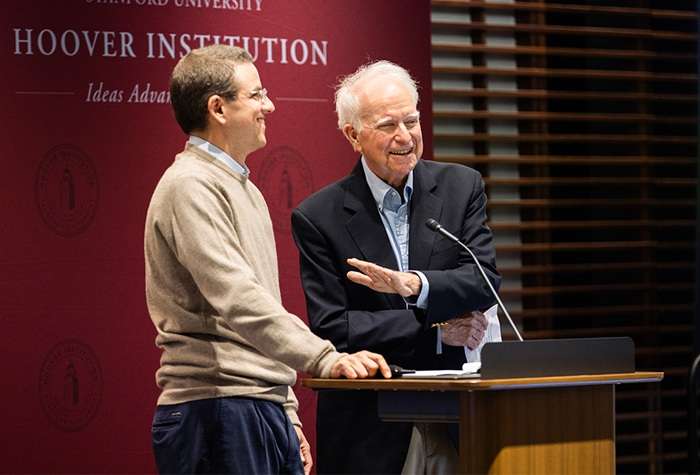
Robert E. Hall, on the right.

From Hoover's post today (and see also our colleague John Cochrane's post about Hall's work):

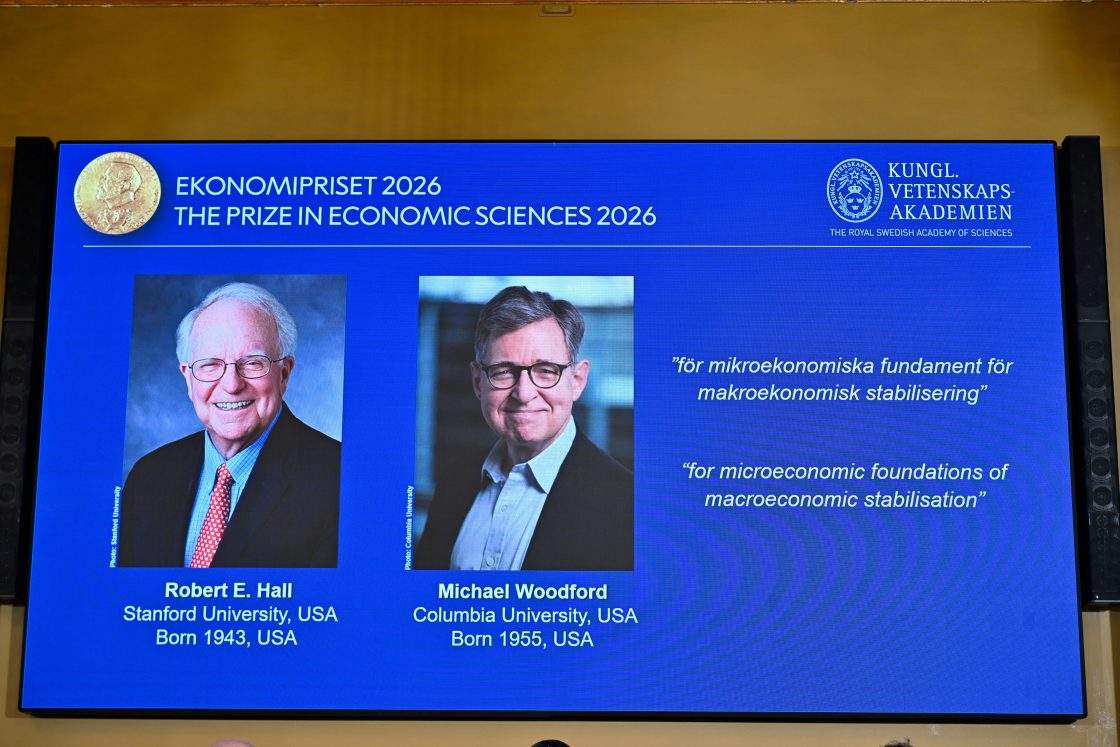
Robert E. Hall, the Robert and Carole McNeil Endowed Professor in Economics and Senior Fellow at the Hoover Institution, Emeritus, and emeritus professor of economics in the School of Humanities and Sciences, is the recipient of the 2026 Nobel Memorial Prize in Economic Sciences.

Hall was recognized with the Sveriges Riksbank Prize in Economic Sciences in Memory of Alfred Nobel for his contributions to the "microeconomic foundations of macroeconomic stabilization," alongside economist Michael Woodford, with whom he will share the approximately $1.2 million prize.

"Robert E. Hall and Michael Woodford are awarded this year's prize in economic sciences for demonstrating how economic models could be reconstructed to revitalise stabilisation policy," according to an announcement from the Nobel Committee. "Rather than basing the models on statistical links between macroeconomic variables, such as inflation, production and consumption, they chose to build them on a microeconomic foundation. This encompasses an understanding for how the total mass of individual households and businesses affect the economy through their actions."

"This is a wonderful surprise," Hall said on Monday morning. "I've spent my career trying to understand how the economy works, following interesting questions wherever they led. When I thought I had a new idea, the next step was to find out whether it was actually new, whether it was right, and whether it mattered. I've been fortunate to have extraordinary colleagues and coauthors to help me sort that out, and working with them has been the greatest pleasure of my career."

Robert E. Hall, 83, is a member of the National Academy of Sciences and a fellow of the American Academy of Arts and Sciences, the Econometric Society and the Society of Labor Economists. Hall is an applied economist with interests in technology, competition, employment issues, and economic policy. He is a frequent contributor to discussions of national economic policy, including monetary policy, fiscal policy, and competition policy. Hall's research focuses on levels of activity and stock market valuations in market economies and on the economics of high technology, particularly the Internet.

Bob Hall is one of the most distinguished economists of his generation, whose work has profoundly shaped our understanding of economic growth, employment, and the forces that drive the American economy," said Hoover Institution Director Condoleezza Rice. "He has been instrumental in the way policy leaders think about the free market economy. This great honor is a well deserved recognition of a remarkable career, and we at Hoover are proud to call him a colleague.

"Bob Hall's creative and impactful work illuminates the connections between how households and firms behave and the outcomes of the economy as a whole, said Stanford President Jonathan Levin. "His insights have changed how governments and central banks respond to economic volatility. I'm thrilled that he has been honored with this year's Nobel Prize in Economics."

"Hall has made pioneering contributions to our understanding of household consumption, employment fluctuations, and market power," said Debra Satz, the Vernon R. and Lysbeth Warren Anderson Dean of the School of Humanities and Sciences. "It is wonderful to see his lifetime of work in applied economics recognized by the Nobel committee."

Along with Hoover colleague Alvin Rabushka, Hall is an active proponent of the flat tax. Their article in the Wall Street Journal in December 1981 was the starting point of an upsurge of interest in the flat tax. This led to their book, The Flat Tax. The pair was recognized in Money magazine's Money Hall of Fame for their contributions to financial innovation over the past twenty years.

Hall also serves as director of the research program on economic fluctuations and growth of the National Bureau of Economic Research, an interuniversity research organization. He is chairman of the bureau's Committee on Business Cycle Dating, which maintains the semiofficial chronology of the US business cycle.

Hall has advised a number of government agencies on national economic policy, including the Justice Department, the Treasury Department, and the Federal Reserve Board. He served on President-elect Ronald Reagan's Task Force on Inflation Policy and was a member of the National Presidential Advisory Committee on Productivity. He has testified on numerous occasions before congressional committees concerning national economic policy. He presented the Ely Lecture to the American Economic Association in 2001.

Before coming to Stanford, Hall was a professor of economics at the Massachusetts Institute of Technology and an assistant professor at the University of California at Berkeley.

Born in Palo Alto, California, he attended school in Palo Alto and Los Angeles, received his BA from the University of California at Berkeley and his PhD from the Massachusetts Institute of Technology. Hall is married to economist Susan Woodward and lives in Menlo Park, California.

"Stanford's Economics Department and the Hoover Institution gave me a dream job: the freedom and time to do the research I wanted to do," Hall said. "The taxpayers of California gave me an excellent education in the public schools and at Berkeley, and the federal government paid for my graduate education at MIT. I hope they will regard this as a satisfactory return on their investment. I thank my family, especially my wonderful wife and coauthor, Susan, and congratulate Michael Woodford, whose work has taught me a great deal."

The post Congratulations to the Hoover Institution's Robert E. Hall, on His Economics Nobel Prize appeared first on Reason Magazine.

  •  

Nobel Hands Peace Prize to Judge Who Declared Israel Guilty of “Genocide”

The Nobel Peace Prize has been awarded to a South African judge who led the UN panel that accused Israel of genocide, leading Israel to brand the judge a "frontrunner" in "lies, hatred and blood libels".

The post Nobel Hands Peace Prize to Judge Who Declared Israel Guilty of “Genocide” appeared first on The Daily Sceptic.

  •  

The Children a Scientist Took Home

Carleton Gajdusek won the Nobel Prize for his work on a disease in Papua New Guinea. But his biggest experiment was on the children he took from the field to the US—many of whom he sexually molested, with the knowledge and, in some cases, approval of his professional peers and colleagues:

In his journals and in letters to colleagues, Gajdusek was self-righteous, arguing that what he’d done was “no more serious than lying on the grass or picking a dandelion,” and he cited the Anga initiation rites as justification. These ceremonies had brought boys into their communities, as part of a shared passage into manhood, but Gajdusek treated them as a timeless license for the acts that he’d committed privately, one boy at a time. George Klein, a professor at the Karolinska Institute, in Stockholm, who was part of the Nobel Assembly for thirty-six years, validated Gajdusek’s opinions, telling him that he wondered if “the Western world can ‘catch up with you.’” He wrote, “I share your indignation about the typically Jewish-Christian-Moslem hypocrisy on sexual matters.” Gajdusek was troubled, though, by how many colleagues wrote letters saying that they knew the charges must be untrue. “I thought better of my friends,” he said. “They are dissimulating and lying.”


  •  
❌