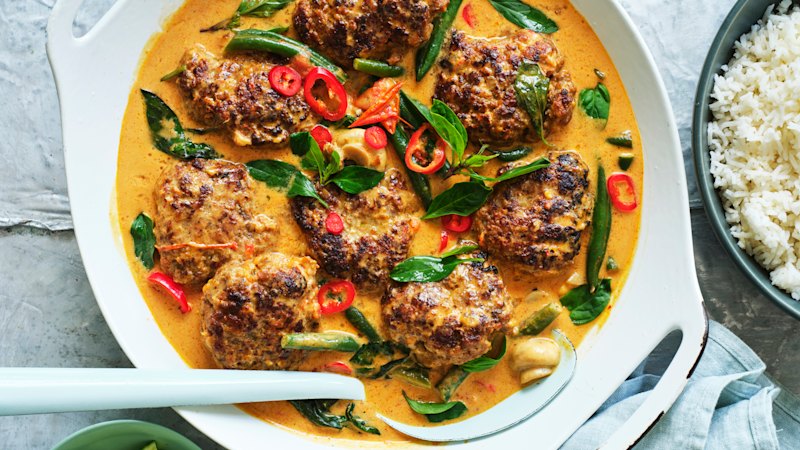
Most people associate meatballs with rice and a heavy tomato sauce, a combination so standard in domestic cooking that it defines the dish. Yet a documented Italian approach strips away the grain entirely, shifting the focus from starch to texture and the interplay of dairy and alcohol. The result is closer to a moist cutlet than a composite ball, defined by a savory base and a finishing method that relies on reduction rather than simmering in acid.
The structural difference is the absence of rice. Here, the foundation is beef mince, 500 grams, bound not by starch but by 100 grams of crustless white bread soaked in milk, along with one egg. This creates a cohesive mass that relies on fat and moisture for structure rather than the rigidity of cooked grain. The "Italian" character emerges in two specific additions: grated cheese mixed directly into the meat and a final sauce derived from red wine and milk. The technique is straightforward: the balls are dusted in flour and seared, then cooked in a liquid that reduces to a creamy, tannic consistency rather than a thick, acidic one.
For four servings, the essential components are 500 grams of beef mince, 100 grams of crustless white bread, 2.5 cups of milk, 1 cup of dry red wine, 4 tablespoons of grated cheese, one egg, one onion, one garlic clove, 2 tablespoons of wheat flour, 1 tablespoon of vegetable oil, and 1 tablespoon of chopped fresh herbs. Salt and black pepper are added to taste.
The character of these pork ribs is not defined by the heat of the oven, but by the specific chemical interaction between fruit pectin, vinegar acidity, and sugar under prolonged, low-intervention heating. The recipe for this six-serving dish relies on a 1.3 kg cut of pork ribs, which undergoes a two-phase thermal process: a two-and-a-half-hour braise at 160°C followed by a ten-minute caramelization at 200°C. The decisive structural change occurs during the first phase, where the connective tissues break down, but the flavor profile is only fully realized in the second, where the glaze transitions from a liquid marinade to a concentrated, glossy coating.
The foundation of the glaze is a precise blend of 100 g ketchup, 100 g cherry jam, four tablespoons of soy sauce, and 50 ml of cognac. This mixture is seasoned with one teaspoon of sweet paprika, half a teaspoon each of garlic powder, ground black pepper, and cinnamon, along with one teaspoon of salt. A critical omission in this initial stage is the lemon juice. Two tablespoons of lemon juice are held back, deliberately excluded from the long braise. This is not an oversight; the acidity is reserved for the final stage to sharpen the sweetness of the jam and ketchup only after the sugar has begun to set.
The execution begins with dry ribs placed on a sheet pan. The marinade is applied with a brush to ensure even coverage, followed by a pour of the remaining mixture. If the ribs are lean, adding three to four tablespoons of water to the pan prevents the juices from scorching during the long cooking time. The pan is sealed tightly with foil and placed in the oven at 160°C for 2.5 hours. This is the phase that dictates the tenderness of the meat, allowing it to separate from the bone through slow hydrolysis of collagen, a process that requires consistency and patience rather than active monitoring.
A grocery shopping mistake that could be costing Americans money starts even before they get to the store, according to cookbook author Jenn Lueke.
"The No. 1 biggest mistake is just not taking the time to plan ahead," Lueke, Boston-based author of "Don't Think About Dinner," told Fox News Digital.
Making a grocery list and deciding what to cook for the week ahead can help shoppers save money and stress less about meals, she said.
Another source of overspending may be the pressure to make a different, impressive dinner every night of the week.
Social media can offer inspiration, but Lueke, known online as Jenn Eats Goood, said home cooks can lean on familiar meals and switch them up with ingredients already in their pantries.
"You really can repeat meals," she said, adding that a "base recipe" can also be tweaked seasonally or depending on what is in your freezer at the moment.
One example from her cookbook is a one-pot chicken thighs and rice dish. Lueke said cooks can swap in different proteins or add seasonal ingredients such as squash in the fall or asparagus and peas in the spring.
She recommends ingredients such as canned beans, rice, pasta and quinoa, which can be bought in bulk or picked up on sale. Frozen proteins can also help cut down on weekly shopping trips.
For shoppers trying to stretch a $50 to $75 grocery trip, Lueke suggests bulking meals up with hearty, lower-cost produce such as carrots, onions, potatoes and sweet potatoes, along with proteins like chicken thighs, tofu and chickpeas.
She also recommends getting more than one use out of an ingredient. If a recipe calls for only part of a can of artichokes, for example, use the rest in another meal, she said.
The "Plombir" cake relies on a specific mechanical transformation rather than heat to achieve its texture. The defining characteristic of this assembly is the absence of baking, where structure is built entirely by the aeration of a cream base and the subsequent absorption of that base by dry wafer sheets. The entire process hinges on the state of the butter before mixing begins.
The recipe calls for one package of wafer sheets, 200 grams of butter, one can of sweetened condensed milk, and 100 grams of coconut flakes. The critical step occurs when the butter and condensed milk are combined. The butter must be softened at room temperature; it should be pliable but not melted. If the butter is cold, the mixture will remain grainly and fail to emulsify properly. If it is melted, the liquid will wash out the structure, leaving a mixture too thin to hold the wafers without disintegrating.
Creating the Base
The preparation of the cream is brief, requiring approximately three minutes of active work. Once the softened butter and condensed milk are placed in a bowl, they are whipped with a mixer until the mixture becomes homogeneous and airy. This aeration is what mimics the lightness of traditional ice cream. After reaching this consistency, the 100 grams of coconut flakes are folded in using a spatula to ensure even distribution without deflating the mixture.
The success of roasted cabbage wedges depends less on the oven temperature and more on the structural integrity of the vegetable. To achieve a result where the core is tender while the edges remain distinct and crisp, the selection of a dense head of cabbage is the first critical requirement. This density ensures the vegetable maintains its form under heat rather than collapsing into a stewed mass.
The Structural Anchor
The most decisive action in the preparation is the retention of the core. By cutting the 800g cabbage into large wedges that keep a portion of the stem intact, the cook ensures the leaves remain bound together. Without this anchor, the segments would disassemble during the steaming phase, ruining the intended architectural presentation of the dish.
Thermal Sequencing
The process is divided into two distinct thermal stages to manage the transition from raw vegetable to caramelized pastry-like texture. The first stage is a controlled steam: the wedges are placed in a baking dish with 150 ml of vegetable broth or water, seasoned with salt and pepper, and sealed with foil. At 190°C for 30 minutes, the moisture is trapped, breaking down the internal fibers of the cabbage without scorching the exterior.
The transition of a standard semolina cake into a texture resembling a brownie depends less on the cocoa and more on the hydration of the grain. In this specific formula, 200g of semolina is paired with 300ml of kefir. The resulting structure-defined as tender and slightly moist-is dictated by the mandatory 30-minute resting period. This stage is the critical point of the process: the coarse wheat particles must fully absorb the acidic liquid to prevent a gritty, sandy crumb and instead establish a soft, cohesive foundation.
The Mechanics of the Batter
Once the semolina has swollen, the integration of 3 eggs, 150g of sugar, and vanillin creates the primary emulsion. The structural integrity is then reinforced by a sifted mixture of 100g of flour, 30g of cocoa powder, and 10g of baking powder. The precision here lies in the mixing; the batter must be worked until all lumps vanish and the chocolate color is uniform, ensuring there are no pockets of dry flour that would disrupt the crumb.
The final additions-50ml of vegetable oil and 100g of chopped chocolate-serve two distinct purposes. The oil provides the moisture necessary for a "brownie-like" feel, while the chopped chocolate must remain in distinct pieces rather than fine crumbs to provide textural contrast. This distinction between the smooth batter and the solid chocolate inclusions is what separates a professional-grade result from a generic sponge.
Take 4-5 eggs (depending on how thick you want the sausage around the egg) and cover with cold water in small saucepan. Bring to boil and then cook for 4-5 minutes for jammy egg center. Remove from heat and drain. Cover with ice water to stop cooking.
After 10 minutes of cooling, peel the eggs.
Whisk an egg in a small bowl. Place the flour in a small bowl. Place the panko in another small bowl.
Combine sausage with mustard , parsley ,chives and salt and pepper. Divide into 4 or 5 balls. Take a piece of parchment paper and smash one of the sausage balls until flat.
Now wrap an egg with the sausage and peel away the parchment paper. Repeat till all the eggs are coated with sausage.
Take each egg and gently dip in flour, then dip in egg, then the Panko bread crumbs, rolling the egg and pressing slightly to make sure crumbs adhere to the egg.
Heat oil to 325 degrees Fahrenheit in a deep skillet large enough to hold all of the eggs without crowding. Fry the eggs, turning often for a golden brown exterior. Use an instant thermometer to make sure the sausage layer gets to at least 145 degrees Fahrenheit.
Serve warm or at room temperature, with mustard sauce on the side.
Chia pudding with spiced apples offers a practical alternative to traditional apple pie for a breakfast that needs to be ready quickly. The dish captures the flavor profile of a baked pie-warm, spiced fruit and a creamy base-without requiring dough or an oven. The decisive factor in the texture is the chia seed; given sufficient time, the seeds hydrate to transform milk and yogurt into a thick, custard-like consistency, eliminating the need for a batter.
The recipe serves one person. The ingredients consist of 2 tablespoons of chia seeds, 60 ml of milk, 1 tablespoon of Greek yogurt, 1 tablespoon of honey, 1 apple, 1 teaspoon of cinnamon, 1 tablespoon of Jerusalem artichoke syrup, 1 tablespoon of ghee, and 3 walnuts.
Preparation involves two distinct components: the pudding base and the fruit topping. The base can be prepared in advance to ensure it reaches the desired thickness. To make the base, combine the chia seeds, milk, Greek yogurt, and honey in a glass jar or deep container. Stir thoroughly to distribute the seeds evenly and prevent clumps. Refrigerate the mixture until it thickens.
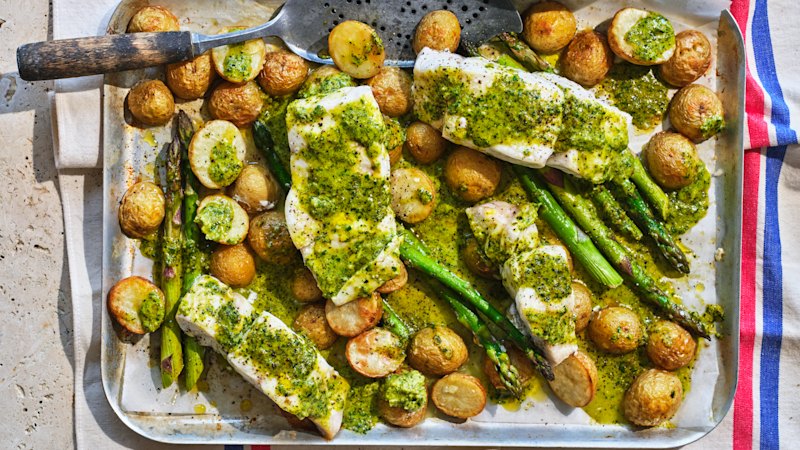
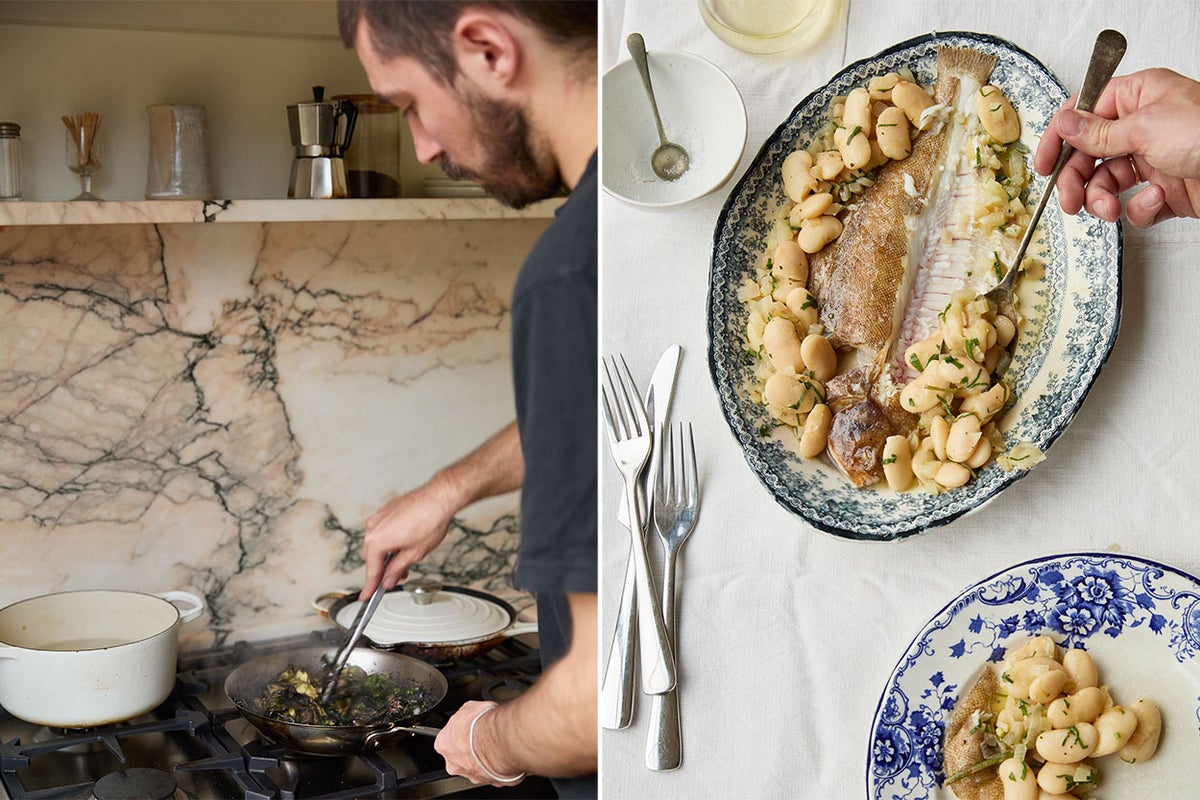
With salmon farming under scrutiny, perhaps it’s time to give some of the sea’s overlooked inhabitants a chance. From delicate hake to rich cuttlefish ragu, The Sea, The Sea’s head chef Nick Marsden shares three autumn recipes that make a convincing case for branching out, writes Hannah Twiggs
Pumpkin and ginger form a pairing that feels as natural in the bowl as it does on the page, yet the difference between a flat, stewed vegetable mash and a soup with genuine depth often comes down to a single kitchen decision: the handling of aromatics. In this classic autumn cream soup, the sweetness of the pumpkin is the foundation, but it is the fresh ginger that lifts the profile, adding a bright, spicy counterpoint that keeps the dish from feeling heavy or cloying. The result is a warm, balanced bowl where the earthy sweetness of the squash is anchored by a subtle, living heat.
The decisive move here is not the blending, which merely creates texture, but the initial sauté of the onion and carrot. Before the pumpkin and ginger are even introduced, the onions and carrots must be cooked down until golden. This step is critical because it builds a savory base that prevents the final purée from tasting merely sweet or bland. It transforms the vegetable stock into a seasoned body, ensuring that the ginger's spice has a rich context in which to express itself.
Ingredients and Method
To make this dish, you will need 800 grams of peeled pumpkin, one carrot, one onion, two cloves of garlic, 1 teaspoon of fresh grated ginger root, 700 ml of stock, 100 ml of 20% fat cream, 2 tablespoons of olive oil, and salt, black pepper, and nutmeg to taste. The process relies on a specific order of addition to build flavor layers rather than just mixing ingredients together.
These "Shashlik-style" zucchinis transform a soft summer vegetable into a hearty, savory appetizer through a specific sequence of heat and pressure. The goal is to mimic the dense texture and charred profile of meat cooked over coals, achieving a result that is more substantial than a standard sautéed vegetable.
The decisive move is the dry-sear. By browning 1-cm thick rounds of young zucchini in a pan without oil or salt, the vegetable develops a caramelized crust without releasing the moisture that typically leads to steaming. Salting only after this searing process ensures the rounds remain firm rather than turning mushy.
Ingredients
Young zucchinis
Onion
Garlic
Shashlik seasoning
Black pepper
Sugar
Vinegar
Vegetable oil
Salt
Preparation
Slice the young zucchinis into rounds approximately 1 cm thick, keeping the skin and seeds intact. Heat a pan and sear the rounds on the dry surface until a golden-brown crust forms. Apply salt only after the searing is complete to preserve the structural integrity of the vegetable.
An apple roll often promises the flavor of a classic charlotte in a more elegant format, yet the structure usually fails not because of taste, but because of moisture management and ingredient temperature. The decisive action in this recipe is the control of water content in the filling and the thermal state of the eggs before mixing. These two factors determine whether the sponge will hold its shape when rolled or crack and collapse.
Temperature and Aeration
The foundation of the sponge rests on the aeration of the egg mass, a process heavily dictated by the initial temperature of the eggs. The recipe explicitly requires that the four eggs be removed from the refrigerator in advance to reach room temperature. Warm eggs allow for more vigorous beating and facilitate the rapid dissolution of the 120 grams of granulated sugar. This stage is diagnostic: the mixture must become thick, airy, and very pale. The presence of even a single sugar crystal indicates that the emulsion has not stabilized and the structure will remain fragile.
Once this homogeneous state is achieved, the dry components-120 grams of wheat flour and one teaspoon of baking powder-are sifted and folded in gently with a spatula. This careful incorporation preserves the air bubbles created during the beating phase. The batter is spread onto parchment in a rectangular sheet and baked at 180 °C for 15 to 20 minutes. The timing here is critical; underbaking leaves the sponge too wet to roll, while overbaking makes it brittle.

 Login