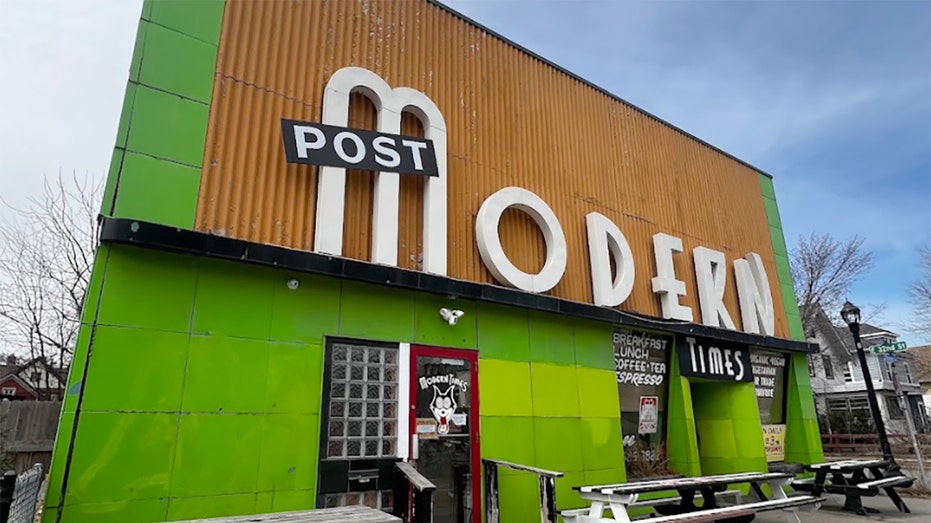
Modern Times Café, a Minneapolis restaurant that attempted to eliminate prices, has announced it will be closing for good by the end of the year.
"For the last six years, I’ve been trying to prove that Modern Times can continue to exist," owner Dylan Alverson wrote on social media Saturday. "I’ve exhausted every option without compromising the core fundamentals that make Modern Times what it is."
He added that he plans to spend the next two months celebrating the 16-year-old business and discussing ways for a business like his to continue.
"The only way for places like Modern Times to exist in the future is to actively challenge the reasons why it can no longer exist," Alverson wrote.
Alverson announced on Instagram in January that his business, which rebranded as Post Modern Times, would operate as a "free and donation-based restaurant" where everyone would be welcome "except ICE" in protest of the Immigration and Customs Enforcement operations happening in his state, partly in response to the killings of Renee Good and Alex Pretti.
"We absolutely cannot go on as we have. I am sick of generating money for the soldiers in our streets and for a government that won't protect us — a government who is actively inflicting daily harm on its citizens," Alverson wrote. "Effective tomorrow we are done making money for the fascists that occupy our city."
The decision was made after Pretti was shot and killed by Border Patrol agents.
The Modern Times Café operated without prices for about six months until it briefly closed in July. The establishment returned to using prices once the store reopened in August but announced that it would continue serving 25 free meals per day.
By October, Alverson told The New York Times he was operating under a "zero profit margin," hoping that his place could be used as a model for other restaurants.
"If I can create a fundraising mechanism that can raise money to provide hospitality, we can take that program and add restaurants to it," Alverson said.
However, he acknowledged that the process was taxing for his staff and led to customers waiting up to two hours for a meal, half of which would usually be given for free. Neighbors also expressed concerns that homeless and drug-addicted people would take advantage of the offer.
In a comment to Fox News Digital, Alverson stood by his remarks to The New York Times and suggested that the bigger issue was other restaurants that were struggling.
LongHorn Steakhouse is outpacing many other casual-dining chains. After visiting for the first time, I can see why.
Erin McDowell/Business Insider
I recently visited LongHorn Steakhouse as the chain reports positive sales growth this year.
Many casual-dining chains are struggling, but LongHorn is performing surprisingly well.
I thought the food was high quality and a great value for the cost.
LongHorn Steakhouse is having a moment.
While many casual-dining chains continue to struggle, LongHorn has posted some of the strongest sales growth in Darden Restaurants' portfolio.
In the fiscal first quarter, which ended August 30, LongHorn same-store sales rose 6.2% from a year earlier, outpacing sister chain Olive Garden, whose same-store sales rose 1.1%. LongHorn's overall sales across all locations increased by nearly 11% to $861 million, making it Darden's fastest-growing major chain that quarter.
During the company's earnings call, CFO Raj Vennam said LongHorn's first-quarter sales growth reflected both stronger sales at existing restaurants and the expansion of its footprint. LongHorn grew from 595 to 624 restaurants over the past year.
LongHorn's success is not a recent comeback, but rather a steady rise to the top. In the preceding quarter, which ended May 31, LongHorn's same-store sales rose 9.5%, while total sales increased nearly 22% to more than $1 billion. Darden credited a record-breaking Mother's Day weekend and strong lamb-chop sales for the results.
The chain has now posted positive same-store sales for 22 consecutive quarters, and its sales at existing restaurants have climbed 17% over the past three years.
Still, it's a tough time for casual dining.
Applebee's same-store sales fell 1.8% year-over-year in its most recent quarter, while Cracker Barrel's sales at existing locations fell 2.1% and its total revenue declined 2.2%.
In an environment where chain restaurants are constantly competing for customers, I wanted to find out what about the Texas-inspired steakhouse chain was drawing people in.
I visited LongHorn for the first time and was surprised by the quality of the food, generous portions, and overall value for the price.
I tried LongHorn Steakhouse for the first time to see what the hype was about.
Erin McDowell/Business Insider
LongHorn Steakhouse has quietly become one of casual dining’s biggest success stories, and recently outpaced its sister brand, Olive Garden, in same-store sales growth.
I’d never been before, so I brought a friend along to our nearest location in Queens, New York, to see whether the food, atmosphere, and value lived up to the hype.
The restaurant felt much warmer and more polished than I expected.
Erin McDowell/Business Insider
I expected a fairly standard chain-restaurant experience, but the entryway felt inviting right away.
The stone accents, dark wood, and low lighting gave it a cozy, classic steakhouse atmosphere. It was casual, but it did not feel cheap. I could see why it would potentially work for both casual weeknight dinners and slightly more special celebrations.
Despite visiting on a Friday night during the dinner rush, we were seated quickly in a booth at the busy shopping center location.
The dining room was busy, but it still felt comfortable and relaxed.
Erin McDowell/Business Insider
The restaurant had plenty of tables, yet it did not feel overly crowded or chaotic. The warm lighting made the large dining room feel more intimate. It was definitely family-friendly, but couples and groups of friends were also dining there.
About halfway through our meal, one of the tables next to us broke into a rendition of "Happy Birthday" for a guest.
I also thought the vibe was much more polished than a typical casual chain. It was more on par with chains like Red Lobster than slightly more casual ones like Chili's or Applebee's.
The menu had a surprisingly broad selection beyond just steak and sides.
Erin McDowell/Business Insider
LongHorn’s menu is centered on steak, but there were plenty of chicken, seafood, salad, burger, and sandwich options, too.
Even though I went in wanting to understand the chain’s steakhouse appeal, there were enough tempting appetizers and sides that narrowing down our order was harder than I expected.
My friend and I started off with a round of cocktails.
Erin McDowell/Business Insider
A steakhouse dinner calls for a drink, and the classic "Perfect" margarita ($11.49) was a refreshing — and surprisingly inexpensive — way to start the meal.
It was ice-cold and citrusy, served in a generously sized glass with an extra shaker on the side. My friend ordered the Texas tea ($10.99), LongHorn's version of a Long Island iced tea, which she said was sweet and not too strong.
We were both impressed by the price and serving size of our drinks — they were on par with what we'd spend at a dive bar in Brooklyn, but with much better service and flavor.
The complimentary bread was a nice start to the meal.
Erin McDowell/Business Insider
The bread arrived warm with a side of butter before our appetizers hit the table. It had a slightly sweet, honey-wheat flavor and a tender texture.
It was simple, and probably could have had a better crust — but it was free.
The stuffed mushrooms were one of the meal’s first real surprises.
Erin McDowell/Business Insider
We ordered the white cheddar stuffed mushrooms ($12.29) as an appetizer, and they arrived bubbling hot in a rich, creamy four-cheese sauce that reminded us slightly of Alfredo pasta sauce.
The mushroom caps were tender without becoming soggy and had a slightly salty flavor.
Erin McDowell/Business Insider
The cheesy filling gave them a savory, indulgent flavor that made them feel like a true steakhouse starter.
It was the kind of appetizer that disappeared quickly, and one I'd definitely order again. I had to remind myself to save room for the rest of our food.
Around the same time as our appetizer, our server brought out my salad course.
Erin McDowell/Business Insider
The lettuce was crisp, the generous helping of croutons added good crunch, and the dressing had plenty of flavor. It was a classic steakhouse Caesar; it did exactly what it needed to do, but it wasn't anything mind-blowing.
It was also more than big enough to share with another person as a way to add something fresh before our richer entrées.
The ribeye steak and loaded baked potato made for a filling, indulgent entrée without an over-the-top price tag.
Erin McDowell/Business Insider
For my entrée, I ordered the ribeye steak ($30.79), which came with the aforementioned Caesar salad and one side. I chose the loaded baked potato, which came topped with cheddar cheese, sour cream, bacon, and green onions.
The steak arrived with a flavorful sear and a side that felt like a meal in itself. Together, the plate felt hearty and indulgent without being unnecessarily over-the-top. It was easy to see how a diner could leave feeling like they got their money’s worth.
The loaded baked potato was fluffy inside and piled high with toppings.
Erin McDowell/Business Insider
The potato was rich and comforting, with a soft, fluffy center, while the potato's outer shell was perfectly crispy.
I appreciated that LongHorn did not skimp on the toppings. It helped make the entrée feel more complete and substantial, without having to upgrade to a premium side.
The steak was surprisingly tender and well-seasoned.
Erin McDowell/Business Insider
The steak had a savory, well-seasoned crust that added a lot of peppery flavor, but the true magic lay within.
Inside the tender ribeye, the meat was buttery and unbelievably juicy. It was not trying to be a high-end steakhouse steak, but it was extremely satisfying for the price. I ordered the steak medium-rare, and it came out at the right temperature.
This was the dish that made LongHorn’s popularity click for me.
Instead of ordering a main entrée, my friend ordered a side of roasted Brussels sprouts and the mac and cheese.
Erin McDowell/Business Insider
The crispy Brussels sprouts ($6.49) were roasted just enough to caramelize while still holding their shape and flavor.
The mac and cheese was a standout part of our meal.
Erin McDowell/Business Insider
The steakhouse mac and cheese ($6.49) had a rich, creamy sauce and a browned topping that added texture, while bacon bits added even more savory, smoky flavor.
It was exactly the kind of comforting side I want with a steakhouse meal.
Erin McDowell/Business Insider
If you weren't ordering it as a main dish, the portion was also plenty large enough to share, especially alongside everything else we ordered.
I preferred this chain-restaurant mac and cheese to others I've tried.
By the end of dinner, I understood completely why LongHorn is winning over value-conscious diners.
Erin McDowell/Business Insider
The food was more polished than I expected, the portions were generous, and the experience felt like a real sit-down dinner rather than a quick chain-restaurant meal after a day at the mall.
We ordered two drinks, an appetizer, a salad, a steak, and multiple hearty sides, yet our bill for two still came in under $100 before tip. With the tip, we paid $103.83.
By the time we left, I could see exactly why LongHorn has become a go-to for diners who want a steakhouse meal without steakhouse prices — and I'll definitely be back for more.
McDonald's is looking to expand its chicken offerings, including potentially bringing back grilled chicken sandwiches — a menu item the fast-food giant discontinued in 2020.
At a September investor meeting, McDonald's executives discussed plans to expand the chain's chicken lineup, including grilled chicken sandwiches and wraps, as demand for protein options grows, according to Restaurant Dive.
The renewed interest comes years after McDonald's pulled its grilled chicken sandwich from U.S. menus, raising questions about why the healthier offering disappeared in the first place.
Chef Mike Haracz, who served as McDonald's manager of culinary innovation from 2015 to 2019, told Fox News Digital why the grilled chicken sandwich ultimately failed to make the cut — and whether it could find its way back to the menu.
The reason was simple: Not enough customers were ordering it, Haracz said.
"For many of the menu items at McDonald's, and this is true for any corporate chain restaurant, there is a certain sales threshold that means it will be profitable, and it makes sense to have in the restaurant," said Haracz, who is based in Illinois.
"Once sales dip below a certain level, it does not make financial sense to keep it on the menu, as you will end up throwing away product."
In 1993, McDonald's introduced a grilled chicken sandwich as a healthier menu offering, but it did not stand the test of time.
The sandwich consisted of a marinated skinless chicken breast filet, lettuce, tomato, sweet red onion, Monterey Jack cheese and a herb sauce, all piled on a bun, according to a 1993 press release about the menu item.
McDonald's unveiled a more natural preparation of its grilled chicken in 2015, announcing on its website that it would be cooked using only canola oil, olive oil, and real spices and herbs.
The chain revamped the sandwich that year, introducing the Artisan Grilled Chicken Sandwich.
Ultimately, though, the grilled chicken sandwich lost its spot at McDonald's in 2020, when the chain also removed salads from its U.S. menus, according to Business Insider.
In his role at McDonald's, Haracz formulated new menu items for U.S. locations.
People looking for healthier options at McDonald's appreciated the grilled chicken offering — especially parents, Haracz noted, because while their kids might have been excited about eating a Happy Meal, the parents were not as interested.
Like many other menu items, the grilled chicken sandwich was cooked on a flattop and held in the universal holding cabinets (UHCs).
Ultimately, it came down to simple dollars and cents.
Space is valuable at McDonald's, Haracz noted, with each location organized to make every square inch profitable.
If an item is taking up space but not making money, it's probably not going to last too long, he said.
Consumer satisfaction played a big role, Haracz said, adding that he thinks the grilled chicken sandwich's flavor profile didn't always wow guests.
"McDonald's also realized once it gets to a point, there may be menu cannibalization, [which] means instead of ordering Chicken McNuggets, I might order the chicken sandwich," Haracz said. "Well, if we take the chicken sandwich away, are they still going to order Chicken McNuggets or other items? Most likely they are."
Could the grilled chicken sandwich make a comeback?
Haracz said he thinks it's possible.
"I do think there's a chance it could come back because many chains are dealing with the fact that beef prices are rising, and a way to offset that is to offer a more affordable protein option, which would be chicken," he said.
Haracz said he's not sure if there will be a renaissance of grilled chicken specifically.
"Certainly chicken items, in general, will be more popular, not only because of the beef prices, but also, that is a bigger profit margin if McDonald's develops it appropriately."
Fox News Digital reached out to McDonald's for comment.
A Texas woman's lunch took an unexpectedly toothsome turn when she allegedly discovered a cow tooth in her taco, prompting a lawsuit against popular restaurant chain Torchy's Tacos over a bizarre ingredient the company has since confirmed was the real deal.
Nohemi Castillo claims she nearly swallowed the tooth while eating takeout from the chain's South Congress Avenue location in Austin on June 9, according to a lawsuit independently obtained by Fox News Digital and filed Oct. 13 in Travis County District Court.
The order included the chain's "Democrat" tacos, according to the complaint, although a cow tooth was certainly not among the advertised ingredients.
Torchy's Tacos confirmed the unusual discovery in a statement to Austin TV station KVUE, saying its own investigation determined that the object was a cow tooth.
"Upon receiving the guest complaint, we conducted a thorough review and identified the item as a cow tooth," the company said. "This can occasionally happen when processing the meat, though it is quite rare."
The restaurant explained that its barbacoa comes from natural beef cheek sourced from a supplier, adding that it has taken steps to prevent similar incidents.
"We have partnered with our supplier to reinforce their internal procedures to prevent this from happening in the future," Torchy's said.
Castillo's attorney, Scott Vasquez, told Fox News Digital that the company did not acknowledge to him that the object was a cow tooth until the story attracted local media attention in October, roughly four months after the incident.
Vasquez provided Fox News Digital with additional photographs showing the tooth beside a tape measure, offering a closer look at the sizable object Castillo claims she nearly swallowed.
Another photograph included in the court filing shows the object resting on aluminum foil beside what appears to be taco meat.
A witness statement provided by Castillo's attorney describes the moment an ordinary lunch with a colleague took an unpleasant turn.
"As we were eating, I heard an ‘awww!’ When I turned to Nohemi, I saw her pulling something out of her mouth, she said, 'I think it's a bone,'" the witness wrote.
The colleague described Castillo examining the object while holding her left cheek before concluding that it appeared to be a tooth.
According to the lawsuit, Castillo was disgusted and sickened by the discovery and visited a doctor later that evening, where she received prescriptions.
The complaint alleges that she incurred medical expenses and experienced physical pain, mental anguish and other damages.
Castillo is suing Torchy's Tacos and Success Foods Management Group, which does business as Torchy's Tacos, alleging that the defendants failed to properly prepare, inspect and distribute the food before selling it to customers.
The lawsuit further alleges that Torchy's failed to adequately monitor its meat supplier and breached implied warranties that food sold to consumers is fit for consumption. It also alleges violations of the Texas Deceptive Trade Practices Act and federal food safety requirements.
Castillo contends that she would not have purchased the meal, or would have examined it more closely, had she known about the alleged defect.
She is seeking monetary relief of $250,000 or less, with any final award to be determined by a jury.
Vasquez also told Fox News Digital that he has become aware of other individuals reporting similar experiences with Torchy's since the story received attention, although those accounts have not been independently verified.
The attorney characterized the company's earlier responses as providing limited information while shifting blame and responsibility to others.
Deep-pocketed investment groups are giving mom-and-pop food businesses a shot at big success. But many of their regulars are speaking out against those deals.
Restaurant software company Olo is launching a delivery app.
Bloomberg/Getty Images
Restaurant software provider Olo is launching a delivery app.
Olo will offer the same menu prices for delivery that in-person visitors get, it said.
Other delivery services often mark up order prices.
A new food delivery service is taking aim at menu mark-ups — and some entrenched rivals
Restaurant ordering software company Olo is launching its own customer-focused app, it said on Tuesday. The app puts it in competition with more established delivery companies, such as DoorDash and Uber Eats.
On Olo's app, customers will see the same prices that restaurants charge in-person patrons, the company said. By contrast, third-party delivery services often charge customers higher menu prices than diners would get at a restaurant.
Offering in-store prices can save customers between 15% and 30%, Olo said.
"It's a better experience for consumers and a more sustainable model for restaurants, with no menu price inflation and no barriers standing between great brands and the people and communities they serve," Olo CEO and founder Noah Glass said.
Food delivery is one area where consumers continue to spend money, even as they cut back their budgets elsewhere. How much customers pay for delivery — and whether apps charge individuals different prices or the same order — can affect how often they order.
Olo is stepping into a competitive space. DoorDash and Uber Eats continue to grow, including by rearching into club deliveries and catering. And Walmart, which spent years building its own grocery-focused delivery service, started delivering restaurant orders earlier this year.
Olo got its start in 2005 with a service that let users text their orders to restaurants in the pre-smartphone era. Now, the company fields about 3.5 million orders daily through around 800 restaurant brands.
The company doesn't have its own team of delivery drivers. Instead, the company uses its own dispatch service to compare delivery options at other third-party services, such as Grubhub, and pick one based on factors like cost and speed.
Olo's delivery app will allow customers to order from about 250 restaurants, including Five Guys and Dave's Hot Chicken.
Do you have a story idea about Uber Eats, DoorDash, or another delivery service? Contact this reporter at abitter@businessinsider.com or via encrypted messaging app Signal at 808-854-4501. Use a personal email address, a nonwork WiFi network, and a nonwork device; here's our guide to sharing information securely.
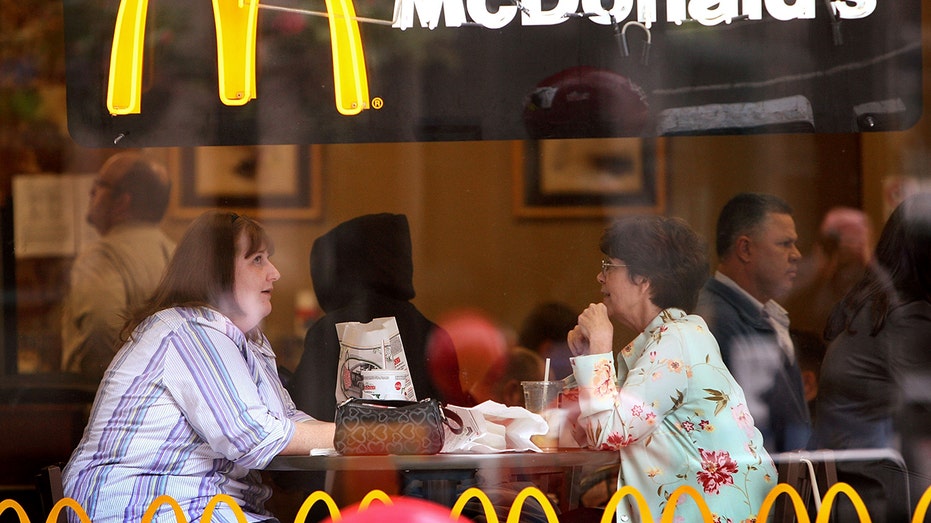
A McDonald's in Paris was left ransacked and heavily damaged after cost-of-living protests exploded into riots and widespread looting that also targeted restaurants, cafés and grocery stores across the French capital — with the city now issuing curfews in two places, The Associated Press reported.
The McDonald's on Boulevard de Magenta near Gare de l'Est suffered smashed windows and extensive damage inside, according to Le Monde.
Computer screens were damaged — while an ice cream machine continued spilling vanilla onto a ketchup-covered floor, the outlet reported.
Intruders even attempted to cook french fries before a man and his dog drove about 20 people from the restaurant, a security guard told the publication.
Fox News Digital reached out to McDonald's for comment about the vandalism.
The American-based fast-food chain was hardly the only food business to be caught up in the destruction.
A neighborhood café was burned out, a wine shop was destroyed and supermarkets were among the businesses targeted as unrest swept Paris.
Among the hardest hit was La Barrique, a neighborhood café near Place de la République that was burned out, according to Le Monde.
The son of the café's owners told the outlet his mother was inside when the business was attacked and was later taken to a hospital with a head injury.
Grocery stores were hit hard as well.
The Franprix, Monoprix, Picard and Carrefour City locations were among the grocery retailers targeted during the unrest, according to French news agency AFP.
At a Franprix on Rue Beaurepaire near Place de la République, shelves were emptied and products were either stolen or crushed on the floor.
Looters elsewhere were seen leaving supermarkets carrying bags filled with food, juice and alcohol, Le Monde reported.
An Intermarché Express on Boulevard de Magenta was also looted. A crew from Euronews said they were assaulted by masked individuals while reporting near the supermarket.
A Nicolas wine shop on Boulevard de Magenta was also destroyed — with shattered bottles and wine covering the area outside the store, according to Le Monde.
The destruction was part of widespread violence that followed demonstrations Saturday over the rising cost of living and other grievances.
French-born restaurateur Olivia Ostrow, who now operates Maison Ostrow in South Florida, told Fox News Digital the unrest reflects tensions extending far beyond the French capital.
Ostrow, who was born in Paris and whose grandparents survived the Holocaust, expressed concern about what she described as rising antisemitism and the role of social media in fueling hostility.
She argued that some demonstrators have embraced political causes without fully understanding the history behind them.
"Those kids and most of those people couldn't point to Israel on the world map if it hit them in the face," she said.
Many on social media shared their dismay about what is happening in France.
"I have nothing but disgust for anyone trying to justify this," wrote one person. "Let me say it, the ones suffering the consequences are ordinary French people, not the government. It's ordinary citizens who will pay for this, whose cars were burned, whose businesses and homes were looted, and whose physical integrity were threatened."
Backlash against content creators includes restricted hours for filming and even outright bans
Stand in any vaguely photogenic spot these days on holiday and the chances are you will come across people posing with raised phones and even ring lights. Some may be influencers with huge audiences on social media, others just overkeen Instagram users. With hotels and beauty spots now so overrun, however, bans on photography are coming into place.
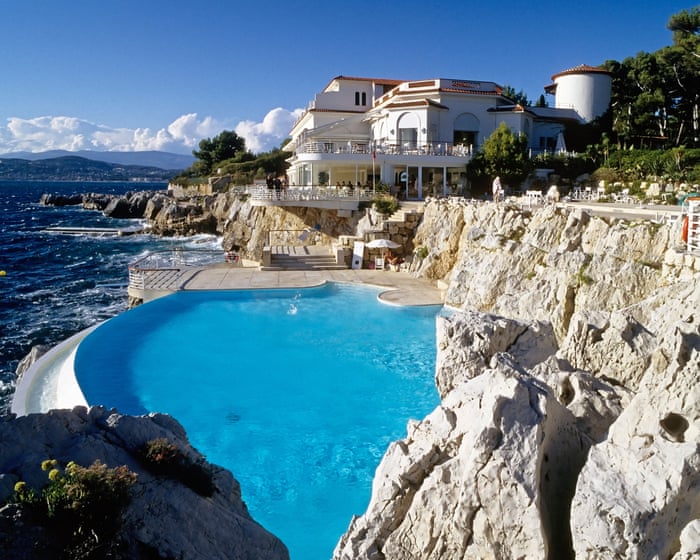
The five-star Hotel du Cap-Eden-Roc in Antibes, known for its glamorous clientele, views of the Côte d’Azur and a stunning infinity pool, has brought in rules against photoshoots: no longer allowed without prior permission.
In recent years, one of the predominant policy initiatives of the progressive left has been raising the minimum wage in locales around the country. At the same time, left-leaning politicians have sought the elimination of what's known as the tip credit, which allows employers to pay restaurant servers and other tipped employees a lower hourly base wage that they then bolster with gratuities.
Just a few years into this experiment, however, policymakers are showing signs of an about-face on the tip credit's abolition as they grapple with the unfortunate, and predictable, economic results.
In 2022, Washington, D.C., made news headlines when voters passed Initiative 82. As originally designed, it would have repealed the tip credit and required servers to be paid the District's full statutory minimum wage by 2027. (D.C.'s minimum wage was $16.10 per hour in 2022, but has since risen to $18.40 due to inflation indexation.) Prior to Initiative 82, D.C. servers could be paid a $5.35 tipped wage, so long as they earned enough tips to make up the difference between the lower tipped wage and the higher traditional minimum wage.
D.C.'s Initiative 82 was just the beginning. One Fair Wage, a progressive group that lobbies against subminimum wages, quarterbacked an all-out push to eliminate the tip credit in jurisdictions across America. Chicago became the second prominent city to follow suit. States like New York, Connecticut, and Illinois also quickly saw legislation introduced to eliminate the tip credit at a statewide level. (Apart from this recent wave, a small handful of American states—including California, Oregon, and Alaska—have long operated without a tip credit).
But just when it seemed like momentum against the tip credit had reached its apex, progressive politicians started to see the writing on the wall. In the aftermath of the tip credit's repeal, D.C. saw a close to 5 percent decline in full-service restaurant jobs. Tipped worker earnings also dropped by just under $12 million—likely a result, at least in part, of restaurants reducing hours for staff in the face of higher labor costs. At the same time, many D.C. restaurants began implementing service fees or so-called auto-gratuity policies that added mandatory 10-20 percent charges onto customers' bills.
Mugged by this economic reality, D.C. Mayor Muriel Bowser called for the full repeal of Initiative 82. Ultimately, the D.C. Council settled for a partial repeal in 2025, maintaining at least some semblance of a tipped wage that sits below the traditional minimum wage into the years ahead (although the tipped wage eventually rises to 75 percent of the traditional wage by 2034). This was a familiar story: The council had previously repealed Initiative 77, a near-identical attempt to abolish the tipped wage that voters passed in 2018.
After Chicago moved to eliminate the tip credit, the Illinois Restaurant Association found that 89 percent of Windy City restaurants raised menu prices; another 79 percent responded by reducing worker hours. Again bowing to economic reality, the progressive Chicago City Council voted to freeze the tip credit's planned elimination, only to see the effort vetoed by Mayor Brandon Johnson. Eventually, a compromise was brokered to at least pause the tip credit at its current level for two years—which punts the issue until after Johnson stands for election again, allowing a potential successor to endorse a more lasting reversal.
In Michigan, a 2024 state supreme court ruling set the tip credit on the path toward elimination by 2030. But state lawmakers intervened last year, deciding to maintain a 50 percent tip credit in perpetuity after 2031. Notably, Michigan is currently governed by a Democratic trifecta in the governorship and both houses of the Legislature. The tip credit's revival garnered key support from Republican lawmakers to pass in a bipartisan fashion, before being signed into law by Democratic Gov. Gretchen Whitmer.
While progressive efforts to eliminate the tip credit may be motivated by an earnest desire to ensure waiters are paid more, the math isn't that simple. Requiring a server to be paid a $16 traditional minimum wage—up from a $5 tipped wage—might appear to raise their pay on paper. But this fails to consider several important factors.
Under our "No Taxes on Tips" new normal, raising the minimum wage for servers could lead to a partial reduction in tips, which under certain scenarios can result in less take-home pay for waiters once the taxman takes his cut. If more server earnings come in the form of "auto-gratuity" policies—which are treated as taxed wages under the law—then the tax repercussions may grow even grimmer.
But more broadly, these laws attempt to subvert basic economics. As of 2025, Bureau of Labor Statistics data show that D.C. restaurants shed over 1,600 jobs in aftermath of Initiative 82; meanwhile, between 2022 and 2025, restaurant job growth in the District declined by more than 8 percent. This is just one example. The fallout is the inevitable result of restaurants responding to labor costs that suddenly skyrocket, forcing establishments to cut worker hours and sometimes transition to quick-service models that require less hourly staff. And that's to say nothing of the diners who bear the cost with higher prices and new service fees.
"We're watching a beloved bar back, a beloved busser, a dishwasher have their jobs taken away," D.C. restaurant worker Valerie Graham toldReason in 2024. "Not because our owner-operator is an evil billionaire but because they're an independent business owner who had to make some business decisions and there's a callousness with which our industry is talked about."
To be sure, the tip credit has only survived in modified and reduced form in D.C., Chicago, and Michigan—and in the case of Chicago, the about-face is only temporary. But the partial reversals show the tip credit's elimination is not a foregone conclusion. Economic reality continues to rear its head.
Christian Pineda, CEO and cofounder of Los Tacos No. 1, serves a taco at the chain's Chelsea Market location.
Dolly Faibyshev for BI
Los Tacos No. 1 came under fire on social media after receiving a private equity investment.
Some fans feared the beloved New York City Tijuana-style taco chain would lose its iconic flavor.
The chain's CEO told Business Insider they will scale cautiously, preserving quality and low prices.
Christian Pineda, CEO and cofounder of Los Tacos No. 1, couldn't fall asleep.
He was caught in a scroll of enraged social media posts. The storm of customer indignation followed news last month that the beloved New York City taco chain had received an investment from the private equity firm TSG Consumer. The internet seemed convinced their favorite carne asada and adobada tacos would lose their quality, and Pineda had not expected the reaction.
To remedy the situation, he said he felt it was his duty to address his customers directly. He woke up at 4:30 the next morning to clear the air.
"No, we're not going to start charging extra for guac. We're not switching to horse meat. And no, we're definitely not messing with the tacos," read the Instagram post published September 4.
"I wanted to keep it simple, honest, and comical too at the same time," Pineda told Business Insider. "I saw it as inspiring, honestly, to really prove our customers wrong — that private equity is not always bad."
Christian Pineda, CEO and cofounder, and Jacobo Ackerman, chief operating partner, run the taco chain's day-to-day operations.
Dolly Faibyshev for BI
Colin Welch, managing director and head of New York at TSG Consumer, said the backlash among some underscored what TSG saw in the taco business to begin with: a "cultlike following" customer base protective of the food, and an experience that made Los Tacos a "New York institution."
"It's our responsibility to show those skeptics that it's going to be exactly the same Los Tacos experience, and that nothing's going to change for the worse," Welch said. "We got to show them, not tell them, and that'll happen over time."
The PE firm, founded in 1986 and with $14 billion in assets under management, also has investments in food names Pura Vida Miami, Crumbl, and Dutch Bros Coffee. TSG declined to disclose the terms of the deal or the amount it paid for its investment in or stake in Los Tacos No. 1, which opened in 2013.
Welch said the firm plans to let Pineda and his team run the show, while TSG will provide guidance on future expansion.He pointed to Pura Vida Miami, a lifestyle café chain founded in Miami. It grew from locations in two states to seven since TSG announced its minority stake in 2025.
Los Mariscos is Los Tacos No. 1's sister restaurant, specializing in fish tacos and other seafood dishes.
Dolly Faibyshev for BI
Pineda said the chain focused on finding an investor that would allow Los Tacos No. 1 to scale in a "cautiously smart" way. With 10 locations in Manhattan and a sister location, Los Mariscos, at Chelsea Market, the taco chain wants to continue expanding into other boroughs and markets. It's looking to open a new location in Brooklyn before the end of the year, and another three new locations are planned to open in 2027.
The PE investment comes after 13 years of growth in New York City — a journey that began with three architects and the search for a good taco.
Selling an experience
Pineda and his co-founders, Tyler Sanders and Kyle Cameron, moved from California to New York City in 2010. They lived together in a one-bedroom apartment in the West Village, where Pineda and Sanders, both architects, spent days knocking on doors to find jobs. They found jobs, but there was one thing they could not find wherever they looked — a good taco.
The three men had been raised on Tijuana-style tacos. Pineda was born in San Diego but was raised between there and Tijuana, where his parents are from. Meanwhile, Sanders and Cameron were born in Brawley, California, a city near the border with Mexicali.
"No ticket, No taco" is the order model at all Los Tacos No. 1 locations.
Dolly Faibyshev for BI
Thus, the "No ticket, No taco" order model was born. Customers get a ticket from the cashier, and then have to find and give it to one of the many "taqueros," or cooks, working at once. They can then give the taquero specific instructions for their tacos and watch them prepare the food in front of them. The interactive experience is designed to induce an organized chaos, brought to life by Mexican folk music in the background as the staff speaks in Spanish among themselves.
Growing and scaling a business in NYC
It's no secret that the Big Apple is expensive, and as the cost of living increases, so do expenses for businesses like Los Tacos No. 1.
Since they opened, annual revenue has grown by around 30% each year, and they currently serve about 1,200 customers per day, with an average check of about $20, Pineda said.
In recent months, the expenses that have increased the most are beef, limes, avocados, and tomatoes, Pineda said. Beef prices were 5.9% higher in August 2026 than in August 2025, and they are forecast to increase a total of 9.4% this year, according to the US Department of Agriculture.
"Psychologically, people think tacos are cheap or should be cheap — and they should — but with the prices of New York City and the quality that we're doing, it's tough," Christian Pineda said.
Dolly Faibyshev for BI
To adjust to these increases, the chain keeps other expenses "tight, lean and sustainable," and will not raise prices or cut quality because of a temporary spike, Pineda said. To keep up, the business has to "be efficient in everything else," Pineda said.
"Our idea was always you need to have the best taco and the cheapest taco," Pineda said. "Our carne asada started at $3.50 in 2013. Now our carne asada tacos are $5.95 after 13 years, so we take pride in that."
Pineda sees the new partnership with TSG Consumer as an opportunity to grow the company while preserving its quality, and maybe going public one day, debuting by ringing the opening bell on a stock exchange.
"We want to be in a room where we're with people who have done 100, 200, 1,000 locations. We haven't done that," he said. "We partner up with them because of their knowledge and the people that they've worked with, the brands that they've helped with — a big goal has been if we can ring the bell — that'd be amazing."
A new restaurant in Portimão is looking to revive the relaxed atmosphere of Portugal’s traditional casas de petiscos (tapas houses), with a menu built around sharing food, familiar flavours and
Vietnamese police have arrested 12 men accused of stealing nearly 2,700 cats during night-time raids in residential neighborhoods; the pets were taken to be slaughtered for food. Fur-removal machines, cat traps, and weighing scales were among the items confiscated during the investigation into the cat-theft gang in Ho Chi Minh City, Vietnamese police and state […]
Ahead of National Curry Week in the UK (5-11 October) MPs are being urged to revive the Parliamentary Tiffin Cup.
The Tiffin Cup was an annual competition where MPs (advised by their constituents) nominated the Best South Asian Restaurant in their area.
One restaurant from every region was then shortlisted and invited to participate in the Grand Final cook-off event held in the House of Commons in London, and judged by MPs and guest celebrities, with the proceeds going to charity.
The Tiffin Cup was last won in 2019 by Kuti’s Restaurant in Southampton, where former Prime Minister Rishi Sunak says he worked shifts “just for fun” as a student.
The competition was created by a group of MPs with Keith Vaz as its chairman to celebrate quality South Asian food. The trophy was usually presented by the Speaker of the House of Commons.
Demands for its return are led by George Shaw, editor of the respected Good Curry Guide.
He told this site “These are challenging times for the hospitality sector, with both restaurants and customers being hard hit by rising costs. The Tiffin Cup will help to promote what is a vital part of our economy.
“Most curry houses are small independent businesses – not a ubiquitous chain which sucks cash away from the local area, funnelling profits to a corporate headquarters many miles away, or to an offshore bank account.
“Curry is a firmly established part of British history and culture.
“Queen Elizabeth I granted the first charter in 1600 allowing London merchants to trade with the “East Indies”, hoping to break the Dutch monopoly on the spice trade.”
The earliest surviving curry recipe in English was published in 1747.
The first Indian restaurant in London, the Hindoostane Coffee House, was opened in 1810 by Sake Dean Mahomed, a former captain in the British East India Company.
He went on to become ‘personal shampooing surgeon’ to George IV and William IV.
British appetites for spice became entrenched during the British colonial era in India, from 1600 to 1947.
Queen Victoria, ‘Empress of India’ was introduced to Indian cuisine by her ‘Munshi’, Abdul Karim.
Thereafter she ate curry every day, with great relish and in considerable quantities, until the end of her life, 25 years later.
The ritual of enjoying a refreshing lager with Indian food was introduced by Prince Axel of Denmark.
The Prince attended the British Empire Exhibition in 1924.
During his visit he discovered the cuisine of Veeraswamy (London’s first high end Indian restaurant and still in existence), which ran a “pop-up” at the Exhibition.
The Prince brought a barrel of Carlsberg with him and continued to send one each Christmas.
Shaw is urging restaurant curry fans to write to their MPs asking them to reestablish the Tiffin Cup competition as an annual fixture in Parliament, with their own nominations.
Watching The Jetsons as a kid in the ’80s, I was obsessed with the food machine, and how it dispensed a full meal at the touch of a button. The show was set in 2062, exactly a hundred years on from its original broadcast. We’ve made it to 2026, but life today resembles nothing like that slick space-age future. We have gadgets, but they’ve arrived as phones, apps, and smart home devices—and I’m not sure they’ve made my life better.
“Accepting modern conveniences too often means accepting lower standards,” writes Gabe Bullard in Against Convenience: Embracing Friction in an Age of Endless Ease. Lower standards for material goods, for labor conditions, for socializing, for art and entertainment. “Experiences become transactions.”Bullard isn’t anti-technology. His argument, he writes, “is an argument against how we use and are pushed to use technology.” In his new book, he examines the conveniences that have crept into his life—and likely yours—and offers ideas for living with them more sustainably and equitably.
In this excerpt from chapter seven, Bullard sets this scene: a physical world, the one we’ve moved through for centuries, slowly reshaped by the virtual one we increasingly live in. Cars drive from one dot on a map to another, ferrying takeout to people at home on sofas. Food deliverers make some extra money. Businesses take orders both online and off. It appears easier, efficient. But Bullard examinesthe costs—to the customer, to the driver, and to the restaurant owner, who still has to make sure the fries are crispy once they reach your door.
The artist Jake Longstreth paints landscapes of America, often the West and Southwest, with their distinctive vegetation, deserts, and mountains. In the foreground of many of his paintings are features that evoke a time more than a single place—CubeSmart self-storage, Taco Bell, a sun-bleached facade with shadows where the words Toys ‘R’ Us once hung.
In one series, each painting is a different view from the parking lot of a Walmart in Scottsdale, Arizona. Ferns, trees, and desert grasses obscure the sharp edges of the boxy store. Semitrailers and loading docks peek from behind the brush. In a painting from a different series, a Home Depot abuts a Civil War battlefield.
The work has a loneliness that’s reminiscent of Edward Hopper’s paintings. But unlike Hopper, Longstreth rarely paints people (one exception is a group of soldiers in uniform at the grand opening of a Chili’s). The only signs of humanity are occasional cars and the chains that “make up, basically, an American commons,” as Longstreth described them in an interview promoting an exhibition of his work in 2024. “Most people don’t really have a super-deliberate relationship with these places,” he added.
There’s a certain democracy to the scenes: Anyone, anywhere can eat the same value meal as anyone else. There’s also an intrusion: The chains’ architecture imposes a sameness on once-unique landscapes. The stores and restaurants are dropped into spaces that weren’t made for them. Flat, square plots are pressed into hills, ample parking provided.
The encroachment of a drive-thru on a lush California valley is a good representation of many modern conveniences. The services that claim to make something faster, easier, or cheaper are built on top of physical landscapes, legal frameworks, or social orders that were not made to accommodate them. The systems absorb the change, but they do it awkwardly and end up forever altered. Starbucks becomes a place to pick up app orders; appliances become accessories to connect to your phone; QR codes sit on restaurant tables; analysis replaces news; art becomes Content; machines replace people.
Uncomfortable intrusions and uneven responses are everywhere.
Examples abound: Grocery delivery apps bring an old idea to a new reality. Grocers offered delivery over a century ago, but the stores were set up and staffed for this. Modern grocery stores are built for customers to come in and do their own shopping. Delivery apps now let customers pay someone to do the same physical task the user would do if they went to the store themselves. What seems like a simple process can quickly become inconvenient. Grocery stores evolved to let customers pick out their own fruit, check dates on packages, and otherwise get things for themselves based on what looked good (or what the store suggested they buy). Virtual shoppers do this picking for customers, sometimes in a hurry so they can fulfill more orders. Mistakes can happen even under the best circumstances. Better deals go ignored. There’s confusion when an item is out of stock and the customer hasn’t chosen an alternative. It can lead to a customer essentially steering a shopper through the store on their behalf.
Rentable electric scooters have become a fixture of urban sidewalks in the past decade. The scooters speed up trips that are too far to walk, too short for a car ride, and not covered by public transit. But these are more of a tacked-on convenience than a real solution. City streets aren’t often built to accommodate smaller vehicles, leaving scooter riders to either use car lanes (putting the rider at risk) or sidewalks (putting pedestrians at risk). Poorly parked scooters clutter neighborhoods. And the environmental benefits are questionable, if at times nonexistent: Broken scooters need to be replaced and vans typically pick up scooters for charging. These problems could be solved through a more active response from cities—more adequate public transit, sustainability requirements for the rental companies, limits on where scooters can be ridden and parked. Cities could build better infrastructure, too, to favor bikes, scooters, and pedestrians over cars.
The postal system and most homes were built to accommodate the delivery of mail and packages. But the scale of e-commerce deliveries has forced inconvenient adjustments to physical and social spaces. In the years I lived in a large apartment building, package drop-off was a constant frustration. Every afternoon, the lobby filled with Amazon and Chewy boxes. They sometimes sat there for days (rush delivery wasn’t essential after all). What was built as a place for neighbors to mingle became a warehouse for boxes of dog food where people occasionally waited for rideshares.
For private homes, the doorbell camera offers convenient, instant notification that a package has arrived and security footage if the package is stolen. It’s an inelegant, antisocial solution. The old-style doorbell was already a notification a package had arrived. The new gadget moved the chime and the peephole to the pocket (and gave users another reason to stay glued to their phones). Package theft is a crime of convenience created by constant online shopping and delivery, and it’s not clear the cameras are stopping it. In my old neighborhood, people often posted grainy images of package thieves to local message boards. Sometimes the person said they were giving the information to the police, as if the police would bother tracking down whoever took a box that had most likely already been replaced. Perhaps the footage will go into a database to be scanned by facial recognition software instead. Doorbell cameras might be meant to catch crimes, but more often, they create Content like the videos of accidents I scroll past online. Everyone is eager to share their personal view of the panopticon.
Is the convenience worth the cost of constant surveillance and suspicion of every person who steps on your stoop (not to mention a subscription to the software that runs the camera)? Even if the cameras prevent a package theft, it’s unlikely the increased surveillance is a deterrent for violent crimes, or that it has an effect on overall neighborhood safety. That would take a collective solution. The camera lets the homeowner feel optimized to take on (or hide from) the world’s troubles alone.
The services that claim to make something faster, easier, or cheaper are built on top of physical landscapes, legal frameworks, or social orders that were not made to accommodate them.
Ridesharing’s “disruption” is perhaps the most prominent example of convenience overloading existing systems, and those systems bending to accommodate it. In this case, the systems were municipal regulations, employment standards, and users’ expectations for how to get around a city. In his book Blood in the Machine, tech journalist Brian Merchant notes that the arguments against regulation echo one the mill owners made in the fight against the Luddites in the early 1800s. Existing laws regulated mills and set standards for worker training and for the quality of cloth. As businessmen automated manufacturing, they argued that “the regulations on the books are out of date, should not apply to new technologies, and are stifling innovation; they’re really not that important, and no one plans on violating them anyway,” Merchant writes.
The argument that our existing laws are inadequate in the face of progress is so pervasive in the tech industry, breaking rules is basically a strategy. OpenAI’s CEO has said it’s impossible to create their products without access to copyrighted material, and as I write this, the debate continues over how AI firms should license—or should have licensed—the material they use to train their software.
We are still adjusting to new technology—legally, morally, socially. The adjustment will go deeper than making room for a new way of shopping, computing, or getting around. How we react in these (still) early stages—how we comport ourselves and what we demand of the apps and our governments—will have ramifications for generations to come.
It’s not looking good.
The spread of generative AI is the most worrying sign at the moment, but I hear about new, supposedly convenient, yet ultimately unnecessary, technologies every day. Not long ago, it was facial recognition for buying concessions at sporting events. It’s mind-blowing computing power put to mundane use, and it raises big questions about privacy and security. I wonder if the food tastes any better.
To get a sense of the stakes of all-encompassing adaptation to new technology, go outside: massive parking garages in downtown real estate (somehow still necessary even with rideshares); four-lane streets in residential neighborhoods; houses with no stoop and a garage door as the most prominent feature on the facade; interstates along riverfronts; drive-thru-only restaurants; restaurants with double-wide drive-thrus. Cities and landscapes have been remade to accommodate privately owned personal cars. Shared cars or scooters might offer some relief, but the infrastructure has already been changed—these solutions are technology to solve the problems of technology, built not just on top of a system that wasn’t made for them, but on top of a system that wasn’t made for people at all.
This is the world I see in Longstreth’s paintings. The buildings are in places that are hostile to anyone traveling without their own car—shopping centers between batches of suburbs and man-made deserts of pavement. The paintings remind me of the long drives I’ve taken across the US—every exit has the same few fast-food restaurants and gas stations. The public commons is a place people stop at on their way somewhere else. Everyone eats the same value meal because there’s nothing else to eat.
The encroachments of high-tech convenience create a second reality—one that’s virtual and smooth. To someone using a grocery app, the store looks like a list of products on a screen, not the physical supermarket where a worker will go to pick out an order. To a person in a rideshare or driving by GPS, the world between two destinations looks like a line on a map. It’s a little like the augmented reality game Pokémon Go, which dropped monsters and training gyms onto the grids of city streets. Physical reality is a support structure for a world that exists on an individual’s screen. The virtual world imposes its demands on the physical world, often with results that aren’t better for the user or the real world.
Delivery food, for a long time and in many places, meant pizza or Chinese. This wasn’t by accident. Restaurateurs (and in the case of pizza, chains) refined the business model for delivery and developed containers that kept dishes in the best condition possible for the trip to a customer’s house. Modern food delivery promises to make any food into something you can eat at home. But not every dish, and not every restaurant, is built for this.
Traditionally, restaurant dining was a two-party affair. A customer went to a restaurant to dine in or carry out, or they ordered food over the phone that was delivered by an employee of that restaurant. Modern delivery adds two more parties: a food deliverer who is typically classified as an independent contractor and the app that mediates the relationship between everyone involved. The customer orders in the app. The app dispatches the driver. The customer tips the driver through the app. To the user, all of this is virtual—even the handoff of the food can happen through a smart doorbell.
Delivery apps offer something to each party they work with. To customers, the offer is any meal delivered to their door. To restaurants, the offer is new customers, more orders, e-commerce tools, and delivery without the staff (though some apps offer to let restaurants use their own couriers). To deliverers, the offer is the flexibility of the gig economy—be your own boss, work when you want. (I’m going to use the words “driver” and “deliverer” interchangeably, though in many cities, delivery is done on bike.) Each of these parties makes trade-offs if they accept the offer. Drivers take on the usual hazards of gig work. Claude Bahati lives in the UK and signed up to drive for Deliveroo because he liked the autonomy. But the money has been inconsistent. He sometimes works eighteen hours a day, five to seven days a week. Early on, he cleared about a thousand British pounds per week. He earned occasional bonuses by logging on when orders were heavier, too. Now he’s not seeing as many boosts and the orders have dropped. “You’d be lucky if you hit £700 a week,” he says. In response to questions, Deliveroo said this may be related to a change in which deliverers are paid based on distance traveled. (Bahati and many of his fellow drivers have organized with the GMB labor union in the UK to push for changes to pay and to how the apps treat drivers—and these have led to agreements on minimum pay for time and transportation.)
Paying drivers more would mean either reducing profits, upping the fee on the restaurants, or raising prices for customers. “It is always the drivers who get pinched,” Bahati says. The actual cost of a service is unclear to customers in the virtual world. “As a customer, you’re thinking, ‘which one’s the cheapest?’ ” Bahati says. “I don’t think you think about a driver and how much they’re being paid. I think you’re thinking, ‘How quickly can the driver get here?’”
Restaurants can choose whether to be on the apps, but this wasn’t always the case. When DoorDash, GrubHub, Postmates (since purchased by Uber Eats), and Seamless (it’s odd they’re all compounds of short words) launched, restaurants sometimes found themselves listed on the apps without agreeing to participate. Some restaurants sued. California banned the practice. Most apps changed their policies in response.
Modern food delivery promises to make any food into something you can eat at home. But not every dish, and not every restaurant, is built for this.
Given the thin margins of running a restaurant, opting out isn’t an easy decision, especially as customers come to expect delivery. Liz and Jesse Huot own two hamburger restaurants and a bakery in Louisville, Kentucky. They were hesitant to offer delivery at first. “You don’t have control over your food once it leaves,” Jesse says. “Kind of like handing your kid off to a babysitter you’ve never met,” Liz adds. Besides the loss of control, trade-offs for restaurants include fees from the apps and a potential decline in dine-in customers.
The Huots signed up to have their food delivered by DoorDash in 2023. They realized customers seemed okay with a dip in quality in exchange for the ease of delivery. “It’s normal for you to know that your fries suck when you get them delivered,” Liz says. Customers also didn’t mind paying a 30% extra charge for the food—a price the Huots settled on to cover the 15% app commission, the additional packaging, and to offset the drop in tips for servers.
Delivery orders are strong, and the Huots say they feel pressure to make the menu more accommodating. “Our two sides are fries that get soggy and Brussels sprouts that, ten minutes after they’re made, they get a little funky,” Jesse says. “So I’ve considered changing the sides. But people in-house love them, and if I change that, I think it would hurt us.” The solution to soggy fries is a starchy coating that some restaurants have adopted. It keeps them crispier, but it can cause indigestion. To add these, the Huots would need a larger kitchen with room for another frier.
With orders coming in online, the Huots are essentially running additional restaurants out of the same space they had before (they took their bakery off the app due to the challenge of managing inventory between physical and virtual lines). They favor their in-house customers, who provide the bulk of business and who the Huots have a direct relationship with. Online, their restaurants are among the businesses that pop up if someone searches for burgers. In person, the restaurants are a destination and an experience. That experience is why the Huots started their business in the first place. “I’m not passionate about food that lasts a long time in a car,” Jesse says. “That’s not what I got in this for. And if that’s what it became, I would question if I still want to do this.”
Sometimes the Huots turn off online orders to tend to a packed house, which leads to emails from customers asking why they can’t order. This isn’t the only entitled behavior the pair has encountered since the rise of delivery apps and the isolation of the pandemic. Liz has noticed an impatience and a demanding attitude from in-person patrons that wasn’t as prevalent a few years ago. Customers get angry when something is out of stock. At the bakery, they complain if they can’t get an ornately made cake without ordering ahead. “That kind of convenience, people expect it when they walk in the building, too,” Liz says.
This is the discomfort that comes from the virtual and real worlds overlapping. Most of us exist in both places. Yet the rules of the real world don’t always apply virtually, and the behavior of the virtual world, in real life, is typically weird and antisocial. Online, we shop without assistance, lurk on conversations without taking part, and pay to have whatever we want brought to us. The world is shaped around the user, with targeted ads and algorithmic feeds. Spending so much time in the virtual world shifts expectations for the physical world.
This is the discomfort that comes from the virtual and real worlds overlapping.
Participation in the virtual world is the cost of doing business in the physical one. Besides adopting to delivery, many restaurants have changed their lighting, decor, and menus to be visually friendlier for diners who post to Instagram or TikTok. One trend saw posters raving about dishes with melted cheese that stretched as far as possible. Like viral Starbucks drinks, the taste was secondary—what mattered was documenting the consumption.
The virtual world of platforms and apps has given rise to the ghost kitchen—a restaurant that, for the user, exists only on apps. Some ghost kitchens operate out of shared facilities with no storefront, and can give aspiring chefs a way to test out ideas. Other times, a restaurant owner sets up a second, online-only brand in their kitchen to boost sales. The concept is an outgrowth not only of delivery apps, but of the rise in commercial rents. The crisis of the pandemic made moonlighting via ghost kitchens essential for some restaurants to survive.
Not every virtual eatery is a passion project. Some are chains managed by a corporate parent and are often branded with celebrity endorsements or gimmicky names that appeal to novelty on the apps—examples include Egg the F* Out, OMG BBQ LOL, and B*tch Don’t Grill My Cheese. Virtual chains compete against the small restaurateurs who the concept of ghost kitchens was supposed to save—and sometimes restaurateurs are competing against themselves, if they add a virtual brand to their business. People pursuing their passion are made to pursue it in the same kitchen that turns out pancakes for a virtual chain called Granny Pannies (a real ghost kitchen). The customers may not know the difference between the businesses, since every restaurant looks the same on the app.
As of May 2025, a bacon, egg, and cheese sandwich from Egg the F* Out in New York City is $19.09, more than three times what it would be at one of the city’s many bodegas. Food delivery was never about being cheaper, though. It’s not guaranteed to be faster. It’s rarely better. Delivery via app offers users control over their participation in a once-public activity—a virtual alternative to reality. It lets diners get whatever they want and eat it alone, away from the friction of the physical world and away from reminders of what it takes to make and serve food, and the people who do this work. If diners want to be social, they can get a viral dish that looks good on camera.
A few years ago, I went to my hometown in rural Illinois for Christmas. On a walk, I saw a sign advertising MrBeast Burger sticking out of the snow-covered grass at the edge of a park. I wondered who had put it there over the holiday—out in the cold, surrounded by cornfields, hoping someone might pick up their phone and order a burger. I thought about the person who might place the order—curious, looking for novelty, unaware of what it would take to get a meal themed around their favorite YouTube star. I wondered where the food would come from and how far someone would need to drive to drop it off. But these were concerns of the physical world. More and more, that’s not where we live.
Gabe Bullard is a journalist, critic, and broadcaster. He has written for NPR, The New York Times Magazine, Nieman Reports, 99% Invisible, Bright Wall/Dark Room, The Washington Post, and Smithsonian Magazine, among other outlets. He was a Nieman journalism fellow at Harvard University and is co-founder of Together, Alone, an online magazine of television criticism. He’s from the Midwest and now lives in Switzerland.

 Login