❌

Reading view

A bigger EU border force Frontex is set to be unveiled with emphasis on deportations

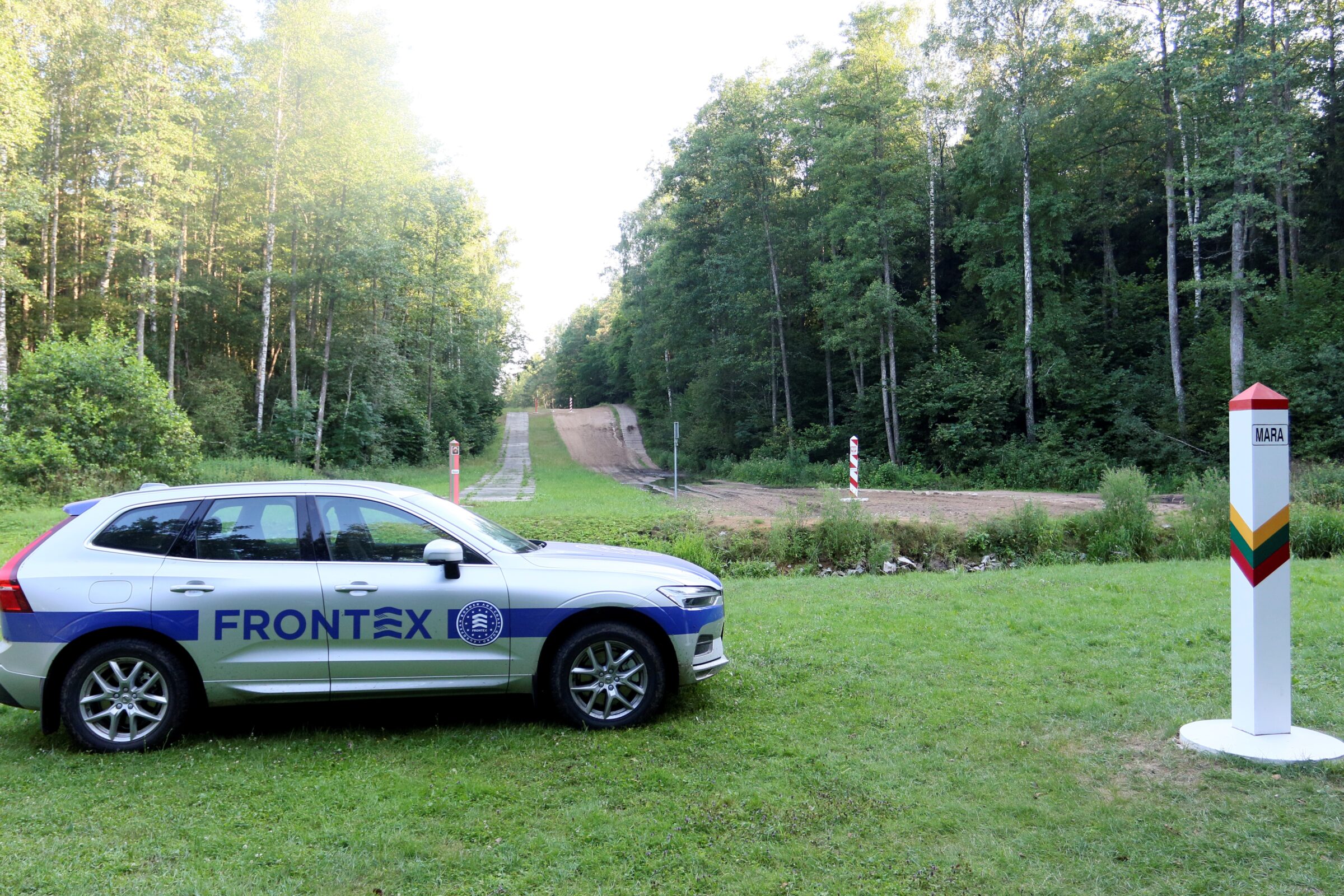
The EU’s border force Frontex is getting overhauled next Tuesday (27 October) by a European Commission determined to give the Warsaw-based agency a larger role in deportations, more resources, and more agility to deploy.

The Brussels-executive has already proposed increasing the agency’s budget to €12bn, spread out over seven years. The money is being discussed as part of a larger drawn out EU budget fight among EU states.

Budget tussles aside, the commission has already dropped clues into what it wants from the new agency, following demands from its political masters at the centre-right European People’s Party (EPP).

The EPP had wanted to expand the border force to 30,000 from the proposed 10,000. But it is unlikely the 30,000 will be met given the difficulty of finding recruits.

Frontex currently has around 1,250 officers, who are directly employed by the agency. Its standing corps also includes officers provided by member states on long- and short-term assignments. That means they are not all on the Frontex payroll.

European Commission president Ursula von der Leyen, ahead of this month’s EU summit, instead spoke of a “substantial increase” of the Frontex standing corps, without committing to a number.

She also called for European Border and Return Reserve, a Quick Reaction Force for crisis deployment, a Return Coordination Centre to accelerate and improve returns including from foreign states, and social media snooping to gauge any possible Ceuta-like mass arrivals.

The agency is also likely to get more personal data sharing powers with the EU police force Europol.

This article continues, but the full version is available only to EUobserver.com subscribers. Visit account.euobserver.com/membership

  •  

DR Congo’s deadliest Ebola outbreak kills over 4,200 as armed groups undermine response

In less than five months, the fastest-spreading Ebola outbreak in world history has killed at least 4,205 people in the conflict-ridden eastern region of the Democratic Republic of Congo (DRC) as of October 7.

It is the deadliest outbreak in the DRC since the disease was first discovered in the country in 1976, killing nearly one in two of the 8,728 people confirmed to be infected.

With treatment still in experimental stages, there is no specifically approved treatment for the particular Bundibugyo strain of the Ebola virus that caused this outbreak, declared on May 15. 

However, the virus had been circulating in communities in Ituri province since mid-February, three months before the outbreak was identified and officially declared.​

Aid cuts: unpaid frontline workers

When the health response started, already late, it was severely underfunded, as the UK, France and Germany have also followed in the footsteps of the US to slash humanitarian aid and increase military spending.​

The UN Office for the Coordination of Humanitarian Affairs (OCHA) said in late September that the Humanitarian Response Plan had only half the funding needed to counter the outbreak.​

Contact tracing is well below the Africa Centers for Disease Control and Prevention (CDC) and the WHO-recommended 95% to effectively break transmission. Only now in October, it has been built up to 80.4%, which still means that almost 20% of the people at risk of exposure to the virus due to contact with confirmed cases are off the radar of the health authorities, and could potentially be transmitting the disease further.

Lack of funds has meant that the understaffed and overworked frontline health workers – scores of whom have died in the line of duty – have been repeatedly forced to go on strike to protest unpaid wages. Their efforts are further impeded by the poor transport infrastructure and lack of healthcare facilities in the remote eastern region where the disease is spreading.​

Armed conflict complicating health response 

Armed conflict displacing millions on this mineral-rich land is another major hurdle in the way of effective health response. In Ituri, the epicenter of the outbreak, a key Ebola transit center in the fighting-affected Kigonze camp burnt down on September 29.​

The camp, which had housed 19,000 Internally Displaced People (IDPs) fleeing violence, was reportedly infiltrated by the Convention for the Popular Revolution (CRP).

Uganda​

This coalition of armed militias, formed in March 2025 at a hotel in Uganda’s capital, Kampala, is led by Thomas Lubanga, a former warlord, convicted by the International Criminal Court (ICC) of war crimes, released from prison in 2020 after serving 14 years. He resides in Uganda, where he is also known to have recruited fighters along ethnic lines.​

In a 2022 judgment, the International Court of Justice (ICJ) ordered Uganda to pay DRC USD 325 million in reparations. This included USD 225 million for killings, rapes, child soldier recruitment, and displacement, USD 40 million for damage to property, and USD 60 million for plundering its gold, diamonds, and timber as an “occupying power” in Ituri from 1998 to 2003.​

The nature of the occupation has since evolved. Under a bilateral agreement with the DRC, Uganda had deployed 2,000 troops to the country to jointly fight an Islamic State-affiliated group. However, Uganda deployed an additional 4,000 troops without the DRC’s consent in early 2025, around the time as the CRP’s formation in Kampala.  ​

Searching for CRP militants and weapons, soldiers and police entered the camp on September 20. When they came under fire, clashes erupted between the security forces and the militants. Thousands of IDPs fled again as gunfire continued rattling around the camp for days. Deaths, injuries, and arrests were reported.​

Ebola transit center burns down

Amid this violence, on September 29, fire engulfed the camp’s Ebola transit center. It is a facility for the isolation and care of suspected cases, until the results of the lab tests on their blood samples. If confirmed as positive, they are then transported to an Ebola treatment center.​

“It’s been a huge struggle to create Ebola transit centers [and] Ebola treatment centers; it’s required money, bringing in staff and it’s been a struggle all across the east. So, when we lose a center, that means we lose capacity, we lose investment and we have to start again,” said Julien Harneis, UN’s senior Ebola response official in the DRC.​

“Eastern DRC now faces a catastrophic collision of disease and conflict, with the Ebola outbreak in Ituri province outpacing the response,” the WHO’s director general, Tedros Ghebreyesus, had warned in May.​

The outbreak has since reached seven of DRC’s 26 provinces, predominantly in the east. About three-quarters of the confirmed cases remain concentrated in Ituri. However, its neighboring province, North Kivu, which has another 20% of confirmed cases, is emerging as the new hotspot.​

Rwanda

Large areas of this province are occupied by Rwandan troops and its proxy militias, the M23, which captured its capital, Goma, in January 2025, and went on to expand territorial control into South Kivu province.

​Without humanitarian access to these occupied areas, the government cannot mount a health response, Communications Minister Patrick Katembwe said in late May, second week after the outbreak was declared. He called for the “withdrawal of foreign forces and the removal of their auxiliaries.”

Instead, the M23’s parallel administration launched a separate health response in the areas under its control, independently of the DRC government, with which cooperation was limited to data sharing and lab testing. This severely hampered contact tracing, especially because people regularly travel between the M23-held areas and government-controlled territory.

“Multiple outbreaks are developing at the same time”

​The parallel M23 administration has also meant additional delays in diagnosis. With bed capacity in Ebola treatment centers stretched taut in North Kivu, medics in this province are forced to refer infected patients to general health facilities, where a third of all confirmed cases are being treated, posing further risk of transmission into the wider community.

​The spread has rapidly increased since September in this province, which now accounts for nearly 40% of all new confirmed cases, up from 24% in August-end, Doctors Without Borders (MSF) said on October 5.

​“It is like fighting a megafire,” said Stéphanie Hoffmann, MSF coordinator of the treatment center in Butembo, a major commercial city in the province. “Multiple outbreaks are developing at the same time, with varying intensity and in different locations. As long as new hotspots continue to emerge while the virus spreads across northern North Kivu, containing the epidemic will remain extremely difficult.”

  •  

The EU’s ‘return regulation’ makes your home fair game for police — and Belgium is racing to use it

When we broke the story about police raids in the EU’s deportation bill last December, comparisons to Donald Trump’s paramilitary ICE anti-migrant forces were soon being made.

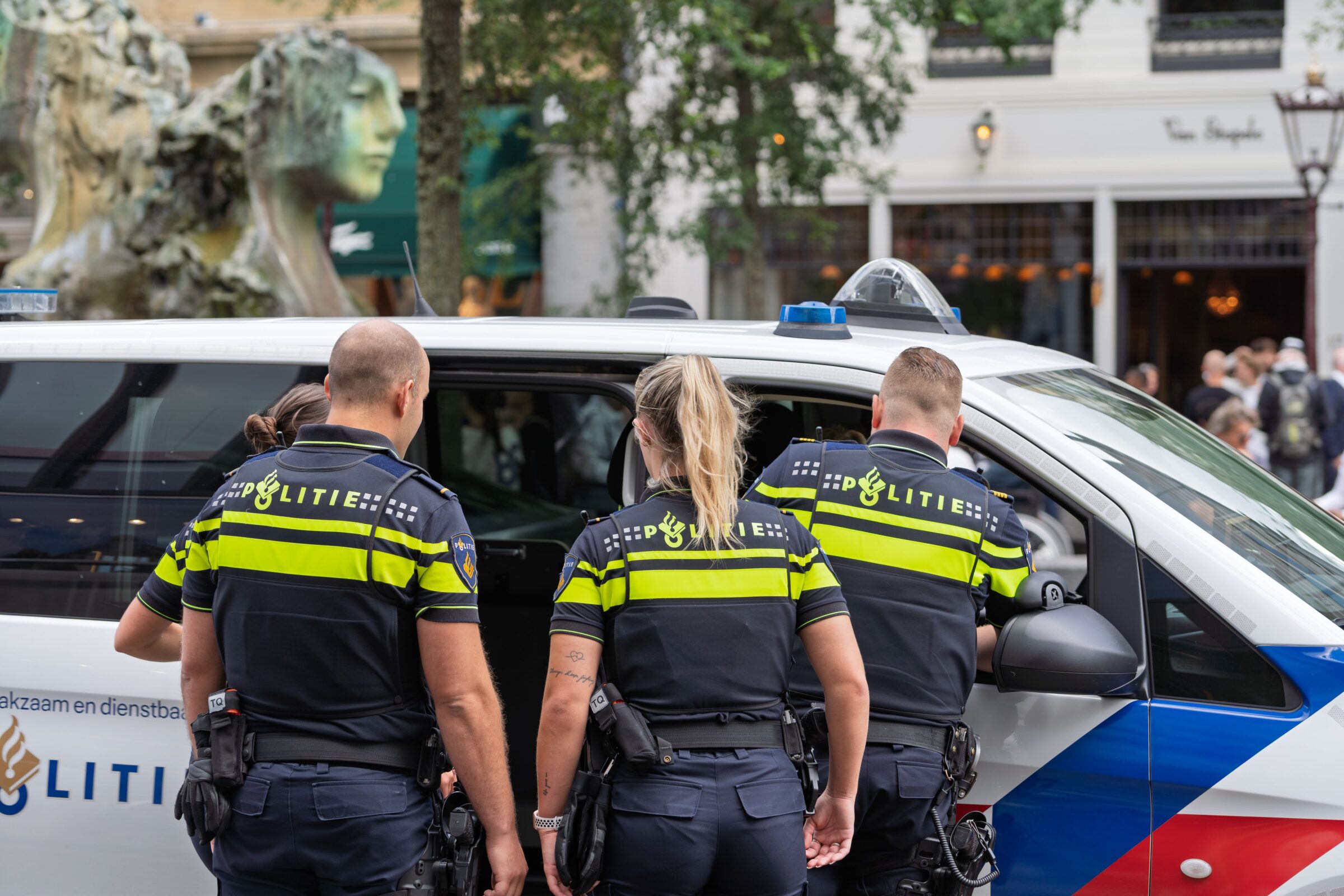
EU interior ministers on Thursday (1 October) in Luxembourg are now set to formally adopt the return regulation, which sets the legal framework for police to carry out raids and seize people’s “belongings, electronic devices, and other items of relevance.”

The logic is part of a maximalist effort to deport people, such as failed asylum seekers, back to their home countries or possibly even in yet-to-be defined transit centres in Rwanda or elsewhere.

The regulation targets anyone “for the purpose of preparing or ensuring an effective return” with raids being allowed in a “place of residence or other relevant premises.”

Although the item is but a mere footnote in Thursday’s agenda, the potential consequences of the law have roused alarm among civil rights organisations who continue to draw parallels with ICE.

The comparison is not alarmist.

This article continues, but the full version is available only to EUobserver.com subscribers. Visit account.euobserver.com/membership

  •  

Rwanda : la Cour de Cassation clôt le mythe de la complicité française...

par Elise Rochefort

La chambre criminelle de la Cour de cassation a rejeté, le 9 septembre 2026, les pourvois formés par des parties civiles contre l'arrêt de la chambre de l'instruction de la cour d'appel de Paris du 11 décembre 2024. Cet arrêt avait confirmé deux ordonnances du 17 octobre 2023 : un refus de mesure d'instruction complémentaire et un non-lieu. L'information judiciaire portait sur des faits de complicité de génocide et de complicité de crimes contre l'humanité susceptibles d'être reprochés à des membres des forces françaises déployées au Rwanda dans le cadre de l'opération « Turquoise ».

Rwanda : la Cour de Cassation clôt le mythe de la complicité française...
LE COURRIER
DES STRATÈGES
Restez libre !
Rwanda : la Cour de Cassation clôt le mythe de la complicité française...

LA NEWSLETTER · GRATUITE

Le Courrier,
chaque matin.

L'essentiel de l'actualité, passé au crible par les cinq plumes du Courrier. Dans votre boîte, chaque jour ouvré.

Gratuit. Vous restez libre de partir quand vous voulez.

JE M'INSCRIS lecourrierdesstrateges.fr
lecourrierdesstrateges.fr
Restez libre !

La décision clôt une procédure ouverte il y a vingt et un ans.

La procédure

Le 16 février 2005, six ressortissants rwandais — Mme Auréa Mukakalisa, MM. Innocent Gisanura, François Bagirubwira, Eric Nzabihimana, Bernard Kayumba et Aaron Nshymiryayo — ont porté plainte et se sont constitués partie civile auprès du doyen des juges d'instruction au tribunal aux armées de Paris, contre personne non dénommée. Ils relataient les massacres commis au Rwanda du 6 avril à la fin juin 1994, notamment dans les collines de Bisesero, et soutenaient que des militaires français n'étaient pas intervenus à Bisesero entre le 27 et le 30 juin 1994. Ils faisaient également état d'exactions commises dans le camp de réfugiés de Murambi.

Le procureur de la République a requis l'ouverture d'une information judiciaire le 23 décembre 2005. Plusieurs associations — la Ligue française des droits de l'homme, la Fédération internationale des ligues des droits de l'homme, Survie et Ibuka — se sont constituées partie civile par voie d'intervention.

Cinq officiers ont été placés sous le statut de témoin assisté : MM. Jean-Rémi Duval, Marin Gillier, Jacques Rosier, Jean-Claude Lafourcade et Etienne Joubert. Le statut de témoin assisté, en procédure pénale française, est intermédiaire : il concerne une personne contre laquelle existent des indices rendant vraisemblable sa participation, sans que les charges soient suffisantes pour une mise en examen.

L'opération « Turquoise » avait été autorisée par la résolution 929 du Conseil de sécurité des Nations unies du 22 juin 1994.

Comment le dictateur Kagamé a construit le narratif anti-français du génocide rwandais avec Glucksmann et Gourevitch
Un livre de Gourevitch, un film de Glucksmann : comment Kigali a fait d’un récit occidental du génocide une raison d’État, avec la France pour coupable désigné.
Génocide au Rwanda : quelle complicité de la France ?
Le rapport Duclert acquitte la France de complicité et l’accable de responsabilités. Les télégrammes, Bisesero, et à qui profite la charge : le dossier.
Pourquoi les Anglo-Saxons investissent autant dans le narratif géopolitique des génocides
Mémorial britannique, scénographie américaine, chaires anglophones : enquête sur l’appareil occidental de la mémoire des génocides et sur son rendement.
Rwanda : la Cour de Cassation clôt le mythe de la complicité française...
LE COURRIER
DES STRATÈGES
Restez libre !

ABONNEMENT

Allez au fond
des choses.

Deux grands formats par jour. Les cinq plumes du Courrier. La série Sécession, le dimanche.

Le monde commente. Vous, vous comprenez.

S'ABONNER lecourrierdesstrateges.fr
lecourrierdesstrateges.fr
Restez libre !

Le premier moyen : le refus d'actes complémentaires

Les parties civiles demandaient deux auditions. Celle de M. Vincent Duclert, président de la commission de recherche sur les archives françaises relatives au Rwanda et au génocide des Tutsi, dont le rapport a été remis le 26 mars 2021, afin qu'il s'explique sur les conditions d'accès aux documents classés secret défense. Celle de M. Hubert Védrine, à l'époque des faits secrétaire général de la présidence de la République, afin d'établir les responsabilités dans la chaîne de commandement politique. Elles invoquaient le droit à un procès équitable et l'obligation d'enquête approfondie, sur le fondement des articles 3 et 6 de la Convention européenne des droits de l'homme.

La chambre de l'instruction a répondu par le constat du caractère approfondi de l'enquête déjà menée : un dossier de trente et un tomes, des réquisitions adressées à la direction de la surveillance du territoire, à la direction générale de la sécurité extérieure, à l'état-major des armées, à l'Assemblée nationale, au service historique de la défense, aux ministères des affaires étrangères et de la défense, à la présidence de la République et aux services du Premier ministre, plusieurs commissions rogatoires internationales, et l'audition de nombreux responsables militaires.

  •  
❌