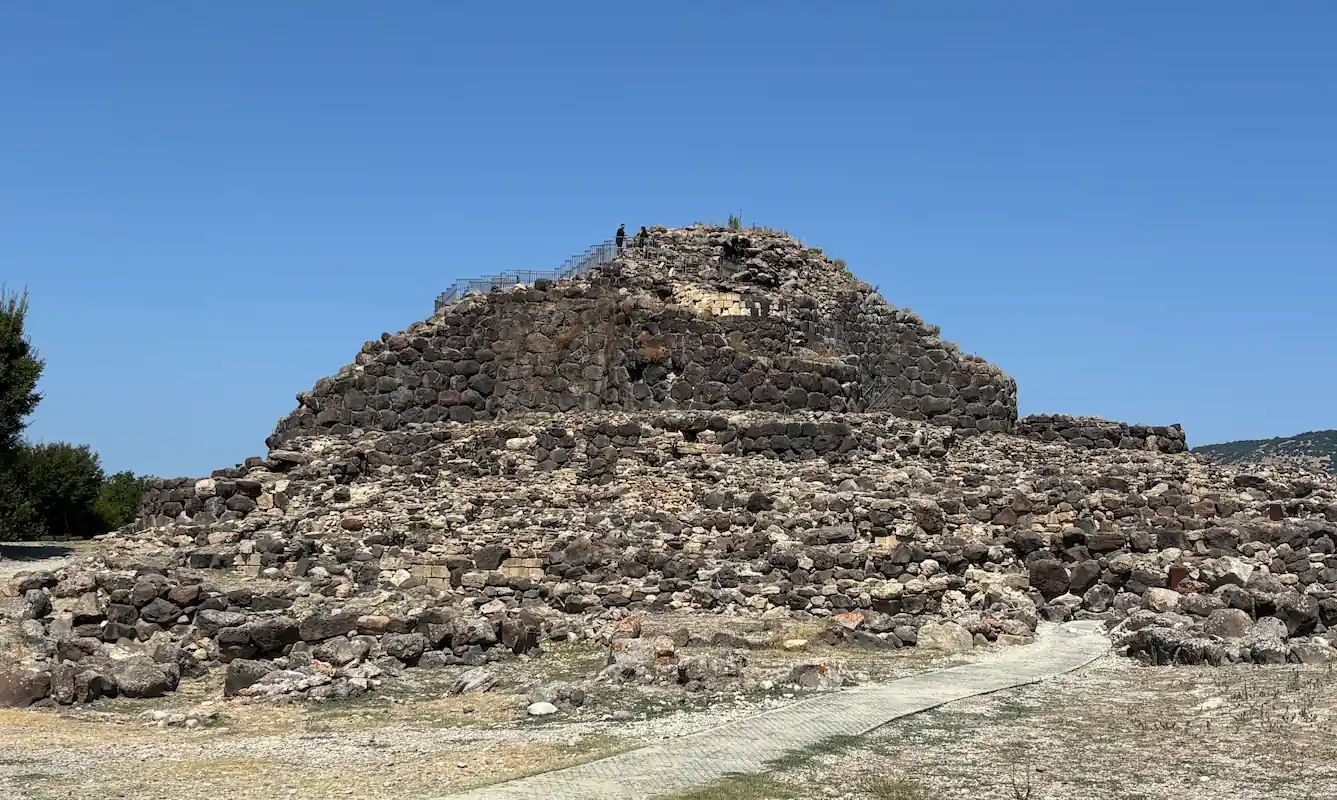
A copper ingot cast somewhere in inland Sardinia during the Bronze Age might, centuries later, turn up in a Scottish tomb or a village in southern Sweden. That is the striking picture drawn by Serena Sabatini, an archaeologist at the University of Gothenburg, in a new paper that pulls together decades of isotopic analyses to […]
Un lingote de cobre fabricado en el interior de Cerdeña durante la Edad del Bronce podía terminar, siglos después de fundirse, en una tumba escocesa o en un poblado del sur de Suecia, a casi 2.000 kilómetros de donde se extrajo el mineral. Esa es la conclusión central de un artículo firmado por Serena Sabatini, […]
In the 1930s, the German Nazi regime launched an ambitious archaeological research program with a clear goal: to prove that Germanic culture was the oldest and most superior in the world. To achieve this, the organization known as Ahnenerbe (Ancestral Heritage) sent two expeditions to Scandinavia with the mission of making plaster casts of the […]
En la década de 1930, el régimen nazi alemán puso en marcha un ambicioso programa de investigación arqueológica con un objetivo claro: demostrar que la cultura germánica era la más antigua y superior del mundo. Para ello, la organización conocida como Ahnenerbe (Herencia Ancestral) envió dos expediciones a Escandinavia con la misión de hacer moldes […]

 Login