
❌

Reading view

‘A company that puts children on sale’ – Ukrainian surrogacy firm blocked from ‘surrogacy fair’ in Warsaw after pressure campaign

Republished via Ordo Iuris legal society:

The “conference” that the Ukrainian company BioTexCom had announced for September 12–13 in Warsaw has no venue — the owner of the premises refuses to rent it out. This is the result of pressure exerted for weeks by Polish legal organization Ordo Iuris and other groups.

Centrum Żoliborz, which rents out training rooms at 49 Aleje Jerozolimskie in Warsaw has stated that it will not rent premises to that company and that BioTexCom had no right to use its address. Polish media reported the venue would host the “conference” with Ukrainian company BioTexCom on September 12–13.

To those now asking about the possibility to take part in the conference, BioTexCom replies that the event has been postponed to another date and will not take place for the time being. The reason given is the safety of the company’s clients. The company itself, meanwhile, is redirecting interested parties to individual conversations via WhatsApp. The announcement of the Warsaw event nevertheless still appears on BioTexCom’s website, which is why vigilance in this matter remains necessary.

On September 7, Ordo Iuris put a question to Centrum Żoliborz asking whether the Ukrainian company had in fact reserved a room there. The reply Ordo Iuris received left no doubt:

“I would like to inform you that we received an inquiry from this entity about the possibility of renting a training room. An offer was sent, but no room was reserved. At the same time, I wish to inform you that, after learning what this entity does, we categorically do not want to enter into any cooperation with it or to rent it our training rooms. This company had no right whatsoever to use our address.”

This is an important signal. When the owners of venues learn what a “surrogacy program” actually is and what legal risk may be involved in making premises available to promote it, they decided to refuse the client. In this case, it was enough for the matter to come to light: the Ordo Iuris Institute’s notification to prosecutors, a petition, appeals from Catholic Action and the Polish Bishops’ Conference, an announced picket, as well as action from, among others, the Center for Life and Family and dozens of press publications. Pressure works.

It would be premature, however, to declare victory. The announcement of the Warsaw event scheduled for September 12–13 still appears on biotexcom.pl. Nor has the company withdrawn from the Polish market. Instead, it has moved its offer to an individual channel, proposing free online “consultations.” The matter therefore requires continued attention and firm opposition.

A company that puts children on sale

The scale of BioTexCom’s disregard for elementary ethical standards is not a matter of interpretation. In November 2021, the company ran a Black Friday promotion: from November 15 to 26, it offered a 3-percent discount on all packages. In practice, this meant €1,947 off the “All inclusive VIP” package worth €64,900 and €447 off the “Perfect Chance” in vitro program costing €14,900. The advertisements urged people to hurry in order to “make it” in time for the discount and fulfill the dream of a child more quickly. The child became a seasonal sale item — exactly like a television set or a washing machine.

The company’s price list is built like a catalog of tourist services: packages from €36,900 to €64,900, divided into “standard,” “standard plus,” and “VIP” versions. The difference is that the object of the transaction is a human being.

“Warehouses” of human goods. A lesson from 2020

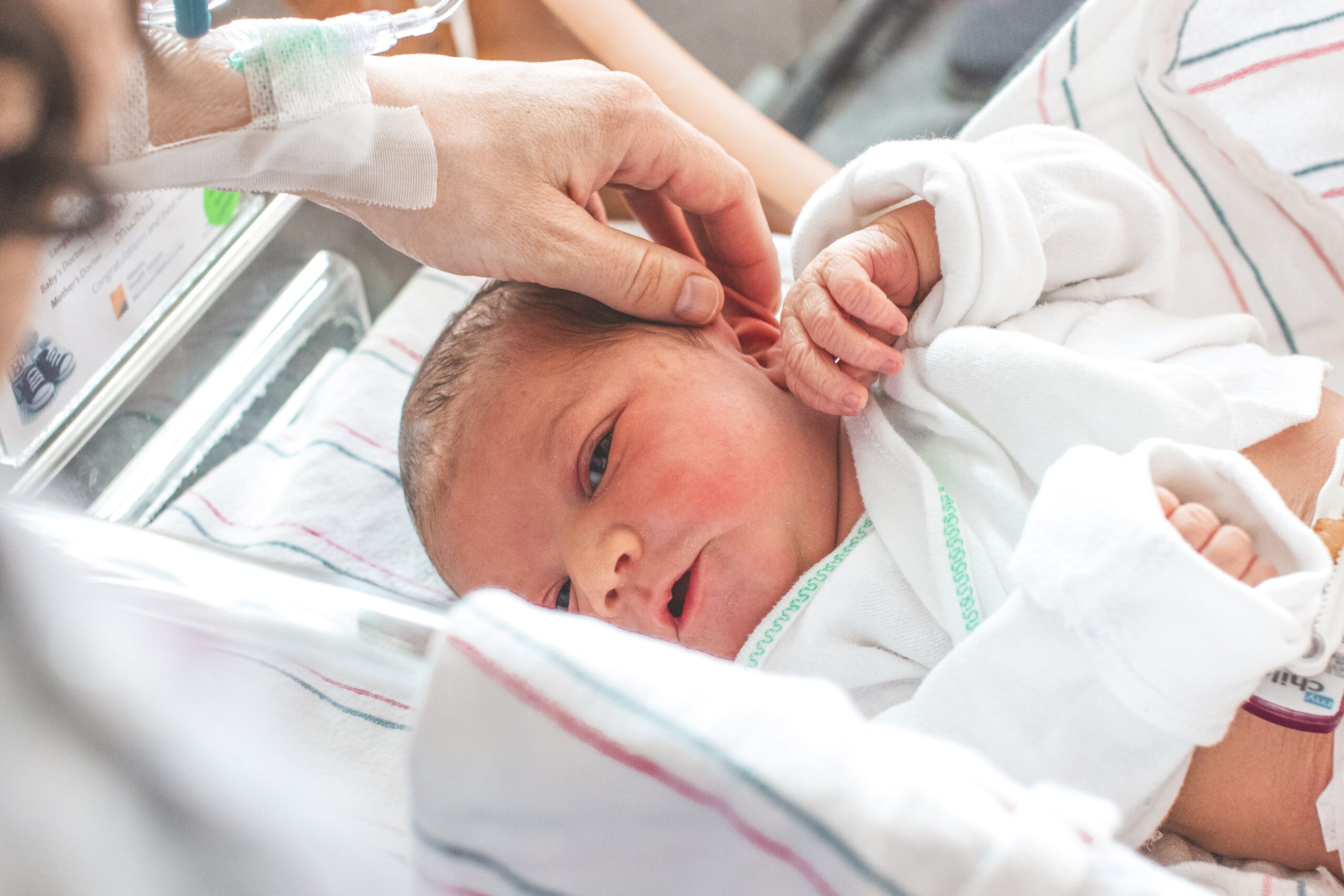
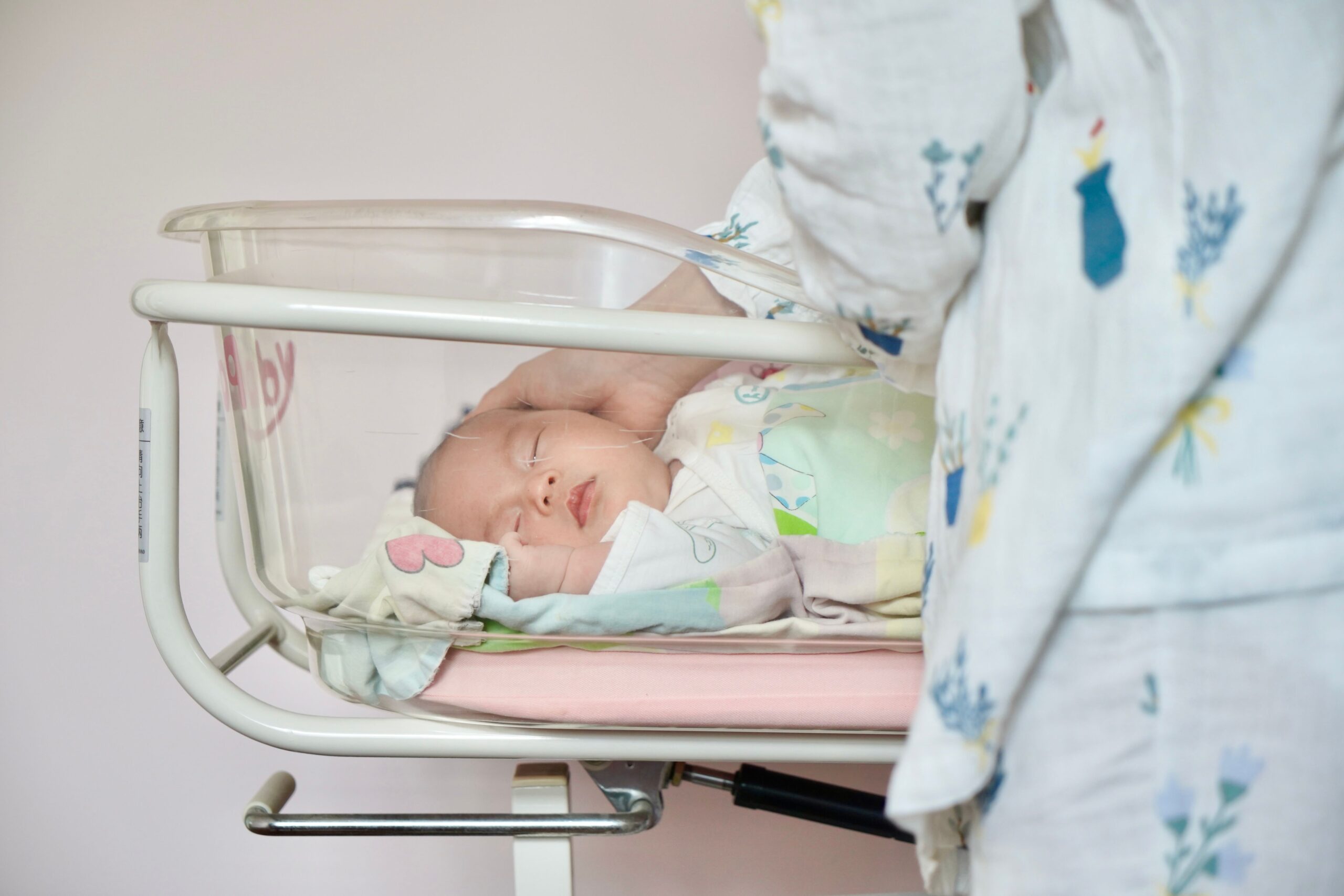
The world saw the most telling image of this business in May 2020. BioTexCom then published a video in which 46 newborns could be seen arranged in rows of transparent cribs at the Venice hotel in Kyiv — normally used to receive the company’s foreign clients. The video, translated into several languages, was meant to mobilize buyers to pressure their own embassies and foreign ministries into granting permission to enter Ukraine, which was closed because of the pandemic. The message was unambiguous: the goods ordered are on site, waiting in optimal storage conditions. The camera panning over the rows of infants involuntarily evoked an association with a production line.

It was estimated at the time that around 500 children born to surrogate mothers for foreign clients were stranded in Ukraine. Ukraine took over this market after Asian countries — following a series of scandals — banned the sale to foreigners of children born through surrogacy.

Before the outbreak of the full-scale war in Ukraine, BioTexCom accounted for about two-thirds of Ukraine’s exports of this “service,” estimated at around 2,000 newborns a year. In 2018–2019, the company and its owner were at the center of an investigation into more than a thousand irregular surrogacy procedures; no charges were brought against him at the time, however.

In August 2019, the Australian broadcaster ABC showed how children born with disabilities are abandoned by the commissioning parents, who refuse to take delivery of “defective” goods — they then end up in Ukrainian orphanages and public hospitals.

The French precedent: a fair that had to leave Paris

France’s experience shows that consistent social and legal pressure can lead to the permanent cancellation of events of this kind, such as the “conference” BioTexCom had planned in Warsaw. For years, Paris hosted the “Désir d’enfant” fair, later held under the name “Wish for a Baby,” at which — just as BioTexCom intended to do in Warsaw — surrogacy services were promoted, even though they are illegal in France.

For several years, Le Syndicat de la Famille (formerly La Manif Pour Tous) had run a campaign against the fair’s organizers that included demonstrations, leafleting, undercover-camera footage, and lawsuits against the organizers and the owners of the venues. The lawsuits accused them of complicity in surrogacy brokering. As pressure mounted, the fair first had to leave the Espace Champerret and move to the smaller Espace Charenton. Finally, on April 16, 2025, the organizers announced that the event would be moved to Brussels, giving up any further presence in Paris.

“This victory is the fruit of a mobilization carried on year after year,” commented Ludovine de La Rochère, the organization’s president. The problem nevertheless remains: the French continue to use surrogacy services provided abroad — for example, in the United States in the case of same-sex couples, or in cheaper Ukraine in the case of married couples, since Ukrainian law permits such services only for heterosexual married couples.

Italy: punishment even for surrogacy arranged abroad

This is why Italy has gone further. Surrogacy has been banned there since 2004 under Article 12(6) of Law No. 40. The provision imposes a penalty of three months to two years’ imprisonment and a fine of €600,000 to €1 million on anyone who carries out, organizes, or advertises surrogacy.

This solution, however, was relatively easy to circumvent — it was enough to use services abroad, for example in Ukraine, Georgia, or the United States. Giorgia Meloni’s government decided to close this loophole. On the initiative of the Brothers of Italy, the Italian parliament passed an amendment, which the Senate adopted on October 16, 2024, by a vote of 84 to 58. Law No. 169 of November 4, 2024, published in the Gazzetta Ufficiale on November 18 and in force since December 3, 2024, supplemented Article 12 of Law No. 40 with a provision under which, if acts related to surrogacy are committed abroad, an Italian citizen is subject to punishment under Italian law. The Italian media dubbed the new measure a “reato universale” — a universal offense. “This is a common-sense rule against the commodification of women’s and children’s bodies. Human life has no price and is not a commodity,” Giorgia Meloni argued.

The Italian solution shows that a state which treats surrogacy as a form of human trafficking can effectively counteract it even when the practice is organized beyond its borders. It need not stop at mere declarations — it can create real legal tools to limit circumvention of the national ban.

Vigilance and consistency

For years, Ordo Iuris has pointed out that surrogacy is not a service but human trafficking. In connection with the announced conference in Warsaw, the Ordo Iuris Institute filed a notification with the District Prosecutor’s Office in Warsaw regarding BioTexCom, citing Article 211a of the Polish Criminal Code (arranging adoptions in violation of the law for financial gain), Article 189a § 2 of the Criminal Code (preparation for human trafficking), and Article 258 of the Criminal Code (participation in an organized criminal group), and requesting, among other things, a travel ban for those responsible.

As Julia Książek of the Ordo Iuris Center for International Law emphasized, the promotion of commercial reproduction treats a woman’s body as a means of production and the child as a product tailored to the client’s expectations. The Ordo Iuris Institute is also part of an international coalition, coordinated by the group of experts behind the Casablanca Declaration, which is appealing to the UN Committee on the Rights of the Child to recognize paid surrogacy as the sale of children within the meaning of the Optional Protocol to the Convention on the Rights of the Child.

“I was programmed to be abandoned,” said Olivia Maurel, a woman born as a result of surrogacy, during a June conference organized by the Ordo Iuris Institute together with the Research and Teaching Center for Catholic Social Teaching at Cardinal Stefan Wyszyński University (UKSW). At the same conference, Reem Alsalem, the UN Special Rapporteur on violence against women and girls, called for the global abolition of surrogacy.

The Warsaw “conference” of the Ukrainian company BioTexCom has no venue today. That is good news, but it is not the end of the matter. Continued vigilance is needed, both from the owners of conference and hotel venues and from the organs of the state, which should consistently enforce the law in force in Poland.

The best solution, however, would be to follow Italy’s example and adopt legislation providing for severe penalties for the use of surrogate mothers’ services — regardless of whether the practice takes place in Poland or abroad. Only in this way can the path to circumventing the ban be effectively closed and the growth of a market in which the human body and children become objects of transaction be curbed.

The post ‘A company that puts children on sale’ – Ukrainian surrogacy firm blocked from ‘surrogacy fair’ in Warsaw after pressure campaign appeared first on Remix News.
  •  

Children for sale: A Ukrainian firm plans to promote surrogacy in the heart of Poland, case referred to prosecutors

Via Polish organization Ordo Iuris:

  • BioTexCom, a Ukrainian firm, has announced a September conference in Warsaw promoting surrogacy and offering the “purchase” of a child for 65,000 euros; the case is now with prosecutors
  • Since 2023, Ordo Iuris has submitted opinions to UN and EU bodies arguing that surrogacy constitutes human trafficking and the sale of children under international law.
  • The Ordo Iuris Institute cooperates with UN Special Rapporteur Reem Alsalem, whose report on violence against mothers cited its position; Alsalem was a guest at a conference organized in June 2026.
  • Ordo Iuris advocates a new Optional Protocol to the Convention on the Rights of the Child banning surrogacy and has prepared Polish translations of two UN reports on the issue.
  • The Ordo Iuris Institute is petitioning Poland’s Minister of Justice, Waldemar Żurek, to block the event organized in Warsaw by BioTexCom as a promotion of human trafficking; the appeal is available at niedlasurogacji.pl.

On September 12–13, the Ukrainian company BioTexCom plans to hold a conference in Warsaw aimed at promoting programs offering surrogate motherhood and in vitro fertilization. The company is inviting interested parties to individual meetings with its representatives, offering surrogacy packages worth nearly 65,000 euros. Under Polish law—unlike Ukrainian law—surrogacy may be classified as a criminal offense. The matter of the Warsaw conference has already been referred to the prosecutor’s office.

This event is not an isolated episode but another manifestation of a broader phenomenon: Poland, alongside other Western and Central European countries that lack their own surrogacy regulations, has for years been becoming a market for foreign so-called reproductive companies. In this context, it is worth recalling that the issue of surrogacy has for years been a central concern of the Ordo Iuris Center for International Law—both at the domestic level and in the most important international forums.

Opinions and positions at the UN and the European Union

Since 2023, the Institute has regularly submitted opinions and positions to bodies of the United Nations (UN) and institutions of the European Union (EU), consistently arguing that surrogacy meets the definition of human trafficking and the sale of children under international law. In February 2023, Ordo Iuris experts published an analysis showing that European Union law does not require member states to legalize surrogacy. When, in December 2024, the Third Committee of the UN General Assembly adopted a resolution on trafficking in women and girls that for the first time explicitly addressed the phenomenon of surrogacy, the Ordo Iuris Institute described it as a significant precedent.

This activity intensified significantly in 2025. In April, Ordo Iuris submitted an opinion contributing to a UN thematic report on surrogacy, in July it joined the organizations supporting a position presented to the UN Human Rights Council against the legalization of this practice, and in October and November it submitted further positions—including an extensive opinion, “Surrogacy as a Form of Sale of Children and Violation of Women’s Rights”—addressed directly to the UN Special Rapporteur. The year 2026 brought further action: in January, an opinion for the European Commission calling for every form of surrogacy to be recognized as human trafficking, in March, participation in the session of the Commission on the Status of Women, and in July, a commentary summarizing the UN Human Rights Council’s 62nd session, at which the report on violence against mothers was presented.

Cooperation with the UN Special Rapporteur

A special place in these efforts is occupied by the cooperation with Reem Alsalem, the UN Special Rapporteur on violence against women and girls, who consistently defends the biological understanding of sex and motherhood in her reports. Ordo Iuris took part in informal expert consultations conducted by Alsalem for both of her key documents—the report on violence against women in the context of surrogacy, submitted to the UN General Assembly in October 2025, and the report on violence against mothers, presented to the Human Rights Council in July 2026. Importantly, the Ordo Iuris Institute’s position was explicitly cited in the latter document, in the section addressing the devaluation of motherhood in contemporary public and institutional discourse.

This cooperation also took a direct form: on June 3, 2026, Reem Alsalem personally took part—as a special guest—in the international academic conference “Motherhood in the 21st Century” organized by Ordo Iuris at Cardinal Stefan Wyszyński University. During the panel devoted to surrogacy, she presented the findings of her report, outlining the profile of women who become surrogates—almost exclusively poor women, often single mothers or immigrants—and calling for a model of surrogacy abolition modeled on the abolition of prostitution. She was accompanied by Olivia Maurel, spokeswoman for the international Casablanca Declaration—a coalition of more than 150 experts from 75 countries advocating a universal ban on surrogacy—who was herself born through the procedure and shared a moving personal testimony.

Cooperation with the initiators of the Casablanca Declaration

This is not the first time the paths of Ordo Iuris and the circle surrounding the Casablanca Declaration have crossed. As early as April 2024, the Ordo Iuris Institute took part in an international conference in Rome organized by the Declaration’s initiators, devoted entirely to the issue of surrogacy, and addressed its findings in the commentary “The Right to a Child, or the Rights of the Child?” The participation of the Declaration’s spokeswoman in the Warsaw conference in June 2026 is thus a continuation of many years of ongoing cooperation with this coalition, not an isolated episode.

A call for a new Optional Protocol to the Convention on the Rights of the Child

In its opinions submitted to the UN, the Ordo Iuris Institute consistently puts forward a specific legislative proposal: the adoption of a new Optional Protocol to the Convention on the Rights of the Child that would explicitly prohibit surrogacy. The legal argumentation, developed in particular in the November opinion for the Special Rapporteur, invokes Article 35 of the Convention on the Rights of the Child and Article 2(a) of the existing 2000 Optional Protocol on the Sale of Children, whose definition of “the sale of children”—in the assessment of Ordo Iuris experts—also covers surrogacy agreements under which a child is transferred in exchange for remuneration or another benefit.

Polish translations of UN reports

The latest element of this activity is a publication that took place just a few days ago. On August 25, 2026, the Office of the UN High Commissioner for Human Rights published on its official website Polish translations of both of Reem Alsalem’s reports mentioned above—on violence against women in the context of surrogacy and on violence against mothers. Both translations were prepared by the Ordo Iuris Institute. Thanks to this, Polish-speaking lawyers, journalists, public administration officials, and NGOs have gained direct access to the full content of both documents—without relying on the fragmentary quotations and secondary media coverage through which UN reports had until now been known in Polish public discourse.

The actions outlined above—more than a dozen opinions and positions submitted to the UN and the EU, participation in the UN Special Rapporteur’s expert consultations, its own international academic conference in Warsaw, cooperation with the initiators of the Casablanca Declaration, the call for a new international treaty, and the preparation of official translations of UN reports—together form a picture of Ordo Iuris’s systematic, years-long engagement in the fight against surrogacy at both the domestic and international levels. It is against this backdrop that the Ordo Iuris Institute’s opposition to the BioTexCom conference planned for September 12–13 in Warsaw should be understood. The Ordo Iuris Institute has prepared a petition to Poland’s Minister of Justice, Waldemar Żurek, calling for the event to be blocked.

“The conference that the Ukrainian company is planning for September in Warsaw is not a neutral informational event, but a promotional campaign for a commercial reproductive business that treats a woman’s body as a means of production and a child as a product tailored to the client’s expectations.

Polish law does not explicitly criminalize surrogacy, but that does not mean a legal vacuum. An agreement under which a child is handed over in exchange for payment may meet the definition of human trafficking, and organizing and promoting such practices on the territory of the Republic of Poland should meet with a response from the relevant authorities. Ordo Iuris has for years documented the mechanisms of exploitation built into commercial surrogacy: from Colombia, through Ukraine, to the United States—and consistently works to ensure that this problem is no longer treated as the private affair of ‘commissioning parents,’ but is recognized for what it truly is: a form of economic exploitation of women in difficult life circumstances and a violation of a child’s fundamental right to identity and to a bond with the mother who gave birth to them,” notes Julia Książek of the Ordo Iuris Center for International Law.

The post Children for sale: A Ukrainian firm plans to promote surrogacy in the heart of Poland, case referred to prosecutors appeared first on Remix News.

  •  

Whose Babies Are These?

A Chinese man hired a Florida surrogate, then didn’t pick up his kids because of visas issues, sparking a custody battle that could upend the lucrative, largely unregulated industry. Emi Nietfeld spent more than a year reporting this rollercoaster of a feature. One particularly harrowing turn involves the father hiring people to retrieve the babies for him:

As the men continued knocking on her door, Simpson’s phone convulsed with notifications. Zhou messaged her nonstop. He called 53 times. “If you don’t give my babies to us, we have to report to the police. And you will be arrested immediately,” he warned. Then came pleas—or were they threats? “Think about your daughter,” he wrote, referring to Simpson’s 5-year-old. “I don’t think you want to have her be live without you for several years!”

Halfway across the world, Zhou paced in his apartment, chest seizing in panic. Over and over, he’d tried to explain his predicament to Simpson. He was still waiting for his visa interview; without her help, he couldn’t get his kids home. Running out of money and options, he’d hired the handlers as a last resort. Now, as his calls and messages went ignored, he feared she’d fallen in love with his children and would never let them go.

  •  
❌