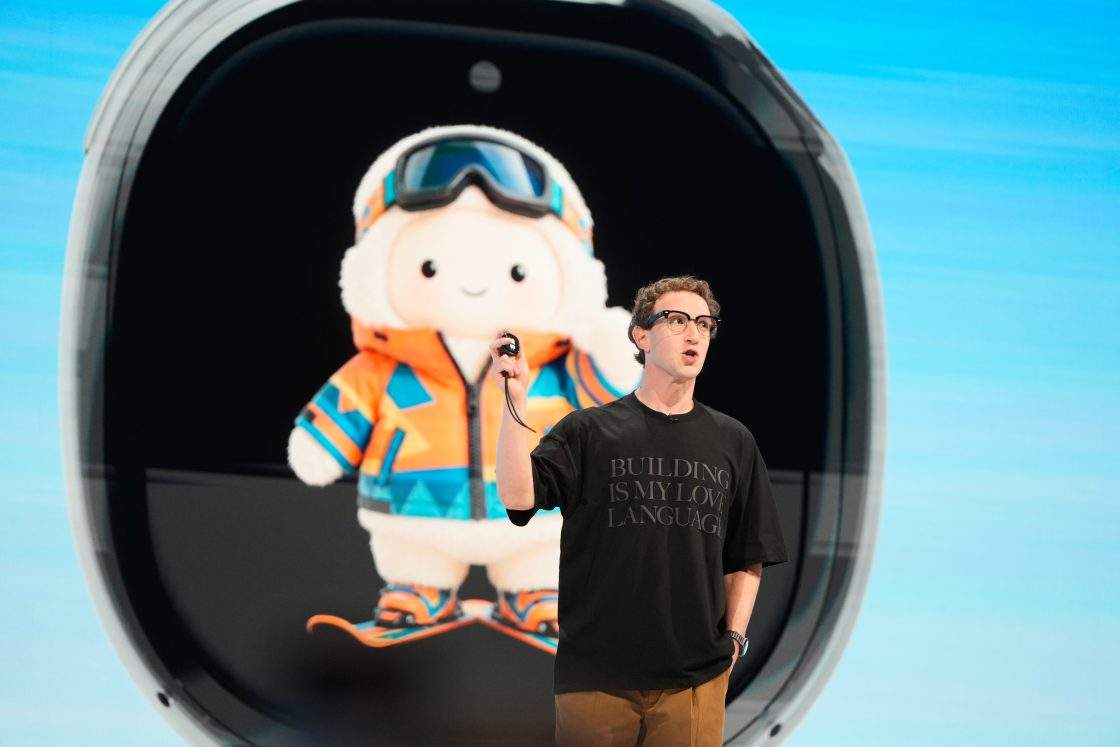
On Wednesday’s broadcast of Bloomberg’s “Balance of Power,” Rep. Sydney Kamlager-Dove (D-CA) responded to Meta CEO Mark Zuckerberg considering leaving the state over a possible wealth tax by stating that there are questions about having a one-time tax, but “it’s disappointing
Meta CEO Mark Zuckerberg said that more than 10 million people in the US and Canada have set up Muse accounts in a month and a half and growth remained strong.
Meta CEO Mark Zuckerberg said that more than 10 million people in the US and Canada have set up Muse accounts in a month and a half and growth remained strong.
Meta will give its investors free shares if Mark Zuckerberg hits certain "extraordinary" targets.
It will pay 1:1 share dividends each time Meta stock doubles and has compounded at over 10% a year.
Meta is rolling out Class C shares to address Zuckerberg's tax concerns and keep him in California.
Meta stockholders are set to receive free shares if Mark Zuckerberg absolutely crushes it as CEO.
The social-media giant revealed in a Wednesday filing that if its upcoming Class C shares double from a baseline price of $580.60 to just over $1,161, and their compound annualized return since September 10 has been at least 10%, shareholders will receive a dividend: a Class C share for every Meta share they own.
If Meta stock — specifically its 30-day volume-weighted average price — doubles again to around $2,322, and has risen by at least 10% on average per year, shareholders will receive the same dividend again, and so on.
Meta, which owns Facebook, WhatsApp, Instagram, and the AI agent Muse, acknowledged how difficult it will be to unlock those dividends, describing the stock price targets as "extraordinary" in its filing.
Its stock has already surged more than sevenfold from its November 2022 low, giving Meta a nearly $1.8 trillion market capitalization that ranks it among the 10 most valuable companies in the world.
The additional dividends would be paid on top of the initial dividend declared by Meta's board on Wednesday, which will see Class A and Class B shareholders receive Class C shares on a 1:1 basis, likely in late January.
Meta is rejigging its share structure in response to Zuckerberg's concerns about California's so-called billionaire tax: a one-off, 5% wealth tax on the roughly 250 billionaires living in the state.
Zuckerberg, who ranked fifth on the Bloomberg Billionaires Index with a $247 billion net worth at Wednesday's close, will be able to sell the Class C shares to access the liquidity needed to pay the tax, avoiding a sale of his existing shares that would erode his voting power.
Meta's board took action after Zuckerberg said he was considering moving out of California because of the potential tax, and cautioned that the steps involved in relocating, such as listing his home for sale, could spark questions from employees about the company's management, the filing says.
Chief executive agrees to remain in California for eight years even if state brings in one-off 5% wealth tax
Meta has struck a deal with Mark Zuckerberg to help him foot a possible California wealth tax targeting billionaires.
The social media company behind Facebook, Instagram and WhatsApp revealed on Wednesday night that the arrangement would keep its chief executive living in California, where Meta’s headquarters are located.
La decisión fue tomada luego de que un jurado determinara que Facebook había hecho promesas engañosas sobre quién podía acceder a los datos de sus usuarios y cómo protegía esa información.
The billionaire told Meta’s board that he planned to list his Silicon Valley home for sale. The company remade its stock structure to help him pay the tax if voters pass it.
Mark Zuckerberg, the chief executive of Meta, at his home in Lake Tahoe, Calif. He has another California home in Palo Alto, close to Meta’s headquarters.
Meta CEO Mark Zuckerberg considered moving out of California because of a proposed billionaire tax.
Zuckerberg would get $20 billion in "immediate liquidity" if the billionaire tax passes.
Meta made the offer to Zuckerberg to help keep him in California after he considered leaving.
Meta CEO Mark Zuckerberg considered moving out of California because of its proposed billionaire tax, Meta disclosed in a new SEC filing on Wednesday.
Next month, Californians will vote on Proposition 40, a one-time tax on the assets of the state's billionaires.
The filing said that Zuckerberg told a special committee formed by Meta that he was considering moving.
In response, the committee concluded that it was "critically important" for Zuckerberg to keep running Meta close to its Silicon Valley headquarters — particularly to its AI division, Meta Superintelligence Labs.
The filing said the committee got Zuckerberg to agree to remain in California or any other jurisdiction where Meta has its corporate headquarters for eight years, barring unforeseen circumstances.
As part of its efforts to ensure he can remain in charge as it raises more cash for its AI initiatives, the company is granting the Meta CEO a new stock class.
The shares would give Zuckerberg $20 billion in "immediate liquidity" to cover the tax by selling stock without losing control of Meta, if the tax passes. The new shares wouldn't add to Zuckerberg's net worth or increase his percentage ownership of Meta.
"The goal is to keep Mr. Zuckerberg continuing to lead the Company from California," the filing says.
Meta declined to comment. A person familiar with the matter said that the new class of shares, which totals $150 billion, is also intended to raise capital, compensate employees, and keep Meta's stock price on the right track.
Meta's filing showcases how tech billionaires are responding to the tax proposal. Some, including Google cofounder Sergey Brin and former CEO Eric Schmidt, poured hundreds of millions of dollars into attack ads against the proposal.
While Zuckerberg has taken a lower-key approach, it's clear he's been taking the proposed tax seriously.
The Meta CEO, who is worth about $240 billion according to Forbes, has multiple residences in California, including in Palo Alto and Lake Tahoe.
He also has a sprawling property portfolio outside the state, including a doomsday bunker in Hawaii, a waterfront mansion in Miami, and a castle in Ireland.
Have a tip? Contact this reporter securely on Signal at charlesrollet.12 or +1-628-282-2811. Use a personal email address and a non-work device; here's our guide to sharing information securely.
The company announced a new category of non-voting Class C stock in its third-quarter earnings report. It listed several reasons for creating the new class — one of which is to keep the CEO in control.
A Special Committee established by Meta's board determined that Zuckerberg was the best fit to lead the company into its future, and highlighted the CEO's creative vision and management abilities.
"The creation of the Class C common stock will continue the founder-led model that has driven the company's success since its inception," Meta said.
The stock class will also provide Meta the ability to finance its growth, the earnings report said. Meta is spending big on AI and the data centers needed to power it. The company reported $34.91 billion in third-quarter capital expenditures.
Meta's press release said the distribution would effectively amount to a two-for-one stock split for existing shareholders. Susan Li, Meta's chief financial officer, said that the stock will be distributed to existing shareholders.
Other tech companies have issued stock to access new capital without diluting their CEO's voting power. Google performed a stock split in 2012 for a similar reason. Semafor was first to report the new stock class.
Zuckerberg has long been the face of Meta. He's strengthened his leadership through the AI boom, going "startup mode" and getting hands-on with the tech. The company's AI team set up their desks around where Zuckerberg sits.
The success of Muse, Meta's AI agent, has raised the profile of another Meta executive: Alexandr Wang. The chief AI officer has joined Zuckerberg for podcasts and spoken onstage at keynotes.
A Financial Times profile last week touted Wang as a "potential successor to Zuckerberg." It's clear the board wants Zuckerberg there for the long haul.
Meta's AI agent, Muse, is unprofitable due to "very high compute costs," CEO Mark Zuckerberg says.
Meanwhile, Meta expects Reality Labs, its AI glasses division, to lose $15 billion next year.
The social media giant has a plan to fix that.
Meta says some of its biggest cash incinerators could finally start turning profits.
The social media giant, which generated over 97% of its quarterly revenue from ads, has faced persistent questions from investors about the lack of profitability in its AI and hardware initiatives.
Meta CEO Mark Zuckerberg addressed those concerns head-on during its third-quarter earnings call on Wednesday.
Zuckerberg said that Muse, the AI assistant it launched last month, is unprofitable since it's "very compute intensive to run." Meta expects to start turning that around next year by massively improving Muse's efficiency.
"If compute efficiency continues improving quickly for another few years, which we think is highly likely, then Muse will be highly profitable over multiple years," he said.
Meta plans to make money from Muse by taking a small transaction fee off of purchases it drives, Zuckerberg said at Meta's Connect conference last month.
Zuckerberg added that Muse, which launched only in the US and Canada, wasn't launched globally due in part to the amount of compute it requires. (Meta's North American users are generally its most lucrative.)
Zuckerberg also struck a positive note about its cash-hemorrhaging Reality Labs division, which makes products like Meta Ray-Bans and virtual reality glasses.
Meta expects Reality Labs to narrow its losses to about $15 billion in 2027, down from the $18 to $19 billion it expects to lose this year. The division should start trending toward profitability next year, as Meta's AI systems make it more useful, Zuckerberg said.
"I continue to believe that the path to delivering holographic experience, of bringing together the physical and digital worlds and everyday glasses, will come through VR first," Zuckerberg said.
Have a tip? Contact this reporter securely on Signal at charlesrollet.12 or +1-628-282-2811. Use a personal email address and a non-work device; here's our guide to sharing information securely.
The spending has hurt the Silicon Valley giant’s cash flow, which turned negative. Meta said it would issue a new class of stock to help it raise more money.
The company spent $34.91 billionin capital expenditures during the third quarter of 2026. That's up from the second quarter's sum, $31.08 billion.
For the year 2026, Meta said it expects to spend between $135-145 billionin capital expenditures, narrowedfrom its prediction of $130-145 billion last quarter.
Meta's forecast includes the yearly capex prediction that analysts expected: $139.79 billion.
As Meta bets big on AI, it is investing heavily in its development. It has built massive, costly data centers and spent big on computing power.
The spending uptick was expected. On the "Cheeky Pint" podcast earlier this month, CEO Mark Zuckerberg recounted early conversations about the investment — and said he'd bet up to $200 billion on AI, before he knew the models would work.
Investors haven't loved Meta's massive capex forecasts in past quarters. The stock tumbled almost 10% last quarter after earnings per share missed Wall Street estimates, and sank 6% the quarter before on raised capex guidance.
This quarter, Meta has a new hero product: Muse.
The AI assistant has reached over 2 million daily users and 3 million downloads. It quickly scaled the App Store. Muse users told Business Insider they chatted with it to help plan trips and ace exams.
The energy around the company is ebullient, as Alexandr Wang, Meta's chief AI officer, continues to post memes of Muse's squishy-looking mascot.
At Meta's Connect keynote event in September, Zuckerberg said Muse "has a novel business model."
"We believe that Muse will make you money, and we're standing behind this by making Muse free for a huge number of tokens with the expectation that over time, we will profit by taking a small fee from transactions," he said.
Muse could help justify the capex guidance for some investors. The stock was trading up 4.12%after-hoursat the time of publication.
Imagine if Sam and Dario and Elon and Mark, along with their boards of directors, bore individual liability for the damage their companies may inflict on society.
Imagine if Sam and Dario and Elon and Mark, along with their boards of directors, bore individual liability for the damage their companies may inflict on society.
These yachts are highly popular with the ‘super-bourgeoisie’ – and getting bigger. Can anything be done to stop them destroying our seas?
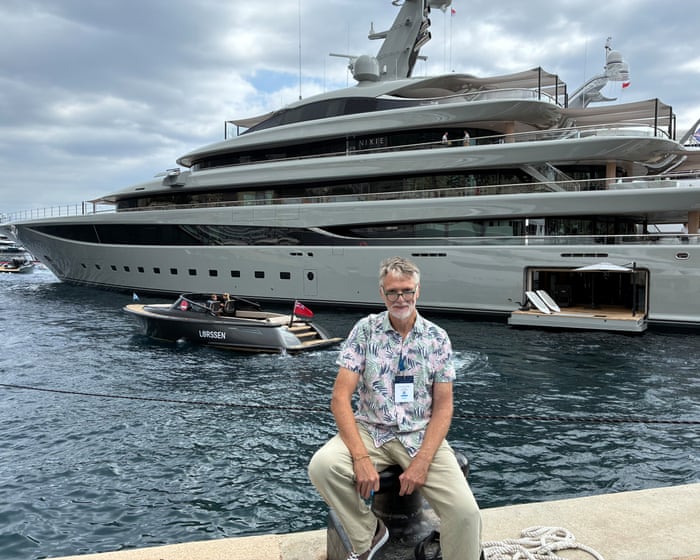
Who knew? Apparently everyone did, apart from me: you don’t wear shoes on a superyacht. Now, about to step on to my first teak deck at the Monaco Yacht Show, I’ve got to take my trainers off, and I’m having a sock panic. Have they got holes? Do they even match? Do they smell?
To be honest, I’ve come dressed all wrong for Europe’s big annual superyacht trade exhibition. The code for men seems to be crisp and tucked in, blazers and chinos, navy and white, sculpted hair and designer sunnies. (I went colourful, loose, casual). For women, it’s something like Riviera elegance. Everyone – whether they’re Italian, French, English, German, American, exhibitors, buyers, brokers, charterers – seems to know each other. The international superyacht community seems to be a close-knit one, and I’m not part of it. Yet.
"Meta, não se meta" era a palavra de ordem entoada pelos manifestantes, frente ao edifício que alberga o escritório da Meta. Campanha de Lula acusa a tecnológica norte-americana de favorecer rival.
Manifestantes concentraram-se no famoso centro financeiro da capital paulista, Faria Lima, segurando faixas e cartazes com fotografias do dono da Meta, Mark Zuckerberg
Manifestantes denunciaron en São Paulo que Meta reduce de forma injustificada el alcance de las publicaciones del mandatario Luiz Inácio Lula da Silva, al tiempo que impulsa los contenidos del candidato de la extrema derecha, Flávio Bolsonaro.
Al Tribunal Superior Electoral de Brasil se le está acabando la paciencia con el gigante tecnológico Meta y los inescrutables entresijos de su funcionamiento. Un juez del TSE le ha dado 24 horas a la tecnológica propietaria de Instagram, WhatsApp y Facebook para que demuestre al tribunal que sus algoritmos y su inteligencia artificial dan un trato igual a los dos candidatos, al presidente Luiz Inácio Lula da Silva, del izquierdista Partido de los Trabajadores, y al senador Flávio Bolsonaro, del derechista Partido Liberal. La decisión judicial fue dictada el domingo por la noche cuando los presidenciables protagonizaban su primer debate.
Mark Zuckerberg's Meta has offered a detailed explanation and a fresh apology after the Instagram account of the No Kings movement was suspended for several hours during nationwide rallies for suspicious behavior driven by AI usage. Leftists including Bernie Sanders (I-VT) who were silent for more than a decade of Meta censoring conservatives suddenly are expressing alarm about censorship.

 Login