❌

Reading view

Zelenskyy’s warning that Russian airspace is becoming dangerous is proving true: Russia temporarily restricted operations at 27 airports amid a massive drone attack

Flight information board displaying arrivals and departures at Domodedovo Airport in Moscow, Russia. Photo: TASS

Temporary restrictions on aircraft arrivals and departures were imposed at 27 Russian airports, Deutsche Welle reported on 16 October, citing its own calculations based on reports from Russia’s Federal Air Transport Agency.

Ukrainian President Volodymyr Zelenskyy warned airlines on 1 September that “Russian airspace is becoming completely unsafe.” Overnight, most of the airspace over European Russia was closed.

By morning, more than 200 flights had been canceled or delayed at Moscow airports, Deutsche Welle reported, citing figures compiled by a Russian Telegram channel.

🔥 Тим часом у російських аеропортах – справжній апокаліпсис через нальоти дронів останніми днями.

Про це ниють росЗМІ. Було відмінено десятки рейсів, у терміналах – дуже багато людей. Пасажири скаржаться на задуху, дикі черги до туалетів та повну невідомість. pic.twitter.com/ZlXxY5c2mq

— Breaking News (@breakingUAnews) October 16, 2026

The list included airports in the capital. All four Moscow airports temporarily suspended arrivals and departures, the Russian outlet Astra reported on 16 October. Russian authorities said they had shot down dozens of drones, while flights were delayed and diverted to alternate airfields, according to the report.

Massive drone attack on Russia: 644 UAVs in one night, 94 shot down near Moscow

The temporary airport shutdowns were likely a consequence of a massive drone attack on Russia. From 8:00 p.m. on 15 October to 8:00 a.m. on 16 October, Russian air defenses allegedly intercepted and destroyed 644 Ukrainian unmanned aerial vehicles across 26 Russian regions, occupied Crimea, and the Black Sea, according to Russia’s Defense Ministry.

According to the list of regions published by the Russian Defense Ministry, the drone attacks covered a vast area of Russia, from regions bordering Ukraine to the Moscow region, the Volga region, the country’s northwest and southern regions, as well as occupied Crimea and the Black Sea.

Russian air defenses shot down a total of 94 drones approaching Moscow over the evening of 15 October and overnight, according to calculations by the Russian outlet RBC Radio, citing statements by Moscow Mayor Sergey Sobyanin.

In the Kaluga region, air defenses destroyed 27 drones over the evening and night, the regional governor reported. At 9:27 a.m., he updated the figures, saying another 48 UAVs had been shot down overnight, bringing the total to 75. According to preliminary information, there were no casualties or infrastructure damage.

In the Tula region, air defenses allegedly destroyed a total of 32 Ukrainian drones. There were no casualties, according to regional Governor Dmitry Milyaev in his Telegram channel.

In the Vladimir region in western Russia, authorities repelled drone attacks overnight. In the city of Vladimir, a drone attempted to attack a heating infrastructure facility, but the attack was stopped, Vladimir Region Governor Alexander Avdeyev reported. Minor damage was reported, but there was no information about casualties.

Ukraine has not yet commented on its involvement in the attacks.

The practical consequences of canceled Russian flights

Passengers on flight SU6312 from Kaliningrad to Moscow were unable to land in Moscow because of airspace closure, so the aircraft was diverted to Nizhny Novgorod, Terravia reported. After landing, passengers remained on board for about two hours before being allowed to disembark at 3:30 a.m. Instead of continuing their journey to Moscow by air, they were supposed to be transported by bus, with the trip expected to take about seven hours, the outlet reported.
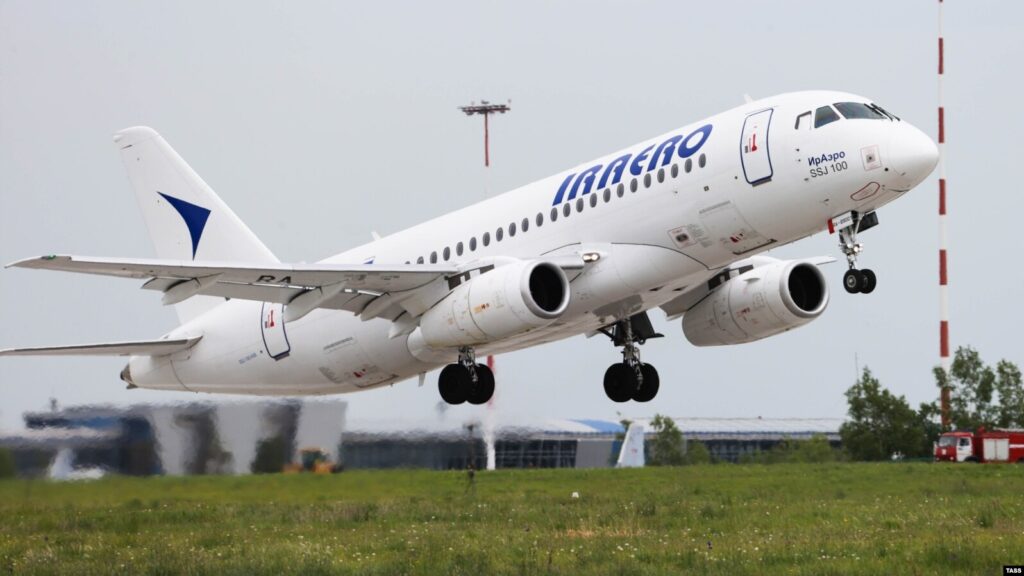
russian airliner revival sold breakthrough now survives extended flight-cycle limits · post sukhoi superjet 100 iraero airline tass superjet-100 (ss-100) plane (file photo) ukraine news ukrainian reports
A Russian Sukhoi Superjet 100 of the IrAero airline. Illustrative photo: TASS

Passengers were not provided with food or drinks, and one woman could not find a seat on the bus, so she purchased a ticket for an early-morning train herself.

Since the beginning of the year, all four Moscow airports have been completely shut down simultaneously at least 19 times, the Russian outlet Agentstvo reported. During the first 14 days of October, the restrictions lasted 101 hours and 38 minutes, compared with 46 hours and 33 minutes in September, according to the report.

  •  

Germany accuses Russia of a drone bomb attempt at Leipzig. Now its eight biggest airports get drone detection

The likely process of monitoring the airspace over airports connected to Germany’s new drone detection system. Photo: Deutsche Flugsicherung / Holger Matthies

Germany is expanding drone detection at its airports with a new system operated by German air traffic control provider Deutsche Flugsicherung (DFS), the German Federal Ministry for Transport (BMV) announced on 5 October.

Germany has accused Russia of attempting a hybrid attack at Germany’s Leipzig/Halle Airport near a Ukrainian An-124 aircraft using a drone carrying explosives. Earlier, Finnish President Alexander Stubb said Europe must be prepared for “continued hybrid and sabotage attacks” by Russia, adding that Russia seeks to sow panic through such actions.

On Monday, two more sites were added—Stuttgart and Hamburg. As of Monday, seven of Germany’s eight largest airports were equipped with the new drone detection system in their approach and departure areas.

Germany seeks responses to new hybrid threats

The Federal Ministry cited the reason for the new measure: drones near airports can affect air traffic very quickly.

Federal Transport Minister Steffen Bilger and Baden-Württemberg Transport Minister Nicole Razavi were briefed on the new system at Stuttgart Airport, where it is being put into operation, the ministry said. The system creates “an important technical basis for detecting potential threats at an early stage and quickly informing the competent authorities,” Bilger said.

“With today’s commissioning of the drone detection system at Stuttgart Airport, the federal government is fulfilling a key promise: it is not only talking about the dangers posed by unmanned aircraft, but is also following through with very concrete action. Protecting critical infrastructure and ensuring the safety of passengers at Stuttgart Airport require continuous adaptation to a changing security situation,” Razavi said, according to the ministry.

The new DFS system allows drones near airports to be detected at an early stage and information about possible threats to air traffic to be passed more quickly to the relevant authorities. This helps them assess risks and respond to them more quickly, the statement said.

DFS is responsible for detecting drones in approach and departure areas, while the Federal Police and other security services are responsible for preventing threats and defending against drones. The BMV, Federal Ministry of the Interior, DFS, Federal Police and airports coordinate their work to exchange information quickly and maintain a shared picture of the situation.

No further details about how the system operates have been disclosed.

The first stage of the expansion at Germany’s eight major commercial airports will be fully implemented this week, with the systems in Stuttgart and Hamburg being put into operation, the statement said.

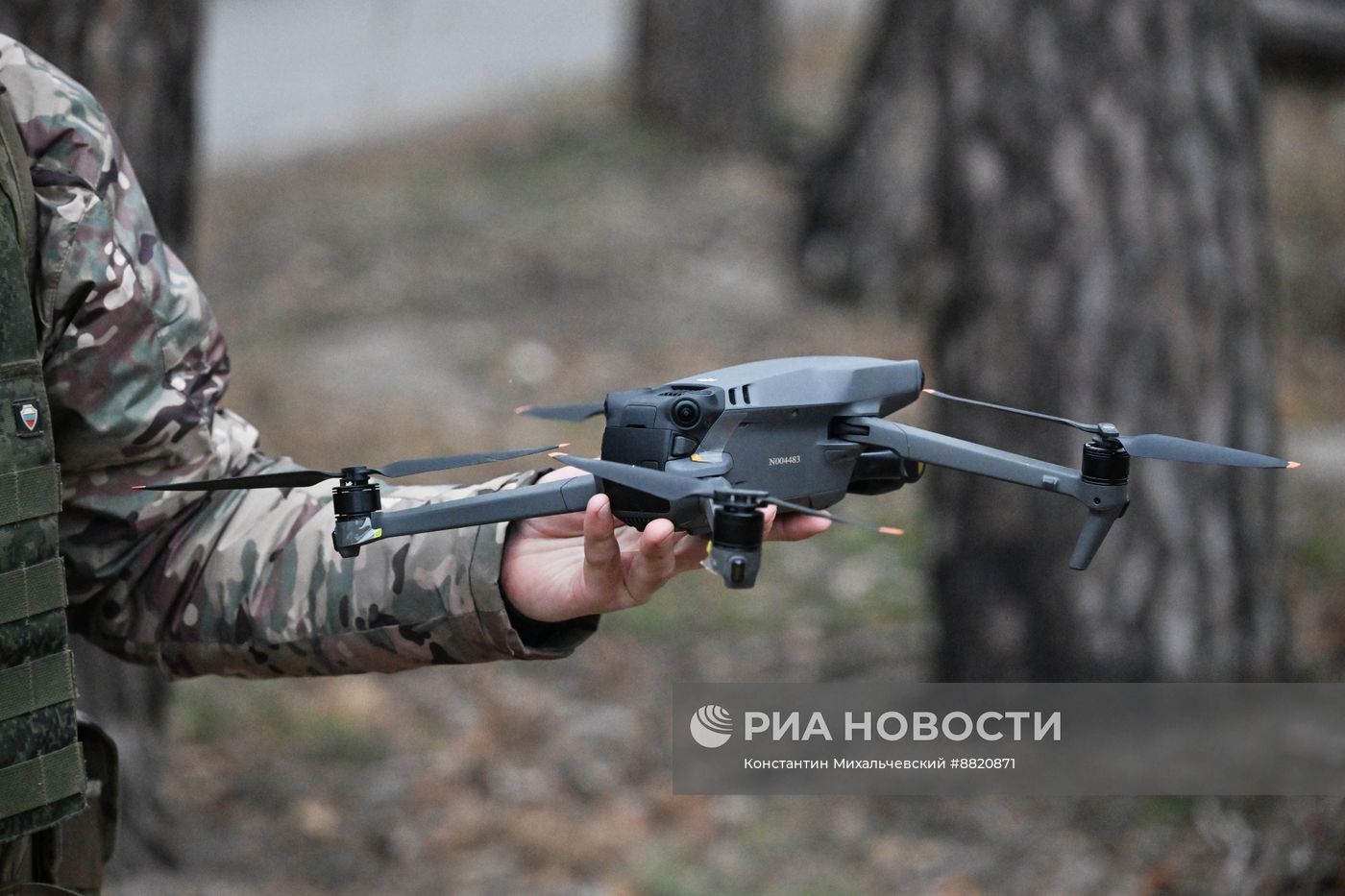
Illustrative image of a Russian drone. Photo: RIA Novosti/Konstantin Mikhalchevsky
Explore further

A drone came down beside a Bundeswehr air base, weeks after Berlin blamed Moscow for the Leipzig airport attack

The system will also be installed at the airport where a bomb-laden drone was found

The system will also be put into operation at Leipzig/Halle Airport this week, meaning that the first stage will be fully implemented at all eight of Germany’s largest commercial airports, according to the press release.

A quadcopter drone carrying a Semtex explosive flew directly toward a parked Ukrainian An-124 Ruslan cargo aircraft and struck its wing at Leipzig/Halle Airport in Germany on the evening of 4 August, Die Zeit reported on 10 August. The drone hit the aircraft at around 19:30 local time, bounced off the wing, and fell to the ground without detonating, according to the media outlet.

Ukrainian An-124 at Leipzig/Halle Airport in Germany, 5 August 2026. Photo: screenshot from Bild video

Germany has accused Russia of attempting the drone attack and announced further sanctions against Russian citizens and institutions, Tagesschau reported on 1 September.

At the crime scene, investigators found the drone configuration, explosives and detonation technology that had already appeared in other Russian hybrid operations and in Russia’s war against Ukraine, Federal Interior Minister Alexander Dobrindt said during a joint press conference with Federal Foreign Minister Johann Wadephul, the media outlet reported.

The German government assumes that Germany has been and will be a target of further such Russian attacks. Germany is not at war with Russia but is a “target of war,” Foreign Minister Wadephul said, according to the outlet.

  •  
❌