Barclays to cut 5,000 jobs as bank leans on AI


Equating to the loss of 5% of its 93,000 global staff, job cuts come as bank announces jump in quarterly profits
Barclays is cutting 5,000 jobs as part of wider cost-saving plans that its bosses say are being driven by advances in AI.
The job cuts will mean losing about 5% of the bank’s 93,000 global staff, with executives confirming they had already cut 1,000 workers since the start of the year.
Continue reading...
© Photograph: John Keeble/Getty Images

© Photograph: John Keeble/Getty Images

© Photograph: John Keeble/Getty Images


Russia has carried out its largest sustained reduction in gold reserves since the financial crisis of 1998, disposing of approximately 62 tonnes of the precious metal since December 2025 as the government draws on accumulated reserves to finance a growing federal budget deficit.
According to figures released by the Bank of Russia on Tuesday, 20 October, the country’s monetary gold reserves declined by another 200,000 troy ounces, equivalent to approximately 6.2 tonnes, during September.
The latest reduction brings Russia’s official gold holdings to 72.8 million troy ounces, or approximately 2,264 tonnes, their lowest level since the end of 2019.
The central bank has now reduced its gold holdings for ten consecutive months, reversing the accumulation strategy pursued by Moscow in the years preceding its full-scale invasion of Ukraine.
The scale of the current reduction is exceptional by Russian historical standards.
According to International Monetary Fund data cited in reporting on the latest figures, the only more rapid depletion of Russian gold reserves in the country’s modern history occurred during the 1998 financial crisis.
At that time, Russia’s central bank disposed of approximately 118 tonnes of gold over three months as the government defaulted on domestic debt and the rouble collapsed.
Some of those holdings were subsequently replenished, leaving the country’s gold reserves approximately 50 tonnes lower at the end of 1998.
The reduction recorded during 2026 has already exceeded that annual net decline, although Russia’s present financial position differs substantially from the circumstances surrounding the 1998 default.
The monetary value of Russia’s remaining gold reserves stood at approximately $301.6 billion at the end of September, compared with $333.5 billion a month earlier. The change reflects movements in gold prices as well as the reduction in physical holdings.
The sales come as the Russian government struggles to contain expenditure associated with its continuing military campaign against Ukraine.
Moscow now expects its federal budget deficit to reach 7.3 trillion roubles, approximately $87 billion, in 2026. That represents 3.2 per cent of gross domestic product, twice the deficit originally anticipated.
Military and security expenditure is expected to account for approximately 38 per cent of total federal spending this year.
The government has increasingly relied on its National Wealth Fund, established to accumulate surplus energy revenues, to cover budget shortfalls.
The central bank’s gold transactions are linked to operations involving the fund. Under this mechanism, the Bank of Russia conducts corresponding market sales following Finance Ministry transactions using the fund’s assets.
Figures published by Russia’s Finance Ministry earlier this month showed that the National Wealth Fund’s liquid assets had fallen to approximately 3.8 trillion roubles, equivalent to $45 billion, as of 1 October. This was down from approximately 4 trillion roubles a month earlier.
The fund’s total assets remained substantially larger, at almost 13 trillion roubles, but much of that amount is invested in shares, bonds and other holdings that cannot immediately be converted into funds for government expenditure.
Russia’s fiscal problems have been compounded by weaker oil and gas revenues, a slowdown in economic activity and the increasing cost of sustaining military operations.
Although energy exports continue to generate substantial income, government revenue has failed to keep pace with spending commitments.
Moscow has consequently increased domestic borrowing, introduced additional taxes and sought alternative sources of budget financing.
The latest gold figures provide further evidence of the financial demands imposed by the war, now approaching its fifth anniversary.
They do not indicate that Russia is approaching an immediate financial collapse. The country still holds considerable gold and foreign exchange reserves, with the central bank reporting total international reserves of approximately $731.8 billion at the end of September, although access to part of its overseas assets remains restricted by Western sanctions.
Nevertheless, the continued liquidation of gold holdings reduces the reserve assets available to the Russian authorities at a time when military spending remains elevated and the government faces pressure to meet its domestic financial commitments.
For President Vladimir Putin, the growing budget deficit introduces an additional economic consideration into decisions over the duration of the war.
The September figures show that Moscow is increasingly drawing on assets accumulated before the invasion to support current expenditure, while its capacity to rebuild those reserves remains dependent on future revenues and the government’s ability to restrain spending.

Union furious as bank scraps remote-first policy from February 2027, requiring all of its UK employees to come in at least twice a week
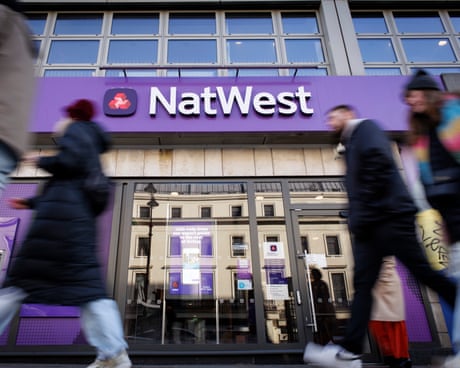
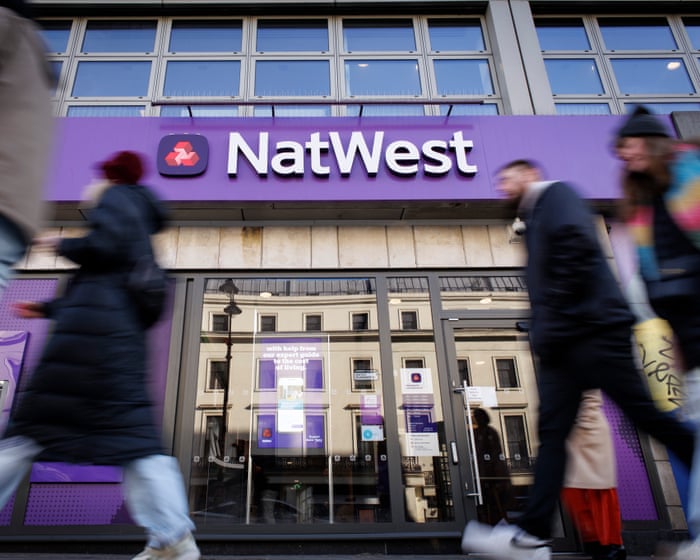
NatWest has ordered 13,000 staff to increase their in-office days from two days a month to two days a week, angering its staff union.
The banking group, which serves customers under the Royal Bank of Scotland, NatWest, Ulster Bank and Coutts brands, will require all of its nearly 40,000 UK staff to follow a strict two days a week office schedule from February 2027, abolishing a remote-first policy for thousands of employees.
Continue reading...
© Photograph: Tolga Akmen/EPA

© Photograph: Tolga Akmen/EPA

© Photograph: Tolga Akmen/EPA

Bloomberg/Getty Images
Google said it had largely resolved a cloud outage that appeared to knock out a number of online banking services.
The company said in an update at around 10 a.m. ET on Tuesday that the problem had been mitigated for the most part, with "a very small number" of customers still experiencing issues.
Google had said the outage had been caused by a "power event" at its europe-west2-b zone, which is based in London.
A handful of banking apps and services, including Halifax and Revolut, reported issues on Tuesday that coincided with Google Cloud's disruptions. Some companies said that the Google Cloud outage was the cause, while others attributed it to an unnamed third-party provider.
Users of some affected banking apps said in social media posts early Tuesday that they couldn't make card payments, log in to the app, or transfer money.
"We can confirm that all our customers' money and data are safe. We've been working to fix the issue since it was identified this morning and apologize to anyone affected and for any inconvenience caused," Revolut said in a statement earlier in the day. The outage was due to Google Cloud, a person familiar with the matter said.
"We're aware some customers are having issues with our app and online. We're sorry about this and are working hard to fix it," Halifax posted on X.
Emma, a popular UK budgeting app, also reported outages on Tuesday. "Emma is currently down due to a Google Cloud outage affecting services in London since 7 a.m. This is a technical outage, not a security issue," the company said on X.
Some took to X to share how the outage was disrupting their lives. One person said they'd had to cancel their beauty appointments in Japan, and another said their card was declined at the airport and they couldn't reach the support team.
Emma is currently down due to a Google Cloud outage affecting services in London since 7am. This is a technical outage, not a security issue. We're monitoring closely and will update here as soon as the app is back. Sorry for the disruption 🙏
— Emma (@emma_finance) October 20, 2026
The outage appears to have affected non-finance companies, too, according to Downdetector, a site that tracks online service disruptions.
Earlier on Tuesday, an X account for DPD, a delivery service, said in a post that its website was affected, and the web-hosting platform SiteGround said the outage has hit its UK data center. SiteGround said in its post that its engineers were working with Google Cloud engineers to address the issue.
The UK's courts and tribunal service said that it was experiencing issues with its cloud-based video tools for remote hearings on Tuesday. "We're working with our technology partners to restore service," an account for the government service wrote in an X post.
The Google Cloud outage comes as the tech giant has competed with Amazon and Microsoft to win business from enterprises, startups, and governments, particularly amid the AI boom. Reliability is a big promise built into these deals, as outages can have costly consequences for customers.
Google is not alone in being affected by outages, though: Amazon, Microsoft, and others have suffered downtime this year.
UK banking company insists customers’ funds and data are safe despite problems with sign-in, card payments, transfers and withdrawals
Revolut customers have been unable to access their money after the banking app went down, affecting a number of services including card payments, cash withdrawals and transfers.
The UK banking company said its app was down because of a “service disruption” affecting several services, but insisted that customers’ funds and data were safe.
Continue reading...
© Photograph: Mateusz Słodkowski/ZUMA Press Wire/REX/Shutterstock

© Photograph: Mateusz Słodkowski/ZUMA Press Wire/REX/Shutterstock

© Photograph: Mateusz Słodkowski/ZUMA Press Wire/REX/Shutterstock
Bank says bulk of redundancies will occur before end of year, citing challenging economy, competition and ‘rapid technological change’
Get our breaking news email, free app or daily news podcast
National Australia Bank is cutting 2,500 jobs, representing 6% of its workforce, marking another significant round of cuts in a sector heavily exposed to disruption by artificial intelligence.
NAB said in a statement on Tuesday that the bulk of the redundancies would occur before the end of the year, citing a challenging economy, competition and “rapid technological change”.
Continue reading...
© Photograph: Lukas Coch/AAP

© Photograph: Lukas Coch/AAP

© Photograph: Lukas Coch/AAP


Concerns financial contracts known as derivatives were incorrectly logged, potentially boosting Barclays’ profits
The Bank of England is reportedly looking into Barclays’ handling of loans linked to the embattled private credit sector.
The Bank’s regulatory arm, the Prudential Regulation Authority (PRA), started reviewing the matter this year after concerns were raised by a Barclays insider, according to the Financial Times.
Continue reading...
© Photograph: Suzanne Plunkett/Reuters

© Photograph: Suzanne Plunkett/Reuters

© Photograph: Suzanne Plunkett/Reuters

For many Americans overseas, the scariest day this month is not Halloween, but October 15—the final extended deadline for filing income tax returns with the Internal Revenue Service (IRS).
An estimated 3.3 million U.S. citizens live abroad, although the number is likely an undercount because the government doesn't keep a comprehensive list or require Americans overseas to register their residence. Still, American citizens and resident aliens living abroad must pay U.S. income taxes and comply with domestic tax filing requirements, regardless of where they live or work. They must also complete the dizzying process of reporting any foreign bank accounts, assets, and financial interests in foreign institutions.
When filing their income tax returns, most Americans living abroad have zero tax liability. In its 2025 Annual Report to Congress, the Taxpayer Advocate Service—an independent organization within the IRS that helps people navigate tax problems—found that for Americans overseas, "the percent of individual international tax returns reporting no tax liability is significantly higher than domestic taxpayers." Yet, the agency reports that the filing process is "complex, overlapping, and punitive." The report says failure to comply results in "harsh and disproportionate penalties…even when taxpayers make good-faith mistakes or owe no U.S. tax."
The U.S. income tax rate is low compared to other high-income countries, so Americans living overseas typically pay more in local taxes than they would here. Still, Brandon Mitchener, executive director at Tax Fairness for Americans Abroad, tells Reason that Americans living outside the U.S. are often oblivious to their income tax obligations, assuming they're exempt because they already pay taxes in their country of residence. He says that complex U.S. tax laws and financial regulations force many Americans living overseas to request an extension to October 15.
The date also coincides with the final deadline for the Foreign Account Tax Compliance Act (FATCA) and the Report of Foreign Bank and Financial Accounts (FBAR)—regulations that require Americans with foreign financial assets above a certain threshold to declare the value of their assets to the IRS or Treasury Department.
Under FATCA, Americans living overseas with foreign financial assets exceeding $200,000 at year-end or more than $300,000 at any point during the year must declare their assets when filing their income tax return. The law also requires foreign financial institutions to report information about U.S. account holders directly to the IRS. Originally enacted to catch Americans overseas engaged in tax evasion or other criminal financial activity, it has instead made American citizenship an impediment for expatriates looking to save or invest money outside the U.S.
"Because of FATCA, many foreign financial institutions shun American clients," Mitchener says. This includes Trade Republic, a German digital bank and online brokerage firm that doesn't accept U.S. citizens living abroad, a category of people it tellingly describes as "FATCA customers."
"Some charge a premium for banking-while-American," he adds, while some have "even de-banked American clients." The latter is a very real concern for Madison Berry, an American living in the Netherlands. She tells Reason she's "a little bit worried" that her European bank will one day "come back and be like, 'Oh, you're a U.S. citizen. We're gonna close your account.'"
This "reduces choice and raises the cost and complexity of everyday financial products for Americans abroad, from basic savings accounts to mortgages and retirement savings," Mitchener says, creating problems unique to America and Eritrea, the only two countries that tax citizens living outside their borders.
Compounding matters, Americans with foreign financial accounts exceeding $10,000 must file an FBAR with the Treasury Department's Financial Crimes Enforcement Network, even though the form duplicates much of the same information already reported through FATCA. The reporting requirements make investing or saving money abroad prohibitive for Americans and foreign financial institutions, with foreign banks opting to close existing accounts or outright denying Americans the opportunity to open a bank account, according to a 2019 report by the Government Accountability Office. Seven years later, little has changed. The IRS itself admits that its systems and functions are "inaccessible to or incompatible with the needs of taxpayers living abroad, creating unnecessary barriers to compliance."
Berry says figuring out her tax obligations and reporting requirements has left her "in a financial limbo." "I seriously considered renouncing my U.S. citizenship as part of the process just to make life easier." She's not alone.
Several Americans living overseas who spoke to Reason on condition of anonymity said they were also considering renouncing their U.S. citizenship rather than deal with the onerous annual tax filing process. One American living in Ireland who owns and operates a U.S.-based business says she uses a remote desktop and virtual private network to access her financial institutions to avoid scrutiny.
Another tells Reason she's considering renouncing her citizenship because America's tax system is "predatory in how complicated it is and how much responsibility it puts on ordinary people to figure everything out themselves."
The post Why Some Americans Living Abroad Would Rather Renounce Their Citizenship Than File Taxes appeared first on Reason Magazine.